EP1205817A2 - Système de service pour clients de dispositifs de formation d'images - Google Patents
Système de service pour clients de dispositifs de formation d'images Download PDFInfo
- Publication number
- EP1205817A2 EP1205817A2 EP01126402A EP01126402A EP1205817A2 EP 1205817 A2 EP1205817 A2 EP 1205817A2 EP 01126402 A EP01126402 A EP 01126402A EP 01126402 A EP01126402 A EP 01126402A EP 1205817 A2 EP1205817 A2 EP 1205817A2
- Authority
- EP
- European Patent Office
- Prior art keywords
- service
- service center
- local
- user
- center
- Prior art date
- Legal status (The legal status is an assumption and is not a legal conclusion. Google has not performed a legal analysis and makes no representation as to the accuracy of the status listed.)
- Granted
Links
- 238000000034 method Methods 0.000 claims abstract description 63
- 230000004044 response Effects 0.000 claims abstract description 30
- 238000004891 communication Methods 0.000 claims description 13
- 238000012545 processing Methods 0.000 claims description 6
- 238000004519 manufacturing process Methods 0.000 claims description 5
- 238000012790 confirmation Methods 0.000 claims 1
- 230000008569 process Effects 0.000 description 40
- 238000003384 imaging method Methods 0.000 description 7
- 230000015654 memory Effects 0.000 description 6
- 230000006870 function Effects 0.000 description 3
- 230000008439 repair process Effects 0.000 description 3
- 238000012360 testing method Methods 0.000 description 3
- 238000005516 engineering process Methods 0.000 description 2
- HRANPRDGABOKNQ-ORGXEYTDSA-N (1r,3r,3as,3br,7ar,8as,8bs,8cs,10as)-1-acetyl-5-chloro-3-hydroxy-8b,10a-dimethyl-7-oxo-1,2,3,3a,3b,7,7a,8,8a,8b,8c,9,10,10a-tetradecahydrocyclopenta[a]cyclopropa[g]phenanthren-1-yl acetate Chemical compound C1=C(Cl)C2=CC(=O)[C@@H]3C[C@@H]3[C@]2(C)[C@@H]2[C@@H]1[C@@H]1[C@H](O)C[C@@](C(C)=O)(OC(=O)C)[C@@]1(C)CC2 HRANPRDGABOKNQ-ORGXEYTDSA-N 0.000 description 1
- 230000009471 action Effects 0.000 description 1
- 230000008901 benefit Effects 0.000 description 1
- 230000005540 biological transmission Effects 0.000 description 1
- 230000008859 change Effects 0.000 description 1
- 230000000694 effects Effects 0.000 description 1
- 230000007257 malfunction Effects 0.000 description 1
- 238000012552 review Methods 0.000 description 1
Images



Classifications
-
- H—ELECTRICITY
- H04—ELECTRIC COMMUNICATION TECHNIQUE
- H04N—PICTORIAL COMMUNICATION, e.g. TELEVISION
- H04N1/00—Scanning, transmission or reproduction of documents or the like, e.g. facsimile transmission; Details thereof
- H04N1/00127—Connection or combination of a still picture apparatus with another apparatus, e.g. for storage, processing or transmission of still picture signals or of information associated with a still picture
- H04N1/00344—Connection or combination of a still picture apparatus with another apparatus, e.g. for storage, processing or transmission of still picture signals or of information associated with a still picture with a management, maintenance, service or repair apparatus
-
- G—PHYSICS
- G03—PHOTOGRAPHY; CINEMATOGRAPHY; ANALOGOUS TECHNIQUES USING WAVES OTHER THAN OPTICAL WAVES; ELECTROGRAPHY; HOLOGRAPHY
- G03G—ELECTROGRAPHY; ELECTROPHOTOGRAPHY; MAGNETOGRAPHY
- G03G15/00—Apparatus for electrographic processes using a charge pattern
- G03G15/50—Machine control of apparatus for electrographic processes using a charge pattern, e.g. regulating differents parts of the machine, multimode copiers, microprocessor control
- G03G15/5075—Remote control machines, e.g. by a host
- G03G15/5079—Remote control machines, e.g. by a host for maintenance
-
- H—ELECTRICITY
- H04—ELECTRIC COMMUNICATION TECHNIQUE
- H04N—PICTORIAL COMMUNICATION, e.g. TELEVISION
- H04N2201/00—Indexing scheme relating to scanning, transmission or reproduction of documents or the like, and to details thereof
- H04N2201/0077—Types of the still picture apparatus
- H04N2201/0082—Image hardcopy reproducer
-
- H—ELECTRICITY
- H04—ELECTRIC COMMUNICATION TECHNIQUE
- H04N—PICTORIAL COMMUNICATION, e.g. TELEVISION
- H04N2201/00—Indexing scheme relating to scanning, transmission or reproduction of documents or the like, and to details thereof
- H04N2201/32—Circuits or arrangements for control or supervision between transmitter and receiver or between image input and image output device, e.g. between a still-image camera and its memory or between a still-image camera and a printer device
- H04N2201/3201—Display, printing, storage or transmission of additional information, e.g. ID code, date and time or title
- H04N2201/3204—Display, printing, storage or transmission of additional information, e.g. ID code, date and time or title of data relating to a user, sender, addressee, machine or electronic recording medium
-
- H—ELECTRICITY
- H04—ELECTRIC COMMUNICATION TECHNIQUE
- H04N—PICTORIAL COMMUNICATION, e.g. TELEVISION
- H04N2201/00—Indexing scheme relating to scanning, transmission or reproduction of documents or the like, and to details thereof
- H04N2201/32—Circuits or arrangements for control or supervision between transmitter and receiver or between image input and image output device, e.g. between a still-image camera and its memory or between a still-image camera and a printer device
- H04N2201/3201—Display, printing, storage or transmission of additional information, e.g. ID code, date and time or title
- H04N2201/3274—Storage or retrieval of prestored additional information
Definitions
- This patent specification describes a system and a method particularly suitable for users of imaging devices who desire to make efficient and effective arrangements for service (including repairs, parts, and/or supplies) when the need arises or when they otherwise elect.
- a main service center communicates when needed with a user side that includes a number of remotely located imaging devices as well as with a local service center side that includes a number of local service centers that also can be remote from the main service center.
- the various locations can communicate with each other over communication lines such as Internet connections, and/or some other network such as a wide area network (WAN) and/or the telephone switching system.
- WAN wide area network
- the user When looking for service, including repairs, supplies, and/or parts, the user establishes a connection with the main service center, for example via an Internet appliance such as a personal computer or some other device that can access a home page of the main central service, or in some other way.
- the main service center selects one or more local service centers particularly suited to the current needs of the user, and facilitates the delivery of the appropriate service.
- the system can work with imaging devices of different types and models, made by different manufacturers, and with local service centers that are of different types and where any one local service center may not service or supply all of the types or models of imaging devices making use of the system.
- a main service center 1, a user side 2, and local service centers 3 are selectively connected with each other via the Internet, a wide area network (WAN), the public telephone switching network, and/or in some other way, to selectively exchange information.
- the main service center 1 has a home page server 11 that can exchange information with users 2a, 2b, etc. at a user side 2 and with local service centers 3a, 3b, etc. at a local service centers side 3.
- the main service center 1 further comprises one or more data bases 12 that store information regarding users and local service centers, a computer 13 with appropriate storage and programs to control the overall operation of the system and carry out the functions described below, and may still further comprise a personal computer PC, a printer PR and one or more additional home page servers such as 11a.
- the various facilities at the main service center 1 can be interconnected through a local area network (LAN) or in some other way and can be configured in different ways to suit different needs.
- LAN local area network
- the user side 2 comprises devices such as, without limitation, various models of copiers, printers, and facsimile machines that can be made by different manufacturers.
- Each imaging device at the user side 2 further includes, or at least selectively has the use of, a communication device such as a personal computer, an Internet appliance, or some other device that can establish suitable communication with the main service center 1 to carry out the functions described below. Firewalls or other protection facilities can be provided as illustrated. While an Internet connection is illustrated between the user side 2 and the main service center 1, other or additional types of connections are possible and contemplated within the scope of the disclosed system and process.
- the local service centers 3 also can be selectively or otherwise connected with the main service center 1, through one or more types of connections.
- local service center 3a can be connected via a public phone line and can include a modem, a personal computer and a printer.
- Local service center 3b can be connected through the Internet and provided with a firewall facility and one or more personal computers PC and one or more printers, and local service center 3c can be connected through one or more routers and can also include one or more personal computers PC and one or more printers.
- two or more local service centers 3 can be selectively or otherwise connected with the main service centers 1 through the same type connection.
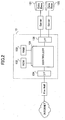
- Fig. 2 illustrates an example of the main service center 1 in greater detail.
- the computer 13 comprises a controller 131 that controls the operation of computer 13, one or more data bases such as 121 and 122, a memory such as a read-only memory (ROM) 132 for storing control programs, a memory such as a random access memory (RAM) 133 for storing programs and data, an interface circuit 134 for communicating with the Internet, preferably through a firewall, and an interface circuit 135 for communicating with server databases such as 121 and 122.
- ROM read-only memory
- RAM random access memory
- an interface circuit 134 for communicating with the Internet, preferably through a firewall
- an interface circuit 135 for communicating with server databases such as 121 and 122.
- Different memories can be used to suit different configurations and memories and interface circuits can be combined into fewer number of units or into one unit.
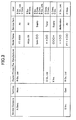
- Fig. 3 illustrates information regarding the local service centers 3 that can be stored in a server database such as 121 at the main service center 1.
- information can include, for example, the names of local service centers (Service Company column), the territories covered by the respective local service centers (Territory column), the manufacturers whose products the respective local service centers can service (Copier/Printer/Fax Manufacturer column), the model or other identification of devices that can be serviced (Model Name column), what services the local center can provide for the respective model devices, such as supplies only, toner only, repairs only, all services and parts and supplies, service for malfunctions only, etc.
- Service Item column the names of users of respective devices that the local center has serviced before or users who are otherwise known to the local service center
- Additional or different information can be stored in databases such as 121 at the main service center 1, and the stored information can be updated or otherwise changed as desired, for example as new local service centers 3 or users or devices or services are added or deleted.
- Fig. 4 illustrates information regarding the users that can be stored at databases such as 122 at the main service center 1. Such information is generated typically when a user contacts the main service center, or when a local service center provides service to a user, but can be generated in other ways as well.
- the user-oriented information stored in a database such as 122 can include, for example, names of users (User Name column), location addresses of users (User Address column), e-mail addresses of users (E-mail column), phone numbers of users (Phone column), fax numbers of users (Fax column), manufacturers of the respective one or more image forming devices each user has (Manufacturer column), model names or other designations of the respective image forming devices (Model Name column), year of manufacture or some other time-related designation for the respective image forming devices (Manufactured Year column), the identity of the local service center(s) that the user has utilized in the past, or has contacted, or has some other association with (Service Company column), the service items that the user has received in the past or that are otherwise associated with the user (Service Item column), the time or a service request for the image forming device or some other time-related event (Service Date column), and the time the service was completed or some other event took place (Service Completed column). Additional and/or different information can be included
- Fig. 5 illustrates an example of steps carried but in practicing a non-limiting embodiment.
- a user at user side 2 transmits a request to the main service center 1, for example through a web home page of the main service center.
- the computer 13 at the main service center 1 Based on information about the user and pertinent image forming device(s) available from the user's request and based on information stored at the main service center 1, the computer 13 at the main service center 1 identifies, if possible, one or more local service center 3 that can meet the service request.
- the main service center 1 transmits the service request and any additional information that may be pertinent, to the identified local service center(s) 3.
- One or more of the identified local service centers 3 then transmit information to the main service center 1, including information as to whether they can meet the user's request.
- the main service center 1 determines which local service center(s) 3 would be most suitable to meet the user's request, and transmits information regarding the so-selected recommended local service center(s) to the user. Upon the user's approval and/or choice of a local service center, the main service center 1 then transmits a finalized user request to the selected local service center 3, together with information that can include a service request and a service menu that can in turn include user information and information regarding desired service and time parameters. The selected local service center 3 eventually transmits to the main service center 1 information regarding the completed service or other response to the user's request.
- the illustrated steps are carried out under control of the computer 13 and information from databases such as 121 and 122.
- the computer 13 determines if a request has been received to update or otherwise change the information in database 121 (regarding local service centers 3) and, if the answer is yes, at step S2 the controller 131 updates the information in database 121, for example by adding or deleting a local service center 3 or by changing the list of image forming devices that can be serviced, and the process returns to step S1.
- step S3 determines if the main service center 1 has received a request for service from a user of an image forming device, e.g., via an Internet home page. If the answer at step S3 is yes, the process goes to step S3a to determine if there is a preferred local service center for that user's request, for example if the user has specified a preferred local service center. If the answer at step S3a is yes, the process determines at step S3b whether the preferred local service center 3 is among those in the database 121 at the main service center 1. If the preferred local service center is in database 121, the process moves to step S4, where that local service center is selected to meet the user's request.
- step S3b determines that the local service center the user prefers is not in database 121
- the main service center 1 contacts that preferred local service center, for example by a telephone call. If step S3c determines that the contacted local service center is able to meet the user's request and would accept the request (based on pre-stored information and/or a specific response from the local to the main service center, such as in response to sending a service menu as illustrated in Fig. 7), the process goes to step S12, discussed below.
- the main service center 1 can add the relevant information regarding that local service center to the database 121, for example by an operator keying in the information.
- step S4 the controller 131 selects at least one local service center 3 based on information in the service request from the user and on information in database 12 of the main service center 1. If two or more local service centers can meet the user's requests, step S4 can select plural local service centers 3.
- the main service center 1 automatically selects the local service center(s) suitable for meeting a user's request.
- An alternative is to display a user's request at the main service center, and/or enter the information regarding the user's request manually at the main service center 1, and/or make a manual selection of one or more suitable local service centers.
- Fig. 6 illustrates an example of a user request menu.
- the menu can be displayed at the user's location, and the user can fill in blanks and/or check entries as needed, and transmit the information to the main service center 1, for example by clicking on a send button on a display and using Internet facilities to transmit to the main service center 1.
- step S5 the computer 131 at the main service center processes information such as received from a user menu form such as illustrated in Fig. 6 and, based on information in the menu and information from database 121 and or other databases, at step S6 sends a detailed service request to the selected local service center(s) 3.
- This detailed service request can include a service menu such as illustrated in Fig. 7.
- an example of a service menu that the main service center 1 can send to a local service center can include the indicated information, developed from the user request that the main service center has received and from database information.
- the service menu can be sent to the local service center(s) automatically, or an operator can review it and click the send button to send it.
- the relevant local service center(s) 3 determine whether to accept the service request and send an appropriate communication to the main service center 1 which, at step S7, determines if a response has been received. If step S7 determines that a response has not yet been received (a no answer at step S7), step S8 determines if a time-out period has passed. If the answer at S8 is no, the process returns to step S7; if the answer at step S8 is yes, step S9 sends a message to the user, for example via e-mail, that the pertinent local service center 3 is currently unavailable, possibly with a request that the user try again later, and the process ends.
- step S10 determines that the response is that the local service center is not available (a no answer at S10), the process goes to step S9 and ends.
- the main service center 1 transmits the service menu (see Fig. 7) to the user at step S12, together with information identifying the selected local service center(s) able and willing to meet the user's request. If the choice of two or more suitable local service centers is presented to the user, the user may manually select one and transmit this information to the main service center. As an alternative, the computer 13 can select a single local service center based on the user request and the database information and responses from contacted local service centers.
- an operator for the main service center can make the selection based on similar or different factors and enter the selection manually through a personal computer or otherwise. Further, the computer 13 can select the most suitable local service center automatically, and transmit the service request only to that local service center, thereby omitting the step of sending the service request to other suitable local service centers.
- main service center 1 if several local service centers that receive a service request from the main service center 1 can accept the request, they transmit the "service acceptable" response to the main service center. If only one local service center can accept the request, it can transmit its response directly to the user, as an alternative to transmitting it to the main service center.
- the main service center checks at step S13 if a final service request has been received from the user to confirm the request and, if needed, select one of several suitable local service centers. If the answer at step S13 is no, the process checks at step S14 if a time-out period has elapsed. If the time-out has elapsed, the process checks at step S15 if a reminder has been sent to the user and, if no reminder has been sent, goes to step S16 to send such a reminder. If step S15 determines that a reminder has been sent to user, the process at step S17 sends information to the local service center(s) to cancel the request for service, and the process ends.
- the computer 13 receives a final service request from the user, i.e, the answer at step S13 is yes, at step S18 it stores the pertinent user information from the service menu, including the user's identity and the identity of the selected service center, in a memory such as RAM 133 or a hard disc drive (HDD) and, further adds pertinent user information to a database such as 122.
- the storage in RAM 133 and/or HDD at step S18 can be temporary.
- computer 13 sends the final service request to the appropriate local service center at local service center side 3 through the appropriate communication facility, and at step 20 can print a hard copy record of the pertinent service menu.
- the transmission of a reminder at step S16, of a service request cancellation at step S17, and of a final service request at step S19 are executed automatically by the computer 13 or controller 131.
- such information can be transmitted under manual control, by an operator at a personal computer with a screen and a keyboard and/or mouse, or some other appliance having similar capabilities, operating at or from the main service center 1.
- step S21 the computer 13 checks whether information has been received from the pertinent local service center 3 that the requested service has been completed, e.g., that the relevant parts or supplies have been sent to the user or that the user's image forming device has been repaired. If the answer at S21 is no, step S22 checks if a timeout period of time has passed, e.g., a period related to the time the local service center 3 indicated as completion time in response to the request. If the relevant time period has not expired, the process returns to step S21; if it has, the process at step S23 sends an inquiry or reminder to the local service center 3 and returns to step S21.
- step S21 determines that the service has been completed, the process at step S24 updates the user database, such as database 122, using for example information that was temporarily stored in RAM 133 and/or HDD, and ends.
- Fig. 8 illustrated in greater detail an example of a process for selecting one or more local service centers 3 suitable for meeting a user's request, i.e., the process carried out at step S4 in Fig. 5.
- the service request is stored at step S41, e.g., temporarily in RAM 133.
- computer 13 compares information contained in the service request with information stored in a database such as 122, to look for a match between the user's identification and image forming device(s) on the one hand and information in the database on the other hand.
- step S43 determines that a match was found, that means that at least one local service center is a candidate for meeting the user's request, and at step S44 the process sends the service request to the local service company that the match identified.
- step S45 the process checks if a response has been received from the local service center 3 to which the service request was transmitted in step S44 and, if step S45 determines that a response was not received, checks at step S46 if a timeout period has elapsed. If the answer at step S46 is that the timeout period has elapsed, the process moves to step S50, discussed below. If the timeout has not elapsed, the process keeps making the test at step S46. If step S45 determines that the main service center 1 received a response from the selected local service center 3, the process moves to step S47 to check if the response was an acceptance of the service request. If the response was not an acceptance, the process moves to step S50.
- step S47 determines that the response from the local service center 3 was an acceptance, i.e., the local service center can meet the user's request
- computer 13 transmits the service menu to the user at step S48 and checks at step S49 whether the main service center 1 has received the final, confirmed service request from the user. If the answer at step S49 is yes, the process moves to step S18 in Fig. 5; if the answer at step S49 is no, the process moves to step S50.
- step S50 compares information from the service request with information in a database such as 121 that pertains mainly to local service centers 3.
- the process determines based on the results of the comparison at step S50, whether the image forming device identified in the service request can be serviced by a local service center 3 in a relevant territory, with respect to the desired service identified in the service request.
- step S51 determines that the service request can be satisfied in terms of each of the particular model of image forming device, the particular service or need indicated, and the territory where the user is located, i.e., a yes answer at step S51, the process moves to step S5 in Fig. 5. If the answer at step S51 is no, i.e., the process checks at step S52 if there is a local service center 3 that covers the user's territory and services image forming devices made by the manufacturer of the image forming device identified in the service request. If the answer is yes, the process returns to step S5 in Fig.
- step S52 if the answer at step S52 is no, the process checks at step S53 whether there is at least a local service center that covers the user's territory and, if the answer is yes, returns to step S5 in Fig. 5. If the answer at step S53 is no, the process returns to step S9 in Fig. 5.
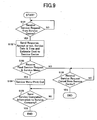
- Fig. 9 illustrates an example of an operation of a local service center 3 that is selectively connected with the main service center 1 and is registered in a database such as 121.
- a computer at the local service center 3 checks at step S101 whether it has received a service request from the main service center 1, e.g. as a result of step S6 in Fig. 5. If the answer at step S101 is no, the process cycles back through the same step. When the answer at step S101 is yes, the local service center 3 transmits at step S102 a response to the main service center 1 indicating whether or not the local service center can meet the service request.
- the local service center further sends at step S102 additional information, such as the date and time it expects to meet the service request and an estimate of cost or charge to the user.
- the local service center 3 checks if it has received a final service request and a service menu from the main service center 1. If the answer at step S103 is yes, the local service center can print out a hard copy of the service menu at step S104 and can carry out the requested service, e.g., dispatch a service person to service the user's image forming equipment on site, or send parts or supplies to the user, or carry out some other service.
- the local service center determines that the service request has been met, it sends a "service completed" notification to the main service center 1 (and/or directly to the user), and the test at step S105 gives a yes answer and the process at the local service center ends. If at step S103 the answer is no, i.e., no final service request and service menu have been received, the local service center checks at step S106 if it has received a service cancellation notice from the main service center, and cycled through step S106 if the answer is no. If the answer at step S106 is yes, i.e., a service cancellation notice has been received, the process at the local service center 3 ends, to start again when another service request is received.
- main service center facilities can be at a single location, it is within the scope of the disclosed system and method to use a main service center that has portions at various locations that communicate to carry out the disclosed functions.
- databases such as 121 and 122 need not be at the same location as computer 13, etc.
- main service center facilities disclosed above need not be used exclusively for the disclosed system and method. Similar considerations apply to the local service centers ⁇ it is not necessary that all facilities of a local service center be at a single location or used exclusively for the system and method disclosed above.
Landscapes
- Engineering & Computer Science (AREA)
- Microelectronics & Electronic Packaging (AREA)
- Physics & Mathematics (AREA)
- General Physics & Mathematics (AREA)
- Multimedia (AREA)
- Signal Processing (AREA)
- Computer And Data Communications (AREA)
- Accessory Devices And Overall Control Thereof (AREA)
- Management, Administration, Business Operations System, And Electronic Commerce (AREA)
Applications Claiming Priority (2)
| Application Number | Priority Date | Filing Date | Title |
|---|---|---|---|
| US710615 | 2000-11-09 | ||
| US09/710,615 US6317570B1 (en) | 2000-11-09 | 2000-11-09 | Field service system for image forming devices |
Publications (3)
| Publication Number | Publication Date |
|---|---|
| EP1205817A2 true EP1205817A2 (fr) | 2002-05-15 |
| EP1205817A3 EP1205817A3 (fr) | 2002-07-10 |
| EP1205817B1 EP1205817B1 (fr) | 2007-06-27 |
Family
ID=24854799
Family Applications (1)
| Application Number | Title | Priority Date | Filing Date |
|---|---|---|---|
| EP01126402A Expired - Lifetime EP1205817B1 (fr) | 2000-11-09 | 2001-11-07 | Système de service pour clients de dispositifs de formation d'images |
Country Status (4)
| Country | Link |
|---|---|
| US (1) | US6317570B1 (fr) |
| EP (1) | EP1205817B1 (fr) |
| JP (1) | JP2002222255A (fr) |
| DE (1) | DE60129092T2 (fr) |
Families Citing this family (27)
| Publication number | Priority date | Publication date | Assignee | Title |
|---|---|---|---|---|
| US6353445B1 (en) * | 1998-11-25 | 2002-03-05 | Ge Medical Systems Global Technology Company, Llc | Medical imaging system with integrated service interface |
| JP2002041691A (ja) * | 2000-05-18 | 2002-02-08 | Canon Inc | 機器を管理するメンテナンスシステム及びメンテナンス方法 |
| US7117239B1 (en) | 2000-07-28 | 2006-10-03 | Axeda Corporation | Reporting the state of an apparatus to a remote computer |
| US8108543B2 (en) | 2000-09-22 | 2012-01-31 | Axeda Corporation | Retrieving data from a server |
| US7171487B2 (en) * | 2000-09-22 | 2007-01-30 | International Business Machines Corporation | Method and system for application specific packet forwarding |
| US7185014B1 (en) | 2000-09-22 | 2007-02-27 | Axeda Corporation | Retrieving data from a server |
| US20030037287A1 (en) * | 2000-09-25 | 2003-02-20 | Masakatsu Nakamura | Electronic apparatus, data communication device, management system of electronic apparatus, and management method of electronic apparatus |
| US20020107904A1 (en) * | 2000-12-05 | 2002-08-08 | Kumar Talluri | Remote service agent for sending commands and receiving data over e-mail network |
| JP2002183424A (ja) * | 2000-12-13 | 2002-06-28 | Matsushita Electric Ind Co Ltd | 機器情報送受信方法および機器情報送受信システム |
| JP2002278379A (ja) * | 2001-03-19 | 2002-09-27 | Nec Corp | 印刷システム、情報サービスシステム及び情報サービスサーバ |
| US20030074268A1 (en) | 2001-10-11 | 2003-04-17 | Haines Robert E. | User and device interactions for web consolidation |
| US20030074428A1 (en) * | 2001-10-11 | 2003-04-17 | Haines Robert E. | Device configuration method and apparatus |
| US20030074547A1 (en) * | 2001-10-11 | 2003-04-17 | Haines Robert E. | Hardcopy output engine consumable supply management and method |
| US20030114415A1 (en) * | 2001-12-14 | 2003-06-19 | Wurtman Richard J. | Compositions and methods for treating and preventing memory impairment using citicoline |
| US7254601B2 (en) | 2001-12-20 | 2007-08-07 | Questra Corporation | Method and apparatus for managing intelligent assets in a distributed environment |
| US7178149B2 (en) | 2002-04-17 | 2007-02-13 | Axeda Corporation | XML scripting of soap commands |
| JP2004170863A (ja) * | 2002-11-22 | 2004-06-17 | Fuji Xerox Co Ltd | 画像形成装置及びこれに用いる交換部品の管理方法、並びに交換部品の管理プログラム |
| US7966418B2 (en) | 2003-02-21 | 2011-06-21 | Axeda Corporation | Establishing a virtual tunnel between two computer programs |
| US7673036B1 (en) * | 2003-12-05 | 2010-03-02 | At&T Mobility Ii Llc | Method and system for automated handling of service problems identified by a wireless device customer |
| KR100777461B1 (ko) * | 2004-08-27 | 2007-11-21 | 삼성전자주식회사 | 서비스센터서버와 실시간 양방향통신을 통한 서비스요청방법 |
| US7668912B2 (en) | 2005-03-03 | 2010-02-23 | Seiko Epson Corporation | Real-time one-button integrated support for networked devices |
| US8370479B2 (en) | 2006-10-03 | 2013-02-05 | Axeda Acquisition Corporation | System and method for dynamically grouping devices based on present device conditions |
| US8065397B2 (en) | 2006-12-26 | 2011-11-22 | Axeda Acquisition Corporation | Managing configurations of distributed devices |
| US8478861B2 (en) | 2007-07-06 | 2013-07-02 | Axeda Acquisition Corp. | Managing distributed devices with limited connectivity |
| US20100017337A1 (en) * | 2008-07-17 | 2010-01-21 | Butler Rhett A | Establishing a buyer/service provider relationship electronically |
| JP5869473B2 (ja) * | 2009-04-24 | 2016-02-24 | サンフォード エル.ピー. | 印刷装置及び該印刷装置用のコントローラ |
| US20120022908A1 (en) * | 2010-07-23 | 2012-01-26 | Thomas Sprimont | Territory management system and method |
Family Cites Families (7)
| Publication number | Priority date | Publication date | Assignee | Title |
|---|---|---|---|---|
| JP3347781B2 (ja) * | 1992-12-11 | 2002-11-20 | 株式会社リコー | 画像形成装置管理システム |
| US5392095A (en) * | 1993-12-02 | 1995-02-21 | Xerox Corporation | Customer feedback device on a machine console |
| JP3442174B2 (ja) | 1995-01-19 | 2003-09-02 | 株式会社リコー | 画像形成装置サービスシステム |
| JPH09130509A (ja) * | 1995-10-30 | 1997-05-16 | Mita Ind Co Ltd | 複写機管理システム |
| JP3566037B2 (ja) * | 1997-07-25 | 2004-09-15 | 株式会社リコー | 画像形成装置管理システム |
| US6415392B1 (en) * | 1997-12-08 | 2002-07-02 | Ricoh Company, Ltd. | Remote diagnosis system and method |
| JP3805951B2 (ja) * | 1999-07-01 | 2006-08-09 | 株式会社リコー | 画像形成装置管理システム及び管理方法 |
-
2000
- 2000-11-09 US US09/710,615 patent/US6317570B1/en not_active Expired - Lifetime
-
2001
- 2001-11-07 DE DE60129092T patent/DE60129092T2/de not_active Expired - Lifetime
- 2001-11-07 EP EP01126402A patent/EP1205817B1/fr not_active Expired - Lifetime
- 2001-11-08 JP JP2001343782A patent/JP2002222255A/ja active Pending
Also Published As
| Publication number | Publication date |
|---|---|
| US6317570B1 (en) | 2001-11-13 |
| JP2002222255A (ja) | 2002-08-09 |
| EP1205817B1 (fr) | 2007-06-27 |
| DE60129092D1 (de) | 2007-08-09 |
| EP1205817A3 (fr) | 2002-07-10 |
| DE60129092T2 (de) | 2008-02-28 |
Similar Documents
| Publication | Publication Date | Title |
|---|---|---|
| EP1205817B1 (fr) | Système de service pour clients de dispositifs de formation d'images | |
| US7355730B2 (en) | Office machine that can be remote-maintenanced via a computer network and a management or/and support or/and report or/and information system comprising a plurality of office machines | |
| US7599864B2 (en) | System and method for transmitting information regarding supplies and suppliers for image forming equipment | |
| US7385928B2 (en) | Image forming device management system and method | |
| US6415392B1 (en) | Remote diagnosis system and method | |
| US6947675B2 (en) | Remote maintenance and diagnosis of office or domestic appliances | |
| US7340501B2 (en) | System, method, apparatus and program for collecting and providing information | |
| US20010027429A1 (en) | System and method for ordering component parts for equipment | |
| US8108182B2 (en) | System of machine maintenance | |
| JP2016162281A (ja) | 顧客対応支援システム、およびその方法 | |
| JP2018097833A (ja) | 情報配信システム、電子機器 | |
| US20040168109A1 (en) | Efficient remote management of devices by accurately removing abnormal condition reports | |
| JP3643483B2 (ja) | 画像形成装置管理システムとデータ処理方法 | |
| JP4025000B2 (ja) | 遠隔管理システムおよび遠隔管理方法とそれに使用する中央管理装置並びに記録媒体 | |
| US20040098400A1 (en) | Method and system for service management or/and for service support or/and for the generation of service reports | |
| JP5146275B2 (ja) | 発注を自動的に行うためのシステム、方法、及びコンピュータプログラム | |
| JP2002305619A (ja) | 画像形成装置総合管理システム | |
| JP2000013518A (ja) | 画像形成装置管理システム | |
| JP2001202224A (ja) | 画像形成装置管理システムおよび画像形成装置管理方法とそれに使用する携帯型コンピュータ,中央管理装置,画像形成装置,並びに記録媒体 | |
| JP6313658B2 (ja) | 通信システム、および通信システムにおける制御方法 | |
| JP2005031976A (ja) | メンテナンス支援システム、デバイス、デバイス管理端末、デバイス用プログラム及び端末用プログラム、並びにメンテナンス支援方法 | |
| JP4703021B2 (ja) | 消耗品発注システム | |
| JP4696422B2 (ja) | 管理装置、管理方法、及びプログラム | |
| JP2003122889A (ja) | 作業管理システムおよび作業管理方法 | |
| JP2000125073A (ja) | 回線網接続用の画像形成装置 |
Legal Events
| Date | Code | Title | Description |
|---|---|---|---|
| PUAI | Public reference made under article 153(3) epc to a published international application that has entered the european phase |
Free format text: ORIGINAL CODE: 0009012 |
|
| 17P | Request for examination filed |
Effective date: 20011107 |
|
| AK | Designated contracting states |
Kind code of ref document: A2 Designated state(s): AT BE CH CY DE DK ES FI FR GB GR IE IT LI LU MC NL PT SE TR |
|
| AX | Request for extension of the european patent |
Free format text: AL;LT;LV;MK;RO;SI |
|
| PUAL | Search report despatched |
Free format text: ORIGINAL CODE: 0009013 |
|
| AK | Designated contracting states |
Kind code of ref document: A3 Designated state(s): AT BE CH CY DE DK ES FI FR GB GR IE IT LI LU MC NL PT SE TR |
|
| AX | Request for extension of the european patent |
Free format text: AL;LT;LV;MK;RO;SI |
|
| AKX | Designation fees paid |
Designated state(s): DE FR GB |
|
| 17Q | First examination report despatched |
Effective date: 20031229 |
|
| GRAP | Despatch of communication of intention to grant a patent |
Free format text: ORIGINAL CODE: EPIDOSNIGR1 |
|
| GRAS | Grant fee paid |
Free format text: ORIGINAL CODE: EPIDOSNIGR3 |
|
| GRAA | (expected) grant |
Free format text: ORIGINAL CODE: 0009210 |
|
| AK | Designated contracting states |
Kind code of ref document: B1 Designated state(s): DE FR GB |
|
| REG | Reference to a national code |
Ref country code: GB Ref legal event code: FG4D |
|
| REF | Corresponds to: |
Ref document number: 60129092 Country of ref document: DE Date of ref document: 20070809 Kind code of ref document: P |
|
| ET | Fr: translation filed | ||
| PLBE | No opposition filed within time limit |
Free format text: ORIGINAL CODE: 0009261 |
|
| STAA | Information on the status of an ep patent application or granted ep patent |
Free format text: STATUS: NO OPPOSITION FILED WITHIN TIME LIMIT |
|
| 26N | No opposition filed |
Effective date: 20080328 |
|
| REG | Reference to a national code |
Ref country code: FR Ref legal event code: PLFP Year of fee payment: 15 |
|
| REG | Reference to a national code |
Ref country code: FR Ref legal event code: PLFP Year of fee payment: 16 |
|
| PGFP | Annual fee paid to national office [announced via postgrant information from national office to epo] |
Ref country code: DE Payment date: 20161121 Year of fee payment: 16 Ref country code: GB Payment date: 20161122 Year of fee payment: 16 Ref country code: FR Payment date: 20161118 Year of fee payment: 16 |
|
| REG | Reference to a national code |
Ref country code: DE Ref legal event code: R119 Ref document number: 60129092 Country of ref document: DE |
|
| GBPC | Gb: european patent ceased through non-payment of renewal fee |
Effective date: 20171107 |
|
| REG | Reference to a national code |
Ref country code: FR Ref legal event code: ST Effective date: 20180731 |
|
| PG25 | Lapsed in a contracting state [announced via postgrant information from national office to epo] |
Ref country code: FR Free format text: LAPSE BECAUSE OF NON-PAYMENT OF DUE FEES Effective date: 20171130 Ref country code: DE Free format text: LAPSE BECAUSE OF NON-PAYMENT OF DUE FEES Effective date: 20180602 |
|
| PG25 | Lapsed in a contracting state [announced via postgrant information from national office to epo] |
Ref country code: GB Free format text: LAPSE BECAUSE OF NON-PAYMENT OF DUE FEES Effective date: 20171107 |