EP1205907A2 - Adaptation du contexte phonétique pour l'amélioration de la reconnaissance de la parole - Google Patents
Adaptation du contexte phonétique pour l'amélioration de la reconnaissance de la parole Download PDFInfo
- Publication number
- EP1205907A2 EP1205907A2 EP01124431A EP01124431A EP1205907A2 EP 1205907 A2 EP1205907 A2 EP 1205907A2 EP 01124431 A EP01124431 A EP 01124431A EP 01124431 A EP01124431 A EP 01124431A EP 1205907 A2 EP1205907 A2 EP 1205907A2
- Authority
- EP
- European Patent Office
- Prior art keywords
- domain
- speech recognizer
- speech
- training data
- decision network
- Prior art date
- Legal status (The legal status is an assumption and is not a legal conclusion. Google has not performed a legal analysis and makes no representation as to the accuracy of the status listed.)
- Granted
Links
Images
Classifications
-
- G—PHYSICS
- G10—MUSICAL INSTRUMENTS; ACOUSTICS
- G10L—SPEECH ANALYSIS TECHNIQUES OR SPEECH SYNTHESIS; SPEECH RECOGNITION; SPEECH OR VOICE PROCESSING TECHNIQUES; SPEECH OR AUDIO CODING OR DECODING
- G10L15/00—Speech recognition
- G10L15/06—Creation of reference templates; Training of speech recognition systems, e.g. adaptation to the characteristics of the speaker's voice
- G10L15/065—Adaptation
- G10L15/07—Adaptation to the speaker
Definitions
- the present invention relates to speech recognition systems. More particularly, the invention relates to a computerized method and corresponding means and a computer program product of automatically generating from a first speech recognizer a second speech recognizer said second speech recognizer adapted to a certain domain.
- HMM Hidden Markov Model
- PDFS multidimensional elementary probability density functions
- the invention is based on the objective of providing a technology for fast and easy customization of speech recognizers to a given domain. It is a further objective to provide a technology for generating specialized speech recognizers requiring reduced computation resources, for instance in terms of computing time and memory footprints.
- the present invention relates to a computerized method and corresponding means and a computer program product for automatically generating from a first speech recognizer a second speech recognizer, said second speech recognizer being adapted to a certain domain.
- the first speech recognizer comprises a first acoustic model with a first decision network and its corresponding first phonetic contexts.
- the current invention suggests using said first acoustic model as a starting point for the adaptation process.
- a second acoustic model with a second decision network and its corresponding second phonetic contexts for the second speech recognizer is generated by re-estimating the first decision network and said corresponding first phonetic contexts based on domain-specific training data.
- the decision network growing procedure preserves the phonetic context information of the first speech recognizer used as a starting point.
- the current invention simultaneously allows for the creation of new phonetic contexts that need not be present in the original training material.
- the present invention can be realized in hardware, software, or a combination of hardware and software. Any kind of computer system - or other apparatus adapted for carrying out the methods described herein - is suited.
- a typical combination of hardware and software could be a general purpose computer system with a computer program that, when being loaded and executed, controls the computer system such that it carries out the methods described herein.
- the present invention can also be embedded in a computer program product, which comprises all the features enabling the implementation of the methods described herein, and which - when loaded in a computer system - is able to carry out these methods.
- Computer program means or computer program in the present context means any expression, in any language, code or notation, of a set of instructions intended to cause a system having an information processing capability to perform a particular function either directly or after either or both of the following a) conversion to another language, code or notation; b) reproduction in a different material form.
- HMM Hidden Markov Model
- s ( t ) s i )], 1 ⁇ i , j ⁇ N , holds the probabilities of a first order time invariant process that describes the transitions from state s i to s j .
- s ( t ) s i ], 1 ⁇ i ⁇ N .
- PDFS probability density functions
- M i is the set of Gaussians associated with state s i .
- x denotes the observed feature vector
- ⁇ ji is the j-th mixture component weight for the i-th output distribution
- ⁇ ji and ⁇ ji are the mean and covariance matrix of the j-th Gaussian in state s i .
- HMMs or HMM states usually represent context dependent acoustic subword units. Since both the training vocabulary (and thus the number and frequency of phonetic contexts) and the acoustic environment (e.g. background noise level, transmission channel characteristics, and speaker population) will differ significantly in each target application, it is the task of the further training procedure to provide a data driven identification of relevant contexts from the labeled training data.
- a speaker independent, general purpose speech recognizer is used for the computation of an initial alignment between spoken words and the speech signal.
- each frame's feature vecture is phonetically labeled and stored together with its phonetic context, which is defined by a fixed but arbitrary number of left and/or right neighboring phones.
- the consideration of the left and right neighbor of a phone P 0 results in the widely used (crossword) triphone context ( P -1 , P 0 , P +1 ).
- acoustic contexts i.e. phonetic contexts that produce significantly different acoustic feature vectors
- a problem specific threshold ⁇ P i.e. a node n is split in two successors n L and n R , if and only if the gain in likelihood from this split is larger than ⁇ P : P ( n ) ⁇ P ( n L )+ P ( n R ) - ⁇ P
- ⁇ P problem specific threshold
- the process stops if a predefined number of leaves is created. All phonetic contexts associated with a leaf can not be distinguished by the sequence of phone questions that has been asked during the construction of the network and thus are members of the same equivalence class. Therefore, the corresponding feature vectors are considered to be homogeneous and are associated with a context dependent, single state, continuous density HMM, whose output probability is described by a gaussian mixture model (eq. 4). Initial estimates for the mixture components are obtained by clustering the feature vectors at each terminal node, and finally the forward-backward algorithm known in the state of the art is used to refine the mixture component parameters.
- the decision network initially consist of a single node and a single equivalence class only (refer to an important deviation with respect to this feature according to the current invention discussed below), which then iteratively is refined into its final form (or in other words the bootstrapping process actually starts "without" a pre-existing decision network).
- intrinsic modeling utilizes the fact that only a small amount of adaptation data is needed to verify the importance of a certain phonetic context.
- intrinsic cross domain modeling allows only fall back to coarser phonetic contexts (as this approach consists of a selection of a subset of the decision network and its phonetic context only), and is not able to detect any new phonetic context that is relevant to a new domain but not present in the general recognizer's inventory.
- the approach is successful only if the particular domain to be addressed by intrinsic modelling is already covered (at least to a certain extent) by the acoustic model of the general speech recognizer; or in other words, the particular new domain has to be an extract (subset) of the domain the general speech recognizer is already adapted to.
- domain is to be understood as a generic term if not otherwise specified.
- a domain might refer to a certain language, a multitude of languages, a dialect or a set of dialects, a certain task area or set of task areas for which a speech recognizer might be exploited (like for instance for certain areas within the science of medicine, the specific task of recognizing numbers only, ...) and the like.
- the proposed teaching is based upon an interpretation of the training procedure of a speech recognizer as a two stage process that comprises 1.) the determination of relevant acoustic contexts and 2.) the estimation of acoustic model parameters.
- Adaptation techniques known the within the state of the art like e.g. maximum a posteriori adaptation (MAP) or maximum likelihood linear regression (MLLR) aim only on the speaker dependent re-estimation of the acoustic model parameters ( ⁇ ji , ⁇ ji , ⁇ ji ) to achieve an improved recognition accuracy; that is, these approaches are targeting exclusively the adaptation of the HMM parameters based on training data.
- MAP maximum a posteriori adaptation
- MLLR maximum likelihood linear regression
- Waast-Ricard "Method and System for Generating Squeezed Acoustic Models for Specialized Speech Recognizer"
- European patent application EP 99116684.4 that the acoustic model size can be reduced significantly without a large degradation in recognition accuracy based on a small amount of domain specific adaptation data by selecting a subset of probability density functions (PDFS) being distinctive for said domain.
- PDFS probability density functions
- the current invention proposed here focuses on the re-estimation of phonetic contexts, or - in other words - the adaptation of the recognizer's subword inventory to a special domain.
- the phonetic contexts once estimated by the training procedure are fixed, it is the original idea of the proposal made here to use a small amount of upfront training data for the domain specific insertion, deletion, or adaptation of phones in their respective context.
- re-estimation of the phonetic contexts refers to a (complete) recalculation of the decision network and its corresponding phonetic contexts based on the general speech recognizer decision network.
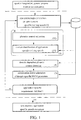
- Fig. 1 is a diagram reflecting the overall structure of the proposed methodology of generating a speech recognizer being tailored to a certain domain giving an overview of the basic principle of the current invention; the description in the remainder of this section refers to the use of a decision network for the detection and representation of phonetic contexts and should be understood as an illustration of one particular implementation of the basic ideas.
- the invention suggests starting from a first speech recognizer (1) (in most cases a speaker-independent, general purpose speech recognizer) and a small, i.e. limited, amount of adaptation (training) data (2) to generate a second speech recognizer (6) (adapted based on the training data (2)).
- the training data (not required to exhaust the specific domain) may be gathered either supervised or unsupervised by the use of an arbitrary speech recognizer that is not neccessarily the same as in (1). After feature extraction the data is aligned against the transcription to obtain a phonetic label for each frame. Most important is, while a standard training procedure according to the state of the art as described above starts the computation of significant phonetic contexts from a single equivalence class that holds all data (a decision network with one node only), the current teaching proposes an upfront step that separates the additional data into the equivalence classes provided by the speaker independent, general purpose speech recognizer.
- the decision network and its corresponding phonetic contexts of the first speech recognizer are used as a starting point to generate a second decision network and its corresponding second phonetic contexts for a second speech recognizer by re-estimating the first decision network and corresponding first phonetic contexts based on domain-specific training data.
- the phonetic contexts of the existing decision network are first extracted as shown in step (31).
- the current method therefore allows the adaptation of the general recognizer's HMM inventory to a new domain based on a small amount of adaptation data rather than to create a domain specific HMM inventory from scratch according to the state of the art, which would require the collection of a huge amount of domain-specific training data.
- the general speech recognizer's "elaborate" decision network with its rich, well-balanced equivalence classes and its context information is exploited as a starting point, the limited, i.e. small, amount of adaptation (training) data suffices to generate the adapted speech recognizer. This saves a lot of effort in collecting domain-specific training data.
- a significant speed-up in the adaptation process and an important improvement in the recognition quality of the generated adapted speech recognizer is achieved.
- each terminal node of the adapted (i.e. generated) decision network defines a context dependent, single state Hidden Markov Model for the specialized speech recognizer.
- the computation of an initial estimate for the state output probabilities has to consider both the history of the context adaptation process and the acoustic feature vectors associated with each terminal node of the adapted networks:
- the adaptation data may also be used for a pruning of Gaussians in order to reduce memory footprints and CPU time.
- the teaching of this reference with respect to selecting a subset of HMM states of the general purpose speech recognizer used as a starting point ("Squeezing") and the teaching with respect to selecting a subset of probability-density-functions (PDFS) of the general purpose speech recognizer used as a starting point (“Pruning”) both of which are distinctive of said specific domain are incorporated herewith by reference.
- the following table reflects the relative word error rates for the baseline system (left), the digit domain specific recognizer (middle) and the domain adapted recognizer (right) for a general dictation and a digit recognition task: baseline digits adapted dictation 100 193.25 117.89 digits 100 24.87 47.21
- the baseline system ( baseline, refer to the table above) was trained with 20.000 sentences gathered from different German newspapers and office correspondence letters, and uttered by approx. 200 German speakers.
- the recognizer uses phonetic contexts from a mixture of different domains, which is the usual method to achieve a good phonetic coverage in the training of general purpose, large vocabulary continuous speech recognizers, like e.g. IBM's ViaVoice.
- the domain specific digit data consists of approx. 10.000 training utterances that consist of up to 12 spoken digits and was used for both the adaptation of the general recognizer ( adapted, refer to the table above) according to the teaching of the current invention and the training of a digit specific recognizer ( digit, refer to the table above).
- the proposed adaptation techniques are capable of reducing the time for the training of the recognizer significantly.
- this provided technology allows the generation of specialized speech recognizers requiring reduced computation resources, for instance in terms of computing time and memory footprints.
- the suggested technology is thus suited for the incremental and low cost integration of new application domains into any speech recognition application. It may be applied to general purpose, speaker independent speech recognizers as well as to further adaptation of speaker dependent speech recognizers.
Landscapes
- Engineering & Computer Science (AREA)
- Artificial Intelligence (AREA)
- Computational Linguistics (AREA)
- Health & Medical Sciences (AREA)
- Audiology, Speech & Language Pathology (AREA)
- Human Computer Interaction (AREA)
- Physics & Mathematics (AREA)
- Acoustics & Sound (AREA)
- Multimedia (AREA)
- Machine Translation (AREA)
Priority Applications (1)
| Application Number | Priority Date | Filing Date | Title |
|---|---|---|---|
| EP20010124431 EP1205907B1 (fr) | 2000-11-14 | 2001-10-11 | Adaptation du contexte phonétique pour l'amélioration de la reconnaissance de la parole |
Applications Claiming Priority (3)
| Application Number | Priority Date | Filing Date | Title |
|---|---|---|---|
| EP00124795 | 2000-11-14 | ||
| EP00124795 | 2000-11-14 | ||
| EP20010124431 EP1205907B1 (fr) | 2000-11-14 | 2001-10-11 | Adaptation du contexte phonétique pour l'amélioration de la reconnaissance de la parole |
Publications (3)
| Publication Number | Publication Date |
|---|---|
| EP1205907A2 true EP1205907A2 (fr) | 2002-05-15 |
| EP1205907A3 EP1205907A3 (fr) | 2003-11-19 |
| EP1205907B1 EP1205907B1 (fr) | 2005-06-08 |
Family
ID=26071591
Family Applications (1)
| Application Number | Title | Priority Date | Filing Date |
|---|---|---|---|
| EP20010124431 Expired - Lifetime EP1205907B1 (fr) | 2000-11-14 | 2001-10-11 | Adaptation du contexte phonétique pour l'amélioration de la reconnaissance de la parole |
Country Status (1)
| Country | Link |
|---|---|
| EP (1) | EP1205907B1 (fr) |
Cited By (3)
| Publication number | Priority date | Publication date | Assignee | Title |
|---|---|---|---|---|
| EP1736963A1 (fr) * | 2005-06-21 | 2006-12-27 | International Business Machines Corporation | Réorganisation des bases de données finales des systèmes de concaténation du passage de la parole au texte, à application spécifique |
| GB2478314A (en) * | 2010-03-02 | 2011-09-07 | Toshiba Res Europ Ltd | Incorporating context dependency in an acoustic model for both speech recognition and synthesis |
| CN119763556A (zh) * | 2024-12-31 | 2025-04-04 | 北京帝派智能科技有限公司 | 多模态训练数据构建方法、装置及多模态大模型构建方法 |
Families Citing this family (1)
| Publication number | Priority date | Publication date | Assignee | Title |
|---|---|---|---|---|
| US8798994B2 (en) | 2008-02-06 | 2014-08-05 | International Business Machines Corporation | Resource conservative transformation based unsupervised speaker adaptation |
-
2001
- 2001-10-11 EP EP20010124431 patent/EP1205907B1/fr not_active Expired - Lifetime
Non-Patent Citations (3)
| Title |
|---|
| FRITSCH J ET AL: "EFFECTIVE STRUCTURAL ADAPTATION OF LVCSR SYSTEMS TO UNSEEN DOMAINS USING HIERARCHICAL CONNECTIONIST ACOUSTIC MODELS" ICSLP'98, October 1998 (1998-10), page P754 XP007000546 SYDNEY (AUSTRALIA) * |
| FRITSCH J: "ACID/HNN: a framework for hierarchical connectionist acoustic modeling" AUTOMATIC SPEECH RECOGNITION AND UNDERSTANDING, 1997. PROCEEDINGS., 1997 IEEE WORKSHOP ON SANTA BARBARA, CA, USA 14-17 DEC. 1997, NEW YORK, NY, USA,IEEE, US, 14 December 1997 (1997-12-14), pages 164-171, XP010267508 ISBN: 0-7803-3698-4 * |
| SINGH R ET AL: "DOMAIN ADDUCED STATE TYING FOR CROSS-DOMAIN ACOUSTIC MODELLING" EUROSPEECH 1999, vol. 4, pages 1707-1710, XP007001326 BUDAPEST (HUNGARY) * |
Cited By (5)
| Publication number | Priority date | Publication date | Assignee | Title |
|---|---|---|---|---|
| EP1736963A1 (fr) * | 2005-06-21 | 2006-12-27 | International Business Machines Corporation | Réorganisation des bases de données finales des systèmes de concaténation du passage de la parole au texte, à application spécifique |
| GB2478314A (en) * | 2010-03-02 | 2011-09-07 | Toshiba Res Europ Ltd | Incorporating context dependency in an acoustic model for both speech recognition and synthesis |
| GB2478314B (en) * | 2010-03-02 | 2012-09-12 | Toshiba Res Europ Ltd | A speech processor, a speech processing method and a method of training a speech processor |
| US9043213B2 (en) | 2010-03-02 | 2015-05-26 | Kabushiki Kaisha Toshiba | Speech recognition and synthesis utilizing context dependent acoustic models containing decision trees |
| CN119763556A (zh) * | 2024-12-31 | 2025-04-04 | 北京帝派智能科技有限公司 | 多模态训练数据构建方法、装置及多模态大模型构建方法 |
Also Published As
| Publication number | Publication date |
|---|---|
| EP1205907B1 (fr) | 2005-06-08 |
| EP1205907A3 (fr) | 2003-11-19 |
Similar Documents
| Publication | Publication Date | Title |
|---|---|---|
| US6999925B2 (en) | Method and apparatus for phonetic context adaptation for improved speech recognition | |
| US5862519A (en) | Blind clustering of data with application to speech processing systems | |
| US5953701A (en) | Speech recognition models combining gender-dependent and gender-independent phone states and using phonetic-context-dependence | |
| US7319960B2 (en) | Speech recognition method and system | |
| US20050049870A1 (en) | Open vocabulary speech recognition | |
| JP2559998B2 (ja) | 音声認識装置及びラベル生成方法 | |
| CN102280106A (zh) | 用于移动通信终端的语音网络搜索方法及其装置 | |
| JPH09152886A (ja) | 不特定話者モデル生成装置及び音声認識装置 | |
| EP1465154B1 (fr) | Méthode pour la reconnaissance de parole utilisant l'inférence variationelle avec des modèles d'espace à états changeants | |
| KR101618512B1 (ko) | 가우시안 혼합모델을 이용한 화자 인식 시스템 및 추가 학습 발화 선택 방법 | |
| CN112201275B (zh) | 声纹分割方法、装置、设备及可读存储介质 | |
| CN112509560B (zh) | 一种基于缓存语言模型的语音识别自适应方法和系统 | |
| US9984678B2 (en) | Factored transforms for separable adaptation of acoustic models | |
| Chen et al. | Automatic transcription of broadcast news | |
| EP1074019B1 (fr) | Adaptation d'un systeme de reconnaissance de la parole a des variations dans les domaines dialectal et linguistique | |
| US6789061B1 (en) | Method and system for generating squeezed acoustic models for specialized speech recognizer | |
| EP1205907B1 (fr) | Adaptation du contexte phonétique pour l'amélioration de la reconnaissance de la parole | |
| Mohanty et al. | Isolated Odia digit recognition using HTK: an implementation view | |
| Imperl et al. | Clustering of triphones using phoneme similarity estimation for the definition of a multilingual set of triphones | |
| CA2203649A1 (fr) | Classificateur a arbres de decision | |
| JPH1097285A (ja) | 音声認識装置 | |
| Kwon et al. | A method for on-line speaker indexing using generic reference models. | |
| Sawant et al. | Isolated spoken Marathi words recognition using HMM | |
| Huda et al. | A variable initialization approach to the EM algorithm for better estimation of the parameters of hidden markov model based acoustic modeling of speech signals | |
| JP2001125589A (ja) | 音響モデル学習装置、音響モデル変換装置及び音声認識装置 |
Legal Events
| Date | Code | Title | Description |
|---|---|---|---|
| PUAI | Public reference made under article 153(3) epc to a published international application that has entered the european phase |
Free format text: ORIGINAL CODE: 0009012 |
|
| AK | Designated contracting states |
Kind code of ref document: A2 Designated state(s): AT BE CH CY DE DK ES FI FR GB GR IE IT LI LU MC NL PT SE TR |
|
| AX | Request for extension of the european patent |
Free format text: AL;LT;LV;MK;RO;SI |
|
| PUAL | Search report despatched |
Free format text: ORIGINAL CODE: 0009013 |
|
| AK | Designated contracting states |
Kind code of ref document: A3 Designated state(s): AT BE CH CY DE DK ES FI FR GB GR IE IT LI LU MC NL PT SE TR |
|
| AX | Request for extension of the european patent |
Extension state: AL LT LV MK RO SI |
|
| 17P | Request for examination filed |
Effective date: 20040311 |
|
| 17Q | First examination report despatched |
Effective date: 20040521 |
|
| AKX | Designation fees paid |
Designated state(s): AT BE CH CY DE DK ES FI FR GB GR IE IT LI LU MC NL PT SE TR |
|
| GRAP | Despatch of communication of intention to grant a patent |
Free format text: ORIGINAL CODE: EPIDOSNIGR1 |
|
| GRAS | Grant fee paid |
Free format text: ORIGINAL CODE: EPIDOSNIGR3 |
|
| GRAA | (expected) grant |
Free format text: ORIGINAL CODE: 0009210 |
|
| AK | Designated contracting states |
Kind code of ref document: B1 Designated state(s): AT BE CH CY DE DK ES FI FR GB GR IE IT LI LU MC NL PT SE TR |
|
| PG25 | Lapsed in a contracting state [announced via postgrant information from national office to epo] |
Ref country code: IT Free format text: LAPSE BECAUSE OF FAILURE TO SUBMIT A TRANSLATION OF THE DESCRIPTION OR TO PAY THE FEE WITHIN THE PRESCRIBED TIME-LIMIT;WARNING: LAPSES OF ITALIAN PATENTS WITH EFFECTIVE DATE BEFORE 2007 MAY HAVE OCCURRED AT ANY TIME BEFORE 2007. THE CORRECT EFFECTIVE DATE MAY BE DIFFERENT FROM THE ONE RECORDED. Effective date: 20050608 Ref country code: CH Free format text: LAPSE BECAUSE OF FAILURE TO SUBMIT A TRANSLATION OF THE DESCRIPTION OR TO PAY THE FEE WITHIN THE PRESCRIBED TIME-LIMIT Effective date: 20050608 Ref country code: BE Free format text: LAPSE BECAUSE OF FAILURE TO SUBMIT A TRANSLATION OF THE DESCRIPTION OR TO PAY THE FEE WITHIN THE PRESCRIBED TIME-LIMIT Effective date: 20050608 Ref country code: NL Free format text: LAPSE BECAUSE OF FAILURE TO SUBMIT A TRANSLATION OF THE DESCRIPTION OR TO PAY THE FEE WITHIN THE PRESCRIBED TIME-LIMIT Effective date: 20050608 Ref country code: TR Free format text: LAPSE BECAUSE OF FAILURE TO SUBMIT A TRANSLATION OF THE DESCRIPTION OR TO PAY THE FEE WITHIN THE PRESCRIBED TIME-LIMIT Effective date: 20050608 Ref country code: FI Free format text: LAPSE BECAUSE OF FAILURE TO SUBMIT A TRANSLATION OF THE DESCRIPTION OR TO PAY THE FEE WITHIN THE PRESCRIBED TIME-LIMIT Effective date: 20050608 Ref country code: AT Free format text: LAPSE BECAUSE OF FAILURE TO SUBMIT A TRANSLATION OF THE DESCRIPTION OR TO PAY THE FEE WITHIN THE PRESCRIBED TIME-LIMIT Effective date: 20050608 Ref country code: LI Free format text: LAPSE BECAUSE OF FAILURE TO SUBMIT A TRANSLATION OF THE DESCRIPTION OR TO PAY THE FEE WITHIN THE PRESCRIBED TIME-LIMIT Effective date: 20050608 |
|
| REG | Reference to a national code |
Ref country code: GB Ref legal event code: FG4D |
|
| REG | Reference to a national code |
Ref country code: CH Ref legal event code: NV Representative=s name: INTERNATIONAL BUSINESS MACHINES CORPORATION Ref country code: CH Ref legal event code: EP |
|
| REF | Corresponds to: |
Ref document number: 60111329 Country of ref document: DE Date of ref document: 20050714 Kind code of ref document: P |
|
| REG | Reference to a national code |
Ref country code: IE Ref legal event code: FG4D |
|
| PG25 | Lapsed in a contracting state [announced via postgrant information from national office to epo] |
Ref country code: SE Free format text: LAPSE BECAUSE OF FAILURE TO SUBMIT A TRANSLATION OF THE DESCRIPTION OR TO PAY THE FEE WITHIN THE PRESCRIBED TIME-LIMIT Effective date: 20050908 Ref country code: DK Free format text: LAPSE BECAUSE OF FAILURE TO SUBMIT A TRANSLATION OF THE DESCRIPTION OR TO PAY THE FEE WITHIN THE PRESCRIBED TIME-LIMIT Effective date: 20050908 Ref country code: GR Free format text: LAPSE BECAUSE OF FAILURE TO SUBMIT A TRANSLATION OF THE DESCRIPTION OR TO PAY THE FEE WITHIN THE PRESCRIBED TIME-LIMIT Effective date: 20050908 |
|
| PG25 | Lapsed in a contracting state [announced via postgrant information from national office to epo] |
Ref country code: ES Free format text: LAPSE BECAUSE OF FAILURE TO SUBMIT A TRANSLATION OF THE DESCRIPTION OR TO PAY THE FEE WITHIN THE PRESCRIBED TIME-LIMIT Effective date: 20050919 |
|
| PGFP | Annual fee paid to national office [announced via postgrant information from national office to epo] |
Ref country code: IE Payment date: 20050927 Year of fee payment: 5 |
|
| PG25 | Lapsed in a contracting state [announced via postgrant information from national office to epo] |
Ref country code: CY Free format text: LAPSE BECAUSE OF FAILURE TO SUBMIT A TRANSLATION OF THE DESCRIPTION OR TO PAY THE FEE WITHIN THE PRESCRIBED TIME-LIMIT Effective date: 20051011 |
|
| PG25 | Lapsed in a contracting state [announced via postgrant information from national office to epo] |
Ref country code: MC Free format text: LAPSE BECAUSE OF NON-PAYMENT OF DUE FEES Effective date: 20051031 Ref country code: LU Free format text: LAPSE BECAUSE OF NON-PAYMENT OF DUE FEES Effective date: 20051031 |
|
| PG25 | Lapsed in a contracting state [announced via postgrant information from national office to epo] |
Ref country code: PT Free format text: LAPSE BECAUSE OF FAILURE TO SUBMIT A TRANSLATION OF THE DESCRIPTION OR TO PAY THE FEE WITHIN THE PRESCRIBED TIME-LIMIT Effective date: 20051114 |
|
| NLV1 | Nl: lapsed or annulled due to failure to fulfill the requirements of art. 29p and 29m of the patents act | ||
| REG | Reference to a national code |
Ref country code: CH Ref legal event code: PL |
|
| ET | Fr: translation filed | ||
| PLBE | No opposition filed within time limit |
Free format text: ORIGINAL CODE: 0009261 |
|
| STAA | Information on the status of an ep patent application or granted ep patent |
Free format text: STATUS: NO OPPOSITION FILED WITHIN TIME LIMIT |
|
| 26N | No opposition filed |
Effective date: 20060309 |
|
| PG25 | Lapsed in a contracting state [announced via postgrant information from national office to epo] |
Ref country code: IE Free format text: LAPSE BECAUSE OF NON-PAYMENT OF DUE FEES Effective date: 20061011 |
|
| REG | Reference to a national code |
Ref country code: IE Ref legal event code: MM4A |
|
| REG | Reference to a national code |
Ref country code: GB Ref legal event code: 746 Effective date: 20070905 |
|
| REG | Reference to a national code |
Ref country code: FR Ref legal event code: TP |
|
| REG | Reference to a national code |
Ref country code: GB Ref legal event code: 732E Free format text: REGISTERED BETWEEN 20100617 AND 20100623 |
|
| REG | Reference to a national code |
Ref country code: GB Ref legal event code: S47 Free format text: CANCELLATION OF ENTRY; APPLICATION BY FILING PATENTS FORM 15 WITHIN 4 WEEKS FROM THE DATE OF PUBLICATION OF THIS JOURNAL |
|
| REG | Reference to a national code |
Ref country code: GB Ref legal event code: S47 Free format text: ENTRY CANCELLED; NOTICE IS HEREBY GIVEN THAT THE ENTRY ON THE REGISTER 'LICENCES OF RIGHT' UPON THE UNDER MENTIONED PATENT WAS CANCELLED ON 9 FEBRUARY 2011PHONETIC CONTEXT ADAPTATION FOR IMPROVED SPEECH RECOGNITION |
|
| REG | Reference to a national code |
Ref country code: FR Ref legal event code: PLFP Year of fee payment: 16 |
|
| REG | Reference to a national code |
Ref country code: FR Ref legal event code: PLFP Year of fee payment: 17 |
|
| PGFP | Annual fee paid to national office [announced via postgrant information from national office to epo] |
Ref country code: FR Payment date: 20171031 Year of fee payment: 17 |
|
| PG25 | Lapsed in a contracting state [announced via postgrant information from national office to epo] |
Ref country code: FR Free format text: LAPSE BECAUSE OF NON-PAYMENT OF DUE FEES Effective date: 20181031 |
|
| PGFP | Annual fee paid to national office [announced via postgrant information from national office to epo] |
Ref country code: GB Payment date: 20201027 Year of fee payment: 20 |
|
| PGFP | Annual fee paid to national office [announced via postgrant information from national office to epo] |
Ref country code: DE Payment date: 20201228 Year of fee payment: 20 |
|
| REG | Reference to a national code |
Ref country code: DE Ref legal event code: R071 Ref document number: 60111329 Country of ref document: DE |
|
| REG | Reference to a national code |
Ref country code: GB Ref legal event code: PE20 Expiry date: 20211010 |
|
| PG25 | Lapsed in a contracting state [announced via postgrant information from national office to epo] |
Ref country code: GB Free format text: LAPSE BECAUSE OF EXPIRATION OF PROTECTION Effective date: 20211010 |