EP1205908B1 - Aussprache von neuen Wörtern zur Sprachverarbeitung - Google Patents
Aussprache von neuen Wörtern zur Sprachverarbeitung Download PDFInfo
- Publication number
- EP1205908B1 EP1205908B1 EP01309137A EP01309137A EP1205908B1 EP 1205908 B1 EP1205908 B1 EP 1205908B1 EP 01309137 A EP01309137 A EP 01309137A EP 01309137 A EP01309137 A EP 01309137A EP 1205908 B1 EP1205908 B1 EP 1205908B1
- Authority
- EP
- European Patent Office
- Prior art keywords
- sub
- word
- sequence
- word units
- units
- Prior art date
- Legal status (The legal status is an assumption and is not a legal conclusion. Google has not performed a legal analysis and makes no representation as to the accuracy of the status listed.)
- Expired - Lifetime
Links
- 238000012545 processing Methods 0.000 title claims description 104
- 238000000034 method Methods 0.000 claims description 76
- 230000009471 action Effects 0.000 claims description 5
- 238000012217 deletion Methods 0.000 description 35
- 230000037430 deletion Effects 0.000 description 35
- 230000008569 process Effects 0.000 description 24
- 238000012549 training Methods 0.000 description 19
- 238000003780 insertion Methods 0.000 description 18
- 230000037431 insertion Effects 0.000 description 18
- 238000010586 diagram Methods 0.000 description 16
- 230000001902 propagating effect Effects 0.000 description 14
- 230000007704 transition Effects 0.000 description 14
- 230000001186 cumulative effect Effects 0.000 description 10
- 230000000644 propagated effect Effects 0.000 description 10
- 238000004458 analytical method Methods 0.000 description 8
- 238000004364 calculation method Methods 0.000 description 7
- 238000012986 modification Methods 0.000 description 3
- 230000004048 modification Effects 0.000 description 3
- 230000001419 dependent effect Effects 0.000 description 2
- 235000008694 Humulus lupulus Nutrition 0.000 description 1
- 238000007476 Maximum Likelihood Methods 0.000 description 1
- 241000252794 Sphinx Species 0.000 description 1
- 238000013398 bayesian method Methods 0.000 description 1
- 238000011161 development Methods 0.000 description 1
- 230000007246 mechanism Effects 0.000 description 1
Images








Classifications
-
- G—PHYSICS
- G10—MUSICAL INSTRUMENTS; ACOUSTICS
- G10L—SPEECH ANALYSIS TECHNIQUES OR SPEECH SYNTHESIS; SPEECH RECOGNITION; SPEECH OR VOICE PROCESSING TECHNIQUES; SPEECH OR AUDIO CODING OR DECODING
- G10L15/00—Speech recognition
- G10L15/06—Creation of reference templates; Training of speech recognition systems, e.g. adaptation to the characteristics of the speaker's voice
-
- G—PHYSICS
- G10—MUSICAL INSTRUMENTS; ACOUSTICS
- G10L—SPEECH ANALYSIS TECHNIQUES OR SPEECH SYNTHESIS; SPEECH RECOGNITION; SPEECH OR VOICE PROCESSING TECHNIQUES; SPEECH OR AUDIO CODING OR DECODING
- G10L15/00—Speech recognition
- G10L15/06—Creation of reference templates; Training of speech recognition systems, e.g. adaptation to the characteristics of the speaker's voice
- G10L15/063—Training
- G10L2015/0631—Creating reference templates; Clustering
Definitions
- the present invention relates to the determination of phoneme or phoneme like models for words or commands which can be added to a word/command dictionary and used in speech processing related applications, such as speech recognition.
- the invention particularly relates to the generation of canonical and non-canonical phoneme sequences which represent the pronunciation of input words, which sequences can be used in speech processing applications.
- speech recognition systems are becoming more and more popular due the increased processing power available to perform the recognition operation.
- Most speech recognition systems can be classified into small vocabulary systems and large vocabulary systems.
- the speech recognition engine usually compares the input speech to be recognised with acoustic patterns representative of the words known to the system.
- the reference patterns usually represent phonemes of a given language. In this way, the input speech is compared with the phoneme patterns to generate a sequence of phonemes representative of the input speech.
- a word decoder is then used to identify words within the sequence of phonemes using a word to phoneme dictionary.
- a problem with large vocabulary speech recognition systems is that if the user speaks a word which is not in the word dictionary, then a mis-recognition will occur and the speech recognition system will output the word or words which sound most similar to the out of vocabulary word actually spoken.
- This problem can be overcome by providing a mechanism which allows users to add new word models for out of vocabulary words. To date, this has predominantly been achieved by generating acoustic patterns representative of the out of vocabulary words. However, this requires the speech recognition system to match the input speech with two different types of model - phoneme models and word models, which slows down the recognition process. Other systems allow the user to add a phonetic spelling to the word dictionary in order to cater for out of vocabulary words.
- GB-A-2349260 describes a system for generating new reference models for adding to a speech recognition dictionary from three or more training signals.
- the system simultaneously compares and aligns the three or more training signals with each other and, from the alignment results, generates a reference model representative of the training signals.
- One aim of the present invention is to provide an alternative technique for generating a phoneme or phoneme-like sequence representative of new words to be added to a word dictionary or command dictionary which may be used in, for example, a speech recognition system.
- Embodiments of the present invention can be implemented using dedicated hardware circuits, but the embodiment that is to be described is implemented in computer software or code, which is run in conjunction with a personal computer.
- the software may be run in conjunction with a workstation, photocopier, facsimile machine, personal digital assistant (PDA), web browser or the like.
- Figure 1 shows a personal computer (PC) 1 which is programmed to operate an embodiment of the present invention.
- a keyboard 3, a pointing device 5, a microphone 7 and a telephone line 9 are connected to the PC 1 via an interface 11.
- the keyboard 3 and pointing device enable the system to be controlled by a user.
- the microphone 7 converts the acoustic speech signal of the user into an equivalent electrical signal and supplies this to the PC 1 for processing.
- An internal modem and speech receiving circuit may be connected to the telephone line 9 so that the PC 1 can communicate with, for example, a remote computer or with a remote user.
- the program instructions which make the PC 1 operate in accordance with the present invention may be supplied for use with the PC 1 on, for example, a storage device such as a magnetic disc 13 or by downloading the software from a remote computer over, for example, the Internet via the internal modem and telephone unit 9.
- this sequence of phonemes are input, via a switch 20, to the word decoder 21 which identifies words within the generated phoneme sequence by comparing the phoneme sequence with those stored in a word to phoneme dictionary 23.
- the words 25 output by the word decoder 21 are then used by the PC 1 to either control the software applications running on the PC 1 or for insertion as text in a word processing program running on the PC 1.
- the speech recognition system 14 In order to be able to add words to the word to phoneme dictionary 23, the speech recognition system 14 also has a training mode of operation. This is activated by the user applying an appropriate command through the user interface 27 using the keyboard 3 or the pointing device 5. This request to enter the training mode is passed to the control unit 29 which causes the switch 20 to connect the output of the speech recognition engine 17 to the input of a word model generation unit 31. At the same time, the control unit 29 outputs a prompt to the user, via the user interface 27, to provide several renditions of the word to be added. Each of these renditions is processed by the pre-processor 15 and the speech recognition engine 17 to generate a plurality of sequences of phonemes representative of a respective rendition of the new word.
- sequences of phonemes are input to the word model generation unit 31 which processes them to identify the most probable phoneme sequence which could have been mis-recognised as all the training examples and this sequence is stored together with a typed version of the word input by the user, in the word to phoneme dictionary 23.
- the control unit 29 After the user has finished adding words to the dictionary 23, the control unit 29 returns the speech recognition system 14 to its normal mode of operation by connecting the output of the speech recognition engine back to the word decoder 21 through the switch 20.
- FIG. 3 shows in more detail the components of the word model generation unit 31 discussed above.
- a memory 41 which receives each phoneme sequence output from the speech recognition engine 17 for each of the renditions of the new word input by the user.
- the phoneme sequences stored in the memory 41 are applied to the dynamic programming alignment unit 43 which, in this embodiment, uses a dynamic programming alignment technique to compare the phoneme sequences and to determine the best alignment between them.
- the alignment unit 43 performs the comparison and alignment of all the phoneme sequences at the same time.
- the identified alignment between the input sequences is then input to a phoneme sequence determination unit 45, which uses this alignment to determine the sequence of phonemes which matches best with the input phoneme sequences.
- each phoneme sequence representative of a rendition of the new word can have insertions and deletions relative to this unknown sequence of phonemes which matches best with all the input sequences of phonemes.
- Figure 4 shows a possible matching between a first phoneme sequence (labelled d 1 i , d 1 i+1 , d 1 i+2 ”) representative of a first rendition of the new word, a second phoneme sequence (labelled d 2 j , d 2 j+1 , d 2 j+2 ”) representative of a second rendition of the new word and a sequence of phonemes (labelled p n , p n+1 , P n+2 ”) which represents a canonical sequence of phonemes of the text which best matches the two input sequences.
- the dynamic programming alignment unit 43 must allow for the insertion of phonemes in both the first and second phoneme sequences (represented by the inserted phonemes d 1 i+3 and d 2 j+1 ) as well as the deletion of phonemes from the first and second phoneme sequences (represented by phonemes d 1 i+1 and d 2 j+2 , which are both aligned with two phonemes in the canonical sequence of phonemes), relative to the canonical sequence of phonemes.
- dynamic programming is a technique which can be used to find the optimum alignment between sequences of features, which in this embodiment are phonemes.
- the dynamic programming alignment unit 43 calculates the optimum alignment by simultaneously propagating a plurality of dynamic programming paths, each of which represents a possible alignment between a sequence of phonemes from the first sequence (representing the first rendition) and a sequence of phonemes from the second sequence (representing the second rendition). All paths begin at a start null node which is at the beginning of the two input sequences of phonemes and propagate until they reach an end null node, which is at the end of the two sequences of phonemes.
- Figures 5 and 6 schematically illustrate the alignment which is performed and this path propagation.
- Figure 5 shows a rectangular coordinate plot with the horizontal axis being provided for the first phoneme sequence representative of the first rendition and the vertical axis being provided for the second phoneme sequence representative of the second rendition.
- the start null node ⁇ s is provided at the top left hand corner and the end null node ⁇ e is provided at the bottom right hand corner.
- the phonemes of the first sequence are provided along the horizontal axis and the phonemes of the second sequence are provided down the vertical axis.
- Figure 6 also shows a number of lattice points, each of which represents a possible alignment (or decoding) between a phoneme of the first phoneme sequence and a phoneme of the second phoneme sequence.
- lattice point 21 represents a possible alignment between first sequence phoneme d 1 3 and second sequence phoneme d 2 1 .
- Figure 6 also shows three dynamic programming paths m 1 , m 2 and m 3 which represent three possible alignments between the first and second phoneme sequences and which begin at the start null node ⁇ s and propagate through the lattice points to the end null node ⁇ e .
- the dynamic programming alignment unit 43 keeps a score for each of the dynamic programming paths which it propagates, which score is dependent upon the overall similarity of the phonemes which are aligned along the path. Additionally, in order to limit the number of deletions and insertions of phonemes in the sequences being aligned, the dynamic programming process places certain constraints on the way in which each dynamic programming path can propagate.
- Figure 7 shows the dynamic programming constraints which are used in this embodiment.
- a dynamic programming path ends at lattice point (i,j), representing an alignment between phoneme d 1 i of the first phoneme sequence and phoneme d 2 j of the second phoneme sequence
- that dynamic programming path can propagate to the lattice points (i+1,j), (i+2,j), (i+3,j), (i,j+1), (i+1,j+1), (i+2,j+1), (i,j+2), (i+1,j+2) and (i,j+3).
- the dynamic programming alignment unit 78 keeps a score for each of the dynamic programming paths, which score is dependent upon the similarity of the phonemes which are aligned along the path. Therefore, when propagating a path ending at point (i,j) to these other points, the dynamic programming process adds the respective "cost" of doing so to the cumulative score for the path ending at point (i,j), which is stored in a store (SCORE(i,j)) associated with that point.
- this cost includes insertion probabilities for any inserted phonemes, deletion probabilities for any deletions and decoding probabilities for a new alignment between a phoneme from the first phoneme sequence and a phoneme from the second phoneme sequence.
- the cumulative score is multiplied by the probability of inserting the given phoneme; when there is a deletion, the cumulative score is multiplied by the probability of deleting the phoneme; and when there is a decoding, the cumulative score is multiplied by the probability of decoding the two phonemes.
- the system stores a probability for all possible phoneme combinations in memory 47.
- the system sums, over all possible phonemes p, the probability of decoding the phoneme p as the first sequence phoneme d 1 i and as the second sequence phoneme d 2 j , weighted by the probability of phoneme p occurring unconditionally, i.e.: P d j 1
- a back tracking routine can be used to identify the best alignment of the phonemes in the two input phoneme sequences.
- the phoneme sequence determination unit 79 uses this alignment, to determine the sequence of phonemes which best represents the input phoneme sequences. The way in which this is achieved in this embodiment will be described later.
- the dynamic programming alignment unit 43 when two sequences of phonemes (for two renditions of the new word), are aligned.
- the scores associated with all the nodes are set to an appropriate initial value.
- the alignment unit 43 then propagates paths from the null start node ( ⁇ s ) to all possible start points defined by the dynamic programming constraints discussed above.
- the dynamic programming score for the paths that are started are then set to equal the transition score for passing from the null start node to the respective start point.
- the paths which are started in this way are then propagated through the array of lattice points defined by the first and second phoneme sequences until they reach the null end node ⁇ e .
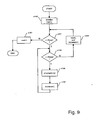
- the alignment unit 78 processes the array of lattice points column by column in a raster like technique.
- step s149 the system initialises a first phoneme sequence loop pointer, i, and a second phoneme loop pointer, j, to zero. Then in step s151, the system compares the first phoneme sequence loop pointer i with the number of phonemes in the first phoneme sequence (Nseq1). Initially the first phoneme sequence loop pointer i is set to zero and the processing therefore proceeds to step s153 where a similar comparison is made for the second phoneme sequence loop pointer j relative to the total number of phonemes in the second phoneme sequence (Nseq2).
- step s155 the system propagates the path ending at lattice point (i,j) using the dynamic programming constraints discussed above. The way in which the system propagates the paths in step s155 will be described in more detail later.
- step s155 the loop pointer j is incremented by one in step s157 and the processing returns to step s153.
- step s159 the loop pointer j is reset to zero and the loop pointer i is incremented by one.
- step s151 a similar procedure is performed for the next column of lattice points.
- step s161 the loop pointer i is reset to zero and the processing ends.
- step s155 shown in Figure 9 the system propagates the path ending at lattice point (i,j) using the dynamic programming constraints discussed above.
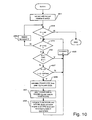
- Figure 10 is a flowchart which illustrates the processing steps involved in performing this propagation step.
- the system sets the values of two variables mxi and mxj and initialises first phoneme sequence loop pointer i2 and second phoneme sequence loop pointer j2.
- the loop pointers i2 and j2 are provided to loop through all the lattice points to which the path ending at point (i,j) can propagate to and the variables mxi and mxj are used to ensure that i2 and j2 can only take the values which are allowed by the dynamic programming constraints.
- mxj is set equal to j plus mxhops, provided this is less than or equal to the number of phonemes in the second phoneme sequence, otherwise mxj is set equal to the number of phonemes in the second phoneme sequence (Nseq2).
- the system initialises the first phoneme sequence loop pointer i2 to be equal to the current value of the first phoneme sequence loop pointer i and the second phoneme sequence loop pointer j2 to be equal to the current value of the second phoneme sequence loop pointer j.
- step s219 the system compares the first phoneme sequence loop pointer i2 with the variable mxi. Since loop pointer i2 is set to i and mxi is set equal to i+4, in step s211, the processing will proceed to step s221 where a similar comparison is made for the second phoneme sequence loop pointer j2. The processing then proceeds to step s223 which ensures that the path does not stay at the same lattice point (i,j) since initially, i2 will equal i and j2 will equal j. Therefore, the processing will initially proceed to step s225 where the query phoneme loop pointer j2 is incremented by one.
- step s221 the incremented value of j2 is compared with mxj. If j2 is less than mxj, then the processing returns to step s223 and then proceeds to step s227, which is operable to prevent too large a hop along both phoneme sequences. It does this by ensuring that the path is only propagated if i2 + j2 is less than i + j + mxhops. This ensures that only the triangular set of points shown in Figure 7 are processed. Provided this condition is met, the processing proceeds to step s229 where the system calculates the transition score (TRANSCORE) from lattice point (i,j) to lattice point (i2,j2).
- TSNSCORE transition score
- step s233 the system compares TEMPSCORE with the cumulative score already stored for point (i2,j2) and the largest score is stored in SCORE (i2,j2) and an appropriate back pointer is stored to identify which path had the larger score.
- the processing then returns to step s225 where the loop pointer j2 is incremented by one and the processing returns to step s221.
- step s235 the loop pointer j2 is reset to the initial value j and the first phoneme sequence loop pointer i2 is incremented by one.
- the processing then returns to step s219 where the processing begins again for the next column of points shown in Figure 7. Once the path has been propagated from point (i,j) to all the other points shown in Figure 7, the processing ends.
- step s229 the transition score from one point (i,j) to another point (i2,j2) is calculated. This involves calculating the appropriate insertion probabilities, deletion probabilities and decoding probabilities relative to the start point and end point of the transition. The way in which this is achieved in this embodiment, will now be described with reference to Figures 11 and 12.
- Figure 11 shows a flow diagram which illustrates the general processing steps involved in calculating the transition score for a path propagating from lattice point (i,j) to lattice point (i2,j2).
- step s291 the system calculates, for each first sequence phoneme which is inserted between point (i,j) and point (i2,j2), the score for inserting the inserted phoneme(s) (which is just the log of probability PI( ) discussed above) and adds this to an appropriate store, INSERTSCORE.
- the processing then proceeds to step s293 where the system performs a similar calculation for each second sequence phoneme which is inserted between point (i,j) and point (i2,j2) and adds this to INSERTSCORE.
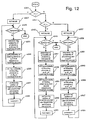
- step s295 the processing involved in step s295 to determine the deletion and/or decoding scores in propagating from point (i,j) to point (i2,j2) will now be described in more detail with reference to Figure 12.
- the system determines if the first phoneme sequence loop pointer i2 equals first phoneme sequence loop pointer i. If it does, then the processing proceeds to step s327 where a phoneme loop pointer r is initialised to one. The phoneme pointer r is used to loop through each possible phoneme known to the system during the calculation of equation (1) above.
- step s329 the system compares the phoneme pointer r with the number of phonemes known to the system, Nphonemes (which in this embodiment equals 43).
- step s331 the system determines the log probability of phoneme p r occurring (i.e. log P(p r )) and copies this to a temporary score TEMPDELSCORE. If first phoneme sequence loop pointer i2 equals annotation phoneme i, then the system is propagating the path ending at point (i,j) to one of the points (i,j+1), (i,j+2) or (i,j+3). Therefore, there is a phoneme in the second phoneme sequence which is not in the first phoneme sequence. Consequently, in step s333, the system adds the log probability of deleting phoneme p r from the first phoneme sequence (i.e.
- step s337 the processing proceeds to step s339 where the phoneme loop pointer r is incremented by one and then the processing returns to step s329 where a similar processing is performed for the next phoneme known to the system. Once this calculation has been performed for each of the 43 phonemes known to the system, the processing ends.
- step s325 the system determines that i2 is not equal to i, then the processing proceeds to step s341 where the system determines if the second phoneme sequence loop pointer j2 equals second phoneme sequence loop pointer j. If it does, then the processing proceeds to step s343 where the phoneme loop pointer r is initialised to one. The processing then proceeds to step s345 where the phoneme loop pointer r is compared with the total number of phonemes known to the system (Nphonemes). Initially r is set to one in step s343, and therefore, the processing proceeds to step s347 where the log probability of phoneme p r occurring is determined and copied into the temporary store TEMPDELSCORE.
- step s349 the system determines the log probability of decoding phoneme p r as first sequence phoneme d 1 i2 and adds this to TEMPDELSCORE. If the second phoneme sequence loop pointer j2 equals loop pointer j, then the system is propagating the path ending at point (i,j) to one of the points (i+1,j), (i+2,j) or (i+3,j). Therefore, there is a phoneme in the first phoneme sequence which is not in the second phoneme sequence. Consequently, in step s351, the system determines the log probability of deleting phoneme p r from the second phoneme sequence and adds this to TEMPDELSCORE.
- step s363 the log probability of decoding phoneme p r as first sequence phoneme d 1 i2 is added to TEMPDELSCORE.
- step s365 the log probability of decoding phoneme p r as second sequence phoneme d 2 j2 is determined and added to TEMPDELSCORE.
- step s367 The system then performs, in step s367, the log addition of TEMPDELSCORE with DELSCORE and stores the result in DELSCORE.
- the phoneme counter r is then incremented by one in step s369 and the processing returns to step s359.
- the phoneme sequence determination unit 45 determines, for each aligned pair of phonemes (d 1 m , d 2 n ) of the best alignment, the unknown phoneme, p, which maximises: P d m 1
- This phoneme, p is the phoneme which is taken to best represent the aligned pair of phonemes.
- the determination unit 45 identifies the sequence of canonical phonemes that best represents the two input phoneme sequences. In this embodiment, this canonical sequence is then output by the determination unit 45 and stored in the word to phoneme dictionary 23 together with the text of the new word typed in by the user.
- the dynamic programming alignment unit 43 aligns two sequences of phonemes and the way in which the phoneme sequence determination unit 45 obtains the sequence of phonemes which best represents the two input sequences given this best alignment.
- the dynamic programming alignment unit 43 should preferably be able to align any number of input phoneme sequences and the determination unit 45 should be able to derive the phoneme sequence which best represents any number of input phoneme sequences given the best alignment between them.
- a description will now be given of the way in which the dynamic programming alignment unit 43 aligns three input phoneme sequences together and how the determination unit 45 determines the phoneme sequence which best represents the three input phoneme sequences.
- Figure 13 shows a three-dimensional coordinate plot with one dimension being provided for each of the three phoneme sequences and illustrates the three-dimensional lattice of points which are processed by the dynamic programming alignment unit 43 in this case.
- the alignment unit 43 uses the same transition scores and phoneme probabilities and similar dynamic programming constraints in order to propagate and score each of the paths through the three-dimensional network of lattice points in the plot shown in Figure 13.
- the dynamic programming alignment unit 43 propagates dynamic programming paths from the null start node ⁇ e to each of the start points defined by the dynamic programming constraints. It then propagates these paths from these start points to the null end node ⁇ e by processing the points in the search space in a raster-like fashion.
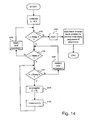
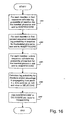
- the control algorithm used to control this raster processing operation is shown in Figure 14. As can be seen from a comparison of Figure 14 with Figure 9, this control algorithm has the same general form as the control algorithm used when there were only two phoneme sequences to be aligned.
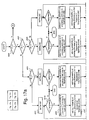
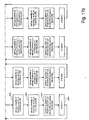
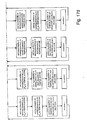
- step s463 in Figure 16 determines the deletion and/or decoding scores in propagating from point (i,j,k) to point (i2,j2,k2) will now be described in more detail with reference to Figure 17.
- the system determines (in steps s525 to s537) if there are any phoneme deletions from any of the three phoneme sequences by comparing i2, j2 and k2 with i, j and k respectively.
- FIGs 17a to 17d there are eight main branches which operate to determine the appropriate decoding and deletion probabilities for the eight possible situations. Since the processing performed in each situation is very similar, a description will only be given of one of the situations.
- step s541 r is set to one in step s541. Therefore the processing proceeds to step s545 where the system determines the log probability of phoneme p r occurring and copies this to a temporary score TEMPDELSCORE. The processing then proceeds to step s547 where the system determines the log probability of deleting phoneme p r in the first phoneme sequence and adds this to TEMPDELSCORE. The processing then proceeds to step s549 where the system determines the log probability of decoding phoneme p r as second sequence phoneme d 2 j2 and adds this to TEMPDELSCORE.
- the term calculated within the dynamic programming algorithm for decodings and deletions is similar to equation (1) but has an additional probability term for the third phoneme sequence.
- ⁇ r 1 N p P d i 1
- the dynamic programming alignment unit 78 identifies the path having the best score and uses the back pointers which have been stored for this path to identify the aligned phoneme triples (i.e. the aligned phonemes in the three sequences) which lie along this best path.
- the phoneme sequence determination unit 79 determines the phoneme, p, which maximises: P d m 1
- the dynamic programming alignment unit 43 aligns two or three sequences of phonemes.
- the addition of a further phoneme sequence simply involves the addition of a number of loops in the control algorithm in order to account for the additional phoneme sequence.
- the alignment unit 43 can therefore identify the best alignment between any number of input phoneme sequences by identifying how many sequences are input and then ensuring that appropriate control variables are provided for each input sequence.
- the determination unit 45 can then identify the sequence of phonemes which best represents the input phoneme sequences using these alignment results.
- the method of word training described earlier is used to initially create a single postulated phoneme sequence for a word taken from a large number of example phonetic decodings of the word.
- This postulated version is then used to score all the decodings of the word according to their similarity to the postulated form. Versions with similar scores are then clustered. If more than one cluster emerges then a postulated representation for each cluster is determined and the original decodings are re-scored and re-clustered relative to the new postulated representations. This process is then iterated until some convergence criteria is achieved. This process will now be explained in more detail with reference to Figures 18 to 20.
- Figure 18 shows in more detail the main components of the word model generation unit 31 of the third embodiment.
- the word generation unit 31 is similar to the word generation unit of the first embodiment.
- it includes a memory 41 which receives each phoneme sequence (D i ) output from the speech recognition engine 17 for each of the renditions of the new word input by the user.
- the phoneme sequences stored in the memory 41 are applied to the dynamic programming alignment unit 43 which determines the best alignment between the phoneme sequences in the manner described above.
- the phoneme sequence determination unit 45 determines (also in the manner described above) the sequence of phonemes which matches best with the input phoneme sequences.
- This best phoneme sequence (D best ) and the original-input phoneme sequences (D i ) are then passed to an analysis unit 61 which compares the best phoneme sequence with each of the input sequences to determine how well each of the input sequences corresponds to the best sequence. If the input sequence is the same length as the best sequence, then the analysis unit does this, in this embodiment, by calculating: P ( D i
- the analysis unit 61 analyses each of these probabilities using a clustering algorithm to identify if different clusters can be found within these probability scores - which would indicate that the input sequences include different pronunciations for the input word.
- This is schematically illustrated in the plot shown in Figure 19.
- Figure 19 has the probability scores determined in the above manner plotted on the x-axis with the number of training sequences having that score plotted on the y-axis. (As those skilled in the art will appreciate, in practice the plot will be a histogram, since it is unlikely that many scores will be exactly the same). The two peaks 71 and 73 in this plot indicate that there are two different pronunciations of the training word.
- the analysis unit 61 assigns each of the input phoneme sequences (D i ) to one of the different clusters.
- the analysis unit 61 then outputs the input phoneme sequences of each cluster back to the dynamic programming alignment unit 43 which processes the input phoneme sequences in each cluster separately so that the phoneme sequence determination unit 45 can determine a representative phoneme sequence for each of the clusters.
- the phoneme sequences of the or each other cluster are stored in the memory 47.
- the analysis unit 61 compares each of the input phoneme sequences with all of the cluster representative sequences and then re-clusters the input phoneme sequences. This whole process is then iterated until a suitable convergence criteria is achieved.
- the representative sequence for each cluster identified using this process may then be stored in the word to phoneme dictionary 23 together with the typed version of the word.
- the cluster representations are input to a phoneme sequence combination unit 63 which combines the representative phoneme sequences to generate a phoneme lattice using a standard forward/backward truncation technique.
- Figures 20 and 21 show two sequences of phonemes 75 and 77 represented by sequences A-B-C-D and A-E-C-D and Figure 21 shows the resulting phoneme lattice 79 obtained by combining the two sequences shown in Figure 20 using the forward/backward truncation technique.
- the phoneme lattice 79 output by the phoneme combination unit 63 is then stored in the word to phoneme dictionary 23 together with the typed version of the word.
- the dynamic programming alignment unit 78 used 1892 decoding/deletion probabilities and 43 insertion probabilities to score the dynamic programming paths in the phoneme alignment operation.
- these probabilities are determined in advance during a training session and are stored in the memory 47.
- a speech recognition system is used to provide a phoneme decoding of speech in two ways. In the first way, the speech recognition system is provided with both the speech and the actual words which are spoken. The speech recognition system can therefore use this information to generate the canonical phoneme sequence of the spoken words to obtain an ideal decoding of the speech. The speech recognition system is then used to decode the same speech, but this time without knowledge of the actual words spoken (referred to hereinafter as the free decoding).
- the phoneme sequence generated from the free decoding will differ from the canonical phoneme sequence in the following ways:
- the probability of decoding phoneme p as phoneme d is given by: P d
- p c dp n p where c dp is the number of times the automatic speech recognition system decoded d when it should have been p and n p is the number of times the automatic speech recognition system decoded anything (including a deletion) when it should have been p.
- phoneme has been used throughout the above description, the present application is not limited to its linguistic meaning, but includes the different sub-word units that are normally identified and used in standard speech recognition systems.
- phoneme covers any such sub-word unit, such as phones, syllables or katakana (Japanese alphabet).
- the dynamic programming alignment unit calculated decoding scores for each transition using equation (1) above.
- the dynamic programming alignment unit may be arranged, instead, to identify the unknown phoneme, p, which maximises the probability term within the summation and to use this maximum probability term as the probability of decoding the corresponding phonemes in the input sequences.
- the dynamic programming alignment unit would also preferably store an indication of the phoneme which maximised this probability with the appropriate back pointer, so that after the best alignment between the input phoneme sequences has been determined, the sequence of phonemes which best represents the input sequences can simply be determined by the phoneme sequence determination unit from this stored data.
- the insertion, deletion and decoding probabilities were calculated from statistics of the speech recognition system using a maximum likelihood estimate of the probabilities.
- other techniques such as maximum entropy techniques, can be used to estimate these probabilities. Details of a suitable maximum entropy technique can be found at pages 45 to 52 in the book entitled “Maximum Entropy and Bayesian Methods" published by Kluwer Academic publishers and written by John Skilling.
- equation (1) was calculated for each aligned pair of phonemes.
- the first sequence phoneme and the second sequence phoneme were compared with each of the phonemes known to the system.
- the aligned phonemes may only be compared with a subset of all the known phonemes, which subset is determined in advance from the training data.
- the input phonemes to be aligned could be used to address a lookup table which would identify the phonemes which need to be compared with them using equation (1) (or its multi-input sequence equivalent).
- the user input a number of spoken renditions of the new input word together with a typed rendition of the new word.
- it may be input as a handwritten version which is subsequently converted into text using appropriate handwriting recognition software.
- new word models were generated for use in a speech recognition system.
- the new word models are stored together with a text version of the word so that the text can be used in a word processing application.
- the word models may be used as a control command rather than being for use in generating corresponding text. In this case, rather than storing text corresponding to the new word model, the corresponding control action or command would be input and stored.
Landscapes
- Engineering & Computer Science (AREA)
- Artificial Intelligence (AREA)
- Computational Linguistics (AREA)
- Health & Medical Sciences (AREA)
- Audiology, Speech & Language Pathology (AREA)
- Human Computer Interaction (AREA)
- Physics & Mathematics (AREA)
- Acoustics & Sound (AREA)
- Multimedia (AREA)
- Machine Translation (AREA)
- Document Processing Apparatus (AREA)
Claims (50)
- Vorrichtung zur Erzeugung einer Sequenz von Teilworteinheiten, die ein neues Wort darstellen, das zu einem Wörterbuch (23) eines Spracherkennungssystems (14) hinzuzufügen ist, mit
einer Empfangseinrichtung (17) zum Empfang von Signalen, die eine erste und zweite Wiedergabe des neuen Worts darstellen,
einer Spracherkennungseinrichtung (17) zum Vergleich der empfangenen ersten und zweiten gesprochenen Wiedergabe mit im Voraus gespeicherten Teilworteinheitmodellen (19), um eine erste und zweite Sequenz von Teilworteinheiten zu erzeugen, die jeweils die erste und zweite gesprochene Wiedergabe des neuen Worts darstellen,
einer Einrichtung (43) zum Abgleich von Teilworteinheiten der ersten Sequenz mit Teilworteinheiten der zweiten Sequenz, um eine Anzahl von abgeglichenen Paaren von Unterworteinheiten zu bilden,
einer ersten Vergleichseinrichtung (43) zum Vergleich, für jedes abgeglichene Paar, der ersten Sequenzteilworteinheit in dem abgeglichenen Paar mit jeder einer Vielzahl von Teilworteinheiten, die aus einer Gruppe von vorbestimmten Teilworteinheiten genommen sind, um eine entsprechende Vielzahl von Vergleichsergebnissen zur Verfügung zu stellen, welche die Ähnlichkeiten zwischen der ersten Sequenzteilworteinheit und den jeweiligen Teilworteinheiten der Gruppe darstellen,
einer zweiten Vergleichseinrichtung (43) zum Vergleich, für jedes abgeglichene Paar, der zweiten Sequenzteilworteinheit in dem abgeglichenen Paar mit jeder einer Vielzahl von Teilworteinheiten aus der Gruppe, um eine weitere entsprechende Vielzahl von Vergleichsergebnissen zur Verfügung zu stellen, welche die Ähnlichkeiten zwischen der zweiten Sequenzteilworteinheit und den jeweiligen Teilworteinheiten der Gruppe darstellen, und
einer Einrichtung (45) zur Bestimmung, für jedes abgeglichene Paar von Teilworteinheiten, einer die Teilworteinheiten in dem abgeglichenen Paar darstellenden Teilworteinheit in Abhängigkeit von den Vergleichsergebnissen, die durch die erste und zweite Vergleichseinrichtung für das abgeglichene Paar erzeugt sind, um eine Sequenz von Teilworteinheiten zu bestimmen, welche die gesprochenen Wiedergaben des neuen Worts darstellen. - Vorrichtung nach Anspruch 1, wobei die Bestimmungseinrichtung (45) betreibbar ist, um die Sequenz von Teilworteinheiten durch Bestimmen, für jedes abgeglichene Paar von Teilworteinheiten, einer Teilworteinheit zu bestimmen, die verwechselnd ähnlich zu der ersten und zweiten Teilworteinheit des abgeglichenen Paars ist.
- Vorrichtung nach Anspruch 1 oder 2, zudem mit
einer Einrichtung (43) zur Kombination der Vergleichsergebnisse, die erlangt sind, wenn die erste und zweite Sequenzteilworteinheit in dem abgeglichenen Paar mit derselben Teilworteinheit aus der Gruppe verglichen wird, um eine Vielzahl von kombinierten Vergleichsergebnissen zu erzeugen,
einer dritten Vergleichseinrichtung (43) zum Vergleich, für jedes abgeglichene Paar, der durch die Kombinationseinrichtung (43) für das abgeglichene Paar erzeugten kombinierten Vergleichsergebnisse, und
wobei die Bestimmungseinrichtung (45) betreibbar ist, um für jedes abgeglichene Paar von Teilworteinheiten, eine Teilworteinheit zu bestimmen, welche die Teilworteinheiten in dem abgeglichenen Paar in Abhängigkeit von einem Vergleichsergebnis darstellt, das durch die dritte Vergleichseinrichtung für das abgeglichene Paar ausgegeben ist. - Vorrichtung nach einem der vorangehenden Ansprüche, wobei die erste und zweite Vergleichseinrichtung (43) betreibbar sind, um jeweils die erste Sequenzteilworteinheit und die zweite Sequenzteilworteinheit mit jeder der Teilworteinheiten in der Gruppe von Teilworteinheiten zu vergleichen.
- Vorrichtung nach Anspruch 3 oder 4, wobei die erste und zweite Vergleichseinrichtung (43) betreibbar sind, um Vergleichsergebnisse zur Verfügung zu stellen, welche eine Wahrscheinlichkeit einer Verwechslung der entsprechenden Teilworteinheit angeben, die aus der Gruppe von vorbestimmten Teilworteinheiten als die Teilworteinheit in dem abgeglichenen Paar genommen ist.
- Vorrichtung nach Anspruch 5, wobei die Kombinationseinrichtung (43) betreibbar ist, um die Vergleichsergebnisse zu kombinieren, um die Wahrscheinlichkeiten einer Verwechslung der entsprechenden Teilworteinheit zu multiplizieren, die aus der Gruppe als die Teilworteinheiten in dem abgeglichenen Paar genommen ist.
- Vorrichtung nach Anspruch 5, wobei jede der Teilworteinheiten in der Gruppe von vorbestimmten Teilworteinheiten eine vorbestimmte Wahrscheinlichkeit eines Auftretens innerhalb einer Sequenz von Teilworteinheiten hat, und wobei die Kombinationseinrichtung (43) betreibbar ist, um jedes der kombinierten Vergleichsergebnisse in Abhängigkeit von der jeweiligen Wahrscheinlichkeit eines Auftretens für die Teilworteinheit der zur Erzeugung des kombinierten Vergleichsergebnisses verwendeten Gruppe zu bewerten.
- Vorrichtung nach Anspruch 7, wobei die Kombinationseinrichtung (43) betreibbar ist, um die Vergleichsergebnisse zu kombinieren durch Berechnen von

wobei d1 i und d2 j jeweils ein abgeglichenes Paar von einer ersten und einer zweiten Teilworteinheit sind; P(di|pr) das Vergleichsergebnis ist, das durch die erste Vergleichseinrichtung ausgegeben ist, und die Wahrscheinlichkeit einer Verwechslung einer Gruppenteilworteinheit pr als erste Sequenzteilworteinheit d1 i darstellt; P(d2 j|pr) das Vergleichsergebnis ist, das durch die zweite Vergleichseinrichtung ausgegeben ist, und die Wahrscheinlichkeit einer Verwechslung einer Gruppenteilworteinheit pr als zweite Sequenzteilworteinheit d2 j darstellt; und P(pr) eine Bewertung ist, welche die Wahrscheinlichkeit eines Auftretens einer Gruppenteilworteinheit pr in einer Sequenz von Teilworteinheiten darstellt. - Vorrichtung nach Anspruch 8, wobei die dritte Vergleichseinrichtung (43) betreibbar ist, um die Gruppenteilworteinheit zu identifizieren, welche das maximale kombinierte Vergleichsergebnis ergibt, und wobei die Bestimmungseinrichtung (45) betreibbar ist, um die die Teilworteinheiten in dem abgeglichenen Paar darstellende Teilworteinheit als die Teilworteinheit zu bestimmen, welche das maximale kombinierte Vergleichsergebnis zur Verfügung stellt.
- Vorrichtung nach einem der Ansprüche 6 bis 9, wobei die Vergleichsergebnisse logarithmische Wahrscheinlichkeiten darstellen, und wobei die Kombinationseinrichtung (43) betreibbar ist, um die Wahrscheinlichkeiten durch Addition der jeweiligen Vergleichsergebnisse zu multiplizieren.
- Vorrichtung nach einem der Ansprüche 3 bis 10, wobei jede der Teilworteinheiten in der ersten und zweiten Sequenz von Teilworteinheiten zu der Gruppe von vorbestimmten Teilworteinheiten gehört, und wobei die erste und zweite Vergleichseinrichtung (43) betreibbar sind, um die Vergleichsergebnisse unter Verwendung von vorbestimmten Daten zur Verfügung zu stellen, welche die Teilworteinheiten in der Gruppe miteinander in Beziehung setzen.
- Vorrichtung nach Anspruch 11, wobei die vorbestimmten Daten für jede Teilworteinheit in der Gruppe von Teilworteinheiten eine Wahrscheinlichkeit zur Verwechslung dieser Teilworteinheit mit jeder der anderen Teilworteinheiten in der Gruppe von Teilworteinheiten umfassen.
- Vorrichtung nach einem der vorangehenden Ansprüche, wobei die Abgleicheinrichtung (43) eine dynamische Programmiereinrichtung zum Abgleich der ersten und zweiten Sequenz von Teilworteinheiten unter Verwendung einer dynamischen Programmiertechnik aufweist.
- Vorrichtung nach Anspruch 13, wobei die dynamische Programmiereinrichtung betreibbar ist, um einen optimalen Abgleich zwischen der ersten und zweiten Sequenz von Teilworteinheiten zu bestimmen.
- Vorrichtung nach einem der vorangehenden Ansprüche, wobei jede der Teilworteinheiten ein Phonem darstellt.
- Vorrichtung nach einem der vorangehenden Ansprüche, wobei die Empfangseinrichtung (17) betreibbar ist, um Signale zu empfangen, die eine dritte gesprochene Wiedergabe des neuen Worts darstellen, wobei die Erkennungseinrichtung (17) betreibbar ist, um die dritte Wiedergabe des neuen Worts mit den im Voraus gespeicherten Teilworteinheitmodellen zu vergleichen, um eine dritte Sequenz von Teilworteinheiten zu erzeugen, die die dritte Wiedergabe des neuen Worts darstellen, wobei die Abgleicheinrichtung (43) betreibbar ist, um simultan die Teilworteinheiten der ersten, zweiten und dritten Sequenz von Teilworteinheiten abzugleichen, um eine Anzahl von abgeglichenen Gruppen von Teilworteinheiten zu erzeugen, wobei jede abgeglichene Gruppe eine Teilworteinheit aus jeder der Wiedergaben aufweist, und wobei die Bestimmungseinrichtung (45) betreibbar ist, um die Darstellungssequenz von Teilworteinheiten in Abhängigkeit von den abgeglichenen Gruppen von Teilworteinheiten zu bestimmen.
- Vorrichtung nach einem der Ansprüche 1 bis 15, wobei die Empfangseinrichtung (17) betreibbar ist, um Signale zu empfangen, die eine dritte gesprochene Wiedergabe des neuen Worts darstellen, wobei die Erkennungseinrichtung (17) betreibbar ist, um die dritte Wiedergabe des neuen Worts mit den im Voraus gespeicherten Teilworteinheitmodellen zu vergleichen, um eine dritte Sequenz von Teilworteinheiten zu erzeugen, die die dritte Wiedergabe des neuen Worts darstellen, und wobei die Abgleicheinrichtung (43) betreibbar ist, um zwei Sequenzen von Teilworteinheiten gleichzeitig abzugleichen.
- Vorrichtung nach einem der vorangehenden Ansprüche, wobei die Empfangseinrichtung (17) betreibbar ist, um Signale zu empfangen, die eine Vielzahl von gesprochenen Wiedergaben des neuen Worts darstellen, wobei die Erkennungseinrichtung (17) betreibbar ist, um die empfangenen gesprochenen Wiedergaben mit im Voraus gespeicherten Teilworteinheitmodellen zu vergleichen, um für jede der Vielzahl von gesprochenen Wiedergaben eine Sequenz von Teilworteinheiten zu erzeugen, wobei die Abgleicheinrichtung (43) betreibbar ist, um die Teilworteinheiten der Vielzahl von Sequenzen von Teilworteinheiten abzugleichen, um eine Anzahl von abgeglichenen Gruppen von Teilworteinheiten zu erzeugen, wobei jede Gruppe eine Teilworteinheit aus jeder Sequenz aufweist, wobei die Bestimmungseinrichtung (45) betreibbar ist, um eine Sequenz von Teilworteinheiten zu bestimmen, welche die gesprochenen Wiedergaben des neuen Worts darstellen, und wobei die Vorrichtung zudem aufweist (i) eine Einrichtung (45) zum Vergleich jeder Sequenz von Teilworteinheiten mit der Darstellungssequenz von Teilworteinheiten, um ein die Ähnlichkeit dazwischen darstellendes Ergebnis zu bestimmen, (ii) eine Einrichtung (45) zur Verarbeitung der durch die Vergleichseinrichtung ausgegebenen Ergebnisse zur Identifikation von Anhäufungen in den Ergebnissen, die eine oder mehr verschiedene Ausspracheformen der gesprochenen Wiedergabe des neuen Worts angeben, und wobei die Bestimmungseinrichtung (45) betreibbar ist, um eine Sequenz von Teilworteinheiten zu bestimmen, welche die gesprochenen Wiedergaben des neuen Worts in jeder Anhäufung darstellen.
- Vorrichtung nach Anspruch 18, wobei die Vergleichseinrichtung (45), die Verarbeitungseinrichtung (45), und die Bestimmungseinrichtung (45) iterativ arbeiten, bis ein vorbestimmtes Konvergenzkriterium erfüllt ist.
- Vorrichtung nach Anspruch 18 oder 19, zudem mit einer Einrichtung (45) zur Kombination der Sequenzen von Teilworteinheiten für jede der Anhäufungen in einen Teilworteinheitverband.
- Vorrichtung nach einem der vorangehenden Ansprüche, wobei die erzeugte Sequenz von Teilworteinheiten einen neuen Befehl darstellen, der zu einem Befehlswörterbuch des Spracherkennungssystems hinzuzufügen ist.
- Vorrichtung nach einem der Ansprüche 1 bis 20, wobei die erzeugte Sequenz von Teilworteinheiten ein neues Wort darstellt, das zu einem Wortwörterbuch eines Spracherkennungssystems zusammen mit einer Textwiedergabe des neuen Worts hinzuzufügen ist.
- Vorrichtung zur Hinzufügung eines neuen Worts und einer Teilwortdarstellung des neuen Worts zu einem Wortwörterbuch eines Spracherkennungssystems, mit
einer Einrichtung (41) zum Empfang einer ersten Sequenz von Teilworteinheiten, die eine erste gesprochene Wiedergabe des neuen Worts darstellen, und zum Empfang einer zweiten Sequenz von Teilworteinheiten, die eine zweite gesprochene Wiedergabe des neuen Worts darstellen,
einer Einrichtung (43) zum Abgleich von Teilworteinheiten der ersten Sequenz mit Teilworteinheiten der zweiten Sequenz, um eine Anzahl von abgeglichenen Paaren von Unterworteinheiten zu bilden,
einer ersten Vergleichseinrichtung (43) zum Vergleich, für jedes abgeglichene Paar, der ersten Sequenzteilworteinheit in dem abgeglichenen Paar mit jeder einer Vielzahl von Teilworteinheiten, die aus einer Gruppe von vorbestimmten Teilworteinheiten genommen sind, um eine entsprechende Vielzahl von Vergleichsergebnissen zur Verfügung zu stellen, welche die Ähnlichkeiten zwischen der ersten Sequenzteilworteinheit und den jeweiligen Teilworteinheiten der Gruppe darstellen,
einer zweiten Vergleichseinrichtung (43) zum Vergleich, für jedes abgeglichene Paar, der zweiten Sequenzteilworteinheit in dem abgeglichenen Paar mit jeder der Vielzahl von Teilworteinheiten aus der Gruppe, um eine weitere entsprechende Vielzahl von Vergleichsergebnissen zur Verfügung zu stellen, welche die Ähnlichkeiten zwischen der zweiten Sequenzteilworteinheit und den jeweiligen Teilworteinheiten der Gruppe darstellen, und
einer Einrichtung (45) zur Bestimmung, für jedes abgeglichene Paar von Teilworteinheiten, einer die Teilworteinheiten in dem abgeglichenen Paar darstellenden Teilworteinheit in Abhängigkeit von den Vergleichsergebnissen, die durch die erste und zweite Vergleichseinrichtung für das abgeglichene Paar erzeugt sind, um eine Sequenz von Teilworteinheiten zu bestimmen, welche die gesprochenen Wiedergaben des neuen Worts darstellen, und
einer Einrichtung zur Hinzufügung des neuen Worts und der Darstellungssequenz von Teilworteinheiten zu dem Wortwörterbuch. - Spracherkennungssystem, mit
einer Einrichtung (15) zum Empfang von zu erkennenden Sprachsignalen,
einer Einrichtung (19) zur Speicherung von Teilworteinheitmodellen,
einer Einrichtung (17) zum Vergleich von empfangener Sprache mit den Teilworteinheitmodellen, um ein oder mehr Sequenzen von Teilworteinheiten zu erzeugen, welche die empfangenen Sprachsignale darstellen,
einem Wörterbuch (23), das Sequenzen von Teilworteinheiten mit Wörtern oder Befehlen in Beziehung setzt,
einer Decodiereinrichtung (21) zur Verarbeitung der einen oder mehr Sequenzen von Teilworteinheiten, die durch die Vergleichseinheit (17) ausgegeben sind, unter Verwendung des Wörterbuchs (23), um ein oder mehr Wörter oder Befehle entsprechend zu den empfangenen Sprachsignalen zu erzeugen,
einer Einrichtung (31) zur Hinzufügung eines neuen Worts oder Befehls und einer Teilworteinheitdarstellung des neuen Worts oder Befehls zu dem Wörterbuch (23), und
einer Einrichtung (20, 29) zur steuerbaren Verbindung der Ausgabe der Vergleichseinrichtung (17) mit entweder der Decodiereinrichtung (21) oder der Einrichtung (31) zur Hinzufügung des neuen Worts oder Befehls,
dadurch gekennzeichnet, dass die Einrichtung (31) zur Hinzufügung des neuen Worts oder Befehls aufweist
eine Einrichtung (41) zum Empfang einer durch die Vergleichseinrichtung (17) ausgegebenen ersten Sequenz von Teilworteinheiten, die eine erste gesprochene Wiedergabe des neuen Worts oder Befehls darstellen, und zum Empfang einer durch die Vergleichseinrichtung (17) ausgegebenen zweiten Sequenz von Teilworteinheiten, die eine zweite gesprochene Wiedergabe des neuen Worts oder Befehls darstellen,
eine Einrichtung (43) zum Abgleich von Teilworteinheiten der ersten Sequenz mit Teilworteinheiten der zweiten Sequenz, um eine Anzahl von abgeglichenen Paaren von Unterworteinheiten zu bilden,
eine erste Vergleichseinrichtung (43) zum Vergleich, für jedes abgeglichene Paar, der ersten Sequenzteilworteinheit in dem abgeglichenen Paar mit jeder einer Vielzahl von Teilworteinheiten, die aus einer Gruppe von vorbestimmten Teilworteinheiten genommen sind, um eine entsprechende Vielzahl von Vergleichsergebnissen zur Verfügung zu stellen, welche die Ähnlichkeiten zwischen der ersten Sequenzteilworteinheit und den jeweiligen Teilworteinheiten der Gruppe darstellen,
eine zweite Vergleichseinrichtung (43) zum Vergleich, für jedes abgeglichene Paar, der zweiten Sequenzteilworteinheit in dem abgeglichenen Paar mit jeder der Vielzahl von Teilworteinheiten aus der Gruppe, um eine weitere entsprechende Vielzahl von Vergleichsergebnissen zur Verfügung zu stellen, welche die Ähnlichkeiten zwischen der zweiten Sequenzteilworteinheit und den jeweiligen Teilworteinheiten der Gruppe darstellen, und
eine Einrichtung (45) zur Bestimmung, für jedes abgeglichene Paar von Teilworteinheiten, einer die Teilworteinheiten in dem abgeglichenen Paar darstellenden Teilworteinheit in Abhängigkeit von den Vergleichsergebnissen, die durch die erste und zweite Vergleichseinrichtung für das abgeglichene Paar erzeugt sind, um eine Sequenz von Teilworteinheiten zu bestimmen, welche die gesprochenen Wiedergaben des neuen Worts oder Befehls darstellen,
eine Einrichtung zum Empfang einer Textwiedergabe des neuen Worts oder eine mit dem neuen Befehl in Zusammenhang stehende Steueraktion, und
eine Einrichtung (31) zur Hinzufügung der Textwiedergabe des neuen Worts oder der mit dem neuen Befehl in Zusammenhang stehenden Steueraktion und der Darstellungssequenz von Teilworteinheiten zu dem Wörterbuch (23). - Verfahren des Erzeugens einer Sequenz von Teilworteinheiten, die ein neues Wort darstellen, das zu einem Wörterbuch eines Spracherkennungssystems hinzuzufügen ist, mit den Schritten
einem ersten Empfangsschritt des Empfangens von Signalen, die eine erste und zweite Wiedergabe des neuen Worts darstellen,
einem ersten Vergleichsschritt des Vergleichens der empfangenen ersten und zweiten gesprochenen Wiedergabe mit im Voraus gespeicherten Teilworteinheitmodellen, um eine erste Sequenz von Teilworteinheiten, welche die erste gesprochene Wiedergabe des neuen Worts darstellen, und eine zweite Sequenz von Teilworteinheiten, welche die zweite gesprochene Wiedergabe des neuen Worts darstellen, zu erzeugen,
Abgleich von Teilworteinheiten der ersten Sequenz mit Teilworteinheiten der zweiten Sequenz, um eine Anzahl von abgeglichenen Paaren von Unterworteinheiten zu bilden,
einem zweiten Vergleichsschritt des Vergleichens, für jedes abgeglichene Paar, der ersten Sequenzteilworteinheit in dem abgeglichenen Paar mit jeder einer Vielzahl von Teilworteinheiten, die aus einer Gruppe von vorbestimmten Teilworteinheiten genommen sind, um eine entsprechende Vielzahl von Vergleichsergebnissen zur Verfügung zu stellen, welche die Ähnlichkeiten zwischen der ersten Sequenzteilworteinheit und den jeweiligen Teilworteinheiten der Gruppe darstellen,
einem dritten Vergleichsschritt des Vergleichens, für jedes abgeglichene Paar, der zweiten Sequenzteilworteinheit in dem abgeglichenen Paar mit jeder der Vielzahl von Teilworteinheiten aus der Gruppe, um eine weitere entsprechende Vielzahl von Vergleichsergebnissen zur Verfügung zu stellen, welche die Ähnlichkeiten zwischen der zweiten Sequenzteilworteinheit und den jeweiligen Teilworteinheiten der Gruppe darstellen, und
Bestimmen, für jedes abgeglichene Paar von Teilworteinheiten, einer die Teilworteinheiten in dem abgeglichenen Paar darstellenden Teilworteinheit in Abhängigkeit von den Vergleichsergebnissen, die bei dem zweiten und dritten Vergleichsschritt für das abgeglichene Paar erzeugt sind, um eine Sequenz von Teilworteinheiten zu bestimmen, welche die gesprochenen Wiedergaben des neuen Worts darstellen. - Verfahren nach Anspruch 25, wobei der Bestimmungsschritt die Sequenz von Teilworteinheiten durch Bestimmen, für jedes abgeglichene Paar von Teilworteinheiten, einer Teilworteinheit bestimmt, die verwechselnd ähnlich zu der ersten und zweiten Teilworteinheit des abgeglichenen Paars ist.
- Verfahren nach Anspruch 25 oder 26, zudem mit den Schritten des
Kombinierens der Vergleichsergebnisse, die erlangt sind, wenn die erste und zweite Sequenzteilworteinheit in dem abgeglichenen Paar mit derselben Teilworteinheit aus der Gruppe verglichen wird, um eine Vielzahl von kombinierten Vergleichsergebnissen zu erzeugen,
einem vierten Vergleichsschritt des Vergleichens, für jedes abgeglichene Paar, der bei dem Kombinationsschritt für das abgeglichene Paar erzeugten kombinierten Vergleichsergebnisse, und
wobei der Bestimmungsschritt, für jedes abgeglichene Paar von Teilworteinheiten, eine Teilworteinheit bestimmt, welche die Teilworteinheiten in dem abgeglichenen Paar in Abhängigkeit von einem Vergleichsergebnis darstellt, das durch den vierten Vergleichsschritt für das abgeglichene Paar ausgegeben ist. - Verfahren nach Anspruch 27, wobei der zweite und dritte Vergleichsschritt jeweils die erste Sequenzteilworteinheit und die zweite Sequenzteilworteinheit mit jeder der Teilworteinheiten in der Gruppe von Teilworteinheiten vergleicht.
- Verfahren nach Anspruch 27 oder 28, wobei der zweite und dritte Vergleichsschritt Vergleichsergebnisse zur Verfügung stellen, welche eine Wahrscheinlichkeit einer Verwechslung der entsprechenden Teilworteinheit angeben, die aus der Gruppe von vorbestimmten Teilworteinheiten als die Teilworteinheit in dem abgeglichenen Paar genommen ist.
- Verfahren nach Anspruch 29, wobei der Kombinationsschritt die Vergleichsergebnisse kombiniert, um die Wahrscheinlichkeiten einer Verwechslung der entsprechenden Teilworteinheit zu multiplizieren, die aus der Gruppe als die Teilworteinheiten in dem abgeglichenen Paar genommen ist.
- Verfahren nach Anspruch 30, wobei jede der Teilworteinheiten in der Gruppe von vorbestimmten Teilworteinheiten eine vorbestimmte Wahrscheinlichkeit eines Auftretens innerhalb einer Sequenz von Teilworteinheiten hat, und wobei der Kombinationsschritt jedes der kombinierten Vergleichsergebnisse in Abhängigkeit von der jeweiligen Wahrscheinlichkeit eines Auftretens für die Teilworteinheit der zur Erzeugung des kombinierten Vergleichsergebnisses verwendeten Gruppe bewertet.
- Verfahren nach Anspruch 31, wobei der Kombinationsschritt die Vergleichsergebnisse kombiniert durch Berechnen von

wobei d1 i und d2 j jeweils ein abgeglichenes Paar von einer ersten und einer zweiten Teilworteinheit sind; P(di|pr) das Vergleichsergebnis ist, das durch den zweiten Vergleichsschritt ausgegeben ist, und die Wahrscheinlichkeit einer Verwechslung einer Gruppenteilworteinheit pr als erste Sequenzteilworteinheit d1 i darstellt; P(d2 j|pr) das Vergleichsergebnis ist, das durch den dritten Vergleichsschritt ausgegeben ist, und die Wahrscheinlichkeit einer Verwechslung einer Gruppenteilworteinheit pr als zweite Sequenzteilworteinheit d2 j darstellt; und P(pr) eine Bewertung ist, welche die Wahrscheinlichkeit eines Auftretens einer Gruppenteilworteinheit pr in einer Sequenz von Teilworteinheiten darstellt. - Verfahren nach Anspruch 32, wobei der vierte Vergleichsschritt die Gruppenteilworteinheit identifiziert, welche das maximale kombinierte Vergleichsergebnis ergibt, und wobei der Bestimmungsschritt die die Teilworteinheiten in dem abgeglichenen Paar darstellende Teilworteinheit als die Teilworteinheit bestimmt, welche das maximale kombinierte Vergleichsergebnis zur Verfügung stellt.
- Verfahren nach einem der Ansprüche 30 bis 33, wobei die Vergleichsergebnisse logarithmische Wahrscheinlichkeiten darstellen, und wobei der Kombinationsschritt die Wahrscheinlichkeiten durch Addition der jeweiligen Vergleichsergebnisse multipliziert.
- Verfahren nach einem der Ansprüche 27 bis 34, wobei jede der Teilworteinheiten in der ersten und zweiten Sequenz von Teilworteinheiten zu der Gruppe von vorbestimmten Teilworteinheiten gehört, und wobei der zweite und dritte Vergleichsschritt die Vergleichsergebnisse unter Verwendung von vorbestimmten Daten zur Verfügung stellen, welche die Teilworteinheiten in der Gruppe miteinander in Beziehung setzen.
- Verfahren nach Anspruch 35, wobei die vorbestimmten Daten für jede Teilworteinheit in der Gruppe von Teilworteinheiten eine Wahrscheinlichkeit zur Verwechslung dieser Teilworteinheit mit jeder der anderen Teilworteinheiten in der Gruppe von Teilworteinheiten umfassen.
- Verfahren nach einem der Ansprüche 25 bis 36, wobei der Abgleichschritt eine dynamische Programmiertechnik zum Abgleich der ersten und zweiten Sequenz von Teilworteinheiten verwendet.
- Verfahren nach Anspruch 37, wobei die dynamische Programmiertechnik einen optimalen Abgleich zwischen der ersten und zweiten Sequenz von Teilworteinheiten bestimmt.
- Verfahren nach einem der Ansprüche 25 bis 38, wobei jede der Teilworteinheiten ein Phonem darstellt.
- Verfahren nach einem der Ansprüche 25 bis 39, wobei der Empfangsschritt Signale empfängt, die eine dritte gesprochene Wiedergabe des neuen Worts darstellen, wobei der erste Vergleichsschritt die dritte Wiedergabe des neuen Worts mit den im Voraus gespeicherten Teilworteinheitmodellen vergleicht, um eine dritte Sequenz von Teilworteinheiten zu erzeugen, die die dritte Wiedergabe des neuen Worts darstellen, wobei der Abgleichschritt die Teilworteinheiten der ersten, zweiten und dritten Sequenz von Teilworteinheiten simultan abgleicht, um eine Anzahl von abgeglichenen Gruppen von Teilworteinheiten zu erzeugen, wobei jede abgeglichene Gruppe eine Teilworteinheit aus jeder der Wiedergaben aufweist, und wobei der Bestimmungsschritt die Darstellungssequenz von Teilworteinheiten in Abhängigkeit von den abgeglichenen Gruppen von Teilworteinheiten bestimmt.
- Verfahren nach einem der Ansprüche 25 bis 39, wobei der Empfangsschritt Signale empfängt, die eine dritte gesprochene Wiedergabe des neuen Worts darstellen, wobei der erste Vergleichsschritt die dritte Wiedergabe des neuen Worts mit den im Voraus gespeicherten Teilworteinheitmodellen vergleicht, um eine dritte Sequenz von Teilworteinheiten zu erzeugen, die die dritte Wiedergabe des neuen Worts darstellen, und wobei der Abgleichschritt zwei Sequenzen von Teilworteinheiten gleichzeitig abgleicht.
- Verfahren nach einem der Ansprüche 25 bis 41, wobei der Empfangsschritt Signale empfängt, die eine Vielzahl von gesprochenen Wiedergaben des neuen Worts darstellen, wobei erste Vergleichsschritt die empfangenen gesprochenen Wiedergaben mit im Voraus gespeicherten Teilworteinheitmodellen vergleicht, um für jede der Vielzahl von gesprochenen Wiedergaben eine Sequenz von Teilworteinheiten zu erzeugen, wobei der Abgleichschritt die Teilworteinheiten der Vielzahl von Sequenzen von Teilworteinheiten abgleicht, um eine Anzahl von abgeglichenen Gruppen von Teilworteinheiten zu bilden, wobei jede Gruppe eine Teilworteinheit aus jeder Sequenz aufweist, wobei der Bestimmungsschritt eine Sequenz von Teilworteinheiten bestimmt, welche die gesprochenen Wiedergaben des neuen Worts darstellen, und wobei das Verfahren zudem aufweist (i) einen vierten Vergleichsschritt des Vergleichens jeder Sequenz von Teilworteinheiten mit der Darstellungssequenz von Teilworteinheiten, um ein die Ähnlichkeit dazwischen darstellendes Ergebnis zu bestimmen, und (ii) Verarbeiten der durch den vierten Vergleichsschritt ausgegebenen Ergebnisse zur Identifikation von Anhäufungen in den Ergebnissen, die eine oder mehr verschiedene Ausspracheformen der gesprochenen Wiedergabe des neuen Worts angeben, und wobei der Bestimmungsschritt eine Sequenz von Teilworteinheiten bestimmt, welche die gesprochenen Wiedergaben des neuen Worts in jeder Anhäufung darstellen.
- Verfahren nach Anspruch 42, wobei der vierte Vergleichsschritt, der Verarbeitungsschritt, und der Bestimmungsschritt iterativ arbeiten, bis ein vorbestimmtes Konvergenzkriterium erfüllt ist.
- Verfahren nach Anspruch 42 oder 43, zudem mit dem Schritt des Kombinierens der Sequenzen von Teilworteinheiten für jede der Anhäufungen in einen Teilworteinheitverband.
- Verfahren nach einem der Ansprüche 25 bis 44, wobei die erzeugte Sequenz von Teilworteinheiten ein neues Wort darstellen, das zu einem Wortwörterbuch des Spracherkennungssystems hinzuzufügen ist.
- Verfahren nach einem der Ansprüche 25 bis 44, wobei die erzeugte Sequenz von Teilworteinheiten ein neues Wort darstellen, das zu einem Wortwörterbuch des Spracherkennungssystems hinzuzufügen ist.
- Verfahren des Hinzufügens eines neuen Worts und einer Teilwortdarstellung des neuen Worts zu einem Wortwörterbuch eines Spracherkennungssystems, mit des Schritten des
Empfangens einer ersten Sequenz von Teilworteinheiten, die eine erste gesprochene Wiedergabe des neuen Worts darstellen, und zum Empfang einer zweiten Sequenz von Teilworteinheiten, die eine zweite gesprochene Wiedergabe des neuen Worts darstellen,
Abgleichens von Teilworteinheiten der ersten Sequenz mit Teilworteinheiten der zweiten Sequenz, um eine Anzahl von abgeglichenen Paaren von Unterworteinheiten zu bilden,
einem ersten Vergleichsschritt des Vergleichens, für jedes abgeglichene Paar, der ersten Sequenzteilworteinheit in dem abgeglichenen Paar mit jeder einer Vielzahl von Teilworteinheiten, die aus einer Gruppe von vorbestimmten Teilworteinheiten genommen sind, um eine entsprechende Vielzahl von Vergleichsergebnissen zur Verfügung zu stellen, welche die Ähnlichkeiten zwischen der ersten Sequenzteilworteinheit und den jeweiligen Teilworteinheiten der Gruppe darstellen,
einem zweiten Vergleichsschritt des Vergleichens, für jedes abgeglichene Paar, der zweiten Sequenzteilworteinheit in dem abgeglichenen Paar mit jeder der Vielzahl von Teilworteinheiten aus der Gruppe, um eine weitere entsprechende Vielzahl von Vergleichsergebnissen zur Verfügung zu stellen, welche die Ähnlichkeiten zwischen der zweiten Sequenzteilworteinheit und den jeweiligen Teilworteinheiten der Gruppe darstellen, und
Bestimmens, für jedes abgeglichene Paar von Teilworteinheiten, einer die Teilworteinheiten in dem abgeglichenen Paar darstellenden Teilworteinheit in Abhängigkeit von den Vergleichsergebnissen, die bei dem zweiten und dritten Vergleichsschritt für das abgeglichene Paar erzeugt sind, um eine Sequenz von Teilworteinheiten zu bestimmen, welche die gesprochenen Wiedergaben des neuen Worts darstellen, und
Hinzufügens des neuen Worts und der Darstellungssequenz von Teilworteinheiten zu dem Wortwörterbuch. - Spracherkennungsverfahren mit den Schritten des
Empfangens von zu erkennenden Sprachsignalen,
Speicherns von Teilworteinheitmodellen,
Vergleichens von empfangenen Sprachsignalen mit den Teilworteinheitmodellen, um ein oder mehr Sequenzen von Teilworteinheiten zu erzeugen, welche die empfangenen Sprachsignale darstellen,
Speicherns eines Wörterbuchs, das Sequenzen von Teilworteinheiten mit Wörtern oder Befehlen in Beziehung setzt,
Verarbeitens der einen oder mehr Sequenzen von Teilworteinheiten, die durch den Vergleichsschritt ausgegeben sind, unter Verwendung des gespeicherten Wörterbuchs (23), um ein oder mehr Wörter oder Befehle entsprechend zu den empfangenen Sprachsignalen zu erzeugen,
Hinzufügens eines neuen Worts oder Befehls und einer Teilworteinheitdarstellung des neuen Worts oder Befehls zu dem Wörterbuch, und
steuerbar Verbindens der Ausgabe des Vergleichsschritts mit entweder dem Verarbeitungsschritt oder dem Hinzufügungsschritt,
dadurch gekennzeichnet, dass der Hinzufügungsschritt aufweist
Empfangens einer durch den Vergleichsschritt ausgegebenen ersten Sequenz von Teilworteinheiten, die eine erste gesprochene Wiedergabe des neuen Worts oder Befehls darstellen,
Empfangens einer durch den Vergleichsschritt ausgegebenen zweiten Sequenz von Teilworteinheiten, die eine zweite gesprochene Wiedergabe des neuen Worts oder Befehls darstellen,
Abgleichens von Teilworteinheiten der ersten Sequenz mit Teilworteinheiten der zweiten Sequenz, um eine Anzahl von abgeglichenen Paaren von Unterworteinheiten zu bilden,
einem ersten Vergleichsschritt des Vergleichens, für jedes abgeglichene Paar, der ersten Sequenzteilworteinheit in dem abgeglichenen Paar mit jeder einer Vielzahl von Teilworteinheiten, die aus einer Gruppe von vorbestimmten Teilworteinheiten genommen sind, um eine entsprechende Vielzahl von Vergleichsergebnissen zur Verfügung zu stellen, welche die Ähnlichkeiten zwischen der ersten Sequenzteilworteinheit und den jeweiligen Teilworteinheiten der Gruppe darstellen,
einem zweiten Vergleichsschritt des Vergleichens, für jedes abgeglichene Paar, der zweiten Sequenzteilworteinheit in dem abgeglichenen Paar mit jeder der Vielzahl von Teilworteinheiten aus der Gruppe, um eine weitere entsprechende Vielzahl von Vergleichsergebnissen zur Verfügung zu stellen, welche die Ähnlichkeiten zwischen der zweiten Sequenzteilworteinheit und den jeweiligen Teilworteinheiten der Gruppe darstellen, und
Bestimmens, für jedes abgeglichene Paar von Teilworteinheiten, einer die Teilworteinheiten in dem abgeglichenen Paar darstellenden Teilworteinheit in Abhängigkeit von den Vergleichsergebnissen, die bei dem zweiten und dritten Vergleichsschritt für das abgeglichene Paar erzeugt sind, um eine Sequenz von Teilworteinheiten zu bestimmen, welche die gesprochenen Wiedergaben des neuen Worts oder Befehls darstellen,
Empfangens einer Textwiedergabe des neuen Worts oder einer mit dem neuen Befehl in Zusammenhang stehende Steueraktion, und
Hinzufügens der Textwiedergabe des neuen Worts oder der mit dem neuen Befehl in Zusammenhang stehenden Steueraktion und der Darstellungssequenz von Teilworteinheiten zu dem Wörterbuch. - Speichermedium, welches prozessorausführbare Anweisungen zur Steuerung eines Prozessors speichert, um das Verfahren nach einem der Ansprüche 25 bis 48 auszuführen.
- Prozessorausführbare Anweisungen zur Steuerung eines Prozessors, das Verfahren nach einem der Ansprüche 25 bis 48 auszuführen.
Applications Claiming Priority (2)
| Application Number | Priority Date | Filing Date | Title |
|---|---|---|---|
| GB0027178 | 2000-11-07 | ||
| GBGB0027178.3A GB0027178D0 (en) | 2000-11-07 | 2000-11-07 | Speech processing system |
Publications (3)
| Publication Number | Publication Date |
|---|---|
| EP1205908A2 EP1205908A2 (de) | 2002-05-15 |
| EP1205908A3 EP1205908A3 (de) | 2003-11-19 |
| EP1205908B1 true EP1205908B1 (de) | 2007-02-21 |
Family
ID=9902706
Family Applications (1)
| Application Number | Title | Priority Date | Filing Date |
|---|---|---|---|
| EP01309137A Expired - Lifetime EP1205908B1 (de) | 2000-11-07 | 2001-10-29 | Aussprache von neuen Wörtern zur Sprachverarbeitung |
Country Status (5)
| Country | Link |
|---|---|
| US (1) | US7337116B2 (de) |
| EP (1) | EP1205908B1 (de) |
| JP (1) | JP2002156995A (de) |
| DE (1) | DE60126722T2 (de) |
| GB (1) | GB0027178D0 (de) |
Families Citing this family (61)
| Publication number | Priority date | Publication date | Assignee | Title |
|---|---|---|---|---|
| US7310600B1 (en) | 1999-10-28 | 2007-12-18 | Canon Kabushiki Kaisha | Language recognition using a similarity measure |
| US7295982B1 (en) * | 2001-11-19 | 2007-11-13 | At&T Corp. | System and method for automatic verification of the understandability of speech |
| US20030220788A1 (en) * | 2001-12-17 | 2003-11-27 | Xl8 Systems, Inc. | System and method for speech recognition and transcription |
| US6990445B2 (en) * | 2001-12-17 | 2006-01-24 | Xl8 Systems, Inc. | System and method for speech recognition and transcription |
| US20030115169A1 (en) * | 2001-12-17 | 2003-06-19 | Hongzhuan Ye | System and method for management of transcribed documents |
| US7398209B2 (en) * | 2002-06-03 | 2008-07-08 | Voicebox Technologies, Inc. | Systems and methods for responding to natural language speech utterance |
| US7693720B2 (en) * | 2002-07-15 | 2010-04-06 | Voicebox Technologies, Inc. | Mobile systems and methods for responding to natural language speech utterance |
| WO2004029931A1 (de) * | 2002-09-23 | 2004-04-08 | Infineon Technologies Ag | Spracherkennungseinrichtung, steuereinrichtung und verfahren zum rechnergestützten ergänzen eines elektronischen wörterbuches für eine spracherkennungseinrichtung |
| DE10244169A1 (de) * | 2002-09-23 | 2004-04-01 | Infineon Technologies Ag | Spracherkennungseinrichtung, Steuereinrichtung und Verfahren zum rechnergestützten Ergänzen eines elektronischen Wörterbuches für eine Spracherkennungseinrichtung |
| JP4072718B2 (ja) * | 2002-11-21 | 2008-04-09 | ソニー株式会社 | 音声処理装置および方法、記録媒体並びにプログラム |
| WO2005010866A1 (en) * | 2003-07-23 | 2005-02-03 | Nexidia Inc. | Spoken word spotting queries |
| US8577681B2 (en) * | 2003-09-11 | 2013-11-05 | Nuance Communications, Inc. | Pronunciation discovery for spoken words |
| US8954325B1 (en) * | 2004-03-22 | 2015-02-10 | Rockstar Consortium Us Lp | Speech recognition in automated information services systems |
| GB0426347D0 (en) | 2004-12-01 | 2005-01-05 | Ibm | Methods, apparatus and computer programs for automatic speech recognition |
| US7640160B2 (en) | 2005-08-05 | 2009-12-29 | Voicebox Technologies, Inc. | Systems and methods for responding to natural language speech utterance |
| US7620549B2 (en) * | 2005-08-10 | 2009-11-17 | Voicebox Technologies, Inc. | System and method of supporting adaptive misrecognition in conversational speech |
| US7949529B2 (en) | 2005-08-29 | 2011-05-24 | Voicebox Technologies, Inc. | Mobile systems and methods of supporting natural language human-machine interactions |
| EP1934971A4 (de) * | 2005-08-31 | 2010-10-27 | Voicebox Technologies Inc | Dynamische sprachverschärfung |
| US7512574B2 (en) * | 2005-09-30 | 2009-03-31 | International Business Machines Corporation | Consistent histogram maintenance using query feedback |
| KR100717385B1 (ko) * | 2006-02-09 | 2007-05-11 | 삼성전자주식회사 | 인식 후보의 사전적 거리를 이용한 인식 신뢰도 측정 방법및 인식 신뢰도 측정 시스템 |
| US7693717B2 (en) * | 2006-04-12 | 2010-04-06 | Custom Speech Usa, Inc. | Session file modification with annotation using speech recognition or text to speech |
| US8073681B2 (en) | 2006-10-16 | 2011-12-06 | Voicebox Technologies, Inc. | System and method for a cooperative conversational voice user interface |
| US20080126093A1 (en) * | 2006-11-28 | 2008-05-29 | Nokia Corporation | Method, Apparatus and Computer Program Product for Providing a Language Based Interactive Multimedia System |
| US7818176B2 (en) | 2007-02-06 | 2010-10-19 | Voicebox Technologies, Inc. | System and method for selecting and presenting advertisements based on natural language processing of voice-based input |
| EP2135231A4 (de) * | 2007-03-01 | 2014-10-15 | Adapx Inc | System und verfahren für dynamisches lernen |
| US8024191B2 (en) * | 2007-10-31 | 2011-09-20 | At&T Intellectual Property Ii, L.P. | System and method of word lattice augmentation using a pre/post vocalic consonant distinction |
| US8140335B2 (en) | 2007-12-11 | 2012-03-20 | Voicebox Technologies, Inc. | System and method for providing a natural language voice user interface in an integrated voice navigation services environment |
| US8019604B2 (en) * | 2007-12-21 | 2011-09-13 | Motorola Mobility, Inc. | Method and apparatus for uniterm discovery and voice-to-voice search on mobile device |
| US8015005B2 (en) * | 2008-02-15 | 2011-09-06 | Motorola Mobility, Inc. | Method and apparatus for voice searching for stored content using uniterm discovery |
| GB2471811B (en) * | 2008-05-09 | 2012-05-16 | Fujitsu Ltd | Speech recognition dictionary creating support device,computer readable medium storing processing program, and processing method |
| US9202460B2 (en) * | 2008-05-14 | 2015-12-01 | At&T Intellectual Property I, Lp | Methods and apparatus to generate a speech recognition library |
| US9077933B2 (en) | 2008-05-14 | 2015-07-07 | At&T Intellectual Property I, L.P. | Methods and apparatus to generate relevance rankings for use by a program selector of a media presentation system |
| US9305548B2 (en) | 2008-05-27 | 2016-04-05 | Voicebox Technologies Corporation | System and method for an integrated, multi-modal, multi-device natural language voice services environment |
| US8589161B2 (en) | 2008-05-27 | 2013-11-19 | Voicebox Technologies, Inc. | System and method for an integrated, multi-modal, multi-device natural language voice services environment |
| US8326637B2 (en) | 2009-02-20 | 2012-12-04 | Voicebox Technologies, Inc. | System and method for processing multi-modal device interactions in a natural language voice services environment |
| JP5377430B2 (ja) * | 2009-07-08 | 2013-12-25 | 本田技研工業株式会社 | 質問応答データベース拡張装置および質問応答データベース拡張方法 |
| US9171541B2 (en) * | 2009-11-10 | 2015-10-27 | Voicebox Technologies Corporation | System and method for hybrid processing in a natural language voice services environment |
| US9502025B2 (en) | 2009-11-10 | 2016-11-22 | Voicebox Technologies Corporation | System and method for providing a natural language content dedication service |
| US9275640B2 (en) * | 2009-11-24 | 2016-03-01 | Nexidia Inc. | Augmented characterization for speech recognition |
| JP5633042B2 (ja) * | 2010-01-28 | 2014-12-03 | 本田技研工業株式会社 | 音声認識装置、音声認識方法、及び音声認識ロボット |
| US8527270B2 (en) | 2010-07-30 | 2013-09-03 | Sri International | Method and apparatus for conducting an interactive dialogue |
| US9576570B2 (en) * | 2010-07-30 | 2017-02-21 | Sri International | Method and apparatus for adding new vocabulary to interactive translation and dialogue systems |
| US9159319B1 (en) * | 2012-12-03 | 2015-10-13 | Amazon Technologies, Inc. | Keyword spotting with competitor models |
| US9378733B1 (en) * | 2012-12-19 | 2016-06-28 | Google Inc. | Keyword detection without decoding |
| WO2014176750A1 (en) * | 2013-04-28 | 2014-11-06 | Tencent Technology (Shenzhen) Company Limited | Reminder setting method, apparatus and system |
| US20140350933A1 (en) * | 2013-05-24 | 2014-11-27 | Samsung Electronics Co., Ltd. | Voice recognition apparatus and control method thereof |
| US9390708B1 (en) * | 2013-05-28 | 2016-07-12 | Amazon Technologies, Inc. | Low latency and memory efficient keywork spotting |
| US9837070B2 (en) | 2013-12-09 | 2017-12-05 | Google Inc. | Verification of mappings between phoneme sequences and words |
| EP4478276A3 (de) | 2014-09-16 | 2025-01-22 | VB Assets, LLC | Sprachkommerz |
| US9898459B2 (en) | 2014-09-16 | 2018-02-20 | Voicebox Technologies Corporation | Integration of domain information into state transitions of a finite state transducer for natural language processing |
| CN107003999B (zh) | 2014-10-15 | 2020-08-21 | 声钰科技 | 对用户的在先自然语言输入的后续响应的系统和方法 |
| US10614799B2 (en) | 2014-11-26 | 2020-04-07 | Voicebox Technologies Corporation | System and method of providing intent predictions for an utterance prior to a system detection of an end of the utterance |
| US10431214B2 (en) | 2014-11-26 | 2019-10-01 | Voicebox Technologies Corporation | System and method of determining a domain and/or an action related to a natural language input |
| GB2544070B (en) | 2015-11-04 | 2021-12-29 | The Chancellor Masters And Scholars Of The Univ Of Cambridge | Speech processing system and method |
| US10331784B2 (en) | 2016-07-29 | 2019-06-25 | Voicebox Technologies Corporation | System and method of disambiguating natural language processing requests |
| US10586537B2 (en) * | 2017-11-30 | 2020-03-10 | International Business Machines Corporation | Filtering directive invoking vocal utterances |
| JP7131518B2 (ja) * | 2019-09-20 | 2022-09-06 | カシオ計算機株式会社 | 電子機器、発音学習方法、サーバ装置、発音学習処理システムおよびプログラム |
| CN117083669A (zh) * | 2021-05-28 | 2023-11-17 | 微软技术许可有限责任公司 | 检测和改进单词实时误读的方法和系统 |
| US12361936B2 (en) | 2021-08-24 | 2025-07-15 | Microsoft Technology Licensing, Llc | Method and system of automated question generation for speech assistance |
| CN115101063B (zh) * | 2022-08-23 | 2023-01-06 | 深圳市友杰智新科技有限公司 | 低算力语音识别方法、装置、设备及介质 |
| CN121506105A (zh) * | 2026-01-13 | 2026-02-10 | 深圳市友杰智新科技有限公司 | 语音信号中命令词的识别方法及相关设备 |
Family Cites Families (65)
| Publication number | Priority date | Publication date | Assignee | Title |
|---|---|---|---|---|
| US4227176A (en) | 1978-04-27 | 1980-10-07 | Dialog Systems, Inc. | Continuous speech recognition method |
| JPS59226400A (ja) | 1983-06-07 | 1984-12-19 | 松下電器産業株式会社 | 音声認識装置 |
| US5131043A (en) * | 1983-09-05 | 1992-07-14 | Matsushita Electric Industrial Co., Ltd. | Method of and apparatus for speech recognition wherein decisions are made based on phonemes |
| FR2554623B1 (fr) * | 1983-11-08 | 1986-08-14 | Texas Instruments France | Procede d'analyse de la parole independant du locuteur |
| US4980918A (en) | 1985-05-09 | 1990-12-25 | International Business Machines Corporation | Speech recognition system with efficient storage and rapid assembly of phonological graphs |
| US4903305A (en) * | 1986-05-12 | 1990-02-20 | Dragon Systems, Inc. | Method for representing word models for use in speech recognition |
| JP2739945B2 (ja) | 1987-12-24 | 1998-04-15 | 株式会社東芝 | 音声認識方法 |
| US5075896A (en) | 1989-10-25 | 1991-12-24 | Xerox Corporation | Character and phoneme recognition based on probability clustering |
| US6236964B1 (en) | 1990-02-01 | 2001-05-22 | Canon Kabushiki Kaisha | Speech recognition apparatus and method for matching inputted speech and a word generated from stored referenced phoneme data |
| US5136655A (en) | 1990-03-26 | 1992-08-04 | Hewlett-Pacard Company | Method and apparatus for indexing and retrieving audio-video data |
| US5202952A (en) | 1990-06-22 | 1993-04-13 | Dragon Systems, Inc. | Large-vocabulary continuous speech prefiltering and processing system |
| US5390278A (en) | 1991-10-08 | 1995-02-14 | Bell Canada | Phoneme based speech recognition |
| US5333275A (en) | 1992-06-23 | 1994-07-26 | Wheatley Barbara J | System and method for time aligning speech |
| US5625554A (en) | 1992-07-20 | 1997-04-29 | Xerox Corporation | Finite-state transduction of related word forms for text indexing and retrieval |
| ATE260486T1 (de) | 1992-07-31 | 2004-03-15 | Ibm | Auffindung von zeichenketten in einer datenbank von zeichenketten |
| EP0597798A1 (de) | 1992-11-13 | 1994-05-18 | International Business Machines Corporation | Methode und System zum Gebrauch von hörbaren Suchmustern innerhalb einer Multimediapräsentation |
| WO1994014270A1 (en) | 1992-12-17 | 1994-06-23 | Bell Atlantic Network Services, Inc. | Mechanized directory assistance |
| US5467425A (en) | 1993-02-26 | 1995-11-14 | International Business Machines Corporation | Building scalable N-gram language models using maximum likelihood maximum entropy N-gram models |
| US5787414A (en) | 1993-06-03 | 1998-07-28 | Kabushiki Kaisha Toshiba | Data retrieval system using secondary information of primary data to be retrieved as retrieval key |
| DE69423838T2 (de) | 1993-09-23 | 2000-08-03 | Xerox Corp., Rochester | Semantische Gleichereignisfilterung für Spracherkennung und Signalübersetzungsanwendungen |
| JP2986345B2 (ja) | 1993-10-18 | 1999-12-06 | インターナショナル・ビジネス・マシーンズ・コーポレイション | 音声記録指標化装置及び方法 |
| SE513456C2 (sv) * | 1994-05-10 | 2000-09-18 | Telia Ab | Metod och anordning vid tal- till textomvandling |
| IT1272259B (it) | 1994-05-30 | 1997-06-16 | Texas Instruments Italia Spa | Procedimento ed apparecchio per il riconoscimento dei caratteri |
| JP3260979B2 (ja) | 1994-07-15 | 2002-02-25 | 株式会社リコー | 文字認識方法 |
| US5799267A (en) | 1994-07-22 | 1998-08-25 | Siegel; Steven H. | Phonic engine |
| US5737723A (en) | 1994-08-29 | 1998-04-07 | Lucent Technologies Inc. | Confusable word detection in speech recognition |
| US5835667A (en) | 1994-10-14 | 1998-11-10 | Carnegie Mellon University | Method and apparatus for creating a searchable digital video library and a system and method of using such a library |
| EP0789901B1 (de) * | 1994-11-01 | 2000-01-05 | BRITISH TELECOMMUNICATIONS public limited company | Spracherkennung |
| US5680605A (en) | 1995-02-07 | 1997-10-21 | Torres; Robert J. | Method and apparatus for searching a large volume of data with a pointer-based device in a data processing system |
| MX9706407A (es) | 1995-03-07 | 1997-11-29 | British Telecomm | Reconocimiento del lenguaje. |
| CA2170669A1 (en) | 1995-03-24 | 1996-09-25 | Fernando Carlos Neves Pereira | Grapheme-to phoneme conversion with weighted finite-state transducers |
| US5675706A (en) | 1995-03-31 | 1997-10-07 | Lucent Technologies Inc. | Vocabulary independent discriminative utterance verification for non-keyword rejection in subword based speech recognition |
| US5729741A (en) | 1995-04-10 | 1998-03-17 | Golden Enterprises, Inc. | System for storage and retrieval of diverse types of information obtained from different media sources which includes video, audio, and text transcriptions |
| US5873061A (en) * | 1995-05-03 | 1999-02-16 | U.S. Philips Corporation | Method for constructing a model of a new word for addition to a word model database of a speech recognition system |
| JPH0916598A (ja) | 1995-07-03 | 1997-01-17 | Fujitsu Ltd | エラー・パターンを用いた文字列修正システムおよび方法 |
| US5721939A (en) | 1995-08-03 | 1998-02-24 | Xerox Corporation | Method and apparatus for tokenizing text |
| US5684925A (en) | 1995-09-08 | 1997-11-04 | Matsushita Electric Industrial Co., Ltd. | Speech representation by feature-based word prototypes comprising phoneme targets having reliable high similarity |
| US5737489A (en) | 1995-09-15 | 1998-04-07 | Lucent Technologies Inc. | Discriminative utterance verification for connected digits recognition |
| JPH09128396A (ja) | 1995-11-06 | 1997-05-16 | Hitachi Ltd | 対訳辞書作成方法 |
| US6567778B1 (en) | 1995-12-21 | 2003-05-20 | Nuance Communications | Natural language speech recognition using slot semantic confidence scores related to their word recognition confidence scores |
| US5960395A (en) * | 1996-02-09 | 1999-09-28 | Canon Kabushiki Kaisha | Pattern matching method, apparatus and computer readable memory medium for speech recognition using dynamic programming |
| GB2302199B (en) | 1996-09-24 | 1997-05-14 | Allvoice Computing Plc | Data processing method and apparatus |
| US5870740A (en) | 1996-09-30 | 1999-02-09 | Apple Computer, Inc. | System and method for improving the ranking of information retrieval results for short queries |
| US5708759A (en) | 1996-11-19 | 1998-01-13 | Kemeny; Emanuel S. | Speech recognition using phoneme waveform parameters |
| US6172675B1 (en) | 1996-12-05 | 2001-01-09 | Interval Research Corporation | Indirect manipulation of data using temporally related data, with particular application to manipulation of audio or audiovisual data |
| US5852822A (en) | 1996-12-09 | 1998-12-22 | Oracle Corporation | Index-only tables with nested group keys |
| EP0849723A3 (de) | 1996-12-20 | 1998-12-30 | ATR Interpreting Telecommunications Research Laboratories | Spracherkennungsapparat mit Mitteln zum Eliminieren von Kandidatenfehlern |
| WO1998047084A1 (en) | 1997-04-17 | 1998-10-22 | Sharp Kabushiki Kaisha | A method and system for object-based video description and linking |
| WO1999005681A1 (de) | 1997-07-23 | 1999-02-04 | Siemens Aktiengesellschaft | Verfahren zum abspeichern von suchmerkmalen einer bildsequenz und zugriff auf eine bildfolge in der bildsequenz |
| EP1018109B1 (de) | 1997-09-24 | 2003-03-05 | Lernout & Hauspie Speech Products N.V. | Vorrichtung und verfahren zur unterscheidung von ähnlich klingenden wörtern in der spracherkennung |
| US6026398A (en) | 1997-10-16 | 2000-02-15 | Imarket, Incorporated | System and methods for searching and matching databases |
| US6061679A (en) | 1997-11-25 | 2000-05-09 | International Business Machines Corporation | Creating and searching a data structure ordered by ranges of key masks associated with the data structure |
| US5983177A (en) * | 1997-12-18 | 1999-11-09 | Nortel Networks Corporation | Method and apparatus for obtaining transcriptions from multiple training utterances |
| US6182039B1 (en) * | 1998-03-24 | 2001-01-30 | Matsushita Electric Industrial Co., Ltd. | Method and apparatus using probabilistic language model based on confusable sets for speech recognition |
| US6243680B1 (en) * | 1998-06-15 | 2001-06-05 | Nortel Networks Limited | Method and apparatus for obtaining a transcription of phrases through text and spoken utterances |
| US6321226B1 (en) | 1998-06-30 | 2001-11-20 | Microsoft Corporation | Flexible keyboard searching |
| US6192337B1 (en) | 1998-08-14 | 2001-02-20 | International Business Machines Corporation | Apparatus and methods for rejecting confusible words during training associated with a speech recognition system |
| US6490563B2 (en) | 1998-08-17 | 2002-12-03 | Microsoft Corporation | Proofreading with text to speech feedback |
| DE19842404A1 (de) | 1998-09-16 | 2000-03-23 | Philips Corp Intellectual Pty | Verfahren zur Schätzung von Auftrittswahrscheinlichkeiten für Sprachvokabularelemente |
| WO2000031723A1 (en) * | 1998-11-25 | 2000-06-02 | Sony Electronics, Inc. | Method and apparatus for very large vocabulary isolated word recognition in a parameter sharing speech recognition system |
| AU777693B2 (en) | 1999-03-05 | 2004-10-28 | Canon Kabushiki Kaisha | Database annotation and retrieval |
| GB2349260B (en) * | 1999-04-23 | 2003-05-28 | Canon Kk | Training apparatus and method |
| US6662180B1 (en) | 1999-05-12 | 2003-12-09 | Matsushita Electric Industrial Co., Ltd. | Method for searching in large databases of automatically recognized text |
| US6567816B1 (en) | 2000-03-07 | 2003-05-20 | Paramesh Sampatrai Desai | Method, system, and program for extracting data from database records using dynamic code |
| US6535850B1 (en) | 2000-03-09 | 2003-03-18 | Conexant Systems, Inc. | Smart training and smart scoring in SD speech recognition system with user defined vocabulary |
-
2000
- 2000-11-07 GB GBGB0027178.3A patent/GB0027178D0/en not_active Ceased
-
2001
- 2001-10-29 EP EP01309137A patent/EP1205908B1/de not_active Expired - Lifetime
- 2001-10-29 DE DE60126722T patent/DE60126722T2/de not_active Expired - Lifetime
- 2001-11-05 US US09/985,543 patent/US7337116B2/en not_active Expired - Fee Related
- 2001-11-06 JP JP2001341085A patent/JP2002156995A/ja active Pending
Also Published As
| Publication number | Publication date |
|---|---|
| DE60126722T2 (de) | 2007-10-25 |
| EP1205908A2 (de) | 2002-05-15 |
| JP2002156995A (ja) | 2002-05-31 |
| DE60126722D1 (de) | 2007-04-05 |
| US7337116B2 (en) | 2008-02-26 |
| GB0027178D0 (en) | 2000-12-27 |
| US20020120447A1 (en) | 2002-08-29 |
| EP1205908A3 (de) | 2003-11-19 |
Similar Documents
| Publication | Publication Date | Title |
|---|---|---|
| EP1205908B1 (de) | Aussprache von neuen Wörtern zur Sprachverarbeitung | |
| US6801891B2 (en) | Speech processing system | |
| US7054812B2 (en) | Database annotation and retrieval | |
| EP3948850B1 (de) | End-to-end-spracherkennungssystem und methode mit ausgelöster aufmerksamkeit | |
| US10210862B1 (en) | Lattice decoding and result confirmation using recurrent neural networks | |
| US5680510A (en) | System and method for generating and using context dependent sub-syllable models to recognize a tonal language | |
| Novak et al. | Phonetisaurus: Exploring grapheme-to-phoneme conversion with joint n-gram models in the WFST framework | |
| Liu et al. | Two efficient lattice rescoring methods using recurrent neural network language models | |
| US7212968B1 (en) | Pattern matching method and apparatus | |
| EP4018437B1 (de) | Optimierung eines stichworterkennungssystems | |
| US7310600B1 (en) | Language recognition using a similarity measure | |
| EP1168199A2 (de) | Verfahren und Gerät zum Indizieren | |
| US8386254B2 (en) | Multi-class constrained maximum likelihood linear regression | |
| CN1171592A (zh) | 采用连续密度隐藏式马尔克夫模型的语音识别方法和系统 | |
| US5706397A (en) | Speech recognition system with multi-level pruning for acoustic matching | |
| US20150179169A1 (en) | Speech Recognition By Post Processing Using Phonetic and Semantic Information | |
| CN112489655A (zh) | 一种特定领域的语音识别文本纠错方法、系统和存储介质 | |
| US20250279093A1 (en) | Speculative ASR Decoding to Reduce Overall Latency of Speech Applications | |
| WO1996002051A1 (en) | Method and apparatus for creating models of chinese sounds including tones | |
| EP0953968B1 (de) | Sprecher- und Umgebungsadaptation auf der Basis von Stimm-Eigenvektoren sowie der Maximalwahrscheinlichkeitsmethode | |
| US5764851A (en) | Fast speech recognition method for mandarin words | |
| CN108806691B (zh) | 语音识别方法及系统 | |
| Jiang et al. | A minimax search algorithm for robust continuous speech recognition | |
| Amdal et al. | Pronunciation variation modeling in automatic speech recognition | |
| Macherey et al. | Multi-level error handling for tree based dialogue course management |
Legal Events
| Date | Code | Title | Description |
|---|---|---|---|
| PUAI | Public reference made under article 153(3) epc to a published international application that has entered the european phase |
Free format text: ORIGINAL CODE: 0009012 |
|
| AK | Designated contracting states |
Kind code of ref document: A2 Designated state(s): AT BE CH CY DE DK ES FI FR GB GR IE IT LI LU MC NL PT SE TR |
|
| AX | Request for extension of the european patent |
Free format text: AL;LT;LV;MK;RO;SI |
|
| PUAL | Search report despatched |
Free format text: ORIGINAL CODE: 0009013 |
|
| AK | Designated contracting states |
Kind code of ref document: A3 Designated state(s): AT BE CH CY DE DK ES FI FR GB GR IE IT LI LU MC NL PT SE TR |
|
| AX | Request for extension of the european patent |
Extension state: AL LT LV MK RO SI |
|
| 17P | Request for examination filed |
Effective date: 20040407 |
|
| AKX | Designation fees paid |
Designated state(s): DE FR GB |
|
| 17Q | First examination report despatched |
Effective date: 20050429 |
|
| GRAP | Despatch of communication of intention to grant a patent |
Free format text: ORIGINAL CODE: EPIDOSNIGR1 |
|
| GRAS | Grant fee paid |
Free format text: ORIGINAL CODE: EPIDOSNIGR3 |
|
| GRAA | (expected) grant |
Free format text: ORIGINAL CODE: 0009210 |
|
| AK | Designated contracting states |
Kind code of ref document: B1 Designated state(s): DE FR GB |
|
| REG | Reference to a national code |
Ref country code: GB Ref legal event code: FG4D |
|
| REF | Corresponds to: |
Ref document number: 60126722 Country of ref document: DE Date of ref document: 20070405 Kind code of ref document: P |
|
| ET | Fr: translation filed | ||
| PLBE | No opposition filed within time limit |
Free format text: ORIGINAL CODE: 0009261 |
|
| STAA | Information on the status of an ep patent application or granted ep patent |
Free format text: STATUS: NO OPPOSITION FILED WITHIN TIME LIMIT |
|
| 26N | No opposition filed |
Effective date: 20071122 |
|
| PGFP | Annual fee paid to national office [announced via postgrant information from national office to epo] |
Ref country code: FR Payment date: 20121127 Year of fee payment: 12 |
|
| REG | Reference to a national code |
Ref country code: FR Ref legal event code: ST Effective date: 20140630 |
|
| PG25 | Lapsed in a contracting state [announced via postgrant information from national office to epo] |
Ref country code: FR Free format text: LAPSE BECAUSE OF NON-PAYMENT OF DUE FEES Effective date: 20131031 |
|
| PGFP | Annual fee paid to national office [announced via postgrant information from national office to epo] |
Ref country code: GB Payment date: 20151026 Year of fee payment: 15 Ref country code: DE Payment date: 20151031 Year of fee payment: 15 |
|
| REG | Reference to a national code |
Ref country code: DE Ref legal event code: R119 Ref document number: 60126722 Country of ref document: DE |
|
| GBPC | Gb: european patent ceased through non-payment of renewal fee |
Effective date: 20161029 |
|
| PG25 | Lapsed in a contracting state [announced via postgrant information from national office to epo] |
Ref country code: DE Free format text: LAPSE BECAUSE OF NON-PAYMENT OF DUE FEES Effective date: 20170503 Ref country code: GB Free format text: LAPSE BECAUSE OF NON-PAYMENT OF DUE FEES Effective date: 20161029 |