EP1206529B1 - UDP-N-ACETYLGLUCOSAMINE: GALACTOSE-BETA 1,3-N-ACETYLGALACTOSAMINE-ALPHA-R/(GlcNAc - GalNAc) BETA 1,6-N-ACETYLGLUCOSAMINYLTRANSFERASE, C2GnT3 - Google Patents
UDP-N-ACETYLGLUCOSAMINE: GALACTOSE-BETA 1,3-N-ACETYLGALACTOSAMINE-ALPHA-R/(GlcNAc - GalNAc) BETA 1,6-N-ACETYLGLUCOSAMINYLTRANSFERASE, C2GnT3 Download PDFInfo
- Publication number
- EP1206529B1 EP1206529B1 EP00954402A EP00954402A EP1206529B1 EP 1206529 B1 EP1206529 B1 EP 1206529B1 EP 00954402 A EP00954402 A EP 00954402A EP 00954402 A EP00954402 A EP 00954402A EP 1206529 B1 EP1206529 B1 EP 1206529B1
- Authority
- EP
- European Patent Office
- Prior art keywords
- c2gnt3
- polypeptide
- nucleic acid
- thymus
- dna
- Prior art date
- Legal status (The legal status is an assumption and is not a legal conclusion. Google has not performed a legal analysis and makes no representation as to the accuracy of the status listed.)
- Expired - Lifetime
Links
- 101710204534 Beta-1,3-galactosyl-O-glycosyl-glycoprotein beta-1,6-N-acetylglucosaminyltransferase 4 Proteins 0.000 title claims abstract description 201
- 102100039887 Beta-1,3-galactosyl-O-glycosyl-glycoprotein beta-1,6-N-acetylglucosaminyltransferase 4 Human genes 0.000 title claims abstract description 179
- LFTYTUAZOPRMMI-UHFFFAOYSA-N UNPD164450 Natural products O1C(CO)C(O)C(O)C(NC(=O)C)C1OP(O)(=O)OP(O)(=O)OCC1C(O)C(O)C(N2C(NC(=O)C=C2)=O)O1 LFTYTUAZOPRMMI-UHFFFAOYSA-N 0.000 title claims abstract description 27
- LFTYTUAZOPRMMI-CFRASDGPSA-N UDP-N-acetyl-alpha-D-glucosamine Chemical compound O1[C@H](CO)[C@@H](O)[C@H](O)[C@@H](NC(=O)C)[C@H]1OP(O)(=O)OP(O)(=O)OC[C@@H]1[C@@H](O)[C@@H](O)[C@H](N2C(NC(=O)C=C2)=O)O1 LFTYTUAZOPRMMI-CFRASDGPSA-N 0.000 title claims abstract description 26
- OVRNDRQMDRJTHS-RTRLPJTCSA-N N-acetyl-D-glucosamine Chemical compound CC(=O)N[C@H]1C(O)O[C@H](CO)[C@@H](O)[C@@H]1O OVRNDRQMDRJTHS-RTRLPJTCSA-N 0.000 title claims description 7
- MBLBDJOUHNCFQT-UHFFFAOYSA-N N-acetyl-D-galactosamine Natural products CC(=O)NC(C=O)C(O)C(O)C(O)CO MBLBDJOUHNCFQT-UHFFFAOYSA-N 0.000 title description 9
- OVRNDRQMDRJTHS-UHFFFAOYSA-N N-acelyl-D-glucosamine Natural products CC(=O)NC1C(O)OC(CO)C(O)C1O OVRNDRQMDRJTHS-UHFFFAOYSA-N 0.000 title description 7
- MBLBDJOUHNCFQT-LXGUWJNJSA-N N-acetylglucosamine Natural products CC(=O)N[C@@H](C=O)[C@@H](O)[C@H](O)[C@H](O)CO MBLBDJOUHNCFQT-LXGUWJNJSA-N 0.000 title description 7
- OVRNDRQMDRJTHS-KEWYIRBNSA-N N-acetyl-D-galactosamine Chemical compound CC(=O)N[C@H]1C(O)O[C@H](CO)[C@H](O)[C@@H]1O OVRNDRQMDRJTHS-KEWYIRBNSA-N 0.000 title description 6
- 238000000034 method Methods 0.000 claims abstract description 127
- 108020004414 DNA Proteins 0.000 claims abstract description 64
- 241000282414 Homo sapiens Species 0.000 claims abstract description 54
- 230000014509 gene expression Effects 0.000 claims abstract description 49
- 230000000694 effects Effects 0.000 claims abstract description 41
- 239000013598 vector Substances 0.000 claims abstract description 25
- 108091028043 Nucleic acid sequence Proteins 0.000 claims abstract description 18
- 239000003795 chemical substances by application Substances 0.000 claims abstract description 15
- 230000004071 biological effect Effects 0.000 claims abstract description 14
- 230000002255 enzymatic effect Effects 0.000 claims abstract description 12
- 238000004519 manufacturing process Methods 0.000 claims abstract description 12
- 238000013461 design Methods 0.000 claims abstract description 4
- 108090000765 processed proteins & peptides Proteins 0.000 claims description 208
- 102000004196 processed proteins & peptides Human genes 0.000 claims description 206
- 229920001184 polypeptide Polymers 0.000 claims description 201
- 150000007523 nucleic acids Chemical class 0.000 claims description 112
- 210000004027 cell Anatomy 0.000 claims description 107
- 102000039446 nucleic acids Human genes 0.000 claims description 97
- 108020004707 nucleic acids Proteins 0.000 claims description 97
- 239000000126 substance Substances 0.000 claims description 84
- 150000001875 compounds Chemical class 0.000 claims description 43
- 210000001541 thymus gland Anatomy 0.000 claims description 36
- 239000000523 sample Substances 0.000 claims description 33
- 208000037265 diseases, disorders, signs and symptoms Diseases 0.000 claims description 30
- 239000002773 nucleotide Substances 0.000 claims description 26
- 208000035475 disorder Diseases 0.000 claims description 25
- 125000003729 nucleotide group Chemical group 0.000 claims description 25
- 238000009396 hybridization Methods 0.000 claims description 23
- 125000003275 alpha amino acid group Chemical group 0.000 claims description 22
- 239000012634 fragment Substances 0.000 claims description 22
- 206010028980 Neoplasm Diseases 0.000 claims description 21
- 239000002299 complementary DNA Substances 0.000 claims description 20
- 238000012360 testing method Methods 0.000 claims description 19
- 230000015572 biosynthetic process Effects 0.000 claims description 18
- 229920001542 oligosaccharide Polymers 0.000 claims description 18
- 150000002482 oligosaccharides Chemical class 0.000 claims description 16
- 239000000203 mixture Substances 0.000 claims description 15
- 238000003752 polymerase chain reaction Methods 0.000 claims description 14
- 238000001514 detection method Methods 0.000 claims description 13
- 230000035772 mutation Effects 0.000 claims description 13
- 238000011282 treatment Methods 0.000 claims description 13
- 230000000692 anti-sense effect Effects 0.000 claims description 11
- 238000003556 assay Methods 0.000 claims description 11
- 239000012472 biological sample Substances 0.000 claims description 10
- 230000001404 mediated effect Effects 0.000 claims description 7
- 239000011541 reaction mixture Substances 0.000 claims description 7
- 102000053642 Catalytic RNA Human genes 0.000 claims description 6
- 108090000994 Catalytic RNA Proteins 0.000 claims description 6
- 102000051366 Glycosyltransferases Human genes 0.000 claims description 6
- 108700023372 Glycosyltransferases Proteins 0.000 claims description 6
- 239000003814 drug Substances 0.000 claims description 6
- 210000004962 mammalian cell Anatomy 0.000 claims description 6
- 238000012544 monitoring process Methods 0.000 claims description 6
- 108091092562 ribozyme Proteins 0.000 claims description 6
- 206010003694 Atrophy Diseases 0.000 claims description 5
- 206010011953 Decreased activity Diseases 0.000 claims description 5
- 240000004808 Saccharomyces cerevisiae Species 0.000 claims description 5
- 230000037444 atrophy Effects 0.000 claims description 5
- 208000013403 hyperactivity Diseases 0.000 claims description 5
- 239000003446 ligand Substances 0.000 claims description 5
- 238000012216 screening Methods 0.000 claims description 5
- 208000000728 Thymus Neoplasms Diseases 0.000 claims description 4
- 206010065588 Thymus enlargement Diseases 0.000 claims description 4
- 230000004927 fusion Effects 0.000 claims description 4
- 201000009377 thymus cancer Diseases 0.000 claims description 4
- 108700029229 Transcriptional Regulatory Elements Proteins 0.000 claims description 3
- 230000001580 bacterial effect Effects 0.000 claims description 3
- 238000001712 DNA sequencing Methods 0.000 claims description 2
- 241000238631 Hexapoda Species 0.000 claims description 2
- 241000271566 Aves Species 0.000 claims 1
- 102000008394 Immunoglobulin Fragments Human genes 0.000 claims 1
- 108010021625 Immunoglobulin Fragments Proteins 0.000 claims 1
- 238000000423 cell based assay Methods 0.000 claims 1
- 210000004896 polypeptide structure Anatomy 0.000 claims 1
- 108090000623 proteins and genes Proteins 0.000 abstract description 46
- 102000004190 Enzymes Human genes 0.000 abstract description 23
- 108090000790 Enzymes Proteins 0.000 abstract description 23
- 150000001413 amino acids Chemical class 0.000 abstract description 21
- 238000010367 cloning Methods 0.000 abstract description 11
- 239000003112 inhibitor Substances 0.000 abstract description 9
- 150000001720 carbohydrates Chemical class 0.000 abstract description 7
- 239000013604 expression vector Substances 0.000 abstract description 7
- 108010015899 Glycopeptides Proteins 0.000 abstract description 6
- 102000002068 Glycopeptides Human genes 0.000 abstract description 6
- 238000012217 deletion Methods 0.000 abstract description 6
- 230000037430 deletion Effects 0.000 abstract description 6
- 102000003886 Glycoproteins Human genes 0.000 abstract description 5
- 108090000288 Glycoproteins Proteins 0.000 abstract description 5
- 238000003780 insertion Methods 0.000 abstract description 4
- 230000037431 insertion Effects 0.000 abstract description 4
- 238000010188 recombinant method Methods 0.000 abstract description 4
- 230000001747 exhibiting effect Effects 0.000 abstract description 3
- 238000006467 substitution reaction Methods 0.000 abstract description 3
- 108020001507 fusion proteins Proteins 0.000 abstract description 2
- 102000037865 fusion proteins Human genes 0.000 abstract description 2
- 108700024394 Exon Proteins 0.000 abstract 1
- 239000000758 substrate Substances 0.000 description 35
- 102100039848 Beta-1,3-galactosyl-O-glycosyl-glycoprotein beta-1,6-N-acetylglucosaminyltransferase 3 Human genes 0.000 description 27
- 239000000370 acceptor Substances 0.000 description 26
- 101000887635 Homo sapiens Beta-1,3-galactosyl-O-glycosyl-glycoprotein beta-1,6-N-acetylglucosaminyltransferase 3 Proteins 0.000 description 23
- 235000001014 amino acid Nutrition 0.000 description 21
- 229940024606 amino acid Drugs 0.000 description 21
- 229940088598 enzyme Drugs 0.000 description 21
- 238000004458 analytical method Methods 0.000 description 17
- 210000001519 tissue Anatomy 0.000 description 16
- 238000012163 sequencing technique Methods 0.000 description 14
- 108091032973 (ribonucleotides)n+m Proteins 0.000 description 12
- 239000005557 antagonist Substances 0.000 description 12
- 102000004169 proteins and genes Human genes 0.000 description 12
- 235000018102 proteins Nutrition 0.000 description 10
- 108010059503 beta-1,3-galactosyl-O-glycosyl-glycoprotein beta-1,6-acetylglucosaminyl transferase Proteins 0.000 description 9
- -1 polypeptides) Chemical class 0.000 description 9
- 230000001225 therapeutic effect Effects 0.000 description 9
- 108091034117 Oligonucleotide Proteins 0.000 description 8
- 239000000556 agonist Substances 0.000 description 8
- 102000054765 polymorphisms of proteins Human genes 0.000 description 8
- 230000001105 regulatory effect Effects 0.000 description 8
- 239000007787 solid Substances 0.000 description 8
- 230000009261 transgenic effect Effects 0.000 description 8
- 108091026890 Coding region Proteins 0.000 description 7
- 230000003321 amplification Effects 0.000 description 7
- 201000011510 cancer Diseases 0.000 description 7
- 230000008859 change Effects 0.000 description 7
- 238000006243 chemical reaction Methods 0.000 description 7
- 238000003776 cleavage reaction Methods 0.000 description 7
- 230000000295 complement effect Effects 0.000 description 7
- 238000010369 molecular cloning Methods 0.000 description 7
- 238000003199 nucleic acid amplification method Methods 0.000 description 7
- 238000000746 purification Methods 0.000 description 7
- 230000007017 scission Effects 0.000 description 7
- 238000013518 transcription Methods 0.000 description 7
- 230000035897 transcription Effects 0.000 description 7
- 102000053602 DNA Human genes 0.000 description 6
- 238000000636 Northern blotting Methods 0.000 description 6
- 108700026244 Open Reading Frames Proteins 0.000 description 6
- JLCPHMBAVCMARE-UHFFFAOYSA-N [3-[[3-[[3-[[3-[[3-[[3-[[3-[[3-[[3-[[3-[[3-[[5-(2-amino-6-oxo-1H-purin-9-yl)-3-[[3-[[3-[[3-[[3-[[3-[[5-(2-amino-6-oxo-1H-purin-9-yl)-3-[[5-(2-amino-6-oxo-1H-purin-9-yl)-3-hydroxyoxolan-2-yl]methoxy-hydroxyphosphoryl]oxyoxolan-2-yl]methoxy-hydroxyphosphoryl]oxy-5-(5-methyl-2,4-dioxopyrimidin-1-yl)oxolan-2-yl]methoxy-hydroxyphosphoryl]oxy-5-(6-aminopurin-9-yl)oxolan-2-yl]methoxy-hydroxyphosphoryl]oxy-5-(6-aminopurin-9-yl)oxolan-2-yl]methoxy-hydroxyphosphoryl]oxy-5-(6-aminopurin-9-yl)oxolan-2-yl]methoxy-hydroxyphosphoryl]oxy-5-(6-aminopurin-9-yl)oxolan-2-yl]methoxy-hydroxyphosphoryl]oxyoxolan-2-yl]methoxy-hydroxyphosphoryl]oxy-5-(5-methyl-2,4-dioxopyrimidin-1-yl)oxolan-2-yl]methoxy-hydroxyphosphoryl]oxy-5-(4-amino-2-oxopyrimidin-1-yl)oxolan-2-yl]methoxy-hydroxyphosphoryl]oxy-5-(5-methyl-2,4-dioxopyrimidin-1-yl)oxolan-2-yl]methoxy-hydroxyphosphoryl]oxy-5-(5-methyl-2,4-dioxopyrimidin-1-yl)oxolan-2-yl]methoxy-hydroxyphosphoryl]oxy-5-(6-aminopurin-9-yl)oxolan-2-yl]methoxy-hydroxyphosphoryl]oxy-5-(6-aminopurin-9-yl)oxolan-2-yl]methoxy-hydroxyphosphoryl]oxy-5-(4-amino-2-oxopyrimidin-1-yl)oxolan-2-yl]methoxy-hydroxyphosphoryl]oxy-5-(4-amino-2-oxopyrimidin-1-yl)oxolan-2-yl]methoxy-hydroxyphosphoryl]oxy-5-(4-amino-2-oxopyrimidin-1-yl)oxolan-2-yl]methoxy-hydroxyphosphoryl]oxy-5-(6-aminopurin-9-yl)oxolan-2-yl]methoxy-hydroxyphosphoryl]oxy-5-(4-amino-2-oxopyrimidin-1-yl)oxolan-2-yl]methyl [5-(6-aminopurin-9-yl)-2-(hydroxymethyl)oxolan-3-yl] hydrogen phosphate Polymers Cc1cn(C2CC(OP(O)(=O)OCC3OC(CC3OP(O)(=O)OCC3OC(CC3O)n3cnc4c3nc(N)[nH]c4=O)n3cnc4c3nc(N)[nH]c4=O)C(COP(O)(=O)OC3CC(OC3COP(O)(=O)OC3CC(OC3COP(O)(=O)OC3CC(OC3COP(O)(=O)OC3CC(OC3COP(O)(=O)OC3CC(OC3COP(O)(=O)OC3CC(OC3COP(O)(=O)OC3CC(OC3COP(O)(=O)OC3CC(OC3COP(O)(=O)OC3CC(OC3COP(O)(=O)OC3CC(OC3COP(O)(=O)OC3CC(OC3COP(O)(=O)OC3CC(OC3COP(O)(=O)OC3CC(OC3COP(O)(=O)OC3CC(OC3COP(O)(=O)OC3CC(OC3COP(O)(=O)OC3CC(OC3COP(O)(=O)OC3CC(OC3CO)n3cnc4c(N)ncnc34)n3ccc(N)nc3=O)n3cnc4c(N)ncnc34)n3ccc(N)nc3=O)n3ccc(N)nc3=O)n3ccc(N)nc3=O)n3cnc4c(N)ncnc34)n3cnc4c(N)ncnc34)n3cc(C)c(=O)[nH]c3=O)n3cc(C)c(=O)[nH]c3=O)n3ccc(N)nc3=O)n3cc(C)c(=O)[nH]c3=O)n3cnc4c3nc(N)[nH]c4=O)n3cnc4c(N)ncnc34)n3cnc4c(N)ncnc34)n3cnc4c(N)ncnc34)n3cnc4c(N)ncnc34)O2)c(=O)[nH]c1=O JLCPHMBAVCMARE-UHFFFAOYSA-N 0.000 description 6
- 210000000601 blood cell Anatomy 0.000 description 6
- 108020004445 glyceraldehyde-3-phosphate dehydrogenase Proteins 0.000 description 6
- 238000003018 immunoassay Methods 0.000 description 6
- 238000000338 in vitro Methods 0.000 description 6
- 230000003993 interaction Effects 0.000 description 6
- 210000000056 organ Anatomy 0.000 description 6
- 238000011160 research Methods 0.000 description 6
- 238000003786 synthesis reaction Methods 0.000 description 6
- 238000013519 translation Methods 0.000 description 6
- 108010029485 Protein Isoforms Proteins 0.000 description 5
- 102000001708 Protein Isoforms Human genes 0.000 description 5
- 238000012300 Sequence Analysis Methods 0.000 description 5
- 210000001744 T-lymphocyte Anatomy 0.000 description 5
- 238000007792 addition Methods 0.000 description 5
- 239000000427 antigen Substances 0.000 description 5
- 108091007433 antigens Proteins 0.000 description 5
- 102000036639 antigens Human genes 0.000 description 5
- 230000001413 cellular effect Effects 0.000 description 5
- 230000002950 deficient Effects 0.000 description 5
- 201000010099 disease Diseases 0.000 description 5
- 210000003953 foreskin Anatomy 0.000 description 5
- 238000002955 isolation Methods 0.000 description 5
- 239000000463 material Substances 0.000 description 5
- 230000004048 modification Effects 0.000 description 5
- 238000012986 modification Methods 0.000 description 5
- 239000008194 pharmaceutical composition Substances 0.000 description 5
- 239000013612 plasmid Substances 0.000 description 5
- 239000000047 product Substances 0.000 description 5
- 238000003259 recombinant expression Methods 0.000 description 5
- 230000010076 replication Effects 0.000 description 5
- 239000008279 sol Substances 0.000 description 5
- 239000000243 solution Substances 0.000 description 5
- 238000012546 transfer Methods 0.000 description 5
- 208000030507 AIDS Diseases 0.000 description 4
- 102100034294 Glutathione synthetase Human genes 0.000 description 4
- 101000887642 Homo sapiens Beta-1,3-galactosyl-O-glycosyl-glycoprotein beta-1,6-N-acetylglucosaminyltransferase 4 Proteins 0.000 description 4
- 206010027476 Metastases Diseases 0.000 description 4
- 241001465754 Metazoa Species 0.000 description 4
- 230000004989 O-glycosylation Effects 0.000 description 4
- 238000012408 PCR amplification Methods 0.000 description 4
- 235000014680 Saccharomyces cerevisiae Nutrition 0.000 description 4
- 125000000539 amino acid group Chemical group 0.000 description 4
- 210000004102 animal cell Anatomy 0.000 description 4
- 238000004113 cell culture Methods 0.000 description 4
- 239000003153 chemical reaction reagent Substances 0.000 description 4
- 238000004587 chromatography analysis Methods 0.000 description 4
- 238000004590 computer program Methods 0.000 description 4
- 230000000875 corresponding effect Effects 0.000 description 4
- 238000011161 development Methods 0.000 description 4
- 230000018109 developmental process Effects 0.000 description 4
- 239000003623 enhancer Substances 0.000 description 4
- 230000006870 function Effects 0.000 description 4
- 230000002068 genetic effect Effects 0.000 description 4
- 102000006602 glyceraldehyde-3-phosphate dehydrogenase Human genes 0.000 description 4
- 230000013595 glycosylation Effects 0.000 description 4
- 230000001900 immune effect Effects 0.000 description 4
- 238000001727 in vivo Methods 0.000 description 4
- 108020004999 messenger RNA Proteins 0.000 description 4
- 229910052751 metal Inorganic materials 0.000 description 4
- 239000002184 metal Substances 0.000 description 4
- 238000002493 microarray Methods 0.000 description 4
- 230000036961 partial effect Effects 0.000 description 4
- 241000894007 species Species 0.000 description 4
- 241000701161 unidentified adenovirus Species 0.000 description 4
- 241000894006 Bacteria Species 0.000 description 3
- 229930186217 Glycolipid Natural products 0.000 description 3
- 101000993321 Homo sapiens Complement C2 Proteins 0.000 description 3
- 108091092195 Intron Proteins 0.000 description 3
- 241000829100 Macaca mulatta polyomavirus 1 Species 0.000 description 3
- OVRNDRQMDRJTHS-CBQIKETKSA-N N-Acetyl-D-Galactosamine Chemical compound CC(=O)N[C@H]1[C@@H](O)O[C@H](CO)[C@H](O)[C@@H]1O OVRNDRQMDRJTHS-CBQIKETKSA-N 0.000 description 3
- 102100023315 N-acetyllactosaminide beta-1,6-N-acetylglucosaminyl-transferase Human genes 0.000 description 3
- 108010056664 N-acetyllactosaminide beta-1,6-N-acetylglucosaminyltransferase Proteins 0.000 description 3
- 108010076504 Protein Sorting Signals Proteins 0.000 description 3
- 108020004511 Recombinant DNA Proteins 0.000 description 3
- 102000003800 Selectins Human genes 0.000 description 3
- 108090000184 Selectins Proteins 0.000 description 3
- MTCFGRXMJLQNBG-UHFFFAOYSA-N Serine Natural products OCC(N)C(O)=O MTCFGRXMJLQNBG-UHFFFAOYSA-N 0.000 description 3
- 241000700605 Viruses Species 0.000 description 3
- 230000005856 abnormality Effects 0.000 description 3
- 230000009471 action Effects 0.000 description 3
- 239000013543 active substance Substances 0.000 description 3
- 238000013459 approach Methods 0.000 description 3
- 239000007864 aqueous solution Substances 0.000 description 3
- 239000011324 bead Substances 0.000 description 3
- 235000014633 carbohydrates Nutrition 0.000 description 3
- 239000002131 composite material Substances 0.000 description 3
- 229920001577 copolymer Polymers 0.000 description 3
- 210000001671 embryonic stem cell Anatomy 0.000 description 3
- 210000002950 fibroblast Anatomy 0.000 description 3
- 210000004602 germ cell Anatomy 0.000 description 3
- 238000004128 high performance liquid chromatography Methods 0.000 description 3
- 230000006801 homologous recombination Effects 0.000 description 3
- 238000002744 homologous recombination Methods 0.000 description 3
- 230000002209 hydrophobic effect Effects 0.000 description 3
- 230000002163 immunogen Effects 0.000 description 3
- 238000002372 labelling Methods 0.000 description 3
- 208000032839 leukemia Diseases 0.000 description 3
- 210000000265 leukocyte Anatomy 0.000 description 3
- 210000004698 lymphocyte Anatomy 0.000 description 3
- 150000002739 metals Chemical class 0.000 description 3
- 230000009401 metastasis Effects 0.000 description 3
- 210000003819 peripheral blood mononuclear cell Anatomy 0.000 description 3
- 230000008488 polyadenylation Effects 0.000 description 3
- 238000002360 preparation method Methods 0.000 description 3
- 230000002265 prevention Effects 0.000 description 3
- 230000008569 process Effects 0.000 description 3
- AAEVYOVXGOFMJO-UHFFFAOYSA-N prometryn Chemical compound CSC1=NC(NC(C)C)=NC(NC(C)C)=N1 AAEVYOVXGOFMJO-UHFFFAOYSA-N 0.000 description 3
- 238000001742 protein purification Methods 0.000 description 3
- 230000002285 radioactive effect Effects 0.000 description 3
- 230000006798 recombination Effects 0.000 description 3
- 238000005215 recombination Methods 0.000 description 3
- 238000007894 restriction fragment length polymorphism technique Methods 0.000 description 3
- 210000002966 serum Anatomy 0.000 description 3
- 238000010561 standard procedure Methods 0.000 description 3
- 230000007847 structural defect Effects 0.000 description 3
- 238000001890 transfection Methods 0.000 description 3
- 241000701447 unidentified baculovirus Species 0.000 description 3
- 239000003981 vehicle Substances 0.000 description 3
- YBJHBAHKTGYVGT-ZKWXMUAHSA-N (+)-Biotin Chemical compound N1C(=O)N[C@@H]2[C@H](CCCCC(=O)O)SC[C@@H]21 YBJHBAHKTGYVGT-ZKWXMUAHSA-N 0.000 description 2
- DQJCDTNMLBYVAY-ZXXIYAEKSA-N (2S,5R,10R,13R)-16-{[(2R,3S,4R,5R)-3-{[(2S,3R,4R,5S,6R)-3-acetamido-4,5-dihydroxy-6-(hydroxymethyl)oxan-2-yl]oxy}-5-(ethylamino)-6-hydroxy-2-(hydroxymethyl)oxan-4-yl]oxy}-5-(4-aminobutyl)-10-carbamoyl-2,13-dimethyl-4,7,12,15-tetraoxo-3,6,11,14-tetraazaheptadecan-1-oic acid Chemical compound NCCCC[C@H](C(=O)N[C@@H](C)C(O)=O)NC(=O)CC[C@H](C(N)=O)NC(=O)[C@@H](C)NC(=O)C(C)O[C@@H]1[C@@H](NCC)C(O)O[C@H](CO)[C@H]1O[C@H]1[C@H](NC(C)=O)[C@@H](O)[C@H](O)[C@@H](CO)O1 DQJCDTNMLBYVAY-ZXXIYAEKSA-N 0.000 description 2
- 102000007698 Alcohol dehydrogenase Human genes 0.000 description 2
- 108010021809 Alcohol dehydrogenase Proteins 0.000 description 2
- 102000002260 Alkaline Phosphatase Human genes 0.000 description 2
- 108020004774 Alkaline Phosphatase Proteins 0.000 description 2
- 108700028369 Alleles Proteins 0.000 description 2
- 244000105975 Antidesma platyphyllum Species 0.000 description 2
- 102100031500 Beta-1,4-glucuronyltransferase 1 Human genes 0.000 description 2
- 241000283690 Bos taurus Species 0.000 description 2
- 241000701822 Bovine papillomavirus Species 0.000 description 2
- 241000283707 Capra Species 0.000 description 2
- 201000009030 Carcinoma Diseases 0.000 description 2
- 241000196324 Embryophyta Species 0.000 description 2
- ZHNUHDYFZUAESO-UHFFFAOYSA-N Formamide Chemical compound NC=O ZHNUHDYFZUAESO-UHFFFAOYSA-N 0.000 description 2
- 241000233866 Fungi Species 0.000 description 2
- 102000048120 Galactokinases Human genes 0.000 description 2
- 108700023157 Galactokinases Proteins 0.000 description 2
- 108010001498 Galectin 1 Proteins 0.000 description 2
- 102000000795 Galectin 1 Human genes 0.000 description 2
- 108700028146 Genetic Enhancer Elements Proteins 0.000 description 2
- 102100039847 Globoside alpha-1,3-N-acetylgalactosaminyltransferase 1 Human genes 0.000 description 2
- 102100031181 Glyceraldehyde-3-phosphate dehydrogenase Human genes 0.000 description 2
- 241000282412 Homo Species 0.000 description 2
- 101000887519 Homo sapiens Globoside alpha-1,3-N-acetylgalactosaminyltransferase 1 Proteins 0.000 description 2
- 108010001336 Horseradish Peroxidase Proteins 0.000 description 2
- 206010061598 Immunodeficiency Diseases 0.000 description 2
- 208000029462 Immunodeficiency disease Diseases 0.000 description 2
- XEEYBQQBJWHFJM-UHFFFAOYSA-N Iron Chemical compound [Fe] XEEYBQQBJWHFJM-UHFFFAOYSA-N 0.000 description 2
- 206010025323 Lymphomas Diseases 0.000 description 2
- 241000124008 Mammalia Species 0.000 description 2
- 241000699666 Mus <mouse, genus> Species 0.000 description 2
- 230000004988 N-glycosylation Effects 0.000 description 2
- 239000000020 Nitrocellulose Substances 0.000 description 2
- 101710163270 Nuclease Proteins 0.000 description 2
- 239000004677 Nylon Substances 0.000 description 2
- 241000283973 Oryctolagus cuniculus Species 0.000 description 2
- 238000010222 PCR analysis Methods 0.000 description 2
- 108010001441 Phosphopeptides Proteins 0.000 description 2
- 108700008625 Reporter Genes Proteins 0.000 description 2
- 241000714474 Rous sarcoma virus Species 0.000 description 2
- 229920002684 Sepharose Polymers 0.000 description 2
- FAPWRFPIFSIZLT-UHFFFAOYSA-M Sodium chloride Chemical compound [Na+].[Cl-] FAPWRFPIFSIZLT-UHFFFAOYSA-M 0.000 description 2
- 230000006044 T cell activation Effects 0.000 description 2
- 108700009124 Transcription Initiation Site Proteins 0.000 description 2
- 102000004357 Transferases Human genes 0.000 description 2
- 108090000992 Transferases Proteins 0.000 description 2
- LFTYTUAZOPRMMI-NESSUJCYSA-N UDP-N-acetyl-alpha-D-galactosamine Chemical compound O1[C@H](CO)[C@H](O)[C@H](O)[C@@H](NC(=O)C)[C@H]1O[P@](O)(=O)O[P@](O)(=O)OC[C@@H]1[C@@H](O)[C@@H](O)[C@H](N2C(NC(=O)C=C2)=O)O1 LFTYTUAZOPRMMI-NESSUJCYSA-N 0.000 description 2
- 108010090473 UDP-N-acetylglucosamine-peptide beta-N-acetylglucosaminyltransferase Proteins 0.000 description 2
- HSCJRCZFDFQWRP-ABVWGUQPSA-N UDP-alpha-D-galactose Chemical compound O[C@@H]1[C@@H](O)[C@@H](O)[C@@H](CO)O[C@@H]1OP(O)(=O)OP(O)(=O)OC[C@@H]1[C@@H](O)[C@@H](O)[C@H](N2C(NC(=O)C=C2)=O)O1 HSCJRCZFDFQWRP-ABVWGUQPSA-N 0.000 description 2
- HSCJRCZFDFQWRP-UHFFFAOYSA-N Uridindiphosphoglukose Natural products OC1C(O)C(O)C(CO)OC1OP(O)(=O)OP(O)(=O)OCC1C(O)C(O)C(N2C(NC(=O)C=C2)=O)O1 HSCJRCZFDFQWRP-UHFFFAOYSA-N 0.000 description 2
- 208000006110 Wiskott-Aldrich syndrome Diseases 0.000 description 2
- DZBUGLKDJFMEHC-UHFFFAOYSA-N acridine Chemical compound C1=CC=CC2=CC3=CC=CC=C3N=C21 DZBUGLKDJFMEHC-UHFFFAOYSA-N 0.000 description 2
- 230000004520 agglutination Effects 0.000 description 2
- 230000004075 alteration Effects 0.000 description 2
- 230000006907 apoptotic process Effects 0.000 description 2
- 108010004400 beta-1,3-galactosyl-O-glycosyl-glycoprotein beta-1,6-N-acetylglucosaminyltransferase 3 Proteins 0.000 description 2
- 239000012620 biological material Substances 0.000 description 2
- 230000005540 biological transmission Effects 0.000 description 2
- 230000024245 cell differentiation Effects 0.000 description 2
- 238000012512 characterization method Methods 0.000 description 2
- 210000004978 chinese hamster ovary cell Anatomy 0.000 description 2
- 210000000349 chromosome Anatomy 0.000 description 2
- 238000007796 conventional method Methods 0.000 description 2
- 125000000151 cysteine group Chemical class N[C@@H](CS)C(=O)* 0.000 description 2
- 230000007423 decrease Effects 0.000 description 2
- 238000003745 diagnosis Methods 0.000 description 2
- 239000003085 diluting agent Substances 0.000 description 2
- 238000009826 distribution Methods 0.000 description 2
- 238000001493 electron microscopy Methods 0.000 description 2
- 238000004520 electroporation Methods 0.000 description 2
- 210000002257 embryonic structure Anatomy 0.000 description 2
- 230000002616 endonucleolytic effect Effects 0.000 description 2
- 238000010195 expression analysis Methods 0.000 description 2
- 238000001400 expression cloning Methods 0.000 description 2
- 239000000499 gel Substances 0.000 description 2
- 238000001641 gel filtration chromatography Methods 0.000 description 2
- 239000011521 glass Substances 0.000 description 2
- 150000004676 glycans Chemical class 0.000 description 2
- 150000002339 glycosphingolipids Chemical class 0.000 description 2
- 238000006206 glycosylation reaction Methods 0.000 description 2
- 235000009424 haa Nutrition 0.000 description 2
- 210000005260 human cell Anatomy 0.000 description 2
- 210000001822 immobilized cell Anatomy 0.000 description 2
- 230000036039 immunity Effects 0.000 description 2
- 230000003053 immunization Effects 0.000 description 2
- 238000002649 immunization Methods 0.000 description 2
- 230000000984 immunochemical effect Effects 0.000 description 2
- 230000007813 immunodeficiency Effects 0.000 description 2
- 230000002401 inhibitory effect Effects 0.000 description 2
- 230000005764 inhibitory process Effects 0.000 description 2
- 230000000977 initiatory effect Effects 0.000 description 2
- 238000002347 injection Methods 0.000 description 2
- 239000007924 injection Substances 0.000 description 2
- 238000004255 ion exchange chromatography Methods 0.000 description 2
- 238000001155 isoelectric focusing Methods 0.000 description 2
- 210000003734 kidney Anatomy 0.000 description 2
- IEQCXFNWPAHHQR-UHFFFAOYSA-N lacto-N-neotetraose Natural products OCC1OC(OC2C(C(OC3C(OC(O)C(O)C3O)CO)OC(CO)C2O)O)C(NC(=O)C)C(O)C1OC1OC(CO)C(O)C(O)C1O IEQCXFNWPAHHQR-UHFFFAOYSA-N 0.000 description 2
- 229940062780 lacto-n-neotetraose Drugs 0.000 description 2
- 230000000670 limiting effect Effects 0.000 description 2
- 150000002632 lipids Chemical class 0.000 description 2
- 210000004072 lung Anatomy 0.000 description 2
- 239000006166 lysate Substances 0.000 description 2
- 201000001441 melanoma Diseases 0.000 description 2
- 239000012528 membrane Substances 0.000 description 2
- 125000002496 methyl group Chemical group [H]C([H])([H])* 0.000 description 2
- RBMYDHMFFAVMMM-PLQWBNBWSA-N neolactotetraose Chemical compound O([C@H]1[C@H](O)[C@H]([C@@H](O[C@@H]1CO)O[C@@H]1[C@H]([C@H](O[C@H]([C@H](O)CO)[C@H](O)[C@@H](O)C=O)O[C@H](CO)[C@@H]1O)O)NC(=O)C)[C@@H]1O[C@H](CO)[C@H](O)[C@H](O)[C@H]1O RBMYDHMFFAVMMM-PLQWBNBWSA-N 0.000 description 2
- 229920001220 nitrocellulos Polymers 0.000 description 2
- 238000007899 nucleic acid hybridization Methods 0.000 description 2
- 229920001778 nylon Polymers 0.000 description 2
- 238000002515 oligonucleotide synthesis Methods 0.000 description 2
- 230000003287 optical effect Effects 0.000 description 2
- 238000004810 partition chromatography Methods 0.000 description 2
- 230000001575 pathological effect Effects 0.000 description 2
- 230000007170 pathology Effects 0.000 description 2
- 108091033319 polynucleotide Proteins 0.000 description 2
- 102000040430 polynucleotide Human genes 0.000 description 2
- 239000002157 polynucleotide Substances 0.000 description 2
- 229920001282 polysaccharide Polymers 0.000 description 2
- 239000005017 polysaccharide Substances 0.000 description 2
- 230000002062 proliferating effect Effects 0.000 description 2
- ZCCUUQDIBDJBTK-UHFFFAOYSA-N psoralen Chemical compound C1=C2OC(=O)C=CC2=CC2=C1OC=C2 ZCCUUQDIBDJBTK-UHFFFAOYSA-N 0.000 description 2
- 230000002829 reductive effect Effects 0.000 description 2
- 238000003757 reverse transcription PCR Methods 0.000 description 2
- 238000004007 reversed phase HPLC Methods 0.000 description 2
- PYWVYCXTNDRMGF-UHFFFAOYSA-N rhodamine B Chemical compound [Cl-].C=12C=CC(=[N+](CC)CC)C=C2OC2=CC(N(CC)CC)=CC=C2C=1C1=CC=CC=C1C(O)=O PYWVYCXTNDRMGF-UHFFFAOYSA-N 0.000 description 2
- 230000003248 secreting effect Effects 0.000 description 2
- 230000028327 secretion Effects 0.000 description 2
- 210000002784 stomach Anatomy 0.000 description 2
- 230000004083 survival effect Effects 0.000 description 2
- 229940124597 therapeutic agent Drugs 0.000 description 2
- 238000002560 therapeutic procedure Methods 0.000 description 2
- 238000004448 titration Methods 0.000 description 2
- 231100000331 toxic Toxicity 0.000 description 2
- 230000002588 toxic effect Effects 0.000 description 2
- 230000001131 transforming effect Effects 0.000 description 2
- 238000005406 washing Methods 0.000 description 2
- MTCFGRXMJLQNBG-REOHCLBHSA-N (2S)-2-Amino-3-hydroxypropansäure Chemical compound OC[C@H](N)C(O)=O MTCFGRXMJLQNBG-REOHCLBHSA-N 0.000 description 1
- NWUYHJFMYQTDRP-UHFFFAOYSA-N 1,2-bis(ethenyl)benzene;1-ethenyl-2-ethylbenzene;styrene Chemical compound C=CC1=CC=CC=C1.CCC1=CC=CC=C1C=C.C=CC1=CC=CC=C1C=C NWUYHJFMYQTDRP-UHFFFAOYSA-N 0.000 description 1
- KGLPWQKSKUVKMJ-UHFFFAOYSA-N 2,3-dihydrophthalazine-1,4-dione Chemical class C1=CC=C2C(=O)NNC(=O)C2=C1 KGLPWQKSKUVKMJ-UHFFFAOYSA-N 0.000 description 1
- 108020005345 3' Untranslated Regions Proteins 0.000 description 1
- OSJPPGNTCRNQQC-UWTATZPHSA-N 3-phospho-D-glyceric acid Chemical compound OC(=O)[C@H](O)COP(O)(O)=O OSJPPGNTCRNQQC-UWTATZPHSA-N 0.000 description 1
- VXGRJERITKFWPL-UHFFFAOYSA-N 4',5'-Dihydropsoralen Natural products C1=C2OC(=O)C=CC2=CC2=C1OCC2 VXGRJERITKFWPL-UHFFFAOYSA-N 0.000 description 1
- FWMNVWWHGCHHJJ-SKKKGAJSSA-N 4-amino-1-[(2r)-6-amino-2-[[(2r)-2-[[(2r)-2-[[(2r)-2-amino-3-phenylpropanoyl]amino]-3-phenylpropanoyl]amino]-4-methylpentanoyl]amino]hexanoyl]piperidine-4-carboxylic acid Chemical compound C([C@H](C(=O)N[C@H](CC(C)C)C(=O)N[C@H](CCCCN)C(=O)N1CCC(N)(CC1)C(O)=O)NC(=O)[C@H](N)CC=1C=CC=CC=1)C1=CC=CC=C1 FWMNVWWHGCHHJJ-SKKKGAJSSA-N 0.000 description 1
- QYUPYXHDDLXBET-UHFFFAOYSA-N 5-methyl-2,4-dioxopyrimidine-1-carbaldehyde Chemical compound CC1=CN(C=O)C(=O)NC1=O QYUPYXHDDLXBET-UHFFFAOYSA-N 0.000 description 1
- 102100031126 6-phosphogluconolactonase Human genes 0.000 description 1
- 108010029731 6-phosphogluconolactonase Proteins 0.000 description 1
- CJIJXIFQYOPWTF-UHFFFAOYSA-N 7-hydroxycoumarin Natural products O1C(=O)C=CC2=CC(O)=CC=C21 CJIJXIFQYOPWTF-UHFFFAOYSA-N 0.000 description 1
- CZVCGJBESNRLEQ-UHFFFAOYSA-N 7h-purine;pyrimidine Chemical compound C1=CN=CN=C1.C1=NC=C2NC=NC2=N1 CZVCGJBESNRLEQ-UHFFFAOYSA-N 0.000 description 1
- 102000012440 Acetylcholinesterase Human genes 0.000 description 1
- 108010022752 Acetylcholinesterase Proteins 0.000 description 1
- 208000003200 Adenoma Diseases 0.000 description 1
- 229920001817 Agar Polymers 0.000 description 1
- 229920000936 Agarose Polymers 0.000 description 1
- 241000203069 Archaea Species 0.000 description 1
- 239000004475 Arginine Substances 0.000 description 1
- 108090001008 Avidin Proteins 0.000 description 1
- 102100026189 Beta-galactosidase Human genes 0.000 description 1
- 206010006187 Breast cancer Diseases 0.000 description 1
- 208000026310 Breast neoplasm Diseases 0.000 description 1
- 210000004366 CD4-positive T-lymphocyte Anatomy 0.000 description 1
- 210000001266 CD8-positive T-lymphocyte Anatomy 0.000 description 1
- QCMYYKRYFNMIEC-UHFFFAOYSA-N COP(O)=O Chemical class COP(O)=O QCMYYKRYFNMIEC-UHFFFAOYSA-N 0.000 description 1
- UXVMQQNJUSDDNG-UHFFFAOYSA-L Calcium chloride Chemical compound [Cl-].[Cl-].[Ca+2] UXVMQQNJUSDDNG-UHFFFAOYSA-L 0.000 description 1
- 229920002134 Carboxymethyl cellulose Polymers 0.000 description 1
- 241000700199 Cavia porcellus Species 0.000 description 1
- KRKNYBCHXYNGOX-UHFFFAOYSA-K Citrate Chemical compound [O-]C(=O)CC(O)(CC([O-])=O)C([O-])=O KRKNYBCHXYNGOX-UHFFFAOYSA-K 0.000 description 1
- 108020004705 Codon Proteins 0.000 description 1
- 108020004635 Complementary DNA Proteins 0.000 description 1
- 241000699800 Cricetinae Species 0.000 description 1
- 229920002307 Dextran Polymers 0.000 description 1
- 238000009007 Diagnostic Kit Methods 0.000 description 1
- 108090000204 Dipeptidase 1 Proteins 0.000 description 1
- 108010089072 Dolichyl-diphosphooligosaccharide-protein glycotransferase Proteins 0.000 description 1
- KCXVZYZYPLLWCC-UHFFFAOYSA-N EDTA Chemical compound OC(=O)CN(CC(O)=O)CCN(CC(O)=O)CC(O)=O KCXVZYZYPLLWCC-UHFFFAOYSA-N 0.000 description 1
- 238000002965 ELISA Methods 0.000 description 1
- 241000588724 Escherichia coli Species 0.000 description 1
- LFQSCWFLJHTTHZ-UHFFFAOYSA-N Ethanol Chemical compound CCO LFQSCWFLJHTTHZ-UHFFFAOYSA-N 0.000 description 1
- 108091029865 Exogenous DNA Proteins 0.000 description 1
- 108091060211 Expressed sequence tag Proteins 0.000 description 1
- 102000010834 Extracellular Matrix Proteins Human genes 0.000 description 1
- 108010037362 Extracellular Matrix Proteins Proteins 0.000 description 1
- 241000282326 Felis catus Species 0.000 description 1
- 102000008857 Ferritin Human genes 0.000 description 1
- 108050000784 Ferritin Proteins 0.000 description 1
- 238000008416 Ferritin Methods 0.000 description 1
- 206010017533 Fungal infection Diseases 0.000 description 1
- 108700039691 Genetic Promoter Regions Proteins 0.000 description 1
- 108700007698 Genetic Terminator Regions Proteins 0.000 description 1
- 108010018962 Glucosephosphate Dehydrogenase Proteins 0.000 description 1
- 108091027305 Heteroduplex Proteins 0.000 description 1
- 101000829958 Homo sapiens N-acetyllactosaminide beta-1,6-N-acetylglucosaminyl-transferase Proteins 0.000 description 1
- 101000573199 Homo sapiens Protein PML Proteins 0.000 description 1
- XQFRJNBWHJMXHO-RRKCRQDMSA-N IDUR Chemical compound C1[C@H](O)[C@@H](CO)O[C@H]1N1C(=O)NC(=O)C(I)=C1 XQFRJNBWHJMXHO-RRKCRQDMSA-N 0.000 description 1
- 102000001706 Immunoglobulin Fab Fragments Human genes 0.000 description 1
- 108010054477 Immunoglobulin Fab Fragments Proteins 0.000 description 1
- 206010062016 Immunosuppression Diseases 0.000 description 1
- 208000007766 Kaposi sarcoma Diseases 0.000 description 1
- 241000235058 Komagataella pastoris Species 0.000 description 1
- ODKSFYDXXFIFQN-BYPYZUCNSA-P L-argininium(2+) Chemical compound NC(=[NH2+])NCCC[C@H]([NH3+])C(O)=O ODKSFYDXXFIFQN-BYPYZUCNSA-P 0.000 description 1
- CKLJMWTZIZZHCS-REOHCLBHSA-N L-aspartic acid Chemical compound OC(=O)[C@@H](N)CC(O)=O CKLJMWTZIZZHCS-REOHCLBHSA-N 0.000 description 1
- WHUUTDBJXJRKMK-VKHMYHEASA-N L-glutamic acid Chemical compound OC(=O)[C@@H](N)CCC(O)=O WHUUTDBJXJRKMK-VKHMYHEASA-N 0.000 description 1
- HNDVDQJCIGZPNO-YFKPBYRVSA-N L-histidine Chemical compound OC(=O)[C@@H](N)CC1=CN=CN1 HNDVDQJCIGZPNO-YFKPBYRVSA-N 0.000 description 1
- ROHFNLRQFUQHCH-YFKPBYRVSA-N L-leucine Chemical compound CC(C)C[C@H](N)C(O)=O ROHFNLRQFUQHCH-YFKPBYRVSA-N 0.000 description 1
- KDXKERNSBIXSRK-YFKPBYRVSA-N L-lysine Chemical compound NCCCC[C@H](N)C(O)=O KDXKERNSBIXSRK-YFKPBYRVSA-N 0.000 description 1
- FFEARJCKVFRZRR-BYPYZUCNSA-N L-methionine Chemical compound CSCC[C@H](N)C(O)=O FFEARJCKVFRZRR-BYPYZUCNSA-N 0.000 description 1
- QIVBCDIJIAJPQS-VIFPVBQESA-N L-tryptophane Chemical compound C1=CC=C2C(C[C@H](N)C(O)=O)=CNC2=C1 QIVBCDIJIAJPQS-VIFPVBQESA-N 0.000 description 1
- GUBGYTABKSRVRQ-QKKXKWKRSA-N Lactose Natural products OC[C@H]1O[C@@H](O[C@H]2[C@H](O)[C@@H](O)C(O)O[C@@H]2CO)[C@H](O)[C@@H](O)[C@H]1O GUBGYTABKSRVRQ-QKKXKWKRSA-N 0.000 description 1
- ROHFNLRQFUQHCH-UHFFFAOYSA-N Leucine Natural products CC(C)CC(N)C(O)=O ROHFNLRQFUQHCH-UHFFFAOYSA-N 0.000 description 1
- 108060001084 Luciferase Proteins 0.000 description 1
- 239000005089 Luciferase Substances 0.000 description 1
- KDXKERNSBIXSRK-UHFFFAOYSA-N Lysine Natural products NCCCCC(N)C(O)=O KDXKERNSBIXSRK-UHFFFAOYSA-N 0.000 description 1
- 239000004472 Lysine Substances 0.000 description 1
- 206010064912 Malignant transformation Diseases 0.000 description 1
- 102000018697 Membrane Proteins Human genes 0.000 description 1
- 108010052285 Membrane Proteins Proteins 0.000 description 1
- 108091092878 Microsatellite Proteins 0.000 description 1
- 102000015728 Mucins Human genes 0.000 description 1
- 108010063954 Mucins Proteins 0.000 description 1
- 102000016943 Muramidase Human genes 0.000 description 1
- 108010014251 Muramidase Proteins 0.000 description 1
- 241000699670 Mus sp. Species 0.000 description 1
- 208000031888 Mycoses Diseases 0.000 description 1
- 108010046220 N-Acetylgalactosaminyltransferases Proteins 0.000 description 1
- 102000007524 N-Acetylgalactosaminyltransferases Human genes 0.000 description 1
- 108010093077 N-Acetylglucosaminyltransferases Proteins 0.000 description 1
- 102000002493 N-Acetylglucosaminyltransferases Human genes 0.000 description 1
- 108010062010 N-Acetylmuramoyl-L-alanine Amidase Proteins 0.000 description 1
- OVRNDRQMDRJTHS-FMDGEEDCSA-N N-acetyl-beta-D-glucosamine Chemical compound CC(=O)N[C@H]1[C@H](O)O[C@H](CO)[C@@H](O)[C@@H]1O OVRNDRQMDRJTHS-FMDGEEDCSA-N 0.000 description 1
- KFEUJDWYNGMDBV-LODBTCKLSA-N N-acetyllactosamine Chemical group O[C@@H]1[C@@H](NC(=O)C)[C@H](O)O[C@H](CO)[C@H]1O[C@H]1[C@H](O)[C@@H](O)[C@@H](O)[C@@H](CO)O1 KFEUJDWYNGMDBV-LODBTCKLSA-N 0.000 description 1
- 206010061309 Neoplasm progression Diseases 0.000 description 1
- 241000221960 Neurospora Species 0.000 description 1
- 108091092724 Noncoding DNA Proteins 0.000 description 1
- 108020004711 Nucleic Acid Probes Proteins 0.000 description 1
- RMINQIRDFIBNLE-NNRWGFCXSA-N O-[N-acetyl-alpha-neuraminyl-(2->6)-N-acetyl-alpha-D-galactosaminyl]-L-serine Chemical compound O1[C@H](OC[C@H](N)C(O)=O)[C@H](NC(=O)C)[C@@H](O)[C@@H](O)[C@H]1CO[C@@]1(C(O)=O)O[C@@H]([C@H](O)[C@H](O)CO)[C@H](NC(C)=O)[C@@H](O)C1 RMINQIRDFIBNLE-NNRWGFCXSA-N 0.000 description 1
- 241000320412 Ogataea angusta Species 0.000 description 1
- 229910019142 PO4 Inorganic materials 0.000 description 1
- 206010061902 Pancreatic neoplasm Diseases 0.000 description 1
- 241001494479 Pecora Species 0.000 description 1
- 108010087702 Penicillinase Proteins 0.000 description 1
- 108091005804 Peptidases Proteins 0.000 description 1
- 102000035195 Peptidases Human genes 0.000 description 1
- 108010033276 Peptide Fragments Proteins 0.000 description 1
- 102000007079 Peptide Fragments Human genes 0.000 description 1
- 108010067902 Peptide Library Proteins 0.000 description 1
- 241000009328 Perro Species 0.000 description 1
- 108091000080 Phosphotransferase Proteins 0.000 description 1
- 108010066816 Polypeptide N-acetylgalactosaminyltransferase Proteins 0.000 description 1
- 239000004793 Polystyrene Substances 0.000 description 1
- ONIBWKKTOPOVIA-UHFFFAOYSA-N Proline Natural products OC(=O)C1CCCN1 ONIBWKKTOPOVIA-UHFFFAOYSA-N 0.000 description 1
- 239000004365 Protease Substances 0.000 description 1
- 241000700159 Rattus Species 0.000 description 1
- 102000007056 Recombinant Fusion Proteins Human genes 0.000 description 1
- 108010008281 Recombinant Fusion Proteins Proteins 0.000 description 1
- 108091027981 Response element Proteins 0.000 description 1
- 102000006382 Ribonucleases Human genes 0.000 description 1
- 108010083644 Ribonucleases Proteins 0.000 description 1
- 108091028664 Ribonucleotide Proteins 0.000 description 1
- 206010039491 Sarcoma Diseases 0.000 description 1
- 241000235347 Schizosaccharomyces pombe Species 0.000 description 1
- 239000012506 Sephacryl® Substances 0.000 description 1
- 229920005654 Sephadex Polymers 0.000 description 1
- 239000012507 Sephadex™ Substances 0.000 description 1
- 206010040047 Sepsis Diseases 0.000 description 1
- 102000003838 Sialyltransferases Human genes 0.000 description 1
- 108090000141 Sialyltransferases Proteins 0.000 description 1
- 238000002105 Southern blotting Methods 0.000 description 1
- 241000256251 Spodoptera frugiperda Species 0.000 description 1
- 108010090804 Streptavidin Proteins 0.000 description 1
- 206010042602 Supraventricular extrasystoles Diseases 0.000 description 1
- 241000282898 Sus scrofa Species 0.000 description 1
- 230000024932 T cell mediated immunity Effects 0.000 description 1
- RYYWUUFWQRZTIU-UHFFFAOYSA-N Thiophosphoric acid Chemical class OP(O)(S)=O RYYWUUFWQRZTIU-UHFFFAOYSA-N 0.000 description 1
- 108091023040 Transcription factor Proteins 0.000 description 1
- 102000040945 Transcription factor Human genes 0.000 description 1
- QIVBCDIJIAJPQS-UHFFFAOYSA-N Tryptophan Natural products C1=CC=C2C(CC(N)C(O)=O)=CNC2=C1 QIVBCDIJIAJPQS-UHFFFAOYSA-N 0.000 description 1
- 208000002495 Uterine Neoplasms Diseases 0.000 description 1
- 241000700618 Vaccinia virus Species 0.000 description 1
- 230000002159 abnormal effect Effects 0.000 description 1
- 238000010521 absorption reaction Methods 0.000 description 1
- 229940022698 acetylcholinesterase Drugs 0.000 description 1
- 239000002253 acid Substances 0.000 description 1
- 230000002378 acidificating effect Effects 0.000 description 1
- 150000007513 acids Chemical class 0.000 description 1
- 230000004913 activation Effects 0.000 description 1
- 230000001154 acute effect Effects 0.000 description 1
- 230000010933 acylation Effects 0.000 description 1
- 238000005917 acylation reaction Methods 0.000 description 1
- 239000000853 adhesive Substances 0.000 description 1
- 230000001070 adhesive effect Effects 0.000 description 1
- 239000008272 agar Substances 0.000 description 1
- 230000004931 aggregating effect Effects 0.000 description 1
- 230000002776 aggregation Effects 0.000 description 1
- 238000004220 aggregation Methods 0.000 description 1
- 150000001299 aldehydes Chemical class 0.000 description 1
- 239000002168 alkylating agent Substances 0.000 description 1
- 230000003281 allosteric effect Effects 0.000 description 1
- 238000010171 animal model Methods 0.000 description 1
- 238000000137 annealing Methods 0.000 description 1
- 230000003466 anti-cipated effect Effects 0.000 description 1
- 238000011091 antibody purification Methods 0.000 description 1
- 230000000890 antigenic effect Effects 0.000 description 1
- PYMYPHUHKUWMLA-WDCZJNDASA-N arabinose Chemical compound OC[C@@H](O)[C@@H](O)[C@H](O)C=O PYMYPHUHKUWMLA-WDCZJNDASA-N 0.000 description 1
- PYMYPHUHKUWMLA-UHFFFAOYSA-N arabinose Natural products OCC(O)C(O)C(O)C=O PYMYPHUHKUWMLA-UHFFFAOYSA-N 0.000 description 1
- ODKSFYDXXFIFQN-UHFFFAOYSA-N arginine Natural products OC(=O)C(N)CCCNC(N)=N ODKSFYDXXFIFQN-UHFFFAOYSA-N 0.000 description 1
- 206010003246 arthritis Diseases 0.000 description 1
- 229940009098 aspartate Drugs 0.000 description 1
- 230000005784 autoimmunity Effects 0.000 description 1
- 238000000211 autoradiogram Methods 0.000 description 1
- 230000008901 benefit Effects 0.000 description 1
- SRBFZHDQGSBBOR-UHFFFAOYSA-N beta-D-Pyranose-Lyxose Natural products OC1COC(O)C(O)C1O SRBFZHDQGSBBOR-UHFFFAOYSA-N 0.000 description 1
- WQZGKKKJIJFFOK-FPRJBGLDSA-N beta-D-galactose Chemical compound OC[C@H]1O[C@@H](O)[C@H](O)[C@@H](O)[C@H]1O WQZGKKKJIJFFOK-FPRJBGLDSA-N 0.000 description 1
- 108010005774 beta-Galactosidase Proteins 0.000 description 1
- 102000006635 beta-lactamase Human genes 0.000 description 1
- 210000000013 bile duct Anatomy 0.000 description 1
- 230000003115 biocidal effect Effects 0.000 description 1
- 239000013060 biological fluid Substances 0.000 description 1
- 230000033228 biological regulation Effects 0.000 description 1
- 238000001574 biopsy Methods 0.000 description 1
- 230000001851 biosynthetic effect Effects 0.000 description 1
- 229960002685 biotin Drugs 0.000 description 1
- 235000020958 biotin Nutrition 0.000 description 1
- 239000011616 biotin Substances 0.000 description 1
- 125000004057 biotinyl group Chemical group [H]N1C(=O)N([H])[C@]2([H])[C@@]([H])(SC([H])([H])[C@]12[H])C([H])([H])C([H])([H])C([H])([H])C([H])([H])C(*)=O 0.000 description 1
- 210000002459 blastocyst Anatomy 0.000 description 1
- 210000004369 blood Anatomy 0.000 description 1
- 239000008280 blood Substances 0.000 description 1
- 210000000481 breast Anatomy 0.000 description 1
- 239000008366 buffered solution Substances 0.000 description 1
- 238000010804 cDNA synthesis Methods 0.000 description 1
- 239000001110 calcium chloride Substances 0.000 description 1
- 229910001628 calcium chloride Inorganic materials 0.000 description 1
- 150000004657 carbamic acid derivatives Chemical class 0.000 description 1
- 150000001718 carbodiimides Chemical class 0.000 description 1
- 239000001768 carboxy methyl cellulose Substances 0.000 description 1
- 235000010948 carboxy methyl cellulose Nutrition 0.000 description 1
- 239000008112 carboxymethyl-cellulose Substances 0.000 description 1
- 239000003054 catalyst Substances 0.000 description 1
- 230000003197 catalytic effect Effects 0.000 description 1
- 230000011712 cell development Effects 0.000 description 1
- 230000010261 cell growth Effects 0.000 description 1
- 230000009087 cell motility Effects 0.000 description 1
- 239000001913 cellulose Substances 0.000 description 1
- 229920002678 cellulose Polymers 0.000 description 1
- 210000001175 cerebrospinal fluid Anatomy 0.000 description 1
- 210000003679 cervix uteri Anatomy 0.000 description 1
- 239000002738 chelating agent Substances 0.000 description 1
- 229920001429 chelating resin Polymers 0.000 description 1
- 239000007795 chemical reaction product Substances 0.000 description 1
- 238000002512 chemotherapy Methods 0.000 description 1
- 230000008711 chromosomal rearrangement Effects 0.000 description 1
- 230000001684 chronic effect Effects 0.000 description 1
- 210000001072 colon Anatomy 0.000 description 1
- 201000002660 colon sarcoma Diseases 0.000 description 1
- 230000002860 competitive effect Effects 0.000 description 1
- 230000001268 conjugating effect Effects 0.000 description 1
- 238000010276 construction Methods 0.000 description 1
- 230000030944 contact inhibition Effects 0.000 description 1
- 230000001276 controlling effect Effects 0.000 description 1
- 230000002596 correlated effect Effects 0.000 description 1
- 230000008878 coupling Effects 0.000 description 1
- 239000007822 coupling agent Substances 0.000 description 1
- 238000010168 coupling process Methods 0.000 description 1
- 238000005859 coupling reaction Methods 0.000 description 1
- 239000012228 culture supernatant Substances 0.000 description 1
- 208000035250 cutaneous malignant susceptibility to 1 melanoma Diseases 0.000 description 1
- ATDGTVJJHBUTRL-UHFFFAOYSA-N cyanogen bromide Chemical compound BrC#N ATDGTVJJHBUTRL-UHFFFAOYSA-N 0.000 description 1
- 235000018417 cysteine Nutrition 0.000 description 1
- 230000000093 cytochemical effect Effects 0.000 description 1
- SUYVUBYJARFZHO-RRKCRQDMSA-N dATP Chemical compound C1=NC=2C(N)=NC=NC=2N1[C@H]1C[C@H](O)[C@@H](COP(O)(=O)OP(O)(=O)OP(O)(O)=O)O1 SUYVUBYJARFZHO-RRKCRQDMSA-N 0.000 description 1
- SUYVUBYJARFZHO-UHFFFAOYSA-N dATP Natural products C1=NC=2C(N)=NC=NC=2N1C1CC(O)C(COP(O)(=O)OP(O)(=O)OP(O)(O)=O)O1 SUYVUBYJARFZHO-UHFFFAOYSA-N 0.000 description 1
- 125000001295 dansyl group Chemical group [H]C1=C([H])C(N(C([H])([H])[H])C([H])([H])[H])=C2C([H])=C([H])C([H])=C(C2=C1[H])S(*)(=O)=O 0.000 description 1
- 230000007547 defect Effects 0.000 description 1
- 238000003935 denaturing gradient gel electrophoresis Methods 0.000 description 1
- 230000001419 dependent effect Effects 0.000 description 1
- 239000003599 detergent Substances 0.000 description 1
- 238000007435 diagnostic evaluation Methods 0.000 description 1
- 238000002405 diagnostic procedure Methods 0.000 description 1
- 230000004069 differentiation Effects 0.000 description 1
- 150000002016 disaccharides Chemical class 0.000 description 1
- NAGJZTKCGNOGPW-UHFFFAOYSA-N dithiophosphoric acid Chemical class OP(O)(S)=S NAGJZTKCGNOGPW-UHFFFAOYSA-N 0.000 description 1
- 125000002319 dolichol group Chemical group 0.000 description 1
- 230000003828 downregulation Effects 0.000 description 1
- 239000003937 drug carrier Substances 0.000 description 1
- 238000001962 electrophoresis Methods 0.000 description 1
- 230000008030 elimination Effects 0.000 description 1
- 238000003379 elimination reaction Methods 0.000 description 1
- 230000001973 epigenetic effect Effects 0.000 description 1
- 210000002919 epithelial cell Anatomy 0.000 description 1
- 210000003238 esophagus Anatomy 0.000 description 1
- 125000001495 ethyl group Chemical group [H]C([H])([H])C([H])([H])* 0.000 description 1
- 210000003527 eukaryotic cell Anatomy 0.000 description 1
- 238000011156 evaluation Methods 0.000 description 1
- 238000002474 experimental method Methods 0.000 description 1
- 210000002744 extracellular matrix Anatomy 0.000 description 1
- 239000000284 extract Substances 0.000 description 1
- 230000002349 favourable effect Effects 0.000 description 1
- 230000001605 fetal effect Effects 0.000 description 1
- 210000003754 fetus Anatomy 0.000 description 1
- 230000003328 fibroblastic effect Effects 0.000 description 1
- 239000012530 fluid Substances 0.000 description 1
- GNBHRKFJIUUOQI-UHFFFAOYSA-N fluorescein Chemical compound O1C(=O)C2=CC=CC=C2C21C1=CC=C(O)C=C1OC1=CC(O)=CC=C21 GNBHRKFJIUUOQI-UHFFFAOYSA-N 0.000 description 1
- MHMNJMPURVTYEJ-UHFFFAOYSA-N fluorescein-5-isothiocyanate Chemical compound O1C(=O)C2=CC(N=C=S)=CC=C2C21C1=CC=C(O)C=C1OC1=CC(O)=CC=C21 MHMNJMPURVTYEJ-UHFFFAOYSA-N 0.000 description 1
- 238000005194 fractionation Methods 0.000 description 1
- 230000002538 fungal effect Effects 0.000 description 1
- 108010081954 galacto-N-biose Proteins 0.000 description 1
- 108010074605 gamma-Globulins Proteins 0.000 description 1
- 230000002496 gastric effect Effects 0.000 description 1
- 210000001035 gastrointestinal tract Anatomy 0.000 description 1
- 238000002523 gelfiltration Methods 0.000 description 1
- 238000001415 gene therapy Methods 0.000 description 1
- 238000007429 general method Methods 0.000 description 1
- 238000003205 genotyping method Methods 0.000 description 1
- 229930195712 glutamate Natural products 0.000 description 1
- PCHJSUWPFVWCPO-UHFFFAOYSA-N gold Chemical compound [Au] PCHJSUWPFVWCPO-UHFFFAOYSA-N 0.000 description 1
- 230000012010 growth Effects 0.000 description 1
- 239000003102 growth factor Substances 0.000 description 1
- 230000035931 haemagglutination Effects 0.000 description 1
- 210000003958 hematopoietic stem cell Anatomy 0.000 description 1
- HNDVDQJCIGZPNO-UHFFFAOYSA-N histidine Natural products OC(=O)C(N)CC1=CN=CN1 HNDVDQJCIGZPNO-UHFFFAOYSA-N 0.000 description 1
- 230000001744 histochemical effect Effects 0.000 description 1
- 102000047986 human GCNT2 Human genes 0.000 description 1
- 102000054896 human PML Human genes 0.000 description 1
- 125000002887 hydroxy group Chemical group [H]O* 0.000 description 1
- 150000002463 imidates Chemical class 0.000 description 1
- 230000003100 immobilizing effect Effects 0.000 description 1
- 210000002865 immune cell Anatomy 0.000 description 1
- 210000000987 immune system Anatomy 0.000 description 1
- 238000010166 immunofluorescence Methods 0.000 description 1
- 238000002991 immunohistochemical analysis Methods 0.000 description 1
- 238000001114 immunoprecipitation Methods 0.000 description 1
- 230000001506 immunosuppresive effect Effects 0.000 description 1
- 238000011065 in-situ storage Methods 0.000 description 1
- 238000010348 incorporation Methods 0.000 description 1
- 238000011534 incubation Methods 0.000 description 1
- 238000001990 intravenous administration Methods 0.000 description 1
- 230000009545 invasion Effects 0.000 description 1
- 239000003456 ion exchange resin Substances 0.000 description 1
- 229920003303 ion-exchange polymer Polymers 0.000 description 1
- 229910052742 iron Inorganic materials 0.000 description 1
- SZVJSHCCFOBDDC-UHFFFAOYSA-N iron(II,III) oxide Inorganic materials O=[Fe]O[Fe]O[Fe]=O SZVJSHCCFOBDDC-UHFFFAOYSA-N 0.000 description 1
- 239000008101 lactose Substances 0.000 description 1
- 229910052747 lanthanoid Inorganic materials 0.000 description 1
- 150000002602 lanthanoids Chemical class 0.000 description 1
- 239000004816 latex Substances 0.000 description 1
- 229920000126 latex Polymers 0.000 description 1
- 231100000518 lethal Toxicity 0.000 description 1
- 230000001665 lethal effect Effects 0.000 description 1
- 239000007791 liquid phase Substances 0.000 description 1
- 208000014018 liver neoplasm Diseases 0.000 description 1
- 238000011068 loading method Methods 0.000 description 1
- HWYHZTIRURJOHG-UHFFFAOYSA-N luminol Chemical compound O=C1NNC(=O)C2=C1C(N)=CC=C2 HWYHZTIRURJOHG-UHFFFAOYSA-N 0.000 description 1
- 210000001165 lymph node Anatomy 0.000 description 1
- 210000005210 lymphoid organ Anatomy 0.000 description 1
- 210000003563 lymphoid tissue Anatomy 0.000 description 1
- 229960000274 lysozyme Drugs 0.000 description 1
- 239000004325 lysozyme Substances 0.000 description 1
- 235000010335 lysozyme Nutrition 0.000 description 1
- 230000014759 maintenance of location Effects 0.000 description 1
- 230000036212 malign transformation Effects 0.000 description 1
- 208000015486 malignant pancreatic neoplasm Diseases 0.000 description 1
- 239000003550 marker Substances 0.000 description 1
- 239000011159 matrix material Substances 0.000 description 1
- 230000035800 maturation Effects 0.000 description 1
- 210000001370 mediastinum Anatomy 0.000 description 1
- 230000031864 metaphase Effects 0.000 description 1
- 230000001394 metastastic effect Effects 0.000 description 1
- 206010061289 metastatic neoplasm Diseases 0.000 description 1
- 229930182817 methionine Natural products 0.000 description 1
- 230000011987 methylation Effects 0.000 description 1
- 238000007069 methylation reaction Methods 0.000 description 1
- 238000000520 microinjection Methods 0.000 description 1
- 230000005012 migration Effects 0.000 description 1
- 238000013508 migration Methods 0.000 description 1
- 208000024191 minimally invasive lung adenocarcinoma Diseases 0.000 description 1
- 238000004264 monolayer culture Methods 0.000 description 1
- 230000006740 morphological transformation Effects 0.000 description 1
- 210000000066 myeloid cell Anatomy 0.000 description 1
- QCQYVCMYGCHVMR-AAZUGDAUSA-N n-[(2r,3r,4s,5r)-4,5,6-trihydroxy-1-oxo-3-[(2r,3r,4s,5r,6r)-3,4,5-trihydroxy-6-(hydroxymethyl)oxan-2-yl]oxyhexan-2-yl]acetamide Chemical compound CC(=O)N[C@@H](C=O)[C@H]([C@@H](O)[C@H](O)CO)O[C@@H]1O[C@H](CO)[C@H](O)[C@H](O)[C@H]1O QCQYVCMYGCHVMR-AAZUGDAUSA-N 0.000 description 1
- 229950006780 n-acetylglucosamine Drugs 0.000 description 1
- 210000003739 neck Anatomy 0.000 description 1
- 230000018791 negative regulation of catalytic activity Effects 0.000 description 1
- 230000009826 neoplastic cell growth Effects 0.000 description 1
- 230000007935 neutral effect Effects 0.000 description 1
- 125000006501 nitrophenyl group Chemical group 0.000 description 1
- 230000036963 noncompetitive effect Effects 0.000 description 1
- 231100000252 nontoxic Toxicity 0.000 description 1
- 230000003000 nontoxic effect Effects 0.000 description 1
- 239000002853 nucleic acid probe Substances 0.000 description 1
- 230000002018 overexpression Effects 0.000 description 1
- 230000001590 oxidative effect Effects 0.000 description 1
- 210000000496 pancreas Anatomy 0.000 description 1
- 201000002528 pancreatic cancer Diseases 0.000 description 1
- 208000008443 pancreatic carcinoma Diseases 0.000 description 1
- 239000000123 paper Substances 0.000 description 1
- 239000002245 particle Substances 0.000 description 1
- 210000004197 pelvis Anatomy 0.000 description 1
- 229950009506 penicillinase Drugs 0.000 description 1
- 239000000546 pharmaceutical excipient Substances 0.000 description 1
- NBIIXXVUZAFLBC-UHFFFAOYSA-K phosphate Chemical compound [O-]P([O-])([O-])=O NBIIXXVUZAFLBC-UHFFFAOYSA-K 0.000 description 1
- 239000010452 phosphate Substances 0.000 description 1
- PTMHPRAIXMAOOB-UHFFFAOYSA-N phosphoramidic acid Chemical class NP(O)(O)=O PTMHPRAIXMAOOB-UHFFFAOYSA-N 0.000 description 1
- 150000008300 phosphoramidites Chemical class 0.000 description 1
- 230000026731 phosphorylation Effects 0.000 description 1
- 238000006366 phosphorylation reaction Methods 0.000 description 1
- 102000020233 phosphotransferase Human genes 0.000 description 1
- 230000000704 physical effect Effects 0.000 description 1
- 238000000053 physical method Methods 0.000 description 1
- 239000000902 placebo Substances 0.000 description 1
- 229940068196 placebo Drugs 0.000 description 1
- 239000004033 plastic Substances 0.000 description 1
- 229920003023 plastic Polymers 0.000 description 1
- 239000002985 plastic film Substances 0.000 description 1
- 229920006255 plastic film Polymers 0.000 description 1
- 229920000729 poly(L-lysine) polymer Polymers 0.000 description 1
- 229920001467 poly(styrenesulfonates) Polymers 0.000 description 1
- 229920002401 polyacrylamide Polymers 0.000 description 1
- 238000002264 polyacrylamide gel electrophoresis Methods 0.000 description 1
- 229920002704 polyhistidine Polymers 0.000 description 1
- 229920000642 polymer Polymers 0.000 description 1
- 229920002223 polystyrene Polymers 0.000 description 1
- 230000004481 post-translational protein modification Effects 0.000 description 1
- 238000012545 processing Methods 0.000 description 1
- 238000004393 prognosis Methods 0.000 description 1
- 230000035755 proliferation Effects 0.000 description 1
- 230000009145 protein modification Effects 0.000 description 1
- 238000003127 radioimmunoassay Methods 0.000 description 1
- 238000001959 radiotherapy Methods 0.000 description 1
- 210000000664 rectum Anatomy 0.000 description 1
- 230000009467 reduction Effects 0.000 description 1
- 230000003362 replicative effect Effects 0.000 description 1
- 238000002271 resection Methods 0.000 description 1
- 230000004044 response Effects 0.000 description 1
- 230000000284 resting effect Effects 0.000 description 1
- 230000002441 reversible effect Effects 0.000 description 1
- 239000002336 ribonucleotide Substances 0.000 description 1
- 125000002652 ribonucleotide group Chemical group 0.000 description 1
- 210000003079 salivary gland Anatomy 0.000 description 1
- 238000005185 salting out Methods 0.000 description 1
- UQDJGEHQDNVPGU-UHFFFAOYSA-N serine phosphoethanolamine Chemical compound [NH3+]CCOP([O-])(=O)OCC([NH3+])C([O-])=O UQDJGEHQDNVPGU-UHFFFAOYSA-N 0.000 description 1
- 210000000813 small intestine Anatomy 0.000 description 1
- 239000011780 sodium chloride Substances 0.000 description 1
- 239000007790 solid phase Substances 0.000 description 1
- 210000001082 somatic cell Anatomy 0.000 description 1
- 125000006850 spacer group Chemical group 0.000 description 1
- 230000010473 stable expression Effects 0.000 description 1
- 238000003153 stable transfection Methods 0.000 description 1
- 238000012289 standard assay Methods 0.000 description 1
- 230000004936 stimulating effect Effects 0.000 description 1
- 238000007920 subcutaneous administration Methods 0.000 description 1
- KZNICNPSHKQLFF-UHFFFAOYSA-N succinimide Chemical class O=C1CCC(=O)N1 KZNICNPSHKQLFF-UHFFFAOYSA-N 0.000 description 1
- 230000019635 sulfation Effects 0.000 description 1
- 238000005670 sulfation reaction Methods 0.000 description 1
- 239000013589 supplement Substances 0.000 description 1
- 208000024891 symptom Diseases 0.000 description 1
- 208000011580 syndromic disease Diseases 0.000 description 1
- 230000002123 temporal effect Effects 0.000 description 1
- 150000003505 terpenes Chemical class 0.000 description 1
- 231100001274 therapeutic index Toxicity 0.000 description 1
- 230000004797 therapeutic response Effects 0.000 description 1
- 125000000341 threoninyl group Chemical group [H]OC([H])(C([H])([H])[H])C([H])(N([H])[H])C(*)=O 0.000 description 1
- 230000002992 thymic effect Effects 0.000 description 1
- 210000001685 thyroid gland Anatomy 0.000 description 1
- 231100000419 toxicity Toxicity 0.000 description 1
- 230000001988 toxicity Effects 0.000 description 1
- 239000003053 toxin Substances 0.000 description 1
- 231100000765 toxin Toxicity 0.000 description 1
- 108700012359 toxins Proteins 0.000 description 1
- 230000005026 transcription initiation Effects 0.000 description 1
- 230000005030 transcription termination Effects 0.000 description 1
- 238000005820 transferase reaction Methods 0.000 description 1
- 230000010474 transient expression Effects 0.000 description 1
- 230000005751 tumor progression Effects 0.000 description 1
- ORHBXUUXSCNDEV-UHFFFAOYSA-N umbelliferone Chemical compound C1=CC(=O)OC2=CC(O)=CC=C21 ORHBXUUXSCNDEV-UHFFFAOYSA-N 0.000 description 1
- HFTAFOQKODTIJY-UHFFFAOYSA-N umbelliferone Natural products Cc1cc2C=CC(=O)Oc2cc1OCC=CC(C)(C)O HFTAFOQKODTIJY-UHFFFAOYSA-N 0.000 description 1
- 230000009452 underexpressoin Effects 0.000 description 1
- 241001529453 unidentified herpesvirus Species 0.000 description 1
- 241001515965 unidentified phage Species 0.000 description 1
- 241001430294 unidentified retrovirus Species 0.000 description 1
- 210000003708 urethra Anatomy 0.000 description 1
- 210000003932 urinary bladder Anatomy 0.000 description 1
- 210000002700 urine Anatomy 0.000 description 1
- 206010046766 uterine cancer Diseases 0.000 description 1
- 238000002255 vaccination Methods 0.000 description 1
- 230000003612 virological effect Effects 0.000 description 1
- 230000029663 wound healing Effects 0.000 description 1
- 210000005253 yeast cell Anatomy 0.000 description 1
Images



Classifications
-
- C—CHEMISTRY; METALLURGY
- C12—BIOCHEMISTRY; BEER; SPIRITS; WINE; VINEGAR; MICROBIOLOGY; ENZYMOLOGY; MUTATION OR GENETIC ENGINEERING
- C12N—MICROORGANISMS OR ENZYMES; COMPOSITIONS THEREOF; PROPAGATING, PRESERVING, OR MAINTAINING MICROORGANISMS; MUTATION OR GENETIC ENGINEERING; CULTURE MEDIA
- C12N9/00—Enzymes; Proenzymes; Compositions thereof; Processes for preparing, activating, inhibiting, separating or purifying enzymes
- C12N9/10—Transferases (2.)
- C12N9/1048—Glycosyltransferases (2.4)
- C12N9/1051—Hexosyltransferases (2.4.1)
-
- A—HUMAN NECESSITIES
- A61—MEDICAL OR VETERINARY SCIENCE; HYGIENE
- A61P—SPECIFIC THERAPEUTIC ACTIVITY OF CHEMICAL COMPOUNDS OR MEDICINAL PREPARATIONS
- A61P31/00—Antiinfectives, i.e. antibiotics, antiseptics, chemotherapeutics
- A61P31/12—Antivirals
- A61P31/14—Antivirals for RNA viruses
- A61P31/18—Antivirals for RNA viruses for HIV
-
- A—HUMAN NECESSITIES
- A61—MEDICAL OR VETERINARY SCIENCE; HYGIENE
- A61P—SPECIFIC THERAPEUTIC ACTIVITY OF CHEMICAL COMPOUNDS OR MEDICINAL PREPARATIONS
- A61P35/00—Antineoplastic agents
-
- A—HUMAN NECESSITIES
- A61—MEDICAL OR VETERINARY SCIENCE; HYGIENE
- A61P—SPECIFIC THERAPEUTIC ACTIVITY OF CHEMICAL COMPOUNDS OR MEDICINAL PREPARATIONS
- A61P35/00—Antineoplastic agents
- A61P35/02—Antineoplastic agents specific for leukemia
-
- A—HUMAN NECESSITIES
- A61—MEDICAL OR VETERINARY SCIENCE; HYGIENE
- A61P—SPECIFIC THERAPEUTIC ACTIVITY OF CHEMICAL COMPOUNDS OR MEDICINAL PREPARATIONS
- A61P35/00—Antineoplastic agents
- A61P35/04—Antineoplastic agents specific for metastasis
-
- A—HUMAN NECESSITIES
- A61—MEDICAL OR VETERINARY SCIENCE; HYGIENE
- A61P—SPECIFIC THERAPEUTIC ACTIVITY OF CHEMICAL COMPOUNDS OR MEDICINAL PREPARATIONS
- A61P43/00—Drugs for specific purposes, not provided for in groups A61P1/00-A61P41/00
-
- A—HUMAN NECESSITIES
- A61—MEDICAL OR VETERINARY SCIENCE; HYGIENE
- A61P—SPECIFIC THERAPEUTIC ACTIVITY OF CHEMICAL COMPOUNDS OR MEDICINAL PREPARATIONS
- A61P5/00—Drugs for disorders of the endocrine system
-
- A—HUMAN NECESSITIES
- A61—MEDICAL OR VETERINARY SCIENCE; HYGIENE
- A61K—PREPARATIONS FOR MEDICAL, DENTAL OR TOILETRY PURPOSES
- A61K38/00—Medicinal preparations containing peptides
-
- A—HUMAN NECESSITIES
- A61—MEDICAL OR VETERINARY SCIENCE; HYGIENE
- A61K—PREPARATIONS FOR MEDICAL, DENTAL OR TOILETRY PURPOSES
- A61K48/00—Medicinal preparations containing genetic material which is inserted into cells of the living body to treat genetic diseases; Gene therapy
Definitions
- the present invention relates generally to the biosynthesis of glycans found as free oligosaccharides or covalently bound to proteins and glycolipids.
- this invention relates to a family of nucleic acids encoding UDP-N-acetylglucosamine: N -acetylgalactosamine- ⁇ 1,6- N -acetylglucosaminyltransferases (Core- ⁇ 1,6- N -acetylglucosaminyltransferases), which add N -acetylglucosamine to the hydroxy group at C6 of 2-acetamido-2-deoxy-D-galactosamine (GalNAc) in O -glycans of the core 1 and the core 3 type thereby forming the core 2 and core 4 types.
- Previously two members of this family have been identified and designated C2GnT1 and C2GnT2.
- This invention is more particularly related to a gene encoding a third member of this family of O -glycan ⁇ 1,6- N- acetylglucosaminyltransferases, termed C2GnT3, probes to the DNA encoding C2GnT3, DNA constructs comprising DNA encoding C2GnT3, recombinant plasmids and recombinant methods for producing C2GnT3, recombinant methods for stably transforming or transfecting cells for expression of C2GnT3, methods for identification of agents with the ability to inhibit or stimulate C2GnT3 biological activity, and methods for identification of DNA polymorphism in patients.
- C2GnT3 a gene encoding a third member of this family of O -glycan ⁇ 1,6- N- acetylglucosaminyltransferases
- O -linked protein glycosylation involves an initiation stage in which a family of N -acetylgalactosaminyltransferases catalyzes the addition of N -acetylgalactosamine to Serine or Threonine residues (1).
- reaction ii and iv may be considered a key controlling event of O- linked protein glycosylation leading to structures produced upon differentiation and malignant transformation (2-6).
- increased formation of GlcNAc ⁇ 1-6GalNAc branching in O -glycans has been demonstrated during T-cell activation, during the development of leukemia, and for immunodeficiencies like Wiskott-Aldrich syndrome and AIDS (7; 8).
- Core 2 branching may play a role in tumor progression and metastasis (9).
- O -glycan core assembly may therefore be controlled by inverse changes in the expression level of Core- ⁇ 1,6- N -acetylglucosaminyltransferases and the sialyltransferases forming sialyl-T and sialyl-Tn.
- the metastatic potential of tumors has been correlated with increased expression of core 2 ⁇ 6GlcNAc-transferase activity (5).
- the increase in core 2 ⁇ 6GlcNAc-transferase activity was associated with increased levels of poly N -acetyllactosamine chains carrying sialyl-Le x , which may contribute to tumor metastasis by altering selectin-mediated adhesion (4; 11).
- the control of O -glycan core assembly is regulated by the expression of key enzyme activities; however, epigenetic factors including posttranslational modification, topology, or competition for substrates may also play a role in this process (11).
- Core 2 ⁇ 6GlcNAc-transferase activity is carried out by more than one enzyme isoform.
- the first Core 2 ⁇ 6GlcNAc-transferase isoform was initially identified as a critical enzyme in blood cell development and differentiation and designated leukocyte form or L-Form (C2GnT-L)(12).
- the gene encoding C2GnT-L has been cloned by expression cloning from a cDNA library of the human promyelocytic leukemia cell line HL-60 (13). This gene has now been renamed as C2GnT1 (14).
- C2GnT1 a homologous gene encoding a second Core 2 ⁇ 6GlcNAc-transferase isoform has been identified and designated C2/4GnT (15) and C2GnT-M (16). This gene has now been renamed as C2GnT2 (14).
- C2GnT1 was predicted to control synthesis of core 2 selectin ligands in leukocytes and lymphoid tissues, however, mice deficient in C2GnT1 exhibited only partial reduction in selectin ligand production and no significant changes in lymphocyte homing properties (Ellies, L. G., et al. 1998, Immunity 9: 881-890).
- One possible explanation for these results would be the expression of additional Core 2 ⁇ 6GlcNAc-transferases.
- C2GnT2 does not appear to be a candidate, as its expression pattern is restricted to mucous secreting organs (15, 16).
- the present invention provides isolated nucleic acids encoding human UDP-N-acetylglucosamine: N -acetylgalactosamine ⁇ 1,6 N -acetylglucosaminyltransferase 3 (C2GnT3), including cDNA and genomic DNA.
- C2GnT3 has acceptor substrate specificities comparable to C2GnT1 (14).
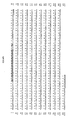
- the complete nucleotide sequence encoding C2GnT3 is set forth in SEQ ID NO: 1 and in Figure 1.
- nucleotides may exist among individuals within a population due to natural allelic variation. Any and all such nucleic acid variations are within the scope of the invention. DNA sequence polymorphisms may also occur which lead to changes in the amino acid sequence of a C2GnT3 polypeptide. These amino acid polymorphisms are also within the scope of the present invention. In addition, species variations i.e. variations in nucleotide sequence naturally occurring among different species, are within the scope of the invention.
- C2GnT3 appears to be the dominant isoform in thymus (14).
- C2GnT3 is likely to have important functions during thymocyte development as well as T-cell maturation and homing (14).
- the identification of agents with the ability to inhibit or stimulate C2GnT3 enzymatic activity therefore has the potential for both diagnostic and therapeutic purposes of related diseases.
- Access to the gene encoding C2GnT3 allows production of a glycosyltransferase for use in formation of core 2-based O -glycan modifications on oligosacccharides, glycoproteins and glycosphingolipids.
- This enzyme can be used, for example, in pharmaceutical or other commercial applications that require synthetic addition of core 2-based O -glycans to these or other substrates, in order to produce appropriately glycosylated glycoconjugates having particular enzymatic, immunogenic, or other biological and/or physical properties.
- the invention encompasses an isolated nucleic acid encoding a UDP-N-acetylglucosamine: galactose- ⁇ 1,3-N-acetylgalactosamine- ⁇ -R ⁇ 1,6-N-acetylglucosaminyltransferase (termed C2GnT3) having glycosyltransferase activity or a fragment thereof having glycosyltransferase activity, and an amino acid sequence at least 70 % identical to SEQ ID NO:2.
- Isolated nucleic acids comprising the nucleotide sequence of nucleotides 1-1362 as set forth in Figure 1 or sequence-conservative or function-conservative variants thereof are provided.
- nucleic acids hybridizable with nucleic acids having the sequence as set forth in Figure 1 or fragments thereof or sequence-conservative or function-conservative variants thereof; preferably, the nucleic acids are hybridizable with C2GnT3 sequences under conditions of intermediate stringency, and, most preferably, under conditions of high stringency.
- the present claimed invention encompasses an isolated nucleic acid encoding an active UDP-N-acetylglucosamine: galactose- ⁇ 1,3-N-acetylgalactosamine- ⁇ -R ⁇ 1,6-N-acetylglucosaminyltransferase that hybridizes under conditions of high stringency with a nucleic acid comprising the nucleic acid sequence of SEQ ID NO: 1, said stringency being no less than 0.5xSSC at 65°C.
- the DNA sequence encodes the amino acid sequence shown in Figure 1, from methionine (amino acid no. 1) to serine (amino acid no. 453).
- the DNA sequence encodes an amino acid sequence comprising a sequence from proline (no. 39) to serine (no.453) of the amino acid sequence set forth in Figure 1.
- the invention provides nucleic acid vectors comprising C2GnT3 DNA sequences, including but not limited to those vectors in which the C2GnT3 DNA sequence is operably linked to a transcriptional regulatory element, with or without a polyadenylation sequence.
- Cells comprising these vectors are also provided, including without limitation transiently and stably expressing cells.
- Viruses, including bacteriophages, comprising C2GnT3-derived DNA sequences are also provided.
- the invention also encompasses methods for producing C2GnT3 polypeptides.
- Cell-based methods include without limitation those comprising: introducing into a host cell an isolated DNA molecule encoding C2GnT3, or a DNA construct comprising a DNA sequence encoding C2GnT3; growing the host cell under conditions suitable for C2GnT3 expression; and isolating C2GnT3 produced by the host cell.
- a method for generating a host cell with de novo stable expression of C2GnT3 comprises: introducing into a host cell an isolated DNA molecule encoding C2GnT3 or an enzymatically active fragment thereof (such as, for example, a polypeptide comprising amino acids 39-453 of the sequence set forth Figure 1), or a DNA construct comprising a DNA sequence encoding C2GnT3 or an enzymatically active fragment thereof; selecting and growing host cells in an appropriate medium; and identifying stably transfected cells expressing C2GnT3.
- the stably transfected cells may be used for the production of C2GnT3 enzyme for use as a catalyst and for recombinant production of peptides or proteins with appropriate glycosylation.
- eukaryotic cells whether normal or diseased cells, having their glycosylation pattern modified by stable transfection as above, or components of such cells, may be used to deliver specific glycoforms of glycopeptides and glycoproteins, such as, for example, as immunogens for vaccination.
- the invention provides isolated C2GnT3 polypeptides, including without limitation polypeptides having the sequence set forth in Figure 1, polypeptides having the sequence of amino acids 39-453 as set forth in Figure 1, and a fusion polypeptide consisting of at least amino acids 39-453 as set forth in Figure 1 fused in frame to a second sequence, which may be any sequence that is compatible with retention of C2GnT3 enzymatic activity in the fusion polypeptide.
- Suitable second sequences include without limitation those comprising an affinity ligand or a reactive group.
- methods are disclosed for the identification of agents with the ability to inhibit or stimulate the enzymatic activity of C2GnT3.
- Assays utilizing C2GnT3 to screen for potential inhibitors or stimulators thereof are encompassed by the invention.
- methods of using C2GnT3 in the structure-based design of inhibitors or stimulators thereof are also an aspect of the invention. Such a design would comprise the steps of determining the three-dimensional structure of the C2GnT3 polypeptide, analyzing the three-dimensional structure for the likely binding sites of donor and / or acceptor substrates, synthesis of a molecule that incorporates a predictive reactive site, and determining the inhibiting or stimulating activity of the molecule.
- methods are disclosed for screening for mutations in the coding region of the C2GnT3 gene using genomic DNA isolated from, e.g., blood cells of patients.
- the method comprises: isolation of DNA from a biological sample; PCR amplification of the coding exon of C2GnT3 genomic regions; DNA sequencing of amplified exon DNA fragments and establishing there_from potential structural defects of the C2GnT3 gene associated with disease.
- kits for (i.e. kits), diagnosing and monitoring conditions mediated by C2GnT3 by determining the presence of nucleic acid molecules and polypeptides of the invention.
- the invention provides a method for evaluating a test compound for its ability to modulate the biological activity of a C2GnT3 polypeptide of the invention.
- a substance that inhibits or enhances the catalytic activity of a C2GnT3 polypeptide may be evaluated.
- Modulate refers to a change or an alteration in the biological activity of a polypeptide of the invention. Modulation may be an increase or a decrease in activity, a change in characteristics, or any other change in the biological, functional, or immunological properties of the polypeptide.
- Compounds which modulate the biological activity of a polypeptide of the invention may also be identified using the methods of the invention by comparing the pattern and level of expression of a nucleic acid molecule or polypeptide of the invention in biological samples, tissues and cells, in the presence, and in the absence of the compounds.
- a method for screening a compound for effectiveness as an antagonist of a polypeptide of the invention comprising the steps of a) contacting a sample containing said polypeptide with a compound, under conditions wherein antagonist activity of said polypeptide can be detected, and b) detecting antagonist activity in the sample.
- compositions or substances which interact with C2GnT3 nucleic acid regulatory sequences (e.g. promoter sequences, enhancer sequences, negative modulator sequences).
- C2GnT3 nucleic acid regulatory sequences e.g. promoter sequences, enhancer sequences, negative modulator sequences.
- nucleic acids, polypeptides, and substances and compounds identified using the methods of the invention may be used to modulate the biological activity of a C2GnT3 polypeptide of the invention, and they may be used in the treatment of conditions mediated by C2GnT3 such as proliferative diseases including cancer, and thymus-related disorders.
- the nucleic acids, polypeptides, substances and compounds may be formulated into compositions for administration to individuals suffering from one or more thymus-related disorder selected from the group consisting of a thymus tumour, thymus cancer, thymus hypoactivity, thymus hyperactivity, thymus atrophy, and thymus enlargement.
- the present invention also relates to a composition
- a composition comprising one or more of a polypeptide, nucleic acid molecule, or substance or compound identified using the methods of the invention, and a pharmaceutically acceptable carrier, excipient or diluent.
- a method for treating or preventing these conditions is also provided comprising administering to a patient in need thereof, a composition of the invention.
- the present invention in another aspect provides means necessary for production of gene-based therapies directed at the thymus.
- These therapeutic agents may take the form of polynucleotides comprising all or a portion of a nucleic acid of the invention comprising a regulatory sequence of a C2GnT3 nucleic acid placed in appropriate vectors or delivered to target cells in more direct ways.
- the invention accordingly further provides methods for preparing oligosaccharides.
- the invention relates to a method for preparing an oligosaccharide comprising contacting a reaction mixture comprising a donor substrate, and an acceptor substrate in the presence of a C2GnT3 polypeptide of the invention.
- the present invention provides the isolated DNA molecules, including genomic DNA and cDNA, encoding the UDP- N -acetylglucosamine: N -acetylgalactosamine ⁇ 1,6 N-acetylglucosaminyltransferase 3 (C2GnT3).
- C2GnT3 was identified by analysis of genomic survey sequences (GSS), and cloned based on a genomic clone obtained from a human foreskin fibroblast library.
- the cloning strategy may be briefly summarized as follows: 1) isolation and sequencing of GSS clone CIT-HSP-2288B17.TF (GSS GenBank accession number AQ005888); 2) synthesis of oligonucleotides derived from GSS sequence information, designated TSHC96 and TSHC101; 3) identification, cloning and sequencing of genomic P1 clone GS22597 #844/B1; 4) identification of a novel cDNA sequence corresponding to C2GnT3; 5) confirmatory sequencing of a cDNA clone obtained by reverse-transcription-polymerase chain reaction (RT-PCR) using human thymus poly A-mRNA; 6) construction of expression constructs; 7) expression of the cDNA encoding C2GnT3 in S
- GSS clone CIT-HSP-2288B17.TF GenBank accession number AQ005888, derived from a putative homologue to C2/4GnT (C2GnT2), was obtained from Research Genetics Inc., USA. Sequencing of this clone revealed a partial open reading frame with significant sequence similarity to C2/4GnT (C2GnT2).
- the coding region of human C2GnT-L (C2GnT1), C2/4GnT (C2GnT2) and a bovine homologue was previously found to be organized in one exon ((22),(15)).
- the P1 clone was obtained from a human foreskin genomic P1 library (DuPont Merck Pharmaceutical Co. Human Foreskin Fibroblast P1 Library) by screening with the primer pair TSHC96 (5'-GGTTTCACCGTCTCCAACATA-3', SEQ ID NO: 3) and TSHC101 (5'-TCGTAAGGCACCTGATACTT-3', SEQ ID NO: 6).
- C2GnT3 One genomic clone for C2GnT3, GS22597 #844/B1 was obtained from Genome Systems Inc. DNA from P1 phage was prepared as recommended by Genome Systems Inc. The entire coding sequence of the C2GnT3 gene was represented in the clone and sequenced in full using automated sequencing (ABI377, Perkin-Elmer).
- the composite sequence contained an open reading frame of 1359 base pairs encoding a putative protein of 453 amino acids with type II domain structure predicted by the TMpred-algorithm at the Swiss Institute for Experimental Cancer Research (ISREC) (http://www.ch.embnet.org/software/TMPRED_form.html).
- An expression construct designed to encode amino acid residues 39-453 of C2GnT3 was prepared by PCR using P1 DNA, and the primer pair TSHC100 (5'-CGAGGATCCGCAAAAAGACATTTACTTGGTT -3', SEQ ID NO: 5) and TSHC121 (5'-AGCGAATTCTTACTATCATGATGTGGTAGTG-3', SEQ ID NO: 9) with Bam Hl and EcoRI restriction sites, respectively (Fig. 2).
- the PCR product was cloned between the Bam HI and Eco RI sites of pAcGP67A (PharMingen), and the insert was fully sequenced.
- pAcGP67-C2GnT3-sol was co-transfected with Baculo-Gold TM DNA (PharMingen) as described previously (23). Recombinant Baculovirus was obtained after two successive amplifications in Sf9 cells grown in serum-containing medium, and titers of virus were estimated by titration in 24-well plates with monitoring of enzyme activities. Transfection of Sf9-cells with pAcGP67-C2GnT3-sol resulted in marked increase in GlcNAc-transferase activity compared to uninfected cells or cells infected with a control construct.
- C2GnT3 showed significant activity with disaccharide derivatives of O- linked core 1 (Gal ⁇ 1-3GalNAc ⁇ 1-R). In contrast, no activity was found with core 3 structures (GlcNAc ⁇ 1-3GalNAc ⁇ 1-R), lacto- N -neotetraose as well as GlcNAc ⁇ 1-3Gal-Me as acceptor substrates indicating that C2GnT3 has no Core4GnT and IGnT-activity. Additionally, no activity could be detected wih ⁇ -D-GalNAc-1- para -nitrophenyl indicating that C2GnT3 does not form core 6 (GlcNAc ⁇ 1-6GalNAc ⁇ 1-R) (Table I).
- Controls included the pAcGP67-GalNAc-T3-sol (24).
- the kinetic properties were determined with partially purified enzymes expressed in High Five TM cells. Partial purification was performed by consecutive chromatography on Amberlite IRA-95, DEAE-Sephacryl and SP-Sepharose essentially as described (25; 25).
- RNA master blot containing mRNA from fifty healthy human adult and fetal organs (CLONTECH) and a human multiple tissue northern blot (MTNII from CLONTECH) were probed with a 32 P-labeled probe corresponding to the soluble fragment of C2GnT3 (base pairs 115-1359).
- the autoradiographic analyses showed expression of C2GnT3 predominantly in lymphoid organs and in organs of the gastrointestinal tract with high transcription levels observed in thymus, and lower levels in PBLs, lymph node, stomach, pancreas and small intestine (Fig. 3A and 3B).
- the size of the single transcript was approximately 5.5 kilobases, which correlates to the transcript size of 5.4 kilobases of the biggest of three transcripts of human C2GnT1 (Fig. 3C). Multiple transcripts of C2GnT1 have been suggested to be caused by differential usage of polyadenylation signals, which affects the length of the 3' UTR (13).
- the C2GnT3 enzyme of the present invention was shown to exhibit O -glycosylation capacity implying that the C2GnT3 gene is vital for correct/full O -glycosylation in vivo as well.
- a structural defect in the C2GnT3 gene leading to a deficient enzyme or completely defective enzyme would therefore expose a cell or an organism to protein/peptide sequences which were not covered by O -glycosylation as seen in cells or organisms with intact C2GnT3 gene.
- Example 5 Described in Example 5 below is a method for scanning the coding exon for potential structural defects. Similar methods could be used for the characterization of defects in the non-coding region of the C2GnT3 gene including the promoter region.
- Isolated nucleic acid fragments are provided comprising all or part of the nucleic acid sequence disclosed herein as set forth in Figure 1.
- the fragments are at least about 8 nucleotides in length, preferably at least about 12 nucleotides in length, and most preferably at least about 15-20 nucleotides in length.
- Isolated nucleic acids are provided comprising sequences that are hybridizable under stringency conditions of 2X SSC, 55 °C, to the sequence set forth in Figure 1; preferably, the nucleic acids are hybridizable at 2X SSC, 65 °C; and most preferably, are hybridizable at 0.5X SSC, 65 °C.
- the nucleic acids may be isolated directly from cells.
- the polymerase chain reaction (PCR) method can be used to produce the nucleic acids of the invention, using either chemically synthesized strands or genomic material as templates.
- Primers used for PCR can be synthesized using the sequence information provided herein and can further be designed to introduce appropriate new restriction sites, if desirable, to facilitate incorporation into a given vector for recombinant expression.
- the nucleic acids of the present invention may be flanked by natural human regulatory sequences, or may be associated with heterologous sequences, including promoters, enhancers, response elements, signal sequences, polyadenylation sequences, introns, 5'- and 3'- noncoding regions, and the like.
- the nucleic acids may also be modified by many means known in the art.
- Non-limiting examples of such modifications include methylation, "caps", substitution of one or more of the naturally occurring nucleotides with an analog, internucleotide modifications such as, for example, those with uncharged linkages (e.g., methyl phosphonates, phosphotriesters, phosphoroamidates, carbamates, etc.) and with charged linkages (e.g., phosphorothioates, phosphorodithioates, etc.).
- uncharged linkages e.g., methyl phosphonates, phosphotriesters, phosphoroamidates, carbamates, etc.
- charged linkages e.g., phosphorothioates, phosphorodithioates, etc.
- Nucleic acids may contain one or more additional covalently linked moieties, such as, for example, proteins (e.g., nucleases, toxins, antibodies, signal peptides, poly-L-lysine, etc.), intercalators (e.g., acridine, psoralen, etc.), chelators (e.g., metals, radioactive metals, iron, oxidative metals, etc.), and alkylators.
- the nucleic acid may be derivatized by formation of a methyl or ethyl phosphotriester or an alkyl phosphoramidate linkage.
- the nucleic acid sequences of the present invention may also be modified with a label capable of providing a detectable signal, either directly or indirectly. Exemplary labels include radioisotopes, fluorescent molecules, biotin, and the like.
- useful probes comprise a probe sequence at least 20 nucleotides in length that consists of all or part of the sequence from among the sequences as set forth in Figure 1 or sequence-conservative or function-conservative variants thereof, or a complement thereof, and that has been labelled as described above.
- the invention also provides nucleic acid vectors comprising the disclosed sequence or derivatives or fragments fungal vectors, have been described for replication and/or expression in a variety of eukaryotic and prokaryotic hosts, and may be used for gene therapy as well as for simple cloning or protein expression.
- Recombinant cloning vectors will often include one or more replication systems for cloning or expression, one or more markers for selection in the host, e.g. antibiotic resistance, and one or more expression cassettes.
- the inserted coding sequences may be synthesized by standard methods, isolated from natural sources, or prepared as hybrids, etc. Ligation of the coding sequences to transcriptional regulatory elements and/or to other amino acid coding sequences may be achieved by known methods.
- Suitable host cells may be transformed/transfected/infected as appropriate by any suitable method including electroporation, CaCl 2 mediated DNA uptake, fungal infection, microinjection, microprojectile, or other established methods.
- Appropriate host cells included bacteria, archaebacteria, fungi, especially yeast, and plant and animal cells, especially mammalian cells.
- yeast Of particular interest are Saccharomyces cerevisiae, Schizosaccharomyces pombe, Pichia pastoris, Hansenula polymorpha, Neurospora spec., SF9 cells, C129 cells, 293 cells, and CHO cells, COS cells, HeLa cells, and immortalized mammalian myeloid and lymphoid cell lines.
- Preferred replication systems include M13, ColEl, 2 ⁇ , ARS, SV40, baculovirus, lambda, adenovirus, and the like.
- a large number of transcription initiation and termination regulatory regions have been isolated and shown to be effective in the transcription and translation of heterologous proteins in the various hosts. Examples of these regions, methods of isolation, manner of manipulation, etc. are known in the art. Under appropriate expression conditions, host cells can be used as a source of recombinantly produced C2GnT3 derived peptides and polypeptides.
- vectors may also include a transcription regulatory element (i.e., a promoter) operably linked to the C2GnT3 coding portion.
- the promoter may optionally contain operator portions and/or ribosome binding sites.
- Non-limiting examples of bacterial promoters compatible with E. coli include: ⁇ -lactamase (penicillinase) promoter; lactose promoter; tryptophan (trp) promoter; arabinose BAD operon promoter; lambda-derived P 1 promoter and N gene ribosome binding site; and the hybrid tac promoter derived from sequences of the trp and lac UV5 promoters.
- yeast promoters include 3-phosphoglycerate kinase promoter, glyceraldehyde-3 phosphate dehydrogenase (GAPDH) promoter, galactokinase (GAL1) promoter, galactoepimerase (GAL10) promoter, metallothioneine (CUP) promoter and alcohol dehydrogenase (ADH) promoter.
- Suitable promoters for mammalian cells include without limitation viral promoters such as that from Simian Virus 40 (SV40), Rous sarcoma virus (RSV), adenovirus (ADV), and bovine papilloma virus (BPV).
- Mammalian cells may also require terminator sequences and poly A addition sequences and enhancer sequences which increase expression may also be included; sequences which cause amplification of the gene may also be desirable. Furthermore, sequences that facilitate secretion of the recombinant product from cells, including, but not limited to, bacteria, yeast, and animal cells, such as secretory signal sequences and/or prohormone pro region sequences, may also be included. These sequences are known in the art.
- Nucleic acids encoding wild type or variant polypeptides may also be introduced into cells by recombination events.
- a sequence can be introduced into a cell, and thereby effect homologous recombination at the site of an endogenous gene or a sequence with substantial identity to the gene.
- Other recombination-based methods such as nonhomologous recombinations or deletion of endogenous genes by homologous recombination may also be used.
- nucleic acids of the present invention find use, for example, as probes for the detection of C2GnT3 in other species or related organisms and as templates for the recombinant production of peptides or polypeptides. These and other embodiments of the present invention are described in more detail below.
- the present invention encompasses isolated peptides and polypeptides encoded by the disclosed cDNA sequence.
- Nucleic acids comprising protein-coding sequences can be used to direct the recombinant expression of polypeptides in intact cells or in cell-free translation systems.
- the known genetic code tailored if desired for more efficient expression in a given host organism, can be used to synthesize oligonucleotides encoding the desired amino acid sequences.
- the phosphoramidite solid support method of (26), the method of (27), or other well known methods can be used for such synthesis.
- the resulting oligonucleotides can be inserted into an appropriate vector and expressed in a compatible host organism.
- polypeptides of the present invention may be isolated from native or from heterologous organisms or cells (including, but not limited to, bacteria, fungi, insect, plant, and mammalian cells) into which a protein-coding sequence has been introduced and expressed. Furthermore, the polypeptides may be part of recombinant fusion proteins.
- polypeptide purification is well known in the art, including, without limitation, preparative discontiuous gel elctrophoresis, isoelectric focusing, HPLC, reversed-phase HPLC, gel filtration, ion exchange and partition chromatography, and countercurrent distribution.
- the polypeptide can then be purified from a crude lysate of the host cell by chromatography on an appropriate solid-phase matrix.
- antibodies produced against a protein or against peptides derived therefrom can be used as purification reagents. Other purification methods are possible.
- nucleic acid sequences encoding the peptides may be altered by substitutions, additions, or deletions that provide for functionally equivalent molecules, i.e., function-conservative variants.
- one or more amino acid residues within the sequence can be substituted by another amino acid of similar properties, such as, for example, positively charged amino acids (arginine, lysine, and histidine); negatively charged amino acids (aspartate and glutamate); polar neutral amino acids; and non-polar amino acids.
- the isolated polypeptides may be modified by, for example, phosphorylation, sulfation, acylation, or other protein modifications. They may also be modified with a label capable of providing a detectable signal, either directly or indirectly, including, but not limited to, radioisotopes and fluorescent compounds.
- the present invention encompasses antibodies that specifically recognize immunogenic components derived from C2GnT3. Such antibodies can be used as reagents for detection and purification of C2GnT3.
- C2GnT3 specific antibodies include polyclonal and monoclonal antibodies.
- the antibodies may be elicited in an animal host by immunization with C2GnT3 components or may be formed by in vitro immunization of immune cells.
- the immunogenic components used to elicit the antibodies may be isolated from human cells or produced in recombinant systems.
- the antibodies may also be produced in recombinant systems programmed with appropriate antibody-encoding DNA. Alternatively, the antibodies may be constructed by biochemical reconstitution of purified heavy and light chains.
- the antibodies include hybrid antibodies (i.e., containing two sets of heavy chain/light chain combinations, each of which recognizes a different antigen), chimeric antibodies (i.e., in which either the heavy chains, light chains, or both, are fusion proteins), and univalent antibodies (i.e., comprised of a heavy chain/light chain complex bound to the constant region of a second heavy chain). Also included are Fab fragments, including Fab' and F(ab) 2 fragments of antibodies. Methods for the production of all of the above types of antibodies and derivatives are well known in the art. For example, techniques for producing and processing polyclonal antisera are disclosed in Mayer and Walker, 1987, Immunochemical Methods in Cell and Molecular Biology , (Academic Press, London).
- the antibodies of this invention can be purified by standard methods, including but not limited to preparative disc-gel elctrophoresis, isoelectric focusing, HPLC, reversed-phase HPLC, gel filtration, ion exchange and partition chromatography, and countercurrent distribution. Purification methods for antibodies are disclosed, e.g., in The Art of Antibody Purification, 1989, Amicon Division, W.R. Grace & Co. General protein purification methods are described in Protein Purification: Principles and Practice , R.K. Scopes, Ed., 1987, Springer-Verlag, New York, NY.
- Anti C2GnT3 antibodies can be used as the basis for immunoassays.
- the particular label used will depend upon the type of immunoassay used. Examples of labels that can be used include, but are not limited to, radiolabels such as 32 P, 125 I, 3 H and 14 C; fluorescent labels such as fluorescein and its derivatives, rhodamine and its derivatives, dansyl and umbelliferone; chemiluminescers such as luciferia and 2,3-dihydrophthalazinediones; and enzymes such as horseradish peroxidase, alkaline phosphatase, lysozyme and glucose-6-phosphate dehydrogenase.
- the antibodies can be tagged with such labels by known methods.
- coupling agents such as aldehydes, carbodiimides, dimaleimide, imidates, succinimides, bisdiazotized benzadine and the like may be used to tag the antibodies with fluorescent, chemiluminescent or enzyme labels.
- the general methods involved are well known in the art and are described in, e.g., Chan (Ed.), 1987, Immunoassay: A Practical Guide, Academic Press, Inc., Orlando, FL.
- nucleic acid molecules, C2GnT3 polypeptide, and antibodies of the invention may be used in the prognostic and diagnostic evaluation of conditions associated with altered expression or activity of a polypeptide of the invention or conditions requiring modulation of a nucleic acid or polypeptide of the invention including thymus-related disorders and proliferative disorders (e.g. cancer), and the identification of subjects with a predisposition to such conditions (See below).
- Methods for detecting nucleic acid molecules and polypeptides of the invention can be used to monitor such conditions by detecting and localizing the polypeptides and nucleic acids.
- the applications of the present invention also include methods for the identification of substances or compounds that modulate the biological activity of a polypeptide of the invention (See below).
- the substances, compounds, antibodies etc. may be used for the treatment of conditions requiring modulation of polypeptides of the invention (See below).
- a variety of methods can be employed for the diagnostic and prognostic evaluation of conditions requiring modulation of a nucleic acid or polypeptide of the invention (e.g. thymus-related disorders, and cancer), and the identification of subjects with a predisposition to such conditions.
- Such methods may, for example, utilize nucleic acids of the invention, and fragments thereof, and antibodies directed against polypeptides of the invention, including peptide fragments.
- the nucleic acids and antibodies may be used, for example, for: (1) the detection of the presence of C2GnT3 mutations, or the detection of either over- or under-expression of C2GnT3 mRNA relative to a non-disorder state or the qualitative or quantitative detection of alternatively spliced forms of C2GnT3 transcripts which may correlate with certain conditions or susceptibility toward such conditions; or (2) the detection of either an over- or an under-abundance of a polypeptide of the invention relative to a non-disorder state or the presence Of a modified (e.g., less than full length) polypeptide of the invention which correlates with a disorder state, or a progression toward a disorder state.
- a modified polypeptide of the invention which correlates with a disorder state, or a progression toward a disorder state.
- the methods described herein may be performed by utilizing pre-packaged diagnostic kits comprising at least one specific nucleic acid or antibody described herein, which may be conveniently used, e.g., in clinical settings, to screen and diagnose patients and to screen and identify those individuals exhibiting a predisposition to developing a disorder.
- Nucleic acid-based detection techniques and peptide detection techniques are described below.
- the samples that may be analyzed using the methods of the invention include those that are known or suspected to express C2GnT3 nucleic acids or contain a polypeptide of the invention.
- the methods may be performed on biological samples including but not limited to cells, lysates of cells which have been incubated in cell culture, chromosomes isolated from a cell (e.g.
- RNA in solution or bound to a solid support such as for northern analysis
- cDNA in solution or bound to a solid support
- an extract from cells or a tissue and biological fluids such as serum, urine, blood, and CSF.
- the samples may be derived from a patient or a culture.
- nucleic acid molecules of the invention allow those skilled in the art to construct nucleotide probes for use in the detection of nucleic acid sequences of the invention in biological materials.
- Suitable probes include nucleic acid molecules based on nucleic acid sequences encoding at least 5 sequential amino acids from regions of the C2GnT3 polypeptide (see SEQ ID NO: 1), preferably they comprise 15 to 50 nucleotides, more preferably 15 to 40 nucleotides, most preferably 15-30 nucleotides.
- a nucleotide probe may be labelled with a detectable substance such as a radioactive label that provides for an adequate signal and has sufficient half-life such as 32 P, 3 H, 14 C or the like.
- detectable substances include antigens that are recognized by a specific labelled antibody, fluorescent compounds, enzymes, antibodies specific for a labelled antigen, and luminescent compounds.
- An appropriate label may be selected having regard to the rate of hybridization and binding of the probe to the nucleotide to be detected and the amount of nucleotide available for hybridization.
- Labelled probes may be hybridized to nucleic acids on solid supports such as nitrocellulose filters or nylon membranes as generally described in Sambrook et al, 1989, Molecular Cloning, A Laboratory Manual (2nd ed.).
- the nucleic acid probes may be used to detect C2GnT3 genes, preferably in human cells.
- the nucleotide probes may also be used for example in the diagnosis or prognosis of conditions such as thymus-related disorders and cancer, and in monitoring the progression of these conditions, or monitoring a therapeutic treatment.
- the probe may be used in hybridisation techniques to detect a C2GnT3 gene.
- the technique generally involves contacting and incubating nucleic acids (e.g. recombinant DNA molecules, cloned genes) obtained from a sample from a patient or other cellular source with a probe of the present invention under conditions favourable for the specific annealing of the probes to complementary sequences in the nucleic acids. Alter incubation, the non-annealed nucleic acids are removed, and the presence of nucleic acids that have hybridized to the probe if any are detected.
- nucleic acids e.g. recombinant DNA molecules, cloned genes
- the detection of nucleic acid molecules of the invention may involve the amplification of specific gene sequences using an amplification method (e.g. PCR), followed by the analysis of the amplified molecules using techniques known to those skilled in the art.
- amplification method e.g. PCR
- Suitable primers can be routinely designed by one of skill in the art.
- primers may be designed using commercially available software, such as OLIGO 4.06 Primer Analysis software (National Biosciences, Madison, Minn.) or another appropriate program, to be about 22 to 30 nucleotides in length, to have a GC content of about 50% or more, and to anneal to the template at temperatures of about 60 °C to 72 °C.
- Genomic DNA may be used in hybridization or amplification assays of biological samples to detect abnormalities involving C2GnT3 nucleic acid structure, including point mutations, insertions, deletions, and chromosomal rearrangements.
- direct sequencing single stranded conformational polymorphism analyses, heteroduplex analysis, denaturing gradient gel electrophoresis, chemical mismatch cleavage, and oligonucleotide hybridization may be utilized.
- Genotyping techniques known to one skilled in the art can be used to type polymorphisms that are in close proximity to the mutations in a C2GnT3 gene.
- the polymorphisms may be used to identify individuals in families that are likely to carry mutations. If a polymorphism exhibits linkage disequalibrium with mutations in the G2GnT3 gene, it can also be used to screen for individuals in the general population likely to carry mutations.
- Polymorphisms which may be used include restriction fragment length polymorphisms (RFLPs), single-nucleotide polymorphisms (SNP), and simple sequence repeat polymorphisms (SSLPs).
- RFLPs restriction fragment length polymorphisms
- SNP single-nucleotide polymorphisms
- SSLPs simple sequence repeat polymorphisms
- a probe or primer of the invention may be used to directly identify RFLPs.
- a probe or primer of the invention can additionally be used to isolate genomic clones such as YACs, BACs, PACs, cosmids, phage or plasmids. The DNA in the clones can be screened for SSLPs using hybridization or sequencing procedures.
- Hybridization and amplification techniques described herein may be used to assay qualitative and quantitative aspects of C2GnT3 expression.
- RNA may be isolated from a cell type or tissue known to express C2GnT3 and tested utilizing the hybridization (e.g. standard Northern analyses) or PCR techniques referred to herein.
- the techniques may be used to detect differences in transcript size that may be doe to normal or abnormal alternative splicing.
- the techniques may be used to detect quantitative differences between levels of full length and/or alternatively splice transcripts detected in normal individuals relative to those individuals exhibiting symptoms of a disease.
- the primers and probes may be used in the above described methods in situ i.e directly on tissue sections (fixed and/or frozen) of patient tissue obtained from biopsies or resections.
- Oligonucleotides or longer fragments derived from any of the nucleic acid molecules of the invention may be used as targets in a microarray.
- the microarray can be used to simultaneously monitor the expression levels of large numbers of genes and to identify genetic variants, mutations, and polymorphisms.
- the information from the microarray may be used to determine gene function, to understand the genetic basis of a disorder, to identify predisposition to a disorder, to treat a disorder, to diagnose a disorder, and to develop and monitor the activities of therapeutic agents.
- Antibodies specifically reactive with a C2GnT3 Polypeptide, or derivatives, such as enzyme conjugates or labeled derivatives, may be used to detect C2GnT3 polypeptides in various biological materials. They may be used as diagnostic or prognostic reagents and they may be used to detect abnormalities in the level of C2GnT3 polypeptides, expression, or abnormalities in the structure, and/or temporal, tissue, cellular, or subcellular location of the polypeptides. Antibodies may also be used to screen potentially therapeutic compounds in vitro to determine their effects on a condition such as a thymus-related disorder or cancer. In vitro immunoassays may also be used to assess or monitor the efficacy of particular therapies.
- the antibodies of the invention may also be used in vitro to determine the level of C2GnT3 polypeptide expression in cells genetically engineered to produce a C2GnT3 polypeptide.
- the antibodies may be used to detect and quantify polypeptides of the invention in a sample in order to determine their role in particular cellular events or pathological states, and to diagnose and treat such pathological states.
- the antibodies of the invention may be used in immuno-histochemical analyses, for example, at the cellular and sub-subcellular level, to detect a polypeptide of the invention, to localize it to particular cells and tissues, and to specific subcellular locations, and to quantitate the level of expression.
- the antibodies may be used in any known immunoassays that rely on the binding interaction» between an antigenic determinant of a polypeptide of the invention, and the antibodies.
- assays are radio immunoassays, enzyme immunoassays (e.g. ELISA), immunofluorescence, immunoprecipitation, latex agglutination, hemagglutination, and histochemical tests,
- Cytochemical techniques known in the art for localizing antigens using light and electron microscopy may be used to detect a polypeptide of the invention.
- an antibody of the invention may be labelled with a detectable substance and a polypeptide may be localised in tissues and cells based upon the presence of the detectable substance.
- Various methods of labelling polypeptides are known in the art and may be used.
- detectable substances include, but are not limited to, the following: radioisotopes (e.g., 3 H, 14 C, 35 S, 125 I, 131 I), fluorescent labels (e.g., FITC, Rhodamine, lanthanide phosphors), luminescent labels such as luminol, enzymatic labels (e.g., horseradish peroxidase, ⁇ -galactosidase, luciferase, alkaline phosphatase, acetylcholinesterase), biotinyl groups (which can be detected by marked avidin e.g., streptavidin containing a fluorescent marker or enzymatic activity that can be detected by optical or calorimetric methods), predetermined polypeptide epitopes recognized by a secondary reporter (e.g., leucine zipper pair sequences, binding sites for secondary antibodies, metal binding domains, epitope tags).
- labels are attached via spacer arms of various lengths to reduce potential ster
- the antibody or sample may be immobilized on a carrier or solid support which is capable of immobilizing cells, antibodies, etc.
- the carrier or support may be nitrocellulose, or glass, polyacrylamides, gabbros, and magnetite.
- the support material may have any possible configuration including spherical (e.g. bead), cylindrical (e.g. inside surface of a test tube or well, or the external surface of a rod), or flat (e.g. sheet, test strip).
- Indirect methods may also be employed in which the primary antigen-antibody reaction is amplified by the introduction of a second antibody, having specificity for the antibody reactive against a polypeptide of the invention.
- the second antibody may be goat anti-rabbit gamma-globulin labelled with a detectable substance as described herein.
- a polypeptide of the invention may be localized by radioautography.
- the results of radioautography may be quantitated by determining the density of particles in the radioautographs by various optical methods, or by counting the grains.
- a polypeptide of the invention may also be detected by assaying for C2GnT3 activity as described herein.
- a sample may be reacted with an acceptor substrate and a donor substrate under conditions where a C2GnT3 polypeptide is capable of transferring the donor substrate to the acceptor substrate to produce a donor substrate-acceptor substrate complex.
- the methods described herein are designed to identify substances and compounds that modulate the expression or biological activity of a C2GnT3 polypeptide including substances that interfere with or enhance the expression or activity of a C2GnT3 polypeptide.
- Substances and compounds identified using the methods of the invention include but are not limited to peptides such as soluble peptides including Ig-tailed fusion peptides, members of random peptide libraries and combinatorial chemistry-derived molecular libraries made of D-and/or L-configuration amino acids, phosphopeptides (including members of random or partially degenerate, directed phosphopeptide libraries), antibodies [e.g. polyclonal, monoclonal, humanized, anti-idiotypic, chimeric, single chain antibodies, fragments, (e.g.
- a substance or compound may be an endogenous physiological compound or it may be a natural or synthetic compound.
- Substances which modulate a C2GnT3 polypeptide can be identified based on their ability to associate with a C2GnT3 polypeptide. Therefore, the invention also provides methods for identifying substances that associate with a C2GnT3 polypeptide. Substances identified using the methods of the invention may be isolated, cloned and sequenced using conventional techniques. A substance that associates with a polypeptide of the invention may be an agonist or antagonist of the biological or immunological activity of a polypeptide of the invention.
- agonist refers to a molecule that increases the amount of, or prolongs the duration of, the activity of the polypeptide.
- antagonist refers to a molecule which decreases the biological or immunological activity of the polypeptide.
- Agonists and antagonists may include proteins, nucleic acids, carbohydrates, or any other molecules that associate with a polypeptide of the invention.
- Substances which can associate with a C2GnT3 polypeptide may be identified by reacting a C2GnT3 polypeptide with a test substance which potentially associates with a C2GnT3 polypeptide, under conditions which permit the association, and removing and/or detecting the associated C2GnT3 polypeptide and substance.
- the Substance-polypeptide complexes, free substance, or non-complexed polypeptides may be assayed. Conditions which permit the formation of substance-polypeptide complexes may be selected having regard to factors such as the nature and amounts of the substance and the polypeptide.
- the substance-polypeptide complex, free substance or non-complexes polypeptides may be isolated by conventional isolation techniques, for example, salting out, chromatography, electrophoresis, gel filtration, fractionation, absorption, polyacrylamide gel electrophoresis, agglutination, or combinations thereof.
- antibody against a polypeptide of the invention or the substance, or labelled polypeptide, or a labelled substance may be utilized.
- the antibodies, polypeptides, or substances may be labelled with a detectable substance as described above.
- a C2GnT3 polypeptide, or the substance used in the method of the invention may be insolubilized.
- a polypeptide, or substance may be bound to a suitable carrier such as agarose, cellulose, dextran, Sephadex, Sepharose, carboxymethyl cellulose polystyrene, filter paper, ion-exchange resin, plastic film, plastic tube, glass beads, polyamine-methyl vinyl-ether-maleic acid copolymer, amino acid copolymer, ethylene-maleic acid copolymer, nylon, silk, etc.
- the carrier may be in the shape of, for example, a tube, test plate, beads, disc, sphere etc.
- the insolubilized polypeptide or substance may be prepared by reacting the material with a suitable insoluble carrier using known chemical or physical methods, for example, cyanogen bromide coupling.
- the invention also contemplates a method for evaluating a compound for its ability to modulate the biological activity of a polypeptide of the invention, by assaying for an agonist or antagonist (i.e. enhancer or inhibitor) of the association of the polypeptide with a substance which interacts with the polypeptide (e.g. donor or acceptor substrates or parts thereof).
- the basic method for evaluating if a compound is an agonist or antagonist of the association of a polypeptide of the invention and a substance that associates with the polypeptide is to prepare a reaction mixture containing the polypeptide and the substance under conditions which permit the formation of substance-polypeptide complexes, in the presence of a test compound.
- test compound may be initially added to the mixture, or may be added subsequent to the addition of the polypeptide and substance.
- Control reaction mixtures without the test compound or with a placebo are also prepared.
- the formation of complexes is detected and the formation of complexes in the control reaction but not in the reaction mixture indicates that the test compound interferes with the interaction of the polypeptide and substance.
- the reactions may be carried out in the liquid phase or the polypeptide, substance, or test compound may be immobilized as described herein.
- agonists and antagonists i.e. inhibitors and enhancers, that can be assayed using the methods of the invention may act on one or more of the interaction sites an the polypeptide or substance including agonist binding sites, competitive antagonist binding cites, non-competitive antagonist binding sites or allosteric sites.
- the invention also makes it possible to screen for antagonists that inhibit the effects of an agonist of the interaction of a polypeptide of the invention with a substance which is capable of associating with the polypeptide.
- the invention may be used to assay for a compound that competes for the same interacting site of a polypeptide of the invention.
- Substances that modulate a C2GnT3 polypeptide of the invention can be identified based on their ability to interfere with or enhance the activity of a C2GnT3 polypeptide. Therefore, the invention provides a method for evaluating a compound for its ability to modulate the activity of a C2GnT3 polypeptide comprising (a) reacting an acceptor substrate and a donor substrate for a C2GnT3 polypeptide in the presence of a test substance; (b) measuring the amount of donor substrate transferred to acceptor substrate, and (c) carrying out steps (a) and (b) in the absence of the test substance to determine if the substance interferes with or enhances transfer of the sugar donor to the acceptor by the C2GnT3 polypeptide.
- Suitable acceptor substrate for use in the methods of the invention are a saccharide, oligosaccharides, polysaccharides, polypeptides, glycopolypeptides, or glycolipids which are either synthetic with linkers at the reducing end or naturally occuring structures, for example, asialo-agalacto-fetuin glycopeptide.
- Acceptors will generally comprise ⁇ -D-galactosyl-1,3-N-acetyl-D-galactosaminyl-.
- the donor substrate may be a nucleotide sugar, dolichol-phosphate-sugar or dolichol-pyrophosphate-oligosaccharide, for example, uridine diphospho-N-acetylglucosamine (UDP-GlcNAc), or derivatives or analogs thereof.
- the C2GnT3 polypeptide may be obtained from natural sources or produced used recombinant methods as described herein.
- the acceptor or donor substrates may be labeled with a detectable substance as described herein, and the interaction of the polypeptide of the invention with the acceptor and donor will give rise to a detectable change.
- the detectable change may be colorimetric, photometric, radiometric, potentiometric, etc.
- the activity of C2GnT3 polypeptide of the invention may also be determined using methods based on HPLC (Koenderman et al., FEBS Lett. 222: 42, 1987) or methods employed synthetic oligosaccharide acceptors attached to hydrophobic aglycones (Palcic et al Glycoconjugate 5:49, 1988; and Pierce et al, Biochem. Biophys. Res. Comm. 146: 679, 1987).
- the C2GnT3 polypeptide is reacted with the acceptor and donor substrates at a pH and temperature effective for the polypeptide to transfer the donor to the acceptor, and where one of the components is labeled, to produce a detectable change. It is preferred to use a buffer with the acceptor and donor to maintain the pH within the pH range effective for the polypeptides.
- the buffer, acceptor and donor may be used as an assay composition. Other compounds such as EDTA and detergents may be added to the assay composition.
- the reagents suitable for applying the methods of the invention to evaluate compounds that modulate a C2GnT3 polypeptide may be packaged into convenient kits providing the necessary materials packaged into suitable containers.
- the kits may also include suitable supports useful in performing the methods of the invention.
- Substances that modulate a C2GnT3 polypeptide can also be identified by treating immortalized cells which express the polypeptide with a test substance, and comparing the morphology of the cells with the morphology of the cells in the absence of the substance and/or with immortalized cells which do not express the polypeptide.
- immortalized cells include lung epithelial cell lines such as MvlLu or HEK293 (human embryonal kidney) transfected with a vector containing a nucleic acid of the invention. In the absence of an inhibitor the cells show signs of morphologic transformation (e.g.
- fibroblastic morphology spindle shape and pile up; the cells are less adhesive to substratum; there is less cell to cell contact in monolayer culture; there is reduced growth-factor requirements for survival and proliferation; the cells grow in soft-agar of other semi-solid medium; there is a lack of contact inhibition and increased apoptosis in low-serum high density cultures; there is enhanced cell motility, and there is invasion into extracellular matrix and secretion of proteases).
- Substances that inhibit one or more phenotypes may be considered an inhibitor.
- a substance that inhibits a C2GnT3 polypeptide may be identified by treating a cell which expresses the polypeptide with a test substance, and assaying for complex core 2-based O -linked structures (e.g. repeating Gal[ ⁇ ]1-4GlcNAc[ ⁇ ]) associated with the cell.
- the complex core 2-based O -linked structures can be assayed using a. substance that binds to the structures (e.g. antibodies). Cells that have not been treated with the substance or which do not express the polypeptide may be employed as controls.
- Substances which inhibit transcription or translation of a C2GnT3 gene may be identified by transfecting a cell with an expression vector comprising a recombinant molecule of the invention, including a reporter gene, in the presence of a test substance and comparing the level of expression of the C2GnT3 polypeptide, or the expression of the polypeptide encoded by the reporter gene with a control cell transfected with the nucleic acid molecule in the absence of the substance.
- the method can be used to identify transcription and translation inhibitors of a C2GnT3 gene.
- polypeptides, nucleic acid molecules, and antibodies of the invention may be used for modulating the biological activity of a C2GnT3 polypeptide, and they may be used in the treatment of conditions mediated by a C2GnT3 polypeptide. In particular, they may be used to T-cell development and lymphocyte homing and they may be used in the prevention and treatment of thymus-related disorders.
- the present invention may be useful for diagnosis or treatment of various thymus-related disorders in mammals, preferably humans.
- disorders include the following: tumors and cancers, hypoactivity, hyperactivity, atrophy, enlargement of the thymus, and the like.
- Other disorders include disregulation of T-lymphocyte selection or activity and would include but not be limited to disorders involving autoimmunity, arthritis, leukemias, lymphomas, immunosuppression, sepsis, wound healing, acute and chronic in action, cell mediated immunity, humor immunity, TH1/TH2 imbalance, and the like.
- the substances or compounds identified by the methods described herein, antibodies, and polypeptides, and nucleic acid molecules of the invention may be useful in the prevention and treatment of tumors. Tumor metastasis may be inhibited or prevented by inhibiting the adhesion of circulating cancer cells.
- the substances, compounds, etc. of the invention may be especially useful in the treatment of various forms of neoplasia such as leukemias, lymphomas, melanomas, adenomas, sarcomas, and carcinomas of solid tissues in patients.
- the composition may be used for treating malignant melanoma, pancreatic cancer, cervico-uterine cancer, cancer of the liver, kidney, stomach, lung, rectum, breast, bowel, gastric, thyroid, neck, cervix, salivary gland, bile duct, pelvis, mediastinum, urethra, bronchogenic, bladder, esophagus and colon, and Kaposi's Sarcoma which is a form of cancer associated with HIV-infected patients with Acquired Immune Deficiency Syndrome (AIDS).
- the substances etc. are particularly useful in the prevention and treatment of tumors of the immune system and thymus and the metastases derived from these tumors.
- antibodies, polypeptides, or nucleic acid molecules of the invention may be used to modulate T-cell activation and immunodeficiency due to the Wiskott-Aldrich syndrome or AIDS, or to stimulate hematopoietic progenitor cell growth, and/or confer protection against chemotherapy and radiation therapy in a subject.
- the substances, antibodies, and compounds may be formulated into pharmaceutical compositions for administration to subjects in a biologically compatible form suitable for administration in vivo.
- biologically compatible form suitable for administration in vivo is meant a form of the substance to be administered in which any toxic effects are outweighed by the therapeutic effects.
- the substances may be administered to living organisms including humans, and animals.
- Administration of a therapeutically active amount of the pharmaceutical compositions of the present invention is defined as an amount effective, at dosages and for periods of time necessary to achieve the desired result.
- a therapeutically active amount of a substance may vary according to factors such as the disease state, age, sex, and weight of the individual, and the ability of antibody to elicit a desired response in the individual. Dosage periods may be adjusted to provide the optimum therapeutic response. For example, several divided doses may be administeted daily or the dose may be proportionally reduced as indicated by the exigencies of the therapeutic situation.
- the active substance may be administered in a convenient manner such as by injection (subcutaneous, intravenous, etc.), oral administration, inhalation, transdermal application, or rectal administration.
- the active substance may be coated in a material to protect the compound from the action of enzymes, acids and other natural conditions that may inactivate the compound.
- compositions described herein can be prepared by methods known per se for the preparation of pharmaceutically acceptable compositions which can be administered to subjects, such that an effective quantity of the active substance is combined in a mixture with a pharmaceutically acceptable vehicle.
- Suitable vehicles are described, for example, in Remington's Pharmaceutical Sciences (Remington's Pharmaceutical Sciences, Mack Publishing Company, Easton, Pa., USA 1985).
- the compositions include, albeit not exclusively, solutions of the substances or compounds in association with one or more pharmaceutically acceptable vehicles or diluents, and contained in buffered solutions with a suitable pH and iso-osmotic with the physiological fluids.
- compositions After pharmaceutical compositions have been prepared, they can be placed in an appropriate container and labeled for treatment of an indicated condition.
- labeling would include amount, frequency, and method of administration.
- nucleic acids encoding C2GnT3 polypeptides or any fragment thereof, or antisense sequences may be used for therapeutic purposes.
- Antisense to a nucleic acid molecule encoding a polypeptide of the invention may be med in situations to block the synthesis of the polypeptide.
- cells may be transformed with sequences complementary to nucleic acid molecules encoding C2GnT3 polypeptide.
- antisense sequences may be used to modulate C2GnT3 activity or to achieve regulation of gene function.
- Sense or antisense oligomers or larger fragments can be designed from various locations along the coding or regulatory regions of sequences encoding a polypeptide of the invention.
- Expression vectors may be derived from retroviruses, adenoviruses, herpes or vaccinia viruses or from various bacterial plasmids for delivery of nucleic acid sequences to the target organ, tissue, or cells.
- Vectors that express antisense nucleic acid sequences of C2GnT3 polypeptide can be constructed using techniques well known to those skilled in the art (see for example, Sambrook, Fritsch, Maniatis, Molecular Cloning, A Laboratory Manual, Second Edition (1989) Cold Spring Harbor Laboratory Press, Cold Spring Harbor, N.Y).
- Genes encoding C2CnT3 polypeptide can be turned off by transforming a cell or tissue with expression vectors that express high levels of a nucleic acid molecule or fragment thereof which encodes a polypeptide of the invention. Such constructs may be used to introduce untranslatable sense or antisense sequences into a cell. Even if they do not integrate into the DNA, the vectors may continue to transcribe RNA molecules until all copies are disabled by endogenous nucleases. Transient expression may last for extended periods of time (e.g. a month or more) with a non-replicating vector or if appropriate replication elements are part of the vector system.
- Modification of gene expression may be achieved by designing antisense molecules, DNA, RNA, or PNA, to the control regions of a C2GnT3 polypeptide gene i.e. the promoters, enhancers, and introns.
- the antisense molecules are oligonucleotides derived from the transcription initiation site (e.g. between positions -10 and +10 from the start site).
- Inhibition can also be achieved by using triple-helix base-pairing techniques. Triple helix pairing causes inhibition of the ability of the double helix to open sufficiently for the binding of polymerases, transcription factors, or regulatory molecules (see Gee J.E. et al (1994) In: Huber, B.E. and B.I. Carr, Molecular and Immunologic Approaches, Futura Publishing Co., Mt. Kisco, N.Y.).
- Ribozymes enzymatic RNA molecules
- Ribozyme action involves sequence-specific hybridization of the ribozyme molecule to complementary target RNA, followed by endonucleolytic cleavage.
- hammerhead motif ribozyme molecules may be engineered that can specifically and efficiently catalyze endonucleolytic cleavage of sequences encoding a polypeptide of the invention.
- Specific ribosome cleavage sites within any RNA target may be initially identified by scanning the target molecule for ribozyme cleavage sites which include the following sequences: GUA, GUU, and GUC.
- Short RNA sequences of between 15 and 20 ribonucleotides corresponding to the region of the cleavage site of the target gene may be evaluated for secondary structural features which may render the oligonucleotide inoperable.
- the suitability of candidate targets may be evaluated by testing accessibility to hybridization with complementary oligonucleotides using ribonuclease protection assays.
- Therapeutic efficacy and toxicity may be determined by standard pharmaceutical procedures in cell cultures or with experimental animals, such as by calculating the ED 50 (the dose therapeutically effective in 50% of the population) or LD 50 (the dose lethal to 50% of the population) statistics.
- the therapeutic index is the dose ratio of therapeutic to toxic effects and it can be expressed as the ED 50 /LD 50 ratio.
- Pharmaceutical compositions which exhibit large therapeutic indices are preferred.
- the invention also provides methods for studying the function of a C2GnT3 polypeptide.
- Cells, tissues, and non-human animals lacking in C2GnT3 expression or partially lacking in C2GnT3 expression may be developed using recombinant expression vectors of the invention having specific deletion or insertion mutations in a C2GnT3 gene.
- a recombinant expression vector may be used to inactivate or alter the endogenous gene by homologous recombination, and thereby create a C2GnT3 deficient cell, tissue or animal.
- Null alleles may be generated in cells, such as non-human embryonic stem cells by deletion mutation.
- a recombinant C2GnT3 gene may also be engineered to contain an insertion mutation which inactivates C2GnT3.
- Such a construct may then be introduced into a cell, such as a non-human embryonic stem cell, by a technique such as transfection, electroporation, injection etc.
- Cells lacking an intact C2GnT3 gene may then be identified, for example by Southern blotting, Northern Blotting or by assaying for expression of a polypeptide of the invention using the methods described herein.
- Such cells may then be used to generate transgenic non-human animals deficient in C2GnT3.
- Germline transmission of the mutation may be achieved, for example, by aggregating the non-human embryonic stem cells with early stage non-human embryos, such as 8 cell embryos, in vitro; transferring the resulting blastocysts into recipient females and; generating germline transmission of the resulting aggregation chimeras.
- Such a mutant animal may be used to define specific cell populations, developmental patterns and in vivo processes, normally dependent on C2GnT3 expression.
- the invention thus provides a transgenic non-human mammal all of whose germ cells and somatic cells contain a recombinant expression vector that inactivates or alters a gene encoding a C2GnT3 polypeptide. Further the invention provides a transgenic non-human mammal, which does not express a C2GnT3 polypeptide of the invention.
- a transgenic non-human animal includes but is not limited to mouse, rat, rabbit, sheep, hamster, guinea pig, micro-pig, pig, dog, cat, goat, and non-human primate, preferably mouse.
- the invention also provides a transgenic non-human animal assay system which provides a model system for testing for an agent that reduces or inhibits a pathology associated with a C2GnT3 polypeptide comprising: (a) administering the agent to a transgenic non-human animal of the invention; and (b) determining whether said agent reduces or inhibits the pathology in the transgenic non-human animal relative to a transgenic non-human animal of step (a) to which the agent has not been administered.
- the agent may be useful to treat the disorders and conditions discussed herein.
- the agents may also be incorporated in a pharmaceutical composition as described herein.
- a polypeptide of the invention may be used to support the survival, growth, migration, and/or differentiation of cells expressing the polypeptide.
- a polypeptide of the invention may be used as a supplement to support, for example cells in culture.
- the invention relates to a method for preparing an oligosaccharide comprising contacting a reaction mixture comprising an activated donor substrate e.g. GlcNAc, and an acceptor substrate in the presence of a polypeptide of the invention.
- a reaction mixture comprising an activated donor substrate e.g. GlcNAc, and an acceptor substrate in the presence of a polypeptide of the invention.
- acceptor substrates for use in the method for preparing an oligosaccharide are a saccharide, oligosaccharides, polysaccharides, glycopeptides, glycopolypeptides, or glycolipids which are either synthetic with linkers at the reducing end or naturally occurring structures, for example, asialo-agalacto-fetuin glycopeptide.
- the activated donor substrate is preferably GlcNAc which may be part of a nucleotide-sugar, a dolichol-phosphate-sugar, or dolichol-pyrophosphate-oligosaccharide.
- the oligosaccharides are prepared on a carrier that is non-toxic to a mammal, in particular a human such as a lipid isoprenoid or poly-isoprenoid alcohol.
- a carrier is dolichol phosphate.
- the oligosaccharide may be attached to a carrier via a labile bond allowing for chemical removal of the oligosaccharide from the lipid carrier.
- the oligosaccharide transferase may be used to transfer the oligosaccharide from a lipid carrier to a polypeptide.
- a GSS clone CIT-HSP-2288B17.TF (GSS GenBank accession number AQ005888), derived from a putative homologue to C2/4GnT (C2GnT2), was obtained from Research Genetics Inc., USA. Sequencing of this clone revealed a partial open reading frame with significant sequence similarity to C2/4GnT (C2GnT2).
- the coding region of human C2GnT-L (C2GnT1), C2/4GnT (C2GnT2) and a bovine homologue was previously found to be organized in one exon ((22),(15)).
- the P1 clone was obtained from a human foreskin genomic P1 library (DuPont Merck Pharmaceutical Co. Human Foreskin Fibroblast P1 Library) by screening with the primer pair TSHC96 (5'-GGTTTCACCGTCTCCAACATA-3', SEQ ID NO: 3) and TSHC101 (5'-TCGTAAGGCACCTGATACTT -3', SEQ ID NO: 6).
- TSHC96 5'-GGTTTCACCGTCTCTCCAACATA-3', SEQ ID NO: 3
- TSHC101 5'-TCGTAAGGCACCTGATACTT -3', SEQ ID NO: 6
- DNA from P1 phage was prepared as recommended by Genome Systems Inc.
- the entire coding sequence of the C2GnT3 gene was represented in the clone and sequenced in full using automated sequencing (ABI377, Perkin-Elmer). Confirmatory sequencing was performed on a cDNA clone obtained by PCR (30 cycles at 95°C for 10 sec; 55°C for 15 sec and 68°C for 2 min 30 sec) on cDNA from human thymus poly A-mRNA with the sense primer TSHC 99 (5'- CGAGGATCCAGAATGAAGATATTCAAATGTTA-3', SEQ ID NO: 4) and the anti-sense primer TSHC121 (5'-AGCGAATTCTTACTATCATGATGTGGTAGTG-3', SEQ ID NO: 9).
- the composite sequence contained an open reading frame of 1359 base pairs encoding a putative protein of 453 amino acids with type II domain structure predicted by the TMpred-algorithm at the Swiss Institute for Experimental Cancer Research (ISREC) (http://www.ch.embnet.org/software/TMPRED_form.html).
- An expression construct designed to encode amino acid residues 39-453 of C2GnT3 was prepared by PCR using P1 DNA, and the primer pair TSHC100 (5'-CGAGGATCCGCAAAAAGACATTTACTTGGTT -3', SEQ ID NO: 5) and TSHC121 (5'-AGCGAATTCTTACTATCATGATGTGGTAGTG-3', SEQ ID NO: 9) with Bam H1 and EcoRI restriction sites, respectively (Fig. 2).
- the PCR product was cloned between the Bam HI and EcoRI sites of pAcGP67A (PharMingen), and the insert was fully sequenced.
- pAcGP67-C2GnT3-sol was co-transfected with Baculo-Gold TM DNA (PharMingen) as described previously (23).
- Baculo-Gold TM DNA PharMingen
- Recombinant Baculo-viruses were obtained after two successive amplifications in Sf9 cells grown in serum-containing medium, and titers of virus were estimated by titration in 24-well plates with monitoring of enzyme activities.
- Transfection of Sf9-cells with pAcGP67-C2GnT3-sol resulted in marked increase in GlcNAc-transferase activity compared to uninfected cells or cells infected with a control construct.
- Standard assays were performed using culture supernatant from infected cells in 50 ⁇ l reaction mixtures containing 100 mM MES (pH 6.5), 0.1% Nonidet P-40, 150 ⁇ M UDP-[ 14 C]-GlcNAc (2,000 cpm/nmol) (Amersham Pharmacia Biotech), and the indicated concentrations of acceptor substrates (Sigma and Toronto Research Laboratories Ltd., see Table I for structures). Reaction products were quantified by chromatography on Dowex AG1-X8.
- RNA master blot (CLONTECH) was used for expression analysis.
- the cDNA-fragment of soluble C2GnT3 was used as a probe for hybridization.
- the probe was random primer-labeled using [ ⁇ 32 P]dATP and and the Strip-EZ DNA labeling kit (Ambion).
- the membrane was probed for 6h at 65°C following the protocol of the manufacturer (CLONTECH) and washed five times for 20 min each at 65 °C with 2 x SSC, 1% SDS and twice for 20 min each at 55 °C with 0.1 x SSC, 0.5 % SDS.
- a human multiple tissue Northern blot MTN II (CLONTECH), was probed as described (24), and washed twice for 10 min each at room temperature with 2 x SSC, 0.1% SDS; twice for 10 min each at 55 °C with 1 x SSC, 0.1 % SDS; and once for 10 min with 0.1 x SSC, 0.1 % SDS at 55°C.
- PCR analysis of C2GnT3 expression in resting and activated human blood cell fractions was performed using the primer pair TSHC118 (5'-GAGTCAGTGTGGAATTGAATAC-3', SEQ ID NO: 7) and TSHC126 (5'-CAACAGTCTCCTCAACCCTG-3', SEQ ID NO: 11).
- PCR amplifications with primers specific for human C2GnT3 (C2GnT3) or GAPDH (G3PDH, supplied by the manufacturer) were performed on a normalized human blood cell cDNA panel (MTC from CLONTECH) for 31 cycles.
- MTC peripheral blood mononuclear cell
- Primer pairs such as TSHC123 (5'-GGGCAGCATTTGCCTAGTATG-3', SEQ ID NO: 10) and TSHC119 (5'-GATCTCTGATTTGGCTCAGTG-3', SEQ ID NO: 8) as described in Figure 5 have been used for PCR amplification of individual sequences of the coding exon. Each PCR product was subcloned and the sequence of 10 clones containing the appropriate insert was determined assuring that both alleles of each individual are characterized.
Landscapes
- Health & Medical Sciences (AREA)
- Life Sciences & Earth Sciences (AREA)
- Chemical & Material Sciences (AREA)
- Organic Chemistry (AREA)
- Medicinal Chemistry (AREA)
- General Health & Medical Sciences (AREA)
- General Chemical & Material Sciences (AREA)
- Engineering & Computer Science (AREA)
- Nuclear Medicine, Radiotherapy & Molecular Imaging (AREA)
- Chemical Kinetics & Catalysis (AREA)
- Pharmacology & Pharmacy (AREA)
- Bioinformatics & Cheminformatics (AREA)
- Animal Behavior & Ethology (AREA)
- Public Health (AREA)
- Veterinary Medicine (AREA)
- Genetics & Genomics (AREA)
- Wood Science & Technology (AREA)
- Zoology (AREA)
- Molecular Biology (AREA)
- Oncology (AREA)
- Biomedical Technology (AREA)
- Biotechnology (AREA)
- Virology (AREA)
- Microbiology (AREA)
- Biochemistry (AREA)
- General Engineering & Computer Science (AREA)
- AIDS & HIV (AREA)
- Diabetes (AREA)
- Tropical Medicine & Parasitology (AREA)
- Hematology (AREA)
- Communicable Diseases (AREA)
- Endocrinology (AREA)
- Micro-Organisms Or Cultivation Processes Thereof (AREA)
- Medicines That Contain Protein Lipid Enzymes And Other Medicines (AREA)
- Enzymes And Modification Thereof (AREA)
- Peptides Or Proteins (AREA)
- Preparation Of Compounds By Using Micro-Organisms (AREA)
- Measuring Or Testing Involving Enzymes Or Micro-Organisms (AREA)
- Pharmaceuticals Containing Other Organic And Inorganic Compounds (AREA)
- Medicines Containing Antibodies Or Antigens For Use As Internal Diagnostic Agents (AREA)
Claims (34)
- Acide nucléique isolé codant pour une UDP-N-acétylglucosamine: galactose-β1,3-N-acétylgalactosamine-α-R β1,6-N-acétylglucosaminyltransférase (nommée C2GnT3) ayant une activité glycosyltransférase ou un fragment de celle-ci ayant une activité glycosyltransférase, et une séquence en acides aminés présentant un pourcentage d'identité d'au moins 70% avec SEQ ID NO : 2.
- Acide nucléique isolé selon la revendication 1, dans lequel ladite C2GnT3 comprend la séquence d'acides aminés des résidus 39 à 453 de SEQ ID NO : 2 ou variant de celui-ci ayant conservé la fonction et ayant une séquence en acides aminés présentant un pourcentage d'identité d'au moins 70% avec les résidus 39 à 453 de SEQ ID NO:2.
- Acide nucléique isolé selon la revendication 1 ou 2, dans lequel ledit acide nucléique est de l'ADN.
- Acide nucléique isolé selon la revendication 3, dans lequel l'ADN est de l'ADNc ou de l'ADN génomique.
- Acide nucléique isolé codant pour une UDP-N-acétylglucosamine :galactose-β1,3-N-acétylgalactosamine-α-R β1,6-N-acétylglucosaminyltransférase active qui s'hybride dans des conditions de stringence élevée avec un acide nucléique comprenant la séquence d'acide nucléique de SEQ ID NO : 1, ladite stringence n'étant pas moins que 0,5 x SSC à 65°C.
- Vecteur d'acide nucléique comprenant un acide nucléique selon l'une quelconque des revendications 1 à 6.
- Vecteur selon la revendication 6, dans lequel l'acide nucléique codant pour C2GnT3 est lié de façon opérationnelle à un élément de régulation de la transcription.
- Cellule comprenant un vecteur tel que défini dans la revendication 6 ou 7.
- Cellule telle que définie dans la revendication 8, ladite cellule étant transfectée de façon stable avec ledit vecteur.
- Cellule telle que définie dans la revendication 8 ou 9, ladite cellule produisant la C2GnT3 active par voie enzymatique.
- Cellule telle que définie dans l'une quelconque des revendications 8 à 10, ladite cellule étant choisie dans le groupe constitué de cellules de bactéries, de levures, d'insectes, d'oiseaux et de mammifères.
- Cellule telle que définie dans la revendication 11, ladite cellule étant une cellule Sf9.
- Cellule telle que définie dans la revendication 11, ladite cellule étant une cellule CHO.
- Procédé de production d'une UDP-N-acétylglucosamine : galactose-β1,3-N-acétylgalactosamine-α-R β1,6-N-acétylglucosaminyltransférase active, ledit procédé comprenant :(i) l'introduction dans une cellule hôte d'un acide nucléique isolé selon l'une quelconque des revendications 1 à 5, ou d'une construction d'ADN comprenant ledit acide nucléique ;(ii) la culture dudit hôte cellulaire dans des conditions appropriées pour l'expression de la UDP-N-acétylglucosamine: galactose-β1,3-N-acétylgalactosamine-α-R β1,6-N-acétylglucosaminyltransférase humaine ; et(iii) l'isolement de la UDP-N-acétylglucosamine : galactose-β1,3-N-acétylgalactosamine-α-R β1,6-N-acétylglucosaminyltransférase produite par la cellule hôte.
- Polypeptide isolé d'UDP-N-acétylglucosamine : galactose-β1,3-N-acétylgalactosamine-α-R β1,6-N-acétylglucosaminyltransférase (C2GnT3), variant de celui-ci ayant conservé la fonction, ou fragment de celui-ci ayant une activité glycosyltransférase, ledit polypeptide de C2GnT3, ledit variant ou ledit fragment comprenant une séquence en acides aminés présentant un pourcentage d'identité d'au moins 70% avec SEQ ID NO : 2.
- Polypeptide isolé de C2GnT3 selon la revendication 15, comprenant la séquence d'acides aminés des résidus 39 à 453 de SEQ ID NO : 2 ou un variant de celui-ci ayant conservé la fonction et ayant une séquence en acides aminés présentant un pourcentage d'identité d'au moins 70% avec les résidus 39 à 453 de SEQ ID NO : 2.
- Polypeptide isolé selon la revendication 15 comprenant la séquence en acides aminés SEQ ID NO : 2.
- Polypeptide isolé de C2GnT3 ou variant de celui-ci ayant conservé la fonction selon l'une quelconque des revendications 15 à 17, qui est un polypeptide de fusion fusionné en phase avec la seconde séquence, ladite seconde séquence comprenant un ligand d'affinité ou un groupe réactif.
- Procédé de criblage d'un ou plusieurs agents pour leur capacité à inhiber ou stimuler l'activité UDP-N-acétylglucosamine : galactose-β1,3-N-acétylgalactosamine-α-R β1,6-N-acétylglucosaininyltransférase dans un dosage sans cellules ou à base de cellules, ledit procédé comprenant :(i) la mise en contact d'un polypeptide selon l'une quelconque des revendications 15 à 18, ou obtenu selon le procédé de la revendication 14, ou d'une cellule selon l'une quelconque des revendications 8 à 13 qui exprime de façon recombinante ledit polypeptide, avec des agents choisis dans le groupe constitué de composés, de compositions, d'anticorps et de fragments d'anticorps, de séquences antisens et de séquences nucléotidiques de ribozymes pour ledit polypeptide dans des conditions de dosage adaptées à la détection de ladite activité enzymatique ; et(ii) la mesure de l'inhibition ou de la stimulation de ladite activité enzymatique par un ou plusieurs agents.
- Procédé selon la revendication 19, dans lequel un ou plusieurs agents sont choisis dans une chimiothèque combinatoire.
- Procédé selon la revendication 19, dans lequel un ou plusieurs agents sont générés par des procédés utilisant la structure du polypeptide C2GnT3.
- Procédé pour l'identification de variations de la séquence d'ADN du gène de C2GnT3 tel que défini dans les revendications 1 à 5, comprenant les étapes :(i) d'isolement de l'ADN à partir d'un échantillon biologique ;(ii) d'amplification des régions génomiques de C2GnT3 par PCR ; et(iii) de détection de la présence de variations de la séquence d'ADN par séquençage de l'ADN, par polymorphisme conformationnel monocaténaire (SSCP) ou par mutation de mésappariement.
- Anticorps spécifique de C2GnT3 tel que revendiqué dans la revendication 17.
- Sonde comprenant une séquence codant pour un polypeptide selon l'une quelconque des revendications 15 à 17 ou pour une partie de celui-ci comprenant au moins 20 nucléotides.
- Procédé pour diagnostiquer et contrôler les états médiés par le polypeptide C2GnT3 tel que revendiqué dans l'une quelconque des revendications 15 à 17 chez un individu, dans lequel ledit état est un trouble lié au thymus choisi parmi le groupe constitué d'une tumeur du thymus, du cancer du thymus, de l'hypoactivité du thymus, de l'hyperactivité du thymus, de l'atrophie du thymus et de l'hypertrophie du thymus, comprenant la détermination de la présence d'une molécule d'acide nucléique telle que revendiquée dans l'une quelconque des revendications 1 à 5 ou d'un polypeptide tel que revendiqué dans l'une quelconque des revendications 15 à 17 dans un échantillon biologique d'un individu.
- Procédé d'identification d'une substance qui s'associe avec un polypeptide tel que revendiqué dans l'une quelconque des revendications 15 à 18, comprenant :(i) la réaction du polypeptide avec au moins une substance qui peut potentiellement s'associer au polypeptide dans des conditions qui permettent l'association entre la substance et le polypeptide ; et(ii) le retrait ou la détection du polypeptide associé à la substance, la détection du polypeptide associé et de la substance indiquant que la substance s'associe au polypeptide.
- Procédé d'évaluation de la capacité d'un composé à moduler l'activité biologique d'un polypeptide tel que revendiqué dans l'une quelconque des revendications 15 à 18, comprenant la fourniture d'une concentration connue du polypeptide avec une substance qui s'associe au polypeptide, et un composé à tester dans des conditions qui permettent la formation de complexes entre la substance et le polypeptide, et le retrait et/ou la détection de complexes.
- Procédé de détection d'une molécule d'acide nucléique codant pour un polypeptide UDP-N-acétylglucosamine : galactose-β1,3-N-acétylgalactosamine-α-R β1,6-N-acétylglucosaminyltransférase (C2GnT3) dans un échantillon biologique comprenant les étapes :(i) d'hybridation de l'acide nucléique de l'une quelconque des revendications 1 à 5, ou de la sonde selon la revendication 24, avec l'acide nucléique de l'échantillon biologique, formant ainsi un complexe d'hybridation ;(ii) la détection du complexe d'hybridation,dans lequel la présence du complexe d'hybridation est corrélée à la présence d'une molécule d'acide nucléique codant pour le polypeptide dans l'échantillon biologique.
- Procédé selon la revendication 28, dans lequel les acides nucléiques de l'échantillon biologique sont amplifiés par réaction en chaîne par polymérase (PCR) avant l'étape d'hybridation.
- Composition comprenant un ou plusieurs acides nucléiques tels que revendiqués dans l'une quelconque des revendications 1 à 7 ou un polypeptide tel que revendiqué dans l'une quelconque des revendications 15 à 18, utilisée en tant que médicament.
- Composition comprenant un anticorps selon la revendication 23, utilisée en tant que médicament.
- Utilisation d'un ou plusieurs acides nucléiques tels que revendiqués dans l'une quelconque des revendications 1 à 7 ou d'un polypeptide tel que revendiqué dans l'une quelconque des revendications 15 à 18, pour la fabrication d'un médicament destiné au traitement d'un trouble lié au thymus, choisi parmi le groupe constitué d'une tumeur du thymus, du cancer du thymus, de l'hypoactivité du thymus, de l'hyperactivité du thymus, de l'atrophie du thymus et de l'hypertrophie du thymus.
- Utilisation d'un anticorps selon la revendication 23, pour la fabrication d'un médicament destiné au traitement d'un trouble lié au thymus, choisi parmi le groupe constitué d'une tumeur du thymus, du cancer du thymus, de l'hypoactivité du thymus, de l'hyperactivité du thymus, de l'atrophie du thymus et de l'hypertrophie du thymus.
- Procédé de préparation d'un oligosaccharide comprenant la mise en contact d'un mélange réactionnel comprenant une GlcNac activée et un accepteur avec un polypeptide actif du point de vue enzymatique tel que revendiqué dans l'une quelconque des revendications 15 à 18.
Applications Claiming Priority (3)
| Application Number | Priority Date | Filing Date | Title |
|---|---|---|---|
| US15048899P | 1999-08-24 | 1999-08-24 | |
| US150488P | 1999-08-24 | ||
| PCT/DK2000/000469 WO2001014535A2 (fr) | 1999-08-24 | 2000-08-24 | UDP-N-ACETYLGLUCOSAMINE: GALACTOSE-β1,3-N-ACETYLGALACTOSAMINE-α-R/(GlcNAc - GalNAc) β1,6-N-ACETYLGLUCOSAMINYLTRANSFERASE, C2GnT3 |
Publications (2)
| Publication Number | Publication Date |
|---|---|
| EP1206529A2 EP1206529A2 (fr) | 2002-05-22 |
| EP1206529B1 true EP1206529B1 (fr) | 2006-11-29 |
Family
ID=22534762
Family Applications (1)
| Application Number | Title | Priority Date | Filing Date |
|---|---|---|---|
| EP00954402A Expired - Lifetime EP1206529B1 (fr) | 1999-08-24 | 2000-08-24 | UDP-N-ACETYLGLUCOSAMINE: GALACTOSE-BETA 1,3-N-ACETYLGALACTOSAMINE-ALPHA-R/(GlcNAc - GalNAc) BETA 1,6-N-ACETYLGLUCOSAMINYLTRANSFERASE, C2GnT3 |
Country Status (11)
| Country | Link |
|---|---|
| US (5) | US6635461B1 (fr) |
| EP (1) | EP1206529B1 (fr) |
| JP (1) | JP4642301B2 (fr) |
| AT (1) | ATE346914T1 (fr) |
| AU (1) | AU775990B2 (fr) |
| CA (1) | CA2384978C (fr) |
| DE (1) | DE60032150T2 (fr) |
| MX (1) | MXPA02001977A (fr) |
| NO (1) | NO20020813L (fr) |
| NZ (1) | NZ517219A (fr) |
| WO (1) | WO2001014535A2 (fr) |
Families Citing this family (21)
| Publication number | Priority date | Publication date | Assignee | Title |
|---|---|---|---|---|
| CA2335436A1 (fr) * | 2000-02-29 | 2001-08-29 | Glycodesign Inc. | Nouveaux genes noyaux 2 beta-1,6-n-acetylgylcosaminyltransferase |
| JP4300267B2 (ja) * | 2001-12-28 | 2009-07-22 | 独立行政法人産業技術総合研究所 | 新規n−アセチルグルコサミン転移酵素及びそれをコードする核酸 |
| GB0513881D0 (en) * | 2005-07-06 | 2005-08-10 | Btg Int Ltd | Core 2 GLCNAC-T Inhibitors III |
| US20080182801A1 (en) * | 2003-12-22 | 2008-07-31 | Btg International Limited | Core 2 glcnac-t inhibitors |
| GB0329667D0 (en) * | 2003-12-22 | 2004-01-28 | King S College London | Core 2 GlcNAc-T inhibitor |
| US20060216273A1 (en) * | 2005-03-25 | 2006-09-28 | Min-Chuan Huang | Gene therapy for colorectal cancer |
| GB0512726D0 (en) * | 2005-06-22 | 2005-07-27 | Btg Int Ltd | Multiple sclerosis therapy and diagnosis |
| GB0513888D0 (en) * | 2005-07-06 | 2005-08-10 | Btg Int Ltd | Core 2 GLCNAC-T Inhibitors II |
| GB0513883D0 (en) * | 2005-07-06 | 2005-08-10 | Btg Int Ltd | Diagnosis of Atherosclerosis |
| US20100221763A1 (en) * | 2005-10-17 | 2010-09-02 | Health Research, Inc | Specific Acceptors for Transferases to Saccharides and Method for Obtaining and Using Same |
| US9816996B2 (en) * | 2011-07-26 | 2017-11-14 | National Institute Of Advanced Industrial Science And Technology | Antibody for detecting epithelial ovarian cancer marker and method for diagnosing epithelial ovarian cancer |
| CN108802385B (zh) | 2012-02-09 | 2022-02-08 | 米密德诊断学有限公司 | 用于诊断感染的标记和决定因素和其使用方法 |
| BR112017002884A2 (pt) | 2014-08-14 | 2018-01-30 | Memed Diagnostics Ltd | ?análise computacional de dados biológicos por meio do uso de variedade e hiperplano? |
| CN107209184B (zh) | 2014-12-11 | 2020-04-24 | 米密德诊断学有限公司 | 用于诊断多种感染的标记组合及其使用方法 |
| EP3423590A4 (fr) | 2016-03-03 | 2020-02-26 | Memed Diagnostics Ltd. | Déterminants d'arn pour différencier des infections bactériennes d'infections virales |
| IL294121B2 (en) | 2016-03-03 | 2023-09-01 | Memed Diagnostics Ltd | An RNA test to diagnose the type of infection |
| WO2018011796A1 (fr) | 2016-07-10 | 2018-01-18 | Memed Diagnostics Ltd. | Diagnostic précoce d'infections |
| CA3027341A1 (fr) | 2016-07-10 | 2018-01-18 | Memed Diagnostics Ltd. | Signatures de proteines permettant d'etablir la difference entre des infections bacteriennes et des infections virales |
| US11385241B2 (en) | 2016-09-29 | 2022-07-12 | Memed Diagnostics Ltd. | Methods of prognosis and treatment |
| WO2018060999A1 (fr) | 2016-09-29 | 2018-04-05 | Memed Diagnostics Ltd. | Procédés d'évaluation de risque et de classification de maladie |
| CN108192978B (zh) * | 2018-03-29 | 2020-10-27 | 青岛泱深生物医药有限公司 | 一种肿瘤相关生物标志物及其应用 |
Family Cites Families (7)
| Publication number | Priority date | Publication date | Assignee | Title |
|---|---|---|---|---|
| JPS60234574A (ja) * | 1984-05-08 | 1985-11-21 | 日本たばこ産業株式会社 | シガレツト製造機における中味たばこ量制御装置 |
| WO1990007000A2 (fr) | 1988-12-13 | 1990-06-28 | La Jolla Cancer Research Foundation | Nucleotides codant la b1,4-galactosyltransferase humaine et leurs utilisations |
| US5360733A (en) * | 1992-10-01 | 1994-11-01 | La Jolla Cancer Research Foundation | Human β1-6 n-acetylglucosaminyl transferase |
| WO1995007020A1 (fr) * | 1993-09-09 | 1995-03-16 | La Jolla Cancer Research Foundation | EXPRESSION DE L'ANTIGENE I DE DEVELOPPEMENT PAR UN ADNc CODANT UNE BETA-1,6-N-ACETYLGLUCOSAMINYLTRANFERASE |
| US5484590A (en) * | 1993-09-09 | 1996-01-16 | La Jolla Cancer Research Foundation | Expression of the developmental I antigen by a cloned human cDNA encoding a member of a β-1,6-N-acetylglucosaminyltransferase gene family |
| US6136580A (en) | 1999-01-19 | 2000-10-24 | The Burnham Institute | β-1-6-N-acetylglucosaminyltransferase that forms core 2, core 4 and I branches |
| CA2335436A1 (fr) * | 2000-02-29 | 2001-08-29 | Glycodesign Inc. | Nouveaux genes noyaux 2 beta-1,6-n-acetylgylcosaminyltransferase |
-
2000
- 2000-08-24 WO PCT/DK2000/000469 patent/WO2001014535A2/fr not_active Ceased
- 2000-08-24 AU AU66868/00A patent/AU775990B2/en not_active Ceased
- 2000-08-24 US US09/645,192 patent/US6635461B1/en not_active Expired - Lifetime
- 2000-08-24 NZ NZ517219A patent/NZ517219A/en not_active IP Right Cessation
- 2000-08-24 MX MXPA02001977A patent/MXPA02001977A/es active IP Right Grant
- 2000-08-24 JP JP2001518849A patent/JP4642301B2/ja not_active Expired - Fee Related
- 2000-08-24 AT AT00954402T patent/ATE346914T1/de not_active IP Right Cessation
- 2000-08-24 DE DE60032150T patent/DE60032150T2/de not_active Expired - Lifetime
- 2000-08-24 EP EP00954402A patent/EP1206529B1/fr not_active Expired - Lifetime
- 2000-08-24 CA CA2384978A patent/CA2384978C/fr not_active Expired - Fee Related
-
2002
- 2002-02-19 NO NO20020813A patent/NO20020813L/no not_active Application Discontinuation
- 2002-02-25 US US10/084,406 patent/US6794169B2/en not_active Expired - Fee Related
-
2003
- 2003-03-13 US US10/388,307 patent/US7094887B2/en not_active Expired - Fee Related
-
2004
- 2004-05-11 US US10/843,723 patent/US7078206B2/en not_active Expired - Fee Related
- 2004-05-11 US US10/843,962 patent/US7097994B2/en not_active Expired - Fee Related
Also Published As
| Publication number | Publication date |
|---|---|
| MXPA02001977A (es) | 2002-09-18 |
| WO2001014535A3 (fr) | 2001-06-21 |
| WO2001014535A2 (fr) | 2001-03-01 |
| JP2003507061A (ja) | 2003-02-25 |
| DE60032150T2 (de) | 2007-09-27 |
| US7097994B2 (en) | 2006-08-29 |
| US7094887B2 (en) | 2006-08-22 |
| US6635461B1 (en) | 2003-10-21 |
| US20030180778A1 (en) | 2003-09-25 |
| AU6686800A (en) | 2001-03-19 |
| EP1206529A2 (fr) | 2002-05-22 |
| US20040203111A1 (en) | 2004-10-14 |
| NZ517219A (en) | 2004-06-25 |
| NO20020813D0 (no) | 2002-02-19 |
| DE60032150D1 (de) | 2007-01-11 |
| US7078206B2 (en) | 2006-07-18 |
| US6794169B2 (en) | 2004-09-21 |
| JP4642301B2 (ja) | 2011-03-02 |
| AU775990B2 (en) | 2004-08-19 |
| ATE346914T1 (de) | 2006-12-15 |
| US20030054525A1 (en) | 2003-03-20 |
| NO20020813L (no) | 2002-04-19 |
| CA2384978A1 (fr) | 2001-03-01 |
| US20040203092A1 (en) | 2004-10-14 |
| CA2384978C (fr) | 2012-10-23 |
Similar Documents
| Publication | Publication Date | Title |
|---|---|---|
| EP1206529B1 (fr) | UDP-N-ACETYLGLUCOSAMINE: GALACTOSE-BETA 1,3-N-ACETYLGALACTOSAMINE-ALPHA-R/(GlcNAc - GalNAc) BETA 1,6-N-ACETYLGLUCOSAMINYLTRANSFERASE, C2GnT3 | |
| US7670816B2 (en) | UDP-galactose:β-D-galactose-R 4-α-D-galactosyltransferase, α4gal-T1 | |
| US6593119B2 (en) | Core 2 β-1,6-N-acetylglycosaminyltransferase gene | |
| AU770407B2 (en) | N-acetylglycosaminyl transferase genes | |
| CA2353603C (fr) | Udp-n-acetyl glucosamine: galactose-.beta.1, 3-n-acetyl galactosamine- .alpha.-r/n- acetyl glucosamine-.beta.1, 3-n-acetyl galactosamine- .alpha.-r (glcnac a galnac) .beta.1,6-n-acetyl glucosaminyl transferase, c2/4gnt | |
| US6897052B1 (en) | N-acetylglycosaminyl transferase genes | |
| US20070077250A1 (en) | Novel core 2 beta-1,6-N-acetylglycosaminyltransferase gene | |
| CA2296936A1 (fr) | Nouvelle 2.beta.-1,6-n-acetylglycosaminyl-transferase capsidique |
Legal Events
| Date | Code | Title | Description |
|---|---|---|---|
| PUAI | Public reference made under article 153(3) epc to a published international application that has entered the european phase |
Free format text: ORIGINAL CODE: 0009012 |
|
| 17P | Request for examination filed |
Effective date: 20020301 |
|
| AX | Request for extension of the european patent |
Free format text: AL PAYMENT 20020301;LT PAYMENT 20020301;LV PAYMENT 20020301;MK PAYMENT 20020301;RO PAYMENT 20020301;SI PAYMENT 20020301 |
|
| 17Q | First examination report despatched |
Effective date: 20030623 |
|
| GRAP | Despatch of communication of intention to grant a patent |
Free format text: ORIGINAL CODE: EPIDOSNIGR1 |
|
| GRAS | Grant fee paid |
Free format text: ORIGINAL CODE: EPIDOSNIGR3 |
|
| GRAA | (expected) grant |
Free format text: ORIGINAL CODE: 0009210 |
|
| AK | Designated contracting states |
Kind code of ref document: B1 Designated state(s): AT BE CH CY DE DK ES FI FR GB GR IE IT LI LU MC NL PT SE |
|
| AX | Request for extension of the european patent |
Extension state: AL LT LV MK RO SI |
|
| PG25 | Lapsed in a contracting state [announced via postgrant information from national office to epo] |
Ref country code: NL Free format text: LAPSE BECAUSE OF FAILURE TO SUBMIT A TRANSLATION OF THE DESCRIPTION OR TO PAY THE FEE WITHIN THE PRESCRIBED TIME-LIMIT Effective date: 20061129 Ref country code: IT Free format text: LAPSE BECAUSE OF FAILURE TO SUBMIT A TRANSLATION OF THE DESCRIPTION OR TO PAY THE FEE WITHIN THE PRESCRIBED TIME-LIMIT;WARNING: LAPSES OF ITALIAN PATENTS WITH EFFECTIVE DATE BEFORE 2007 MAY HAVE OCCURRED AT ANY TIME BEFORE 2007. THE CORRECT EFFECTIVE DATE MAY BE DIFFERENT FROM THE ONE RECORDED. Effective date: 20061129 Ref country code: FI Free format text: LAPSE BECAUSE OF FAILURE TO SUBMIT A TRANSLATION OF THE DESCRIPTION OR TO PAY THE FEE WITHIN THE PRESCRIBED TIME-LIMIT Effective date: 20061129 Ref country code: CH Free format text: LAPSE BECAUSE OF FAILURE TO SUBMIT A TRANSLATION OF THE DESCRIPTION OR TO PAY THE FEE WITHIN THE PRESCRIBED TIME-LIMIT Effective date: 20061129 Ref country code: AT Free format text: LAPSE BECAUSE OF FAILURE TO SUBMIT A TRANSLATION OF THE DESCRIPTION OR TO PAY THE FEE WITHIN THE PRESCRIBED TIME-LIMIT Effective date: 20061129 Ref country code: BE Free format text: LAPSE BECAUSE OF FAILURE TO SUBMIT A TRANSLATION OF THE DESCRIPTION OR TO PAY THE FEE WITHIN THE PRESCRIBED TIME-LIMIT Effective date: 20061129 Ref country code: LI Free format text: LAPSE BECAUSE OF FAILURE TO SUBMIT A TRANSLATION OF THE DESCRIPTION OR TO PAY THE FEE WITHIN THE PRESCRIBED TIME-LIMIT Effective date: 20061129 |
|
| REG | Reference to a national code |
Ref country code: GB Ref legal event code: FG4D |
|
| REG | Reference to a national code |
Ref country code: CH Ref legal event code: EP Ref country code: IE Ref legal event code: FG4D |
|
| REG | Reference to a national code |
Ref country code: IE Ref legal event code: FG4D |
|
| REF | Corresponds to: |
Ref document number: 60032150 Country of ref document: DE Date of ref document: 20070111 Kind code of ref document: P |
|
| PG25 | Lapsed in a contracting state [announced via postgrant information from national office to epo] |
Ref country code: DK Free format text: LAPSE BECAUSE OF FAILURE TO SUBMIT A TRANSLATION OF THE DESCRIPTION OR TO PAY THE FEE WITHIN THE PRESCRIBED TIME-LIMIT Effective date: 20070228 Ref country code: SE Free format text: LAPSE BECAUSE OF FAILURE TO SUBMIT A TRANSLATION OF THE DESCRIPTION OR TO PAY THE FEE WITHIN THE PRESCRIBED TIME-LIMIT Effective date: 20070228 |
|
| PG25 | Lapsed in a contracting state [announced via postgrant information from national office to epo] |
Ref country code: ES Free format text: LAPSE BECAUSE OF FAILURE TO SUBMIT A TRANSLATION OF THE DESCRIPTION OR TO PAY THE FEE WITHIN THE PRESCRIBED TIME-LIMIT Effective date: 20070312 |
|
| PG25 | Lapsed in a contracting state [announced via postgrant information from national office to epo] |
Ref country code: PT Free format text: LAPSE BECAUSE OF FAILURE TO SUBMIT A TRANSLATION OF THE DESCRIPTION OR TO PAY THE FEE WITHIN THE PRESCRIBED TIME-LIMIT Effective date: 20070430 |
|
| LTIE | Lt: invalidation of european patent or patent extension |
Effective date: 20061129 |
|
| NLV1 | Nl: lapsed or annulled due to failure to fulfill the requirements of art. 29p and 29m of the patents act | ||
| REG | Reference to a national code |
Ref country code: CH Ref legal event code: PL |
|
| ET | Fr: translation filed | ||
| PLBE | No opposition filed within time limit |
Free format text: ORIGINAL CODE: 0009261 |
|
| STAA | Information on the status of an ep patent application or granted ep patent |
Free format text: STATUS: NO OPPOSITION FILED WITHIN TIME LIMIT |
|
| 26N | No opposition filed |
Effective date: 20070830 |
|
| PG25 | Lapsed in a contracting state [announced via postgrant information from national office to epo] |
Ref country code: GR Free format text: LAPSE BECAUSE OF FAILURE TO SUBMIT A TRANSLATION OF THE DESCRIPTION OR TO PAY THE FEE WITHIN THE PRESCRIBED TIME-LIMIT Effective date: 20070301 Ref country code: MC Free format text: LAPSE BECAUSE OF NON-PAYMENT OF DUE FEES Effective date: 20070831 |
|
| PG25 | Lapsed in a contracting state [announced via postgrant information from national office to epo] |
Ref country code: IE Free format text: LAPSE BECAUSE OF NON-PAYMENT OF DUE FEES Effective date: 20070824 |
|
| PG25 | Lapsed in a contracting state [announced via postgrant information from national office to epo] |
Ref country code: LU Free format text: LAPSE BECAUSE OF NON-PAYMENT OF DUE FEES Effective date: 20070824 Ref country code: CY Free format text: LAPSE BECAUSE OF FAILURE TO SUBMIT A TRANSLATION OF THE DESCRIPTION OR TO PAY THE FEE WITHIN THE PRESCRIBED TIME-LIMIT Effective date: 20061129 |
|
| PGFP | Annual fee paid to national office [announced via postgrant information from national office to epo] |
Ref country code: DE Payment date: 20140821 Year of fee payment: 15 |
|
| PGFP | Annual fee paid to national office [announced via postgrant information from national office to epo] |
Ref country code: GB Payment date: 20140820 Year of fee payment: 15 Ref country code: FR Payment date: 20140808 Year of fee payment: 15 |
|
| REG | Reference to a national code |
Ref country code: DE Ref legal event code: R119 Ref document number: 60032150 Country of ref document: DE |
|
| GBPC | Gb: european patent ceased through non-payment of renewal fee |
Effective date: 20150824 |
|
| REG | Reference to a national code |
Ref country code: FR Ref legal event code: ST Effective date: 20160429 |
|
| PG25 | Lapsed in a contracting state [announced via postgrant information from national office to epo] |
Ref country code: GB Free format text: LAPSE BECAUSE OF NON-PAYMENT OF DUE FEES Effective date: 20150824 Ref country code: DE Free format text: LAPSE BECAUSE OF NON-PAYMENT OF DUE FEES Effective date: 20160301 |
|
| PG25 | Lapsed in a contracting state [announced via postgrant information from national office to epo] |
Ref country code: FR Free format text: LAPSE BECAUSE OF NON-PAYMENT OF DUE FEES Effective date: 20150831 |