EP1207468A2 - Méthode et système de mise à jour d'une base de données cherchable d'informations descriptives concernant des informations stockées en plusieurs lieux logiques adressables - Google Patents
Méthode et système de mise à jour d'une base de données cherchable d'informations descriptives concernant des informations stockées en plusieurs lieux logiques adressables Download PDFInfo
- Publication number
- EP1207468A2 EP1207468A2 EP01309614A EP01309614A EP1207468A2 EP 1207468 A2 EP1207468 A2 EP 1207468A2 EP 01309614 A EP01309614 A EP 01309614A EP 01309614 A EP01309614 A EP 01309614A EP 1207468 A2 EP1207468 A2 EP 1207468A2
- Authority
- EP
- European Patent Office
- Prior art keywords
- information
- descriptive
- database
- stored
- client
- Prior art date
- Legal status (The legal status is an assumption and is not a legal conclusion. Google has not performed a legal analysis and makes no representation as to the accuracy of the status listed.)
- Withdrawn
Links
Images


Classifications
-
- G—PHYSICS
- G06—COMPUTING OR CALCULATING; COUNTING
- G06F—ELECTRIC DIGITAL DATA PROCESSING
- G06F16/00—Information retrieval; Database structures therefor; File system structures therefor
- G06F16/90—Details of database functions independent of the retrieved data types
- G06F16/95—Retrieval from the web
- G06F16/953—Querying, e.g. by the use of web search engines
- G06F16/9536—Search customisation based on social or collaborative filtering
-
- G—PHYSICS
- G06—COMPUTING OR CALCULATING; COUNTING
- G06F—ELECTRIC DIGITAL DATA PROCESSING
- G06F16/00—Information retrieval; Database structures therefor; File system structures therefor
- G06F16/90—Details of database functions independent of the retrieved data types
- G06F16/95—Retrieval from the web
- G06F16/953—Querying, e.g. by the use of web search engines
- G06F16/9535—Search customisation based on user profiles and personalisation
Definitions
- the present invention generally relates to a method and system for providing a group of users with a search facility for information stored at a plurality of addressable logical locations.
- the present invention relates to a method and system for updating a database searchable by a group of users and containing descriptive information and addresses for the stored information.
- US 5931907 comprises the local storage of information as a distributed database by a community of agents.
- the agent can be instructed to catalogue the page and the user can add additional user information.
- Other users of agents within the community can be notified of the potentially interesting information. In this way a community of users have access to potentially interesting information distributed across the network.
- the present invention provides a method and system for providing a group of users having a common interests with a search facility for information stored in a plurality of addressable logical locations.
- a database of index information for information that is stored at the plurality of logical locations is provided in which the index information includes the address of the logical locations and descriptive information for information stored at each logical location.
- the descriptive information matches a common profile of interest of the group of users.
- the accessing and retrieval of stored information by a user in the group is monitored and descriptive information is derived using the retrieved information.
- the relevance of the retrieved information is determined by comparing the descriptive information to the profile and if any relevant retrieved information is determined, the database is updated using the address and descriptive information of the determined relevant retrieved information.
- the present information can be implemented in a single apparatus such as a suitably programmed general purpose computer or dedicated hardware.
- the present invention is more preferably applicable to a network wherein the database is provided at a server and within a client the accessing and retrieval of stored information, the monitoring of the accessing and retrieval, and the deriving of the descriptive information takes place. The address and the derived descriptive information is then sent to the server for updating of the database at the server.
- the determining of the relevance of the retrieved information can take place in the client or in the server. Preferably the determination takes place in the client in order to reduce the amount of information transmitted to the server and to distribute the processing load.
- an initial request from a client to access the database at the server is sent and an agent is downloaded from the server to the client in response.
- the agent comprises an autonomous application which when installed and running on the client performs the monitoring, determining and sending processes.
- the agent thus uses the profile to identify relevant information to be used to update the database.
- the application can be implemented in a multi tasking environment in the background.
- the user of the client is warned that in order to use the search facility i.e. to be able to access the database, the agent must be downloaded. Access is denied to the database without the agent being installed on the client. Only when the user inputs a confirmation which is sent by the client to the server is the agent downloaded to the client from the server.
- the trade off by a user for access to the search facility is that their computer is used to use their activities to contribute towards updating the database.
- the user is a member of a group of users who have a common interest and thus the agent has a profile representative of the common interest of the group.
- the user allow the distributive processing of information locations visited in order to update the database for the common good of the group.
- the present invention is suited to any system in which information is stored at addressable logical locations.
- the present invention is however particularly suited to the Internet in which the Internet Protocol is used and the stored information includes hypertext mark-up language.
- the logical addresses thus comprise Uniform Resource Locators (URLs).
- URLs Uniform Resource Locators
- the client will implement a web browser to access web pages hosted by web servers and the agent on the client will monitor the accessing and retrieval of web pages.
- the agent can also include a "spidering" capability.
- Links from the web page access and retrieved can be "spidered” or crawled by the agent in order to access and retrieve the web pages and determine descriptive information for further expanding the updating of the database.
- the web pages which are spidered or crawled are processed to determine descriptive information and the descriptive information is then analysed to determine the relevance of the page. In this way index information only for relevant pages is sent to the server.
- the database is periodically checked to see if there are any entries in the database which have not been recently updated. If there are any entries which have not recently been updated, the web page can be accessed and retrieved by a spidering function at the server. Descriptive information for the page can then be determined and compared with the profile to determine if the page is relevant still. If not the page is deleted from the database. If the page is relevant the entry in the database is updated with the new descriptive information and a date to show when it was updated.
- the profile can comprise any information suitable for defining the common interests of the groups of users.
- the profile comprises descriptive information which comprises text.
- the determination of relevance can then be performed on a keyword basis by matching the keywords of the profile to keywords in the descriptive information.
- the keyword matching will not be exact and can be based on lexical matching of synonyms.
- natural language matching of the text of the profile and the text of the descriptive information can be used.
- the present invention can be implemented on a single apparatus or on a client apparatus and a server apparatus each comprising suitably programmed general purpose computer.
- the present invention can be embodied as computer programme code for controlling a general purpose computer.
- the computer programme code can be provided to a general purpose computer on any suitable carrier medium such as a storage medium (e.g. floppy disk drive, CD ROM, magnetic tape or programmable memory device) or a signal (such as an electrical signal carried over a network such as the Internet).
- Figure 1 schematically illustrates a system in accordance with an embodiment of the present invention for implementation as a search facility for web pages over the Internet 50.
- Clients 60 and 70 are connected to the Internet 50 in order to access web pages at web servers 30 and 40.
- the clients 60 and 70 have respective web browsers 61 and 71 implemented therein for accessing and retrieving web pages from the web servers 30 and 40.
- the clients 60 and 70 also have respective agents 62 and 72 loaded therein which have been downloaded to them in order to monitor the activity of the respective web browsers 61 and 71.
- the agents are autonomous applications which run in the background in a multi-tasking environment on the clients 60 and 70 such as in the Windows (registered trade mark) operating system.
- the agents 62 and 72 are able to communicate on the Internet 50 to a search server 10 in order to communicate the results of their monitoring activities.
- the search server 10 is connected to the Internet 50 to enable the clients 60 and 70 to access a search engine 3 via a web server 1 acting as the interface to the client's 60 and 70 using the web browsers 61 and 71.
- the search engine 3 interfaces to a database 20 providing a database of index information comprising logical addresses and descriptive information.
- the logical addresses comprise the URLs of web pages and the descriptive information comprises key words taken from the text of the web page (which can include the metatags).
- a client 60 or 70 accesses the search server 10 using respective web browser 61 or 71 to access the web server 1 which acts as the interface and communicates with the search engine 3 to search the database 20.
- the web server 1 and search engine 3 can provide a conventional search facility for searching database 20.
- the interface to the database 20 differs from conventional search engine interfaces in that when an initial request from a web browser 61 or 71 is received an agent download application 2 will detect whether the request comes from a client 60 or 70 which has an agent 62 or 72 loaded thereon. If not the agent download application 2 will cause the web server 1 to warn the user of the web browser 61 or 71 that an agent must be downloaded in order to access the database 20 using the search engine 3. If the user inputs an acceptance, this is received from the web browser 61 or 71 by the web server 1 and passed to the agent download application 2 which downloads the agent 62 or 72 to the client 60 or 70. Thus when the web browser 61 or 71 next requests access to the search engine 3, access is permitted.
- the search server 10 is also provided with a spider application 3 for carrying out the conventional spidering operation in order to periodically update the database 20.
- FIG. 2 is a flow diagram illustrating the process of downloading the agent to the client in order to allow access to the search engine.
- the browser is opened and used to access and retrieve a web page at the search server (step S2).
- the request to retrieve the web page from the browser will also include a request to access the search engine.
- the search server detects whether there is an agent at the client. If an agent is present, in step S4 the client is allowed access to the search engine in order to search for web pages using keywords etc. in a conventional manner.
- step S6 a message is sent to the client and displayed to inform the user of the client that the agent must be downloaded in order to use the search engine.
- This message can be in the form of a web page with a check box for example to enable the user to accept the downloading of the agent in return for access to the search engine.
- step S7 a user acceptance is then awaited. If no user acceptance is input, in step S8 the user is refused access to the search engine. For example, if a user selects to decline downloading of the agent, a web page can be set to the web browser to inform the user that access to the search engine is refused.
- the agent download application 2 downloads the agent to the client.
- the agent comprises an autonomous application capable of running in the background.
- the agent will include in the code or as metadata a profile defining the common interests of the group of users.
- the profile can comprise a set of keywords.
- step S1 the web browser
- step S3 the agent icon in the task bar
- the web browser is launched and directed to access the search server.
- the agent can include a web browser interface to act as the search interface for the client to access the search server to perform a search through the database 20.
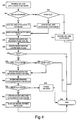
- step S20 the client loads a web page from a web server 30 or 40.
- the agent picks up the URL and determines a catalogue for the URL (step S1).
- the catalogue can comprise any descriptive information.
- the process comprises the extraction of keywords from the hypertext mark up language (HTML).
- HTML hypertext mark up language
- step S22 the agent checks the catalogue for the relevance of the page against a profile comprising key words which represent the interest of the group of users. Thus if in step S23 it is determined that the page is not relevant since the keywords for the page do not significantly match the key words for the profile, the page is ignored in step S24. If it is determined that the keywords (or a significant number of them) match, in step S25 the agent uploads the URL and the catalogue to the search server. Once the URL and catalogue have been uploaded to the search server if the page is relevant, in step S26 the agent determines whether the links on the page are to be catalogued. This can either be a preset parameter for the agent or the agent can determine this based upon the bandwidth (i.e.
- step S27 If the links are not to be catalogued the process terminates in step S27. If the links are to be catalogued in step S28 the agent will determine the level of links to be catalogued. Once again the level of the links can be a predetermined number of links, or it can be based upon the processing power or bandwidth available to the client. This avoids too large a proportion of the processing power or communication bandwidth being taken up by the cataloguing process (a spidering process) and avoids a significant downgrading of the performance of the users machine due to the "spidering" process.
- step S29 it is determined whether the current cataloguing level has been reached and if so the process terminates in step S27. If not in step S30 the agent searches for linked web pages which have not yet been catalogues. If there aren't any in step S31 the process is terminated at step S27. If there are still linked web pages to be catalogued, in step S32 the agent sends a request and receives a linked page. The agent then determines a catalogue for the URL in step S33 and the process returns to step S22 for the determination of the relevance of the page against the keywords.
- step S40 a URL and catalogue is received from the agent. It is then determined whether the URL is already in the database (step S41) and if so in step S42 it is determined whether the entry in the database has been updated recently or not. If it has been updated recently and the entry is not old (step S43) the URL and catalogue is ignored and the process terminates in step S44. If the entry in the database for the URL is older than the predetermined age, in step S45 the received URL and catalogue is used to update the URL and catalogue in the database and the process proceeds to step S47.
- step S46 the URL and catalogue received from the agent is added to the database. Once the database has either been added to or updated (step S46 or step S45) in step S47 the database entry is marked with the date so that the age of the entries in the database can be monitored particularly with regard to step S42.
- step S48 the spider application within the search server requests and receives the page for the URL which has been added to or updated in the database.
- step S49 the spider application then searches for any linked web pages on the received page. If there are none (step S50), the process terminates in step S44. If there are linked web pages, in step S51 it is determined whether the URLs are in the database. If so in step S52 it is determined whether the entries in the database are older than a predetermined age and if not the process terminates in step S44. If the entries are old (step S52) or if the URLs are not in the database, in step S53 the spider application requests and receives pages for the URLs.
- the spider application determines catalogues for the pages in step S54 and in step S55 it is determined whether the pages are relevant or not by comparing the keywords in the catalogue to the keywords stored as the profile. If the pages are determined not to be relevant, in step S56 the pages are ignored and in step S44 the process terminates.
- step S55 If the pages are determined to be relevant (step S55) in step 57 the URLs and catalogues are added to or updated in the database. The database entries are then marked with the date in step S58 and the process terminates in step S44.
- the client may be provided with a limit spidering capability e.g. the level of the links to be followed by the spider in the client can be limited. This limits the processing power and bandwidth taken up by the agent. The full spidering process can thus be completed or indeed fully carried out by the server.
- a limit spidering capability e.g. the level of the links to be followed by the spider in the client can be limited. This limits the processing power and bandwidth taken up by the agent. The full spidering process can thus be completed or indeed fully carried out by the server.
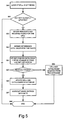
- the server can also periodically update the database. This process will be described in more detail with reference to the flow diagram of Figure 5.
- step S60 periodically the spider application will look at the URLs in the database and in step S61 a determination will be made as to whether any have not recently been updated. If all of the entries have recently been updated, the process terminates in step S68. If there are entries in the database which have not been recently been updated (step S61) the spider application requests and receives web pages for the URLs (step S62). The spider application then determines catalogues for the pages (step S63) and checks the relevance of the catalogue against the keywords (step S64). If the pages are not relevant (step S65) in step S69 the URLs are deleted from the database and the process terminates in step S68.
- step S66 If the pages are determined to be relevant (step S65) in step S66, the URLs and the catalogues in the database are updated and in step S67 the database entries are marked with the date of update. The process then terminates in step S68.
- the process of Figure 5 thus comprises a conventional periodic spidering process in order to keep the database up to date. It enables the database to be pruned to remove pages which are not no longer relevant.
- the spider application 3 is illustrated as residing in the search server 10, the spider application can in fact reside on any physical server on the Internet 50.
- the spider application could then independently receive the URLs which are also sent to the search server for updating the database so that the spider can spider from these URLs.
- the resultant relevant links can then be submitted to the search engine much in the same way as relevant links are submitted by agents.
- the agents 62 and 72 will transmit catalogues and URLs for all pages visited by the web browser. Also catalogues and URLs for all links from the visited page can be sent to the search server. It can thus be left for the search server to determine the relevance of the pages for the updating of the database. This process is however less preferred since it increases the amount of data that has be to transmitted by the agents to the search server.
- the matching process between the profile and the descriptive information was performed using keywords, the present invention can be applied to the use of any form of descriptive information.
- the present invention is particularly suited to the use of text which can allow keyword matching either strictly or on the basis of synonyms or natural language matching of text. It is also possible to define a profile as comprising meta information such as the date of downloading into the web page by the web browser or the address of the originating site.
- the profile can comprise any information which allows for the definition of the common interests of the group of users using the clients 60 and 70.
- the network on which the clients and the search server are connected is described as comprising the Internet, the present invention is applicable to any network and can for example comprise an Intranet, Extranet, or local area network.
- the present invention is more widely applicable to any form of information retrieval such as document retrieval over a network wherein a central database of index information is stored to allow for searching for a stored information.
- the determination of the relevance of the stored information need not be just based on the profile.
- the relevance can also be determined based on whether or not the database has recently been updated for that address.
- a user can select to update the database using any retrieved information by manually selecting it.
- the present invention is just not limited to the use of the Internet using web addresses.
- the present invention is applicable to any logical addressing system and for example covers all protocols using URLs e.g. HTTP, FTP, POP, and SMTP.
- the present invention is ideally suited to the searching needs of a specific interest or community.
- the central database can self-focus, expand and update automatically based on the behaviour of the members of the group.
- the common interests of the group can be defined by a suitable profile such as keywords and this keeps the domain of the search focused.
- the focusing of the search database does not prevent it being amended and expanded when users view a site that is not currently indexed. So long as the site falls within the current field of interest as defined by the profile, the site will automatically be indexed by the agent and the database updated.
- the advantages of this arrangement are that the user community can focus on the development and usefulness of the search indexed over time.
- the users can update the search catalogue database automatically themselves thus effectively distributing the processing task and requirement for bandwidth over many users.
- the database is described as being updated as soon as a URL is passed from an agent, however, it is possible for the updating process to be modified such that the database is only updated when the URL is submitted by agents a predetermined number of times. This would indicate that one or a number of users who visited the sight more than once, clearly indicating that the sight is relevant and should be added to the database.
Landscapes
- Engineering & Computer Science (AREA)
- Databases & Information Systems (AREA)
- Theoretical Computer Science (AREA)
- Data Mining & Analysis (AREA)
- Physics & Mathematics (AREA)
- General Engineering & Computer Science (AREA)
- General Physics & Mathematics (AREA)
- Information Retrieval, Db Structures And Fs Structures Therefor (AREA)
- Information Transfer Between Computers (AREA)
Applications Claiming Priority (2)
| Application Number | Priority Date | Filing Date | Title |
|---|---|---|---|
| GB0027770A GB2368935A (en) | 2000-11-14 | 2000-11-14 | Updating a searchable database of descriptive information describing information stored at a plurality of addressable logical locations |
| GB0027770 | 2000-11-14 |
Publications (1)
| Publication Number | Publication Date |
|---|---|
| EP1207468A2 true EP1207468A2 (fr) | 2002-05-22 |
Family
ID=9903148
Family Applications (1)
| Application Number | Title | Priority Date | Filing Date |
|---|---|---|---|
| EP01309614A Withdrawn EP1207468A2 (fr) | 2000-11-14 | 2001-11-14 | Méthode et système de mise à jour d'une base de données cherchable d'informations descriptives concernant des informations stockées en plusieurs lieux logiques adressables |
Country Status (3)
| Country | Link |
|---|---|
| US (1) | US20020059399A1 (fr) |
| EP (1) | EP1207468A2 (fr) |
| GB (1) | GB2368935A (fr) |
Cited By (12)
| Publication number | Priority date | Publication date | Assignee | Title |
|---|---|---|---|---|
| WO2004097670A1 (fr) * | 2003-04-29 | 2004-11-11 | Contraco Consulting & Software Limited | Procede pour generer des enregistrements courts caracteristiques d'enregistrements issus d'une banque de donnees, en particulier d'internet, procede pour determiner les enregistrements d'une banque de donnees qui sont pertinents pour une interrogation predefinissable, et systeme de recherche servant a la mise en oeuvre de c |
| EP1779276A4 (fr) * | 2004-08-19 | 2007-08-29 | Claria Corp | Procede et appareil de reponse a une demande d'informations d'un utillisateur final |
| US8073866B2 (en) | 2005-03-17 | 2011-12-06 | Claria Innovations, Llc | Method for providing content to an internet user based on the user's demonstrated content preferences |
| US8078602B2 (en) | 2004-12-17 | 2011-12-13 | Claria Innovations, Llc | Search engine for a computer network |
| US8086697B2 (en) | 2005-06-28 | 2011-12-27 | Claria Innovations, Llc | Techniques for displaying impressions in documents delivered over a computer network |
| US8170912B2 (en) | 2003-11-25 | 2012-05-01 | Carhamm Ltd., Llc | Database structure and front end |
| US8255413B2 (en) | 2004-08-19 | 2012-08-28 | Carhamm Ltd., Llc | Method and apparatus for responding to request for information-personalization |
| US8316003B2 (en) | 2002-11-05 | 2012-11-20 | Carhamm Ltd., Llc | Updating content of presentation vehicle in a computer network |
| US8620952B2 (en) | 2007-01-03 | 2013-12-31 | Carhamm Ltd., Llc | System for database reporting |
| US8645941B2 (en) | 2005-03-07 | 2014-02-04 | Carhamm Ltd., Llc | Method for attributing and allocating revenue related to embedded software |
| US8689238B2 (en) | 2000-05-18 | 2014-04-01 | Carhamm Ltd., Llc | Techniques for displaying impressions in documents delivered over a computer network |
| US9495446B2 (en) | 2004-12-20 | 2016-11-15 | Gula Consulting Limited Liability Company | Method and device for publishing cross-network user behavioral data |
Families Citing this family (39)
| Publication number | Priority date | Publication date | Assignee | Title |
|---|---|---|---|---|
| US20020035474A1 (en) * | 2000-07-18 | 2002-03-21 | Ahmet Alpdemir | Voice-interactive marketplace providing time and money saving benefits and real-time promotion publishing and feedback |
| US20030125958A1 (en) * | 2001-06-19 | 2003-07-03 | Ahmet Alpdemir | Voice-interactive marketplace providing time and money saving benefits and real-time promotion publishing and feedback |
| US6934684B2 (en) | 2000-03-24 | 2005-08-23 | Dialsurf, Inc. | Voice-interactive marketplace providing promotion and promotion tracking, loyalty reward and redemption, and other features |
| US7603703B2 (en) * | 2001-04-12 | 2009-10-13 | International Business Machines Corporation | Method and system for controlled distribution of application code and content data within a computer network |
| US20030084034A1 (en) * | 2001-11-01 | 2003-05-01 | Richard Fannin | Web-based search system |
| US8200775B2 (en) * | 2005-02-01 | 2012-06-12 | Newsilike Media Group, Inc | Enhanced syndication |
| US7756086B2 (en) * | 2004-03-03 | 2010-07-13 | Sipco, Llc | Method for communicating in dual-modes |
| US9015240B2 (en) * | 2004-06-09 | 2015-04-21 | Arthur Technologies, Llc | Web-styled messaging system |
| US20060015480A1 (en) * | 2004-07-19 | 2006-01-19 | Shawn Conahan | Dynamic knowledge-based networking system and method |
| US8700738B2 (en) * | 2005-02-01 | 2014-04-15 | Newsilike Media Group, Inc. | Dynamic feed generation |
| US20080195483A1 (en) * | 2005-02-01 | 2008-08-14 | Moore James F | Widget management systems and advertising systems related thereto |
| US20080046471A1 (en) * | 2005-02-01 | 2008-02-21 | Moore James F | Calendar Synchronization using Syndicated Data |
| US8347088B2 (en) * | 2005-02-01 | 2013-01-01 | Newsilike Media Group, Inc | Security systems and methods for use with structured and unstructured data |
| US8140482B2 (en) | 2007-09-19 | 2012-03-20 | Moore James F | Using RSS archives |
| US20070050446A1 (en) * | 2005-02-01 | 2007-03-01 | Moore James F | Managing network-accessible resources |
| US20060265489A1 (en) * | 2005-02-01 | 2006-11-23 | Moore James F | Disaster management using an enhanced syndication platform |
| US9202084B2 (en) | 2006-02-01 | 2015-12-01 | Newsilike Media Group, Inc. | Security facility for maintaining health care data pools |
| US20070106754A1 (en) * | 2005-09-10 | 2007-05-10 | Moore James F | Security facility for maintaining health care data pools |
| US20080065769A1 (en) * | 2006-07-07 | 2008-03-13 | Bryce Allen Curtis | Method and apparatus for argument detection for event firing |
| US8196039B2 (en) * | 2006-07-07 | 2012-06-05 | International Business Machines Corporation | Relevant term extraction and classification for Wiki content |
| US8560956B2 (en) | 2006-07-07 | 2013-10-15 | International Business Machines Corporation | Processing model of an application wiki |
| US8219900B2 (en) * | 2006-07-07 | 2012-07-10 | International Business Machines Corporation | Programmatically hiding and displaying Wiki page layout sections |
| US20080010386A1 (en) * | 2006-07-07 | 2008-01-10 | Bryce Allen Curtis | Method and apparatus for client wiring model |
| US20080010345A1 (en) * | 2006-07-07 | 2008-01-10 | Bryce Allen Curtis | Method and apparatus for data hub objects |
| US20080010338A1 (en) * | 2006-07-07 | 2008-01-10 | Bryce Allen Curtis | Method and apparatus for client and server interaction |
| US7954052B2 (en) * | 2006-07-07 | 2011-05-31 | International Business Machines Corporation | Method for processing a web page for display in a wiki environment |
| US20080010387A1 (en) * | 2006-07-07 | 2008-01-10 | Bryce Allen Curtis | Method for defining a Wiki page layout using a Wiki page |
| US8775930B2 (en) * | 2006-07-07 | 2014-07-08 | International Business Machines Corporation | Generic frequency weighted visualization component |
| US20080010388A1 (en) * | 2006-07-07 | 2008-01-10 | Bryce Allen Curtis | Method and apparatus for server wiring model |
| US20080046369A1 (en) * | 2006-07-27 | 2008-02-21 | Wood Charles B | Password Management for RSS Interfaces |
| US20080040352A1 (en) * | 2006-08-08 | 2008-02-14 | Kenneth Alexander Ellis | Method for creating a disambiguation database |
| US7571158B2 (en) * | 2006-08-25 | 2009-08-04 | Oracle International Corporation | Updating content index for content searches on networks |
| US7953868B2 (en) | 2007-01-31 | 2011-05-31 | International Business Machines Corporation | Method and system for preventing web crawling detection |
| US8789071B2 (en) | 2008-10-09 | 2014-07-22 | International Business Machines Corporation | Integrated extension framework |
| US20100094988A1 (en) * | 2008-10-09 | 2010-04-15 | International Business Machines Corporation | automatic discovery framework for integrated monitoring of database performance |
| US8060582B2 (en) | 2008-10-22 | 2011-11-15 | Google Inc. | Geocoding personal information |
| US9098856B2 (en) * | 2009-08-17 | 2015-08-04 | Yahoo! Inc. | Platform for delivery of heavy content to a user |
| US9473828B2 (en) * | 2010-01-28 | 2016-10-18 | Futurewei Technologies, Inc. | System and method for matching targeted advertisements for video content delivery |
| US9208471B2 (en) * | 2011-06-24 | 2015-12-08 | Alibaba.Com Limited | Matching users with similar interests |
Family Cites Families (5)
| Publication number | Priority date | Publication date | Assignee | Title |
|---|---|---|---|---|
| US5931907A (en) * | 1996-01-23 | 1999-08-03 | British Telecommunications Public Limited Company | Software agent for comparing locally accessible keywords with meta-information and having pointers associated with distributed information |
| WO1999021108A1 (fr) * | 1997-10-21 | 1999-04-29 | British Telecommunications Public Limited Company | Systeme de gestion de l'information |
| US6094649A (en) * | 1997-12-22 | 2000-07-25 | Partnet, Inc. | Keyword searches of structured databases |
| US6493702B1 (en) * | 1999-05-05 | 2002-12-10 | Xerox Corporation | System and method for searching and recommending documents in a collection using share bookmarks |
| AU1610801A (en) * | 1999-12-30 | 2001-07-16 | General Electric Company | Collaboration tool via computer network |
-
2000
- 2000-11-14 GB GB0027770A patent/GB2368935A/en not_active Withdrawn
-
2001
- 2001-01-16 US US09/764,914 patent/US20020059399A1/en not_active Abandoned
- 2001-11-14 EP EP01309614A patent/EP1207468A2/fr not_active Withdrawn
Cited By (14)
| Publication number | Priority date | Publication date | Assignee | Title |
|---|---|---|---|---|
| US8689238B2 (en) | 2000-05-18 | 2014-04-01 | Carhamm Ltd., Llc | Techniques for displaying impressions in documents delivered over a computer network |
| US8316003B2 (en) | 2002-11-05 | 2012-11-20 | Carhamm Ltd., Llc | Updating content of presentation vehicle in a computer network |
| WO2004097670A1 (fr) * | 2003-04-29 | 2004-11-11 | Contraco Consulting & Software Limited | Procede pour generer des enregistrements courts caracteristiques d'enregistrements issus d'une banque de donnees, en particulier d'internet, procede pour determiner les enregistrements d'une banque de donnees qui sont pertinents pour une interrogation predefinissable, et systeme de recherche servant a la mise en oeuvre de c |
| US8170912B2 (en) | 2003-11-25 | 2012-05-01 | Carhamm Ltd., Llc | Database structure and front end |
| US7836009B2 (en) | 2004-08-19 | 2010-11-16 | Claria Corporation | Method and apparatus for responding to end-user request for information-ranking |
| US8255413B2 (en) | 2004-08-19 | 2012-08-28 | Carhamm Ltd., Llc | Method and apparatus for responding to request for information-personalization |
| US7444358B2 (en) | 2004-08-19 | 2008-10-28 | Claria Corporation | Method and apparatus for responding to end-user request for information-collecting |
| EP1779276A4 (fr) * | 2004-08-19 | 2007-08-29 | Claria Corp | Procede et appareil de reponse a une demande d'informations d'un utillisateur final |
| US8078602B2 (en) | 2004-12-17 | 2011-12-13 | Claria Innovations, Llc | Search engine for a computer network |
| US9495446B2 (en) | 2004-12-20 | 2016-11-15 | Gula Consulting Limited Liability Company | Method and device for publishing cross-network user behavioral data |
| US8645941B2 (en) | 2005-03-07 | 2014-02-04 | Carhamm Ltd., Llc | Method for attributing and allocating revenue related to embedded software |
| US8073866B2 (en) | 2005-03-17 | 2011-12-06 | Claria Innovations, Llc | Method for providing content to an internet user based on the user's demonstrated content preferences |
| US8086697B2 (en) | 2005-06-28 | 2011-12-27 | Claria Innovations, Llc | Techniques for displaying impressions in documents delivered over a computer network |
| US8620952B2 (en) | 2007-01-03 | 2013-12-31 | Carhamm Ltd., Llc | System for database reporting |
Also Published As
| Publication number | Publication date |
|---|---|
| GB0027770D0 (en) | 2000-12-27 |
| GB2368935A (en) | 2002-05-15 |
| US20020059399A1 (en) | 2002-05-16 |
Similar Documents
| Publication | Publication Date | Title |
|---|---|---|
| EP1207468A2 (fr) | Méthode et système de mise à jour d'une base de données cherchable d'informations descriptives concernant des informations stockées en plusieurs lieux logiques adressables | |
| US7552109B2 (en) | System, method, and service for collaborative focused crawling of documents on a network | |
| US6567800B1 (en) | System and method for searching information stored on a network | |
| US9396266B2 (en) | Method and/or system for searching network content | |
| US6763362B2 (en) | Method and system for updating a search engine | |
| US6105028A (en) | Method and apparatus for accessing copies of documents using a web browser request interceptor | |
| CA2308107C (fr) | Ordonnancement de resultats de recherche de base de donnees en fonction de la retroaction de l'utilisateur | |
| US5978828A (en) | URL bookmark update notification of page content or location changes | |
| US5855015A (en) | System and method for retrieval of hyperlinked information resources | |
| US6480837B1 (en) | Method, system, and program for ordering search results using a popularity weighting | |
| US6061686A (en) | Updating a copy of a remote document stored in a local computer system | |
| US20030093409A1 (en) | Search engine interface and method of controlling client searches | |
| US6810395B1 (en) | Method and apparatus for query-specific bookmarking and data collection | |
| US6907425B1 (en) | System and method for searching information stored on a network | |
| WO2000068839A1 (fr) | Procede visant a maintenir l'enregistrement continu de pages sur un moteur de recherche donne | |
| KR19980701598A (ko) | 정보 액세스 방법 및 시스템(methods and/or systems for acessing informatiom) | |
| GB2327514A (en) | Management of access to information via the World Wide Web | |
| WO2001090946A2 (fr) | Procede et dispositif permettant d'utiliser la retroaction utilisateur afin d'ameliorer la mise en correspondance d'un signifiant | |
| WO2000067159A2 (fr) | Systeme et procede de recherche et de recommandation de documents dans une collection a l'aide de signets partages | |
| KR102054020B1 (ko) | 참조 웹 크롤의 도움에 의한 웹 코퍼스의 구축 | |
| WO2003038678A1 (fr) | Systeme de recherche accessible sur internet | |
| US20050125412A1 (en) | Web crawling | |
| US20040210560A1 (en) | Method and system for searching a wide area network | |
| Tarakeswar et al. | Search engines: a study | |
| US20030084095A1 (en) | Method to preserve web page links using registration and notification |
Legal Events
| Date | Code | Title | Description |
|---|---|---|---|
| PUAI | Public reference made under article 153(3) epc to a published international application that has entered the european phase |
Free format text: ORIGINAL CODE: 0009012 |
|
| AX | Request for extension of the european patent |
Free format text: AL;LT;LV;MK;RO;SI |
|
| STAA | Information on the status of an ep patent application or granted ep patent |
Free format text: STATUS: THE APPLICATION IS DEEMED TO BE WITHDRAWN |
|
| 18D | Application deemed to be withdrawn |
Effective date: 20040602 |