EP1208192B1 - Verfahren zur produktion eines heterologen sezernierten proteins aus auf mikroträgern gewachsenen cho-zellen - Google Patents
Verfahren zur produktion eines heterologen sezernierten proteins aus auf mikroträgern gewachsenen cho-zellen Download PDFInfo
- Publication number
- EP1208192B1 EP1208192B1 EP00959701A EP00959701A EP1208192B1 EP 1208192 B1 EP1208192 B1 EP 1208192B1 EP 00959701 A EP00959701 A EP 00959701A EP 00959701 A EP00959701 A EP 00959701A EP 1208192 B1 EP1208192 B1 EP 1208192B1
- Authority
- EP
- European Patent Office
- Prior art keywords
- serum
- cell culture
- volume
- day
- flow rate
- Prior art date
- Legal status (The legal status is an assumption and is not a legal conclusion. Google has not performed a legal analysis and makes no representation as to the accuracy of the status listed.)
- Expired - Lifetime
Links
- 238000004519 manufacturing process Methods 0.000 title claims description 27
- 210000004978 chinese hamster ovary cell Anatomy 0.000 title claims description 25
- 108090000623 proteins and genes Proteins 0.000 title claims description 25
- 102000004169 proteins and genes Human genes 0.000 title claims description 23
- 210000004027 cell Anatomy 0.000 claims description 74
- 239000006144 Dulbecco’s modified Eagle's medium Substances 0.000 claims description 23
- 210000002966 serum Anatomy 0.000 claims description 20
- 238000000034 method Methods 0.000 claims description 18
- 239000006143 cell culture medium Substances 0.000 claims description 15
- 102000012740 beta Adrenergic Receptors Human genes 0.000 claims description 10
- 108010079452 beta Adrenergic Receptors Proteins 0.000 claims description 10
- NOESYZHRGYRDHS-UHFFFAOYSA-N insulin Chemical compound N1C(=O)C(NC(=O)C(CCC(N)=O)NC(=O)C(CCC(O)=O)NC(=O)C(C(C)C)NC(=O)C(NC(=O)CN)C(C)CC)CSSCC(C(NC(CO)C(=O)NC(CC(C)C)C(=O)NC(CC=2C=CC(O)=CC=2)C(=O)NC(CCC(N)=O)C(=O)NC(CC(C)C)C(=O)NC(CCC(O)=O)C(=O)NC(CC(N)=O)C(=O)NC(CC=2C=CC(O)=CC=2)C(=O)NC(CSSCC(NC(=O)C(C(C)C)NC(=O)C(CC(C)C)NC(=O)C(CC=2C=CC(O)=CC=2)NC(=O)C(CC(C)C)NC(=O)C(C)NC(=O)C(CCC(O)=O)NC(=O)C(C(C)C)NC(=O)C(CC(C)C)NC(=O)C(CC=2NC=NC=2)NC(=O)C(CO)NC(=O)CNC2=O)C(=O)NCC(=O)NC(CCC(O)=O)C(=O)NC(CCCNC(N)=N)C(=O)NCC(=O)NC(CC=3C=CC=CC=3)C(=O)NC(CC=3C=CC=CC=3)C(=O)NC(CC=3C=CC(O)=CC=3)C(=O)NC(C(C)O)C(=O)N3C(CCC3)C(=O)NC(CCCCN)C(=O)NC(C)C(O)=O)C(=O)NC(CC(N)=O)C(O)=O)=O)NC(=O)C(C(C)CC)NC(=O)C(CO)NC(=O)C(C(C)O)NC(=O)C1CSSCC2NC(=O)C(CC(C)C)NC(=O)C(NC(=O)C(CCC(N)=O)NC(=O)C(CC(N)=O)NC(=O)C(NC(=O)C(N)CC=1C=CC=CC=1)C(C)C)CC1=CN=CN1 NOESYZHRGYRDHS-UHFFFAOYSA-N 0.000 claims description 10
- 230000001464 adherent effect Effects 0.000 claims description 9
- 230000010412 perfusion Effects 0.000 claims description 9
- 238000004115 adherent culture Methods 0.000 claims description 7
- 230000010261 cell growth Effects 0.000 claims description 7
- 229960002413 ferric citrate Drugs 0.000 claims description 6
- 239000002054 inoculum Substances 0.000 claims description 6
- NPFOYSMITVOQOS-UHFFFAOYSA-K iron(III) citrate Chemical compound [Fe+3].[O-]C(=O)CC(O)(CC([O-])=O)C([O-])=O NPFOYSMITVOQOS-UHFFFAOYSA-K 0.000 claims description 6
- 102000004877 Insulin Human genes 0.000 claims description 5
- 108090001061 Insulin Proteins 0.000 claims description 5
- BUGBHKTXTAQXES-UHFFFAOYSA-N Selenium Chemical compound [Se] BUGBHKTXTAQXES-UHFFFAOYSA-N 0.000 claims description 5
- 229940125396 insulin Drugs 0.000 claims description 5
- 239000011669 selenium Substances 0.000 claims description 5
- 229910052711 selenium Inorganic materials 0.000 claims description 5
- 108010047761 Interferon-alpha Proteins 0.000 claims description 4
- 239000007787 solid Substances 0.000 claims description 4
- 239000011573 trace mineral Substances 0.000 claims description 4
- 235000013619 trace mineral Nutrition 0.000 claims description 4
- 229940091258 selenium supplement Drugs 0.000 claims description 3
- 102000006992 Interferon-alpha Human genes 0.000 claims description 2
- 230000000977 initiatory effect Effects 0.000 claims description 2
- 238000012258 culturing Methods 0.000 claims 3
- 108091003079 Bovine Serum Albumin Proteins 0.000 description 20
- 239000012091 fetal bovine serum Substances 0.000 description 20
- 239000002609 medium Substances 0.000 description 20
- 230000014509 gene expression Effects 0.000 description 17
- LOKCTEFSRHRXRJ-UHFFFAOYSA-I dipotassium trisodium dihydrogen phosphate hydrogen phosphate dichloride Chemical compound P(=O)(O)(O)[O-].[K+].P(=O)(O)([O-])[O-].[Na+].[Na+].[Cl-].[K+].[Cl-].[Na+] LOKCTEFSRHRXRJ-UHFFFAOYSA-I 0.000 description 15
- 239000002953 phosphate buffered saline Substances 0.000 description 15
- 230000003321 amplification Effects 0.000 description 14
- 238000003199 nucleic acid amplification method Methods 0.000 description 14
- FBOZXECLQNJBKD-ZDUSSCGKSA-N L-methotrexate Chemical compound C=1N=C2N=C(N)N=C(N)C2=NC=1CN(C)C1=CC=C(C(=O)N[C@@H](CCC(O)=O)C(O)=O)C=C1 FBOZXECLQNJBKD-ZDUSSCGKSA-N 0.000 description 13
- 229960000485 methotrexate Drugs 0.000 description 13
- IAZDPXIOMUYVGZ-UHFFFAOYSA-N Dimethylsulphoxide Chemical compound CS(C)=O IAZDPXIOMUYVGZ-UHFFFAOYSA-N 0.000 description 11
- 230000012010 growth Effects 0.000 description 10
- 101000852865 Homo sapiens Interferon alpha/beta receptor 2 Proteins 0.000 description 9
- 239000000203 mixture Substances 0.000 description 9
- 238000004113 cell culture Methods 0.000 description 8
- 238000009472 formulation Methods 0.000 description 8
- 102100036718 Interferon alpha/beta receptor 2 Human genes 0.000 description 7
- 239000012679 serum free medium Substances 0.000 description 7
- 238000010367 cloning Methods 0.000 description 6
- 238000000746 purification Methods 0.000 description 6
- 241000699802 Cricetulus griseus Species 0.000 description 5
- 238000002965 ELISA Methods 0.000 description 5
- 239000001963 growth medium Substances 0.000 description 5
- 210000004962 mammalian cell Anatomy 0.000 description 5
- 239000000047 product Substances 0.000 description 5
- 239000004017 serum-free culture medium Substances 0.000 description 5
- 238000001890 transfection Methods 0.000 description 5
- ZDXPYRJPNDTMRX-VKHMYHEASA-N L-glutamine Chemical compound OC(=O)[C@@H](N)CCC(N)=O ZDXPYRJPNDTMRX-VKHMYHEASA-N 0.000 description 4
- 229930182816 L-glutamine Natural products 0.000 description 4
- 239000003153 chemical reaction reagent Substances 0.000 description 4
- 229940079593 drug Drugs 0.000 description 4
- 239000003814 drug Substances 0.000 description 4
- 102000005962 receptors Human genes 0.000 description 4
- 108020003175 receptors Proteins 0.000 description 4
- 239000013598 vector Substances 0.000 description 4
- 108091032973 (ribonucleotides)n+m Proteins 0.000 description 3
- WSFSSNUMVMOOMR-UHFFFAOYSA-N Formaldehyde Chemical compound O=C WSFSSNUMVMOOMR-UHFFFAOYSA-N 0.000 description 3
- 102000007438 Interferon alpha-beta Receptor Human genes 0.000 description 3
- 102000007056 Recombinant Fusion Proteins Human genes 0.000 description 3
- 108010008281 Recombinant Fusion Proteins Proteins 0.000 description 3
- 238000004458 analytical method Methods 0.000 description 3
- 239000002299 complementary DNA Substances 0.000 description 3
- 238000012790 confirmation Methods 0.000 description 3
- 238000011161 development Methods 0.000 description 3
- 230000018109 developmental process Effects 0.000 description 3
- 239000012526 feed medium Substances 0.000 description 3
- 239000007850 fluorescent dye Substances 0.000 description 3
- 229910052751 metal Inorganic materials 0.000 description 3
- 239000002184 metal Substances 0.000 description 3
- 150000002739 metals Chemical class 0.000 description 3
- 210000001672 ovary Anatomy 0.000 description 3
- 238000011084 recovery Methods 0.000 description 3
- SQGYOTSLMSWVJD-UHFFFAOYSA-N silver(1+) nitrate Chemical compound [Ag+].[O-]N(=O)=O SQGYOTSLMSWVJD-UHFFFAOYSA-N 0.000 description 3
- 239000013589 supplement Substances 0.000 description 3
- 102000004411 Antithrombin III Human genes 0.000 description 2
- 108090000935 Antithrombin III Proteins 0.000 description 2
- 108010076504 Protein Sorting Signals Proteins 0.000 description 2
- QAOWNCQODCNURD-UHFFFAOYSA-N Sulfuric acid Chemical compound OS(O)(=O)=O QAOWNCQODCNURD-UHFFFAOYSA-N 0.000 description 2
- 108010022394 Threonine synthase Proteins 0.000 description 2
- VSCWAEJMTAWNJL-UHFFFAOYSA-K aluminium trichloride Chemical compound Cl[Al](Cl)Cl VSCWAEJMTAWNJL-UHFFFAOYSA-K 0.000 description 2
- 150000001413 amino acids Chemical group 0.000 description 2
- 230000003698 anagen phase Effects 0.000 description 2
- 210000004102 animal cell Anatomy 0.000 description 2
- 229960005348 antithrombin iii Drugs 0.000 description 2
- 239000011324 bead Substances 0.000 description 2
- 230000015572 biosynthetic process Effects 0.000 description 2
- YKYOUMDCQGMQQO-UHFFFAOYSA-L cadmium dichloride Chemical compound Cl[Cd]Cl YKYOUMDCQGMQQO-UHFFFAOYSA-L 0.000 description 2
- 230000029087 digestion Effects 0.000 description 2
- 102000004419 dihydrofolate reductase Human genes 0.000 description 2
- 239000013604 expression vector Substances 0.000 description 2
- YBMRDBCBODYGJE-UHFFFAOYSA-N germanium dioxide Chemical compound O=[Ge]=O YBMRDBCBODYGJE-UHFFFAOYSA-N 0.000 description 2
- 102000052179 human IFNAR2 Human genes 0.000 description 2
- 238000000338 in vitro Methods 0.000 description 2
- 230000007774 longterm Effects 0.000 description 2
- 239000011159 matrix material Substances 0.000 description 2
- 239000012528 membrane Substances 0.000 description 2
- 108020004999 messenger RNA Proteins 0.000 description 2
- 239000002342 ribonucleoside Substances 0.000 description 2
- FGDZQCVHDSGLHJ-UHFFFAOYSA-M rubidium chloride Chemical compound [Cl-].[Rb+] FGDZQCVHDSGLHJ-UHFFFAOYSA-M 0.000 description 2
- 239000000523 sample Substances 0.000 description 2
- 230000028327 secretion Effects 0.000 description 2
- 239000000243 solution Substances 0.000 description 2
- 239000006228 supernatant Substances 0.000 description 2
- BFSVOASYOCHEOV-UHFFFAOYSA-N 2-diethylaminoethanol Chemical compound CCN(CC)CCO BFSVOASYOCHEOV-UHFFFAOYSA-N 0.000 description 1
- 108010039627 Aprotinin Proteins 0.000 description 1
- 206010003445 Ascites Diseases 0.000 description 1
- 229910021556 Chromium(III) chloride Inorganic materials 0.000 description 1
- 229910021580 Cobalt(II) chloride Inorganic materials 0.000 description 1
- 108020004705 Codon Proteins 0.000 description 1
- 229920000742 Cotton Polymers 0.000 description 1
- 101150074155 DHFR gene Proteins 0.000 description 1
- 108020004414 DNA Proteins 0.000 description 1
- KCXVZYZYPLLWCC-UHFFFAOYSA-N EDTA Chemical compound OC(=O)CN(CC(O)=O)CCN(CC(O)=O)CC(O)=O KCXVZYZYPLLWCC-UHFFFAOYSA-N 0.000 description 1
- 102000004190 Enzymes Human genes 0.000 description 1
- 108090000790 Enzymes Proteins 0.000 description 1
- 102000010834 Extracellular Matrix Proteins Human genes 0.000 description 1
- 108010037362 Extracellular Matrix Proteins Proteins 0.000 description 1
- 102100037362 Fibronectin Human genes 0.000 description 1
- 108010067306 Fibronectins Proteins 0.000 description 1
- 102000012673 Follicle Stimulating Hormone Human genes 0.000 description 1
- 108010079345 Follicle Stimulating Hormone Proteins 0.000 description 1
- CEAZRRDELHUEMR-URQXQFDESA-N Gentamicin Chemical compound O1[C@H](C(C)NC)CC[C@@H](N)[C@H]1O[C@H]1[C@H](O)[C@@H](O[C@@H]2[C@@H]([C@@H](NC)[C@@](C)(O)CO2)O)[C@H](N)C[C@@H]1N CEAZRRDELHUEMR-URQXQFDESA-N 0.000 description 1
- 229930182566 Gentamicin Natural products 0.000 description 1
- 108010043121 Green Fluorescent Proteins Proteins 0.000 description 1
- 101000852870 Homo sapiens Interferon alpha/beta receptor 1 Proteins 0.000 description 1
- 101000579218 Homo sapiens Renin Proteins 0.000 description 1
- 108010001127 Insulin Receptor Proteins 0.000 description 1
- 102100036721 Insulin receptor Human genes 0.000 description 1
- 101710186630 Insulin-1 Proteins 0.000 description 1
- 108010086140 Interferon alpha-beta Receptor Proteins 0.000 description 1
- 102100036714 Interferon alpha/beta receptor 1 Human genes 0.000 description 1
- 102000003996 Interferon-beta Human genes 0.000 description 1
- 108090000467 Interferon-beta Proteins 0.000 description 1
- 206010022998 Irritability Diseases 0.000 description 1
- 102000001399 Kallikrein Human genes 0.000 description 1
- 108060005987 Kallikrein Proteins 0.000 description 1
- COLNVLDHVKWLRT-QMMMGPOBSA-N L-phenylalanine Chemical compound OC(=O)[C@@H](N)CC1=CC=CC=C1 COLNVLDHVKWLRT-QMMMGPOBSA-N 0.000 description 1
- KZSNJWFQEVHDMF-BYPYZUCNSA-N L-valine Chemical compound CC(C)[C@H](N)C(O)=O KZSNJWFQEVHDMF-BYPYZUCNSA-N 0.000 description 1
- 102100037611 Lysophospholipase Human genes 0.000 description 1
- 229910003206 NH4VO3 Inorganic materials 0.000 description 1
- 238000000636 Northern blotting Methods 0.000 description 1
- 108091028043 Nucleic acid sequence Proteins 0.000 description 1
- 239000004677 Nylon Substances 0.000 description 1
- 241000283973 Oryctolagus cuniculus Species 0.000 description 1
- 208000012868 Overgrowth Diseases 0.000 description 1
- 238000012408 PCR amplification Methods 0.000 description 1
- 102000003992 Peroxidases Human genes 0.000 description 1
- 108010058864 Phospholipases A2 Proteins 0.000 description 1
- 229920001213 Polysorbate 20 Polymers 0.000 description 1
- 238000012300 Sequence Analysis Methods 0.000 description 1
- 108091081024 Start codon Proteins 0.000 description 1
- 229910021626 Tin(II) chloride Inorganic materials 0.000 description 1
- 102000004338 Transferrin Human genes 0.000 description 1
- 108090000901 Transferrin Proteins 0.000 description 1
- 102000004142 Trypsin Human genes 0.000 description 1
- 108090000631 Trypsin Proteins 0.000 description 1
- KZSNJWFQEVHDMF-UHFFFAOYSA-N Valine Natural products CC(C)C(N)C(O)=O KZSNJWFQEVHDMF-UHFFFAOYSA-N 0.000 description 1
- 229910006213 ZrOCl2 Inorganic materials 0.000 description 1
- 239000011543 agarose gel Substances 0.000 description 1
- 150000003863 ammonium salts Chemical class 0.000 description 1
- 239000005557 antagonist Substances 0.000 description 1
- 238000013459 approach Methods 0.000 description 1
- 229960004405 aprotinin Drugs 0.000 description 1
- 239000007640 basal medium Substances 0.000 description 1
- 238000012365 batch cultivation Methods 0.000 description 1
- 230000008901 benefit Effects 0.000 description 1
- 229960000074 biopharmaceutical Drugs 0.000 description 1
- 230000005779 cell damage Effects 0.000 description 1
- 230000032823 cell division Effects 0.000 description 1
- 208000037887 cell injury Diseases 0.000 description 1
- 230000006727 cell loss Effects 0.000 description 1
- 230000001413 cellular effect Effects 0.000 description 1
- 230000036755 cellular response Effects 0.000 description 1
- 239000001913 cellulose Substances 0.000 description 1
- 229920002678 cellulose Polymers 0.000 description 1
- 230000008859 change Effects 0.000 description 1
- QSWDMMVNRMROPK-UHFFFAOYSA-K chromium(3+) trichloride Chemical compound [Cl-].[Cl-].[Cl-].[Cr+3] QSWDMMVNRMROPK-UHFFFAOYSA-K 0.000 description 1
- 239000011636 chromium(III) chloride Substances 0.000 description 1
- 239000011248 coating agent Substances 0.000 description 1
- 238000000576 coating method Methods 0.000 description 1
- 239000000084 colloidal system Substances 0.000 description 1
- 239000003636 conditioned culture medium Substances 0.000 description 1
- 238000010276 construction Methods 0.000 description 1
- ARUVKPQLZAKDPS-UHFFFAOYSA-L copper(II) sulfate Chemical compound [Cu+2].[O-][S+2]([O-])([O-])[O-] ARUVKPQLZAKDPS-UHFFFAOYSA-L 0.000 description 1
- 229910000366 copper(II) sulfate Inorganic materials 0.000 description 1
- 230000003247 decreasing effect Effects 0.000 description 1
- 239000003398 denaturant Substances 0.000 description 1
- 230000001419 dependent effect Effects 0.000 description 1
- 230000001627 detrimental effect Effects 0.000 description 1
- 235000014113 dietary fatty acids Nutrition 0.000 description 1
- 239000012470 diluted sample Substances 0.000 description 1
- 238000010790 dilution Methods 0.000 description 1
- 239000012895 dilution Substances 0.000 description 1
- 238000005516 engineering process Methods 0.000 description 1
- 230000002255 enzymatic effect Effects 0.000 description 1
- 238000001976 enzyme digestion Methods 0.000 description 1
- 238000011156 evaluation Methods 0.000 description 1
- 238000010195 expression analysis Methods 0.000 description 1
- 210000002744 extracellular matrix Anatomy 0.000 description 1
- 229930195729 fatty acid Natural products 0.000 description 1
- 239000000194 fatty acid Substances 0.000 description 1
- 150000004665 fatty acids Chemical class 0.000 description 1
- 229940028334 follicle stimulating hormone Drugs 0.000 description 1
- 239000012634 fragment Substances 0.000 description 1
- 239000000499 gel Substances 0.000 description 1
- 238000010353 genetic engineering Methods 0.000 description 1
- 102000035122 glycosylated proteins Human genes 0.000 description 1
- 108091005608 glycosylated proteins Proteins 0.000 description 1
- 239000003102 growth factor Substances 0.000 description 1
- 210000001822 immobilized cell Anatomy 0.000 description 1
- 238000009776 industrial production Methods 0.000 description 1
- ZPNFWUPYTFPOJU-LPYSRVMUSA-N iniprol Chemical compound C([C@H]1C(=O)NCC(=O)NCC(=O)N[C@H]2CSSC[C@H]3C(=O)N[C@@H](CCCCN)C(=O)N[C@@H](C)C(=O)N[C@@H](CCCNC(N)=N)C(=O)N[C@H](C(N[C@H](C(=O)N[C@@H](CCCNC(N)=N)C(=O)N[C@@H](CC=4C=CC(O)=CC=4)C(=O)N[C@@H](CC=4C=CC=CC=4)C(=O)N[C@@H](CC=4C=CC(O)=CC=4)C(=O)N[C@@H](CC(N)=O)C(=O)N[C@@H](C)C(=O)N[C@@H](CCCCN)C(=O)N[C@@H](C)C(=O)NCC(=O)N[C@@H](CC(C)C)C(=O)N[C@@H](CSSC[C@H](NC(=O)[C@H](CC(O)=O)NC(=O)[C@H](CCC(O)=O)NC(=O)[C@H](C)NC(=O)[C@H](CO)NC(=O)[C@H](CCCCN)NC(=O)[C@H](CC=4C=CC=CC=4)NC(=O)[C@H](CC(N)=O)NC(=O)[C@H](CC(N)=O)NC(=O)[C@H](CCCNC(N)=N)NC(=O)[C@H](CCCCN)NC(=O)[C@H](C)NC(=O)[C@H](CCCNC(N)=N)NC2=O)C(=O)N[C@@H](CCSC)C(=O)N[C@@H](CCCNC(N)=N)C(=O)N[C@@H]([C@@H](C)O)C(=O)N[C@@H](CSSC[C@H](NC(=O)[C@H](CC=2C=CC=CC=2)NC(=O)[C@H](CC(O)=O)NC(=O)[C@H]2N(CCC2)C(=O)[C@@H](N)CCCNC(N)=N)C(=O)N[C@@H](CC(C)C)C(=O)N[C@@H](CCC(O)=O)C(=O)N2[C@@H](CCC2)C(=O)N2[C@@H](CCC2)C(=O)N[C@@H](CC=2C=CC(O)=CC=2)C(=O)N[C@@H]([C@@H](C)O)C(=O)NCC(=O)N2[C@@H](CCC2)C(=O)N3)C(=O)NCC(=O)NCC(=O)N[C@@H](C)C(O)=O)C(=O)N[C@@H](CCC(N)=O)C(=O)N[C@H](C(=O)N[C@@H](CC=2C=CC=CC=2)C(=O)N[C@H](C(=O)N1)C(C)C)[C@@H](C)O)[C@@H](C)CC)=O)[C@@H](C)CC)C1=CC=C(O)C=C1 ZPNFWUPYTFPOJU-LPYSRVMUSA-N 0.000 description 1
- 238000011081 inoculation Methods 0.000 description 1
- 229910000357 manganese(II) sulfate Inorganic materials 0.000 description 1
- SQQMAOCOWKFBNP-UHFFFAOYSA-L manganese(II) sulfate Chemical compound [Mn+2].[O-]S([O-])(=O)=O SQQMAOCOWKFBNP-UHFFFAOYSA-L 0.000 description 1
- 230000007246 mechanism Effects 0.000 description 1
- 230000002503 metabolic effect Effects 0.000 description 1
- 239000002207 metabolite Substances 0.000 description 1
- VLAPMBHFAWRUQP-UHFFFAOYSA-L molybdic acid Chemical compound O[Mo](O)(=O)=O VLAPMBHFAWRUQP-UHFFFAOYSA-L 0.000 description 1
- 238000004264 monolayer culture Methods 0.000 description 1
- LGQLOGILCSXPEA-UHFFFAOYSA-L nickel sulfate Chemical compound [Ni+2].[O-]S([O-])(=O)=O LGQLOGILCSXPEA-UHFFFAOYSA-L 0.000 description 1
- 229910000363 nickel(II) sulfate Inorganic materials 0.000 description 1
- 229920001778 nylon Polymers 0.000 description 1
- 229920001542 oligosaccharide Polymers 0.000 description 1
- 150000002482 oligosaccharides Chemical class 0.000 description 1
- 108040007629 peroxidase activity proteins Proteins 0.000 description 1
- 235000020030 perry Nutrition 0.000 description 1
- COLNVLDHVKWLRT-UHFFFAOYSA-N phenylalanine Natural products OC(=O)C(N)CC1=CC=CC=C1 COLNVLDHVKWLRT-UHFFFAOYSA-N 0.000 description 1
- 239000013612 plasmid Substances 0.000 description 1
- 239000000256 polyoxyethylene sorbitan monolaurate Substances 0.000 description 1
- 235000010486 polyoxyethylene sorbitan monolaurate Nutrition 0.000 description 1
- 229920001184 polypeptide Polymers 0.000 description 1
- 239000011148 porous material Substances 0.000 description 1
- 238000001556 precipitation Methods 0.000 description 1
- 108090000765 processed proteins & peptides Proteins 0.000 description 1
- 102000004196 processed proteins & peptides Human genes 0.000 description 1
- 239000013587 production medium Substances 0.000 description 1
- 230000002797 proteolythic effect Effects 0.000 description 1
- 230000009467 reduction Effects 0.000 description 1
- 108091008146 restriction endonucleases Proteins 0.000 description 1
- 238000012552 review Methods 0.000 description 1
- 230000003248 secreting effect Effects 0.000 description 1
- 229940082569 selenite Drugs 0.000 description 1
- MCAHWIHFGHIESP-UHFFFAOYSA-L selenite(2-) Chemical compound [O-][Se]([O-])=O MCAHWIHFGHIESP-UHFFFAOYSA-L 0.000 description 1
- HVAKSLUOHARFLM-UHFFFAOYSA-N selenium;sodium Chemical compound [Se][Na] HVAKSLUOHARFLM-UHFFFAOYSA-N 0.000 description 1
- 241000894007 species Species 0.000 description 1
- 239000000758 substrate Substances 0.000 description 1
- 230000003319 supportive effect Effects 0.000 description 1
- 239000000725 suspension Substances 0.000 description 1
- 238000004114 suspension culture Methods 0.000 description 1
- AXZWODMDQAVCJE-UHFFFAOYSA-L tin(II) chloride (anhydrous) Chemical compound [Cl-].[Cl-].[Sn+2] AXZWODMDQAVCJE-UHFFFAOYSA-L 0.000 description 1
- 238000012546 transfer Methods 0.000 description 1
- 239000012581 transferrin Substances 0.000 description 1
- 230000014616 translation Effects 0.000 description 1
- 239000012588 trypsin Substances 0.000 description 1
- 239000004474 valine Substances 0.000 description 1
- 238000012982 x-ray structure analysis Methods 0.000 description 1
- 229910000368 zinc sulfate Inorganic materials 0.000 description 1
- NWONKYPBYAMBJT-UHFFFAOYSA-L zinc sulfate Chemical compound [Zn+2].[O-]S([O-])(=O)=O NWONKYPBYAMBJT-UHFFFAOYSA-L 0.000 description 1
- 239000011686 zinc sulphate Substances 0.000 description 1
- IPCAPQRVQMIMAN-UHFFFAOYSA-L zirconyl chloride Chemical compound Cl[Zr](Cl)=O IPCAPQRVQMIMAN-UHFFFAOYSA-L 0.000 description 1
Images


Classifications
-
- C—CHEMISTRY; METALLURGY
- C12—BIOCHEMISTRY; BEER; SPIRITS; WINE; VINEGAR; MICROBIOLOGY; ENZYMOLOGY; MUTATION OR GENETIC ENGINEERING
- C12N—MICROORGANISMS OR ENZYMES; COMPOSITIONS THEREOF; PROPAGATING, PRESERVING, OR MAINTAINING MICROORGANISMS; MUTATION OR GENETIC ENGINEERING; CULTURE MEDIA
- C12N5/00—Undifferentiated human, animal or plant cells, e.g. cell lines; Tissues; Cultivation or maintenance thereof; Culture media therefor
- C12N5/06—Animal cells or tissues; Human cells or tissues
- C12N5/0602—Vertebrate cells
- C12N5/0608—Germ cells
- C12N5/0609—Oocytes, oogonia
-
- C—CHEMISTRY; METALLURGY
- C12—BIOCHEMISTRY; BEER; SPIRITS; WINE; VINEGAR; MICROBIOLOGY; ENZYMOLOGY; MUTATION OR GENETIC ENGINEERING
- C12N—MICROORGANISMS OR ENZYMES; COMPOSITIONS THEREOF; PROPAGATING, PRESERVING, OR MAINTAINING MICROORGANISMS; MUTATION OR GENETIC ENGINEERING; CULTURE MEDIA
- C12N5/00—Undifferentiated human, animal or plant cells, e.g. cell lines; Tissues; Cultivation or maintenance thereof; Culture media therefor
- C12N5/0068—General culture methods using substrates
- C12N5/0075—General culture methods using substrates using microcarriers
-
- C—CHEMISTRY; METALLURGY
- C07—ORGANIC CHEMISTRY
- C07K—PEPTIDES
- C07K14/00—Peptides having more than 20 amino acids; Gastrins; Somatostatins; Melanotropins; Derivatives thereof
- C07K14/435—Peptides having more than 20 amino acids; Gastrins; Somatostatins; Melanotropins; Derivatives thereof from animals; from humans
- C07K14/705—Receptors; Cell surface antigens; Cell surface determinants
- C07K14/715—Receptors; Cell surface antigens; Cell surface determinants for cytokines; for lymphokines; for interferons
- C07K14/7156—Receptors; Cell surface antigens; Cell surface determinants for cytokines; for lymphokines; for interferons for interferons [IFN]
-
- C—CHEMISTRY; METALLURGY
- C12—BIOCHEMISTRY; BEER; SPIRITS; WINE; VINEGAR; MICROBIOLOGY; ENZYMOLOGY; MUTATION OR GENETIC ENGINEERING
- C12P—FERMENTATION OR ENZYME-USING PROCESSES TO SYNTHESISE A DESIRED CHEMICAL COMPOUND OR COMPOSITION OR TO SEPARATE OPTICAL ISOMERS FROM A RACEMIC MIXTURE
- C12P21/00—Preparation of peptides or proteins
-
- C—CHEMISTRY; METALLURGY
- C12—BIOCHEMISTRY; BEER; SPIRITS; WINE; VINEGAR; MICROBIOLOGY; ENZYMOLOGY; MUTATION OR GENETIC ENGINEERING
- C12N—MICROORGANISMS OR ENZYMES; COMPOSITIONS THEREOF; PROPAGATING, PRESERVING, OR MAINTAINING MICROORGANISMS; MUTATION OR GENETIC ENGINEERING; CULTURE MEDIA
- C12N2500/00—Specific components of cell culture medium
- C12N2500/05—Inorganic components
- C12N2500/10—Metals; Metal chelators
- C12N2500/20—Transition metals
- C12N2500/24—Iron; Fe chelators; Transferrin
- C12N2500/25—Insulin-transferrin; Insulin-transferrin-selenium
-
- C—CHEMISTRY; METALLURGY
- C12—BIOCHEMISTRY; BEER; SPIRITS; WINE; VINEGAR; MICROBIOLOGY; ENZYMOLOGY; MUTATION OR GENETIC ENGINEERING
- C12N—MICROORGANISMS OR ENZYMES; COMPOSITIONS THEREOF; PROPAGATING, PRESERVING, OR MAINTAINING MICROORGANISMS; MUTATION OR GENETIC ENGINEERING; CULTURE MEDIA
- C12N2500/00—Specific components of cell culture medium
- C12N2500/90—Serum-free medium, which may still contain naturally-sourced components
-
- C—CHEMISTRY; METALLURGY
- C12—BIOCHEMISTRY; BEER; SPIRITS; WINE; VINEGAR; MICROBIOLOGY; ENZYMOLOGY; MUTATION OR GENETIC ENGINEERING
- C12N—MICROORGANISMS OR ENZYMES; COMPOSITIONS THEREOF; PROPAGATING, PRESERVING, OR MAINTAINING MICROORGANISMS; MUTATION OR GENETIC ENGINEERING; CULTURE MEDIA
- C12N2510/00—Genetically modified cells
- C12N2510/02—Cells for production
-
- C—CHEMISTRY; METALLURGY
- C12—BIOCHEMISTRY; BEER; SPIRITS; WINE; VINEGAR; MICROBIOLOGY; ENZYMOLOGY; MUTATION OR GENETIC ENGINEERING
- C12N—MICROORGANISMS OR ENZYMES; COMPOSITIONS THEREOF; PROPAGATING, PRESERVING, OR MAINTAINING MICROORGANISMS; MUTATION OR GENETIC ENGINEERING; CULTURE MEDIA
- C12N2531/00—Microcarriers
Definitions
- the present invention relates to a method for producing a heterologous secreted protein in CHO adherent cell culture.
- CHO Chinese hamster ovary
- t-PA Human hamster ovary
- serum-free medium serum-free medium have been available for the last 10 years (Gorfien et al., 1991).
- an alternative strategy for CHO cell culture is to support attached cell growth where cells adhere to a matrix, e.g., a microcarrier (Kadouri, 1994).
- CHO cells can grow successfully on such supports, and industrial processes have been developed utilizing CHO microcarrier cultures, e.g., Puregonâ (Olijve et al., 1996).
- the adherent growth of CHO cells on microcarriers is usually accomplished by supplying serum to the culture, in the form of fetal bovine serum (FBS) (Xiao et al., 1994; Clark et al., 1981; Nikolai et al., 1992; Asselbergs et al., 1992; Levin et al., 1992; Watson et al., 1994 and Ohlson et al., 1994).
- FBS fetal bovine serum
- This complex culture medium supplement contains the necessary attachment and growth factors required to promote the adherent phenotype, e.g., fibronectin, laminin (Zaworski et al., 1993 and Nilsson, 1989).
- cells are usually fed (via continuous perfusion) culture medium supplemented with serum until the cells fill the available surface area provided by the microcarrier (the growth phase).
- the perfused medium is then switched to a different medium, usually one that is a serum-free formulation, as cells at this point are not dividing and can rely on the existing extracellular matrix to support their attachment.
- conditioned medium is collected for recovery and purification of the recombinant protein.
- the switch from growth to production can lead to a dramatic cellular response, such as cell loss and decreased volumetric productivity of recombinant protein (Cosgrove et al., 1995).
- a lag phase can occur when the cells respond to the dramatic switch in environment, which then results in a period of low recombinant protein productivity until the cells are able to recover.
- Kim et al. (In Vitro Cell Dev. Biol.-Animal, 35: / 78-182, 1992) describes the development of serum-free medium for CHO cells which were gradually weaned from 10% serum medium to 0.5% serum medium to increase the probability of successful growth in said serum-free medium.
- EPO 388 716 A2 teaches a production medium for producing non-degraded proteins from mammalian cells that is McCoy' s 5A supplemented with not more than 0.5% serum, 5 KIV/ml aprotinin and gentamycin (optional) that is used for replacing the perfusion medium of the reactor initially comprising 5% FCS, the latter medium being employed until the cells have grown to a density of approximately 2-5x10 6 cells per milliliter.
- the object underlying the present invention is to provide an improved method for producing a heterlogous secreted protein from transformed CHO cells grown on microcarriers in a serum-free culture medium.
- the present invention provides a method according to claim 1 for producing a heterologous secreted protein from transformed CHO cells grown on microcarriers in a serum-free cell culture medium. This method has the advantage of overcoming the problem of a production lag phase observed when switching from a serum-containing to a serum-free environment.
- the present invention is based on the development of a serum-free feeding strategy for growing CHO cells on microcarriers that overcomes the requirement for serum to promote an adherent cell phenotype.
- This serum-free feeding strategy according to the method of the present invention significantly improves the recovery of the desired secreted protein product by eliminating the lag phase associated with serum-removal, i.e., switching from a serum-containing to a serum-free environment.
- the method for producing a heterologous secreted protein from CHO cells grown on microcarriers involves inoculating a cell bioreactor containing microcarriers as a solid support for adherent cell growth with an inoculum of CHO host cells transformed to express a heterologous secreted protein. While not absolutely necessary, the inoculated cells are preferably grown without perfusion in a serum-containing cell culture medium, such as DMEM/F12 supplemented with 5% fetal bovine serum (FBS), for a period of about one to three days, preferably about two days.
- a serum-containing cell culture medium such as DMEM/F12 supplemented with 5% fetal bovine serum (FBS)
- the cells are then fed via perfusion with a feed of a serum-free cell culture medium, which is preferably DMEM/F12 (catalogue no. 1330-032, Gibco BRL, Gaithersburg, MD) supplemented with IFCSTE (an acronym for Insulin, Ferric Citrate, Selenium, and Trace Elements, the formulation of which is shown in Table 1 below), at an initial feed flow rate in the range of about 0.1 to 0.4 volume/volume/day (v/v/d) before increasing the feed rate of serum-free cell culture medium in stages over about a six to ten day period, preferably seven to nine days, until a feed flow rate of about 1 to 3.5 v/v/d is reached to produce and secrete the desired heterologous secreted protein from the culture CHO cells into the culture medium.
- a serum-free cell culture medium which is preferably DMEM/F12 (catalogue no. 1330-032, Gibco BRL, Gaithersburg, MD) supplemented with IFCSTE (an acronym for Insulin
- the production and secretion of the desired heterologous secreted protein is maintained after the final feed flow rate is reached by continuous perfusion of serum-free culture medium supplemented with IFCSTE.
- the desired heterologous protein produced and secreted into the serum-free culture medium can be readily recovered and purified using conventional recovery and purification techniques well-known to those of skill in the art.
- the initial feed flow rate and the period of time for increasing the feed flow rate in stages to the final feed flow rate can be varied depending on the size of the inoculum.
- an inoculum of about 2 x 10 5 cells/ml is used for a 4.8 liter cell bioreactor and the cells are cultured for about two days before perfusing with an initial feed of serum-free culture medium at an initial feed flow rate of about 0.2 v/v/d.
- the feed flow rate for continuous perfusion of the adherent cell culture in the preferred embodiment is increased on day 3 to about 0.3 v/v/d, on day 4 to about 0.5 v/v/d, on day 5 to about 0.8 v/v/d, on day 6 to about 1.2 v/v/d, on day 7 to about 1.5 v/v/d, until a final flow rate of about 2.0 v/v/d is reached on day 8.
- the final feed flow rate can be between 1 to 3.5 v/v/d, but it is preferably about 2 v/v/d, such as in the range of about 1.5 to 2.5 v/v/d.
- heterologous secreted protein is meant to be a secreted protein not endogenous to CHO cells
- the preferred embodiment as exemplified in the Example, is soluble interferon ⁇ / ⁇ receptor (sIFNAR2).
- Soluble human IFNAR2 is a glycosylated protein which binds both ⁇ and ⁇ interferon and its existence as a soluble form of the IFN ⁇ / ⁇ receptor offers the possibility of using the receptor therapeutically as an IFN antagonist.
- the solid support on which adherent CHO cells are grown is preferably Cytopore 2 microcarriers (Amersham Pharmacia Biotech, Piscataway, NJ), which are microcarriers with a crosslinked cotton cellulose matrix, a hydrophilic coating of DEAE, a charge density of 1.8 meq/g, and an average pore diameter of 30 ⁇ m.
- Cytopore 2 microcarriers Amersham Pharmacia Biotech, Piscataway, NJ
- suitable microcarriers known in the art for use in adherent cell culture can also serve as an alternate solid support for adherent growth of CHO cells.
- the preferred serum-free cell culture medium is DMEM/F12 supplemented with IFCSTE.
- CHO-IFNR1-1-50 had the highest specific productivity with a pod of 34.48.
- CHO-IFNR1-1-31 (CHO clone 1-1-31) had the highest volumetric productivity expressing 18.71. ⁇ g/ml in a T75 flask over a 24 h period. Both clones exhibited a single major mRNA species when examined by Northern Blot Analysis.
- pCEV9-QM27 plasmid DNA containing soluble human IFN ⁇ / ⁇ receptor cDNA from Dr. Rubinstein was used as template for PCR amplification.
- a pair of PCR primers were used to amplify human IFN ⁇ / ⁇ receptor cDNA from the ATG start codon of the signal peptide to the TAG stop codon.
- a XbaI site was included in both primers.
- PCR was performed under standard conditions for 25 cycles. After gel purification and XbaI digestion, a 730 bp PCR product was ligated into XbaI digested, CIP-treated pCMV.PA4 expression vector. XbaI and NdeI digestions were used to screen the MC1061 transformants.
- the pCMV.PA-hIFN ⁇ / ⁇ receptor clone 11 was checked by restriction enzyme digestions and DNA sequence analysis. In the signal peptide region, a phenylalanine was found instead of valine at amino acid position 10 which is different from the published sequence (Rubinstein, 1994). The same change was found by Dr. Rubinstein in his original soluble form cloning construct.
- CHO-DUKX cells were co-tranfected with the h IFN ⁇ / ⁇ R CMV.PA4 construct (50 ⁇ g) and with the D ⁇ construct (10 ⁇ g) at a 5:1 ratio by routine CaPO 4 precipitation method.
- the D ⁇ expression vector contains a dihydrofolate reductase (DHFR) gene thereby permitting selection and amplification with the drug methotrexate (MTX).
- DHFR dihydrofolate reductase
- MTX drug methotrexate
- the transfection was designated IFNR1.
- Growth medium utilized before and immediately following transfection consisted of alpha MEM (+) medium (with deoxy-and ribonucleosides, Gibco BRL) supplemented with 10% certified fetal bovine serum (FBS, Gibco BRL) and 1% L-glutamine (Gibco BRL).
- each plate was rinsed with phosphate buffered saline (PBS), at pH 7.0, and treated with 2 ml of 0.05% trypsin - 0.53 mM EDTA solution (Gibco BRL) for four minutes at 37°C.
- the trysin was quenched by the addition of 8 ml of selection medium consisting of alpha MEM (-) medium (without deoxy- and ribonucleosides, Gibco BRL) supplemented with 10% dialyzed fetal bovine serum (dFBS, Gibco BRL), 1% L-glutamine (Gibco BRL), and 0.02 ⁇ M MTX (Sigma).
- Selection medium consisting of alpha MEM (-) medium (without deoxy- and ribonucleosides, Gibco BRL) supplemented with 10% dialyzed fetal bovine serum (dFBS, Gibco BRL), 1% L-glutamine (Gibco BRL), and 0.02 ⁇ M
- the D ⁇ vector contained the DHFR gene, it was possible to attempt to amplify the expression of the CHO-IFNR1 cells. Following selection at 0.02 ⁇ M MTX, transfected cells were amplified in "pools" according to standard amplification schedule of 0.1 ⁇ M ⁇ 0. 5 ⁇ M ⁇ 1. 0 ⁇ M ⁇ 5. 0 ⁇ M MTX. After twenty-four hour expression samples were taken at the 0.02 ⁇ M MTX level, the remaining cells were used for amplification.
- one P100 dish for each pool was seeded at 7 x 10 5 cells in alpha MEM (-) medium supplemented with 10% dialyzed fetal bovine serum (dFBS, Gibco BRL), 1% L-glutamine (Gibco BRL), and the appropriate MTX concentration (Sigma). Cells were maintained at each successive amplification step for at least seven to ten days.
- Immulon IV plates from Dynatech were coated with monoclonal antibody anti-IFNAR2 34.1 ascites, diluted 1:5000 in 0.1% Tween 20 in PBS, pH 7.4 (PBS/T) at 100 ⁇ l per well for 2 hours at 37°C. Plates were rinsed twice with PBS/T. All washes were at room temperature (RT) using an Ultrawash Plus automated aspirator/washer from Dynatech.
- Plates were blocked overnight at 4°C with 200 ⁇ l per well of 1.0% BSA in PBS/T. Plates may be stored, cold, in block, for up to seven days. They were washed three times with PBS/T before further use.
- Standard and samples were diluted in PBS/T.
- the standard was affinity purified rhIFN ⁇ / ⁇ receptor, stored at -20°C or thawed and kept at °C for no longer than one week.
- the receptor was unstable at low concentrations, so it was diluted to working concentrations just before use.
- the standard was used at 200, 100, 50, 25, 12.5 and 6.25 ng/ml and at 100 ⁇ l per well with each concentration being run in triplicate.
- the diluted samples were also used at 100 ⁇ l per well in duplicate (or triplicate, space permitting). Standards and samples were allowed to incubate for one hour at RT. Plates were washed three times in PBS/T.
- Polyclonal rabbit anti-IFNAR2 serum was diluted 1:5000 in PBS/T. 100 ⁇ l per well was used for one hour at RT. Plates were washed three times with PBS/T.
- Biotinylated anti-rabbit antibody (Vector BA-1000) was diluted 1:10000 in PBS/T. 100 ⁇ l per well was used for one hour at RT. Plates were washed three times with PBS/T.
- ABC reagent (Vector ABC Elite kit) was prepared as follows: 1 drop of reagent A was added to 10 ml PBS/T and mixed by inversion. 1 drop of reagent B was added and mixed by inversion. This mixture was allowed to incubate a minimum of 30 minutes at RT, then was diluted to a final volume of no more than 50 ml just before use. 100 ⁇ l per well of diluted ABC was allowed to incubate thirty minutes at RT. Plates were washed three times in PBS/T.
- IFNR1-1 at the 1 ⁇ M level, was selected for cloning.
- One vial of the IFNR1-1 pool was thawed into a T75 flask containing 1 ⁇ M MTX medium.
- Cells were passaged to T75 flasks in DMEM/F12 containing 5% FBS and a limited dilution cloning was performed.
- Five 96 well plates were inoculated with 0.25, 0.5, and 1 cells/well. Cloning was performed in the absence of drug.
- the IFNR1-1 pool at 1 ⁇ M MTX level had the highest volumetric productivity, 9.40 ⁇ g/ml, and was chosen for cloning.
- the specific productivity of this pool was 5.99 pcd.
- the highest expressing clone was IFNR1-1-50 with a specific productivity of 34.48 pcd.
- the highest expressor based on volumetric expression was IFNR1-1-31 (CHO clone 1-1-31) with an expression level of 18.71 ⁇ g/ml.
- sIFNAR2 is the heterologous secreted protein that is produced and secreted in adherent CHO cell culture.
- IFNAR2 is the beta subunit of the Type I interferon receptor (IFNAR), which is a heteromultimeric receptor complex composed of at least two different polypeptide chains, designated alpha and beta. Like the beta subunit, the alpha subunit has been renamed and is also known as IFNAR1.
- sIFNAR2 is soluble and not membrane bound because it lacks at least the transmembrane domain IFNAR2.
- bioreactor run #4 The two bioreactor runs of CHO cells capable of producing and secreting sIFNAR2 as presented below demonstrate a normal "classic" approach (bioreactor run #4) and a novel serum-feeding strategy according to the present invention (bioreactor run #12) directed to adherent cell culture.
- Bioreactor Run #4 serum-containing feeding strategy
- CHO clone 1-1-31 (expresses sIFNAR2) was grown in DMEM/F12 supplemented with 5% FBS in T-flasks and roller bottles until enough cells had been generated to inoculate a 4.8 1 bioreactor. Cells were then trypsinized from the rollers and used to inoculate a reactor containing 2 g/l Cytopore 2 microcarriers in 4.8 1 DMEM/F12 supplemented with 5 % FBS. After a 24 hr period a feed of DMEM/F12 supplemented with 5 % FBS was initiated at a flow rate of 0.3 volumes feed medium/volume reactor/day (v/v/d).
- This feed rate was increased in stages over an 8 day period until a flow rate of 2 v/v/d was reached (i.e. 9.6 1/day).
- the feed medium was switched to DMEM/F12 supplemented with 1 mg/l recombinant insulin, about 12 mg/l ferric citrate, 0.0068 mg/l selenium and a 1X solution of trace elements (IFCSTE).
- the feed flow rate of about 2 v/v/d was maintained throughout the production period. Cell growth on microcarriers and sIFNAR2 production was monitored.
- Bioreactor Run #12 serum-free feeding strategy
- CHO clone 1-1-31 (expresses sIFNAR2) was grown in DMEM/F12 supplemented with 5% FBS in T-flasks and roller bottles until enough cells had been generated to inoculate a 4.8 1 bioreactor. Cells were trypsinized from rollers and used to inoculate a reactor containing 2 g/l Cytopore 2 microcarriers in 4.8 1 DMEM/F12 supplemented with 5% FBS. After a 48 hr period, a serum-free feed of DMEM/F12 supplemented'with IFCSTE was initiated at a flow rate of 0.2 volume/volume/day.
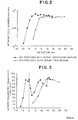
- Figure 3 illustrates the production kinetics of sIFNAR2 in bioreactor runs #4 and #12.
- Cells fed with DMEM/F12 supplemented with 5% FBS initially demonstrated a volumetric productivity of approximately 80 mg/l-day.
- a lag phase was observed where productivity fell to below 40 mg/l-day before recovering back to 80 mg/l-day after a 10 day period (run day 20).
- cells fed from the start with DMEM/F12 supplemented with IFCSTE demonstrated no lag phase and reached 80 mg/l-day on run day 14.
- Figs. 4A-4C and Figs. 5A-5D together illustrate that both the feeding strategies of bioreactor runs #4 and #12 support cell growth on microcarriers with increases in fluorescence observed over time.
Landscapes
- Health & Medical Sciences (AREA)
- Life Sciences & Earth Sciences (AREA)
- Chemical & Material Sciences (AREA)
- Organic Chemistry (AREA)
- Engineering & Computer Science (AREA)
- Zoology (AREA)
- Genetics & Genomics (AREA)
- Wood Science & Technology (AREA)
- Biomedical Technology (AREA)
- Biotechnology (AREA)
- Bioinformatics & Cheminformatics (AREA)
- General Health & Medical Sciences (AREA)
- Biochemistry (AREA)
- Cell Biology (AREA)
- General Engineering & Computer Science (AREA)
- Microbiology (AREA)
- Molecular Biology (AREA)
- Medicinal Chemistry (AREA)
- Gastroenterology & Hepatology (AREA)
- Biophysics (AREA)
- Toxicology (AREA)
- Immunology (AREA)
- Proteomics, Peptides & Aminoacids (AREA)
- Chemical Kinetics & Catalysis (AREA)
- General Chemical & Material Sciences (AREA)
- Developmental Biology & Embryology (AREA)
- Preparation Of Compounds By Using Micro-Organisms (AREA)
- Micro-Organisms Or Cultivation Processes Thereof (AREA)
Claims (12)
- Ein Verfahren zur Herstellung eines heterologen sezemierten Proteins aus CHO-Zellen, die auf Mikroträgern gewachsen sind, welches die folgenden Schritte umfasst:• Beimpfen eines Zellbioreaktors, der Mikroträger als einen festen Träger für das adhärente Zellwachstum und Serum-enthaltendes Zellkulturmedium enthält, mit einem Inokulum von CHO-Wirtszellen, die transformiert wurden, damit sie ein heterologes sezerniertes Protein exprimieren, wobei das Inokulum durch Wachstum der transformierten CHO-Wirtszellen in Serum-enthaltendem Zellkulturmedium hergestellt wurde;• Kultivieren der inokulierten CHO-Wirtszellen in adhärenter Zellkultur ohne Perfusion des Zellkulturmediums über einen Zeitraum im Bereich von etwa ein bis drei Tagen;• Beginn des Zuführens von serumfreiem Zellkulturmedium, dem Insulin, Eisencitrat, Selen und Spurenelemente zugesetzt sind, in den Zellbioreaktor über kontinuierliche Perfusion mit einer Durchflussgeschwindigkeit im Bereich von etwa 0,1 bis 0,4 VolumenNolumen/Tag;• Erhöhen der zugeführten Durchflussmenge an serumfreiem Zellkulturmedium, dem Insulin, Eisencitrat, Selen und Spurenelemente zugesetzt sind, stufenweise über einen Zeitraum von etwa sechs bis zehn Tagen, bis eine endgültige Zufuhr-Durchflussgeschwindigkeit im Bereich von etwa 1 bis 3,5 VolumenNolumen/Tag erreicht wird, um heterologes Protein zu produzieren und aus den CHO-Wirtszellen in das serumfreie Zellkulturmedium zu sezernieren; und• Kultivieren der CHO-Zellen in adhärenter Zellkultur bei der endgültigen Zufuhr-Durchflussgeschwindigkeit.
- Das Verfahren gemäß Anspruch 1, wobei der Zeitraum der Kultivierung der inokulierten CHO-Wirtszellen in der adhärenten Zellkultur ohne Perfusion des Zellkulturmediums etwa zwei Tage beträgt.
- Das Verfahren gemäß Anspruch 1, wobei die Zufuhr mit einer Zufuhr-Durchflussgeschwindigkeit im Bereich von etwa 0,2 bis 0,3 Volumen/Volumen/Tag begonnen wird.
- Das Verfahren gemäß Anspruch 3, wobei die Zufuhr mit einer Zufuhr-Durchflussgeschwindigkeit von etwa 0,2 Volumen/Volumen/Tag begonnen wird.
- Das Verfahren gemäß einem der Ansprüche 1 bis 4, wobei die Zufuhr-Durchflussgeschwindigkeit stufenweise über einen Zeitraum von etwa sieben bis neuen Tagen erhöht wird.
- Das Verfahren gemäß Anspruch 5, wobei die Zufuhr-Durchflussgeschwindigkeit stufenweise über einen Zeitraum von etwa acht Tagen erhöht wird.
- Das Verfahren gemäß einem der Ansprüche 1 bis 6, wobei die endgültige Zufuhr-Durchflussgeschwindigkeit im Bereich von etwa 1,5 bis 2,5 Volumen/Volumen/Tag liegt.
- Das Verfahren gemäß Anspruch 7, wobei die endgültige Zufuhr-Durchflussgeschwindigkeit etwa 2 Volumen/Volumen/Tag beträgt.
- Das Verfahren gemäß einem der Ansprüche 1 bis 8, welches weiterhin einen Schritt zur Gewinnung des heterologen Proteins aus dem serumfreien Zellkulturmedium umfasst.
- Das Verfahren gemäß einem der Ansprüche 1 bis 9, wobei das heterologe Protein ein löslicher Interferon α/β-Rezeptor (sIFNAR2) ist.
- Das Verfahren gemäß einem der Ansprüche 1 bis 10, wobei die Mikroträger Cytopore 2 sind.
- Das Verfahren gemäß einem der Ansprüche 1 bis 11, wobei das serumfreie Zellkulturmedium DMEM/F12 ist.
Priority Applications (2)
| Application Number | Priority Date | Filing Date | Title |
|---|---|---|---|
| EP06022342A EP1754784A3 (de) | 1999-09-03 | 2000-09-01 | Verfahren zur Produktion eines heterologen sezernierten Proteins aus auf Mikroträgern gewachsenen Cho-Zellen |
| SI200030912T SI1208192T1 (sl) | 1999-09-03 | 2000-09-01 | Postopek za pripravo heterolognega izlocenega proteina iz ovarijskih celic kitajskega hrcka (cho), zraslih na mikro nosilcih |
Applications Claiming Priority (3)
| Application Number | Priority Date | Filing Date | Title |
|---|---|---|---|
| US15231199P | 1999-09-03 | 1999-09-03 | |
| US152311P | 1999-09-03 | ||
| PCT/US2000/023978 WO2001018175A1 (en) | 1999-09-03 | 2000-09-01 | Method for producing a heterologous secreted protein from chinese hamster ovary cells grown on microcarriers |
Related Child Applications (1)
| Application Number | Title | Priority Date | Filing Date |
|---|---|---|---|
| EP06022342A Division EP1754784A3 (de) | 1999-09-03 | 2000-09-01 | Verfahren zur Produktion eines heterologen sezernierten Proteins aus auf Mikroträgern gewachsenen Cho-Zellen |
Publications (2)
| Publication Number | Publication Date |
|---|---|
| EP1208192A1 EP1208192A1 (de) | 2002-05-29 |
| EP1208192B1 true EP1208192B1 (de) | 2006-11-02 |
Family
ID=22542391
Family Applications (1)
| Application Number | Title | Priority Date | Filing Date |
|---|---|---|---|
| EP00959701A Expired - Lifetime EP1208192B1 (de) | 1999-09-03 | 2000-09-01 | Verfahren zur produktion eines heterologen sezernierten proteins aus auf mikroträgern gewachsenen cho-zellen |
Country Status (22)
| Country | Link |
|---|---|
| US (1) | US6458565B1 (de) |
| EP (1) | EP1208192B1 (de) |
| JP (1) | JP2003509022A (de) |
| KR (1) | KR100675473B1 (de) |
| CN (1) | CN1240831C (de) |
| AR (1) | AR025446A1 (de) |
| AT (1) | ATE344318T1 (de) |
| AU (2) | AU779406B2 (de) |
| BR (1) | BR0013753A (de) |
| CA (1) | CA2383767A1 (de) |
| DE (1) | DE60031689T2 (de) |
| DK (1) | DK1208192T3 (de) |
| EA (1) | EA005312B1 (de) |
| EE (1) | EE200200108A (de) |
| ES (1) | ES2272320T3 (de) |
| IL (1) | IL148444A0 (de) |
| MX (1) | MXPA02002393A (de) |
| NO (1) | NO20021015D0 (de) |
| PT (1) | PT1208192E (de) |
| UA (1) | UA74557C2 (de) |
| WO (1) | WO2001018175A1 (de) |
| ZA (1) | ZA200201119B (de) |
Families Citing this family (18)
| Publication number | Priority date | Publication date | Assignee | Title |
|---|---|---|---|---|
| DE50009703D1 (de) * | 1999-07-06 | 2005-04-14 | Sms Demag Ag | Verfahren zur Schmelzenführung in einer Stranggiessmaschine |
| US20040185535A1 (en) * | 2003-03-21 | 2004-09-23 | Giles Wilson | Industrial-scale serum-free production of recombinant FVII in mammalian cells |
| US20040185534A1 (en) * | 2000-10-02 | 2004-09-23 | Knudsen Ida Molgaard | Industrial-scale serum-free production of recombinant proteins in mammalian cells |
| AU2001291653A1 (en) * | 2000-10-02 | 2002-04-15 | Novo-Nordisk A/S | Industrial-scale serum-free production of recombinant factor vii in mammalian cells |
| EP1434857B1 (de) * | 2001-10-02 | 2007-08-01 | Novo Nordisk Health Care AG | Verfahren zur herstelllung rekombinanter proteine in eukaryontischen zellen |
| CA2417689C (en) * | 2002-03-05 | 2006-05-09 | F. Hoffmann-La Roche Ag | Improved methods for growing mammalian cells in vitro |
| ATE375385T1 (de) * | 2004-03-01 | 2007-10-15 | Ares Trading Sa | Verwendung eines serumfreien zellkulturmediums zur produktion von il-18bp in säugerzellen |
| CA2609060C (en) * | 2005-06-03 | 2014-07-15 | Urs Weber | Production of recombinant il-18 binding protein |
| EP1913149A4 (de) * | 2005-07-26 | 2009-08-05 | Sangamo Biosciences Inc | Gezielte integration und expression exogener nukleinsäuresequenzen |
| US7531334B2 (en) * | 2006-04-14 | 2009-05-12 | Xerox Corporation | Polymeric microcarriers for cell culture functions |
| TW201022435A (en) * | 2008-12-02 | 2010-06-16 | Univ Nat Taiwan | Method for transferring a cell onto a carrier and the applications thereof |
| EP2379710A1 (de) * | 2008-12-19 | 2011-10-26 | Schering Corporation | Futterzusatz für die säugerzellkultur und verwendungsverfahren |
| JP5027106B2 (ja) * | 2008-12-25 | 2012-09-19 | 一般財団法人阪大微生物病研究会 | 日本脳炎ウイルス抗原 |
| EP2483289B2 (de) | 2009-10-02 | 2025-03-26 | Biogen MA Inc. | Verfahren zur vorbeugung und entfernung von trisulphid-bindungen |
| US9562252B2 (en) | 2011-05-13 | 2017-02-07 | Biogen Ma Inc. | Methods of preventing and removing trisulfide bonds |
| CN105143443A (zh) * | 2013-02-22 | 2015-12-09 | 建新公司 | 微载体灌注培养方法及其用途 |
| TWI743024B (zh) | 2014-06-06 | 2021-10-21 | 美商健臻公司 | 灌注培養方法及其用途 |
| CN109593704B (zh) * | 2019-01-31 | 2022-02-11 | 北京华龛生物科技有限公司 | 一种三维微载体细胞吸附培养的方法 |
Family Cites Families (6)
| Publication number | Priority date | Publication date | Assignee | Title |
|---|---|---|---|---|
| EP0338716A3 (de) | 1988-04-21 | 1990-04-11 | Berlex Laboratories, Inc. | Methode und Vorrichtung zur Produktion nichtdegradierter Proteine aus Säugetierzellen |
| US5219752A (en) * | 1988-05-25 | 1993-06-15 | Teijin, Limited | Process for continuously culturing adherent animal cells |
| IL102929A (en) * | 1992-08-24 | 1996-11-14 | Interpharm Lab Ltd | Serum-free medium for mammalian cells |
| IL107378A (en) | 1993-10-24 | 2005-05-17 | Yeda Res & Dev | SOLUBLE INTERFERON alpha-RECEPTOR, ITS PREPARATION AND USE |
| AUPN442295A0 (en) | 1995-07-26 | 1995-08-17 | Commonwealth Scientific And Industrial Research Organisation | Regulated autocrine growth of mammalian cells |
| DE69737455T2 (de) | 1996-10-11 | 2007-12-06 | Invitrogen Corp., Carlsbad | Definierte systeme zur kultivierung epithelialer zellen und anwendung derselben |
-
2000
- 2000-01-09 UA UA2002042650A patent/UA74557C2/uk unknown
- 2000-08-30 AR ARP000104520A patent/AR025446A1/es active IP Right Grant
- 2000-09-01 WO PCT/US2000/023978 patent/WO2001018175A1/en not_active Ceased
- 2000-09-01 EP EP00959701A patent/EP1208192B1/de not_active Expired - Lifetime
- 2000-09-01 DE DE60031689T patent/DE60031689T2/de not_active Expired - Fee Related
- 2000-09-01 CA CA002383767A patent/CA2383767A1/en not_active Abandoned
- 2000-09-01 BR BR0013753-7A patent/BR0013753A/pt not_active Application Discontinuation
- 2000-09-01 IL IL14844400A patent/IL148444A0/xx unknown
- 2000-09-01 EE EEP200200108A patent/EE200200108A/xx unknown
- 2000-09-01 AT AT00959701T patent/ATE344318T1/de not_active IP Right Cessation
- 2000-09-01 DK DK00959701T patent/DK1208192T3/da active
- 2000-09-01 AU AU70977/00A patent/AU779406B2/en not_active Ceased
- 2000-09-01 KR KR1020027002045A patent/KR100675473B1/ko not_active Expired - Fee Related
- 2000-09-01 CN CNB008123322A patent/CN1240831C/zh not_active Expired - Fee Related
- 2000-09-01 JP JP2001522387A patent/JP2003509022A/ja active Pending
- 2000-09-01 ES ES00959701T patent/ES2272320T3/es not_active Expired - Lifetime
- 2000-09-01 PT PT00959701T patent/PT1208192E/pt unknown
- 2000-09-01 MX MXPA02002393A patent/MXPA02002393A/es active IP Right Grant
- 2000-09-01 US US09/654,353 patent/US6458565B1/en not_active Expired - Fee Related
- 2000-09-01 EA EA200200327A patent/EA005312B1/ru not_active IP Right Cessation
-
2002
- 2002-02-08 ZA ZA200201119A patent/ZA200201119B/en unknown
- 2002-02-28 NO NO20021015A patent/NO20021015D0/no not_active Application Discontinuation
-
2005
- 2005-04-19 AU AU2005201645A patent/AU2005201645A1/en not_active Abandoned
Also Published As
| Publication number | Publication date |
|---|---|
| ZA200201119B (en) | 2003-06-25 |
| AU7097700A (en) | 2001-04-10 |
| CN1240831C (zh) | 2006-02-08 |
| DK1208192T3 (da) | 2007-03-12 |
| DE60031689T2 (de) | 2007-02-08 |
| EE200200108A (et) | 2003-06-16 |
| ATE344318T1 (de) | 2006-11-15 |
| DE60031689D1 (de) | 2006-12-14 |
| JP2003509022A (ja) | 2003-03-11 |
| EA200200327A1 (ru) | 2002-10-31 |
| WO2001018175A1 (en) | 2001-03-15 |
| US6458565B1 (en) | 2002-10-01 |
| CA2383767A1 (en) | 2001-03-15 |
| EP1208192A1 (de) | 2002-05-29 |
| MXPA02002393A (es) | 2004-09-10 |
| EA005312B1 (ru) | 2004-12-30 |
| ES2272320T3 (es) | 2007-05-01 |
| PT1208192E (pt) | 2007-01-31 |
| IL148444A0 (en) | 2002-09-12 |
| NO20021015L (no) | 2002-02-28 |
| KR100675473B1 (ko) | 2007-01-26 |
| HK1050380A1 (en) | 2003-06-20 |
| UA74557C2 (en) | 2006-01-16 |
| AU779406B2 (en) | 2005-01-20 |
| NO20021015D0 (no) | 2002-02-28 |
| CN1373799A (zh) | 2002-10-09 |
| AU2005201645A1 (en) | 2005-05-12 |
| BR0013753A (pt) | 2002-05-21 |
| KR20020029103A (ko) | 2002-04-17 |
| AR025446A1 (es) | 2002-11-27 |
| WO2001018175A9 (en) | 2002-09-12 |
Similar Documents
| Publication | Publication Date | Title |
|---|---|---|
| US6458565B1 (en) | Method for producing a heterologous secreted protein from chinese hamster ovary cells grown on microcarriers | |
| CA2234215C (en) | Preparation of recombinant factor viii in a protein free medium | |
| US6413746B1 (en) | Production of proteins by cell culture | |
| Furukawa et al. | Enhancement of productivity of recombinant α-amidating enzyme by low temperature culture | |
| JP2002531125A (ja) | 哺乳類遺伝子発現のためのヒトハイブリッド宿主細胞 | |
| AU2016201429B2 (en) | Methods for improving viability and productivity in cell culture | |
| US20140155290A1 (en) | Host cells comprising alpha 1, 2 mannosidase and culture methods thereof | |
| CA2125449C (en) | Vector and mammalian cell line having improved productivity | |
| US20060110793A1 (en) | Methods and compositions for increasing longevity and protein yield from a cell culture | |
| EP1754784A2 (de) | Verfahren zur Produktion eines heterologen sezernierten Proteins aus auf Mikroträgern gewachsenen Cho-Zellen | |
| EP1144611B1 (de) | Verfahren zur produktion rekombinanter proteine in säugetierzellen durch co-expression mit fetuin | |
| EP0244677B1 (de) | Verfahren zur Herstellung von Peptiden, dazu zu verwendendes rekombinantes Plasmid und mit diesem Plasmid transformierte Myelomzellen | |
| CN102177239B (zh) | 用于动物细胞的重组表达载体 | |
| HK1050380B (en) | Method for producing a heterologous secreted protein from chinese hamster ovary cells grown on microcarriers | |
| Fung et al. | Replacement of Bovine Insulin with Recombinant Long R3 IGF-1 in CHO Cells | |
| MXPA98003051A (en) | Preparation of recombinant factor viii in a protei free medium | |
| HK1018797B (en) | Preparation of recombinant factor viii in a protein free medium |
Legal Events
| Date | Code | Title | Description |
|---|---|---|---|
| PUAI | Public reference made under article 153(3) epc to a published international application that has entered the european phase |
Free format text: ORIGINAL CODE: 0009012 |
|
| 17P | Request for examination filed |
Effective date: 20020301 |
|
| AK | Designated contracting states |
Kind code of ref document: A1 Designated state(s): AT BE CH CY DE DK ES FI FR GB GR IE IT LI LU MC NL PT SE |
|
| AX | Request for extension of the european patent |
Free format text: AL PAYMENT 20020301;LT PAYMENT 20020301;LV PAYMENT 20020301;MK PAYMENT 20020301;RO PAYMENT 20020301;SI PAYMENT 20020301 |
|
| 17Q | First examination report despatched |
Effective date: 20030605 |
|
| GRAP | Despatch of communication of intention to grant a patent |
Free format text: ORIGINAL CODE: EPIDOSNIGR1 |
|
| GRAS | Grant fee paid |
Free format text: ORIGINAL CODE: EPIDOSNIGR3 |
|
| GRAA | (expected) grant |
Free format text: ORIGINAL CODE: 0009210 |
|
| AK | Designated contracting states |
Kind code of ref document: B1 Designated state(s): AT BE CH CY DE DK ES FI FR GB GR IE IT LI LU MC NL PT SE |
|
| AX | Request for extension of the european patent |
Extension state: AL LT LV MK RO SI |
|
| REG | Reference to a national code |
Ref country code: GB Ref legal event code: FG4D |
|
| REG | Reference to a national code |
Ref country code: IE Ref legal event code: FG4D |
|
| REG | Reference to a national code |
Ref country code: CH Ref legal event code: NV Representative=s name: HEPP, WENGER & RYFFEL AG Ref country code: CH Ref legal event code: EP |
|
| REF | Corresponds to: |
Ref document number: 60031689 Country of ref document: DE Date of ref document: 20061214 Kind code of ref document: P |
|
| REG | Reference to a national code |
Ref country code: PT Ref legal event code: SC4A Free format text: AVAILABILITY OF NATIONAL TRANSLATION Effective date: 20061213 |
|
| REG | Reference to a national code |
Ref country code: GR Ref legal event code: EP Ref document number: 20070400310 Country of ref document: GR |
|
| REG | Reference to a national code |
Ref country code: SE Ref legal event code: TRGR |
|
| REG | Reference to a national code |
Ref country code: DK Ref legal event code: T3 |
|
| REG | Reference to a national code |
Ref country code: ES Ref legal event code: FG2A Ref document number: 2272320 Country of ref document: ES Kind code of ref document: T3 |
|
| ET | Fr: translation filed | ||
| PGFP | Annual fee paid to national office [announced via postgrant information from national office to epo] |
Ref country code: LU Payment date: 20070827 Year of fee payment: 8 |
|
| PGFP | Annual fee paid to national office [announced via postgrant information from national office to epo] |
Ref country code: MC Payment date: 20070828 Year of fee payment: 8 |
|
| PGFP | Annual fee paid to national office [announced via postgrant information from national office to epo] |
Ref country code: DE Payment date: 20070830 Year of fee payment: 8 |
|
| PLBE | No opposition filed within time limit |
Free format text: ORIGINAL CODE: 0009261 |
|
| STAA | Information on the status of an ep patent application or granted ep patent |
Free format text: STATUS: NO OPPOSITION FILED WITHIN TIME LIMIT |
|
| PGFP | Annual fee paid to national office [announced via postgrant information from national office to epo] |
Ref country code: IE Payment date: 20070913 Year of fee payment: 8 |
|
| PGFP | Annual fee paid to national office [announced via postgrant information from national office to epo] |
Ref country code: DK Payment date: 20070914 Year of fee payment: 8 |
|
| 26N | No opposition filed |
Effective date: 20070803 |
|
| REG | Reference to a national code |
Ref country code: CH Ref legal event code: PUE Owner name: LABORATOIRES SERONO SA Free format text: APPLIED RESEARCH SYSTEMS ARS HOLDING N.V.#PIETERMAAI 15#CURACAO (AN) -TRANSFER TO- LABORATOIRES SERONO SA#CENTRE INDUSTRIEL#1267 COINSINS, VAUD (CH) |
|
| REG | Reference to a national code |
Ref country code: PT Ref legal event code: PC4A Owner name: LABORATOIRES SERONO SA, CH Effective date: 20071030 |
|
| PGFP | Annual fee paid to national office [announced via postgrant information from national office to epo] |
Ref country code: AT Payment date: 20070912 Year of fee payment: 8 Ref country code: CH Payment date: 20070830 Year of fee payment: 8 Ref country code: FI Payment date: 20070912 Year of fee payment: 8 |
|
| NLS | Nl: assignments of ep-patents |
Owner name: LABORATOIRES SERONO SA Effective date: 20070920 |
|
| REG | Reference to a national code |
Ref country code: GB Ref legal event code: 732E |
|
| BECA | Be: change of holder's address |
Owner name: S.A. LABORATOIRES SERENOCENTRE INDUSTRIEL, CH-1267 Effective date: 20061102 |
|
| BECH | Be: change of holder |
Owner name: S.A. LABORATOIRES SERENO Effective date: 20061102 |
|
| REG | Reference to a national code |
Ref country code: SI Ref legal event code: SP73 Owner name: LABORATOIRES SERONO SA; CH Effective date: 20071002 |
|
| PGFP | Annual fee paid to national office [announced via postgrant information from national office to epo] |
Ref country code: GB Payment date: 20070829 Year of fee payment: 8 |
|
| PGFP | Annual fee paid to national office [announced via postgrant information from national office to epo] |
Ref country code: ES Payment date: 20071024 Year of fee payment: 8 Ref country code: IT Payment date: 20070928 Year of fee payment: 8 Ref country code: NL Payment date: 20070903 Year of fee payment: 8 Ref country code: SE Payment date: 20070905 Year of fee payment: 8 |
|
| PGFP | Annual fee paid to national office [announced via postgrant information from national office to epo] |
Ref country code: BE Payment date: 20071120 Year of fee payment: 8 |
|
| PGFP | Annual fee paid to national office [announced via postgrant information from national office to epo] |
Ref country code: FR Payment date: 20070914 Year of fee payment: 8 |
|
| PGFP | Annual fee paid to national office [announced via postgrant information from national office to epo] |
Ref country code: CY Payment date: 20070808 Year of fee payment: 8 Ref country code: GR Payment date: 20070813 Year of fee payment: 8 |
|
| REG | Reference to a national code |
Ref country code: FR Ref legal event code: TP |
|
| REG | Reference to a national code |
Ref country code: PT Ref legal event code: MM4A Free format text: LAPSE DUE TO NON-PAYMENT OF FEES Effective date: 20090302 |
|
| BERE | Be: lapsed |
Owner name: S.A. LABORATOIRES SERENO Effective date: 20080930 |
|
| LTLA | Lt: lapse of european patent or patent extension |
Effective date: 20080901 |
|
| PG25 | Lapsed in a contracting state [announced via postgrant information from national office to epo] |
Ref country code: MC Free format text: LAPSE BECAUSE OF NON-PAYMENT OF DUE FEES Effective date: 20080930 |
|
| REG | Reference to a national code |
Ref country code: CH Ref legal event code: PL |
|
| REG | Reference to a national code |
Ref country code: DK Ref legal event code: EBP |
|
| GBPC | Gb: european patent ceased through non-payment of renewal fee |
Effective date: 20080901 |
|
| PG25 | Lapsed in a contracting state [announced via postgrant information from national office to epo] |
Ref country code: FI Free format text: LAPSE BECAUSE OF NON-PAYMENT OF DUE FEES Effective date: 20080901 Ref country code: NL Free format text: LAPSE BECAUSE OF NON-PAYMENT OF DUE FEES Effective date: 20090401 Ref country code: PT Free format text: LAPSE BECAUSE OF NON-PAYMENT OF DUE FEES Effective date: 20090302 |
|
| NLV4 | Nl: lapsed or anulled due to non-payment of the annual fee |
Effective date: 20090401 |
|
| REG | Reference to a national code |
Ref country code: SI Ref legal event code: KO00 Effective date: 20090420 |
|
| REG | Reference to a national code |
Ref country code: FR Ref legal event code: ST Effective date: 20090529 |
|
| PG25 | Lapsed in a contracting state [announced via postgrant information from national office to epo] |
Ref country code: BE Free format text: LAPSE BECAUSE OF NON-PAYMENT OF DUE FEES Effective date: 20080930 Ref country code: IE Free format text: LAPSE BECAUSE OF NON-PAYMENT OF DUE FEES Effective date: 20080901 |
|
| PG25 | Lapsed in a contracting state [announced via postgrant information from national office to epo] |
Ref country code: DE Free format text: LAPSE BECAUSE OF NON-PAYMENT OF DUE FEES Effective date: 20090401 Ref country code: AT Free format text: LAPSE BECAUSE OF NON-PAYMENT OF DUE FEES Effective date: 20080901 Ref country code: IT Free format text: LAPSE BECAUSE OF NON-PAYMENT OF DUE FEES Effective date: 20080901 |
|
| PG25 | Lapsed in a contracting state [announced via postgrant information from national office to epo] |
Ref country code: CH Free format text: LAPSE BECAUSE OF NON-PAYMENT OF DUE FEES Effective date: 20080930 Ref country code: LI Free format text: LAPSE BECAUSE OF NON-PAYMENT OF DUE FEES Effective date: 20080930 Ref country code: CY Free format text: LAPSE BECAUSE OF NON-PAYMENT OF DUE FEES Effective date: 20080901 Ref country code: FR Free format text: LAPSE BECAUSE OF NON-PAYMENT OF DUE FEES Effective date: 20080930 |
|
| REG | Reference to a national code |
Ref country code: ES Ref legal event code: FD2A Effective date: 20080902 |
|
| PG25 | Lapsed in a contracting state [announced via postgrant information from national office to epo] |
Ref country code: GR Free format text: LAPSE BECAUSE OF NON-PAYMENT OF DUE FEES Effective date: 20090402 Ref country code: GB Free format text: LAPSE BECAUSE OF NON-PAYMENT OF DUE FEES Effective date: 20080901 |
|
| PGFP | Annual fee paid to national office [announced via postgrant information from national office to epo] |
Ref country code: PT Payment date: 20070814 Year of fee payment: 8 |
|
| PG25 | Lapsed in a contracting state [announced via postgrant information from national office to epo] |
Ref country code: ES Free format text: LAPSE BECAUSE OF NON-PAYMENT OF DUE FEES Effective date: 20080902 |
|
| PG25 | Lapsed in a contracting state [announced via postgrant information from national office to epo] |
Ref country code: DK Free format text: LAPSE BECAUSE OF NON-PAYMENT OF DUE FEES Effective date: 20090331 |
|
| PG25 | Lapsed in a contracting state [announced via postgrant information from national office to epo] |
Ref country code: LU Free format text: LAPSE BECAUSE OF NON-PAYMENT OF DUE FEES Effective date: 20080901 Ref country code: SE Free format text: LAPSE BECAUSE OF NON-PAYMENT OF DUE FEES Effective date: 20080902 |