EP1209659A2 - Méthode et appareil d'entrée de texte à l'aide de reconnaissance de la parole - Google Patents
Méthode et appareil d'entrée de texte à l'aide de reconnaissance de la parole Download PDFInfo
- Publication number
- EP1209659A2 EP1209659A2 EP01126554A EP01126554A EP1209659A2 EP 1209659 A2 EP1209659 A2 EP 1209659A2 EP 01126554 A EP01126554 A EP 01126554A EP 01126554 A EP01126554 A EP 01126554A EP 1209659 A2 EP1209659 A2 EP 1209659A2
- Authority
- EP
- European Patent Office
- Prior art keywords
- candidate
- word
- phrase
- preparing
- utterance
- Prior art date
- Legal status (The legal status is an assumption and is not a legal conclusion. Google has not performed a legal analysis and makes no representation as to the accuracy of the status listed.)
- Granted
Links
Images



Classifications
-
- G—PHYSICS
- G10—MUSICAL INSTRUMENTS; ACOUSTICS
- G10L—SPEECH ANALYSIS TECHNIQUES OR SPEECH SYNTHESIS; SPEECH RECOGNITION; SPEECH OR VOICE PROCESSING TECHNIQUES; SPEECH OR AUDIO CODING OR DECODING
- G10L15/00—Speech recognition
- G10L15/08—Speech classification or search
- G10L15/18—Speech classification or search using natural language modelling
- G10L15/183—Speech classification or search using natural language modelling using context dependencies, e.g. language models
- G10L15/19—Grammatical context, e.g. disambiguation of the recognition hypotheses based on word sequence rules
Definitions
- the present invention relates to a method for text input utilizing speech recognition, and more particularly, relates to a method and apparatus for text input on a small-sized appliance, such as a cellular telephone.
- the methods for text input utilizing speech recognition include a method the speaker speaks an utterance based on a word or minimum phrase in order for utterance-based speech recognition utterance by utterance and a method utterance is spoken based on one sentence or more in order for speech recognition, at one time.
- Fig. 12 shows an operation flowchart of the conventional text input method, the operation of which will be explained.
- a user inputs an utterance (S1201).
- the apparatus automatically searches for a recognition result.
- recognition-result search the apparatus determines an acoustic score for the entire utterance while connecting between acoustic elements such as sound elements.
- a language score is determined for a language-based sequence, such as a word.
- the apparatus arranges the recognition results in the order of higher score in their integration.
- one utterance comprises a sentence including several to several tens of words.
- the apparatus during search is left with many word-string candidates taking account of combinations of word candidates (S1202).
- the apparatus displays word sequence ranked atop in the recognition-results order, for all the input utterances (S1203).
- the user corrects the recognition result being displayed, in a part different from his or her intention (S1204).
- the apparatus terminates the input operation concerning the one utterance (S1205).
- a method and apparatus for text input, according to the present invention for resolving the above problem allows a user to carry out a search process on an utterance having been inputted on one sentence or more, to successively select and fix candidates word by word or phrase by phrase starting from the beginning of a sentence.
- a method and apparatus for inputting a text comprises a step of continuously inputting an utterance; a step of preparing word-string candidates based on one to several words, staring from a beginning of the inputted utterance; a step of displaying the candidates; and a step of selecting the displayed candidate by a user; whereby, for a next following utterance, the candidate preparing step, the displaying step and the selecting step are repeated in order on the basis of the selected candidate.
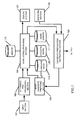
- Fig. 1 is a block configuration diagram of a text input apparatus as one embodiment of the invention.
- the input utterance captured through an input section 101 is inputted to an utterance pre-processing section 102 where it is subjected to an A/D converting process, followed by acoustic features extracting process.
- a word-candidate preparing section 103 makes a predetermined number of word candidates following the phrases so far fixed referring to a language model 104.
- the language model 104 includes modeling of a relationship between words in a word sequence.
- a candidate-preparation instructing section 109 having received an instruction from an operating section 108 conveys an instruction concerning a sentence beginning to the candidate preparing section 103. Receiving this instruction, the candidate preparing section 103 makes the word candidates with high in probability to utter at a sentence beginning referring to a language model 104.
- the word candidates thus prepared are conveyed to a word-string preparing section 106.
- the preparing section 106 receives acoustic features of an utterance having been spoken, sentence by sentence, from the processing section 102 and temporarily stores it to a memory 110.
- the preparing section 106 performs an extension process and an acoustic score updating process referring to an acoustic model 105 and word lexicon 111, on a word candidate from the candidate preparing section 103.
- prepared are a predetermined number of word strings as minimum-phrase candidates.
- the acoustic model 105 includes modeled acoustic features.
- the word lexicon 111 includes the entries of to-be-recognized words in the form of examples in phonetic symbols. Note that the extension process and the acoustic score updating process will be referred in detail later.
- a display section 107 displays word-string candidates thus prepared.
- the user is allowed to select a correct phrase from among the candidates being displayed by the operating section 108.
- the candidate-preparation instructing section 109 receives a selected phrase from the word-string preparing section 106 and outputs it as a fixed phrase. Meanwhile, the instructing section 109 conveys the fixed phrase also to the candidate preparing section 103.
- the word-candidate preparing section 103 receives the fixed phrase and prepares the following word candidate with reference to the language model 104, as referred before. The process as above is repeated until completing on one input sentence. After completion, the feature-amount data stored in the memory 110 is erased.
- Fig. 2 is a view of a man-machine interface on a cellular telephone in the present embodiment.
- a VOICE button 201 is to notify a commencement of speech recognition.
- a CANDIDATE button 202 is to request for displaying or changing a phrase candidate.
- a display screen 203 is to display a fixed text or phrase candidate.
- a FIX button 204 is to fix a phrase candidate.
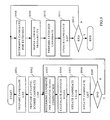
- Fig. 3 shows a flowchart representing the outline of the operation by the text input apparatus of the invention. The operation of the invention will now be explained using Fig. 1 to Fig. 3.
- the user presses the VOICE button 201 and utters one sentence to input a spoken utterance.
- the text input apparatus performs an A/D-conversion process on the input utterance.
- the apparatus carries out a feature extracting process, such as LPC cepstrum coefficients, on the converted utterance signal, frame by frame, at an interval, e.g., of 10 msec. (S301).
- the text input apparatus prepares a list of phrase candidates by using the acoustic features of input-utterance and acoustic and language models, and displays one or more upper-ranked candidates over the display screen 203 (S303).
- the phrase-candidate list has word strings arranged in the order of higher integrated score, a sum of acoustic score and weighted language score.
- the acoustic score for a word string can be determined in the following way.
- the acoustic score, as(i, j) for an input frame i and lexicon frame j, can be computed by Formula (1).
- the input vector is a feature vector extracted with input utterance, such as the LPC cepstrum coefficients.
- the lexicon frame similarly, is a feature vector extracted, from the acoustic model, with a word registered in a word lexicon considered corresponding to the input frame.
- the feature amount data is not limited to an LPC cepstrum coefficients but MFCC (mel frequency cepstral coefficients) are usable.
- the acoustic score for a word can be determined by a matching technique, such as DP matching, i.e. determining a correspondence relationship between an input frame and a lexicon frame and then adding together the acoustic scores existing on an optimal path connected with the correspondence relationship. Furthermore, the acoustic score for a word string can be determined by adding together word-based acoustic scores while taking account of the time alignment of between adjacent words.
- a matching technique such as DP matching
- the language score for a word string can be determined in the following way.
- the language model concretely, is a set of linkage probabilities P(w(i)
- the language score for a word string is to be obtained by making reference to a language model and determining a linkage probability or logarithm value thereof on each word while taking account of the preceding word, followed by adding them together.
- an acoustic score can be obtained from acoustic features of input-utterance and an acoustic model.
- a language score can be obtained from a word-string hypothesis and a language model. Integrating them, word strings high in score are registered as phrase candidates to the list.
- the user confirms a phrase candidate being displayed. If not a desired candidate, the CANDIDATE button 202 is pressed to display the next candidate. When a desired candidate is displayed, the user presses the FIX button 204 to fix the phrase (S304).
- Fixing operation is pursued phrase by phrase. If phrase fixing is not done to the end of utterance, the process returns to step S302 thus completing the process at the end of the last fixed phrase (S305).
- the following phrase candidate is prepared. Accordingly, there is no need to save the other candidates nor process them for recognition. This requires for the apparatus to satisfactorily have a reduced storage capacity, making possible to reduce the apparatus size.
- the short element such as a morpheme
- the longer component such as a minimum phrase is easier to grasp and hence preferred.
- the invention employs the morpheme as the minimum linguistic element.
- the present embodiment provides an example that a short phrase is made up by properly connecting morphemes as is more preferred in interaction with the human.
- the make-up process is referred to as an extension process of morphemes.
- Fig. 4 is a flowchart showing a procedure of a phrase candidate preparing process according to the invention.
- a list of phrase candidates was prepared by extending morpheme-based candidates (S401 - S406).
- a final phrase candidate list was prepared by taking consideration the acoustic score into the result of the above (S407 - S412).
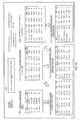
- Fig. 5 is an example of the process data where by an extension process has been prepared a list of phrase candidates to be connected following a fixed phrase "You are standing" 500.
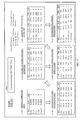
- Fig. 6 is an example of the process data where, after the extension process, a phrase candidate list was prepared through acoustic-score update.
- first prepared is a list of phrase candidates 510 to be connected following the fixed phrase "You are standing” 500. This can be determined with a language model having previously learned on the linkage probabilities of "You are standing” to all the morphemes.
- the determined morpheme list is sorted in the order of higher linkage probability, thus obtaining a phrase candidate list 510.
- Each phrase candidate is given an initial value 0 as an extension end flag (shown END in the figure) representative of the possibility to extend from now on (S401).
- This extension end flag when not to extend, is set with '1'. In this state, the phrase candidate is too short to understand. Consequently, the word-string preparing section 106 searches for those having high linkage probability of between that phrase candidate and the following morpheme, thereby preparing longer phrase candidates.
- the word-string preparing section 106 first determines phrase candidates for extension. From the top of the list, reference is made to the phrase candidates to select a first phrase candidate having an extension end flag '0' (S402). The selected candidates are as those in a list 511.
- the word-string preparing section 106 determines a linkage probability of between a phrase candidate for extension and each morpheme to be connected to that candidate.
- the morphemes smaller in linkage probability than a predetermined threshold or the morphemes smaller in linkage probability than the linkage probability to the punctuation mark, and the punctuation marks are gathered into one as "the other morphemes", to determine a sum of the linkage probabilities of them.
- the linkage probability is given a linkage probability on "the other morphemes" (S403).
- the determined linkage probability is as in a list 512, wherein the probability of other than "me” and "the” that are comparatively great in linkage probability from "by” are gathered as "($)".
- the mark '$' is used correspondingly to the concept "the other morphemes" .
- the mark $ is omitted in the list 510, 520 and 530 which show the extension end flag (END). (This is similar to Figs. 6, 8, 10 and 11 to be hereinafter referred.)
- extension candidates are prepared.
- the linkage probability on "You are standing” ⁇ "by” is multiplied by a linkage probability on "by” ⁇ "me”, to provide a linkage probability on "You are standing” ⁇ "by me”.
- the phrase candidate "by” is considered extended into “by me”.
- the word-string preparing section 106 prepares an extension candidate "by the”.
- the gathering as "the other morphemes” has many branches to the following morphemes. Namely, this is suited as a phrase boundary. Consequently, the word-string preparing section 106 considers that extension has ended for "the other morphemes”.
- the word-string preparing section 106 updates the phrase candidate list. Namely, the word-string preparing section 106 excludes pre-extension candidate 511 from the phrase candidate list 510. Then, the word-string preparing section 106 adds the post-extension candidates 513 and rearrange them according to the higher order of linkage probability (S405). This resultingly obtained a list of updated phrase candidates 520.
- the word-string preparing section 106 carries out an end determination.
- ending was after completing a 100th round of extension processes that is a previously set number of times (S406).
- S406 a previously set number of times
- the extension process is in less than the 100th round, it is considered not ending and the process returns to S402.
- the end determination can end the process when the number of phrase candidates the extension end flag is set at '1' reaches a predetermined value as counted from the top-ranked linkage probability. Otherwise, it is possible to end the process at a time that there exists no phrase candidate having an extension end flag '0' having a greater linkage probability than the linkage probability of "the other morphemes".
- the fixed phrase "You are standing (end time 503)" 600 shows that, in step S301, the time of terminating (end time of) the utterance "You are standing” has been 503 ms as measured from a beginning time of pressing the VOICE button 201.
- a language score is determined by logarithmically processing the linkage probability on the basis of a phrase candidate list 530 prepared through 100 rounds of extension processes.
- the initial value of an acoustic score was set at a properly high value (herein, 0.00). Meanwhile, the language score and the acoustic score were summed up into an integration score. Then, the word-string preparing section 106 sorted a phrase candidate list in the order of higher integration score, thereby determining a list 610. Meanwhile, for an utterance end time to be obtained by acoustic matching, a fixed-phrase end time 503 was set as an initial value to each candidate (S407).
- the word-string preparing section 106 determined a candidate for updating an acoustic score value. Namely, reference was made to the phrase candidates in the order of from a top ranking in the list, to select a first un-updated candidate having not yet been updated in acoustic score (S408). Note that the determination whether or not the acoustic score has been updated is made depending on whether a fixed-phrase end time and a phrase-candidate end time are coincident or not. In the list 610, "by me" was selected.
- the representative method of such acoustic matching includes the processes of utterance-signal A/D conversion, conversion into the acoustic features, computation on an acoustic score referring to the acoustic model and cumulative computation of the acoustic score by DP matching.
- These processes can be dispersed with a collective process in the utterance input in step S301 and a sequential process in the acoustic score computation in step S409.
- the collective process prevents duplicated computation and hence advantageous in respect of process amount.
- the sequential process does not require to save a result in the course of processing and hence advantageous in respect of storage capacity. How to disperse is to be determined depending upon an actual configuration of hardware.
- the computation on an acoustic score referrng to the acoustic model and the cumulative computation process for the acoustic score due to DP matching were carried out in Step S409.
- the word-string preparing section 106 updated the phrase candidate values. Namely, the acoustic score was updated to "-12" to determine a sum of the language score and the acoustic score, thereby updating the integration score.
- the phrase-candidate end time was updated with reference to a matching section (S410). As a result, a new candidate was given as in a list 613.
- the phrase candidate list is updated. Namely, the word-string preparing section 106 deletes the acoustic-score-pre-update candidate 611 from the phrase candidate list 610. Then, the word-string preparing section 106 adds the post-update candidate 613 to the phrase candidate list 610. Then, the list is rearranged in the order of higher integration score (S411). As a result, a phrase candidate list 620 was obtained.
- the above process is referred to as an acoustic score updating process.
- the word-string preparing section 106 carries out an end determination.
- ending was made when the acoustic score updating process was made 100 rounds as a predetermined number of times (S412). Where less than 100 rounds, ending is not to be made for return to step S408.
- prepared was a list of phrase candidates high in use frequency and in acoustic matching score with utterance. This list has phrase candidates arranged in the order of higher score.
- the end determination can end the process when the number of the phrase candidates the end time is different from the fixation time reaches a predetermined value as counted from the top-ranked integration score.
- the text input apparatus displays the phrase candidate list obtained as above, staring from the top-ranked phrase candidate. Due to this, the text input apparatus satisfactorily carries out a speech recognition process specified on a relevant subject of phrase at the present time, thereby enabling text input with reduced process amount and storage capacity. Also, one or more upper-ranked candidates can be displayed in the order of higher integration score, thereby reducing the number of candidates presented for the user to obtain a desired candidate. Furthermore, candidates are displayed phrase by phrase, thus providing a selection presentation easy for the user to grasp.
- Embodiment 1 is different from Embodiment 1 in that the extension process and the acoustic score updating process in the word-string preparing section 106 are carried out by updating the phrase candidate list in a concurrent fashion.
- the other block configuration diagram, man-machine interface and the like of the text input apparatus are the same as those of Embodiment 1.
- Fig. 7 is a flowchart showing a procedure of a phrase candidate preparing process by the text input apparatus according to Embodiment 2 of the invention.
- Fig. 8 shows a flow of the process data of upon preparing a list of the phrase candidates to be connected following a fixed phrase "You are standing" 500 by alternately repeating the extension and acoustic-score processes.
- the step S701 for preparing a list of the phrase candidates 801 to be connected following the fixed phrase "You are standing" 500, is the same as the step S401 of Embodiment 1.
- the language score obtained by logarithmically processing the linkage probability of the candidate list 801 is added with an acoustic score to determine an integration score, thereby preparing a acoustic-scored candidate list 802 (S702).
- an un-extended candidate is searched for in the order of from the top ranking of the acoustic-scored candidate list.
- a first candidate is obtained as an extension-processing candidate (S703).
- the candidate is given "by".
- the candidate having an end time same as the end time of the fixed phrase candidate is searched for in the order of from the top ranking in the candidate list, to determine an acoustic score on a first candidate (S706).
- the list 803 "by me” corresponds to that.
- Determining an acoustic score for this candidate in a manner similar to S409, obtained was "-12" comparatively high in acoustic score in an utterance section having a beginning time 503 ms and end time 710 ms. This is reflected in the phrase candidate list 803 (S707).
- the list was rearranged in the order of higher integration score, thus obtaining phrase candidates 804 (S708).
- the process of steps S703 to S708 was repeated a previously set number of times, to obtain a phrase candidate list 806. In this embodiment, repetition was 100 in the number of times. In this embodiment, the result was obtained the same as the result of Embodiment 1.
- the end determination of this embodiment can end the process when the extension and acoustic score processes is repeated a predetermined number of times. However, it is possible to determine an end when the number of phrase candidates the extension end flag is set at '1' reaches a predetermined value as counted from the top ranking.
- the end determination can also end the process when the number of phrase candidates the end time is different from the fixation time reaches a predetermined value as counted from the top-ranked integration score.
- the end determination can be carried out by one, which is earlier in ending, of the method using an extension end flag as in the foregoing or the method using an end time.
- Embodiment 1 is different from Embodiment 1 in that the extension and acoustic score processes in the word-string preparing section are carried out in the order reverse to Embodiment 1.
- the other block configuration diagram, man-machine interface and the like of the text input apparatus are the same as those of Embodiment 1.
- Fig. 9 is a flowchart showing a procedure of a phrase candidate preparing process by a text input apparatus according to Embodiment 3 of the invention.
- Fig. 10 shows a flow of the process data of upon preparing a list of phrase candidates to be connected following a fixed phrase "You are standing" 500 by carrying out an extension process after completing an acoustic score process.
- the step S901 for preparing a list of phrase candidates 1001 to be connected following a fixed phrase "You are standing" 500, is the same as the step S401 of Embodiment 1.
- the language score obtained by logarithmically processing the linkage probability of the candidate list is added with an acoustic score to determine an integration score, thereby preparing temporary-acoustic-scored candidate list 1002 (S902).
- search is made for a candidate having an end time different from an end time 503 of the fixed phrase candidate, in the order of from the top ranking in the candidate list 1002. Due to this, a first candidate is determined as an acoustic score computing candidate (S903).
- An acoustic score for this candidate is computed similarly to step S409 (S904).
- the list 1002 “by” was selected.
- Computing an acoustic score, obtained was "-6" comparatively high in acoustic score in the utterance section having a beginning time 503 ms and end time 604 ms (S904).
- This was reflected in the phrase candidate list 1002 (S905).
- the list was rearranged in the order of higher integration core, thereby obtaining new phrase candidates 1003 (S906).
- the process of steps S903 to S906 was repeated a previously set number of times (S907). In this embodiment, repetition was 100 in the number of times, thus obtaining a candidate list 104.
- a language model is used for this candidate list 1004 to carry out an extension process.
- selection is made for a first candidate the extension end flag is not set at '1', in the order of from the top ranking in the candidate list 1004 (S908).
- phrase candidates are added to the candidate list 1004 similarly to Embodiment 1.
- the list is rearranged in the order of higher integration score, thereby obtaining new phrase candidates 1005 (S911).
- the end determination in the acoustic score updating process ended the process by the repetition of the update process a predetermined number of times. It is, however, possible to end the process when the number of phrase candidates the end time is different from the fixation time reaches a predetermined value as counted from the top-ranked integration score.
- the end determination in the extension process can end the process when the number of phrase candidates the extension end flag is set at '1' reaches a predetermined value as counted from the top ranking.
- extension process is carried out after completing acoustic score updating process similarly to Fig. 10.
- this process data example differs from Fig. 10 in that, in the extension process, extended candidates have been prepared in step 910 and thereafter the acoustic score for the linked morpheme has been calculated and added to the pre-extension acoustic score.
- Embodiments 1 to 3 explained on the example that a phrase candidate list is prepared and a candidate is fixed by the input through the fix button and thereafter a next phrase candidate is prepared.
- a phrase candidate list is prepared and a candidate is fixed by the input through the fix button and thereafter a next phrase candidate is prepared.
- the VOICE button can be again pressed to utter only the phrase to be recognized thereby making the apparatus re-prepare a candidate.
- the user is allowed to carry out a word-or-phrase-based search process on the one-or-more-sentence-based input utterance to sequentially select and fix candidates from the beginning of a sentence. Due to this, an advantageous effect is obtained of realizing text input while securing the both of apparatus size reduction and relief from utterance-input troublesomeness.
Landscapes
- Engineering & Computer Science (AREA)
- Artificial Intelligence (AREA)
- Computational Linguistics (AREA)
- Health & Medical Sciences (AREA)
- Audiology, Speech & Language Pathology (AREA)
- Human Computer Interaction (AREA)
- Physics & Mathematics (AREA)
- Acoustics & Sound (AREA)
- Multimedia (AREA)
- Machine Translation (AREA)
- Document Processing Apparatus (AREA)
Applications Claiming Priority (2)
| Application Number | Priority Date | Filing Date | Title |
|---|---|---|---|
| JP2000355416 | 2000-11-22 | ||
| JP2000355416 | 2000-11-22 |
Publications (3)
| Publication Number | Publication Date |
|---|---|
| EP1209659A2 true EP1209659A2 (fr) | 2002-05-29 |
| EP1209659A3 EP1209659A3 (fr) | 2004-01-02 |
| EP1209659B1 EP1209659B1 (fr) | 2005-10-05 |
Family
ID=18827831
Family Applications (1)
| Application Number | Title | Priority Date | Filing Date |
|---|---|---|---|
| EP01126554A Expired - Lifetime EP1209659B1 (fr) | 2000-11-22 | 2001-11-15 | Méthode et appareil d'entrée de texte à l'aide de reconnaissance de la parole |
Country Status (3)
| Country | Link |
|---|---|
| US (1) | US20020091520A1 (fr) |
| EP (1) | EP1209659B1 (fr) |
| DE (1) | DE60113787T2 (fr) |
Cited By (1)
| Publication number | Priority date | Publication date | Assignee | Title |
|---|---|---|---|---|
| CN104317476A (zh) * | 2014-09-26 | 2015-01-28 | 百度在线网络技术(北京)有限公司 | 输入法程序界面的控制方法及装置 |
Families Citing this family (20)
| Publication number | Priority date | Publication date | Assignee | Title |
|---|---|---|---|---|
| US7739117B2 (en) * | 2004-09-20 | 2010-06-15 | International Business Machines Corporation | Method and system for voice-enabled autofill |
| US7680648B2 (en) * | 2004-09-30 | 2010-03-16 | Google Inc. | Methods and systems for improving text segmentation |
| KR100954413B1 (ko) * | 2005-07-27 | 2010-04-26 | 노키아 코포레이션 | 텍스트를 입력하기 위한 방법 및 기기 |
| US7941316B2 (en) * | 2005-10-28 | 2011-05-10 | Microsoft Corporation | Combined speech and alternate input modality to a mobile device |
| US8436815B2 (en) | 2007-05-25 | 2013-05-07 | Microsoft Corporation | Selective enabling of multi-input controls |
| GB0905457D0 (en) | 2009-03-30 | 2009-05-13 | Touchtype Ltd | System and method for inputting text into electronic devices |
| US9189472B2 (en) | 2009-03-30 | 2015-11-17 | Touchtype Limited | System and method for inputting text into small screen devices |
| US10191654B2 (en) | 2009-03-30 | 2019-01-29 | Touchtype Limited | System and method for inputting text into electronic devices |
| GB0917753D0 (en) | 2009-10-09 | 2009-11-25 | Touchtype Ltd | System and method for inputting text into electronic devices |
| US9424246B2 (en) | 2009-03-30 | 2016-08-23 | Touchtype Ltd. | System and method for inputting text into electronic devices |
| US8494852B2 (en) | 2010-01-05 | 2013-07-23 | Google Inc. | Word-level correction of speech input |
| US20110184736A1 (en) * | 2010-01-26 | 2011-07-28 | Benjamin Slotznick | Automated method of recognizing inputted information items and selecting information items |
| CN108491182A (zh) * | 2013-03-29 | 2018-09-04 | 联想(北京)有限公司 | 一种信息处理方法以及一种电子设备 |
| KR20160056548A (ko) * | 2014-11-12 | 2016-05-20 | 삼성전자주식회사 | 질의 응답을 위한 디스플레이 장치 및 방법 |
| KR102380833B1 (ko) * | 2014-12-02 | 2022-03-31 | 삼성전자주식회사 | 음성 인식 방법 및 음성 인식 장치 |
| EP3089159B1 (fr) | 2015-04-28 | 2019-08-28 | Google LLC | Correction de reconnaissance vocale au moyen de re-speak sélectif |
| CN105183312A (zh) * | 2015-08-28 | 2015-12-23 | 百度在线网络技术(北京)有限公司 | 输入处理方法及装置 |
| GB201610984D0 (en) | 2016-06-23 | 2016-08-10 | Microsoft Technology Licensing Llc | Suppression of input images |
| CN109564590A (zh) * | 2016-07-26 | 2019-04-02 | 索尼公司 | 信息处理装置和信息处理方法 |
| JP7243106B2 (ja) * | 2018-09-27 | 2023-03-22 | 富士通株式会社 | 修正候補提示方法、修正候補提示プログラムおよび情報処理装置 |
Family Cites Families (6)
| Publication number | Priority date | Publication date | Assignee | Title |
|---|---|---|---|---|
| JPH0679234B2 (ja) * | 1989-05-12 | 1994-10-05 | シャープ株式会社 | 音声認識装置 |
| WO1996003741A1 (fr) * | 1994-07-21 | 1996-02-08 | International Meta Systems, Inc. | Systeme et procedes facilitant la transcription de la parole |
| US5937384A (en) * | 1996-05-01 | 1999-08-10 | Microsoft Corporation | Method and system for speech recognition using continuous density hidden Markov models |
| US5829000A (en) * | 1996-10-31 | 1998-10-27 | Microsoft Corporation | Method and system for correcting misrecognized spoken words or phrases |
| JP3531468B2 (ja) * | 1998-03-30 | 2004-05-31 | 株式会社日立製作所 | 文書処理装置及び方法 |
| US6178401B1 (en) * | 1998-08-28 | 2001-01-23 | International Business Machines Corporation | Method for reducing search complexity in a speech recognition system |
-
2001
- 2001-11-15 DE DE60113787T patent/DE60113787T2/de not_active Expired - Fee Related
- 2001-11-15 EP EP01126554A patent/EP1209659B1/fr not_active Expired - Lifetime
- 2001-11-20 US US09/989,561 patent/US20020091520A1/en not_active Abandoned
Cited By (1)
| Publication number | Priority date | Publication date | Assignee | Title |
|---|---|---|---|---|
| CN104317476A (zh) * | 2014-09-26 | 2015-01-28 | 百度在线网络技术(北京)有限公司 | 输入法程序界面的控制方法及装置 |
Also Published As
| Publication number | Publication date |
|---|---|
| EP1209659B1 (fr) | 2005-10-05 |
| DE60113787T2 (de) | 2006-08-10 |
| DE60113787D1 (de) | 2006-02-16 |
| US20020091520A1 (en) | 2002-07-11 |
| EP1209659A3 (fr) | 2004-01-02 |
Similar Documents
| Publication | Publication Date | Title |
|---|---|---|
| EP1209659B1 (fr) | Méthode et appareil d'entrée de texte à l'aide de reconnaissance de la parole | |
| CN107195296B (zh) | 一种语音识别方法、装置、终端及系统 | |
| US6343270B1 (en) | Method for increasing dialect precision and usability in speech recognition and text-to-speech systems | |
| JP4105841B2 (ja) | 音声認識方法、音声認識装置、コンピュータ・システムおよび記憶媒体 | |
| US20080255841A1 (en) | Voice search device | |
| CN112349289A (zh) | 一种语音识别方法、装置、设备以及存储介质 | |
| JP3948260B2 (ja) | テキスト入力方法及びその装置 | |
| US6236962B1 (en) | Speech processing apparatus and method and computer readable medium encoded with a program for recognizing input speech by performing searches based on a normalized current feature parameter | |
| JP2007047412A (ja) | 認識文法モデル作成装置、認識文法モデル作成方法、および、音声認識装置 | |
| JP4269625B2 (ja) | 音声認識辞書作成方法及びその装置と音声認識装置 | |
| JP3444108B2 (ja) | 音声認識装置 | |
| KR101250897B1 (ko) | 전자사전에서 음성인식을 이용한 단어 탐색 장치 및 그 방법 | |
| JP4634156B2 (ja) | 音声対話方法および音声対話装置 | |
| KR100400220B1 (ko) | 대화 모델을 이용한 자동 통역 장치 및 방법 | |
| JP5124012B2 (ja) | 音声認識装置及び音声認識プログラム | |
| JP3440840B2 (ja) | 音声認識方法及びその装置 | |
| JP3477751B2 (ja) | 連続単語音声認識装置 | |
| JP4430964B2 (ja) | 記号列変換方法及びその記号列変換方法を用いた音声認識方法、並びに記号列変換装置及びその記号列変換装置を用いた音声認識装置 | |
| JP2980382B2 (ja) | 話者適応音声認識方法および装置 | |
| JPH09114482A (ja) | 音声認識のための話者適応化方法 | |
| JP3575904B2 (ja) | 連続音声認識方式及び標準パタン訓練方式 | |
| JP3050180B2 (ja) | 音声認識装置 | |
| JP7748888B2 (ja) | 会話支援装置、会話支援システム、会話支援方法、および、プログラム | |
| JP2003263187A (ja) | 言語モデル学習方法、その装置、そのプログラムおよびそのプログラムの記録媒体ならびに言語モデル学習を用いた音声認識方法、その装置、そのプログラムおよびそのプログラムの記録媒体 | |
| JP3369121B2 (ja) | 音声認識方法および音声認識装置 |
Legal Events
| Date | Code | Title | Description |
|---|---|---|---|
| PUAI | Public reference made under article 153(3) epc to a published international application that has entered the european phase |
Free format text: ORIGINAL CODE: 0009012 |
|
| AK | Designated contracting states |
Kind code of ref document: A2 Designated state(s): AT BE CH CY DE DK ES FI FR GB GR IE IT LI LU MC NL PT SE TR |
|
| AX | Request for extension of the european patent |
Free format text: AL;LT;LV;MK;RO;SI |
|
| PUAL | Search report despatched |
Free format text: ORIGINAL CODE: 0009013 |
|
| AK | Designated contracting states |
Kind code of ref document: A3 Designated state(s): AT BE CH CY DE DK ES FI FR GB GR IE IT LI LU MC NL PT SE TR |
|
| AX | Request for extension of the european patent |
Extension state: AL LT LV MK RO SI |
|
| RIC1 | Information provided on ipc code assigned before grant |
Ipc: 7G 10L 15/26 B Ipc: 7G 10L 15/18 A Ipc: 7G 06K 9/72 B |
|
| 17P | Request for examination filed |
Effective date: 20040120 |
|
| 17Q | First examination report despatched |
Effective date: 20040402 |
|
| AKX | Designation fees paid |
Designated state(s): DE FR GB |
|
| GRAP | Despatch of communication of intention to grant a patent |
Free format text: ORIGINAL CODE: EPIDOSNIGR1 |
|
| GRAS | Grant fee paid |
Free format text: ORIGINAL CODE: EPIDOSNIGR3 |
|
| GRAA | (expected) grant |
Free format text: ORIGINAL CODE: 0009210 |
|
| AK | Designated contracting states |
Kind code of ref document: B1 Designated state(s): DE FR GB |
|
| REG | Reference to a national code |
Ref country code: GB Ref legal event code: FG4D |
|
| REF | Corresponds to: |
Ref document number: 60113787 Country of ref document: DE Date of ref document: 20060216 Kind code of ref document: P |
|
| ET | Fr: translation filed | ||
| PLBE | No opposition filed within time limit |
Free format text: ORIGINAL CODE: 0009261 |
|
| STAA | Information on the status of an ep patent application or granted ep patent |
Free format text: STATUS: NO OPPOSITION FILED WITHIN TIME LIMIT |
|
| 26N | No opposition filed |
Effective date: 20060706 |
|
| PGFP | Annual fee paid to national office [announced via postgrant information from national office to epo] |
Ref country code: DE Payment date: 20081114 Year of fee payment: 8 |
|
| PGFP | Annual fee paid to national office [announced via postgrant information from national office to epo] |
Ref country code: GB Payment date: 20081112 Year of fee payment: 8 |
|
| PGFP | Annual fee paid to national office [announced via postgrant information from national office to epo] |
Ref country code: FR Payment date: 20091123 Year of fee payment: 9 |
|
| GBPC | Gb: european patent ceased through non-payment of renewal fee |
Effective date: 20091115 |
|
| PG25 | Lapsed in a contracting state [announced via postgrant information from national office to epo] |
Ref country code: DE Free format text: LAPSE BECAUSE OF NON-PAYMENT OF DUE FEES Effective date: 20100601 |
|
| PG25 | Lapsed in a contracting state [announced via postgrant information from national office to epo] |
Ref country code: GB Free format text: LAPSE BECAUSE OF NON-PAYMENT OF DUE FEES Effective date: 20091115 |
|
| REG | Reference to a national code |
Ref country code: FR Ref legal event code: ST Effective date: 20110801 |
|
| PG25 | Lapsed in a contracting state [announced via postgrant information from national office to epo] |
Ref country code: FR Free format text: LAPSE BECAUSE OF NON-PAYMENT OF DUE FEES Effective date: 20101130 |