EP1210052B1 - Boitier a microcircuit integre noye dans celui-ci et systeme d'utilisation - Google Patents
Boitier a microcircuit integre noye dans celui-ci et systeme d'utilisation Download PDFInfo
- Publication number
- EP1210052B1 EP1210052B1 EP00949028A EP00949028A EP1210052B1 EP 1210052 B1 EP1210052 B1 EP 1210052B1 EP 00949028 A EP00949028 A EP 00949028A EP 00949028 A EP00949028 A EP 00949028A EP 1210052 B1 EP1210052 B1 EP 1210052B1
- Authority
- EP
- European Patent Office
- Prior art keywords
- medication
- integrated circuit
- circuit chip
- patient
- package
- Prior art date
- Legal status (The legal status is an assumption and is not a legal conclusion. Google has not performed a legal analysis and makes no representation as to the accuracy of the status listed.)
- Expired - Lifetime
Links
Images








Classifications
-
- A—HUMAN NECESSITIES
- A61—MEDICAL OR VETERINARY SCIENCE; HYGIENE
- A61J—CONTAINERS SPECIALLY ADAPTED FOR MEDICAL OR PHARMACEUTICAL PURPOSES; DEVICES OR METHODS SPECIALLY ADAPTED FOR BRINGING PHARMACEUTICAL PRODUCTS INTO PARTICULAR PHYSICAL OR ADMINISTERING FORMS; DEVICES FOR ADMINISTERING FOOD OR MEDICINES ORALLY; BABY COMFORTERS; DEVICES FOR RECEIVING SPITTLE
- A61J7/00—Devices for administering medicines orally, e.g. spoons; Pill counting devices; Arrangements for time indication or reminder for taking medicine
- A61J7/04—Arrangements for time indication or reminder for taking medicine, e.g. programmed dispensers
- A61J7/0409—Arrangements for time indication or reminder for taking medicine, e.g. programmed dispensers with timers
- A61J7/0481—Arrangements for time indication or reminder for taking medicine, e.g. programmed dispensers with timers working on a schedule basis
-
- A—HUMAN NECESSITIES
- A61—MEDICAL OR VETERINARY SCIENCE; HYGIENE
- A61J—CONTAINERS SPECIALLY ADAPTED FOR MEDICAL OR PHARMACEUTICAL PURPOSES; DEVICES OR METHODS SPECIALLY ADAPTED FOR BRINGING PHARMACEUTICAL PRODUCTS INTO PARTICULAR PHYSICAL OR ADMINISTERING FORMS; DEVICES FOR ADMINISTERING FOOD OR MEDICINES ORALLY; BABY COMFORTERS; DEVICES FOR RECEIVING SPITTLE
- A61J7/00—Devices for administering medicines orally, e.g. spoons; Pill counting devices; Arrangements for time indication or reminder for taking medicine
- A61J7/04—Arrangements for time indication or reminder for taking medicine, e.g. programmed dispensers
- A61J7/0409—Arrangements for time indication or reminder for taking medicine, e.g. programmed dispensers with timers
- A61J7/0418—Arrangements for time indication or reminder for taking medicine, e.g. programmed dispensers with timers with electronic history memory
-
- A—HUMAN NECESSITIES
- A61—MEDICAL OR VETERINARY SCIENCE; HYGIENE
- A61J—CONTAINERS SPECIALLY ADAPTED FOR MEDICAL OR PHARMACEUTICAL PURPOSES; DEVICES OR METHODS SPECIALLY ADAPTED FOR BRINGING PHARMACEUTICAL PRODUCTS INTO PARTICULAR PHYSICAL OR ADMINISTERING FORMS; DEVICES FOR ADMINISTERING FOOD OR MEDICINES ORALLY; BABY COMFORTERS; DEVICES FOR RECEIVING SPITTLE
- A61J7/00—Devices for administering medicines orally, e.g. spoons; Pill counting devices; Arrangements for time indication or reminder for taking medicine
- A61J7/04—Arrangements for time indication or reminder for taking medicine, e.g. programmed dispensers
- A61J7/0409—Arrangements for time indication or reminder for taking medicine, e.g. programmed dispensers with timers
- A61J7/0454—Arrangements for time indication or reminder for taking medicine, e.g. programmed dispensers with timers for dispensing of multiple drugs
-
- G—PHYSICS
- G06—COMPUTING OR CALCULATING; COUNTING
- G06Q—INFORMATION AND COMMUNICATION TECHNOLOGY [ICT] SPECIALLY ADAPTED FOR ADMINISTRATIVE, COMMERCIAL, FINANCIAL, MANAGERIAL OR SUPERVISORY PURPOSES; SYSTEMS OR METHODS SPECIALLY ADAPTED FOR ADMINISTRATIVE, COMMERCIAL, FINANCIAL, MANAGERIAL OR SUPERVISORY PURPOSES, NOT OTHERWISE PROVIDED FOR
- G06Q10/00—Administration; Management
- G06Q10/10—Office automation; Time management
- G06Q10/109—Time management, e.g. calendars, reminders, meetings or time accounting
-
- G—PHYSICS
- G16—INFORMATION AND COMMUNICATION TECHNOLOGY [ICT] SPECIALLY ADAPTED FOR SPECIFIC APPLICATION FIELDS
- G16H—HEALTHCARE INFORMATICS, i.e. INFORMATION AND COMMUNICATION TECHNOLOGY [ICT] SPECIALLY ADAPTED FOR THE HANDLING OR PROCESSING OF MEDICAL OR HEALTHCARE DATA
- G16H10/00—ICT specially adapted for the handling or processing of patient-related medical or healthcare data
- G16H10/20—ICT specially adapted for the handling or processing of patient-related medical or healthcare data for electronic clinical trials or questionnaires
-
- G—PHYSICS
- G16—INFORMATION AND COMMUNICATION TECHNOLOGY [ICT] SPECIALLY ADAPTED FOR SPECIFIC APPLICATION FIELDS
- G16H—HEALTHCARE INFORMATICS, i.e. INFORMATION AND COMMUNICATION TECHNOLOGY [ICT] SPECIALLY ADAPTED FOR THE HANDLING OR PROCESSING OF MEDICAL OR HEALTHCARE DATA
- G16H15/00—ICT specially adapted for medical reports, e.g. generation or transmission thereof
-
- G—PHYSICS
- G16—INFORMATION AND COMMUNICATION TECHNOLOGY [ICT] SPECIALLY ADAPTED FOR SPECIFIC APPLICATION FIELDS
- G16H—HEALTHCARE INFORMATICS, i.e. INFORMATION AND COMMUNICATION TECHNOLOGY [ICT] SPECIALLY ADAPTED FOR THE HANDLING OR PROCESSING OF MEDICAL OR HEALTHCARE DATA
- G16H20/00—ICT specially adapted for therapies or health-improving plans, e.g. for handling prescriptions, for steering therapy or for monitoring patient compliance
- G16H20/10—ICT specially adapted for therapies or health-improving plans, e.g. for handling prescriptions, for steering therapy or for monitoring patient compliance relating to drugs or medications, e.g. for ensuring correct administration to patients
- G16H20/13—ICT specially adapted for therapies or health-improving plans, e.g. for handling prescriptions, for steering therapy or for monitoring patient compliance relating to drugs or medications, e.g. for ensuring correct administration to patients delivered from dispensers
-
- A—HUMAN NECESSITIES
- A61—MEDICAL OR VETERINARY SCIENCE; HYGIENE
- A61J—CONTAINERS SPECIALLY ADAPTED FOR MEDICAL OR PHARMACEUTICAL PURPOSES; DEVICES OR METHODS SPECIALLY ADAPTED FOR BRINGING PHARMACEUTICAL PRODUCTS INTO PARTICULAR PHYSICAL OR ADMINISTERING FORMS; DEVICES FOR ADMINISTERING FOOD OR MEDICINES ORALLY; BABY COMFORTERS; DEVICES FOR RECEIVING SPITTLE
- A61J2200/00—General characteristics or adaptations
- A61J2200/30—Compliance analysis for taking medication
-
- A—HUMAN NECESSITIES
- A61—MEDICAL OR VETERINARY SCIENCE; HYGIENE
- A61J—CONTAINERS SPECIALLY ADAPTED FOR MEDICAL OR PHARMACEUTICAL PURPOSES; DEVICES OR METHODS SPECIALLY ADAPTED FOR BRINGING PHARMACEUTICAL PRODUCTS INTO PARTICULAR PHYSICAL OR ADMINISTERING FORMS; DEVICES FOR ADMINISTERING FOOD OR MEDICINES ORALLY; BABY COMFORTERS; DEVICES FOR RECEIVING SPITTLE
- A61J2205/00—General identification or selection means
- A61J2205/10—Bar codes
-
- A—HUMAN NECESSITIES
- A61—MEDICAL OR VETERINARY SCIENCE; HYGIENE
- A61J—CONTAINERS SPECIALLY ADAPTED FOR MEDICAL OR PHARMACEUTICAL PURPOSES; DEVICES OR METHODS SPECIALLY ADAPTED FOR BRINGING PHARMACEUTICAL PRODUCTS INTO PARTICULAR PHYSICAL OR ADMINISTERING FORMS; DEVICES FOR ADMINISTERING FOOD OR MEDICINES ORALLY; BABY COMFORTERS; DEVICES FOR RECEIVING SPITTLE
- A61J2205/00—General identification or selection means
- A61J2205/20—Colour codes
-
- A—HUMAN NECESSITIES
- A61—MEDICAL OR VETERINARY SCIENCE; HYGIENE
- A61J—CONTAINERS SPECIALLY ADAPTED FOR MEDICAL OR PHARMACEUTICAL PURPOSES; DEVICES OR METHODS SPECIALLY ADAPTED FOR BRINGING PHARMACEUTICAL PRODUCTS INTO PARTICULAR PHYSICAL OR ADMINISTERING FORMS; DEVICES FOR ADMINISTERING FOOD OR MEDICINES ORALLY; BABY COMFORTERS; DEVICES FOR RECEIVING SPITTLE
- A61J2205/00—General identification or selection means
- A61J2205/30—Printed labels
-
- A—HUMAN NECESSITIES
- A61—MEDICAL OR VETERINARY SCIENCE; HYGIENE
- A61J—CONTAINERS SPECIALLY ADAPTED FOR MEDICAL OR PHARMACEUTICAL PURPOSES; DEVICES OR METHODS SPECIALLY ADAPTED FOR BRINGING PHARMACEUTICAL PRODUCTS INTO PARTICULAR PHYSICAL OR ADMINISTERING FORMS; DEVICES FOR ADMINISTERING FOOD OR MEDICINES ORALLY; BABY COMFORTERS; DEVICES FOR RECEIVING SPITTLE
- A61J2205/00—General identification or selection means
- A61J2205/40—General identification or selection means by shape or form, e.g. by using shape recognition
-
- A—HUMAN NECESSITIES
- A61—MEDICAL OR VETERINARY SCIENCE; HYGIENE
- A61J—CONTAINERS SPECIALLY ADAPTED FOR MEDICAL OR PHARMACEUTICAL PURPOSES; DEVICES OR METHODS SPECIALLY ADAPTED FOR BRINGING PHARMACEUTICAL PRODUCTS INTO PARTICULAR PHYSICAL OR ADMINISTERING FORMS; DEVICES FOR ADMINISTERING FOOD OR MEDICINES ORALLY; BABY COMFORTERS; DEVICES FOR RECEIVING SPITTLE
- A61J2205/00—General identification or selection means
- A61J2205/60—General identification or selection means using magnetic or electronic identifications, e.g. chips, RFID, electronic tags
-
- A—HUMAN NECESSITIES
- A61—MEDICAL OR VETERINARY SCIENCE; HYGIENE
- A61J—CONTAINERS SPECIALLY ADAPTED FOR MEDICAL OR PHARMACEUTICAL PURPOSES; DEVICES OR METHODS SPECIALLY ADAPTED FOR BRINGING PHARMACEUTICAL PRODUCTS INTO PARTICULAR PHYSICAL OR ADMINISTERING FORMS; DEVICES FOR ADMINISTERING FOOD OR MEDICINES ORALLY; BABY COMFORTERS; DEVICES FOR RECEIVING SPITTLE
- A61J2205/00—General identification or selection means
- A61J2205/70—Audible labels, e.g. for pre-recorded info or messages
Definitions
- This invention relates to an interactive reminder device to prompt a patient to take medication.
- the correct administration of medications whether by an individual or a health care professional is a growing concern. In particular it is a concern where the individual takes multiple medications. Further, it is a concern as the individual gets older to ensure that he/she is taking their medication as prescribed. It is also a concern to ensure that the individual gives each health care professional a full history of medications as well as related problems.
- US patent 4,616,316 issued to Hanpeter et al. shows a monitoring device attached to a blister pack having conductive traces thereon such that when a trace is broken the monitoring device records the time thereof.
- the monitoring device includes a power source.
- US patent 5,181,189 issued January 19, 1993 to Hafner shows a signalling device that is adapted to be attached to an individual medication. The device signals when the medication is to be taken but it does not record if it has been taken.
- US patent 5,495,961 issued March 5, 1996 to Maestre shows a programmable medication alarm device designed to be attached to a medicine bottle or dispenser.
- US patent 4,831,562 issued May 16, 1989 to McIntosh et al. shows a reminder device that includes individual compartments for each different medication. The device is programmed to provide a reminder signal and provide a display to indicate that a medication should be taken.
- US patent 5,805,051 issued September 8, 1998 to Hermann et al. shows an interactive medication reminder/dispenser device with a plurality of compartments for different medications. The device provides a visual and audio signal indicative of a time to take at least one medication.
- This device may also include a weighing mechanism or an optical system which enables the device to determine if a pill has actually been removed. Alternatively the user presses a key to indicate that the medication has been taken.
- Both devices could also include information with regard to medication incompatibilities.
- Each of these devices has a power source attached thereto.
- None of the prior art systems described above show a package with an interactive memory unit that both stores information with regard to the medication and the use of the medication by an individual.
- the package would be used in association with a consumer prompting device that both reads information from the package and writes information onto the package with regard to use of the medication.
- the information with regard to the use of the package is stored on the interactive memory unit, that is the parameters for determining the next take time.
- the parameters for determining the next take time are transferred to the consumer prompting device wherein the next take time is calculated and the next take time is stored on the consumer prompting device and the parameters for determining next take time is deleted from the consumer prompting device.
- the take time is written from the consumer prompting device to the interactive memory unit.
- the consumer prompting device does not store each set of parameters for determining the next take time for each medication, rather it obtains the parameters from the package, calculates the next take time and then deletes the parameters. Accordingly, the memory requirements for the consumer prompting device can be greatly reduced.
- information with regard to use of a medication could also be stored with the consumer prompting device. This information can be stored in full or with codes corresponding to specific information wherein the memory device has limited memory capacity.
- a package that includes a memory unit that stores information with regard to the medication and in addition stores information with regard to the use thereof.
- the package could electronically store information with regard to the medication and its incompatibilities, the particular regime for a particular individual, and information with regard to corrective measures when the medication is not taken in accordance with the preferred instructions.
- the device can prompt the individual with regard to the regime and the consumer prompting device can write back onto the memory unit in the package information with regard to use of the medication.
- the consumer prompting device can be arranged such that the prompt for taking the medication can only be deactivated by the particular package.
- the consumer prompting device may prompt for refills, provide a second log of the use of a particular medication, and provide a positive identification of the individual with the package.
- the consumer prompting device may include a display that advises regarding corrective measures where the prescribed regime was deviated from.
- the amount and nature of the information stored on the memory unit attached to the package will depend on the capacity of the memory unit. Where there is limited memory the information will be stored using alphanumeric codes that will correspond with standard information stored on the consumer prompter. For example take on a full stomach/take with a glass of water/do not take before strenuous exercise and the like, the full text of which is stored on the consumer prompter and corresponds to alphanumeric codes stored on the interactive memory unit attached to the package.
- a package having a memory unit when used in association with a consumer prompting device would provide a number of advantages. Information with regard to the use of the medication would be attached to the package of medication. This would help the health care professional to diagnose the individual when considering symptoms and further medications. Further, such information would be useful for clinical studies with regard to the use of medication. Further, the package in association with the consumer prompting device provides a system of verification to help reduce the chance of an individual taking a medication at the wrong time or in association with incompatible medications.
- the present invention proposes that a unique number, stored on the personal interactive reminder device, is written to a smart label on a pill bottle when it is first used. This reliably links the bottle to that particular personal interactive reminder device.
- the device prompts the patient to take medication at the correct time: the patient brings the device in proximity to the smart label on the pill bottle so that the unique identifier stored on the smart label can be compared to the identifier stored on the personal interactive reminder device: only if there is a match is the patient prompted to take the medication from that bottle by the device.
- the critical insight of the present invention is writing a unique identifier to each smart label in order to positively associate that label with a specific reminder device and hence a specific individual. Further details and aspects of the invention are defined in the claims.
- FIG. 1 a package with an integrated circuit chip attached thereto is shown generally at 10.
- FIG. 3 Three different examples of packages are shown in figures 1 through 3.
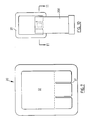
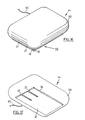
- figure 1 shows a blister pack 12 with an integrated circuit chip 14 attached thereto
- figure 2 shows a bottle 16 with an integrated circuit chip 14 attached thereto
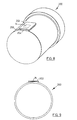
- figure 3 shows a tube 18 with an integrated circuit chip 14 attached thereto.
- integrated circuit chip 14 is embedded in the package 10 such that removing the integrated circuit chip 14 results in damaging the package.
- the integrated circuit chip 14 is used to store information about the product in the package and about the use of the package. This is of particular importance in regard to the medications. Specifically, parameters for determining the next take time are stored on the integrated circuit chip 14. As well information regarding the medication such as best practices regarding administering the medication, incompatible medications, amount of medication in the package, and corrective action if the medication is not taken in accordance with the best practices may be stored on the integrated circuit chip 14. In addition the integrated circuit chip can include information specific to the patient such as patient identification and the specific regime for the patient. The integrated circuit chip can also store information with regard to the dates and times the medication was used.
- Consumer prompting device 20 includes a display 22, a scroll up arrow shaped button 24, a scroll down arrow shaped button 25, a scroll left arrow shaped button 26 and a scroll right arrow shaped button 27.
- the scroll buttons 24, 25 allow the user to scroll the information in the display screen up or down respectively.
- Scroll buttons 26 and 27 allow the user to scroll the information in the display screen left and right respectively.
- TAKE button 28 and a DEFER/SELECT button 29.
- Consumer prompting device 20 has a read/write module 30, shown in figure 18.
- Read/write module 30 is a contact type read/write module wherein contact is required.
- Consumer prompting device 20 can be any size or shape desired. Preferably consumer prompting device is the size of a pager.
- a read/write station 32 is attached to case or housing 34.
- Read/write station 32 includes a longitudinal slot 36 and a pair of transverse slots 37.
- the longitudinal slot 36 facilitates bringing the integrated circuit chip 14, in blister pack type packages 12 or tube 18 as shown in figures 12 and 13 respectively, into contact with the read/write module 30 housed in the consumer prompting device 20. Since longitudinal slot 36 is open at each end there is no restriction in the width of blister type packages 12 or tubes 18 that can be used.
- Transverse slots 37 are used to position the integrated circuit chip 14 in the read/write station 32 such that integrated circuit chip 14 is in contact with read/write module 30 in the consumer prompting device 20.
- a bottle 200 includes an integrated circuit chip 14 that is attached to a plate 202 that is spaced from bottle wall 204. Legs 206 are attached to bottle wall 204 and plate 202 and hold plate in position. Since the plate 202 is spaced from the wall 204 bottle chip 14 can come into contact with reader/writer module 30 as shown in figures 10 and 11. Legs 206 slide into transverse slots 37. Transverse slots 37 are provided with ledges 208 (best seen in figure 6) to further aid in the positioning of the bottle 200 in reader/writer station 32.
- the integrated circuit chip 14 in blister type package 12 is positioned in the read/write station 32 as shown in figure 12 so that chip 14 is in contact with reader/writer module.
- Blister type package 12 includes a pair of spaced apart ridges 210 that are positioned on either side of integrated circuit chip 14 and are positioned to be in registration with transverse slots 37 when the blister type package 12 is positioned in the reader/writer station 32.
- the integrated circuit chip 14 in tube 18 is positioned in read/write station 32 as shown in figure 13 so that chip 14 is brought into contact with reader/writer module.
- Blister type package 12 includes a pair of spaced apart ridges 210 that are positioned on either side of integrated circuit chip 14 and are positioned to be in registration with transverse slots 37 when the blister type package 12 is positioned in the reader/writer station 32.
- tube 18 includes a pair of spaced apart ridges 212 that are positioned on either side of integrated circuit chip 14 and are positioned to be in registration with transverse slots 37 when the tube 18 is positioned in the reader/writer station 32.
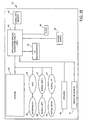
- consumer prompting device 20 includes a clock 38, a reader/writer module 30, a screen 22, a power supply 39, an integrated circuit 40, scroll buttons 24, 25, 26, and 27, TAKE button 28, DEFER/SELECT button 29, vibration source 41 and speaker 42.
- auxiliary memory 43 Preferably the screen 22 is a liquid crystal screen.
- the integrated circuit 40 is an application specific integrated circuit.
- the power supply 39 is an AA battery.
- the consumer prompting device could include a light indicator.
- a menu screen with the aid of the scroll buttons 24, 25, 26 and 27 will make available all of the information stored in the consumer prompting device 20. Specifically information such the medication list and the next take times, the date and time set, time zone adjustments, volume control for the audio prompt, selecting prompt method, and delete and stop medication may be viewed. Preferably the user can select the prompt from a menu including vibration, various audio prompts and a visual indicator on the screen.
- the time zone adjustment allows the user to set his then current time zone and when the user changes time zones and a new time zone is entered the next take times will be adjusted for the new time zone.
- additional information is available through the menus on the screen, namely best practices, contra indicators and hazards.
- the frequency and dosage for the medication, the prescribing physician and any other information stored on the integrated circuit chip 14 are available.
- Device 20 would record the number of times that the date and time set was adjusted. This would allow the health care professional to determine if the record of take times is accurate and to ensure that the user cannot circumvent the monitoring aspect of the present system by changing the date and time set to falsely record the date and time a medication was taken.
- a contactless read/write module is used in the consumer prompting device 45.
- the main difference between consumer prompting device 45 and device 20 is that device 45 includes a contactless read/write module. Accordingly consumer prompting device 45 does not require a read/write station per se , since the integrated circuit chip 14 need not actually contact the contactless read/write module.
- the contactless read/write module is positioned proximate to the surface of the device 45.
- an antenna is provided in the package attached to the integrated circuit chip 14.
- the integrated circuit chip 14 is brought into proximity with the contactless read/write module and information is transferred between the consumer prompting device and the integrated circuit chip.
- consumer prompting device 45 will indicate when information has been transferred.
- the indicator could be a visual indicator, a sound or the like.
- the consumer prompting device 20, 45 could be incorporated into a Palm PilotTM, an electronic personal organiser, a cell phone, a personal digital assistant, hand held computer or another electronic device that is easily carried by an individual.
- the read/writer module and a read/write station where required could be incorporated into such a unit.
- the functionality of the consumer prompting device 20, 45 could be incorporated into any device that includes a read/writer module and where required a read/write station. However, preferably it would be incorporated into a device that the consumer routinely always carries. Thus the consumer would not need to carry a separate device.
- consumer prompting device 20, 45 could use a touch screen rather than the specific buttons shown herein. Any or all of the specific buttons could be replaced by electronic buttons on a touch screen.
- a bottle 16 is shown with an integrated circuit chip 14 embedded therein. This type of bottle 16 is for use with a contactless consumer prompting device 45. With regard to blister type package 12 and tube 18 ridges 210 and 212 respectively need not be included when used in association with a contactless prompting device.
- a bottle 214 is shown with the integrated circuit chip 14 attached thereto with a label.
- the label includes an adhesive layer 216, the integrated circuit chip 14 and a top layer 218.
- Top layer may include any information desired by the user including a bar code 220.
- a label with an integrated circuit chip 14 therein will be referred to herein as a smart label and it will be appreciated by those skilled in the art that any package could have a smart label attached thereto and all of the information stored on integrated circuit chip 14 embedded in a package 10 could also be stored on an integrated circuit chip 14 attached to a package by a smart label.
- all references to integrated circuit chip 14 could mean a chip embedded in a package 10 or a chip in a smart label.
- sticky label is used this is separate from a smart label.
- a sticky label is used to designate the kind of labels currently found on packages.
- the storage capacity of an integrated circuit chip can vary widely. The above description assumes a storage capacity in the order of 256K. Alternatively a chip with considerably less capacity could also be used. Where there is limited storage capacity, certain pieces of information will be stored as an alphanumeric code that is readable or interpretable by the consumer prompting device 20, 45. In addition certain pieces of information may be eliminated. For example, since information regarding the doctor and the patient will be found on the sticky label this need not be encoded onto the integrated circuit chip. Either type of integrated circuit chip will include the parameters for determining the next take time, the unique identifier from the consumer prompter, the issue date, the prescription number created by the pharmacy and the medication name.
- the dosage will include the dosage, the number of pills, the repeats allowed and the number of pills remaining.
- the medication name or trade name will be digitally encoded.
- the warnings, contra-indicators and corrective measures will be encoded to correspond to list of specific instructions.
- a reader/writer 44 is for use by a health care professional such as a retail pharmacist, a hospital pharmacist, a doctor, a doctor's assistant and the like.
- Reader/writer 44 is somewhat similar to the consumer prompting device 20 discussed above.
- Reader/writer 44 has a chip read/write module. Similar to consumer prompting device, read/write module is a contact type read/write module wherein contact is required. Accordingly, a read/write station 32 as described above is provided in the case 50 of reader/writer 44 to facilitate bringing the integrated circuit chip 14 in blister pack type packages 12 or tube 18 or bottle 16 in contact with the read/write module.
- the reader/writer 44 is connected through cable 60 to the health care professional's computer (not shown) for inputting information into the integrated circuit chip 14 in the package.
- Information specific to the patient or consumer is written onto the integrated circuit chip 14.
- information such as contra indicators, warnings, cautions or procedures to take if a patient fails to take the medication at the prescribed time may be written onto the integrated circuit chip by the health care professional or by the pharmaceutical company if it is an integrated circuit chip that is always associated with a specific medication.
- a single purpose reader/writer unit could be developed for inputting the information onto the integrated circuit chip rather than connecting the reader/writer 44 to the health care professional's computer.
- a package having an integrated circuit chip 14 attached thereto could be used in monitoring the flow of packages in a number of different applications.
- the application described hereafter is for use with regard to monitoring and prompting for the correct use of medications.
- a number of systems need to be implemented. Specifically there is a system for obtaining the information specific to a patient or consumer and writing it on an integrated circuit chip attached to the medication; a system for ensuring that the patient takes the right medication at the prescribed time; a system used by the consumer prompting device to prompt the patient or consumer; and a system that modifies the above systems for use in a health care facility.
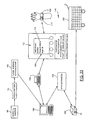
- the steps for obtaining the information specific to a patient or consumer and writing it on an integrated circuit chip attached to the medication is shown generally at 64.
- the patient or consumer 66 is attended to by a doctor 68.
- the doctor provides a prescription 70.
- the prescription may be in the form of the traditional written script or electronic information that is provided on a smartcard or the like.
- the patient 66 attends at a pharmacy and the pharmacist 72 inputs information with regard to the prescription 70 in the pharmacy computer system 74.
- the pharmacy computer system 74 generates a sticky label 76 and encodes 78 information onto the integrated circuit chip 14.
- Information such as prescribed manner of taking medication including time and dosage is encoded or written onto the integrated circuit chip, as well parameters for determining the next take time are encoded or written onto the integrated circuit chip.
- information with regard to best practices, contra indicators and hazards is written onto integrated circuit chip 14.
- the medication with the sticky label 76 and integrated circuit chip 14 attached thereto is given to the consumer or patient 66.
- the parameters for determining the next take time could include a wide range of variables.
- the next take time includes a take window wherein the next take time is the preferred take time but there is a time range where taking the medication is acceptable. This would be useful for a user who wanted to take a medication prior to starting an activity, the user could insert the medication package 10 into the consumer prompting device 20 and determine if the time is within the take window.
- the next take time also includes defer parameters.
- the device will prompt again in a very short period of time.
- the prompt may be deferred for a longer period of time.
- information with regard to the number of medications in the package will be included in the information stored on the integrated circuit chip14, the date and time of taking a medication and the amount of medication left will be updated each time a medication is taken.
- the prompter which will prompt the consumer to buy a refill.
- the steps that the patient takes in association with a package having an integrated circuit chip 14 and the consumer prompting device 20 for ensuring the right medication at the prescribed time is shown generally at 80 in figure 20.
- the consumer or patient 66 inserts 82 the package or medication with the integrated circuit chip 14 into the consumer prompting device 20.
- the consumer prompting device reads the unique identifier 84 on the integrated circuit chip 14 attached to the medication.
- Device 20 determines if the field is empty 86. If the field is empty it is a new package and the information in the integrated circuit chip 14 is then read and displayed 88, including such information as best practices with regard to taking the medication, contra indicators and hazards.
- the consumer can press the TAKE button or the DEFER button and a unique identifier is written onto the integrated circuit chip 14 of the package 10.
- the consumer has pressed the TAKE button
- device 20 read the parameters for determining the next take time and determined that the medication should or could be taken at that time 90.
- the DEFER button device 20 read the parameters for determining the next take time and determined that the medication should not be taken at that time or could be deferred. If the consumer pressed DEFER, the package is removed 92 from the consumer prompting device. If the consumer pressed TAKE 94, information regarding the taking of the medication is exchanged 96 between the consumer prompting device 20 and the integrated circuit chip 14.
- the parameters for determining the next take time is transferred temporarily from the integrated circuit chip 14 to device 20 wherein the next take time is calculated and stored. Thereafter the parameters for determining the next take time are deleted from device 20. Thereafter the consumer is prompted 98 to remove the package from device 20.
- device 20 compares 100 the unique identifier with identifier stored on the consumer prompting device 20. If device 20 does not have the same identifier 102, then the package with the integrated circuit chip 14 is not for use in association with that particular consumer prompting device 20 and it will display 104 "NOT YOURS" and prompt for the package to be removed from device 20. Alternatively, if the identifiers are the same 102 it is a package that is to be used in association with that particular consumer prompting device 20 and information stored on the integrated circuit chip 14 is displayed 106. Preferably the information displayed includes the drug name, the next take time and if the time is currently within the take window, best practices, contra indicators, hazards, prescribing physician and the like.
- the device 20 If the device 20 has prompted the consumer to take a medication, the device will confirm that the unique identifier is correct and the device will determine if the medication is the correct medication. Alternatively if the device has not prompted the consumer to take a medication but the consumer would like to take a particular medication at that time, say before the consumer goes out, the device will not only confirm that the unique identifier is correct but also if the time is within the take window for that medication. Accordingly, device 20 reads the parameters for determining the next take time and determines if the medication could be taken now 90. If no, the package is removed 92 from the consumer prompting device.
- the TAKE button is pressed 94, information regarding the taking of the medication is exchanged 96 between the consumer prompting device 20 and the integrated circuit chip 14. Parameters for determining the next take time are transferred temporarily from the integrated circuit chip 14 to device 20 wherein the next take time is calculated and stored. Thereafter the parameters for determining the next take time are deleted from device 20. Information regarding the date and time of the patient taking the medication is transferred from the device 20 to the integrated circuit chip 14. Thereafter the consumer is prompted 98 to remove the package from device 20.
- the logic steps of the consumer prompting device 20 to prompt the patient or consumer is shown generally at 108.
- the power is on 110.
- Device 20 loops through the "next take” fields 112.
- Device 20 determines if the "next take” fields are null 114. If the "next take" fields are not null, that is there is information in the “next take” fields, device 20 determines if the date and time in the "next take” field is the same as the current date and time 116. If no, device 20 goes back 118 to looping through the "next take" fields 112.
- device 20 prompts to take the medication and displays contra indications 120.
- the prompt may be an audio prompt, a vibration or a visual prompt or a combination thereof.
- the patient decides 122 either to take the pill immediately or to defer taking the pill. If the patient chooses to take the medication, then the patient presses TAKE 124.
- Device 20 prompts 126 the consumer to insert 128 integrated circuit chip 14 associated with a specific medication.
- Device 20 compares the unique identifier in the integrated circuit chip 14 with the identifier associated with the consumer prompter 130. If the identifiers are correct 132, information regarding the date and time is exchanged and stored 134.
- information regarding the method of determining the next take time is transferred temporarily from the integrated circuit chip 14 to device 20 wherein the next take time is calculated and stored. Thereafter the parameters for determining the next take time are deleted from device 20.
- Information regarding the date and time of the patient taking the medication is transferred from the device 20 to the integrated circuit chip 14.
- the number of pills in the package is decremented and therefore after each take the actual number of pills in the package should be reflected on the integrated circuit chip 14.
- device 20 prompts the patient to remove the package 136 and then goes back to looping through the "next take fields" 112.
- the message INCORRECT PACKAGE is displayed 138 and the device goes back to prompt 126 the consumer to insert an integrated circuit chip associated with the medication. If the patient cannot take the medication at the time of being prompted, the consumer may press the DEFER button 140. Thereafter the defer processing steps are performed 142 which include updating the date and time for the "next take" field. Thereafter the device goes back 144 to the step of looping through the "next take" fields 112. In the event that the information in the "next take" fields is null, that is no medications are scheduled to be taken, device 20 goes to lower power mode 146. The device is powered on when a new package is inserted or other adjustments are made.
- the information regarding the date and time patient took the medication could be stored on the integrated circuit chip 14 as discussed above. However, that information could also be stored on the consumer prompting device as well or on another integrated circuit chip such as smartcard health card that contains all patient's health information.
- the devices described above can be readily adapted for use in a health care facility such as a hospital.
- a health care facility such as a hospital.
- the system for a health care facility is shown at 148.
- the main components of the hospital system include a hospital medication container 158, independent work station 154 and the nurse prompter 162.
- Hospital medication container 158 includes an integrated circuit chip 14.
- medications are dispensed from a central hospital pharmacy, distributed to floor nursing stations or floor pharmacy stations, and then transferred to trays of open containers marked with patient names, floor and room numbers.
- the hospital medication container 158 includes an integrated circuit chip 14 that is preferably fabricated into a protruding, reinforced 'lip' of the container, which would facilitate the attachment of the container to a hand held reader/writer unit in the nurse prompter 162 and a reader/writer 156 attached to the workstation 154.
- Workstation 154 would run nurse prompter host application software, with attached Reader/Writer unit, and keyboard cradle.
- This independent workstation (Win 95/98/NT, MacOS, or Unix based) would be running the nurse prompter host application software that performs functions supporting the operation of the Nurse prompter (e.g. loading information into Nurse prompter, synchronizing information on Nurse prompter and Nurse prompter-Host, displaying information stored on any Nurse prompter, printing reports, backing up Nurse prompter data, etc.).
- the attached Reader/Writer 156 is where hospital medication container 158 is attached when interacting with the Nurse prompter-Host application.
- the keyboard cradle 152 is used to communicate and exchange data with nurse prompters 162. Thus the keyboard cradle 152 can be used to input information into the nurse prompter 162.
- the nurse prompter 162 uses off-the-shelf hardware as the base unit for the nurse prompter (e.g. existing or future versions of personal handheld electronic organizers with sophisticated operating systems, such as the Palm PilotTM, running a Java JVM (Java Virtual Machine) under the Palm OS, or a PSION Series 5MX running a JVM under EPOCH.
- a reader/writer is added to this base hardware.
- the reader/writer can be a contact type or a contactless type.
- the software developed to drive the nurse prompter 162 functionality would use the development tools of the OS of a particular electronic organizer. Interaction with the software would be via the stylus activated touch screens and/or attachable keyboards of the organizers.
- the nurse prompter 162 could be associated with any group of rooms/beds, and information could be passed between nurse prompters 162.
- the hospital system has a number of steps that are common to the individual system described above.
- the patient would be seen by a doctor 68 and more specifically a hospital doctor who would write a prescription 70.
- the prescription information would be given to the floor nursing station staff 150 or the staff responsible for administering the medication to the patient 150.
- the prescription information would also be given to the hospital pharmacy computer system.
- the information would be given to the floor pharmacy station 154 or the unit responsible for dispensing the medication.
- the pharmacy station 154 would be connected to a read/writer 156 similar to the reader/writer 44 above. It would encode information onto the integrated circuit chip 14 attached to the hospital medication container 158.
- a plurality of hospital medication container 158 can be put in a hospital medication cart 160 for easy transportation to the patients.
- the nurse prompter 162 is somewhat similar to the consumer prompting device 20 but it would display additional information such as a patient identification number 164 and a room number 166.
- the information could be encoded directly into its integrated circuit chip from the hospital reader/writer 156 or from the information on the hospital smart medication container 158.
- the nurse prompter 162 indicates that a medication is due the nurse would need to verify that it is the correct medication by reading the information on the integrated circuit chip14 attached to the hospital medication container 158 and to verify that it is the correct patient by reading the information on the integrated circuit chip170 attached to the patient's identification bracelet 168.
- information related to the distribution of the medication would be exchanged between the nurse prompter and the patient integrated circuit chip 170 and between the hospital medication container 14.
- the device of the present invention is very user friendly and it is designed so that a user can easily use the device without a lengthy training period. Following sets out the steps in a typical example of the use of the consumer prompting device 20 of the present invention:
- the hospital version of the medication prompting device of the present invention is an adaptation of the consumer prompting device 20 and package 10 configuration, with variations in hardware, software, and operation, to suit the needs of a hospital setting.
- the general aim is the same (mechanized control of the delivery of medication), but adapted for a hospital environment.
- the specific aim is to provide a means for a consumer to easily and effectively schedule and log his self-medication regimen.
- the aim is to provide a means for hospital staff to schedule, log and monitor the administration of medication to patients, and at the same time provide a higher level of safety and security in the distribution process.
- a hospital floor is divided into nursing stations that are each responsible for a group of rooms. Any number of nurses may be assigned responsibility for these rooms.
- the following example shows the use of a nurse prompter 162 in a hospital:
- the traditional method of delivering medication to a pharmacy and thereafter to a consumer may be modified by providing an integrated circuit chip in the packages that contain bulk medication. Thereby the pharmaceutical company can update the information with regard to the medication and disseminate it. The pharmacy can then copy the information from the pharmaceutical company directly from the integrated circuit chip into the pharmacy computer system and transfer it to the integrated circuit chip 14 attached to the dispensing package. This is particularly useful where the pharmaceutical company has identified new contra-indicators or hazards.
- the purchasing system When considering a system for providing appropriate checks and balances for purchasing pharmaceutical products from an on-line pharmacy, the purchasing system will include a system for registering and thereafter authenticating doctors. Similarly the purchasing system will include a system for registering and authenticating on-line pharmacies. Preferably the purchasing system will be integrated with an electronic health card, the wave of the future if not the present, wherein the health card includes an integrated circuit chip (hereinafter when a health card or a smart health card is referred to, it is assumed to mean a health card which includes an integrated circuit chip). The health card may be used to store information regarding medication in addition to a whole host of other information.
- an integrated circuit chip hereinafter when a health card or a smart health card is referred to, it is assumed to mean a health card which includes an integrated circuit chip.
- the health card may be used to store information regarding medication in addition to a whole host of other information.
- the on-line purchase system includes an authentication web site wherein physicians and pharmacies register and thereafter can be authenticated.
- the user will be required to have a reader/writer that is connectable to an internet access enabled device.
- the consumer prompter 20 could be adapted to be an internet access enabled device. Alternatively the user could use a single purpose device that is attached to the internet access enabled device. Further the system requires an electronically readable prescription, preferably this will be a prescription written on a smart health card.
- the system for registration of a doctor or physician on an authentication web side is shown generally at 230.
- the physician goes to a registration or authentication web site 234.
- the physician submits registration particulars such as name, degree, state license and the like.
- the physician chooses a password.
- the physician's information is verified 236 with a government controlled authentication database or other monitored database. Typically the verification is conducted with written and telephone verification. If the authentication process 238 is not successful the physician is notified 240. If the authentication process 238 is successful the physician's account and password is activated 242 and the physician is provided with a physician ID number.
- the prescription authentication key is delivered by a secure socket layer document delivery web site (similar to Critical Path/DocSpace: www.docspace.com) or other secure method.
- the physician would enter his password to download the updated prescription authentication key.
- the password is changeable at will by the physician in another portion of the web site and optionally the physician is forced to change the password after a specified elapsed time, for example every 6 or 12 months. These are typically the steps that the physician would take on-line and the remainder of the steps would be conducted offline and would be those typically taken by a physician.
- the on-line pharmacies would need to go through a similar authentication process as that required by doctors.
- the system for registration of an on-line pharmacy on an authentication web site is shown generally at 250.
- the pharmacist 252 chooses to dispense prescription drugs on-line
- the pharmacist goes to a registration or authentication web site 254.
- the pharmacist submits registration particulars such as name of pharmacist, the pharmacy site license and the like.
- the pharmacist chooses a password.
- the information is verified 256 with a government controlled authentication database or other monitored database. Typically the information is verified using written and telephone communication. If the authentication process 258 is not successful the pharmacist is notified 260. If the authentication process 258 is successful the pharmacist's account and the pharmacist's password is activated 262.
- the pharmacist need only register once.
- the pharmacist's account is activated the pharmacist must be provided with (and then periodically updated) the e-prescribe key database which is the combination of the physician ID number and the prescription authentication key.
- the pharmacist can download the database from a secure web site wherein the pharmacist would use his password.
- the password can be changed at will by the pharmacist in another area of the web site and preferably the pharmacist has to change his password within a predetermined lapsed amount of time, for example every 6 or 12 months.
- the e-prescribe key database is delivered by a secure socket layer document delivery web site (similar to Critical Path/DocSpace) or other secure method.
- the e-prescribe key database is consulted when filling a prescription. If the prescription uses a valid e-prescribe key then the pharmacist can fill the order either on-line or at a retail outlet. Alternatively if the e-prescribe key is invalid or missing a key the prescription is considered invalid and the prescription can not be filled or an alternate method of verification can be used. It will be appreciated by those skilled in the art that this method of verifying a prescription can be used in conventional retail pharmacies to enhance their security, it need not be limited to on-line purchases. As discussed above the e-prescribe keys would be valid for a limited predetermined amount of time, for example 2 months, thus allowing the consumer a specified period of time within which to fill the prescription.
- the process of a consumer or patient purchasing on-line is shown generally at 270.
- the consumer or patient 66 attends at the physicians 68 and obtains an electronic prescription 272.
- an incremented serial number is used (the pairing of the e-prescribe key with the incremented serial number creates a unique key for the individual prescription called for convenience the Prescription Unique Identifier).
- the consumer 66 can then either obtain the prescription from a retail outlet 274 or an on-line pharmacy 276.
- the consumer's smart health card with the prescription written thereon will be read by the pharmacy computer system 278 smartcard reader.
- the pharmacist's computer system reads e-prescribe key (including the PUI) and prescription from the consumer's smart health card.
- the pharmacy computer system 278 displays the prescription and searches the e-prescribe database 280 for a valid e-prescribe key 282.
- the prescription is not authentic. If the match for the key is successful 286, the prescription is considered authentic and the order is filled.
- the system then checks if repeats are allowed 288. If no, the prescription is erased 290 from the smart health card. Alternatively the system moves the prescription information to a memory location on the smartcard reserved for maintaining a recent history of medications purchased by the consumer, and erases the e-prescribe key. If yes, the repeats allowed counter on the smartcard is decremented 292 and the date, time and identity of the pharmacy filling the prescription is entered onto the smartcard. In addition, the system transfers the prescription information to the pharmacist's regular computer system software 294.
- the consumer 66 fills the prescription at an on-line pharmacy 276.
- the consumer inserts his smart health card into a smartcard reader.
- the software associated with the smart health card will prompt for a consumer personal identification number (PIN) 296. If the consumer PIN is incorrect 298 the person will not be able to purchase on-line with that smart health card.
- PIN personal identification number
- the system can be configured in a number of ways. For example simultaneously, the system can automatically go on-line and launch a browser and go to a portal 300 or an on-line pharmacy web site 302 . Alternatively the user can navigate themselves. The consumer can set and reset the defaults such that on validating the consumer PIN the system goes to the site chosen by the consumer.
- the portal site 300 can be configured to read the prescription from the smartcard and automatically searches registered on-line pharmacy sites for the prescribed medication and displays choices available (including generic drugs) and their prices.
- the portal 300 could be an HMO or a health insurance site. In the event that the portal is either of these two organizations another level of validation may be included to facilitate payment of the prescription.
- the consumer then indicates that he wants to fill the prescription. Thereafter the steps described above with regard to the on-line pharmacist's computer system reads e-prescribe key (including the PUI) and prescription from the consumer's smart health card.
- the on-line pharmacy computer system 302 displays the prescription and searches the e-prescribe database 280 for a valid e-prescribe key 282.
- the prescription is not authentic. If the match for the key is successful 286, the prescription is considered authentic and the order is filled.
- the system then checks if repeats are allowed 288. If no, the prescription is erased 290 from the smart health card. Alternatively the system moves the prescription information to a memory location on the smartcard reserved for maintaining a recent history of medications purchased by the consumer, and erases the e-prescribe key. If yes, the repeats allowed counter on the smartcard is decremented 292 and the date, time and identity of the pharmacy filling the prescription is entered onto the smartcard. In addition, the system transfers the prescription information to the pharmacist's regular computer system software 294.
- basic information is also written onto the label for the medication 294.
- Such information includes the name of medication and dosage/strength, number of pills (or some other measure of quantity) and frequency, number of repeats allowed, name of consumer, prescribing doctor, date issued, pharmacy's own transaction number.
- This information is put onto a conventional sticky label affixed to the medication bottle or package.
- this information as well as an encrypted ID # that identifies the pharmacy and the PUI can be written onto an integrated circuit chip 14 to be affixed to the bottle or package with a smart label, or an integrated circuit chip integrally attached to a bottle or package as described above.
- the system checks if the consumer has a consumer prompting device 304. If no 306, no further information is written onto the integrated circuit chip. If yes 308, further information is written onto the integrated circuit chip 14. Such information including warnings, contra-indications, corrective measures in the event of an error in self medication, encoded ranges used by the consumer prompting device to calculate the windows in time in which it will issue directions to the consumer to take a medication, encoded safe prescribing ranges used by the consumer prompting device to cross check prescribing information issued by the doctor, the PUI, a compressed image of the pill showing shape, markings and color (the universal method for identifying a pill) is written to the integrated circuit chip 14.
- the consumer could indicate a language preference during purchase, and information written to integrated circuit chip could be in that chosen language. Further it will be appreciated that the pharmacy may choose to include all this information even if the consumer indicates that they do not own a consumer prompting device.
- the consumer can set up his smart health card so that once it is read and validated the on-line connection is made directly to a portal.
- the consumer is given an electronic prescription 272 or the electronic prescription is written onto the consumer's smart health card.
- the smart health card is put into a smartcard reader or web and smartcard enabled device 276.
- the device detects that the card is present 312 and prompts for the consumer PIN 296.
- This consumer PIN verification may be done on the portal site or through the web and smartcard enabled device.
- Once on the portal site the prescription is read 314.
- the portal searches 316 sites for product availability. Thereafter once the sites have been located the portal displays 318 the sites and the prices of the product at those sites.
- the consumer chooses 320 from the sites where he wants to purchase the product and links 322 to that site.
- the consumer PIN can be passed to that site. Thereafter the prescription is filed as discussed above with regard to figure 25.
- the filing of a prescription can be adapted to use the consumer prompting device to determine if there are any conflicts. Since the consumer prompting device described above stores the names and the next take times of all the medication for which it prompts the consumer, it can be used to check for conflicts.
- the initial stages of the conflict checking system shown generally at 324 are similar to those when the consumer fills his prescription.
- the consumer or patient 66 attends at the physicians 68 and obtains an electronic prescription 272.
- the consumer 66 then goes to pharmacist 252, either an on-line pharmacist or a retail pharmacist.
- the system then prompts for a consumer prompting device 326. If there is no consumer prompting device present 328 a conflict check cannot be done using the consumer prompting device and the prescription is filled using the normal filling routines described above.
- the consumer prompting device is present the device is brought into proximity of an integrated circuit chip reader and the medications are read 330. If the consumer has his own integrated circuit chip reader connected to his web enabled device this conflict check could be done in conjunction with an on-line purchase. Alternatively it the consumer does not have such a reader this conflict check can be conducted at a pharmacy with such a reader.
- An example of such a reader is a BluetoothTM or JiniTM enabled wireless reader.
- this conflict may be acceptable, for example where it is acceptable to take the medications at an interval of a specified period of time. Alternatively it may be prudent to contact the physician and make alternate arrangements. If there are no conflicts the required information is written onto the sticky label 340 and information is written onto the integrated circuit chip 14 of the medication package 342 and the medication is given to the consumer 344.
- Conflict checking system 324 could be adapted to be used in association with a smart health card rather than a consumer prompting device. Accordingly if the smart health card includes a list of all medications that the consumer is currently using that information can be read from the smart health card rather than the consumer prompting device.
- Updates to the medication conflict database 334 are sent to all registered pharmacies.
- the database is sent via a secure socket layer document delivery web site (similar to DocSpace: www.docspace.com) or the like.
- Regular updates to the database are delivered (using the same technology) to each holder of the database.
- the downloaded update contains software to automatically revise and update the pharmacy's conflicts database and analysis software.
- the system provides increased accuracy in both the recording and interpretation (by a pharmacy) of prescriptions issued by a physician (as compared to a hand written prescription). Further the system has the potential to allow a physician to positively track prescriptions he has issued and to reduce record keeping effort required of physician.
- the system provides an increased accuracy in reading a prescription which translates into greater safety for the consumer because there is much less risk of being issued the wrong medication. Further, by providing verifications at each step along the chain of filling a prescription at an on-line pharmacy there will be an increase in consumer confidence in regard to this method of filling a prescription. Still further, there will be an increase in the efficiency in utilizing on-line pharmacies whereby legitimate prescriptions can be verified and shipped immediately.
- the system herein will facilitate faster and easier on-line purchases. Further the system herein will increase the pharmacy's protection from liability due to improved tracking and security features.
- the system herein provides effective tools for auditing compliance with on-line sales regulations.
- the software that is used to implement the above described systems can be used on a wide variety of operating systems and platforms.
- a JavaTM based system or a Java-type system would be portable and adaptable to pharmaceutical systems and hospital systems made by a number of manufacturers.
- JiniTM technology or Jini-type technology would be used.
- These technologies enable all types of devices to simply connect into impromptu networks, making access to and delivery of new network services as simple as plugging in a telephone.
- JiniTM technology enables all types of digital devices to work together in a community put together without extensive planning, installation, or human intervention. Each device provides services that other devices in the community may use. These devices provide their own user or programmatic interfaces, which ensures reliability and compatibility.
- Bluetooth is a technology specification for lowcost, short range radio links between PDAs, laptops, mobile phones, and other portable devices. Preferably, this type of technology would be used with the consumer prompting device, readers for the consumer prompting device and readers for the smart health card.
- BluetoothTM devices When two BluetoothTM devices come close together, they automatically detect each other and establish a network connection.
- This is an example of a network transport protocol that could be used to allow devices using JiniTM technology to communicate without being physically connected to each other.
- Other technology like PianoTM, which can be built on top of BluetoothTM, specifies what sort of information they exchange and how they communicate. It and other operating systems, like EPOC32TM for cell phones provide the necessary features to support JiniTM technology.
- the consumer prompting device of the present invention may be used as a single purpose device. For example it could be adapted for use in association with the birth control pill. Since in this example only one medication is being monitored the systems can be greatly simplified.
- the consumer prompting device of the present invention could be used as a multi-person prompting system for example, for a family. In this embodiment the reminder notification would identify not only the medication but also the user. The different users could also be identified with a different sound. Each user could have a unique identifier for their own use so that not only the medication could be verified but also the user.
- the consumer prompter device 20, 45 can manage a large number of medications because the only information that is required to be stored on device 20, 45 is the name of the medication, the next take time and the take window.
- the consumer prompter can still manage a large number of medications. Accordingly, the memory requirements for each medication are relatively low.
- the cost of attaching an integrated circuit chip to a package is relatively low and since no power source is required in association with the package 10 (only device 20), the cost of operating the prompting and monitoring system of the present invention is relatively low. Since the integrated circuit chip 14 is non-volatile it need not be attached to device 20 to store information and thus device 20 can readily be used with multiple medications.
- the present invention provides a simple, user friendly method for monitoring the correct use of the consumer's medication.
- the present invention provides a method of prompting the consumer to take a medication and then verifying that it is the correct medication before the consumer takes the particular medication.
- the consumer prompting device 20 prompts the consumer to take a medication
- the integrated circuit chip 14 identified as being associated with the particular medication must be read by the read/write module so as to confirm that the correct medication was taken.
- the consumer prompting device provides a method of verifying that the correct medication was taken.
- a further advantage of the present system is that the times at which the medication is actually taken is stored on the integrated circuit chip 14 thus the physician or other health care professional can monitor the actual use of the medication. This information can be invaluable when considering altering the dosage or use of the medication. Further, this information will be useful for medical and pharmaceutical research and in some instances for the patient's health insurance.
Landscapes
- Engineering & Computer Science (AREA)
- Health & Medical Sciences (AREA)
- Business, Economics & Management (AREA)
- General Health & Medical Sciences (AREA)
- Public Health (AREA)
- Medical Informatics (AREA)
- Human Resources & Organizations (AREA)
- Life Sciences & Earth Sciences (AREA)
- Animal Behavior & Ethology (AREA)
- Veterinary Medicine (AREA)
- Entrepreneurship & Innovation (AREA)
- Strategic Management (AREA)
- Epidemiology (AREA)
- Primary Health Care (AREA)
- Economics (AREA)
- General Physics & Mathematics (AREA)
- Theoretical Computer Science (AREA)
- Marketing (AREA)
- Operations Research (AREA)
- Quality & Reliability (AREA)
- Tourism & Hospitality (AREA)
- Physics & Mathematics (AREA)
- General Business, Economics & Management (AREA)
- Data Mining & Analysis (AREA)
- Chemical & Material Sciences (AREA)
- Bioinformatics & Cheminformatics (AREA)
- Medicinal Chemistry (AREA)
- Pharmacology & Pharmacy (AREA)
- Medical Treatment And Welfare Office Work (AREA)
- Medical Preparation Storing Or Oral Administration Devices (AREA)
- Accommodation For Nursing Or Treatment Tables (AREA)
- Medicines Containing Material From Animals Or Micro-Organisms (AREA)
- Pharmaceuticals Containing Other Organic And Inorganic Compounds (AREA)
- Electrotherapy Devices (AREA)
Claims (22)
- Dispositif de rappel interactif (20) pour rappeler à un patient de prendre des médicaments stockés dans un paquet (10) de façon opportune, le dispositif comprenant un moyen pour mémoriser un prochain moment de prise des médicaments et un moyen pour émettre un rappel lorsque le prochain moment de prise arrive, le dispositif :(a) mémorisant un identifiant unique (84);(b) étant capable d'inscrire (30) cet identifiant unique sur une puce de circuit intégré (14) sur le paquet de médicaments (10) si aucun identifiant unique de la sorte n'est déjà présent sur le circuit intégré (14) ; et(c) étant capable de lire (30) un identifiant (84) à partir d'une puce de circuit intégré (14) sur un paquet de médicaments (10) présenté au dispositif et étant capable de le comparer (100) à l'identifiant unique mémorisé et de confirmer au patient (106) que le paquet contient des médicaments pour ce patient uniquement en cas de correspondance (102).
- Dispositif de rappel interactif tel que revendiqué dans la revendication 1, capable de rappeler au patient de prendre des médicaments à l'aide d'un ou plusieurs éléments parmi un bip (42), une vibration (41) ou un indicateur visuel (28).
- Dispositif de rappel interactif tel que revendiqué dans n'importe quelle revendication précédente dans lequel le dispositif est incorporé dans un dispositif personnel au patient, le dispositif étant sélectionné dans le groupe composé de : un organiseur personnel électronique, un téléphone cellulaire, un assistant numérique personnel et un ordinateur de poche.
- Dispositif de rappel interactif tel que revendiqué dans n'importe quelle revendication précédente qui peut rappeler au patient de prendre un médicament spécifique et peut ensuite déterminer (130, 132) si le paquet de médicaments qui lui est présenté est en réalité ce médicament spécifique.
- Dispositif de rappel interactif tel que revendiqué dans n'importe quelle revendication précédente auquel un patient peut présenter un paquet de médicaments, le dispositif pouvant ensuite déterminer (122) si le patient doit en réalité prendre le médicament à ce moment.
- Dispositif de rappel interactif tel que revendiqué dans n'importe quelle revendication précédente qui peut inscrire (96) le prochain moment de prise d'un médicament particulier sur une puce de circuit intégré sur le paquet de médicaments.
- Dispositif de rappel interactif tel que revendiqué dans n'importe quelle revendication précédente qui peut lire les paramètres pour calculer le prochain moment de prise pour un médicament particulier à partir d'une puce de circuit intégré (14) sur le paquet de médicaments (10) et calculer ensuite le prochain moment de prise, et le mémoriser dans la mémoire de dispositif (43).
- Dispositif de rappel interactif tel que revendiqué dans n'importe quelle revendication précédente qui peut mémoriser (43) un enregistrement des moments auxquels le patient a pris différents médicaments.
- Dispositif de rappel interactif tel que revendiqué dans la revendication 8 qui peut envoyer l'enregistrement des moments auxquels le patient a pris différents médicaments à un ordinateur distant programmé pour contrôler l'utilisation des médicaments.
- Méthode de rappel à un patient de prendre des médicaments stockés dans un paquet de médicaments de façon opportune, la méthode comprenant les étapes de :(a) mémoriser un identifiant unique dans un dispositif de rappel interactif (20) ;(b) le dispositif inscrivant (30) cet identifiant unique sur une puce de circuit intégré (14) sur le paquet de médicaments si aucun identifiant unique de la sorte n'est déjà présent sur le circuit intégré ;(c) le dispositif mémorisant un prochain moment de prise des médicaments et émettant un rappel (122) lorsque le prochain moment de prise est arrivé ;(d) le dispositif lisant un identifiant à partir d'une puce de circuit intégré sur un paquet de médicaments présenté (128) au dispositif et le comparant (130) à l'identifiant unique mémorisé ;(e) le dispositif confirmant au patient (136) que le paquet contient les médicaments pour ce patient uniquement en cas de correspondance.
- Méthode de rappel pour l'utilisation de médicaments telle que revendiquée dans la revendication 10 incluant de plus les étapes du dispositif (20) identifiant une puce de circuit intégré identifiable (14) associée à un prochain moment de prise mémorisé et confirmant que la puce de circuit intégré identifiable (14) est associée à un prochain moment de prise rappelé.
- Méthode de rappel pour l'utilisation de médicaments telle que revendiquée dans n'importe lesquelles des revendications 10 et 11 dans laquelle un nom du médicament associé à la puce de circuit intégré est mémorisé en association avec le prochain moment de prise sur le dispositif et le nom est affiché (106) sur le dispositif au prochain moment de prise.
- Méthode de rappel pour l'utilisation de médicaments telle que revendiquée dans n'importe lesquelles des revendications 10 à 12 incluant de plus les étapes du dispositif identifiant que le médicament est pris et inscrivant (40) l'heure de prise sur la puce de circuit intégré (14) attachée au paquet de médicaments.
- Méthode de rappel pour l'utilisation de médicaments telle que revendiquée dans n'importe lesquelles des revendications 10 à 13 incluant de plus les étapes du dispositif identifiant que le médicament est pris et inscrivant (40) l'heure de prise sur le dispositif.
- Méthode de rappel pour l'utilisation de médicaments telle que revendiquée dans n'importe lesquelles des revendications 10 à 14 incluant de plus les étapes du dispositif identifiant que le médicament est pris et inscrivant l'heure de prise sur une puce de circuit intégré dans une carte intelligente.
- Méthode de rappel pour l'utilisation de médicaments telle que revendiquée dans n'importe lesquelles des revendications 10 à 15 incluant de plus les étapes du dispositif calculant une prochaine fenêtre de temps de prise et identifiant si le moment présent est compris dans la prochaine fenêtre de prise.
- Méthode de 'rappel pour l'utilisation de médicaments telle que revendiquée dans n'importe lesquelles des revendications 10 à 16 incluant de plus les étapes du dispositif calculant un prochain moment de prise différé et émettant un rappel au prochain moment de prise différé.
- Méthode de rappel pour l'utilisation de médicaments telle que revendiquée dans n'importe lesquelles des revendications 10 à 17 incluant de plus les étapes du dispositif lisant et affichant des informations supplémentaires mémorisées sur la puce de circuit intégré attachée au paquet de médicaments.
- Méthode de rappel pour l'utilisation de médicaments telle que revendiquée dans la revendication 18 dans laquelle les paramètres et les informations supplémentaires sont mémorisés sous forme de codes alphanumériques et les codes alphanumériques correspondent à des informations spécifiques.
- Méthode pour contrôler l'utilisation de médicaments dans un établissement de santé comprenant les étapes de :(a) rappeler à un patient de prendre des médicaments stockés dans un paquet de médicaments de façon opportune telle que définie dans la revendication 10 et(b) recevoir des informations provenant du dispositif de rappel interactif personnel définissant la manière dont le patient a pris ses médicaments.
- Méthode de la revendication 20 comprenant l'étape supplémentaire de rappeler à un autre patient de prendre des médicaments stockés dans un paquet de médicaments de façon opportune telle que définie dans la revendication 10 et recevoir des informations provenant du dispositif de rappel interactif personnel définissant la manière dont cet autre patient a pris ses médicaments.
- Paquet de médicaments (10) lorsqu'utilisé avec le dispositif de rappel interactif (20) de la revendication 1, le paquet comprenant une puce de circuit intégré (14) qui peut avoir un identifiant unique qui associe le paquet (10) au dispositif de rappel , interactif (20), l'identifiant unique étant inscrit par le dispositif de rappel interactif (20).
Applications Claiming Priority (3)
| Application Number | Priority Date | Filing Date | Title |
|---|---|---|---|
| US359322 | 1982-03-18 | ||
| US09/359,322 US6335907B1 (en) | 1999-07-23 | 1999-07-23 | Package with integrated circuit chip embedded therein and system for using same |
| PCT/CA2000/000847 WO2001008106A2 (fr) | 1999-07-23 | 2000-07-21 | Boitier a microcircuit integre noye dans celui-ci et systeme d'utilisation |
Publications (2)
| Publication Number | Publication Date |
|---|---|
| EP1210052A2 EP1210052A2 (fr) | 2002-06-05 |
| EP1210052B1 true EP1210052B1 (fr) | 2008-01-23 |
Family
ID=23413332
Family Applications (1)
| Application Number | Title | Priority Date | Filing Date |
|---|---|---|---|
| EP00949028A Expired - Lifetime EP1210052B1 (fr) | 1999-07-23 | 2000-07-21 | Boitier a microcircuit integre noye dans celui-ci et systeme d'utilisation |
Country Status (12)
| Country | Link |
|---|---|
| US (1) | US6335907B1 (fr) |
| EP (1) | EP1210052B1 (fr) |
| JP (1) | JP4641694B2 (fr) |
| KR (1) | KR100808693B1 (fr) |
| AT (1) | ATE384513T1 (fr) |
| AU (1) | AU783204B2 (fr) |
| CA (1) | CA2378568C (fr) |
| DE (1) | DE60037895T2 (fr) |
| ES (1) | ES2301487T3 (fr) |
| GB (1) | GB2369898B (fr) |
| NZ (1) | NZ517376A (fr) |
| WO (1) | WO2001008106A2 (fr) |
Cited By (1)
| Publication number | Priority date | Publication date | Assignee | Title |
|---|---|---|---|---|
| US11819644B2 (en) | 2019-10-16 | 2023-11-21 | Cjmi, Llc | Method and apparatus for treating genitourinary problems |
Families Citing this family (126)
| Publication number | Priority date | Publication date | Assignee | Title |
|---|---|---|---|---|
| USD242591S (en) * | 1975-07-09 | 1976-12-07 | Donald Leroy Hurd | Rack for pocketbooks, magazines and the like |
| US7553234B2 (en) * | 1995-11-22 | 2009-06-30 | Walker Digital, Llc | Method and apparatus for outputting a result of a game via a container |
| US8092224B2 (en) * | 1995-11-22 | 2012-01-10 | James A. Jorasch | Systems and methods for improved health care compliance |
| US7978564B2 (en) * | 1997-03-28 | 2011-07-12 | Carlos De La Huerga | Interactive medication container |
| US6687190B2 (en) * | 1999-07-23 | 2004-02-03 | Robert Momich | Method and apparatus for clinical trials |
| US6985869B1 (en) * | 2000-01-21 | 2006-01-10 | Nextmed, Llc | Digital prescription carrier and monitor system |
| AU2001223396A1 (en) * | 2000-02-01 | 2001-08-14 | Disetronic Licensing Ag | Container and device for administering a substance |
| DE10051575B4 (de) * | 2000-02-01 | 2008-09-18 | Tecpharma Licensing Ag | System mit Behälter und Vorrichtung zur Verabreichung einer Substanz |
| AU2001223397A1 (en) * | 2000-02-01 | 2001-08-14 | Disetronic Licensing Ag | Configurable device and method for releasing a substance |
| GB0003197D0 (en) | 2000-02-11 | 2000-04-05 | Aid Medic Ltd | Improvements in and relating to controlling drug delivery |
| US6560165B1 (en) * | 2000-03-28 | 2003-05-06 | Diane K. Barker | Medical information appliance |
| AU2001258368A1 (en) | 2000-04-25 | 2001-11-07 | Shell Internationale Research Maatschappij B.V. | Process and machine for mixing liquids |
| EP1277181A2 (fr) * | 2000-04-25 | 2003-01-22 | Shell Internationale Researchmaatschappij B.V. | Procede pour individualiser des produits de grande consommation |
| ES2245365T3 (es) * | 2000-04-25 | 2006-01-01 | Shell Internationale Research Maatschappij B.V. | Recipiente y procedimiento para supervision y grabacion de informacion sobre un producto. |
| US6717598B1 (en) * | 2000-05-09 | 2004-04-06 | Agilent Technologies, Inc. | Medical navigator and systems therefor |
| NL1015369C2 (nl) * | 2000-05-31 | 2001-12-03 | Reguliersdam B V | Inrichting voor het afgeven van medicijnen en voor het verschaffen van informatie daarover. |
| US6892941B2 (en) * | 2000-06-08 | 2005-05-17 | Mendota Healthcare, Inc. | Automatic prescription drug dispenser |
| US6529801B1 (en) * | 2000-06-08 | 2003-03-04 | Mendota Healthcare, Inc. | Automatic prescription drug dispenser |
| US6633796B1 (en) * | 2000-06-14 | 2003-10-14 | Dan B. Pool | Medication timing device |
| US20020087360A1 (en) * | 2001-01-02 | 2002-07-04 | Pettit Stephen W. | Immunization tracking method |
| US20020138302A1 (en) * | 2001-03-21 | 2002-09-26 | David Bodnick | Prepaid telecommunication card for health care compliance |
| US6861954B2 (en) * | 2001-03-30 | 2005-03-01 | Bruce H. Levin | Tracking medical products with integrated circuits |
| GB0108228D0 (en) | 2001-04-02 | 2001-05-23 | Glaxo Group Ltd | Medicament dispenser |
| GB0108208D0 (en) * | 2001-04-02 | 2001-05-23 | Glaxo Group Ltd | Medicament dispenser |
| GB0108213D0 (en) * | 2001-04-02 | 2001-05-23 | Glaxo Group Ltd | Medicament dispenser |
| US6539281B2 (en) * | 2001-04-23 | 2003-03-25 | Accenture Global Services Gmbh | Online medicine cabinet |
| US20020186619A1 (en) * | 2001-05-07 | 2002-12-12 | Reeves Michael H. | Apparatus, system and method for synchronizing a clock with a master time service |
| JP4590161B2 (ja) * | 2001-05-21 | 2010-12-01 | スコット・ラボラトリーズ・インコーポレイテッド | 医療容器のためのrf−idラベル |
| JP2005500099A (ja) * | 2001-06-22 | 2005-01-06 | ロナルド・ディ・セクラ | 服薬遵守デバイスおよびデバイスの使用方法 |
| DE10132869C1 (de) * | 2001-07-06 | 2002-10-02 | Dieter Hafner | Verfahren zur Erkennung von Arzneimittelverpackungen in Blisterform |
| JP2003099534A (ja) * | 2001-09-21 | 2003-04-04 | Takazono Sangyo Co Ltd | 薬剤の投与・投薬支援システム |
| US20030086338A1 (en) * | 2001-11-08 | 2003-05-08 | Sastry Srikonda V. | Wireless web based drug compliance system |
| US6796267B2 (en) | 2001-12-18 | 2004-09-28 | Dubarry Suzanne | Reminder for periodic tasks including taking medication |
| FI20021031L (fi) * | 2001-12-28 | 2003-06-29 | Pertti Laehteenmaeki | Ravintoautomaatti |
| EP1478320B1 (fr) * | 2002-02-26 | 2017-01-25 | MEPS Real-Time, Inc. | Systemes de suivi de produits pharmaceutiques |
| JP2005518871A (ja) * | 2002-03-07 | 2005-06-30 | バング・オ・オルフセン・メディコム・アクティーゼルスカブ | 医療用ディスペンサ、ディスペンサで使用されるブリスタカードおよび服用量の医薬の分与方法 |
| EP1349099A3 (fr) * | 2002-03-25 | 2007-01-10 | Siemens Aktiengesellschaft | Procédé de collecte automatique des actions-patients |
| US20030234258A1 (en) * | 2002-06-25 | 2003-12-25 | Dean Stephens | Medicine compliance system |
| US7844361B2 (en) * | 2002-09-26 | 2010-11-30 | Stratamed Labs, Inc. | Prescription drug compliance monitoring system |
| US7295890B2 (en) * | 2002-09-26 | 2007-11-13 | Stratamed Labs, Inc. | Prescription drug compliance monitoring system |
| US6667936B1 (en) | 2002-10-25 | 2003-12-23 | Albert F. Ditzig | Bottle cap reminder device and method |
| DE10253728A1 (de) * | 2002-11-19 | 2004-06-24 | Hafner, Dieter, Dipl.-Phys. Dr.rer.nat. | Verfahren zur Einnahmeüberwachung von Medikamenten |
| US6766943B2 (en) * | 2002-11-25 | 2004-07-27 | Diebold Self-Service Systems, Division Of Diebold, Incorporated | Automated banking machine housing with improved service access |
| US7337899B2 (en) * | 2003-03-25 | 2008-03-04 | Creative Action Llc | Pillbox |
| US7042357B2 (en) * | 2003-03-26 | 2006-05-09 | Proximities, Inc. | Non-reusable identification device |
| GB0311461D0 (en) | 2003-05-19 | 2003-06-25 | Glaxo Group Ltd | Display system |
| WO2005051285A1 (fr) * | 2003-11-26 | 2005-06-09 | Nipro Corporation | Contenant medical equipe d'une puce a circuit integre |
| US7054231B2 (en) * | 2003-12-02 | 2006-05-30 | Juan Ruben Valerio | C-shaped medication reminder device |
| US20080136629A1 (en) * | 2004-01-30 | 2008-06-12 | Ivoice, Inc. | Wirelessly loaded speaking medicine container |
| US8519846B2 (en) | 2004-03-16 | 2013-08-27 | Newage Industries, Inc. | Tracking system for gamma radiation sterilized bags and disposable items |
| US8600548B2 (en) * | 2004-04-24 | 2013-12-03 | Inrange Systems, Inc. | Remote medication management system |
| US7451876B2 (en) * | 2004-04-24 | 2008-11-18 | Inrange Systems, Inc. | Universal medication carrier |
| US7828147B2 (en) | 2004-04-24 | 2010-11-09 | Inrange Systems, Inc. | Multi-layer medication carrier |
| US7236428B1 (en) * | 2004-05-12 | 2007-06-26 | Kevin Morse | Multifunction timer device |
| US7502666B2 (en) * | 2004-05-14 | 2009-03-10 | Mts Medication Technologies, Inc. | Systems and methods for storing and dispensing medication |
| US7080755B2 (en) * | 2004-09-13 | 2006-07-25 | Michael Handfield | Smart tray for dispensing medicaments |
| US7388493B2 (en) * | 2004-10-08 | 2008-06-17 | Bartronics America, Inc. | Method and system for preventing unauthorized removal and use of an RFID apparatus |
| US20090065522A1 (en) * | 2004-10-13 | 2009-03-12 | Nadir Benouali | Unit dose compliance monitoring and reporting device and system |
| US6973371B1 (en) * | 2004-10-13 | 2005-12-06 | Nadir Benouali | Unit dose compliance monitoring and reporting device and system |
| US7504954B2 (en) * | 2005-03-17 | 2009-03-17 | Spaeder Jeffrey A | Radio frequency identification pharmaceutical tracking system and method |
| US20060266763A1 (en) * | 2005-05-31 | 2006-11-30 | Katrin Svabo Bech | Automated medication dispensing apparatus |
| US20070016443A1 (en) * | 2005-07-13 | 2007-01-18 | Vitality, Inc. | Medication compliance systems, methods and devices with configurable and adaptable escalation engine |
| US20090134181A1 (en) * | 2005-07-13 | 2009-05-28 | Vitality, Inc. | Medication dispenser with automatic refill |
| US12014328B2 (en) * | 2005-07-13 | 2024-06-18 | Vccb Holdings, Inc. | Medicine bottle cap with electronic embedded curved display |
| US7562445B2 (en) * | 2005-07-18 | 2009-07-21 | Bartronics America, Inc. | Method of manufacture of an identification wristband construction |
| RU2008107340A (ru) * | 2005-07-27 | 2009-09-10 | Инджениа Текнолоджи Лимитед (Gb) | Аутентификация рецепта с использованием спекл-структур |
| WO2007019272A2 (fr) * | 2005-08-03 | 2007-02-15 | Nuclei, Llc | Procede de structure et observance temporelles d'evenement |
| US7440817B2 (en) * | 2005-10-20 | 2008-10-21 | Liang Fu | Method and control unit for medication administering devices |
| US7535356B2 (en) * | 2005-11-29 | 2009-05-19 | Bartronics America, Inc. | Identification band using a conductive fastening for enhanced security and functionality |
| TW200722942A (en) * | 2005-12-01 | 2007-06-16 | Ind Tech Res Inst | Disposable serial package and monitoring system thereof |
| CA2635476A1 (fr) * | 2005-12-12 | 2007-06-21 | International Paper Company | Interrupteur de maintien integre au conditionnement d'un article |
| US20080197042A1 (en) * | 2005-12-21 | 2008-08-21 | Teich Aktiengesellschaft | Blister Pack With Radio-Frequency Identification Device, and Method For Manufacturing Same |
| US20070187281A1 (en) * | 2006-02-10 | 2007-08-16 | Innovasage, Inc. | Information-driven pharmaceutical adherence packaging |
| CN101051045A (zh) * | 2006-02-24 | 2007-10-10 | 生命扫描苏格兰有限公司 | 利用rfid校准分析物测量仪的适用方法 |
| US20080027291A1 (en) * | 2006-07-11 | 2008-01-31 | Williams-Hartman Wade E | Electronic patient compliance device |
| WO2008016319A1 (fr) * | 2006-07-31 | 2008-02-07 | Susanne Golberg | Système de commande portable pour les patients avec boîte de rangement |
| US8405508B2 (en) | 2006-08-09 | 2013-03-26 | Emd Millipore Corporation | Use of gamma hardened RFID tags in pharmaceutical devices |
| WO2008079360A2 (fr) * | 2006-12-22 | 2008-07-03 | Schering Corporation | Mécanisme doseur pour distributeur |
| EP2132702A4 (fr) * | 2007-02-21 | 2011-11-23 | Bilcare Ltd | Système permettant d'obtenir une gestion de soins personnalisée |
| US8094521B2 (en) * | 2007-02-28 | 2012-01-10 | Nightingale Products LLC | Caregiver personal alert device |
| US20080246597A1 (en) * | 2007-04-06 | 2008-10-09 | Charles Carlson | Method, system, and apparatus for providing an event reminder |
| WO2009017612A2 (fr) | 2007-08-02 | 2009-02-05 | Millipore Corporation | Système d'échantillonnage |
| WO2009049276A1 (fr) | 2007-10-12 | 2009-04-16 | Patientslikeme, Inc. | Gestion et surveillance personnalisées d'états pathologiques |
| US20090115598A1 (en) * | 2007-11-07 | 2009-05-07 | Thomas H. Carslon, JR. | Apparatus and method for stimulating scheduled use of a consumable substance |
| US20090176526A1 (en) * | 2007-11-11 | 2009-07-09 | Altman Peter A | Longitudinal Personal Health Management System Using Mobile Data Capture |
| JP2009290106A (ja) * | 2008-05-30 | 2009-12-10 | Oki Semiconductor Co Ltd | 処理液供給装置およびその処理液容器交換方法 |
| WO2010045227A1 (fr) * | 2008-10-14 | 2010-04-22 | Mts Medication Technologies, Inc. | Emballage d’une forme pharmaceutique et sa feuille de circuit électrique frangible |
| US20100089789A1 (en) * | 2008-10-14 | 2010-04-15 | Rosenbaum Ronald | Dosage form package and a frangible electrical circuit sheet therefor |
| JP5501445B2 (ja) | 2009-04-30 | 2014-05-21 | ペイシェンツライクミー, インコーポレイテッド | オンラインコミュニティ内のデータ提出を促進するシステムおよび方法 |
| US7835230B1 (en) * | 2009-05-05 | 2010-11-16 | Stephanie Chang | Infant feeding management system |
| DE102009034745B3 (de) * | 2009-07-25 | 2010-09-23 | Ströh, Anette | Elektronische Erinnerungseinrichtung |
| US8537004B2 (en) * | 2009-09-30 | 2013-09-17 | Carefusion 303, Inc. | Verification of dispensed items |
| US20130146613A1 (en) * | 2010-06-07 | 2013-06-13 | Eduard Balthes | Safety system with a transponder and a reading device of an rfid system |
| US9177307B2 (en) * | 2010-07-29 | 2015-11-03 | Bank Of America Corporation | Wearable financial indicator |
| US8500031B2 (en) | 2010-07-29 | 2013-08-06 | Bank Of America Corporation | Wearable article having point of sale payment functionality |
| US20120160716A1 (en) * | 2010-12-22 | 2012-06-28 | Chun-Kong Joseph Chan | Portable medication management system |
| US9443276B2 (en) | 2011-01-19 | 2016-09-13 | Walter Richard Barry, III | Event-based asset tracking, order adherence, and rewards management with NFC-enabled electronic devices |
| DE102011076729A1 (de) * | 2011-05-30 | 2012-12-06 | 4Medx Gmbh | Abgabevorrichtung für Medikamente |
| FR2976565B1 (fr) * | 2011-06-14 | 2014-09-05 | Valois Sas | Dispositif de distribution de produit fluide et procede de fabrication d'un tel dispositif. |
| US8727180B2 (en) | 2012-02-02 | 2014-05-20 | Compliance Meds Technologies, Llc | Smart cap system |
| ES2404138B1 (es) * | 2013-02-14 | 2014-08-07 | Flowlab Proyectos De Innovación, S.L. | Dispositivo y procedimiento de control de adherencia farmacológica |
| US9211498B2 (en) | 2013-03-15 | 2015-12-15 | Makefield Llc | Functional desiccants |
| NL2012860C2 (nl) * | 2013-03-19 | 2015-04-01 | Global Factories Total Engineering And Mfg B V | Dispenserinrichting, alsmede werkwijze voor het vervaardigen daarvan. |
| CN104161671A (zh) * | 2013-05-16 | 2014-11-26 | 鸿富锦精密工业(深圳)有限公司 | 用药提醒方法及系统 |
| AU2014326324B2 (en) * | 2013-09-26 | 2017-04-27 | Blupura S.R.L. | Combination of dispenser and container for a plurality of containers, having a system for the correct placing |
| DK3077932T3 (da) * | 2013-12-05 | 2019-11-04 | Ares Trading Sa | Forbindelsesstation af en medicinsk indretning |
| US10106283B2 (en) | 2014-08-05 | 2018-10-23 | Hero Health, Inc. | Dispensable unit retrieval mechanism |
| US9607261B1 (en) | 2014-12-03 | 2017-03-28 | Compliance Meds Technologies Llc | Counter using an inductive sensor for determining the quantity of articles in a receptacle |
| EP3257013A4 (fr) | 2015-02-18 | 2018-07-18 | Pilldrill, Inc. | Système et procédé pour une surveillance d'activité |
| US20170270326A1 (en) * | 2016-03-18 | 2017-09-21 | Iconex Llc | Band/tag with integrated status and tracking |
| JP2016139429A (ja) * | 2016-03-24 | 2016-08-04 | 日本建築検査協会株式会社 | コンクリート建築物の耐用年数算出方法、コンクリート建築物の耐用年数算出プログラム及びコンクリート建築物の耐用年数算出装置 |
| US12511964B2 (en) | 2017-01-05 | 2025-12-30 | Satish Poddar | Security system for a locking medication container |
| US12374177B2 (en) | 2017-01-05 | 2025-07-29 | Satish Poddar | Locking medication container apparatus |
| US12482317B2 (en) * | 2017-01-05 | 2025-11-25 | Satish Poddar | Communication system for a locking medication container |
| US12437592B2 (en) | 2017-01-05 | 2025-10-07 | Satish Poddar | System and method for multiple lockable medication containers |
| US9731103B1 (en) | 2017-01-13 | 2017-08-15 | Berkshire Biomedical, LLC | Computerized oral prescription administration devices and associated systems and methods |
| USD880844S1 (en) * | 2017-02-20 | 2020-04-14 | DoseCue, LLC | Pharmaceutical container |
| US10792226B2 (en) | 2017-06-07 | 2020-10-06 | Berkshire Biomedical, LLC | Refill and dosage management devices and associated systems and methods for use with computerized oral prescription administration devices |
| US12417825B2 (en) | 2017-09-15 | 2025-09-16 | Alden Scientific, Inc. | Systems and methods for collecting and analyzing comprehensive medical information |
| US10441509B2 (en) | 2018-03-16 | 2019-10-15 | Berkshire Biomedical, LLC | Computerized oral prescription administration with refillable medication dispensing devices and associated systems and methods |
| BE1026661B1 (fr) * | 2018-10-01 | 2020-05-05 | Aardex Group | Systeme de suivi d'un comportement lie a la sante |
| US11894139B1 (en) | 2018-12-03 | 2024-02-06 | Patientslikeme Llc | Disease spectrum classification |
| US10729860B1 (en) | 2019-05-22 | 2020-08-04 | Berkshire Biomedical, LLC | Computerized oral prescription administration for securely dispensing a medication and associated systems and methods |
| CN110739037A (zh) * | 2019-09-25 | 2020-01-31 | 北京爱接力科技发展有限公司 | 用药管控方法、装置、系统、计算机设备和存储介质 |
| EP4651112A3 (fr) | 2020-12-31 | 2026-01-28 | Hero Health, Inc. | Détection de récupération de pilules |
| DE102021109534B4 (de) | 2021-04-15 | 2024-07-25 | Anmed Gmbh | Medikamentenspender |
Family Cites Families (26)
| Publication number | Priority date | Publication date | Assignee | Title |
|---|---|---|---|---|
| US4616316A (en) | 1982-07-01 | 1986-10-07 | The United States Of America As Represented By The Administrator Of Veterans Affairs | Medication compliance monitoring device having conductive traces upon a frangible backing of a medication compartment |
| US4504153A (en) | 1983-08-08 | 1985-03-12 | R. Dean Seeman | Pharmacist-programmable medication prompting system and method |
| US4695954A (en) * | 1984-10-31 | 1987-09-22 | Rose Robert J | Modular medication dispensing system and apparatus utilizing portable memory device |
| US4617557A (en) | 1984-11-08 | 1986-10-14 | National Patent Development Corporation | Medication compliance aid for unit dose packaging |
| US4831562A (en) | 1985-02-19 | 1989-05-16 | Kenneth B. McIntosh | Medication clock |
| US4682299A (en) | 1985-02-19 | 1987-07-21 | Kenneth B. McIntosh | Medication clock |
| US4970669A (en) | 1985-02-19 | 1990-11-13 | Kenneth B. McIntosh | Medication clock |
| DE3518531A1 (de) | 1985-05-23 | 1986-11-27 | Dieter Dipl.-Phys. Dr. 8500 Nürnberg Hafner | Vorrichtung zur aufbewahrung und zeitlich veranlassten einnahme von arzneimitteln |
| US4725997A (en) | 1986-08-22 | 1988-02-16 | Aprex Corporation | Contingent dosing device |
| JPS6447079A (en) * | 1987-08-18 | 1989-02-21 | Mitsubishi Electric Corp | Optical functional device |
| US5099463A (en) | 1991-05-02 | 1992-03-24 | Lloyd Harry A | Portable electronic medication dosage instruction and alarm device |
| US5239491A (en) * | 1991-08-12 | 1993-08-24 | Domenic Mucciacciaro | Medication reminder with pill containers holder and container sensing and warning means |
| US5347453A (en) | 1992-03-30 | 1994-09-13 | Maestre Federico A | Portable programmable medication alarm device and method and apparatus for programming and using the same |
| US5408443A (en) * | 1992-08-19 | 1995-04-18 | Polypharm Corp. | Programmable medication dispensing system |
| US5412372A (en) * | 1992-09-21 | 1995-05-02 | Medical Microsystems, Inc. | Article dispenser for monitoring dispensing times |
| US5812064A (en) | 1994-08-18 | 1998-09-22 | Newbold Corporation | Medicine container with voice sound conveyor |
| JP3122584B2 (ja) * | 1994-11-29 | 2001-01-09 | 株式会社湯山製作所 | 薬剤容器識別装置 |
| US6018289A (en) * | 1995-06-15 | 2000-01-25 | Sekura; Ronald D. | Prescription compliance device and method of using device |
| JP2930548B2 (ja) * | 1996-02-29 | 1999-08-03 | 株式会社塚田メディカル・リサーチ | 携帯式患者用服薬管理ボード |
| US5805051A (en) | 1996-10-07 | 1998-09-08 | Intellimed, Inc. | Interactive medication reminder/dispenser device |
| US5691932A (en) * | 1996-09-18 | 1997-11-25 | Reiner; Nobert Leo | Care giver data collection and reminder system |
| US6102855A (en) * | 1996-10-22 | 2000-08-15 | Informedix, Inc. | Variable capacity medication container and labeling system for medical monitoring device |
| US5852590A (en) * | 1996-12-20 | 1998-12-22 | De La Huerga; Carlos | Interactive label for medication containers and dispensers |
| US5802015A (en) | 1997-05-05 | 1998-09-01 | Rothschild Technology, L.L.C. | Intelligent label |
| WO1999017218A1 (fr) * | 1997-10-01 | 1999-04-08 | Cloninger Timothy N | Recipient permettant de prevenir le erreurs dans la distribution de produits pharmaceutiques dans un environnement medical |
| US5963136A (en) | 1998-07-15 | 1999-10-05 | O'brien; Charles Terrence | Interactive prescription compliance and life safety system |
-
1999
- 1999-07-23 US US09/359,322 patent/US6335907B1/en not_active Expired - Lifetime
-
2000
- 2000-07-21 JP JP2001513119A patent/JP4641694B2/ja not_active Expired - Lifetime
- 2000-07-21 NZ NZ517376A patent/NZ517376A/en not_active IP Right Cessation
- 2000-07-21 AU AU62564/00A patent/AU783204B2/en not_active Expired
- 2000-07-21 EP EP00949028A patent/EP1210052B1/fr not_active Expired - Lifetime
- 2000-07-21 KR KR1020027000996A patent/KR100808693B1/ko not_active Expired - Lifetime
- 2000-07-21 AT AT00949028T patent/ATE384513T1/de not_active IP Right Cessation
- 2000-07-21 GB GB0204236A patent/GB2369898B/en not_active Expired - Fee Related
- 2000-07-21 WO PCT/CA2000/000847 patent/WO2001008106A2/fr not_active Ceased
- 2000-07-21 CA CA2378568A patent/CA2378568C/fr not_active Expired - Lifetime
- 2000-07-21 ES ES00949028T patent/ES2301487T3/es not_active Expired - Lifetime
- 2000-07-21 DE DE60037895T patent/DE60037895T2/de not_active Expired - Lifetime
Cited By (2)
| Publication number | Priority date | Publication date | Assignee | Title |
|---|---|---|---|---|
| US11819644B2 (en) | 2019-10-16 | 2023-11-21 | Cjmi, Llc | Method and apparatus for treating genitourinary problems |
| US12226600B2 (en) | 2019-10-16 | 2025-02-18 | Cjmi, Llc | Method and apparatus for treating genitourinary problems |
Also Published As
| Publication number | Publication date |
|---|---|
| ATE384513T1 (de) | 2008-02-15 |
| GB2369898B (en) | 2004-02-11 |
| JP4641694B2 (ja) | 2011-03-02 |
| GB2369898A (en) | 2002-06-12 |
| JP2003505172A (ja) | 2003-02-12 |
| EP1210052A2 (fr) | 2002-06-05 |
| DE60037895T2 (de) | 2009-01-15 |
| KR20020035110A (ko) | 2002-05-09 |
| DE60037895D1 (de) | 2008-03-13 |
| AU6256400A (en) | 2001-02-13 |
| ES2301487T3 (es) | 2008-07-01 |
| KR100808693B1 (ko) | 2008-02-29 |
| US6335907B1 (en) | 2002-01-01 |
| WO2001008106A2 (fr) | 2001-02-01 |
| CA2378568A1 (fr) | 2001-02-01 |
| CA2378568C (fr) | 2010-09-21 |
| AU783204B2 (en) | 2005-10-06 |
| WO2001008106A3 (fr) | 2001-08-09 |
| NZ517376A (en) | 2004-05-28 |
| GB0204236D0 (en) | 2002-04-10 |
Similar Documents
| Publication | Publication Date | Title |
|---|---|---|
| CA2378568C (fr) | Boitier a microcircuit integre noye dans celui-ci et systeme d'utilisation | |
| US11816948B2 (en) | Medical product dispensing systems and methods | |
| US8391104B2 (en) | Interactive medication container labeling | |
| EP1593076B1 (fr) | Systeme de gestion des medicaments et de consignation d'evenements | |
| US11456081B1 (en) | Sensitive drug distribution systems and methods | |
| US20080030309A1 (en) | System and method for providing information about a medication to a medicine user | |
| US8249889B2 (en) | Providing information regarding a product | |
| CA2465774C (fr) | Procede et systeme de realisation d'une prescription | |
| US20100305750A1 (en) | Patient Controlled Timed Medication Dispenser | |
| AU2002331659A1 (en) | Prescription fulfillment system and method | |
| JP2009100885A (ja) | 薬剤服用情報管理システム | |
| JP4303559B2 (ja) | 薬供給システム | |
| US7483766B1 (en) | System and method for prescribing and conveying pharmaceuticals within the premises of a healthcare provider | |
| JP2004103001A (ja) | 与薬管理システム | |
| JP2016179161A (ja) | 配薬支援システム | |
| US20030231119A1 (en) | Modular drug releasing system | |
| WO2005017792A1 (fr) | Systeme de gestion de medicaments | |
| AU2013201317B2 (en) | Medical product dispensing systems and methods |
Legal Events
| Date | Code | Title | Description |
|---|---|---|---|
| PUAI | Public reference made under article 153(3) epc to a published international application that has entered the european phase |
Free format text: ORIGINAL CODE: 0009012 |
|
| 17P | Request for examination filed |
Effective date: 20020225 |
|
| AK | Designated contracting states |
Kind code of ref document: A2 Designated state(s): AT BE CH CY DE DK ES FI FR GB GR IE IT LI LU MC NL PT SE |
|
| AX | Request for extension of the european patent |
Free format text: AL;LT;LV;MK;RO;SI |
|
| 17Q | First examination report despatched |
Effective date: 20030428 |
|
| GRAP | Despatch of communication of intention to grant a patent |
Free format text: ORIGINAL CODE: EPIDOSNIGR1 |
|
| GRAS | Grant fee paid |
Free format text: ORIGINAL CODE: EPIDOSNIGR3 |
|
| GRAA | (expected) grant |
Free format text: ORIGINAL CODE: 0009210 |
|
| AK | Designated contracting states |
Kind code of ref document: B1 Designated state(s): AT BE CH CY DE DK ES FI FR GB GR IE IT LI LU MC NL PT SE |
|
| REG | Reference to a national code |
Ref country code: GB Ref legal event code: FG4D |
|
| REG | Reference to a national code |
Ref country code: CH Ref legal event code: EP |
|
| REG | Reference to a national code |
Ref country code: IE Ref legal event code: FG4D |
|
| REF | Corresponds to: |
Ref document number: 60037895 Country of ref document: DE Date of ref document: 20080313 Kind code of ref document: P |
|
| NLV1 | Nl: lapsed or annulled due to failure to fulfill the requirements of art. 29p and 29m of the patents act | ||
| REG | Reference to a national code |
Ref country code: ES Ref legal event code: FG2A Ref document number: 2301487 Country of ref document: ES Kind code of ref document: T3 |
|
| PG25 | Lapsed in a contracting state [announced via postgrant information from national office to epo] |
Ref country code: FI Free format text: LAPSE BECAUSE OF FAILURE TO SUBMIT A TRANSLATION OF THE DESCRIPTION OR TO PAY THE FEE WITHIN THE PRESCRIBED TIME-LIMIT Effective date: 20080123 Ref country code: LI Free format text: LAPSE BECAUSE OF FAILURE TO SUBMIT A TRANSLATION OF THE DESCRIPTION OR TO PAY THE FEE WITHIN THE PRESCRIBED TIME-LIMIT Effective date: 20080123 Ref country code: CH Free format text: LAPSE BECAUSE OF FAILURE TO SUBMIT A TRANSLATION OF THE DESCRIPTION OR TO PAY THE FEE WITHIN THE PRESCRIBED TIME-LIMIT Effective date: 20080123 |
|
| REG | Reference to a national code |
Ref country code: CH Ref legal event code: PL |
|
| PG25 | Lapsed in a contracting state [announced via postgrant information from national office to epo] |
Ref country code: AT Free format text: LAPSE BECAUSE OF FAILURE TO SUBMIT A TRANSLATION OF THE DESCRIPTION OR TO PAY THE FEE WITHIN THE PRESCRIBED TIME-LIMIT Effective date: 20080123 |
|
| PG25 | Lapsed in a contracting state [announced via postgrant information from national office to epo] |
Ref country code: PT Free format text: LAPSE BECAUSE OF FAILURE TO SUBMIT A TRANSLATION OF THE DESCRIPTION OR TO PAY THE FEE WITHIN THE PRESCRIBED TIME-LIMIT Effective date: 20080623 Ref country code: BE Free format text: LAPSE BECAUSE OF FAILURE TO SUBMIT A TRANSLATION OF THE DESCRIPTION OR TO PAY THE FEE WITHIN THE PRESCRIBED TIME-LIMIT Effective date: 20080123 |
|
| ET | Fr: translation filed | ||
| PG25 | Lapsed in a contracting state [announced via postgrant information from national office to epo] |
Ref country code: NL Free format text: LAPSE BECAUSE OF FAILURE TO SUBMIT A TRANSLATION OF THE DESCRIPTION OR TO PAY THE FEE WITHIN THE PRESCRIBED TIME-LIMIT Effective date: 20080123 Ref country code: SE Free format text: LAPSE BECAUSE OF FAILURE TO SUBMIT A TRANSLATION OF THE DESCRIPTION OR TO PAY THE FEE WITHIN THE PRESCRIBED TIME-LIMIT Effective date: 20080423 Ref country code: DK Free format text: LAPSE BECAUSE OF FAILURE TO SUBMIT A TRANSLATION OF THE DESCRIPTION OR TO PAY THE FEE WITHIN THE PRESCRIBED TIME-LIMIT Effective date: 20080123 |
|
| PLBE | No opposition filed within time limit |
Free format text: ORIGINAL CODE: 0009261 |
|
| STAA | Information on the status of an ep patent application or granted ep patent |
Free format text: STATUS: NO OPPOSITION FILED WITHIN TIME LIMIT |
|
| 26N | No opposition filed |
Effective date: 20081024 |
|
| PG25 | Lapsed in a contracting state [announced via postgrant information from national office to epo] |
Ref country code: MC Free format text: LAPSE BECAUSE OF NON-PAYMENT OF DUE FEES Effective date: 20080731 |
|
| PG25 | Lapsed in a contracting state [announced via postgrant information from national office to epo] |
Ref country code: IE Free format text: LAPSE BECAUSE OF NON-PAYMENT OF DUE FEES Effective date: 20080721 Ref country code: CY Free format text: LAPSE BECAUSE OF FAILURE TO SUBMIT A TRANSLATION OF THE DESCRIPTION OR TO PAY THE FEE WITHIN THE PRESCRIBED TIME-LIMIT Effective date: 20080123 |
|
| PG25 | Lapsed in a contracting state [announced via postgrant information from national office to epo] |
Ref country code: LU Free format text: LAPSE BECAUSE OF NON-PAYMENT OF DUE FEES Effective date: 20080721 |
|
| PG25 | Lapsed in a contracting state [announced via postgrant information from national office to epo] |
Ref country code: GR Free format text: LAPSE BECAUSE OF FAILURE TO SUBMIT A TRANSLATION OF THE DESCRIPTION OR TO PAY THE FEE WITHIN THE PRESCRIBED TIME-LIMIT Effective date: 20080424 |
|
| REG | Reference to a national code |
Ref country code: FR Ref legal event code: PLFP Year of fee payment: 17 |
|
| REG | Reference to a national code |
Ref country code: FR Ref legal event code: PLFP Year of fee payment: 18 |
|
| REG | Reference to a national code |
Ref country code: FR Ref legal event code: PLFP Year of fee payment: 19 |
|
| PGFP | Annual fee paid to national office [announced via postgrant information from national office to epo] |
Ref country code: FR Payment date: 20190726 Year of fee payment: 20 Ref country code: IT Payment date: 20190724 Year of fee payment: 20 Ref country code: ES Payment date: 20190812 Year of fee payment: 20 Ref country code: DE Payment date: 20190726 Year of fee payment: 20 |
|
| PGFP | Annual fee paid to national office [announced via postgrant information from national office to epo] |
Ref country code: GB Payment date: 20190731 Year of fee payment: 20 |
|
| REG | Reference to a national code |
Ref country code: DE Ref legal event code: R071 Ref document number: 60037895 Country of ref document: DE |
|
| REG | Reference to a national code |
Ref country code: GB Ref legal event code: PE20 Expiry date: 20200720 |
|
| REG | Reference to a national code |
Ref country code: ES Ref legal event code: FD2A Effective date: 20201029 |
|
| PG25 | Lapsed in a contracting state [announced via postgrant information from national office to epo] |
Ref country code: GB Free format text: LAPSE BECAUSE OF EXPIRATION OF PROTECTION Effective date: 20200720 |
|
| PG25 | Lapsed in a contracting state [announced via postgrant information from national office to epo] |
Ref country code: ES Free format text: LAPSE BECAUSE OF EXPIRATION OF PROTECTION Effective date: 20200722 |