EP1210937A2 - Dispositif pour le traitement local de l'acné et procédé de fabrication associé - Google Patents
Dispositif pour le traitement local de l'acné et procédé de fabrication associé Download PDFInfo
- Publication number
- EP1210937A2 EP1210937A2 EP02004608A EP02004608A EP1210937A2 EP 1210937 A2 EP1210937 A2 EP 1210937A2 EP 02004608 A EP02004608 A EP 02004608A EP 02004608 A EP02004608 A EP 02004608A EP 1210937 A2 EP1210937 A2 EP 1210937A2
- Authority
- EP
- European Patent Office
- Prior art keywords
- agents
- acne
- patch
- group
- agent
- Prior art date
- Legal status (The legal status is an assumption and is not a legal conclusion. Google has not performed a legal analysis and makes no representation as to the accuracy of the status listed.)
- Withdrawn
Links
Images

Classifications
-
- A—HUMAN NECESSITIES
- A61—MEDICAL OR VETERINARY SCIENCE; HYGIENE
- A61Q—SPECIFIC USE OF COSMETICS OR SIMILAR TOILETRY PREPARATIONS
- A61Q19/00—Preparations for care of the skin
-
- A—HUMAN NECESSITIES
- A61—MEDICAL OR VETERINARY SCIENCE; HYGIENE
- A61K—PREPARATIONS FOR MEDICAL, DENTAL OR TOILETRY PURPOSES
- A61K9/00—Medicinal preparations characterised by special physical form
- A61K9/70—Web, sheet or filament bases ; Films; Fibres of the matrix type containing drug
-
- A—HUMAN NECESSITIES
- A61—MEDICAL OR VETERINARY SCIENCE; HYGIENE
- A61K—PREPARATIONS FOR MEDICAL, DENTAL OR TOILETRY PURPOSES
- A61K31/00—Medicinal preparations containing organic active ingredients
- A61K31/045—Hydroxy compounds, e.g. alcohols; Salts thereof, e.g. alcoholates
-
- A—HUMAN NECESSITIES
- A61—MEDICAL OR VETERINARY SCIENCE; HYGIENE
- A61K—PREPARATIONS FOR MEDICAL, DENTAL OR TOILETRY PURPOSES
- A61K31/00—Medicinal preparations containing organic active ingredients
- A61K31/60—Salicylic acid; Derivatives thereof
-
- A—HUMAN NECESSITIES
- A61—MEDICAL OR VETERINARY SCIENCE; HYGIENE
- A61K—PREPARATIONS FOR MEDICAL, DENTAL OR TOILETRY PURPOSES
- A61K45/00—Medicinal preparations containing active ingredients not provided for in groups A61K31/00 - A61K41/00
- A61K45/06—Mixtures of active ingredients without chemical characterisation, e.g. antiphlogistics and cardiaca
-
- A—HUMAN NECESSITIES
- A61—MEDICAL OR VETERINARY SCIENCE; HYGIENE
- A61K—PREPARATIONS FOR MEDICAL, DENTAL OR TOILETRY PURPOSES
- A61K8/00—Cosmetics or similar toiletry preparations
- A61K8/02—Cosmetics or similar toiletry preparations characterised by special physical form
- A61K8/0208—Tissues; Wipes; Patches
-
- A—HUMAN NECESSITIES
- A61—MEDICAL OR VETERINARY SCIENCE; HYGIENE
- A61K—PREPARATIONS FOR MEDICAL, DENTAL OR TOILETRY PURPOSES
- A61K8/00—Cosmetics or similar toiletry preparations
- A61K8/18—Cosmetics or similar toiletry preparations characterised by the composition
- A61K8/30—Cosmetics or similar toiletry preparations characterised by the composition containing organic compounds
- A61K8/33—Cosmetics or similar toiletry preparations characterised by the composition containing organic compounds containing oxygen
- A61K8/34—Alcohols
-
- A—HUMAN NECESSITIES
- A61—MEDICAL OR VETERINARY SCIENCE; HYGIENE
- A61K—PREPARATIONS FOR MEDICAL, DENTAL OR TOILETRY PURPOSES
- A61K8/00—Cosmetics or similar toiletry preparations
- A61K8/18—Cosmetics or similar toiletry preparations characterised by the composition
- A61K8/30—Cosmetics or similar toiletry preparations characterised by the composition containing organic compounds
- A61K8/33—Cosmetics or similar toiletry preparations characterised by the composition containing organic compounds containing oxygen
- A61K8/36—Carboxylic acids; Salts or anhydrides thereof
- A61K8/368—Carboxylic acids; Salts or anhydrides thereof with carboxyl groups directly bound to carbon atoms of aromatic rings
-
- A—HUMAN NECESSITIES
- A61—MEDICAL OR VETERINARY SCIENCE; HYGIENE
- A61K—PREPARATIONS FOR MEDICAL, DENTAL OR TOILETRY PURPOSES
- A61K9/00—Medicinal preparations characterised by special physical form
- A61K9/70—Web, sheet or filament bases ; Films; Fibres of the matrix type containing drug
- A61K9/7023—Transdermal patches and similar drug-containing composite devices, e.g. cataplasms
- A61K9/703—Transdermal patches and similar drug-containing composite devices, e.g. cataplasms characterised by shape or structure; Details concerning release liner or backing; Refillable patches; User-activated patches
- A61K9/7038—Transdermal patches of the drug-in-adhesive type, i.e. comprising drug in the skin-adhesive layer
- A61K9/7046—Transdermal patches of the drug-in-adhesive type, i.e. comprising drug in the skin-adhesive layer the adhesive comprising macromolecular compounds
- A61K9/7053—Transdermal patches of the drug-in-adhesive type, i.e. comprising drug in the skin-adhesive layer the adhesive comprising macromolecular compounds obtained by reactions only involving carbon to carbon unsaturated bonds, e.g. polyvinyl, polyisobutylene, polystyrene
- A61K9/7061—Polyacrylates
-
- A—HUMAN NECESSITIES
- A61—MEDICAL OR VETERINARY SCIENCE; HYGIENE
- A61P—SPECIFIC THERAPEUTIC ACTIVITY OF CHEMICAL COMPOUNDS OR MEDICINAL PREPARATIONS
- A61P17/00—Drugs for dermatological disorders
- A61P17/10—Anti-acne agents
-
- A—HUMAN NECESSITIES
- A61—MEDICAL OR VETERINARY SCIENCE; HYGIENE
- A61P—SPECIFIC THERAPEUTIC ACTIVITY OF CHEMICAL COMPOUNDS OR MEDICINAL PREPARATIONS
- A61P17/00—Drugs for dermatological disorders
- A61P17/12—Keratolytics, e.g. wart or anti-corn preparations
-
- A—HUMAN NECESSITIES
- A61—MEDICAL OR VETERINARY SCIENCE; HYGIENE
- A61P—SPECIFIC THERAPEUTIC ACTIVITY OF CHEMICAL COMPOUNDS OR MEDICINAL PREPARATIONS
- A61P31/00—Antiinfectives, i.e. antibiotics, antiseptics, chemotherapeutics
- A61P31/02—Local antiseptics
-
- A—HUMAN NECESSITIES
- A61—MEDICAL OR VETERINARY SCIENCE; HYGIENE
- A61P—SPECIFIC THERAPEUTIC ACTIVITY OF CHEMICAL COMPOUNDS OR MEDICINAL PREPARATIONS
- A61P31/00—Antiinfectives, i.e. antibiotics, antiseptics, chemotherapeutics
- A61P31/04—Antibacterial agents
-
- A—HUMAN NECESSITIES
- A61—MEDICAL OR VETERINARY SCIENCE; HYGIENE
- A61P—SPECIFIC THERAPEUTIC ACTIVITY OF CHEMICAL COMPOUNDS OR MEDICINAL PREPARATIONS
- A61P5/00—Drugs for disorders of the endocrine system
-
- A—HUMAN NECESSITIES
- A61—MEDICAL OR VETERINARY SCIENCE; HYGIENE
- A61K—PREPARATIONS FOR MEDICAL, DENTAL OR TOILETRY PURPOSES
- A61K2800/00—Properties of cosmetic compositions or active ingredients thereof or formulation aids used therein and process related aspects
- A61K2800/74—Biological properties of particular ingredients
- A61K2800/75—Anti-irritant
Definitions
- a delivery device in the form of patch, and method of its manufacture, is provided for the topical treatment of acne and acneiform diseases.
- Acne vulgaris is a chronic disorder of the pilosebaceous follicles (apparatus) characterized by comedones (blackheads), papules, pustules, cysts, nodules, and often scars, that appear on the most visible areas of the skin particularly on the face, chest, back and occasionally neck, and upper arms.
- the pilosebaceous apparatus is largely under the control of endogenous hormones (mainly androgens) which are present in unusually high concentrations in the blood during adolescence and puberty giving rise to an excessive production of sebum.
- endogenous hormones mainly androgens
- the condition may worsen by a simultaneous increase in the rate of keratinization of the skin's horny layer (the stratum corneum).
- the stratum corneum the stratum corneum.
- the horny cells proliferate, they can form an occlusive plug or comedone which coupled with the increased production of the sebum, represents an ideal medium for the proliferation of the skin resident strains, such as the Gram positive anaerobic bacterium, Propionibacterium acnes.
- the plugged follicles rupture and allow the discharge of their contents causing local swelling and inflammation.
- the exposed follicles may darken from the deposition of pigment from damaged cells in the deeper layer of skin.
- Acne is a multistage condition and in most severe form leads to hospitalization of the patient and extensive discomfort with long term scarring of the skin.
- There is a need for improved treatments for acne that will effectively prevent the condition developing to its most severe form and that can be used by majority of the sufferers without adverse effects.
- treatment of acne is by topical formulations in the form of creams, gels, emulsions or lotions which contain selected agents.
- agents include hormones or hormone agonists and antagonists (EP A1 0 563 813 and US 5,439,923), antimicrobial agents (US 4,446,145, GB 2,088,717, GB 2,090,135, GB 1,054,124, US 5,409,917), salicylic acid (US 4,514,385, US 4,355,028, EP A1 0 052 705, FR-A 2,581,542, and FR-A 2,607,498).
- the problems associated with topical treatment of acne with creams, gels, emulsions and lotions include the lack of precision of application and associated lack of control over precise dose at the target site.
- Application of a cream, gel, emulsion or lotion results in exposure of an area considerably in excess of that covered by lesion thereby exposing normal healthy skin to the anti-acne formulation.
- salicylic acid is an irritant to normal skin over prolonged exposure and particularly in high concentrations.
- Oral administration of anti-acne agents is currently provided for severe cases of acne. These are reviewed in "Acne, A Review of Optimum Treatment” by Sykes N.I. and Webster G.F in Drugs 48, 59-70 (1994). Numerous side effects have been described using oral administration of anti-acne drugs. For example, isotretinoin which is a derivative of vitamin A has associated risks of teratogenicity and may be a risk for women of childbearing age. Oral administration of antibiotics suited for treating acne, may induce the appearance of adverse effects which include abdominal cramps, black tongue, cough, diarrhea, fatigue, irritation of the mouth and other undesirable symptoms.
- Salicylic acid in the form of a tacky hydrophilic gel dressing (US 5,258,421) and in combination with pantothenic acid or pantothenic acid derivative in a cleansing pad (PCT WO 93/21899) has been used for treating acne.
- a patch containing cephalosporin has been described in the U.S. Pat. 5,409,917 for the treatment of acne using a method for making nicotine patches. Since the patch was not optimized for the special circumstances associated with acne including optimizing the anti-acne agent content, and placement of the patch at multiple locations on exposed skin such as the face, the patch has not been adopted as a anti-acne formulation delivery modality.
- the present invention addresses the need for treating acne and acneiform diseases so as to minimize adverse effects and to maximize efficacy of treatment.
- the present invention is directed to a topical delivery device, in the form of a patch, having a size and thickness suited for prolonged delivery of anti-acne agents at a selected site characterized as acneiform.
- the patch contains at least two agents suited for treating acne, in the form of a mixture of compounds.
- the invention provides a device in the form of a patch for the topical application of an anti-acne formulation, comprising a synthetic pressure-sensitive adhesive used as a carrier or associated with a carrier, said carrier having the anti-acne formulation uniformly distributed therein, characterized in that said anti-acne formulation comprises effective amounts of at least two active ingredients from at least two different groups of active ingredients and in that said at least two different groups are selected from the group comprising keratolytic agents, anti-irritant agents, antiseptic agents, antimicrobial agents, hormones, hormone-agonists, hormone-antagonists and other agents suitable for treating acne.
- a patch for the treatment of acne and acneiform skin diseases comprises topically acceptable carriers for topical application, such as acrylics, paper, silicones, cellulosics etc.; moisturizers; antioxidants; stabilizers; wherein the patch is capable of delivering an effective amount of anti-acne agents to acneiform skin to be treated (i.e. comedones, pustules, papules).
- topically acceptable carriers means substances substantially lacking toxicity for human tissues.
- stable as used in the specification is defined as possessing a shelf-life that extends for more than several weeks.
- an effective amount means an amount sufficient to provide an anti-acne effect.
- the present invention provides methods and devices for treating patients affected by acne, where the device has been optimized for minimizing adverse effects and for maximizing efficacy and is simple and comfortable to use.
- the topical treatment of acne and acneiform diseases disclosed herein utilizes a patch to achieve local anti-acne effects that result from the suppression of the proliferation of horny cells and microbes involved in the pathogenicity of acne and reduction in associated inflammation.
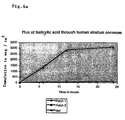
- the patch has been designed so as to effectively deliver anti-acne agents to the stratum corneum (the outermost layer of epidermis, exposed to external environment) and subsequently to penetrate into the pilosebaceous unit (in the dermis) where the acneiform condition originates, while having very limited penetration into the systemic circulation. This is demonstrated by the skin flux permeation study (Example 12 hereafter), which indicates that the amount of salicylic acid that crosses stratum corneum is very small as compared to that of the gel formulation containing 2% of salicylic acid.
- the patch proposed in this invention can be produced in a variety of sizes dependent on the area to be treated (i.e. comedones, papules, pustules).
- the size of the patch is classified as small being 0.5 to 2 cm 2 and large patch up to 40 cm 2 .
- the size of the patch is from 0.5 to 1.3 cm 2 and preferably 0.8 cm 2 .
- the patch of the invention is stable and is capable of safe and effective delivery of the anti-acne formulation.
- the stored patch containing anti-acne agent may remain effective up to two years such that any chemical changes that may occur during storage, but before the predetermined expiration date, are believed to be non-harmful.
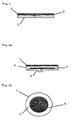
- the patch may include a backing film layer 1 , a single synthetic pressure-sensitive adhesive layer 2 and a release liner 3 with the anti-acne formulation contained within the synthetic pressure-sensitive adhesive layer.
- more than one matrix may be positioned between the release liner and the backing layer (see Figures 2a and 2b).
- a patch is described that includes a backing film layer 1 , a synthetic pressure-sensitive peripheral adhesive layer 4 , a paper matrix 5 , and a release liner 3 .
- the patch may have a paper matrix diameter of 5/8" (inches) (about 1.6 cm) and/or a peripheral adhesive layer diameter of 7/8" (about 2.2 cm).
- the backing film layer 1 may be made of plastic or fabric or woven or non-woven materials, porous or occlusive. Porous materials are sometimes used since some of the skin resident strains of the bacteria in the pilosebaceous unit are anaerobic.
- the backing film layer can be made of any suitable material such as paper; cellophane; plastic films such as polyethylene, polyester, polyurethane, polyvinyl chloride and polyamide; fabrics and metallic foils, which are impermeable and non-reacting with the anti-acne formulation distributed in the adhesive polymeric matrix.
- the backing film can be composite or transparent or opaque or fleshtoned or aluminized or a combination thereof, with thickness ranging from 1 to 5 mils (about 25 to 130 ⁇ m), typically from 2 to 3.5 mils (about 50 to 90 ⁇ m) and preferably 3 mils (about 76 ⁇ m), and can be formed from any of CoTranTM 9720 (3M), Saranex ® (Dow Chemicals), Multilam fleshtoned polyester film 1009 (3M), or any other material recognized in the art as having the desired properties.
- the patch has an adhesive polymeric matrix 2, which is adjacent to the backing layer and is made of synthetic adhesives such as acrylics, rubber, silicone, cellulosics, paper or other suitable materials that may have pressure sensitive properties and adhere to the skin directly or through a peripheral adhesive.
- the adhesive polymeric matrix consists of at least one layer of the adhesive-containing substances and/or other additives.
- the adhesive polymeric matrix may be composed of more than one layer, but is preferably composed of one layer.
- the thickness of this adhesive polymeric matrix is in the range of 0.5-30 mils (about 13-760 ⁇ m), typically of 0.5-6 mils (13-152 ⁇ m), preferably 0.5-2.5 mils (about 13-64 ⁇ m) and more preferably 2.5 mils (about 64 ⁇ m).
- a mixture of anti-acne agents including any of keratolytics, anti-irritants, antiseptics, antimicrobials, hormones, hormone-agonists, hormone-antagonists and other agents suitable for treating acne, preferably together with solubilizers.
- the adhesive polymeric matrix can be made of inert materials which are further biologically and topically acceptable and compatible with the distributed active substances described above.
- topically acceptable polymers with adhesion properties may be acrylic-based polymers such as the GELVA® series sold by Monsanto and the DURO-TAK® series sold by National Starch; rubber-based polymers such as DURO-TAK® series sold by National Starch; and silicone-based polymers such as BIO-PSA X7-4302 SILICONE PSA sold by Dow Corning.
- acrylic-based polymers such as the GELVA® series sold by Monsanto and the DURO-TAK® series sold by National Starch
- rubber-based polymers such as DURO-TAK® series sold by National Starch
- silicone-based polymers such as BIO-PSA X7-4302 SILICONE PSA sold by Dow Corning.
- the said adhesive polymeric matrix can also be made of paper materials, preferably Whatman filter paper, which is adhered onto the skin through a peripheral adhesive layer.
- the thickness of such an adhesive polymeric matrix is usually 7 mils (about 178 ⁇ m).
- a release liner 3 is placed against the surface of the adhesive polymeric matrix on the surface opposite to the backing layer.
- the release liner can be made of materials impermeable to any substance dissolved in the said matrix, which is easily stripped off or released prior to the use.
- the release liner can be made of materials such as polyvinyl chloride, polyester, polyvinylidene chloride, polystyrene, polyethylene, paper etc. coated or not with an adhesive, but preferably with an easy release silicon formulation.
- the release liner is made of a natural, high impact polystyrene film (grade code: 10106 or 15462) sold by REXAM Release or a siliconized polyester film sold by REXAM Release.
- the thickness of the release liner can range from 3 to 10 mils (about 76 to 250 ⁇ m), or preferably be 10 mils (about 250 ⁇ m).
- the patch has a size in the range of 0.5 to 2 cm 2 and a thickness in the range of 7 to 24 mils (about 178 to 610 ⁇ m).
- a combination of anti-acne agents has been selected to treat acne.
- These agents include a keratolytic agent, such as salicylic acid, in conjunction with an anti-irritant, an antiseptic, an antimicrobial agent and/or other acne fighting compounds such as for example urea, allantoin, hydroxyquinoline compounds, for delivery via a patch directly to the area to be treated.
- an anti-irritant counteracts the local irritation associated with the application of keratolytics to the skin.
- the antiseptic limits the growth of organisms which cause the acne.
- the antimicrobial may enhance the overall anti-acne properties of the compositions in moderate or severe stages of the disease.
- the use of a solubilizer ensures that the active agents in the patch are in form suited for diffusion from the patch to the skin.
- Antimicrobials typically used for topical application can be penicillins, cephalosporins, other beta-lactam compounds, aminoglycosides, tetracyclines, erythromycin, antifungal agents, etc. and a combination thereof.
- antimicrobial agents used for topical application onto acneiform skin are erythromycin, tetracycline, clindamycin, cephalosporin.
- Antiseptics typically used for topical application onto acneiform skin are triclosan (Irgasan DP 300), phenoxy isopropanol, resorcinol, chlorhexidine, povidone and iodine.
- Keratolytic agents typically used for topical application onto acneiform skin are salicylic acid, benzoyl peroxide, sulphur, retinoic acid and any of a number of fruit acids and alpha hydoxy acids.
- Anti-irritants typically used for the topical application onto acneiform skin are ⁇ -bisabolol, farnesol, chamomile extract and glycyrrhetinic acid.
- Solubilizers used in the anti-acne formulation of the present invention include any of glycerol, propylene glycol, polyalcohols, sorbitol and sorbitol derivatives, preferably sorbitan monooleate.
- compositions of the present invention can also comprise other topically acceptable agents such as solvents, antioxidants, moisturizers etc.
- the invention provides a device as described above, which comprises, related to the total weight of the carrier and the formulation:
- a composition of the adhesive polymeric matrix used in the preparation of a patch for the topical treatment of acne and acneiform skin diseases contains salicylic acid as keratolytic agent as described in Table 1.
- Composition of the single adhesive delivery system COMPONENT QUANTITY % w/w (on a dry basis) ⁇ -Bisabolol 1.0 Irgasan DP 300 0.3 Salicylic acid 0.6 Sorbitan Monooleate 2.0 Gelva® 737 96.1
- a method for producing the patch having the above composition is as follows:
- the adhesive mixture was formulated into a patch system as follows:
- the multi-layer laminate was then cut to form a patch of circular shape with nominal size of 1 cm 2 (actual size of 0.8 cm 2 ) and thickness of 7 to 18 mils (about 178-457 ⁇ m).
- Example 2 The procedure of Example 1 is repeated to prepare the adhesive polymeric matrix.
- the adhesive used in this example is the acrylic-based polymer GELVA® 788.
- the patch, thus produced, finally has a circular shape of 1 cm 2 and thickness of 8 to 24 mils (about 203-610 ⁇ m).
- composition of the adhesive polymeric matrix described in this Example is presented in Table 2 : Composition of the mixed adhesive delivery system COMPONENT QUANTITY % w/w (on a dry basis) ⁇ - Bisabolol 1.0 Irgasan DP 300 0.3 Salicylic acid 0.6 Sorbitan Monooleate 2.0 Duro-Tak® 87-2287: Duro-Tak® 87-2353 (1:9 ratio by weight in dry coating) 96.1
- a homogeneous mixture is obtained by mixing 18.95 g of Duro-Tak® 87-2287 acrylic solution (total solids content of about 50.7%) and 238.92 g of Duro-Tak® 87-2353 acrylic solution (total solids content of about 36.2%).
- salicylic acid 0.6 g
- ⁇ -bisabolol 1.0 g
- Irgasan DP 300 0.3 g
- sorbitan monooleate 2.0 g
- the adhesive mixture is formulated into a patch system as follows:
- a layer of adhesive mixture is coated onto a siliconized polyester film.
- the coating is left to dry in an oven at 80°C for 17 minutes and then laminated using an occlusive polyethylene film.
- the process ends with cutting the multi-layer laminate to a patch of circular shape, size of 1 cm 2 , and thickness of 7.5 to 20 mils (about 190-500 ⁇ m) which is finally pouched in a flexible, pouching laminate film composed of paper, low density polyethylene, aluminium and Surlyn®.
- substances such as antimicrobials, antiseptics, keratolytics, anti-irritants and solubilizers are distributed in a polymeric matrix in which the polymers may or may not have adhesive properties.
- Pieces of Whatman filter paper are impregnated with 3 ml of the above ethanolic solution and left to drain at ambient temperature.
- the impregnated paper pieces are, then, dried in an oven at 40°C for 5 minutes and finally cut into a desirable size and shape (i.e. circular shape of 5/8" diameter or area of 5 cm 2 ).
- Siliconized polyester films are coated with a plain, acrylic-based adhesive such as Duro-Tak® 87-2287 or Duro-Tak® 87-2353.
- the bilayer system is dried in an oven at 78-80°C for 15 minutes and, then, laminated with a polyethylene film such as CoTranTM 9720.
- the whole system is cut into a desirable size and shape (i.e. circular shape of 7/8" diameter or area of 7 cm 2 ).
- polyester film is removed and, onto exposed laminate, the impregnated paper is placed in a co-centric order. Finally the multi-layer system is coated on a polystyrene film, which can be scored on the backside (see Figures 2a and 2b).
- Example 4 The procedure of Example 4 is repeated to prepare a patch, in which the exposed laminate is coated on a polystyrene film coated completely or partially with a plain adhesive.
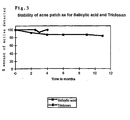
- the patch proposed in the present invention will remain stable for two years. Methods such as composite assay for salicylic acid and physical tests (such as 90° dynamic adhesive strength peel test for matrix patch from stainless steel plate as in "Test Methods for Pressure Sensitive Adhesive Tape” developed by The Technical Committee of the Pressure Sensitive Tape Council, 11th Edition) are used to determine its stability over this time.
- the patch produced is designed to release its content at 4, 6, 10, and up to 24 hours after application. To determine the rate and extent of the release for salicylic acid from the patch, a patch depletion analysis is performed.
- a Primary Dermal Irritation Study in compliance with the FDA Requirements per 21 CFR 58, was performed using patches containing salicylic acid, as disclosed in preferred embodiments, in order to identify the potential irritation or corrosive effects that result from the exposure of rabbit skin to the test material.
- test material was applied to both intact and abraded skin, and each test area was covered with an 1 inch square gauze patch hold in place with non-irritating tape.
- the skin exposed to the test material for a period of twenty-four hours and examinations of the animals for signs of erythema, edema, and any lesions or other toxic effects were made at thirty to sixty min after patch removal and, then, at seventy-two hours.
- the Primary Irritation Score as estimated was 0.54 which indicates that the test material is not considered to be a primary skin irritant as defined in 16 CFR 1500.3 (c) (4).
- a Delayed Contact Hypersensitivity test in compliance with the FDA Requirements per 9 CFR 2.31, was performed using patches containing salicylic acid, as disclosed in the preferred embodiments, in order to determine the capacity of the test substance to induce a systemic hypersensitivity response.
- DNCB Dinitrochlorobenzene
- test material patch was applied to the clipped area of each of the 20 guinea pigs and held in place with a non-irritant tape. The patches were left in place for 6 hours and then removed. The test sites were scored for erythema at 24 and 48 hours post application. This procedure was repeated at the same site once a week for the next two weeks for a total of three 6-hour exposures. After the last patch application the animals remained untreated for approximately two weeks.
- test group and the positive control group were challenged on naive sites.
- the test material was applied to the test group and the DNCB to the positive control group.
- the procedure employed was as described above, except skin evaluations were made at 24, 48 and 72 hours post application. The results are presented in the following tables. Individual animal scores for the test material.
- test patch can be considered as "Hypoallergenic” and "Dermatological Tested".
- test material patch was initially applied in the upper back of the volunteer for 24 hours, held with a non-irritant Scanpor tape, and then removed. One hour upon removal, the skin site was gently wiped with a moist wool ball and graded. The test material application was repeated at the same site, 24 hours later. The test material application continued for 20 days (total of 10 applications with a rest period over the weekends).
- the transdermal absorption (flux) of the salicylic acid from the adhesive matrix of the invention was determined in vitro by using human cadaver skin, according to the procedure described by Franz T., in Percutaneous absorption on the relevance of the in vitro data, J. Invest. Derm. 64, 190-195, 1975.
- the stratum corneum of human cadaver skin was used. Using fresh, post-mortem skin samples, the stratum corneum was separated from the skin by the technique described by Kligman, A. M. Et al in Preparation of the isolated sheets of the human stratum corneum, Arch. Derm. 88, 702, 1963.
Landscapes
- Health & Medical Sciences (AREA)
- Life Sciences & Earth Sciences (AREA)
- General Health & Medical Sciences (AREA)
- Veterinary Medicine (AREA)
- Public Health (AREA)
- Animal Behavior & Ethology (AREA)
- Chemical & Material Sciences (AREA)
- Medicinal Chemistry (AREA)
- Pharmacology & Pharmacy (AREA)
- Epidemiology (AREA)
- Engineering & Computer Science (AREA)
- Bioinformatics & Cheminformatics (AREA)
- Nuclear Medicine, Radiotherapy & Molecular Imaging (AREA)
- Organic Chemistry (AREA)
- General Chemical & Material Sciences (AREA)
- Chemical Kinetics & Catalysis (AREA)
- Dermatology (AREA)
- Birds (AREA)
- Emergency Medicine (AREA)
- Oncology (AREA)
- Communicable Diseases (AREA)
- Biomedical Technology (AREA)
- Endocrinology (AREA)
- Diabetes (AREA)
- Medicinal Preparation (AREA)
- Pharmaceuticals Containing Other Organic And Inorganic Compounds (AREA)
- Cosmetics (AREA)
- Medicines That Contain Protein Lipid Enzymes And Other Medicines (AREA)
- Acyclic And Carbocyclic Compounds In Medicinal Compositions (AREA)
- Medicines Containing Plant Substances (AREA)
Applications Claiming Priority (3)
| Application Number | Priority Date | Filing Date | Title |
|---|---|---|---|
| GR96100207 | 1996-06-20 | ||
| GR96100207 | 1996-06-20 | ||
| EP97929224A EP0917461A1 (fr) | 1996-06-20 | 1997-06-19 | Dispositif pour le traitement local de l'acne et procede de fabrication associe |
Related Parent Applications (1)
| Application Number | Title | Priority Date | Filing Date |
|---|---|---|---|
| EP97929224A Division EP0917461A1 (fr) | 1996-06-20 | 1997-06-19 | Dispositif pour le traitement local de l'acne et procede de fabrication associe |
Publications (2)
| Publication Number | Publication Date |
|---|---|
| EP1210937A2 true EP1210937A2 (fr) | 2002-06-05 |
| EP1210937A3 EP1210937A3 (fr) | 2003-02-05 |
Family
ID=10942422
Family Applications (1)
| Application Number | Title | Priority Date | Filing Date |
|---|---|---|---|
| EP02004608A Withdrawn EP1210937A3 (fr) | 1996-06-20 | 1997-06-19 | Dispositif pour le traitement local de l'acné et procédé de fabrication associé |
Country Status (12)
| Country | Link |
|---|---|
| EP (1) | EP1210937A3 (fr) |
| JP (2) | JP2000513347A (fr) |
| KR (2) | KR20000022054A (fr) |
| CN (1) | CN1398582A (fr) |
| AU (1) | AU732330B2 (fr) |
| BR (1) | BR9709920A (fr) |
| HU (2) | HUP0201299A2 (fr) |
| NO (1) | NO20021086D0 (fr) |
| RU (2) | RU2197273C2 (fr) |
| TR (1) | TR199802659T2 (fr) |
| YU (1) | YU58998A (fr) |
| ZA (1) | ZA975489B (fr) |
Cited By (4)
| Publication number | Priority date | Publication date | Assignee | Title |
|---|---|---|---|---|
| WO2004103353A3 (fr) * | 2003-05-16 | 2005-02-24 | Johnson & Johnson Consumer | Traitement topique de problemes de peau |
| US7252831B2 (en) | 2003-05-16 | 2007-08-07 | J&J Consumer Companies, Inc. | Topical treatment of ingrown hairs |
| US10307382B2 (en) | 2011-08-31 | 2019-06-04 | Photonamic Gmbh & Co. Kg | Transdermal therapeutic system for 5-aminolevulinic acid hydrochloride |
| US11311423B2 (en) | 2012-12-19 | 2022-04-26 | Nichiban Co., Ltd. | Facial patch |
Families Citing this family (13)
| Publication number | Priority date | Publication date | Assignee | Title |
|---|---|---|---|---|
| KR20010000390A (ko) * | 2000-09-26 | 2001-01-05 | 이영준 | 김치추출물을 함유하는 노화 및 여드름을 포함한피부개선제 혼합조성물 |
| DE10317692A1 (de) * | 2003-04-17 | 2004-11-11 | Lts Lohmann Therapie-Systeme Ag | Medizinische Wirkstoffpflaster mit veringerter optischer Auffälligkeit auf der Haut |
| SE526906C2 (sv) * | 2003-06-10 | 2005-11-15 | Moelnlycke Health Care Ab | Metod att anbringa ett skyddsskikt på hud innehållande en högviskös silikonkomposition |
| SE0301862D0 (sv) * | 2003-06-26 | 2003-06-26 | Jan Faergeman | Sätt att inhibera tillväxten av mot antibiotika resistenta bakterier |
| SI1833443T1 (sl) * | 2005-01-04 | 2012-03-30 | Teikoku Pharma Usa Inc | Hladilni pripravek v obliki topičnega obliža |
| FR2894821B1 (fr) * | 2005-12-15 | 2008-02-29 | Galderma Res & Dev | Compositions comprenant au moins un compose retinoide et au moins un compose anti-irritant et leurs utilisations |
| EP2167037A1 (fr) * | 2007-07-11 | 2010-03-31 | Dow Corning Corporation | Compositions pour administrer un médicament |
| EP2143421A1 (fr) * | 2008-07-07 | 2010-01-13 | Almirall Hermal GmbH | Composition topique pour le traitement de la kératose actinique |
| KR101221475B1 (ko) * | 2009-12-07 | 2013-01-15 | 이성낙 | 여드름 개선용 화장료 조성물 |
| WO2012153884A1 (fr) * | 2011-05-12 | 2012-11-15 | (주)아모레퍼시픽 | Composition ayant une stabilité améliorée pour améliorer l'acné |
| KR200470035Y1 (ko) * | 2011-08-09 | 2013-11-25 | 웬-핑 왕 | 약용 밴드 구조체 |
| EP3067050A1 (fr) * | 2015-03-13 | 2016-09-14 | Acino AG | Système thérapeutique transdermique avec bande de recouvrement comprenant deux couches adhésives |
| US12220490B2 (en) | 2016-12-30 | 2025-02-11 | Euromed, Inc. | Adhesive patch containing an improved release liner system |
Family Cites Families (12)
| Publication number | Priority date | Publication date | Assignee | Title |
|---|---|---|---|---|
| US3893783A (en) * | 1973-02-17 | 1975-07-08 | Dowty Rotol Ltd | Gas turbine engines and bladed rotors therefor |
| US3896789A (en) * | 1974-06-10 | 1975-07-29 | Riker Laboratories Inc | Retinoic acid dipensing pressure sensitive dermotological tape |
| US4073291A (en) * | 1976-07-28 | 1978-02-14 | Johnson & Johnson | Topical device for administering tretinoin |
| US4505896A (en) * | 1979-04-19 | 1985-03-19 | Elorac, Ltd. | Method of treating acne vulgaris and composition |
| US4678663A (en) * | 1984-02-06 | 1987-07-07 | Nuetrogena Corporation | Hydroquinone composition having enhanced bio-availability and percutaneous adsorption |
| ATE115553T1 (de) * | 1987-07-16 | 1994-12-15 | Univ California | Mittel zur steigerung der hautpenetration von pharmakologisch aktiven verbindungen. |
| US5059189A (en) * | 1987-09-08 | 1991-10-22 | E. R. Squibb & Sons, Inc. | Method of preparing adhesive dressings containing a pharmaceutically active ingredient |
| US5202125A (en) * | 1990-12-10 | 1993-04-13 | Theratech, Inc. | Method and systems for administering nitroglycerin transdermally at enhanced transdermal fluxes |
| US5409917A (en) * | 1991-03-05 | 1995-04-25 | Marvin S. Towsend | Topical treatment of acne with cephalosporins |
| US5156601A (en) * | 1991-03-20 | 1992-10-20 | Hydromer, Inc. | Tacky, hydrophilic gel dressings and products therefrom |
| WO1993021899A1 (fr) * | 1992-05-05 | 1993-11-11 | The Procter & Gamble Company | Composition de traitement de l'acne |
| AU679937B2 (en) * | 1992-11-18 | 1997-07-17 | Johnson & Johnson Consumer Products, Inc. | Extrudable compositions for topical or transdermal drug delivery |
-
1997
- 1997-06-19 BR BR9709920-1A patent/BR9709920A/pt unknown
- 1997-06-19 RU RU99101070/14A patent/RU2197273C2/ru not_active IP Right Cessation
- 1997-06-19 EP EP02004608A patent/EP1210937A3/fr not_active Withdrawn
- 1997-06-19 AU AU33409/97A patent/AU732330B2/en not_active Ceased
- 1997-06-19 TR TR1998/02659T patent/TR199802659T2/xx unknown
- 1997-06-19 KR KR1019980710452A patent/KR20000022054A/ko not_active Ceased
- 1997-06-19 KR KR1020027015976A patent/KR20030097619A/ko not_active Withdrawn
- 1997-06-19 JP JP10502295A patent/JP2000513347A/ja not_active Ceased
- 1997-06-19 HU HU0201299A patent/HUP0201299A2/hu unknown
- 1997-06-19 HU HU0200901A patent/HU0200901D0/hu unknown
- 1997-06-20 ZA ZA9705489A patent/ZA975489B/xx unknown
-
1998
- 1998-12-18 YU YU58998A patent/YU58998A/sh unknown
-
2002
- 2002-02-21 JP JP2002044661A patent/JP2002284701A/ja active Pending
- 2002-03-05 NO NO20021086A patent/NO20021086D0/no not_active Application Discontinuation
- 2002-03-22 CN CN02107846A patent/CN1398582A/zh active Pending
- 2002-08-30 RU RU2002123419/15A patent/RU2002123419A/ru not_active Application Discontinuation
Cited By (4)
| Publication number | Priority date | Publication date | Assignee | Title |
|---|---|---|---|---|
| WO2004103353A3 (fr) * | 2003-05-16 | 2005-02-24 | Johnson & Johnson Consumer | Traitement topique de problemes de peau |
| US7252831B2 (en) | 2003-05-16 | 2007-08-07 | J&J Consumer Companies, Inc. | Topical treatment of ingrown hairs |
| US10307382B2 (en) | 2011-08-31 | 2019-06-04 | Photonamic Gmbh & Co. Kg | Transdermal therapeutic system for 5-aminolevulinic acid hydrochloride |
| US11311423B2 (en) | 2012-12-19 | 2022-04-26 | Nichiban Co., Ltd. | Facial patch |
Also Published As
| Publication number | Publication date |
|---|---|
| AU732330B2 (en) | 2001-04-12 |
| AU3340997A (en) | 1998-01-07 |
| KR20030097619A (ko) | 2003-12-31 |
| HUP0201299A2 (en) | 2002-08-28 |
| RU2197273C2 (ru) | 2003-01-27 |
| JP2002284701A (ja) | 2002-10-03 |
| KR20000022054A (ko) | 2000-04-25 |
| CN1398582A (zh) | 2003-02-26 |
| YU58998A (sh) | 1999-09-27 |
| NO20021086L (no) | 1999-02-18 |
| RU2002123419A (ru) | 2004-03-20 |
| JP2000513347A (ja) | 2000-10-10 |
| EP1210937A3 (fr) | 2003-02-05 |
| TR199802659T2 (xx) | 1999-03-22 |
| ZA975489B (en) | 1998-03-27 |
| NO20021086D0 (no) | 2002-03-05 |
| BR9709920A (pt) | 2000-01-11 |
| HU0200901D0 (fr) | 2002-08-28 |
Similar Documents
| Publication | Publication Date | Title |
|---|---|---|
| US5976565A (en) | Device for topical treatment of acne and its method of manufacture | |
| AU732330B2 (en) | Device for topical treatment of acne and its method of manufacture | |
| AU760588B2 (en) | Pressure sensitive adhesive matrix patch for the treatment of onychomycosis | |
| AU738512B2 (en) | A prolamine-plant polar lipid composition, its method of preparation and applications thereof | |
| AU773778B2 (en) | Using quaternary ammonium salts for transdermal drug delivery | |
| AU2018200900B2 (en) | Compositions and methods for treating skin conditions using light and polycarboxylic acids | |
| US20010019722A1 (en) | Anti-acne chrono patch | |
| CZ2002488A3 (cs) | Transdermální podávání lasofoxifenu | |
| CA2172265C (fr) | Dispositif d'administration transdermique contenant un oestrogene | |
| PT1660055E (pt) | Formulação transdérmica compreendendo um analgésico opióide e uma composição de aloé | |
| MXPA98010851A (en) | Device for topical treatment of acne and its method of fabricac | |
| JP2000095693A (ja) | フィルム構造物上にサリチル酸誘導体をベ―スとした組成物を含有する活性剤デリバリ―システムおよびその使用 | |
| JPH1135446A (ja) | 感光素含有粘着性組成物及び感光素含有粘着シート剤 | |
| AU2003235046A1 (en) | Pressure sensitive adhesive matrix patch for the treatment of onychomycosis |
Legal Events
| Date | Code | Title | Description |
|---|---|---|---|
| PUAI | Public reference made under article 153(3) epc to a published international application that has entered the european phase |
Free format text: ORIGINAL CODE: 0009012 |
|
| 17P | Request for examination filed |
Effective date: 20020306 |
|
| AC | Divisional application: reference to earlier application |
Ref document number: 917461 Country of ref document: EP |
|
| AK | Designated contracting states |
Kind code of ref document: A2 Designated state(s): AT BE CH DE DK ES FI GB IE IT LI LU MC NL PT SE |
|
| PUAL | Search report despatched |
Free format text: ORIGINAL CODE: 0009013 |
|
| AK | Designated contracting states |
Designated state(s): AT BE CH DE DK ES FI GB IE IT LI LU MC NL PT SE |
|
| AKX | Designation fees paid |
Designated state(s): AT BE CH DE DK ES FI GB IE IT LI LU MC NL PT SE |
|
| STAA | Information on the status of an ep patent application or granted ep patent |
Free format text: STATUS: THE APPLICATION IS DEEMED TO BE WITHDRAWN |
|
| 18D | Application deemed to be withdrawn |
Effective date: 20050104 |