EP1212103B1 - 4-fluoroalkyl-3-halophenyl nortropane - Google Patents
4-fluoroalkyl-3-halophenyl nortropane Download PDFInfo
- Publication number
- EP1212103B1 EP1212103B1 EP00931952A EP00931952A EP1212103B1 EP 1212103 B1 EP1212103 B1 EP 1212103B1 EP 00931952 A EP00931952 A EP 00931952A EP 00931952 A EP00931952 A EP 00931952A EP 1212103 B1 EP1212103 B1 EP 1212103B1
- Authority
- EP
- European Patent Office
- Prior art keywords
- compound
- sert
- zient
- febrnt
- feint
- Prior art date
- Legal status (The legal status is an assumption and is not a legal conclusion. Google has not performed a legal analysis and makes no representation as to the accuracy of the status listed.)
- Expired - Lifetime
Links
- 0 *C(C(CC1)NC1C1)C1c1ccc(*)c(*)c1 Chemical compound *C(C(CC1)NC1C1)C1c1ccc(*)c(*)c1 0.000 description 3
Images

Classifications
-
- A—HUMAN NECESSITIES
- A61—MEDICAL OR VETERINARY SCIENCE; HYGIENE
- A61K—PREPARATIONS FOR MEDICAL, DENTAL OR TOILETRY PURPOSES
- A61K51/00—Preparations containing radioactive substances for use in therapy or testing in vivo
- A61K51/02—Preparations containing radioactive substances for use in therapy or testing in vivo characterised by the carrier, i.e. characterised by the agent or material covalently linked or complexing the radioactive nucleus
- A61K51/04—Organic compounds
- A61K51/041—Heterocyclic compounds
- A61K51/044—Heterocyclic compounds having nitrogen as a ring hetero atom, e.g. guanethidine, rifamycins
- A61K51/0446—Heterocyclic compounds having nitrogen as a ring hetero atom, e.g. guanethidine, rifamycins having five-membered rings with one nitrogen as the only ring hetero atom, e.g. sulpiride, succinimide, tolmetin, buflomedil
- A61K51/0448—Heterocyclic compounds having nitrogen as a ring hetero atom, e.g. guanethidine, rifamycins having five-membered rings with one nitrogen as the only ring hetero atom, e.g. sulpiride, succinimide, tolmetin, buflomedil tropane or nortropane groups, e.g. cocaine
-
- A—HUMAN NECESSITIES
- A61—MEDICAL OR VETERINARY SCIENCE; HYGIENE
- A61K—PREPARATIONS FOR MEDICAL, DENTAL OR TOILETRY PURPOSES
- A61K49/00—Preparations for testing in vivo
- A61K49/04—X-ray contrast preparations
- A61K49/0433—X-ray contrast preparations containing an organic halogenated X-ray contrast-enhancing agent
-
- A—HUMAN NECESSITIES
- A61—MEDICAL OR VETERINARY SCIENCE; HYGIENE
- A61K—PREPARATIONS FOR MEDICAL, DENTAL OR TOILETRY PURPOSES
- A61K49/00—Preparations for testing in vivo
- A61K49/06—Nuclear magnetic resonance [NMR] contrast preparations; Magnetic resonance imaging [MRI] contrast preparations
-
- C—CHEMISTRY; METALLURGY
- C07—ORGANIC CHEMISTRY
- C07D—HETEROCYCLIC COMPOUNDS
- C07D451/00—Heterocyclic compounds containing 8-azabicyclo [3.2.1] octane, 9-azabicyclo [3.3.1] nonane, or 3-oxa-9-azatricyclo [3.3.1.0<2,4>] nonane ring systems, e.g. tropane or granatane alkaloids, scopolamine; Cyclic acetals thereof
- C07D451/02—Heterocyclic compounds containing 8-azabicyclo [3.2.1] octane, 9-azabicyclo [3.3.1] nonane, or 3-oxa-9-azatricyclo [3.3.1.0<2,4>] nonane ring systems, e.g. tropane or granatane alkaloids, scopolamine; Cyclic acetals thereof containing not further condensed 8-azabicyclo [3.2.1] octane or 3-oxa-9-azatricyclo [3.3.1.0<2,4>] nonane ring systems, e.g. tropane; Cyclic acetals thereof
Definitions
- the invention includes novel chemical compounds having specific binding in a biological system and capable of being used for positron emission tomography (PET) and single photon emission (SPECT) imaging methods.
- PET positron emission tomography
- SPECT single photon emission
- the carbon isotope,[ 11 C] has been used for PET, but its short half-life of 20.5 minutes limits its usefulness to compounds that can be synthesized and purified quickly, and to facilities that are proximate to a cyclotron where the precursor [ 11 C] starting material is generated.
- Other isotopes have even shorter half-lives.
- [ 13 N] has a half-life of 10 minutes and [ 15 O] has an even shorter half-life of 2 minutes.
- the emissions of both are more energetic than those of [ 11 C].
- PET studies have been carried out with these isotopes (Hubner, K.F., in Clinical Positron Emission Tomography, Mosby Year Book, 1992, K. F. Hubner, et al., Chapter 2).
- a more useful isotope, [ 18 F] has a half-life of 110 minutes. This allows sufficient time for incorporation into a radio-labeled tracer, for purification and for administration into a human or animal subject.
- facilities more remote from a cyclotron, up to about a 200 mile radius can make use of [ 18 F] labeled compounds. Disadvantages of [ 18 F] are the relative scarcity of fluorinated analogs that have functional equivalence to naturally-occurring biological materials, and the difficulty of designing methods of synthesis that efficiently utilize the starting material generated in the cyclotron.
- Such starting material can be either fluoride ion or fluorine gas.
- [ 18 F] can be prepared in curie quantities as fluoride ion for incorporation into a radiopharmaceutical compound in high specific activity, theoretically 1.7 Ci/nmol using carrier-free nucleophilic substitution reactions.
- the energy emission of [ 18 F] is 0.635 MeV, resulting in a relatively short, 2.4 mm average positron range in tissue, permitting high resolution PET images.
- SPECT imaging employs isotope tracers that emit high energy photons ( ⁇ -emitters).
- the range of useful isotopes is greater than for PET, but SPECT provides lower three-dimensional resolution. Nevertheless, SPECT is widely used to obtain clinically significant information about analog binding, localization and clearance rates.
- a useful isotope for SPECT imaging is [ 123 I], a ⁇ -emitter with a 13.3 hour half life. Compounds labeled with [ 123 I] can be shipped up to about 1000 miles from the manufacturing site, or the isotope itself can be transported for on-site synthesis. Eighty-five percent of the isotope's emissions are 159 KeV photons, which is readily measured by SPECT instrumentation currently in use.
- [ 18 F] labeled compounds in PET has been limited to a few analog compounds. Most notably, [ 18 F]-fluorodeoxyglucose has been widely used in studies of glucose metabolism and localization of glucose uptake associated with brain activity. [ 18 F]-L-fluorodopa and other dopamine receptor analogs have also been used in mapping dopamine receptor distribution.
- halogen isotopes can serve for PET or SPECT imaging, or for conventional tracer labeling. These include 75 Br, 76 Br, 77 Br and 82 Br which have usable half-lives and emission characteristics.
- the chemical means exist to substitute any halogen moiety for the described isotopes. Therefore, the biochemical or physiological activities of any halogenated homolog of the described compounds are now available for use by those skilled in the art, including stable isotope halogen homologs. Astatine can be substituted for other halogen isotopes; [ 210 At] emits alpha particles with a half-life of 8.3h. At-substituted compounds are therefore useful for tumor therapy, where binding is sufficiently tumor-specific.
- Serotonin transporters are proteins that reside on the membrane of the nerve terminals of the serotoninergic neurons.
- the SERT serves to remove serotonin from, the synapse, a process which helps regulate central nervous system (CNS) serotonin neurotransmission.
- CNS central nervous system
- the serotonin transporter has been convincingly implicated in the pathophysiology of major depression and represents the putative sites of action of the majority of the older and newer generation antidepressants [Murphy, D.L. et al. (1986) J. Clin. Psychiatr. 47 :(suppl)9-15].
- Abnormalities in SERT density in the midbrain and frontal cortex has also been associated with obsessive compulsive disorder.
- Carbon-11 McN-5652Z showed the greatest accumulation in brain regions rich in serotoninergic neurons with greater cortex to cerebellum ratios (4.3 to 1) than previously tested PET serotonin transporter ligands [Suehiro et al. (1993) J. Nucl. Med. 34: 120-127.
- the very short 20 minute half life of carbon-11 is not ideal for longitudinal selective regional uptake of the radioligand and the presence of radiolabeled metabolites that is crucial in binding site imaging and tracer kinetic modeling.
- the present invention includes compounds of the following general formula: where X is -CH 2 CH 2 Q, -CHCHR or -CCH 2 FCH 2 and Q is F or CH 2 F, R is I or CH 2 F, Y is Y 1 , except that when Q is CH 2 F, Y is Y 2. Y 1 is H, F, Cl, Br, I and Y 2 is F or Cl.
- any of F, Cl, Br or I may be in stable isotopic or radioisotopic form. Where X is unsaturated, the Z isomer is preferred.
- Compounds of the invention bind to serotonin transporter with high affinity and selectivity. Radioactivity labeled compounds of the invention labeled with an appropriate isotope are useful as imaging agents for visualizing the location and density of serotonin transporter by PET or SPECT imaging. Certain compounds of the invention can be labeled either with a PET imaging isotope or with a SPECT imaging isotope so that PET and SPECT images using the same tracer compound can be compared and evaluated. Stable isotopic compounds of the invention have useful pharmacologic properties in the treatment of diseases associated with serotonin transporter dysfunction.
- Compounds of the invention vary with respect to the substituents on the phenyl ring. These include, for example: as well as where at least one halogen can be radioisotopic. Of particular interest are the radioisotopes 18 F, 123 I, 125 I, 131 I, 75 Br , 76 Br, 77 Br, and 82 Br.
- alternative syntheses have been devised to permit rapid substitution of an isotopic halogen at a late step.
- the same component, for example FEINT can be synthesized with either 123 I or 18 F, using late step syntheses that permit high radiochemical yield and maximize usable product life.
- halogen refers to both radioactive and nonradioactive isotopes of fluorine, chlorine, bromine, iodine, and astatine. Examples include F, 18 F, 19 F, Cl, 35 Cl, Br, 75 Br , 76 Br, 77 Br, 82 Br, I, 123 I, 124 I, 125 I, 131 I, At, 210 At, and 211 At.
- Z isomer refers to a conformation of alkenes in which two substituents with higher atomic numbers on each alkene carbon are on the same side of the double bond.
- a new series of brain imaging agents in the 4-fluoroalkyl-3-halophenyl nortropane family are described as diagnostic and therapeutic agents for diseases associated with serotonin transporter dysfunction in the present application.
- Preferred compounds of the invention exemplified are 2 ⁇ -carbomethoxy-3 ⁇ -(4-(2-Z-iodoethenyl-phenyl)nortropane (ZIENT), 2 ⁇ -carbomethoxy-3- ⁇ -(4-(2-fluoroethyl)-3-iodophenyl)nortropane (FEINT) and 2 ⁇ -carbomethoxy-3 ⁇ -(4-(2-fluoroethyl)-3-bromophenyl)nortropane (FEBrNT).
- radiolabeled ZIENT, FEINT and FEBrNT are excellent candidate diagnostic radiopharmaceuticals for differentiating depression from other psychiatric disorders and assisting in the management of treatment of depression. Radiolabeled ZIENT, FEINT and FEBrNT may also be valuable radiopharmaceuticals for assisting in the management of treatment of cocaine addiction.
- radiopharmaceuticals are incorporation of iodine-123 directly on a phenyl ring or as a Z-iodoethenyl group attached to a phenyl group or the attachment of fluorine-18 to a fluoroethyl substituted phenyl ring.
- These groups were found to be stable to metabolism and in vivo loss of the fluorine-18 and iodine-123 radioisotope. This allows labeling with either fluorine-18 or iodine-123 which gives rise to radiopharmaceuticals that can be used with either positron emission tomography (PET) or single photon emission (SPECT) imaging modalities.
- PET positron emission tomography
- SPECT single photon emission
- Ki (nM) 0.22
- DAT dopamine transporter
- NET norepenephrine transporter
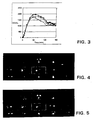
- [ 18 F]FEINT and [ 18 F]FEBrNT were incubated with pig tailed macaque coronal brain slices and the slices apposed to film for 30 min. Binding was localized to the thalamus, hypothalamus, caudate, putamen and temporal cortex. Incubation of the brain slices with [ 18 F]FEINT and [ 18 F]FEBrNT and 10 uM citalopram maximal inhibition (90%) of binding.
- a [ 18 F]FEINT PET brain imaging study (Fig.
- Ki (nM) 0.031
- DAT dopamine transporter
- NET norepenephrine transporter
- Fluorine-18 is the most attractive positron emission tomography PET radionuclide (97 % abundant) for radiolabeling because its 110 minute half-life allows sufficient time (3 X 110 minutes) for incorporation into the radiopharmaceutical and for purification of the final product suitable for human administration.
- fluorine-18 can be prepared in curie quantities as fluoride ion for incorporation into the radiopharmaceutical in high, theoretical 1.7 Ci/nmol, specific activity by no-carrier added nucleophilic substitution reactions.
- Fluorine-18 is also the lowest energy positron emitter (0.635 MeV, 2.4 mm positron range) which afford the highest resolution images.
- the 110 minute half-life allows sufficient time for regional distribution up to a 200 mile radius from the manufacturing site.
- Iodine-123 is the most attractive radioisotope for labeling small molecules for single photon emission tomography (SPECT). Iodine-123 has a 13.13-h half-life with is ideal for regional distribution up to 1,000 miles from the manufacturing site and emits abundant (85) 159 KeV photons which is nearly ideal for currently available 9,000 SPECT systems utilized at all medical centers. Furthermore, radioiodine can be stereospecifically incorporated into radiopharmacueticals in high specific activity and high yield by kit methodology.
- EINT 2 ⁇ -carbomethoxy-3 ⁇ -(4-(2-fluoroethyl)-3-iodophenyl)nortropane
- FEINT 2 ⁇ -carbomethoxy-3 ⁇ -(4-3-fluoropropyl)-3-iodophenyl)nortropane
- FPINT 2 ⁇ -carbomethoxy-3 ⁇ -(4-3-fluoropropyl)-3-iodophenyl)nortropane
- FEBrNT 2 ⁇ -carbomethoxy-3 ⁇ -(4-(2-nuoroethyl)-3-bropmophenyl)nortropane
- Scheme 1 provides exemplary synthetic routes for the preferred compounds of the invention, e.g. FEINT, FPINT and FEBrNT. Modification of the materials and methods can be made by routine choice and without undue experimentation by those skilled in the art.
- the preparation of analogues 10a,b involved a seven step sequence of reactions. In this synthetic approach methyl anhydroecgonine was treated with a 4-trimethylsilylphenylmagnesium bromide to give the corresponding 2 ⁇ -carbomethoxy-3 ⁇ -(4-trimethylsilyphenyl)tropane (2).
- the tropane 2 was treated with bromine monochloride followed by vinyltribytyltin and allyltributyltin tro afford 4a and 4b respectively.
- Tropanes 4a and 4b were converted to their corresponding ⁇ -alcohols followed by reaction with I 2 to give 3 ⁇ -4'-( ⁇ - acetoxylalkyl)-3'-iodophenyltropanes 6a and b.
- Tropanes 6a and 6b were treated with TrocCI/HCI MeOH followed by DAST and Zn to form the corresponding nortropanes FEINT (10a) and FPINT (10b).
- FEBrNT (12b) was prepared in a five-step reaction sequence from 6a by conversion to 3 ⁇ -4'- (2-acetoxyethyl)-3'-bromophenyltropane followed by desmethylation and fluorination as described for 10a.
- FEINT and FEBrNT have a very high affinity (0.12-0.24 nM) for SERT and 283 and 100 times higher selectively for SERT over DAT respectively.
- Radio synthetic methods for [ 18 F]FEINT, [ 18 F] 10a and [ 18 F]FEBrNT, [ 18 F] 12 were developed for in vitro autoradiographic analysis in rhesus monkey brain slices and in vivo evaluation in rats and non-human primates.
- the radiosynthesis for [ 18 F]10a and [ 18 F]12 employed the tosylates 9a and 13 as the substrates respectively.
- the tosylate 9a was treated with NCA K[ 18 F]/K222 for 10 min in 1 mL of CH 3 CN at 85 °C followed by TFA/CH 2 Cl 2 at 27 °C.
- [ 18 F]FEBrNT was synthesized from the tosylate 13 in a similar manner.
- [ 18 F]FLINT and [ 18 F]FEBrNT were incubated with pig tailed macaque coronal brain slices. Binding of [ 18 F]FEINT and [ 18 F]FEBrNT were localized to the thalamus, hypothalamus, caudate, amygloid complex, putamen and temporal cortex. Incubation of the brain slices with 10 uM citalopram resulted in maximal inhibition (90%) of binding.
- the kid includes a compound of the formula below (Formula II) capable of reacting with a reagent capable of displacing L and replacing L with a substituent containing a radioactive group.
- L is a leaving group, as understood by those of ordinary skill in the art, and can be displaced by a substituent containing a radioactive halogen.
- Preferred radioactive halogens include 18 F, 123 I, 125 I,, 131 I, 75 Br, 76 Br, 77 Br, and 82 Br.
- Y is selected from the group consisting of H, F, Cl, Br, and I. The compounds made by this kit can be used for diagnostics and imaging and hence preferably contain a radioactive isotope of a halogen.
- the long-lived isotopes such as 123 I with a half-life of 13 hours, are commercially available from sources such as Nordion International Ltd. ((Vancouver, B.C., Canada) or NEN/DuPont (N. Billerica, MA). Shorter-lived isotopes, such as 18 F can be obtained from a regional source, with a ⁇ 200 mile radius of the site of intended use.
- the described kit is intended for use with a reagent capable of displacing L and replacing L with a substituent containing a radioactive group.
- the kit can include items of apparatus, such as a reaction vessel, device for transferring isotopic material to the reaction vessel, pre-packed separation column for separating product from excess reactants, shielding and the like, as known in the art. See, e.g. Zea-Ponce, U., et al (1998) J. Nuclear Med. 36: 525-529.
- ZIENT 2 ⁇ -carbomethoxy-3 ⁇ -4'-(Z-2-iodoethenyl)phenyl)nortropane
- ZFPPNT 2 ⁇ -carbomethoxy-3 ⁇ -(4'(Z-3-fluoropropenyl)phenyl)-nortropane
- FIPPNT 2 ⁇ -carbomethoxy-3 ⁇ -4'-(2-fluoroisopropenyl)phenyl)nortropane
- Schemes 2-4 provide exemplary synthetic routes for the preferred compounds of the invention, e.g. ZEINT, ZFPPNT and FIPPNT.
- the preparation of ZIENT involved a five-step sequence of reactions (Scheme 2).
- Scheme 2 ⁇ -carbomethoxy-3 ⁇ -4('-bromophenyl)nortropane was treated with vinyltribytyltin to 2 ⁇ -carbomethoxy -3 ⁇ -(4'-ethenylphenyl)nortropane.
- N-Boc vinylnortropane derivative was converted to the N-Boc 2 ⁇ -carbomethoxy-3 ⁇ -4'-formylphenyl)nortropane followed by reaction with triphenylphosphoniumiodomethyne yllide and removal of the N-Boc group to give ZIENT.
- ZFPPNT was synthesized by the six step reaction sequence outlined in Scheme 3.
- N-Troc CIT was treated with propargyl alcohol to give N-Troc-2 ⁇ -carbomethoxy-3 ⁇ -4'-(3-hydroxypropynyl)phenyl)nortropane.
- the N-Troc hydroxypropargylnortropoane derivative was reacted with DAST to afford N-Troc-2 ⁇ -carbomethoxy-3 ⁇ -(4'-(3-fluoropropynyl)phenyl)nortropane.
- Removal of the Troc followed by reduction of the alkyne with a hydrogen, quinoline and a Lindlar catalyst yielded ZFPPNT.
- FIPPNT was synthesized by the six step reaction sequence outlined in Scheme 4.
- N-Troc CIT was treated with trimethylsilylacetylene to give N-Troc-2 ⁇ -carbomethoxy-3 ⁇ -(4'-(3--trimekthylsilylethynyl)phenyl)nortropane.
- the N-Troc trimethysilyl-ethynylnortropane derivative was reacted with fluoride and mercuric sulfate to afford N-Troc 2 ⁇ -carbomethoxy-3 ⁇ -(4'-acetophenyl)nortropane.
- the pivotal step of the synthesis involved conversion of the methyl ketone to the corresponding 3 ⁇ -(4'-(2-bromoisopropenyl)nortropane. Removal of the Troc yielded FIPPNT.
- ZIENT, FIPPNT and ZFPPNT had a very high affinity 0.03-0.1 nM binding affinity for SERT and 116, 37 and 116 times higher selectivity for SERT over DAT respectively. These results strongly indicate that ZIENT, FIPPNT and ZFPPNT are excellent candidates for further studies to evaluate their potential as SERT imaging agents.
- a radiosynthetic method for [ 123 I]ZIENT was developed to evaluate its regional in vivo brain distribution. This radiosynthesis employed a trimethytltin substrate (Scheme 2). The tin precursor was treated with 14.5 mCi NCA [ 123 I]NaI and 3 % H 2 O 2 in ethanolic HCI. HPLC purification on a Waters C 18 RP 8mm, 80:20:0.1 CH 3 OH:H 2 O:NEt 3 , flow rate 1 mL/min afforded 8.5 mCi [ 123 I]ZIENT, 69% radiochemical yield E.O.B. in a total synthesis time of 360 min with a specific activity of 1700 mCi/ ⁇ mol.
- [ 123 I]ZIENT The in vivo regional brain tissue distribution of [ 123 I]ZIENT (Table 7) was evaluated in a preliminary study in rats.
- [ 123 I]ZIENT showed high uptake, 0.7% dose/g in the SERT rich hypothalamus at 60 min post injection.
- [ 123 I]ZIENT showed a slow washout from the hypothalamus with only 30% clearance at 120 min when compared to 60 min post injection.
- the hypothalamus to cerebellum ratios for [ 123 I]ZIENT were 2.7 at 60 min post injection and increased to 4.4 at 120 min post injection.
- SPECT data acquired with the CERASPECT camera had a resolution in all three axes of approximately 12 mm full width half-maximum measured using a 123 I line source and 20 cm water-filled cylindrical phantom that was reconstructed using a cutoff of 1 cm.
- MRI scans of 1.5 mm contiguous slices were obtained with a 1.5 Tesla GE Signa device.
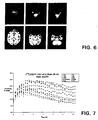
- the diencepalon, superior and inferior brainstem and striatum were the regions of highest uptake in the brain and showed clear visualization at 300-360 min after injection (Figure 6).
- the regional uptake of [ 123 I]ZIENT in the brain of an anesthetized baboon is shown in Figure 7.
- the uptake ratio of brainstem/cerebellum was 3.0:1 at 300-360 min.
- ZIENT is the first reported 3 ⁇ -aryl nortropane serotonin transporter imaging agent labeled with iodine-123 that exhibits specific in vivo SERT binding.
- Preliminary in vivo pharmacokinetic studies in rats and imaging studies in a rhesus monkey and a baboon with iodine-123 labeled ZIENT show high brainstem uptake with high brainstem to cerebellum ratios.
- a chase study with the SSRI fluvoxamine demonstrates that ZIENT is specific for CNS SERT.
- the present invention provides a method for conducting positron emission tomography or single photon emission tomography of a subject comprising: (1) administering to the subjectr an image- generating amount of a compound of Formula I which contains at least one radioactive halogen; and (2) measuring the distribution within the suibject of the compound by PET or SPECT.
- Relative transporter affinity of candidate Tropane SERT ligand in transfected cell lines Ligand x Y DAT, Ki (nM) NET, Ki (nM) 5-HTT, Ki (nM) FEINT FCH 2 CH 2 I 34*.
- compounds of the invention can be labeled with an isotope of any atom or combination of atoms in the structure. While 18 F has been emphasized herein as being particularly useful for PET imaging, other uses are contemplated and will be apparent to those skilled in the art. For example, without limitation, compounds of the invention can be labeled with 14 C to provide a tracer useful for biochemical studies of serotonin transporter. In addition, the binding studies reported herein demonstrate a pharmacological effect of compounds of the invention which can be utilized for physiological and behavioral studies and therapies, as will be apparent to those skilled in the art.
Landscapes
- Health & Medical Sciences (AREA)
- Life Sciences & Earth Sciences (AREA)
- Chemical & Material Sciences (AREA)
- Epidemiology (AREA)
- Animal Behavior & Ethology (AREA)
- Organic Chemistry (AREA)
- Veterinary Medicine (AREA)
- Public Health (AREA)
- General Health & Medical Sciences (AREA)
- Pharmacology & Pharmacy (AREA)
- Proteomics, Peptides & Aminoacids (AREA)
- Physics & Mathematics (AREA)
- Optics & Photonics (AREA)
- Nuclear Medicine, Radiotherapy & Molecular Imaging (AREA)
- Radiology & Medical Imaging (AREA)
- Medicinal Chemistry (AREA)
- Medicines Containing Antibodies Or Antigens For Use As Internal Diagnostic Agents (AREA)
- Nitrogen Condensed Heterocyclic Rings (AREA)
Claims (19)
- Verbindung der Formelworin X -CH2CH2Q, -CHCHR oder -CCH2FCH2 ist und Q F oder CH2F ist, R1 oder CH2F ist, Y aus einer Gruppe, bestehend aus H, F, Cl, Br und 1, ausgewählt ist.

- Verbindung nach Anspruch 1, worin mindestens ein Halogen aus der Gruppe, bestehend aus 18F, 123I, 125I,131I, 75Br, 76Br, 77Br und 82Br, ausgewählt ist.
- Verbindung nach Anspruch 1, worin X CH2CH2F oder CH2CH2 18F ist.
- Verbindung nach Anspruch 1, worin X CH2CH2CH2F oder CH2CH2CH2 18F ist.
- Verbindung nach Anspruch 1, worin X CCH2FCH2 oder CCH2 18FCH2 ist.
- Verbindung nach Anspruch 1, worin X CHCHl ist.
- Verbindung nach Anspruch 1, worin X aus der Gruppe, bestehend aus CHCH123I, CHCH125I und CHCH131I, ausgewählt ist.
- Verbindung nach Anspruch 1, worin X CHCHCH2F oder CHCHCH2 18F ist.
- Verbindung nach Anspruch 1, worin X CCH2CH2F oder CCH2CH2 18F ist.
- Verbindung nach Anspruch 3, worin Y Br ist.
- Verbindung nach Anspruch 3, worin Y Cl ist.
- Verbindung nach einem der Ansprüche 6 bis 9, worin Y H ist.
- Verbindung nach Anspruch 12, worin die Verbindung in Z-isomerer Form vorliegt.
- Ausrüstung für eine schnelle Synthese einer radioaktiv markierten Verbindung nach Anspruch 1, umfassend (a) eine Verbindung mit der Strukturworin L eine Abgangsgruppe ist, die durch eine radioaktive Gruppe ersetzt wird, (b) ein Reagenz, welches zum Ersetzen von L mit einem Substituenten, der eine radioaktive Gruppe enthält, fähig ist.

- Ausrüstung nach Anspruch 14, worin die radioaktive Gruppe aus der Gruppe, bestehend aus 18F, 123I, 125I, 131I, 75Br, 76Br, 77Br und 82Br, ausgewählt ist.
- Verfahren zum Durchführen einer Positronenemissions-Tomographie- oder einer Einzelphotonenemissions-Tomographieabbildung eines Subjekts, umfassend das Verabreichen einer abbildungserzeugenden Menge einer Verbindung nach Anspruch 1, welche mindestens ein radioaktives Halogen enthält, an das Subjekt und das Messen der Verteilung der Verbindung innerhalb des Subjekts mittels Positronenemissions-Tomographie oder Einzelphotonenemissions-Tomographie.
- Verfahren nach Anspruch 16, worin das Halogen aus der Gruppe, bestehend aus 76Br, 75Br und 18F, ausgewählt ist, und die Verteilung der Verbindung mittels Positronenemissions-Tomographie gemessen wird.
- Verfahren zum Durchführen einer Einzelphotonenemissions-Abbildung eines Subjekts, umfassend das Verabreichen einer abbildungserzeugenden Menge einer Verbindung nach Anspruch 1, welche mindestens ein radioaktives Halogen enthält, an das Subjekt und das Messen der Verteilung der Verbindung innerhalb des Subjekts mittels Einzelphotonenemissions-Tomographie.
- Verfahren nach Anspruch 18, worin die Verbindung nach Anspruch 1 mindestens eines der folgenden enthält: 75Br, 77Br, 123I oder 131I, und das Messen der Verteilung der Verbindung innerhalb des Subjekts mittels Einzelphotonenemissions-Tomographie.
Applications Claiming Priority (3)
| Application Number | Priority Date | Filing Date | Title |
|---|---|---|---|
| US13110499P | 1999-04-26 | 1999-04-26 | |
| US131104P | 1999-04-26 | ||
| PCT/US2000/011164 WO2000064491A1 (en) | 1999-04-26 | 2000-04-26 | 4-fluoroalkyl-3-halophenyl nortropanes |
Publications (3)
| Publication Number | Publication Date |
|---|---|
| EP1212103A1 EP1212103A1 (de) | 2002-06-12 |
| EP1212103A4 EP1212103A4 (de) | 2003-05-02 |
| EP1212103B1 true EP1212103B1 (de) | 2004-11-03 |
Family
ID=22447892
Family Applications (1)
| Application Number | Title | Priority Date | Filing Date |
|---|---|---|---|
| EP00931952A Expired - Lifetime EP1212103B1 (de) | 1999-04-26 | 2000-04-26 | 4-fluoroalkyl-3-halophenyl nortropane |
Country Status (7)
| Country | Link |
|---|---|
| US (1) | US6399042B1 (de) |
| EP (1) | EP1212103B1 (de) |
| JP (1) | JP2002542306A (de) |
| AU (1) | AU4975600A (de) |
| CA (1) | CA2369663A1 (de) |
| DE (1) | DE60015576T2 (de) |
| WO (1) | WO2000064491A1 (de) |
Families Citing this family (7)
| Publication number | Priority date | Publication date | Assignee | Title |
|---|---|---|---|---|
| WO2003093412A2 (en) * | 2002-04-30 | 2003-11-13 | Emory University | Tumor imaging compounds |
| RU2425824C2 (ru) * | 2005-02-28 | 2011-08-10 | Тайсо Фармасьютикал Ко., Лтд. | Производные фенилоксианилина, меченные радиоактивным галогеном |
| AU2006262425C1 (en) * | 2005-06-23 | 2012-06-21 | Emory University | Stereoselective synthesis of amino acid analogs for tumor imaging |
| JP2009505947A (ja) * | 2005-06-23 | 2009-02-12 | エモリー・ユニバーシティ | 画像化剤 |
| WO2007127262A2 (en) * | 2006-04-26 | 2007-11-08 | The University Of Montana | Enantiomers of 2'-fluoralkyl-6-nitroquipazine as serotonin transporter positron emission tomography imaging agents and antidepressant therapeutics |
| US8246752B2 (en) | 2008-01-25 | 2012-08-21 | Clear Catheter Systems, Inc. | Methods and devices to clear obstructions from medical tubes |
| DE102008047314B4 (de) | 2008-09-16 | 2012-08-30 | Johannes Gutenberg-Universität Mainz | Radioaktiv-markierte Cyclopropan-Derivate DAT-affiner Tropane |
Family Cites Families (4)
| Publication number | Priority date | Publication date | Assignee | Title |
|---|---|---|---|---|
| US5128118A (en) * | 1990-08-09 | 1992-07-07 | Research Triangle Institute | Cocaine receptor binding ligands |
| US5310912A (en) * | 1992-02-25 | 1994-05-10 | Research Biochemicals Limited Partnership | Iodinated neuroprobe for mapping monoamine reuptake sites |
| ES2385202T3 (es) * | 1995-06-06 | 2012-07-19 | Ge Healthcare Limited | Sondas neurológicas yodadas para el mapeo de sitios de recaptación de monoamina |
| FR2748475B1 (fr) * | 1996-05-10 | 1999-04-16 | Cis Bio Int | Derives du tropane utilisables en particulier pour la detection in vivo des transporteurs de la dopamine |
-
2000
- 2000-04-26 EP EP00931952A patent/EP1212103B1/de not_active Expired - Lifetime
- 2000-04-26 CA CA002369663A patent/CA2369663A1/en not_active Abandoned
- 2000-04-26 US US09/558,916 patent/US6399042B1/en not_active Expired - Fee Related
- 2000-04-26 AU AU49756/00A patent/AU4975600A/en not_active Abandoned
- 2000-04-26 DE DE60015576T patent/DE60015576T2/de not_active Expired - Fee Related
- 2000-04-26 JP JP2000613481A patent/JP2002542306A/ja not_active Withdrawn
- 2000-04-26 WO PCT/US2000/011164 patent/WO2000064491A1/en not_active Ceased
Also Published As
| Publication number | Publication date |
|---|---|
| CA2369663A1 (en) | 2000-11-02 |
| AU4975600A (en) | 2000-11-10 |
| WO2000064491A1 (en) | 2000-11-02 |
| EP1212103A1 (de) | 2002-06-12 |
| DE60015576T2 (de) | 2005-11-10 |
| US6399042B1 (en) | 2002-06-04 |
| EP1212103A4 (de) | 2003-05-02 |
| DE60015576D1 (de) | 2004-12-09 |
| JP2002542306A (ja) | 2002-12-10 |
Similar Documents
| Publication | Publication Date | Title |
|---|---|---|
| Goodman et al. | 18F-labeled FECNT: a selective radioligand for PET imaging of brain dopamine transporters | |
| AU674331B2 (en) | An iodinated neuroprobe for mapping monoamine reuptake sites | |
| EP0929319B1 (de) | Dopamin und serotonin transport-ligande und bilderzeugungsmitteln | |
| US6171576B1 (en) | Dopamine transporter imaging agent | |
| US6843979B2 (en) | 4-haloethenylphenyl tropane:serotonin transporter imaging agents | |
| US6399042B1 (en) | 4-fluoroalkyl-3-halophenyl nortropanes | |
| US6344179B1 (en) | Fluoralkenyl nortropanes | |
| Helfenbein et al. | PET examination of three potent cocaine derivatives as specific radioligands for the serotonin transporter | |
| US9757483B2 (en) | Labeled iodinated tropane formulation | |
| McPherson et al. | Synthesis and biodistribution of iodine-125-labeled 1-azabicyclo [2.2. 2] oct-3-yl. alpha.-hydroxy-. alpha.-(1-iodo-1-propen-3-yl)-. alpha.-phenylacetate. A new ligand for the potential imaging of muscarinic receptors by single photon emission computed tomography | |
| JP3731005B2 (ja) | モノアミン再取込み部位をマッピングするためのヨウ素標識ニューロプローブ | |
| US6162417A (en) | Pyrrolo isoquinolines | |
| US7105678B2 (en) | Boat tropanes | |
| JP2001504440A (ja) | フェロセニルフェニルトロパン類似体の合成およびモノアミン再取り込み部位を写像するためのテクネチウムニューロプローブへの当該類似体の放射性変換 | |
| AU2002356553A1 (en) | 4-haloethenylphenyl tropane:serotonin transporter imaging agents | |
| Bois et al. | Synthesis, radiolabeling and baboon SPECT imaging of 2β-carbomethoxy-3β-(3′-[123I] iodophenyl) tropane ([123I] YP256) as a serotonin transporter radiotracer | |
| Bergström et al. | Iodine-123 labelled Z-(R, R)-IQNP: A potential radioligand for visualization of M1 and M2 muscarinic acetylcholine receptors in Alzheimer’s disease | |
| US5888475A (en) | Labeled cocaine analogs | |
| Laruelle et al. | SPECT imaging of dopamine and serotonin transporters in nonhuman primate brain | |
| JP4070431B2 (ja) | モノアミン再取込み部位のマッピング用ヨウ素付加神経プローブ | |
| CA2233173C (en) | Dopamine and serotonin transporter ligands and imaging agents | |
| JP5128293B2 (ja) | 橋頭標識化合物およびその使用方法 | |
| Jones | Technepine: A high-affinity99mtechnetium probe to label the dopamine transporter in brain by SPECT imaging | |
| US20060083680A1 (en) | Diphenyl ether derivatives and their use for imaging serotonin transporters | |
| Brain | SPECT Imaging of Dopamine and Serotonin Transporters in |
Legal Events
| Date | Code | Title | Description |
|---|---|---|---|
| PUAI | Public reference made under article 153(3) epc to a published international application that has entered the european phase |
Free format text: ORIGINAL CODE: 0009012 |
|
| 17P | Request for examination filed |
Effective date: 20011113 |
|
| AK | Designated contracting states |
Kind code of ref document: A1 Designated state(s): AT BE CH CY DE DK ES FI FR GB GR IE IT LI LU MC NL PT SE |
|
| RIN1 | Information on inventor provided before grant (corrected) |
Inventor name: GOODMAN, MARK, M. Inventor name: CHEN, PING |
|
| A4 | Supplementary search report drawn up and despatched |
Effective date: 20030317 |
|
| RIC1 | Information provided on ipc code assigned before grant |
Ipc: 7A 61K 51/00 A Ipc: 7A 61K 51/04 B Ipc: 7C 07D 451/06 B Ipc: 7A 61K 49/06 B Ipc: 7C 07D 451/02 B Ipc: 7C 07D 451/04 B |
|
| GRAP | Despatch of communication of intention to grant a patent |
Free format text: ORIGINAL CODE: EPIDOSNIGR1 |
|
| GRAS | Grant fee paid |
Free format text: ORIGINAL CODE: EPIDOSNIGR3 |
|
| GRAA | (expected) grant |
Free format text: ORIGINAL CODE: 0009210 |
|
| AK | Designated contracting states |
Kind code of ref document: B1 Designated state(s): BE DE FR GB IT |
|
| REG | Reference to a national code |
Ref country code: GB Ref legal event code: FG4D |
|
| REF | Corresponds to: |
Ref document number: 60015576 Country of ref document: DE Date of ref document: 20041209 Kind code of ref document: P |
|
| REG | Reference to a national code |
Ref country code: IE Ref legal event code: FG4D |
|
| PG25 | Lapsed in a contracting state [announced via postgrant information from national office to epo] |
Ref country code: IT Free format text: LAPSE BECAUSE OF NON-PAYMENT OF DUE FEES Effective date: 20050426 Ref country code: GB Free format text: LAPSE BECAUSE OF NON-PAYMENT OF DUE FEES Effective date: 20050426 |
|
| PG25 | Lapsed in a contracting state [announced via postgrant information from national office to epo] |
Ref country code: BE Free format text: LAPSE BECAUSE OF NON-PAYMENT OF DUE FEES Effective date: 20050430 |
|
| PLBE | No opposition filed within time limit |
Free format text: ORIGINAL CODE: 0009261 |
|
| STAA | Information on the status of an ep patent application or granted ep patent |
Free format text: STATUS: NO OPPOSITION FILED WITHIN TIME LIMIT |
|
| ET | Fr: translation filed | ||
| 26N | No opposition filed |
Effective date: 20050804 |
|
| BERE | Be: lapsed |
Owner name: *EMORY UNIVERSITY Effective date: 20050430 |
|
| PG25 | Lapsed in a contracting state [announced via postgrant information from national office to epo] |
Ref country code: DE Free format text: LAPSE BECAUSE OF NON-PAYMENT OF DUE FEES Effective date: 20051101 |
|
| GBPC | Gb: european patent ceased through non-payment of renewal fee |
Effective date: 20050426 |
|
| BERE | Be: lapsed |
Owner name: *EMORY UNIVERSITY Effective date: 20050430 |
|
| PG25 | Lapsed in a contracting state [announced via postgrant information from national office to epo] |
Ref country code: FR Free format text: LAPSE BECAUSE OF NON-PAYMENT OF DUE FEES Effective date: 20050430 |
|
| REG | Reference to a national code |
Ref country code: FR Ref legal event code: ST Effective date: 20111021 |