EP1214656B1 - Procede pour le test d'objet de logiciel - Google Patents
Procede pour le test d'objet de logiciel Download PDFInfo
- Publication number
- EP1214656B1 EP1214656B1 EP00957761A EP00957761A EP1214656B1 EP 1214656 B1 EP1214656 B1 EP 1214656B1 EP 00957761 A EP00957761 A EP 00957761A EP 00957761 A EP00957761 A EP 00957761A EP 1214656 B1 EP1214656 B1 EP 1214656B1
- Authority
- EP
- European Patent Office
- Prior art keywords
- test
- code
- application
- under test
- application under
- Prior art date
- Legal status (The legal status is an assumption and is not a legal conclusion. Google has not performed a legal analysis and makes no representation as to the accuracy of the status listed.)
- Expired - Lifetime
Links
Images


Classifications
-
- G—PHYSICS
- G06—COMPUTING OR CALCULATING; COUNTING
- G06F—ELECTRIC DIGITAL DATA PROCESSING
- G06F11/00—Error detection; Error correction; Monitoring
- G06F11/30—Monitoring
- G06F11/34—Recording or statistical evaluation of computer activity, e.g. of down time, of input/output operation ; Recording or statistical evaluation of user activity, e.g. usability assessment
- G06F11/3409—Recording or statistical evaluation of computer activity, e.g. of down time, of input/output operation ; Recording or statistical evaluation of user activity, e.g. usability assessment for performance assessment
- G06F11/3414—Workload generation, e.g. scripts, playback
-
- G—PHYSICS
- G06—COMPUTING OR CALCULATING; COUNTING
- G06F—ELECTRIC DIGITAL DATA PROCESSING
- G06F11/00—Error detection; Error correction; Monitoring
- G06F11/30—Monitoring
- G06F11/34—Recording or statistical evaluation of computer activity, e.g. of down time, of input/output operation ; Recording or statistical evaluation of user activity, e.g. usability assessment
- G06F11/3409—Recording or statistical evaluation of computer activity, e.g. of down time, of input/output operation ; Recording or statistical evaluation of user activity, e.g. usability assessment for performance assessment
- G06F11/3419—Recording or statistical evaluation of computer activity, e.g. of down time, of input/output operation ; Recording or statistical evaluation of user activity, e.g. usability assessment for performance assessment by assessing time
-
- G—PHYSICS
- G06—COMPUTING OR CALCULATING; COUNTING
- G06F—ELECTRIC DIGITAL DATA PROCESSING
- G06F11/00—Error detection; Error correction; Monitoring
- G06F11/30—Monitoring
- G06F11/34—Recording or statistical evaluation of computer activity, e.g. of down time, of input/output operation ; Recording or statistical evaluation of user activity, e.g. usability assessment
- G06F11/3466—Performance evaluation by tracing or monitoring
- G06F11/3495—Performance evaluation by tracing or monitoring for systems
-
- G—PHYSICS
- G06—COMPUTING OR CALCULATING; COUNTING
- G06F—ELECTRIC DIGITAL DATA PROCESSING
- G06F2201/00—Indexing scheme relating to error detection, to error correction, and to monitoring
- G06F2201/875—Monitoring of systems including the internet
Definitions
- An enterprise-wide application is an application that allows a large group of people to work together on a common task.
- An enterprise-wide application performs functions that are essential to a company's business. For example, in a bank, people at every bank branch must be able to access a database of accounts for every bank customer. Likewise, at an insurance company, people all over the company must be able to access a database containing information about every policyholder.
- the software that performs these functions is generally known as enterprise-wide applications.
- N-Tier enterprise model An architecture which is currently popular is called the N-Tier enterprise model.
- the most prevalent N-tier enterprise model is a three tier model.
- the three tiers are the front end, the middleware and the back end.
- the back end is the database.
- the front end is sometimes referred to as a "client” or a Graphical User Interface (GUI).
- GUI Graphical User Interface
- the middleware is the software that manages interactions with the database and captures the "business logic.” Business logic tells the system how to validate, process and report on the data in a fashion that is useful for the people in the enterprise.
- the middleware resides on a computer called a server.
- the database might be on the same computer or a different computer.
- the "client” is usually on an individual's personal computer. All of the computers are connected together through a network. Because many people use the enterprise wide application, such systems are set up to allow simultaneous users and there would be many clients connected to a single server. Often, many clients will be connected to the server simultaneously.
- N-tiered model also describes many Internet web sites that sell goods or services. For example, a web site that auctions cars is likely to fit the N-tiered model.
- databases are provided to track buyers, sellers and objects being auctioned.
- a database must be provided to track the bids as they are entered.
- the middleware provides the access to these databases and encapsulates the business logic around such transactions as when to accept a bid, when to declare an item sold, etc.
- clients In the world of distributed computing, it makes no difference whether the "clients" using the application are employees of a single company or many Internet users throughout the world.
- examples of applications under test will be given, but they are not intended to imply limitations on the use of the invention.
- the inventions described herein could be used by developers of enterprise-wide applications or web based applications.
- EJBs are written in the JAVA language, which is intended to be "platform independent.”
- Platform independent means that an application is intended to perform the same regardless of the hardware and operating system on which it is operating.
- Platform independence is achieved through the use of a "container.”
- a container is software that is designed for a specific platform. It provides a standardized environment that ensures the application written in the platform independent language operates correctly. The container is usually commercially available software and the application developer will buy the container rather than create it.
- Componentized software is software that is designed to allow different pieces of the application, or "objects", to be created separately but still to have the objects work together. For this to happen, the objects must have standard interfaces that can be understood and accessed by other objects. The software language enforces some parts of these interfaces. If software interfaces are not directly available as part of the system, a discovery mechanism is employed to find the interface information. If the interfaces are not used, the software objects will not be able to work with other objects. Other practices are imposed by convention. Because these programming practices are known to everyone, the companies that create the containers can rely on them when creating the container. As a result, if these practices are not followed, the container might not operate properly. Thus, there is an indirect mechanism for enforcing these practices.
- applications have been tested in one of two ways.
- the objects are tested as they are written. Each is tested to ensure that it performs the intended function.
- the entire application is then usually tested.
- application testing has generally been done by applying test inputs at the client end and observing the response of the application.
- One is that it is relatively labor intensive, particularly to develop a load or scalability test.
- profilers Some tools, called “profilers,” have been available. However, these tools track things such as disk usage, memory usage or thread usage of the application under test. They do not provide data about performance of the application based on load.
- RSW Software, Inc. of Waltham, MA provides a product called e-Load. This tool simulates load on an application under test and provides information about the performance of the application. However, this tool does not provide information about the components in an application. We have recognized that a software developer would find such information very useful.
- TestMaster available from Teradyne Software and System Test of Nashua, NH
- Tools of this type provide a means to reduce the manual effort of generating a test.
- TestMaster works from a state model of the application under test. Such an application is very useful for generating functional tests during the development of an application. Once the model of the application is specified, TestMaster can be instructed to generate a suite of tests that can be tailored for a particular task ⁇ such as to fully exercise some portion of the application that has been changed. Model based testing is particularly useful for functional testing of large applications, but is not fully automatic because it requires the creation of a state model of the application being tested.
- Document US-A-5 812 780 discloses a method for assessing the performance of a server application from the perspective of a simulated user. Actual user behaviour is modeled so that accurate determinations can be made as to the number of users a given server application can adequately support.
- the method disclosed in this document does not involve examining an object oriented application on a remote system and does not automatically generate test code for exercising one or more software components. Nor does this method involve analysing any time measurement results to determine which component is causing a performance bottleneck.
- the software component can be load tested remotely.
- the tests used to test and validate the remote software component may be automatically generated from /for the remote software components.
- the testing may be performed on a single software component, a plurality of software components and on an application including one or more software components.
- the test system analyzes response time measurements from plural software objects within the application and predicts which software object within the application that is likely to be a performance bottleneck.
- the invention provides a method of remote testing as claimed in claim 1. Further enhancements are provided by the sub-claims.
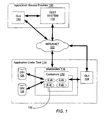
- FIG. 1 illustrates a test system 110 according to the present invention.
- the system is remotely testing application under test 114.
- application under test 114 is an application in the N-tiered model. More specifically, it is a three tiered database application.
- Application under test 114 could represent a database for a bank or an insurance company or it could represent an Internet application. The specific function of application under test 114 is not important to the invention.
- test system 110 and the application under test 114, reside is not important to the invention. It is sufficient if there is some connection between the two which are located remote from each other. In the illustration, that connection is provided by the Internet 122. In this scenario, test system 110 could be located in a server owned by a testing company or Application Service Provider (ASP) 100. Many applications are written using platform independent technology such that the application will perform the same on many different platforms. Platform independent technology is intended to make it easy to run an application on any platform.
- Application under test 114 is a software application as known in the art. It includes middleware 116 that encapsulates some business logic. A user accesses the application through a client device. Many types of client devices are possible, with the list growing as networks become more prevalent. Personal computers, telephone systems and even household appliances with micro- controllers could be the client device. In use. it is contemplated that there would be multiple users connected to application under test 114. The number of users simultaneously accessing application under test 114 is one indication of the "load" on the application.
- GUI Graphical User Interface
- Software to manage interactions between multiple users and an application is known. Such software is sometimes called a web server. Web servers operate in conjunction with a browser, which is software commonly found on most PC's.
- the web server and browser exchange information in a standard format known as HTML.
- An HTML file contains tags, with specific information associated with each tag.
- the tag signals to the browser a type associated with the information, which allows the browser to display the information in an appropriate format. For example, the tag might signal whether the information is a title for the page or whether the information is a link to another web page.
- the browser creates a screen display in a particular window based on one or more HTML pages sent by the web server.
- the browser uses the information on the HTML page to format this information and send it to the web server. In this way, the web server knows how to process the commands and data that comes from the user.
- GUI 124 passes the information and commands it receives on to middleware 116.
- middleware 116 is depicted as a middleware application created with EJBs.
- Containers 130 are. in a preferred embodiment, commercially available containers. Within a container are numerous enterprise Java beans 132. Each Java bean 132 can more generally be thought of as a software component.
- GUI 124 passes the information to the appropriate EJB 132. Outputs from application under test 114 are provided back through GUI 124 for display to a user.
- EJBs 132 in the illustrated example, collectively implement a database application.
- EJBs 132 manage interactions with and process data from databases 126 and 128. They will perform such database functions as setting values in a particular record or getting values from a particular record. Other functions are creating rows in the database and finding rows in the database. EJBs that access the database are often referred to as "entity beans.”
- Session beans perform such functions as validating data entries or reporting to a user that an entry is erroneous. Session beans generally call entity beans to perform database access.
- Test system 110 is able to access the EJBs 132 of application under test 114 over Internet 122. In this way, each bean can be remotely exercised for testing at the developer's site. Thus, the developer merely allows ASP 100 to access the software component across the Internet and perform the testing.
- the tests are predominately directed at determining the response time of the beans ⁇ or more generally determining the response time of components or objects used to create the application under test. Knowing the response time of a bean can allow conclusions about the performance of an application. As described above, response time is one major load test measure. Another is throughput. Response time measures the time it takes for an individual transaction to complete. Throughput is a measure of how many transactions are being processed per time unit, and measures the amount of work the system is doing. The details of test system 110 are described below.
- test system 110 is software installed on one or more servers at the ASP location.
- test system 110 is a JAVA application.
- test system 110 is controlled through a graphical user interface 150.
- GUI 150 might be a web server as known in the art.
- Test system 110 performs several functions. One function is the generation of test code. A second function is to execute the test code to remotely exercise one or more EJBs in the application under test. Another function is to record and analyze the results of executing the test code. These functions are performed by software running on one or more computers connected to internal network (Intranet) 102. The software is written using a commercially available language to perform the functions described herein.
- IP internal network
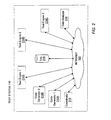
- FIG. 2 shows that test system 110 has a distributed architecture.
- Software components are installed on several different computers within the test system. Multiple computers are used both to provide capability for multiple users, to perform multiple tasks and also to run very large tests. The specific number of computers and the distribution of software components of the test system on those computers is not important to the invention.
- Coordinator 210 is a software application that interfaces with GUI 150. The main purpose of coordinator 210 is to route user requests to an appropriate server in a fashion that is transparent to a user. Turning to FIG. 3, coordinator 210 is shown in greater detail. It should be appreciated, though, that FIG. 3 shows the conceptual structure of coordinator 210. Coordinator 210 might not be a single, separately identified piece of software. It might, for example, be implemented as coordination software within the various other components of test system 110. Also, it should be realized that a web server used to implement GUI 150 also provides coordination functions, such as queuing multiple requests from an individual or coordinating multiple users.
- Coordinator 210 contains distribution unit 312.
- Distribution unit 312 is preferably a software program running on a server. User requests are received by distribution unit 312. As the requests are received, distribution unit 312 determines the type of resource needed to process the request. For example, a request to generate code must be sent to a server that is running a code generator.
- Coordinator 210 includes several queues to hold the pending requests. Each queue is implemented in the memory of the server implementing coordinator 210. In FIG. 3, queues 318A...318C are illustrated. Each queue 318A...318C corresponds to a particular type of resource. For example, queue 318A could contain code generator requests, queue 318B could contain test engine requests and queue 318C could contain data analysis requests. Distribution unit sends each request to one of the queues 318A...318C, based on the type of resources needed to process the request.
- queue manager 320A...320C Associated with each queue 318A...318C is queue manager 320A...320C.
- Each queue manager is preferably implemented as software running on the server implementing coordinator 210 or the server implementing the relevant piece of coordinator 210.
- Each queue manager maintains a list of servers within test system 110 that can respond to the requests in its associated queue.
- a queue manager sends the request at the top of the queue to a server that is equipped to handle the request.
- the connection between the queue manager and the servers equipped to handle the requests is over Intranet 102. If there are other servers available and still more requests in the queue, the queue manager will send the next request in the queue to an available server. When there are no available servers, each queue manager waits for one of the servers to complete the processing of its assigned request.
- the servers such as the code generators and the test engines report back to the queue managers.
- the queue managers send another request from the queue and also provide the results back to the distribution unit 312.
- Distribution unit 312 can then reply back to the user that issued the request, indicating that the request was completed and either giving the results or giving the location of the results.
- the user might receive an indication of where the test code is stored.
- the user might receive a report of the average execution time for the test or the location of a file storing each measurement made during the test.
- GUI 150 will allow a user to enter a command that indicates code should be generated to test a particular application. Once the code is generated, GUI 150 allows the user to specify that a test should be run using that test code.
- one of the functions of the test engines is to apply a load that simulates multiple users.
- one computer can simulate multiple users by running multiple client threads.
- test code generators 212A and 212B are used in the preferred embodiment to create the code. Turning to FIG. 4, greater details of a code generator 212 are shown.
- Code generator 212 contains several scripts 512. Each script is a sequence of steps that code generator 212 must perform to create code that performs a certain type of test.
- the scripts can be prepared in any convenient programming language. For each type of test that test system 110 will perform, a script is provided. User input on the type of test that is desired specifies which script 512 is to be used for generating code at any given time.
- the selected script 512 assembles test code 516.
- the information needed to assemble test code 516 comes from several sources.
- One source of information is the test templates 514.
- test code 516 there might be different templates to ensure that the test code 516 appropriately reflects inputs provided by the user.
- different containers might require different command formats to achieve the same result.
- One way these different formats can be reflected in the test code 516 is by having different templates for each container.
- a user might be able to specify the type of information that is to be recorded during a test.
- a data logging preference might be implemented by having a set of templates that differ in the command lines that cause data to be recorded during a test.
- An example template is shown in Appendix 2.
- code generator 212 generates code to test a specific EJB in an application, under test.
- One piece of information that will need to be filled in for many templates is a description of the EJB being tested.
- Another piece of information that might be included is user code to put the application under test in the appropriate state for a test. For example, in testing a component of an application that manages a database of account information for a bank, it might be necessary to have a specific account created in the database to use for test purposes or it might otherwise be necessary to initialize an application before testing it.
- the code needed to cause these events might be unique to the application and will therefore be best inserted into the test code by the tester testing the application. In the illustrated embodiment, this code is inserted into the template and is then carried through to the final test code.
- the template might also contain spaces for a human tester to fill in other information, such as specific data sets to use for a test.
- data sets are provided by the human user in the form of a data table.
- Code generator 212 could generate functional tests. Functional tests are those tests that are directed at determining whether the bean correctly performs its required functions. In a functional test, the software under test is exercised with many test cases to ensure that it operates correctly in every state. Data tables indicating expected outputs for various inputs are used to create functional test software. However, in the presently preferred embodiment, code generator 212 primarily generates test code that performs load tests. In a load test, it is not necessary to stimulate the software under test to exercise every possible function and combination of functions the software is intended to perform. Rather, it is usually sufficient to provide one test condition. The objective of the load test is to measure how operation of the software degrades as the number of simultaneous users of the application increases.
- test system 110 contains scripts 512 to implement various types of load tests.
- One type of load test determines response time of an EJB. This allows the test system to vary the load on the EJB and determine degradation of response time in response to increased load.
- Another type of load test is a regression type load test. In a regression type test, the script runs operations to determine whether the EJB responds the same way as it did to some baseline stimulus. In general, the response to the baseline stimulus represents the correct operation of the EJB. Having a regression type test allows the test system 110 to increase the load on a bean and determine the error rate as a function of load.
- the script 512 To generate test code 516 for these types of load tests, the script 512 must create test code that is specific to the bean under test.
- the user provides information on which bean to test through GUI 150. In the preferred embodiment, this information is provided by the human tester providing the name of the file within the application under test that contains the "deployment descriptor" for the specific bean under test. This information specifies where in the network to find the bean under test. Script 512 uses this information to ascertain what test code must be generated to test the bean.
- Script 512 can generate code by using the attributes of the platform independent language in which the bean is written.
- each bean has an application program interface called a "reflection.” More particularly, each bean has a "home” interface and a "remote” interface.
- the "home” interface reveals information about the methods for creating or finding a remote interface in the bean.
- the remote interface reveals how this code can be accessed from client software.
- the home and remote interfaces provide the information needed to create a test program to access the bean.
- any program can determine what are known as the "properties" and "methods" of a bean.
- the properties of a bean describe the data types and attributes for a variable used in the bean. Every variable used in the bean must have a property associated with it.
- script 512 can automatically determine what methods need to be exercised to test a bean and the variables that need to be generated in order to provide stimulus to the methods.
- the variables that will be by the methods as they are tested can also be determined. In the preferred embodiment, this information is stored in symbol table 515.
- Symbol table 515 is a file in any convenient file format. Once the information on the methods and properties are captured in a table, script 515 can use this information to create test code that exercises the methods and properties of the particular component under test. In particular, script 515 can automatically create a variable of the correct data type and assign it a value consistent with that type for any variable used in the bean.
- Data generator 518 uses the information derived from the reflection interface to generate values for variables used during testing of a bean. There are many ways that appropriate values could be generated for each variable used in the test of a particular bean. However, in the commercial embodiment of the present invention, the user is given a choice of three different algorithms that data generator 518 will use to generate data values. The user can specify "maximum,” “minimum” or “random.” If the maximum choice is specified, data generator 518 analyzes the property description obtained through the reflection interface and determines the maximum permissible value. If the user specifies "minimum” then data generator 518 generates the smallest value possible. If the user specifies random, data generator 518 selects a value at random between the maximum and the minimum.
- the exact value of a particular variable is not important. For example, when testing whether a bean can properly store and retrieve a value from a database, it usually does not matter what value is stored and retrieved. It only matters that the value that is read from the database is the same one that was stored. Or, when timing the operation of a particular bean, it will often not matter what values are input to the method. In these scenarios, data generator 518 can automatically generate the values for variables used in the test code.
- code generator 212 provides the user with another option. Rather than derive values of variables from data generator 518, script 512 can be instructed to derive data values from a user provided data table 520.
- a user might, for example, want to provide a data table even for a load test when the execution time of a particular function would depend on the value of the input data.
- test system 110 includes a file editor ⁇ of the type using conventional technology ⁇ for creating and editing such a file.
- test system 110 would likely include the ability to import a file ⁇ again using known techniques ⁇ that has the required format.
- the methods of a bean describe the functions that bean can perform. Part of the description of the method is the properties of the variables that are inputs or outputs to the method. A second part of the description of each method ⁇ which can also be determined through the reflection interface ⁇ is the command needed to invoke this method. Because script 512 can determine the code needed to invoke any method and, as described above, can generate data values suitable to provide as inputs to that method, script 512 can generate code to call any method in the bean. A recording technique may be used to populate user data tables.
- script 512 can automatically generate useful test code by invoking each method of the bean.
- methods for ordering reflected scripts namely, recording; code filtering; and using UML metadata.
- entity beans for controlling access to a database should have methods that have a prefix "set” or “get”. These prefixes signal that the method is either to write data into a database or to read data from the database.
- the suffix of the method name indicates which value is to be written or read in the database. For example, a method named setSSN should perform the function of writing into a database a value for a parameter identified as SSN. A method named getSSN should read the value from the parameter named SSN.
- script 512 can generate code to exercise and verify operation of both methods.
- a piece of test code generated to test these methods would first exercise the method setSSN by providing it an argument created by data generator 518. Then, the method getSSN might be exercised. If the get method returns the same value as the argument that was supplied to the set method, then it can be ascertained that the database access executed as expected.
- Some beans also contain methods that create or find rows in a database. By convention, methods that create or find rows in a database are named starting with “create” or "find.” Thus, by reflecting the interface of the bean, script 512 can also determine how to test these methods. These methods can be exercised similarly to the set and get methods. The properties revealed through the application interface will described the format of each row in the database. Thus, when a create method is used, data can be automatically generated to fill that row, thereby fully exercising the create method.
- find methods are exercised using data from a user supplied data table 520.
- databases have test rows inserted in them specifically for testing. Such a test row would likely be written into data table 520. However, it would also be possible to create a row, fill it with data and then exercise a find method to locate that row.
- script 512 can also insert into the client test code 516 the commands that are necessary to record the outputs of the test. If a test is checking for numbers of errors, then test code 516 needs to contain instructions that record errors in log 216. Likewise, if a test is measuring response time, the test code 516 must contain instructions that write into log 216 the information from which response time can be determined.
- all major database functions can be exercised with no user supplied test code. In some instances, it might be possible to exercise all the functions with all test data automatically generated. All the required information could be generated from just the object code of the application under test.
- An important feature of the preferred embodiment is that it is "minimally invasive" ⁇ meaning that very little is required of the user in order to conduct a test and the test does not impact the customer's environment. There is no invasive test harness. The client code runs exactly like the code a user would write.
- response time is one major load test measure. Another is throughput. Response time measures the time it takes for an individual transaction to complete. Throughput is a measure of how many transactions are being processed per time unit, and measures the amount of work the system is doing. One way is that the total time to execute all the methods in a bean could be measured. Another way is that the start up time of a bean could be measured. The startup time is the time it takes from when the bean is first accessed until the first method is able to execute. Another way to measure response time is to measure the time it takes for each method to execute. As another variation, response time could be measured based on how long it takes just the "get-" methods to execute or just the "set-” methods to execute.
- test code simply records the time that the portion of the test code that exercises all the methods starts and stops executing. If the startup response time is required, then the client test code must record the time that it first accesses the bean under test and the time when the first method in the test sequence is ready to be called. On the other hand, if the response time is going to be computed for each method, the client test code must record the time before and after it calls each method and some indication of the method being called must also be logged. Similar information must be recorded if responses of just "get-" or "set-" functions are to be measured, though the information needs to be recorded for only a subset of the methods in these cases.
- test system 110 when there are multiple users being simulated, there are multiple values for each data point. For example, if test system 110 is simulating 100 remote users, the time that it takes for the bean to respond to each simulated remote user could be different, leading to up to 100 different measurements of response time.
- the response time for 100 users could be presented as the maximum response time, i.e. the time it takes for all 100 simulated users to finish exercising the bean under test.
- the average time to complete could be reported as the response time.
- the range of values could be reported.
- the client test code 516 contains the instructions that record all of the information that would be needed for any possible measure of response time and every possible display format. The time is recorded before and after the execution of every method. Also, an indication that allows the method to be identified is recorded. To support analysis based on factors other than delay, the actual and expected results of the execution of each method are recorded so that errors can be detected. Also, the occurrences of exceptions are also recorded in the log. Then, a data analyzer can review the log and display the response time according to any format and using any definition of response time desired. Or the data analyzer can count the number of exceptions or errors.
- test system 110 has the ability to present the results of tests graphically to aid the tester in understanding the operations ⁇ particularly performance bottleneck ⁇ of application under test 114.
- the log file contains the starting and stopping times of execution tests for a particular test case.
- the test case includes the same measurements at several different load conditions (i.e. with the test engines 214A...214C simulating different numbers of simultaneous users).
- data analyzer can read through the data in log and identify results obtained at different load conditions. This data can be graphed.
- test code 516 could contain instructions that write an error message into the log whenever a test statement produces an incorrect result.
- incorrect results could be identified when the "get" function does not return the same value as was passed as an argument to the "set” function.
- errors might be identified when a bean, when accessed, does not respond or responds with an exception condition.
- data analyzer 218 can pass through the log file, reading the numbers of errors at different simulated load conditions. If desired, the errors can be expressed as an error count, or as an error rate by dividing the error count by the time it took for the test to run.
- Some examples of the types of outputs that might be provided are graphs showing: transactions per second versus number of users; response time versus number of users; exceptions versus numbers of users; errors versus numbers of users; response time by method; response time versus run time and transactions per second versus run time. Different ways to measure response time were discussed above.
- a transaction is defined as the execution of one method, though other definitions are possible.
- Run time is defined as the total elapsed time in running the test case, and would include the time to set up the execution of EJBs. Viewing response time as a function of elapsed time is useful, for example, in revealing problems such as "memory leaks".
- a memory leak refers to a condition in which portions of the memory on the server running the application under test gets used for unproductive things. As more memory is used unproductively, there is less memory available for running the application under test and execution slows over time.
- viewing results in this format might reveal that the application under test is effectively utilizing caching. If caching is used effectively, the execution time might decrease as elapsed time increases.
- test system 110 Having described the structure of test system 110 and giving examples of its application, several important features of the test system 110 can be seen.
- One feature is that information about the performance of an application under test can be easily obtained, with much of the data being derived in an automated fashion.
- a software developer could use the test system to find particular beans that are likely to be performance bottlenecks in an application. The developer could then rewrite these beans or change their deployment descriptors. For example, one aspect of the deployment descriptor indicates the number of copies of the bean that are to be instantiated within application under test 114. The developer could increase the number of instantiations of a bean if that bean is the bottleneck.
- the test system described herein provides an easy and accurate tool to remotely test EJBs for scalability. It creates a user specified number of virtual users that call the EJB while it is deployed on the applications server. The tool does this by inspecting the EJB under test and automatically generating a client test program, using either rules based data or supplied data, and then multithreading the client test program to drive the EJB under test. The result is a series of graphs reporting on the performance versus the number of users, which provide useful information in an easy to use format.
- test code 516 exercises the bean in the application under test using remote procedure calls.
- test system 110 is scalable. To increase the number of tests that could simultaneously be run or the size of the tests that could be run, more test engines could be added. Likewise, more code generators could be added to support the simulation of a larger number of simultaneous users.
- the specific number of copies of each component is not important to the invention. The actual number of each component in any given embodiment is likely to vary from installation to installation. The more users an application is intended to support, the more test engines are likely to be required.
- testing is done on the simplest construct in the application under test ⁇ the beans in the illustrated example.
- test system 110 could automatically determine the bean that is the performance bottleneck and could also assign a load rating to application under test 114.
- test system 110 automatically generates test code to exercise beans that follow a pattern for database access. These beans are sometimes called “entity beans.” In general, there will be other beans in an application that perform computations on the data or that control the timing of the execution of the entity beans. These beans are sometimes called “session beans.” Session beans are less likely to follow prescribed programming patterns that make the generation of test code for entity beans simple. As a result, the automatically generated test code for session beans might not fully test those beans. In the described embodiment, it is expected that the human tester supply test code to test session beans where the automatically generated tests are inadequate.
- One possible modification to the described embodiment is that the completeness of tests for session beans might be increased.
- One way to increase the accuracy of tests for session beans would be to capture data about the execution of those beans during actual operation of the application under test 114. This data could allow an automated system to determine things like appropriate data values, which might then be used to build a data table. Or, the captured data could allow the automated system to determine the order in which a session bean accesses other session beans or entity beans to create a realistic test.
- test code is generated to test a particular bean, which is a simple construct or "component" of the application under test.
- the testing could focus on different constructs, such as specific methods in a bean.
- Test code could be generated to test specific methods within beans.
- the system records start and stop time of the execution of the test code. The times of other events could be recorded instead or in addition. For example, start and stop times of individual methods might be recorded, allowing performance of individual methods to be determined.
- the complexity of the constructs being tested could be increased.
- Multiple beans might be tested simultaneously to determine interactions between beans.
- multiple test cases might be executed at the same time. with one test case exercising a specified instances of one bean and a different test case exercising a specified number of instances of a second bean.
- test code would be created by filling in a single template.
- each template might contain only the steps needed to perform one function, such as initialization, testing or termination.
- test code would be created by stringing together multiple templates.
- test system 110 provides outputs indicating the performance of an application under test as a function of load. These outputs in graphical or tabular form can be used by an application developer to identify a number of concurrent users at which problems with the application are likely to be encountered. Potential problems are manifested in various ways, such as by a sudden change in response time or error rate as a function of load. Test system 110 could readily be programmed to automatically identify patterns in the output indicating these problem points.
- test system 110 could aid in identifying settings for various parameters in the deployment descriptor.
- the deployment descriptor for a bean identifies parameters such as memory usage and a "pooling number" indicating the number of instances of a bean that are created at the initialization of an application. These and other settings in the deployment descriptor might have an impact on the performance time and maximum load that an application could handle.
- One use of the test system described above is that it allows a test case to be repeated for different settings in the deployment descriptor. A human tester can analyze changes in performance for different settings in the deployment descriptor.
- test system 110 could be programmed to automatically edit the deployment descriptor of a bean by changing parameters affecting pooling or memory usage. Test system 110 could then automatically gather and present data showing the impact of a deployment descriptor on performance of an application.
- test system 110 might test the beans in an application and analyze the results of testing each bean. Test system 110 might identify the bean or beans that reflect performance bottlenecks (i.e. that exhibited unacceptable response times for the lowest numbers of simultaneous users). Then, test system 110 could run tests on those beans to find settings in the deployment descriptors that would balance the performance of the beans in the application (i.e. to adaptively adjust the settings in the deployment descriptors so that the bottleneck beans performed no worse than other beans.)
- EJBs which are written in the Java language.
- the same techniques are equally applicable to applications having components implemented in other languages. For example, applications written according to the COM standard might be written in Visual Basic and applications written for the CORBA standard might be written in C++.
- code generator 212 is implemented in a way that will make it easy to modify for generating test code for applications written in a different language. Specifically, code generator 212 stores intermediate results as a symbol table that is independent of the specific language used to program the application under test. The symbol table lists methods and properties for the component being tested. When to access these methods and what data to use for a particular test and what kinds of data to record can be determined from the information in the symbol table and input from the user. Thus, much of the functioning of code generator 212 is independent of the specific language used to implement the application under test.
- code generator 212 the language specific aspects of code generator 212 are easily segregated and represent a relatively small part of the code generator 212.
- language specific information is needed to access the application under test to derive the information for the symbol table.
- Language specific information is also needed to format the generated client test code.
- test system 110 it is intended that these parts of code generator 212 could be replaced to allow test system 110 to test applications written in other languages.
- test system 110 will contain multiple versions of the language specific parts and the user could specify as an input the language of the application under test.
- a computer usable medium can include a readable memory device.
- a computer usable medium can include a readable memory device.
- a computer readable medium can also include a communications link, either optical, wired, or wireless, having program code segments carried thereon as digital or analog signals.
Landscapes
- Engineering & Computer Science (AREA)
- General Engineering & Computer Science (AREA)
- Theoretical Computer Science (AREA)
- Computer Hardware Design (AREA)
- Quality & Reliability (AREA)
- Physics & Mathematics (AREA)
- General Physics & Mathematics (AREA)
- Debugging And Monitoring (AREA)
Claims (13)
- Procédé d'essai à distance d'une application informatisée testée sur un réseau informatique, le procédé comprenant les étapes de :caractérisé en ce que l'application testée est écrite dans un langage orienté objet,fourniture d'un code d'essai qui actionne à distance un composant de l'application testée ;exécution d'une première instance du code d'essai dans un réseau sur l'application testée distante ;enregistrement de données de performance sur le composant de l'application testée distante ; etanalyse des données de performance enregistrées pour indiquer une caractéristique de performance du composant de l'application testée distante,
l'étape de fourniture du code d'essai comporte la génération automatique du code d'essai afin d'actionner au moins un composant logiciel dans l'application, et
en ce que l'analyse des données de performance enregistrées comporte l'analyse de mesures de temps de réponse d'un ou de plusieurs composants logiciels dans l'application et la détermination du composant logiciel dans l'application qui cause un goulet d'étranglement des performances. - Procédé selon la revendication 1, comprenant en outre l'étape d'exécution d'au moins une instance supplémentaire du code d'essai dans le réseau sur l'application testée distante.
- Procédé selon la revendication 2, comprenant en outre l'étape de synchronisation de l'exécution d'une instance du code d'essai avec une autre instance du code d'essai.
- Procédé selon la revendication 3, dans lequel l'étape de synchronisation comprend le lancement de chaque instance du code d'essai approximativement en même temps.
- Procédé selon la revendication 1, dans lequel l'étape d'analyse comporte la préparation d'un affichage graphique ayant comme variable indépendante le nombre d'instances du code d'essai et la variable dépendante est constituée par les données de performance.
- Procédé selon la revendication 1, dans lequel l'étape d'analyse comporte la préparation d'un affichage graphique ayant comme variable indépendante le nombre d'instances du code d'essai et la variable dépendante est dérivée des données de performance.
- Procédé selon la revendication 1, dans lequel l'application testée réside sur un premier serveur sur le réseau et l'application a une interface distante et le code d'essai réside sur au moins un deuxième ordinateur sur le réseau et actionne l'application testée en utilisant l'interface distante de l'application testée.
- Procédé selon la revendication 1, dans lequel l'étape d'analyse comporte l'affichage des données analysées à un utilisateur humain en utilisant une interface utilisateur graphique.
- Procédé selon la revendication 1, dans lequel la caractéristique de performance est un temps de réponse en fonction de conditions de charge.
- Procédé selon la revendication 3, dans lequel le nombre d'instances exécutées se rapporte à une condition de charge.
- Procédé selon la revendication 3, dans lequel l'étape d'enregistrement de données de performance comporte l'enregistrement du temps d'exécution entre des points sélectionnés du code d'essai pour chaque instance exécutée du code d'essai et l'étape d'analyse des données de performance comporte l'analyse des temps d'exécution enregistrés pour toutes les instances du code d'essai.
- Procédé selon la revendication 1, dans lequel :a) l'application informatisée testée comprend un logiciel résidant sur un serveur qui commande l'accès à une base de données informatisée ;b) le serveur est connecté à un réseau et l'application testée est sollicitée simultanément par une pluralité de clients sur le réseau ; etc) le code d'essai réside sur au moins un deuxième serveur connecté au réseau et est situé à distance de ladite application testée.
- Procédé selon la revendication 11, dans lequel les événements auxquels des temps sont enregistrés comportent des temps auxquels des commandes sont délivrées pour solliciter des fonctions des composants et des temps auxquels l'exécution des commandes est achevée.
Applications Claiming Priority (5)
| Application Number | Priority Date | Filing Date | Title |
|---|---|---|---|
| US482178 | 1995-06-07 | ||
| US15141899P | 1999-08-30 | 1999-08-30 | |
| US151418P | 1999-08-30 | ||
| US09/482,178 US6934934B1 (en) | 1999-08-30 | 2000-01-12 | Method and system for software object testing |
| PCT/US2000/023239 WO2001016751A1 (fr) | 1999-08-30 | 2000-08-24 | Procede et systeme pour essai d'objet de logiciel |
Publications (2)
| Publication Number | Publication Date |
|---|---|
| EP1214656A1 EP1214656A1 (fr) | 2002-06-19 |
| EP1214656B1 true EP1214656B1 (fr) | 2004-05-19 |
Family
ID=26848615
Family Applications (1)
| Application Number | Title | Priority Date | Filing Date |
|---|---|---|---|
| EP00957761A Expired - Lifetime EP1214656B1 (fr) | 1999-08-30 | 2000-08-24 | Procede pour le test d'objet de logiciel |
Country Status (7)
| Country | Link |
|---|---|
| US (2) | US6934934B1 (fr) |
| EP (1) | EP1214656B1 (fr) |
| AT (1) | ATE267419T1 (fr) |
| AU (3) | AU6934800A (fr) |
| CA (1) | CA2383919A1 (fr) |
| DE (1) | DE60010906T2 (fr) |
| WO (3) | WO2001016752A1 (fr) |
Cited By (1)
| Publication number | Priority date | Publication date | Assignee | Title |
|---|---|---|---|---|
| US7490319B2 (en) | 2003-11-04 | 2009-02-10 | Kimberly-Clark Worldwide, Inc. | Testing tool comprising an automated multidimensional traceability matrix for implementing and validating complex software systems |
Families Citing this family (206)
| Publication number | Priority date | Publication date | Assignee | Title |
|---|---|---|---|---|
| US7673323B1 (en) * | 1998-10-28 | 2010-03-02 | Bea Systems, Inc. | System and method for maintaining security in a distributed computer network |
| US6158010A (en) * | 1998-10-28 | 2000-12-05 | Crosslogix, Inc. | System and method for maintaining security in a distributed computer network |
| US20090222508A1 (en) * | 2000-03-30 | 2009-09-03 | Hubbard Edward A | Network Site Testing |
| US20020049864A1 (en) * | 2000-03-31 | 2002-04-25 | Jochen Kappel | Corba jellybeans system and method |
| ATE418110T1 (de) * | 2000-05-10 | 2009-01-15 | Schlumberger Technology Corp | Applikation-diensteanbieter, verfahren und vorrichtung |
| US7051069B2 (en) | 2000-09-28 | 2006-05-23 | Bea Systems, Inc. | System for managing logical process flow in an online environment |
| US7171588B2 (en) * | 2000-10-27 | 2007-01-30 | Empirix, Inc. | Enterprise test system having run time test object generation |
| US7499948B2 (en) | 2001-04-16 | 2009-03-03 | Bea Systems, Inc. | System and method for web-based personalization and ecommerce management |
| US20040015861A1 (en) * | 2001-04-18 | 2004-01-22 | Nagalkar Dhananjay A. | Managing content with multi-site and single point of control |
| GB2378530B (en) * | 2001-05-15 | 2005-03-30 | Accenture Properties | Benchmark testing |
| US7392546B2 (en) * | 2001-06-11 | 2008-06-24 | Bea Systems, Inc. | System and method for server security and entitlement processing |
| US8234156B2 (en) | 2001-06-28 | 2012-07-31 | Jpmorgan Chase Bank, N.A. | System and method for characterizing and selecting technology transition options |
| EP1405190A4 (fr) * | 2001-07-06 | 2007-10-24 | Computer Ass Think Inc | Procede et systeme pour mettre en oeuvre une interface utilisateur virtuelle |
| JP2003050641A (ja) * | 2001-08-07 | 2003-02-21 | Nec Corp | プログラム管理システム、そのプログラム管理方法、及び情報管理プログラム |
| US7451477B2 (en) * | 2001-10-24 | 2008-11-11 | Bea Systems, Inc. | System and method for rule-based entitlements |
| WO2003042786A2 (fr) * | 2001-11-13 | 2003-05-22 | Prometric, A Division Of Thomson Learning, Inc. | Protocole de langage (xxl) d'examen extensible destine a un test informatique |
| US7350226B2 (en) * | 2001-12-13 | 2008-03-25 | Bea Systems, Inc. | System and method for analyzing security policies in a distributed computer network |
| KR100404908B1 (ko) * | 2001-12-27 | 2003-11-07 | 한국전자통신연구원 | 엔터프라이즈 자바 빈즈 컴포넌트의 인터페이스 시험 장치및 방법 |
| US7299451B2 (en) * | 2002-01-24 | 2007-11-20 | International Business Machines Corporation | Remotely driven system for multi-product and multi-platform testing |
| US7200738B2 (en) | 2002-04-18 | 2007-04-03 | Micron Technology, Inc. | Reducing data hazards in pipelined processors to provide high processor utilization |
| US7100158B2 (en) * | 2002-04-30 | 2006-08-29 | Toshiba Tec Kabushiki Kaisha | Program management apparatus, program management system, and program management method |
| US7725560B2 (en) | 2002-05-01 | 2010-05-25 | Bea Systems Inc. | Web service-enabled portlet wizard |
| WO2003093964A1 (fr) | 2002-05-01 | 2003-11-13 | Bea Systems, Inc. | Plate-forme d'applications d'entreprise |
| US7987246B2 (en) | 2002-05-23 | 2011-07-26 | Jpmorgan Chase Bank | Method and system for client browser update |
| US8020114B2 (en) * | 2002-06-07 | 2011-09-13 | Sierra Wireless, Inc. | Enter-then-act input handling |
| US7174541B2 (en) * | 2002-06-28 | 2007-02-06 | Sap Aktiengesellschaft | Testing of applications |
| US8020148B2 (en) * | 2002-09-23 | 2011-09-13 | Telefonaktiebolaget L M Ericsson (Publ) | Bi-directional probing and testing of software |
| US20040073890A1 (en) * | 2002-10-09 | 2004-04-15 | Raul Johnson | Method and system for test management |
| US20040083158A1 (en) * | 2002-10-09 | 2004-04-29 | Mark Addison | Systems and methods for distributing pricing data for complex derivative securities |
| US7340650B2 (en) * | 2002-10-30 | 2008-03-04 | Jp Morgan Chase & Co. | Method to measure stored procedure execution statistics |
| US7203720B2 (en) * | 2002-11-27 | 2007-04-10 | Bea Systems, Inc. | Web server hit multiplier and redirector |
| US7152123B2 (en) * | 2002-12-23 | 2006-12-19 | Micron Technology, Inc. | Distributed configuration storage |
| US7210066B2 (en) * | 2002-12-31 | 2007-04-24 | Sun Microsystems, Inc. | Method and system for determining computer software test coverage |
| US7401156B2 (en) | 2003-02-03 | 2008-07-15 | Jp Morgan Chase Bank | Method using control interface to suspend software network environment running on network devices for loading and executing another software network environment |
| US7653930B2 (en) | 2003-02-14 | 2010-01-26 | Bea Systems, Inc. | Method for role and resource policy management optimization |
| US8831966B2 (en) * | 2003-02-14 | 2014-09-09 | Oracle International Corporation | Method for delegated administration |
| US7591000B2 (en) | 2003-02-14 | 2009-09-15 | Oracle International Corporation | System and method for hierarchical role-based entitlements |
| US7415478B2 (en) | 2003-02-20 | 2008-08-19 | Bea Systems, Inc. | Virtual repository complex content model |
| US20040167880A1 (en) * | 2003-02-20 | 2004-08-26 | Bea Systems, Inc. | System and method for searching a virtual repository content |
| US7562298B2 (en) | 2003-02-20 | 2009-07-14 | Bea Systems, Inc. | Virtual content repository browser |
| US7293286B2 (en) | 2003-02-20 | 2007-11-06 | Bea Systems, Inc. | Federated management of content repositories |
| US7840614B2 (en) * | 2003-02-20 | 2010-11-23 | Bea Systems, Inc. | Virtual content repository application program interface |
| US7483904B2 (en) | 2003-02-20 | 2009-01-27 | Bea Systems, Inc. | Virtual repository content model |
| US20040230917A1 (en) * | 2003-02-28 | 2004-11-18 | Bales Christopher E. | Systems and methods for navigating a graphical hierarchy |
| US20040230557A1 (en) * | 2003-02-28 | 2004-11-18 | Bales Christopher E. | Systems and methods for context-sensitive editing |
| US7810036B2 (en) | 2003-02-28 | 2010-10-05 | Bea Systems, Inc. | Systems and methods for personalizing a portal |
| WO2005015361A2 (fr) | 2003-08-08 | 2005-02-17 | Jp Morgan Chase Bank | Systeme de gestion d'integrite d'archives et procedes associes |
| US20050066248A1 (en) * | 2003-09-18 | 2005-03-24 | Reid Hayhow | Methods and systems for determining memory requirements for device testing |
| US7305654B2 (en) * | 2003-09-19 | 2007-12-04 | Lsi Corporation | Test schedule estimator for legacy builds |
| US7523447B1 (en) * | 2003-09-24 | 2009-04-21 | Avaya Inc. | Configurator using markup language |
| US20050071447A1 (en) * | 2003-09-25 | 2005-03-31 | International Business Machines Corporation | Method, system and program product for testing a server application using a reentrant test application |
| US20050257245A1 (en) * | 2003-10-10 | 2005-11-17 | Bea Systems, Inc. | Distributed security system with dynamic roles |
| US20050081055A1 (en) * | 2003-10-10 | 2005-04-14 | Bea Systems, Inc. | Dynamically configurable distributed security system |
| US7644432B2 (en) * | 2003-10-10 | 2010-01-05 | Bea Systems, Inc. | Policy inheritance through nested groups |
| US20050251852A1 (en) * | 2003-10-10 | 2005-11-10 | Bea Systems, Inc. | Distributed enterprise security system |
| US7096012B2 (en) * | 2003-10-23 | 2006-08-22 | Microsoft Corporation | System and method for emulating a telephony driver |
| US7337432B2 (en) * | 2004-02-03 | 2008-02-26 | Sharp Laboratories Of America, Inc. | System and method for generating automatic test plans for graphical user interface applications |
| US20050188295A1 (en) * | 2004-02-25 | 2005-08-25 | Loren Konkus | Systems and methods for an extensible administration tool |
| US7702767B2 (en) * | 2004-03-09 | 2010-04-20 | Jp Morgan Chase Bank | User connectivity process management system |
| US7340725B1 (en) * | 2004-03-31 | 2008-03-04 | Microsoft Corporation | Smart test attributes and test case scenario in object oriented programming environment |
| US7774601B2 (en) | 2004-04-06 | 2010-08-10 | Bea Systems, Inc. | Method for delegated administration |
| US7236975B2 (en) * | 2004-04-13 | 2007-06-26 | Bea Systems, Inc. | System and method for controlling access to anode in a virtual content repository that integrates a plurality of content repositories |
| US7240076B2 (en) | 2004-04-13 | 2007-07-03 | Bea Systems, Inc. | System and method for providing a lifecycle for information in a virtual content repository |
| US7236990B2 (en) | 2004-04-13 | 2007-06-26 | Bea Systems, Inc. | System and method for information lifecycle workflow integration |
| US7580953B2 (en) | 2004-04-13 | 2009-08-25 | Bea Systems, Inc. | System and method for schema lifecycles in a virtual content repository that integrates a plurality of content repositories |
| US7162504B2 (en) * | 2004-04-13 | 2007-01-09 | Bea Systems, Inc. | System and method for providing content services to a repository |
| US7475091B2 (en) | 2004-04-13 | 2009-01-06 | Bea Systems, Inc. | System and method for viewing a virtual content repository |
| US7236989B2 (en) | 2004-04-13 | 2007-06-26 | Bea Systems, Inc. | System and method for providing lifecycles for custom content in a virtual content repository |
| US20050256899A1 (en) * | 2004-05-14 | 2005-11-17 | Bea Systems, Inc. | System and method for representing hierarchical data structures |
| US20050256906A1 (en) * | 2004-05-14 | 2005-11-17 | Bea Systems, Inc. | Interface for portal and webserver administration-efficient updates |
| US7660888B2 (en) * | 2004-05-21 | 2010-02-09 | International Business Machines Corporation | Indicating network resource availability methods, system and program product |
| US7665127B1 (en) | 2004-06-30 | 2010-02-16 | Jp Morgan Chase Bank | System and method for providing access to protected services |
| JP4388427B2 (ja) * | 2004-07-02 | 2009-12-24 | オークマ株式会社 | スクリプト言語で記述されたプログラムを呼出し可能な数値制御装置 |
| US7346807B1 (en) * | 2004-07-07 | 2008-03-18 | Sprint Communications Company L.P. | Optimizing transaction data for load testing |
| US7366974B2 (en) * | 2004-09-03 | 2008-04-29 | Jp Morgan Chase Bank | System and method for managing template attributes |
| US7688723B1 (en) | 2004-09-16 | 2010-03-30 | Avaya Inc. | Procedural XML-based telephony traffic flow analysis and configuration tool |
| US7830813B1 (en) | 2004-09-30 | 2010-11-09 | Avaya Inc. | Traffic based availability analysis |
| US20090132466A1 (en) * | 2004-10-13 | 2009-05-21 | Jp Morgan Chase Bank | System and method for archiving data |
| US20060085492A1 (en) * | 2004-10-14 | 2006-04-20 | Singh Arun K | System and method for modifying process navigation |
| US7979849B2 (en) * | 2004-10-15 | 2011-07-12 | Cisco Technology, Inc. | Automatic model-based testing |
| US7783670B2 (en) * | 2004-11-18 | 2010-08-24 | Bea Systems, Inc. | Client server conversion for representing hierarchical data structures |
| US7444397B2 (en) * | 2004-12-21 | 2008-10-28 | International Business Machines Corporation | Method of executing test scripts against multiple systems |
| US7296197B2 (en) * | 2005-02-04 | 2007-11-13 | Microsoft Corporation | Metadata-facilitated software testing |
| CN100349133C (zh) * | 2005-03-18 | 2007-11-14 | 中国工商银行股份有限公司 | 一种银行主机运行压力测试系统 |
| US7703074B2 (en) * | 2005-05-20 | 2010-04-20 | Oracle America, Inc. | Method and apparatus for tracking changes in a system |
| US7493520B2 (en) * | 2005-06-07 | 2009-02-17 | Microsoft Corporation | System and method for validating the graphical output of an updated software module |
| US8065606B1 (en) | 2005-09-16 | 2011-11-22 | Jpmorgan Chase Bank, N.A. | System and method for automating document generation |
| US7752205B2 (en) | 2005-09-26 | 2010-07-06 | Bea Systems, Inc. | Method and system for interacting with a virtual content repository |
| US7483893B2 (en) | 2005-09-26 | 2009-01-27 | Bae Systems, Inc. | System and method for lightweight loading for managing content |
| US7818344B2 (en) | 2005-09-26 | 2010-10-19 | Bea Systems, Inc. | System and method for providing nested types for content management |
| US7953734B2 (en) | 2005-09-26 | 2011-05-31 | Oracle International Corporation | System and method for providing SPI extensions for content management system |
| US7917537B2 (en) | 2005-09-26 | 2011-03-29 | Oracle International Corporation | System and method for providing link property types for content management |
| US7596720B2 (en) * | 2005-09-27 | 2009-09-29 | Microsoft Corporation | Application health checks |
| US7676806B2 (en) * | 2005-09-27 | 2010-03-09 | Microsoft Corporation | Deployment, maintenance and configuration of complex hardware and software systems |
| US7603669B2 (en) * | 2005-09-27 | 2009-10-13 | Microsoft Corporation | Upgrade and downgrade of data resource components |
| US7730452B1 (en) * | 2005-11-01 | 2010-06-01 | Hewlett-Packard Development Company, L.P. | Testing a component of a distributed system |
| US7721259B2 (en) * | 2005-11-15 | 2010-05-18 | Oracle International Corporation | Configurable and customizable software application system and metadata |
| US20070168973A1 (en) * | 2005-12-02 | 2007-07-19 | Sun Microsystems, Inc. | Method and apparatus for API testing |
| US7412349B2 (en) * | 2005-12-09 | 2008-08-12 | Sap Ag | Interface for series of tests |
| US20070168981A1 (en) * | 2006-01-06 | 2007-07-19 | Microsoft Corporation | Online creation of object states for testing |
| US7970691B1 (en) * | 2006-02-13 | 2011-06-28 | Magma Management, Inc. | Method for securing licensing agreements on new products |
| US8914679B2 (en) * | 2006-02-28 | 2014-12-16 | International Business Machines Corporation | Software testing automation framework |
| US7908590B1 (en) * | 2006-03-02 | 2011-03-15 | Parasoft Corporation | System and method for automatically creating test cases through a remote client |
| US7913249B1 (en) | 2006-03-07 | 2011-03-22 | Jpmorgan Chase Bank, N.A. | Software installation checker |
| CN101038566A (zh) * | 2006-03-17 | 2007-09-19 | 鸿富锦精密工业(深圳)有限公司 | 计算机诊断测试系统 |
| US7856619B2 (en) * | 2006-03-31 | 2010-12-21 | Sap Ag | Method and system for automated testing of a graphic-based programming tool |
| US20070256067A1 (en) * | 2006-04-26 | 2007-11-01 | Cisco Technology, Inc. (A California Corporation) | Method and system for upgrading a software image |
| US8375013B2 (en) * | 2006-05-17 | 2013-02-12 | Oracle International Corporation | Server-controlled testing of handheld devices |
| US7860918B1 (en) * | 2006-06-01 | 2010-12-28 | Avaya Inc. | Hierarchical fair scheduling algorithm in a distributed measurement system |
| US7813911B2 (en) * | 2006-07-29 | 2010-10-12 | Microsoft Corporation | Model based testing language and framework |
| US7793264B2 (en) * | 2006-08-25 | 2010-09-07 | International Business Machines Corporation | Command-line warnings |
| US20080077982A1 (en) * | 2006-09-22 | 2008-03-27 | Bea Systems, Inc. | Credential vault encryption |
| US8463852B2 (en) | 2006-10-06 | 2013-06-11 | Oracle International Corporation | Groupware portlets for integrating a portal with groupware systems |
| US20080115114A1 (en) * | 2006-11-10 | 2008-05-15 | Sashank Palaparthi | Automated software unit testing |
| US7877732B2 (en) * | 2006-11-29 | 2011-01-25 | International Business Machines Corporation | Efficient stress testing of a service oriented architecture based application |
| US8898636B1 (en) * | 2007-02-14 | 2014-11-25 | Oracle America, Inc. | Method and apparatus for testing an application running in a virtual machine |
| US8997048B1 (en) * | 2007-02-14 | 2015-03-31 | Oracle America, Inc. | Method and apparatus for profiling a virtual machine |
| US8225287B2 (en) * | 2007-03-13 | 2012-07-17 | Microsoft Corporation | Method for testing a system |
| US8296732B2 (en) * | 2007-03-23 | 2012-10-23 | Sas Institute Inc. | Computer-implemented systems and methods for analyzing product configuration and data |
| US8935669B2 (en) * | 2007-04-11 | 2015-01-13 | Microsoft Corporation | Strategies for performing testing in a multi-user environment |
| US7953674B2 (en) * | 2007-05-17 | 2011-05-31 | Microsoft Corporation | Fuzzing system and method for exhaustive security fuzzing within an SQL server |
| US8087001B2 (en) * | 2007-06-29 | 2011-12-27 | Sas Institute Inc. | Computer-implemented systems and methods for software application testing |
| US8020151B2 (en) * | 2007-07-31 | 2011-09-13 | International Business Machines Corporation | Techniques for determining a web browser state during web page testing |
| US20090037883A1 (en) * | 2007-08-01 | 2009-02-05 | International Business Machines Corporation | Testing framework to highlight functionality component changes |
| US7876690B1 (en) | 2007-09-26 | 2011-01-25 | Avaya Inc. | Distributed measurement system configurator tool |
| US7831865B1 (en) * | 2007-09-26 | 2010-11-09 | Sprint Communications Company L.P. | Resource allocation for executing automation scripts |
| US20090144699A1 (en) * | 2007-11-30 | 2009-06-04 | Anton Fendt | Log file analysis and evaluation tool |
| US8037163B1 (en) | 2008-01-08 | 2011-10-11 | Avaya Inc. | Alternative methodology in assessing network availability |
| FR2928669B1 (fr) * | 2008-03-12 | 2012-01-13 | Cie Du Sol | Machine de curage |
| US20090271214A1 (en) * | 2008-04-29 | 2009-10-29 | Affiliated Computer Services, Inc. | Rules engine framework |
| US20100005341A1 (en) * | 2008-07-02 | 2010-01-07 | International Business Machines Corporation | Automatic detection and notification of test regression with automatic on-demand capture of profiles for regression analysis |
| US8549475B1 (en) * | 2008-07-08 | 2013-10-01 | Adobe Systems Incorporated | System and method for simplifying object-oriented programming |
| US8191048B2 (en) * | 2008-11-21 | 2012-05-29 | Oracle America, Inc. | Automated testing and qualification of software-based, network service products |
| US9081881B2 (en) | 2008-12-18 | 2015-07-14 | Hartford Fire Insurance Company | Computer system and computer-implemented method for use in load testing of software applications |
| US9575878B2 (en) * | 2009-03-16 | 2017-02-21 | International Business Machines Corporation | Data-driven testing without data configuration |
| US8943423B2 (en) * | 2009-07-07 | 2015-01-27 | International Business Machines Corporation | User interface indicators for changed user interface elements |
| US8386207B2 (en) * | 2009-11-30 | 2013-02-26 | International Business Machines Corporation | Open-service based test execution frameworks |
| US8543932B2 (en) | 2010-04-23 | 2013-09-24 | Datacert, Inc. | Generation and testing of graphical user interface for matter management workflow with collaboration |
| US8549479B2 (en) * | 2010-11-09 | 2013-10-01 | Verisign, Inc. | Test automation tool for domain registration systems |
| US9038177B1 (en) | 2010-11-30 | 2015-05-19 | Jpmorgan Chase Bank, N.A. | Method and system for implementing multi-level data fusion |
| ES2707230T3 (es) * | 2011-01-31 | 2019-04-03 | Tata Consultancy Services Ltd | Prueba del ciclo de vida |
| US9292588B1 (en) | 2011-07-20 | 2016-03-22 | Jpmorgan Chase Bank, N.A. | Safe storing data for disaster recovery |
| WO2013049853A1 (fr) * | 2011-09-29 | 2013-04-04 | Sauce Labs, Inc. | Développement axé sur l'analyse |
| JPWO2013145628A1 (ja) * | 2012-03-30 | 2015-12-10 | 日本電気株式会社 | 情報処理装置及び負荷テスト実施方法 |
| US9658945B2 (en) * | 2012-07-31 | 2017-05-23 | Hewlett Packard Enterprise Development Lp | Constructing test-centric model of application |
| US9971676B2 (en) * | 2012-08-30 | 2018-05-15 | Toyota Motor Engineering & Manufacturing North America, Inc. | Systems and methods for state based test case generation for software validation |
| US8789030B2 (en) | 2012-09-18 | 2014-07-22 | Concurix Corporation | Memoization from offline analysis |
| WO2014048851A2 (fr) * | 2012-09-25 | 2014-04-03 | Telefonica, S.A. | Procédé et système pour la surveillance d'applications de services en ligne |
| US9489277B2 (en) * | 2012-11-07 | 2016-11-08 | Software Development Technologies | Application component testing |
| US9262416B2 (en) | 2012-11-08 | 2016-02-16 | Microsoft Technology Licensing, Llc | Purity analysis using white list/black list analysis |
| US8752021B2 (en) | 2012-11-08 | 2014-06-10 | Concurix Corporation | Input vector analysis for memoization estimation |
| US8752034B2 (en) | 2012-11-08 | 2014-06-10 | Concurix Corporation | Memoization configuration file consumed at runtime |
| US8826254B2 (en) * | 2012-11-08 | 2014-09-02 | Concurix Corporation | Memoizing with read only side effects |
| US8839204B2 (en) | 2012-11-08 | 2014-09-16 | Concurix Corporation | Determination of function purity for memoization |
| US9213613B2 (en) * | 2012-11-16 | 2015-12-15 | Nvidia Corporation | Test program generator using key enumeration and string replacement |
| US9053070B1 (en) | 2012-12-10 | 2015-06-09 | Amazon Technologies, Inc. | Automated tuning of a service configuration using load tests on hosts |
| US9720655B1 (en) | 2013-02-01 | 2017-08-01 | Jpmorgan Chase Bank, N.A. | User interface event orchestration |
| US10002041B1 (en) | 2013-02-01 | 2018-06-19 | Jpmorgan Chase Bank, N.A. | System and method for maintaining the health of a machine |
| US9158848B2 (en) * | 2013-02-11 | 2015-10-13 | International Business Machines Corporation | Web testing tools system and method |
| US9088459B1 (en) | 2013-02-22 | 2015-07-21 | Jpmorgan Chase Bank, N.A. | Breadth-first resource allocation system and methods |
| US10540373B1 (en) | 2013-03-04 | 2020-01-21 | Jpmorgan Chase Bank, N.A. | Clause library manager |
| US9342333B2 (en) * | 2013-03-14 | 2016-05-17 | Microsoft Technology Licensing, Llc | Backend custom code extensibility |
| US10255063B2 (en) | 2013-03-15 | 2019-04-09 | Microsoft Technology Licensing, Llc | Providing source control of custom code for a user without providing source control of host code for the user |
| US20140013308A1 (en) * | 2013-04-20 | 2014-01-09 | Concurix Corporation | Application Development Environment with Services Marketplace |
| KR101534153B1 (ko) * | 2013-08-23 | 2015-07-06 | 주식회사 엘지씨엔에스 | 비즈니스 로직 설계 방법, 이를 수행하는 비즈니스 로직 설계 서버 및 이를 저장하는 기록매체 |
| US9619410B1 (en) | 2013-10-03 | 2017-04-11 | Jpmorgan Chase Bank, N.A. | Systems and methods for packet switching |
| US20150128103A1 (en) * | 2013-11-07 | 2015-05-07 | Runscope, Inc. | System and method for automating application programming interface integration |
| US9870310B1 (en) * | 2013-11-11 | 2018-01-16 | Amazon Technologies, Inc. | Data providers for annotations-based generic load generator |
| US9542259B1 (en) | 2013-12-23 | 2017-01-10 | Jpmorgan Chase Bank, N.A. | Automated incident resolution system and method |
| US9868054B1 (en) | 2014-02-10 | 2018-01-16 | Jpmorgan Chase Bank, N.A. | Dynamic game deployment |
| US10133996B2 (en) * | 2014-04-22 | 2018-11-20 | International Business Machines Corporation | Object lifecycle analysis tool |
| US9442832B2 (en) * | 2014-07-07 | 2016-09-13 | Sap Se | User workflow replication for execution error analysis |
| US9141515B1 (en) * | 2014-07-15 | 2015-09-22 | Sap Se | Limiting display content in editor for large data volumes |
| US10200866B1 (en) | 2014-12-12 | 2019-02-05 | Aeris Communications, Inc. | Method and system for detecting and minimizing harmful network device and application behavior on cellular networks |
| US10353809B2 (en) * | 2015-12-01 | 2019-07-16 | Tata Consultancy Services Limited | System and method for executing integration tests in multiuser environment |
| US10440153B1 (en) | 2016-02-08 | 2019-10-08 | Microstrategy Incorporated | Enterprise health score and data migration |
| US11283900B2 (en) * | 2016-02-08 | 2022-03-22 | Microstrategy Incorporated | Enterprise performance and capacity testing |
| US10055200B1 (en) | 2016-03-29 | 2018-08-21 | EMC IP Holding Company LLC | Creation and use of development packages |
| US9965377B1 (en) * | 2016-03-29 | 2018-05-08 | EMC IP Holding Company LLC | Deploy pipeline for development packages |
| US10452774B2 (en) | 2016-12-13 | 2019-10-22 | Bank Of America Corporation | System architecture framework |
| US10229750B2 (en) | 2017-01-18 | 2019-03-12 | Bank Of America Corporation | Memory management architecture for use with a diagnostic tool |
| US10496739B2 (en) | 2017-01-18 | 2019-12-03 | Bank Of America Corporation | Test case consolidator |
| US10606739B2 (en) | 2017-03-21 | 2020-03-31 | Accenture Global Solutions Limited | Automated program code analysis and reporting |
| US10692031B2 (en) | 2017-11-02 | 2020-06-23 | International Business Machines Corporation | Estimating software as a service cloud computing resource capacity requirements for a customer based on customer workflows and workloads |
| US11765249B2 (en) | 2017-11-27 | 2023-09-19 | Lacework, Inc. | Facilitating developer efficiency and application quality |
| CN108920352B (zh) * | 2018-07-27 | 2022-06-28 | 百度在线网络技术(北京)有限公司 | 用于获取信息的方法及装置 |
| US11468134B2 (en) | 2018-09-26 | 2022-10-11 | International Business Machines Corporation | Provisioning a customized software stack for network-based question and answer services |
| US11099975B2 (en) | 2019-01-24 | 2021-08-24 | International Business Machines Corporation | Test space analysis across multiple combinatoric models |
| US11010282B2 (en) | 2019-01-24 | 2021-05-18 | International Business Machines Corporation | Fault detection and localization using combinatorial test design techniques while adhering to architectural restrictions |
| US11106567B2 (en) | 2019-01-24 | 2021-08-31 | International Business Machines Corporation | Combinatoric set completion through unique test case generation |
| US11010285B2 (en) | 2019-01-24 | 2021-05-18 | International Business Machines Corporation | Fault detection and localization to generate failing test cases using combinatorial test design techniques |
| US11263116B2 (en) | 2019-01-24 | 2022-03-01 | International Business Machines Corporation | Champion test case generation |
| US11263111B2 (en) | 2019-02-11 | 2022-03-01 | Microstrategy Incorporated | Validating software functionality |
| US11422924B2 (en) | 2019-06-13 | 2022-08-23 | International Business Machines Corporation | Customizable test set selection using code flow trees |
| US11232020B2 (en) | 2019-06-13 | 2022-01-25 | International Business Machines Corporation | Fault detection using breakpoint value-based fingerprints of failing regression test cases |
| US10970197B2 (en) | 2019-06-13 | 2021-04-06 | International Business Machines Corporation | Breakpoint value-based version control |
| US10990510B2 (en) | 2019-06-13 | 2021-04-27 | International Business Machines Corporation | Associating attribute seeds of regression test cases with breakpoint value-based fingerprints |
| US11036624B2 (en) * | 2019-06-13 | 2021-06-15 | International Business Machines Corporation | Self healing software utilizing regression test fingerprints |
| US11205041B2 (en) | 2019-08-15 | 2021-12-21 | Anil Kumar | Web element rediscovery system and method |
| US11637748B2 (en) | 2019-08-28 | 2023-04-25 | Microstrategy Incorporated | Self-optimization of computing environments |
| US11210189B2 (en) | 2019-08-30 | 2021-12-28 | Microstrategy Incorporated | Monitoring performance of computing systems |
| US11354216B2 (en) | 2019-09-18 | 2022-06-07 | Microstrategy Incorporated | Monitoring performance deviations |
| US11360881B2 (en) | 2019-09-23 | 2022-06-14 | Microstrategy Incorporated | Customizing computer performance tests |
| US11438231B2 (en) | 2019-09-25 | 2022-09-06 | Microstrategy Incorporated | Centralized platform management for computing environments |
| US11169907B2 (en) | 2020-01-15 | 2021-11-09 | Salesforce.Com, Inc. | Web service test and analysis platform |
| CN111309609B (zh) * | 2020-02-13 | 2023-10-03 | 抖音视界有限公司 | 软件处理系统 |
Family Cites Families (32)
| Publication number | Priority date | Publication date | Assignee | Title |
|---|---|---|---|---|
| US4617663A (en) * | 1983-04-13 | 1986-10-14 | At&T Information Systems Inc. | Interface testing of software systems |
| US5359546A (en) | 1992-06-30 | 1994-10-25 | Sun Microsystems, Inc. | Automatic generation of test drivers |
| US5371883A (en) | 1993-03-26 | 1994-12-06 | International Business Machines Corporation | Method of testing programs in a distributed environment |
| US5537560A (en) | 1994-03-01 | 1996-07-16 | Intel Corporation | Method and apparatus for conditionally generating a microinstruction that selects one of two values based upon control states of a microprocessor |
| US5841670A (en) | 1994-03-09 | 1998-11-24 | Texas Instruments Incorporated | Emulation devices, systems and methods with distributed control of clock domains |
| DE19511252C1 (de) * | 1995-03-27 | 1996-04-18 | Siemens Nixdorf Inf Syst | Verfahren zur Lastmessung |
| US5671351A (en) * | 1995-04-13 | 1997-09-23 | Texas Instruments Incorporated | System and method for automated testing and monitoring of software applications |
| JP3367305B2 (ja) * | 1995-11-14 | 2003-01-14 | 三菱電機株式会社 | ネットワークシステム |
| US5784553A (en) * | 1996-01-16 | 1998-07-21 | Parasoft Corporation | Method and system for generating a computer program test suite using dynamic symbolic execution of JAVA programs |
| US5742754A (en) * | 1996-03-05 | 1998-04-21 | Sun Microsystems, Inc. | Software testing apparatus and method |
| US5812780A (en) * | 1996-05-24 | 1998-09-22 | Microsoft Corporation | Method, system, and product for assessing a server application performance |
| US5881269A (en) * | 1996-09-30 | 1999-03-09 | International Business Machines Corporation | Simulation of multiple local area network clients on a single workstation |
| US5974572A (en) * | 1996-10-15 | 1999-10-26 | Mercury Interactive Corporation | Software system and methods for generating a load test using a server access log |
| US6618854B1 (en) * | 1997-02-18 | 2003-09-09 | Advanced Micro Devices, Inc. | Remotely accessible integrated debug environment |
| US6002869A (en) | 1997-02-26 | 1999-12-14 | Novell, Inc. | System and method for automatically testing software programs |
| US6209125B1 (en) * | 1997-06-03 | 2001-03-27 | Sun Microsystems, Inc. | Method and apparatus for software component analysis |
| US6002871A (en) * | 1997-10-27 | 1999-12-14 | Unisys Corporation | Multi-user application program testing tool |
| US6446120B1 (en) * | 1997-11-26 | 2002-09-03 | International Business Machines Corporation | Configurable stresser for a web server |
| US6286046B1 (en) * | 1997-12-22 | 2001-09-04 | International Business Machines Corporation | Method of recording and measuring e-business sessions on the world wide web |
| US6237135B1 (en) | 1998-06-18 | 2001-05-22 | Borland Software Corporation | Development system with visual design tools for creating and maintaining Java Beans components |
| US6226788B1 (en) | 1998-07-22 | 2001-05-01 | Cisco Technology, Inc. | Extensible network management system |
| US6397378B1 (en) | 1998-08-21 | 2002-05-28 | National Instruments Corporation | Test executive system and method including distributed type storage and conflict resolution |
| US6401220B1 (en) * | 1998-08-21 | 2002-06-04 | National Instruments Corporation | Test executive system and method including step types for improved configurability |
| US6182245B1 (en) | 1998-08-31 | 2001-01-30 | Lsi Logic Corporation | Software test case client/server system and method |
| AU6274099A (en) * | 1998-09-30 | 2000-04-17 | Netscout Service Level Corporation | Managing computer resources |
| US6298478B1 (en) * | 1998-12-31 | 2001-10-02 | International Business Machines Corporation | Technique for managing enterprise JavaBeans (™) which are the target of multiple concurrent and/or nested transactions |
| US6510402B1 (en) * | 1999-02-04 | 2003-01-21 | International Business Machines Corporation | Component testing with a client system in an integrated test environment network |
| US6574578B1 (en) * | 1999-02-04 | 2003-06-03 | International Business Machines Corporation | Server system for coordinating utilization of an integrated test environment for component testing |
| US6473794B1 (en) | 1999-05-27 | 2002-10-29 | Accenture Llp | System for establishing plan to test components of web based framework by displaying pictorial representation and conveying indicia coded components of existing network framework |
| US6523027B1 (en) * | 1999-07-30 | 2003-02-18 | Accenture Llp | Interfacing servers in a Java based e-commerce architecture |
| US6256773B1 (en) | 1999-08-31 | 2001-07-03 | Accenture Llp | System, method and article of manufacture for configuration management in a development architecture framework |
| US6708327B1 (en) * | 1999-10-14 | 2004-03-16 | Techonline, Inc. | System for accessing and testing evaluation modules via a global computer network |
-
2000
- 2000-01-12 US US09/482,178 patent/US6934934B1/en not_active Expired - Lifetime
- 2000-08-24 EP EP00957761A patent/EP1214656B1/fr not_active Expired - Lifetime
- 2000-08-24 CA CA002383919A patent/CA2383919A1/fr not_active Abandoned
- 2000-08-24 WO PCT/US2000/023303 patent/WO2001016752A1/fr not_active Ceased
- 2000-08-24 WO PCT/US2000/023237 patent/WO2001016755A1/fr not_active Ceased
- 2000-08-24 AU AU69348/00A patent/AU6934800A/en not_active Abandoned
- 2000-08-24 DE DE60010906T patent/DE60010906T2/de not_active Expired - Fee Related
- 2000-08-24 AU AU69331/00A patent/AU6933100A/en not_active Abandoned
- 2000-08-24 AU AU69330/00A patent/AU6933000A/en not_active Abandoned
- 2000-08-24 US US09/645,279 patent/US6859922B1/en not_active Expired - Lifetime
- 2000-08-24 WO PCT/US2000/023239 patent/WO2001016751A1/fr not_active Ceased
- 2000-08-24 AT AT00957761T patent/ATE267419T1/de not_active IP Right Cessation
Cited By (1)
| Publication number | Priority date | Publication date | Assignee | Title |
|---|---|---|---|---|
| US7490319B2 (en) | 2003-11-04 | 2009-02-10 | Kimberly-Clark Worldwide, Inc. | Testing tool comprising an automated multidimensional traceability matrix for implementing and validating complex software systems |
Also Published As
| Publication number | Publication date |
|---|---|
| AU6933000A (en) | 2001-03-26 |
| EP1214656A1 (fr) | 2002-06-19 |
| US6859922B1 (en) | 2005-02-22 |
| US6934934B1 (en) | 2005-08-23 |
| AU6934800A (en) | 2001-03-26 |
| DE60010906T2 (de) | 2005-06-09 |
| WO2001016751A1 (fr) | 2001-03-08 |
| AU6933100A (en) | 2001-03-26 |
| DE60010906D1 (de) | 2004-06-24 |
| WO2001016755A9 (fr) | 2002-09-19 |
| CA2383919A1 (fr) | 2001-03-08 |
| WO2001016755A1 (fr) | 2001-03-08 |
| WO2001016752A1 (fr) | 2001-03-08 |
| ATE267419T1 (de) | 2004-06-15 |
Similar Documents
| Publication | Publication Date | Title |
|---|---|---|
| EP1214656B1 (fr) | Procede pour le test d'objet de logiciel | |
| US6993747B1 (en) | Method and system for web based software object testing | |
| US7000224B1 (en) | Test code generator, engine and analyzer for testing middleware applications | |
| US6775824B1 (en) | Method and system for software object testing | |
| US8522219B2 (en) | Automatic context management for web applications with client side code execution | |
| Subraya et al. | Object driven performance testing of Web applications | |
| US8732722B2 (en) | Method and system for testing interactions between web clients and networked servers | |
| US8756586B2 (en) | System and method for automated performance testing in a dynamic production environment | |
| US7596778B2 (en) | Method and system for automatic error prevention for computer software | |
| US6408403B1 (en) | Method for integrating automated software testing with software development | |
| US20030074423A1 (en) | Testing web services as components | |
| US20140013308A1 (en) | Application Development Environment with Services Marketplace | |
| US20140013306A1 (en) | Computer Load Generator Marketplace | |
| CA2358563A1 (fr) | Methode et systeme de gestion des essais de logiciels | |
| US20140316926A1 (en) | Automated Market Maker in Monitoring Services Marketplace | |
| CN119669074A (zh) | 网页应用测试方法、装置、计算机设备、可读存储介质和程序产品 | |
| US6823281B2 (en) | Generation of correctly ordered test code for testing software components | |
| JP2003271418A (ja) | ウエブベースのソフトウエアオブジェクトのテスト方法 | |
| Sprenkle | Strategies for automatically exposing faults in web applications | |
| CN117971702A (zh) | 业务平台的响应测试方法、装置、介质及电子设备 | |
| Kranzlmüller et al. | Why debugging parallel programs needs visualization | |
| Vail | Stress, load, volume, performance, benchmark and base line testing tool evaluation and comparison | |
| CN121187949A (zh) | 自动化测试方法、装置、电子设备及存储介质 | |
| Chaturvedi | Exploring variations of pairwise coverage for prioritizing web application test cases | |
| Sawma et al. | Website Quality Testing and Performance Analysis |
Legal Events
| Date | Code | Title | Description |
|---|---|---|---|
| PUAI | Public reference made under article 153(3) epc to a published international application that has entered the european phase |
Free format text: ORIGINAL CODE: 0009012 |
|
| 17P | Request for examination filed |
Effective date: 20020402 |
|
| AK | Designated contracting states |
Kind code of ref document: A1 Designated state(s): AT BE CH CY DE DK ES FI FR GB GR IE IT LI LU MC NL PT SE |
|
| 17Q | First examination report despatched |
Effective date: 20020819 |
|
| GRAP | Despatch of communication of intention to grant a patent |
Free format text: ORIGINAL CODE: EPIDOSNIGR1 |
|
| RTI1 | Title (correction) |
Free format text: METHOD FOR WEB BASED SOFTWARE OBJECT TESTING |
|
| GRAS | Grant fee paid |
Free format text: ORIGINAL CODE: EPIDOSNIGR3 |
|
| GRAA | (expected) grant |
Free format text: ORIGINAL CODE: 0009210 |
|
| AK | Designated contracting states |
Kind code of ref document: B1 Designated state(s): AT BE CH CY DE DK ES FI FR GB GR IE IT LI LU MC NL PT SE |
|
| PG25 | Lapsed in a contracting state [announced via postgrant information from national office to epo] |
Ref country code: LI Free format text: LAPSE BECAUSE OF FAILURE TO SUBMIT A TRANSLATION OF THE DESCRIPTION OR TO PAY THE FEE WITHIN THE PRESCRIBED TIME-LIMIT Effective date: 20040519 Ref country code: FI Free format text: LAPSE BECAUSE OF FAILURE TO SUBMIT A TRANSLATION OF THE DESCRIPTION OR TO PAY THE FEE WITHIN THE PRESCRIBED TIME-LIMIT Effective date: 20040519 Ref country code: IT Free format text: LAPSE BECAUSE OF FAILURE TO SUBMIT A TRANSLATION OF THE DESCRIPTION OR TO PAY THE FEE WITHIN THE PRESCRIBED TIME-LIMIT;WARNING: LAPSES OF ITALIAN PATENTS WITH EFFECTIVE DATE BEFORE 2007 MAY HAVE OCCURRED AT ANY TIME BEFORE 2007. THE CORRECT EFFECTIVE DATE MAY BE DIFFERENT FROM THE ONE RECORDED. Effective date: 20040519 Ref country code: BE Free format text: LAPSE BECAUSE OF FAILURE TO SUBMIT A TRANSLATION OF THE DESCRIPTION OR TO PAY THE FEE WITHIN THE PRESCRIBED TIME-LIMIT Effective date: 20040519 Ref country code: NL Free format text: LAPSE BECAUSE OF FAILURE TO SUBMIT A TRANSLATION OF THE DESCRIPTION OR TO PAY THE FEE WITHIN THE PRESCRIBED TIME-LIMIT Effective date: 20040519 Ref country code: AT Free format text: LAPSE BECAUSE OF FAILURE TO SUBMIT A TRANSLATION OF THE DESCRIPTION OR TO PAY THE FEE WITHIN THE PRESCRIBED TIME-LIMIT Effective date: 20040519 Ref country code: CY Free format text: LAPSE BECAUSE OF FAILURE TO SUBMIT A TRANSLATION OF THE DESCRIPTION OR TO PAY THE FEE WITHIN THE PRESCRIBED TIME-LIMIT Effective date: 20040519 Ref country code: CH Free format text: LAPSE BECAUSE OF FAILURE TO SUBMIT A TRANSLATION OF THE DESCRIPTION OR TO PAY THE FEE WITHIN THE PRESCRIBED TIME-LIMIT Effective date: 20040519 |
|
| REG | Reference to a national code |
Ref country code: GB Ref legal event code: FG4D |
|
| REG | Reference to a national code |
Ref country code: CH Ref legal event code: EP |
|
| REG | Reference to a national code |
Ref country code: IE Ref legal event code: FG4D |
|
| REF | Corresponds to: |
Ref document number: 60010906 Country of ref document: DE Date of ref document: 20040624 Kind code of ref document: P |
|
| PG25 | Lapsed in a contracting state [announced via postgrant information from national office to epo] |
Ref country code: SE Free format text: LAPSE BECAUSE OF FAILURE TO SUBMIT A TRANSLATION OF THE DESCRIPTION OR TO PAY THE FEE WITHIN THE PRESCRIBED TIME-LIMIT Effective date: 20040819 Ref country code: GR Free format text: LAPSE BECAUSE OF FAILURE TO SUBMIT A TRANSLATION OF THE DESCRIPTION OR TO PAY THE FEE WITHIN THE PRESCRIBED TIME-LIMIT Effective date: 20040819 Ref country code: DK Free format text: LAPSE BECAUSE OF FAILURE TO SUBMIT A TRANSLATION OF THE DESCRIPTION OR TO PAY THE FEE WITHIN THE PRESCRIBED TIME-LIMIT Effective date: 20040819 |
|
| PG25 | Lapsed in a contracting state [announced via postgrant information from national office to epo] |
Ref country code: IE Free format text: LAPSE BECAUSE OF NON-PAYMENT OF DUE FEES Effective date: 20040824 Ref country code: LU Free format text: LAPSE BECAUSE OF NON-PAYMENT OF DUE FEES Effective date: 20040824 |
|
| PG25 | Lapsed in a contracting state [announced via postgrant information from national office to epo] |
Ref country code: ES Free format text: LAPSE BECAUSE OF FAILURE TO SUBMIT A TRANSLATION OF THE DESCRIPTION OR TO PAY THE FEE WITHIN THE PRESCRIBED TIME-LIMIT Effective date: 20040830 |
|
| PG25 | Lapsed in a contracting state [announced via postgrant information from national office to epo] |
Ref country code: MC Free format text: LAPSE BECAUSE OF NON-PAYMENT OF DUE FEES Effective date: 20040831 |
|
| REG | Reference to a national code |
Ref country code: GB Ref legal event code: 732E |
|
| NLV1 | Nl: lapsed or annulled due to failure to fulfill the requirements of art. 29p and 29m of the patents act | ||
| REG | Reference to a national code |
Ref country code: CH Ref legal event code: PL |
|
| RAP2 | Party data changed (patent owner data changed or rights of a patent transferred) |
Owner name: EMPIRIX INC. |
|
| ET | Fr: translation filed | ||
| PLBE | No opposition filed within time limit |
Free format text: ORIGINAL CODE: 0009261 |
|
| STAA | Information on the status of an ep patent application or granted ep patent |
Free format text: STATUS: NO OPPOSITION FILED WITHIN TIME LIMIT |
|
| 26N | No opposition filed |
Effective date: 20050222 |
|
| REG | Reference to a national code |
Ref country code: IE Ref legal event code: MM4A |
|
| PGFP | Annual fee paid to national office [announced via postgrant information from national office to epo] |
Ref country code: FR Payment date: 20050718 Year of fee payment: 6 |
|
| PGFP | Annual fee paid to national office [announced via postgrant information from national office to epo] |
Ref country code: GB Payment date: 20050810 Year of fee payment: 6 |
|
| PGFP | Annual fee paid to national office [announced via postgrant information from national office to epo] |
Ref country code: DE Payment date: 20050825 Year of fee payment: 6 |
|
| PG25 | Lapsed in a contracting state [announced via postgrant information from national office to epo] |
Ref country code: DE Free format text: LAPSE BECAUSE OF NON-PAYMENT OF DUE FEES Effective date: 20070301 |
|
| GBPC | Gb: european patent ceased through non-payment of renewal fee |
Effective date: 20060824 |
|
| REG | Reference to a national code |
Ref country code: FR Ref legal event code: ST Effective date: 20070430 |
|
| PG25 | Lapsed in a contracting state [announced via postgrant information from national office to epo] |
Ref country code: GB Free format text: LAPSE BECAUSE OF NON-PAYMENT OF DUE FEES Effective date: 20060824 |
|
| PG25 | Lapsed in a contracting state [announced via postgrant information from national office to epo] |
Ref country code: PT Free format text: LAPSE BECAUSE OF NON-PAYMENT OF DUE FEES Effective date: 20041019 |
|
| PG25 | Lapsed in a contracting state [announced via postgrant information from national office to epo] |
Ref country code: FR Free format text: LAPSE BECAUSE OF NON-PAYMENT OF DUE FEES Effective date: 20060831 |