EP1220531A2 - System und Verfahren zur automatischen Bildanordnung in digitalen Fotoalben - Google Patents
System und Verfahren zur automatischen Bildanordnung in digitalen Fotoalben Download PDFInfo
- Publication number
- EP1220531A2 EP1220531A2 EP01204944A EP01204944A EP1220531A2 EP 1220531 A2 EP1220531 A2 EP 1220531A2 EP 01204944 A EP01204944 A EP 01204944A EP 01204944 A EP01204944 A EP 01204944A EP 1220531 A2 EP1220531 A2 EP 1220531A2
- Authority
- EP
- European Patent Office
- Prior art keywords
- page
- image
- album
- images
- genetic
- Prior art date
- Legal status (The legal status is an assumption and is not a legal conclusion. Google has not performed a legal analysis and makes no representation as to the accuracy of the status listed.)
- Withdrawn
Links
Images









Classifications
-
- H—ELECTRICITY
- H04—ELECTRIC COMMUNICATION TECHNIQUE
- H04N—PICTORIAL COMMUNICATION, e.g. TELEVISION
- H04N1/00—Scanning, transmission or reproduction of documents or the like, e.g. facsimile transmission; Details thereof
- H04N1/387—Composing, repositioning or otherwise geometrically modifying originals
-
- G—PHYSICS
- G06—COMPUTING OR CALCULATING; COUNTING
- G06F—ELECTRIC DIGITAL DATA PROCESSING
- G06F16/00—Information retrieval; Database structures therefor; File system structures therefor
- G06F16/20—Information retrieval; Database structures therefor; File system structures therefor of structured data, e.g. relational data
- G06F16/28—Databases characterised by their database models, e.g. relational or object models
- G06F16/284—Relational databases
-
- G—PHYSICS
- G06—COMPUTING OR CALCULATING; COUNTING
- G06F—ELECTRIC DIGITAL DATA PROCESSING
- G06F16/00—Information retrieval; Database structures therefor; File system structures therefor
- G06F16/50—Information retrieval; Database structures therefor; File system structures therefor of still image data
- G06F16/58—Retrieval characterised by using metadata, e.g. metadata not derived from the content or metadata generated manually
-
- G—PHYSICS
- G06—COMPUTING OR CALCULATING; COUNTING
- G06F—ELECTRIC DIGITAL DATA PROCESSING
- G06F18/00—Pattern recognition
- G06F18/20—Analysing
- G06F18/21—Design or setup of recognition systems or techniques; Extraction of features in feature space; Blind source separation
- G06F18/211—Selection of the most significant subset of features
- G06F18/2111—Selection of the most significant subset of features by using evolutionary computational techniques, e.g. genetic algorithms
-
- G—PHYSICS
- G06—COMPUTING OR CALCULATING; COUNTING
- G06T—IMAGE DATA PROCESSING OR GENERATION, IN GENERAL
- G06T11/00—Two-dimensional [2D] image generation
- G06T11/60—Creating or editing images; Combining images with text
-
- G—PHYSICS
- G06—COMPUTING OR CALCULATING; COUNTING
- G06V—IMAGE OR VIDEO RECOGNITION OR UNDERSTANDING
- G06V10/00—Arrangements for image or video recognition or understanding
- G06V10/70—Arrangements for image or video recognition or understanding using pattern recognition or machine learning
- G06V10/77—Processing image or video features in feature spaces; using data integration or data reduction, e.g. principal component analysis [PCA] or independent component analysis [ICA] or self-organising maps [SOM]; Blind source separation
- G06V10/771—Feature selection, e.g. selecting representative features from a multi-dimensional feature space
-
- H—ELECTRICITY
- H04—ELECTRIC COMMUNICATION TECHNIQUE
- H04N—PICTORIAL COMMUNICATION, e.g. TELEVISION
- H04N1/00—Scanning, transmission or reproduction of documents or the like, e.g. facsimile transmission; Details thereof
- H04N1/00127—Connection or combination of a still picture apparatus with another apparatus, e.g. for storage, processing or transmission of still picture signals or of information associated with a still picture
- H04N1/00132—Connection or combination of a still picture apparatus with another apparatus, e.g. for storage, processing or transmission of still picture signals or of information associated with a still picture in a digital photofinishing system, i.e. a system where digital photographic images undergo typical photofinishing processing, e.g. printing ordering
-
- H—ELECTRICITY
- H04—ELECTRIC COMMUNICATION TECHNIQUE
- H04N—PICTORIAL COMMUNICATION, e.g. TELEVISION
- H04N1/00—Scanning, transmission or reproduction of documents or the like, e.g. facsimile transmission; Details thereof
- H04N1/00127—Connection or combination of a still picture apparatus with another apparatus, e.g. for storage, processing or transmission of still picture signals or of information associated with a still picture
- H04N1/00132—Connection or combination of a still picture apparatus with another apparatus, e.g. for storage, processing or transmission of still picture signals or of information associated with a still picture in a digital photofinishing system, i.e. a system where digital photographic images undergo typical photofinishing processing, e.g. printing ordering
- H04N1/00148—Storage
-
- H—ELECTRICITY
- H04—ELECTRIC COMMUNICATION TECHNIQUE
- H04N—PICTORIAL COMMUNICATION, e.g. TELEVISION
- H04N1/00—Scanning, transmission or reproduction of documents or the like, e.g. facsimile transmission; Details thereof
- H04N1/00127—Connection or combination of a still picture apparatus with another apparatus, e.g. for storage, processing or transmission of still picture signals or of information associated with a still picture
- H04N1/00132—Connection or combination of a still picture apparatus with another apparatus, e.g. for storage, processing or transmission of still picture signals or of information associated with a still picture in a digital photofinishing system, i.e. a system where digital photographic images undergo typical photofinishing processing, e.g. printing ordering
- H04N1/00169—Digital image input
- H04N1/00172—Digital image input directly from a still digital camera or from a storage medium mounted in a still digital camera
-
- H—ELECTRICITY
- H04—ELECTRIC COMMUNICATION TECHNIQUE
- H04N—PICTORIAL COMMUNICATION, e.g. TELEVISION
- H04N1/00—Scanning, transmission or reproduction of documents or the like, e.g. facsimile transmission; Details thereof
- H04N1/00127—Connection or combination of a still picture apparatus with another apparatus, e.g. for storage, processing or transmission of still picture signals or of information associated with a still picture
- H04N1/00132—Connection or combination of a still picture apparatus with another apparatus, e.g. for storage, processing or transmission of still picture signals or of information associated with a still picture in a digital photofinishing system, i.e. a system where digital photographic images undergo typical photofinishing processing, e.g. printing ordering
- H04N1/00169—Digital image input
- H04N1/00175—Digital image input from a still image storage medium
-
- H—ELECTRICITY
- H04—ELECTRIC COMMUNICATION TECHNIQUE
- H04N—PICTORIAL COMMUNICATION, e.g. TELEVISION
- H04N1/00—Scanning, transmission or reproduction of documents or the like, e.g. facsimile transmission; Details thereof
- H04N1/00127—Connection or combination of a still picture apparatus with another apparatus, e.g. for storage, processing or transmission of still picture signals or of information associated with a still picture
- H04N1/00132—Connection or combination of a still picture apparatus with another apparatus, e.g. for storage, processing or transmission of still picture signals or of information associated with a still picture in a digital photofinishing system, i.e. a system where digital photographic images undergo typical photofinishing processing, e.g. printing ordering
- H04N1/00185—Image output
- H04N1/00196—Creation of a photo-montage, e.g. photoalbum
-
- H—ELECTRICITY
- H04—ELECTRIC COMMUNICATION TECHNIQUE
- H04N—PICTORIAL COMMUNICATION, e.g. TELEVISION
- H04N2201/00—Indexing scheme relating to scanning, transmission or reproduction of documents or the like, and to details thereof
- H04N2201/32—Circuits or arrangements for control or supervision between transmitter and receiver or between image input and image output device, e.g. between a still-image camera and its memory or between a still-image camera and a printer device
- H04N2201/3201—Display, printing, storage or transmission of additional information, e.g. ID code, date and time or title
- H04N2201/3225—Display, printing, storage or transmission of additional information, e.g. ID code, date and time or title of data relating to an image, a page or a document
- H04N2201/3226—Display, printing, storage or transmission of additional information, e.g. ID code, date and time or title of data relating to an image, a page or a document of identification information or the like, e.g. ID code, index, title, part of an image, reduced-size image
-
- H—ELECTRICITY
- H04—ELECTRIC COMMUNICATION TECHNIQUE
- H04N—PICTORIAL COMMUNICATION, e.g. TELEVISION
- H04N2201/00—Indexing scheme relating to scanning, transmission or reproduction of documents or the like, and to details thereof
- H04N2201/32—Circuits or arrangements for control or supervision between transmitter and receiver or between image input and image output device, e.g. between a still-image camera and its memory or between a still-image camera and a printer device
- H04N2201/3201—Display, printing, storage or transmission of additional information, e.g. ID code, date and time or title
- H04N2201/3225—Display, printing, storage or transmission of additional information, e.g. ID code, date and time or title of data relating to an image, a page or a document
- H04N2201/3232—Display, printing, storage or transmission of additional information, e.g. ID code, date and time or title of data relating to an image, a page or a document of a page, copy or picture number
Definitions
- the invention relates generally to software. More particularly, the present invention relates to software for creating digital photo albums.
- a digital image album layout system is taught.
- the system comprises a page creator module that has a first genetic engine operable to execute genetic evolution calculations on a first genetic population of image criteria.
- the page creator module also has a page evaluation module that is operable to test the first genetic population for fitness to album preference criteria.
- the system also has an image placement module with a second genetic engine that is operable to execute genetic evolution calculations on a second genetic population of page layout criteria.
- the image placement module also has a layout evaluation module that is operable to test the second genetic population for fitness to page preference criteria.
- the present invention teaches an automated album layout method.
- the method involves the use of a set of inputs including digital images, graphics, and other 2-dimensional objects.
- the inventive method comprises the steps of evaluating a grouping of the image objects for distribution into a number of album pages according to a fitness function's parameters of a genetic engine and, assigning each image object to a page based on user preferences, including at least one of: balance, emphasis, chronology, and unity. Then, the page is displayed for user viewing and distribution refining the based on further user action.
- the present invention also teaches an automated layout and presentation method responsive to a set of inputs containing digital images, graphics, and other two-dimensional objects.
- This method comprises the steps of evaluating the 'x' and 'y' position coordinates, scale and rotation of each of the input images objects within a page according to fitness function parameters in a genetic engine. Then, a page layout is created based on user preferences including at least one of: white space, overlap, rotation, spatial balance, rotational balance, border symmetry, and emphasis. Then, the page layout is displayed for user viewing, and refining the page layout based on further user action. Finally, the page layout is formatted for printing.
- a system for assigning images to album pages includes a mechanism for specifying an initial set of image page assignments to a genetic population and a genetic engine operable to evolve the genetic population to produce a present set of image page assignments.
- the system also includes a page evaluation module operable to test the present set of image page assignments according to an album fitness function to determine an album score and a mechanism for outputting the present set of image page assignments if the album score meets an album threshold value.
- a system for arranging images on an album page includes a mechanism for specifying an initial set of image placement parameters to a genetic population and a genetic engine operable to evolve the genetic population to produce a present set of image placement parameters.
- the system also includes a layout evaluation module, operable to test the present set of image placement parameters with a page fitness function to determine a page score, and a mechanism for outputting the image placement parameters if the page score meets a page threshold value.
- the principle objective of albuming automation is to automate the album production process using various image science algorithms and techniques.
- the final step of this automated process is to layout images within an album in a manner pleasing to the user.
- the present invention teaches an innovative and flexible system for automatic album page layout that makes advantageous use of genetic algorithms.
- the system is divided into two modules, a Page Creator Module which is responsible for distributing images amongst various album pages and an Image Placement Module which positions images on individual pages.
- Each module incorporates basic graphic design principles such as balance, emphasis, rhythm, and unity, in determining fitness for page layout solutions.
- a complete albuming automation system utilizes various image science algorithms and techniques including advanced event clustering, dud detection, image appeal and automatic page layout.
- the emphasis of such a system is for a "DAFY" (Do-it-All-For-You) like product, where the user inputs a collection of images and the system produces an album (a collection of images) with minimal input from the user.
- DAFY Do-it-All-For-You
- album a collection of images
- images include computer generated graphics, bitmaps, photographs, computer altered photographs, video still frames, scanned images, various forms or artwork, text, background materials, and even video clips, animation, and computer generated time variant materials.
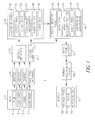
- FIG. 1 An overall functional diagram of an illustrative embodiment Albuming Automation System ('AAS') 2 is depicted in Fig. 1.
- One important function of the AAS 2 is to layout images within an album page. This function is the last major operation before an album page can be rendered for display, printing, or transfer to any another medium.
- the AAS 2 receives input 4 from one of a variety of image sources, which includes conventional film 6, flash memory cards 8, video media 10, and other images sources as are understood by those of ordinary skill in the art.
- Another basic input to the AAS 2 is the user specified preferences 12, which will be more fully discussed hereinafter.
- Film 6 input is first digitized 14 for subsequent processing. Flash memory card media 8 is decoded 16.
- Video media 10 is also digitized 18.
- Metadata can be found in Internet originated images, and may be supplied by the user or other individual. For example, APS cameras allow for inclusion of metadata related to the date and time the image was taken, the image format, and other technical parameters related to the exposure of the image.
- User preferences 12 are stored in a user preference database 20 and are subsequently decoded 24 for use in processing the user preferences along with the image information. By maintaining a database of user preferences, subsequent use of the system by a particular user can be made more efficient and convenient. The system is able to recall the user preferences and apply them to new batches of images, and can offer the user an opportunity to amend previous preferences as well.
- the core processing of the AAS 2 includes several functions 26 that discriminate images and information for subsequent page layout. These include clustering of images by event 28, detection of dud images 30, detection of duplicate images 32, recognition of facial features and certain other objects 34, audio to text conversion 36, and video summarization 38.
- the reduced and refined image information is then coupled to a second group of core process functions 40 that further refine the image content information. These functions include selection of the best image per page 42, automatic image cropping 44, association of particular images with ancillary content 46, association with event description information 48, and association with caption and annotation information 50.
- the refined image information is coupled to the automatic page layout process 52, which will be more fully described hereinafter.
- Page layout data is coupled to an output format module 54 that further organizes the output from the automatic page layout module 52.
- the output of the AAS 2 is produced at module 56 in the form of single page images 58, entire albums of images 60, Picture CD media, or other photo delivery media as are understood by those of ordinary skill in the art.
- the present invention teaches a flexible system for generation of album page layouts.
- the system makes use of genetic algorithms, a class of search and optimization algorithms that are based on the concepts of biological evolution. For a more detailed reference to genetic algorithms, see; J . Holland, Adaptation in Natural and Artificial Systems. The University of Michigan Press, Ann Arbor, 1975, and, D. Goldberg, Genetic Algorithms in Search, Optimization, and Machine Learning, Addison-Wesley, 1989 , the contents of which are hereby incorporated by reference thereto.
- the system is comprised of two major modules, the first that distributes images amongst a set of album pages, and the second that positions the images on each individual page. These modules are called the Page Creator Module and the Image Placement Module respectively. Each module takes a genetic approach to its task.
- Page Layout System 124 The overall function of the Page Layout System 124 is straightforward. Given a set of images to be placed in an album, a page layout algorithm must distribute the images amongst a set of pages and then layout the images on each individual page. Working within the framework of the AAS, the following information is available to the page layout system 124 on an image by image basis:
- the page layout system 124 performs two separate, yet equally important tasks.
- Page creation 126 given a set of images, the system distributes these images amongst a set of album pages, such that each image is assigned a page upon which the image will appear.
- image placement 132 once the images have been assigned to pages, each individual page is laid out by positioning the images assigned to it. Therefore, for each image, placement, rotation, and scaling of the image on the page are assigned.
- an important advantage is that the Automated Albumimg System produces albums that more closely resemble scrapbooks as opposed to a simple collection of pictures. Achieving this goal in an automated fashion is a significant accomplishment because the means by which creative scrapbookers generate page layouts for their albums is usually not easily expressed in an objective fashion.
- the creation of a scrapbook is primarily a subjective and artistic task. Few, if any, concrete rules exist in the scrapbook generation process, and those that do, tend to be individual based on personal preferences.
- the subjective nature of creative page layout poses a real challenge to any page layout system.
- template based layout approaches are somewhat limiting since the range of possibilities for a page layout are bounded by the collection of available templates.
- the present invention employs a novel approach to page layout by employing genetic algorithms, which are a class of adaptive methods that can be used to solve search and optimization problems involving large search spaces.
- the search is performed using a simulated evolution (survival of the fittest). These algorithms maintain and manipulate "generations" of potential solutions or "populations". With each generation, the best solutions (as determined by a problem specific fitness function) are genetically manipulated to form the solution set for the following generation. As in real evolution, solutions can be combined (via mating/crossover) or undergo random mutation. In addition, inferior solutions can, by chance, survive from generation to generation.
- the genetic algorithm search process is performed in an iterative manner as illustrated in Fig. 2.
- the process starts at step 64, and then an initial population of solutions is generated at step 66. This initialization is typically done through random placement of the image population, although there is nothing prohibiting in using some sort of heuristic for this process.
- Once a population is established individual solutions are judged at step 68 based on a fitness function and suitable individuals are chosen for mating and mutation.
- crossover and mutation are performed on the chosen solution, resulting in a number of new individuals in the population. These new individuals are generated using the genetic operators of mutation, step 70, and crossover, step 72.
- a new generation of solutions is then created from these newly generated offspring by inserting them into the population at step 74.
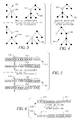
- Figure 3 illustrates a genetic crossover operation for trees 80 and 82.
- random nodes 88, 90 are selected for each parent and the sub-tree from these chosen nodes are swapped. This results in the 'after crossover' trees 84 and 86, and the illustration demonstrates the change that occurs.
- Fig. 4 illustrates a genetic mutation operation for tree 92. Nodes from the tree 96 and 98 are randomly chosen, then swapped. Tree 94 illustrates the change from tree 92 when this swap occurs.
- Figure 5 and Fig. 6 illustrate similar genetic crossover and mutation operators, but in the case of an array type data structure.
- a position 101 within the array 100 is randomly selected and the array values 104 and 106 after the chosen position 101 are swapped between the two parents, resulting in crossover array 102.
- two random array elements 112 and 114 are selected within a single parent 108 and their respective positions are swapped to produce resultant array 110.
- Page layout has also been found to be more of an artistic task rather than a mechanical one. Genetic algorithms are appropriate for such artistic tasks since, unlike other more brute force algorithms, the genetic algorithm does not attempt to mimic or model any particular process by which solutions are created. Instead, solutions are generated randomly and are evaluated after the fact. This is analogous to the way creative scrapbookers approach the layout problem. While scrapbookers can't usually explain the process by which they generated their page layouts, they certainly know a good layout when they see one.
- the layout problem has a multidimensional problem space.
- FIG. 7 illustrates the overall architecture of a page layout system 124 according to an illustrative embodiment of the present invention.
- the system 124 takes as input a collection of images, which are clustered by events 116, 118, 120, 122 that are to be placed in an album. Being designed to work within the framework of an AAS, the system 124 receives the images that are sorted by event, duplicates and duds have been removed from the collection, and that each image has been assigned an emphasis value indicating the visual appeal of the image.
- the system produces a series of album pages 140, 142, 144, 146. There are two main system modules corresponding to the tasks outlined above.
- the Page Creator Module 126 is responsible for assigning each image to an album page.
- the page groupings created by this module are passed to the Image Placement Module 132, which positions the images on each individual page.
- Page layouts are specified in a textual form using an Extensible Markup Language (XML) format. Details about this format are available from: World Wide Web Consortium, Extensible Markup Language (XML) 1.0 , http://www.w3.org/xml , February 1998, the contents of which are hereby incorporated by reference thereto. These textual descriptions are interpreted by a XML compiler 138 that creates composite images corresponding to each completed album page.
- Both the Page Creator Module 126 and Image Placement Module 132 make use genetic algorithms and consists of their own separate genetic engines, 128 and 136 respectively.
- the Page Creator Module 126 comprises a genetic engine 128 and a page evaluation module 130, both of which are implemented in software on a processor as is understood by those of ordinary skill in the art.
- the Image Placement Module 132 comprises its own genetic engine 136 and a layout evaluation module 134, also implemented in software.
- the present invention is implemented using Visual C++ 6.0 running under Windows 95/98/NT.
- the most important implementation task involves the definition of the fitness function.
- the fitness function In defining the fitness for page layout, an approach whereby the fitness is determined directly by the user's visual evaluation would be desirable since the user's subjective interpretation would naturally fit the user's expectations of artistic qualities.
- the AAS is not principally designed for this type of interaction, as one of the goals of the AAS is to minimize the user input once the images to be placed in the album have been input to the system. This does not, however, limit the application of the present invention page layout system in a more interactive environment.
- Page layout is one of the major tasks of those skilled in the art of graphic design.
- the present invention may rely on the principles of graphic design. Upon surveying a number of graphic design texts, including: Amy Arntson, Graphic Design Basics, 3 rd Ed., Harcourt Brace College Publishers, Fort Worth, 1998; Bryan L.
- Each of the Page Creator Module 126 and Image Placement Module 132 judge the fitness of solutions based on a number of different criteria from the categories listed above.
- the user's preference for each criterion are input to each of the modules, as was noted respecting the AAS system diagram in Fig. 1, where user preferences 12 are input to a user database 20 and subsequently decoded and input to these modules. Generally, these are called value preference parameters. In the scope of the AAS, these preference parameter values can be obtained directly by asking the user when the pictures input for album processing. Once established, these preferences are stored as part of a user profile and extracted whenever a particular user requests an album be made.
- the Page Creator Module 126 and Image Placement Module 132 also utilize a set of importance parameters. These importance parameters define how important it is that the system, for a given criterion, obtains a solution where the layout produced evaluates to the exact value of the preference parameter for that criterion. Another way of looking at this is that the importance parameters indicate how much variation the system is allowed with respect to a given criterion. For example, one of the evaluation criteria for the Image Placement Module is white space. A preference of 1.0 indicates that a layout with a larger amount of white space is desired, whereas a preference of 0.0 is indicates that a layout with very little white space is preferred.
- Each module has a number of system parameters. These parameters are not directly used during the layout evaluation process. Instead, these parameters provide flexibility for the modules ensuring that they can be used by different albuming systems and in a variety of albuming situations. Examples of system parameters include page dimensions, resolution of the output device, minimum and maximum number of pages per album, etc.
- the function of the Page Creator Module is to place each image onto an album page. Alternately, this module can be thought of as being responsible for assigning to each image a page number, where this number corresponds to the page on which the image will be placed.
- the Page Creator Module makes use of a number of system parameters. These parameters are listed in Table 1 below. As noted above, the values for these system parameters are set before the task of page creation commences. The symbol assigned to each parameter will be used in subsequent sections for referencing the values of these parameters.
- the genome for the page creator module makes use of a tree structure as illustrated in Fig. 8.
- the root of the tree, node 148 represents the entire photo album.
- Interior nodes, 150, 152, 154, 156, 158, 160, 162, and 164 represent a structure of hierarchical visual groupings of images, which, in turn, are represented by the leaf nodes 166. However, it is equally suitable to replace this tree based encoding with a simpler data structure based on arrays.
- the first layer of the tree 148 indicates the partitioning of the album into pages. Nodes below the first layer represent visual groupings within pages 150, 152, 154, 156. The notion of this hierarchical visual grouping is illustrated in Fig.
- the album is represented by node 168. It comprises two pages 170 and a72.
- Page One has three images 180.
- Page Two 172 has three subgroups of images 174, 176, and 178. Each of these subgroups has two images. Subgroup 174 having images 182, subgroup 176 having images 184, and subgroup 187 having images 186.
- Standard crossover and mutation operators for tree structures are used by the Page Creator Module. These operators are illustrated in Fig. 3 and Fig. 4, as discussed above. Note that the crossover operator may result in a solution that contains images appearing in multiple places within the tree or in solutions where particular images are omitted. These types of offspring are unacceptable and will be assigned a score of 0.0 during evaluation. Because of this, it is to be understood that the probability of performing a crossover has been lowered thus favoring mutation over crossover when constructing the individuals of future generations.
- the determination of fitness used by the Page Creator Module is a combination of a number of factors.
- a solution is evaluated and scored using a number of different criteria.
- the score achieved by the solution is compared to the preference of the user as defined by the preference parameters supplied to the module. This comparison results in a score indicating the suitability of the solution given the preferences of the user.
- the final fitness is obtained by scaling these suitability values on a criterion by criteria basis using the importance parameters, also supplied by the user.
- a score ranging from 0.0 to 1.0 is given to each solution based on the evaluation. Details of the evaluation method for each criterion are given below.
- solutions containing a total number of pages outside the range determined by the system parameters PAGE min - PAGE max are deemed as unfit solutions and given a final fitness of 0.0.
- solutions that place a single image in multiple places, or solutions that do not consider all images are immediately assigned a fitness of 0.0.
- the balance score is a measure of whether there are an equal number of images on each page. A solution with an equal number of images on all of its pages will obtain a perfect score of 1.0. The score is determined by, first, calculating the mean number of images per page. The average deviation from this mean amongst all the pages in the album is determined and scaled by a penalty factor (p balance ). Since a perfect score will have a deviation of 0.0, the final score is obtained by subtracting this scaled deviation value from 1.0.
- each solution is judged based on how closely the order of the images as presented on the pages match that of the chronology of the images.
- a chronology range This range is defined as the range of chronology values for images that should appear on the page if the album was perfectly ordered in time. For example, given an album with three pages, with two images on the first page, four images on the second page, and three images on the final page, the chronology range for each page would be given according to Table 2: Chronology ranges Page Chronology range Page 1 1-2 Page 2 3-6 Page 3 7-9
- each page is given a score based on the percentage of images that fall within chronology range for the page.
- the final score is obtained by computing the average of the page scores over all of the pages in the album.
- the above scores can be calculated on an event and/or sub-event basis.
- the system allows one to define whether sub-event checking should be performed.
- the final unity score is a linear combination of scores for page and event unity for each evaluation performed. Individual scores are scaled equally in determination of the final unity score.
- the values of the importance parameters are used to scale the contribution of each criterion to the final fitness score.
- the best possible score obtainable for a given run of the algorithm can be calculated by assuming the fitness score for each criterion to be perfect (i.e. equal to 1.0).
- the final fitness score is determined by scaling each of the actual fitness scores for each criteria by the corresponding importance parameter value, summing the results from all of the criteria and dividing this sum by the best possible fitness value obtainable.
- This final fitness score can be summarized mathematically as: where 'I' represents the set of importance parameters value (1 per criteria), 'P' represents the set of preference parameter values (1 per criteria) and 'E' represents the set of raw evaluations scores as determined by the procedures outlined above (1 per criteria).
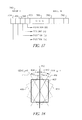
- Event two 190 includes nine images, chronologically C:12 through C:20.
- Event three includes eight images, chronologically C:21 through C:28.
- Event four 194 includes six images, chronologically C:29 through C:34.
- Event five 196 includes four images, chronologically C:35 through C:38.
- event six 198 includes one image, chronologically C:39.
- Each image has a emphasis value which can be determined by reference to Fig. 10.
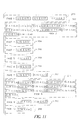
- Figure 11 illustrates the effect of chronology.
- a good chronology score is generally not difficult to achieve given that the images are originally presented in chronological order.
- the trivial solution is a layout of six pages, where each page contains the images from a single event.
- PAGE min is set to ten as to assure that the Page Creator Module performs some non-trivial work (e.g., it cannot find the trivial solution as six pages is prohibited by this parameter).
- the chronology index is displayed on each image. Referring to Fig. 11, it can be seen that ten pages are output from the Page Creation Module, identified by reference numbers 200, 202, 204, 206, 208, 210, 212, 214, 216, and 218, respectively. Each page has one or more images assigned to it, and the images are in chronological order, as would be expected.
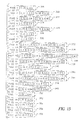
- Figure 12 illustrates the effects of unity Since unity forces images of the same event to be placed next to each other, as with the chronology case, the trivial solution of a six page album with one event per page will receive a perfect score of one.
- PAGE min is set to 10, once again, to allow the module to perform some non-trivial work. This particular example, though not perfect, tends to keep events together, if not on the same page, on subsequent pages.
- the output comprised 16 pages.
- Page 1, 220 has a single image from event six.
- Page 2, 3, 4, and 5, reference numerals 222, 224, 226, and 228 respectively, have single images from event two.
- Page 6, 230 has two images from event five.
- Pages 7 and 8, 232 and 234, have single images from event five.
- Page 9, 236, has three images from event three.
- Pages 10, 11, and 12, reference numerals 238, 240, and 242 respectively, have single images from event three.
- Page 13, 244 has three images from event one.
- Page 14, 246, has two images from event one.
- Page 15, 248, has seven images from event one, five images from event 2, two images from event 4, and five images from event four. In this page, all common event images are adjacent to one another.
- page 16, 250 has a single image from event 4. This solution received a score of 0.8.
- Fig. 13 The effects of balance are illustrated in Fig. 13.
- no constraints are placed on the minimum or maximum number of pages.
- Page 1, 252 comprises a single image.
- Fig. 14 The effects of emphasis are illustrated in Fig. 14. As with the balance test, no constraints were placed on the minimum or maximum number of pages. Note that emphasis values are printed for each image, along with the chronology value. Seventeen pages were generated, identified by reference numerals 284, 286, 288, 290, 292, 294, 296, 298, 300, 302, 304, 306, 308, 310, 312, 314, and 316. Note that images with high emphasis values tend to be placed alone on their own page. Also note that image with lower emphasis values are combined with other similar images onto a single page.
- Image Placement Module (item 134 in Fig. 7), its role is to position images on individual album pages once the Page Creator Module has assigned images to particular pages, as discussed above. Given a set of 'N' images to be placed on an individual album page, this module will determine, for each image, the following positioning parameters:
- the positioning parameters (x, y, s, ⁇ ) are be used to indicate the calculated position of an image on the page with each member of the four factors corresponding to a respective value listed above.
- a set of four positioning parameters define, and are referred to as, the image position.
- the Image Placement Module makes use of a number of system parameters.
- the values of these parameters will vary dependent on the application using the module and are set before layouts are processed by the module.
- a list of these system parameters is given in Table 3. The symbol assigned to each parameter will be used for reference hereinafter.
- System parameters for Image Placement Module Parameter Symbol Description Album Page Width W page The width of the album page in pixel units (or physical units).
- Album Page Height H page The height of the album page in pixel units (or physical units).
- Maximum Rotation ⁇ max Maximum allowable rotation about the center vertical axis of an image.
- Minimum Scaling s min Minimum allowable scale factor that can be applied to an image.
- Maximum Scaling s max Maximum allowable scale factor that can be applied to an image.
- Minimum white space WS min Minimum allowable amount of white space on the page, expressed as a percentage of the total page area.
- Maximum white space WS max Maximum allowable amount of white space on the page, expressed as a percentage of the total page area.
- Minimum overlap OL min Minimum allowable amount of overlap, expressed as a percentage of image area.
- Maximum overlap OL max Maximum allowable amount of overlap, expressed as a percentage of image area.
- Border deviation BDR max Maximum deviation allowed in definition of a natural border created by the image placements. Rotation standard deviation ⁇ ⁇ Standard deviation used in Gaussian scaling of rotation.
- a floating point array is used as the genome for the image placement module.
- Each element of the array corresponds to an individual positioning parameter.
- the first four elements, 394, 396, 398, and 400 specify the Position (x), Position (y), Scaling (s), and Rotation ( ⁇ ) for the first image 390.
- Each image is similarly defined through the N th image 392.
- the complete genome is comprised of the image positions of all images to be placed. Thus, for a page with N images, the length of the genome is four times N.
- All elements of the array are floating point values ranging from 0.0 to 1.0. This is to assure that all genes (i.e. array elements) are considered equal when performing genetic operations.
- the value of the genes for a given image are be referred as gene x , gene y , gene s , and gene ⁇ for the value corresponding to the x position, y position, scaling, and rotation respectively.
- the mappings from these array element values to positioning parameter values for each positioning parameter are given hereinafter.
- the x and y positioning parameters give the placement of the center of a given image on the album page. In the genome, this is expressed relative to the total height and width of the page with the origin being the upper-left corner of the page. Appropriate calculations are made by the Image Placement Module to assure that an image placement calculated from given gene values will not result in any part of the image being placed off the boundaries of the album page.
- Scaling is expressed in the gene by a linear ramp between the minimum allowable scaling and the maximum allowable scaling.
- the rotation positional parameter gives the rotation of an image about the center of the image with respect to the vertical axis of that image.
- An image 402 may be rotated to a counter-clockwise position 406 or a clockwise position 404.
- Rotation is encoded in the gene by a Gaussian scaling between maximum allowable rotation in the negative (counter-clockwise) direction through angle 408 and the maximum allowable rotation in the positive (clockwise) direction through angle 410.
- the vertical axis of the image 412 is rotated through the aforementioned angles to a position 414, or 416.
- a Gaussian scaling is used as opposed to linear scaling to control the amount of image rotation; favoring small rotations over large amounts of rotation.
- mapping from gene value to actual rotation angle can thus be given by: where SIGN (x) equals 1 if x is positive, -1 if x is negative and 0 otherwise.
- ⁇ In an illustrative embodiment, standard crossover and mutation operators for arrays are used by the Image Placement Module. These operators are illustrated in Fig. 5 and Fig. 6.
- a value mutation operator is defined and also used alternately by the module. This value mutation operator will choose a random gene within the array and deviate it's value by a random amount. Care is taken to assure that the gene value remains between 0.0 and 1.0 after the mutation.
- the fitness for the Image Placement Module is a combination of raw evaluations in a number of given criteria considered with respect to the preference and importance parameters supplied from the user preference database.
- the method for evaluation of fitness is outlined in the following discussion.
- the evaluation criteria for layout solutions include seven different criteria. These criteria can be categorized as follows.
- a solution represented by a genome
- a score ranging from 0.0 to 1.0.
- a mockup of the page layout is generated by decoding the genome values and positioning rectangles on a two-dimensional grid using a polygon-clipping library.
- the generic polygon clipping library according to the reference: Alan Murta, "A Generic Polygon Clipping Library", Department of Computer Science, University of Manchester, 1999 , the contents of which are hereby incorporated by reference thereto, is used.
- This mock layout is used to calculate the various area calculations used in the evaluations.
- the evaluation of white space involves a score of the white space, which is a measure of the amount of white space on the page and is determined by calculating the percentage of the page area not filled by any images.
- a score of 0.0 indicates a layout where the images placed on the page take up the entire page area.
- a score of 1.0 is indicative of an empty page with no images on it (i.e. the entire page is white space).
- Table 3 there are system parameters that limit the acceptable amount of white space allowed. Solutions that result in white space percentages below the minimum or greater than the maximum are tagged as unacceptable solutions and given a final fitness value of 0.0.
- the overlap score is defined as the maximum percentage of any image area covered by another image over all of the images placed on the page. Similar to white space, there are system parameters that limit the acceptable amount of overlap allowed. See Table 3, above. Solutions that result in overlap scores below the minimum or greater than the maximum are tagged as unacceptable solutions and given a final fitness value of 0.0.
- the rotation score is an indication of the total amount of image rotation on an album page. It is derived by averaging the absolute values of the image rotations over all of the images. This average is scaled by ⁇ max to achieve a score between 0.0 and 1.0. Note that since the interpretation of the genome encoding for rotation ensures that the rotation for each image will be between - ⁇ max and + ⁇ max , this rotation evaluation score will never exceed 1.0.
- Spatial balance is evaluated by comparing the image areas in the four quadrants of the album page.
- the page is first split horizontally into equal halves.
- the amount of page area containing images for both halves are determined and the ratio of the half with the smaller image area over the half with the larger image area is calculated. For a spatially balanced layout, this ratio will be close to 1.0.
- the same procedure is performed in the vertical direction.
- the final spatial balance score is the average of the two ratios.
- the score for rotational balance is calculated in a manner similar to that of rotation. Like with the rotation evaluation, the rotation balance values over all the images are averaged. However, unlike the evaluation for rotation, the actual rotation values and not the absolute values of these rotations are considered when calculating the average. The rational behind this evaluation is that for a rotationally balanced layout, the summation of all the rotations should amount to 0.0.
- the rotational balance score is obtained by scaling the calculated signed average by ⁇ max and then subtracting this value from 1.0. This way, a very rotationally balanced layout, (i.e. one where the signed average of the rotations is 0.0) will produce a score of 1.0. Similarly, a very rotationally unbalanced layout, one where the average of the rotations is close to ⁇ max will earn a score of 0.0.
- the border symmetry score evaluates how closely the edges of the image on the page form a natural boundary. For each edge of the album page (top, bottom, left, right), a border distance is determined by considering the image endpoint closest to the page edge and calculating the distance from the edge to the endpoint. The mean distance amongst the four edges is determined and the average distance from the mean amongst the four edges is calculated. This average is scaled by BDR max and subtracted from 1.0 to generate the final score. Note that if the average distance is greater than BDR max , the solution is flagged as unfit and is assigned a final fitness value of 0.0.
- the emphasis score measures the proportionality of the size of the images with respect to the emphasis values assigned to the images.
- the rationale behind this evaluation stems from the notion that images with large emphasis values should take up more space on the page.
- the comparison made during evaluation is relative to the sizes of all of the images. For each image, the size relative to the largest image in the group is calculated and expressed as a percentage. This percentage is then subtracted from the emphasis value assigned to the image. Then mean difference amongst all the images on the page is calculated and this average is subtracted from 1.0, assuring that an emphasis score of 1.0 indicates a strong positive correlation between image size and emphasis values.
- Figures 23 and 24 illustrate the effect of the white space preference. Note that SP max has been set to 75% and SP min has been set to 5%. For Fig. 23, image 426, the preference is set to 0.0, and, for Fig. 24, image 428, the preference is set to 1.0.
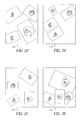
- Figure 25 and 26 illustrate the effect of overlap.
- the white space preference is kept constant between the two layouts.
- the value of OL min is set to be 0% whereas the value of OL max is set at 25%.
- the preference is set to 0.0
- the preference is set to 1.0.
- Figs. 27 and 28 The effect of rotation is illustrated in Figs. 27 and 28.
- the white space preference is kept constant between the two layouts.
- the overlap preference is set to 0.
- the value of ⁇ max is set at 30 degrees.
- image 434 the preference is set to 0.0
- Fig. 28, image 4436 the preference is set to 1.0.
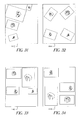
- Figs. 29 and 30 the effects of rotational balance are shown.
- the rotation preference for both layouts is set to 1.0.
- the preference is set to 0.0
- the preference is set to 1.0.
- Figs. 31 and 32 The effects of spatial balance are shown in Figs. 31 and 32. Note that setting the preference to 0.0 results in a layout where one quadrant of the page is completely empty where the rest have images in them. For Fig. 31, image 442, the preference is set to 0.0, and, for Fig. 32, image 444, the preference is set to 1.0.
- Figures 33 and 34 show the effects of border symmetry.
- the rotation and overlap preferences in this example are set to 0.0.
- image 446 the preference is set to 0.0
- image 448 the preference is set to 1.0.
Landscapes
- Engineering & Computer Science (AREA)
- Theoretical Computer Science (AREA)
- Multimedia (AREA)
- Signal Processing (AREA)
- Databases & Information Systems (AREA)
- General Physics & Mathematics (AREA)
- Physics & Mathematics (AREA)
- Data Mining & Analysis (AREA)
- Computer Vision & Pattern Recognition (AREA)
- General Engineering & Computer Science (AREA)
- Evolutionary Computation (AREA)
- Computing Systems (AREA)
- Health & Medical Sciences (AREA)
- General Health & Medical Sciences (AREA)
- Artificial Intelligence (AREA)
- Physiology (AREA)
- Life Sciences & Earth Sciences (AREA)
- Bioinformatics & Cheminformatics (AREA)
- Bioinformatics & Computational Biology (AREA)
- Evolutionary Biology (AREA)
- Software Systems (AREA)
- Medical Informatics (AREA)
- Library & Information Science (AREA)
- Processing Or Creating Images (AREA)
- Editing Of Facsimile Originals (AREA)
- Image Analysis (AREA)
Applications Claiming Priority (2)
| Application Number | Priority Date | Filing Date | Title |
|---|---|---|---|
| US750858 | 2000-12-29 | ||
| US09/750,858 US7340676B2 (en) | 2000-12-29 | 2000-12-29 | System and method for automatic layout of images in digital albums |
Publications (2)
| Publication Number | Publication Date |
|---|---|
| EP1220531A2 true EP1220531A2 (de) | 2002-07-03 |
| EP1220531A3 EP1220531A3 (de) | 2005-11-16 |
Family
ID=25019436
Family Applications (1)
| Application Number | Title | Priority Date | Filing Date |
|---|---|---|---|
| EP01204944A Withdrawn EP1220531A3 (de) | 2000-12-29 | 2001-12-17 | System und Verfahren zur automatischen Bildanordnung in digitalen Fotoalben |
Country Status (3)
| Country | Link |
|---|---|
| US (2) | US7340676B2 (de) |
| EP (1) | EP1220531A3 (de) |
| JP (1) | JP2002288669A (de) |
Cited By (15)
| Publication number | Priority date | Publication date | Assignee | Title |
|---|---|---|---|---|
| GB2406254A (en) * | 2002-08-30 | 2005-03-23 | Hewlett Packard Development Co | Page Composition |
| WO2006018601A1 (en) * | 2004-08-19 | 2006-02-23 | Eastman Kodak Company | Montage method |
| EP1633125A1 (de) * | 2004-09-03 | 2006-03-08 | Canon Kabushiki Kaisha | Vorrichtung zur Bearbeitung elektronischer Alben und Steuermethode dafür |
| EP1521449A3 (de) * | 2003-09-30 | 2007-11-14 | Hewlett-Packard Development Company, L.P. | Organizierung eines digitalen Bildes |
| WO2008042309A1 (en) * | 2006-09-28 | 2008-04-10 | Hewlett-Packard Development Company, L.P. | Graphic assembly layout with maximum page coverage |
| WO2008016533A3 (en) * | 2006-07-31 | 2008-07-17 | Hewlett Packard Development Co | Image layout constraint generation |
| US7595809B2 (en) | 2005-05-11 | 2009-09-29 | Hewlett-Packard Development Company, L.P. | Method and system for determining an occlusion cost for concurrently presenting one or more images in a shared viewing region |
| US7848596B2 (en) | 2006-05-24 | 2010-12-07 | Hewlett-Packard Development Company, L.P. | Templated collage generation with occlusion costing |
| WO2014015083A1 (en) * | 2012-07-18 | 2014-01-23 | Microsoft Corporation | Transforming data to create layouts |
| US8990140B2 (en) | 2012-06-08 | 2015-03-24 | Microsoft Technology Licensing, Llc | Transforming data into consumable content |
| US9009092B2 (en) | 2012-07-19 | 2015-04-14 | Microsoft Technology Licensing, Llc | Creating variations when transforming data into consumable content |
| US9330437B2 (en) | 2012-09-13 | 2016-05-03 | Blackberry Limited | Method for automatically generating presentation slides containing picture elements |
| EP2013696A4 (de) * | 2006-01-27 | 2016-10-05 | Cimpress Schweiz Gmbh | Automatisierter zusammengesetzter bildentwurf |
| US10380228B2 (en) | 2017-02-10 | 2019-08-13 | Microsoft Technology Licensing, Llc | Output generation based on semantic expressions |
| CN115544239A (zh) * | 2022-09-30 | 2022-12-30 | 杭州电子科技大学 | 一种基于深度学习模型的布局偏好预测方法 |
Families Citing this family (217)
| Publication number | Priority date | Publication date | Assignee | Title |
|---|---|---|---|---|
| US20050210413A1 (en) * | 1999-11-24 | 2005-09-22 | Quek Su M | Utilization of digital images |
| US7054508B2 (en) * | 2000-08-03 | 2006-05-30 | Canon Kabushiki Kaisha | Data editing apparatus and method |
| US20020154147A1 (en) * | 2001-04-20 | 2002-10-24 | Battles Amy E. | Photo ranking system for creating digital album pages |
| JP4749628B2 (ja) * | 2001-09-07 | 2011-08-17 | パナソニック株式会社 | アルバム作成装置、アルバム作成方法およびアルバム作成プログラム |
| US7050097B2 (en) * | 2001-11-13 | 2006-05-23 | Microsoft Corporation | Method and apparatus for the display of still images from image files |
| US20030090498A1 (en) * | 2001-11-13 | 2003-05-15 | Photela, Inc. | Method and apparatus for the creation of digital photo albums |
| JP2004015467A (ja) * | 2002-06-07 | 2004-01-15 | Ricoh Co Ltd | 画像形成装置 |
| US7027071B2 (en) * | 2002-07-02 | 2006-04-11 | Hewlett-Packard Development Company, L.P. | Selecting elements from an electronic document |
| AU2002952711A0 (en) * | 2002-11-18 | 2002-11-28 | Typefi Systems Pty Ltd | A method of formatting documents |
| US7362919B2 (en) * | 2002-12-12 | 2008-04-22 | Eastman Kodak Company | Method for generating customized photo album pages and prints based on people and gender profiles |
| US20040122856A1 (en) * | 2002-12-23 | 2004-06-24 | Clearwater Scott H. | Apparatus and method for market-based document content and layout selection |
| US20040122805A1 (en) * | 2002-12-23 | 2004-06-24 | Sang Henry W. | Apparatus and method for market-based graphical grouping |
| US20040122824A1 (en) * | 2002-12-23 | 2004-06-24 | Clearwater Scott H. | Apparatus and method for market-based document content selection |
| US7240047B2 (en) * | 2002-12-23 | 2007-07-03 | Hewlett-Packard Development Company, L.P. | Apparatus and method for market-based document layout selection |
| US7472110B2 (en) * | 2003-01-29 | 2008-12-30 | Microsoft Corporation | System and method for employing social networks for information discovery |
| US7019871B2 (en) * | 2003-04-08 | 2006-03-28 | Tr Marketing, Inc. | Digital photo album having a built-in scanner |
| US7079293B2 (en) * | 2003-04-08 | 2006-07-18 | Tr Marketing, Inc. | Digital album and methods of use |
| JP4148011B2 (ja) * | 2003-04-25 | 2008-09-10 | セイコーエプソン株式会社 | 印刷ジョブ作成装置および印刷ジョブ作成方法並びにこれらに用いるプログラム |
| AU2003902954A0 (en) * | 2003-06-12 | 2003-06-26 | Canon Information Systems Research Australia Pty Ltd | Geometric space decoration in a graphical design system |
| GB2404269A (en) * | 2003-07-24 | 2005-01-26 | Hewlett Packard Development Co | Estimating symmetry in a document |
| JP2005057671A (ja) * | 2003-08-07 | 2005-03-03 | Dainippon Screen Mfg Co Ltd | ドキュメント処理装置、印刷システム、ドキュメントへのオブジェクト追加方法、およびプログラム |
| JP3633608B2 (ja) * | 2003-08-29 | 2005-03-30 | セイコーエプソン株式会社 | 画像配置装置及び方法 |
| GB0320278D0 (en) * | 2003-08-29 | 2003-10-01 | Hewlett Packard Development Co | Constrained document layout |
| US7308650B2 (en) | 2003-08-29 | 2007-12-11 | Seiko Epson Corporation | Image layout device |
| JP4396638B2 (ja) * | 2003-09-10 | 2010-01-13 | セイコーエプソン株式会社 | 出力画像データ生成装置および出力画像データ生成方法 |
| US8065627B2 (en) * | 2003-09-30 | 2011-11-22 | Hewlett-Packard Development Company, L.P. | Single pass automatic photo album page layout |
| US20050071479A1 (en) * | 2003-09-30 | 2005-03-31 | Dimitris Achlioptas | Smart button |
| US7555730B2 (en) * | 2005-05-12 | 2009-06-30 | Hewlett-Packard Development Company, L.P. | Method for arranging graphic assemblies |
| US7743322B2 (en) * | 2003-09-30 | 2010-06-22 | Hewlett-Packard Development Company, L.P. | Automatic photo album page layout |
| US8056013B2 (en) * | 2005-05-13 | 2011-11-08 | Hewlett-Packard Development Company, L.P. | Method for arranging graphic assemblies |
| US7640516B2 (en) * | 2003-09-30 | 2009-12-29 | Hewlett-Packard Development Company, L.P. | Arranging graphic objects on pages |
| US7188310B2 (en) * | 2003-10-09 | 2007-03-06 | Hewlett-Packard Development Company, L.P. | Automatic layout generation for photobooks |
| US7478340B2 (en) * | 2003-10-22 | 2009-01-13 | Microsoft Corporation | Systems and methods for managing preparation of graphical elements for presentation |
| US20050091594A1 (en) * | 2003-10-23 | 2005-04-28 | Microsoft Corporation | Systems and methods for preparing graphical elements for presentation |
| US20050108643A1 (en) * | 2003-11-17 | 2005-05-19 | Nokia Corporation | Topographic presentation of media files in a media diary application |
| US8990255B2 (en) | 2003-11-17 | 2015-03-24 | Nokia Corporation | Time bar navigation in a media diary application |
| US20050105374A1 (en) * | 2003-11-17 | 2005-05-19 | Nokia Corporation | Media diary application for use with digital device |
| US8010579B2 (en) | 2003-11-17 | 2011-08-30 | Nokia Corporation | Bookmarking and annotating in a media diary application |
| US7109848B2 (en) * | 2003-11-17 | 2006-09-19 | Nokia Corporation | Applications and methods for providing a reminder or an alert to a digital media capture device |
| US7689909B1 (en) * | 2003-11-26 | 2010-03-30 | Szuszczewicz Edward P | System and method for generating photo collages and photo album pages |
| US20050123886A1 (en) * | 2003-11-26 | 2005-06-09 | Xian-Sheng Hua | Systems and methods for personalized karaoke |
| US7774718B2 (en) * | 2003-12-17 | 2010-08-10 | Nokia Corporation | Time handle in a media diary application for accessing media files |
| US7457467B2 (en) | 2004-01-30 | 2008-11-25 | Xerox Corporation | Method and apparatus for automatically combining a digital image with text data |
| JP4125249B2 (ja) * | 2004-01-30 | 2008-07-30 | キヤノン株式会社 | 情報処理方法及び情報処理装置及びコンピュータ読み取り可能なプログラム |
| US20050187943A1 (en) * | 2004-02-09 | 2005-08-25 | Nokia Corporation | Representation of media items in a media file management application for use with a digital device |
| US20050235293A1 (en) * | 2004-04-14 | 2005-10-20 | Microsoft Corporation | Methods and systems for framework layout editing operations |
| EP1589444A3 (de) * | 2004-04-21 | 2008-03-12 | Samsung Electronics Co., Ltd. | Verfahren, Medium und Vorrichtung zur Erkennung von Änderungen der Situation in digitalen Fotos und Verfahren, Medium und Vorrichtung zur situationsbasierten Fotoclusterung in einem Digitalfotoalbum |
| US7296224B2 (en) * | 2004-04-23 | 2007-11-13 | Hewlett-Packard Development Company, L.P. | Method for assigning graphical images to pages |
| US9235655B2 (en) * | 2004-05-21 | 2016-01-12 | Hewlett-Packard Development Company, L.P. | Task-based design evaluation |
| WO2005116864A1 (en) | 2004-05-26 | 2005-12-08 | Typefi Systems Pty Ltd | Document templates |
| JP4532995B2 (ja) * | 2004-06-01 | 2010-08-25 | キヤノン株式会社 | 印刷装置、印刷方法、及びプログラム |
| US8657606B2 (en) * | 2004-07-02 | 2014-02-25 | Paul Fisher | Asynchronous art jurying system |
| WO2006012685A1 (en) * | 2004-08-04 | 2006-02-09 | Momento Pro Pty Ltd | Image layout method |
| US7752548B2 (en) * | 2004-10-29 | 2010-07-06 | Microsoft Corporation | Features such as titles, transitions, and/or effects which vary according to positions |
| US7656543B2 (en) * | 2004-11-12 | 2010-02-02 | Hewlett-Packard Development Company, L.P. | Albuming images |
| US7609847B2 (en) * | 2004-11-23 | 2009-10-27 | Hewlett-Packard Development Company, L.P. | Methods and systems for determining object layouts |
| WO2006068223A1 (ja) * | 2004-12-24 | 2006-06-29 | National University Corporation Yokohama National University | 画像処理装置 |
| US8024658B1 (en) * | 2005-01-09 | 2011-09-20 | Apple Inc. | Application for designing photo albums |
| US20080205789A1 (en) * | 2005-01-28 | 2008-08-28 | Koninklijke Philips Electronics, N.V. | Dynamic Photo Collage |
| US8161377B2 (en) * | 2005-03-01 | 2012-04-17 | Hewlett-Packard Development Company, L.P. | Arranging images on pages of an album |
| JP2006253992A (ja) * | 2005-03-10 | 2006-09-21 | Fuji Photo Film Co Ltd | 画像レイアウト装置および方法並びにプログラム |
| JP2006293985A (ja) * | 2005-03-15 | 2006-10-26 | Fuji Photo Film Co Ltd | アルバム作成装置、アルバム作成方法、及びプログラム |
| JP4588642B2 (ja) * | 2005-03-15 | 2010-12-01 | 富士フイルム株式会社 | アルバム作成装置、アルバム作成方法、及びプログラム |
| JP2006293986A (ja) | 2005-03-15 | 2006-10-26 | Fuji Photo Film Co Ltd | アルバム作成装置、アルバム作成方法、及びプログラム |
| JP2006295890A (ja) * | 2005-03-15 | 2006-10-26 | Fuji Photo Film Co Ltd | アルバム作成装置、アルバム作成方法、及びプログラム |
| US20060209214A1 (en) * | 2005-03-17 | 2006-09-21 | Xerox Corporation | Digital photo album systems and methods |
| JP2006331393A (ja) * | 2005-04-28 | 2006-12-07 | Fujifilm Holdings Corp | アルバム作成装置、アルバム作成方法、及びプログラム |
| US20060248071A1 (en) * | 2005-04-28 | 2006-11-02 | Xerox Corporation | Automated document localization and layout method |
| US7760956B2 (en) | 2005-05-12 | 2010-07-20 | Hewlett-Packard Development Company, L.P. | System and method for producing a page using frames of a video stream |
| US7711211B2 (en) * | 2005-06-08 | 2010-05-04 | Xerox Corporation | Method for assembling a collection of digital images |
| US7644356B2 (en) * | 2005-06-10 | 2010-01-05 | Hewlett-Packard Development Company, L.P. | Constraint-based albuming of graphic elements |
| US7474801B2 (en) * | 2005-07-07 | 2009-01-06 | Shutterfly, Inc. | Automatic generation of a photo album |
| KR100696102B1 (ko) * | 2005-07-21 | 2007-03-20 | 삼성전자주식회사 | 화상형성장치 및 화상형성방법 |
| US20070028236A1 (en) * | 2005-07-27 | 2007-02-01 | Typefi System Pty Ltd. | File transfer system |
| KR100727961B1 (ko) * | 2005-07-29 | 2007-06-13 | 삼성전자주식회사 | N-업 디스플레이 방법 및 장치, 그를 이용한 화상 형성장치 |
| US7870503B1 (en) * | 2005-08-30 | 2011-01-11 | Adobe Systems Incorporated | Technique for analyzing and graphically displaying document order |
| JP2007116658A (ja) * | 2005-09-26 | 2007-05-10 | Fujifilm Corp | 画像集作成システム、画像集作成方法および画像集作成プログラム |
| US7644364B2 (en) * | 2005-10-14 | 2010-01-05 | Microsoft Corporation | Photo and video collage effects |
| WO2007047683A2 (en) * | 2005-10-14 | 2007-04-26 | Uhlig Llc | Dynamic variable-content publishing |
| KR100703704B1 (ko) | 2005-11-02 | 2007-04-06 | 삼성전자주식회사 | 동적 영상물 자동 생성 장치 및 방법 |
| US7864978B2 (en) * | 2006-02-06 | 2011-01-04 | Microsoft Corporation | Smart arrangement and cropping for photo views |
| US8504932B2 (en) * | 2006-04-13 | 2013-08-06 | Shutterfly, Inc. | Image collage builder |
| JP4248584B2 (ja) * | 2006-07-31 | 2009-04-02 | シャープ株式会社 | 表示装置、表示プログラムおよびコンピュータ読み取り可能な記録媒体 |
| JP4762827B2 (ja) * | 2006-08-22 | 2011-08-31 | 富士フイルム株式会社 | 電子アルバム生成装置、電子アルバム生成方法、および、そのプログラム |
| US8144919B2 (en) * | 2006-09-22 | 2012-03-27 | Fuji Xerox Co., Ltd. | Annealing algorithm for non-rectangular shaped stained glass collages |
| KR100813170B1 (ko) * | 2006-09-27 | 2008-03-17 | 삼성전자주식회사 | 사진 의미 인덱싱 방법 및 그 시스템 |
| US8375302B2 (en) * | 2006-11-17 | 2013-02-12 | Microsoft Corporation | Example based video editing |
| US10083536B2 (en) * | 2007-01-12 | 2018-09-25 | Autodesk, Inc. | System for mapping animation from a source character to a destination character while conserving angular configuration |
| US8078969B2 (en) * | 2007-03-05 | 2011-12-13 | Shutterfly, Inc. | User interface for creating image collage |
| US8456691B2 (en) * | 2008-11-21 | 2013-06-04 | Xerox Corporation | Dynamic imposition based on perceived page value |
| CN101632062A (zh) * | 2007-03-15 | 2010-01-20 | 皇家飞利浦电子股份有限公司 | 生成图像图册的方法和设备 |
| US20080235603A1 (en) * | 2007-03-21 | 2008-09-25 | Holm Aaron H | Digital file management system with dynamic roles assignment and user level image/data interchange |
| JP4987538B2 (ja) * | 2007-03-29 | 2012-07-25 | 富士フイルム株式会社 | アルバム作成装置、方法およびプログラム |
| JP4928333B2 (ja) * | 2007-04-12 | 2012-05-09 | キヤノン株式会社 | コンテンツ表示装置及びコンテンツ表示方法 |
| US8949214B1 (en) * | 2007-04-24 | 2015-02-03 | Wal-Mart Stores, Inc. | Mashup platform |
| JP5114114B2 (ja) * | 2007-07-03 | 2013-01-09 | 京セラドキュメントソリューションズ株式会社 | 画像形成装置 |
| US8417728B1 (en) * | 2007-08-03 | 2013-04-09 | Adobe Systems Incorporated | User interfaces, methods, and systems for developing computer applications using artwork |
| US20090044117A1 (en) | 2007-08-06 | 2009-02-12 | Apple Inc. | Recording and exporting slide show presentations using a presentation application |
| US8120810B2 (en) * | 2007-08-10 | 2012-02-21 | International Business Machines Corporation | Method and system for adjusting scanned images |
| US8289562B2 (en) * | 2007-09-21 | 2012-10-16 | Fujifilm Corporation | Image processing apparatus, method and recording medium |
| US8862986B2 (en) * | 2007-10-01 | 2014-10-14 | Hewlett-Packard Development Company, L.P. | Arranging graphic objects on a page with relative position based control |
| US8122356B2 (en) * | 2007-10-03 | 2012-02-21 | Eastman Kodak Company | Method for image animation using image value rules |
| US8255793B2 (en) * | 2008-01-08 | 2012-08-28 | Yahoo! Inc. | Automatic visual segmentation of webpages |
| CN102165410A (zh) | 2008-01-31 | 2011-08-24 | 惠普开发有限公司 | 打印结构化文档 |
| JP5325977B2 (ja) | 2008-05-06 | 2013-10-23 | ヒューレット−パッカード デベロップメント カンパニー エル.ピー. | メディアオブジェクトの時空間レイアウト |
| US8042039B2 (en) * | 2008-05-25 | 2011-10-18 | Hewlett-Packard Development Company, L.P. | Populating a dynamic page template with digital content objects according to constraints specified in the dynamic page template |
| US10282391B2 (en) | 2008-07-03 | 2019-05-07 | Ebay Inc. | Position editing tool of collage multi-media |
| US8365092B2 (en) | 2008-07-03 | 2013-01-29 | Ebay Inc. | On-demand loading of media in a multi-media presentation |
| US8893015B2 (en) | 2008-07-03 | 2014-11-18 | Ebay Inc. | Multi-directional and variable speed navigation of collage multi-media |
| JP5183384B2 (ja) * | 2008-09-18 | 2013-04-17 | キヤノン株式会社 | レイアウト処理方法、レイアウト処理装置、レイアウト制御プログラム |
| US8131114B2 (en) * | 2008-09-22 | 2012-03-06 | Shutterfly, Inc. | Smart photobook creation |
| US8547588B2 (en) * | 2009-01-23 | 2013-10-01 | Hewlett-Packard Development Company, L.P. | Method and article for providing layout flexibility |
| US9152292B2 (en) | 2009-02-05 | 2015-10-06 | Hewlett-Packard Development Company, L.P. | Image collage authoring |
| US8275733B2 (en) | 2009-03-11 | 2012-09-25 | Hewlett-Packard Development Company, L.P. | Creating an album |
| US8291314B2 (en) * | 2009-04-23 | 2012-10-16 | Hewlett-Packard Development Company, L.P. | Arranging graphic objects on a page |
| US8161384B2 (en) * | 2009-04-23 | 2012-04-17 | Hewlett-Packard Development Company, L.P. | Arranging graphic objects on a page with text |
| JP5388683B2 (ja) * | 2009-05-12 | 2014-01-15 | キヤノン株式会社 | 画像配置装置、画像配置方法、プログラム及び記憶媒体 |
| WO2010151255A1 (en) * | 2009-06-24 | 2010-12-29 | Hewlett-Packard Development Company, L.P. | Image album creation |
| US20110004839A1 (en) * | 2009-07-02 | 2011-01-06 | Derek Cha | User-customized computer display method |
| US8806331B2 (en) * | 2009-07-20 | 2014-08-12 | Interactive Memories, Inc. | System and methods for creating and editing photo-based projects on a digital network |
| US8274523B2 (en) * | 2009-07-30 | 2012-09-25 | Eastman Kodak Company | Processing digital templates for image display |
| US8345057B2 (en) * | 2009-07-30 | 2013-01-01 | Eastman Kodak Company | Context coordination for an artistic digital template for image display |
| US20110029914A1 (en) * | 2009-07-30 | 2011-02-03 | Whitby Laura R | Apparatus for generating artistic image template designs |
| US20110029562A1 (en) * | 2009-07-30 | 2011-02-03 | Whitby Laura R | Coordinating user images in an artistic design |
| US8332427B2 (en) * | 2009-07-30 | 2012-12-11 | Eastman Kodak Company | Method of generating artistic template designs |
| US20110029860A1 (en) * | 2009-07-30 | 2011-02-03 | Ptucha Raymond W | Artistic digital template for image display |
| US8849853B2 (en) * | 2009-07-30 | 2014-09-30 | Intellectual Ventures Fund 83 Llc | Method for matching artistic attributes of a template and secondary images to a primary image |
| US8212834B2 (en) * | 2009-07-30 | 2012-07-03 | Eastman Kodak Company | Artistic digital template for image display |
| US8538986B2 (en) * | 2009-07-30 | 2013-09-17 | Intellectual Ventures Fund 83 Llc | System for coordinating user images in an artistic design |
| US20110029635A1 (en) * | 2009-07-30 | 2011-02-03 | Shkurko Eugene I | Image capture device with artistic template design |
| US8237819B2 (en) * | 2009-07-30 | 2012-08-07 | Eastman Kodak Company | Image capture method with artistic template design |
| US8854395B2 (en) * | 2009-07-30 | 2014-10-07 | Intellectual Ventures Fund 83 Llc | Method for producing artistic image template designs |
| US8422794B2 (en) | 2009-07-30 | 2013-04-16 | Intellectual Ventures Fund 83 Llc | System for matching artistic attributes of secondary image and template to a primary image |
| US8289340B2 (en) * | 2009-07-30 | 2012-10-16 | Eastman Kodak Company | Method of making an artistic digital template for image display |
| JP5366699B2 (ja) * | 2009-08-10 | 2013-12-11 | キヤノン株式会社 | 画像処理装置、画像処理方法、および、画像処理プログラム |
| US8849725B2 (en) | 2009-08-10 | 2014-09-30 | Yahoo! Inc. | Automatic classification of segmented portions of web pages |
| US9465872B2 (en) * | 2009-08-10 | 2016-10-11 | Yahoo! Inc. | Segment sensitive query matching |
| WO2011031257A1 (en) * | 2009-09-09 | 2011-03-17 | Hewlett-Packard Development Company, L.P. | Generating graphic object collages |
| US9383916B2 (en) | 2009-09-30 | 2016-07-05 | Microsoft Technology Licensing, Llc | Dynamic image presentation |
| US8644334B2 (en) | 2009-09-30 | 2014-02-04 | Silicon Image, Inc. | Messaging to provide data link integrity |
| WO2011053287A1 (en) * | 2009-10-28 | 2011-05-05 | Hewlett-Packard Development Company, L.P. | Determining a layout of graphic objects according to a layout density map |
| US20120284595A1 (en) * | 2009-11-25 | 2012-11-08 | Lyons Nicholas P | Automatic Page Layout System and Method |
| JP2011124662A (ja) * | 2009-12-08 | 2011-06-23 | Canon Inc | 画像処理装置、画像処理方法、コンピュータプログラム |
| US8390648B2 (en) * | 2009-12-29 | 2013-03-05 | Eastman Kodak Company | Display system for personalized consumer goods |
| US9179102B2 (en) * | 2009-12-29 | 2015-11-03 | Kodak Alaris Inc. | Group display system |
| US9319640B2 (en) * | 2009-12-29 | 2016-04-19 | Kodak Alaris Inc. | Camera and display system interactivity |
| US9253447B2 (en) * | 2009-12-29 | 2016-02-02 | Kodak Alaris Inc. | Method for group interactivity |
| US20110157218A1 (en) * | 2009-12-29 | 2011-06-30 | Ptucha Raymond W | Method for interactive display |
| US20110213795A1 (en) * | 2010-03-01 | 2011-09-01 | Kenneth Kun Lee | Automatic creation of alternative layouts using the same selected photos by applying special filters and/or changing photo locations in relation to creating the photobook |
| US20110211753A1 (en) * | 2010-03-01 | 2011-09-01 | Kenneth Kun Lee | Automatic processing of pre-selected filters that are associated with each photo location within the template in relation to creating the photobook |
| JP5182312B2 (ja) * | 2010-03-23 | 2013-04-17 | 株式会社ニコン | 画像処理装置、および画像処理プログラム |
| US8988456B2 (en) * | 2010-03-25 | 2015-03-24 | Apple Inc. | Generating digital media presentation layouts dynamically based on image features |
| JP5389724B2 (ja) * | 2010-03-31 | 2014-01-15 | 富士フイルム株式会社 | 画像処理装置、画像処理方法およびプログラム |
| US9594730B2 (en) | 2010-07-01 | 2017-03-14 | Yahoo! Inc. | Annotating HTML segments with functional labels |
| US8842934B2 (en) * | 2010-07-20 | 2014-09-23 | Canon Kabushiki Kaisha | Image processing apparatus and method for controlling the image processing apparatus |
| US20120027311A1 (en) * | 2010-07-27 | 2012-02-02 | Cok Ronald S | Automated image-selection method |
| US20120027293A1 (en) * | 2010-07-27 | 2012-02-02 | Cok Ronald S | Automated multiple image product method |
| US9348801B2 (en) | 2010-08-10 | 2016-05-24 | HP Brasil LTDA | System and method for automatic page layout |
| US9558191B2 (en) * | 2010-08-31 | 2017-01-31 | Picaboo Corporation | Automatic identification of photo books system and method |
| US20120054600A1 (en) * | 2010-08-31 | 2012-03-01 | Picaboo Corporation | Image clustering and page layout system and method |
| JP5323103B2 (ja) * | 2010-09-03 | 2013-10-23 | 三菱電機株式会社 | グラフィカルユーザインタフェース装置 |
| US8584015B2 (en) | 2010-10-19 | 2013-11-12 | Apple Inc. | Presenting media content items using geographical data |
| US8913301B2 (en) | 2010-10-28 | 2014-12-16 | Intellectual Ventures Fund 83 Llc | Imaging product layout method |
| US8922843B2 (en) | 2010-10-28 | 2014-12-30 | Kodak Alaris Inc. | Imaging product layout system |
| US10127697B2 (en) * | 2010-10-28 | 2018-11-13 | Kodak Alaris Inc. | Imaging product selection system |
| US9218323B2 (en) * | 2010-10-30 | 2015-12-22 | Hewlett-Parkard Development Company, L.P. | Optimizing hyper parameters of probabilistic model for mixed text-and-graphics layout template |
| US8805165B2 (en) * | 2010-11-09 | 2014-08-12 | Kodak Alaris Inc. | Aligning and summarizing different photo streams |
| US20120206496A1 (en) * | 2011-02-11 | 2012-08-16 | Cok Ronald S | System for imaging product layout |
| US8923629B2 (en) | 2011-04-27 | 2014-12-30 | Hewlett-Packard Development Company, L.P. | System and method for determining co-occurrence groups of images |
| USD658670S1 (en) | 2011-05-27 | 2012-05-01 | Microsoft Corporation | Display screen with user interface |
| US9946429B2 (en) | 2011-06-17 | 2018-04-17 | Microsoft Technology Licensing, Llc | Hierarchical, zoomable presentations of media sets |
| JP5930653B2 (ja) * | 2011-10-14 | 2016-06-08 | キヤノン株式会社 | 情報処理装置、画像選択方法およびプログラム |
| US9269323B2 (en) | 2011-10-28 | 2016-02-23 | Microsoft Technology Licensing, Llc | Image layout for a display |
| AU344575S (en) * | 2012-01-09 | 2012-09-27 | Samsung Electronics Co Ltd | Display screen for an electronic device |
| US8963953B2 (en) * | 2012-01-11 | 2015-02-24 | Blackberry Limited | Interface for previewing image content |
| US10127000B2 (en) | 2012-02-07 | 2018-11-13 | Rowland Hobbs | Mosaic generating platform methods, apparatuses and media |
| US9558577B2 (en) | 2012-02-07 | 2017-01-31 | Rowland Hobbs | Rhythmic mosaic generation methods, apparatuses and media |
| US10592196B2 (en) | 2012-02-07 | 2020-03-17 | David H. Sonnenberg | Mosaic generating platform methods, apparatuses and media |
| JP5568148B2 (ja) * | 2012-03-27 | 2014-08-06 | 富士フイルム株式会社 | レイアウト装置、レイアウト方法およびプログラム |
| US20140233811A1 (en) * | 2012-05-15 | 2014-08-21 | Google Inc. | Summarizing a photo album |
| US8891883B2 (en) | 2012-05-15 | 2014-11-18 | Google Inc. | Summarizing a photo album in a social network system |
| US9076140B2 (en) | 2012-06-26 | 2015-07-07 | Wal-Mart Stores, Inc. | Image embedding apparatus and method |
| JP6031278B2 (ja) * | 2012-07-09 | 2016-11-24 | キヤノン株式会社 | 情報処理装置及びその制御方法及びプログラム |
| JP6045232B2 (ja) * | 2012-07-09 | 2016-12-14 | キヤノン株式会社 | 画像処理装置、画像処理方法、及びプログラム |
| JP5993642B2 (ja) | 2012-07-09 | 2016-09-14 | キヤノン株式会社 | 情報処理装置及びその制御方法及びプログラム |
| USD716314S1 (en) * | 2012-08-22 | 2014-10-28 | Microsoft Corporation | Display screen with graphical user interface |
| CN104584081B (zh) * | 2012-09-03 | 2018-04-27 | 索尼公司 | 信息处理设备、信息处理方法和程序 |
| US8879112B2 (en) * | 2012-09-28 | 2014-11-04 | Interactive Memories, Inc. | Method for optimizing printing quality for image-laden PDF files at lower file sizes |
| US20140108922A1 (en) * | 2012-10-16 | 2014-04-17 | Theo Gravity | Content layout determination |
| US20140105466A1 (en) * | 2012-10-16 | 2014-04-17 | Ocean Images UK Ltd. | Interactive photography system and method employing facial recognition |
| US9245209B2 (en) | 2012-11-21 | 2016-01-26 | Xerox Corporation | Dynamic bleed area definition for printing of multi-dimensional substrates |
| US9116924B2 (en) * | 2013-01-14 | 2015-08-25 | Xerox Corporation | System and method for image selection using multivariate time series analysis |
| US9460056B2 (en) * | 2013-01-22 | 2016-10-04 | Xerox Corporation | Dynamic image layout for personalized packages |
| JP5883815B2 (ja) | 2013-03-11 | 2016-03-15 | 富士フイルム株式会社 | 電子アルバム装置およびその動作制御方法 |
| US20150029346A1 (en) * | 2013-07-23 | 2015-01-29 | Insurance Auto Auctions, Inc. | Photo inspection guide for vehicle auction |
| JP6282065B2 (ja) * | 2013-09-05 | 2018-02-21 | キヤノン株式会社 | 画像処理装置、画像処理方法、及びプログラム |
| US20160203108A1 (en) * | 2013-09-06 | 2016-07-14 | Smugmug, Inc. | Display scaling application |
| US10713219B1 (en) * | 2013-11-07 | 2020-07-14 | Yearbooker, Inc. | Methods and apparatus for dynamic image entries |
| US10552886B2 (en) | 2013-11-07 | 2020-02-04 | Yearbooker, Inc. | Methods and apparatus for merchandise generation including an image |
| WO2015200350A1 (en) | 2014-06-24 | 2015-12-30 | Google Inc. | Ranking and selecting images for display from a set of images |
| US20170153697A1 (en) * | 2014-07-01 | 2017-06-01 | Lg Electronics Inc. | Electronic device and method for controlling the same |
| JP2017041044A (ja) * | 2015-08-19 | 2017-02-23 | カシオ計算機株式会社 | 表示制御装置、表示制御方法、及びプログラム |
| CN105183478B (zh) * | 2015-09-11 | 2018-11-23 | 中山大学 | 一种基于颜色传递的网页重构方法及其装置 |
| CN106803234B (zh) * | 2015-11-26 | 2020-06-16 | 腾讯科技(深圳)有限公司 | 图片编辑中的图片显示控制方法及装置 |
| JP2017099616A (ja) * | 2015-12-01 | 2017-06-08 | ソニー株式会社 | 手術用制御装置、手術用制御方法、およびプログラム、並びに手術システム |
| US10438111B2 (en) | 2016-01-05 | 2019-10-08 | Evolv Technology Solutions, Inc. | Machine learning based webinterface generation and testing system |
| US11086418B2 (en) * | 2016-02-04 | 2021-08-10 | Douzen, Inc. | Method and system for providing input to a device |
| US9509942B1 (en) | 2016-02-08 | 2016-11-29 | Picaboo Corporation | Automatic content categorizing system and method |
| US12217293B2 (en) | 2016-04-11 | 2025-02-04 | Yearbooker, Inc. | Methods and apparatus for merchandise generation including an image |
| JP6825284B2 (ja) * | 2016-09-21 | 2021-02-03 | カシオ計算機株式会社 | イメージ作成装置、イメージ作成方法、及び、プログラム |
| US10740539B2 (en) * | 2017-04-17 | 2020-08-11 | Hewlett-Packard Development Company, L.P. | Page structure adjustments |
| KR102421856B1 (ko) * | 2017-12-20 | 2022-07-18 | 삼성전자주식회사 | 영상의 상호작용 처리 방법 및 장치 |
| US10600223B2 (en) * | 2017-12-29 | 2020-03-24 | Laurent Francois MARTIN | Methods and systems for determining the structure of a sorted collection list of layouts |
| JP2020004270A (ja) * | 2018-06-29 | 2020-01-09 | キヤノン株式会社 | 情報処理装置、制御方法およびプログラム |
| JP2020057381A (ja) * | 2018-09-28 | 2020-04-09 | 大日本印刷株式会社 | 情報処理装置、情報処理方法及びプログラム |
| CN113366537B (zh) * | 2019-03-26 | 2024-08-06 | 富士胶片株式会社 | 图像处理装置、图像处理方法和记录介质 |
| CN110188253B (zh) * | 2019-05-30 | 2021-09-14 | 北京字节跳动网络技术有限公司 | 一种信息展示方法、装置及存储介质 |
Family Cites Families (12)
| Publication number | Priority date | Publication date | Assignee | Title |
|---|---|---|---|---|
| US5685002A (en) * | 1993-09-29 | 1997-11-04 | Minolta Co., Ltd. | Image processing system capable of generating a multi-picture image |
| MX9700385A (es) * | 1994-07-14 | 1998-05-31 | Johnson Grace Company | Metodo y aparato para comprimir imagenes. |
| US5987171A (en) * | 1994-11-10 | 1999-11-16 | Canon Kabushiki Kaisha | Page analysis system |
| US6173286B1 (en) * | 1996-02-29 | 2001-01-09 | Nth Degree Software, Inc. | Computer-implemented optimization of publication layouts |
| US5911146A (en) | 1996-05-03 | 1999-06-08 | Mitsubishi Electric Information Technology Center America, Inc. (Ita) | Apparatus and method for automatic yellow pages pagination and layout |
| US6222947B1 (en) * | 1997-02-19 | 2001-04-24 | Canon Kabushiki Kaisha | Image editing apparatus and method and medium on which programs are recorded |
| US6727909B1 (en) | 1997-02-19 | 2004-04-27 | Canon Kabushiki Kaisha | Image editing apparatus and method and medium on which programs are recorded |
| AUPO523397A0 (en) * | 1997-02-20 | 1997-04-11 | Canon Kabushiki Kaisha | A method of positioning display images |
| US6324545B1 (en) * | 1997-10-15 | 2001-11-27 | Colordesk Ltd. | Personalized photo album |
| US6202061B1 (en) * | 1997-10-24 | 2001-03-13 | Pictra, Inc. | Methods and apparatuses for creating a collection of media |
| US6571054B1 (en) * | 1997-11-10 | 2003-05-27 | Nippon Telegraph And Telephone Corporation | Method for creating and utilizing electronic image book and recording medium having recorded therein a program for implementing the method |
| JPH11250272A (ja) | 1998-01-08 | 1999-09-17 | Xerox Corp | 自動イメ―ジレイアウト方法及びシステム |
-
2000
- 2000-12-29 US US09/750,858 patent/US7340676B2/en not_active Expired - Fee Related
-
2001
- 2001-12-17 EP EP01204944A patent/EP1220531A3/de not_active Withdrawn
- 2001-12-26 JP JP2001394769A patent/JP2002288669A/ja active Pending
-
2007
- 2007-12-17 US US11/957,675 patent/US20080094420A1/en not_active Abandoned
Cited By (26)
| Publication number | Priority date | Publication date | Assignee | Title |
|---|---|---|---|---|
| GB2406254A (en) * | 2002-08-30 | 2005-03-23 | Hewlett Packard Development Co | Page Composition |
| GB2406254B (en) * | 2002-08-30 | 2006-03-15 | Hewlett Packard Development Co | Page composition |
| EP1521449A3 (de) * | 2003-09-30 | 2007-11-14 | Hewlett-Packard Development Company, L.P. | Organizierung eines digitalen Bildes |
| WO2006018601A1 (en) * | 2004-08-19 | 2006-02-23 | Eastman Kodak Company | Montage method |
| EP1633125A1 (de) * | 2004-09-03 | 2006-03-08 | Canon Kabushiki Kaisha | Vorrichtung zur Bearbeitung elektronischer Alben und Steuermethode dafür |
| US7595809B2 (en) | 2005-05-11 | 2009-09-29 | Hewlett-Packard Development Company, L.P. | Method and system for determining an occlusion cost for concurrently presenting one or more images in a shared viewing region |
| EP2013696A4 (de) * | 2006-01-27 | 2016-10-05 | Cimpress Schweiz Gmbh | Automatisierter zusammengesetzter bildentwurf |
| US7848596B2 (en) | 2006-05-24 | 2010-12-07 | Hewlett-Packard Development Company, L.P. | Templated collage generation with occlusion costing |
| WO2008016533A3 (en) * | 2006-07-31 | 2008-07-17 | Hewlett Packard Development Co | Image layout constraint generation |
| GB2454838A (en) * | 2006-07-31 | 2009-05-27 | Hewlett Packard Development Co | Image layout constraint generation |
| GB2454838B (en) * | 2006-07-31 | 2011-10-19 | Hewlett Packard Development Co | Image layout constraint generation |
| US7668400B2 (en) | 2006-07-31 | 2010-02-23 | Hewlett-Packard Development Company, L.P. | Image layout constraint generation |
| GB2456112B (en) * | 2006-09-28 | 2011-09-14 | Hewlett Packard Development Co | Graphic assembly layout with maximum page coverage |
| DE112007002221B4 (de) * | 2006-09-28 | 2015-08-20 | Hewlett-Packard Development Company, L.P. | Graphikanordnungslayout mit maximaler Seitenbedeckung und minimaler Beseitigung von Inhalt |
| US8578267B2 (en) | 2006-09-28 | 2013-11-05 | Hewlett-Packard Development Company, L.P. | Graphic assembly layout with maximum page coverage and minimum content removal |
| WO2008042309A1 (en) * | 2006-09-28 | 2008-04-10 | Hewlett-Packard Development Company, L.P. | Graphic assembly layout with maximum page coverage |
| GB2456112A (en) * | 2006-09-28 | 2009-07-08 | Hewlett Packard Development Co | Graphic assembly layout with maximum page coverage |
| US9208216B2 (en) | 2012-06-08 | 2015-12-08 | Microsoft Technology Licensing, Llc | Transforming data into consumable content |
| US8990140B2 (en) | 2012-06-08 | 2015-03-24 | Microsoft Technology Licensing, Llc | Transforming data into consumable content |
| WO2014015083A1 (en) * | 2012-07-18 | 2014-01-23 | Microsoft Corporation | Transforming data to create layouts |
| US9595298B2 (en) | 2012-07-18 | 2017-03-14 | Microsoft Technology Licensing, Llc | Transforming data to create layouts |
| US10031893B2 (en) | 2012-07-18 | 2018-07-24 | Microsoft Technology Licensing, Llc | Transforming data to create layouts |
| US9009092B2 (en) | 2012-07-19 | 2015-04-14 | Microsoft Technology Licensing, Llc | Creating variations when transforming data into consumable content |
| US9330437B2 (en) | 2012-09-13 | 2016-05-03 | Blackberry Limited | Method for automatically generating presentation slides containing picture elements |
| US10380228B2 (en) | 2017-02-10 | 2019-08-13 | Microsoft Technology Licensing, Llc | Output generation based on semantic expressions |
| CN115544239A (zh) * | 2022-09-30 | 2022-12-30 | 杭州电子科技大学 | 一种基于深度学习模型的布局偏好预测方法 |
Also Published As
| Publication number | Publication date |
|---|---|
| US20020122067A1 (en) | 2002-09-05 |
| US7340676B2 (en) | 2008-03-04 |
| US20080094420A1 (en) | 2008-04-24 |
| EP1220531A3 (de) | 2005-11-16 |
| JP2002288669A (ja) | 2002-10-04 |
Similar Documents
| Publication | Publication Date | Title |
|---|---|---|
| US7340676B2 (en) | System and method for automatic layout of images in digital albums | |
| Geigel et al. | Automatic page layout using genetic algorithms for electronic albuming | |
| JP5035432B2 (ja) | 画像領域の高凝縮要約画像を生成する方法 | |
| Terras | Digital images for the information professional | |
| Geigel et al. | Using genetic algorithms for album page layouts | |
| US20130301934A1 (en) | Determining image-based product from digital image collection | |
| US20080144107A1 (en) | Method for arranging a collection of visual content | |
| US10679041B2 (en) | Hybrid deep learning method for recognizing facial expressions | |
| Yu et al. | Content-aware photo collage using circle packing | |
| CN114037644B (zh) | 一种基于生成对抗网络的艺术字图像合成系统及方法 | |
| US11783192B2 (en) | Hybrid deep learning method for recognizing facial expressions | |
| Mitchell | Wunderkammer to World Wide Web: picturing place in the post-photographic era | |
| CN111861963A (zh) | 图像合成方法及相关设备 | |
| CN115115399B (zh) | 对象推荐方法、装置、设备、介质及计算机程序产品 | |
| Comino Trinidad et al. | Easy authoring of image-supported short stories for 3d scanned cultural heritage | |
| US11036970B2 (en) | Hybrid deep learning method for gender classification | |
| US20020158972A1 (en) | Method of image processing an animated figure | |
| US20130050744A1 (en) | Automated photo-product specification method | |
| Li et al. | MT-GAN: toward realistic image composition based on spatial features | |
| KR20230108869A (ko) | 딥 러닝을 이용한 가상 인물 생성 모델의 학습방법 | |
| Kobayashi et al. | VR training system to help improve photography skills | |
| Delest et al. | DAG-based visual interfaces for navigation in indexed video content | |
| Reuter | Rendering and magnification of fractals using iterated function systems | |
| CN116127102B (zh) | 图像生成方法、装置、设备、存储介质及程序产品 | |
| Olver | Mathematical methods in computer vision |
Legal Events
| Date | Code | Title | Description |
|---|---|---|---|
| PUAI | Public reference made under article 153(3) epc to a published international application that has entered the european phase |
Free format text: ORIGINAL CODE: 0009012 |
|
| AK | Designated contracting states |
Kind code of ref document: A2 Designated state(s): AT BE CH CY DE DK ES FI FR GB GR IE IT LI LU MC NL PT SE TR |
|
| AX | Request for extension of the european patent |
Free format text: AL;LT;LV;MK;RO;SI |
|
| PUAL | Search report despatched |
Free format text: ORIGINAL CODE: 0009013 |
|
| AK | Designated contracting states |
Kind code of ref document: A3 Designated state(s): AT BE CH CY DE DK ES FI FR GB GR IE IT LI LU MC NL PT SE TR |
|
| AX | Request for extension of the european patent |
Extension state: AL LT LV MK RO SI |
|
| AKX | Designation fees paid | ||
| REG | Reference to a national code |
Ref country code: DE Ref legal event code: 8566 |
|
| STAA | Information on the status of an ep patent application or granted ep patent |
Free format text: STATUS: THE APPLICATION IS DEEMED TO BE WITHDRAWN |
|
| 18D | Application deemed to be withdrawn |
Effective date: 20060517 |