EP1221671A2 - Verfahren zum organisieren und darstellen von biologischen Elementen - Google Patents
Verfahren zum organisieren und darstellen von biologischen Elementen Download PDFInfo
- Publication number
- EP1221671A2 EP1221671A2 EP01104070A EP01104070A EP1221671A2 EP 1221671 A2 EP1221671 A2 EP 1221671A2 EP 01104070 A EP01104070 A EP 01104070A EP 01104070 A EP01104070 A EP 01104070A EP 1221671 A2 EP1221671 A2 EP 1221671A2
- Authority
- EP
- European Patent Office
- Prior art keywords
- display
- basic environment
- biological
- biological elements
- elements
- Prior art date
- Legal status (The legal status is an assumption and is not a legal conclusion. Google has not performed a legal analysis and makes no representation as to the accuracy of the status listed.)
- Withdrawn
Links
- 238000000034 method Methods 0.000 title claims abstract description 75
- 108090000623 proteins and genes Proteins 0.000 claims description 144
- 102000004169 proteins and genes Human genes 0.000 claims description 140
- 210000004027 cell Anatomy 0.000 claims description 69
- 210000001519 tissue Anatomy 0.000 claims description 15
- 230000002708 enhancing effect Effects 0.000 claims description 10
- 210000000056 organ Anatomy 0.000 claims description 7
- 239000002245 particle Substances 0.000 claims description 7
- 210000003463 organelle Anatomy 0.000 claims description 6
- 230000008569 process Effects 0.000 claims description 5
- 230000000694 effects Effects 0.000 claims description 4
- 238000004590 computer program Methods 0.000 claims description 2
- 239000012528 membrane Substances 0.000 description 12
- 210000004940 nucleus Anatomy 0.000 description 10
- 238000009826 distribution Methods 0.000 description 8
- 230000003993 interaction Effects 0.000 description 8
- 238000012800 visualization Methods 0.000 description 7
- 238000004458 analytical method Methods 0.000 description 5
- 230000008901 benefit Effects 0.000 description 5
- 238000006243 chemical reaction Methods 0.000 description 5
- 210000003527 eukaryotic cell Anatomy 0.000 description 5
- 230000014509 gene expression Effects 0.000 description 5
- 102000003839 Human Proteins Human genes 0.000 description 4
- 108090000144 Human Proteins Proteins 0.000 description 4
- 108010052285 Membrane Proteins Proteins 0.000 description 4
- 230000022131 cell cycle Effects 0.000 description 4
- 230000001413 cellular effect Effects 0.000 description 4
- 210000000349 chromosome Anatomy 0.000 description 4
- 238000004891 communication Methods 0.000 description 4
- 150000001875 compounds Chemical class 0.000 description 4
- 230000004807 localization Effects 0.000 description 4
- 230000037353 metabolic pathway Effects 0.000 description 4
- 230000004850 protein–protein interaction Effects 0.000 description 4
- 230000019491 signal transduction Effects 0.000 description 4
- 206010028980 Neoplasm Diseases 0.000 description 3
- 241000700605 Viruses Species 0.000 description 3
- 201000011510 cancer Diseases 0.000 description 3
- 210000000170 cell membrane Anatomy 0.000 description 3
- 238000004040 coloring Methods 0.000 description 3
- 210000000805 cytoplasm Anatomy 0.000 description 3
- 238000002474 experimental method Methods 0.000 description 3
- 150000002632 lipids Chemical class 0.000 description 3
- 229920002521 macromolecule Polymers 0.000 description 3
- 238000001000 micrograph Methods 0.000 description 3
- 210000002569 neuron Anatomy 0.000 description 3
- 108020004707 nucleic acids Proteins 0.000 description 3
- 102000039446 nucleic acids Human genes 0.000 description 3
- 150000007523 nucleic acids Chemical class 0.000 description 3
- 230000004853 protein function Effects 0.000 description 3
- 210000003705 ribosome Anatomy 0.000 description 3
- 239000000126 substance Substances 0.000 description 3
- 230000007704 transition Effects 0.000 description 3
- -1 ATP Chemical class 0.000 description 2
- 241000894006 Bacteria Species 0.000 description 2
- 238000000018 DNA microarray Methods 0.000 description 2
- 108010089610 Nuclear Proteins Proteins 0.000 description 2
- 102000007999 Nuclear Proteins Human genes 0.000 description 2
- 101800001554 RNA-directed RNA polymerase Proteins 0.000 description 2
- 150000001413 amino acids Chemical class 0.000 description 2
- 238000013459 approach Methods 0.000 description 2
- 230000002255 enzymatic effect Effects 0.000 description 2
- 239000011521 glass Substances 0.000 description 2
- 210000002288 golgi apparatus Anatomy 0.000 description 2
- 230000036541 health Effects 0.000 description 2
- 238000007654 immersion Methods 0.000 description 2
- 238000013507 mapping Methods 0.000 description 2
- 238000004949 mass spectrometry Methods 0.000 description 2
- 210000003470 mitochondria Anatomy 0.000 description 2
- 230000002438 mitochondrial effect Effects 0.000 description 2
- 230000001343 mnemonic effect Effects 0.000 description 2
- 239000002773 nucleotide Substances 0.000 description 2
- 125000003729 nucleotide group Chemical group 0.000 description 2
- 238000005457 optimization Methods 0.000 description 2
- 230000000704 physical effect Effects 0.000 description 2
- 102000054765 polymorphisms of proteins Human genes 0.000 description 2
- 238000010403 protein-protein docking Methods 0.000 description 2
- 150000003384 small molecules Chemical class 0.000 description 2
- 230000003068 static effect Effects 0.000 description 2
- 230000005945 translocation Effects 0.000 description 2
- 230000000007 visual effect Effects 0.000 description 2
- 241000282412 Homo Species 0.000 description 1
- 241000282320 Panthera leo Species 0.000 description 1
- 108091000080 Phosphotransferase Proteins 0.000 description 1
- 108010076504 Protein Sorting Signals Proteins 0.000 description 1
- 230000009471 action Effects 0.000 description 1
- 210000003050 axon Anatomy 0.000 description 1
- 150000001720 carbohydrates Chemical class 0.000 description 1
- 235000014633 carbohydrates Nutrition 0.000 description 1
- 210000003850 cellular structure Anatomy 0.000 description 1
- 230000008859 change Effects 0.000 description 1
- 239000003795 chemical substances by application Substances 0.000 description 1
- 210000003763 chloroplast Anatomy 0.000 description 1
- 210000001726 chromosome structure Anatomy 0.000 description 1
- 239000003086 colorant Substances 0.000 description 1
- 230000000052 comparative effect Effects 0.000 description 1
- 230000009918 complex formation Effects 0.000 description 1
- 238000004883 computer application Methods 0.000 description 1
- 108091036078 conserved sequence Proteins 0.000 description 1
- 235000014113 dietary fatty acids Nutrition 0.000 description 1
- 201000010099 disease Diseases 0.000 description 1
- 208000037265 diseases, disorders, signs and symptoms Diseases 0.000 description 1
- 239000003814 drug Substances 0.000 description 1
- 238000005421 electrostatic potential Methods 0.000 description 1
- 238000004880 explosion Methods 0.000 description 1
- 210000001723 extracellular space Anatomy 0.000 description 1
- 229930195729 fatty acid Natural products 0.000 description 1
- 239000000194 fatty acid Substances 0.000 description 1
- 150000004665 fatty acids Chemical class 0.000 description 1
- 238000001914 filtration Methods 0.000 description 1
- 230000006870 function Effects 0.000 description 1
- 239000004009 herbicide Substances 0.000 description 1
- 230000002452 interceptive effect Effects 0.000 description 1
- 239000003446 ligand Substances 0.000 description 1
- 239000011159 matrix material Substances 0.000 description 1
- 230000007246 mechanism Effects 0.000 description 1
- 239000000203 mixture Substances 0.000 description 1
- 210000000633 nuclear envelope Anatomy 0.000 description 1
- 230000008520 organization Effects 0.000 description 1
- 230000000737 periodic effect Effects 0.000 description 1
- 239000000575 pesticide Substances 0.000 description 1
- 230000000865 phosphorylative effect Effects 0.000 description 1
- 102000020233 phosphotransferase Human genes 0.000 description 1
- 108090000765 processed proteins & peptides Proteins 0.000 description 1
- 102000004196 processed proteins & peptides Human genes 0.000 description 1
- 230000006916 protein interaction Effects 0.000 description 1
- 210000003660 reticulum Anatomy 0.000 description 1
- 239000011435 rock Substances 0.000 description 1
- 238000010187 selection method Methods 0.000 description 1
- 238000004088 simulation Methods 0.000 description 1
- 239000002904 solvent Substances 0.000 description 1
- 238000003860 storage Methods 0.000 description 1
- 238000002424 x-ray crystallography Methods 0.000 description 1
- 238000001086 yeast two-hybrid system Methods 0.000 description 1
Images




Classifications
-
- G—PHYSICS
- G16—INFORMATION AND COMMUNICATION TECHNOLOGY [ICT] SPECIALLY ADAPTED FOR SPECIFIC APPLICATION FIELDS
- G16B—BIOINFORMATICS, i.e. INFORMATION AND COMMUNICATION TECHNOLOGY [ICT] SPECIALLY ADAPTED FOR GENETIC OR PROTEIN-RELATED DATA PROCESSING IN COMPUTATIONAL MOLECULAR BIOLOGY
- G16B45/00—ICT specially adapted for bioinformatics-related data visualisation, e.g. displaying of maps or networks
-
- G—PHYSICS
- G16—INFORMATION AND COMMUNICATION TECHNOLOGY [ICT] SPECIALLY ADAPTED FOR SPECIFIC APPLICATION FIELDS
- G16B—BIOINFORMATICS, i.e. INFORMATION AND COMMUNICATION TECHNOLOGY [ICT] SPECIALLY ADAPTED FOR GENETIC OR PROTEIN-RELATED DATA PROCESSING IN COMPUTATIONAL MOLECULAR BIOLOGY
- G16B50/00—ICT programming tools or database systems specially adapted for bioinformatics
- G16B50/20—Heterogeneous data integration
-
- G—PHYSICS
- G16—INFORMATION AND COMMUNICATION TECHNOLOGY [ICT] SPECIALLY ADAPTED FOR SPECIFIC APPLICATION FIELDS
- G16B—BIOINFORMATICS, i.e. INFORMATION AND COMMUNICATION TECHNOLOGY [ICT] SPECIALLY ADAPTED FOR GENETIC OR PROTEIN-RELATED DATA PROCESSING IN COMPUTATIONAL MOLECULAR BIOLOGY
- G16B50/00—ICT programming tools or database systems specially adapted for bioinformatics
- G16B50/30—Data warehousing; Computing architectures
-
- G—PHYSICS
- G16—INFORMATION AND COMMUNICATION TECHNOLOGY [ICT] SPECIALLY ADAPTED FOR SPECIFIC APPLICATION FIELDS
- G16B—BIOINFORMATICS, i.e. INFORMATION AND COMMUNICATION TECHNOLOGY [ICT] SPECIALLY ADAPTED FOR GENETIC OR PROTEIN-RELATED DATA PROCESSING IN COMPUTATIONAL MOLECULAR BIOLOGY
- G16B50/00—ICT programming tools or database systems specially adapted for bioinformatics
Definitions
- a biological element may be a compound, a molecule, regardless of whether they are of organic or inorganic nature.
- the biological element is an element that may be found in living organisms, such as a protein, a nucleic acid, large macromolecular complexes, such as ribosomes or the like but the invention is not limited to these.
- Also encompassed by this description are, e.g. pharmaceutical compounds or lead molecules which may be found in various databases.
- the invention also encompasses compounds which interact with molecules of a living organism to be biological elements.
- Such biological elements may be herbicides, pesticides or the like.
- One skilled in the art will recognize many different kinds of biological elements all of which should primarily either be present in a living organism or interact with a living organism or a part thereof.
- the sub-cellular location can be inferred by applying a method for calculating properties such SignalP (Nielsen, H., J. Engelbrecht, et al. (1997). Protein Engineering 10: 1-6.) and/or PreLoc (Andrade, M. A., S. I. O'Donoghue, et al. (1998) Journal of Molecular Biology 276: 517-525). These predictions can also be precalculated and provided as a database.
- SignalP Neelsen, H., J. Engelbrecht, et al. (1997). Protein Engineering 10: 1-6.
- PreLoc Andrade, M. A., S. I. O'Donoghue, et al. (1998) Journal of Molecular Biology 276: 517-525.
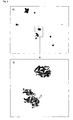
- the method according to the invention makes it possible to add or subtract any of the biological elements to and from the display of said basic environment element at any given time. It is also possible to display different subsets of biological elements simultaneously by, for example by coloring the elements with different colors. Thus, it is possible to choose subsets by any criteria (such as an SRS query) and display the results of these queries.
- one or more further feature elements are determined for said one or more data sets and the one or more further feature elements are extracted from the same database as the database from which the first feature element was determined. It is however just as likely that one or more further feature elements are determined for said one or more data sets and the one or more further feature elements are extracted from one or more different databases as the database from which the first feature element was determined.
- human proteins are located within the virtual cell based on the information from the first feature element.
- the relationship i.e. the binding of two or more proteins to each other, or the spatial closeness and/or distance amongst the proteins is depicted based on information stemming from a different database, that may for example contain experimental data from Yeast-Two-Hybrid experiments (methods such as described by Fields and Song Nature 340, pp245 (1989), Bartel et al., Biotechniques 14, pp920 (1993) and Lee et al. Nature 374 pp91-4 (1995)). It may also contain experimental data concerning macromolecular complexes determined either from mass spectroscopy or from X-ray crystallography.
- a further feature element for said at least one data set is determined however it is used to further enhance the display of said at least one graphical representation of said biological element.
- the exact 3D structure is presently only known for around 50% of known proteins.
- the 3D structure can be inferred by homology to one or more known structures.
- the inferred structure can be used as the best current model of the 3D structure.
- prediction methods such as secondary structure.
- the various information about the structure, predicted or experimental, can be combined into a 3D model.
- these model are represented in such a way as to make it clear that the 3D information is only inferred. This representation is chosen to be clearly different from that used to represent biological elements where the exact 3D is known.
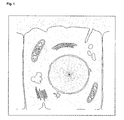
- the basic environment element is often a representation chosen from the group comprising an organism, one or more tissue types, a cell, an organelle, a sub-cellular compartment, a large complex of macromolecules, a molecule, an atom and/or a sub atomic particle.
- the invention also pertains to a display of a basic environment element, obtainable by a method according to the invention especially a computer display.
- the invention also pertains to a data structure representing a graphic display, said graphic display being obtainable by applying the method according to the invention.
- at least 50 of said graphical representations of said biological elements are presented, in another embodiment at least 500 of said graphical representations of said biological elements are present, in the most preferred embodiment at least 5000 of said graphical representations of said biological elements are presented.
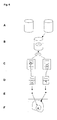
- the invention defines a single view that combines information from several different databases, especially data on where proteins occur in the cell, data on which proteins form complexes, and data on the 3D structure of proteins.
- the view may consist of a 2D (or 3D) model of the cell; the proteins of interest are then placed into the subcellular compartments where they are known to occur.
Landscapes
- Engineering & Computer Science (AREA)
- Life Sciences & Earth Sciences (AREA)
- Physics & Mathematics (AREA)
- Health & Medical Sciences (AREA)
- Theoretical Computer Science (AREA)
- General Health & Medical Sciences (AREA)
- Spectroscopy & Molecular Physics (AREA)
- Bioinformatics & Computational Biology (AREA)
- Biotechnology (AREA)
- Evolutionary Biology (AREA)
- Biophysics (AREA)
- Medical Informatics (AREA)
- Bioinformatics & Cheminformatics (AREA)
- Bioethics (AREA)
- Databases & Information Systems (AREA)
- Data Mining & Analysis (AREA)
- Information Retrieval, Db Structures And Fs Structures Therefor (AREA)
- Management, Administration, Business Operations System, And Electronic Commerce (AREA)
- Investigating Or Analysing Biological Materials (AREA)
- Calculators And Similar Devices (AREA)
- Processing Or Creating Images (AREA)
Priority Applications (5)
| Application Number | Priority Date | Filing Date | Title |
|---|---|---|---|
| EP01104070A EP1221671A3 (de) | 2001-01-05 | 2001-02-20 | Verfahren zum organisieren und darstellen von biologischen Elementen |
| US10/250,571 US20040170949A1 (en) | 2001-01-05 | 2002-01-07 | Method for organizing and depicting biological elements |
| PCT/EP2002/000064 WO2002054326A2 (en) | 2001-01-05 | 2002-01-07 | Method for organizing and depicting biological elements |
| JP2002555351A JP2005507096A (ja) | 2001-01-05 | 2002-01-07 | 生物学的要素を編成して描写する方法 |
| EP02716648A EP1451749A2 (de) | 2001-01-05 | 2002-01-07 | Verfahren zum organisieren und darstellen von biologischen elementen |
Applications Claiming Priority (3)
| Application Number | Priority Date | Filing Date | Title |
|---|---|---|---|
| EP01100362 | 2001-01-05 | ||
| EP01100362 | 2001-01-05 | ||
| EP01104070A EP1221671A3 (de) | 2001-01-05 | 2001-02-20 | Verfahren zum organisieren und darstellen von biologischen Elementen |
Publications (2)
| Publication Number | Publication Date |
|---|---|
| EP1221671A2 true EP1221671A2 (de) | 2002-07-10 |
| EP1221671A3 EP1221671A3 (de) | 2006-03-29 |
Family
ID=26076437
Family Applications (2)
| Application Number | Title | Priority Date | Filing Date |
|---|---|---|---|
| EP01104070A Withdrawn EP1221671A3 (de) | 2001-01-05 | 2001-02-20 | Verfahren zum organisieren und darstellen von biologischen Elementen |
| EP02716648A Withdrawn EP1451749A2 (de) | 2001-01-05 | 2002-01-07 | Verfahren zum organisieren und darstellen von biologischen elementen |
Family Applications After (1)
| Application Number | Title | Priority Date | Filing Date |
|---|---|---|---|
| EP02716648A Withdrawn EP1451749A2 (de) | 2001-01-05 | 2002-01-07 | Verfahren zum organisieren und darstellen von biologischen elementen |
Country Status (4)
| Country | Link |
|---|---|
| US (1) | US20040170949A1 (de) |
| EP (2) | EP1221671A3 (de) |
| JP (1) | JP2005507096A (de) |
| WO (1) | WO2002054326A2 (de) |
Families Citing this family (12)
| Publication number | Priority date | Publication date | Assignee | Title |
|---|---|---|---|---|
| WO2004066137A2 (en) * | 2002-11-29 | 2004-08-05 | Bracco Imaging, S.P.A. | System and method for managing a plurality of locations of interest in 3d data displays |
| JP4189246B2 (ja) | 2003-03-28 | 2008-12-03 | 日立ソフトウエアエンジニアリング株式会社 | データベース検索経路表示方法 |
| JP4189248B2 (ja) | 2003-03-31 | 2008-12-03 | 日立ソフトウエアエンジニアリング株式会社 | データベース検索経路判定方法 |
| WO2007011748A2 (en) * | 2005-07-14 | 2007-01-25 | Molsoft, Llc | Structured documents for displaying and interaction with three dimensional objects |
| US20080134140A1 (en) * | 2006-10-16 | 2008-06-05 | Pharsight Corporation | Integrated drug development software platform |
| US20080155433A1 (en) * | 2006-12-21 | 2008-06-26 | Microsoft Corporation | Zooming task management |
| WO2010109649A1 (ja) * | 2009-03-27 | 2010-09-30 | 富士通株式会社 | 情報表示プログラム、情報表示装置、および情報表示方法 |
| JP5136684B2 (ja) * | 2009-03-27 | 2013-02-06 | 富士通株式会社 | 情報表示プログラム、情報表示装置、および情報表示方法 |
| US20110171619A1 (en) * | 2009-05-28 | 2011-07-14 | Daniel Leo Sweeney | Representation of molecules as sets of masses of complementary subgroups and contiguous complementary subgroups |
| DE102010026094B4 (de) * | 2010-07-05 | 2012-01-12 | Sigeng Han | Ein neues Verfahren zum Charakterisieren und multidimensionalen Darstellen des Faltungsvorgangs der Proteine |
| KR101236966B1 (ko) * | 2011-11-14 | 2013-02-26 | 숭실대학교산학협력단 | 이성질체를 구별하는 화합물의 문자열 표현장치 및 방법, 그리고 이를 이용한 화합물 검색장치 및 방법 |
| JP7387340B2 (ja) * | 2019-08-30 | 2023-11-28 | 株式会社 資生堂 | 生体構造識別装置、生体構造識別方法及び生体構造識別用コンピュータプログラム |
Family Cites Families (1)
| Publication number | Priority date | Publication date | Assignee | Title |
|---|---|---|---|---|
| US5386507A (en) * | 1991-07-18 | 1995-01-31 | Teig; Steven L. | Computer graphics system for selectively modelling molecules and investigating the chemical and physical properties thereof |
-
2001
- 2001-02-20 EP EP01104070A patent/EP1221671A3/de not_active Withdrawn
-
2002
- 2002-01-07 US US10/250,571 patent/US20040170949A1/en not_active Abandoned
- 2002-01-07 WO PCT/EP2002/000064 patent/WO2002054326A2/en not_active Ceased
- 2002-01-07 EP EP02716648A patent/EP1451749A2/de not_active Withdrawn
- 2002-01-07 JP JP2002555351A patent/JP2005507096A/ja active Pending
Non-Patent Citations (3)
| Title |
|---|
| HELT G A ET AL: "BioViews: Java-based tools for genomic data visualization" GENOME RESEARCH, COLD SPRING HARBOR LABORATORY PRESS, WOODBURY, NY, US, vol. 8, no. 3, March 1998 (1998-03), pages 291-305, XP002242142 ISSN: 1088-9051 * |
| NESHICH G ET AL: "Sequence To and withIN Graphics PDB Viewer (STING-PDB Viewer)" PROTEIN DATA BANK QUARTERLY NEWSLETTER, vol. 85, July 1998 (1998-07), pages 6-7, XP002261852 * |
| POOK S ET AL: "Zomit: biological data visualization and browsing" BIOINFORMATICS, OXFORD UNIVERSITY PRESS, SURREY, GB, vol. 14, no. 9, 1998, pages 807-814, XP002261856 ISSN: 1367-4803 * |
Also Published As
| Publication number | Publication date |
|---|---|
| EP1221671A3 (de) | 2006-03-29 |
| US20040170949A1 (en) | 2004-09-02 |
| WO2002054326A3 (en) | 2004-06-10 |
| EP1451749A2 (de) | 2004-09-01 |
| WO2002054326A2 (en) | 2002-07-11 |
| JP2005507096A (ja) | 2005-03-10 |
Similar Documents
| Publication | Publication Date | Title |
|---|---|---|
| Budhkar et al. | Demystifying the black box: A survey on explainable artificial intelligence (XAI) in bioinformatics | |
| Slepchenko et al. | Computational cell biology: spatiotemporal simulation of cellular events | |
| Kohl et al. | Cytoscape: software for visualization and analysis of biological networks | |
| Zeeberg et al. | GoMiner: a resource for biological interpretation of genomic and proteomic data | |
| Barrett et al. | Mining microarray data at NCBI’s Gene Expression Omnibus (GEO) | |
| Campbell et al. | Visualizing the drug target landscape | |
| Davidson et al. | Bioinformatics beyond sequence: mapping gene function in the embryo | |
| EP1221671A2 (de) | Verfahren zum organisieren und darstellen von biologischen Elementen | |
| WO2000049540A1 (en) | Method and system for dynamic storage retrieval and analysis of experimental data with determined relationships | |
| Goodstadt et al. | Challenges for visualizing three‐dimensional data in genomic browsers | |
| Massar et al. | BioLingua: a programmable knowledge environment for biologists | |
| WO2000065523A1 (en) | System and method for modeling genetic, biochemical, biophysical and anatomical information | |
| Letovsky | Bioinformatics: databases and systems | |
| Schäfer et al. | InVADo: Interactive visual analysis of molecular docking data | |
| Tanwar et al. | Computational resources for predicting protein–protein interactions | |
| Webster | Social science and a post-genomic future: alternative readings of genomic agency | |
| Stolte et al. | Integrated visual analysis of protein structures, sequences, and feature data | |
| Robbins | Genome informatics I: Community databases | |
| Joshi et al. | Harnessing Big Data Visualization in Bioinformatics: From Data to Discovery | |
| Zhang et al. | spatialHeatmap: visualizing spatial bulk and single-cell assays in anatomical images | |
| Rohn et al. | Creating views on integrated multidomain data | |
| Forghani et al. | Three-dimensional visualization for phylogenetic tree | |
| Hu et al. | Analyzing networks with VisANT | |
| Kraemer et al. | Molecules to maps: tools for visualization and interaction in support of computational biology. | |
| Turner et al. | Visualization challenges for a new cyber-pharmaceutical computing paradigm |
Legal Events
| Date | Code | Title | Description |
|---|---|---|---|
| PUAI | Public reference made under article 153(3) epc to a published international application that has entered the european phase |
Free format text: ORIGINAL CODE: 0009012 |
|
| AK | Designated contracting states |
Kind code of ref document: A2 Designated state(s): AT BE CH CY DE DK ES FI FR GB GR IE IT LI LU MC NL PT SE TR |
|
| AX | Request for extension of the european patent |
Free format text: AL;LT;LV;MK;RO;SI |
|
| RIN1 | Information on inventor provided before grant (corrected) |
Inventor name: FRIES, KARSTEN Inventor name: O'DONOGHUE, SEAN |
|
| RAP1 | Party data changed (applicant data changed or rights of an application transferred) |
Owner name: LION BIOSCIENCE AG |
|
| PUAL | Search report despatched |
Free format text: ORIGINAL CODE: 0009013 |
|
| AK | Designated contracting states |
Kind code of ref document: A3 Designated state(s): AT BE CH CY DE DK ES FI FR GB GR IE IT LI LU MC NL PT SE TR |
|
| AX | Request for extension of the european patent |
Extension state: AL LT LV MK RO SI |
|
| RAP1 | Party data changed (applicant data changed or rights of an application transferred) |
Owner name: LION BIOSCIENCE LTD. |
|
| AKX | Designation fees paid |
Designated state(s): AT BE CH CY DE DK ES FI FR GB GR IE IT LI LU MC NL PT SE TR |
|
| STAA | Information on the status of an ep patent application or granted ep patent |
Free format text: STATUS: THE APPLICATION IS DEEMED TO BE WITHDRAWN |
|
| 18D | Application deemed to be withdrawn |
Effective date: 20060930 |