EP1223721A2 - Systèmes et méthodes pour la formulation automatique de réponses à des demandes d'authentification des serveurs secures - Google Patents
Systèmes et méthodes pour la formulation automatique de réponses à des demandes d'authentification des serveurs secures Download PDFInfo
- Publication number
- EP1223721A2 EP1223721A2 EP01124883A EP01124883A EP1223721A2 EP 1223721 A2 EP1223721 A2 EP 1223721A2 EP 01124883 A EP01124883 A EP 01124883A EP 01124883 A EP01124883 A EP 01124883A EP 1223721 A2 EP1223721 A2 EP 1223721A2
- Authority
- EP
- European Patent Office
- Prior art keywords
- authentication
- response
- recited
- request
- server
- Prior art date
- Legal status (The legal status is an assumption and is not a legal conclusion. Google has not performed a legal analysis and makes no representation as to the accuracy of the status listed.)
- Withdrawn
Links
Images



Classifications
-
- H—ELECTRICITY
- H04—ELECTRIC COMMUNICATION TECHNIQUE
- H04L—TRANSMISSION OF DIGITAL INFORMATION, e.g. TELEGRAPHIC COMMUNICATION
- H04L63/00—Network architectures or network communication protocols for network security
- H04L63/08—Network architectures or network communication protocols for network security for authentication of entities
-
- H—ELECTRICITY
- H04—ELECTRIC COMMUNICATION TECHNIQUE
- H04L—TRANSMISSION OF DIGITAL INFORMATION, e.g. TELEGRAPHIC COMMUNICATION
- H04L63/00—Network architectures or network communication protocols for network security
- H04L63/08—Network architectures or network communication protocols for network security for authentication of entities
- H04L63/083—Network architectures or network communication protocols for network security for authentication of entities using passwords
Definitions
- the systems and methods described herein relate to authenticating computer systems on a server-client network. More particularly, the described implementations relate to automatically formulating appropriate responses to authentication requests from secured servers.
- Secured servers are server computer systems that store content that is restricted to particular clients.
- the secured server requires that the client provide credentials to authenticate the client and insure that the client is authorized to access the secured content on the server. If the client provides an appropriate response, then the client is allowed to access the information stored on the server. If, however, incorrect authentication credentials are provided, then the client is denied access to the server.
- a user who wants to access a secured server enters a network address - such as an Internet universal resource locator (URL) - to locate the server.
- the server detects the communication from the client and transmits an authentication request to the client.
- the user at the client receives the authentication request and types in an appropriate response to the request, such as a user name and password. If the response is correct, the user is then allowed to access secured information on the server.
- a client accesses a primary server
- the primary server directs the client to the remote server and the client gets information directly from the remote server.
- the client gets information directly from the remote server.
- several clients may be accessing the remote server at the same time. This is not a problem unless the content on the remote server requires a large amount of bandwidth. If the content on the remote server is media content and there are several clients downloading the content, the bandwidth capacity of the remote server can easily be exceeded.
- the primary server does not redirect the client to the remote server. Instead, the primary server downloads the information from the remote server and the primary server can then allow several clients to access the content. This redistributes some of the load from the remote server to the primary, and other, servers. However, when the media content on the remote server is secure, then the remote server will require authentication by the primary server before allowing the primary server to access the secured media content on the remote server.
- the primary server may require access to several secured servers that require different authentication responses, the authentication manager should determine the correct response for each particular server and provide the response to gain access to the secured content. Also, the authentication manager should be modular easily adaptable to respond to new remote servers accessed by the primary server or to respond to new protocols and requests.
- an authentication response manager is configured to formulate responses to challenges from multiple servers.
- Plug-in modules are developed and installed in a primary server by a system administrator according to authentication policies used by remote secured servers to which the primary server will require access.
- An authentication response manager (ARM) is configured to receive authentication challenges from one or more remote servers and pass the information to one or more authentication response modules.
- the ARM manages the data passed to and received from the authentication response modules and the remote servers.
- Parameters passed to the ARM include the protocol utilized in the authentication challenge, a server identifier and a network address - such as an Internet universal resource locator (URL) - of the remote content.
- An authentication response module is pre-configured with a table that identifies an appropriate response to a challenge that contains specific values for these parameters together with the protocol name of the protocol used by the challenge. The table is searched for an entry that matches the challenge parameters. If a match is found, credentials are retrieved from the table entry that matches the challenge and the ARM presents the credentials to the remote server. In some cases, the credentials are not presented directly to the remote server, but are used by the ARM to formulate an appropriate response.
- wildcard table entries are used to make the table and searches of the table more efficient.
- several authentication response modules may be included in the primary server. When an authentication challenge is received, a search for an appropriate response is carried out in a first authentication response module. If no match is found, the search is performed in a second module, and so on. If no match is found in any of the modules, then authentication credentials are not presented and the secured content cannot be accessed.
- the credentials received from a module table are used to formulate the responses.
- the ARM retrieves the credentials from a table and manipulates the information received from the remote server with the credentials to formulate each responsive transmission.
- the invention is illustrated in the drawings as being implemented in a suitable computing environment.
- a computing device such as a personal computer or a hand-held computer or electronic device.
- program modules include routines, programs, objects, components, data structures, etc. that perform particular tasks or implement particular abstract data types.
- program modules include routines, programs, objects, components, data structures, etc. that perform particular tasks or implement particular abstract data types.
- program modules may be practiced with other computer system configurations, including multi-processor systems, microprocessor-based or programmable consumer electronics, network PCs, minicomputers, mainframe computers, and the like.
- the invention may also be practiced in distributed computing environments where tasks are performed by remote processing devices that are linked through a communications network.
- program modules may be located in both local and remote memory storage devices.
- Fig. 1 shows components of typical example of such a computer, referred by to reference numeral 100.
- the components shown in Fig. 1 are only examples, and are not intended to suggest any limitation as to the scope of the functionality of the invention; the invention is not necessarily dependent on the features shown in Fig. 1.
- various different general purpose or special purpose computing system configurations can be used.
- Examples of well known computing systems, environments, and/or configurations that may be suitable for use with the invention include, but are not limited to, personal computers, server computers, hand-held or laptop devices, multiprocessor systems, microprocessor-based systems, set top boxes, programmable consumer electronics, network PCs, minicomputers, mainframe computers, distributed computing environments that include any of the above systems or devices, and the like.
- program modules include routines, programs, objects, components, data structures, etc. that perform particular tasks or implement particular abstract data types. Tasks might also be performed by remote processing devices that are linked through a communications network.
- program modules may be located in both local and remote computer storage media.
- the instructions and/or program modules are stored at different times in the various computer-readable media that are either part of the computer or that can be read by the computer.
- Programs are typically distributed, for example, on floppy disks, CD-ROMs, DVD, or some form of communication media such as a modulated signal. From there, they are installed or loaded into the secondary memory of a computer. At execution, they are loaded at least partially into the computer's primary electronic memory.
- the invention described herein includes these and other various types of computer-readable media when such media contain instructions programs, and/or modules for implementing the steps described below in conjunction with a microprocessor or other data processors.
- the invention also includes the computer itself when programmed according to the methods and techniques described below.
- programs and other executable program components such as the operating system are illustrated herein as discrete blocks, although it is recognized that such programs and components reside at various times in different storage components of the computer, and are executed by the data processor(s) of the computer.
- the components of computer 100 may include, but are not limited to, a processing unit 120, a system memory 130, and a system bus 121 that couples various system components including the system memory to the processing unit 120.
- the system bus 121 may be any of several types of bus structures including a memory bus or memory controller, a peripheral bus, and a local bus using any of a variety of bus architectures.
- bus architectures include Industry Standard Architecture (ISA) bus, Micro Channel Architecture (MCA) bus, Enhanced ISA (EISAA) bus, Video Electronics Standards Association (VESA) local bus, and Peripheral Component Interconnect (PCI) bus also known as the Mezzanine bus.
- Computer 100 typically includes a variety of computer-readable media.
- Computer-readable media can be any available media that can be accessed by computer 100 and includes both volatile and nonvolatile media, removable and non-removable media.
- Computer-readable media may comprise computer storage media and communication media.
- Computer storage media includes both volatile and nonvolatile, removable and non-removable media implemented in any method or technology for storage of information such as computer-readable instructions, data structures, program modules, or other data.
- Computer storage media includes, but is not limited to, RAM, ROM, EEPROM, flash memory or other memory technology, CD-ROM, digital versatile disks (DVD) or other optical disk storage, magnetic cassettes, magnetic tape, magnetic disk storage or other magnetic storage devices, or any other medium which can be used to store the desired information and which can be accessed by computer 110.
- Communication media typically embodies computer-readable instructions, data structures, program modules or other data in a modulated data signal such as a carrier wave or other transport mechanism and includes any information delivery media.
- modulated data signal means a signal that has one or more if its characteristics set or changed in such a manner as to encode information in the signal.
- communication media includes wired media such as a wired network or direct-wired connection and wireless media such as acoustic, RF, infrared and other wireless media. Combinations of any of the above should also be included within the scope of computer readable media.
- the system memory 130 includes computer storage media in the form of volatile and/or nonvolatile memory such as read only memory (ROM) 131 and random access memory (RAM) 132.
- ROM read only memory
- RAM random access memory
- BIOS basic input/output system
- RAM 132 typically contains data and/or program modules that are immediately accessible to and/or presently being operated on by processing unit 120.
- Fig. 1 illustrates operating system 134, application programs 135, other program modules 136, and program data 137.
- the computer 100 may also include other removable/non-removable, volatile/nonvolatile computer storage media.
- Fig. 1 illustrates a hard disk drive 141 that reads from or writes to non-removable, nonvolatile magnetic media, a magnetic disk drive 151 that reads from or writes to a removable, nonvolatile magnetic disk 152, and an optical disk drive 155 that reads from or writes to a removable, nonvolatile optical disk 156 such as a CD ROM or other optical media.
- removable/non-removable, volatile/nonvolatile computer storage media that can be used in the exemplary operating environment include, but are not limited to, magnetic tape cassettes, flash memory cards, digital versatile disks, digital video tape, solid state RAM, solid state ROM, and the like.
- the hard disk drive 141 is typically connected to the system bus 121 through an non-removable memory interface such as interface 140, and magnetic disk drive 151 and optical disk drive 155 are typically connected to the system bus 121 by a removable memory interface such as interface 150.
- Fig. 1 The drives and their associated computer storage media discussed above and illustrated in Fig. 1 provide storage of computer-readable instructions, data structures, program modules, and other data for computer 100.
- hard disk drive 141 is illustrated as storing operating system 144, application programs 145, other program modules 146, and program data 147. Note that these components can either be the same as or different from operating system 134, application programs 135, other program modules 136, and program data 137. Operating system 144, application programs 145, other program modules 146, and program data 147 are given different numbers here to illustrate that, at a minimum, they are different copies.
- a user may enter commands and information into the computer 100 through input devices such as a keyboard 162 and pointing device 161, commonly referred to as a mouse, trackball, or touch pad.
- Other input devices may include a microphone, joystick, game pad, satellite dish, scanner, or the like.
- a monitor 191 or other type of display device is also connected to the system bus 121 via an interface, such as a video interface 190.
- computers may also include other peripheral output devices such as speakers 197 and printer 196, which may be connected through an output peripheral interface 195.
- the computer may operate in a networked environment using logical connections to one or more remote computers, such as a remote computer 180.
- the remote computer 180 may be a personal computer, a server, a router, a network PC, a peer device or other common network node, and typically includes many or all of the elements described above relative to computer 100, although only a memory storage device 181 has been illustrated in Fig. 1.
- the logical connections depicted in Fig. 1 include a local area network (LAN) 171 and a wide area network (WAN) 173, but may also include other networks.
- LAN local area network
- WAN wide area network
- Such networking environments are commonplace in offices, enterprise-wide computer networks, intranets, and the Internet.
- the computer 100 When used in a LAN networking environment, the computer 100 is connected to the LAN 171 through a network interface or adapter 170. When used in a WAN networking environment, the computer 100 typically includes a modem 172 or other means for establishing communications over the WAN 173, such as the Internet.
- the modem 172 which may be internal or external, may be connected to the system bus 121 via the user input interface 160, or other appropriate mechanism.
- program modules depicted relative to the computer 100, or portions thereof may be stored in the remote memory storage device.
- Fig. 1 illustrates remote application programs 185 as residing on memory device 181. It will be appreciated that the network connections shown are exemplary and other means of establishing a communications link between the computers may be used.
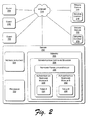
- Fig. 2 is a block diagram of a distributed network 200 that includes a primary server 202 that communicates with several clients 204, 206, 208 and several remote servers 210, 212 over the Internet 214.
- Remote server 210 includes secured content 216
- remote server 212 includes secured content 218.
- the primary server 202 includes memory 220, a processor 222 and a network interface 224.
- An authentication response manager 226 is stored in the memory 220 of the primary server 202.
- the authentication response manager (ARM) includes a response formulation module 228, authentication response module A 230, and authentication response module B 232.
- Authentication response table A 234 is stored in authentication response module A 230.
- Authentication response module B 236 is stored in authentication response module B 232.
- the clients 204 ⁇ 208 connect to the primary server 202 via the Internet 214 and browse content on the primary server 202 in typical fashion. If any one of the clients 204 ⁇ 208 enters instructions to view or download content that is stored on another server (not shown), then the primary server 202 directs the client 204 ⁇ 208 to the Internet address of the server that contains the content. If, however, the content sought by the client 204 ⁇ 208 is media content that is stored on a remote server 210, 212, then the primary server 202 is configured to download the content from the remote server 210, 212 to the memory 220 of the primary server 202 and distribute the content to the clients 204 ⁇ 208 from the memory 220. It is noted that there may be several instances in which a primary server would download content from a remote server. However, for convenience purposes, only the instance in which media content is downloaded from the remote server to the primary server will be discussed.
- client 204 and remote server 210 with secured content 216.
- client 204 can also mean client 206 or client 208
- remote server 210 can also mean remote server 212 with secured content 218.
- Multiple clients and remote servers are shown to illustrate that the primary server 202 is configured to communicate with several clients and several servers.
- the remote server 210 includes secured content 216
- the remote server 210 will transmit an authentication request, or a challenge, to the primary server 202 before the primary server 202 is allowed to access the secured content 216. Further aspects of such a configuration will be discussed in greater detail below.
- the remote server 210 could also contain unsecured content in a different directory than a directory in which the secured content 216 is stored. In this case, the primary server 202 would be challenged only when attempting to access the directory storing the secured content 216.
- the authentication response manager 226 identifies certain authentication criteria of the authentication request.
- the response formulation module 228 takes the authentication criteria and refers to authentication response module A 230 to determine authentication response credentials that can be used to formulate a response to the authentication request. If the response formulation module 228 cannot determine an appropriate response to the authentication request from authentication module 230, the response formulation module 228 attempts to determine authentication response credentials from authentication module B 232. If no credentials are obtained, then the primary server 202 cannot access the secured content 216.
- the response formulation module 228 uses the credentials to formulate an authentication response, which is transmitted to the remote server 210 via the network interface 224 and the Internet 214. It is noted that although Fig. 2 shows two authentication modules 230, 232, the authentication modules 230, 232 are plug-ins and, therefore, can be installed or removed. Furthermore, additional authentication modules may be installed as a need arises, such as when the primary server 202 requires access to a new remote server, if new authentication credentials are utilized in an authentication request, if a new communications protocol is developed to transmit an authentication request, etc.
- the authentication request simply asks for a user name and a password.
- the primary server 202 identifies certain criteria in the request and locates the appropriate user name and password to provide for the response.
- a protocol provides only a minimum level of security because a third party can intercept the transmission from the primary server 202 to learn the user name and password. The third party can then access the remote server 210 using this user name and password.
- a third party could send a bogus authentication request to the primary server 202 with appropriate criteria and receive the user name and password from the primary server 202 in response to the bogus request.
- the response formulation module 228 is further configured to use the authentication credentials obtained from an authentication response module 230, 232 to formulate a primary response that is transmitted to the remote server 210.
- the remote server 210 may then use the primary response to formulate a secondary request that is sent to the primary server 202.
- the response formulation module 228 then formulates a secondary response that is transmitted to the remote server 210. This sequence may continue one or more other times, as the protocol requires. Because of this feature, the authentication response manager 226 is configured to identify the protocol that is used to transmit the authentication request and response accordingly.
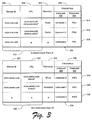
- Fig. 3 depicts a more detailed illustration of authentication table A 234 and authentication table B 236.
- Authentication table A 234 (hereinafter “table A”) includes a server identifier column 300, a network address column 302, a protocol column 304, and a credentials column 306.
- the server identifier column 300 corresponds to the "Realm” in the HTTP-Basic and HTTP-Digest context.
- the contents of the server identifier column 300 doesn't necessarily have to be the machine name part of the URL; it could be any string. Therefore, the site “www.cnn.com” could use two different "realms," “CNN Special User” and “CNN Regular Users” depending on which part of the site is hit.
- site “www.cnn.com” could use two different "realms," “CNN Special User” and “CNN Regular Users” depending on which part of the site is hit.
- site identifiers, "realms,” etc. may be used in place of those shown in Fig.
- the credentials column 306 is shown as having two sub-columns, a user name column 308 and a password column 310. It is noted that, in one implementation, the server identifier column 300 and the network address column 302 may be a site identifier column 312, which is a single column used to identify the server and the network address. However, in the preferred implementation, the server identifier column 300 and the network address column 302 are utilized as shown. Table A 234 also includes three (3) rows, or entries, row 314, row 316 and row 318.
- Authentication table B 236 (hereinafter "table B") includes a server identifier column 320, a network address column 322, a protocol column 324, and a credentials column 326.
- the credentials column 326 is shown as having two sub-columns, a user name column 328 and a password column 330.
- the server identifier column 320 and the network address column 322 may be a site identifier column 332, which is a single column used to identify the server and the network address.
- the server identifier column 320 and the network address column 322 are utilized as shown.
- Table B 236 also includes three (3) rows, or entries, row 334, row 336 and row 338.
- Each row 314 ⁇ 318, 334 ⁇ 338 identifies a remote server 300, a universal resource locator (URL) 302 of a partition (directory) on the remote server 210, and a protocol name 304 used in an authentication challenge to access the directory identified by the URL 302. Also included are one or more credentials 306 used to formulate an appropriate authentication response to access the directory associated with the URL 302.
- the credentials 306 shown in Fig. 3 include a user name 308 and a password 310 for each of the rows 314 ⁇ 318, 334 ⁇ 338.
- the server identifier (server id) 300 for row 314 is "www.cnn.com.”
- the URL 302 for row 314 is "www.cnn.com/regularvideo.”
- the protocol 304 used for the authentication request in row 314 is "Basic.”
- the user name 308 and password 310 in row 314 are "username J" and "PWJ,” respectively.
- the server id 300 for row 316 is "www.cnn.com.”
- the URL 302 for row 316 is "www.cnn.com/specialvideo.”
- the protocol 304 used for the authentication request in row 316 is "Digest.”
- the user name 308 and password 310 in row 316 are "username K" and "PWK,” respectively.
- the server id 300 for row 318 is "www.cnn.com.”
- the URL 302 for row 314 is the wildcard symbol " * ".
- the protocol 304 used for the authentication request in row 318 is " * " (any protocol).
- the user name 308 and password 310 in row 316 are "username L" and "PWL,” respectively.
- Table B 236 is configured similarly to table A 234.
- the server id 320 for row 334 is "www.msnbc.com.”
- the URL 322 for row 334 is "www.msnbc.com/news.”
- the protocol 324 used for the authentication request in row 334 is "NTLM.”
- the user name 328 and password 330 in row 334 are "username X" and "PWX,” respectively.
- the server id 320 for row 336 is "www.msnbc.com.”
- the URL 322 for row 336 is "www.msnbc.com/news.”
- the protocol 324 used for the authentication request in row 336 is "Kerberos.”
- the user name 328 and password 330 in row 336 are "username Y" and "PWY,” respectively.
- the server id 320 for row 338 is " * ".
- the URL 322 for row 334 is also the wildcard symbol “ * ".
- the protocol 324 used for the authentication request in row 338 is " * ".
- the user name 328 and password 330 in row 336 are "username Z" and "PWZ,” respectively.
- Fig. 4 is a flow diagram outlining a method for automatically formulating responses to authentication requests from secured servers.
- the primary server 202 receives an authentication request from the remote server 210.
- the authentication response manager 226 identifies certain request criteria in the request and passes the request criteria to authentication response module A 230 at step 402.
- the request criteria that are identified and passed to module A 230 are those listed in table A 234, namely, server id 300, a URL 302 for a remote server 210 directory, and a protocol 304 used to transmit the authentication request.
- the authentication response manager 226 searches table A 234 for an entry that matches the request criteria. For the present example, it is assumed that the primary server 202 has attempted to access a URL address on the remote server 210 identified as "www.cnn.com/specialvideo/videoclip3.htm" and that the remote server 210 issued an authentication request in "Digest" protocol.
- Fig. 5 is a flow diagram that depicts the steps performed by the authentication response module 226 when searching for a match with the authentication criteria.
- the ARM 226 first searches the server id column 300 for a match with the server id of the request criteria.
- the server id in row 314 is "www.cnn.com.” This matches the authentication criteria for the server id ("Yes" branch, step 502), so at step 504, the ARM 226 searches the network address column 302 for a match with the network address of the request criteria.
- the network address for remote server 210 is "www.cnn.com/regularvideo.” This does not match the search criteria ("No" branch, step 506), so the ARM 226 determines if there are more rows in table A 234 at step 514. There are more rows in table A 234 ("Yes” branch, step 514), so the process reverts to step 500.
- the server id column 300 is searched again, beginning at row 316.
- the server id in row 316 is "www.cnn.com.” This matches the server id criterion ("Yes" branch, step 502), so the ARM 226 looks to the network address column for a match at step 504.
- the network address in row 316 is "www.cnn.com/specialvideo/*.” This matches the network address criterion ("Yes” branch, step 506), so the protocol column 304 is examined at step 508. (It is noted that the URL 302, 322 only needs to match the prefix of the requested URL).
- Row 316 contains "Digest" in the protocol column 304 ("Yes" branch, step 510), so at step 512, a match is confirmed and the process continues at step 404 of Fig. 4.
- a match is found ("Yes” branch, step 404) in row 316, so the username 308 ("User K”) and password 310 (“PWK”) from row 316 are passed to the response formulation module 228, where a response is formulated at step 410 for transmission at step 414.
- the response is transmitted to the remote server 210 at step 414. If the remote server 210 returns a secondary authentication request to the primary server 202 ("Yes” branch, step 416), then the response formulation module 228 uses the data contained in the secondary request to formulate a secondary response at step 410. If no secondary request is received (“No” branch, step 416), then no further action is required of the ARM 226.
- the primary server 202 receives a request from client 204 to access "www.msnbc.com/news/myvideo2.htm” and the request is formatted according to "Digest" protocol.
- the remote server 202 receives the authentication request from the remote server 210.
- the ARM 226 searches table A 234 for a match with the request criteria.
- the ARM 226 first searches the server id column 300 for a match with the server id of the request criteria.
- the server id in row 314 is "www.cnn.com.” This does not match the authentication criteria for the server id ("No" branch, step 502), so the ARM 226 determines if there are more rows in table A 234 at step 514. There are more rows in table A 234 ("Yes" branch, step 514), so the process again reverts to step 500.
- the server id column 300 is searched again, beginning at row 316.
- the server id in row 316 is "www.cnn.com.” This does not match the server id criterion ("No" branch, step 502), so the ARM 226 determines if there are more rows in table A 234 at step 514. There are more rows in table A 234 ("Yes” branch, step 514), so the process reverts to step 500.
- the server id column 300 in row 318 is examined, but there is not a server id match ("No" branch, step 502).
- the ARM 226 determines that there are no more rows in table A 234 ("No" branch, step 514), so the process returns to step 404 of Fig. 4. There was no match found in table A 234 ("No” branch, step 404), so the ARM 226 passes the request criteria to the next table (table B 236) at step 406.
- the server id column 320 of table B 236 is searched for a match with "www.msnbc.com" (step 408).
- the server id in row 334 matches the criteria ("Yes" branch, step 502), so the network address column 322 is searched for a match with the network address criterion, "www.msnbc.com/news/myvideo2.htm.”
- the network address in row 334 matches that of the criterion ("Yes” branch, step 506), so the ARM 226 proceeds to examine the protocol column 324 of table B 236 for a match with "Basic" protocol.
- the protocol column 324 contains the protocol name "NTLM" in row 334, so there is no match (“No” branch, step 510).
- the ARM 226 reverts to step 500 and searches the server id column 320 beginning at row 336.
- the server id column 320 of row 336 matches the server id authentication criterion ("Yes" branch, step 502), so the ARM 226 looks to the network address column of row 336 for a match at step 504.
- the network address in row 336 is "www.msnbc.com/news/*.” This matches the network address criterion ("Yes” branch, step 506), so the protocol column 324 is examined at step 508.
- Row 336 contains "Kerberos" in the protocol column 324 ("No” branch, step 510), so at step 514, the ARM determines if there are more rows in table B 236.
- Row 338 remains to be checked, so the server id column 320 of row 338 is checked at step 500 for a match with the server id of the authentication criteria.
- Row 338 contains the wildcard symbol ("*"), so any server id matches this value. Therefore, a match is found ("Yes" branch, step 502).
- the network address column 322 is checked for a match with the request criteria at step 504.
- the network address column 322 of row 338 also contains the wildcard symbol, so this is also a match ("Yes" branch, step 506).
- the protocol column 324 of row 338 contains also contains the wildcard symbol ("*"), so at step 512, a match is found and the process reverts to step 408, where there is a match ("Yes" branch, step 408).
- row 338 amounts to a default response since the username 328 and 330 of row 338 will be used in formulating a response for any request having criteria that does not match any of the other rows.
- a default response is not used.
- the response formulation module 228 utilizes the user name 328 ("Username Z") and the password 330 ("PWZ") found in row 338 to formulate an authentication response to transmit to the remote server 210 at step 414. If there is a secondary authentication request ("Yes” branch, step 416), then the response formulation module 228 formulates a secondary response. If not (“No” branch, step 416), then the process is complete.
- the embodiments described above provide a way to automatically formulate an appropriate response to authentication requests received from one or more secured servers.
- a system administrator can configure the authentication response module to respond to any secured server desired.
- No user interface is required to formulate the response(s) to the authentication requests.
Landscapes
- Engineering & Computer Science (AREA)
- Computer Hardware Design (AREA)
- Computer Security & Cryptography (AREA)
- Computing Systems (AREA)
- General Engineering & Computer Science (AREA)
- Computer Networks & Wireless Communication (AREA)
- Signal Processing (AREA)
- Telephonic Communication Services (AREA)
- Mobile Radio Communication Systems (AREA)
- Information Transfer Between Computers (AREA)
Applications Claiming Priority (2)
| Application Number | Priority Date | Filing Date | Title |
|---|---|---|---|
| US70419200A | 2000-10-31 | 2000-10-31 | |
| US704192 | 2000-10-31 |
Publications (2)
| Publication Number | Publication Date |
|---|---|
| EP1223721A2 true EP1223721A2 (fr) | 2002-07-17 |
| EP1223721A3 EP1223721A3 (fr) | 2004-07-14 |
Family
ID=24828477
Family Applications (1)
| Application Number | Title | Priority Date | Filing Date |
|---|---|---|---|
| EP01124883A Withdrawn EP1223721A3 (fr) | 2000-10-31 | 2001-10-18 | Systèmes et méthodes pour la formulation automatique de réponses à des demandes d'authentification des serveurs secures |
Country Status (2)
| Country | Link |
|---|---|
| EP (1) | EP1223721A3 (fr) |
| JP (1) | JP2002202955A (fr) |
Cited By (2)
| Publication number | Priority date | Publication date | Assignee | Title |
|---|---|---|---|---|
| US8874903B2 (en) | 2008-10-31 | 2014-10-28 | Brother Kogyo Kabushiki Kaisha | Network device and computer readable medium therefor |
| CN113448893A (zh) * | 2020-03-10 | 2021-09-28 | 联发科技股份有限公司 | 用于控制多个客户端访问单个存储装置的方法及装置 |
Families Citing this family (6)
| Publication number | Priority date | Publication date | Assignee | Title |
|---|---|---|---|---|
| JP4467256B2 (ja) * | 2003-06-19 | 2010-05-26 | 富士通株式会社 | 代理認証プログラム、代理認証方法、および代理認証装置 |
| JP4556636B2 (ja) * | 2004-11-19 | 2010-10-06 | 日本電気株式会社 | 動的組織管理システム、動的組織管理方法、動的組織管理装置および動的組織管理プログラム |
| JP4779444B2 (ja) * | 2005-05-26 | 2011-09-28 | 株式会社日立製作所 | シングルサインオン実現方法 |
| JP5732732B2 (ja) * | 2010-03-18 | 2015-06-10 | 富士通株式会社 | 認証サーバ装置、プログラム、および方法 |
| JP6114565B2 (ja) * | 2013-02-06 | 2017-04-12 | 株式会社日立システムズ | パブリッククラウドサービス利用支援システム及び同利用支援方法、パブリッククラウド管理ツール及び同クラウド管理方法 |
| JP6465542B2 (ja) * | 2013-09-02 | 2019-02-06 | キヤノン株式会社 | 情報処理装置、その制御方法及びプログラム |
Family Cites Families (2)
| Publication number | Priority date | Publication date | Assignee | Title |
|---|---|---|---|---|
| US6006333A (en) * | 1996-03-13 | 1999-12-21 | Sun Microsystems, Inc. | Password helper using a client-side master password which automatically presents the appropriate server-side password to a particular remote server |
| KR100323548B1 (ko) * | 1999-10-02 | 2002-02-19 | 최선정 | 계정인증 정보를 이용한 인터넷 접속 방법 |
-
2001
- 2001-10-18 EP EP01124883A patent/EP1223721A3/fr not_active Withdrawn
- 2001-10-30 JP JP2001333274A patent/JP2002202955A/ja active Pending
Cited By (2)
| Publication number | Priority date | Publication date | Assignee | Title |
|---|---|---|---|---|
| US8874903B2 (en) | 2008-10-31 | 2014-10-28 | Brother Kogyo Kabushiki Kaisha | Network device and computer readable medium therefor |
| CN113448893A (zh) * | 2020-03-10 | 2021-09-28 | 联发科技股份有限公司 | 用于控制多个客户端访问单个存储装置的方法及装置 |
Also Published As
| Publication number | Publication date |
|---|---|
| JP2002202955A (ja) | 2002-07-19 |
| EP1223721A3 (fr) | 2004-07-14 |
Similar Documents
| Publication | Publication Date | Title |
|---|---|---|
| US6199113B1 (en) | Apparatus and method for providing trusted network security | |
| US7877440B2 (en) | Web resource request processing | |
| US8738731B2 (en) | Method and system for providing secure access to private networks | |
| EP0854621B1 (fr) | Système et procédé pour permettre la contrôle d'accès au même niveau dans un reseau | |
| US6038603A (en) | Processing customized uniform resource locators | |
| EP1008087B1 (fr) | Procede et appareil de tenue de journal et de compte rendu a distance d'acces au reseau | |
| US7506055B2 (en) | System and method for filtering of web-based content stored on a proxy cache server | |
| US7039656B1 (en) | Method and apparatus for synchronizing data records between a remote device and a data server over a data-packet-network | |
| US5764890A (en) | Method and system for adding a secure network server to an existing computer network | |
| US6366962B1 (en) | Method and apparatus for a buddy list | |
| US5835727A (en) | Method and apparatus for controlling access to services within a computer network | |
| US20040073629A1 (en) | Method of accessing internet resources through a proxy with improved security | |
| EP1645971A1 (fr) | Procede de controle d'acces a une base de donnees, controleur d'acces a une base de donnees, serveur de traitement d'agent, programme de controle d'acces a une base de donnees, et support d'enregistrement de ce programme | |
| US20050102395A1 (en) | Systems and methods for controlling the number of clients that access a server | |
| WO1999066400A2 (fr) | Serveur centralise d'authentification, d'autorisation, et de comptabilite avec support pour plusieurs protocoles de transport et plusieurs types de clients | |
| WO2002006964A1 (fr) | Procede et appareil destines a un systeme d'acces hors site securise | |
| JP2002512411A (ja) | アクセス制御方法および装置 | |
| KR20050084053A (ko) | 피어 투 피어 인가를 위한 방법 및 시스템 | |
| WO2003041360A2 (fr) | Procede et systeme assurant un acces sur a des ressources de reseaux prives | |
| US8719948B2 (en) | Method and system for the storage of authentication credentials | |
| US8689276B2 (en) | System and method for controlling access to files | |
| US8060629B2 (en) | System and method for managing information requests | |
| EP1223721A2 (fr) | Systèmes et méthodes pour la formulation automatique de réponses à des demandes d'authentification des serveurs secures | |
| US7016897B2 (en) | Authentication referral search for LDAP | |
| EP2077019A1 (fr) | Accès sécurisé |
Legal Events
| Date | Code | Title | Description |
|---|---|---|---|
| PUAI | Public reference made under article 153(3) epc to a published international application that has entered the european phase |
Free format text: ORIGINAL CODE: 0009012 |
|
| AK | Designated contracting states |
Kind code of ref document: A2 Designated state(s): AT BE CH CY DE DK ES FI FR GB GR IE IT LI LU MC NL PT SE TR |
|
| AX | Request for extension of the european patent |
Free format text: AL;LT;LV;MK;RO;SI |
|
| PUAL | Search report despatched |
Free format text: ORIGINAL CODE: 0009013 |
|
| AK | Designated contracting states |
Kind code of ref document: A3 Designated state(s): AT BE CH CY DE DK ES FI FR GB GR IE IT LI LU MC NL PT SE TR |
|
| AX | Request for extension of the european patent |
Extension state: AL LT LV MK RO SI |
|
| 17P | Request for examination filed |
Effective date: 20050111 |
|
| AKX | Designation fees paid |
Designated state(s): AT BE CH CY DE DK ES FI FR GB GR IE IT LI LU MC NL PT SE TR |
|
| 17Q | First examination report despatched |
Effective date: 20051004 |
|
| 17Q | First examination report despatched |
Effective date: 20051004 |
|
| STAA | Information on the status of an ep patent application or granted ep patent |
Free format text: STATUS: THE APPLICATION IS DEEMED TO BE WITHDRAWN |
|
| 18D | Application deemed to be withdrawn |
Effective date: 20071024 |