EP1224643B1 - System mit adaptiver bandbreite und verfahren für datenrundsendung - Google Patents
System mit adaptiver bandbreite und verfahren für datenrundsendungInfo
- Publication number
- EP1224643B1 EP1224643B1 EP00973978A EP00973978A EP1224643B1 EP 1224643 B1 EP1224643 B1 EP 1224643B1 EP 00973978 A EP00973978 A EP 00973978A EP 00973978 A EP00973978 A EP 00973978A EP 1224643 B1 EP1224643 B1 EP 1224643B1
- Authority
- EP
- European Patent Office
- Prior art keywords
- service
- bandwidth
- data
- customer
- services
- Prior art date
- Legal status (The legal status is an assumption and is not a legal conclusion. Google has not performed a legal analysis and makes no representation as to the accuracy of the status listed.)
- Expired - Lifetime
Links
- 238000000034 method Methods 0.000 title claims abstract description 38
- 230000003044 adaptive effect Effects 0.000 title description 3
- 230000009467 reduction Effects 0.000 claims description 2
- 230000005540 biological transmission Effects 0.000 abstract description 16
- 206010036618 Premenstrual syndrome Diseases 0.000 description 8
- 238000011057 process analytical technology Methods 0.000 description 7
- 230000003287 optical effect Effects 0.000 description 6
- 238000003066 decision tree Methods 0.000 description 5
- 238000010586 diagram Methods 0.000 description 4
- 230000007246 mechanism Effects 0.000 description 3
- 230000004044 response Effects 0.000 description 3
- 230000006835 compression Effects 0.000 description 2
- 238000007906 compression Methods 0.000 description 2
- 102100037812 Medium-wave-sensitive opsin 1 Human genes 0.000 description 1
- 230000003139 buffering effect Effects 0.000 description 1
- 230000015556 catabolic process Effects 0.000 description 1
- 230000008859 change Effects 0.000 description 1
- 239000000470 constituent Substances 0.000 description 1
- 230000003247 decreasing effect Effects 0.000 description 1
- 238000006731 degradation reaction Methods 0.000 description 1
- 230000001419 dependent effect Effects 0.000 description 1
- 230000008713 feedback mechanism Effects 0.000 description 1
- 239000000835 fiber Substances 0.000 description 1
- 238000007726 management method Methods 0.000 description 1
- 230000008569 process Effects 0.000 description 1
- 230000000717 retained effect Effects 0.000 description 1
- 230000008685 targeting Effects 0.000 description 1
Images

Classifications
-
- H—ELECTRICITY
- H04—ELECTRIC COMMUNICATION TECHNIQUE
- H04L—TRANSMISSION OF DIGITAL INFORMATION, e.g. TELEGRAPHIC COMMUNICATION
- H04L47/00—Traffic control in data switching networks
- H04L47/70—Admission control; Resource allocation
- H04L47/80—Actions related to the user profile or the type of traffic
- H04L47/805—QOS or priority aware
-
- H—ELECTRICITY
- H04—ELECTRIC COMMUNICATION TECHNIQUE
- H04J—MULTIPLEX COMMUNICATION
- H04J3/00—Time-division multiplex systems
- H04J3/16—Time-division multiplex systems in which the time allocation to individual channels within a transmission cycle is variable, e.g. to accommodate varying complexity of signals, to vary number of channels transmitted
- H04J3/1682—Allocation of channels according to the instantaneous demands of the users, e.g. concentrated multiplexers, statistical multiplexers
-
- H—ELECTRICITY
- H04—ELECTRIC COMMUNICATION TECHNIQUE
- H04L—TRANSMISSION OF DIGITAL INFORMATION, e.g. TELEGRAPHIC COMMUNICATION
- H04L12/00—Data switching networks
- H04L12/02—Details
- H04L12/16—Arrangements for providing special services to substations
- H04L12/18—Arrangements for providing special services to substations for broadcast or conference, e.g. multicast
- H04L12/1863—Arrangements for providing special services to substations for broadcast or conference, e.g. multicast comprising mechanisms for improved reliability, e.g. status reports
- H04L12/1877—Measures taken prior to transmission
-
- H—ELECTRICITY
- H04—ELECTRIC COMMUNICATION TECHNIQUE
- H04L—TRANSMISSION OF DIGITAL INFORMATION, e.g. TELEGRAPHIC COMMUNICATION
- H04L12/00—Data switching networks
- H04L12/28—Data switching networks characterised by path configuration, e.g. LAN [Local Area Networks] or WAN [Wide Area Networks]
- H04L12/2801—Broadband local area networks
-
- H—ELECTRICITY
- H04—ELECTRIC COMMUNICATION TECHNIQUE
- H04L—TRANSMISSION OF DIGITAL INFORMATION, e.g. TELEGRAPHIC COMMUNICATION
- H04L47/00—Traffic control in data switching networks
- H04L47/10—Flow control; Congestion control
- H04L47/15—Flow control; Congestion control in relation to multipoint traffic
-
- H—ELECTRICITY
- H04—ELECTRIC COMMUNICATION TECHNIQUE
- H04L—TRANSMISSION OF DIGITAL INFORMATION, e.g. TELEGRAPHIC COMMUNICATION
- H04L47/00—Traffic control in data switching networks
- H04L47/70—Admission control; Resource allocation
-
- H—ELECTRICITY
- H04—ELECTRIC COMMUNICATION TECHNIQUE
- H04L—TRANSMISSION OF DIGITAL INFORMATION, e.g. TELEGRAPHIC COMMUNICATION
- H04L47/00—Traffic control in data switching networks
- H04L47/70—Admission control; Resource allocation
- H04L47/72—Admission control; Resource allocation using reservation actions during connection setup
- H04L47/724—Admission control; Resource allocation using reservation actions during connection setup at intermediate nodes, e.g. resource reservation protocol [RSVP]
-
- H—ELECTRICITY
- H04—ELECTRIC COMMUNICATION TECHNIQUE
- H04L—TRANSMISSION OF DIGITAL INFORMATION, e.g. TELEGRAPHIC COMMUNICATION
- H04L47/00—Traffic control in data switching networks
- H04L47/70—Admission control; Resource allocation
- H04L47/76—Admission control; Resource allocation using dynamic resource allocation, e.g. in-call renegotiation requested by the user or requested by the network in response to changing network conditions
- H04L47/762—Admission control; Resource allocation using dynamic resource allocation, e.g. in-call renegotiation requested by the user or requested by the network in response to changing network conditions triggered by the network
-
- H—ELECTRICITY
- H04—ELECTRIC COMMUNICATION TECHNIQUE
- H04L—TRANSMISSION OF DIGITAL INFORMATION, e.g. TELEGRAPHIC COMMUNICATION
- H04L47/00—Traffic control in data switching networks
- H04L47/70—Admission control; Resource allocation
- H04L47/76—Admission control; Resource allocation using dynamic resource allocation, e.g. in-call renegotiation requested by the user or requested by the network in response to changing network conditions
- H04L47/765—Admission control; Resource allocation using dynamic resource allocation, e.g. in-call renegotiation requested by the user or requested by the network in response to changing network conditions triggered by the end-points
-
- H—ELECTRICITY
- H04—ELECTRIC COMMUNICATION TECHNIQUE
- H04L—TRANSMISSION OF DIGITAL INFORMATION, e.g. TELEGRAPHIC COMMUNICATION
- H04L47/00—Traffic control in data switching networks
- H04L47/70—Admission control; Resource allocation
- H04L47/78—Architectures of resource allocation
- H04L47/781—Centralised allocation of resources
-
- H—ELECTRICITY
- H04—ELECTRIC COMMUNICATION TECHNIQUE
- H04L—TRANSMISSION OF DIGITAL INFORMATION, e.g. TELEGRAPHIC COMMUNICATION
- H04L47/00—Traffic control in data switching networks
- H04L47/70—Admission control; Resource allocation
- H04L47/80—Actions related to the user profile or the type of traffic
- H04L47/806—Broadcast or multicast traffic
-
- H—ELECTRICITY
- H04—ELECTRIC COMMUNICATION TECHNIQUE
- H04L—TRANSMISSION OF DIGITAL INFORMATION, e.g. TELEGRAPHIC COMMUNICATION
- H04L47/00—Traffic control in data switching networks
- H04L47/70—Admission control; Resource allocation
- H04L47/82—Miscellaneous aspects
- H04L47/826—Involving periods of time
-
- H—ELECTRICITY
- H04—ELECTRIC COMMUNICATION TECHNIQUE
- H04N—PICTORIAL COMMUNICATION, e.g. TELEVISION
- H04N21/00—Selective content distribution, e.g. interactive television or video on demand [VOD]
- H04N21/20—Servers specifically adapted for the distribution of content, e.g. VOD servers; Operations thereof
- H04N21/23—Processing of content or additional data; Elementary server operations; Server middleware
- H04N21/238—Interfacing the downstream path of the transmission network, e.g. adapting the transmission rate of a video stream to network bandwidth; Processing of multiplex streams
- H04N21/2385—Channel allocation; Bandwidth allocation
-
- H—ELECTRICITY
- H04—ELECTRIC COMMUNICATION TECHNIQUE
- H04N—PICTORIAL COMMUNICATION, e.g. TELEVISION
- H04N21/00—Selective content distribution, e.g. interactive television or video on demand [VOD]
- H04N21/20—Servers specifically adapted for the distribution of content, e.g. VOD servers; Operations thereof
- H04N21/25—Management operations performed by the server for facilitating the content distribution or administrating data related to end-users or client devices, e.g. end-user or client device authentication, learning user preferences for recommending movies
- H04N21/258—Client or end-user data management, e.g. managing client capabilities, user preferences or demographics, processing of multiple end-users preferences to derive collaborative data
- H04N21/25866—Management of end-user data
- H04N21/25883—Management of end-user data being end-user demographical data, e.g. age, family status or address
-
- H—ELECTRICITY
- H04—ELECTRIC COMMUNICATION TECHNIQUE
- H04N—PICTORIAL COMMUNICATION, e.g. TELEVISION
- H04N21/00—Selective content distribution, e.g. interactive television or video on demand [VOD]
- H04N21/20—Servers specifically adapted for the distribution of content, e.g. VOD servers; Operations thereof
- H04N21/25—Management operations performed by the server for facilitating the content distribution or administrating data related to end-users or client devices, e.g. end-user or client device authentication, learning user preferences for recommending movies
- H04N21/262—Content or additional data distribution scheduling, e.g. sending additional data at off-peak times, updating software modules, calculating the carousel transmission frequency, delaying a video stream transmission, generating play-lists
- H04N21/26208—Content or additional data distribution scheduling, e.g. sending additional data at off-peak times, updating software modules, calculating the carousel transmission frequency, delaying a video stream transmission, generating play-lists the scheduling operation being performed under constraints
- H04N21/26216—Content or additional data distribution scheduling, e.g. sending additional data at off-peak times, updating software modules, calculating the carousel transmission frequency, delaying a video stream transmission, generating play-lists the scheduling operation being performed under constraints involving the channel capacity, e.g. network bandwidth
-
- H—ELECTRICITY
- H04—ELECTRIC COMMUNICATION TECHNIQUE
- H04N—PICTORIAL COMMUNICATION, e.g. TELEVISION
- H04N21/00—Selective content distribution, e.g. interactive television or video on demand [VOD]
- H04N21/60—Network structure or processes for video distribution between server and client or between remote clients; Control signalling between clients, server and network components; Transmission of management data between server and client, e.g. sending from server to client commands for recording incoming content stream; Communication details between server and client
- H04N21/61—Network physical structure; Signal processing
- H04N21/6106—Network physical structure; Signal processing specially adapted to the downstream path of the transmission network
- H04N21/6118—Network physical structure; Signal processing specially adapted to the downstream path of the transmission network involving cable transmission, e.g. using a cable modem
-
- H—ELECTRICITY
- H04—ELECTRIC COMMUNICATION TECHNIQUE
- H04N—PICTORIAL COMMUNICATION, e.g. TELEVISION
- H04N21/00—Selective content distribution, e.g. interactive television or video on demand [VOD]
- H04N21/60—Network structure or processes for video distribution between server and client or between remote clients; Control signalling between clients, server and network components; Transmission of management data between server and client, e.g. sending from server to client commands for recording incoming content stream; Communication details between server and client
- H04N21/63—Control signaling related to video distribution between client, server and network components; Network processes for video distribution between server and clients or between remote clients, e.g. transmitting basic layer and enhancement layers over different transmission paths, setting up a peer-to-peer communication via Internet between remote STB's; Communication protocols; Addressing
- H04N21/637—Control signals issued by the client directed to the server or network components
- H04N21/6373—Control signals issued by the client directed to the server or network components for rate control, e.g. request to the server to modify its transmission rate
-
- H—ELECTRICITY
- H04—ELECTRIC COMMUNICATION TECHNIQUE
- H04N—PICTORIAL COMMUNICATION, e.g. TELEVISION
- H04N21/00—Selective content distribution, e.g. interactive television or video on demand [VOD]
- H04N21/60—Network structure or processes for video distribution between server and client or between remote clients; Control signalling between clients, server and network components; Transmission of management data between server and client, e.g. sending from server to client commands for recording incoming content stream; Communication details between server and client
- H04N21/63—Control signaling related to video distribution between client, server and network components; Network processes for video distribution between server and clients or between remote clients, e.g. transmitting basic layer and enhancement layers over different transmission paths, setting up a peer-to-peer communication via Internet between remote STB's; Communication protocols; Addressing
- H04N21/637—Control signals issued by the client directed to the server or network components
- H04N21/6377—Control signals issued by the client directed to the server or network components directed to server
-
- H—ELECTRICITY
- H04—ELECTRIC COMMUNICATION TECHNIQUE
- H04N—PICTORIAL COMMUNICATION, e.g. TELEVISION
- H04N21/00—Selective content distribution, e.g. interactive television or video on demand [VOD]
- H04N21/60—Network structure or processes for video distribution between server and client or between remote clients; Control signalling between clients, server and network components; Transmission of management data between server and client, e.g. sending from server to client commands for recording incoming content stream; Communication details between server and client
- H04N21/65—Transmission of management data between client and server
- H04N21/658—Transmission by the client directed to the server
-
- H—ELECTRICITY
- H04—ELECTRIC COMMUNICATION TECHNIQUE
- H04N—PICTORIAL COMMUNICATION, e.g. TELEVISION
- H04N21/00—Selective content distribution, e.g. interactive television or video on demand [VOD]
- H04N21/60—Network structure or processes for video distribution between server and client or between remote clients; Control signalling between clients, server and network components; Transmission of management data between server and client, e.g. sending from server to client commands for recording incoming content stream; Communication details between server and client
- H04N21/65—Transmission of management data between client and server
- H04N21/658—Transmission by the client directed to the server
- H04N21/6582—Data stored in the client, e.g. viewing habits, hardware capabilities, credit card number
-
- H—ELECTRICITY
- H04—ELECTRIC COMMUNICATION TECHNIQUE
- H04Q—SELECTING
- H04Q3/00—Selecting arrangements
- H04Q3/0016—Arrangements providing connection between exchanges
- H04Q3/0062—Provisions for network management
- H04Q3/0066—Bandwidth allocation or management
Definitions
- This invention relates generally to a system and method for providing an adaptive bandwidth system and method for a broadcast system and in particular, to a system and method for allocating bandwidth over a broadcast type system in response to downstream end user behavior.
- Typical broadcast type systems such as television systems and cable systems, broadcast the same signal to all service nodes and/or subscribers. These typical systems are known as broadcast systems because a single identical signal is transmitted at all times regardless of whether it is being used by any end user. It is desirable for broadcast systems, such as cable television systems, to be able to have a digital packet switched system so that system bandwidth is only used for services actually being used by end users.
- Yet another patent assigned to Lucent, describes a method for multiplexing data services across multiple TV transmission channels.
- the maximum data levels are fixed on each channel but a bandwidth manager dynamically tracks bandwidth usage on the channels and has the ability to determine on which channel(s) any additional traffic will be located.
- a digital data switched network may provide a broadcast system with many advantages and capabilities not now available with a broadcast system.
- the signals, including both programming signals and advertisements, being sent to each subscriber or service node may be more specifically targeted to each subscriber or service node.
- the bandwidth being allocated to any single service may be increased, decreased or reduced to zero for some period of time.
- the digital switched system also permits individual multiplexes of signals to be sent to each service node.
- a bandwidth adaptive system and method for a broadcast data system permits a broadcast system, such as cable, to vary the bandwidth of any service being provided to a service node or a subscriber based on feedback from the service node or subscriber.
- the system may also permit a particular service to be dropped for some predetermined period of time so that that bandwidth may be used for other service.
- the system permits a typical digital broadcast television type system, such as cable, to be converted into a digital data switched network system.
- the system may include a re-multiplexor that re-apportions the bandwidth of the system based on feedback from the downstream subscribers or service nodes.
- the feedback from the subscribers or service nodes may be generated based on the downstream end user behavior. For example, if all of the subscribers to a particular service node are not currently using a particular service, the bandwidth allocated to that unused service for the particular service node may be reduced and then the freed up bandwidth may be apportioned to other services.
- the system also permits a service to be added or dropped with minimal latency and for different multiplexes of signals to be generated for each service node depending on the current needs of the service node. To drop/add a service, the system may use a novel ring buffer mechanism as will be described below in more detail.
- a method for optimizing bandwidth efficiencies in the distribution of digital video, digital audio and data over a cable television system is provided.
- different transmission channels or portions thereof can be dynamically customized to contain only those digital video, digital audio and data components of value at that time to the customers served by those channels.
- This customization may be accomplished with a dynamic bandwidth management component/mechanism that has the ability to monitor and react to changing customer usage patterns, and to instruct a re-multiplexor module to allocate bandwidth from digital services that require less bandwidth at a given time to services that require more bandwidth.
- One or more different flow control mechanism in accordance with the invention to achieve this goal are described below.
- bandwidth efficiencies described herein may be obtained without causing a degradation of service to the customers of the system through a variety of techniques described herein.
- the system described herein requires the creation and distribution of unique multiplexes for each digital carrier channel in each optical node in a cable television system.
- the system may include a data receiver that receives digital broadcast television data, such as the data needed for the CNN or EPSN television services, and IP data, and a bandwidth allocation and multiplexing system that dynamically allocates the bandwidth in the system to one or more services nodes.
- the dynamic allocation may occur based on feedback about subscriber behavior that is fed into the bandwidth allocation and multiplexing system.
- the bandwidth allocation and multiplexing system may include a re-multiplexor, a bandwidth manager and a digital broadcast television services server connected together. The server receives the feedback about the subscriber's behavior and forwards it onto the bandwidth manager. Based on the subscriber behavior, the bandwidth manger may determine how to allocate the bandwidth of the system.
- the re-multiplexor may allocate the system bandwidth based on the commands from the bandwidth manager. Using this system, a switched digital data network for broadcast type data is provided.
- the invention is particularly applicable to dynamic bandwidth allocation based on subscriber behavior in a digital broadcast television cable system and it is in this context that the invention will be described. It will be appreciated, however, that the system and method in accordance with the invention has greater utility, such as to other types of broadcast systems in which dynamic bandwidth allocation is desirable.
- the invention may be implemented by one or more pieces of hardware, such as the servers, the re-multiplexor and the service nodes, and one or more pieces of software, such as the bandwidth manager and software in the service nodes and the re-multiplexor, that are executed by the one or more pieces of hardware. Together, the hardware and software implement the bandwidth allocation system. Now, the bandwidth allocation system for broadcast data in accordance with the invention will be described in more detail.
- FIG. 1 is a block diagram illustrating a broadcast system 10 incorporating the bandwidth allocation system in accordance with the invention.
- a cable television transmission system may use frequency division multiplexing techniques to distribute data ("Service Data") for various digital video, digital audio and data services (the “Customer Services") over multiple carrier channels to customers of the system.
- the system may use various multiplexing techniques to distribute multiple Customer Services within each carrier channel.
- Digital video Customer Services may include digital broadcast television services, such as a cable television network, or targeted services, such as video-on-demand may be either constant bit rate (CBR) or variable bit rate (VBR) video streams, and may be sent encrypted or unencrypted.
- CBR constant bit rate
- VBR variable bit rate
- Each discrete digital video program, including all of its audio, video and associated data is to be considered a single Customer Service.
- the Transmission System includes Service Nodes 20 from which a common set of carrier channels is sent to all customers served by that Node, with each customer tuning to the carrier channel and data streams within that channel needed to receive
- the system 10 may include a service server portion 12, a bandwidth allocation and multiplexing system 14, a transmission system 16 and one or more consumer premises equipment (CPEs) 18.
- the service servers may receive incoming data to be transmitted via the broadcast system and receive feedback about the subscriber behavior that is used to control the bandwidth allocation
- the bandwidth allocation and multiplexing system 14 may dynamically allocate bandwidth based on the subscriber behavior and generate a possible unique multiplex of signals for each service node
- the transmission system may connect the service servers and bandwidth allocation and multiplexing systems to the CPEs and communicate the multiplexes to each service node and the CPEs may communicate the signals to the individual subscribers.
- the transmission system 16 may be a terrestrial cable, a fiber optical cable, a wireless cable or a satellite system and the CPEs may be optical equipment or electrical equipment.
- Each CPE 18 may include a service node 20, that may be an optical node in a preferred embodiment, and a coaxial cable 22 served by that optical node with the coaxial cable connecting one or more customers 24 and the service node together.
- the service node 20 may receive a multiplex of signals from the system 10 and then distribute the services to each household.
- the service node may also generate information about subscriber behavior, such as real-time channel tuning information, that may be used by the bandwidth allocation and multiplexing system to allocate the bandwidth among the Customer Services.
- the service servers 12 for each Customer Service may include a video on demand (VOD) service server 30, an IP data router 32 and a digital broadcast television service server 34.
- the VOD service server 30 may generate VOD service data that is passed on to a re-multiplexor 38 of the bandwidth allocation and multiplexing system 14 based on the bandwidth allocated to the VOD service, may generate bandwidth requests that are passed onto a bandwidth manager 40 and may receive a bandwidth allocation response from the bandwidth manager.
- the IP router 32 may receive IP data to be communicated over the system 10, may generate IP service data for re-transmission by the re-multiplexor 38 based on the bandwidth allocated to the IP service, may generate bandwidth requests to be sent to the bandwidth manager 40 and may receive bandwidth allocation responses from the bandwidth manager.
- the re-multiplexor may also receive digital broadcast television streams.
- the digital broadcast television service server 34 may receive subscriber behavior feedback, such as optional real-time channel tuning information, from each service node 20 over the transmission system 16.
- the subscriber behavior data may be processed to generate information about the current bandwidth demands of each service node 20 and then may be forwarded onto the bandwidth manager 40 that may use the feedback to dynamically allocate the bandwidth of the system between the various services.
- the bandwidth allocation and multiplexing system 14 may include the re-multiplexor 38 and the bandwidth manager 40.
- the bandwidth manager 40 may dynamically allocate, in real-time, the bandwidth of the system to the various services based on the feedback data and the bandwidth requests from the service servers and then issue bandwidth instructions to the re-multiplexor.
- the re-multiplexor 38 may, based on the instructions from the bandwidth manager, generate a multiplex of signals for each service node 20. For example, if one service is being dropped for a predetermined period of time from a particular service node, then that service node's multiplex of signals will not include the dropped service.
- the capability for the re-multiplexor to ensure that all of the Bandwidth Services allocated to the Customer Services are provided to the Services through a variety of techniques, including dropping data packets and various statistical multiplexing techniques.
- the Bandwidth Manager 40 can dynamically track the requests of the Customer Services for Bandwidth Services on the Transmission System and can dynamically allocate Bandwidth Services among and within carrier channels to each Customer Service based on the requests specified by the Customer Service and based on a rules-based Bandwidth Manager Decision Tree.
- the Bandwidth Manager Decision Tree will implement rules such as:
- Bandwidth Services may also be specified to include a maximum and/or average bit rate.
- the Decision Tree may also include a rule that if no customer served by a particular service node ("optical node") is tuned to a particular digital video Customer Service, such as digital cable television networks, then that Customer Service may be significantly degraded - or even temporarily removed from the data multiplex sent through that channel - in order to reduce the amount of bandwidth consumed by that Customer Service.
- the Bandwidth Manager 40 is responsible for providing the Service Servers 12 with information about which carrier channels can reach each Service node.
- the Bandwidth Manager also provides the Service Servers various bandwidth parameters for each channel, such as the maximum average bit rate that can be guaranteed to the Customer Service and the duration over which the bandwidth guarantee can be provided.
- the carrier channel information and these parameters define the Bandwidth Services available.
- each Service Server may make a request for Bandwidth to the bandwidth manager.
- the bandwidth manager then sends an acceptance or denial message to Server's request. If the request is accepted, the Bandwidth Manager also sends a notice to the Re-Multiplexor, with descriptors about the Bandwidth Services allocated to the particular Customer Service.
- the Re-Multiplexor uses these descriptors and a rules-based Re-Multiplexor Decision Tree to provide Bandwidth Services to all of the Customer Services in each multiplex.
- Any Customer Service may be either a unicast mode or a multi-cast mode from the Re-multiplexor.
- a unicast mode a single stream of data packets containing the Customer Service Data for a particular Customer Service is input into the Re-Multiplexor and is then multiplexed onto a single outbound carrier channel to a particular Service Node 20.
- a multi-cast mode a single stream of data packets containing the Service Data for a particular Customer Service is input into the Re-Multiplexor, and is then multiplexed onto more than one outbound carrier channels.
- a single stream of data for a digital cable television program could be input into the Re-multiplexor, and then multiplexed onto one carrier channel for every Customer Service Node 20 served by that Re-Multiplexor.
- the carrier channel of the system may use different compression protocols and modulation schemes.
- a Multi-Program Transport Stream as defined by the MPEG-2 Transport Stream protocol may be used and each carrier channel may be modulated for transmission using Quadrature Amplitude Modulation (QAM).
- QAM Quadrature Amplitude Modulation
- the Customer Services provided using the system may include Internet Protocol (IP) packets being delivered to subscriber's cable modems compliant with the MCNS/DOCSIS or DVB-DAVIC cable modem standards, and the IP router 32 may include a Cable Modem Termination System compliant with these standards.
- IP Internet Protocol
- the system 10 shown in Figure 1 may be further enhanced by providing additional Quality-of-Service (QoS) capabilities in the Bandwidth Services through the following techniques employed by the Bandwidth Manager that will be described with reference to Figures 2 and 3.
- QoS Quality-of-Service
- a minimum level of bandwidth may be permanently reserved, or reserved for a specified period of time, within each carrier channel for Customer Services of a specified type, such as Internet Protocol (IP) Customer Services, Digital broadcast television Services, or for Customer Service of a certain designation, such as Customer Services flagged as requiring QoS.
- IP Internet Protocol
- the Bandwidth Manager may allocate bandwidth to Customer Services not protected by a Floor Level in a manner that ensures the average aggregate bandwidth they consume does not exceed the amount equal to the total bandwidth available on the carrier channel minus the Floor Level, and if needed, the Re-multiplexor may employ a variety of digital bit rate reduction techniques to enforce this policy.
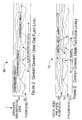
- Figure 2 illustrates an example of a carrier channel 60 that may include a first service floor level channel 62 so that the data for that service is guaranteed that bandwidth regardless of what happens to the rest of the carrier channel.
- the rest of the channel 64 may transmit aggregate non-protected data of various kinds (e.g., compressed video 1, compressed video 2 and compressed video 3 in this example) in the unprotected channel 64.
- the floor protected service exceeds the floor level several times, but it is always guaranteed at least the floor level of bandwidth.
- the bandwidth requirements of the aggregated unprotected data channel 64 may fluctuate for several reasons.
- the Customer Services that make up the data in the unprotected channel may be composed of variable bit rate digital video streams resulting in varying bandwidth requirements.
- one or more data streams in the unprotected channel 64 may be degraded by the re-multiplexor based on bandwidth manager commands if no subscribers are currently using the particular Customer Service.
- FIG. 3 illustrates an example of a carrier channel 70 that may include a first floor level 72 (for IP data in this example), a second floor level 76 (for digital video and audio in this example) and an unprotected channel 74 that is available to the Customer Services carried in both the first floor level 72 and the second floor level 76.
- a carrier channel 70 may include a first floor level 72 (for IP data in this example), a second floor level 76 (for digital video and audio in this example) and an unprotected channel 74 that is available to the Customer Services carried in both the first floor level 72 and the second floor level 76.
- one or more additional Floor Levels may be created and administered by the Bandwidth Manager within a given carrier channel
- the one or more Floor Level(s) may be configured to rise or fall to different levels based on time-of-day, past or current usage levels.
- the system may provide Quality-of-Service (QoS) to digital video Customer Services that have been degraded or eliminated from a multiplex when no customer CPE is tuned to that Customer Service using various techniques employed by the Bandwidth Manager. These techniques include: 1) The Ring Buffer; 2) The I-Frame Carousel; 3) The Floor Level Protection System; and 4) Headend-Based MPEG Splicing.
- QoS Quality-of-Service
- Ring Buffer Technique For MPEG-2 digital broadcast television Customer Services that have been eliminated entirely from the multiplex, a Ring Buffer of that Customer Service's data in the Re-multiplexor is created.
- the Ring Buffer is a continuous stream of all of the data needed by a real time digital video Customer Service, with the data being stored in the Re-Multiplexor's random access memory (RAM), which is the physical host of the buffer.
- the digital video data of this stored stream is composed of a single "Group of Pictures" (GOP) as defined by the MPEG-2 specification.
- GOP Group of Pictures
- Each GOP begins with an "I frame".
- the stored GOP is deleted and replaced by the I frame for the next GOP as soon as that I frame has entered the Re-Multiplexor.
- the Re-Multiplexor continues to fill the Ring Buffer with other frames in that GOP as they are received by the Re-Multiplexor, until the entire GOP is replaced by the next I frame.
- the buffer is thus composed at any given time by either a partial or whole GOP.
- the Dynamic Bandwidth Manger may then either maintain this Ring Buffer for each digital broadcast television Customer Service at all times, or create and maintain it only at the time it determines that no customer CPE devices are tuned to that Customer Service.
- the Bandwidth Manager determines that a customer CPE device has tuned to a digital broadcast television Customer Service that has been eliminated from its transmission multiplex, it locates the partial or whole GOP in the buffer, adds it to the multiplex, and then includes all subsequent GOPs for that Customer Service in the multiplex as long as at least one customer CPE remains tuned to the Customer Service. This approach minimizes the delay or "latency" experienced by customers who tune to a Customer Service not currently included in their transmission multiplex because of the nature of the MPEG-2 compression standard.
- the receiver device i.e., the MPEG-2 decoder
- the MPEG-2 decoder can only begin decoding a stream using an I frame.
- Other frame types within a GOP such as a B and P frames, cannot be used to begin the decoding process. Therefore, if, at the time a decoder attempts to begin decoding a stream, the first frame it receives is not an I frame, it must wait until receiving the I frame before beginning to decode the video.
- Most of the MPEG-2 encoders now in use generate only one I-frame every .5 seconds.
- Ring Buffer eliminates this delay since it supplies the MPEG-2 decoder with the I-frame immediately.
- the Bandwidth Manager can ensure that sufficient data is retained in the multiplex at all times to make it possible to rapidly deliver at least the first video frame as a "still frame" if a customer tunes to the Customer Service.
- the MPEG-2 decoder in the customer CPE can maintain the still frame on the television screen while the necessary additional data is added to the multiplex to deliver the full video service.
- this technique described immediately above can be accomplished by including at least one I frame per second for each digital video stream in every carrier channel multiplex. This approach will be feasible in situations where the return path latency from the customer CPE to the Bandwidth Manager is relatively high. In such situations, the still frame indicates that the requested digital video Customer Service will soon be available.
- the floor Level Protection System may be further enhanced to allow the digital video, digital audio and data Customer Services delivered by the Transmission System to be allocated among the carrier channels in a manner that enables the Floor Level (See Figures 2 and 3) to be maintained with a minimal impact on the QoS of the other Customer Services not protected by the floor level.
- This can be achieved by allocating the digital video and digital audio Customer Services not protected by the Floor Level to the various carrier channels in a manner that ensures their average aggregate bit rate within each channel does not exceed the total bandwidth capacity of the channel minus the Floor Level (e.g., to ensure that the digital video and digital audio has sufficient bandwidth even though it is not protected).
- each Multiple Program Transport Stream (MPTS) multiplex contains multiple program streams, and all such streams area available to all CPE authorized to receive them.
- the multiplexer communicates the identity and constituent elementary components of these streams through the use of MPEG-2 tables called PATs and PMTs.
- the multiplexer creates the PATs and PMTs for each multiplex, and then inserts them into the MPTS packet stream.
- the CPE uses the PATs and PMTs and its Virtual Channel Map (VCM) to locate the data needed for a particular program stream.
- VCM Virtual Channel Map
- the multiplexer when a new program stream is added to a multiplex, or an existing stream is deleted from the multiplex, the multiplexer must create new PATs and PMTs to reflect the new information.
- the time and need to create new PATs and PMTs can add to the latency experienced by the end-user.
- the system in accordance with the invention may be enhanced by dedicating a PMT within a given multiplex to a particular CPE rather than to a particular program service.
- the remultiplexer 38 or digital broadcast television service server 34 replaces the data for the program service then being sent to the CPE with the data for requested program service, including through use of the Ring Buffer technique described herein.
- the identity number of the program service in the PAT, and the identities of its digital video, digital audio and digital data "elementary streams" do not change, thereby avoiding the latency induced by creating new PATs and PMTs.
Landscapes
- Engineering & Computer Science (AREA)
- Signal Processing (AREA)
- Computer Networks & Wireless Communication (AREA)
- Multimedia (AREA)
- Databases & Information Systems (AREA)
- Computer Graphics (AREA)
- Two-Way Televisions, Distribution Of Moving Picture Or The Like (AREA)
- Small-Scale Networks (AREA)
- Data Exchanges In Wide-Area Networks (AREA)
- Television Systems (AREA)
Claims (9)
- Verfahren zum dynamischen Zuweisen von Bandbreite zwischen einem oder mehreren Kundendiensten, um ein vermitteltes Datennetz für Rundsendedaten bereitzustellen, das die folgenden Schritte umfasst: Bereitstellen eines oder mehrerer Kundendienste durch einen oder mehrere Kundendienstanbieter, um Daten für mehrere Dienstknoten (20) bereitzustellen, wobei die mehreren Dienstknoten (20) jeweils Daten für mehrere Kundenräume (18) bereitstellen und jeder Dienstknoten (20) einen einzigen Multiplex digitaler Daten für seine Kunden (24) empfängt, umfassend:Zuweisen von Bandbreite des Systems an einen oder mehrere Kundendienstanbieter anhand der Nutzung der Dienste durch die Kunden und der Bandbreitenanforderungen jedes der Dienstanbieter an den einen oder die mehreren Dienstknoten, wobei die jedem Kundendienstanbieter für jeden Dienstknoten (20) zugewiesene Bandbreite anhand der Nutzung der Dienste durch die Kunden des Dienstknotens, die durch Echtzeit-Kanalabstimminformationen angegeben wird, dynamisch eingestellt wird, wobei das Verfahren ferner umfasst:Zuweisen einer Dienstqualität an einen oder mehrere Kundendienste einschließlich des Zuweisens einer Dienstqualität an wenigstens einen Kundendienst durch Zuweisen eines Grundniveaus als ein minimales Bandbreitenniveau, das jenem Kundendienst zugewiesen wird, der sich gegenüber dem Multiplex verschlechtert hat, wobei die den Kundendiensten zugewiesene Bandbreite, die nicht durch das Grundniveau geschützt ist, so zugewiesen wird, dass sichergestellt ist, dass die durchschnittliche aggregierte Bandbreite, die sie verbrauchen, nicht den Betrag übersteigt, der gleich der insgesamt verfügbaren Bandbreite abzüglich des Grundniveaus ist, dadurch gekennzeichnet, dass während der Multiplexierung digitale Bitraten-Reduzierungstechniken verwendet werden, um dieses Vorgehen durchzusetzen.
- Verfahren nach Anspruch 1, das ferner das Speichern von Daten in einem Ringpuffer umfasst, um die Daten aus dem Ringpuffer wiederzugewinnen, wenn der herausgefallene Kundendienst wieder in den Multiplex eingefügt wird, um dadurch die Latenz zu reduzieren.
- Verfahren nach Anspruch 2, bei dem die in den Ringpuffer gespeicherten Daten einen Teil einer Gruppe von Bildern (GOP) oder eine gesamte Gruppe von Bildern umfassen.
- Verfahren nach Anspruch 1, das ferner das Speichern eines Datenrahmens in einem Rahmenkarussell umfasst, um den Datenrahmen aus dem Rahmenkarussell wiederzugewinnen, wenn der herausgefallene Kundendienst wieder in den Multiplex eingefügt wird, wodurch wenigstens ein stehender Rahmen angezeigt wird, während auf die Wiederaufnahme des Kundendiensts gewartet wird.
- Verfahren nach Anspruch 4, wobei der Datenrahmen einen I-Rahmen enthält.
- Verfahren nach Anspruch 1, bei dem das Erzeugen der Multiplexe ferner das Zuweisen einer Programmabbildungstabelle an ein bestimmtes Kundenraum-Gerät umfasst.
- Verfahren nach Anspruch 6, das ferner das Ersetzen von Daten für einen ersten Dienst durch Daten von einem zweiten Dienst ohne Änderung einer Dienstidentität in der Programmabbildungstabelle für eines der Kundenraum-Geräte umfasst.
- Verfahren nach Anspruch 7, das ferner das Speichern von Daten für den zweiten Dienst in einem Ringpuffer umfasst, um die Daten aus dem Ringpuffer wiederzugewinnen, wenn der zweite Dienst in den Multiplex eingefügt wird, um dadurch die Latenz zu reduzieren.
- Verfahren nach Anspruch 8, bei dem die in dem Ringpuffer gespeicherten Daten einen Teil einer Gruppe von Bildern (GOP) oder eine gesamte Gruppe von Bildern umfassen.
Applications Claiming Priority (3)
| Application Number | Priority Date | Filing Date | Title |
|---|---|---|---|
| US16304699P | 1999-10-28 | 1999-10-28 | |
| US163046P | 1999-10-28 | ||
| PCT/US2000/029747 WO2001031605A1 (en) | 1999-10-28 | 2000-10-27 | Adaptive bandwidth system and method for broadcast data |
Publications (3)
| Publication Number | Publication Date |
|---|---|
| EP1224643A1 EP1224643A1 (de) | 2002-07-24 |
| EP1224643A4 EP1224643A4 (de) | 2003-03-26 |
| EP1224643B1 true EP1224643B1 (de) | 2006-10-04 |
Family
ID=22588245
Family Applications (1)
| Application Number | Title | Priority Date | Filing Date |
|---|---|---|---|
| EP00973978A Expired - Lifetime EP1224643B1 (de) | 1999-10-28 | 2000-10-27 | System mit adaptiver bandbreite und verfahren für datenrundsendung |
Country Status (6)
| Country | Link |
|---|---|
| EP (1) | EP1224643B1 (de) |
| AT (1) | ATE341805T1 (de) |
| AU (1) | AU783202B2 (de) |
| DE (1) | DE60031145T2 (de) |
| ES (1) | ES2275558T3 (de) |
| WO (1) | WO2001031605A1 (de) |
Cited By (1)
| Publication number | Priority date | Publication date | Assignee | Title |
|---|---|---|---|---|
| DE102007001379A1 (de) * | 2007-01-09 | 2008-07-10 | Fraunhofer-Gesellschaft zur Förderung der angewandten Forschung e.V. | Konzept zum Encodieren einer Mehrzahl von Informationssignalen für eine gemeinsame Übertragung in einem Zeitmultiplex |
Families Citing this family (15)
| Publication number | Priority date | Publication date | Assignee | Title |
|---|---|---|---|---|
| FI20012255A7 (fi) * | 2001-11-20 | 2003-05-21 | Nokia Corp | Menetelmä ja järjestelmä kaistanleveystiedon kommunikoimiseksi |
| KR20030047049A (ko) * | 2001-12-07 | 2003-06-18 | 한국전자통신연구원 | 통신망을 통한 정보제공 및 전송 장치 및 그 방법 |
| FR2855353A1 (fr) * | 2003-05-21 | 2004-11-26 | France Telecom | Procede et systeme de gestion de bande passante pour la mise en oeuvre d'un service de video a la demande presentant plusieurs modes d'acces, programme d'ordinateur et dispositif correspondants |
| US9807460B2 (en) | 2003-08-11 | 2017-10-31 | Arris Enterprises, Inc. | Optimal provisioning and management of bandwidth in a video-on-demand services architecture |
| US20050125832A1 (en) * | 2003-12-03 | 2005-06-09 | Jost Arthur P. | Method and apparatus for cost effective central transcoding of video streams in a video on demand system |
| EP1782287A2 (de) | 2004-07-21 | 2007-05-09 | Beach Unlimited LLC | Auf blockkarten-caching basierende verteilte speicherarchitektur und vfs-stapelbare dateisystemmodule |
| IL165585A (en) * | 2004-12-06 | 2010-06-16 | Eci Telecom Ltd | Broadband communication network provided with media storage |
| US20070116048A1 (en) | 2005-04-18 | 2007-05-24 | Tandberg Television Americas | Systems and methods for next generation cable network dynamic multiplexing |
| EP1878270B1 (de) * | 2005-05-03 | 2013-04-10 | NetSocket, Inc. | Verfahren und anordnungen zum reservieren von betriebsmitteln in einem datennetzwerk |
| JP2009540772A (ja) * | 2006-06-13 | 2009-11-19 | アウェア, インコーポレイテッド | ポイントツーポイント通信およびポイントツーマルチポイント通信 |
| KR100859722B1 (ko) | 2007-04-13 | 2008-09-23 | 한국전자통신연구원 | Ip 망을 이용한 멀티미디어 서비스 방법 및 그 시스템 |
| EP2073460A1 (de) * | 2007-12-17 | 2009-06-24 | Alcatel Lucent | Verfahren zum Weiterleiten von Paketen, entsprechendes Paketweiterleitungssystem, entsprechende Klassifizierungsvorrichtung und entsprechende Beliebtheitsbeobachtungsvorrichtung |
| KR101585010B1 (ko) | 2009-03-11 | 2016-01-14 | 삼성전자주식회사 | 무선 인터넷 프로토콜 텔레비전 시스템에서 채널 대역 할당방법 및 이를 위한 시스템 |
| CN102761530A (zh) * | 2011-04-29 | 2012-10-31 | 华为终端有限公司 | 媒体码流传输方法、装置及系统 |
| CN111565323B (zh) * | 2020-03-23 | 2022-11-08 | 视联动力信息技术股份有限公司 | 一种流量控制方法、装置、电子设备及存储介质 |
Family Cites Families (8)
| Publication number | Priority date | Publication date | Assignee | Title |
|---|---|---|---|---|
| US4745837A (en) * | 1987-01-16 | 1988-05-24 | Rimsa Daniel P | Internally illuminated electric guitar |
| US5570355A (en) * | 1994-11-17 | 1996-10-29 | Lucent Technologies Inc. | Method and apparatus enabling synchronous transfer mode and packet mode access for multiple services on a broadband communication network |
| US5822324A (en) * | 1995-03-16 | 1998-10-13 | Bell Atlantic Network Services, Inc. | Simulcasting digital video programs for broadcast and interactive services |
| US5940738A (en) * | 1995-05-26 | 1999-08-17 | Hyundai Electronics America, Inc. | Video pedestal network |
| US5745837A (en) * | 1995-08-25 | 1998-04-28 | Terayon Corporation | Apparatus and method for digital data transmission over a CATV system using an ATM transport protocol and SCDMA |
| US5861919A (en) * | 1995-12-18 | 1999-01-19 | Divicom | Dynamic rate optimization for an ensemble of video encoders |
| US6728965B1 (en) * | 1997-08-20 | 2004-04-27 | Next Level Communications, Inc. | Channel changer for use in a switched digital video system |
| US6118498A (en) * | 1997-09-26 | 2000-09-12 | Sarnoff Corporation | Channel scanning and channel change latency reduction in an ATSC television receiver |
-
2000
- 2000-10-27 DE DE60031145T patent/DE60031145T2/de not_active Expired - Lifetime
- 2000-10-27 EP EP00973978A patent/EP1224643B1/de not_active Expired - Lifetime
- 2000-10-27 AT AT00973978T patent/ATE341805T1/de not_active IP Right Cessation
- 2000-10-27 WO PCT/US2000/029747 patent/WO2001031605A1/en not_active Ceased
- 2000-10-27 AU AU12418/01A patent/AU783202B2/en not_active Ceased
- 2000-10-27 ES ES00973978T patent/ES2275558T3/es not_active Expired - Lifetime
Cited By (1)
| Publication number | Priority date | Publication date | Assignee | Title |
|---|---|---|---|---|
| DE102007001379A1 (de) * | 2007-01-09 | 2008-07-10 | Fraunhofer-Gesellschaft zur Förderung der angewandten Forschung e.V. | Konzept zum Encodieren einer Mehrzahl von Informationssignalen für eine gemeinsame Übertragung in einem Zeitmultiplex |
Also Published As
| Publication number | Publication date |
|---|---|
| WO2001031605A1 (en) | 2001-05-03 |
| AU783202B2 (en) | 2005-10-06 |
| DE60031145D1 (de) | 2006-11-16 |
| EP1224643A1 (de) | 2002-07-24 |
| ES2275558T3 (es) | 2007-06-16 |
| ATE341805T1 (de) | 2006-10-15 |
| EP1224643A4 (de) | 2003-03-26 |
| DE60031145T2 (de) | 2008-02-21 |
| AU1241801A (en) | 2001-05-08 |
Similar Documents
| Publication | Publication Date | Title |
|---|---|---|
| CA2385230C (en) | Adaptive bandwidth system and method for broadcast data | |
| US6594826B1 (en) | Video pedestal network | |
| US8578432B2 (en) | Policy control over switched delivery networks | |
| US7292602B1 (en) | Efficient available bandwidth usage in transmission of compressed video data | |
| US9100551B2 (en) | Video policy server | |
| US9578355B2 (en) | Method and apparatus for network bandwidth allocation | |
| EP2122841B1 (de) | Verfahren und vorrichtung zur skalabilität von kanalwechselanfragen in einem geschalteten digitalvideosystem | |
| US8699530B2 (en) | Apparatus and methods for multi-stage multiplexing in a network | |
| US7529276B1 (en) | Combined jitter and multiplexing systems and methods | |
| US7742407B2 (en) | Quality of service management in a switched digital video environment | |
| US20070121678A1 (en) | Apparatus and methods for utilizing variable rate program streams in a network | |
| US20080046938A9 (en) | Video pedestal network | |
| US20090025052A1 (en) | Method and Apparatus for Controlling the Bandwidth of SDV Programming Supplied to an Edge Device in a n SDV System | |
| AU783202B2 (en) | Adaptive bandwidth system and method for broadcast data | |
| US8627390B2 (en) | Method and device for providing programs to multiple end user devices | |
| US7535888B1 (en) | System and method for providing in-band timing information to digital home communication terminals | |
| HK1050952A (en) | Adaptive bandwidth system and method for broadcast data |
Legal Events
| Date | Code | Title | Description |
|---|---|---|---|
| PUAI | Public reference made under article 153(3) epc to a published international application that has entered the european phase |
Free format text: ORIGINAL CODE: 0009012 |
|
| 17P | Request for examination filed |
Effective date: 20020419 |
|
| AK | Designated contracting states |
Kind code of ref document: A1 Designated state(s): AT BE CH CY DE DK ES FI FR GB GR IE IT LI LU MC NL PT SE |
|
| AX | Request for extension of the european patent |
Free format text: AL;LT;LV;MK;RO;SI |
|
| RIN1 | Information on inventor provided before grant (corrected) |
Inventor name: SHEERAN, DAN |
|
| A4 | Supplementary search report drawn up and despatched |
Effective date: 20030212 |
|
| 17Q | First examination report despatched |
Effective date: 20030425 |
|
| GRAP | Despatch of communication of intention to grant a patent |
Free format text: ORIGINAL CODE: EPIDOSNIGR1 |
|
| GRAS | Grant fee paid |
Free format text: ORIGINAL CODE: EPIDOSNIGR3 |
|
| GRAA | (expected) grant |
Free format text: ORIGINAL CODE: 0009210 |
|
| AK | Designated contracting states |
Kind code of ref document: B1 Designated state(s): AT BE CH CY DE DK ES FI FR GB GR IE IT LI LU MC NL PT SE |
|
| PG25 | Lapsed in a contracting state [announced via postgrant information from national office to epo] |
Ref country code: IT Free format text: LAPSE BECAUSE OF FAILURE TO SUBMIT A TRANSLATION OF THE DESCRIPTION OR TO PAY THE FEE WITHIN THE PRESCRIBED TIME-LIMIT;WARNING: LAPSES OF ITALIAN PATENTS WITH EFFECTIVE DATE BEFORE 2007 MAY HAVE OCCURRED AT ANY TIME BEFORE 2007. THE CORRECT EFFECTIVE DATE MAY BE DIFFERENT FROM THE ONE RECORDED. Effective date: 20061004 Ref country code: AT Free format text: LAPSE BECAUSE OF FAILURE TO SUBMIT A TRANSLATION OF THE DESCRIPTION OR TO PAY THE FEE WITHIN THE PRESCRIBED TIME-LIMIT Effective date: 20061004 Ref country code: LI Free format text: LAPSE BECAUSE OF FAILURE TO SUBMIT A TRANSLATION OF THE DESCRIPTION OR TO PAY THE FEE WITHIN THE PRESCRIBED TIME-LIMIT Effective date: 20061004 Ref country code: BE Free format text: LAPSE BECAUSE OF FAILURE TO SUBMIT A TRANSLATION OF THE DESCRIPTION OR TO PAY THE FEE WITHIN THE PRESCRIBED TIME-LIMIT Effective date: 20061004 Ref country code: NL Free format text: LAPSE BECAUSE OF FAILURE TO SUBMIT A TRANSLATION OF THE DESCRIPTION OR TO PAY THE FEE WITHIN THE PRESCRIBED TIME-LIMIT Effective date: 20061004 Ref country code: CH Free format text: LAPSE BECAUSE OF FAILURE TO SUBMIT A TRANSLATION OF THE DESCRIPTION OR TO PAY THE FEE WITHIN THE PRESCRIBED TIME-LIMIT Effective date: 20061004 Ref country code: FI Free format text: LAPSE BECAUSE OF FAILURE TO SUBMIT A TRANSLATION OF THE DESCRIPTION OR TO PAY THE FEE WITHIN THE PRESCRIBED TIME-LIMIT Effective date: 20061004 |
|
| REG | Reference to a national code |
Ref country code: GB Ref legal event code: FG4D |
|
| REG | Reference to a national code |
Ref country code: CH Ref legal event code: EP |
|
| REG | Reference to a national code |
Ref country code: IE Ref legal event code: FG4D |
|
| REF | Corresponds to: |
Ref document number: 60031145 Country of ref document: DE Date of ref document: 20061116 Kind code of ref document: P |
|
| PGFP | Annual fee paid to national office [announced via postgrant information from national office to epo] |
Ref country code: NL Payment date: 20061123 Year of fee payment: 7 |
|
| PGFP | Annual fee paid to national office [announced via postgrant information from national office to epo] |
Ref country code: AT Payment date: 20061128 Year of fee payment: 7 Ref country code: DK Payment date: 20061128 Year of fee payment: 7 |
|
| PGFP | Annual fee paid to national office [announced via postgrant information from national office to epo] |
Ref country code: FI Payment date: 20061129 Year of fee payment: 7 |
|
| PGFP | Annual fee paid to national office [announced via postgrant information from national office to epo] |
Ref country code: GR Payment date: 20061130 Year of fee payment: 7 Ref country code: CH Payment date: 20061130 Year of fee payment: 7 |
|
| PGFP | Annual fee paid to national office [announced via postgrant information from national office to epo] |
Ref country code: BE Payment date: 20061229 Year of fee payment: 7 |
|
| PG25 | Lapsed in a contracting state [announced via postgrant information from national office to epo] |
Ref country code: DK Free format text: LAPSE BECAUSE OF FAILURE TO SUBMIT A TRANSLATION OF THE DESCRIPTION OR TO PAY THE FEE WITHIN THE PRESCRIBED TIME-LIMIT Effective date: 20070104 Ref country code: SE Free format text: LAPSE BECAUSE OF FAILURE TO SUBMIT A TRANSLATION OF THE DESCRIPTION OR TO PAY THE FEE WITHIN THE PRESCRIBED TIME-LIMIT Effective date: 20070104 |
|
| PG25 | Lapsed in a contracting state [announced via postgrant information from national office to epo] |
Ref country code: PT Free format text: LAPSE BECAUSE OF FAILURE TO SUBMIT A TRANSLATION OF THE DESCRIPTION OR TO PAY THE FEE WITHIN THE PRESCRIBED TIME-LIMIT Effective date: 20070316 |
|
| NLV1 | Nl: lapsed or annulled due to failure to fulfill the requirements of art. 29p and 29m of the patents act | ||
| ET | Fr: translation filed | ||
| REG | Reference to a national code |
Ref country code: CH Ref legal event code: PL |
|
| REG | Reference to a national code |
Ref country code: ES Ref legal event code: FG2A Ref document number: 2275558 Country of ref document: ES Kind code of ref document: T3 |
|
| PLBE | No opposition filed within time limit |
Free format text: ORIGINAL CODE: 0009261 |
|
| STAA | Information on the status of an ep patent application or granted ep patent |
Free format text: STATUS: NO OPPOSITION FILED WITHIN TIME LIMIT |
|
| 26N | No opposition filed |
Effective date: 20070705 |
|
| PGFP | Annual fee paid to national office [announced via postgrant information from national office to epo] |
Ref country code: LU Payment date: 20071025 Year of fee payment: 8 Ref country code: MC Payment date: 20071010 Year of fee payment: 8 |
|
| PG25 | Lapsed in a contracting state [announced via postgrant information from national office to epo] |
Ref country code: GR Free format text: LAPSE BECAUSE OF FAILURE TO SUBMIT A TRANSLATION OF THE DESCRIPTION OR TO PAY THE FEE WITHIN THE PRESCRIBED TIME-LIMIT Effective date: 20070105 |
|
| PG25 | Lapsed in a contracting state [announced via postgrant information from national office to epo] |
Ref country code: CY Free format text: LAPSE BECAUSE OF FAILURE TO SUBMIT A TRANSLATION OF THE DESCRIPTION OR TO PAY THE FEE WITHIN THE PRESCRIBED TIME-LIMIT Effective date: 20061004 |
|
| PGFP | Annual fee paid to national office [announced via postgrant information from national office to epo] |
Ref country code: IE Payment date: 20081015 Year of fee payment: 9 |
|
| PGFP | Annual fee paid to national office [announced via postgrant information from national office to epo] |
Ref country code: ES Payment date: 20081121 Year of fee payment: 9 |
|
| PGFP | Annual fee paid to national office [announced via postgrant information from national office to epo] |
Ref country code: IT Payment date: 20081029 Year of fee payment: 9 |
|
| PG25 | Lapsed in a contracting state [announced via postgrant information from national office to epo] |
Ref country code: MC Free format text: LAPSE BECAUSE OF NON-PAYMENT OF DUE FEES Effective date: 20081031 |
|
| PG25 | Lapsed in a contracting state [announced via postgrant information from national office to epo] |
Ref country code: LU Free format text: LAPSE BECAUSE OF NON-PAYMENT OF DUE FEES Effective date: 20081027 |
|
| PG25 | Lapsed in a contracting state [announced via postgrant information from national office to epo] |
Ref country code: IE Free format text: LAPSE BECAUSE OF NON-PAYMENT OF DUE FEES Effective date: 20091027 |
|
| REG | Reference to a national code |
Ref country code: ES Ref legal event code: FD2A Effective date: 20110310 |
|
| PG25 | Lapsed in a contracting state [announced via postgrant information from national office to epo] |
Ref country code: IT Free format text: LAPSE BECAUSE OF NON-PAYMENT OF DUE FEES Effective date: 20091027 |
|
| PG25 | Lapsed in a contracting state [announced via postgrant information from national office to epo] |
Ref country code: ES Free format text: LAPSE BECAUSE OF NON-PAYMENT OF DUE FEES Effective date: 20110309 |
|
| PG25 | Lapsed in a contracting state [announced via postgrant information from national office to epo] |
Ref country code: ES Free format text: LAPSE BECAUSE OF NON-PAYMENT OF DUE FEES Effective date: 20091028 |
|
| REG | Reference to a national code |
Ref country code: FR Ref legal event code: PLFP Year of fee payment: 16 |
|
| REG | Reference to a national code |
Ref country code: FR Ref legal event code: PLFP Year of fee payment: 17 |
|
| REG | Reference to a national code |
Ref country code: FR Ref legal event code: PLFP Year of fee payment: 18 |
|
| REG | Reference to a national code |
Ref country code: FR Ref legal event code: PLFP Year of fee payment: 19 |
|
| PGFP | Annual fee paid to national office [announced via postgrant information from national office to epo] |
Ref country code: DE Payment date: 20191029 Year of fee payment: 20 |
|
| PGFP | Annual fee paid to national office [announced via postgrant information from national office to epo] |
Ref country code: FR Payment date: 20191025 Year of fee payment: 20 |
|
| PGFP | Annual fee paid to national office [announced via postgrant information from national office to epo] |
Ref country code: GB Payment date: 20191028 Year of fee payment: 20 |
|
| REG | Reference to a national code |
Ref country code: DE Ref legal event code: R071 Ref document number: 60031145 Country of ref document: DE |
|
| REG | Reference to a national code |
Ref country code: GB Ref legal event code: PE20 Expiry date: 20201026 |
|
| PG25 | Lapsed in a contracting state [announced via postgrant information from national office to epo] |
Ref country code: GB Free format text: LAPSE BECAUSE OF EXPIRATION OF PROTECTION Effective date: 20201026 |