EP1227394A2 - System und Verfahren zum Registrieren eines Kundengeräts - Google Patents
System und Verfahren zum Registrieren eines Kundengeräts Download PDFInfo
- Publication number
- EP1227394A2 EP1227394A2 EP01203778A EP01203778A EP1227394A2 EP 1227394 A2 EP1227394 A2 EP 1227394A2 EP 01203778 A EP01203778 A EP 01203778A EP 01203778 A EP01203778 A EP 01203778A EP 1227394 A2 EP1227394 A2 EP 1227394A2
- Authority
- EP
- European Patent Office
- Prior art keywords
- workstation
- client
- service
- module
- task
- Prior art date
- Legal status (The legal status is an assumption and is not a legal conclusion. Google has not performed a legal analysis and makes no representation as to the accuracy of the status listed.)
- Ceased
Links
- 238000000034 method Methods 0.000 title claims abstract description 57
- 230000008676 import Effects 0.000 claims abstract description 63
- 238000004891 communication Methods 0.000 claims description 9
- 238000004590 computer program Methods 0.000 claims description 2
- 238000010586 diagram Methods 0.000 description 6
- 230000004048 modification Effects 0.000 description 6
- 238000012986 modification Methods 0.000 description 6
- 230000002085 persistent effect Effects 0.000 description 2
- 238000010276 construction Methods 0.000 description 1
- 230000001360 synchronised effect Effects 0.000 description 1
Images



Classifications
-
- H—ELECTRICITY
- H04—ELECTRIC COMMUNICATION TECHNIQUE
- H04L—TRANSMISSION OF DIGITAL INFORMATION, e.g. TELEGRAPHIC COMMUNICATION
- H04L61/00—Network arrangements, protocols or services for addressing or naming
- H04L61/45—Network directories; Name-to-address mapping
- H04L61/4505—Network directories; Name-to-address mapping using standardised directories; using standardised directory access protocols
- H04L61/4511—Network directories; Name-to-address mapping using standardised directories; using standardised directory access protocols using domain name system [DNS]
-
- H—ELECTRICITY
- H04—ELECTRIC COMMUNICATION TECHNIQUE
- H04L—TRANSMISSION OF DIGITAL INFORMATION, e.g. TELEGRAPHIC COMMUNICATION
- H04L41/00—Arrangements for maintenance, administration or management of data switching networks, e.g. of packet switching networks
- H04L41/12—Discovery or management of network topologies
-
- H—ELECTRICITY
- H04—ELECTRIC COMMUNICATION TECHNIQUE
- H04L—TRANSMISSION OF DIGITAL INFORMATION, e.g. TELEGRAPHIC COMMUNICATION
- H04L61/00—Network arrangements, protocols or services for addressing or naming
- H04L61/45—Network directories; Name-to-address mapping
- H04L61/4541—Directories for service discovery
Definitions
- the invention relates to a system and method for workstation registration. More particularly, the invention relates to a system and method that enables a client to locate an import service using the domain name system and to obtain a workstation object by requesting registration of a workstation.
- Workstation registration may be used to assist in managing a plurality of clients connected over a network to one or more servers. Workstation registration may provide information regarding a particular client and user of that client. To enable workstation registration, a workstation import service may be used to import information regarding the workstation. Importing workstation information typically only occurs once. The workstation import service may initially create a workstation object in a network tree that identifies devices connected over the network. The workstation import service may populate the workstation object with default values and update workstation properties with current registration information. The workstation import service may use a workstation import policy to determine where a workstation object is to be created and how the workstation object should be named.
- the workstation import policy typically includes the following steps. First, a server policy package is created for a particular platform, for example, Microsoft WindowsTM, UnixTM, MacintoshTM. The server policy package is typically created at a client. A system administrator may then enable the workstation import policy which may be at a remote location. The client then associates the workstation import policy enabled by the system administrator with the server, server group or server container. Unlike workstation importing, workstation registration typically occurs when a workstation manager program starts up, a user logs-in to the tree, or a user logs-out of the tree. Workstation registration typically includes the following steps. A client may register workstation information about a client. A system administrator may then import the workstation, using the workstation information, and notify the client. The client may then verify that the workstation has been created and record a name assigned to the workstation. Such systems typically require multiple steps and intervention by a plurality of users. This increases communications over the network.
- Task rights may be assigned to a server container. This, however, may permit a broad class of servers and other directory objects to perform one or more tasks. Thus, some of the directory objects may have undesired, but authorized rights have particular tasks performed. This is a drawback. These and other drawbacks exist.
- the present invention provides methods, systems, and computer program products for importing and registering a client, in accordance with the claims which follow.
- An object of the invention is to overcome these and other drawbacks of existing systems.
- Another object of the invention is to provide a system and method for enabling a client to register a workstation.
- Another object of the invention is to provide a system and method for enabling a client to register a workstation by obtaining a workstation object.
- Another object of the invention is to provide a system and method for enabling a client to locate an import service using the domain name system to register a workstation.
- Another object of the invention is to provide a system and method wherein the workstation object is a persistent object.
- Another object of the invention is to provide a system and method that enables delegation of one or more tasks to a service.
- Another object of the invention is to provide a system and method that permit implementations of one or more tasks by assigning one or more rights to the service.
- Another object of the invention is to provide a system and method that permit implementations of one or more tasks by assigning rights to a policy governing the service.
- the invention relates in one regard to a system and method for registering workstations.
- the system enables a client to register a workstation without requiring intervention by a system administrator.
- the client may register a workstation by using the domain name system to locate an import service for registering the workstation.
- the client may send registration information to the import service over a network.
- the import service may create a workstation object based on at least a portion of the registration information.
- the import service may then forward the workstation object to the client.
- the client may then store the workstation object for registering the workstation.
- the invention also relates in one regard to a system and method for enabling delegation of one or more tasks to a service.
- the invention enables a user to assign one or more rights to a service using a policy object.
- the service may be governed by the policy.
- a user may assign tasks to be performed by the service by specifying one or more rights in the policy object.
- the service may authenticate the policy.
- the service may determine whether rights to perform the task requested have been granted, and if so, may perform the task.
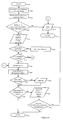
- Fig. 1 illustrates a method for registering workstations according to one embodiment of the invention.
- the method may begin at step 102 when a workstation manager program starts-up or a user logs-in to the system.
- the log-in may include a user inputting a user identification and password using a client and submitting the user identification and password to the system.
- the log-in may also include logging in a workstation to a network tree.
- step 104 may determine whether a workstation object exists for the client.
- a workstation object may be an object stored at a client that provides information about the client and possibly users of that client.
- the workstation object may store a client name, network address, server, user profile(s), user preference(s), security information (e.g., applications, documents or other information to which a particular user may or may not have access), etc.
- step 106 may be used to call an import service.
- the import service may maintain records indicating a workstation name, address, server associated with the workstation, or other information.
- Step 108 may then be used, by the import service, to determine whether the workstation object has been moved or renamed. If a determination is made that the workstation object has been moved or renamed, the import service may retrieve information regarding the workstation object and synchronize the workstation with the workstation object in step 110. Synchronization may include updating a name or location of a workstation object at the client to coincide with information about the workstation retrieved by the import service.
- step 112 may be used to register the workstation.
- Registering the workstation may include gathering information regarding the workstation. This information may include a network address for the workstation, a time at which the workstation was registered, a network address for a server that was a last in communication with the workstation, user information for a user that last logged in to that workstation, or other information.
- Step 114 may then be used to update the workstation object with the information gathered. In this manner, an import service may not be contacted, thus reducing network traffic.
- step 116 may be used to locate an import service.
- Step 116 may use the domain name system (DNS) to locate the import service.
- DNS domain name system
- the DNS may provide an Internet protocol address for the import service using any known method.
- step 118 may be used to transmit workstation registration information to the import service.
- Step 120 may then be used to determine whether criteria exists for the workstation to be registered. Criteria may include rules established by, for example, a system administrator or other user, that specifies how a workstation is to be named, where the workstation is to be created, how user rights are to be managed, etc.
- step 122 may be used to apply the criteria to the workstation registration. If a determination is made that criteria does not exist or after applying the criteria in step 122, step 124 may be used to create a workstation object.
- the workstation object may include information about the workstation such as a client name, where the client is located, user name, Internet protocol (IP) address, server, or other information.
- IP Internet protocol
- the workstation object may be a persistent object. For example, the workstation object may be used to store state information, but the state information may be related to a physical device.
- step 126 may be used to forward the workstation object to the client. The client may then store the workstation object using step 128.
- a removal service may be used to remove a workstation object.
- a removal service may be called using step 130.
- Step 130 may be set by, for example, a system administrator or other user, to remove a workstation object after, for example, a predetermined period of time.
- a workstation object may be removed after a predetermined time period has elapsed.
- a system administrator or other user may establish removal criteria that removes a workstation object based on one or more occurrences. For example, if a workstation has not been registered for a predetermined time period, for example, ten (10) days, the removal service may be called using step 130 and the removal service may remove the workstation object after ten (10) days of non-registration has elapsed.
- the removal service may be governed by a removal policy.
- Fig. 2A illustrates a method for registering a workstation according to one embodiment of the invention.
- the method may start at step 202.
- Step 204 may be used to request a network address and a user name from a server using a client.
- the client may receive the network address and user name from the server using step 206.
- Step 208 may determine whether the network address and user name were returned successfully. If a determination is made that the network address and user name did not return successfully, step 210 may be used to log an error indicating that the network address and user name did not return successfully and the method may stop at step 212.
- step 214 may be used to read a registry or local file (depending on a device being used to request the network address and user name) for a windows security officer (WSO) distinguished name (DN).
- Step 216 may then be used to determine whether a WSO DN exists for the workstation. If a WSO DN exists, step 218 may be used to determine whether the DN maps to the WSO. If a determination is made that the DN does map to the WSO, step 220 may gather the values relating to that workstation. The values gathered may be attributes of the workstation, for example, name, location, specifications, etc.
- step 222 may be used to push the values to a workstation object and push the workstation object to the client.
- Step 224 may then be used to determine if the push was successful. If the push was not successful, an error may be logged using step 226. After logging the error, or if step 224 determines that the push was successful, step 228 may determine whether the network address matches the WSO. If a determination is made that the network address does match the WSO, the method may stop at step 234.
- step 230 may be used to write a new network address in the WSO in, for example, the Novell Directory Service (NDS), although any directory may be used.
- NDS Novell Directory Service
- step 232 may be used to determine whether the new network address was written successfully. If the new network address was written successfully, the method may stop at step 234. If the new network address was not written successfully, the method may return to step 210 and log the error and stop at step 212.
- step 236 may be used to call an import service.
- the import service may be used to determine whether the workstation has been moved or renamed. If the import service determines that the workstation has been moved or renamed, the updated information may be synchronized with the client. If the import service does not locate a workstation identified, the import service may clear any values associated with that workstation and re-register the workstation.
- step 252 may be used to find a rename or move attribute at a container where a user exists as illustrated in Fig. 2B. Step 254 may then be used to read the rename/move attribute list where a policy exists.
- step 256 may be used to determine whether a previous WSO DN exists in the list. If step 256 determines that a WSO DN exists in the list, the method may proceed to step 220. If, however, step 256 determines that a WSO DN does exist in the list, step 258 may be used to retrieve a new string provided after a "++" provided in a value string.
- Fig. 3 is an illustration of a system 300 for registering a workstation.
- System 300 may include a workstation object determining module 302, import service locating 15 module 304, registration information transmitting module 306, workstation object creating module 308, workstation object forwarding module 310, criteria applying module 312, workstation object storing module 314, workstation object modification determining module 316, workstation registering module 318, workstation object updating module 320, import service calling module 322, synchronizing module 324, and workstation object removing module 326.
- Workstation object determining module may be used to determine whether a workstation object exists for a particular client. If a workstation object does not exist for the client, import service locating module 304 may be used to locate an import service for obtaining a workstation object for the client. Import service locating module may use the DNS for locating the import service. After an import service has been located, registration information transmitting module 306 may transmit registration information about the client to the import service. A workstation object for the client may then be created based on at least a portion of the registration information using workstation object creating module 308. The workstation object may then be forwarded to the client using workstation object forwarding module 310.
- a criteria applying module 312 may be used to apply one or more criteria to the workstation object.
- the criteria may include how to name a workstation, where a workstation is to be created, etc.
- a workstation object storing module 314 may be used to store the workstation object.
- workstation object modification determining module 316 may be used to determine whether the workstation object has been modified. For example, workstation object modification determining module 316 may be used to determine whether the workstation object has been moved or renamed. If workstation object modification determining module 316 determines that the workstation object has not been modified, workstation registering module 318 may be used to register the workstation. Workstation object updating module 320 may then update the workstation object by including, for example, a network address for the workstation, a time at which the workstation was registered, a server that was last in communication with the workstation, information regarding a last user of the workstation, or other information.
- import service calling module 322 may be used to call an import service to determine updated information regarding the workstation object.
- the import service may be called using any known method.
- Import service calling module 302 may also retrieve information about the workstation and compare that information with registration information received from the workstation.
- Synchronizing module 324 may then be used to synchronize the information retrieved by the import service calling module 322 with the registration information received from the client. The registration information may then be updated to reflect the modifications made to the workstation object.
- Workstation object removing module 326 may be used to remove one or more workstation objects. For example, a system administrator or other user may establish one or more criteria for removing a workstation object. The system administrator or user may establish that a workstation object is to be removed if a particular workstation has not been registered after a predetermined period of time, for example, ten (10) days. Therefore, if a workstation is not registered for ten (10) days, workstation object removing module 326 may automatically remove a workstation object. According to another embodiment of the invention, the invention also enables delegating one or more tasks to a service. The overall process of determining whether a particular task may be delegated may be called authentication. Authentication typically occurs before a service is called.
- services may be used, for example, to create or remove objects.
- the services are typically governed by a policy.
- the invention facilitates delegation of, for example, server tasks, by enabling users to assign one or more rights to a service.
- Fig. 4 illustrates a method 400 for performing a delegated task.
- a task request may be submitted to a service by a client and received in step 402.
- the service may determine a system, for example, a directory or database that may be accessed to satisfy the task request in step 404.
- Step 406 may then determine whether the service has rights to have the task performed. If step 406 determines that the service does not have at least a minimum threshold of rights, step 408 may deny the request and notify the client by, for example, presenting a "Request Denied" view. If, however, step 406 determines that the service has sufficient rights, step 410 may access the system that may be used to satisfy the request as determined by step 404.
- Step 412 may then search a policy governing the service for criteria related to the task requested.
- Step 414 may determine whether the policy provides any rules for performing the task. For example, if a workstation object is created, an import policy may provide a rule that a system administrator is to be notified, for example, via electronic mail, that the workstation object was created and possibly any parameters associated with the workstation, for example, name, network address, etc. If step 414 determines that one or more rules are to be applied, the rules may be applied in step 416. After applying the rules in step 416, or, if step 414 determines that there are no rules to apply step 418 may be used to perform the task requested.
- Fig. 5 illustrates a system 500 for delegating one or more tasks to a service.
- System 500 includes receiving module 502, system determining module 504, access determining module 506, system accessing module 508, searching module 510, rule determining module 512, rule applying module 514, and task performing module 516.
- Receiving module 502 may be used to receive one or more task requests from one or more clients.
- system determining module 504 may be used to determine a system that may be used to satisfy the task request.
- Access determining module 506 may then be used to determine whether the service has rights to access the system determined by system determining module 504.
- system accessing module 508 may be used to access the system.
- Searching module 510 may then search the system to identify any rules related to the task requested.
- Rule determining module 512 may be used to determine the rules to be applied to a particular task. If rule determining module 512 determines that one or more rules are to be applied to the task, rule applying module 514 may be used to apply the one or more rules. After applying the rules or determining that there are no rules to apply, task performing module may perform the task.
Landscapes
- Engineering & Computer Science (AREA)
- Computer Networks & Wireless Communication (AREA)
- Signal Processing (AREA)
- Computer And Data Communications (AREA)
Applications Claiming Priority (2)
| Application Number | Priority Date | Filing Date | Title |
|---|---|---|---|
| US741425 | 1985-06-05 | ||
| US09/741,425 US7200661B2 (en) | 2000-12-21 | 2000-12-21 | System and method for registering a client device |
Publications (2)
| Publication Number | Publication Date |
|---|---|
| EP1227394A2 true EP1227394A2 (de) | 2002-07-31 |
| EP1227394A3 EP1227394A3 (de) | 2002-12-11 |
Family
ID=24980677
Family Applications (1)
| Application Number | Title | Priority Date | Filing Date |
|---|---|---|---|
| EP01203778A Ceased EP1227394A3 (de) | 2000-12-21 | 2001-10-05 | System und Verfahren zum Registrieren eines Kundengeräts |
Country Status (2)
| Country | Link |
|---|---|
| US (1) | US7200661B2 (de) |
| EP (1) | EP1227394A3 (de) |
Families Citing this family (3)
| Publication number | Priority date | Publication date | Assignee | Title |
|---|---|---|---|---|
| US20060166726A1 (en) * | 2005-01-24 | 2006-07-27 | Jay Chun | Methods and systems for playing baccarat jackpot |
| US7730179B2 (en) * | 2007-06-26 | 2010-06-01 | Novell, Inc. | System and method for policy-based registration of client devices |
| JP6252739B2 (ja) * | 2013-09-13 | 2017-12-27 | 株式会社リコー | 伝送管理システム、管理方法及びプログラム |
Family Cites Families (7)
| Publication number | Priority date | Publication date | Assignee | Title |
|---|---|---|---|---|
| US20020156737A1 (en) * | 1993-10-22 | 2002-10-24 | Corporation For National Research Initiatives, A Virginia Corporation | Identifying, managing, accessing, and tracking digital objects and associated rights and payments |
| US6135646A (en) * | 1993-10-22 | 2000-10-24 | Corporation For National Research Initiatives | System for uniquely and persistently identifying, managing, and tracking digital objects |
| EP0964588A2 (de) | 1998-06-12 | 1999-12-15 | Alcatel | Kommunikationsnetzwerkssystem mit dem Mobilität von diskreten Endgeräten und mit der Registrierung von entfernten Benutzern |
| EP1045598A1 (de) | 1999-04-12 | 2000-10-18 | Lucent Technologies Inc. | Individuelles Mobilitätsregistrierungssystem für die Registrierung von Benutzeridentitäten in einem Telekommunikationsendgerät |
| US6697806B1 (en) * | 2000-04-24 | 2004-02-24 | Sprint Communications Company, L.P. | Access network authorization |
| US6833221B2 (en) * | 2001-01-05 | 2004-12-21 | Litel Instruments | Method and apparatus for proper ordering of registration data |
| US7130282B2 (en) * | 2002-09-20 | 2006-10-31 | Qualcomm Inc | Communication device for providing multimedia in a group communication network |
-
2000
- 2000-12-21 US US09/741,425 patent/US7200661B2/en not_active Expired - Lifetime
-
2001
- 2001-10-05 EP EP01203778A patent/EP1227394A3/de not_active Ceased
Non-Patent Citations (1)
| Title |
|---|
| NOVELL INC.: "ZENworks for Desktops. Deployment Manual. Version 3", September 2000, NOVELL INC. * |
Also Published As
| Publication number | Publication date |
|---|---|
| EP1227394A3 (de) | 2002-12-11 |
| US7200661B2 (en) | 2007-04-03 |
| US20030065781A1 (en) | 2003-04-03 |
Similar Documents
| Publication | Publication Date | Title |
|---|---|---|
| US9229940B2 (en) | Method and apparatus for improving the integration between a search engine and one or more file servers | |
| US8055751B2 (en) | IP network management based on automatically acquired network entity status information | |
| US8423581B2 (en) | Proxy support for special subtree entries in a directory information tree using attribute rules | |
| US10476733B2 (en) | Single sign-on system and single sign-on method | |
| US20090182855A1 (en) | Method using a hashing mechanism to select data entries in a directory for use with requested operations | |
| JP2002099454A (ja) | ファイル管理システムおよび方法 | |
| US8689276B2 (en) | System and method for controlling access to files | |
| US7917636B2 (en) | System and method for detecting unused accounts in a distributed directory service | |
| US20030088648A1 (en) | Supporting access control checks in a directory server using a chaining backend method | |
| KR101143217B1 (ko) | 컴퓨터 신원을 관리하는 방법, 시스템 및 장치 | |
| US7882130B2 (en) | Method and apparatus for requestor sensitive role membership lookup | |
| US6877026B2 (en) | Bulk import in a directory server | |
| JPH06266600A (ja) | 分散ファイルシステム | |
| US7949682B2 (en) | Method for providing a flat view of a hierarchical namespace without requiring unique leaf names | |
| US7200661B2 (en) | System and method for registering a client device | |
| US20020073329A1 (en) | Tracking network devices | |
| US20090192993A1 (en) | Method and system for setting domain name and network device thereof | |
| EP1223721A2 (de) | Vorrichtung und Verfahren zur automatischen Formulierung von Antworten auf Autentifizierungsversuchen von sicheren Servern | |
| CN108268769A (zh) | 对用户执行数据访问授权的方法及系统 | |
| US7606917B1 (en) | Method, apparatus and system for principle mapping within an application container | |
| US20030088614A1 (en) | Directory server mapping tree | |
| KR100348742B1 (ko) | 인터넷으로 연결된 컴퓨터를 이용한 저장공간의 공유 및접근 시스템 | |
| JPH0950422A (ja) | コンピュータネットワーク上の対話継承型アクセス制御方法及びそのサーバコンピュータ | |
| US7698278B2 (en) | Method and system for caching directory services | |
| EP1787222A1 (de) | Verfahren, system und computerprogrammprodukt zur verwaltung von datenbanksätzen mit attributen in mehreren datenbanken |
Legal Events
| Date | Code | Title | Description |
|---|---|---|---|
| PUAI | Public reference made under article 153(3) epc to a published international application that has entered the european phase |
Free format text: ORIGINAL CODE: 0009012 |
|
| AK | Designated contracting states |
Kind code of ref document: A2 Designated state(s): AT BE CH CY DE DK ES FI FR GB GR IE IT LI LU MC NL PT SE TR |
|
| AX | Request for extension of the european patent |
Free format text: AL;LT;LV;MK;RO;SI |
|
| PUAL | Search report despatched |
Free format text: ORIGINAL CODE: 0009013 |
|
| AK | Designated contracting states |
Kind code of ref document: A3 Designated state(s): AT BE CH CY DE DK ES FI FR GB GR IE IT LI LU MC NL PT SE TR |
|
| AX | Request for extension of the european patent |
Free format text: AL;LT;LV;MK;RO;SI |
|
| 17P | Request for examination filed |
Effective date: 20030124 |
|
| RIN1 | Information on inventor provided before grant (corrected) |
Inventor name: WILKINS, KEVIN L. Inventor name: PINEGAR, MARK M. Inventor name: JEX, ALAN R. Inventor name: LEWIS, MATTHEW E. Inventor name: ZHU, HONG Inventor name: TANNER, RONALD M. |
|
| AKX | Designation fees paid |
Designated state(s): DE FR GB IE NL SE |
|
| 17Q | First examination report despatched |
Effective date: 20040920 |
|
| APBN | Date of receipt of notice of appeal recorded |
Free format text: ORIGINAL CODE: EPIDOSNNOA2E |
|
| APBR | Date of receipt of statement of grounds of appeal recorded |
Free format text: ORIGINAL CODE: EPIDOSNNOA3E |
|
| APAF | Appeal reference modified |
Free format text: ORIGINAL CODE: EPIDOSCREFNE |
|
| APBT | Appeal procedure closed |
Free format text: ORIGINAL CODE: EPIDOSNNOA9E |
|
| STAA | Information on the status of an ep patent application or granted ep patent |
Free format text: STATUS: THE APPLICATION HAS BEEN REFUSED |
|
| 18R | Application refused |
Effective date: 20090325 |