EP1228122B1 - Membranes composites echangeuses d'ions - Google Patents
Membranes composites echangeuses d'ions Download PDFInfo
- Publication number
- EP1228122B1 EP1228122B1 EP00958834A EP00958834A EP1228122B1 EP 1228122 B1 EP1228122 B1 EP 1228122B1 EP 00958834 A EP00958834 A EP 00958834A EP 00958834 A EP00958834 A EP 00958834A EP 1228122 B1 EP1228122 B1 EP 1228122B1
- Authority
- EP
- European Patent Office
- Prior art keywords
- moiety
- support material
- represent
- direct link
- conductive polymer
- Prior art date
- Legal status (The legal status is an assumption and is not a legal conclusion. Google has not performed a legal analysis and makes no representation as to the accuracy of the status listed.)
- Expired - Lifetime
Links
- 239000002131 composite material Substances 0.000 title claims abstract description 38
- 239000003014 ion exchange membrane Substances 0.000 title abstract description 7
- 239000000463 material Substances 0.000 claims abstract description 101
- 239000012528 membrane Substances 0.000 claims abstract description 91
- 229920000642 polymer Polymers 0.000 claims abstract description 84
- 229920001940 conductive polymer Polymers 0.000 claims abstract description 57
- 125000001997 phenyl group Chemical group [H]C1=C([H])C([H])=C(*)C([H])=C1[H] 0.000 claims abstract description 26
- 238000005342 ion exchange Methods 0.000 claims abstract description 10
- NINIDFKCEFEMDL-UHFFFAOYSA-N Sulfur Chemical group [S] NINIDFKCEFEMDL-UHFFFAOYSA-N 0.000 claims abstract description 9
- QVGXLLKOCUKJST-UHFFFAOYSA-N atomic oxygen Chemical compound [O] QVGXLLKOCUKJST-UHFFFAOYSA-N 0.000 claims abstract description 8
- 239000001301 oxygen Substances 0.000 claims abstract description 8
- 229910052760 oxygen Inorganic materials 0.000 claims abstract description 8
- 239000002904 solvent Substances 0.000 claims description 58
- 238000000034 method Methods 0.000 claims description 36
- 239000004744 fabric Substances 0.000 claims description 17
- 239000000446 fuel Substances 0.000 claims description 17
- 125000004430 oxygen atom Chemical group O* 0.000 claims description 17
- 239000011148 porous material Substances 0.000 claims description 17
- 239000000203 mixture Substances 0.000 claims description 13
- 239000003880 polar aprotic solvent Substances 0.000 claims description 10
- 238000009472 formulation Methods 0.000 claims description 9
- 239000002253 acid Substances 0.000 claims description 7
- 229920001577 copolymer Polymers 0.000 claims description 7
- 229920001519 homopolymer Polymers 0.000 claims description 5
- 238000004519 manufacturing process Methods 0.000 claims description 3
- 125000002529 biphenylenyl group Chemical group C1(=CC=CC=2C3=CC=CC=C3C12)* 0.000 claims description 2
- 125000000468 ketone group Chemical group 0.000 claims description 2
- 229920006260 polyaryletherketone Polymers 0.000 claims description 2
- 229920001400 block copolymer Polymers 0.000 claims 1
- 229920005604 random copolymer Polymers 0.000 claims 1
- 239000000243 solution Substances 0.000 description 28
- XLYOFNOQVPJJNP-UHFFFAOYSA-N water Substances O XLYOFNOQVPJJNP-UHFFFAOYSA-N 0.000 description 24
- SECXISVLQFMRJM-UHFFFAOYSA-N N-Methylpyrrolidone Chemical compound CN1CCCC1=O SECXISVLQFMRJM-UHFFFAOYSA-N 0.000 description 22
- QAOWNCQODCNURD-UHFFFAOYSA-N Sulfuric acid Chemical compound OS(O)(=O)=O QAOWNCQODCNURD-UHFFFAOYSA-N 0.000 description 15
- 239000001117 sulphuric acid Substances 0.000 description 15
- 235000011149 sulphuric acid Nutrition 0.000 description 15
- 239000004696 Poly ether ether ketone Substances 0.000 description 13
- 125000005843 halogen group Chemical group 0.000 description 13
- BASFCYQUMIYNBI-UHFFFAOYSA-N platinum Chemical compound [Pt] BASFCYQUMIYNBI-UHFFFAOYSA-N 0.000 description 12
- OKKJLVBELUTLKV-UHFFFAOYSA-N Methanol Chemical compound OC OKKJLVBELUTLKV-UHFFFAOYSA-N 0.000 description 9
- 238000009835 boiling Methods 0.000 description 9
- 150000001875 compounds Chemical class 0.000 description 9
- 239000008367 deionised water Substances 0.000 description 9
- 230000008569 process Effects 0.000 description 9
- IJGRMHOSHXDMSA-UHFFFAOYSA-N Atomic nitrogen Chemical compound N#N IJGRMHOSHXDMSA-UHFFFAOYSA-N 0.000 description 8
- JXLHNMVSKXFWAO-UHFFFAOYSA-N azane;7-fluoro-2,1,3-benzoxadiazole-4-sulfonic acid Chemical compound N.OS(=O)(=O)C1=CC=C(F)C2=NON=C12 JXLHNMVSKXFWAO-UHFFFAOYSA-N 0.000 description 8
- 239000011248 coating agent Substances 0.000 description 8
- 238000000576 coating method Methods 0.000 description 8
- 125000003118 aryl group Chemical group 0.000 description 7
- 238000004132 cross linking Methods 0.000 description 7
- 239000011521 glass Substances 0.000 description 7
- 239000001257 hydrogen Substances 0.000 description 7
- 229910052739 hydrogen Inorganic materials 0.000 description 7
- 239000010410 layer Substances 0.000 description 7
- 239000012982 microporous membrane Substances 0.000 description 7
- 229920002530 polyetherether ketone Polymers 0.000 description 7
- UFHFLCQGNIYNRP-UHFFFAOYSA-N Hydrogen Chemical compound [H][H] UFHFLCQGNIYNRP-UHFFFAOYSA-N 0.000 description 6
- 125000000217 alkyl group Chemical group 0.000 description 6
- 239000003054 catalyst Substances 0.000 description 6
- 239000004020 conductor Substances 0.000 description 6
- ZUOUZKKEUPVFJK-UHFFFAOYSA-N diphenyl Chemical compound C1=CC=CC=C1C1=CC=CC=C1 ZUOUZKKEUPVFJK-UHFFFAOYSA-N 0.000 description 6
- 238000007654 immersion Methods 0.000 description 6
- 229910052697 platinum Inorganic materials 0.000 description 6
- 239000005518 polymer electrolyte Substances 0.000 description 6
- 238000001035 drying Methods 0.000 description 5
- 229910052731 fluorine Inorganic materials 0.000 description 5
- -1 hydrogen ions Chemical class 0.000 description 5
- 238000000926 separation method Methods 0.000 description 5
- 125000001273 sulfonato group Chemical group [O-]S(*)(=O)=O 0.000 description 5
- RTZKZFJDLAIYFH-UHFFFAOYSA-N Diethyl ether Chemical compound CCOCC RTZKZFJDLAIYFH-UHFFFAOYSA-N 0.000 description 4
- 229920004695 VICTREX™ PEEK Polymers 0.000 description 4
- 238000006243 chemical reaction Methods 0.000 description 4
- 230000000694 effects Effects 0.000 description 4
- 238000005868 electrolysis reaction Methods 0.000 description 4
- 125000002887 hydroxy group Chemical group [H]O* 0.000 description 4
- 150000002500 ions Chemical class 0.000 description 4
- 229910052757 nitrogen Inorganic materials 0.000 description 4
- 229920001643 poly(ether ketone) Polymers 0.000 description 4
- 238000002360 preparation method Methods 0.000 description 4
- 239000000047 product Substances 0.000 description 4
- 239000000758 substrate Substances 0.000 description 4
- IAZDPXIOMUYVGZ-UHFFFAOYSA-N Dimethylsulphoxide Chemical compound CS(C)=O IAZDPXIOMUYVGZ-UHFFFAOYSA-N 0.000 description 3
- PXGOKWXKJXAPGV-UHFFFAOYSA-N Fluorine Chemical compound FF PXGOKWXKJXAPGV-UHFFFAOYSA-N 0.000 description 3
- HEMHJVSKTPXQMS-UHFFFAOYSA-M Sodium hydroxide Chemical compound [OH-].[Na+] HEMHJVSKTPXQMS-UHFFFAOYSA-M 0.000 description 3
- 235000010290 biphenyl Nutrition 0.000 description 3
- 239000004305 biphenyl Substances 0.000 description 3
- 229910021641 deionized water Inorganic materials 0.000 description 3
- 239000011737 fluorine Substances 0.000 description 3
- 125000001153 fluoro group Chemical group F* 0.000 description 3
- 239000007789 gas Substances 0.000 description 3
- 229910052736 halogen Inorganic materials 0.000 description 3
- 150000002367 halogens Chemical class 0.000 description 3
- 239000000155 melt Substances 0.000 description 3
- 239000007800 oxidant agent Substances 0.000 description 3
- 230000001590 oxidative effect Effects 0.000 description 3
- 239000003586 protic polar solvent Substances 0.000 description 3
- 125000001424 substituent group Chemical group 0.000 description 3
- 0 *(*1/C=C/C=*=C/C=C1)c1ccccc1 Chemical compound *(*1/C=C/C=*=C/C=C1)c1ccccc1 0.000 description 2
- CSCPPACGZOOCGX-UHFFFAOYSA-N Acetone Chemical compound CC(C)=O CSCPPACGZOOCGX-UHFFFAOYSA-N 0.000 description 2
- ZAMOUSCENKQFHK-UHFFFAOYSA-N Chlorine atom Chemical compound [Cl] ZAMOUSCENKQFHK-UHFFFAOYSA-N 0.000 description 2
- IAZDPXIOMUYVGZ-WFGJKAKNSA-N Dimethyl sulfoxide Chemical compound [2H]C([2H])([2H])S(=O)C([2H])([2H])[2H] IAZDPXIOMUYVGZ-WFGJKAKNSA-N 0.000 description 2
- KRHYYFGTRYWZRS-UHFFFAOYSA-N Fluorane Chemical compound F KRHYYFGTRYWZRS-UHFFFAOYSA-N 0.000 description 2
- AFVFQIVMOAPDHO-UHFFFAOYSA-N Methanesulfonic acid Chemical compound CS(O)(=O)=O AFVFQIVMOAPDHO-UHFFFAOYSA-N 0.000 description 2
- ZMXDDKWLCZADIW-UHFFFAOYSA-N N,N-Dimethylformamide Chemical compound CN(C)C=O ZMXDDKWLCZADIW-UHFFFAOYSA-N 0.000 description 2
- UFWIBTONFRDIAS-UHFFFAOYSA-N Naphthalene Chemical compound C1=CC=CC2=CC=CC=C21 UFWIBTONFRDIAS-UHFFFAOYSA-N 0.000 description 2
- NBIIXXVUZAFLBC-UHFFFAOYSA-N Phosphoric acid Chemical compound OP(O)(O)=O NBIIXXVUZAFLBC-UHFFFAOYSA-N 0.000 description 2
- 230000003213 activating effect Effects 0.000 description 2
- 229910052784 alkaline earth metal Inorganic materials 0.000 description 2
- 125000004429 atom Chemical group 0.000 description 2
- 230000015572 biosynthetic process Effects 0.000 description 2
- 125000002915 carbonyl group Chemical group [*:2]C([*:1])=O 0.000 description 2
- 238000001311 chemical methods and process Methods 0.000 description 2
- 239000000460 chlorine Substances 0.000 description 2
- 239000002322 conducting polymer Substances 0.000 description 2
- 125000000753 cycloalkyl group Chemical group 0.000 description 2
- 238000010612 desalination reaction Methods 0.000 description 2
- 238000000502 dialysis Methods 0.000 description 2
- 238000009792 diffusion process Methods 0.000 description 2
- 238000003487 electrochemical reaction Methods 0.000 description 2
- 150000002576 ketones Chemical group 0.000 description 2
- 239000000178 monomer Substances 0.000 description 2
- 125000000843 phenylene group Chemical group C1(=C(C=CC=C1)*)* 0.000 description 2
- 229920000098 polyolefin Polymers 0.000 description 2
- 229920001343 polytetrafluoroethylene Polymers 0.000 description 2
- 239000004810 polytetrafluoroethylene Substances 0.000 description 2
- 238000011084 recovery Methods 0.000 description 2
- 239000002356 single layer Substances 0.000 description 2
- 241000894007 species Species 0.000 description 2
- 238000010561 standard procedure Methods 0.000 description 2
- 238000003756 stirring Methods 0.000 description 2
- 125000001174 sulfone group Chemical group 0.000 description 2
- BDHFUVZGWQCTTF-UHFFFAOYSA-N sulfonic acid Chemical compound OS(=O)=O BDHFUVZGWQCTTF-UHFFFAOYSA-N 0.000 description 2
- 238000005406 washing Methods 0.000 description 2
- 125000004178 (C1-C4) alkyl group Chemical group 0.000 description 1
- LSQARZALBDFYQZ-UHFFFAOYSA-N 4,4'-difluorobenzophenone Chemical compound C1=CC(F)=CC=C1C(=O)C1=CC=C(F)C=C1 LSQARZALBDFYQZ-UHFFFAOYSA-N 0.000 description 1
- VPWNQTHUCYMVMZ-UHFFFAOYSA-N 4,4'-sulfonyldiphenol Chemical compound C1=CC(O)=CC=C1S(=O)(=O)C1=CC=C(O)C=C1 VPWNQTHUCYMVMZ-UHFFFAOYSA-N 0.000 description 1
- BWIZYKIZYZHFFU-UHFFFAOYSA-N C1=CC=[Os]C=C1 Chemical compound C1=CC=[Os]C=C1 BWIZYKIZYZHFFU-UHFFFAOYSA-N 0.000 description 1
- 239000004215 Carbon black (E152) Substances 0.000 description 1
- 241000207199 Citrus Species 0.000 description 1
- LFQSCWFLJHTTHZ-UHFFFAOYSA-N Ethanol Chemical compound CCO LFQSCWFLJHTTHZ-UHFFFAOYSA-N 0.000 description 1
- 238000005727 Friedel-Crafts reaction Methods 0.000 description 1
- 229920000557 Nafion® Polymers 0.000 description 1
- 229910004727 OSO3H Inorganic materials 0.000 description 1
- 229910018828 PO3H2 Inorganic materials 0.000 description 1
- 239000004698 Polyethylene Substances 0.000 description 1
- 239000004721 Polyphenylene oxide Substances 0.000 description 1
- 239000004743 Polypropylene Substances 0.000 description 1
- KJTLSVCANCCWHF-UHFFFAOYSA-N Ruthenium Chemical compound [Ru] KJTLSVCANCCWHF-UHFFFAOYSA-N 0.000 description 1
- CDBYLPFSWZWCQE-UHFFFAOYSA-L Sodium Carbonate Chemical compound [Na+].[Na+].[O-]C([O-])=O CDBYLPFSWZWCQE-UHFFFAOYSA-L 0.000 description 1
- 229910052770 Uranium Inorganic materials 0.000 description 1
- 150000007513 acids Chemical class 0.000 description 1
- 125000005073 adamantyl group Chemical group C12(CC3CC(CC(C1)C3)C2)* 0.000 description 1
- 239000003513 alkali Substances 0.000 description 1
- 150000001342 alkaline earth metals Chemical class 0.000 description 1
- 229910000147 aluminium phosphate Inorganic materials 0.000 description 1
- 150000001413 amino acids Chemical class 0.000 description 1
- 239000003011 anion exchange membrane Substances 0.000 description 1
- 150000004945 aromatic hydrocarbons Chemical class 0.000 description 1
- 238000004380 ashing Methods 0.000 description 1
- 230000000712 assembly Effects 0.000 description 1
- 238000000429 assembly Methods 0.000 description 1
- 239000002585 base Substances 0.000 description 1
- 239000011324 bead Substances 0.000 description 1
- 235000013405 beer Nutrition 0.000 description 1
- VCCBEIPGXKNHFW-UHFFFAOYSA-N biphenyl-4,4'-diol Chemical group C1=CC(O)=CC=C1C1=CC=C(O)C=C1 VCCBEIPGXKNHFW-UHFFFAOYSA-N 0.000 description 1
- 239000012267 brine Substances 0.000 description 1
- 244000309464 bull Species 0.000 description 1
- 239000006227 byproduct Substances 0.000 description 1
- 229910052791 calcium Inorganic materials 0.000 description 1
- 229910052799 carbon Inorganic materials 0.000 description 1
- 239000003010 cation ion exchange membrane Substances 0.000 description 1
- 125000002091 cationic group Chemical group 0.000 description 1
- 150000001768 cations Chemical class 0.000 description 1
- 229910052801 chlorine Inorganic materials 0.000 description 1
- 229910001902 chlorine oxide Inorganic materials 0.000 description 1
- 125000001309 chloro group Chemical group Cl* 0.000 description 1
- 235000020971 citrus fruits Nutrition 0.000 description 1
- 238000004581 coalescence Methods 0.000 description 1
- 239000012141 concentrate Substances 0.000 description 1
- 229920006037 cross link polymer Polymers 0.000 description 1
- 125000000113 cyclohexyl group Chemical group [H]C1([H])C([H])([H])C([H])([H])C([H])(*)C([H])([H])C1([H])[H] 0.000 description 1
- 238000002242 deionisation method Methods 0.000 description 1
- 230000008021 deposition Effects 0.000 description 1
- 238000001212 derivatisation Methods 0.000 description 1
- 238000004090 dissolution Methods 0.000 description 1
- 238000000909 electrodialysis Methods 0.000 description 1
- 239000003792 electrolyte Substances 0.000 description 1
- 125000006575 electron-withdrawing group Chemical group 0.000 description 1
- 125000001033 ether group Chemical group 0.000 description 1
- 238000001704 evaporation Methods 0.000 description 1
- 230000008020 evaporation Effects 0.000 description 1
- 238000001914 filtration Methods 0.000 description 1
- 235000011389 fruit/vegetable juice Nutrition 0.000 description 1
- 125000000524 functional group Chemical group 0.000 description 1
- 230000009477 glass transition Effects 0.000 description 1
- 239000005337 ground glass Substances 0.000 description 1
- 238000001631 haemodialysis Methods 0.000 description 1
- 229910001385 heavy metal Inorganic materials 0.000 description 1
- XLYOFNOQVPJJNP-ZSJDYOACSA-N heavy water Substances [2H]O[2H] XLYOFNOQVPJJNP-ZSJDYOACSA-N 0.000 description 1
- 230000000322 hemodialysis Effects 0.000 description 1
- 239000008240 homogeneous mixture Substances 0.000 description 1
- 239000012456 homogeneous solution Substances 0.000 description 1
- 229930195733 hydrocarbon Natural products 0.000 description 1
- 150000002430 hydrocarbons Chemical class 0.000 description 1
- 230000007062 hydrolysis Effects 0.000 description 1
- 238000006460 hydrolysis reaction Methods 0.000 description 1
- GPRLSGONYQIRFK-UHFFFAOYSA-N hydron Chemical compound [H+] GPRLSGONYQIRFK-UHFFFAOYSA-N 0.000 description 1
- 230000008676 import Effects 0.000 description 1
- 230000002452 interceptive effect Effects 0.000 description 1
- 238000004255 ion exchange chromatography Methods 0.000 description 1
- 229910052742 iron Inorganic materials 0.000 description 1
- 230000001788 irregular Effects 0.000 description 1
- 210000003734 kidney Anatomy 0.000 description 1
- 238000010030 laminating Methods 0.000 description 1
- 239000007788 liquid Substances 0.000 description 1
- 229920002521 macromolecule Polymers 0.000 description 1
- 229910052749 magnesium Inorganic materials 0.000 description 1
- 238000005259 measurement Methods 0.000 description 1
- 230000008018 melting Effects 0.000 description 1
- 238000002844 melting Methods 0.000 description 1
- 229910052751 metal Inorganic materials 0.000 description 1
- 239000002184 metal Substances 0.000 description 1
- VAOCPAMSLUNLGC-UHFFFAOYSA-N metronidazole Chemical compound CC1=NC=C([N+]([O-])=O)N1CCO VAOCPAMSLUNLGC-UHFFFAOYSA-N 0.000 description 1
- 239000012229 microporous material Substances 0.000 description 1
- 125000001624 naphthyl group Chemical group 0.000 description 1
- 230000007935 neutral effect Effects 0.000 description 1
- 239000003960 organic solvent Substances 0.000 description 1
- 230000003647 oxidation Effects 0.000 description 1
- 238000007254 oxidation reaction Methods 0.000 description 1
- 230000035699 permeability Effects 0.000 description 1
- 238000005373 pervaporation Methods 0.000 description 1
- 238000006068 polycondensation reaction Methods 0.000 description 1
- 229920000570 polyether Polymers 0.000 description 1
- 229920000573 polyethylene Polymers 0.000 description 1
- 229920001155 polypropylene Polymers 0.000 description 1
- 229910052700 potassium Inorganic materials 0.000 description 1
- 238000004094 preconcentration Methods 0.000 description 1
- 238000000746 purification Methods 0.000 description 1
- 229910052761 rare earth metal Inorganic materials 0.000 description 1
- 239000000376 reactant Substances 0.000 description 1
- 239000011541 reaction mixture Substances 0.000 description 1
- 230000009467 reduction Effects 0.000 description 1
- 238000006722 reduction reaction Methods 0.000 description 1
- 239000012779 reinforcing material Substances 0.000 description 1
- 229910052707 ruthenium Inorganic materials 0.000 description 1
- 229910052708 sodium Inorganic materials 0.000 description 1
- 239000011734 sodium Substances 0.000 description 1
- HPALAKNZSZLMCH-UHFFFAOYSA-M sodium;chloride;hydrate Chemical compound O.[Na+].[Cl-] HPALAKNZSZLMCH-UHFFFAOYSA-M 0.000 description 1
- 229910001220 stainless steel Inorganic materials 0.000 description 1
- 239000010935 stainless steel Substances 0.000 description 1
- 239000000126 substance Substances 0.000 description 1
- 238000006467 substitution reaction Methods 0.000 description 1
- 229940124530 sulfonamide Drugs 0.000 description 1
- 239000002352 surface water Substances 0.000 description 1
- VYGSFTVYZHNGBU-UHFFFAOYSA-N trichloromethanesulfonic acid Chemical compound OS(=O)(=O)C(Cl)(Cl)Cl VYGSFTVYZHNGBU-UHFFFAOYSA-N 0.000 description 1
- ITMCEJHCFYSIIV-UHFFFAOYSA-N triflic acid Chemical compound OS(=O)(=O)C(F)(F)F ITMCEJHCFYSIIV-UHFFFAOYSA-N 0.000 description 1
- 239000011800 void material Substances 0.000 description 1
- 239000002351 wastewater Substances 0.000 description 1
Classifications
-
- H—ELECTRICITY
- H01—ELECTRIC ELEMENTS
- H01M—PROCESSES OR MEANS, e.g. BATTERIES, FOR THE DIRECT CONVERSION OF CHEMICAL ENERGY INTO ELECTRICAL ENERGY
- H01M8/00—Fuel cells; Manufacture thereof
- H01M8/10—Fuel cells with solid electrolytes
- H01M8/1016—Fuel cells with solid electrolytes characterised by the electrolyte material
- H01M8/1018—Polymeric electrolyte materials
- H01M8/102—Polymeric electrolyte materials characterised by the chemical structure of the main chain of the ion-conducting polymer
- H01M8/1032—Polymeric electrolyte materials characterised by the chemical structure of the main chain of the ion-conducting polymer having sulfur, e.g. sulfonated-polyethersulfones [S-PES]
-
- C—CHEMISTRY; METALLURGY
- C08—ORGANIC MACROMOLECULAR COMPOUNDS; THEIR PREPARATION OR CHEMICAL WORKING-UP; COMPOSITIONS BASED THEREON
- C08G—MACROMOLECULAR COMPOUNDS OBTAINED OTHERWISE THAN BY REACTIONS ONLY INVOLVING UNSATURATED CARBON-TO-CARBON BONDS
- C08G65/00—Macromolecular compounds obtained by reactions forming an ether link in the main chain of the macromolecule
- C08G65/34—Macromolecular compounds obtained by reactions forming an ether link in the main chain of the macromolecule from hydroxy compounds or their metallic derivatives
- C08G65/48—Polymers modified by chemical after-treatment
-
- C—CHEMISTRY; METALLURGY
- C08—ORGANIC MACROMOLECULAR COMPOUNDS; THEIR PREPARATION OR CHEMICAL WORKING-UP; COMPOSITIONS BASED THEREON
- C08J—WORKING-UP; GENERAL PROCESSES OF COMPOUNDING; AFTER-TREATMENT NOT COVERED BY SUBCLASSES C08B, C08C, C08F, C08G or C08H
- C08J5/00—Manufacture of articles or shaped materials containing macromolecular substances
- C08J5/20—Manufacture of shaped structures of ion-exchange resins
- C08J5/22—Films, membranes or diaphragms
- C08J5/2206—Films, membranes or diaphragms based on organic and/or inorganic macromolecular compounds
- C08J5/2275—Heterogeneous membranes
-
- H—ELECTRICITY
- H01—ELECTRIC ELEMENTS
- H01M—PROCESSES OR MEANS, e.g. BATTERIES, FOR THE DIRECT CONVERSION OF CHEMICAL ENERGY INTO ELECTRICAL ENERGY
- H01M8/00—Fuel cells; Manufacture thereof
- H01M8/10—Fuel cells with solid electrolytes
- H01M8/1016—Fuel cells with solid electrolytes characterised by the electrolyte material
- H01M8/1018—Polymeric electrolyte materials
- H01M8/102—Polymeric electrolyte materials characterised by the chemical structure of the main chain of the ion-conducting polymer
- H01M8/1023—Polymeric electrolyte materials characterised by the chemical structure of the main chain of the ion-conducting polymer having only carbon, e.g. polyarylenes, polystyrenes or polybutadiene-styrenes
-
- H—ELECTRICITY
- H01—ELECTRIC ELEMENTS
- H01M—PROCESSES OR MEANS, e.g. BATTERIES, FOR THE DIRECT CONVERSION OF CHEMICAL ENERGY INTO ELECTRICAL ENERGY
- H01M8/00—Fuel cells; Manufacture thereof
- H01M8/10—Fuel cells with solid electrolytes
- H01M8/1016—Fuel cells with solid electrolytes characterised by the electrolyte material
- H01M8/1018—Polymeric electrolyte materials
- H01M8/102—Polymeric electrolyte materials characterised by the chemical structure of the main chain of the ion-conducting polymer
- H01M8/1025—Polymeric electrolyte materials characterised by the chemical structure of the main chain of the ion-conducting polymer having only carbon and oxygen, e.g. polyethers, sulfonated polyetheretherketones [S-PEEK], sulfonated polysaccharides, sulfonated celluloses or sulfonated polyesters
-
- H—ELECTRICITY
- H01—ELECTRIC ELEMENTS
- H01M—PROCESSES OR MEANS, e.g. BATTERIES, FOR THE DIRECT CONVERSION OF CHEMICAL ENERGY INTO ELECTRICAL ENERGY
- H01M8/00—Fuel cells; Manufacture thereof
- H01M8/10—Fuel cells with solid electrolytes
- H01M8/1016—Fuel cells with solid electrolytes characterised by the electrolyte material
- H01M8/1018—Polymeric electrolyte materials
- H01M8/102—Polymeric electrolyte materials characterised by the chemical structure of the main chain of the ion-conducting polymer
- H01M8/1027—Polymeric electrolyte materials characterised by the chemical structure of the main chain of the ion-conducting polymer having carbon, oxygen and other atoms, e.g. sulfonated polyethersulfones [S-PES]
-
- H—ELECTRICITY
- H01—ELECTRIC ELEMENTS
- H01M—PROCESSES OR MEANS, e.g. BATTERIES, FOR THE DIRECT CONVERSION OF CHEMICAL ENERGY INTO ELECTRICAL ENERGY
- H01M8/00—Fuel cells; Manufacture thereof
- H01M8/10—Fuel cells with solid electrolytes
- H01M8/1016—Fuel cells with solid electrolytes characterised by the electrolyte material
- H01M8/1018—Polymeric electrolyte materials
- H01M8/1041—Polymer electrolyte composites, mixtures or blends
- H01M8/1053—Polymer electrolyte composites, mixtures or blends consisting of layers of polymers with at least one layer being ionically conductive
-
- H—ELECTRICITY
- H01—ELECTRIC ELEMENTS
- H01M—PROCESSES OR MEANS, e.g. BATTERIES, FOR THE DIRECT CONVERSION OF CHEMICAL ENERGY INTO ELECTRICAL ENERGY
- H01M8/00—Fuel cells; Manufacture thereof
- H01M8/10—Fuel cells with solid electrolytes
- H01M8/1016—Fuel cells with solid electrolytes characterised by the electrolyte material
- H01M8/1018—Polymeric electrolyte materials
- H01M8/1058—Polymeric electrolyte materials characterised by a porous support having no ion-conducting properties
- H01M8/106—Polymeric electrolyte materials characterised by a porous support having no ion-conducting properties characterised by the chemical composition of the porous support
-
- H—ELECTRICITY
- H01—ELECTRIC ELEMENTS
- H01M—PROCESSES OR MEANS, e.g. BATTERIES, FOR THE DIRECT CONVERSION OF CHEMICAL ENERGY INTO ELECTRICAL ENERGY
- H01M8/00—Fuel cells; Manufacture thereof
- H01M8/10—Fuel cells with solid electrolytes
- H01M8/1016—Fuel cells with solid electrolytes characterised by the electrolyte material
- H01M8/1018—Polymeric electrolyte materials
- H01M8/1069—Polymeric electrolyte materials characterised by the manufacturing processes
- H01M8/1081—Polymeric electrolyte materials characterised by the manufacturing processes starting from solutions, dispersions or slurries exclusively of polymers
-
- C—CHEMISTRY; METALLURGY
- C08—ORGANIC MACROMOLECULAR COMPOUNDS; THEIR PREPARATION OR CHEMICAL WORKING-UP; COMPOSITIONS BASED THEREON
- C08J—WORKING-UP; GENERAL PROCESSES OF COMPOUNDING; AFTER-TREATMENT NOT COVERED BY SUBCLASSES C08B, C08C, C08F, C08G or C08H
- C08J2371/00—Characterised by the use of polyethers obtained by reactions forming an ether link in the main chain; Derivatives of such polymers
- C08J2371/08—Polyethers derived from hydroxy compounds or from their metallic derivatives
- C08J2371/10—Polyethers derived from hydroxy compounds or from their metallic derivatives from phenols
- C08J2371/12—Polyphenylene oxides
-
- C—CHEMISTRY; METALLURGY
- C08—ORGANIC MACROMOLECULAR COMPOUNDS; THEIR PREPARATION OR CHEMICAL WORKING-UP; COMPOSITIONS BASED THEREON
- C08J—WORKING-UP; GENERAL PROCESSES OF COMPOUNDING; AFTER-TREATMENT NOT COVERED BY SUBCLASSES C08B, C08C, C08F, C08G or C08H
- C08J2381/00—Characterised by the use of macromolecular compounds obtained by reactions forming in the main chain of the macromolecule a linkage containing sulfur with or without nitrogen, oxygen, or carbon only; Polysulfones; Derivatives of such polymers
- C08J2381/02—Polythioethers; Polythioether-ethers
-
- H—ELECTRICITY
- H01—ELECTRIC ELEMENTS
- H01M—PROCESSES OR MEANS, e.g. BATTERIES, FOR THE DIRECT CONVERSION OF CHEMICAL ENERGY INTO ELECTRICAL ENERGY
- H01M50/00—Constructional details or processes of manufacture of the non-active parts of electrochemical cells other than fuel cells, e.g. hybrid cells
- H01M50/40—Separators; Membranes; Diaphragms; Spacing elements inside cells
- H01M50/409—Separators, membranes or diaphragms characterised by the material
- H01M50/411—Organic material
- H01M50/414—Synthetic resins, e.g. thermoplastics or thermosetting resins
- H01M50/417—Polyolefins
-
- H—ELECTRICITY
- H01—ELECTRIC ELEMENTS
- H01M—PROCESSES OR MEANS, e.g. BATTERIES, FOR THE DIRECT CONVERSION OF CHEMICAL ENERGY INTO ELECTRICAL ENERGY
- H01M50/00—Constructional details or processes of manufacture of the non-active parts of electrochemical cells other than fuel cells, e.g. hybrid cells
- H01M50/40—Separators; Membranes; Diaphragms; Spacing elements inside cells
- H01M50/409—Separators, membranes or diaphragms characterised by the material
- H01M50/411—Organic material
- H01M50/414—Synthetic resins, e.g. thermoplastics or thermosetting resins
- H01M50/426—Fluorocarbon polymers
-
- Y—GENERAL TAGGING OF NEW TECHNOLOGICAL DEVELOPMENTS; GENERAL TAGGING OF CROSS-SECTIONAL TECHNOLOGIES SPANNING OVER SEVERAL SECTIONS OF THE IPC; TECHNICAL SUBJECTS COVERED BY FORMER USPC CROSS-REFERENCE ART COLLECTIONS [XRACs] AND DIGESTS
- Y02—TECHNOLOGIES OR APPLICATIONS FOR MITIGATION OR ADAPTATION AGAINST CLIMATE CHANGE
- Y02E—REDUCTION OF GREENHOUSE GAS [GHG] EMISSIONS, RELATED TO ENERGY GENERATION, TRANSMISSION OR DISTRIBUTION
- Y02E60/00—Enabling technologies; Technologies with a potential or indirect contribution to GHG emissions mitigation
- Y02E60/10—Energy storage using batteries
-
- Y—GENERAL TAGGING OF NEW TECHNOLOGICAL DEVELOPMENTS; GENERAL TAGGING OF CROSS-SECTIONAL TECHNOLOGIES SPANNING OVER SEVERAL SECTIONS OF THE IPC; TECHNICAL SUBJECTS COVERED BY FORMER USPC CROSS-REFERENCE ART COLLECTIONS [XRACs] AND DIGESTS
- Y02—TECHNOLOGIES OR APPLICATIONS FOR MITIGATION OR ADAPTATION AGAINST CLIMATE CHANGE
- Y02E—REDUCTION OF GREENHOUSE GAS [GHG] EMISSIONS, RELATED TO ENERGY GENERATION, TRANSMISSION OR DISTRIBUTION
- Y02E60/00—Enabling technologies; Technologies with a potential or indirect contribution to GHG emissions mitigation
- Y02E60/30—Hydrogen technology
- Y02E60/50—Fuel cells
-
- Y—GENERAL TAGGING OF NEW TECHNOLOGICAL DEVELOPMENTS; GENERAL TAGGING OF CROSS-SECTIONAL TECHNOLOGIES SPANNING OVER SEVERAL SECTIONS OF THE IPC; TECHNICAL SUBJECTS COVERED BY FORMER USPC CROSS-REFERENCE ART COLLECTIONS [XRACs] AND DIGESTS
- Y02—TECHNOLOGIES OR APPLICATIONS FOR MITIGATION OR ADAPTATION AGAINST CLIMATE CHANGE
- Y02P—CLIMATE CHANGE MITIGATION TECHNOLOGIES IN THE PRODUCTION OR PROCESSING OF GOODS
- Y02P70/00—Climate change mitigation technologies in the production process for final industrial or consumer products
- Y02P70/50—Manufacturing or production processes characterised by the final manufactured product
Definitions
- This invention relates to a composite ion-exchange membrane and provides such a membrane per se and a method of making such a membrane.
- PEMFC polymer electrolyte membrane fuel cell
- Figure 1 of the accompanying diagrammatic drawings may comprise a thin sheet 2 of a hydrogen-ion conducting Polymer Electrolyte Membrane (PEM) sandwiched on both sides by a layer 4 of platinum catalyst and an electrode 6.
- PEM Polymer Electrolyte Membrane
- the layers 2, 4, 6 make up a Membrane Electrode Assembly (MEA) of less than 1mm thickness.
- the PEM 2 could comprise a single layer of ion-conducting material. However, in many cases, a single layer of material does not have satisfactory mechanical properties.
- the middle phenyl may be 1,4- or 1,3-substituted.
- said conductive polymer and said support material do not, together, define a homogenous mixture.
- said polymer is sulphonated, phosphorylated, carboxylated, quaternary-aminoalkylated or chloromethylated, and optionally further modified to yield -CH 2 PO 3 H 2 , -CH 2 NR 3 20+ where R 20 is an alkyl, or -CH 2 NAr 3 x+ where Ar x is an aromatic (arene), to provide a cation or anion exchange membrane.
- the aromatic moiety may contain a hydroxyl group which can be readily elaborated by existing methods to generate -OSO 3 H and -OPO 3 H 2 cationic exchange sites on the polymer. Ion exchange sites of the type stated may be provided as described in WO95/08581.
- said first conductive polymer is sulphonated.
- the only ion-exchange sites of said first conductive polymer are sites which are sulphonated.
- references to sulphonation include a reference to substitution with a group -SO 3 M wherein M stands for one or more elements selected with due consideration to ionic valencies from the following group: H, NR 4 y+ , in which R Y stands for H, C 1 -C 4 alkyl, or an alkali or alkaline earth metal or a metal of sub-group 8, preferably H, NR 4 + , Na, K, Ca, Mg, Fe, and Pt.
- M represents H.
- Sulphonation of the type stated may be provided as described in WO96/29360.
- a phenyl moiety may have 1,4- or 1,3-, especially 1,4-, linkages to moieties to which it is bonded.
- phenyl moieties described may be optionally substituted, they may be optionally substituted by one or more halogen, especially fluorine and chlorine, atoms or alkyl, cycloalkyl or phenyl groups.
- Preferred alkyl groups are C 1-10 , especially C 1-4 , alkyl groups.
- Preferred cycloalkyl groups include cyclohexyl and multicyclic groups, for example adamantyl.
- the optional substituents may be used in the cross-linking of the polymer.
- hydrocarbon optional substituents may be functionalised, for example sulphonated, to allow a cross-linking reaction to take place.
- said phenyl moieties are unsubstituted.
- said polymer is cross-linked, it is suitably cross-linked so as to improve its properties as a polymer electrolyte membrane, for example to reduce its swellability in water.
- Any suitable means may be used to effect cross-linking.
- cross-linking between polymer chains may be effected via sulphur atoms on respective chains.
- said polymer may be cross-linked via sulphonamide bridges as described in US 5 561 202.
- a further alternative is to effect cross-linking as described in EP-A-0008895.
- polymers according to the invention described herein which are crystalline (which some are) there may be no need to effect cross-linking to produce a material which can be used as a polymer electrolyte membrane.
- Such polymers may be easier to prepare than cross-linked polymers.
- said polymer of the inventions described herein may be crystalline.
- said polymer is not optionally cross-linked as described.
- the respective phenylene moieties may independently have 1,4-or 1,3-linkages to the other moieties in the repeat units.
- said phenylene moieties have 1,4- linkages.
- the polymeric chain of the polymer does not include a -S- moiety.
- G represents a direct link.
- One preferred class of polymers may include at least some ketone moieties in the polymeric chain.
- the polymer preferably does not only include -O- and -SO 2 - moieties between aryl (or other unsaturated) moieties in the polymeric chain.
- Preferred polymers include an electron-rich, relatively non-deactivated, easily sulphonatable unit, for example a multi-phenylene moiety or a fused-rings aromatic moiety, such as naphthalene. Such an easy to sulphonate unit may be sulphonated under relatively mild conditions to introduce two sulphonate groups per unit. Thus, preferred polymers may have at least 10 ⁇ electrons in a delocalized aromatic moiety. The number of ⁇ electrons may be 12 or less.
- Preferred polymers include a biphenylene moiety. Other preferred polymers include a naphthalene moiety.
- Preferred polymers include said electron rich, non-deactivated, easily sulphonatable unit bonded to two oxygen atoms.
- Especially preferred polymers include a -O-biphenylene-O-moiety.
- Other especially preferred polymers include a -O-naphthalene-O- moiety.
- Preferred polymers include a first type of moiety which is relatively difficult to sulphonate and a second type of moiety which is relatively easy to sulphonate.
- said second moiety may be sulphonatable using the relatively mild method described in Example 2 hereinafter, whereas the first moiety may be substantially non-sulphonatable in such a method.
- the use of the method of Example 2 may be advantageous over currently used methods which use oleum.
- a preferred second said moiety includes a moiety -Phn- wherein n is an integer of at least 2. Said moiety is preferably bound to at least one ether oxygen. Especially preferred is the case wherein said moiety is -O-Ph n -O- where said ether groups are para to the Ph-Ph bond.
- Preferred polymers are copolymers consisting essentially of a first repeat unit and a second repeat with as described.
- Preferred polymers for some situations may comprise first units selected from (a), (b), (c) and (e) and second units selected from (f), (g), (h) or (i).
- a polymer comprising units (d) and (h) may also be preferred.
- More preferred polymers are copolymers having a first repeat unit selected from those described above, especially repeat units (b), (d) or (e) in combination with a second repeat unit selected from units (f) or (h).
- polymers which include at least one repeat unit of formula IV may be preferred.
- Copolymers may be prepared having one or more first repeat units and one or more of said second repeat units.
- the mole% of co-monomer units may be varied to vary the solubility of the polymer in solvents, for example in organic solvents which may be used in the preparation of films and/or membranes from the polymers and/or in other solvents, especially water.
- Preferred polymers suitably have a solubility of at least 10% w/v, (especially at least 10% w/w) preferably a solubility in the range 10 to 30% w/v (especially in the range 10 to 30% w/w) in a polar aprotic solvent, for example NMP, DMSO or DMF.
- Preferred polymers are substantially insoluble in boiling water.
- First units of the type described above may be relatively difficult to sulphonate, whereas second units of the type described may be easier to sulphonate.
- a phenyl moiety is sulphonated, it may only be mono-sulphonated. However, in some situations it may be possible to effect bi- or multi-sulphonation.
- a said polymer includes a -O-phenyl-O- moiety
- up to 100 mole% of the phenyl moieties may be sulphonated.
- a said polymer includes a -O-biphenylene-O- moiety
- up to 100 mole% of the phenyl moieties may be sulphonated. It is believed to be possible to sulphonate relatively easily -O-(phenyl) n -O- moieties wherein n is an integer, suitably 1-3, at up to 100 mole%.
- Moieties of formula -O-(phenyl) n -CO- or -O-(phenyl) n -SO 2 - may also be sulphonated at up to 100 mole% but more vigorous conditions may be required.
- Moieties of formulae -CO-(phenyl) n -CO- and -SO 2 -(phenyl) n -SO 2 - are more difficult to sulphonate and may be sulphonated to a level less than 100 mole% or not at all under some sulphonation conditions.
- the glass transition temperature (T g ) of said polymer may be at least 144°C, suitably at least 150°C, preferably at least 154°C, more preferably at least 160°C, especially at least 164°C. In some cases, the Tg may be at least 170°C, or at least 190°C or greater than 250°C or even 300°C.
- Said polymer may have an inherent viscosity (IV) of at least 0.1, suitably at least 0.3, preferably at least 0.4, more preferably at least 0.6, especially at least 0.7 (which corresponds to a reduced viscosity (RV) of least 0.8) wherein RV is measured at 25°C on a solution of the polymer in concentrated sulphuric acid of density 1.84gcm -3 , said solution containing 1g of polymer per 100cm -3 of solution. IV is measured at 25°C on a solution of polymer in concentrated sulphuric acid of density 1.84gcm 3 , said solution containing 0.1g of polymer per 100cm 3 of solution.
- IV is measured at 25°C on a solution of polymer in concentrated sulphuric acid of density 1.84gcm 3 , said solution containing 0.1g of polymer per 100cm 3 of solution.
- both RV and IV both suitably employ a viscometer having a solvent flow time of approximately 2 minutes.
- the main peak of the melting endotherm (Tm) for said polymer (if crystalline) may be at least 300°C.
- said composite membrane is preferably substantially stable when used as a PEM in a fuel cell.
- it suitably has high resistance to oxidation, reduction and hydrolysis and has very low permeability to reactants in the fuel cell.
- it has a high proton conductivity.
- it suitably has high mechanical strength and is capable of being bonded to other components which make up a membrane electrode assembly.
- Said polymer may comprise a film, suitably having a thickness of less than 1mm, preferably less than 0.5mm, more preferably less than 0.1mm, especially less than 0.05 mm.
- the film may have a thickness of at least 5 ⁇ m.
- Said polymer electrolyte membrane may comprise one or more layers wherein, suitably, at least one layer comprises a film of said polymer.
- Said membrane may have a thickness of at least 5 ⁇ m and, suitably, less than 1mm, preferably less than 0.5mm, more preferably less than 0.1mm, especially less than 0.05mm.
- Said support material suitably imports mechanical strength and dimensional stability to the composite membrane.
- the polymer may be associated with the support material to form a composite membrane in a variety of ways.
- an unsupported conductive polymer film can be preformed and laminated to the support material.
- the support material may be porous and a solution of the conductive polymer can be impregnated into the support material.
- Said support material may comprise or consist essentially of an optionally-substituted polyolefin.
- Preferred polyolefins are optionally-substituted polyethylene and polypropylene.
- the support material may comprise, or preferably consist essentially of, polytetrafluoroethylene or surface modified polytetrofluoroethylene, suitably provided as a porous film.
- a support material may be as described and used in accordance with the teachings of WO97/25369 and WO96/28242, the contents of which are incorporated herein by reference.
- the support material has a porous microstructure of polymeric fibrils and is impregnated with said polymer throughout the material, preferably so as to render an interior volume of the membrane substantially occlusive.
- Said support material may be made of any polymer described in claim 10.
- functionalisation of said support material is greater at the surface than in interior regions thereof.
- the EW of said support material may be greater than 2000.
- said support material may comprise a polymer having moieties I, II and/or III or a homopolymer or copolymer comprising units IV and/or V.
- said support material is selected from the homopolymers described in claim 11.
- Blends of the abovementioned materials may be used.
- Said support material may be any support material described in WO99/10165 the content of which is incorporated herein, as regards said support materials.
- Said support material is preferably impregnated with said conductive polymer.
- Said support material is preferably porous and, suitably, said conductive polymer is arranged in pores of said support material, preferably so as to render an interior volume of the support material substantially occlusive.
- a said porous support material may be provided by a fabric which may have warp and weft strands or may comprise an irregular arrangement of fibres.
- said pores are defined by the void volume of the fabric - that is between the fibres.
- the fibres of the fabric themselves may be porous and penetrated by said conductive polymer.
- a said porous support material may be microporous and may suitably be made by a phase inversion process as hereinafter described. Such a microporous material preferably has no through pores and/or contains no closed pores.
- said support material and said conductive polymer are in intimate contact. Whilst the two materials preferably do not together define a homogeneous material, the support material and conductive polymer preferably intermingle (as would happen if, for example a surface of the support material was dissolved and contacted with said conductive material) in a boundary region between the two materials.
- support material may allow polymers of lower equivalent weights (EW) (for example less than 800g/mol, less than 700 g/mol, less than 600 g/mol, suitably less than 500 g/mol, preferably less than 450 g/mol or even less than 400 g/mol or 370 g/mol) or relatively inflexible and/or brittle polymers to be used as said conductive polymer in said composite membrane.
- EW equivalent weights
- the composite membrane suitably includes a catalyst material (preferably a layer of a catalyst material) which is suitably a platinum catalyst (i.e. platinum containing) or a mixture of platinum and ruthenium, on both sides of the support material/conductive polymer arrangement described. Electrodes may be provided outside the catalyst material.
- a catalyst material preferably a layer of a catalyst material
- a platinum catalyst i.e. platinum containing
- a mixture of platinum and ruthenium i.e. platinum containing
- Electrodes may be provided outside the catalyst material.
- each phenyl group in a conductive polymer e.g. a sulphonated polymer
- a conductive polymer e.g. a sulphonated polymer
- an electron withdrawing group for example a sulphonated group, a sulphone group or a ketone group.
- a composite membrane which includes a conductive polymer and a support material for the polymer, wherein said polymer includes: polyaryletherketone and/or polyarylethersulphone units; and units of formula -O-Ph n -O- (XX) wherein Ph represents a phenyl group and n represents an integer of 2 or greater and wherein Ph groups of units (XX) are sulphonated.
- each phenyl group of moiety Ph n is sulphonated, preferably mono-sulphonated. About 100 mole% of such phenyl groups may be sulphonated as described.
- -OPhCO- and/or -OPhSO 2 - moieties of said polymer are sulphonated to a lesser extent than the phenyl groups of moiety Ph n .
- Moieties -OPhCO- and -OPhSO 2 - may be substantially non-sulphonated.
- said polymer may include no ketone linkages and may have an equivalent weight of more than 900. Nonetheless, it has been found, surprisingly, that such polymers are still conducting.
- Said composite membrane may be for a fuel cell or an electrolyser.
- the conductive polymer described herein may include a blend of polymers, at least one of which is a polymer described according to the invention described herein.
- the conductive polymers herein are blended with 0-40wt%, preferably 0-20wt%, more preferably 0-10wt%, especially 0-5wt% of other polymeric materials.
- a blend of polymers is not provided.
- a fuel cell or an electrolyser (especially a fuel cell) incorporating a polymer electrolyte membrane according to the first or second aspects.
- the fuel cell may be a hydrogen or direct methanol fuel cell.
- Polymers having units IV, and/or V may be prepared by:
- the polymer prepared more particularly phenyl groups thereof, may be optionally substituted with the groups hereinabove described after polymer formation.
- Y 1 , Y 2 , X 1 and/or X 2 represent a halogen, especially a fluorine, atom, an activating group, especially a carbonyl or sulphone group, is arranged ortho- or para- to the halogen atom.
- halogen atoms are fluorine and chlorine atoms, with fluorine atoms being especially preferred.
- halogen atoms are arranged meta- or para- to activating groups, especially carbonyl groups.
- Y 1 and Y 2 represent a fluorine atom and the other represents an hydroxy group. More preferably in this case, Y 1 represents a fluorine atom and Y 2 represents an hydroxy group.
- the process described in paragraph (a) may be used when Ar represents a moiety of structure (i) and m represents 1.
- Y 1 and Y 2 each represent an hydroxy group.
- X 1 and X 2 each represent a halogen atom, suitably the same halogen atom.
- compounds of formulas VI, VII and/or VIII which are not sulphonated may be prepared and such compounds may be sulphonated prior to said polycondensation reaction.
- Sulphonation as described herein may be carried out in concentrated sulphuric acid (suitably at least 96% w/w. preferably at least 97%w/w, more preferably at least 98%w/w; and preferably less than 98.5%w/w) at an elevated temperature.
- concentrated sulphuric acid suitable at least 96% w/w. preferably at least 97%w/w, more preferably at least 98%w/w; and preferably less than 98.5%w/w
- dried polymer may be contacted with sulphuric acid and heated with stirring at a temperature of greater than 40°C, preferably greater than 55°C, for at least one hour, preferably at least two hours, more preferably about three hours.
- the desired product may be caused to precipitate, suitably by contact with cooled water, and isolated by standard techniques.
- Sulphonation may also be effected as described in US5362836 and/or EP0041780.
- a method of making a composite membrane as described herein comprising causing a conductive polymer as described herein to be associated with a support material as described herein.
- the conductive polymer may be associated with the support material in a variety of ways.
- the method may involve laminating conducting polymer and support material together.
- the method involves impregnating porous support material with said conductive polymer.
- Said porous support material may be a fabric or a microporous membrane.
- the method may include a step of contacting the fabric with a first solvent formulation comprising a first solvent and a conductive polymer, wherein the conductive polymer is preferably dissolved in the first solvent.
- Said fabric may, therefore, be impregnated with said formulation. Thereafter, said first solvent may be removed, leaving said conductive polymer in pores of said fabric.
- Said first solvent and said porous support material may be selected so that said first solvent solubilises, to some degree, a surface of the support material.
- Said first solvent may be capable of dissolving the support material to a level of at least 5wt%. This may improve contact between the conductive polymer and said support material.
- said first solvent may be capable of functionalizing (e.g. sulphonating) said support material to provide ion-exchange site on a surface thereof as hereinbefore described.
- Said first solvent may be a polar aprotic solvent, for example NMP, or may be a protic solvent.
- a polar aprotic solvent may not be capable of solubilising said porous support material whereas a protic solvent may be able to solubilize and, in some cases, functionalise (e.g. sulphonate) said porous support material.
- said solvent preferably comprises or consists essentially of a strong acid solvent.
- Said solvent may comprise at least 90%, preferably at least 95%, more preferably at least 97%, especially at least 98% acid.
- Said strong acid solvent may be one or more of sulphuric acid, a sulphonic acid (e.g. methane sulphonic acid, trichloromethane sulphonic acid, trifluoromethane sulphonic acid), hydrofluoric acid and phosphoric acid.
- a said protic first solvent comprises or consists essentially of sulphuric acid.
- Said solvent may include at least 96%, preferably at least 98% acid.
- Said solvent may include less than 99% acid.
- a said protic first solvent is preferably arranged to sulphonate easy to sulphonate units described herein, but not difficult to sulphonate units.
- said fabric may be polyetheretherketone (e.g. PEEK TM ) and this may be contacted with a formulation comprising the conductive polymer in sulphuric acid, whereby the sulphuric acid dissolves the surface of fibres of the polyetheretherketone and sulphonates it and the conductive polymer penetrates pores defined between fibres of the fabric. Thereafter, phase inversion may be effected, suitably by contact with a non-solvent (e.g. water). After drying, the arrangement may be contacted with a formulation of the conductive polymer in a polar aprotic solvent which will not substantially attack the polyetheretherketone, but may dissolve to some extent the conductive polymer already in the pores.
- a non-solvent e.g. water
- polyetherketone e.g. PEK TM
- PEK TM polyetherketone
- the polyetherketone is dissolved by the sulphuric acid, but not surface sulphonated. Otherwise the process is as described for the treatment of polyetheretherketone.
- the first solvent may be a polar aprotic solvent (e.g. NMP) in which, suitably, a conductive material (e.g. SPEDEK/PEKES) is provided, and said support material is a material (e.g. polyetheretherketone, especially PEEK TM , suitably as a fabric) which is not solubilized by said solvent, so that, suitably, the surface of said support material is not solubilized.
- the first solvent may be a polar aprotic solvent (e.g. NMP) in which, suitably, a conductive material (e.g.
- said support material is a microporous membrane suitably made of a material (e.g. polyetherketone, especially PEK TM ) which is not solubilized by said solvent, so that suitably the surface of said support material is not solubilized.
- a material e.g. polyetherketone, especially PEK TM
- preparation of the membrane may include a step of contacting a support material as described herein with a solvent formulation comprising said first solvent.
- Said first solvent preferably solubilizes the support material.
- the method preferably includes the step of contacting the support material with a second solvent.
- Said second solvent is preferably arranged to cause phase inversion. Phase inversion suitably results in said support material being rendered porous.
- Said second solvent is preferably a non-solvent for said support material.
- Preferred second solvents are aqueous; especially preferred is water.
- Said microporous support material is preferably contacted with said conductive polymer so that said polymer penetrates into pores formed in said porous material.
- Said conductive polymer may be provided in a third solvent, thereby to penetrate pores in said support material.
- Said third solvent is preferably a polar aprotic solvent.
- NMP is a suitable solvent. Thereafter, the third solvent is evaporated.
- Said third solvent may have the same identity as said first solvent described above.
- Said conductive material may be contacted with said support material in the first solvent. Phase inversion may then be caused as described above which results in said conductive polymer being deposited in the pores formed by the phase inversion.
- the arrangement may be post-treated, suitably so as to produce a substantially continuous film of said conductive polymer on the support material. Posttreatment may include the step of contacting the composite membrane which comprises conductive polymer in pores of said support material with a third solvent in which said conductive polymer is relatively soluble and said support material is substantially insoluble. This may cause some dissolution of the conductive polymer in the pores resulting in film formation by coalescence of material between pores.
- a said conductive polymer may be provided in said third solvent, thereby to penetrate pores in said support material.
- Said third solvent is preferably a polar aprotic solvent. NMP is a suitable solvent. Thereafter, the third solvent is evaporated.
- the method may include a subsequent step of associating a catalyst material with the composite membrane prepared as described.
- a said composite membrane described herein may be used in fuel cells or electrolysers and, accordingly, the invention extends to a fuel cell or electrolyser incorporating a composite membrane as described.
- figure 1 is a schematic representation of a polymer electrolyte membrane fuel cell.
- NMP N-methylpyrrolidone
- PEEK TM and PEK TM are trade marks of Victrex Plc for polyetheretherketone and polyetherketone respectively.
- SPEDEK sulphonated polyether(biphenyl)etherketone
- PEKES polyetherketoneethersulphone
- a ratio e.g. SPEDEK/PEKES (1:1:5)
- the ratio refers to the molar ratio of the polymeric components (e.g. the mole ratio of SPEDEK to PEKES is 1 to 1.5).
- a PEM 2 may comprise a layer of an ion-conducting material in combination with a layer of a reinforcing material, as described further below.
- a 700ml flanged flask fitted with a ground glass Quickfit lid, stirrer/stirrer guide, nitrogen inlet and outlet was charged with 4,4'-difluorobenzophenone (89.03g, 0.408 mole), 4,4'-dihydroxybiphenyl (29.79g, 0.16 mole) 4,4'-dihydroxydiphenylsulphone (60.06g, 0.24 mole), and diphenysulphone (332g) and purged with nitrogen for over 1 hour.
- the contents were then heated under a nitrogen blanket to between 140 and 150°C to form an almost colourless solution. While maintaining a nitrogen blanket, dried sodium carbonate (43.24g, 0.408 mole) was added. The temperature was raised gradually to 315°C over 3 hours then maintained for 0.5 hours.
- the reaction mixture was allowed to cool, milled and washed with acetone and water.
- the resulting polymer was dried in an air oven at 120°C.
- the polymer had a melt viscosity at 400°C, 1000sec -1 of 0.6 kNsm -2 ; and a Tg of 188°C.
- Example 1 The polymer of Example 1 was sulphonated by stirring each polymer in 98% sulphuric acid (3.84g polymer/100g sulphuric acid) for 21 hours at 50°C. Thereafter, the reaction solution was allowed to drip into stirred deionised water. Sulphonated polymer precipitated as free-flowing beads. Recovery was by filtration, followed by washing with deionised water until the pH was neutral and subsequent drying.
- 1 H nmr in DMSO-d6 confirmed that 100 mole% of the biphenyl units had sulphonated, giving one sulphonic acid group, ortho to the ether linkage, on each of the two aromatic rings comprising the biphenyl unit, giving an Equivalent Weight of 583.
- Membranes were produced from the polymer from Example 2 after sulphonation as described in Example 2 by dissolving the polymer in N-methylpyrrolidone (NMP) at a concentration of 15% w/w. The homogeneous solution was cast onto clean glass plates and then drawn down to give 400 micron films, using a stainless steel Gardner Knife. Evaporation at 100°C under vacuum for 24 hours produced membranes of mean thickness 40 microns.
- NMP N-methylpyrrolidone
- the substrate a piece of PEEK TM fabric having a thickness of 70 ⁇ m and weight/unit area of 1.7x10 -3 g.cm -2 was clamped in a 10 cm diameter circular frame and immersed in a 15% (w/w) solution of SPEDEK/PEKES(1:1:5) prepared in Example 2 in NMP.
- the wetted substrate was placed in vacuum oven at 105°C for 1.5 hrs to remove the NMP.
- the dry composite membrane was placed on a glass plate and a 50 ⁇ m thick wet coating of the solution of SPEDEK/PEKES prepared in Example 2 in NMP was applied with a Doctor Blade and dried in a vacuum oven at 105°C for 20 hrs to remove the NMP.
- the resulting composite membrane had a mean thickness of 70 ⁇ m.
- the weight ratio of ion-conducting membrane to PEEK TM fabric was 70:30.
- the unreinforced membrane of Example 3 was highly swollen and fragile after immersion in boiling water for 1 hour, whereas the composite membrane was strong and flexible.
- Example 5 Comparison of Fuel Cell Performance of Reinforced Composite Membrane prepared in Example 4 with Unreinforced Membrane of Example 3.
- Example 4 The reinforced composite membrane prepared in Example 4 and the unreinforced membrane prepared in Example 3 were pre-treated by boiling in 1M sulphuric acid, allowed to cool to room temperature followed by thorough washing with deionised water.
- MEA Membrane Electrode Assemblies
- E-Tek Nafion® impregnated Gas Diffusion Electrodes
- the following operating conditions were followed: Hydrogen Pressure 3Barg Air Pressure 3Barg Hydrogen Stoichiometry 1.5 Air Stoichiometry 3 Cell Temperature 50°C Current Density 0.7Acm -2
- the substrate a 150 mm by 130 mm piece of PEEK TM fabric as described in Example 4 was clamped to a glass plate, impregnated with a 10% (w/w) solution of the SPEDEK/PEKES prepared in Example 2 in 98% sulphuric acid and immediately immersed in de-ionized water.
- the composite membrane was dried then coated using a Doctor Blade with a coating of a 15% (w/w) solution of SPEDEK/PEKES prepared in Example 2 in NMP, to 100 ⁇ m wet thickness and dried.
- the composite membrane was strong and flexible.
- Example 6 The procedure described in Example 6 was followed except that instead of coating with SPEDEK/PEKES in NMP, the composite membrane was coated with NMP alone, left for 30 minutes and dried. Compared to the unreinforced membrane described in Example 3 which was highly swollen and fragile after immersion in boiling water for 1 hour, the composite was strong and flexible.
- PEK TM (Grade P22, obtained from Victrex Plc, UK, having a Melt Viscosity of 0.22 kN sm -2 ) in 98% sulphuric acid was cast onto a glass plate to produce a 100 ⁇ m wet thickness coating.
- the plate was immersed in deionized water, removed, dried under vacuum at 105°C, thereby producing a microporous membrane.
- This membrane was then impregnated with a 15% (w/w) solution of SPEDEK/PEKES prepared in Example 2 in NMP to produce a wet thickness of the solution of 250 ⁇ m, followed by drying for 20 hours at 105 °C producing a membrane of mean thickness 50 microns.
- the weight ratio of ion-conducting membrane to PEK TM microporous membrane was 80:20. Compared to the unreinforced membrane described in Example 3 which was highly swollen and fragile after immersion in boiling water for 1 hour, the composite membrane was strong and flexible.
- a 5cm x 5cm x 50 microns sample of membrane from Example 8 and a 5cm x 5cm x 40 microns sample of the membrane from Example 3 were separately immersed in boiling deionised water (500 ml) for 60 mins, removed and dried quickly with lint-free paper to remove surface water, weighed, dried in an oven at 50°C for 1 day, allowed to cool to ambient temperature in a desiccator then weighed quickly.
- the % water-uptakes were 132% and 520% for the reinforced composite membrane and unreinforced membrane respectively, as calculated below.
- % Water - uptake Wet Weight - Dry Weight Dry Weight ⁇ 100
- a 10% (w/w) solution of PES was dissolved in 98% sulphuric acid and was cast onto a glass plate to produce a 100 ⁇ m wet thickness coating.
- the plate was immersed in deionized water, removed, dried under vacuum at 105°C, thereby producing a microporous membrane.
- This membrane was then impregnated with a 15% (w/w) solution of SPEDEK/PEKES prepared in Example 2 in NMP to produce a wet thickness of the solution of 250 ⁇ m, followed by drying for 20 hours at 105°C.
- the composite membrane was strong and flexible.
- the substrate a 10 cm by 10 cm piece of PTFE fabric was clamped to a glass plate, impregnated with a 5% (w/w) solution of the SPEDEK/PEKES polymer prepared in Example 2 in NMP/methanol (30:70; w/w) and immersed in de-ionized water.
- the composite membrane was dried then coated using a Doctor Blade with a coating of a 5% (w/w) solution of SPEDEK/PEKES polymer prepared in Example 2 in NMP/methanol (30:70; w/w), to 250 ⁇ m wet thickness and dried. The coating procedure was repeated.
- the composite membrane was strong and flexible.
Landscapes
- Chemical & Material Sciences (AREA)
- Engineering & Computer Science (AREA)
- Manufacturing & Machinery (AREA)
- Chemical Kinetics & Catalysis (AREA)
- General Chemical & Material Sciences (AREA)
- Life Sciences & Earth Sciences (AREA)
- Sustainable Development (AREA)
- Sustainable Energy (AREA)
- Electrochemistry (AREA)
- Crystallography & Structural Chemistry (AREA)
- Medicinal Chemistry (AREA)
- Organic Chemistry (AREA)
- Health & Medical Sciences (AREA)
- Polymers & Plastics (AREA)
- Dispersion Chemistry (AREA)
- Inorganic Chemistry (AREA)
- Materials Engineering (AREA)
- Composite Materials (AREA)
- Manufacture Of Macromolecular Shaped Articles (AREA)
- Polyethers (AREA)
- Conductive Materials (AREA)
- Fuel Cell (AREA)
- Other Resins Obtained By Reactions Not Involving Carbon-To-Carbon Unsaturated Bonds (AREA)
- Separation Using Semi-Permeable Membranes (AREA)
Claims (22)
- Membrane composite qui inclut un polymère conducteur d'ions et un matériau support pour le polymère, ledit polymère conducteur d'ions étant un copolymère aléatoire ou bloc d'au moins deux unités différentes IV et/ou V, dans lequel IV et V sont tels que montrés ci-dessous


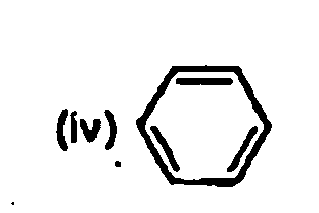 (a) une unité de formule IV dans laquelle E et E' représentent des atomes d'oxygène, G représente une liaison directe, Ar représente un fragment de structure (iv), m et s représentent zéro, w représente 1 et A et B représentent 1 ;(b) une unité de formule IV dans laquelle E représente un atome d'oxygène, E' représente une liaison directe, Ar représente un fragment de structure (i), m représente zéro, A représente 1, B représente zéro ;(c) une unité de formule V dans laquelle E et E' représentent des atomes d'oxygène, G représente une liaison directe, Ar représente un fragment de structure (iv), m et v représentent zéro, z représente 1 et C et D représentent 1 ;(d) une unité de formule V dans laquelle E représente un atome d'oxygène, E' représente une liaison directe, Ar représente un fragment de structure (ii), m représente 0, C représente 1, D représente 0 ; et(e) une unité de formule V dans laquelle E et E' représentent des atomes d'oxygène, Ar représente une structure (i), m représente 0, C représente 1, Z représente 1, G représente une liaison directe, v représente 0 et D représente 1 ;et une seconde unité répétitive qui est choisie parmi les suivantes :(f) une unité de formule IV dans laquelle E et E' représentent des atomes d'oxygène, G représente une liaison directe, Ar représente un fragment de structure (iv), m représente 1, w représente 1, s représente zéro, A et B représentent 1 ;(g) une unité de formule IV dans laquelle E représente un atome d'oxygène, E' représente une liaison directe, G représente une liaison directe, Ar représente un fragment de structure (iv), m et s représentent zéro, w représente 1, A et B représentent 1 ;(h) une unité de formule V dans laquelle E et E' représentent des atomes d'oxygène, G représente une liaison directe, Ar représente un fragment de structure (iv), m représente 1, z représente 1, v représente 0, C et D représentent 1 ;(i) une unité de formule V dans laquelle E représente un atome d'oxygène, E' représente une liaison directe, G représente une liaison directe, Ar représente un fragment de structure (iv), m et v représentent zéro, z représente 1, C et D représentent 1.
 - Membrane selon la revendication 1, dans laquelle ledit polymère conducteur d'ions est sulfoné.
- Membrane selon la revendication 1 ou la revendication 2, dans laquelle ledit polymère conducteur d'ions est cristallin.
- Membrane selon l'une quelconque des revendications précédentes, dans laquelle ledit polymère conducteur d'ions inclut au moins des fragments cétoniques dans la chaîne polymère.
- Membrane selon l'une quelconque des revendications précédentes, dans laquelle ledit polymère conducteur d'ions inclut une première unité répétitive choisie parmi les unités répétitives (b), (d) et (e), en combinaison avec une seconde unité répétitive choisie parmi les unités (f) et (h).
- Membrane selon l'une quelconque des revendications précédentes, dans laquelle ledit polymère conducteur d'ions inclut un fragment biphénylène.
- Membrane selon l'une quelconque des revendications précédentes, dans laquelle ledit polymère conducteur d'ions inclut un fragment -O-biphénylène-O-.
- Membrane selon l'une quelconque des revendications précédentes, dans laquelle un film dudit polymère conducteur d'ions est formé en couche sur le matériau support.
- Membrane selon l'une quelconque des revendications 1 à 7, dans laquelle le matériau support est poreux et ledit polymère conducteur d'ions est imprégné dans le matériau support.
- Membrane selon l'une quelconque des revendications précédentes, dans laquelle ledit matériau support comprend un polymère ayant un fragment de formule




- Membrane selon la revendication 10, dans laquelle ledit matériau support est choisi à partir d'un homopolymère de formule IV dans laquelle :- E et E' représentent des atomes d'oxygène, G représente une liaison directe, Ar représente un fragment de structure (iv), m et s représentent zéro, w représente 1 et A et B représentent 1 ;- E représente un atome d'oxygène, E' représente une liaison directe, Ar représente un fragment de structure (i), m représente zéro, A représente 1, B représente zéro ;- Ar représente un fragment (iv), E et E' représentent des atomes d'oxygène, G représente une liaison directe, m représente 0, w représente 0, s représente 1, r représente 1 et A et B représentent 1 ;- Ar représente une structure (i)*, E représente un atome d'oxygène, E' représente une liaison directe, m représente 0, A représente 1, B représente 0 ;- Ar représente un fragment (i), E et E' représentent des atomes d'oxygène, G représente une liaison directe, m représente 0, w représente 1, r représente 0, s représente 1 et A et B représentent 1 ; ou- Ar représente un fragment (iv), E représente un atome de soufre, m représente 0, E' représente une liaison directe et B représente 0 ;ou est choisi parmi :- un homopolymère de formule V dans laquelle E représente un atome d'oxygène, E' représente une liaison directe, Ar représente un fragment de structure (ii), m représente 0, C représente 1, D représente 0 ; et est choisi parmi :- un homopolymère de formule V dans laquelle E et E' représentent des atomes d'oxygène, m représente zéro, C et D représentent 1, z représente 1, G représente une liaison directe, v représente zéro et Ar représente un fragment de structure :

- Membrane selon l'une quelconque des revendications précédentes, dans laquelle ledit matériau polymère conducteur d'ions a un poids équivalent (PE) inférieur à 800 g/mole.
- Polymère conducteur et matériau support imprégné du polymère conducteur, ledit polymère incluant : des unités polyaryléthercétones et/ou polyaryléther-sulfones ; et des unités de formule -O-Phn-O- (XX), où Ph représente un groupe phényle et n représente l'entier 2 ou un entier supérieur à 2 et dans lesquels les groupes Ph des unités (XX) sont sulfonés.
- Pile à combustible ou électrolyseur incorporant une membrane composite selon l'une quelconque des revendications précédentes.
- Procédé de fabrication d'une membrane composite selon l'une quelconque des revendications 1 à 13, comprenant l'étape consistant à amener un polymère conducteur tel que décrit dans l'une quelconque des revendications 1 à 13 à être associé avec un matériau support tel que décrit dans l'une quelconque des revendications 1 à 13.
- Procédé selon la revendication 15, qui inclut l'imprégnation d'un matériau support poreux avec un polymère conducteur.
- Procédé selon la revendication 15 ou la revendication 16, dans lequel une première formulation de solvant comprend un solvant aprotique polaire dans lequel est prévu un polymère conducteur, ledit matériau support étant un matériau qui n'est pas soluble dans ledit solvant aprotique polaire, lequel procédé inclut une étape de mise en contact dudit matériau support avec ladite première formulation de solvant.
- Procédé selon la revendication 15 ou la revendication 16, dans lequel ledit matériau support est un tissu, le procédé incluant une étape de mise en contact du tissu avec une première formulation de solvant comprenant un premier solvant et ledit polymère conducteur, dans lequel ledit premier solvant et ledit matériau support sont choisis de manière à ce que le premier solvant solubilise une surface du matériau support.
- Procédé selon la revendication 18, dans lequel ledit premier solvant est capable de fonctionnaliser ledit matériau support pour obtenir des sites d'échange d'ions à la surface de celui-ci.
- Procédé selon la revendication 19, dans lequel ledit premier solvant inclut au moins 99% d'acide.
- Procédé selon la revendication 15 ou la revendication 16, incluant :- la mise en contact dudit matériau support avec une formulation de solvant comprenant un premier solvant qui solubilise le matériau support ; et- la mise en contact du matériau support avec un second solvant pour provoquer une inversion de phases et rendre ledit matériau support poreux.
- Procédé selon la revendication 21, dans lequel ledit polymère conducteur est amené dans un troisième solvant et est amené à pénétrer dans les pores du matériau support.
Applications Claiming Priority (5)
| Application Number | Priority Date | Filing Date | Title |
|---|---|---|---|
| WOPCT/GB00/02833 | 1999-09-10 | ||
| PCT/GB1999/002833 WO2000015691A1 (fr) | 1998-09-11 | 1999-09-10 | Polymeres echangeurs d'ions |
| GB0006884A GB0006884D0 (en) | 2000-03-22 | 2000-03-22 | Ion exchange polymers |
| GB0006884 | 2000-03-22 | ||
| PCT/GB2000/003449 WO2001019896A1 (fr) | 1999-09-10 | 2000-09-08 | Membranes composites echangeuses d'ions |
Publications (2)
| Publication Number | Publication Date |
|---|---|
| EP1228122A1 EP1228122A1 (fr) | 2002-08-07 |
| EP1228122B1 true EP1228122B1 (fr) | 2007-02-28 |
Family
ID=26243931
Family Applications (1)
| Application Number | Title | Priority Date | Filing Date |
|---|---|---|---|
| EP00958834A Expired - Lifetime EP1228122B1 (fr) | 1999-09-10 | 2000-09-08 | Membranes composites echangeuses d'ions |
Country Status (6)
| Country | Link |
|---|---|
| EP (1) | EP1228122B1 (fr) |
| AT (1) | ATE355319T1 (fr) |
| AU (1) | AU778365B2 (fr) |
| CA (1) | CA2382144C (fr) |
| DE (1) | DE60033681T2 (fr) |
| WO (1) | WO2001019896A1 (fr) |
Families Citing this family (22)
| Publication number | Priority date | Publication date | Assignee | Title |
|---|---|---|---|---|
| WO2001070858A2 (fr) * | 2000-03-22 | 2001-09-27 | Victrex Manufacturing Limited | Materiau d'echange d'ions composite |
| WO2001071835A2 (fr) * | 2000-03-22 | 2001-09-27 | Victrex Manufacturing Limited | Composite de membrane/electrode |
| JP5202783B2 (ja) * | 2000-03-22 | 2013-06-05 | ビクトレックス マニュファクチャリング リミテッド | イオン交換材料 |
| WO2001071839A2 (fr) * | 2000-03-22 | 2001-09-27 | Victrex Manufacturing Limited | Materiaux echangeurs d'ions |
| EP1518290A4 (fr) | 2002-05-13 | 2009-12-02 | Polyfuel Inc | Copolymeres blocs conducteurs d'ions |
| DE10258175A1 (de) * | 2002-12-12 | 2004-07-08 | General Motors Corp., Detroit | Ein Blockcopolymer zur Verwendung als fester Polymerelektrolyt, eine ionenleitfähige Membran, die aus einem Blockcopolymer gemacht ist, und Verfahren zur Herstellung eines Blockcopolymers |
| ES2266642T3 (es) | 2002-12-13 | 2007-03-01 | PIRELLI & C. S.P.A. | Celda de combustible y conjunto de electrodo membrana. |
| EP1619735A4 (fr) | 2003-03-06 | 2010-05-12 | Toray Industries | Electrolyte polymerique, element d'electrolyte polymerique, composite d'electrode a membrane et pile a combustible a electrolyte polymerique |
| GB0307623D0 (en) | 2003-04-02 | 2003-05-07 | Victrex Mfg Ltd | Polymeric materials |
| WO2004096889A1 (fr) * | 2003-04-28 | 2004-11-11 | Sumitomo Chemical Company Limited | Polymere ultra-pur conducteur d'ions de type polyether aromatique, intermediaire associe et procedes de production de ces derniers |
| CN100446312C (zh) | 2003-06-25 | 2008-12-24 | 东丽株式会社 | 高分子电解质、以及使用了该高分子电解质的高分子电解质膜、膜电极复合体和高分子电解质型燃料电池 |
| US7459505B2 (en) | 2005-05-03 | 2008-12-02 | General Motors Corporation | Block copolymers with acidic groups |
| US7977394B2 (en) | 2005-05-03 | 2011-07-12 | GM Global Technology Operations LLC | Triblock copolymers with acidic groups |
| DE102005030970A1 (de) * | 2005-06-30 | 2007-01-11 | Basf Ag | Wässrige Formulierungen enthaltend Säuregruppen tragende polyaromatische Verbindungen |
| JP2007023183A (ja) * | 2005-07-19 | 2007-02-01 | Toyota Motor Corp | 多孔質膜、多孔質膜の製造方法、固体高分子電解質膜、及び燃料電池 |
| US7993792B2 (en) | 2006-07-26 | 2011-08-09 | GM Global Technology Operations LLC | Polymer blocks for PEM applications |
| US8492460B2 (en) | 2006-07-28 | 2013-07-23 | GM Global Technology Operations LLC | Fluorinated polymer blocks for PEM applications |
| US7888433B2 (en) * | 2008-05-09 | 2011-02-15 | Gm Global Technology Operations, Inc. | Sulfonated-polyperfluoro-cyclobutane-polyphenylene polymers for PEM fuel cell applications |
| JP5734859B2 (ja) * | 2008-10-24 | 2015-06-17 | ソルベイ・アドバンスト・ポリマーズ・エルエルシー | 高純度4,4′−ジフルオロベンゾフェノンを使用する、ポリ(アリールエーテルケトン)を製造するための改善された方法 |
| TR200903467A2 (tr) * | 2009-05-04 | 2010-08-23 | Can Aral Aydin | Bir alkali polimer elektrolit membranın sentezlenmesi için bir metot |
| CN115322376B (zh) * | 2022-08-15 | 2024-01-30 | 宁夏清研高分子新材料有限公司 | 一种提高聚砜聚合物导电性的方法 |
| WO2026041715A1 (fr) * | 2024-08-21 | 2026-02-26 | Katholieke Universiteit Leuven | Membranes de support ultraminces et renforcées mécaniquement |
Family Cites Families (7)
| Publication number | Priority date | Publication date | Assignee | Title |
|---|---|---|---|---|
| EP0008894B1 (fr) * | 1978-09-05 | 1983-02-23 | Imperial Chemical Industries Plc | Copolymères de polyaryléthersulfone sulfonés et procédé pour leur préparation |
| GB8902761D0 (en) * | 1989-02-08 | 1989-03-30 | Ici Plc | Cation echange membranes |
| SG73410A1 (en) * | 1992-06-13 | 2000-06-20 | Hoechst Ag | Polymer electrolyte membrane and process for the production thereof |
| EP0815160B1 (fr) * | 1995-03-20 | 2008-03-26 | BASF Fuel Cell GmbH | Cetones polyether sulfonees, leur procede de production et leur utilisation pour fabriquer des membranes |
| FR2748485B1 (fr) * | 1996-05-07 | 1998-08-07 | Commissariat Energie Atomique | Polyimides sulfones, membranes preparees avec ceux-ci, et dispositif de pile a combustible comprenant ces membranes |
| JP3724064B2 (ja) * | 1996-06-28 | 2005-12-07 | 住友化学株式会社 | 燃料電池用高分子電解質及び燃料電池 |
| EP1112301B1 (fr) * | 1998-09-11 | 2006-09-06 | Victrex Manufacturing Limited | Polymeres echangeurs d'ions |
-
2000
- 2000-09-08 AT AT00958834T patent/ATE355319T1/de not_active IP Right Cessation
- 2000-09-08 DE DE60033681T patent/DE60033681T2/de not_active Expired - Lifetime
- 2000-09-08 AU AU70250/00A patent/AU778365B2/en not_active Ceased
- 2000-09-08 EP EP00958834A patent/EP1228122B1/fr not_active Expired - Lifetime
- 2000-09-08 WO PCT/GB2000/003449 patent/WO2001019896A1/fr not_active Ceased
- 2000-09-08 CA CA002382144A patent/CA2382144C/fr not_active Expired - Fee Related
Also Published As
| Publication number | Publication date |
|---|---|
| JP4647167B2 (ja) | 2011-03-09 |
| CA2382144A1 (fr) | 2001-03-22 |
| CA2382144C (fr) | 2008-12-02 |
| WO2001019896A1 (fr) | 2001-03-22 |
| AU778365B2 (en) | 2004-12-02 |
| ATE355319T1 (de) | 2006-03-15 |
| DE60033681T2 (de) | 2007-10-31 |
| EP1228122A1 (fr) | 2002-08-07 |
| AU7025000A (en) | 2001-04-17 |
| DE60033681D1 (de) | 2007-04-12 |
| JP2003509554A (ja) | 2003-03-11 |
Similar Documents
| Publication | Publication Date | Title |
|---|---|---|
| CA2402840C (fr) | Materiau d'echange d'ions composite | |
| EP1228122B1 (fr) | Membranes composites echangeuses d'ions | |
| CA2402841C (fr) | Materiaux echangeurs d'ions | |
| AU5750999A (en) | Ion-exchange polymers | |
| AU2001244303A1 (en) | Ion exchange materials | |
| CA2402838C (fr) | Matieres d'echange ionique | |
| CA2440964C (fr) | Pile a combustible alimentee par injection directe de carburant | |
| EP1430558B1 (fr) | Materiaux polymeres conducteurs d'ions | |
| AU2002241152A1 (en) | Polymer electrolyte membrane fuel cell | |
| AU2002324213A1 (en) | Ion-conducting polymeric materials | |
| JP4647167B6 (ja) | 複合イオン交換膜 | |
| WO2001071835A2 (fr) | Composite de membrane/electrode | |
| EP1493770A2 (fr) | Polymères échangeurs d'ions |
Legal Events
| Date | Code | Title | Description |
|---|---|---|---|
| PUAI | Public reference made under article 153(3) epc to a published international application that has entered the european phase |
Free format text: ORIGINAL CODE: 0009012 |
|
| 17P | Request for examination filed |
Effective date: 20020213 |
|
| AK | Designated contracting states |
Kind code of ref document: A1 Designated state(s): AT BE CH CY DE DK ES FI FR GB GR IE IT LI LU MC NL PT SE |
|
| AX | Request for extension of the european patent |
Free format text: AL;LT;LV;MK;RO;SI |
|
| 17Q | First examination report despatched |
Effective date: 20031119 |
|
| GRAP | Despatch of communication of intention to grant a patent |
Free format text: ORIGINAL CODE: EPIDOSNIGR1 |
|
| GRAS | Grant fee paid |
Free format text: ORIGINAL CODE: EPIDOSNIGR3 |
|
| GRAA | (expected) grant |
Free format text: ORIGINAL CODE: 0009210 |
|
| AK | Designated contracting states |
Kind code of ref document: B1 Designated state(s): AT BE CH CY DE DK ES FI FR GB GR IE IT LI LU MC NL PT SE |
|
| PG25 | Lapsed in a contracting state [announced via postgrant information from national office to epo] |
Ref country code: NL Free format text: LAPSE BECAUSE OF FAILURE TO SUBMIT A TRANSLATION OF THE DESCRIPTION OR TO PAY THE FEE WITHIN THE PRESCRIBED TIME-LIMIT Effective date: 20070228 Ref country code: FI Free format text: LAPSE BECAUSE OF FAILURE TO SUBMIT A TRANSLATION OF THE DESCRIPTION OR TO PAY THE FEE WITHIN THE PRESCRIBED TIME-LIMIT Effective date: 20070228 Ref country code: LI Free format text: LAPSE BECAUSE OF FAILURE TO SUBMIT A TRANSLATION OF THE DESCRIPTION OR TO PAY THE FEE WITHIN THE PRESCRIBED TIME-LIMIT Effective date: 20070228 Ref country code: CH Free format text: LAPSE BECAUSE OF FAILURE TO SUBMIT A TRANSLATION OF THE DESCRIPTION OR TO PAY THE FEE WITHIN THE PRESCRIBED TIME-LIMIT Effective date: 20070228 Ref country code: AT Free format text: LAPSE BECAUSE OF FAILURE TO SUBMIT A TRANSLATION OF THE DESCRIPTION OR TO PAY THE FEE WITHIN THE PRESCRIBED TIME-LIMIT Effective date: 20070228 Ref country code: BE Free format text: LAPSE BECAUSE OF FAILURE TO SUBMIT A TRANSLATION OF THE DESCRIPTION OR TO PAY THE FEE WITHIN THE PRESCRIBED TIME-LIMIT Effective date: 20070228 Ref country code: DK Free format text: LAPSE BECAUSE OF FAILURE TO SUBMIT A TRANSLATION OF THE DESCRIPTION OR TO PAY THE FEE WITHIN THE PRESCRIBED TIME-LIMIT Effective date: 20070228 |
|
| REG | Reference to a national code |
Ref country code: GB Ref legal event code: FG4D |
|
| REG | Reference to a national code |
Ref country code: CH Ref legal event code: EP |
|
| REF | Corresponds to: |
Ref document number: 60033681 Country of ref document: DE Date of ref document: 20070412 Kind code of ref document: P |
|
| REG | Reference to a national code |
Ref country code: IE Ref legal event code: FG4D |
|
| PG25 | Lapsed in a contracting state [announced via postgrant information from national office to epo] |
Ref country code: SE Free format text: LAPSE BECAUSE OF FAILURE TO SUBMIT A TRANSLATION OF THE DESCRIPTION OR TO PAY THE FEE WITHIN THE PRESCRIBED TIME-LIMIT Effective date: 20070531 |
|
| PG25 | Lapsed in a contracting state [announced via postgrant information from national office to epo] |
Ref country code: ES Free format text: LAPSE BECAUSE OF FAILURE TO SUBMIT A TRANSLATION OF THE DESCRIPTION OR TO PAY THE FEE WITHIN THE PRESCRIBED TIME-LIMIT Effective date: 20070608 |
|
| PG25 | Lapsed in a contracting state [announced via postgrant information from national office to epo] |
Ref country code: PT Free format text: LAPSE BECAUSE OF FAILURE TO SUBMIT A TRANSLATION OF THE DESCRIPTION OR TO PAY THE FEE WITHIN THE PRESCRIBED TIME-LIMIT Effective date: 20070730 |
|
| NLV1 | Nl: lapsed or annulled due to failure to fulfill the requirements of art. 29p and 29m of the patents act | ||
| ET | Fr: translation filed | ||
| REG | Reference to a national code |
Ref country code: CH Ref legal event code: PL |
|
| PLBE | No opposition filed within time limit |
Free format text: ORIGINAL CODE: 0009261 |
|
| STAA | Information on the status of an ep patent application or granted ep patent |
Free format text: STATUS: NO OPPOSITION FILED WITHIN TIME LIMIT |
|
| 26N | No opposition filed |
Effective date: 20071129 |
|
| PG25 | Lapsed in a contracting state [announced via postgrant information from national office to epo] |
Ref country code: MC Free format text: LAPSE BECAUSE OF NON-PAYMENT OF DUE FEES Effective date: 20070930 Ref country code: GR Free format text: LAPSE BECAUSE OF FAILURE TO SUBMIT A TRANSLATION OF THE DESCRIPTION OR TO PAY THE FEE WITHIN THE PRESCRIBED TIME-LIMIT Effective date: 20070529 |
|
| PG25 | Lapsed in a contracting state [announced via postgrant information from national office to epo] |
Ref country code: IE Free format text: LAPSE BECAUSE OF NON-PAYMENT OF DUE FEES Effective date: 20070910 |
|
| PG25 | Lapsed in a contracting state [announced via postgrant information from national office to epo] |
Ref country code: CY Free format text: LAPSE BECAUSE OF FAILURE TO SUBMIT A TRANSLATION OF THE DESCRIPTION OR TO PAY THE FEE WITHIN THE PRESCRIBED TIME-LIMIT Effective date: 20070228 |
|
| PG25 | Lapsed in a contracting state [announced via postgrant information from national office to epo] |
Ref country code: LU Free format text: LAPSE BECAUSE OF NON-PAYMENT OF DUE FEES Effective date: 20070908 |
|
| PGFP | Annual fee paid to national office [announced via postgrant information from national office to epo] |
Ref country code: DE Payment date: 20130927 Year of fee payment: 14 |
|
| PGFP | Annual fee paid to national office [announced via postgrant information from national office to epo] |
Ref country code: GB Payment date: 20130924 Year of fee payment: 14 |
|
| PGFP | Annual fee paid to national office [announced via postgrant information from national office to epo] |
Ref country code: FR Payment date: 20130927 Year of fee payment: 14 |
|
| PGFP | Annual fee paid to national office [announced via postgrant information from national office to epo] |
Ref country code: IT Payment date: 20130927 Year of fee payment: 14 |
|
| REG | Reference to a national code |
Ref country code: DE Ref legal event code: R119 Ref document number: 60033681 Country of ref document: DE |
|
| GBPC | Gb: european patent ceased through non-payment of renewal fee |
Effective date: 20140908 |
|
| REG | Reference to a national code |
Ref country code: FR Ref legal event code: ST Effective date: 20150529 |
|
| PG25 | Lapsed in a contracting state [announced via postgrant information from national office to epo] |
Ref country code: GB Free format text: LAPSE BECAUSE OF NON-PAYMENT OF DUE FEES Effective date: 20140908 Ref country code: DE Free format text: LAPSE BECAUSE OF NON-PAYMENT OF DUE FEES Effective date: 20150401 |
|
| PG25 | Lapsed in a contracting state [announced via postgrant information from national office to epo] |
Ref country code: FR Free format text: LAPSE BECAUSE OF NON-PAYMENT OF DUE FEES Effective date: 20140930 Ref country code: IT Free format text: LAPSE BECAUSE OF NON-PAYMENT OF DUE FEES Effective date: 20140908 |