EP1228775A2 - Osteosynthesehilfsmittel aus einer Stahl-, Cobalt- und/oder Titanlegierung - Google Patents
Osteosynthesehilfsmittel aus einer Stahl-, Cobalt- und/oder Titanlegierung Download PDFInfo
- Publication number
- EP1228775A2 EP1228775A2 EP02001572A EP02001572A EP1228775A2 EP 1228775 A2 EP1228775 A2 EP 1228775A2 EP 02001572 A EP02001572 A EP 02001572A EP 02001572 A EP02001572 A EP 02001572A EP 1228775 A2 EP1228775 A2 EP 1228775A2
- Authority
- EP
- European Patent Office
- Prior art keywords
- osteosynthesis aid
- osteosynthesis
- aid according
- modified
- bone
- Prior art date
- Legal status (The legal status is an assumption and is not a legal conclusion. Google has not performed a legal analysis and makes no representation as to the accuracy of the status listed.)
- Withdrawn
Links
Images


Classifications
-
- A—HUMAN NECESSITIES
- A61—MEDICAL OR VETERINARY SCIENCE; HYGIENE
- A61B—DIAGNOSIS; SURGERY; IDENTIFICATION
- A61B17/00—Surgical instruments, devices or methods
- A61B17/56—Surgical instruments or methods for treatment of bones or joints; Devices specially adapted therefor
- A61B17/58—Surgical instruments or methods for treatment of bones or joints; Devices specially adapted therefor for osteosynthesis, e.g. bone plates, screws or setting implements
- A61B17/68—Internal fixation devices, including fasteners and spinal fixators, even if a part thereof projects from the skin
- A61B17/72—Intramedullary devices, e.g. pins or nails
- A61B17/7233—Intramedullary devices, e.g. pins or nails with special means of locking the nail to the bone
-
- A—HUMAN NECESSITIES
- A61—MEDICAL OR VETERINARY SCIENCE; HYGIENE
- A61B—DIAGNOSIS; SURGERY; IDENTIFICATION
- A61B17/00—Surgical instruments, devices or methods
- A61B17/56—Surgical instruments or methods for treatment of bones or joints; Devices specially adapted therefor
- A61B17/58—Surgical instruments or methods for treatment of bones or joints; Devices specially adapted therefor for osteosynthesis, e.g. bone plates, screws or setting implements
- A61B17/68—Internal fixation devices, including fasteners and spinal fixators, even if a part thereof projects from the skin
- A61B17/72—Intramedullary devices, e.g. pins or nails
- A61B17/7233—Intramedullary devices, e.g. pins or nails with special means of locking the nail to the bone
- A61B17/725—Intramedullary devices, e.g. pins or nails with special means of locking the nail to the bone with locking pins or screws of special form
-
- A—HUMAN NECESSITIES
- A61—MEDICAL OR VETERINARY SCIENCE; HYGIENE
- A61L—METHODS OR APPARATUS FOR STERILISING MATERIALS OR OBJECTS IN GENERAL; DISINFECTION, STERILISATION OR DEODORISATION OF AIR; CHEMICAL ASPECTS OF BANDAGES, DRESSINGS, ABSORBENT PADS OR SURGICAL ARTICLES; MATERIALS FOR BANDAGES, DRESSINGS, ABSORBENT PADS OR SURGICAL ARTICLES
- A61L31/00—Materials for other surgical articles, e.g. stents, stent-grafts, shunts, surgical drapes, guide wires, materials for adhesion prevention, occluding devices, surgical gloves, tissue fixation devices
- A61L31/02—Inorganic materials
- A61L31/022—Metals or alloys
-
- A—HUMAN NECESSITIES
- A61—MEDICAL OR VETERINARY SCIENCE; HYGIENE
- A61L—METHODS OR APPARATUS FOR STERILISING MATERIALS OR OBJECTS IN GENERAL; DISINFECTION, STERILISATION OR DEODORISATION OF AIR; CHEMICAL ASPECTS OF BANDAGES, DRESSINGS, ABSORBENT PADS OR SURGICAL ARTICLES; MATERIALS FOR BANDAGES, DRESSINGS, ABSORBENT PADS OR SURGICAL ARTICLES
- A61L31/00—Materials for other surgical articles, e.g. stents, stent-grafts, shunts, surgical drapes, guide wires, materials for adhesion prevention, occluding devices, surgical gloves, tissue fixation devices
- A61L31/08—Materials for coatings
- A61L31/082—Inorganic materials
- A61L31/084—Carbon; Graphite
-
- A—HUMAN NECESSITIES
- A61—MEDICAL OR VETERINARY SCIENCE; HYGIENE
- A61B—DIAGNOSIS; SURGERY; IDENTIFICATION
- A61B17/00—Surgical instruments, devices or methods
- A61B17/56—Surgical instruments or methods for treatment of bones or joints; Devices specially adapted therefor
- A61B17/58—Surgical instruments or methods for treatment of bones or joints; Devices specially adapted therefor for osteosynthesis, e.g. bone plates, screws or setting implements
- A61B17/60—Surgical instruments or methods for treatment of bones or joints; Devices specially adapted therefor for osteosynthesis, e.g. bone plates, screws or setting implements for external osteosynthesis, e.g. distractors, contractors
-
- A—HUMAN NECESSITIES
- A61—MEDICAL OR VETERINARY SCIENCE; HYGIENE
- A61B—DIAGNOSIS; SURGERY; IDENTIFICATION
- A61B17/00—Surgical instruments, devices or methods
- A61B17/56—Surgical instruments or methods for treatment of bones or joints; Devices specially adapted therefor
- A61B17/58—Surgical instruments or methods for treatment of bones or joints; Devices specially adapted therefor for osteosynthesis, e.g. bone plates, screws or setting implements
- A61B17/68—Internal fixation devices, including fasteners and spinal fixators, even if a part thereof projects from the skin
- A61B17/72—Intramedullary devices, e.g. pins or nails
-
- A—HUMAN NECESSITIES
- A61—MEDICAL OR VETERINARY SCIENCE; HYGIENE
- A61B—DIAGNOSIS; SURGERY; IDENTIFICATION
- A61B17/00—Surgical instruments, devices or methods
- A61B17/56—Surgical instruments or methods for treatment of bones or joints; Devices specially adapted therefor
- A61B17/58—Surgical instruments or methods for treatment of bones or joints; Devices specially adapted therefor for osteosynthesis, e.g. bone plates, screws or setting implements
- A61B17/68—Internal fixation devices, including fasteners and spinal fixators, even if a part thereof projects from the skin
- A61B17/74—Devices for the head or neck or trochanter of the femur
- A61B17/742—Devices for the head or neck or trochanter of the femur having one or more longitudinal elements oriented along or parallel to the axis of the neck
- A61B17/744—Devices for the head or neck or trochanter of the femur having one or more longitudinal elements oriented along or parallel to the axis of the neck the longitudinal elements coupled to an intramedullary nail
-
- A—HUMAN NECESSITIES
- A61—MEDICAL OR VETERINARY SCIENCE; HYGIENE
- A61B—DIAGNOSIS; SURGERY; IDENTIFICATION
- A61B17/00—Surgical instruments, devices or methods
- A61B17/56—Surgical instruments or methods for treatment of bones or joints; Devices specially adapted therefor
- A61B17/58—Surgical instruments or methods for treatment of bones or joints; Devices specially adapted therefor for osteosynthesis, e.g. bone plates, screws or setting implements
- A61B17/68—Internal fixation devices, including fasteners and spinal fixators, even if a part thereof projects from the skin
- A61B17/74—Devices for the head or neck or trochanter of the femur
- A61B17/742—Devices for the head or neck or trochanter of the femur having one or more longitudinal elements oriented along or parallel to the axis of the neck
- A61B17/746—Devices for the head or neck or trochanter of the femur having one or more longitudinal elements oriented along or parallel to the axis of the neck the longitudinal elements coupled to a plate opposite the femoral head
-
- A—HUMAN NECESSITIES
- A61—MEDICAL OR VETERINARY SCIENCE; HYGIENE
- A61B—DIAGNOSIS; SURGERY; IDENTIFICATION
- A61B17/00—Surgical instruments, devices or methods
- A61B17/56—Surgical instruments or methods for treatment of bones or joints; Devices specially adapted therefor
- A61B17/58—Surgical instruments or methods for treatment of bones or joints; Devices specially adapted therefor for osteosynthesis, e.g. bone plates, screws or setting implements
- A61B17/68—Internal fixation devices, including fasteners and spinal fixators, even if a part thereof projects from the skin
- A61B17/84—Fasteners therefor or fasteners being internal fixation devices
- A61B17/86—Pins or screws or threaded wires; nuts therefor
- A61B17/866—Material or manufacture
-
- A—HUMAN NECESSITIES
- A61—MEDICAL OR VETERINARY SCIENCE; HYGIENE
- A61B—DIAGNOSIS; SURGERY; IDENTIFICATION
- A61B17/00—Surgical instruments, devices or methods
- A61B2017/00831—Material properties
- A61B2017/00858—Material properties high friction or non-slip
-
- A—HUMAN NECESSITIES
- A61—MEDICAL OR VETERINARY SCIENCE; HYGIENE
- A61F—FILTERS IMPLANTABLE INTO BLOOD VESSELS; PROSTHESES; DEVICES PROVIDING PATENCY TO, OR PREVENTING COLLAPSING OF, TUBULAR STRUCTURES OF THE BODY, e.g. STENTS; ORTHOPAEDIC, NURSING OR CONTRACEPTIVE DEVICES; FOMENTATION; TREATMENT OR PROTECTION OF EYES OR EARS; BANDAGES, DRESSINGS OR ABSORBENT PADS; FIRST-AID KITS
- A61F2/00—Filters implantable into blood vessels; Prostheses, i.e. artificial substitutes or replacements for parts of the body; Appliances for connecting them with the body; Devices providing patency to, or preventing collapsing of, tubular structures of the body, e.g. stents
- A61F2/02—Prostheses implantable into the body
- A61F2/30—Joints
- A61F2/30767—Special external or bone-contacting surface, e.g. coating for improving bone ingrowth
-
- A—HUMAN NECESSITIES
- A61—MEDICAL OR VETERINARY SCIENCE; HYGIENE
- A61F—FILTERS IMPLANTABLE INTO BLOOD VESSELS; PROSTHESES; DEVICES PROVIDING PATENCY TO, OR PREVENTING COLLAPSING OF, TUBULAR STRUCTURES OF THE BODY, e.g. STENTS; ORTHOPAEDIC, NURSING OR CONTRACEPTIVE DEVICES; FOMENTATION; TREATMENT OR PROTECTION OF EYES OR EARS; BANDAGES, DRESSINGS OR ABSORBENT PADS; FIRST-AID KITS
- A61F2/00—Filters implantable into blood vessels; Prostheses, i.e. artificial substitutes or replacements for parts of the body; Appliances for connecting them with the body; Devices providing patency to, or preventing collapsing of, tubular structures of the body, e.g. stents
- A61F2/02—Prostheses implantable into the body
- A61F2/30—Joints
- A61F2/3094—Designing or manufacturing processes
-
- A—HUMAN NECESSITIES
- A61—MEDICAL OR VETERINARY SCIENCE; HYGIENE
- A61F—FILTERS IMPLANTABLE INTO BLOOD VESSELS; PROSTHESES; DEVICES PROVIDING PATENCY TO, OR PREVENTING COLLAPSING OF, TUBULAR STRUCTURES OF THE BODY, e.g. STENTS; ORTHOPAEDIC, NURSING OR CONTRACEPTIVE DEVICES; FOMENTATION; TREATMENT OR PROTECTION OF EYES OR EARS; BANDAGES, DRESSINGS OR ABSORBENT PADS; FIRST-AID KITS
- A61F2/00—Filters implantable into blood vessels; Prostheses, i.e. artificial substitutes or replacements for parts of the body; Appliances for connecting them with the body; Devices providing patency to, or preventing collapsing of, tubular structures of the body, e.g. stents
- A61F2/02—Prostheses implantable into the body
- A61F2/30—Joints
- A61F2/30767—Special external or bone-contacting surface, e.g. coating for improving bone ingrowth
- A61F2002/30906—Special external or bone-contacting surface, e.g. coating for improving bone ingrowth shot- sand- or grit-blasted
-
- A—HUMAN NECESSITIES
- A61—MEDICAL OR VETERINARY SCIENCE; HYGIENE
- A61F—FILTERS IMPLANTABLE INTO BLOOD VESSELS; PROSTHESES; DEVICES PROVIDING PATENCY TO, OR PREVENTING COLLAPSING OF, TUBULAR STRUCTURES OF THE BODY, e.g. STENTS; ORTHOPAEDIC, NURSING OR CONTRACEPTIVE DEVICES; FOMENTATION; TREATMENT OR PROTECTION OF EYES OR EARS; BANDAGES, DRESSINGS OR ABSORBENT PADS; FIRST-AID KITS
- A61F2310/00—Prostheses classified in A61F2/28 or A61F2/30 - A61F2/44 being constructed from or coated with a particular material
- A61F2310/00005—The prosthesis being constructed from a particular material
- A61F2310/00011—Metals or alloys
- A61F2310/00017—Iron- or Fe-based alloys, e.g. stainless steel
-
- A—HUMAN NECESSITIES
- A61—MEDICAL OR VETERINARY SCIENCE; HYGIENE
- A61F—FILTERS IMPLANTABLE INTO BLOOD VESSELS; PROSTHESES; DEVICES PROVIDING PATENCY TO, OR PREVENTING COLLAPSING OF, TUBULAR STRUCTURES OF THE BODY, e.g. STENTS; ORTHOPAEDIC, NURSING OR CONTRACEPTIVE DEVICES; FOMENTATION; TREATMENT OR PROTECTION OF EYES OR EARS; BANDAGES, DRESSINGS OR ABSORBENT PADS; FIRST-AID KITS
- A61F2310/00—Prostheses classified in A61F2/28 or A61F2/30 - A61F2/44 being constructed from or coated with a particular material
- A61F2310/00005—The prosthesis being constructed from a particular material
- A61F2310/00011—Metals or alloys
- A61F2310/00023—Titanium or titanium-based alloys, e.g. Ti-Ni alloys
-
- A—HUMAN NECESSITIES
- A61—MEDICAL OR VETERINARY SCIENCE; HYGIENE
- A61F—FILTERS IMPLANTABLE INTO BLOOD VESSELS; PROSTHESES; DEVICES PROVIDING PATENCY TO, OR PREVENTING COLLAPSING OF, TUBULAR STRUCTURES OF THE BODY, e.g. STENTS; ORTHOPAEDIC, NURSING OR CONTRACEPTIVE DEVICES; FOMENTATION; TREATMENT OR PROTECTION OF EYES OR EARS; BANDAGES, DRESSINGS OR ABSORBENT PADS; FIRST-AID KITS
- A61F2310/00—Prostheses classified in A61F2/28 or A61F2/30 - A61F2/44 being constructed from or coated with a particular material
- A61F2310/00005—The prosthesis being constructed from a particular material
- A61F2310/00011—Metals or alloys
- A61F2310/00029—Cobalt-based alloys, e.g. Co-Cr alloys or Vitallium
-
- A—HUMAN NECESSITIES
- A61—MEDICAL OR VETERINARY SCIENCE; HYGIENE
- A61F—FILTERS IMPLANTABLE INTO BLOOD VESSELS; PROSTHESES; DEVICES PROVIDING PATENCY TO, OR PREVENTING COLLAPSING OF, TUBULAR STRUCTURES OF THE BODY, e.g. STENTS; ORTHOPAEDIC, NURSING OR CONTRACEPTIVE DEVICES; FOMENTATION; TREATMENT OR PROTECTION OF EYES OR EARS; BANDAGES, DRESSINGS OR ABSORBENT PADS; FIRST-AID KITS
- A61F2310/00—Prostheses classified in A61F2/28 or A61F2/30 - A61F2/44 being constructed from or coated with a particular material
- A61F2310/00389—The prosthesis being coated or covered with a particular material
-
- A—HUMAN NECESSITIES
- A61—MEDICAL OR VETERINARY SCIENCE; HYGIENE
- A61F—FILTERS IMPLANTABLE INTO BLOOD VESSELS; PROSTHESES; DEVICES PROVIDING PATENCY TO, OR PREVENTING COLLAPSING OF, TUBULAR STRUCTURES OF THE BODY, e.g. STENTS; ORTHOPAEDIC, NURSING OR CONTRACEPTIVE DEVICES; FOMENTATION; TREATMENT OR PROTECTION OF EYES OR EARS; BANDAGES, DRESSINGS OR ABSORBENT PADS; FIRST-AID KITS
- A61F2310/00—Prostheses classified in A61F2/28 or A61F2/30 - A61F2/44 being constructed from or coated with a particular material
- A61F2310/00389—The prosthesis being coated or covered with a particular material
- A61F2310/00574—Coating or prosthesis-covering structure made of carbon, e.g. of pyrocarbon
- A61F2310/0058—Coating made of diamond or of diamond-like carbon DLC
-
- A—HUMAN NECESSITIES
- A61—MEDICAL OR VETERINARY SCIENCE; HYGIENE
- A61L—METHODS OR APPARATUS FOR STERILISING MATERIALS OR OBJECTS IN GENERAL; DISINFECTION, STERILISATION OR DEODORISATION OF AIR; CHEMICAL ASPECTS OF BANDAGES, DRESSINGS, ABSORBENT PADS OR SURGICAL ARTICLES; MATERIALS FOR BANDAGES, DRESSINGS, ABSORBENT PADS OR SURGICAL ARTICLES
- A61L2430/00—Materials or treatment for tissue regeneration
- A61L2430/02—Materials or treatment for tissue regeneration for reconstruction of bones; weight-bearing implants
Definitions
- the invention relates to an osteosynthesis aid made of a steel, cobalt and / or titanium alloy.
- Osteosynthesis tools in the form of implants for traumatology and endoprosthetics are well known, as are external fixators.
- the used Implants are exposed to corrosion, friction and wear in the patient's body.
- the corrosion and wear damage occur in particular between individual implant components that have micro movements in their contact areas can run against each other. Also occur corrosion and Wear damage in the contact area between the implant and bone Micro movements and due to stresses on the bone on.
- These ions can partially for the Bodies have incompatible properties and thus lead to toxic body reactions, Inflammation, bone regression, healing disorder and the like to lead.
- These malfunctions of the implant, and wear damage occur, for example, an increase in friction force and jamming between two movable components of the implant to lead. Corrosion and wear damage also lead to a reduction in static and especially dynamic strength.
- the invention has for its object to provide an osteosynthesis aid, in the event of corrosion, abrasion and wear reduced or is prevented.
- the invention is also based on the object of functionality of an osteosynthesis aid with the help of frictional forces.
- the object is achieved with an osteosynthesis aid Features solved from claim 1.
- the osteosynthesis aid has one Section that, when inserted, comes into contact with bone tissue or Metal stands.
- the surface is at least in this area modified to reduce or prevent corrosion and abrasion.
- the Invention is based on the knowledge that a modification of the Implant surface corrosion and abrasion can be reduced or prevented.
- the invention is also based on the knowledge that a surface modification does not have to be done for the entire osteosynthesis aid, but instead the surface modification in the section that is used is sufficient Condition is exposed to abrasion and corrosion.
- the Section of the osteosynthesis aid modified by a coating is made by PVD (physical vapor deposition) or CVD (chemical vapor deposition) applied.
- DLC layers are preferred here (Diamond like carbon) and their sub-groups, especially layers of the MeC / CH type, for example layers with the components tantalum, Carbon and hydrogen (TaC / CH).
- the modified section is hardened by a diffusion process.
- the diffusion process can be used in addition to the coating.
- the anodizing process can in particular lead to an anodizing of type II or type III through electrolytic treatment.
- electrolytic treatment is carried out in specially designed baths.
- Such a method is, for example, the method referred to as dotize from DOT.
- the anodizing process can also be used in combination with others The above methods can be used to achieve adequate surface modification to achieve.
- the section by cutting or non-cutting, shaping processing methods modified.
- processing methods can and / or have sandblasting. It is also possible to use different blasting processes with glass, metal or ceramic balls of different sizes and with to carry out different beam parameters. Also the machining process have the work steps of slide grinding. It is also possible by mechanical polishing and / or electropolishing the surface in particular Smooth out dimensions.
- a particularly preferred development of the invention is as an osteosynthesis aid an intramedullary nail is provided, which in the inserted state with Help is fixed in the bone by one or more locking screws.
- the intramedullary nail and / or the locking screw provided with a modified surface in their respective contact area.
- Intra-medullary nail is provided, which is a femoral neck screw when inserted receives.
- the intramedullary nail and / or Femoral neck screw in their respective contact area with a modified Provided surface.
- an intramedullary nail is provided as an implant, the surface of which is in the contact area is modified with the bone.
- a hip plate is provided as an osteosynthesis aid, with a femoral neck screw and / or locking screws on Bone is held, the hip plate and / or the femoral neck screw as well as a modified locking screw in their respective contact areas Identify surface.
- the hip plate can be in addition to the above modified surface modified surface in the area in contact with bone tissue exhibit.
- the object of the invention is also achieved by an osteosynthesis aid made of a steel, cobalt and / or titanium alloy, which distinguishes the features Claim 20.
- an external fixator with at least one Bone pin, a construction rod and a clamping device for clamping provided by bone pin and construction rod, being in the clamping area a modified surface is provided such that the friction between clamping device and bone pin and construction rod increased is. This ensures that the construction rod by the clamping device and the bone pin are held securely and do not run the risk of slipping consists.
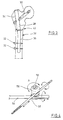
- FIG. 1 shows a schematic view of an intramedullary nail 10.
- the intramedullary nail Nagel has two at its distal end transverse to the longitudinal axis extending bores 12.
- the intramedullary has at its proximal end Nail 10 has a bore 14 extending transversely to the longitudinal axis.
- Inserted into bore 14 is a femoral neck screw 16.
- the contact area between bore 14 and femoral neck screw 16 has a modified surface that results in a Reduction of damage due to movement of the femoral neck screw leads to the intramedullary nail.
- the surface modification is both on the femoral neck screw 16 and on the inner surface of the bore 14 provided, but this can also be done only on the intramedullary nail or only on the femoral neck screw.
- the bore 12 for the locking screws 18 are also modified Surface equipped to prevent wear or abrasion of material prevent.
- the locking screws 18 can also be used with a modified surface.
- the advantageous effect of the invention can be used for surface modification be achieved, both by a surface coating and by a Surface hardening. Both surface modifications taken on their own or in The combination ensures that, especially with a longer stay of intramedullary nail in the bone no metallic ions in the body are released and the nail used is not at its static and front everything does not lose its dynamic strength.
- FIG. 2 shows the schematic view of a hip plate 20.
- the hip plate 20 has Holes for receiving locking screws 22. When inserted the hip plate 20 lies against the bone 24.
- the hip plate is also used for Attachment of a femoral neck screw 26 which fixes a femoral neck fracture. Even when using the hip plate 20 is caused by movement and Bone loading 24 Friction between the femoral neck screw 26, the Locking screw 22 and the bone material 24 opposite the hip plate 20. So there is surface contact from the femoral neck screw to the hip plate, whereby both can slide on each other, leading to the occurrence of friction, wear and corrosion.
- the locking screws 22 in the Holes of the hip plate 20 micro movements, which lead to the occurrence of wear and cause corrosion. Added to this are the micro movements between the Hip plate and the bone, which may release metal ions to lead. This can be done effectively by modifying the surface of the hip plate be reduced or prevented.
- FIG. 3 shows a schematic view of an intramedullary nail 28 with a Femoral neck screw 30 and two locking screws 32.
- the intramedullary In the embodiment shown in FIG. 3, nail 34 is along its length Outer surface 36, which is in contact with the bone tissue 38, modified. This is particularly advantageous in the case of a break 40, the break line of which is equal to the The shaft of the intramedullary nail runs. Due to the modified surface 36 can effectively reduce or prevent damage to the bone tissue 38 become.
- the external fixator has a clamp 50 with two openings for receiving a bone pin 52 and a construction rod 54.
- the clamp is along by the double arrow A marked direction rotatable.
- Bone pin 52 and construction rod 54 are each movable both in the longitudinal direction and about their longitudinal axis rotatably arranged in the clamp 50.
- clamp 50, bone pin 52 and construction rod 54 in their contact areas with a modified Provided surface.
- bone pin and construction rod also be provided with a modified surface for each. The modified surface increases the friction, so that the clamping force of the Terminal 50 is enlarged.
Landscapes
- Health & Medical Sciences (AREA)
- Orthopedic Medicine & Surgery (AREA)
- Surgery (AREA)
- Life Sciences & Earth Sciences (AREA)
- General Health & Medical Sciences (AREA)
- Heart & Thoracic Surgery (AREA)
- Veterinary Medicine (AREA)
- Public Health (AREA)
- Animal Behavior & Ethology (AREA)
- Vascular Medicine (AREA)
- Epidemiology (AREA)
- Chemical & Material Sciences (AREA)
- Neurology (AREA)
- Inorganic Chemistry (AREA)
- Nuclear Medicine, Radiotherapy & Molecular Imaging (AREA)
- Engineering & Computer Science (AREA)
- Biomedical Technology (AREA)
- Medical Informatics (AREA)
- Molecular Biology (AREA)
- Surgical Instruments (AREA)
- Materials For Medical Uses (AREA)
- Prostheses (AREA)
Abstract
Description
- Fig. 1
- einen intramedullären Nagel mit einer Schenkelhalsschraube und Verriegelungsschrauben,
- Fig. 2
- eine schematische Ansicht einer Hüftplatte mit Verriegelungsschrauben und einer Schenkelhalsschraube,
- Fig. 3
- eine schematische Ansicht eines intramedullären Nagels mit einer Schenkelhalsschraube und
- Fig. 4
- einen Fixateur Externe mit einem Knochen-Pin und einer Konstruktionsstange.
Claims (20)
- Osteosynthesehilfsmittel aus einer Stahl-, Cobalt- und/oder Titanlegierung, dadurch gekennzeichnet, daß in einem Abschnitt, der im eingesetzten Zustand in Berührung mit Knochengewebe oder mit Metall steht, die Oberfläche modifiziert ist derart, daß Korrosion und Abrieb verringert bzw. verhindert werden.
- Osteosynthesehilfsmittel nach Anspruch 1, dadurch gekennzeichnet, daß der Abschnitt mit Hilfe einer Beschichtung modifiziert ist.
- Osteosynthesehilfsmittel nach Anspruch 2, dadurch gekennzeichnet, daß die Beschichtung durch PVD (physical vapour deposition) oder CVD (chemical vapour deposition) aufgebracht ist.
- Osteosynthesehilfsmittel nach Anspruch 2 oder 3, dadurch gekennzeichnet, daß die Beschichtung als DLC-Schicht (Diamond like carbon) aufgebracht ist.
- Osteosynthesehilfsmittel nach Anspruch 4, dadurch gekennzeichnet, daß die DLC-Schicht den Typ MeC:CH besitzt, bevorzugt mit den Bestandteilen Tantal, Kohlenstoff und Wasserstoff (TaC/CH).
- Osteosynthesehilfsmittel nach einem der Ansprüche 1 bis 5, dadurch gekennzeichnet, daß der Abschnitt durch ein Diffüsionsverfahren gehärtet ist.
- Osteosynthesehilfsmittel nach Anspruch 6, dadurch gekennzeichnet, daß das Diffusionsverfahren bei einer Titanlegierung Stickstoff oder Sauerstoff und bei einer Stahllegierung Kohlenstoff in den Abschnitt einträgt.
- Osteosynthesehilfsmittel nach einem der Ansprüche 1 bis 7, dadurch gekennzeichnet, daß der Abschnitt durch Oberflächenhärtung und -beschichtung mit Hilfe eines Anodisierverfahrens modifiziert ist.
- Osteosynthesehilfsmittel nach Anspruch 8, dadurch gekennzeichnet, daß das Anodisierverfahren eine Anodisation von Typ II oder vom Typ III durch elektrolytische Behandlung erzielt.
- Osteosynthesehilfsmittel nach einem der Ansprüche 1 bis 9, dadurch gekennzeichnet, daß der Abschnitt durch spanende oder spanlose, formgebende Bearbeitungsverfahren modifiziert ist.
- Osteosynthesehilfsmittel nach Anspruch 10, dadurch gekennzeichnet, daß das Bearbeitungsverfahren den Arbeitsschritt des Glas- und/oder Sandstrahlens aufweist.
- Osteosynthesehilfsmittel nach Anspruch 10 oder 11, dadurch gekennzeichnet, daß das Bearbeitungsverfahren den Arbeitsschritt des Schleifens, insbesondere des Gleitschleifens, aufweist.
- Osteosynthesehilfsmittel nach Anspruch 11 oder 12, dadurch gekennzeichnet, daß das Bearbeitungsverfahren den Arbeitsschritt des mechanischen Polierens und/oder des Elektropolieren aufweist.
- Osteosynthesehilfsmittel nach einem der Ansprüche 1 bis 13, dadurch gekennzeichnet, daß als Osteosynthesehilfsmittel ein intramedullärer Nagel und eine oder mehrere Verriegelungsschrauben vorgesehen sind, die in ihrem jeweiligen Kontaktbereich eine modifizierte Oberfläche aufweisen.
- Osteosynthesehilfsmittel nach einem der Ansprüche 1 bis 14, dadurch gekennzeichnet, daß als Osteosynthesehilfsmittel ein intramedullärer Nagel und eine Schenkelhalsschraube vorgesehen sind, die in ihrem jeweiligen Kontaktbereich die modifizierte Oberfläche aufweisen.
- Osteosynthesehilfsmittel nach einem der Ansprüche 1 bis 15, dadurch gekennzeichnet, daß als Osteosynthesehilfsmittel ein intramedullärer Nagel vorgesehen ist, der im Kontaktbereich zu dem Knochengewebe eine modifizierte Oberfläche aufweist.
- Osteosynthesehilfsmittel nach einem der Ansprüche 1 bis 13, dadurch gekennzeichnet, daß als Osteosynthesehilfsmittel eine Hüftplatte und eine Schenkelhalsschraube vorgesehen sind, die in ihrem jeweiligen Kontaktbereich eine modifizierte Oberfläche aufweisen.
- Osteosynthesehilfsmittel nach einem der Ansprüche 1 bis 13 oder nach Anspruch 17, dadurch gekennzeichnet, daß als Osteosynthesehilfsmittel eine Hüftplatte und eine oder mehrere Verriegelungsschrauben vorgesehen sind, die in ihren jeweiligen Kontaktbereichen eine modifizierte Oberfläche aufweisen.
- Osteosynthesehilfsmittel nach Anspruch 17 oder 18, dadurch gekennzeichnet, daß als Osteosynthesehilfsmittel eine Hüftplatte vorgesehen ist, die im Kontaktbereich mit dem Knochen eine modifizierte Oberfläche aufweist.
- Osteosynthesehilfsmittel aus einer Stahl- und/oder Titanlegierung, dadurch gekennzeichnet, daß als Osteosynthesehilfsmittel einen Fixateur Externe mit mindestens einem Knochen-Pin, einer Konstruktionsstange und einer Klemmvorrichtung vorgesehen ist, dadurch gekennzeichnet, daß die Klemmeinrichtung und/oder der Knochen-Pin sowie die Konstruktionsstange in ihren jeweiligen Kontaktbereichen eine modifizierte Oberfläche aufweist derart, daß die Reibung zwischen Klemmeinrichtung und Knochen-Pin sowie Konstruktionsstange erhöht ist.
Applications Claiming Priority (2)
| Application Number | Priority Date | Filing Date | Title |
|---|---|---|---|
| DE20101917U | 2001-02-03 | ||
| DE20101917U DE20101917U1 (de) | 2001-02-03 | 2001-02-03 | Osteosynthesehilfsmittel aus einer Stahl-, Cobalt- und/oder Titanlegierung |
Publications (2)
| Publication Number | Publication Date |
|---|---|
| EP1228775A2 true EP1228775A2 (de) | 2002-08-07 |
| EP1228775A3 EP1228775A3 (de) | 2003-02-05 |
Family
ID=7952498
Family Applications (1)
| Application Number | Title | Priority Date | Filing Date |
|---|---|---|---|
| EP02001572A Withdrawn EP1228775A3 (de) | 2001-02-03 | 2002-01-23 | Osteosynthesehilfsmittel aus einer Stahl-, Cobalt- und/oder Titanlegierung |
Country Status (4)
| Country | Link |
|---|---|
| US (1) | US20020107578A1 (de) |
| EP (1) | EP1228775A3 (de) |
| JP (1) | JP2002301084A (de) |
| DE (1) | DE20101917U1 (de) |
Cited By (3)
| Publication number | Priority date | Publication date | Assignee | Title |
|---|---|---|---|---|
| WO2003068286A1 (de) * | 2002-02-15 | 2003-08-21 | Dot Gmbh | Körpergelenkersetzendes titanimplantat mit einem oder mehreren grundkörpern |
| CN103006304A (zh) * | 2011-09-22 | 2013-04-03 | 苏州瑞华医院有限公司 | 一种静动力交换型股骨交锁髓内钉 |
| CN103417283A (zh) * | 2013-08-14 | 2013-12-04 | 刘长城 | 髓内钉 |
Families Citing this family (32)
| Publication number | Priority date | Publication date | Assignee | Title |
|---|---|---|---|---|
| US20050055024A1 (en) * | 2003-09-08 | 2005-03-10 | James Anthony H. | Orthopaedic implant and screw assembly |
| US7780667B2 (en) * | 2003-09-08 | 2010-08-24 | Smith & Nephew, Inc. | Orthopaedic plate and screw assembly |
| US7799030B2 (en) * | 2003-09-08 | 2010-09-21 | Smith & Nephew, Inc. | Orthopaedic plate and screw assembly |
| US20050164041A1 (en) * | 2004-01-23 | 2005-07-28 | Dunsmore David V. | Medical device having a smooth, hardened surface |
| US7338529B1 (en) | 2004-03-30 | 2008-03-04 | Biomet Manufacturing Corp. | Methods and apparatuses for enhancing prosthetic implant durability |
| US20060036248A1 (en) * | 2004-07-01 | 2006-02-16 | Ferrante Joseph M | Fixation elements |
| GB0426841D0 (en) * | 2004-12-07 | 2005-01-12 | Univ Brunel | Medical implant |
| AU2006294767A1 (en) * | 2005-09-28 | 2007-04-05 | Smith & Nephew, Inc | Instrumentation for reducing fractures , particularly femoral neck |
| US20070155271A1 (en) * | 2005-12-30 | 2007-07-05 | Touzov Igor V | Heat conductive textile and method producing thereof |
| US7918853B2 (en) | 2007-03-20 | 2011-04-05 | Smith & Nephew, Inc. | Orthopaedic plate and screw assembly |
| EP2166973B1 (de) * | 2007-05-25 | 2016-03-16 | Zimmer GmbH | Verstärkter marknagel |
| ES2524076T3 (es) | 2008-10-15 | 2014-12-04 | Zimmer Gmbh | Clavo intramedular |
| CN105726112B (zh) | 2009-06-30 | 2021-04-27 | 史密夫和内修有限公司 | 整形外科的植入物和紧固组件 |
| US8449544B2 (en) | 2009-06-30 | 2013-05-28 | Smith & Nephew, Inc. | Orthopaedic implant and fastener assembly |
| AU2011358373C1 (en) | 2011-02-08 | 2016-06-09 | Stryker European Operations Holdings Llc | Implant system for bone fixation |
| US9782205B2 (en) * | 2013-07-02 | 2017-10-10 | Cmarr Enterprises, Llc | Curved tibiotalar fusion nail and method of use |
| US9757169B2 (en) | 2013-07-24 | 2017-09-12 | Sreevathsa Boraiah | Interlocking intramedullary rod assembly for proximal femoral fractures, including unstable hip fractures |
| US9468478B2 (en) * | 2013-07-24 | 2016-10-18 | Sreevathsa Boraiah | Interlocking intramedullary rod assembly for proximal femoral fractures, including unstable hip fractures |
| US20170042591A9 (en) * | 2013-12-12 | 2017-02-16 | Extremity Designs, Llc | Intramedullary anchor-screw fracture fixation |
| US20220151664A1 (en) * | 2015-04-16 | 2022-05-19 | Texas Tech University System | Ankle (Tibio-Talar) Fusion Nail |
| GB201513385D0 (en) * | 2015-07-30 | 2015-09-16 | Rolls Royce Plc | A coating for a threaded component and a method of applying the same |
| CN105435313B (zh) * | 2015-12-07 | 2018-05-25 | 郑州人造金刚石及制品工程技术研究中心有限公司 | 一种内固定物及制作方法 |
| CN105536078B (zh) * | 2015-12-07 | 2018-08-21 | 郑州人造金刚石及制品工程技术研究中心有限公司 | 钻石烯接骨钉及制作方法 |
| CN105435312B (zh) * | 2015-12-07 | 2018-08-21 | 郑州人造金刚石及制品工程技术研究中心有限公司 | 复合型钻石烯接骨钉及制作方法 |
| US10219846B2 (en) | 2016-03-04 | 2019-03-05 | Nail Kinetics, LLC | Interlocking intramedullary rod assembly for treating proximal tibial fractures |
| RU188469U1 (ru) * | 2018-09-26 | 2019-04-15 | Федеральное государственное бюджетное учреждение высшего образования "Уральский государственный медицинский университет" Министерства здравоохранения Российской Федерации (ФГБОУ ВО УГМУ Минздрава России) | Фиксатор для накостного остеосинтеза |
| US10856916B2 (en) * | 2018-11-15 | 2020-12-08 | DePuy Synthes Products, Inc. | Flexible shaft guide tube |
| RU192235U1 (ru) * | 2018-12-18 | 2019-09-09 | Федеральное государственное бюджетное образовательное учреждение высшего образования "Алтайский государственный медицинский университет" Министерства здравоохранения Российской Федерации | Устройство для подбора винтов и профилактики осложнений при остеосинтезе переломов ребер пластинами с угловой стабильностью |
| WO2021176272A1 (en) | 2020-03-06 | 2021-09-10 | Stryker European Operations Limited | Set screw for femoral nail |
| CN115461003B (zh) | 2020-03-06 | 2025-03-28 | 史赛克欧洲运营有限公司 | 用于股骨钉的定位螺钉 |
| US12491013B2 (en) * | 2020-06-22 | 2025-12-09 | Sota Orthopaedics Limited | Orthopaedic implant and system |
| US20260020885A1 (en) * | 2024-07-16 | 2026-01-22 | DePuy Synthes Products, Inc. | Devices and methods for bone fixation |
Family Cites Families (10)
| Publication number | Priority date | Publication date | Assignee | Title |
|---|---|---|---|---|
| DE1943801C3 (de) * | 1968-07-10 | 1975-11-20 | Institut Dr.-Ing. Reinhard Straumann Ag, Waldenburg (Schweiz) | Für die operative Knochenbehandlung dienendes Implantat aus Titan oder einer Legierung auf Titanbasis |
| CH497891A (de) * | 1968-09-03 | 1970-10-31 | Straumann Inst Ag | Für die operative Knochenbehandlung dienendes Implantat aus Titan oder einer Legierung auf Titanbasis |
| FR2383656A1 (fr) * | 1977-03-16 | 1978-10-13 | Ceraver | Tige metallique en titane ou alliage de titane pour fixation sans ciment dans un os long pour prothese articulaire et materiel de reparation osseuse |
| DE3246361A1 (de) * | 1982-02-27 | 1983-09-08 | Philips Patentverwaltung Gmbh, 2000 Hamburg | Kohlenstoff enthaltende gleitschicht |
| US4776330A (en) * | 1986-06-23 | 1988-10-11 | Pfizer Hospital Products Group, Inc. | Modular femoral fixation system |
| EP0302717A1 (de) * | 1987-08-04 | 1989-02-08 | Ion Tech Limited | Implantierbare Körperprothese |
| DE8815977U1 (de) * | 1988-02-05 | 1989-02-16 | Orthoplant Endoprothetik GmbH i.L., 28259 Bremen | Stabförmiges Befestigungselement |
| US5192323A (en) * | 1990-11-05 | 1993-03-09 | Zimmer, Inc. | Method of surface hardening orthopedic implant devices |
| US5954724A (en) * | 1997-03-27 | 1999-09-21 | Davidson; James A. | Titanium molybdenum hafnium alloys for medical implants and devices |
| DE19830530A1 (de) * | 1998-07-08 | 2000-01-13 | Merck Patent Gmbh | Herstellung von Kalzium-Phosphor-Schichten auf Titan durch Ionenimplantation |
-
2001
- 2001-02-03 DE DE20101917U patent/DE20101917U1/de not_active Expired - Lifetime
-
2002
- 2002-01-23 EP EP02001572A patent/EP1228775A3/de not_active Withdrawn
- 2002-02-01 JP JP2002025683A patent/JP2002301084A/ja active Pending
- 2002-02-01 US US10/061,098 patent/US20020107578A1/en not_active Abandoned
Cited By (4)
| Publication number | Priority date | Publication date | Assignee | Title |
|---|---|---|---|---|
| WO2003068286A1 (de) * | 2002-02-15 | 2003-08-21 | Dot Gmbh | Körpergelenkersetzendes titanimplantat mit einem oder mehreren grundkörpern |
| DE10206627A1 (de) * | 2002-02-15 | 2003-08-28 | Diocom B V | Körpergelenk ersetzendes Titanimplantat mit einem oder mehreren Grundkörpern |
| CN103006304A (zh) * | 2011-09-22 | 2013-04-03 | 苏州瑞华医院有限公司 | 一种静动力交换型股骨交锁髓内钉 |
| CN103417283A (zh) * | 2013-08-14 | 2013-12-04 | 刘长城 | 髓内钉 |
Also Published As
| Publication number | Publication date |
|---|---|
| US20020107578A1 (en) | 2002-08-08 |
| DE20101917U1 (de) | 2002-06-06 |
| JP2002301084A (ja) | 2002-10-15 |
| EP1228775A3 (de) | 2003-02-05 |
Similar Documents
| Publication | Publication Date | Title |
|---|---|---|
| EP1228775A2 (de) | Osteosynthesehilfsmittel aus einer Stahl-, Cobalt- und/oder Titanlegierung | |
| DE69115302T2 (de) | Intramedulläre Hüftschraube | |
| DE4212635C2 (de) | Mit Draht befestigbare Knochen-Platte zur inneren Festlegung eines Bruches | |
| EP1857062B1 (de) | Verriegelungsnagel, insbesondere für Frakturen der proximalen femur | |
| EP0701419B1 (de) | Osteosynthese-hilfsmittel zur versorgung subtrochanterer, pertrochanterer und schenkelhalsfrakturen | |
| DE69635746T2 (de) | Gelenkprothesenerhöhungssystem | |
| EP1100367A1 (de) | Schaft für ein flexibles endoskop | |
| EP0637433A1 (de) | Sägeblatt für oszillierend oder rotierend ausgeführte Trennschnitte | |
| EP1148830A1 (de) | Knochenschraube | |
| EP3930777B1 (de) | Intravaskuläres funktionselement, system mit einem funktionselement und verfahren | |
| AT509852A4 (de) | Flexibler humerusnagel | |
| EP2190386B1 (de) | Endoprothesenkomponente | |
| DE69916247T2 (de) | Vorrichtung zur fixierung von knochenbrüchen | |
| DE69227762T2 (de) | Prothese mit biologisch inerter verschleissfester Oberfläche | |
| EP0390768A1 (de) | Knochenimplantat | |
| WO2005004941A1 (de) | Zementierbare endoprothesen | |
| DE102013104388A1 (de) | Anwendungsspezifische Beschichtung und Strukturierung von implantierbaren Prothesen mittels Laserverfahren | |
| DE9411754U1 (de) | Laser-Ahle zur Behandlung der Osteochondritis deformans | |
| EP4203813B1 (de) | Haltebügel besitzendes maxilla-repositionsimplantat | |
| EP2934355B1 (de) | Verriegelbarer marknagel mit führungsdrahtdurchlässen | |
| DE69503360T2 (de) | Gegenstand und werkzeug zum gebrauch in der chirurgie | |
| EP3730162B1 (de) | Duktile beschichtung für eine implantatkomponente | |
| EP4312809B1 (de) | Chirurgisches oder endoskopisches instrument und dessen herstellung | |
| EP3388090B1 (de) | Doppelbeschichtung für eine implantatkomponente mit einer reibschlussverbindung | |
| DE202025001907U1 (de) | Vorrichtung zur osteosynthetischen Versorgung von Knochenfrakturen, insbesondere Patellafrakturen |
Legal Events
| Date | Code | Title | Description |
|---|---|---|---|
| PUAI | Public reference made under article 153(3) epc to a published international application that has entered the european phase |
Free format text: ORIGINAL CODE: 0009012 |
|
| AK | Designated contracting states |
Kind code of ref document: A2 Designated state(s): AT BE CH CY DE DK ES FI FR GB GR IE IT LI LU MC NL PT SE TR |
|
| AX | Request for extension of the european patent |
Free format text: AL;LT;LV;MK;RO;SI |
|
| PUAL | Search report despatched |
Free format text: ORIGINAL CODE: 0009013 |
|
| AK | Designated contracting states |
Designated state(s): AT BE CH CY DE DK ES FI FR GB GR IE IT LI LU MC NL PT SE TR |
|
| AX | Request for extension of the european patent |
Extension state: AL LT LV MK RO SI |
|
| AKX | Designation fees paid |
Designated state(s): CH DE ES FR GB IT LI |
|
| STAA | Information on the status of an ep patent application or granted ep patent |
Free format text: STATUS: THE APPLICATION IS DEEMED TO BE WITHDRAWN |
|
| 18D | Application deemed to be withdrawn |
Effective date: 20030806 |