EP1230814B1 - Produktebestellungsverfahren und system - Google Patents
Produktebestellungsverfahren und system Download PDFInfo
- Publication number
- EP1230814B1 EP1230814B1 EP99953508A EP99953508A EP1230814B1 EP 1230814 B1 EP1230814 B1 EP 1230814B1 EP 99953508 A EP99953508 A EP 99953508A EP 99953508 A EP99953508 A EP 99953508A EP 1230814 B1 EP1230814 B1 EP 1230814B1
- Authority
- EP
- European Patent Office
- Prior art keywords
- product
- mobile
- mobile radio
- image
- server
- Prior art date
- Legal status (The legal status is an assumption and is not a legal conclusion. Google has not performed a legal analysis and makes no representation as to the accuracy of the status listed.)
- Expired - Lifetime
Links
Images
Classifications
-
- G—PHYSICS
- G06—COMPUTING OR CALCULATING; COUNTING
- G06Q—INFORMATION AND COMMUNICATION TECHNOLOGY [ICT] SPECIALLY ADAPTED FOR ADMINISTRATIVE, COMMERCIAL, FINANCIAL, MANAGERIAL OR SUPERVISORY PURPOSES; SYSTEMS OR METHODS SPECIALLY ADAPTED FOR ADMINISTRATIVE, COMMERCIAL, FINANCIAL, MANAGERIAL OR SUPERVISORY PURPOSES, NOT OTHERWISE PROVIDED FOR
- G06Q30/00—Commerce
- G06Q30/06—Buying, selling or leasing transactions
-
- H—ELECTRICITY
- H04—ELECTRIC COMMUNICATION TECHNIQUE
- H04L—TRANSMISSION OF DIGITAL INFORMATION, e.g. TELEGRAPHIC COMMUNICATION
- H04L51/00—User-to-user messaging in packet-switching networks, transmitted according to store-and-forward or real-time protocols, e.g. e-mail
- H04L51/58—Message adaptation for wireless communication
-
- H—ELECTRICITY
- H04—ELECTRIC COMMUNICATION TECHNIQUE
- H04L—TRANSMISSION OF DIGITAL INFORMATION, e.g. TELEGRAPHIC COMMUNICATION
- H04L63/00—Network architectures or network communication protocols for network security
- H04L63/12—Applying verification of the received information
- H04L63/126—Applying verification of the received information the source of the received data
-
- H—ELECTRICITY
- H04—ELECTRIC COMMUNICATION TECHNIQUE
- H04L—TRANSMISSION OF DIGITAL INFORMATION, e.g. TELEGRAPHIC COMMUNICATION
- H04L67/00—Network arrangements or protocols for supporting network services or applications
- H04L67/2866—Architectures; Arrangements
- H04L67/30—Profiles
- H04L67/306—User profiles
-
- H—ELECTRICITY
- H04—ELECTRIC COMMUNICATION TECHNIQUE
- H04L—TRANSMISSION OF DIGITAL INFORMATION, e.g. TELEGRAPHIC COMMUNICATION
- H04L2463/00—Additional details relating to network architectures or network communication protocols for network security covered by H04L63/00
- H04L2463/102—Additional details relating to network architectures or network communication protocols for network security covered by H04L63/00 applying security measure for e-commerce
Definitions
- the present invention relates to a method by which products and information about products can be ordered.
- the patent EP689368 describes a method for packaging data in SMS messages (Short Message Services) and transmitting them through a mobile radio network. For example, with this method, it is not only possible to transmit short text messages such as "Call home" between different mobile devices, but also more complex messages and programs that are automatically recognized by the receiver terminal and can trigger a specific action.
- WAP Wireless Application Protocol
- WAP Wireless Application Protocol
- the advantage of such systems is the ability to identify customers with a high degree of security by means of an identification module, for example by means of a SIM card (Subscriber Identification Module).
- SIM card Subscriber Identification Module
- order codes are standardized and contain at least a first field with which a supplier is uniquely identified and a second field with which a particular product is specified by this supplier. Additional fields can also be defined, for example, to specify the type of transaction and the method of payment.
- the customer is reliably identified by the infrastructure in the network.
- the order codes collected by the participants are transmitted to a clearinghouse in the mobile network and automatically transmitted to the specified supplier allocated.
- the selected supplier receives an order from the customer with a clear identification of this customer and the ordered product or service.
- DE-U1-29613393 describes a mobile telephone with a bar code reader.
- the signals of the bar code reader are converted within the telephone by an encoder into the relevant order number and stored.
- the order number is then transferred to a remote server. This method is only suitable for pictures that can be converted within the mobile phone.
- Another goal is to offer an ordering process that is more user-friendly.
- these goals are achieved by taking a picture of the product to be ordered, transmitting the image file to a server in a mobile network, comparing the named image file with that stored in a product database Images are taken in the named server, wherein each named image in the named database is associated with an identification of the product provider, and that subsequently a message containing an identification of the ordered product and the ordering mobile subscriber is sent to the named product provider.
- the image can be taken with a camera that is integrated in the mobile phone or connected to the mobile phone.
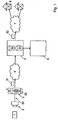
- Figure 1 an example of a system in which the inventive method can be applied.
- FIG. 1 schematically shows a system with which the user of a mobile telephone 3 can order a product 1 from a provider 8.
- the reference numeral 1 shows a product, or a part of a product with which the entire product can be identified, or an image which uniquely identifies the product, for example a two-dimensional image in a catalog or on a poster, a product serial number, etc.
- the element 2 is an image capture device, for example a camera, with which images of three-dimensional objects can be taken, a scanner which is more suitable for taking two-dimensional images, or a receiving device, for example an Internet, DAB or DVB receiver (Digital Audio or Video Broadcasting), a TV, etc., which can receive sent pictures and picture programs.
- the image capture device 2 is integrated in a mobile phone 3 or connected to such a mobile phone via an interface 20, preferably a contactless interface in the vicinity.
- the contactless interface 20 may for example consist of a Bluetooth, HomeRF or IrdA interface.
- the mobile telephone may for example be a preferably WAP-capable (Wireless Application Protocol) GSM, GPRS, EDGE or UMTS mobile device which contains an identification module 30, for example a SIM or WIM card (Subscriber Identification Module or WAP Identification Module).
- the mobile phone preferably operates with an open operating system, such as EPOC (trademark of Symbian), PalmOS (trademark of 3Com) or Windows CE (trademark of Microsoft), so that applications from third parties, especially JAVA applets, can be executed.
- User identification can be via PIN entry or biometric procedures.
- the mobile phone 3 can log in a mobile network 4, in which a server 5 is present.
- the server 5 comprises a user database 50, in which attributes of a plurality of mobile subscribers are stored in the mobile network 4, and a product database 51.
- the user attributes 50 preferably include the address, for example the billing address and / or the delivery address of the mobile subscriber for the delivery of the ordered Goods, as well as his order preferences, as explained later.
- the server 5 can be managed, for example, by the operator of the mobile network, which usually has a reliable mobile subscriber database from which the mobile subscriber attributes in the user database 50 can be taken.
- the reference numeral 6 shows a settlement center, with which ordered products are charged.
- the clearing center can also be integrated into the server 5 or connected to it.
- the clearing center 6 can also be used, for example, to charge the mobile subscribers for telephone connections through the network.
- the server 5 is connected via a telecommunications network 7, for example via the public telecommunications network, via the ISDN, via a mobile network, via a private network, via the Internet or via the normal post, with the providers 8.
- the Server 5 send messages to product providers 8, for example by e-mail, fax, normal mail, by a supplier, etc.
- the product supplier can then deliver the ordered product via a return channel, not shown, to the specified address, for example and depending on the product as e-mail, as WAP, USSD or SMS message, by regular mail, by a delivery company, etc.
- the data transmission between the server 5 and the providers 8 is preferably secured with TTP services (Trusted Third Party).
- a mobile subscriber who wants to order a product 1 with the method according to the invention first has to take a picture of this product with the image recording device 2 and transmit it to the mobile telephone via the interface 20.
- the image may represent the entire product, or just an identifying component of the product, such as a serial number or an informational adhesive on the product.
- the picture can also be taken from a catalog or an advertisement, or be downloaded directly on the Internet or as a DAB or DVB program-accompanying file.
- the digitally recorded image is then preferably compressed, for example, according to the JPEG, GIF, TIF or PDF format and transmitted via the designated interface 20 to the mobile phone 3.
- the image file can also be compressed in a variant in the mobile phone 3.
- the image file is then stored in a memory area of the mobile telephone and can preferably be reproduced with its image display means, for example with an LCD (Liquid Crystal Display) or VRD (Virtual Retina Display) image display device, so that the mobile subscriber can examine the recording, if necessary, edit and possibly one Part can denote by a pointer.
- LCD Liquid Crystal Display
- VRD Virtual Retina Display
- An order message 31 is prepared with the data processing means in the mobile telephone.
- the order message contains the preferably compressed image file and a user identification, which is preferably taken from the identification module 30, for example, the IMSI (International Mobile Subscriber Identity) of the mobile subscriber.
- the mobile subscriber may also preferably enter his preferences with the order program, such as the desired billing type, delivery type, delivery address, ordered quantity, etc. These preference details are linked to the order message.
- At least some preferences of the mobile subscriber are preferably stored in a memory area of the identification module 30 so that they do not have to be reentered with each new order.
- the order message 31 is sent to the server 5 through the mobile network 4.
- the order message for example, consist of a variety of SMS messages, as described in patent EP689368.
- the order message consists of a plurality of packets, which are transmitted, for example, according to WAP, GPRS, EDGE, UMTS or TCP-IP.
- the order message can also be transmitted as a file in the voice channel, for example, with a modem or in a UMTS network.
- the order message is preferably encrypted with the public key of the server 5 and signed with a stored in the identification module 30 certificate so that the server 5 can check the origin and authenticity of the message.
- a time stamp service can also be used to guarantee the non-refusal of the order.
- the server 5 receives the order message and first checks the signature of the mobile subscriber. If the authenticity and origin of the message can be determined with this signature, the order message is decrypted with the server's private key and the image file is decompressed.
- a module in the server 5 compares the decompressed image file with product images in the product database 51. This comparison is done for example with a specially trained neural network or with other known image comparison algorithms, such as those used by image search engines on the Internet.
- the product database 51 may preferably contain multiple images of each product offered, so that product comparison is possible even if very different images are sent.
- the product images are preferably provided by the providers 8 themselves and stored in the database 51, wherein the storage area used can be leased by the operator of the server 5 to the providers.
- the named module finds in the server a product image in the product database which could correspond to the received image file, it preferably sends a message, for example an SMS, USSD, E-mail, WAP or voice message to the mobile subscriber in which the product identification found, for example the name or a description of the product found is given. The mobile subscriber is thus requested to confirm the result of this comparison. If not confirmed, the server will try to find another matching product in the product database until the mobile user confirms a found product.
- a message for example an SMS, USSD, E-mail, WAP or voice message
- an error message is preferably sent to the mobile subscriber.
- the mobile subscriber then has the option of entering further indicia, for example a product code, a product name, the provider identification, etc., in order to facilitate the comparison process.
- the product database 51 may also provide information about the available quantity of the product offered contain. This quantity is then decremented automatically with each order.
- the server 5 attempts to extract additional mobile subscriber attributes from the user database 50.
- the database 50 preferably contains for each mobile subscriber identified with its mobile subscriber identification, for example IMSI or MSISDN, all attributes which allow the provider to fully identify the mobile subscriber and complete the task.
- the read-in mobile subscriber attributes may include the mobile subscriber's billing and delivery address, as well as his user preferences, such as his preferred correspondence language, desired delivery type and billing type, etc., unless these attributes are indicated in the message 31.
- the message 52 is preferably electronically signed and encrypted by the server 5, so that the received provider 8 can check their authenticity and their origin.
- a copy of the relevant elements is also preferably sent to the billing center 6, so that the order can be charged to the mobile subscriber.
- the ordered product may preferably be charged as connections in the named mobile network, for example by debiting a prepaid account in the identification module 30 of the mobile subscriber or with the telephone bill.
- the supplier who receives an order message in this way can then deliver the ordered product or the desired information via a suitable delivery channel.
- the ordered offer can be digitized, it can be transmitted over the mobile network 4 via an electronic channel, for example as e-mail or via FTP services, or via SMS or USSD.
- an electronic channel for example as e-mail or via FTP services, or via SMS or USSD.
- musical data for example, encoded in MP3 format, video data encoded in, for example, an MPEG format, etc., from which a photograph of the cover has been transmitted
- the provider 1 can check whether the terminal can receive the format of the electronic data and whether it still has enough space. For example, JINI functions can be used for this test.
- a server 5 in particular the software programs for such a server, as well as systems with an image capture device 2 and a specially programmed mobile phone 3.
- the inventive method can also be used with normal terminals, such as a conventional camera 2 and a conventional mobile phone 3, which have a suitable interface in the vicinity, such as a Bluetooth interface 20, via which they can communicate image files.
- the mobile phone needs only a program with which image files can be compressed, encrypted, signed and linked to mobile subscriber attributes.
- This program can be marketed for example as an applet and be downloaded via the mobile network 4.
Landscapes
- Engineering & Computer Science (AREA)
- Computer Networks & Wireless Communication (AREA)
- Signal Processing (AREA)
- Business, Economics & Management (AREA)
- Accounting & Taxation (AREA)
- Finance (AREA)
- Computer Security & Cryptography (AREA)
- Physics & Mathematics (AREA)
- Development Economics (AREA)
- Strategic Management (AREA)
- Economics (AREA)
- General Business, Economics & Management (AREA)
- General Physics & Mathematics (AREA)
- Theoretical Computer Science (AREA)
- Marketing (AREA)
- Computer Hardware Design (AREA)
- Computing Systems (AREA)
- General Engineering & Computer Science (AREA)
- Mobile Radio Communication Systems (AREA)
- Management, Administration, Business Operations System, And Electronic Commerce (AREA)
- Facsimiles In General (AREA)
- Telephonic Communication Services (AREA)
Abstract
Description
- Die vorliegende Erfindung betrifft ein Verfahren, mit welchem Produkte und Informationen über Produkte bestellt werden können.
- Das Patent EP689368 beschreibt ein Verfahren, um Daten in SMS-Meldungen (Short Message Services) zu verpacken und durch ein Mobilfunknetz zu übertragen. Mit diesem Verfahren können zum Beispiel nicht nur kurze Textmeldungen wie zum Beispiel «Ruf doch bitte nach Hause an» zwischen verschiedenen Mobilfunkgeräten übermittelt werden, sondern auch komplexere Meldungen und Programme, die automatisch vom Empfängerterminal erkannt werden und eine bestimmte Aktion auslösen können.
- Die WAP-Architektur (Wireless Application Protocol) beschreibt ein anderes Protokoll, mit dem die Benutzer von WAP-tauglichen Mobilgeräten auf Internet-, Intranet- und Internet-ähnlichen Dienste über verschiedene Bearers wie SMS, USSD, usw. zugreifen können.
- Damit eröffnet sich die Möglichkeit, Mobilgeräte als Client in einer Client-Server-Architektur in einem Mobilfunknetz zu benutzen. Der Vorteil an solchen Systemen ist die Möglichkeit, Kunden mit einer grossen Sicherheit mittels einem Identifizierungsmodul, zum Beispiel mittels einer SIM-Karte (Subscriber Identification Module), zu identifizieren. Es wurde zum Beispiel in der Patentanmeldung WO98/28900 vorgeschlagen, Auftragscodes in einem Mobilgerät einzugeben, um zum Beispiel Produkte oder Dienstleistungen bei einem Lieferanten zu bestellen. Diese Auftragscodes sind standardisiert und enthalten mindestens ein erstes Feld, mit welchem ein Lieferant eindeutig identifiziert wird, sowie ein zweites Feld, mit welchem ein bestimmtes Produkt von diesem Lieferanten angegeben wird. Zusätzliche Felder können ausserdem definiert werden, um beispielsweise die Transaktionsart und die Zahlungsart anzugeben. Der Kunde wird zuverlässig von der Infrastruktur im Netz identifiziert. Die von den Teilnehmern erfassten Auftragscodes werden an eine Clearingstelle im Mobilfunknetz übermittelt und von dieser automatisch dem angegebenen Lieferanten zugeteilt. Der ausgewählte Lieferant bekommt einen Auftrag vom Kunden mit einer eindeutigen Identifizierung dieses Kunden und des bestellten Produktes oder der gewünschten Dienstleistung.
- Das Eintippen von Auftragscodes, die viele Zeichen enthalten können, mit einer oft miniaturisierten und unvollständigen Tastatur ist jedoch eher mühsam und fehleranfällig. Ausserdem kann es für einen Anbieter schwierig sein, Produktecodes rasch bekannt zu machen.
- Ein anderes Verfahren, welches das Eintippen von Auftragcodes auf der Tastatur eines Mobiltelefons erfordert, wird in EP-A1-0951191 beschrieben.
- DE-U1-29613393 beschreibt ein Mobiltelefon mit einem Barcodeleser. Die Signale des Barcodelesers werden innerhalb des Telefons durch eine Codiereinrichtung in die betreffenden Bestellnummer umgewandelt und gespeichert. Die Bestellnummer wird dann an einen Fernserver übertragen. Dieses Verfahren eignet sich nur für Bilder, die innerhalb des Mobiltelefons konvertiert werden können.
- Es ist daher ein Ziel dieser Erfindung, ein neues und verbessertes Bestellungsverfahren anzubieten.
- Ein anderes Ziel ist es, ein Bestellungsverfahren anzubieten, das benutzerfreundlicher ist.
- Gemäss der vorliegenden Erfindung werden diese Ziele insbesondere durch die Merkmale der unabhängigen Ansprüche erreicht. Weitere vorteilhafte Ausführungsformen gehen ausserdem aus den abhängigen Ansprüchen und der Beschreibung hervor.
- Insbesondere werden diese Ziele dadurch erreicht, dass ein Bild des zu bestellenden Produktes aufgenommen wird, dass die Bilddatei an einen Server in einem Mobilfunknetz übertragen wird, dass ein Vergleich der benannten Bilddatei mit in einer Produktedatenbank gespeicherten Bildern im benannten Server erfolgt, wobei jedes benannte Bild in der benannten Datenbank mit einer Identifizierung des Produktanbieters verbunden ist, und dass anschliessend eine Meldung, die eine Identifizierung des bestellten Produktes und des bestellenden Mobilteilnehmers enthält, an den benannten Produktanbieter ausgesendet wird.
- Dies hat den Vorteil, dass der Mobilteilnehmer keine Produktcodes eingeben muss und nur ein Bild des gewünschten Produktes aussenden muss. Das Bild kann mit einer Kamera, die im Mobilfunktelefon integriert oder mit dem Mobilfunktelefon verbunden ist, aufgenommen werden.
- Im Folgenden werden anhand der beigefügten Zeichnung bevorzugte Ausführungsbeispiele der Erfindung näher beschrieben. Es zeigt:
- Die Figur 1, ein Beispiel eines Systems, in welchem das erfindungsgemässe Verfahren angewendet werden kann.
- Obwohl diese Erfindung in mehreren Details den speziellen Fall der Ausführung in einem GSM-Mobilfunknetz beschreibt, wird der Fachmann verstehen, dass dieses Verfahren auch mit anderen Typen von Funknetzen, beispielsweise mit AMPS, TDMA, CDMA, TACS, PDC, HSCCD, GPRS, EDGE oder UMTS-Mobilfunknetzen, oder mit Pager-Systemen, oder auch in einem kontaktlosen-LAN oder in einem lokalen Netz gemäss Bluetooth eingesetzt werden kann.
- Die Figur 1 zeigt in schematischer Weise ein System, mit welchem der Benutzer eines Mobilfunktelefons 3 ein Produkt 1 bei einem Anbieter 8 bestellen kann. Das Bezugszeichen 1 zeigt ein Produkt, oder einen Teil eines Produktes mit welchem das gesamte Produkt identifiziert werden kann, oder ein Bild welches das Produkt eindeutig identifiziert, beispielsweise ein zweidimensionales Bild in einem Katalog oder auf einem Plakat, eine Produktseriennummer, usw.
- Das Element 2 ist ein Bildaufnahmegerät, beispielsweise eine Kamera, mit welchem Bilder von drei-dimensionalen Objekten aufgenommen werden können, ein Scanner der eher für Aufnahmen von zweidimensionalen Bildern geeignet ist, oder ein Empfangsgerät, beispielsweise ein Internet-, DAB- oder DVB-Empfänger (Digital Audio bzw. Video Broadcasting), ein Fernsehgerät, usw., das ausgesendete Bilder und Bilderprogramme empfangen kann. Das Bildaufnahmegerät 2 ist in ein Mobilfunktelefon 3 integriert oder mit einem solchen Mobilfunktelefon über eine Schnittstelle 20, vorzugsweise eine kontaktlose Schnittstelle im Nahbereich, verbunden. Die kontaktlose Schnittstelle 20 kann beispielsweise aus einer Bluetooth, HomeRF oder IrdA-Schnittstelle bestehen. Das Mobilfunktelefon kann beispielsweise ein vorzugsweise WAP-fähiges (Wireless Application Protocol) GSM, GPRS, EDGE oder UMTS-Mobilgerät sein welches ein Identifizierungsmodul 30, beispielsweise eine SIM- oder WIM-Karte (Subscriber Identification Module bzw. WAP Identification Module) enthält. Das Mobilfunktelefon funktioniert vorzugsweise mit einem offenen Betriebssystem, beispielsweise mit EPOC (Warenzeichen von Symbian), PalmOS (Warenzeichen von 3Com) oder Windows CE (Warenzeichen von Microsoft), so dass auch Anwendungen von Dritten, insbesondere auch JAVA-Applets, ausgeführt werden können. Die Benutzeridentifikation kann über PIN-Eingabe oder biometrische Verfahren erfolgen.
- Das Mobilfunktelefon 3 kann sich in einem Mobilfunknetz 4 anmelden, in welchem ein Server 5 vorhanden ist. Der Server 5 umfasst eine Benutzerdatenbank 50, in welcher Attribute von einer Vielzahl von Mobilteilnehmern im Mobilfunknetz 4 abgelegt sind, sowie eine Produktedatenbank 51. Die Benutzerattribute 50 umfassen vorzugsweise die Adresse, beispielsweise die Rechnungsadresse und/oder die Lieferadresse des Mobilteilnehmers für die Zustellung der bestellten Ware, sowie seine Bestellungspräferenzen, wie später erläutert.
- Der Server 5 kann beispielsweise vom Betreiber des Mobilfunknetzes verwaltet werden, der meistens über eine zuverlässige Mobilteilnehmerdatenbank verfügt, aus welcher die Mobilteilnehmerattribute in der Benutzerdatenbank 50 entnommen werden können.
- Das Bezugszeichen 6 zeigt ein Verrechnungszentrum, mit welchem bestellte Produkte verrechnet werden. Je nach Ausführungsform kann das Verrechnungszentrum auch in den Server 5 integriert oder mit diesem verbunden werden. Der Verrechnungszentrum 6 kann beispielsweise auch verwendet werden, um den Mobilfunkteilnehmern Telefonverbindungen durch das Netz zu verrechnen.
- Der Server 5 ist über ein Telekommunikationsnetz 7, beispielsweise über das öffentliche Telekommunikationsnetz, über das ISDN, über ein Mobilfunknetz, über ein Privatnetz, über Internet oder auch über die normale Post, mit den Anbietern 8 verbunden. Durch das Netz 7 kann der Server 5 Meldungen an Produktanbieter 8 senden, beispielsweise als E-Mail, als Fax, per normale Post, durch eine Lieferfirma, usw. Der Produkteanbieter kann dann das bestellte Produkt über einen nicht dargestellten Rückkanal an die angegebene Adresse liefern, beispielsweise und je nach Produkt als E-Mail, als WAP-, USSD- oder SMS-Meldung, per normale Post, durch eine Lieferfirma, usw. Die Datenübertragung zwischen dem Server 5 und den Anbietern 8 wird vorzugsweise mit TTP-Diensten gesichert (Trusted Third Party).
- Wir werden jetzt das erfindungsgemässe Verfahren näher beschreiben.
- Ein Mobilfunkteilnehmer, der ein Produkt 1 mit dem erfindungsgemässen Verfahren bestellen will, muss zuerst ein Bild dieses Produktes mit dem Bildaufnahmegerät 2 aufnehmen und in das Mobilfunktelefon über die Schnittstelle 20 übertragen. Je nach Art des Produktes und nach Anbieter kann das Bild das gesamte Produkt darstellen, oder nur einen identifizierenden Bestandteil des Produktes, beispielsweise eine Seriennummer oder einen Informationskleber auf dem Produkt. Das Bild kann auch aus einem Katalog oder einer Werbung aufgenommen werden, oder direkt im Internet oder als DAB beziehungsweise DVB programmbegleitende Datei ferngeladen werden.
- Das digital aufgenommene Bild wird dann vorzugsweise komprimiert, beispielsweise gemäss dem JPEG, GIF, TIF oder PDF Format und über die benannte Schnittstelle 20 an das Mobilfunktelefon 3 übertragen. Die Bilddatei kann auch in einer Variante im Mobilfunktelefon 3 komprimiert werden.
- Die Bilddatei wird dann in einem Speicherbereich des Mobilfunktelefons gespeichert und kann vorzugsweise mit dessen Bildwiedergabemitteln, beispielsweise mit einem LCD (Liquid Crystal Display) oder VRD (Virtual Retina Display) Bildwiedergabegerät wiedergegeben werden, damit der Mobilteilnehmer die Aufnahme prüfen kann, allenfalls editieren und allenfalls einen Teil durch einen Zeiger bezeichnen kann.
- Mit den Datenverarbeitungsmitteln im Mobilfunktelefon wird eine Bestellungsmeldung 31 vorbereitet. Die Bestellungsmeldung enthält die vorzugsweise komprimierte Bilddatei sowie eine Benutzeridentifizierung, die vorzugsweise aus dem Identifizierungsmodul 30, beispielsweise der IMSI (International Mobile Subscriber Identity) des Mobilteilnehmers, entnommen wird. Der Mobilteilnehmer kann ausserdem vorzugsweise seine Präferenzen mit dem Bestellungsprogramm eingeben, beispielsweise die gewünschte Rechnungsart, die Lieferungsart, die Lieferadresse, die bestellte Menge, usw. Diese Präferenzangaben werden mit der Bestellungsmeldung verknüpft. Mindestens gewisse Präferenzen des Mobilteilnehmers werden vorzugsweise in einem Speicherbereich des Identifizierungsmoduls 30 abgelegt, damit sie nicht bei jeder neuen Bestellung wieder eingegeben werden müssen.
- Wenn der Mobilteilnehmer mit dem Bestellungsprogramm bestätigt, dass er das aufgenommene Produkt bestellen will, wird die Bestellungsmeldung 31 durch das Mobilfunknetz 4 an den Server 5 gesendet. Die Bestellungsmeldung kann beispielsweise aus einer Vielzahl von SMS-Meldungen bestehen, wie im Patent EP689368 beschrieben. In einer bevorzugten Variante besteht jedoch die Bestellungsmeldung aus einer Vielzahl von Paketen, die beispielweise gemäss WAP, GPRS, EDGE, UMTS oder TCP-IP übertragen werden. Die Bestellungsmeldung kann aber auch als Datei im Sprachkanal, beispielsweise mit einem Modem oder in einem UMTS-Netz übertragen werden. Die Bestellungsmeldung wird vorzugsweise mit dem öffentlichen Schlüssel des Servers 5 verschlüsselt und mit einem im Identifizierungsmoduls 30 abgelegten Zertifikat signiert, damit der Server 5 den Ursprung und die Authentizität der Meldung prüfen kann. Über einen Zeitstempeldienst kann auch die Nichtzurückweisung der Bestellung sichergestellt werden.
- Der Server 5 empfängt die Bestellungsmeldung und prüft zuerst die Signatur des Mobilteilnehmers. Kann mit dieser Signatur die Authentizität und der Ursprung der Meldung ermittelt werden, wird die Bestellungsmeldung mit dem privaten Schlüssel des Servers entschlüsselt und die Bilddatei entkomprimiert.
- Ein Modul im Server 5 vergleicht dann die entkomprimierte Bilddatei mit Produktbildern in der Produktedatenbank 51. Dieser Vergleich erfolgt beispielsweise mit einem speziell trainierten neuronalen Netz oder mit anderen bekannten Bildervergleichsalgorithmen, wie sie beispielsweise von Bildersuchmaschinen im Internet verwendet werden.
- Die Produktedatenbank 51 kann vorzugsweise mehrere Bilder von jedem angebotenen Produkt enthalten, damit der Produktvergleich auch dann möglich ist, wenn sehr unterschiedliche Aufnahmen gesendet werden. Die Produktbilder werden vorzugsweise von den Anbietern 8 selbst zur Verfügung gestellt und in der Datenbank 51 abgelegt, wobei der verwendete Speicherbereich vom Betreiber des Servers 5 an die Anbieter vermietet werden kann.
- Wenn das benannte Modul im Server ein Produktbild in der Produktedatenbank findet, das der empfangenen Bilddatei entsprechen könnte, sendet es vorzugsweise eine Meldung, beispielsweise eine SMS, USSD, E-Mail, WAP oder Sprachmeldung an den Mobilteilnehmer, in welcher die gefundene Produkteidentifizierung, beispielsweise der Name oder eine Beschreibung des gefundenen Produktes angegeben ist. Der Mobilteilnehmer wird damit aufgefordert, das Ergebnis dieses Vergleiches zu bestätigen. Erfolgt keine Bestätigung, versucht der Server ein anderes passendes Produkt in der Produktedatenbank zu finden, bis der Mobilteilnehmer ein gefundenes Produkt bestätigt.
- Wenn der Server kein Bild in der Produktedatenbank 51 findet, das der empfangenen Bilddatei entsprechen könnte und das vom Mobilteilnehmer bestätigt wird, wird vorzugsweise eine Fehlermeldung an den Mobilteilnehmer gesendet. Der Mobilteilnehmer hat dann die Möglichkeit, weitere Indizien, beispielsweise einen Produktcode, einen Produktnamen, die Anbieteridentifizierung, usw., einzugeben, damit der Vergleichsprozess erleichtert wird.
- In einer bevorzugten Variante kann die Produktedatenbank 51 ausserdem Angaben über die verfügbare Menge des angebotenen Produktes enthalten. Diese Menge wird dann bei jeder Bestellung automatisch dekrementiert.
- Wird in der Produktedatenbank 51 ein Produkt gefunden, das der empfangenen Bilddatei entspricht und wird dieses vom Mobilteilnehmer bestätigt, versucht der Server 5 zusätzliche Mobilteilnehmerattribute aus der Benutzerdatenbank 50 zu entnehmen. Die Datenbank 50 enthält vorzugsweise für jeden Mobilteilnehmer, der mit seiner Mobilteilnehmeridentifizierung, beispielsweise IMSI oder MSISDN identifiziert wird, alle Attribute, die dem Anbieter erlauben, den Mobilteilnehmer gänzlich zu identifizieren und den Auftrag komplett auszuführen. Z.B. können die eingelesenen Mobilteilnehmerattribute die Rechnungs- und Liefer-Adresse des Mobilteilnehmers enthalten, sowie seine Benutzerpräferenzen, beispielsweise seine bevorzugte Korrespondenzsprache, die gewünschte Lieferungsart und Rechnungsart, usw. sofern diese Attribute nicht in der Meldung 31 angegeben sind.
- Diese zusätzliche mobilteilnehmerspezifischen Attribute werden dann mit der vom Anbieter gewünschten Produkteidentifizierung, beispielsweise mit einer Produktseriennummer, verknüpft, und eine Meldung 52 wird über das Telekommunikationsnetz 7 an den in der Produktedatenbank 51 angegebenen Anbieter gesendet.
- Die Meldung 52 wird vorzugsweise vom Server 5 elektronisch signiert und verschlüsselt, damit der empfangene Anbieter 8 ihre Authentizität und ihren Ursprung prüfen kann. Eine Kopie von den relevanten Elementen wird ausserdem vorzugsweise an das Rechnungszentrum 6 gesendet, damit die Bestellung dem Mobilteilnehmer verrechnet werden kann. Das bestellte Produkt kann je nach Mobilteilnehmerpräferenzen vorzugsweise wie Verbindungen im benannten Mobilfunknetz verrechnet werden, beispielsweise durch Belastung eines vorbezahlten Kontos im Identifizierungsmodul 30 des Mobilteilnehmers oder mit der Telefonrechnung.
- Der Anbieter, der auf diese Weise eine Bestellungsmeldung erhält, kann dann das bestellte Produkt oder die gewünschte Information über einen passenden Lieferungskanal liefern. Wenn das bestellte Angebot digitalisiert werden kann, kann es über einen elektronischen Kanal, beispielsweise als E-Mail oder über FTP-Dienste durch das Internet oder als SMS oder USSD über das Mobilfunknetz 4 übertragen werden. Auf diese Weise können beispielsweise Anwendersoftware, musikalische Daten, beispielsweise in MP3-Format codiert, Videodaten, beispielsweise in einem MPEG-Format codiert, usw., von welchen ein Foto des Covers übertragen wurde, geliefert werden. Ausserdem kann vorzugsweise der Anbieter 1 prüfen, ob das Endgerät das Format der elektronischen Daten empfangen kann und ob er noch genug Speicherplatz hat. Für diesen Test können zum Beispiel JINI-Funktionen verwendet werden.
- Mit dem erfindungsgemässen Verfahren können aber auch Produkte bestellt werden, die nur per Post oder von einer Lieferfirma geliefert werden können.
- Nebst den Verdienstmöglichkeiten durch das Anbieten der Dienstleistungen aus dem beschriebenen Verfahren ist es auch möglich, einen Server 5, insbesondere die Softwareprogramme für einen solchen Server, sowie Systeme mit einem Bildaufnahmegerät 2 und einem speziell programmierten Mobilfunktelefon 3 zu vermarkten. Das erfindungsgemässe Verfahren kann aber auch mit normalen Endgeräten eingesetzt werden, beispielsweise mit einer konventionellen Kamera 2 und einem konventionellen Mobilfunktelefon 3, die über eine passende Schnittstelle im Nahbereich verfügen, beispielsweise eine Bluetooth-Schnittstelle 20, über welche sie Bilddateien kommunizieren können. In diesem Fall braucht das Mobilfunktelefon nur ein Programm, mit welchem Bilddateien komprimiert, verschlüsselt, signiert und mit Mobilteilnehmerattributen verknüpft werden können. Dieses Programm kann beispielsweise als Applet vermarktet werden und über das Mobilfunknetz 4 ferngeladen werden.
1 Produkt 2 Kamera oder Scanner 20 Schnittstelle (Bluetooth, HomeRF, IrdA, usw.) 3 Mobilfunktelefon 30 Identifizierungskarte (SIM, WIM) 31 Bestellungsmeldung 4 Mobilfunknetz 5 Flexmart-Server 50 Mobilteilnehmerdatenbank 51 Produktedatenbank 52 Verknüpfte Daten 6 Billing-Center 7 Telekommunikationsnetz (PSTN, Internet, GSM, ..) 8 Produkteanbieter
Claims (33)
- Verfahren, mit welchem ein Mobilteilnehmer in einem Mobilfunknetz (4) Produkte (1) bestellen kann,
wobei eine Bestellungsmeldung (31) an einen Server (5) im benannten Mobilfunknetz (4) übertragen wird,
wobei eine Meldung (52), die eine Identifizierung des bestellten Produktes (1) und des bestellenden Mobilteilnehmers enthält, an einen Produktanbieter (8) ausgesendet wird,
gekennzeichnet durch:Aufnehmen eines Bildes, das dem zu bestellenden Produkt (1) entspricht,Verknüpfung der Bilddatei mit einer persönlichen Identifizierung des Mobilteilnehmers in die benannte Bestellungsmeldung,Vergleich im benannten Server der benannten Bilddatei mit in einer Produktedatenbank (50) gespeicherten Bildern, wobei jedes benannte Bild in der benannten Datenbank (50) mit einer Identifizierung des benannten Produkteanbieters (8) verbunden ist, an welchen die benannte Meldung ausgesendet wird. - Verfahren gemäss dem vorhergehenden Anspruch, dadurch gekennzeichnet, dass das benannte Bild mit einer mit einem Mobilfunktelefon (3) verbundenen Kamera (2) aufgenommen wird.
- Verfahren gemäss dem Anspruch 1, dadurch gekennzeichnet, dass das benannte Bild mit einem mit einem Mobilfunktelefon (3) verbundenen Scanner (2) aufgenommen ist.
- Verfahren gemäss dem vorhergehenden Anspruch, dadurch gekennzeichnet, dass das benannte Bild ein Bild eines zweidimensionalen identifizierten Teils des benannten Produktes (1) ist.
- Verfahren gemäss dem Anspruch 1, dadurch gekennzeichnet, dass das benannte Bild von einem Funkempfänger empfangen wird.
- Verfahren gemäss einem der vorhergehende Ansprüche, dadurch gekennzeichnet, dass das benannte Bild mit einem über eine kontaktlose Schnittstelle (20) im Nahbereich mit dem Mobilfunktelefon (3) verbundenen Bildaufnahmegerät (2) aufgenommen wird.
- Verfahren gemäss einem der vorhergehenden Ansprüche, dadurch gekennzeichnet, dass die benannte Identifizierung des Mobilteilnehmers die IMSI ist.
- Verfahren gemäss einem der vorhergehenden Ansprüche, dadurch gekennzeichnet, dass die benannte Bestellungsmeldung (31) eine WAP-Meldung ist.
- Verfahren gemäss einem der vorhergehenden Ansprüche, dadurch gekennzeichnet, dass das benannte Mobilfunknetz (4) ein UMTS-Netz ist und dass die benannte Bestellungsmeldung durch Herstellung einer Verbindung im Datenkanal übertragen wird.
- Verfahren gemäss einem der vorhergehenden Ansprüche, dadurch gekennzeichnet, dass die benannte Bestellungsmeldung (31) vom benannten Mobilfunkteilnehmer elektronisch signiert wird.
- Verfahren gemäss einem der vorhergehenden Ansprüche, dadurch gekennzeichnet, dass die benannte Identifizierung des Produkteanbieters (8) seine Adresse in einem Telekommunikationsnetz (7) enthält.
- Verfahren gemäss dem vorhergehenden Anspruch, dadurch gekennzeichnet, dass das benannte Telekommunikationsnetz (7) ein TCP-IP Netz ist.
- Verfahren gemäss dem Anspruch 11, dadurch gekennzeichnet, dass das benannte Telekommunikationsnetz (7) das öffentliche Telekommunikationsnetz ist.
- Verfahren gemäss einem der vorhergehenden Ansprüche, dadurch gekennzeichnet, dass der benannte Server (5) eine Benutzerdatenbank (50) enthält, in welcher zusätzliche Mobilteilnehmerattribute abgelegt sind und dass zumindest gewisse von diesen zusätzlichen Attributen an den benannten Produktanbieter (8) weitergeleitet werden.
- Verfahren gemäss dem vorhergehenden Anspruch, dadurch gekennzeichnet, dass die benannten zusätzlichen Attribute die Liefer-adresse des bestellenden Mobilteilnehmers umfassen.
- Verfahren gemäss einem der Ansprüche 14 oder 15, dadurch gekennzeichnet, dass die benannten zusätzlichen Attribute die Rechnungsadresse des bestellenden Mobilteilnehmers umfassen.
- Verfahren gemäss einem der vorhergehenden Ansprüche, dadurch gekennzeichnet, dass das bestellte Produkt vom Betreiber des benannten Servers (5) verrechnet wird.
- Verfahren gemäss dem vorhergehenden Anspruch, dadurch gekennzeichnet, dass der benannte Betreiber des benannten Servers (5) auch der Betreiber des benannten Mobilfunknetzes (4) ist und dass das bestellte Produkt (1) wie Verbindungen im benannten Mobilfunknetz verrechnet werden.
- Verfahren gemäss dem vorhergehenden Anspruch, dadurch gekennzeichnet, dass das bestellte Produkt (1) durch Belastung eines vorbezahlten Kontos im Identifikationsmodul (31) des Mobilteilnehmers erfolgt.
- Verfahren gemäss dem Anspruch 18, dadurch gekennzeichnet, dass das bestellte Produkt (1) mit der Telefonrechnung verrechnet wird.
- Server (5), der in einem Mobilfunknetz (4) angeschlossen werden kann, damit Mobilteilnehmer ihm Meldungen senden können, mit folgenden Merkmalen:eine Produktedatenbank (51), in welcher Produktbilder gespeichert sind,eine Benutzerdatenbank (50), in welcher mobilteilnehmerspezifische Attribute abgelegt sind,ein Modul, um Bilddateien in von Mobilteilnehmern empfangenen Bestellungsmeldungen (31) mit den benannten Produktbildern zu vergleichen.
- Server gemäss dem vorhergehenden Anspruch, dadurch gekennzeichnet, dass das benannte Modul ein Softwaremodul ist.
- Server gemäss einem der Ansprüche 21 oder 22, dadurch gekennzeichnet, dass das benannte Modul ein neuronales Netz verwendet.
- Server gemäss einem der Ansprüche 21 oder 22, dadurch gekennzeichnet, dass er derart ausgestaltet ist, dass er komprimierte Bilddateien in empfangenen Meldungen (31) entkomprimieren kann.
- Server gemäss einem der Ansprüche 21 oder 22, dadurch gekennzeichnet, dass er derart ausgestaltet ist, dass er verschlüsselte Bilddateien in empfangenen Bestellungsmeldungen (31) entschlüsseln kann.
- System mit
einem Mobilfunktelefon (3),
einem Bildaufnahmegerät (2), und
Datenverarbeitungsmittel im Mobilfunktelefon, um Bilder, die mit dem benannten Bildaufnahmegerät aufgenommen werden, in Meldungen zu verpacken und in ein Mobilfunknetz (4) zu senden,
gekennzeichnet durch
Mittel, um eine aufgenommene Bilddatei mit einer aus einem persönlichen Identifizierungsmodul (30) im benannten Mobilfunktelefon (3) entnommenen Benutzeridentifizierung zu verknüpfen, bevor sie in das benannte Mobilfunknetz gesendet werden. - System gemäss dem vorhergehenden Anspruch, dadurch gekennzeichnet, dass das benannte Bildaufnahmegerät (2) und das benannte Mobilfunktelefon (3) über eine kontaktlose Schnittstelle im Nahbereich verbunden sind.
- System gemäss einem der Ansprüche 26 bis 27, dadurch gekennzeichnet, dass es Mittel enthält, um die benannten Meldungen elektronisch vom benannten Mobilfunkteilnehmer zu signieren.
- System gemäss einem der Ansprüche 26 bis 28, dadurch gekennzeichnet, dass es Mittel enthält, um die benannte Bilddatei zu komprimieren.
- System gemäss einem der Ansprüche 26 bis 29, dadurch gekennzeichnet, dass das Mobilfunktelefon Bildwiedergabemittel enthält, um die benannte Bilddatei zu prüfen.
- System gemäss einem der Ansprüche 26 bis 30, dadurch gekennzeichnet, dass das Mobilfunktelefon Mittel enthält, um die benannte Bilddatei zu editieren.
- System gemäss einem der Ansprüche 26 bis 31, dadurch gekennzeichnet, dass es Mittel enthält, um Mobilteilnehmerpräferenzen einzugeben und in der benannten Meldung zu verknüpfen.
- System gemäss einem der Ansprüche 26 bis 32, dadurch gekennzeichnet, dass die benannte Meldung eine Bestellungsmeldung ist, und dass es einen Zeitstempeldienst enthält, um die Nichtzurückweisung der benannten Bestellungsmeldung sicherzustellen.
Priority Applications (1)
| Application Number | Priority Date | Filing Date | Title |
|---|---|---|---|
| AT99953508T ATE319266T1 (de) | 1999-11-16 | 1999-11-16 | Produktebestellungsverfahren und system |
Applications Claiming Priority (1)
| Application Number | Priority Date | Filing Date | Title |
|---|---|---|---|
| PCT/CH1999/000541 WO2001037591A1 (de) | 1999-11-16 | 1999-11-16 | Produktebestellungsverfahren und system |
Publications (2)
| Publication Number | Publication Date |
|---|---|
| EP1230814A1 EP1230814A1 (de) | 2002-08-14 |
| EP1230814B1 true EP1230814B1 (de) | 2006-03-01 |
Family
ID=4551736
Family Applications (1)
| Application Number | Title | Priority Date | Filing Date |
|---|---|---|---|
| EP99953508A Expired - Lifetime EP1230814B1 (de) | 1999-11-16 | 1999-11-16 | Produktebestellungsverfahren und system |
Country Status (9)
| Country | Link |
|---|---|
| US (1) | US7194253B2 (de) |
| EP (1) | EP1230814B1 (de) |
| JP (1) | JP4312406B2 (de) |
| AU (1) | AU762164B2 (de) |
| CA (1) | CA2388714C (de) |
| DE (1) | DE59913180D1 (de) |
| HU (1) | HU224947B1 (de) |
| MX (1) | MXPA02004851A (de) |
| WO (1) | WO2001037591A1 (de) |
Cited By (1)
| Publication number | Priority date | Publication date | Assignee | Title |
|---|---|---|---|---|
| WO2008134901A1 (en) * | 2007-05-08 | 2008-11-13 | Eidgenössische Technische Zürich | Method and system for image-based information retrieval |
Families Citing this family (93)
| Publication number | Priority date | Publication date | Assignee | Title |
|---|---|---|---|---|
| GB0005337D0 (en) * | 2000-03-07 | 2000-04-26 | Hewlett Packard Co | Image transfer over mobile radio network |
| US6782974B2 (en) * | 2000-05-08 | 2004-08-31 | Richard Leifer | Server call system |
| AU4097000A (en) * | 2000-05-09 | 2001-11-20 | Swisscom Mobile Ag | Transaction method and selling system |
| CN1207876C (zh) * | 2000-06-15 | 2005-06-22 | 国际商业机器公司 | 短消息网关、向移动电话提供信息服务的系统和方法 |
| GB2372904B (en) * | 2001-03-02 | 2004-09-08 | Nokia Mobile Phones Ltd | Electronic transactions |
| GB2395869C (en) * | 2001-06-15 | 2008-04-17 | Datasquirt Ltd | Intelligent wireless messaging system |
| JP3631176B2 (ja) * | 2001-08-01 | 2005-03-23 | キヤノン株式会社 | 撮像装置、及び、撮像装置における画像データの付属情報の修正方法 |
| JP3669967B2 (ja) * | 2002-03-19 | 2005-07-13 | 富士写真フイルム株式会社 | 画像管理システム |
| US7764308B2 (en) * | 2002-05-27 | 2010-07-27 | Nikon Corporation | Image transmission system, image relay apparatus, and electronic image device |
| US7870077B2 (en) * | 2002-10-02 | 2011-01-11 | Kt Corporation | System and method for buying goods and billing agency using short message service |
| KR100466651B1 (ko) * | 2002-10-02 | 2005-01-17 | 주식회사 케이티프리텔 | 단문 메시지 서비스를 이용한 상품 구매 및 과금 대행시스템 및 방법 |
| SE524936C2 (sv) * | 2002-10-23 | 2004-10-26 | Softhouse Nordic Ab | Mobil likhetsbedömning av objekt |
| JP2004259206A (ja) * | 2003-02-27 | 2004-09-16 | Ntt Docomo Inc | 情報管理装置、情報出力システム、携帯端末、及び情報出力方法 |
| JP2004336343A (ja) * | 2003-05-07 | 2004-11-25 | Canon Inc | 画像処理システム |
| US7156311B2 (en) * | 2003-07-16 | 2007-01-02 | Scanbuy, Inc. | System and method for decoding and analyzing barcodes using a mobile device |
| GB2404749B (en) * | 2003-08-01 | 2005-10-05 | Sec Dep Acting Through Ordnanc | Smart symbols |
| US20050082370A1 (en) * | 2003-10-17 | 2005-04-21 | Didier Frantz | System and method for decoding barcodes using digital imaging techniques |
| US7387250B2 (en) * | 2003-12-04 | 2008-06-17 | Scanbuy, Inc. | System and method for on the spot purchasing by scanning barcodes from screens with a mobile device |
| US8421872B2 (en) * | 2004-02-20 | 2013-04-16 | Google Inc. | Image base inquiry system for search engines for mobile telephones with integrated camera |
| US7751805B2 (en) * | 2004-02-20 | 2010-07-06 | Google Inc. | Mobile image-based information retrieval system |
| US20070159522A1 (en) * | 2004-02-20 | 2007-07-12 | Harmut Neven | Image-based contextual advertisement method and branded barcodes |
| US7565139B2 (en) * | 2004-02-20 | 2009-07-21 | Google Inc. | Image-based search engine for mobile phones with camera |
| US7523486B1 (en) * | 2004-03-05 | 2009-04-21 | Sprint Communications Company Lp | User administration tool |
| US20050215239A1 (en) * | 2004-03-26 | 2005-09-29 | Nokia Corporation | Feature extraction in a networked portable device |
| US7221902B2 (en) * | 2004-04-07 | 2007-05-22 | Nokia Corporation | Mobile station and interface adapted for feature extraction from an input media sample |
| EP1743285B1 (de) * | 2004-03-26 | 2011-05-18 | Nokia Corporation | Mobilstation und schnittstelle, ausgelegt für merkmalextraktion aus einer eingangs-media-probe |
| JP4241484B2 (ja) * | 2004-04-14 | 2009-03-18 | 日本電気株式会社 | 携帯端末装置、着信応答メッセージ送信方法およびサーバ装置 |
| US7707218B2 (en) | 2004-04-16 | 2010-04-27 | Mobot, Inc. | Mobile query system and method based on visual cues |
| US7296747B2 (en) * | 2004-04-20 | 2007-11-20 | Michael Rohs | Visual code system for camera-equipped mobile devices and applications thereof |
| WO2005114476A1 (en) * | 2004-05-13 | 2005-12-01 | Nevengineering, Inc. | Mobile image-based information retrieval system |
| CH695198A5 (fr) * | 2004-06-17 | 2006-01-13 | Publigroupe S A | Procede d'acces au contenu mutimedia associe a une annonce classee. |
| US7309015B2 (en) * | 2004-07-14 | 2007-12-18 | Scanbuy, Inc. | Mobile device gateway providing access to instant information |
| US7873911B2 (en) * | 2004-08-31 | 2011-01-18 | Gopalakrishnan Kumar C | Methods for providing information services related to visual imagery |
| US20060230073A1 (en) * | 2004-08-31 | 2006-10-12 | Gopalakrishnan Kumar C | Information Services for Real World Augmentation |
| US8370323B2 (en) * | 2004-08-31 | 2013-02-05 | Intel Corporation | Providing information services related to multimodal inputs |
| DE102004061171A1 (de) * | 2004-12-16 | 2006-06-29 | Vodafone Holding Gmbh | Anregung und/oder Steigerung eines Erwerbs von Produkten und/oder einer Inanspruchnahme von Dienstleistungen |
| GB0502844D0 (en) * | 2005-02-11 | 2005-03-16 | Univ Edinburgh | Storing digital content for access using a captured image |
| US20060204098A1 (en) * | 2005-03-07 | 2006-09-14 | Gaast Tjietse V D | Wireless telecommunications terminal comprising a digital camera for character recognition, and a network therefor |
| US7783135B2 (en) * | 2005-05-09 | 2010-08-24 | Like.Com | System and method for providing objectified image renderings using recognition information from images |
| US7657126B2 (en) | 2005-05-09 | 2010-02-02 | Like.Com | System and method for search portions of objects in images and features thereof |
| US7809722B2 (en) | 2005-05-09 | 2010-10-05 | Like.Com | System and method for enabling search and retrieval from image files based on recognized information |
| US7660468B2 (en) | 2005-05-09 | 2010-02-09 | Like.Com | System and method for enabling image searching using manual enrichment, classification, and/or segmentation |
| US20080177640A1 (en) | 2005-05-09 | 2008-07-24 | Salih Burak Gokturk | System and method for using image analysis and search in e-commerce |
| US7945099B2 (en) * | 2005-05-09 | 2011-05-17 | Like.Com | System and method for use of images with recognition analysis |
| US7519200B2 (en) | 2005-05-09 | 2009-04-14 | Like.Com | System and method for enabling the use of captured images through recognition |
| US8732025B2 (en) | 2005-05-09 | 2014-05-20 | Google Inc. | System and method for enabling image recognition and searching of remote content on display |
| US7809192B2 (en) * | 2005-05-09 | 2010-10-05 | Like.Com | System and method for recognizing objects from images and identifying relevancy amongst images and information |
| US7760917B2 (en) * | 2005-05-09 | 2010-07-20 | Like.Com | Computer-implemented method for performing similarity searches |
| US20080313056A1 (en) * | 2005-06-03 | 2008-12-18 | Shadow Enterprises Inc. | Ordering and Image Transmission System and Method Utilizing Instant Messaging |
| US7571473B1 (en) | 2005-06-10 | 2009-08-04 | Sprint Communications Company L.P. | Identity management system and method |
| AU2012200221B2 (en) * | 2005-07-25 | 2014-06-05 | Cardinalcommerce Corporation | Method and system for extending payment system via text messaging |
| US7877296B2 (en) | 2005-07-25 | 2011-01-25 | Cardinal Commerce Corporation | Method and/or system for extending payment system architectures and/or legacy order processing systems to mobile commerce applications via text messaging |
| US8023746B2 (en) * | 2005-10-14 | 2011-09-20 | Disney Enterprises, Inc. | Systems and methods for decoding an image to determine a digital identifier |
| US7801359B2 (en) * | 2005-10-14 | 2010-09-21 | Disney Enterprise, Inc. | Systems and methods for obtaining information associated with an image |
| US7480422B2 (en) * | 2005-10-14 | 2009-01-20 | Disney Enterprises, Inc. | Systems and methods for information content delivery relating to an object |
| KR100666695B1 (ko) * | 2005-11-29 | 2007-01-11 | 삼성전자주식회사 | 지연시간을 감소시킨 통신시스템 |
| US7917286B2 (en) | 2005-12-16 | 2011-03-29 | Google Inc. | Database assisted OCR for street scenes and other images |
| US20070150403A1 (en) * | 2005-12-28 | 2007-06-28 | Motorola, Inc. | Method and system for a mobile auction concierge |
| US8077905B2 (en) * | 2006-01-23 | 2011-12-13 | Digimarc Corporation | Capturing physical feature data |
| US8224018B2 (en) | 2006-01-23 | 2012-07-17 | Digimarc Corporation | Sensing data from physical objects |
| US8016187B2 (en) | 2006-02-21 | 2011-09-13 | Scanbury, Inc. | Mobile payment system using barcode capture |
| US7958051B2 (en) * | 2006-02-28 | 2011-06-07 | The Invention Science Fund I, Llc | Using payment mode rankings responsive to item attributes |
| US8200579B2 (en) | 2006-02-28 | 2012-06-12 | The Invention Science Fund I, Llc | Using payment mode rankings responsive to item attributes |
| US8571272B2 (en) | 2006-03-12 | 2013-10-29 | Google Inc. | Techniques for enabling or establishing the use of face recognition algorithms |
| US9690979B2 (en) | 2006-03-12 | 2017-06-27 | Google Inc. | Techniques for enabling or establishing the use of face recognition algorithms |
| US8150163B2 (en) | 2006-04-12 | 2012-04-03 | Scanbuy, Inc. | System and method for recovering image detail from multiple image frames in real-time |
| US20080026716A1 (en) * | 2006-06-08 | 2008-01-31 | Patent Navigation Inc. | Mobile device representing coupons |
| WO2008004241A2 (en) * | 2006-07-07 | 2008-01-10 | Alon Schwarz | A method and system for ordering and supplying goods and services via a cellular phone |
| US8233702B2 (en) * | 2006-08-18 | 2012-07-31 | Google Inc. | Computer implemented technique for analyzing images |
| US7822985B2 (en) * | 2006-08-21 | 2010-10-26 | The Boeing Company | Real-time electronic signature validation systems and methods |
| US20080144882A1 (en) * | 2006-12-19 | 2008-06-19 | Mind Metrics, Llc | System and method for determining like-mindedness |
| US20090222330A1 (en) * | 2006-12-19 | 2009-09-03 | Mind Metrics Llc | System and method for determining like-mindedness |
| US8413059B2 (en) * | 2007-01-03 | 2013-04-02 | Social Concepts, Inc. | Image based electronic mail system |
| US20080030496A1 (en) * | 2007-01-03 | 2008-02-07 | Social Concepts, Inc. | On-line interaction system |
| US8166407B2 (en) | 2007-01-25 | 2012-04-24 | Social Concepts, Inc. | Apparatus for increasing social interaction over an electronic network |
| US7974957B2 (en) * | 2007-04-05 | 2011-07-05 | Microsoft Corporation | Assessing mobile readiness of a page using a trained scorer |
| US7886964B2 (en) * | 2007-04-17 | 2011-02-15 | Steinecker Jeffrey T | System and method for personalized e-commerce |
| WO2008144671A2 (en) * | 2007-05-18 | 2008-11-27 | Mobile Discovery, Inc. | Data brokerage system for mobile marketing |
| US8416981B2 (en) | 2007-07-29 | 2013-04-09 | Google Inc. | System and method for displaying contextual supplemental content based on image content |
| US20090111375A1 (en) * | 2007-10-24 | 2009-04-30 | Itookthisonmyphone.Com, Inc. | Automatic wireless photo upload for camera phone |
| US8086502B2 (en) * | 2008-03-31 | 2011-12-27 | Ebay Inc. | Method and system for mobile publication |
| US8825660B2 (en) | 2009-03-17 | 2014-09-02 | Ebay Inc. | Image-based indexing in a network-based marketplace |
| US20100293068A1 (en) * | 2009-05-15 | 2010-11-18 | Niko Drakoulis | Mall Bid |
| TWI415019B (zh) * | 2010-03-18 | 2013-11-11 | Pc Store Inc | 管理電子商務後台之方法及其系統 |
| US8464297B2 (en) * | 2010-06-23 | 2013-06-11 | Echostar Broadcasting Corporation | Apparatus, systems and methods for identifying a video of interest using a portable electronic device |
| FR2968423B1 (fr) * | 2010-12-04 | 2013-05-24 | Orchestra Software | Systeme autonome de gestion des commandes au moyen d'un telephone mobile |
| JP5673353B2 (ja) * | 2011-05-26 | 2015-02-18 | オムロン株式会社 | ファイバ保持具およびファイバレーザ装置 |
| US10650442B2 (en) | 2012-01-13 | 2020-05-12 | Amro SHIHADAH | Systems and methods for presentation and analysis of media content |
| US20140337073A1 (en) * | 2013-05-08 | 2014-11-13 | Jeff Meehan | Computer-implemented system and method for making virtual sales visits |
| US20140351408A1 (en) * | 2013-05-21 | 2014-11-27 | International Business Machines Corporation | Utilizing augmented reality for locating computer hardware associated to a reported incident |
| US10129507B2 (en) * | 2014-07-15 | 2018-11-13 | Toshiba Global Commerce Solutions Holdings Corporation | System and method for self-checkout using product images |
| US20160110791A1 (en) * | 2014-10-15 | 2016-04-21 | Toshiba Global Commerce Solutions Holdings Corporation | Method, computer program product, and system for providing a sensor-based environment |
| DE102023106065A1 (de) * | 2023-03-10 | 2024-09-12 | Hamberger Industriewerke Gmbh | Verfahren zum Ermitteln einer auf eine Keramik passenden Austausch-WC-Sitzgarnitur, KI-Modell, computerlesbares Speichermedium und computergestützte Vorrichtung |
Family Cites Families (19)
| Publication number | Priority date | Publication date | Assignee | Title |
|---|---|---|---|---|
| SE470149B (sv) * | 1991-05-10 | 1993-11-15 | Televerket | Anordning för åtkomst av tjänster via telefonapparat |
| JP3660363B2 (ja) * | 1992-05-28 | 2005-06-15 | 株式会社リコー | 画像形成装置管理システムとその画像形成装置 |
| US5310997A (en) | 1992-09-10 | 1994-05-10 | Tandy Corporation | Automated order and delivery system |
| US20030185356A1 (en) * | 1993-03-12 | 2003-10-02 | Telebuyer, Llc | Commercial product telephonic routing system with mobile wireless and video vending capability |
| JPH0993319A (ja) | 1995-09-28 | 1997-04-04 | Murata Mach Ltd | 無線通信端末装置 |
| GB9600804D0 (en) * | 1996-01-17 | 1996-03-20 | Robb Garry D | Multiphone |
| US5887253A (en) * | 1996-03-22 | 1999-03-23 | Bellsouth Corporation | Method for activating and servicing a cellular telephone |
| US5729594A (en) * | 1996-06-07 | 1998-03-17 | Klingman; Edwin E. | On-line secured financial transaction system through electronic media |
| JPH09330336A (ja) * | 1996-06-11 | 1997-12-22 | Sony Corp | 情報処理装置 |
| EP0960402B1 (de) * | 1996-06-19 | 2007-09-26 | Behruz Vazvan | Echtzeitsystem und -verfahren für ferneinkaufs- oder fernrechnungszahlungstransaktionen und übertragung von elektronischem geld und anderen notwendigen daten |
| DE29613393U1 (de) * | 1996-08-02 | 1997-12-04 | Leiseder, Ulrich, Dipl.-Phys., 21465 Reinbek | Vorrichtung zur Fernauswahl von Objekten |
| US6366696B1 (en) * | 1996-12-20 | 2002-04-02 | Ncr Corporation | Visual bar code recognition method |
| US6017157A (en) * | 1996-12-24 | 2000-01-25 | Picturevision, Inc. | Method of processing digital images and distributing visual prints produced from the digital images |
| US6081629A (en) * | 1997-09-17 | 2000-06-27 | Browning; Denton R. | Handheld scanner and accompanying remote access agent |
| JPH11212990A (ja) * | 1998-01-26 | 1999-08-06 | Toray Ind Inc | 画像の検索装置および画像の検索表示方法ならびに物品の製造方法 |
| RU2224283C2 (ru) * | 1998-02-26 | 2004-02-20 | Монек Мобайл Нетворк Компьютинг Лтд. | Электронное устройство, предпочтительно электронная книга |
| RO120116B1 (ro) * | 1998-04-16 | 2005-08-30 | Swisscom Ag | Metodă de introducere a codurilor de comandă, într-un terminal |
| US6512919B2 (en) * | 1998-12-14 | 2003-01-28 | Fujitsu Limited | Electronic shopping system utilizing a program downloadable wireless videophone |
| WO2001017298A1 (en) * | 1999-09-02 | 2001-03-08 | Automated Business Companies | Communication and proximity authorization systems |
-
1999
- 1999-11-16 EP EP99953508A patent/EP1230814B1/de not_active Expired - Lifetime
- 1999-11-16 DE DE59913180T patent/DE59913180D1/de not_active Expired - Lifetime
- 1999-11-16 CA CA002388714A patent/CA2388714C/en not_active Expired - Lifetime
- 1999-11-16 MX MXPA02004851A patent/MXPA02004851A/es active IP Right Grant
- 1999-11-16 WO PCT/CH1999/000541 patent/WO2001037591A1/de not_active Ceased
- 1999-11-16 JP JP2001538433A patent/JP4312406B2/ja not_active Expired - Fee Related
- 1999-11-16 AU AU10259/00A patent/AU762164B2/en not_active Expired
- 1999-11-16 HU HU0203916A patent/HU224947B1/hu unknown
-
2002
- 2002-05-14 US US10/146,372 patent/US7194253B2/en not_active Expired - Lifetime
Cited By (1)
| Publication number | Priority date | Publication date | Assignee | Title |
|---|---|---|---|---|
| WO2008134901A1 (en) * | 2007-05-08 | 2008-11-13 | Eidgenössische Technische Zürich | Method and system for image-based information retrieval |
Also Published As
| Publication number | Publication date |
|---|---|
| AU1025900A (en) | 2001-05-30 |
| US20020187774A1 (en) | 2002-12-12 |
| HU224947B1 (en) | 2006-04-28 |
| DE59913180D1 (de) | 2006-04-27 |
| US7194253B2 (en) | 2007-03-20 |
| CA2388714A1 (en) | 2001-05-25 |
| WO2001037591A1 (de) | 2001-05-25 |
| AU762164B2 (en) | 2003-06-19 |
| MXPA02004851A (es) | 2003-10-14 |
| EP1230814A1 (de) | 2002-08-14 |
| JP2003515295A (ja) | 2003-04-22 |
| CA2388714C (en) | 2007-04-17 |
| JP4312406B2 (ja) | 2009-08-12 |
| HUP0203916A2 (en) | 2003-05-28 |
Similar Documents
| Publication | Publication Date | Title |
|---|---|---|
| EP1230814A1 (de) | Produktebestellungsverfahren und system | |
| EP1210697A1 (de) | Bestellungsverfahren | |
| DE69830175T2 (de) | Verfahren zur kontrolle von anwendungen gespeichert in einem teilnehmererkennungsmodul | |
| DE69904570T3 (de) | Verfahren, anordnung und einrichtung zur authentifizierung durch ein kommunikationsnetz | |
| DE60302627T2 (de) | Verfahren und System zur Durchführung von augenblicklichem Nachrichtenverkehr | |
| DE69705547T2 (de) | Verfahren und anordnung zum erhalten von wenigstens eines items von beglaubigungsdaten von einem benutzer | |
| DE60129641T2 (de) | Verfahren und Vorrichtung für einen Nachrichtendienst | |
| DE60125898T2 (de) | Verfahren zur Bereitstellung eines Programms und Anordnung und Server zum Rundfunk | |
| EP0951774A1 (de) | Verfahren und system zur übermittlung von aufträgen in einem telekommunikationsnetz | |
| DE69931344T2 (de) | Nachrichtenverarbeitungsverfahren und system in einem telekommunikationssystem | |
| EP1029421B1 (de) | Identifizierungskarte und identifizierungsverfahren | |
| WO2002021350A1 (de) | Kurznachrichtendienst bestellwesen | |
| WO2001069555A1 (de) | Zahlungstransaktionsverfahren und zahlungstransaktionssystem | |
| EP1086540A1 (de) | Anzeigevorrichtung zur anzeige von empfangenen informationen und zum senden der empfangenen digitalen daten an externe mobilgeräte und entsprechendes bestellverfahren | |
| EP1440595A1 (de) | Verfahren und system, um anonym meldungen durch ein telekommunikationsnetz zu übertragen | |
| WO1999067938A1 (de) | Verfahren zum anbieten, bestellen und verkaufen von gütern und dienstleistungen | |
| DE69723882T2 (de) | Verfahren und einrichtung zur sicherung der dienstleistungen welche über ein computernetz vom internet-typ angeboten werden | |
| EP1658711A1 (de) | Verfahren zur automatisierten generierung von zugriffskontrollierten, personifizierten daten und/oder programmen | |
| EP0951191A1 (de) | Verfahren, um Auftragscodes in einem Terminal einzugeben | |
| EP1034676B1 (de) | Verfahren und informationssystem zur übertragung von informationen auf identifikationskarten | |
| DE60108905T2 (de) | Anti-kloning-verfahren | |
| EP1161850B1 (de) | Verfahren zur verteilung von schlüsseln an teilnehmer von kommunikationsnetzen | |
| EP1236365A1 (de) | Produktbestellungsverfahren und entsprechendes endgerät | |
| DE602004000757T2 (de) | Ein Verfahren zum Feststellen ob eine Transaktion korrekt abgelaufen ist, ein Netzknoten und ein Datenübertragungsnetz zur Durchführung des Verfahrens | |
| EP1560448A1 (de) | Verfahren und System für Sprachtelefonie und/oder Datenübertragung mit Gebührenvorauszahlung |
Legal Events
| Date | Code | Title | Description |
|---|---|---|---|
| PUAI | Public reference made under article 153(3) epc to a published international application that has entered the european phase |
Free format text: ORIGINAL CODE: 0009012 |
|
| 17P | Request for examination filed |
Effective date: 20020411 |
|
| AK | Designated contracting states |
Kind code of ref document: A1 Designated state(s): AT BE CH CY DE DK ES FI FR GB GR IE IT LI LU MC NL PT SE |
|
| AX | Request for extension of the european patent |
Free format text: AL;LT;LV;MK;RO;SI |
|
| RIN1 | Information on inventor provided before grant (corrected) |
Inventor name: LAUPER, ERIC Inventor name: RITTER, RUDOLF |
|
| 17Q | First examination report despatched |
Effective date: 20031230 |
|
| GRAP | Despatch of communication of intention to grant a patent |
Free format text: ORIGINAL CODE: EPIDOSNIGR1 |
|
| GRAS | Grant fee paid |
Free format text: ORIGINAL CODE: EPIDOSNIGR3 |
|
| GRAA | (expected) grant |
Free format text: ORIGINAL CODE: 0009210 |
|
| RIC1 | Information provided on ipc code assigned before grant |
Ipc: G06Q 30/00 20060101ALI20060103BHEP Ipc: H04Q 7/22 20060101AFI20060103BHEP |
|
| AK | Designated contracting states |
Kind code of ref document: B1 Designated state(s): AT BE CH CY DE DK ES FI FR GB GR IE IT LI LU MC NL PT SE |
|
| PG25 | Lapsed in a contracting state [announced via postgrant information from national office to epo] |
Ref country code: IT Free format text: LAPSE BECAUSE OF FAILURE TO SUBMIT A TRANSLATION OF THE DESCRIPTION OR TO PAY THE FEE WITHIN THE PRESCRIBED TIME-LIMIT;WARNING: LAPSES OF ITALIAN PATENTS WITH EFFECTIVE DATE BEFORE 2007 MAY HAVE OCCURRED AT ANY TIME BEFORE 2007. THE CORRECT EFFECTIVE DATE MAY BE DIFFERENT FROM THE ONE RECORDED. Effective date: 20060301 Ref country code: IE Free format text: LAPSE BECAUSE OF FAILURE TO SUBMIT A TRANSLATION OF THE DESCRIPTION OR TO PAY THE FEE WITHIN THE PRESCRIBED TIME-LIMIT Effective date: 20060301 Ref country code: FI Free format text: LAPSE BECAUSE OF FAILURE TO SUBMIT A TRANSLATION OF THE DESCRIPTION OR TO PAY THE FEE WITHIN THE PRESCRIBED TIME-LIMIT Effective date: 20060301 |
|
| REG | Reference to a national code |
Ref country code: GB Ref legal event code: FG4D Free format text: NOT ENGLISH |
|
| REG | Reference to a national code |
Ref country code: CH Ref legal event code: EP |
|
| REG | Reference to a national code |
Ref country code: IE Ref legal event code: FG4D Free format text: LANGUAGE OF EP DOCUMENT: GERMAN |
|
| REF | Corresponds to: |
Ref document number: 59913180 Country of ref document: DE Date of ref document: 20060427 Kind code of ref document: P |
|
| REG | Reference to a national code |
Ref country code: CH Ref legal event code: NV Representative=s name: PATENTS & TECHNOLOGY SURVEYS SA |
|
| GBT | Gb: translation of ep patent filed (gb section 77(6)(a)/1977) |
Effective date: 20060424 |
|
| PG25 | Lapsed in a contracting state [announced via postgrant information from national office to epo] |
Ref country code: SE Free format text: LAPSE BECAUSE OF FAILURE TO SUBMIT A TRANSLATION OF THE DESCRIPTION OR TO PAY THE FEE WITHIN THE PRESCRIBED TIME-LIMIT Effective date: 20060601 Ref country code: DK Free format text: LAPSE BECAUSE OF FAILURE TO SUBMIT A TRANSLATION OF THE DESCRIPTION OR TO PAY THE FEE WITHIN THE PRESCRIBED TIME-LIMIT Effective date: 20060601 |
|
| PG25 | Lapsed in a contracting state [announced via postgrant information from national office to epo] |
Ref country code: ES Free format text: LAPSE BECAUSE OF FAILURE TO SUBMIT A TRANSLATION OF THE DESCRIPTION OR TO PAY THE FEE WITHIN THE PRESCRIBED TIME-LIMIT Effective date: 20060612 |
|
| PG25 | Lapsed in a contracting state [announced via postgrant information from national office to epo] |
Ref country code: PT Free format text: LAPSE BECAUSE OF FAILURE TO SUBMIT A TRANSLATION OF THE DESCRIPTION OR TO PAY THE FEE WITHIN THE PRESCRIBED TIME-LIMIT Effective date: 20060801 |
|
| REG | Reference to a national code |
Ref country code: IE Ref legal event code: FD4D |
|
| ET | Fr: translation filed | ||
| PG25 | Lapsed in a contracting state [announced via postgrant information from national office to epo] |
Ref country code: MC Free format text: LAPSE BECAUSE OF NON-PAYMENT OF DUE FEES Effective date: 20061130 Ref country code: BE Free format text: LAPSE BECAUSE OF NON-PAYMENT OF DUE FEES Effective date: 20061130 |
|
| PLBE | No opposition filed within time limit |
Free format text: ORIGINAL CODE: 0009261 |
|
| STAA | Information on the status of an ep patent application or granted ep patent |
Free format text: STATUS: NO OPPOSITION FILED WITHIN TIME LIMIT |
|
| 26N | No opposition filed |
Effective date: 20061204 |
|
| BERE | Be: lapsed |
Owner name: SWISSCOM MOBILE A.G. Effective date: 20061130 |
|
| PG25 | Lapsed in a contracting state [announced via postgrant information from national office to epo] |
Ref country code: AT Free format text: LAPSE BECAUSE OF NON-PAYMENT OF DUE FEES Effective date: 20061116 |
|
| PG25 | Lapsed in a contracting state [announced via postgrant information from national office to epo] |
Ref country code: GR Free format text: LAPSE BECAUSE OF FAILURE TO SUBMIT A TRANSLATION OF THE DESCRIPTION OR TO PAY THE FEE WITHIN THE PRESCRIBED TIME-LIMIT Effective date: 20060602 |
|
| PG25 | Lapsed in a contracting state [announced via postgrant information from national office to epo] |
Ref country code: LU Free format text: LAPSE BECAUSE OF NON-PAYMENT OF DUE FEES Effective date: 20061116 |
|
| PG25 | Lapsed in a contracting state [announced via postgrant information from national office to epo] |
Ref country code: CY Free format text: LAPSE BECAUSE OF FAILURE TO SUBMIT A TRANSLATION OF THE DESCRIPTION OR TO PAY THE FEE WITHIN THE PRESCRIBED TIME-LIMIT Effective date: 20060301 |
|
| REG | Reference to a national code |
Ref country code: CH Ref legal event code: PUE Owner name: IPR PARTNER AG Free format text: SWISSCOM MOBILE AG#SCHWARZTORSTRASSE 61#3050 BERN (CH) -TRANSFER TO- IPR PARTNER AG#SCHUETZENWEG 12#3014 BERN (CH) Ref country code: CH Ref legal event code: PUE Owner name: ICEPAT AG Free format text: IPR PARTNER AG#SCHUETZENWEG 12#3014 BERN (CH) -TRANSFER TO- ICEPAT AG#HERRENGASSE 16#6460 ALTDORF (CH) |
|
| REG | Reference to a national code |
Ref country code: NL Ref legal event code: TD Effective date: 20100806 Ref country code: NL Ref legal event code: SD Effective date: 20100806 |
|
| REG | Reference to a national code |
Ref country code: GB Ref legal event code: 732E Free format text: REGISTERED BETWEEN 20100805 AND 20100811 |
|
| REG | Reference to a national code |
Ref country code: GB Ref legal event code: 732E Free format text: REGISTERED BETWEEN 20100812 AND 20100818 |
|
| REG | Reference to a national code |
Ref country code: FR Ref legal event code: TP Ref country code: FR Ref legal event code: CD |
|
| REG | Reference to a national code |
Ref country code: CH Ref legal event code: PFA Owner name: ICEPAT AG Free format text: ICEPAT AG#HERRENGASSE 16#6460 ALTDORF (CH) -TRANSFER TO- ICEPAT AG#HERRENGASSE 16#6460 ALTDORF (CH) |
|
| REG | Reference to a national code |
Ref country code: FR Ref legal event code: PLFP Year of fee payment: 17 |
|
| REG | Reference to a national code |
Ref country code: FR Ref legal event code: PLFP Year of fee payment: 18 |
|
| REG | Reference to a national code |
Ref country code: FR Ref legal event code: PLFP Year of fee payment: 19 |
|
| PGFP | Annual fee paid to national office [announced via postgrant information from national office to epo] |
Ref country code: NL Payment date: 20181120 Year of fee payment: 20 |
|
| PGFP | Annual fee paid to national office [announced via postgrant information from national office to epo] |
Ref country code: DE Payment date: 20181120 Year of fee payment: 20 |
|
| PGFP | Annual fee paid to national office [announced via postgrant information from national office to epo] |
Ref country code: FR Payment date: 20181123 Year of fee payment: 20 Ref country code: CH Payment date: 20181120 Year of fee payment: 20 Ref country code: GB Payment date: 20181120 Year of fee payment: 20 Ref country code: IT Payment date: 20181126 Year of fee payment: 20 |
|
| REG | Reference to a national code |
Ref country code: DE Ref legal event code: R071 Ref document number: 59913180 Country of ref document: DE |
|
| REG | Reference to a national code |
Ref country code: NL Ref legal event code: MK Effective date: 20191115 |
|
| REG | Reference to a national code |
Ref country code: CH Ref legal event code: PL |
|
| REG | Reference to a national code |
Ref country code: GB Ref legal event code: PE20 Expiry date: 20191115 |
|
| PG25 | Lapsed in a contracting state [announced via postgrant information from national office to epo] |
Ref country code: GB Free format text: LAPSE BECAUSE OF EXPIRATION OF PROTECTION Effective date: 20191115 |