EP1232595B1 - Deplacement de communications de donnees fixees - Google Patents
Deplacement de communications de donnees fixees Download PDFInfo
- Publication number
- EP1232595B1 EP1232595B1 EP00993128A EP00993128A EP1232595B1 EP 1232595 B1 EP1232595 B1 EP 1232595B1 EP 00993128 A EP00993128 A EP 00993128A EP 00993128 A EP00993128 A EP 00993128A EP 1232595 B1 EP1232595 B1 EP 1232595B1
- Authority
- EP
- European Patent Office
- Prior art keywords
- window
- data
- data item
- stored
- split
- Prior art date
- Legal status (The legal status is an assumption and is not a legal conclusion. Google has not performed a legal analysis and makes no representation as to the accuracy of the status listed.)
- Expired - Lifetime
Links
Images



Classifications
-
- H—ELECTRICITY
- H04—ELECTRIC COMMUNICATION TECHNIQUE
- H04L—TRANSMISSION OF DIGITAL INFORMATION, e.g. TELEGRAPHIC COMMUNICATION
- H04L47/00—Traffic control in data switching networks
- H04L47/10—Flow control; Congestion control
- H04L47/27—Evaluation or update of window size, e.g. using information derived from acknowledged [ACK] packets
-
- H—ELECTRICITY
- H04—ELECTRIC COMMUNICATION TECHNIQUE
- H04L—TRANSMISSION OF DIGITAL INFORMATION, e.g. TELEGRAPHIC COMMUNICATION
- H04L49/00—Packet switching elements
- H04L49/90—Buffering arrangements
-
- H—ELECTRICITY
- H04—ELECTRIC COMMUNICATION TECHNIQUE
- H04L—TRANSMISSION OF DIGITAL INFORMATION, e.g. TELEGRAPHIC COMMUNICATION
- H04L47/00—Traffic control in data switching networks
- H04L47/50—Queue scheduling
-
- H—ELECTRICITY
- H04—ELECTRIC COMMUNICATION TECHNIQUE
- H04L—TRANSMISSION OF DIGITAL INFORMATION, e.g. TELEGRAPHIC COMMUNICATION
- H04L9/00—Cryptographic mechanisms or cryptographic arrangements for secret or secure communications; Network security protocols
- H04L9/40—Network security protocols
-
- H—ELECTRICITY
- H04—ELECTRIC COMMUNICATION TECHNIQUE
- H04L—TRANSMISSION OF DIGITAL INFORMATION, e.g. TELEGRAPHIC COMMUNICATION
- H04L69/00—Network arrangements, protocols or services independent of the application payload and not provided for in the other groups of this subclass
- H04L69/30—Definitions, standards or architectural aspects of layered protocol stacks
- H04L69/32—Architecture of open systems interconnection [OSI] 7-layer type protocol stacks, e.g. the interfaces between the data link level and the physical level
- H04L69/322—Intralayer communication protocols among peer entities or protocol data unit [PDU] definitions
- H04L69/324—Intralayer communication protocols among peer entities or protocol data unit [PDU] definitions in the data link layer [OSI layer 2], e.g. HDLC
Definitions
- the present invention relates to computer systems. More particularly, the present invention relates to moving set data communications.
- a virtual machine is an abstract computing machine generated by a software application or sequence of instructions that is executed by a processor.
- the term "architecture-neutral" refers to programs, such as those written in the JavaTM programming language, which can be executed by a virtual machine on a variety of computer platforms having a variety of different computer architectures.
- a virtual machine being executed on a WindowsTM-based personal computer system will use the same set of instructions as a virtual machine being executed on a UNIXTM-based computer system.
- the result of the platform-independent coding of a virtual machine's sequence of instructions is a stream of one or more bytecodes, each of which is, for example, a one-byte-long numerical code.
- the JavaTM Virtual Machine is one example of a virtual machine. Compiled code to be executed by the JavaTM Virtual Machine is represented using a hardware- and operating system-independent binary format, typically stored in a file, known as the class file format.
- the class file is designed to handle object oriented structures that can represent programs written in the JavaTM programming language, but may also support several other programming languages.
- the class file format precisely defines the representation of a class or interface, including details such as byte ordering that might be taken for granted in a platform-specific object file format.
- the JavaTM Virtual Machine imposes strong format and structural constraints on the instructions in a class file. Any language with functionality that can be expressed in terms of a valid class file can be hosted by the JavaTM Virtual Machine.
- the class file is designed to handle object oriented structures that can represent programs written in the JavaTM programming language, but may also support several other programming languages.
- the JavaTM Virtual Machine is described in detail in Lindholm, et al., "The JavaTM Virtual Machine Specification", April 1999, Addison-Wesley Longman, Inc., Second Editi on.
- Resource-constrained devices are generally considered to be those that are relatively restricted in memory and/or computing power or speed, as compared to typical desktop computers and the like.
- other resource-constrained devices include cellular telephones, boundary scan devices, field programmable devices, personal digital assistants (PDAs) and pagers and other miniature or small footprint devices.
- PDAs personal digital assistants
- Smart cards also known as intelligent portable data-carrying cards, are a type of resource-constrained device. Smart cards are made of plastic or metal and have an electronic chip that includes an embedded microprocessor or microcontroller to execute programs and memory to store programs and data. Such devices, which can be about the size of a credit card, have computer chips with 8-bit or 16-bit architectures. Additionally, these devices typically have limited memory capacity. For example, some smart cards have less than one kilo-byte (1K) of random access memory (RAM) as well as limited read only memory (ROM), and/or non-volatile memory such as electrically erasable programmable read only memory (EEPROM).
- RAM random access memory
- ROM limited read only memory
- EEPROM electrically erasable programmable read only memory
- a JavaTM virtual machine executes virtual machine code written in the JavaTM programming language and is designed for use with a 32-bit architecture. It would be desirable to write programs that use the full implementation of the JavaTM Virtual Machine for execution on resource-constrained devices such as smart cards. However, due to the limited architecture and memory of resource-constrained devices such as smart cards, the full JavaTM Virtual Machine platform cannot be implemented on such devices. Accordingly, a separate Java CardTM (the smart card that supports the JavaTM programming language) technology supports a subset of the JavaTM programming language for resource-constrained devices.
- a Java CardTM converter 100 takes regular class files 105 as input and converts them to a CAP (converted applet) file 110.
- the CAP format supports a subset of the class file information.
- Each CAP file 110 contains all of the classes and interfaces defined in one JavaTM package.
- the CAP file 110 is copied to a card terminal, such as a desktop computer with a card reader peripheral.
- an installation tool 115 on the terminal loads the CAP file 110 and transmits it to the Java CardTM technology enabled device 120.
- An installation application 125 on the Java CardTM technology enabled device 120 receives and processes the data from the terminal to install the application on the Java CardTM technology enabled device 120.
- APDUs application data units
- An APDU 135 is data packet having a data portion that ranges in size from 32 bytes to 256 bytes. Data that is sent from the terminal is encapsulated in one or more APDUs 135 before being sent to the Java CardTM technology enabled device 120.
- Table 1 illustrates the data portion of an APDU 135.
- Table 2 shows data to be encapsulated in an APDU 135.
- Table 1 32 bytes APDU Data
- Table 2 17 bytes 8 two-byte integers
- Changing the size of the APDU 135 and reordering the data within the APDU 135 requires complex negotiation between the terminal and the card.
- the terminal must transform the data and provide the card with enough information to reconstruct the data.
- the card must receive the information from the terminal, reconstruct the data and provide a response to the terminal.
- Making the terminal and card applications data-dependent as such increases processing overhead. This data dependency also increases memory overhead, both in terms of program size and the amount of RAM required to store buffered data.
- Putting intelligence on the terminal side also raises security concerns. Knowing whether a data split problem exists requires that the terminal know the size of each data item being sent. This size information is related to the data type. This information is not available if the data is encrypted. Thus, the terminal must decrypt encrypted data before it interprets the data to determine the size of each data unit. Once the data is decrypted, the terminal has access to private information. In some applications, only the card is meant to interpret the data, not the terminal.
- a method for data communication includes receiving a data packet that includes at least one contiguous data item, defining a window that initially includes the beginning of the data items, determining whether the window includes a part of a split data item and processing the contiguous data items when there are no split data items.
- the method also includes processing all data items occurring before a split data item when a split data item is found, storing the first part of a split data item, moving the window to include both parts of the split data item, appending the stored first part to the second part to create an appended packet and processing the appended packet.
- An apparatus for data communication includes at least one memory having program instructions and at least one processor configured to use the program instructions to receive a data packet that includes at least one contiguous data item, define a window that initially includes the beginning of the data items, determine whether the window includes a part of a split data item and process the contiguous data items when there are no split data items.
- the processor is also configured to process all data items occurring before a split data item when a split data item is found, store the first part of a split data item, move the window to include both parts of the split data item, append the stored first part to the second part and process the result.
- This invention relates to computer systems. More particularly, the present invention relates to moving set data communications.
- the invention further relates to machine readable media on which are stored (1) the layout parameters of the present invention and/or (2) program instructions for using the present invention in performing operations on a computer.
- Such media includes by way of example magnetic tape, magnetic disks, optically readable media such as CD ROMs and semiconductor memory such as PCMCIA cards.
- the medium may also take the form of a portable item such as a small disk, diskette or cassette.
- the medium may also take the form of a larger or immobile item such as a hard disk drive or a computer RAM.
- Resource-constrained devices are generally considered to be those that are relatively restricted in memory and/or computing power or speed, as compared to typical desktop computers and the like. Although the particular implementation discussed below is described in reference to a smart card, the invention can be used with other resource-constrained devices including, but not limited to, cellular telephones, boundary scan devices, field programmable devices, personal digital assistants (PDAs) and pagers, as well as other miniature or small footprint devices. The invention can also be used on non-resource-constrained devices.
- processor may be used to refer to a physical computer or a virtual machine.
- data processing refers to that processing required to install an application on a resource-constrained device such as a Java CardTM technology enabled device 120.
- physically segmented data is treated conceptually as a contiguous data stream.
- Data is processed within a conceptual sliding window, also called a moving set. If there are no data splits, data processing occurs as usual. If a data split is detected, the window is moved towards the source of the conceptual data stream to see the rest of the data, including the other part of the split data. This process continues until all the data is consumed.
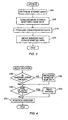
- a flow diagram that illustrates moving data set communications in accordance with one embodiment of the present invention is presented.
- a data packet is received.
- the start of the window is set to the start of the data packet.
- a determination is made regarding whether a data value is split. If a data value has not been split, the data is processed as usual at reference numeral 165.
- the window is moved a number of bytes equivalent to the window size.
- the data up to the split data value is processed as usual at reference numeral 165.
- the portion of the split data value that is present is saved.
- the window is moved to include the rest of the split data.
- the saved portion of the split data is appended to the rest of the split data from the newly positioned window.
- the appended data is processed as usual.
- Fig. 3 a flow diagram that illustrates appending data in accordance with one embodiment of the present invention is presented.
- the stored data is retrieved.
- the stored data is concatenated with the new data obtained when the window was moved to include the rest of the split data at reference numeral 175 of Fig. 2 .
- the concatenated data is processed.
- the window is moved past the concatenated data.
- a flow diagram that illustrates moving a window in accordance with one embodiment of the present invention is presented.
- a determination is made regarding whether the window is large enough to accommodate the move without discarding unprocessed data. If the window is not large enough, the window size is increased at reference numeral 235. If the window is large enough, a determination is made regarding whether the end of the input stream has been reached at reference numeral 240. If the end of the input stream has been reached, at least one data packet is read at reference numeral 245. If the end of the input stream has not been reached, the window is positioned at reference numeral 250.
- Figure 5 illustrates the invention using a 32-byte data packet buffer 270 and a four-byte window 275. All except two data items in the data packet are two-byte integers. A byte is represented by reference numeral 280 and the first two bytes of a four-byte integer are represented by reference numeral 285.
- the first data packet is received.
- the window 275 is set to the start of the data packet 270.
- a determination is made regarding whether a data value in the window 275 is split. Since the end if the window 275 coincides with the end of a two-byte integer 290, there is no data split.
- data values 290 and 295 are processed as usual.
- the window 275 is moved.
- the window is determined to be large enough to move four bytes because the window can hold that number of bytes.
- a check is made to determine whether the end of the input stream has been reached. Since only four bytes of the 32-byte data packet have been processed thus far, the end of the data stream has not been reached.
- the window is moved four bytes towards the source of the input stream. The repositioned window is indicated by reference numeral 300.
- Window 300 includes one byte 305, one two-byte integer 310 and one byte of another two-byte integer 315.
- Windows 335 through 355 each contain two two-byte integers and are processed in the same manner as window 275.
- Window 360 includes only one half of a four-byte integer 365.
- the two bytes 365 are stored at reference numeral 170 of Fig. 2 .
- the window is moved to include the rest of the data. Since the end of the input stream has been reached, another data packet is read at reference numeral 245 of Fig. 4 . Since the window size is less than the size of the 32-byte data packet data in this example, only one data packet is read.
- the stored data is retrieved.
- the stored data is concatenated with the other data in the window 360 that was just read from a new data packet.
- the concatenated data is processed.
- the window is moved past the concatenated data.
- the number of bytes allocated to store split data values is selected based upon the computer architecture of the card device.
- a typical 16-bit processor has a two-byte integer base type. Most 16-bit processor instructions expect 16-bit operands. Thus, most data values encountered in a data packet will be two bytes or less. If a two-byte data value is split, one byte will be within the window, and the other one byte will be outside the window. Accordingly, a one-byte buffer will be enough for most situations.
- a typical 32-bit processor has a four-byte integer base type. If a four-byte integer is split, the amount of data in the window could be from one to three of the four bytes. Thus, a three-byte buffer will suffice for most situations. More generally then, for an n-base processor, where n is the number of bits, the number of bytes allocated for a storage buffer is (n/8) - 1.
- the header portion of a data packet is used to store split data values.
- an APDU contains a five-byte header.
- An APDU contains either a command or a response.
- the format for a typical command APDU is shown in Table 3.
- Table 3 CLA INS P1 P2 I L c Data L e
- CLA is the Instruction class
- INS is the instruction
- P1 and P2 are the instruction parameters
- L c is the byte length of the data field of the instruction
- Data is the data field of the instruction
- L e is the maximum number of bytes expected in the data field of the response.
- Each item in the header is one byte in size. Accordingly, the maximum data field size is 256 bytes.
- APDUs are described in detail in ISO Standard 7816-4:1995, Section 5.3.
- the five APDU header bytes CLA, INS, P1, P2 and L c are examined upon receipt of the APDU to determine how to interpret the data portion of the APDU.
- the memory locations of the header bytes are not used during subsequent processing of the APDU data portion.
- the APDU header bytes are reused as a storage location for split data values, thus avoiding the allocation of additional memory.
- KVM K virtual machine
- the present invention may be implemented in software or firmware, as well as in programmable gate array devices, Application Specific Integrated Circuits (ASICs), and other hardware.
- ASICs Application Specific Integrated Circuits
Landscapes
- Engineering & Computer Science (AREA)
- Computer Networks & Wireless Communication (AREA)
- Signal Processing (AREA)
- Computer Security & Cryptography (AREA)
- Data Exchanges In Wide-Area Networks (AREA)
- Communication Control (AREA)
- Computer And Data Communications (AREA)
- Vehicle Body Suspensions (AREA)
- Radar Systems Or Details Thereof (AREA)
- Circuits Of Receivers In General (AREA)
- Measurement And Recording Of Electrical Phenomena And Electrical Characteristics Of The Living Body (AREA)
- Radio Relay Systems (AREA)
Claims (16)
- Procédé de communication de données, comprenant :la réception (150) d'un paquet de données, ledit paquet de données incluant au moins un élément de donnée contigu ;la définition (155) d'une fenêtre (275) qui comprend initialement le début dudit au moins un élément de donnée contigu ;le fait de déterminer (160) si ladite fenêtre inclut ou non une partie d'un élément de donnée divisé, ledit élément de donnée divisé incluant une première partie au sein de ladite fenêtre et une deuxième partie à l'extérieur de ladite fenêtre ;le traitement dudit au moins un élément de donnée contigu lorsque ledit élément de donnée divisé est absent ;le traitement (165) de tous lesdits au moins un élément de donnée contigu apparaissant avant ladite première partie ;le stockage (170) de ladite première partie ;le déplacement (175) de ladite fenêtre pour inclure ladite première partie etladite deuxième partie ;l'ajout (180) de ladite première partie stockée à ladite deuxième partie pour créer un paquet ajouté ; etle traitement dudit paquet ajouté.
- Procédé selon la revendication 1, dans lequel ledit déplacement de ladite fenêtre comprend en outre :l'augmentation (235) de la taille de ladite fenêtre lorsque ladite fenêtre est plus petite que la taille combinée de ladite première partie et de ladite deuxième partie ;la réception (245) d'un autre paquet de données lorsque la fin d'un flot d'entrée est atteinte ; etle déplacement (250) de ladite fenêtre pour inclure ladite première partie etladite deuxième partie.
- Procédé selon la revendication 1, dans lequel ledit ajout comprend en outre :la récupération (200) de ladite première partie stockée ;la concaténation (205) de ladite première partie stockée avec ladite deuxième partie pour créer des données concaténées ;le traitement (210) desdites données concaténées ; etle déplacement (215) dudit début de ladite fenêtre sur le premier multiplet suivant ladite deuxième partie.
- Procédé selon la revendication 1, dans lequel
ledit paquet de données comprend une APDU (135), ladite APDU incluant un en-tète ; et
ladite première partie stockée est stockée dans ledit en-tête. - Dispositif de stockage de programme, le dispositif étant lisible par un ordinateur, mettant en oeuvre un programme d'instructions exécutable par l'ordinateur pour exécuter une communication de données, et comprenant :la réception d'un paquet de données, ledit paquet de données incluant au moins un élément de donnée contigu ;la définition d'une fenêtre qui comprend initialement le début dudit au moins un élément de donnée contigu ;le fait de déterminer si ladite fenêtre inclut ou non une partie d'un élément de donnée divisé, ledit élément de donnée divisé incluant une première partie au sein de ladite fenêtre et une deuxième partie à l'extérieur de ladite fenêtre ;le traitement dudit au moins un élément de donnée contigu lorsque ledit élément de donnée divisé est absent ;le traitement de tous lesdits au moins un élément de donnée contigu apparaissant avant ladite première partie ;le stockage de ladite première partie ;le déplacement de ladite fenêtre pour inclure ladite première partie et ladite deuxième partie ;l'ajout de ladite première partie stockée à ladite deuxième partie pour créer un paquet ajouté ; etle traitement dudit paquet ajouté.
- Dispositif de stockage de programme selon la revendication 5, dans lequel ledit déplacement de ladite fenêtre comprend en outre :l'augmentation de la taille de ladite fenêtre lorsque ladite fenêtre est plus petite que la taille combinée de ladite première partie et de ladite deuxième partie ;la réception d'un autre paquet de données lorsque la fin d'un flot d'entrée est atteinte ; etle déplacement de ladite fenêtre pour inclure ladite première partie et ladite deuxième partie.
- Dispositif de stockage de programme selon la revendication 5, dans lequel ledit ajout comprend en outre :la récupération de ladite première partie stockée ;la concaténation de ladite première partie stockée avec ladite deuxième partie pour créer des données concaténées ;le traitement desdites données concaténées ; etle déplacement dudit début de ladite fenêtre sur le premier multiplet suivant ladite deuxième partie.
- Dispositif de stockage de programme selon la revendication 5, dans lequel
ledit paquet de données comprend une APDU, ladite APDU incluant un en-tête ; et
ladite première partie stockée est stockée dans ledit en-tête. - Appareil (120) pour la communication de données, comprenant :au moins une mémoire contenant des instructions de programme ; etau moins un processeur configuré pour utiliser les instructions de programme pour :recevoir un paquet de données, ledit paquet de données incluant au moins un élément de donnée contigu ;définir une fenêtre qui comprend initialement le début dudit au moins un élément de donnée contigu ;déterminer si ladite fenêtre inclut ou non une partie d'un élément de donnée divisé, ledit élément de donnée divisé incluant une première partie au sein de ladite fenêtre et une deuxième partie à l'extérieur de ladite fenêtre ;traiter ledit au moins un élément de donnée contigu lorsque ledit élément de donnée divisé est absent ;traiter tous lesdits au moins un élément de donnée contigu apparaissant avant ladite première partie ;stocker ladite première partie ;déplacer ladite fenêtre pour inclure ladite première partie et ladite deuxième partie ;ajouter ladite première partie stockée à ladite deuxième partie pour créer un paquet ajouté ; ettraiter ledit paquet ajouté.
- Appareil selon la revendication 9, dans lequel l'allocation de mémoire pour ladite première partie stockée est basée sur l'architecture d'ordinateur dudit au moins un processeur.
- Appareil selon la revendication 9, dans lequel
ledit au moins un processeur comprend un processeur n bits ; et
le nombre de multiplets à 8 bits attribués à ladite première partie stockée est (n/8)-1. - Appareil selon la revendication 9, dans lequel
ledit au moins un processeur comprend un processeur 32 bits ; et
trois multiplets à 8 bits sont attribués à ladite première partie stockée. - Appareil selon la revendication 9, dans lequel
ledit au moins un processeur comprend un processeur 16 bits ; et
un multiplet à 8 bits est attribué à ladite première partie stockée. - Appareil selon la revendication 9, dans lequel
ledit paquet de données comprend une APDU, ladite APDU incluant un en-tête ; et
ladite première partie stockée est stockée dans ledit en-tête. - Appareil selon l'une quelconque des revendications 9 à 14, dans lequel ledit appareil comprend un dispositif à ressources limitées, et dans lequel lesdites instructions de programme comprennent un programme de logiciel d'application ;
ledit appareil comprenant en outre une machine virtuelle mise en oeuvre sur un microprocesseur qui est basé sur une architecture de moins de 32 bits, dans lequel la machine virtuelle est capable d'exécuter des instructions incluses dans lesdits paquets de données. - Appareil selon l'une quelconque des revendications 9 à 14, dans lequel ledit appareil comprend une carte à puce, et dans lequel lesdites instructions de programme comprennent un programme de logiciel d'application ;
ledit appareil comprenant en outre une machine virtuelle mise en oeuvre sur un microprocesseur qui est basé sur une architecture de moins de 32 bits, dans lequel la machine virtuelle est capable d'exécuter des instructions incluses dans lesdits paquets de données.
Applications Claiming Priority (3)
| Application Number | Priority Date | Filing Date | Title |
|---|---|---|---|
| US441224 | 1999-11-15 | ||
| US09/441,224 US6751675B1 (en) | 1999-11-15 | 1999-11-15 | Moving set packet processor suitable for resource-constrained devices |
| PCT/US2000/042058 WO2001037470A1 (fr) | 1999-11-15 | 2000-11-10 | Deplacement de communications de donnees fixees |
Publications (3)
| Publication Number | Publication Date |
|---|---|
| EP1232595A1 EP1232595A1 (fr) | 2002-08-21 |
| EP1232595A4 EP1232595A4 (fr) | 2009-09-16 |
| EP1232595B1 true EP1232595B1 (fr) | 2010-12-29 |
Family
ID=23752024
Family Applications (1)
| Application Number | Title | Priority Date | Filing Date |
|---|---|---|---|
| EP00993128A Expired - Lifetime EP1232595B1 (fr) | 1999-11-15 | 2000-11-10 | Deplacement de communications de donnees fixees |
Country Status (14)
| Country | Link |
|---|---|
| US (1) | US6751675B1 (fr) |
| EP (1) | EP1232595B1 (fr) |
| JP (1) | JP4703930B2 (fr) |
| KR (1) | KR100752450B1 (fr) |
| CN (1) | CN1306782C (fr) |
| AT (1) | ATE493812T1 (fr) |
| AU (1) | AU775313B2 (fr) |
| BR (1) | BR0015593A (fr) |
| CA (1) | CA2391567A1 (fr) |
| DE (1) | DE60045448D1 (fr) |
| IL (1) | IL149671A0 (fr) |
| RU (1) | RU2002115866A (fr) |
| WO (1) | WO2001037470A1 (fr) |
| ZA (1) | ZA200203882B (fr) |
Families Citing this family (4)
| Publication number | Priority date | Publication date | Assignee | Title |
|---|---|---|---|---|
| US7506175B2 (en) * | 2000-11-06 | 2009-03-17 | International Business Machines Corporation | File language verification |
| AU2003903652A0 (en) * | 2003-07-16 | 2003-07-31 | Infology Pty Ltd | Muvium |
| CN102591735B (zh) | 2011-12-31 | 2013-11-13 | 飞天诚信科技股份有限公司 | 一种智能卡处理cap文件的方法 |
| CN108846570B (zh) * | 2018-06-08 | 2022-02-01 | 武汉理工大学 | 一种解决资源受限项目调度问题的方法 |
Family Cites Families (7)
| Publication number | Priority date | Publication date | Assignee | Title |
|---|---|---|---|---|
| US5185694A (en) | 1989-06-26 | 1993-02-09 | Motorola, Inc. | Data processing system utilizes block move instruction for burst transferring blocks of data entries where width of data blocks varies |
| US5396490A (en) * | 1992-03-23 | 1995-03-07 | Motorola, Inc. | Packet reassembly method and apparatus |
| JPH0667877A (ja) * | 1992-08-19 | 1994-03-11 | Kofu Nippon Denki Kk | 命令フェッチ回路 |
| JPH07105128A (ja) * | 1993-10-07 | 1995-04-21 | Mitsubishi Electric Corp | データ転送装置 |
| US5390490A (en) | 1993-11-04 | 1995-02-21 | Ford Motor Company | Method and apparatus for measuring the efficacy of a catalytic converter |
| EP0955578A1 (fr) * | 1998-05-04 | 1999-11-10 | International Business Machines Corporation | Procédé et dispositif pour effectuer une fonction assignée à un code d'instruction |
| US6195700B1 (en) * | 1998-11-20 | 2001-02-27 | International Business Machines Corporation | Application protocol data unit management facility |
-
1999
- 1999-11-15 US US09/441,224 patent/US6751675B1/en not_active Expired - Lifetime
-
2000
- 2000-11-10 CA CA002391567A patent/CA2391567A1/fr not_active Abandoned
- 2000-11-10 CN CNB008183449A patent/CN1306782C/zh not_active Expired - Lifetime
- 2000-11-10 JP JP2001537911A patent/JP4703930B2/ja not_active Expired - Lifetime
- 2000-11-10 KR KR1020027006221A patent/KR100752450B1/ko not_active Expired - Lifetime
- 2000-11-10 AT AT00993128T patent/ATE493812T1/de not_active IP Right Cessation
- 2000-11-10 RU RU2002115866/09A patent/RU2002115866A/ru not_active Application Discontinuation
- 2000-11-10 IL IL14967100A patent/IL149671A0/xx unknown
- 2000-11-10 WO PCT/US2000/042058 patent/WO2001037470A1/fr not_active Ceased
- 2000-11-10 DE DE60045448T patent/DE60045448D1/de not_active Expired - Lifetime
- 2000-11-10 EP EP00993128A patent/EP1232595B1/fr not_active Expired - Lifetime
- 2000-11-10 AU AU29246/01A patent/AU775313B2/en not_active Expired
- 2000-11-10 BR BR0015593-4A patent/BR0015593A/pt not_active IP Right Cessation
-
2002
- 2002-05-15 ZA ZA200203882A patent/ZA200203882B/xx unknown
Also Published As
| Publication number | Publication date |
|---|---|
| CA2391567A1 (fr) | 2001-05-25 |
| JP4703930B2 (ja) | 2011-06-15 |
| JP2003514320A (ja) | 2003-04-15 |
| EP1232595A1 (fr) | 2002-08-21 |
| CN1423867A (zh) | 2003-06-11 |
| RU2002115866A (ru) | 2004-03-27 |
| WO2001037470A1 (fr) | 2001-05-25 |
| AU2924601A (en) | 2001-05-30 |
| CN1306782C (zh) | 2007-03-21 |
| BR0015593A (pt) | 2002-07-09 |
| AU775313B2 (en) | 2004-07-29 |
| EP1232595A4 (fr) | 2009-09-16 |
| KR100752450B1 (ko) | 2007-08-24 |
| US6751675B1 (en) | 2004-06-15 |
| KR20020053858A (ko) | 2002-07-05 |
| ATE493812T1 (de) | 2011-01-15 |
| ZA200203882B (en) | 2003-08-15 |
| WO2001037470A9 (fr) | 2002-08-15 |
| IL149671A0 (en) | 2002-11-10 |
| DE60045448D1 (de) | 2011-02-10 |
Similar Documents
| Publication | Publication Date | Title |
|---|---|---|
| EP1355268B1 (fr) | Carte à memoire | |
| CN1222875C (zh) | 用于资源受限装置的面向对象的指令集 | |
| US8078788B2 (en) | Media card command pass through methods | |
| EP2279502B1 (fr) | Dispositif de communication nfc mobile et dispositif de lecture | |
| US20100223440A1 (en) | Single Command Payload Transfers Block of Security Functions to a Storage Device | |
| CN1918549A (zh) | 用于为计算系统提供可配置防火墙的框架 | |
| AU4911897A (en) | Using a high level programming language with a microcontroller | |
| EP1232595B1 (fr) | Deplacement de communications de donnees fixees | |
| EP3507690B1 (fr) | Optimisation d'empreinte de memoire d'application de carte java | |
| EP1421478B1 (fr) | Procede et dispositif permettant de relier des fichiers applet convertis | |
| JP2007535241A5 (fr) | ||
| US7131121B2 (en) | Method and apparatus for linking converted applet files without relocation annotations | |
| JP2002279371A (ja) | Icカードのアプリケーション起動制御システム | |
| US12159042B2 (en) | Managing memory of a secure element domain, electronic device and method | |
| EP2176817A1 (fr) | Dispositif de communication mobile et procédé de récupération de mémoire mifare |
Legal Events
| Date | Code | Title | Description |
|---|---|---|---|
| PUAI | Public reference made under article 153(3) epc to a published international application that has entered the european phase |
Free format text: ORIGINAL CODE: 0009012 |
|
| 17P | Request for examination filed |
Effective date: 20020617 |
|
| AK | Designated contracting states |
Kind code of ref document: A1 Designated state(s): AT BE CH CY DE DK ES FI FR GB GR IE IT LI LU MC NL PT SE TR |
|
| AX | Request for extension of the european patent |
Free format text: AL;LT;LV;MK;RO;SI |
|
| A4 | Supplementary search report drawn up and despatched |
Effective date: 20090818 |
|
| RIC1 | Information provided on ipc code assigned before grant |
Ipc: H04L 12/56 20060101ALI20090812BHEP Ipc: H04J 3/24 20060101AFI20010529BHEP |
|
| 17Q | First examination report despatched |
Effective date: 20091113 |
|
| GRAP | Despatch of communication of intention to grant a patent |
Free format text: ORIGINAL CODE: EPIDOSNIGR1 |
|
| RIC1 | Information provided on ipc code assigned before grant |
Ipc: H04L 29/06 20060101ALI20100528BHEP Ipc: H04L 12/56 20060101AFI20100528BHEP |
|
| GRAS | Grant fee paid |
Free format text: ORIGINAL CODE: EPIDOSNIGR3 |
|
| GRAA | (expected) grant |
Free format text: ORIGINAL CODE: 0009210 |
|
| AK | Designated contracting states |
Kind code of ref document: B1 Designated state(s): AT BE CH CY DE DK ES FI FR GB GR IE IT LI LU MC NL PT SE TR |
|
| REG | Reference to a national code |
Ref country code: GB Ref legal event code: FG4D |
|
| REG | Reference to a national code |
Ref country code: CH Ref legal event code: EP |
|
| REG | Reference to a national code |
Ref country code: IE Ref legal event code: FG4D |
|
| REF | Corresponds to: |
Ref document number: 60045448 Country of ref document: DE Date of ref document: 20110210 Kind code of ref document: P |
|
| REG | Reference to a national code |
Ref country code: DE Ref legal event code: R096 Ref document number: 60045448 Country of ref document: DE Effective date: 20110210 |
|
| REG | Reference to a national code |
Ref country code: NL Ref legal event code: VDEP Effective date: 20101229 |
|
| PG25 | Lapsed in a contracting state [announced via postgrant information from national office to epo] |
Ref country code: FI Free format text: LAPSE BECAUSE OF FAILURE TO SUBMIT A TRANSLATION OF THE DESCRIPTION OR TO PAY THE FEE WITHIN THE PRESCRIBED TIME-LIMIT Effective date: 20101229 Ref country code: CY Free format text: LAPSE BECAUSE OF FAILURE TO SUBMIT A TRANSLATION OF THE DESCRIPTION OR TO PAY THE FEE WITHIN THE PRESCRIBED TIME-LIMIT Effective date: 20101229 Ref country code: AT Free format text: LAPSE BECAUSE OF FAILURE TO SUBMIT A TRANSLATION OF THE DESCRIPTION OR TO PAY THE FEE WITHIN THE PRESCRIBED TIME-LIMIT Effective date: 20101229 Ref country code: SE Free format text: LAPSE BECAUSE OF FAILURE TO SUBMIT A TRANSLATION OF THE DESCRIPTION OR TO PAY THE FEE WITHIN THE PRESCRIBED TIME-LIMIT Effective date: 20101229 |
|
| PG25 | Lapsed in a contracting state [announced via postgrant information from national office to epo] |
Ref country code: GR Free format text: LAPSE BECAUSE OF FAILURE TO SUBMIT A TRANSLATION OF THE DESCRIPTION OR TO PAY THE FEE WITHIN THE PRESCRIBED TIME-LIMIT Effective date: 20110330 Ref country code: ES Free format text: LAPSE BECAUSE OF FAILURE TO SUBMIT A TRANSLATION OF THE DESCRIPTION OR TO PAY THE FEE WITHIN THE PRESCRIBED TIME-LIMIT Effective date: 20110409 Ref country code: PT Free format text: LAPSE BECAUSE OF FAILURE TO SUBMIT A TRANSLATION OF THE DESCRIPTION OR TO PAY THE FEE WITHIN THE PRESCRIBED TIME-LIMIT Effective date: 20110429 Ref country code: BE Free format text: LAPSE BECAUSE OF FAILURE TO SUBMIT A TRANSLATION OF THE DESCRIPTION OR TO PAY THE FEE WITHIN THE PRESCRIBED TIME-LIMIT Effective date: 20101229 |
|
| PG25 | Lapsed in a contracting state [announced via postgrant information from national office to epo] |
Ref country code: NL Free format text: LAPSE BECAUSE OF FAILURE TO SUBMIT A TRANSLATION OF THE DESCRIPTION OR TO PAY THE FEE WITHIN THE PRESCRIBED TIME-LIMIT Effective date: 20101229 |
|
| PG25 | Lapsed in a contracting state [announced via postgrant information from national office to epo] |
Ref country code: DK Free format text: LAPSE BECAUSE OF FAILURE TO SUBMIT A TRANSLATION OF THE DESCRIPTION OR TO PAY THE FEE WITHIN THE PRESCRIBED TIME-LIMIT Effective date: 20101229 |
|
| PLBE | No opposition filed within time limit |
Free format text: ORIGINAL CODE: 0009261 |
|
| STAA | Information on the status of an ep patent application or granted ep patent |
Free format text: STATUS: NO OPPOSITION FILED WITHIN TIME LIMIT |
|
| 26N | No opposition filed |
Effective date: 20110930 |
|
| REG | Reference to a national code |
Ref country code: DE Ref legal event code: R097 Ref document number: 60045448 Country of ref document: DE Effective date: 20110930 |
|
| PG25 | Lapsed in a contracting state [announced via postgrant information from national office to epo] |
Ref country code: IT Free format text: LAPSE BECAUSE OF FAILURE TO SUBMIT A TRANSLATION OF THE DESCRIPTION OR TO PAY THE FEE WITHIN THE PRESCRIBED TIME-LIMIT Effective date: 20101229 |
|
| PG25 | Lapsed in a contracting state [announced via postgrant information from national office to epo] |
Ref country code: MC Free format text: LAPSE BECAUSE OF NON-PAYMENT OF DUE FEES Effective date: 20111130 |
|
| REG | Reference to a national code |
Ref country code: CH Ref legal event code: PL |
|
| PG25 | Lapsed in a contracting state [announced via postgrant information from national office to epo] |
Ref country code: LI Free format text: LAPSE BECAUSE OF NON-PAYMENT OF DUE FEES Effective date: 20111130 Ref country code: CH Free format text: LAPSE BECAUSE OF NON-PAYMENT OF DUE FEES Effective date: 20111130 |
|
| REG | Reference to a national code |
Ref country code: FR Ref legal event code: ST Effective date: 20120731 |
|
| REG | Reference to a national code |
Ref country code: IE Ref legal event code: MM4A |
|
| PG25 | Lapsed in a contracting state [announced via postgrant information from national office to epo] |
Ref country code: IE Free format text: LAPSE BECAUSE OF NON-PAYMENT OF DUE FEES Effective date: 20111110 |
|
| PG25 | Lapsed in a contracting state [announced via postgrant information from national office to epo] |
Ref country code: FR Free format text: LAPSE BECAUSE OF NON-PAYMENT OF DUE FEES Effective date: 20111130 |
|
| PG25 | Lapsed in a contracting state [announced via postgrant information from national office to epo] |
Ref country code: LU Free format text: LAPSE BECAUSE OF NON-PAYMENT OF DUE FEES Effective date: 20111110 |
|
| PG25 | Lapsed in a contracting state [announced via postgrant information from national office to epo] |
Ref country code: TR Free format text: LAPSE BECAUSE OF FAILURE TO SUBMIT A TRANSLATION OF THE DESCRIPTION OR TO PAY THE FEE WITHIN THE PRESCRIBED TIME-LIMIT Effective date: 20101229 |
|
| PGFP | Annual fee paid to national office [announced via postgrant information from national office to epo] |
Ref country code: DE Payment date: 20191029 Year of fee payment: 20 |
|
| PGFP | Annual fee paid to national office [announced via postgrant information from national office to epo] |
Ref country code: GB Payment date: 20191108 Year of fee payment: 20 |
|
| REG | Reference to a national code |
Ref country code: DE Ref legal event code: R071 Ref document number: 60045448 Country of ref document: DE |
|
| REG | Reference to a national code |
Ref country code: GB Ref legal event code: PE20 Expiry date: 20201109 |
|
| PG25 | Lapsed in a contracting state [announced via postgrant information from national office to epo] |
Ref country code: GB Free format text: LAPSE BECAUSE OF EXPIRATION OF PROTECTION Effective date: 20201109 |