EP1232668B1 - Roamingverfahren bei telematikdiensten - Google Patents
Roamingverfahren bei telematikdiensten Download PDFInfo
- Publication number
- EP1232668B1 EP1232668B1 EP01978422A EP01978422A EP1232668B1 EP 1232668 B1 EP1232668 B1 EP 1232668B1 EP 01978422 A EP01978422 A EP 01978422A EP 01978422 A EP01978422 A EP 01978422A EP 1232668 B1 EP1232668 B1 EP 1232668B1
- Authority
- EP
- European Patent Office
- Prior art keywords
- data
- network
- access
- radio terminal
- stored
- Prior art date
- Legal status (The legal status is an assumption and is not a legal conclusion. Google has not performed a legal analysis and makes no representation as to the accuracy of the status listed.)
- Expired - Lifetime
Links
Images
Classifications
-
- H—ELECTRICITY
- H04—ELECTRIC COMMUNICATION TECHNIQUE
- H04W—WIRELESS COMMUNICATION NETWORKS
- H04W8/00—Network data management
- H04W8/18—Processing of user or subscriber data, e.g. subscribed services, user preferences or user profiles; Transfer of user or subscriber data
- H04W8/20—Transfer of user or subscriber data
-
- H—ELECTRICITY
- H04—ELECTRIC COMMUNICATION TECHNIQUE
- H04W—WIRELESS COMMUNICATION NETWORKS
- H04W8/00—Network data management
- H04W8/02—Processing of mobility data, e.g. registration information at HLR [Home Location Register] or VLR [Visitor Location Register]; Transfer of mobility data, e.g. between HLR, VLR or external networks
- H04W8/08—Mobility data transfer
Definitions
- Roaming method for determining local data services with a radio terminal such as a mobile phone, in a radio network
- a home table is transmitted, in which address, parameter and access information for reaching local data services are included, which by the radio terminal are stored, wherein a formed as an access table guest table is transmitted, are contained in the address, parameter and access information for reaching local data services, which is stored by the radio terminal.
- Telematics is an art word from telecommunications and computer science, which means as much as computer-based telephone services.
- the providers of such information service providers are referred to as telematics operators who transmit certain requested data.
- SMS short messages service
- GSM Global System for Mobile Communication - English "global system for mobile communication”
- SMS short message service
- GSM Global System for Mobile Communication - English "global system for mobile communication”
- messages can be exchanged, for example, from an e-mail system to a mobile phone or navigation system.
- the transmission takes place digitally via circuit-switched dial-up connections or, in the case of GSM, via the packet-switched control channel.
- the transmission speed is between 400 and 500 bit / s.
- Roaming Free moving - engl.
- a mobile terminal In order for a mobile terminal to be able to travel from cell to cell within a mobile radio system without interrupting cellular communication, a special handover procedure must be introduced between the cells. This is basically called “roaming".
- the subscriber can move throughout the coverage area of a mobile network without having to restrict his communication. Even if the area in which the subscriber is located is not supplied by its operator, it can use the network without restrictions.
- Roaming can also be cross-border, namely if the operator abroad has a corresponding settlement agreement with the national operator.
- GSM Global System for Mobile communications
- GPS Global Positioning System
- GPS Global Positioning System
- these telematics systems are also used as traffic control or navigation systems.
- GPS is a global satellite system for highly precise location, navigation and time distribution. If at least 3 GPS satellites are simultaneously received by the GPS receiver, the receiver can determine its position to approx. 20 m to 100 m from the duration of the signals. By taking advantage of the Doppler effect on moving vehicles, the speed, the course and other navigational variables can be determined.
- SIM card abbreviation for Subscriber Identity Module
- the SIM card is a check card-sized identification card for the subscriber of a GSM mobile service and is generally referred to as a "smart card” or “smart card”. These cards are available for car phones and in smaller version also for mobile phones. Due to the constant reduction of mobile phones, there are mobile phone versions in which only the chip of the SIM card is used. It can be removed for this purpose from the SIM card and installed in the mobile phone.
- the SIM card or its chip contains subscriber-relevant data and algorithms as well as the access authorization to the network.
- the SIM card contains the international subscriber number, the international identification number for the mobile device, the personal identification number (PIN) or the authentication key and some other data.
- the SIM card for the GSM network the subscriber identifies with his radiotelephone telephone number.
- the network ensures that it is indeed an authorized GSM subscriber.
- the authentication process is performed in parallel on the SIM card and in the network and compared in the result. For result equality is ensures subscriber authenticity.
- the subscriber can make telephone calls with any GSM telephone within the service area of his operator.
- the subscriber is reachable under his personal telephone number at home and abroad.
- the SIM card is the key to using the telephone and telematics services.
- the terminals are initially initialized at power-up and the user is identified using the SIM card. Subsequently, the telematics operator transmits, in the form of SMS, a first table in which information about the home network is contained.
- the information of the so-called home address set consists of address, parameter and required access data, which are assigned to the home network.
- a guest table is transmitted with addresses of telematics providers in corresponding host countries. These tables are stored in the terminal.
- the DES key is a standard for data encryption.
- the neighboring country tables contain specific information about the neighboring countries (country code) or their networks (network code), which are necessary in order to be able to dial into the radio networks of these countries.
- Telematics roaming means that a terminal can also move outside its home network, the guest network, which has been defined by initialization.
- local-specific information services are offered to the terminal; For example: A user of the telematics services of the German roadside assistance during his holiday in France could help little. He needed a French breakdown service near him.
- the information service of telematics operators must therefore be constantly adapted to the individual local conditions. This adaptation is not possible with pure "GMS roaming".
- the terminal in GSM roaming would not be adapted to the local conditions.
- Disadvantage of the known method for telematics roaming is that the function can no longer be guaranteed if the continuity when traveling through countries no longer exists. If a terminal, eg in Germany, is used, switched off, then transported out of the country, for example to France, and then put back into service, the use of telematics services is not readily possible.
- a change of the SIM card is also not considered in the existing GATS procedures in the home country or in the host country. Since, in particular, due to legal regulations, not always guaranteed use on GSM roaming, the GATS fails, for example. when using a terminal abroad with SIM cards different offers.
- the address data is required to find the appropriate provider of telematics services.
- the access data is required to allow access to the data of this address.
- data e.g. Timing parameters or service profiles. These data are all card and network specific. Now, if the cards are exchanged, the existing data in the terminal no longer fit together with the SIM card.
- the data tables are constantly updated to the local conditions by corresponding local telematics providers in accordance with the GATS standard roaming procedure.
- guest tables are also transmitted during initialization, which are adapted each time the network is changed. In the guest tables are address data, which telematics provider can be reached. When the terminal is switched off, such an adaptation can no longer take place.
- the terminal then only data before, with whom he can basically do nothing in the other network, as shown by the example with the address of the German breakdown service in France.
- the US patent US 604 7327 A uses a timestamp on telecommunications equipment to determine the timeliness of data service lists. No changeable neighbor country tables are transmitted.
- the WO 97/42781 A1 describes a roaming method with a telecommunication device between different telecommunication networks. Local services are determined with the telecommunication device. After the initialization of the telecommunication device, data specific to services is exchanged between the radio network and the telecommunication device. This specific data includes address, parameter, and access information for achieving local data services. This specific data is stored by the telecommunication device. A guest table called an access table is transmitted to the telecommunications device during roaming. This guest table contains address, parameter, and access information for reaching local data services. This access table is stored by the telecommunication device.
- the disadvantage of this method is that it can never be guaranteed that the guest table is also valid or current. It may well happen that the network provider in the non-local land and / or its services are no longer available.
- the object of the invention is therefore to provide a method for radio terminals, such as mobile telephones, in a radio network, which avoids the disadvantages of the prior art.
- an exchange of SIM cards from different providers should be possible at any time.
- the object is achieved in that in a method for determining local data services with a radio terminal in a radio network of the type mentioned, wherein an access table designed as a guest table is transmitted in the address, parameter and access information to achieve local data services which is stored by the radio terminal in a table set, a time stamp in the access table for checking whether the data contained in the table set is still valid , is contained and a variable neighbor country table is transmitted and stored by the radio terminal in the table set, wherein a Changing the network a timestamp in the access table for the new network is checked to see if the data contained in the table set is still valid and a configuration request for access data for the current network is triggered when the data is no longer valid.
- the invention is based on the principle that not only the addresses in the guest tables are stored, but all access and parameter data.
- the timestamp can be used to check the relevance of the respective access tables.
- the radio terminal can be turned off and in another network be turned on again.
- the additional management of the parameters per network makes sense, since it can happen that the values of the parameters have to be changed depending on the network.
- the additional administration of the access data serves to be able to access corresponding service providers.
- Another advantage arises in the method according to the invention by transmission and storage of a neighboring country table. This ensures compatibility with older devices.
- the neighbor country table is optional and provides one Recommendation List. Guest tables are all access, address and parameter tables that are not assigned to the home network. All three tables are called guest table sets.
- a radio terminal should provide at least three guest table sets.
- the user should be required to confirm any configuration update needed during the roaming process, as roaming charges may be incurred.
- a global roaming on / off switch may be present in the terminal. Then the customer can not decide per network / country, whether he wants to use the services via telematics roaming, but only in general for all networks / countries.
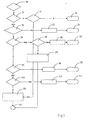
- FIG. 1 and 2 A flowchart showing the detailed roaming process (including possible errors and interactions with a mobile phone) will be described below Fig. 1 and 2 shown.
- initialization addresses are transmitted and stored by the radio terminal.
- this stored list it has become possible to always find an address for the combination of logged-in network and the network of the SIM card, without an elaborate preconfiguration in the terminal is necessary.
- routine branches from diamond 14 into the configuration request to the network for the current country and network code as well as access, address and parameter data, rectangle 20.
- Lozenge 16 determines if the roaming switch is activated. If the roaming switch is disabled, this will be displayed on a display, rectangle 22. Thereafter, the routine will terminate, oval 24. If the roaming switch is activated, the routine branches from diamond 16 to diamond 26. Diamond 26 sym- bolizes the query as to a set of tables exists for the country code and the network code. If no such If there is a table record, the routine branches to the inquiry as to whether the user of the terminal has consented to an update, diamond 28. If this query yields a negative result, this is indicated on the display, rectangle 30. Then the routine is ended, Oval 32nd
- the configuration request is made to the network according to the current country and network code, as well as access, address and parameter data, rectangle 29. From there it goes to continuation circle 46. From here the flowchart will run in Fig. 2 further.
- diamond 40 it is queried whether the user has consented to a change. If the question is answered in the negative, an indication that the roaming is disabled will appear, rectangle 42. Thereafter, the routine is completed, oval 44.
- diamond 40 branches into rectangle 20.
- the configuration request is made to the network according to the current country and network code, as well as access, address and parameter data. From there, the continuation circle 46 is branched.
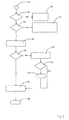
- Fig. 2 starts the routine with continuation circuit 46. From here it goes in diamond 48, which query is symbolized, whether a data update occurred. If the answer is negative, an error message is displayed on the screen and another network is searched, rectangle 50.
- the routine branches from diamond 48 to route 52.
- Diamond 52 symbolizes the query as to whether the neighbor country data for the requested country code was obtained. If the question is answered in the negative, then Raute 52 in Rectangle 54 branches. Rectangle 54 symbolizes the display output that no telematics service is offered in this country. The emergency call can only be made via the number pre-configured in the device.
Landscapes
- Engineering & Computer Science (AREA)
- Databases & Information Systems (AREA)
- Computer Networks & Wireless Communication (AREA)
- Signal Processing (AREA)
- Mobile Radio Communication Systems (AREA)
- Computer And Data Communications (AREA)
- Two-Way Televisions, Distribution Of Moving Picture Or The Like (AREA)
Description
- Roamingverfahren zum Ermitteln von lokalen Datendiensten mit einem Funkendgerät, wie ein Mobilfunktelefon, in einem Funknetz, wobei nach der Initialisierung des Funkendgerätes eine Heimattabelle übermittelt wird, in der Adreß-, Parameter- und Zugriffsinformationen zum Erreichen von lokalen Datendiensten enthalten sind, welche durch das Funkendgerät gespeichert werden, wobei eine als Zugriffstabelle ausgebildete Gasttabelle übermittelt wird, in der Adreß-, Parameter- und Zugriffsinformationen zum Erreichen von lokalen Datendiensten enthalten sind, welche durch das Funkendgerät gespeichert wird.
- Über Mobilfunktelefone, auch "Handys" genannt, sowie Navigationssysteme in Autos werden u.a. Informationsdienstleistungen angeboten. Diese Information kann beispielsweise eine Verkehrsstaumeldung sein. Andere Informationsdienstleistungen sind z.B. Routenplaner, der nächst gelegene Pannendienst, Hotelführer, Kulturangebote und Sehenswürdigkeiten. Die Liste der möglichen Informationsdienstleistungen ist praktisch unbegrenzt. Diese Informationsdienstleistungen werden als Telematik bezeichnet. Telematik ist ein Kunstwort aus Telekommunikation und Informatik, was so viel bedeutet, wie computergestützte Telefondienstleistungen. Die Anbieter von solchen Informationsdienstleistern werden als Telematikbetreiber bezeichnet, die bestimmte angeforderte Daten übermitteln.
- Die Informationsdienstleistungen werden von einem Telematikbetreiber über SMS (engl. Short Messages Service - Kurznachrichtendienst) auf Anforderung an ein Endgerät, wie das Handy, versandt. Der Kurznachrichtendienst (SMS) im sogenannten GSM-Standard (Global System for Mobile Communication - engl. "globales System für mobile Kommunikation") erlaubt es, an Mobilfunkteilnehmern kurze Nachrichten zu versenden. Mit dem SMS-Dienst lassen sich beispielsweise Mitteilungen von einem E-Mail-System zu einem Handy oder Navigationssystem austauschen. Die Übertragung erfolgt digital über leitungsvermittelte Wählverbindungen oder bei GSM über den paketvermittelten Kontrollkanal. Die Übertragungsgeschwindigkeit liegt zwischen 400 und 500 bit/s.
- Das freie Bewegen - engl. "Roaming" - in Funknetzen, insbesondere von verschiedenen Anbietern, wird in Europa in dem besagten GSM-Standard vereinbart. Damit ein mobiles Endgerät innerhalb eines Mobilfunksystems von Funkzelle zu Funkzelle wandern kann, ohne Unterbrechung der Mobilfunkkommunikation, muß zwischen den Funkzellen ein spezielles Übergabeverfahren eingeführt werden. Dieses wird grundsätzlich "Roaming" genannt. Der Teilnehmer kann sich im gesamten Versorgungsbereich eines Mobilfunknetzes bewegen, ohne seine Kommunikation einschränken zu müssen. Auch wenn der Bereich, in dem sich der Teilnehmer befindet, nicht durch seinen Betreiber versorgt wird, kann er ohne Einschränkungen das Netz benutzen. Das Roaming kann auch grenzüberschreitend erfolgen, nämlich dann, wenn der Betreiber im Ausland ein entsprechendes Abrechnungsabkommen mit dem nationalen Betreiber hat.
- Mit der Normierung eines europäischen Funktelefonsystems im 900-MHz-Bereich verfolgte die CEPT (Conférence Européenne des Administrations des Postes et Telecommunications) das Ziel eines europaweiten kompatiblen Mobilfunkdienstes. Die Arbeitsgruppe, die die Standardisierung vorantrieb, heißt GSM. Die Standardisierungsarbeiten unter der GSM konzentrierten sich auf eine digitale Datenübertragung, aus der sich die GSM-Architektur gebildet hat. Die GSM-Technik basiert auf einer digitalen Übertragung. Als Dienste bietet GSM eine Reihe von Basisdiensten und Zusatzdiensten, wie eben das "SMS", an.
- In Kombination mit GPS (Abkürzung von engl. "Global Positioning System") werden diese Telematiksysteme auch als Verkehrsleit- oder Navigationssysteme benutzt. GPS ist ein weltumspannendes Satellitensystem zur hochgenauen Ortung, Navigation und Zeitverteilung. Werden vom GPS-Empfänger gleichzeitig mindestens 3 GPS-Satelliten empfangen, kann der Empfänger aus der Laufzeit der Signale seine Position auf ca. 20 m bis 100 m genau ermitteln. Unter Ausnutzung des Dopplereffekts an bewegten Fahrzeugen läßt sich die Geschwindigkeit, der Kurs und andere navigatorischen Größen ermitteln.
- Zur europaweiten Nutzung von Telematikdiensten in mobilen Endgeräten, basierend auf GATS (Abkürzung für engl. "Global Automotive Telematics Standard"), stehen weiterhin derzeit die in der Spezifikation dieses Standards "Dienstspezifikation Interne Dienste V2.0" beschriebenen Verfahren zur Verfügung. Hierbei werden u.a. die in "ADP Internal Services V2.0" beschriebenen Protokolle zur Datenübermittlung verwendet. ADP ist die Abkürzung für engl. "Application Data Protocol". Die hier beschriebenen Protokolle standardisieren den Datenaustausch zwischen den einzelnen Telematikbetreibern.
- Um sich in einem Funknetz bzw. bei seinem Telematikbetreiber zu identifizieren, benötigt ein Nutzer derzeit eine sogenannte SIM-Karte (Abkürzung für engl.: Subscriber Identity Module). Die SIM-Karte ist eine scheckkartengroße Identifizierungskarte für den Teilnehmer eines GSM-Mobilfunkdienstes und wird im allgemeinen als "Chipkarte" oder "Smart Card" bezeichnet. Diese Karten gibt es für Autotelefone und in verkleinerter Version auch für Handys. Bedingt durch die ständige Verkleinerung der Handys gibt es Handy-Ausführungen, bei denen nur noch der Chip der SIM-Karte benutzt wird. Er kann zu diesem Zweck von der SIM-Karte entfernt und in das Handy eingebaut werden. Die SIM-Karte bzw. dessen Chip enthält teilnehmerrelevante Daten und Algorithmen sowie die Zugangsberechtigung zum Netz. U.a. befinden sich auf der SIM-Karte die internationale Teilnehmernummer, die internationale Identifikationsnummer für das Mobilgerät, die persönliche Identifikationsnummr (PIN) oder der Authentisierungsschlüssel und einige weitere Daten. Mit der SIM-Karte für das GSM-Netz identifiziert sich der Teilnehmer mit seiner Funktelefon-Rufnummer. Mit Hilfe der Authentifikation stellt das Netz sicher, daß es sich tatsächlich um einen autorisierten GSM-Teilnehmer handelt. Das Authentifikationsverfahren wird parallel auf der SIM-Karte und im Netz durchgeführt und im Ergebnis verglichen. Bei Ergebnisgleichheit ist die Teilnehmerauthentität gewährleistet. Nach der Einbuchungsprozedur kann der Teilnehmer mit jedem beliebigen GSM-Telefon innerhalb des Versorgungsbereiches seines Betreibers Telefonate führen. Darüber hinaus ist der Teilnehmer unter seiner persönlichen Rufnummer im In- und Ausland erreichbar. Die SIM-Karte ist quasi der Schlüssel auch zur Nutzung der Telefon- und Telematikdienste.
- Nach diesem GATS-Standard werden die Endgeräte beim Einschalten zunächst initialisiert und der Benutzer mit Hilfe der SIM-Karte identifiziert. Anschließend übermittelt der Telematikbetreiber in Form von SMS eine erste Tabelle, in der Informationen über das Heimatnetz enthalten sind. Die Information des sogenannten Heimattabellensatzes besteht aus Adreß-, Parameter- sowie erforderliche Zugriffsdaten, die dem Heimatnetz zugeordnet sind. Weiterhin wird nach diesem GATS-Standard eine Gasttabelle mit Adressen von Telematikanbietern in entsprechenden Gastländern übertragen. Diese Tabellen werden im Endgerät gespeichert.
- Weiterhin werden nach dem GATS-Standard die DES-Schlüssel sowie Nachbarlandtabellen abgespeichert. Bei dem DES-Schlüssel handelt es sich um einen Standard für die Datenverschlüsselung. Die Nachbarlandtabellen enthalten spezifische Informationen über die Nachbarländer (Ländercode) bzw. über deren Netze (Netzcode), die notwendig sind, um sich in die Funknetze dieser Ländern einwählen zu können.
- "Telematikroaming" bedeutet, daß ein Endgerät sich auch außerhalb seines durch Erstinitialisierung festgelegten Heimatnetzes, dem Gastnetz, bewegen kann. Hierbei werden dem Endgerät lokalspezifische Informationsdienstleistungen angeboten; z.B.: Einem Nutzer der Telematikdienste würde der deutsche Pannendienst bei seinem Urlaub in Frankreich wenig helfen können. Er bräuchte einen französischen Pannendienst in seiner Nähe. Die Informationsdienstleistung der Telematikbetreiber muß also ständig an die individuellen lokalen Gegebenheiten angepaßt werden. Diese Anpassung ist beim reinen "GMS-Roaming" nicht möglich. Das Endgerät beim GSM-Roaming würde an die lokalen Gegebenheiten nicht angepaßt werden.
- Nachteil bei den bekannten Verfahren zum Telematikroaming ist, daß die Funktion nicht mehr gewährleistet werden kann, wenn die Kontinuität beim Durchreisen von Ländern nicht mehr gegeben ist. Wird ein Endgerät, z.B. in Deutschland, genutzt, ausgeschaltet, anschließend außer Landes -beispielsweise nach Frankreich- transportiert, und dann wieder in Betrieb genommen, so ist die Nutzung der Telematikdienste nicht ohne weiteres möglich.
- Auch ein Wechsel der SIM-Karte wird bei den vorhandenen GATS-Verfahren weder im Heimat- noch im Gastland berücksichtigt. Da insbesondere aufgrund von gesetzlichen Bestimmungen nicht immer eine Nutzung auf GSM-Roaming gewährleistet ist, versagt das GATS z.B. bei der Nutzung eines Endgerätes im Ausland mit SIM-Karten verschiedener Anbietet.
- Um die Ursache hierfür zu verstehen, müssen folgende Überlegungen angestellt werden:
- Beim Einschalten eines Endgerätes wird dieses zunächst initialisiert. Dazu verbindet sich das Endgerät mit dem Heimatnetz. Das Heimatnetz ist von den SIM-Karten abhängig, d.h. unterschiedliche Anbieter von Netzen haben auch unterschiedliche Netzstrukturen. Das Heimatnetz übermittelt dem Endgerät eine für die SIM-Karte spezifische Tabelle mit heimatbezogenen Daten, um Telematikdienste in Anspruch nehmen zu können. Diese Tabelle wird Heimattabelle genannt. Die Heimattabelle besteht wiederum aus drei Tabellen: Der Adreß- der Parameter- und Zugriffsdatentabelle. Diese Tabellen werden auch als Heimattabehensatz bezeichnet und werden in einem Speicher des Endgerätes abgespeichert.
- Die Adreßdaten sind erforderlich, um den entsprechenden Anbieter von Telematikdiensten herauszufinden. Die Zugriffsdaten sind erforderlich, um den Zugriff auf die Daten dieser Adresse zu ermöglichen. In der Tabelle der Parameterdaten stehen Daten, wie z.B. Timing-Parameter oder Dienstprofile. Diese Daten sind alle sowohl karten- als auch netzspezifisch. Werden nun die Karten ausgetauscht, so passen die in dem Endgerät vorhandenen Daten nicht mehr mit der SIM-Karte zusammen.
- Eine ähnliche Situation ergibt sich, wenn beim "Roaming" in ein benachbartes Land, also in ein anderes Netz, die Kontinuität unterbrochen wird, d.h., wenn das Endgerät ausgeschaltet wird, während es beispielsweise von einem Netzanbieter zum nächsten gelangt. Bei eingeschaltetem Endgerät werden die Datentabellen gemäß dem Roamingverfahren nach dem GATS-Standard ständig an die lokalen Gegebenheiten durch entsprechende lokale Telematikanbieter aktualisiert. Neben der Heimattabelle werden nämlich Gasttabellen bei der Initialisierung mit übermittelt, die bei jedem Netzwechsel angepaßt werden. In den Gasttabellen stehen Adreßdaten, welcher Telematikanbieter erreicht werden kann. Bei ausgeschaltetem Endgerät kann eine solche Anpassung nicht mehr erfolgen.
- Dem Endgerät liegen dann nur Daten vor, mit denem er im anderen Netzt grundsätzlich nichts anfangen kann, wie es das Beispiel mit der Adresse des deutschen Pannendienstes in Frankreich zeigt.
- Die US-Patentschrift
US 604 7327 A benutzt bei Telekommunikationsgeräten einen Zeitstempel, um die Aktualität von Listen für Datendienste festzustellen. Dabei werden keine veränderbaren Nachbarlandtabellen übermittelt. - Die
WO 97/42781 A1 - Nachteil bei diesem Verfahren ist, dass nie sichergestellt werden kann, dass die Gasttabelle auch gültig bzw. aktuell ist. Es kann durchaus vorkommen, dass der Netzanbieter in dem heimatnetzfremden Land und/oder dessen angebotene Dienste nicht mehr vorhanden sind.
- Aufgabe der Erfindung ist es daher, ein Verfahren für Funkendgeräte, wie Mobilfunktelefone, in einem Funknetz zu schaffen, das die Nachteile des Standes der Technik vermeidet. Insbesondere ist es Aufgabe der Erfindung, daß auch beim Ausschalten des Endgerätes und späteren Einschalten des Funkendgerätes beim "Roaming" lokale gültige bzw. aktuelle Telematikdienste übermittelt werden können. Zudem soll ein Austausch von SIM-Karten verschiedener Anbieter jederzeit möglich sein.
- Erfindungsgemäß wird die Aufgabe dadurch gelöst, daß bei einem Verfahren zum Ermitteln von lokalen Datendiensten mit einem Funkendgerät in einem Funknetz der eingangs genannten Art, wobei eine als Zugriffstabelle ausgebildete Gasttabelle übermittelt wird, in der Adreß-, Parameter- und Zugriffsinformationen zum Erreichen von lokalen Datendiensten enthalten sind, welche durch das Funkendgerat in einem Tabellensatz gespeichert wird, ein Zeitstempel in der Zugriffstabelle zur Prüfung, ob die im Tabellensatz enthaltenen Daten noch gültig sind, enthalten ist und eine veränderbare Nachbarlandtabelle übermittelt und durch das Funkendgerät im Tabellensatz gespeichert wird, wobei bei einem Wechsel des Netzes ein Zeitstempel in der Zugriffstabelle für das neue Netz geprüft wird, ob die im Tabellensatz enthaltenen Daten noch gültig sind, wobei eine Konfigurationsanfrage nach Zugriffsdaten für das aktuelle Netz ausgelöst wird, wenn die Daten nicht mehr gültig sein.
- Die Erfindung beruht auf dem Prinzip, daß nicht nur die Adressen in den Gasttabellen abgespeichert werden, sondern sämtliche Zugriffs- und Parameterdaten. Anhand des Zeitstempels kann die Aktualität der jeweiligen Zugriffstabellen überprüft werden. Hierdurch kann das Funkendgerät ausgeschaltet werden und in einem anderen Netz wieder eingeschaltet werden. Die zusätzliche Verwaltung der Parameter pro Netz macht deshalb Sinn, da es durchaus vorkommen kann, daß in Abhängigkeit des Netzes die Werte der Parameter geändert werden müssen. Die zusätzliche Verwaltung der Zugriffdaten dient dazu, auf entsprechende Dienstleister zugreifen zu können. Ein weiterer Vorteil ergibt sich bei dem erfindungsgemäßen Verfahren durch Übermittlung und Speicherung einer Nachbarlandtabelle. Hierdurch wird eine Kompatibilität zu älteren Endgeräten gewährleistet. Die Nachbarlandtabelle ist optional und stellt eine Empfehlungsliste dar. Als Gasttabellen werden alle Zugriffs,- Adreß- und Parametertabellen bezeichnen die nicht dem Heimatnetz zugeordnet sind. Alle drei Tabellen werden als Gasttabellensatz bezeichnet. Ein Funkendgerät sollte mindestens drei Gasttabellensätze vorsehen.
- Der Auslöser für das Starten von Roamingabläufen ist der Wechsel des Netzes. Die folgenden Aktionen müssen nun im Endgerät ausgeführt werden, um entsprechende Telematikdienste zu erhalten:
- Es ist zu überprüfen, ob zum neuen Netz ein passender Tabellensatz (Gast oder Heimat) im Endgerät existiert.
- Ist dies der Fall, so ist zu prüfen, ob die dort enthaltenen Daten noch gültig sind. Dies geschieht über einen Zeitstempel in der Zugriffstabelle.
- Sind alle Daten noch gültig, so wird der weitere Dienstbetrieb über diese Tabelle abgewickelt.
- Sollten die Daten nicht mehr gültig sein, weil beispielsweise der Zeitstempel überschritten wurde, so ist eine Konfigurationsanfrage nach Zugriffsdaten für das aktuelle Netz auszulösen. Nach Empfang und Speicherung der Daten wird der weitere Dienstbetrieb über diese Tabelle abgewickelt.
- Sollte im Endgerät noch kein passender Tabellensatz existieren, dann ist eine Konfigurationsanfrage für alle Applikationen, Adreß-, Parameter- und Zugriffsdaten auszulösen. Nach Empfang und Speicherung der Daten wird der weitere Dienstebetrieb über diese Tabelle abgewickelt.
- Sollte in den empfangenen Zugriffsdaten auf DES-Schlüssel verwiesen werden, die noch nicht im Endgerät vorliegen, sind diese mittels eines nach einem entsprechenden Schlüssel beim Telematikbetreiber zu erfragen.
- Der Benutzer sollte jede während des Roamingablaufs benötigte Konfigurationsaktualisierung bestätigen müssen, da Roamingkosten für ihn entstehen können. Als Alternative kann ein globaler Roaming-Ein-/Ausschalter im Endgerät vorhanden sein. Dann kann der Kunde nicht je Netz/Land entscheiden, ob er die Dienste per Telematikroaming nutzen möchte, sondern nur allgemein für alle Netze/Länder.
- Sollte während des Roamingablaufs kein freier Gasttabellensatz mehr zur Verfügung stehen, so ist der Satz zu löschen, der am längsten nicht zur Dienstenutzung verwendet wurde und mit den neuen Daten zu überschreiben.
- Es sollte versucht werden, möglichst aus solchen Netzen einen Roamingablauf zu starten, die auch in der Nachbarlandtabelle vorhanden sind. Sollte der Nutzer jedoch nicht einwilligen in ein solches Netz zu wechseln oder ein solches Netz nicht zur Verfügung stehen, kann der oben beschriebene Ablauf auch für andere Netze durchgeführt werden.
- Ein Ablaufdiagramm mit dem detaillierten Roamingablauf (inklusive möglicher Fehler und Interaktionen mit einem Mobilfunktelefon) wird in den unten beschriebenen
Fig. 1 und2 dargestellt. - Als vorteilhafte Ausgestaltung der Erfindung hat sich weiterhin erwiesen, wenn auch ein Verschlüsselungsalgorithmus durch Heimat- oder Fremdnetze übermittelt wird, welcher durch das Funkendgerät gespeichert wird. Hierdurch können die zu empfangenen Daten decodiert und die gesendeten. Daten codiert werden, wodurch insbesondere individuelle Daten, die gesendet werden, vor unbefugtem Zugriff gesichert werden. Durch eine eigene Verwaltung des Verschlüsselungsalgorithmus können auch unterschiedliche Codierverfahren, je Netz, gewählt werden.
- Weiterhin ergibt sich ein Vorteil, wenn bei einem erfindungsgemäßen Verfahren Initialisierungsadressen übermittelt und durch das Funkendgerät gespeichert werden. Mit Hilfe dieser gespeicherten Liste ist es möglich geworden, immer eine Adresse für die Kombination aus eingebuchtem Netz und dem Netz der SIM-Karte zu finden, ohne daß eine aufwendige Vorkonfiguration im Endgerät notwendig wird.
- Weitere Vorteile ergeben sich aus dem Gegenstand der Unteransprüche.
-
- Fig. 1
- zeigt den ersten Teil eines Flußdiagramms eines detaillierten Roamingablaufs, in dem ein erfindungsgemäßes Verfahrens zum Einsatz kommt.
- Fig. 2
- zeigt den zweiten Teil eines Flußdiagramms von
Fig. 1 -
Fig. 1 zeigt den ersten Teil eines Flußdiagramms, in dem ein erfindungsgemäßes Verfahren zum Einsatz kommt In Raute 10 wird die Abfrage des Endgerätes symbolisiert, ob ein Wechsel des Ländercodes (MCC) oder des Netzcodes (MNC) stattgefunden hat. Wird die Frage positiv beantwortet, folgt die Abfrage, ob es sich hierbei um das Heimatnetz handelt. Dies wird mit Raute 12 dargestellt. Falls es sich um das Heimatnetz handelt, wird in Raute 14, falls es sich nicht um das Heimatnetz handelt, wird in Raute 16 abgezweigt. In Raute 14 findet die Abfrage statt, ob die vorliegenden Daten noch gültig sind. Bei gültigen Daten wird die Routine beendet. Dies wird mit Oval 18 dargestellt. - Sind die Daten ungültig, so verzweigt die Routine von Raute 14 in die Konfigurationsanfrage an das Netz nach dem aktuellen Länder- und Netzcode sowie Zugriffs-, Adreß- und Parameterdaten, Rechteck 20.
- In Raute 16 wird festgestellt, ob der Roamingschalter aktiviert ist. Falls der Roamingschalter deaktiviert ist, wird dies auf einer Anzeige dargestellt, Rechteck 22. Anschließend wird die Routine beendet, Oval 24. Falls der Roamingschalter aktiviert ist, verzweigt die Routine von Raute 16 in Raute 26. Raute 26 symolisiert die Abfrage, ob ein Tabellensatz zum Länder- und zum Netzcode existiert. Falls kein solcher Tabellensatz existiert, verzweigt die Routine in die Abfrage, ob der Nutzer des Endgerätes in eine Aktualisierung eingewilligt hat, Raute 28. Sollte diese Abfrage ein negatives Ergebnis liefern, so wird dies auf der Anzeige angezeigt, Rechteck 30. Anschließend wird die Routine beendet, Oval 32.
- Im Fall, daß der Nutzer in eine Aktualisierung der Daten eingewilligt hat, erfolgt die Konfigurationsanfrage an das Netz nach dem aktuellen Länder- und Netzcode, sowie Zugriffs-, Adreß- und Parameterdaten, Rechteck 29. Von da geht es zu Fortsetzungskreis 46. Von hier wird läuft das Flußdiagramm in
Fig. 2 weiter. - Existiert ein Tabellensatz zum Länder- und Netzcode, so wird von Raute 26 in Raute 34 verzweigt, wo wiederum abgefragt wird, ob die vorliegenden Daten noch ihre Gültigkeit haben. Falls die Daten noch gültig sind, werden diese aus dem vorliegenden Tabellensatz herangezogen, Rechteck 36. Danach wird die Routine abgebrochen, Oval 38.
- Sollten die Daten nicht mehr gültig sein, so wird von Raute 34 in Raute 40 verzweigt. In Raute 40 wird abgefragt, ob der Nutzer in eine Änderung eingewilligt hat. Sollte die Frage verneint werden, so erscheint auf einer Anzeige, daß das Roaming deaktiviert ist, Rechteck 42. Anschließend ist die Routine beendet, Oval 44.
- Hat der Nutzer in eine Aktualisierung der Daten eingewilligt so verzweigt Raute 40 in das Rechteck 20. In Rechteck 20 erfolgt die Konfigurationsanfrage an das Netz nach dem aktuellen Länder- und Netzcode, sowie Zugriffs-, Adreß- und Parameterdaten. Von da wird in den Fortsetzungskreis 46 verzweigt.
- In
Fig. 2 startet die Routine mit Fortsetzungskreis 46. Von hier geht es in Raute 48, welche Abfrage symbolisiert wird, ob eine Datenaktualisierung erfolgte. Falls die Antwort negativ ausfällt, wird zum einen eine Fehlermeldung auf der Anzeige angezeigt und ein anderes Netz gesucht, Rechteck 50. - Falls eine Datenaktualisierung erfolgte, zweigt die Routine von Raute 48 in Route 52. Raute 52 symbolisiert die Anfrage, ob die Nachbarlanddaten für den angefragten Ländercode erhalten wurden. Wird die Frage Frage verneint, so wird von Raute 52 in Rechteck 54 verzweigt. Rechteck 54 symbolisiert die Anzeigenausgabe, daß in diesem Land kein Telematikdienst angeboten wird. Der Notruf kann nur über die fest im Gerät vorkonfigurierte Nummer erfolgen.
- Wird die Frage, ob die Nachbarlanddaten für den angefragten Ländercode erhalten wurden, bejaht, springt die Routine von Raute 52 zu Rechteck 56. Mit Rechteck 56 wird symbolisiert, daß alle Daten in dem entsprechenden Tabellensatz gespeichert werden.
- Anschließend wird überprüft, ob alle DES-Schlüssel vorhanden sind, Raute 58. Sollte die Überprüfung negativ sein, so verzweigt die Routine von Raute 58 in Rechteck 60. Rechteck 60 symbolisiert die Anfrage der Schlüssel. Dann wird geprüft, ob eine Schlüsselaktualisierung erfolgte, Raute 62. Hat eine Schlüsselaktualisierung stattgefunden, werden die aktuellen Schlüssel gespeichert, Rechteck 64. Dann erfolgt die Abwicklung der Dienste über den aktuellen Tabellensatz, Rechteck 66. Die Routine wird beendet Oval 68. Sollte die Überprüfung, ob eine Schlüsselaktualisierun stattgefunden hat, verneint werden, so wird direkt von Raute 62 in Rechteck 66 übergegangen, in dem die Abwicklung der Dienste über den aktuellen Tabellensatz erfolgt. Danach wird auch hier die Routine beendet, wie Oval 68 zeigt.
- Wird bei der Abfrage in Raute 58 festgestellt, daß alle DES-Schlüssel vorhanden sind, wird sofort mit der Abwicklung der Dienste über den aktuellen Datensatz begonnen. Raute 58 verzweigt deswegen in diesem Fall direkt in das Rechteck 66. Anschließend ist die Routine beendet, Oval 68.
Claims (5)
- Roamingverfahren zum Ermitteln von lokalen Datendiensten mit einem Funkendgerät, wie ein Mobilfunktelefon, in einem Funknetz, wobei nach der Initialisierung des Funkendgerätes eine Heimattabelle übermittelt wird, in der Adreß-, Parameter- und Zugriffsinformationen zum Erreichen von lokalen Datendiensten enthalten sind, welche durch das Funkendgerät in einem Tabellensatz gespeichert werden, wobei eine als Zugriffstabelle ausgebildete Gasttabelle übermittelt wird, in der Adreß-, Parameter- und Zugriffsinformationen zum Erreichen von lokalen Datendiensten enthalten sind, welche durch das Funkendgerät in Tabellensatz gespeichert wird, dadurch gekennzeichnet, dass bei einem Wechsel des Netzes ein Zeitstempel in der Zugriffstabelle für das neue Netz geprüft wird, ob die im Tabellensatz enthaltenen Daten noch gültig sind, wobei eine Konfigurationsanfrage nach Zugriffsdaten für das aktuelle Netz ausgelöst wird, wenn die Daten nicht mehr gültig sind.
- Verfahren nach Anspruch 1, dadurch gekennzeichnet, dass ein Verschlüsselungsalgorithmus durch Heimat- oder Fremddatensender übermittelt wird, welcher durch das Funkendgerät gespeichert wird.
- Verfahren nach einem der Ansprüche 1 oder 2, dadurch gekennzeichnet, dass eine Nachbarlandtabelle übermittelt und durch das Funkendgerät gespeichert wird.
- Verfahren nach Anspruch 3, dadurch gekennzeichnet, dass die Nachbarlandtabelle veränderbar ist.
- Verfahren nach einem der Ansprüche 1 bis 4, dadurch gekennzeichnet, dass Initiälisierungsadressen übermittelt und durch das Funkendgerät gespeichert werden.
Applications Claiming Priority (3)
| Application Number | Priority Date | Filing Date | Title |
|---|---|---|---|
| DE10053493A DE10053493A1 (de) | 2000-10-27 | 2000-10-27 | Roamingverfahren bei Telematikdiensten |
| DE10053493 | 2000-10-27 | ||
| PCT/EP2001/011941 WO2002035876A1 (de) | 2000-10-27 | 2001-10-16 | Roamingverfahren bei telematikdiensten |
Publications (2)
| Publication Number | Publication Date |
|---|---|
| EP1232668A1 EP1232668A1 (de) | 2002-08-21 |
| EP1232668B1 true EP1232668B1 (de) | 2009-04-29 |
Family
ID=7661383
Family Applications (1)
| Application Number | Title | Priority Date | Filing Date |
|---|---|---|---|
| EP01978422A Expired - Lifetime EP1232668B1 (de) | 2000-10-27 | 2001-10-16 | Roamingverfahren bei telematikdiensten |
Country Status (6)
| Country | Link |
|---|---|
| EP (1) | EP1232668B1 (de) |
| AT (1) | ATE430451T1 (de) |
| AU (1) | AU2002210544A1 (de) |
| DE (2) | DE10053493A1 (de) |
| ES (1) | ES2326622T3 (de) |
| WO (1) | WO2002035876A1 (de) |
Families Citing this family (3)
| Publication number | Priority date | Publication date | Assignee | Title |
|---|---|---|---|---|
| DE10142193A1 (de) * | 2001-08-29 | 2003-04-03 | Bayerische Motoren Werke Ag | Verfahren zum Versenden von Zugangsdaten an eine insbesondere in einem Kraftfahrzeug befindliche Teilnehmerstation für eine spezielle Zugangsart zu einer Dienstleisterstation |
| CN1317918C (zh) * | 2002-08-08 | 2007-05-23 | 中兴通讯股份有限公司 | 移动用户跨域漫游的方法 |
| US8417212B2 (en) | 2010-05-18 | 2013-04-09 | General Motors Llc | Methods for providing emergency services to a mobile vehicle |
Citations (2)
| Publication number | Priority date | Publication date | Assignee | Title |
|---|---|---|---|---|
| US6047327A (en) * | 1996-02-16 | 2000-04-04 | Intel Corporation | System for distributing electronic information to a targeted group of users |
| US6128489A (en) * | 1995-12-04 | 2000-10-03 | Bell Atlantic Network Services, Inc. | Use of cellular digital packet data (CDPD) communications to convey system identification list data to roaming cellular subscriber stations |
Family Cites Families (3)
| Publication number | Priority date | Publication date | Assignee | Title |
|---|---|---|---|---|
| ATE312486T1 (de) * | 1996-05-03 | 2005-12-15 | Verfahren, einrichtung und fernsprechsystem zur bereitstellung eines gleichbleibenden dienstesatzes für umherstreifende benutzer | |
| JP3300262B2 (ja) * | 1997-09-22 | 2002-07-08 | 富士通株式会社 | 移動通信システム及び移動端末 |
| DE19816575A1 (de) * | 1997-11-28 | 1999-01-28 | Mannesmann Ag | Verfahren zum endgeräteseitigen Abwickeln mindestens eines auf eine Spezialapplikation, insbesondere auf einen Verkehrstelematikdienst bezogenen Vorgangs und Karte zum Durchführen des Verfahrens |
-
2000
- 2000-10-27 DE DE10053493A patent/DE10053493A1/de not_active Withdrawn
-
2001
- 2001-10-16 EP EP01978422A patent/EP1232668B1/de not_active Expired - Lifetime
- 2001-10-16 AU AU2002210544A patent/AU2002210544A1/en not_active Abandoned
- 2001-10-16 AT AT01978422T patent/ATE430451T1/de not_active IP Right Cessation
- 2001-10-16 DE DE50114866T patent/DE50114866D1/de not_active Expired - Lifetime
- 2001-10-16 ES ES01978422T patent/ES2326622T3/es not_active Expired - Lifetime
- 2001-10-16 WO PCT/EP2001/011941 patent/WO2002035876A1/de not_active Ceased
Patent Citations (2)
| Publication number | Priority date | Publication date | Assignee | Title |
|---|---|---|---|---|
| US6128489A (en) * | 1995-12-04 | 2000-10-03 | Bell Atlantic Network Services, Inc. | Use of cellular digital packet data (CDPD) communications to convey system identification list data to roaming cellular subscriber stations |
| US6047327A (en) * | 1996-02-16 | 2000-04-04 | Intel Corporation | System for distributing electronic information to a targeted group of users |
Also Published As
| Publication number | Publication date |
|---|---|
| DE10053493A1 (de) | 2002-05-08 |
| EP1232668A1 (de) | 2002-08-21 |
| DE50114866D1 (de) | 2009-06-10 |
| AU2002210544A1 (en) | 2002-05-06 |
| WO2002035876A1 (de) | 2002-05-02 |
| ES2326622T3 (es) | 2009-10-16 |
| ATE430451T1 (de) | 2009-05-15 |
Similar Documents
| Publication | Publication Date | Title |
|---|---|---|
| DE69414273T2 (de) | Telekommunikationssystem | |
| DE69414401T2 (de) | Mobiles kommunikationssystem mit überlappenden domänen | |
| DE69732567T2 (de) | Verfahren und vorrichtung zur anonymen datenübetragung in einem kommunikationssystem | |
| DE10303755B4 (de) | Verfahren zur Verbreitung von Informationen zwischen Fahrzeugen und Vorrichtung zur Anwendung des Verfahrens | |
| DE60118122T2 (de) | Standortsregistrationsverfahren mit Unterstützung für mehrere SIM Karten mit unterschiedlichen Funktionen | |
| DE69833433T2 (de) | Bestimmung des standortes einer teilnehmereinheit in einem mobilen kommunikationssystem | |
| DE19651110C2 (de) | USSD-Positionierung | |
| DE69839090T2 (de) | Verfahren um einen service in einem daten-kommunikations-system in anspruch zu nehmen und daten-kommunikations-system | |
| EP1058467A2 (de) | Verfahren zum Betrieb von zwei SIM-Karten in ein Mobiltelefon | |
| EP0934672B1 (de) | Verfahren zum ortsabhängigen anmelden eines mobilen endgerätes | |
| EP1163783B1 (de) | Verfahren und einrichtung zum ermitteln von teilnehmerrufnummern durch eingabe des kfz-kennzeichens, um kontakt mit einem kfz-halter über ein mobilfunknetz zu ermöglichen | |
| EP0789500A2 (de) | Verfahren zur Veränderung der Berechtigung zur Kontakaufnahme in einem bidirktionalen Mobilfunknetz und Telekommunikationsendgerät | |
| DE10061554A1 (de) | Vorrichtung und Verfahren zum Zuordnen von Fahrzeugidentifikationen über ein Funknetz | |
| EP1034671B1 (de) | Verfahren zum endgerätseitigen empfangen und verarbeiten von von einer zentrale an eine vielzahl von nicht definierten teilnehmern ausgesendeten informationen und endgerät mit mitteln zum durchführen des verfahrens | |
| EP0724368B1 (de) | Verfahren und Anordung zum Benutzen unterschiedlicher Kommunikationsnetze durch einen Teilnehmer | |
| WO2002035876A1 (de) | Roamingverfahren bei telematikdiensten | |
| EP1312233B1 (de) | Verfahren zum eingeben einer rufnummer in einen rufnummernspeicher eines telekommunikations-endgerätes | |
| DE60017972T2 (de) | Verfahren zum Bereitstellen von Diensteselektion für ein Endgerät, Endgerät und Entsprechendes Verwaltungszentrum | |
| DE69831772T2 (de) | Benutzerunterstützte schnurlose Betrugserkennung | |
| EP1269771B1 (de) | Verfahren und system zur punktuellen steuerung der netzauswahl in einem von mindestens zwei mobilkommunikationsnetzen versorgten gebiet | |
| DE60122217T2 (de) | Zweiwegfolgesystem sowie Verfahren mittels eines bestehenden Netzwerkes | |
| EP1643782B1 (de) | Verfahren zum Bereitstellen von ein Mobilfunkgerät in einem Mobilfunknetzwerk identifizierenden Geräteidentifikationen in dem Mobilfunkgerät | |
| DE102006049906A1 (de) | Verfahren und System zum Routen gebührenfreier Anrufe zu drahtlosen Einrichtungen | |
| EP1214813B2 (de) | Verfahren und system zur datenübertragung von inhaltsdaten | |
| EP1263250B1 (de) | Verfahren zur Bestimmung des Standortes einer Mobilstation in einem Mobilfunksystem |
Legal Events
| Date | Code | Title | Description |
|---|---|---|---|
| PUAI | Public reference made under article 153(3) epc to a published international application that has entered the european phase |
Free format text: ORIGINAL CODE: 0009012 |
|
| AK | Designated contracting states |
Kind code of ref document: A1 Designated state(s): AT BE CH CY DE DK ES FI FR GB GR IE IT LI LU MC NL PT SE TR |
|
| AX | Request for extension of the european patent |
Free format text: AL;LT;LV;MK;RO;SI |
|
| 17P | Request for examination filed |
Effective date: 20021102 |
|
| RAP1 | Party data changed (applicant data changed or rights of an application transferred) |
Owner name: VODAFONE HOLDING GMBH |
|
| RAP1 | Party data changed (applicant data changed or rights of an application transferred) |
Owner name: ATX EUROPE GMBH |
|
| 17Q | First examination report despatched |
Effective date: 20040311 |
|
| RAP1 | Party data changed (applicant data changed or rights of an application transferred) |
Owner name: ATX EUROPE GMBH |
|
| 17Q | First examination report despatched |
Effective date: 20040311 |
|
| GRAP | Despatch of communication of intention to grant a patent |
Free format text: ORIGINAL CODE: EPIDOSNIGR1 |
|
| GRAS | Grant fee paid |
Free format text: ORIGINAL CODE: EPIDOSNIGR3 |
|
| GRAA | (expected) grant |
Free format text: ORIGINAL CODE: 0009210 |
|
| AK | Designated contracting states |
Kind code of ref document: B1 Designated state(s): AT BE CH CY DE DK ES FI FR GB GR IE IT LI LU MC NL PT SE TR |
|
| REG | Reference to a national code |
Ref country code: GB Ref legal event code: FG4D Free format text: NOT ENGLISH |
|
| REG | Reference to a national code |
Ref country code: CH Ref legal event code: EP |
|
| REF | Corresponds to: |
Ref document number: 50114866 Country of ref document: DE Date of ref document: 20090610 Kind code of ref document: P |
|
| REG | Reference to a national code |
Ref country code: IE Ref legal event code: FG4D |
|
| NLV1 | Nl: lapsed or annulled due to failure to fulfill the requirements of art. 29p and 29m of the patents act | ||
| REG | Reference to a national code |
Ref country code: ES Ref legal event code: FG2A Ref document number: 2326622 Country of ref document: ES Kind code of ref document: T3 |
|
| PG25 | Lapsed in a contracting state [announced via postgrant information from national office to epo] |
Ref country code: FI Free format text: LAPSE BECAUSE OF FAILURE TO SUBMIT A TRANSLATION OF THE DESCRIPTION OR TO PAY THE FEE WITHIN THE PRESCRIBED TIME-LIMIT Effective date: 20090429 Ref country code: PT Free format text: LAPSE BECAUSE OF FAILURE TO SUBMIT A TRANSLATION OF THE DESCRIPTION OR TO PAY THE FEE WITHIN THE PRESCRIBED TIME-LIMIT Effective date: 20090829 |
|
| PG25 | Lapsed in a contracting state [announced via postgrant information from national office to epo] |
Ref country code: SE Free format text: LAPSE BECAUSE OF FAILURE TO SUBMIT A TRANSLATION OF THE DESCRIPTION OR TO PAY THE FEE WITHIN THE PRESCRIBED TIME-LIMIT Effective date: 20090729 Ref country code: NL Free format text: LAPSE BECAUSE OF FAILURE TO SUBMIT A TRANSLATION OF THE DESCRIPTION OR TO PAY THE FEE WITHIN THE PRESCRIBED TIME-LIMIT Effective date: 20090429 |
|
| REG | Reference to a national code |
Ref country code: IE Ref legal event code: FD4D |
|
| PG25 | Lapsed in a contracting state [announced via postgrant information from national office to epo] |
Ref country code: DK Free format text: LAPSE BECAUSE OF FAILURE TO SUBMIT A TRANSLATION OF THE DESCRIPTION OR TO PAY THE FEE WITHIN THE PRESCRIBED TIME-LIMIT Effective date: 20090429 Ref country code: IE Free format text: LAPSE BECAUSE OF FAILURE TO SUBMIT A TRANSLATION OF THE DESCRIPTION OR TO PAY THE FEE WITHIN THE PRESCRIBED TIME-LIMIT Effective date: 20090429 |
|
| PLBE | No opposition filed within time limit |
Free format text: ORIGINAL CODE: 0009261 |
|
| STAA | Information on the status of an ep patent application or granted ep patent |
Free format text: STATUS: NO OPPOSITION FILED WITHIN TIME LIMIT |
|
| 26N | No opposition filed |
Effective date: 20100201 |
|
| BERE | Be: lapsed |
Owner name: ATX EUROPE G.M.B.H. Effective date: 20091031 |
|
| PG25 | Lapsed in a contracting state [announced via postgrant information from national office to epo] |
Ref country code: MC Free format text: LAPSE BECAUSE OF NON-PAYMENT OF DUE FEES Effective date: 20091031 |
|
| REG | Reference to a national code |
Ref country code: CH Ref legal event code: PL |
|
| PG25 | Lapsed in a contracting state [announced via postgrant information from national office to epo] |
Ref country code: GR Free format text: LAPSE BECAUSE OF FAILURE TO SUBMIT A TRANSLATION OF THE DESCRIPTION OR TO PAY THE FEE WITHIN THE PRESCRIBED TIME-LIMIT Effective date: 20090730 Ref country code: LI Free format text: LAPSE BECAUSE OF NON-PAYMENT OF DUE FEES Effective date: 20091031 Ref country code: CH Free format text: LAPSE BECAUSE OF NON-PAYMENT OF DUE FEES Effective date: 20091031 Ref country code: BE Free format text: LAPSE BECAUSE OF NON-PAYMENT OF DUE FEES Effective date: 20091031 |
|
| PG25 | Lapsed in a contracting state [announced via postgrant information from national office to epo] |
Ref country code: AT Free format text: LAPSE BECAUSE OF NON-PAYMENT OF DUE FEES Effective date: 20091016 |
|
| PG25 | Lapsed in a contracting state [announced via postgrant information from national office to epo] |
Ref country code: LU Free format text: LAPSE BECAUSE OF NON-PAYMENT OF DUE FEES Effective date: 20091016 |
|
| REG | Reference to a national code |
Ref country code: DE Ref legal event code: R081 Ref document number: 50114866 Country of ref document: DE Owner name: AGERO CONNECTED SERVICES, INC., IRVING, US Free format text: FORMER OWNER: ATX EUROPE GMBH, 40549 DUESSELDORF, DE Effective date: 20110428 |
|
| PG25 | Lapsed in a contracting state [announced via postgrant information from national office to epo] |
Ref country code: TR Free format text: LAPSE BECAUSE OF FAILURE TO SUBMIT A TRANSLATION OF THE DESCRIPTION OR TO PAY THE FEE WITHIN THE PRESCRIBED TIME-LIMIT Effective date: 20090429 |
|
| PG25 | Lapsed in a contracting state [announced via postgrant information from national office to epo] |
Ref country code: CY Free format text: LAPSE BECAUSE OF FAILURE TO SUBMIT A TRANSLATION OF THE DESCRIPTION OR TO PAY THE FEE WITHIN THE PRESCRIBED TIME-LIMIT Effective date: 20090429 |
|
| REG | Reference to a national code |
Ref country code: FR Ref legal event code: TP Owner name: ATX GROUP, INC., US Effective date: 20111219 |
|
| REG | Reference to a national code |
Ref country code: GB Ref legal event code: 732E Free format text: REGISTERED BETWEEN 20120614 AND 20120620 |
|
| REG | Reference to a national code |
Ref country code: ES Ref legal event code: PC2A Owner name: AGERO CONNECTED SERVICES, INC. Effective date: 20121002 |
|
| REG | Reference to a national code |
Ref country code: FR Ref legal event code: CD Owner name: AGERO CONNECTED SERVICES INC., US Effective date: 20121031 |
|
| REG | Reference to a national code |
Ref country code: DE Ref legal event code: R082 Ref document number: 50114866 Country of ref document: DE Representative=s name: PATENTANWAELTE WEISSE & WOLGAST, DE |
|
| REG | Reference to a national code |
Ref country code: DE Ref legal event code: R081 Ref document number: 50114866 Country of ref document: DE Owner name: AGERO CONNECTED SERVICES, INC., US Free format text: FORMER OWNER: ATX GROUP, INC., IRVING, US Effective date: 20130115 Ref country code: DE Ref legal event code: R082 Ref document number: 50114866 Country of ref document: DE Representative=s name: PATENTANWAELTE WEISSE & WOLGAST, DE Effective date: 20130115 Ref country code: DE Ref legal event code: R082 Ref document number: 50114866 Country of ref document: DE Representative=s name: WEISSE, JOERG, DIPL.-PHYS., DE Effective date: 20130115 Ref country code: DE Ref legal event code: R081 Ref document number: 50114866 Country of ref document: DE Owner name: AGERO CONNECTED SERVICES, INC., IRVING, US Free format text: FORMER OWNER: ATX GROUP, INC., IRVING, TEX., US Effective date: 20130115 |
|
| REG | Reference to a national code |
Ref country code: DE Ref legal event code: R082 Ref document number: 50114866 Country of ref document: DE Representative=s name: WEISSE, JOERG, DIPL.-PHYS., DE |
|
| REG | Reference to a national code |
Ref country code: FR Ref legal event code: PLFP Year of fee payment: 15 |
|
| REG | Reference to a national code |
Ref country code: FR Ref legal event code: PLFP Year of fee payment: 16 |
|
| REG | Reference to a national code |
Ref country code: FR Ref legal event code: PLFP Year of fee payment: 17 |
|
| REG | Reference to a national code |
Ref country code: FR Ref legal event code: PLFP Year of fee payment: 18 |
|
| PGFP | Annual fee paid to national office [announced via postgrant information from national office to epo] |
Ref country code: DE Payment date: 20181019 Year of fee payment: 18 |
|
| PGFP | Annual fee paid to national office [announced via postgrant information from national office to epo] |
Ref country code: IT Payment date: 20181024 Year of fee payment: 18 Ref country code: ES Payment date: 20181123 Year of fee payment: 18 Ref country code: GB Payment date: 20181019 Year of fee payment: 18 Ref country code: FR Payment date: 20181022 Year of fee payment: 18 |
|
| REG | Reference to a national code |
Ref country code: DE Ref legal event code: R119 Ref document number: 50114866 Country of ref document: DE |
|
| PG25 | Lapsed in a contracting state [announced via postgrant information from national office to epo] |
Ref country code: DE Free format text: LAPSE BECAUSE OF NON-PAYMENT OF DUE FEES Effective date: 20200501 |
|
| GBPC | Gb: european patent ceased through non-payment of renewal fee |
Effective date: 20191016 |
|
| PG25 | Lapsed in a contracting state [announced via postgrant information from national office to epo] |
Ref country code: GB Free format text: LAPSE BECAUSE OF NON-PAYMENT OF DUE FEES Effective date: 20191016 Ref country code: IT Free format text: LAPSE BECAUSE OF NON-PAYMENT OF DUE FEES Effective date: 20191016 Ref country code: FR Free format text: LAPSE BECAUSE OF NON-PAYMENT OF DUE FEES Effective date: 20191031 |
|
| PG25 | Lapsed in a contracting state [announced via postgrant information from national office to epo] |
Ref country code: ES Free format text: LAPSE BECAUSE OF NON-PAYMENT OF DUE FEES Effective date: 20191017 |