EP1234426B1 - System und verfahren zur identifizierung von kodierungs/dekodierungs-informationen in einem mobilkommunikationsnetzwerk - Google Patents
System und verfahren zur identifizierung von kodierungs/dekodierungs-informationen in einem mobilkommunikationsnetzwerk Download PDFInfo
- Publication number
- EP1234426B1 EP1234426B1 EP00976208A EP00976208A EP1234426B1 EP 1234426 B1 EP1234426 B1 EP 1234426B1 EP 00976208 A EP00976208 A EP 00976208A EP 00976208 A EP00976208 A EP 00976208A EP 1234426 B1 EP1234426 B1 EP 1234426B1
- Authority
- EP
- European Patent Office
- Prior art keywords
- index
- values
- length
- data
- field
- Prior art date
- Legal status (The legal status is an assumption and is not a legal conclusion. Google has not performed a legal analysis and makes no representation as to the accuracy of the status listed.)
- Revoked
Links
- 238000000034 method Methods 0.000 title claims abstract description 53
- 238000007906 compression Methods 0.000 claims description 56
- 230000006835 compression Effects 0.000 claims description 55
- 238000004891 communication Methods 0.000 claims description 5
- 238000005457 optimization Methods 0.000 description 21
- 230000005540 biological transmission Effects 0.000 description 12
- 238000013144 data compression Methods 0.000 description 9
- 230000006837 decompression Effects 0.000 description 4
- 230000001419 dependent effect Effects 0.000 description 3
- 239000013598 vector Substances 0.000 description 3
- 230000001413 cellular effect Effects 0.000 description 2
- 238000011161 development Methods 0.000 description 2
- 230000018109 developmental process Effects 0.000 description 2
- 229920001469 poly(aryloxy)thionylphosphazene Polymers 0.000 description 2
- 238000012545 processing Methods 0.000 description 2
- 230000011664 signaling Effects 0.000 description 2
- 238000013459 approach Methods 0.000 description 1
- 238000001514 detection method Methods 0.000 description 1
- 238000010586 diagram Methods 0.000 description 1
- 230000007774 longterm Effects 0.000 description 1
- 238000007726 management method Methods 0.000 description 1
- 238000010295 mobile communication Methods 0.000 description 1
- 238000011084 recovery Methods 0.000 description 1
Images

Classifications
-
- H—ELECTRICITY
- H04—ELECTRIC COMMUNICATION TECHNIQUE
- H04W—WIRELESS COMMUNICATION NETWORKS
- H04W28/00—Network traffic management; Network resource management
- H04W28/16—Central resource management; Negotiation of resources or communication parameters, e.g. negotiating bandwidth or QoS [Quality of Service]
- H04W28/18—Negotiating wireless communication parameters
Definitions
- the present invention relates generally to the second and third generation mobile system and, more particularly, to the General Packet Radio Services (GPRS) and the Universal Mobile Telecommunications Systems (UMTS).
- GPRS General Packet Radio Services
- UMTS Universal Mobile Telecommunications Systems
- GSM Global System for Mobile communications
- GSM Global System for Mobile communications
- Data is normally transmitted between a mobile station (MS) and a base station subsystem (BSS) over the air interface using the so called “circuit-switched" transmission mode where a physical channel, i.e. a series of regularly spaced time slots on one or more frequencies, is reserved for the duration of the call.
- a physical channel i.e. a series of regularly spaced time slots on one or more frequencies
- the circuit switched transmission mode is reasonably efficient.
- the data stream is "bursty" and the long term reservation of a physical channel in the circuit switched mode represents an uneconomic use of the air interface.
- GPRS General Packet Radio Service
- ETSI European Telecommunications Standards Institute
- GPRS is intended to operate in conjunction with conventional GSM circuit switched transmission to efficiently use the air interface for both data and voice communications. GPRS will therefore use the basic channel structure defined for GSM.
- GSM Global System for Mobile Communications
- a given frequency band is divided in the time domain into a succession of frames, known as TDMA (Time Division Multiple Access) frames.
- the length of a TDMA frame is 4.615ms.
- Each TDMA frame is in turn divided into eight consecutive slots of equal duration.
- TDMA Time Division Multiple Access
- Each TDMA frame is in turn divided into eight consecutive slots of equal duration.
- a physical channel is defined for that call by reserving a given time slot (1 to 8) in each of a succession of TDMA frames.
- Physical channels are similarly defined for conveying signaling information.
- a "traffic channel" for transmitting data is created by dynamically assigned physical channels for either switched-circuit transmission mode or for packet switched transmission mode.
- a large number of physical channels may be reserved for that mode.
- demand for GPRS transmission is high, a large number of physical channels may be reserved for that mode.
- a high-speed, packet switched transmission channel may be provided by assigning two or more slots in each of a succession of TDMA frames to a single MS.
- the GPRS radio interface for GSM Phase 2+ (GSM 03.64) can be modeled as a hierarchy of logical layers with specific functions, where the mobile station (MS) and the network have identical layers which communicate via the MS/network interface Um.
- Each layer formats data received from the neighboring layer, with received data passing from the bottom to the top layer and data for transmission passing from the top to the bottom layer.
- PDP packet data protocol
- PTP packet data protocol
- IP Internet Protocol
- X.25 Internet Protocol
- two or more of the PDP entities may use the same type of PDP.
- GPRS end point protocol entities such as SMS and signaling (L3M).
- SMS and signaling L3M
- SNDCP Subnetwork Dependent Convergence Protocol
- GSM 04.65 B which, as its name suggests, translates (or "converges") the different SNDCP user data into a common form (SNDCP protocol data units) suitable for further processing in a transparent way.
- SNDCP units are up to 1500 octets and comprise an addressing field, which contains a network service access point identifier (NSAPI) that identifies the endpoint connection, i.e. the SNDCP user.
- NSAPI network service access point identifier
- Each MS may be assigned a set of NSAPIs independently of the other MSs.
- This architecture means that new PDPs and relays may be developed in the future, which can be readily incorporated into the existing GPRS architecture.
- Each SNDCP (or other GPRS end point protocol) unit is carried by one logical link control (LLC) frame over the radio interface.
- LLC frames are formulated in the LLC layer (GSM 04.64) and include a header frame with numbering and temporary addressing fields, a variable length information field, and a frame check sequence. More particularly, the addressing fields include a service access point identifier (SAPI), which is used to identify a specific connection endpoint (and its relative priority and Quality of Services (QoS)) on the network side and the user side of the LLC interface.
- SAPI service access point identifier
- One connection endpoint is the SNDCP.
- Other endpoints include the short message service (SMS) and management layer (L3M).
- SMS short message service
- L3M management layer
- the LLC layer formats data received from these different endpoint protocols. SAPIs are allocated permanently and are common to all MSs.
- the Radio Link Control (RLC) layer defines, amongst other things, the procedures for segmenting and re-assembling Logical Link Control layer Protocol Data Units (LLC-PDUs) into RLC Data Blocks, and for retransmission of unsuccessfully delivered RLC blocks.
- the Medium Access Control (MAC) layer operates above the Phys. Link layer and defines the procedures that enable multiple MSs to share a common transmission medium. The MAC function arbitrates between multiple MSs attempting to transmit simultaneously and provides collision avoidance, detection and recovery procedures.
- the physical link later provides a physical channel between the MS and the network.
- the physical RF layer (Phys. RF) specifies, amongst other things, the carrier frequencies and GSM radio channel structures, modulation of the GSM channels, and transmitter/receiver characteristics.
- SNDCP exchange identity (XID) parameters are exchanged between the two peer SNDCP layers, via the respective LLC layers, in an XID parameter negotiation stage.
- Initialization of XID negotiation may occur at either the MS or the network.
- the peer entity Upon receipt of an XID parameter, the peer entity either configures itself according to that parameter or carries out a further negotiation with the user entity.
- the compression of protocol and/or user data is optionally carried out in the SNDCP layer (as is described in GSM recommendation 04.65). Data is first compressed and is then sub-divided into blocks before the SNDCP header is added and the SNDCP unit assembled.
- one or more protocol compression/decompression entities may be defined, and identified to the two peer SNDCP layers, by the exchange of XID parameters.
- a user data compression/decompression entity (or several such entities) may be defined by the exchange of other XID parameters.
- octet 1 identifies a particular algorithm
- octet 2 identifies the number of octets to follow in the XID message.
- the following octets define parameters of the chosen algorithm such as the length of a codebook to be used or the length of the codeword to be used in a codebook.
- PDP context data is assembled in the SNDCP layer into SNDCP units.
- the SNDCP layer attaches to each unit a PCOMP (Protocol control information COMPression) tag and a DCOMP (Data COMpression) tag specifying an assigned value.
- PCOMP and DCOMP values define negotiated compression protocol per data packet. In particular, it identifies whether or not the protocol control information and user data contained within that unit has been compressed and, if so, which algorithm was used.
- the receiving SNDCP layer can determine whether or not the PDP context data needs to be decompressed and, if so, what decompression algorithms need to be used, before routing the data to the appropriate entity (identified by the NSAPI contained in the received SNDCP unit).
- one or more PCOMP values are assigned dynamically to a compression algorithm, based on the negotiation of the XID parameters for protocol control information compression.
- Each of the assigned PCOMP values denotes one compressed frame type of that compression algorithm.
- the compressed frame type for an N-PDU is conveyed in the PCOMP field of the SNDCP header of the first SN-PDU belonging to the N-PDU. Any successfully negotiated algorithm may be used for compression of an N-PDU.
- SNDCP XID negotiation is similar to the field format for protocol control information compression.
- the field format for the SNDCP XID parameters is applied to both PCOMP and DCOMP.
- the assignment of DCOMP values follows the rules for the assignment of PCOMP values in sub-clause 6.5.1.1.5 of 3GPP TS 04.65, as described above.
- Compression algorithms suitable for compressing data (both protocol and user data) in the SNDCP layer include algorithms which rely upon the creation of a codebook in which a set for codes are identified by respective vectors. For each data segment, the codebook is searched to find the best matching code. The vector is then transmitted to the peer entity, which contains an identical codebook, which is searched, using the vector, to recover the original code. In order to optimize the efficiency of the compression process for the data to be compressed, the codebook is dynamically updated using the received data. Where the same compression algorithm is used by two or more PDP entities, these entities share the same codebook.
- header compression can be found in the article "Low-loss TCP/IP header compression for wireless networks” by Degermark et al., on pages 375-387 of the periodical “Wireless Networks” (1997). Degermark's paper provides header compression schemes, and also provides helpful general background information about compression.
- UMTS Universal Mobile Telecommunications System
- packet traffic is similar to GPRS, and the packet data of UMTS is an evolution of those of GPRS.
- the air interface in UMTS is a bandwidth restricted media.
- PCOMP Physical Multimedia Subsystem
- SNDCP offers a 4-bit long information field to attach the PCOMP tag to identify the header compression algorithm type and packet type.
- the different compression methods available for SNDCP XID negotiations are herein referred to as PCOMP values.
- PCOMP1 and PCOMP2 contain the PCOMP value for the frame type "Uncompressed TCP" and "Compressed TCP", respectively.
- the PCOMP value of 0 is used for the frame type "Type IP".
- the PCOMP value 0 is used for regular IPv4 and Ipv6 packets, and the other five PCOMP values are for the frame types "Full header", "Compressed TCP”, “Compressed TCP non-data”, “Compressed non-TCP” and "Context state”.
- the 4-bit PCOMP information field is used to identify seven DCOMP values, there is extra room for eight more values.
- a 4-bit long information field for attaching a similar DCOMP tag is used to identify different DCOMP values regarding data compression, but only one DCOMP value (e.g. V42Bis) is currently assigned. Accordingly, there is extra room for fourteen more values in the reserved DCOMP identification field.
- a total of 8 bits is currently reserved in GPRS, and there are twenty-two unused values in these reserved information fields. Because it is possible to use fifteen combined values to identify the combinations of all seven PCOMP values and one DCOMP value, 4 bits in the header overhead can be saved if the DCOMP identification field and the PCOMP field are combined into one single identification field. Moreover, more bits can be saved if there are three or more separate information fields to be incorporated into one combined information field.
- the present invention combines two or more separate information fields into one combined information field, herein referred to as the OPTimization information field, or OPT-field, to identify the compression algorithm and other processing information relevant to the transmitted data.
- the OPT- field is variable such that a maximum field length is used to provide all the possible field values and the combinations thereof, while a minimum/normal filed length is used for the typical and common filed values. As such, the unused portion of the separate information fields can be reduced or eliminated.
- the first aspect of the present invention is a method of operating a mobile radio network in a packet switched mode in which a first index and a second index are separately used to specify identification values regarding encoding of data for transmitting so as to allow a receiving end to decode the data according to the identification values.
- the method comprises the steps of:
- At least the first index and the second index are combined to form the third index in a recursive manner that may be applicable to an arbitrary number of indices in addition to the first index and the second index. Also, the first index and the second index are derivable from the third index.
- the transmitted data includes protocol data and user data
- the first index includes a first identification value regarding compression of the protocol data
- the second index include a second identification value regarding compression of the user data
- the first index is indicative of a first number of values
- the second index is indicative of a second number of values
- the third index is indicative of a third number of values, which is a function of the first number of values and the second number of values
- the information field has a length which is variable according to the third number of values.
- the first identification value is indicative of a compression algorithm type and packet type of the protocol data.
- the second identification value is indicative of a compression algorithm type and the packet type of the user data.
- the third index is further representative of the further index and the information field is extendable for conveying the further index to the receiving end.
- the second aspect of the present invention is a system for operating a mobile radio network in a packet switch mode in which a first index and a second index are separately used to specify identification values regarding encoding of data for transmitting so as to allow a receiving end to decode the data according to the identification values.
- the system comprises a mechanism for providing a third index representative of the first index and the second index and for providing a signal indicative of the third index, and a mechanism for providing an information field in the transmitted data to include the third index.
- the third index is further representative of the fourth index and the information field is extendable for conveying the fourth index to the receiving end.
- SNDCP Subnetwork Dependent Convergence Protocol (GPRS)
- GPRS Network Dependent Convergence Protocol
- a generic OPT-information field is introduced.
- the length of the OPT-field should be smaller than the total length of the fixed information fields of GPRS.
- the actual length of the OPT-field can be defined arbitrarily, but a current estimate is that it should be 4 bits long, as shown in Figure 2.
- Figure 2 illustrates an example of the header structures of PDCP (Packet Data Convergence Protocol (UMTS)) - Data PDU format, according to the present invention.
- PDCP Packet Data Convergence Protocol (UMTS)
- UMTS Packet Data Convergence Protocol
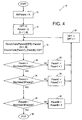
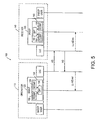
- each algorithm specified in the OPT-field reserves its own identifiers, as assigned according to the DCOMP and PCOMP values. Once the identifiers are allocated, the OPT values are generated from these identifiers, as shown in Figure 4. During the SNDCP XID negotiation process or the LLC XID negotiation process, instead of the original DCOMP and PCOMP values, only the generated OPT values are sent from the originator to the receiver, as shown in Figure 5. Upon receipt, the OPT values can be deciphered into the original DCOMP and PCOMP values.
- the number of different optimization methods to be combined into the OPT-field is not restricted. Thus, introduction of a new optimization method would not cause rework of the header structure. It is noted that in UMTS only header compression is currently supported (in the first phase). With the extendable OPT-field, addition of data compression would not cause problems later. It should be noted, however, that allocation of each identifier (PCOMP, DCOMP, etc.) should be carried out in a way such that the combination of the identifier values does not exceed the maximum OPT-values (with a 12-bit OPT field, the maximum number of OPT-values is 4095).
- this method is not applicable for the OPT-field, because when using more than one optimization method, combinations of algorithms types used in different optimization methods must be taken into account. In other words, for a particular packet, the header and the data may be compressed with certain algorithms simultaneously (only one algorithm type can be used per optimization method for the same packet).
- the extension of the OPT-field should be used only when needed. For example, if the basic OPT-field is 4-bits long, only 15 values can be used (value 0 is reserved for no optimization). In the case where more than 15 values are used (values 1-30, for example), then optimization extension should be used to increase the length of the OPT-field to 5-bits. It is not advantageous, however, to use the extension for every packet, but only for those packets which carry an identification value greater than 15, for example. In that respect, no extension is needed if only values 1-15 are negotiated. However, an extension is used when additional values 16-30 are also negotiated. Therefore, it is advantageous that the most commonly used values (e.g., algorithm types) should have the smallest identification values assigned to them so as to minimize the use of OPT-field extension.
- the most commonly used values e.g., algorithm types
- the OPT_Arr table When sending a packet to the receiving end, the OPT_Arr table is used to identify the 'encoded' OPT-value of the packet.
- DCOMP_Arr and PCOMP_Arr are used to identify the actual 'decoding' PCOMP and DCOMP values.
- the PCOMP information field and the DCOMP information field are used as indexes, corresponding to Param1 and Param2, respectively, in the flow chart, as shown in Figure 4.
- the number of values in the PCOMP information field and the number of values in the DCOMP field are corresponding to the MaxValueOfParaml and the MaxValueOfParam2, respectively, in Figure 4.
- MaxValueOfParam1 and MaxValueOfParam2 determine the dimensions of the OPT_Arr table.
- PCOMP_Max 3
- DCOMP_Max 2
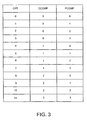
- the OPT-values are indexes for the tables shown in Figure 2 and Figure 3.
- Figure 4 is a flow chart illustrating a method of generating OPT-values using a recursive loop to combine N separate information fields into one OPT field.
- the assignment of the OPT-indexes is carried out a recursive loop 10 .
- the variable NoParam is set to N at step 12, where N is the number of different parameters in different information fields, such as NSAPI, PCOMP and DCOMP, to be combined into the OPT-field.
- the recursive loop 10 is initialized at step 14, wherein all variables (parameters) including OPT, Param1, Param2, ..., ParamN, are all set to 0.
- a table similar to that shown in Figure 1 for encoding and decoding of OPT parameters, is established.
- the contents of the table will be filled with one OPT parameter at each loop.
- the value of Param1 is checked against MaxValueOfParam1.
- the loop is designed under the assumption that each information field X has a number of parameters, ranging from 0 to some positive integer value, which is defined as MaxValueOfParamX.
- the DCOMP information field has 3 parameters (0, 1 and 2), and, therefore, the corresponding MaxValueOfParamX is 3.
- the MaxValueOfParamX for the PCOMP information field is 4 (0, 1, 2 and 3).
- Param1 is less than MaxValueOfParam1
- the Param1 is increased by 1 at step 20 so that a new OPT-value can be assigned at step 22. If Param1 has reached its maximum value, then the value of Param2 is checked against MaxValueOfParam2 at step 24. If Param2 is less than MaxValueOfParam2, then the Param2 is increased by 1 at step 26 so that a new OPT-value can be assigned at step 22. If Param2 has reached its maximum value, then the value of Param3 is checked against MaxValueOfParam3 (not shown), and so forth.
- Param(N-1) When Param(N-1) has reached its maximum value, the value of ParamN is checked against MaxValueOfParamN at step 38. If ParamN is less than MaxValueOfParamN, then ParamN is increased by 1 at step 40 so that a new OPT-value can be assigned at step 22. Otherwise, the loop will be terminated at step 50.
- index 1 there are two different indexes representing the DCOMP and PCOMP information fields.
- the DCOMP index has 3 values and the PCOMP index has 4 values.
- the optimum length of the OPT field is equal to 12 (3 times 4), sufficient to carry the maximum OPT value, from 0 to 11.
- the number of values of index 1 can be denoted by #_Values_of_Index1
- the number of values of index 2 can be denoted by #_Values_of_Index2
- #_Values_of_IndexN the number of values of index N is denoted by #_Values_of_IndexN.
- the OPT-values range from 0 to X.
- FIG. 5 is a diagrammatic representation of a system 100 for implementing the OPT-field in a typical LLC XID negotiation procedure.
- the same system can be used for a Subnetwork Dependent Convergence Protocol (SNDCP) XID negotiation process.
- the SNDCP 120 on the originator side 110 includes a mechanism 130 capable of combining separated information fields, such as the PCOMP field 132 and the DCOMP field 134 into an OPT-field 136.
- the SNDCP 150 includes a mechanism 160 capable of separating the combined OPT-field 162 as obtained by the receiver side 140 during an XID negotiation into separated information fields, such as the PCOMP field 164 and the DCOMP field 166 .
- the XID exchange procedure is well known in the art.
Landscapes
- Engineering & Computer Science (AREA)
- Quality & Reliability (AREA)
- Computer Networks & Wireless Communication (AREA)
- Signal Processing (AREA)
- Mobile Radio Communication Systems (AREA)
- Error Detection And Correction (AREA)
- Communication Control (AREA)
- Detection And Prevention Of Errors In Transmission (AREA)
Claims (26)
- Verfahren zum Betreiben eines Mobilfunknetzwerks in einer paketvermittelten Betriebsart, in der ein erster Index (132) und ein zweiter Index (134) separat verwendet werden, um Identifikationswerte in Bezug auf eine Codierung von Daten zur Übertragung festzulegen, um es einem Empfangsende zu ermöglichen, empfangene Daten gemäß den Identifikationswerten zu decodieren, und das Verfahren ist gekennzeichnet durch die Schritte:wobei zumindest der erste Index (132) und der zweite Index (134) kombiniert werden, um den dritten Index (136) auf eine rekursive Art und Weise zu bilden, undBereitstellen eines dritten Index (136), der zumindest aus dem ersten Index (132) und dem zweiten Index hergeleitet wird; undBereitstellen eines Informationsfelds in den übertragenen Daten, um den dritten Index (136) an das Empfangsende zu transportieren,
wobei der erste Index (132) und der zweite Index (134) aus dem dritten Index (136) herleitbar sind. - Verfahren gemäß Anspruch 1, bei dem die übertragenen Daten Protokolldaten und Teilnehmerdaten enthalten, der erste Index (132) einen ersten Identifikationswert in Bezug auf eine Komprimierung der Protokolldaten enthält und der zweite Index (134) einen zweiten Identifikationswert in Bezug auf eine Komprimierung der Teilnehmerdaten enthält.
- Verfahren gemäß Anspruch 1, bei dem der erste Index (132) auf eine erste Anzahl von Werten hinweist, der zweite Index (134) auf eine zweite Anzahl von Werten hinweist und der dritte Index (136) auf eine dritte Anzahl von Werten hinweist, die eine Funktion der ersten Anzahl von Werten und der zweiten Anzahl von Werten ist, und bei dem das Informationsfeld eine Länge aufweist, die gemäß der dritten Anzahl von Werten variabel ist.
- Verfahren gemäß Anspruch 2, bei dem der erste Identifikationswert auf einen Komprimierungsalgorithmustyp und einen Pakettyp der Protokolldaten hinweist.
- Verfahren gemäß Anspruch 2, bei dem der erste Identifikationswert auf einen Pakettyp der Protokolldaten hinweist.
- Verfahren gemäß Anspruch 2, bei dem der erste Identifikationswert auf einen Komprimierungsalgorithmustyp der Protokolldaten hinweist.
- Verfahren gemäß Anspruch 2, bei dem der zweite Identifikationswert auf einen Komprimierungsalgorithmustyp und einen Pakettyp der Teilnehmerdaten hinweist.
- Verfahren gemäß Anspruch 2, bei dem der zweite Identifikationswert auf einen Komprimierungsalgorithmustyp der Teilnehmerdaten hinweist.
- Verfahren gemäß Anspruch 2, bei dem der zweite Identifikationswert auf einen Pakettyp der Teilnehmerdaten hinweist.
- Verfahren gemäß Anspruch 1, bei dem zum Festlegen weiterer Identifikationswerte in Bezug auf die Codierung der übertragenen Daten mindestens ein weiterer Index verwendet wird, der sich von dem ersten Index (132) und dem zweiten Index (134) unterscheidet, und bei dem der dritte Index (136) zusätzlich für den weiteren Index repräsentativ ist und das Informationsfeld zum Transportieren des weiteren Index an das Empfangsende erweiterbar ist.
- Verfahren gemäß Anspruch 1, bei dem der erste Index (132) in einem Feld mit einer ersten Länge bereitgestellt wird, der zweite Index (134) in einem weiteren Feld mit einer zweiten Länge bereitgestellt wird und das Informationsfeld zum Transportieren des dritten Index (136) eine dritte Länge aufweist, wobei die dritte Länge kleiner ist als eine Summe der ersten Länge und der zweiten Länge.
- Verfahren gemäß Anspruch 11, bei dem die dritte Länge willkürlich bestimmt wird.
- Verfahren gemäß Anspruch 11, bei dem die dritte Länge erweiterbar ist.
- Verfahren gemäß Anspruch 3, bei dem der erste Index (132) in einem Feld mit einer ersten Länge bereitgestellt wird, der zweite Index (134) in einem weiteren Feld mit einer zweiten Länge bereitgestellt wird und das Informationsfeld zum Transportieren des dritten Index (136) eine dritte Länge aufweist, wobei die dritte Länge kleiner ist als eine Summe der ersten Länge und der zweiten Länge.
- Verfahren gemäß Anspruch 14, bei dem die erste Anzahl von Werten veränderbar ist, die zweite Anzahl von Werten veränderbar ist und die dritte Länge gemäß der ersten Anzahl von Werten und der zweiten Anzahl von Werten veränderbar ist.
- Verfahren gemäß Anspruch 15, bei dem die dritte Länge 4 Bits lang ist.
- Verfahren gemäß Anspruch 3, bei dem die Länge des Informationsfelds 4 Bits lang ist.
- System zum Betreiben eines Kommunikationsnetzwerks in einer paketvermittelten Betriebsart, in der ein erster Index (132) und ein zweiter Index (134) separat verwendet werden, um Identifikationswerte in Bezug auf eine Codierung von Daten zur Übertragung durch ein Absenderende festzulegen, um es einem Empfangsende zu ermöglichen, die Daten gemäß den Identifikationswerten zu decodieren, und das System ist gekennzeichnet durch:wobei zumindest der erste Index (132) und der zweite Index (134) kombiniert werden, um den dritten Index (136) auf eine rekursive Art und Weise zu bilden, die zusätzlich zum ersten Index (132) und zum zweiten Index auf eine beliebige Anzahl von Indizes anwendbar ist, undeine Einrichtung im Absenderende, die auf den ersten Index (132) und den zweiten Index anspricht, zum Bereitstellen eines dritten Index (136), der zumindest aus dem ersten Index (132) und dem zweiten Index (134) hergeleitet wird, und zum Bereitstellen eines auf den dritten Index hinweisenden Signals, undeine Einrichtung im Absenderende, die auf das Signal anspricht, zum Bereitstellen eines Informationsfelds in den übertragenen Daten, um den dritten Index aufzunehmen,
wobei der erste Index (132) und der zweite Index (134) aus dem dritten Index (136) herleitbar sind. - System gemäß Anspruch 18, zusätzlich mit:einer Einrichtung im Empfangsende, die auf das Informationsfeld in den übertragenen Daten anspricht, zum Bereitstellen eines weiteren Signals, das für den dritten Index repräsentativ ist; undeiner Einrichtung im Empfangsende, die auf das weitere Signal anspricht, zum Aufteilen des dritten Index (136) in den ersten Index (132) und den zweiten Index (134).
- System gemäß Anspruch 18, bei dem zum Festlegen weiterer Identifikationswerte in Bezug auf die Codierung der übertragenen Daten ein vierter Index verwendet wird, der sich von dem ersten Index (132) und dem zweiten Index (134) unterscheidet, der dritte Index (136) zusätzlich für den vierten Index repräsentativ ist und das Informationsfeld zum Transportieren des vierten Index an das Empfangsende erweiterbar ist.
- System gemäß Anspruch 18, bei dem der erste Index (132) in einem Feld mit einer ersten Länge bereitgestellt ist und der zweite Index (134) in einem weiteren Feld mit einer zweiten Länge bereitgestellt ist, wobei das Informationsfeld zum Aufnehmen der dritten Länge kleiner ist als eine Summe der ersten Länge und der zweiten Länge.
- System gemäß Anspruch 21, bei dem die dritten Länge willkürlich definiert ist.
- System gemäß Anspruch 22, bei dem die dritte Länge erweiterbar ist.
- System gemäß Anspruch 18, bei dem das Kommunikationsnetzwerk ein Mobilfunknetzwerk aufweist.
- Verfahren gemäß Anspruch 1, bei dem die Kombinationsmethode zum Bilden des dritten Index (136) zusätzlich zum ersten Index (132) und zum zweiten Index (134) auf eine beliebige Anzahl von Indizes anwendbar ist.
- System gemäß Anspruch 18, bei dem die Kombinationsmethode zum Bilden des dritten Index (136) zusätzlich zum ersten Index (132) und zum zweiten Index (134) auf eine beliebige Anzahl von Indizes anwendbar ist.
Applications Claiming Priority (3)
| Application Number | Priority Date | Filing Date | Title |
|---|---|---|---|
| US16786899P | 1999-11-29 | 1999-11-29 | |
| US167868P | 1999-11-29 | ||
| PCT/IB2000/001758 WO2001039391A2 (en) | 1999-11-29 | 2000-11-27 | Method and system for identifying encoding/decoding information in a mobile radio network |
Publications (2)
| Publication Number | Publication Date |
|---|---|
| EP1234426A2 EP1234426A2 (de) | 2002-08-28 |
| EP1234426B1 true EP1234426B1 (de) | 2005-03-02 |
Family
ID=22609154
Family Applications (1)
| Application Number | Title | Priority Date | Filing Date |
|---|---|---|---|
| EP00976208A Revoked EP1234426B1 (de) | 1999-11-29 | 2000-11-27 | System und verfahren zur identifizierung von kodierungs/dekodierungs-informationen in einem mobilkommunikationsnetzwerk |
Country Status (5)
| Country | Link |
|---|---|
| EP (1) | EP1234426B1 (de) |
| AT (1) | ATE290289T1 (de) |
| AU (1) | AU1408301A (de) |
| DE (1) | DE60018452T2 (de) |
| WO (1) | WO2001039391A2 (de) |
Cited By (1)
| Publication number | Priority date | Publication date | Assignee | Title |
|---|---|---|---|---|
| TWI474688B (zh) * | 2007-03-22 | 2015-02-21 | Marvell World Trade Ltd | 用於多重輸入多重輸出(mimo)系統之可變編碼簿 |
Families Citing this family (1)
| Publication number | Priority date | Publication date | Assignee | Title |
|---|---|---|---|---|
| JP2009508453A (ja) | 2005-09-09 | 2009-02-26 | テレフオンアクチーボラゲット エル エム エリクソン(パブル) | 通信ネットワークにおいて制御情報を送信するための方法と装置 |
Family Cites Families (1)
| Publication number | Priority date | Publication date | Assignee | Title |
|---|---|---|---|---|
| CA2065578C (en) * | 1991-04-22 | 1999-02-23 | David W. Carr | Packet-based data compression method |
-
2000
- 2000-11-27 AT AT00976208T patent/ATE290289T1/de not_active IP Right Cessation
- 2000-11-27 EP EP00976208A patent/EP1234426B1/de not_active Revoked
- 2000-11-27 AU AU14083/01A patent/AU1408301A/en not_active Abandoned
- 2000-11-27 WO PCT/IB2000/001758 patent/WO2001039391A2/en not_active Ceased
- 2000-11-27 DE DE60018452T patent/DE60018452T2/de not_active Expired - Fee Related
Cited By (1)
| Publication number | Priority date | Publication date | Assignee | Title |
|---|---|---|---|---|
| TWI474688B (zh) * | 2007-03-22 | 2015-02-21 | Marvell World Trade Ltd | 用於多重輸入多重輸出(mimo)系統之可變編碼簿 |
Also Published As
| Publication number | Publication date |
|---|---|
| DE60018452T2 (de) | 2005-12-29 |
| DE60018452D1 (de) | 2005-04-07 |
| WO2001039391A2 (en) | 2001-05-31 |
| WO2001039391A3 (en) | 2002-02-14 |
| AU1408301A (en) | 2001-06-04 |
| ATE290289T1 (de) | 2005-03-15 |
| EP1234426A2 (de) | 2002-08-28 |
Similar Documents
| Publication | Publication Date | Title |
|---|---|---|
| AU750516B2 (en) | Subnetwork dependent convergence protocol for a mobile radio network | |
| AU731568B2 (en) | Point-to-multipoint mobile radio transmission | |
| EP2256999B1 (de) | Radio Zugriffsnetzwerk und Endgerät mit robuster Kopfkomprimierung | |
| US6434168B1 (en) | Data compression on a data connection | |
| EP3905627B1 (de) | Drahtloskommunikationsverfahren und -vorrichtung | |
| EP1212900B1 (de) | Zuweisung von funkressourcen eines netzes in einem paketvermittelten datenübertragungssystem | |
| EP1234426B1 (de) | System und verfahren zur identifizierung von kodierungs/dekodierungs-informationen in einem mobilkommunikationsnetzwerk | |
| WO2001022679A2 (en) | Method and apparatus for multiplexing packet data flows | |
| HK1033401B (en) | Method and device for operating a mobile radio network | |
| HK1159358A (en) | Method for operating a mobile wireless network | |
| HK1210332B (en) | Method for operating a mobile wireless network | |
| HK1210332A1 (en) | Method for operating a mobile wireless network | |
| HK1159357A (en) | Method for operating a mobile wireless network |
Legal Events
| Date | Code | Title | Description |
|---|---|---|---|
| PUAI | Public reference made under article 153(3) epc to a published international application that has entered the european phase |
Free format text: ORIGINAL CODE: 0009012 |
|
| 17P | Request for examination filed |
Effective date: 20020528 |
|
| AK | Designated contracting states |
Kind code of ref document: A2 Designated state(s): AT BE CH CY DE DK ES FI FR GB GR IE IT LI LU MC NL PT SE TR |
|
| AX | Request for extension of the european patent |
Free format text: AL;LT;LV;MK;RO;SI |
|
| GRAP | Despatch of communication of intention to grant a patent |
Free format text: ORIGINAL CODE: EPIDOSNIGR1 |
|
| GRAS | Grant fee paid |
Free format text: ORIGINAL CODE: EPIDOSNIGR3 |
|
| GRAA | (expected) grant |
Free format text: ORIGINAL CODE: 0009210 |
|
| AK | Designated contracting states |
Kind code of ref document: B1 Designated state(s): AT BE CH CY DE DK ES FI FR GB GR IE IT LI LU MC NL PT SE TR |
|
| PG25 | Lapsed in a contracting state [announced via postgrant information from national office to epo] |
Ref country code: IT Free format text: LAPSE BECAUSE OF FAILURE TO SUBMIT A TRANSLATION OF THE DESCRIPTION OR TO PAY THE FEE WITHIN THE PRE;WARNING: LAPSES OF ITALIAN PATENTS WITH EFFECTIVE DATE BEFORE 2007 MAY HAVE OCCURRED AT ANY TIME BEFORE 2007. THE CORRECT EFFECTIVE DATE MAY BE DIFFERENT FROM THE ONE RECORDED.SCRIBED TIME-LIMIT Effective date: 20050302 Ref country code: TR Free format text: LAPSE BECAUSE OF FAILURE TO SUBMIT A TRANSLATION OF THE DESCRIPTION OR TO PAY THE FEE WITHIN THE PRESCRIBED TIME-LIMIT Effective date: 20050302 Ref country code: BE Free format text: LAPSE BECAUSE OF FAILURE TO SUBMIT A TRANSLATION OF THE DESCRIPTION OR TO PAY THE FEE WITHIN THE PRESCRIBED TIME-LIMIT Effective date: 20050302 Ref country code: ES Free format text: LAPSE BECAUSE OF FAILURE TO SUBMIT A TRANSLATION OF THE DESCRIPTION OR TO PAY THE FEE WITHIN THE PRESCRIBED TIME-LIMIT Effective date: 20050302 Ref country code: FI Free format text: LAPSE BECAUSE OF FAILURE TO SUBMIT A TRANSLATION OF THE DESCRIPTION OR TO PAY THE FEE WITHIN THE PRESCRIBED TIME-LIMIT Effective date: 20050302 |
|
| REG | Reference to a national code |
Ref country code: GB Ref legal event code: FG4D |
|
| REG | Reference to a national code |
Ref country code: CH Ref legal event code: EP |
|
| REG | Reference to a national code |
Ref country code: IE Ref legal event code: FG4D |
|
| REF | Corresponds to: |
Ref document number: 60018452 Country of ref document: DE Date of ref document: 20050407 Kind code of ref document: P |
|
| PG25 | Lapsed in a contracting state [announced via postgrant information from national office to epo] |
Ref country code: DK Free format text: LAPSE BECAUSE OF FAILURE TO SUBMIT A TRANSLATION OF THE DESCRIPTION OR TO PAY THE FEE WITHIN THE PRESCRIBED TIME-LIMIT Effective date: 20050602 Ref country code: GR Free format text: LAPSE BECAUSE OF FAILURE TO SUBMIT A TRANSLATION OF THE DESCRIPTION OR TO PAY THE FEE WITHIN THE PRESCRIBED TIME-LIMIT Effective date: 20050602 |
|
| REG | Reference to a national code |
Ref country code: CH Ref legal event code: NV Representative=s name: ICB INGENIEURS CONSEILS EN BREVETS SA |
|
| REG | Reference to a national code |
Ref country code: SE Ref legal event code: TRGR |
|
| PG25 | Lapsed in a contracting state [announced via postgrant information from national office to epo] |
Ref country code: PT Free format text: LAPSE BECAUSE OF FAILURE TO SUBMIT A TRANSLATION OF THE DESCRIPTION OR TO PAY THE FEE WITHIN THE PRESCRIBED TIME-LIMIT Effective date: 20050817 |
|
| PG25 | Lapsed in a contracting state [announced via postgrant information from national office to epo] |
Ref country code: AT Free format text: LAPSE BECAUSE OF NON-PAYMENT OF DUE FEES Effective date: 20051127 Ref country code: GB Free format text: LAPSE BECAUSE OF NON-PAYMENT OF DUE FEES Effective date: 20051127 Ref country code: CY Free format text: LAPSE BECAUSE OF FAILURE TO SUBMIT A TRANSLATION OF THE DESCRIPTION OR TO PAY THE FEE WITHIN THE PRESCRIBED TIME-LIMIT Effective date: 20051127 |
|
| PG25 | Lapsed in a contracting state [announced via postgrant information from national office to epo] |
Ref country code: IE Free format text: LAPSE BECAUSE OF NON-PAYMENT OF DUE FEES Effective date: 20051128 Ref country code: SE Free format text: LAPSE BECAUSE OF NON-PAYMENT OF DUE FEES Effective date: 20051128 |
|
| PG25 | Lapsed in a contracting state [announced via postgrant information from national office to epo] |
Ref country code: CH Free format text: LAPSE BECAUSE OF NON-PAYMENT OF DUE FEES Effective date: 20051130 Ref country code: MC Free format text: LAPSE BECAUSE OF NON-PAYMENT OF DUE FEES Effective date: 20051130 Ref country code: LI Free format text: LAPSE BECAUSE OF NON-PAYMENT OF DUE FEES Effective date: 20051130 Ref country code: LU Free format text: LAPSE BECAUSE OF NON-PAYMENT OF DUE FEES Effective date: 20051130 |
|
| PLBI | Opposition filed |
Free format text: ORIGINAL CODE: 0009260 |
|
| PLAX | Notice of opposition and request to file observation + time limit sent |
Free format text: ORIGINAL CODE: EPIDOSNOBS2 |
|
| 26 | Opposition filed |
Opponent name: QUALCOMM, INCORPORATED Effective date: 20051202 |
|
| ET | Fr: translation filed | ||
| NLR1 | Nl: opposition has been filed with the epo |
Opponent name: QUALCOMM, INCORPORATED |
|
| PG25 | Lapsed in a contracting state [announced via postgrant information from national office to epo] |
Ref country code: DE Free format text: LAPSE BECAUSE OF NON-PAYMENT OF DUE FEES Effective date: 20060601 Ref country code: NL Free format text: LAPSE BECAUSE OF NON-PAYMENT OF DUE FEES Effective date: 20060601 |
|
| REG | Reference to a national code |
Ref country code: CH Ref legal event code: PL |
|
| EUG | Se: european patent has lapsed | ||
| GBPC | Gb: european patent ceased through non-payment of renewal fee |
Effective date: 20051127 |
|
| NLV4 | Nl: lapsed or anulled due to non-payment of the annual fee |
Effective date: 20060601 |
|
| REG | Reference to a national code |
Ref country code: IE Ref legal event code: MM4A |
|
| PLBB | Reply of patent proprietor to notice(s) of opposition received |
Free format text: ORIGINAL CODE: EPIDOSNOBS3 |
|
| RDAF | Communication despatched that patent is revoked |
Free format text: ORIGINAL CODE: EPIDOSNREV1 |
|
| RDAG | Patent revoked |
Free format text: ORIGINAL CODE: 0009271 |
|
| STAA | Information on the status of an ep patent application or granted ep patent |
Free format text: STATUS: PATENT REVOKED |
|
| 27W | Patent revoked |
Effective date: 20071115 |
|
| PLAB | Opposition data, opponent's data or that of the opponent's representative modified |
Free format text: ORIGINAL CODE: 0009299OPPO |
|
| PG25 | Lapsed in a contracting state [announced via postgrant information from national office to epo] |
Ref country code: FR Free format text: LAPSE BECAUSE OF NON-PAYMENT OF DUE FEES Effective date: 20061130 |
|
| PG25 | Lapsed in a contracting state [announced via postgrant information from national office to epo] |
Ref country code: FR Free format text: LAPSE BECAUSE OF NON-PAYMENT OF DUE FEES Effective date: 20051130 |