EP1234835A2 - Assays zum Nachweis von ABeta-Tau Aggregation - Google Patents
Assays zum Nachweis von ABeta-Tau Aggregation Download PDFInfo
- Publication number
- EP1234835A2 EP1234835A2 EP02251083A EP02251083A EP1234835A2 EP 1234835 A2 EP1234835 A2 EP 1234835A2 EP 02251083 A EP02251083 A EP 02251083A EP 02251083 A EP02251083 A EP 02251083A EP 1234835 A2 EP1234835 A2 EP 1234835A2
- Authority
- EP
- European Patent Office
- Prior art keywords
- tau
- tpk
- seq
- peptide
- protein
- Prior art date
- Legal status (The legal status is an assumption and is not a legal conclusion. Google has not performed a legal analysis and makes no representation as to the accuracy of the status listed.)
- Withdrawn
Links
- 238000003556 assay Methods 0.000 title claims abstract description 28
- 230000002776 aggregation Effects 0.000 title abstract description 26
- 238000004220 aggregation Methods 0.000 title abstract description 26
- 102000013498 tau Proteins Human genes 0.000 claims description 231
- 108010026424 tau Proteins Proteins 0.000 claims description 231
- 108090000765 processed proteins & peptides Proteins 0.000 claims description 83
- 102000004196 processed proteins & peptides Human genes 0.000 claims description 59
- 229920001184 polypeptide Polymers 0.000 claims description 48
- 238000000034 method Methods 0.000 claims description 46
- 238000002821 scintillation proximity assay Methods 0.000 claims description 18
- 239000003795 chemical substances by application Substances 0.000 claims description 15
- 238000009739 binding Methods 0.000 claims description 13
- DZHSAHHDTRWUTF-SIQRNXPUSA-N amyloid-beta polypeptide 42 Chemical compound C([C@@H](C(=O)N[C@@H](C)C(=O)N[C@@H](CCC(O)=O)C(=O)N[C@@H](CC(O)=O)C(=O)N[C@H](C(=O)NCC(=O)N[C@@H](CO)C(=O)N[C@@H](CC(N)=O)C(=O)N[C@@H](CCCCN)C(=O)NCC(=O)N[C@@H](C)C(=O)N[C@H](C(=O)N[C@@H]([C@@H](C)CC)C(=O)NCC(=O)N[C@@H](CC(C)C)C(=O)N[C@@H](CCSC)C(=O)N[C@@H](C(C)C)C(=O)NCC(=O)NCC(=O)N[C@@H](C(C)C)C(=O)N[C@@H](C(C)C)C(=O)N[C@@H]([C@@H](C)CC)C(=O)N[C@@H](C)C(O)=O)[C@@H](C)CC)C(C)C)NC(=O)[C@H](CC=1C=CC=CC=1)NC(=O)[C@@H](NC(=O)[C@H](CC(C)C)NC(=O)[C@H](CCCCN)NC(=O)[C@H](CCC(N)=O)NC(=O)[C@H](CC=1N=CNC=1)NC(=O)[C@H](CC=1N=CNC=1)NC(=O)[C@@H](NC(=O)[C@H](CCC(O)=O)NC(=O)[C@H](CC=1C=CC(O)=CC=1)NC(=O)CNC(=O)[C@H](CO)NC(=O)[C@H](CC(O)=O)NC(=O)[C@H](CC=1N=CNC=1)NC(=O)[C@H](CCCNC(N)=N)NC(=O)[C@H](CC=1C=CC=CC=1)NC(=O)[C@H](CCC(O)=O)NC(=O)[C@H](C)NC(=O)[C@@H](N)CC(O)=O)C(C)C)C(C)C)C1=CC=CC=C1 DZHSAHHDTRWUTF-SIQRNXPUSA-N 0.000 claims description 10
- 238000001262 western blot Methods 0.000 claims description 9
- 238000012360 testing method Methods 0.000 claims description 8
- 238000002965 ELISA Methods 0.000 claims description 6
- 238000002875 fluorescence polarization Methods 0.000 claims description 4
- 230000009918 complex formation Effects 0.000 claims description 3
- 239000003112 inhibitor Substances 0.000 claims description 3
- 230000007423 decrease Effects 0.000 claims description 2
- 238000005259 measurement Methods 0.000 claims description 2
- FWMNVWWHGCHHJJ-SKKKGAJSSA-N 4-amino-1-[(2r)-6-amino-2-[[(2r)-2-[[(2r)-2-[[(2r)-2-amino-3-phenylpropanoyl]amino]-3-phenylpropanoyl]amino]-4-methylpentanoyl]amino]hexanoyl]piperidine-4-carboxylic acid Chemical compound C([C@H](C(=O)N[C@H](CC(C)C)C(=O)N[C@H](CCCCN)C(=O)N1CCC(N)(CC1)C(O)=O)NC(=O)[C@H](N)CC=1C=CC=CC=1)C1=CC=CC=C1 FWMNVWWHGCHHJJ-SKKKGAJSSA-N 0.000 claims 1
- 238000002264 polyacrylamide gel electrophoresis Methods 0.000 claims 1
- 210000004027 cell Anatomy 0.000 abstract description 10
- 210000002569 neuron Anatomy 0.000 abstract description 5
- 230000004770 neurodegeneration Effects 0.000 abstract description 4
- 208000015122 neurodegenerative disease Diseases 0.000 abstract description 4
- 230000026731 phosphorylation Effects 0.000 description 29
- 238000006366 phosphorylation reaction Methods 0.000 description 29
- 230000003993 interaction Effects 0.000 description 28
- 102000001708 Protein Isoforms Human genes 0.000 description 24
- 108010029485 Protein Isoforms Proteins 0.000 description 24
- 238000002415 sodium dodecyl sulfate polyacrylamide gel electrophoresis Methods 0.000 description 21
- 108090000623 proteins and genes Proteins 0.000 description 20
- 102000004169 proteins and genes Human genes 0.000 description 19
- IAZDPXIOMUYVGZ-UHFFFAOYSA-N Dimethylsulphoxide Chemical compound CS(C)=O IAZDPXIOMUYVGZ-UHFFFAOYSA-N 0.000 description 15
- 208000024827 Alzheimer disease Diseases 0.000 description 14
- TWRXJAOTZQYOKJ-UHFFFAOYSA-L Magnesium chloride Chemical compound [Mg+2].[Cl-].[Cl-] TWRXJAOTZQYOKJ-UHFFFAOYSA-L 0.000 description 14
- 239000007983 Tris buffer Substances 0.000 description 14
- 125000003275 alpha amino acid group Chemical group 0.000 description 14
- LENZDBCJOHFCAS-UHFFFAOYSA-N tris Chemical compound OCC(N)(CO)CO LENZDBCJOHFCAS-UHFFFAOYSA-N 0.000 description 14
- 150000001413 amino acids Chemical class 0.000 description 13
- 239000008188 pellet Substances 0.000 description 13
- RAXXELZNTBOGNW-UHFFFAOYSA-N imidazole Natural products C1=CNC=N1 RAXXELZNTBOGNW-UHFFFAOYSA-N 0.000 description 12
- 238000000746 purification Methods 0.000 description 11
- 231100000673 dose–response relationship Toxicity 0.000 description 9
- 108010090849 Amyloid beta-Peptides Proteins 0.000 description 8
- 102000013455 Amyloid beta-Peptides Human genes 0.000 description 8
- 101150053721 Cdk5 gene Proteins 0.000 description 8
- PXHVJJICTQNCMI-UHFFFAOYSA-N Nickel Chemical compound [Ni] PXHVJJICTQNCMI-UHFFFAOYSA-N 0.000 description 8
- 230000000694 effects Effects 0.000 description 8
- 239000012634 fragment Substances 0.000 description 8
- 230000010287 polarization Effects 0.000 description 8
- 102000029749 Microtubule Human genes 0.000 description 7
- 108091022875 Microtubule Proteins 0.000 description 7
- 239000002299 complementary DNA Substances 0.000 description 7
- 229910001629 magnesium chloride Inorganic materials 0.000 description 7
- 210000004688 microtubule Anatomy 0.000 description 7
- 101100480709 Bos taurus MAPT gene Proteins 0.000 description 6
- 101000891579 Homo sapiens Microtubule-associated protein tau Proteins 0.000 description 6
- 239000011324 bead Substances 0.000 description 6
- 239000000872 buffer Substances 0.000 description 6
- 102000057063 human MAPT Human genes 0.000 description 6
- 238000010348 incorporation Methods 0.000 description 6
- 239000002773 nucleotide Substances 0.000 description 6
- 125000003729 nucleotide group Chemical group 0.000 description 6
- 238000000159 protein binding assay Methods 0.000 description 6
- 108020004414 DNA Proteins 0.000 description 5
- 238000002835 absorbance Methods 0.000 description 5
- 210000004556 brain Anatomy 0.000 description 5
- 238000002474 experimental method Methods 0.000 description 5
- 238000000338 in vitro Methods 0.000 description 5
- 238000011534 incubation Methods 0.000 description 5
- 210000002682 neurofibrillary tangle Anatomy 0.000 description 5
- 239000006228 supernatant Substances 0.000 description 5
- 208000037259 Amyloid Plaque Diseases 0.000 description 4
- 102100021935 C-C motif chemokine 26 Human genes 0.000 description 4
- 208000011990 Corticobasal Degeneration Diseases 0.000 description 4
- 201000011240 Frontotemporal dementia Diseases 0.000 description 4
- 101000897493 Homo sapiens C-C motif chemokine 26 Proteins 0.000 description 4
- FAPWRFPIFSIZLT-UHFFFAOYSA-M Sodium chloride Chemical compound [Na+].[Cl-] FAPWRFPIFSIZLT-UHFFFAOYSA-M 0.000 description 4
- 230000015572 biosynthetic process Effects 0.000 description 4
- 230000006870 function Effects 0.000 description 4
- 238000002372 labelling Methods 0.000 description 4
- 230000001404 mediated effect Effects 0.000 description 4
- 239000000203 mixture Substances 0.000 description 4
- 229910052759 nickel Inorganic materials 0.000 description 4
- 238000010647 peptide synthesis reaction Methods 0.000 description 4
- 201000002212 progressive supranuclear palsy Diseases 0.000 description 4
- 239000007790 solid phase Substances 0.000 description 4
- 241000894007 species Species 0.000 description 4
- 125000003088 (fluoren-9-ylmethoxy)carbonyl group Chemical group 0.000 description 3
- 210000004899 c-terminal region Anatomy 0.000 description 3
- 238000004587 chromatography analysis Methods 0.000 description 3
- 210000000349 chromosome Anatomy 0.000 description 3
- 238000000326 densiometry Methods 0.000 description 3
- GNBHRKFJIUUOQI-UHFFFAOYSA-N fluorescein Chemical compound O1C(=O)C2=CC=CC=C2C21C1=CC=C(O)C=C1OC1=CC(O)=CC=C21 GNBHRKFJIUUOQI-UHFFFAOYSA-N 0.000 description 3
- 238000004128 high performance liquid chromatography Methods 0.000 description 3
- 230000003902 lesion Effects 0.000 description 3
- 230000008569 process Effects 0.000 description 3
- 238000012545 processing Methods 0.000 description 3
- 239000000047 product Substances 0.000 description 3
- 239000000523 sample Substances 0.000 description 3
- 238000012216 screening Methods 0.000 description 3
- 239000007787 solid Substances 0.000 description 3
- 239000000126 substance Substances 0.000 description 3
- 241000701447 unidentified baculovirus Species 0.000 description 3
- CSCPPACGZOOCGX-UHFFFAOYSA-N Acetone Chemical compound CC(C)=O CSCPPACGZOOCGX-UHFFFAOYSA-N 0.000 description 2
- 201000010374 Down Syndrome Diseases 0.000 description 2
- 241000588724 Escherichia coli Species 0.000 description 2
- DHMQDGOQFOQNFH-UHFFFAOYSA-N Glycine Chemical compound NCC(O)=O DHMQDGOQFOQNFH-UHFFFAOYSA-N 0.000 description 2
- 108010093488 His-His-His-His-His-His Proteins 0.000 description 2
- 208000027089 Parkinsonian disease Diseases 0.000 description 2
- 206010034010 Parkinsonism Diseases 0.000 description 2
- NBIIXXVUZAFLBC-UHFFFAOYSA-N Phosphoric acid Chemical compound OP(O)(O)=O NBIIXXVUZAFLBC-UHFFFAOYSA-N 0.000 description 2
- 208000000609 Pick Disease of the Brain Diseases 0.000 description 2
- NQRYJNQNLNOLGT-UHFFFAOYSA-N Piperidine Chemical compound C1CCNCC1 NQRYJNQNLNOLGT-UHFFFAOYSA-N 0.000 description 2
- CDBYLPFSWZWCQE-UHFFFAOYSA-L Sodium Carbonate Chemical compound [Na+].[Na+].[O-]C([O-])=O CDBYLPFSWZWCQE-UHFFFAOYSA-L 0.000 description 2
- DTQVDTLACAAQTR-UHFFFAOYSA-N Trifluoroacetic acid Chemical compound OC(=O)C(F)(F)F DTQVDTLACAAQTR-UHFFFAOYSA-N 0.000 description 2
- 206010044688 Trisomy 21 Diseases 0.000 description 2
- 241000700605 Viruses Species 0.000 description 2
- 125000003178 carboxy group Chemical group [H]OC(*)=O 0.000 description 2
- 238000005119 centrifugation Methods 0.000 description 2
- 230000008859 change Effects 0.000 description 2
- 238000006243 chemical reaction Methods 0.000 description 2
- 239000003153 chemical reaction reagent Substances 0.000 description 2
- NKLPQNGYXWVELD-UHFFFAOYSA-M coomassie brilliant blue Chemical compound [Na+].C1=CC(OCC)=CC=C1NC1=CC=C(C(=C2C=CC(C=C2)=[N+](CC)CC=2C=C(C=CC=2)S([O-])(=O)=O)C=2C=CC(=CC=2)N(CC)CC=2C=C(C=CC=2)S([O-])(=O)=O)C=C1 NKLPQNGYXWVELD-UHFFFAOYSA-M 0.000 description 2
- 238000001514 detection method Methods 0.000 description 2
- 238000010790 dilution Methods 0.000 description 2
- 239000012895 dilution Substances 0.000 description 2
- 230000003467 diminishing effect Effects 0.000 description 2
- 239000003814 drug Substances 0.000 description 2
- 230000005284 excitation Effects 0.000 description 2
- 230000005281 excited state Effects 0.000 description 2
- 239000007850 fluorescent dye Substances 0.000 description 2
- 238000009396 hybridization Methods 0.000 description 2
- 230000002401 inhibitory effect Effects 0.000 description 2
- BPHPUYQFMNQIOC-NXRLNHOXSA-N isopropyl beta-D-thiogalactopyranoside Chemical compound CC(C)S[C@@H]1O[C@H](CO)[C@H](O)[C@H](O)[C@H]1O BPHPUYQFMNQIOC-NXRLNHOXSA-N 0.000 description 2
- 239000003446 ligand Substances 0.000 description 2
- 239000007788 liquid Substances 0.000 description 2
- 238000004519 manufacturing process Methods 0.000 description 2
- 239000002808 molecular sieve Substances 0.000 description 2
- 238000012544 monitoring process Methods 0.000 description 2
- 230000001575 pathological effect Effects 0.000 description 2
- 238000003752 polymerase chain reaction Methods 0.000 description 2
- 108091033319 polynucleotide Proteins 0.000 description 2
- 102000040430 polynucleotide Human genes 0.000 description 2
- 239000002157 polynucleotide Substances 0.000 description 2
- 230000001323 posttranslational effect Effects 0.000 description 2
- 238000002360 preparation method Methods 0.000 description 2
- 238000000163 radioactive labelling Methods 0.000 description 2
- 238000012163 sequencing technique Methods 0.000 description 2
- 150000003384 small molecules Chemical class 0.000 description 2
- URGAHOPLAPQHLN-UHFFFAOYSA-N sodium aluminosilicate Chemical compound [Na+].[Al+3].[O-][Si]([O-])=O.[O-][Si]([O-])=O URGAHOPLAPQHLN-UHFFFAOYSA-N 0.000 description 2
- 239000011780 sodium chloride Substances 0.000 description 2
- 239000000243 solution Substances 0.000 description 2
- 238000003786 synthesis reaction Methods 0.000 description 2
- 229940124597 therapeutic agent Drugs 0.000 description 2
- 230000001225 therapeutic effect Effects 0.000 description 2
- -1 while in the brain Proteins 0.000 description 2
- 229920000936 Agarose Polymers 0.000 description 1
- 101710137189 Amyloid-beta A4 protein Proteins 0.000 description 1
- 101710151993 Amyloid-beta precursor protein Proteins 0.000 description 1
- 102100022704 Amyloid-beta precursor protein Human genes 0.000 description 1
- 102000009091 Amyloidogenic Proteins Human genes 0.000 description 1
- 108010048112 Amyloidogenic Proteins Proteins 0.000 description 1
- 241000283707 Capra Species 0.000 description 1
- 108020004635 Complementary DNA Proteins 0.000 description 1
- 206010012289 Dementia Diseases 0.000 description 1
- 238000008157 ELISA kit Methods 0.000 description 1
- 108700024394 Exon Proteins 0.000 description 1
- 239000004471 Glycine Substances 0.000 description 1
- 108010014905 Glycogen Synthase Kinase 3 Proteins 0.000 description 1
- 102000002254 Glycogen Synthase Kinase 3 Human genes 0.000 description 1
- 102000003886 Glycoproteins Human genes 0.000 description 1
- 108090000288 Glycoproteins Proteins 0.000 description 1
- 241000238631 Hexapoda Species 0.000 description 1
- 101000959738 Homo sapiens Annexin A1 Proteins 0.000 description 1
- 101000583935 Homo sapiens CDK-activating kinase assembly factor MAT1 Proteins 0.000 description 1
- 101100495318 Homo sapiens CDK5 gene Proteins 0.000 description 1
- 101000912009 Homo sapiens Cyclin-dependent kinase 5 activator 1 Proteins 0.000 description 1
- 101001038346 Homo sapiens GTP cyclohydrolase 1 feedback regulatory protein Proteins 0.000 description 1
- 101001081479 Homo sapiens Islet amyloid polypeptide Proteins 0.000 description 1
- 101000980900 Homo sapiens Sororin Proteins 0.000 description 1
- 101000808126 Homo sapiens Uroplakin-3b Proteins 0.000 description 1
- ROHFNLRQFUQHCH-YFKPBYRVSA-N L-leucine Chemical compound CC(C)C[C@H](N)C(O)=O ROHFNLRQFUQHCH-YFKPBYRVSA-N 0.000 description 1
- FFEARJCKVFRZRR-BYPYZUCNSA-N L-methionine Chemical compound CSCC[C@H](N)C(O)=O FFEARJCKVFRZRR-BYPYZUCNSA-N 0.000 description 1
- ROHFNLRQFUQHCH-UHFFFAOYSA-N Leucine Natural products CC(C)CC(N)C(O)=O ROHFNLRQFUQHCH-UHFFFAOYSA-N 0.000 description 1
- 241000124008 Mammalia Species 0.000 description 1
- 241001465754 Metazoa Species 0.000 description 1
- BZLVMXJERCGZMT-UHFFFAOYSA-N Methyl tert-butyl ether Chemical compound COC(C)(C)C BZLVMXJERCGZMT-UHFFFAOYSA-N 0.000 description 1
- 102000009664 Microtubule-Associated Proteins Human genes 0.000 description 1
- 108010020004 Microtubule-Associated Proteins Proteins 0.000 description 1
- 101710115937 Microtubule-associated protein tau Proteins 0.000 description 1
- 102100040243 Microtubule-associated protein tau Human genes 0.000 description 1
- 239000000020 Nitrocellulose Substances 0.000 description 1
- 108091028043 Nucleic acid sequence Proteins 0.000 description 1
- 108010038807 Oligopeptides Proteins 0.000 description 1
- 102000015636 Oligopeptides Human genes 0.000 description 1
- 108091000080 Phosphotransferase Proteins 0.000 description 1
- 229920001213 Polysorbate 20 Polymers 0.000 description 1
- HAAQQNHQZBOWFO-LURJTMIESA-N Pro-Gly-Gly Chemical compound OC(=O)CNC(=O)CNC(=O)[C@@H]1CCCN1 HAAQQNHQZBOWFO-LURJTMIESA-N 0.000 description 1
- 239000012614 Q-Sepharose Substances 0.000 description 1
- 238000012300 Sequence Analysis Methods 0.000 description 1
- 108010090804 Streptavidin Proteins 0.000 description 1
- 208000034799 Tauopathies Diseases 0.000 description 1
- 102000044159 Ubiquitin Human genes 0.000 description 1
- 108090000848 Ubiquitin Proteins 0.000 description 1
- 230000001594 aberrant effect Effects 0.000 description 1
- 238000011481 absorbance measurement Methods 0.000 description 1
- 230000035508 accumulation Effects 0.000 description 1
- 238000009825 accumulation Methods 0.000 description 1
- 239000002253 acid Substances 0.000 description 1
- 108091006088 activator proteins Proteins 0.000 description 1
- 238000001042 affinity chromatography Methods 0.000 description 1
- 229910000147 aluminium phosphate Inorganic materials 0.000 description 1
- 150000001408 amides Chemical class 0.000 description 1
- 150000003862 amino acid derivatives Chemical class 0.000 description 1
- 238000013459 approach Methods 0.000 description 1
- 239000012736 aqueous medium Substances 0.000 description 1
- 238000000149 argon plasma sintering Methods 0.000 description 1
- 230000001413 cellular effect Effects 0.000 description 1
- 238000012512 characterization method Methods 0.000 description 1
- 238000007385 chemical modification Methods 0.000 description 1
- VDQQXEISLMTGAB-UHFFFAOYSA-N chloramine T Chemical compound [Na+].CC1=CC=C(S(=O)(=O)[N-]Cl)C=C1 VDQQXEISLMTGAB-UHFFFAOYSA-N 0.000 description 1
- 238000003776 cleavage reaction Methods 0.000 description 1
- 238000010367 cloning Methods 0.000 description 1
- 230000002860 competitive effect Effects 0.000 description 1
- 150000001875 compounds Chemical class 0.000 description 1
- 238000007796 conventional method Methods 0.000 description 1
- 230000008878 coupling Effects 0.000 description 1
- 238000010168 coupling process Methods 0.000 description 1
- 238000005859 coupling reaction Methods 0.000 description 1
- 210000000805 cytoplasm Anatomy 0.000 description 1
- 230000001086 cytosolic effect Effects 0.000 description 1
- 230000001419 dependent effect Effects 0.000 description 1
- 230000001687 destabilization Effects 0.000 description 1
- 201000010099 disease Diseases 0.000 description 1
- 208000037265 diseases, disorders, signs and symptoms Diseases 0.000 description 1
- 238000010494 dissociation reaction Methods 0.000 description 1
- 230000005593 dissociations Effects 0.000 description 1
- 238000001962 electrophoresis Methods 0.000 description 1
- 238000010828 elution Methods 0.000 description 1
- 238000005516 engineering process Methods 0.000 description 1
- 230000002255 enzymatic effect Effects 0.000 description 1
- 239000013604 expression vector Substances 0.000 description 1
- 238000001215 fluorescent labelling Methods 0.000 description 1
- 230000004927 fusion Effects 0.000 description 1
- 238000001502 gel electrophoresis Methods 0.000 description 1
- 208000035474 group of disease Diseases 0.000 description 1
- 125000000487 histidyl group Chemical group [H]N([H])C(C(=O)O*)C([H])([H])C1=C([H])N([H])C([H])=N1 0.000 description 1
- 102000048091 human CDCA5 Human genes 0.000 description 1
- 238000001727 in vivo Methods 0.000 description 1
- 230000007154 intracellular accumulation Effects 0.000 description 1
- 238000005342 ion exchange Methods 0.000 description 1
- 238000004255 ion exchange chromatography Methods 0.000 description 1
- 150000002500 ions Chemical class 0.000 description 1
- 238000001155 isoelectric focusing Methods 0.000 description 1
- 150000002605 large molecules Chemical class 0.000 description 1
- 229920002521 macromolecule Polymers 0.000 description 1
- 239000000463 material Substances 0.000 description 1
- 239000011159 matrix material Substances 0.000 description 1
- 239000002609 medium Substances 0.000 description 1
- 108020004999 messenger RNA Proteins 0.000 description 1
- 229930182817 methionine Natural products 0.000 description 1
- 239000008267 milk Substances 0.000 description 1
- 210000004080 milk Anatomy 0.000 description 1
- 235000013336 milk Nutrition 0.000 description 1
- 238000002156 mixing Methods 0.000 description 1
- 239000003068 molecular probe Substances 0.000 description 1
- 230000035772 mutation Effects 0.000 description 1
- 210000000653 nervous system Anatomy 0.000 description 1
- 230000002981 neuropathic effect Effects 0.000 description 1
- 229920001220 nitrocellulos Polymers 0.000 description 1
- 102000039446 nucleic acids Human genes 0.000 description 1
- 108020004707 nucleic acids Proteins 0.000 description 1
- 150000007523 nucleic acids Chemical class 0.000 description 1
- 238000006384 oligomerization reaction Methods 0.000 description 1
- 238000011275 oncology therapy Methods 0.000 description 1
- 230000001717 pathogenic effect Effects 0.000 description 1
- 229940080469 phosphocellulose Drugs 0.000 description 1
- 102000020233 phosphotransferase Human genes 0.000 description 1
- 239000013612 plasmid Substances 0.000 description 1
- 229920002704 polyhistidine Polymers 0.000 description 1
- 239000000256 polyoxyethylene sorbitan monolaurate Substances 0.000 description 1
- 235000010486 polyoxyethylene sorbitan monolaurate Nutrition 0.000 description 1
- 230000030716 positive regulation of phosphorylation Effects 0.000 description 1
- 230000009819 post translational phosphorylation Effects 0.000 description 1
- 230000004481 post-translational protein modification Effects 0.000 description 1
- 230000002265 prevention Effects 0.000 description 1
- 125000002924 primary amino group Chemical group [H]N([H])* 0.000 description 1
- 108010020755 prolyl-glycyl-glycine Proteins 0.000 description 1
- 230000000069 prophylactic effect Effects 0.000 description 1
- 125000006239 protecting group Chemical group 0.000 description 1
- 238000001742 protein purification Methods 0.000 description 1
- 230000004850 protein–protein interaction Effects 0.000 description 1
- 230000002797 proteolythic effect Effects 0.000 description 1
- 239000011347 resin Substances 0.000 description 1
- 229920005989 resin Polymers 0.000 description 1
- PYWVYCXTNDRMGF-UHFFFAOYSA-N rhodamine B Chemical compound [Cl-].C=12C=CC(=[N+](CC)CC)C=C2OC2=CC(N(CC)CC)=CC=C2C=1C1=CC=CC=C1C(O)=O PYWVYCXTNDRMGF-UHFFFAOYSA-N 0.000 description 1
- 238000009738 saturating Methods 0.000 description 1
- 230000007017 scission Effects 0.000 description 1
- 238000004062 sedimentation Methods 0.000 description 1
- 238000000926 separation method Methods 0.000 description 1
- 229910000029 sodium carbonate Inorganic materials 0.000 description 1
- 239000001488 sodium phosphate Substances 0.000 description 1
- 229910000162 sodium phosphate Inorganic materials 0.000 description 1
- 238000002798 spectrophotometry method Methods 0.000 description 1
- 230000006641 stabilisation Effects 0.000 description 1
- 238000011105 stabilization Methods 0.000 description 1
- 238000010561 standard procedure Methods 0.000 description 1
- 230000000638 stimulation Effects 0.000 description 1
- 238000006467 substitution reaction Methods 0.000 description 1
- 239000000758 substrate Substances 0.000 description 1
- 239000012134 supernatant fraction Substances 0.000 description 1
- 108010088556 tau protein kinase II Proteins 0.000 description 1
- 125000000999 tert-butyl group Chemical group [H]C([H])([H])C(*)(C([H])([H])[H])C([H])([H])[H] 0.000 description 1
- 230000036962 time dependent Effects 0.000 description 1
- RYFMWSXOAZQYPI-UHFFFAOYSA-K trisodium phosphate Chemical compound [Na+].[Na+].[Na+].[O-]P([O-])([O-])=O RYFMWSXOAZQYPI-UHFFFAOYSA-K 0.000 description 1
- 238000011144 upstream manufacturing Methods 0.000 description 1
- 238000005406 washing Methods 0.000 description 1
Images



Classifications
-
- G—PHYSICS
- G01—MEASURING; TESTING
- G01N—INVESTIGATING OR ANALYSING MATERIALS BY DETERMINING THEIR CHEMICAL OR PHYSICAL PROPERTIES
- G01N33/00—Investigating or analysing materials by specific methods not covered by groups G01N1/00 - G01N31/00
- G01N33/48—Biological material, e.g. blood, urine; Haemocytometers
- G01N33/50—Chemical analysis of biological material, e.g. blood, urine; Testing involving biospecific ligand binding methods; Immunological testing
- G01N33/68—Chemical analysis of biological material, e.g. blood, urine; Testing involving biospecific ligand binding methods; Immunological testing involving proteins, peptides or amino acids
- G01N33/6893—Chemical analysis of biological material, e.g. blood, urine; Testing involving biospecific ligand binding methods; Immunological testing involving proteins, peptides or amino acids related to diseases not provided for elsewhere
- G01N33/6896—Neurological disorders, e.g. Alzheimer's disease
-
- C—CHEMISTRY; METALLURGY
- C07—ORGANIC CHEMISTRY
- C07K—PEPTIDES
- C07K14/00—Peptides having more than 20 amino acids; Gastrins; Somatostatins; Melanotropins; Derivatives thereof
- C07K14/435—Peptides having more than 20 amino acids; Gastrins; Somatostatins; Melanotropins; Derivatives thereof from animals; from humans
- C07K14/46—Peptides having more than 20 amino acids; Gastrins; Somatostatins; Melanotropins; Derivatives thereof from animals; from humans from vertebrates
- C07K14/47—Peptides having more than 20 amino acids; Gastrins; Somatostatins; Melanotropins; Derivatives thereof from animals; from humans from vertebrates from mammals
- C07K14/4701—Peptides having more than 20 amino acids; Gastrins; Somatostatins; Melanotropins; Derivatives thereof from animals; from humans from vertebrates from mammals not used
- C07K14/4711—Alzheimer's disease; Amyloid plaque core protein
-
- C—CHEMISTRY; METALLURGY
- C12—BIOCHEMISTRY; BEER; SPIRITS; WINE; VINEGAR; MICROBIOLOGY; ENZYMOLOGY; MUTATION OR GENETIC ENGINEERING
- C12Q—MEASURING OR TESTING PROCESSES INVOLVING ENZYMES, NUCLEIC ACIDS OR MICROORGANISMS; COMPOSITIONS OR TEST PAPERS THEREFOR; PROCESSES OF PREPARING SUCH COMPOSITIONS; CONDITION-RESPONSIVE CONTROL IN MICROBIOLOGICAL OR ENZYMOLOGICAL PROCESSES
- C12Q1/00—Measuring or testing processes involving enzymes, nucleic acids or microorganisms; Compositions therefor; Processes of preparing such compositions
- C12Q1/48—Measuring or testing processes involving enzymes, nucleic acids or microorganisms; Compositions therefor; Processes of preparing such compositions involving transferase
- C12Q1/485—Measuring or testing processes involving enzymes, nucleic acids or microorganisms; Compositions therefor; Processes of preparing such compositions involving transferase involving kinase
-
- G—PHYSICS
- G01—MEASURING; TESTING
- G01N—INVESTIGATING OR ANALYSING MATERIALS BY DETERMINING THEIR CHEMICAL OR PHYSICAL PROPERTIES
- G01N33/00—Investigating or analysing materials by specific methods not covered by groups G01N1/00 - G01N31/00
- G01N33/48—Biological material, e.g. blood, urine; Haemocytometers
- G01N33/50—Chemical analysis of biological material, e.g. blood, urine; Testing involving biospecific ligand binding methods; Immunological testing
- G01N33/53—Immunoassay; Biospecific binding assay; Materials therefor
- G01N33/536—Immunoassay; Biospecific binding assay; Materials therefor with immune complex formed in liquid phase
- G01N33/542—Immunoassay; Biospecific binding assay; Materials therefor with immune complex formed in liquid phase with steric inhibition or signal modification, e.g. fluorescent quenching
Definitions
- the present invention deals with the field of cell biology, more specifically the field of neuronal cell biology and neurodegenerative diseases.
- the invention provides for assays assessing A ⁇ -Tau aggregation
- a ⁇ peptide and hyperphosphorylated tau are found in the amyloid plaques and neurofibrillary tangles, respectively. Recently, it has been suggested that A ⁇ peptide oligomerization begins intraneuronally and the earliest detectable dementia in AD arises from the onset of tau aggregation. Six isoforms of human tau are expressed in adult human brain. (1) These arise from alternate splicing of the mRNA transcribed from a single gene located on the long arm of chromosome 17 (1-5) One of the functions of the tau protein is to promote microtubule assembly in vivo and to stabilize microtubules in the nervous system (6-10).
- NFT Neurofibrillary tangles
- senile plaques constitute two prominent neuropathological characteristics of Alzheimer's disease (11,12).
- the main fibrous component of all neurofibrillary lesions is paired helical filament (PHF) which contains predominantly the abnormally phosphorylated tau (13-18). It has been hypothesized that aberrant phosphorylation of tau leads to its aggregation into PHF, resulting in destabilization of microtubules and the death of neurons (1,19). Notably, hyperphosphorylated tau has been detected in other tau-positive filamentous lesions, in a group of diseases collectively known as the tauopathies.
- PHF paired helical filament
- the invention comprises a method for identifying agents that are inhibitors of tau-beta amyloid complex formation comprising contacting a tau protein derived polypeptide and an aggregated beta-amyloid in the presence and absence of a test agent; and determining the amount of tau-beta amyloid complex formed in the presence and absence of the test agent; and comparing the amount of tau-beta amyloid complex formed in the presence of the test agent with the amount of tau-beta amyloid complex formed in the absence of the test agent.
- polypeptide refers to any peptide or protein comprising two or more amino acids joined to each other by peptide bonds or modified peptide bonds, i.e., peptide isosteres.
- Polypeptide refers to both short chains, commonly referred to as peptides, oligopeptides or oligomers, and to longer chains, generally referred to as proteins. Polypeptides may contain amino acids other than the 20 gene-encoded amino acids.
- Polypeptides include amino acid sequences modified either by natural processes, such as post-translational processing, or by chemical modification techniques which are well known in the art. Glycosylated and non-glycosylated form of polypeptides are embraced by this definition.
- Synthetic refers to polynucleotides produced by purely chemical, as opposed to enzymatic, methods. “Wholly” synthesized DNA or polypeptide sequences are therefore produced entirely by chemical means, and “partially” synthesized DNAs or polypeptides embrace those wherein only portions of the resulting DNA or polypeptide were produced by chemical means.
- isolated as used herein and as understood in the art, whether referring to “isolated” polynucleotides or polypeptides, is taken to mean separated from the original cellular environment in which the polypeptide or nucleic acid is normally found.
- a protein expressed by recombinant means in a cell type in which it does not naturally occur is “isolated”.
- a protein species, whether expressed in a naturally occurring cell or not, when purified to any extent is "isolated"
- contacting means bringing together, either directly or indirectly, a compound into physical proximity to a polypeptide or of the invention. Additionally “contacting” may mean bringing a polypeptide of the invention into physical proximity with another polypeptide
- Tau protein derived polypeptide is a polypeptide derived from a mammalian tau comprising the microtubule binding domain of said mamlian tau or a sequence which is homologous thereto.
- the microtubule binding domain is characterized by a carboxy-terminal region of three or four imperfect tandem repeats of 31 or 31 amino acids each displaying a Pro-Gly-Gly Gly motif.
- tau protein derived polypeptide therefore encompasses any full length mammalian tau isoform as well as fragments thereof. The structural relationship between all the human tau isoforms is elucidated by the table derived from Goedert et al.
- SEQ ID NO: 1 comprises the cDNA sequence of the longest tau isoform. Insert 1 consists of nucleotides 370-456, Insert 2 consists of nucleotides 457-543, and Insert 3 consists of nucleotides 1059-1151.
- SEQ ID NO:2 comprises the amino acid sequence of the longest tau isoform. Insert 1 therefore consists of amino acid 45-73, Insert 2 therefore consists of amino acid 75-102, and Insert 3 therefore consists of amino acid 275-305.
- a cDNA sequence encoding tau 441 and the protein encoded is represented by SEQ ID NO: 1 and 2 respectively.
- a cDNA sequence encoding tau 383 and the protein encoded is represented by SEQ ID NO:3 and 4 respectively.
- a cDNA sequence encoding tau 352 and the protein encoded is represented by SEQ ID NO:5 and 6 respectively.
- the microtubule binding domain spans the area between Gln 244- Ala 390 of SEQ ID NO:2 and residues Gln 186- Ala 332 of SEQ ID NO:4 and residues Gln 186-Asn 279 of SEQ ID NO:6.
- the SEQ ID NOS: representing human tau isoform cDNAs and encoded proteins are included by way of example. Sequences not included are easily obtainable
- Bovine tau is commercially available as a mixture of isoforms.(Sigma Cat. # T7675).
- a bovine tau sequence is cataloged in Genbank as accession # M26157.
- a mouse sequence is cataloged in Genbank as NM_010838
- a rat sequence is cataloged in Genbank as NM_017212. Because of the high degree of homology between the tau proteins derived from other mammals it is contemplated that sequence from other species are easily obtainable via the polymerase chain reaction (PCR) via library screening and/or hybridization.
- PCR polymerase chain reaction
- beta -amyloid peptide refers to a 39-43 amino acid peptide having a molecular weight of about 4.2 kD, which peptide is substantially homologous to the form of the protein described by Glenner, et al. (22) including mutations and post-translational modifications of the normal beta -amyloid peptide.
- the beta -amyloid peptide is an approximately 39-43 amino acid fragment (differing at the carboxy terminus of the fragment) of a large membrane-spanning glycoprotein, referred to as the beta -amyloid precursor protein (APP). Its 43-amino acid sequence is: (SEQ ID NO: 7) or a sequence which is homologous thereto.
- rat and mouse sequences are about 95% homologous to the sequence above, are intended to be encompassed by this definition and can be deduced from Genbank accession number P08592 and AAB41502 respectively.
- Other homologues are easily deduced from public and private databases or via cloning and sequencing the corresponding APP from the appropriate species.
- beta amyloid polypeptide may exist in either soluble or insoluble form. After a concentration-dependent lag period during in vitro incubations, soluble preparations of synthetic beta AP slowly form fibrillar aggregates that resemble natural amyloid and are separable from the aqueous medium by sedimentation.
- beta amyloid polypeptide is often referred to as A ⁇ 1-39, A ⁇ 1-40, A ⁇ 1-41, A ⁇ 1-42, A ⁇ 1-43 or simply "A ⁇ "
- aggregated beta -amyloid peptide refers to beta amyloid peptides in an insoluble state.
- the term "homologous" is used here to illustrate the degree of identity between the amino acid sequence of a given polypeptide and another amino acid sequence.
- the amino acid sequence to be compared with the amino acid sequence of the given polypeptide may be deduced from a DNA sequence, e.g. obtained by hybridization as defined above, or may be obtained by conventional amino acid sequencing methods.
- the degree of homology is preferably determined on the amino acid sequence of a mature polypeptide, It is preferred that the degree of homology is at least 80%, such as at least 90%, preferably at least 95% or even 98% with the amino acid sequence between the amino acid sequences compared.
- Homologous amino acid sequences include those amino acid sequences which contain conservative amino acid substitutions. Percent homology can be determined by, for example, the Gap program (Wisconsin Sequence Analysis Package, Version 8 for Unix, Genetics Computer Group, University Research Park, Madison WI), which uses the algorithm of Smith and Waterman (Adv. Appl. Math ., 1981 , 2 , 482-489, which is incorporated herein by reference in its entirety) using the default settings.
- complex as used herein in intended to mean a combination of molecules bonded together and is not intended to convey any particular mode of bonding.
- tau-beta amyloid complex or "tau- ⁇ amyloid' complex as used herein is intended to mean a complex between a tau protein derived polypeptide and a beta -amyloid peptide.
- AD Alzheimer's disease
- senile plaques and neurofibrillary tangles which are both fundamental pathological characteristic of Alzheimer's disease (AD)
- the main fibrous component of all neurofibrillary lesions is paired helical filament (PHF) which contains predominantly the abnormally phosphorylated tau, while in the brain, tau is a microtubule-associated protein, which promotes microtubule assembly and stabilization.
- Amyloid plaques are composed of a core of ⁇ -amyloid (A ⁇ ) peptide derived from proteolytic processing of the amyloid precursor protein, APP.
- a ⁇ ⁇ -amyloid
- a ⁇ 1-42 is produced intracellularly and it is this intracellular accumulation of A ⁇ fibrils that may be responsible for the pathogenic process. It has been suggested that accumulation of A ⁇ within the cytoplasm of neurons affected by AD does not require internalization from an external source.
- Tau is a highly soluble cytoplasmic protein and it undergoes aggregation to form PHF-tau and NFTs.
- PHF-tau and NFTs The addition of the aggregated form of A ⁇ to human recombinant soluble tau results in an instantaneous insolubility of tau protein in a dose-dependent manner. Accordingly, inhibiting the A ⁇ :tau interaction is a useful therapeutic intervention point in AD.
- This invention relates to assays and methods for studying interaction between these two molecules associated with Alzheimer's disease. It will be appreciated that assays which measure the propensity for a tau protein derived polypeptide to associate with aggregated beta-amyloid form the basis of a screening tool for agents which are effective in diminishing this interaction.
- Agents that inhibit the formation of bound complexes as compared to a control binding reaction lacking agent are thereby identified as tau -A ⁇ aggregation inhibiting candidate therapeutic agents.
- Administration of an efficacious dose of an agent capable of specifically diminishing the interaction between tau and A ⁇ can be used as a therapeutic or prophylactic method for treating pathological conditions (e.g.Alzheimer's Disease, Progressive Supranuclear Palsy (PSP), Corticobasal Degeneration (CBD), Down's syndrome, Frontotemporal dementia, Parkinsonism linked to chromosome 17 (FTDP), and Pick's disease )
- pathological conditions e.g.Alzheimer's Disease, Progressive Supranuclear Palsy (PSP), Corticobasal Degeneration (CBD), Down's syndrome, Frontotemporal dementia, Parkinsonism linked to chromosome 17 (FTDP), and Pick's disease
- Assays which monitor tau A ⁇ binding are of value in screening for therapeutic agents for the above mentioned disease states..
- beta-amyloid either in one of it's molecular forms (typically the 39, 40, 41, 42 or 43 amino acid variants).
- polypeptides can be purchased (for example from Sigma Biochemicals --Fragment 1-38 Cat # A0189, Fragment 1-40 Cat # A1075, Fragment 1-42 Cat # A9810, Fragment 1-43 Cat # A7712 )
- polypeptides may also be synthetically produced by means well known in the art. Solid state peptide synthesis is well known to those of ordinary skill in the art, and is described generally by Merrifield, 1963, J. Amer. Chem. Soc. 85:2149-2156, Fields and Noble, 1990, Int. J. Pept.. Protein Res.
- One method of synthesis is accomplished by solid phase peptide synthesis using the Fmoc strategy using an automated peptide synthesizer. This method involves building an amino acid chain from the -COOH terminus, which is attached to an insoluble polymeric support. The base-labile Fmoc group is used to protect the -amino group of each residue. Residues having potentially reactive side chains are protected with acid-labile groups such as t-butyl. After removal of the Fmoc group during each cycle with piperidine, the next protected amino acid is added using either a coupling reagent or pre-activated amino acid derivative.
- the peptide is cleaved from the solid support to yield a peptide acid or amide, depending on the linking agent used, and the side-chain protecting groups are removed by treating the peptide-resin with a mixture of trifluoroacetic acid and various ion scavengers. Methyl t-butyl ether is added to precipitate the peptide out of the cleavage mixture.
- the crude peptide is dissolved and lyophilized, after which it was purified by high performance liquid chromatography. The purified peptide is lyophilized and stored at - 80° C.
- Such polypeptides can also be produced as a consequence of the normal processing of the beta -amyloid precursor protein (APP) and subsequent purification.
- APP beta -amyloid precursor protein
- the assays described below also make use of isolated tau protein derived polypeptides these polypeptides can be synthetically produced by means well known in the art or they may be isolated in the context of a full length tau isoform or a fragment of a tau isoform by conventional protein purification methods.
- purification can be accomplished using standard methods well known to the skilled artisan. Such methods include, without limitation, separation by electrophoresis followed by electroelution, various types of chromatography (immunoaffinity, molecular sieve, and/or ion exchange), and/or high pressure liquid chromatography. In some cases, it may be preferable to use more than one of these methods for complete purification.
- the tau protein derived polypeptide can be accomplished using a variety of techniques. If the polypeptide has been synthesized such that it contains a tag such as hexahistidine or other small peptide such as FLAG (Eastman Kodak Co., New Haven, Conn.) or myc (Invitrogen,Carlsbad, Calif.) at either its carboxyl or amino terminus, it may essentially be purified in a one-step process by passing the solution through an affinity column where the column matrix has a high affinity for the tag or for the polypeptide directly (i.e., a monoclonal antibody specifically recognizing tau).
- a tag such as hexahistidine or other small peptide such as FLAG (Eastman Kodak Co., New Haven, Conn.) or myc (Invitrogen,Carlsbad, Calif.)
- FLAG Eastman Kodak Co., New Haven, Conn.
- myc Invitrogen,Carlsbad, Calif.
- polyhistidine binds with great affinity and specificity to nickel, thus an affinity column of nickel (such as the Qiagen Registered TM nickel columns) can be used for purification of tau/polyHis.
- an affinity column of nickel such as the Qiagen Registered TM nickel columns
- tau/polyHis See for example, Ausubel et al., eds., Current Protocols in Molecular Biology, Section 10.11.8, John Wiley & Sons, New York [1993]).
- tau protein derived polypeptide is prepared without a label or tag to facilitate purification.
- the tau protein derived polypeptide of the invention may be purified by immunoaffinity chromatography. To accomplish this, antibodies specific for tau must be prepared by means well known in the art.
- Antibodies generated against the tau protein derived polypeptide of the invention can be obtained by administering the polypeptides or epitope-bearing fragments, analogues or cells to an animal, preferably a nonhuman, using routine protocols.
- any technique known in the art that provides antibodies produced by continuous cell line cultures can be used. Examples include various techniques, such as those in Kohler, G.
- tau protein derived polypeptide is prepared without a tag attached, and no antibodies are available
- other well known procedures for purification include, without limitation, ion exchange chromatography, molecular sieve chromatography, HPLC, native gel electrophoresis in combination with gel elution, and preparative isoelectric focusing ("Isoprime”machine/technique, Hoefer Scientific). In some cases, two or more of these techniques may be combined to achieve increased purity.
- Suitable labeling includes, but is not limited to, radiolabeling by incorporation of a radiolabeled amino acid (e.g., 14 C-labeled leucine, 3 H-labeled glycine, 35 S-labeled methionine), radiolabeling by post-translational radioiodination with 125 I or 131 I (e.g., Bolton-Hunter reaction and chloramine T), labeling by post-translational phosphorylation with 32 P or 33 P (e.g., with tau protein kinase II [TPK II]) fluorescent labeling by incorporation of a fluorescent label (e.g., fluorescein or rhodamine), or labeling by other conventional methods known in the art.
- a radiolabeled amino acid e.g., 14 C-labeled leucine, 3 H-labeled glycine, 35 S-labeled methionine
- SPA scintillation proximity assay
- a ⁇ peptides and human amylin 1-37 peptide were obtained from Bachem and were dissolved and diluted in 50 % DMSO GSK-3 ( TPK I ) was obtained from New England Biolabs. Human recombinant tau 1-383 isoform and recombinant TPK II were purified as described in Evans et al. J. Biol. Chem 275 pp. 24977-24983 (2000).
- Plasmid DNA from the DE-105,2 clone was isolated and used to transform competent BL-21 (DE-3) cells used for expression with 1 mM IPTG for 4 hr in NS-85 media (23). Cells were collected by centrifugation and the cell pellets were stored at -80°C and used for IMAC purification as described elsewhere (23). The tau protein was eluted with buffer containing 300 mM imidazole and protein containing fractions were determined by absorbance at 280 nM. Samples were run on 12% SDS-PAGE and the tau containing samples were pooled and dialyzed in 50 mM Tris, pH 8.0, 1 mM DTT.
- TPK II In vitro reconstitution of TPK II (cdk5/p20) was performed as described in Evans et al. (23). Briefly, the full-length human cdk5 gene was inserted into the baculovirus genome using standard baculovirus expression vector technology. A sample plaque isolate producing the highest level of cdk5 was plaque purified three times and a single virus plaque was used to make stock virus for cdk5 production.
- human recombinant native cdk5 was partially purified by Q-Sepharose from baculovirus infected insect cells. The truncated version of human p35 activator protein, p20 (G137-R307), was cloned and expressed in E.
- coli as an ubiquitin fusion containing an internal hexa histidine sequence.
- TPK II human recombinant TPK II
- the crude E. coli extract was adjusted to pH 8.0 using 2 M Tris, centrifuged at 12000xg for 1 hr and the supernatant loaded onto a nickel IMAC column equilibrated in 50 mM Tris, pH 8.0.
- the column was washed overnight with 50 mM Tris, pH 8.0 followed by buffer containing 50 mM imidazole and was then re-equilibrated with 50 mM Tris, pH 8.0.
- Partially purified cdk5 was diluted 1:2 with 50 mM Tris, pH 8.0 and loaded onto the IMAC.
- the column was washed with buffer containing 50 mM imidazole and the complex eluted with buffer containing 300 mM imidazole.
- Fractions containing TPK II (cdk5/p20) by SDS-PAGE were pooled and dialyzed in 20 mM Tris, pH 8.0, 100 mM NaCl, 1 mM DTT. Further purification of the IMAC isolated TPK II was carried out using immobilized streptavidin (Pierce) followed by affinity chromatography on an ATP agarose column (Sigma).
- Purified tau (38 ⁇ M) was incubated in the presence of 100 nM TPK II for 4 hrs at 37°C containing 40 mM Tris, pH 7.5, 10 mM MgCl 2 , 1 mM DTT, 0.5 mM ATP and 100 ⁇ Ci [ 33 P] ⁇ ATP.
- the unincorporated [ 33 P] ⁇ ATP was removed by BioRad P6 spin columns using the BioRad protocol.
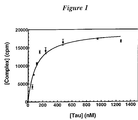
- [ 33 P] tau was added at various concentrations to 2 ⁇ M A ⁇ 1-42 and 5 mg/ml antimouse PVT SPA beads in a total volume of 100 ⁇ l of 40 mM Tris, pH 7.5, 10 mM MgCl 2 , 1 mM DTT for 30 min at 37°C.
- the samples were centrifuged at 12,000 x g in a microcentrifuge and counted using a Packard TriCarb liquid scintillation counter.
- the background CPM was obtained by incubating varying concentrations of [ 33 P] tau with the SPA beads in the absence of A ⁇ 1-42.
- SDS-PAGE SDS-polyacrylamide gel electrophoresis
- tau undergoes a physical change from soluble tau to aggregated tau. After combining the two and centrifugation, this change can be followed by detecting tau in the pellet and supernatant fractions on a SDS-PAGE.
- the percentage of tau protein in the pellet fraction was determined by densitometry of the SDS-PAGE.
- Dose response studies show that addition of A ⁇ 1-42 to soluble tau promotes aggregation of tau in a dose-dependent manner and can be followed by SDS-PAGE.
- the results of a dose-response study are shown in Figure 3.
- TPK II is a proline-directed kinase and all the proline-directed phosphorylation sites for TPK II are outside the MT-binding repeat region, we believe that A ⁇ 1-42 exerts its effect on tau by interacting with its MT-binding repeat domains.
- a ⁇ 1-42-induced aggregation of 4R tau was comparable to that observed for the wild type tau, while A ⁇ 1-42-induced aggregation was not observed with tau that lacked the MT-binding repeat domains (Fig. 3). These results suggest that MT-binding repeat domains are critical for A ⁇ 1-42/tau interaction, while the N-terminal tau domain (1M-238S) is not essential for A ⁇ 1-42-induced tau aggregation. Similar results were obtained with aggregated form of A ⁇ 1-40.
- bovine tau isoforms were monitored by Western blot using 4G5 antibody to tau. These results showed that all various bovine tau isoforms were insoluble in the presence of A ⁇ 1-42 in a dose-dependent manner (data not shown). Since recombinant tau (1-383) used in this work contains T7 and octa His affinity tags, the results with bovine tau isoforms also confirm that the observed aggregation of human recombinant tau is indeed due to specific interaction between tau and A ⁇ 1-42.
- tau and A ⁇ 1-42 were mixed, centrifuged, and the tau protein in the pellet fraction was resuspended and then treated with TPK II.
- Figure 4 shows that compared to soluble tau, there was a marked increase in TPK II-mediated phosphorylation of aggregated tau due to its interaction with A ⁇ .
- concentrations of the tau protein derived polypeptide and the beta - amyloid peptide are sufficiently high aggregation results in changes in turbidity which can be followed over time by spectrophotometry at a suitable wavelength.
- the wavelength chosen is not necessarily critical because light scattering is being measured and not absorbance.
- a ⁇ 1-42-induced tau insolubility was also followed by monitoring an increase in absorbance at 350 nm as a function of A ⁇ 1-42 concentration. Results are shown in Figure 5.
- Tau (14 ⁇ M) was mixed with varying concentrations of A ⁇ 1-42 (from 0 to 60 ⁇ M) in a total volume of 100 ⁇ l containing 50 mM sodium phosphate, pH 7.0. The samples were incubated in a 96 well microplate at 37°C for 30 min and the absorbance read at 350 nm in a Molecular Devices SpectaMax Plus.
- tau and A ⁇ can also be assessed by following an increase in phosphorylation by TPK II and is exemplified below.
- the filter binding assay was done by incubating 2 ⁇ M tau with 3.6 nM TPK II for 10 min (or the time indicated) at 37°C in a total volume of 15 ⁇ l containing 40 mM Tris, pH 7.5, 10 mM MgCl 2 , 1 mM DTT, 0.1 mg/ml BSA and 1 ⁇ Ci [ 33 P] ⁇ ATP.
- a ⁇ peptides were added at 10x concentrations to the assay to achieve the final concentration indicated. After incubation, 10 ⁇ l was removed and spotted onto phosphocellulose paper.
- FIG. 6 shows that under defined conditions, A ⁇ 1-42 stimulates TPK II-mediated tau phosphorylation by about 8 tol0-fold. There was only about a 2-3 fold stimulation of tau phosphorylation by non-aggregated form of A ⁇ 1-40 or A ⁇ 25-35.
- Figure 7 shows a time course study demonstrating that in the presence of A ⁇ 1-42 there is about an 8-fold increase in the initial rate of tau phosphorylation by TPK II.
- Aggregation and phosphorylation can be accessed by a gel shift assay (an assay in which complex formation is accessed by a decrease in electrophoretic migation of complexed vs. uncomplexed A ⁇ .
- a gel shift assay an assay in which complex formation is accessed by a decrease in electrophoretic migation of complexed vs. uncomplexed A ⁇ .
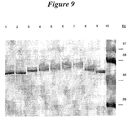
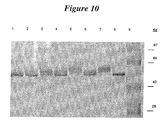
- increase in TPK II phosphorylation was followed by a gel-shift assay.
- Gel-shift assays were done by incubating 3 ⁇ M tau with 50 nM TPK II and/or 167 units/ml TPK I for the indicated time at 37°C in a total volume of 20 ⁇ l containing 40 mM Tris, pH 7.5, 10 mM MgCl 2 , 1 mM DTT, and 1 mM ATP.
- a ⁇ peptides were added at 10x concentrations to the assay to achieve the final concentration indicated. Following incubation the samples were electrophoresed on 12 % SDS-PAGE and stained with Coomassie Blue R-250.
- Antibodies to native tau or a phosphorylated epitope of phosphorylated tau as can be helpful in determining the propensity of a tau derived polypeptide to associate with A ⁇
- the interaction can the be determined by western blot or by ELISA.
- the techniques for performing Western blots are well known in the art and to those of skill in the art.
- the detection of the interaction in a sample may also be carried out by using some of the well known ELISA principles, e.g. direct, catching, competitive and double enzyme linked immunosorbent assay.
- Western blots can be used to follow A ⁇ :tau interaction by monitoring phosphorylation of an AD-related phosphoepitope (Thr-231) on human recombinant tau.
- the Western blots were done by using the same phosphorylation conditions as the gel-shift assay. After incubation for 4 hours, approximately 300 ng tau was electrophoresed on 12 % SDS-PAGE, transferred to nitrocellulose and blocked with 4 % BSA. AT180 antibody was used at a 1:5000 dilution followed by goat anti mouse IgG-peroxidase used at a 1:10000 dilution as the secondary antibody.
- the blots were developed using the ECL protocol.
- Phosphorylation of an AD-related epitope (P-Thr-231) in tau can be detected by the AT-180 monoclonal antibody, which almost exclusively recognizes paired helical filaments (PHF's) from AD brain (Goedert 1994).
- Figure 11 shows that A ⁇ 1-42 stimulates phosphorylation of Thr-231 by TPK II.
- studies with a T231A tau mutant confirmed that stimulation of phosphorylation at Thr-231 was indeed due to an interaction between A ⁇ and wild type tau.
- a number of ELISA formats can be used to study tau:A ⁇ interaction.
- a ⁇ is coated onto microtiter plates at 60 ⁇ g/ml dissolved in 50 % DMSO in 50 mM sodium carbonate buffer, pH 9.6. After washing three times with 0.05 % Tween 20, a 2% solution of milk extract in PBS (137 mM sodium chloride/10 mM psohphate/2.68 mM KCl, pH 7.4) was added as a blocker. The plate is washed three times with PBS and varying concentrations of tau (1 to 10 ⁇ M) in PBS are added. After 1 hr of incubation at 37 degree C, the plate is washed with PBS.
- the tau:A ⁇ interaction can followed by using antibodies to full length tau and a commercally available secondary antibody and a standard ELISA kit.
- phosphorylated tau can be used and antibodies to phoshorylated tau can be used as a source of primary antibody.
- a tagged version of tau can be used and antibodies to the tag can be used as a primary antibody.
- tau can be bound to the solid phase as described above for A ⁇ . In this case, A ⁇ is captured by tau on the plates and antibodies to A ⁇ can be used as a source of primary antibody. In another embodiment tau is captured on the plates and antibodies to tau can be used as a primary antibody.
- a fluorescently labeled molecule When a fluorescently labeled molecule is excited with plane polarized light, it emits light that has a degree of polarization that is inversely proportional to its molecular rotation. Large fluorescently labeled molecules remain relatively stationary during the excited state (4 nanoseconds in the case of fluorescein) and the polarization of the light remains relatively constant between excitation and emission. Small fluorescently labeled molecules rotate rapidly during the excited state and the polarization changes significantly between excitation and emission. Therefore, small molecules have low polarization values and large molecules have high polarization values. It is to be expected then that as a fluorescently labelled molecule is incorporated into an aggregate its polarization value would increase.
- a ⁇ 1-42 The interaction of tau with A ⁇ 1-42 was studied using fluorescence polarization.
- Tau was fluorescently labeled using the Alexa 488 protein labeling kit from Molecular Probes. Alexa labeled tau (16 nM) was incubated with varying concentrations of A ⁇ 1-42 (from 0 to 50 ⁇ M) for 30 min at 37°C in 40 mM Tris, pH 7.5, 10 mM MgCl 2 , 1 mM DTT. The reactions were read on a fluorescence polarization instrument from Panvera and an increase in polarization studied as a function of increasing A ⁇ 1-42 concentration.
- a ⁇ 1-42 can be synthesized to contain a fluorescein label and the increase in polarization studied as a function of increasing tau concentration.
Landscapes
- Health & Medical Sciences (AREA)
- Life Sciences & Earth Sciences (AREA)
- Chemical & Material Sciences (AREA)
- Engineering & Computer Science (AREA)
- Immunology (AREA)
- Biomedical Technology (AREA)
- Molecular Biology (AREA)
- Organic Chemistry (AREA)
- General Health & Medical Sciences (AREA)
- Biochemistry (AREA)
- Urology & Nephrology (AREA)
- Proteomics, Peptides & Aminoacids (AREA)
- Hematology (AREA)
- Medicinal Chemistry (AREA)
- Analytical Chemistry (AREA)
- Biotechnology (AREA)
- Microbiology (AREA)
- Zoology (AREA)
- Physics & Mathematics (AREA)
- Biophysics (AREA)
- Wood Science & Technology (AREA)
- Neurology (AREA)
- Pathology (AREA)
- Cell Biology (AREA)
- Genetics & Genomics (AREA)
- General Physics & Mathematics (AREA)
- Food Science & Technology (AREA)
- General Engineering & Computer Science (AREA)
- Bioinformatics & Cheminformatics (AREA)
- Neurosurgery (AREA)
- Toxicology (AREA)
- Gastroenterology & Hepatology (AREA)
- Peptides Or Proteins (AREA)
- Investigating Or Analysing Biological Materials (AREA)
- Measuring Or Testing Involving Enzymes Or Micro-Organisms (AREA)
- Medicines That Contain Protein Lipid Enzymes And Other Medicines (AREA)
Applications Claiming Priority (2)
| Application Number | Priority Date | Filing Date | Title |
|---|---|---|---|
| US27110201P | 2001-02-23 | 2001-02-23 | |
| US271102P | 2001-02-23 |
Publications (2)
| Publication Number | Publication Date |
|---|---|
| EP1234835A2 true EP1234835A2 (de) | 2002-08-28 |
| EP1234835A3 EP1234835A3 (de) | 2004-01-02 |
Family
ID=23034199
Family Applications (1)
| Application Number | Title | Priority Date | Filing Date |
|---|---|---|---|
| EP02251083A Withdrawn EP1234835A3 (de) | 2001-02-23 | 2002-02-18 | Assays zum Nachweis von ABeta-Tau Aggregation |
Country Status (4)
| Country | Link |
|---|---|
| US (1) | US20020164657A1 (de) |
| EP (1) | EP1234835A3 (de) |
| AU (1) | AU783824B2 (de) |
| CA (1) | CA2370213A1 (de) |
Cited By (1)
| Publication number | Priority date | Publication date | Assignee | Title |
|---|---|---|---|---|
| EP1355949B1 (de) * | 2001-02-02 | 2010-03-24 | Axon Neuroscience Forschungs- und Entwicklungs Gmbh | Antikörper gegen Alzheimer spezifische tau Proteine mit abnormaler Konformation |
Families Citing this family (3)
| Publication number | Priority date | Publication date | Assignee | Title |
|---|---|---|---|---|
| JP4414332B2 (ja) * | 2002-07-12 | 2010-02-10 | アクソン・ニューロサイエンス・フォルシュングス−ウント・エントヴィックルングス・ゲゼルシャフト・ミット・ベシュレンクテル・ハフツング | アルツハイマーtauタンパク質を発現するトランスジェニック動物 |
| WO2004073651A2 (en) * | 2003-02-18 | 2004-09-02 | The Ohio State University Research Foundation | Identifying inhibitors of intracellular protein fibrillization |
| AU2005223660B2 (en) * | 2004-03-18 | 2011-06-23 | Transtech Pharma, Inc. | Fluorescence polarization assay |
-
2002
- 2002-02-15 US US10/076,708 patent/US20020164657A1/en not_active Abandoned
- 2002-02-18 CA CA002370213A patent/CA2370213A1/en not_active Abandoned
- 2002-02-18 EP EP02251083A patent/EP1234835A3/de not_active Withdrawn
- 2002-02-21 AU AU16801/02A patent/AU783824B2/en not_active Ceased
Non-Patent Citations (7)
| Title |
|---|
| GOETZ J ET AL: "Formation of neurofibrillary tangles in P301L tau transgenic mice induced by Abeta42 fibrils" SCIENCE, AMERICAN ASSOCIATION FOR THE ADVANCEMENT OF SCIENCE,, US, vol. 293, no. 5534, 2001, pages 1491-1495, XP002224858 ISSN: 0036-8075 * |
| GOURAS GUNNAR K ET AL: "Intraneuronal Abeta42 accumulation in human brain" AMERICAN JOURNAL OF PATHOLOGY, vol. 156, no. 1, January 2000 (2000-01), pages 15-20, XP002258587 ISSN: 0002-9440 * |
| HARDY JOHN ET AL: "Genetic dissection of Alzheimer's disease and related dementias: Amyloid and its relationship to tau" NATURE NEUROSCIENCE, vol. 1, no. 5, September 1998 (1998-09), pages 355-358, XP002258588 ISSN: 1097-6256 * |
| LEWIS J ET AL: "Enhanced neurofibrillary degeneration in transgenic mice expressing mutant tau and APP" SCIENCE, AMERICAN ASSOCIATION FOR THE ADVANCEMENT OF SCIENCE,, US, vol. 293, no. 5534, 2001, pages 1487-1491, XP002224859 ISSN: 0036-8075 * |
| RANK K B ET AL: "Direct interaction of soluble human recombinant tau protein with Abeta 1-42 results in tau aggregation and hyperphosphorylation by tau protein kinase II" FEBS LETTERS, ELSEVIER SCIENCE PUBLISHERS, AMSTERDAM, NL, vol. 514, no. 2-3, 13 March 2002 (2002-03-13), pages 263-268, XP004347709 ISSN: 0014-5793 * |
| TAKASHIMA A ET AL: "Amyloid beta peptide (25-35) induces tau phosphorylation and decreases microtubule-forming ability in rat hippocampal culture" ABSTRACTS OF THE SOCIETY FOR NEUROSCIENCE, SOCIETY FOR NEUROSCIENCE, WASHINGTON, DC, US, vol. 21, no. 1-3, 1995, page 1719 XP002224863 ISSN: 0190-5295 * |
| TOMIDOKORO YASUSHI ET AL: "Abeta amyloidosis induces the initial stage of tau accumulation in APPSw mice" NEUROSCIENCE LETTERS, vol. 299, no. 3, 23 February 2001 (2001-02-23), pages 169-172, XP002258586 ISSN: 0304-3940 * |
Cited By (1)
| Publication number | Priority date | Publication date | Assignee | Title |
|---|---|---|---|---|
| EP1355949B1 (de) * | 2001-02-02 | 2010-03-24 | Axon Neuroscience Forschungs- und Entwicklungs Gmbh | Antikörper gegen Alzheimer spezifische tau Proteine mit abnormaler Konformation |
Also Published As
| Publication number | Publication date |
|---|---|
| EP1234835A3 (de) | 2004-01-02 |
| US20020164657A1 (en) | 2002-11-07 |
| AU783824B2 (en) | 2005-12-08 |
| CA2370213A1 (en) | 2002-08-23 |
| AU1680102A (en) | 2002-08-29 |
Similar Documents
| Publication | Publication Date | Title |
|---|---|---|
| Birge et al. | Identification and characterization of a high-affinity interaction between v-Crk and tyrosine-phosphorylated paxillin in CT10-transformed fibroblasts | |
| Gautel et al. | Phosphorylation switches specific for the cardiac isoform of myosin binding protein‐C: a modulator of cardiac contraction? | |
| Guttman et al. | Interactions of the NPXY microdomains of the low density lipoprotein receptor‐related protein 1 | |
| US10016414B2 (en) | Modulation of ubiquitination of synaptic proteins for the treatment of neurodegenerative and psychiatric disorders | |
| CA2397991A1 (en) | Diagnosis of tauopathies | |
| US20170145067A1 (en) | Compositions and methods related to tauopathy | |
| CA2848433C (en) | Screening methods | |
| Xu et al. | Mutually exclusive interactions of EHD1 with GS32 and syndapin II | |
| JP2001512426A (ja) | ジスコイジンドメイン受容体チロシンキナーゼのリガンドおよびその複合体 | |
| US7364870B2 (en) | MK2 interacting proteins | |
| EP2965091B1 (de) | Assay und verfahren zur identifikation von verbindungen zur behandlung von tauopathien | |
| CN100429230C (zh) | 能抑制早老素和β-淀粉样肽或其前体间相互作用的肽 | |
| AU783824B2 (en) | Assays for assessing AB-TAU aggregation | |
| US20030091983A1 (en) | Epitope-tagged beta-amyloid precursor protein and methods for monitoring cellular processing thereof | |
| US9981005B2 (en) | Methods for increasing DISC1 in a subject with schizophrenia or bipolar disorder by an antagonist inhibiting DISC1 binding to FBXW7 | |
| JP2003532413A (ja) | γ−セクレターゼ活性の変調 | |
| JP5939528B2 (ja) | カルモジュリン様皮膚タンパク質を有効成分として含む医薬組成物 | |
| US7884067B2 (en) | Peptides derived from cadherin and methods of use thereof | |
| JP7296136B2 (ja) | タウオパチーの治療薬または予防薬のスクリーニング方法およびタウオパチーの診断方法 | |
| WO2003044196A1 (fr) | Proteines postsynaptiques | |
| US20140336126A1 (en) | Optineurin-derived polypeptides, their nucleic acids and uses thereof | |
| Cancemi | Cytoskeletal remodeling and enhanced autophagy drive an adaptive response to loss of Calsequestrin in a model of inherited arrhythmias | |
| Karlsson | Studies of unspecific interaction between the Aβ antibody 6E10 and blood coagulation protein factor X | |
| Cancemi et al. | Tesis doctoral Cytoskeletal remodeling and enhanced autophagy drive an adaptive response to loss of Calsequestrin in a model of inherited arrhythmias Andrea Cancemi Madrid 2021 | |
| den Engelsman | Novel functions of the mallalian small heat-shock protein alphaB-crystallin |
Legal Events
| Date | Code | Title | Description |
|---|---|---|---|
| PUAI | Public reference made under article 153(3) epc to a published international application that has entered the european phase |
Free format text: ORIGINAL CODE: 0009012 |
|
| AK | Designated contracting states |
Kind code of ref document: A2 Designated state(s): AT BE CH CY DE DK ES FI FR GB GR IE IT LI LU MC NL PT SE TR |
|
| AX | Request for extension of the european patent |
Free format text: AL;LT;LV;MK;RO;SI |
|
| PUAL | Search report despatched |
Free format text: ORIGINAL CODE: 0009013 |
|
| AK | Designated contracting states |
Kind code of ref document: A3 Designated state(s): AT BE CH CY DE DK ES FI FR GB GR IE IT LI LU MC NL PT SE TR |
|
| AX | Request for extension of the european patent |
Extension state: AL LT LV MK RO SI |
|
| 17P | Request for examination filed |
Effective date: 20040621 |
|
| AKX | Designation fees paid |
Designated state(s): AT BE CH CY DE DK ES FI FR GB GR IE IT LI LU MC NL PT SE TR |
|
| AXX | Extension fees paid |
Extension state: SI Payment date: 20040621 Extension state: RO Payment date: 20040621 Extension state: MK Payment date: 20040621 Extension state: LV Payment date: 20040621 Extension state: LT Payment date: 20040621 Extension state: AL Payment date: 20040621 |
|
| RAP1 | Party data changed (applicant data changed or rights of an application transferred) |
Owner name: PHARMACIA & UPJOHN COMPANY LLC |
|
| 17Q | First examination report despatched |
Effective date: 20060908 |
|
| STAA | Information on the status of an ep patent application or granted ep patent |
Free format text: STATUS: THE APPLICATION IS DEEMED TO BE WITHDRAWN |
|
| RAP1 | Party data changed (applicant data changed or rights of an application transferred) |
Owner name: PHARMACIA & UPJOHN COMPANY LLC |
|
| 18D | Application deemed to be withdrawn |
Effective date: 20060829 |