EP1236367B1 - Safe information interchange between a user of a terminal and a sim application toolkit via wap - Google Patents
Safe information interchange between a user of a terminal and a sim application toolkit via wap Download PDFInfo
- Publication number
- EP1236367B1 EP1236367B1 EP00987500A EP00987500A EP1236367B1 EP 1236367 B1 EP1236367 B1 EP 1236367B1 EP 00987500 A EP00987500 A EP 00987500A EP 00987500 A EP00987500 A EP 00987500A EP 1236367 B1 EP1236367 B1 EP 1236367B1
- Authority
- EP
- European Patent Office
- Prior art keywords
- application
- terminal device
- driver
- sim
- user
- Prior art date
- Legal status (The legal status is an assumption and is not a legal conclusion. Google has not performed a legal analysis and makes no representation as to the accuracy of the status listed.)
- Expired - Lifetime
Links
- 238000000034 method Methods 0.000 claims abstract description 16
- 238000004891 communication Methods 0.000 claims description 18
- 238000010295 mobile communication Methods 0.000 claims description 12
- 230000006870 function Effects 0.000 description 21
- 230000003993 interaction Effects 0.000 description 6
- 230000007246 mechanism Effects 0.000 description 3
- 230000011664 signaling Effects 0.000 description 3
- 230000008901 benefit Effects 0.000 description 2
- 230000005540 biological transmission Effects 0.000 description 2
- 238000011161 development Methods 0.000 description 2
- 238000010586 diagram Methods 0.000 description 2
- 230000002452 interceptive effect Effects 0.000 description 2
- 230000010267 cellular communication Effects 0.000 description 1
- 230000008569 process Effects 0.000 description 1
- 238000012545 processing Methods 0.000 description 1
- 238000012546 transfer Methods 0.000 description 1
Images
Classifications
-
- H—ELECTRICITY
- H04—ELECTRIC COMMUNICATION TECHNIQUE
- H04L—TRANSMISSION OF DIGITAL INFORMATION, e.g. TELEGRAPHIC COMMUNICATION
- H04L63/00—Network architectures or network communication protocols for network security
- H04L63/04—Network architectures or network communication protocols for network security for providing a confidential data exchange among entities communicating through data packet networks
- H04L63/0428—Network architectures or network communication protocols for network security for providing a confidential data exchange among entities communicating through data packet networks wherein the data content is protected, e.g. by encrypting or encapsulating the payload
- H04L63/0442—Network architectures or network communication protocols for network security for providing a confidential data exchange among entities communicating through data packet networks wherein the data content is protected, e.g. by encrypting or encapsulating the payload wherein the sending and receiving network entities apply asymmetric encryption, i.e. different keys for encryption and decryption
-
- H—ELECTRICITY
- H04—ELECTRIC COMMUNICATION TECHNIQUE
- H04L—TRANSMISSION OF DIGITAL INFORMATION, e.g. TELEGRAPHIC COMMUNICATION
- H04L63/00—Network architectures or network communication protocols for network security
- H04L63/12—Applying verification of the received information
- H04L63/123—Applying verification of the received information received data contents, e.g. message integrity
-
- H—ELECTRICITY
- H04—ELECTRIC COMMUNICATION TECHNIQUE
- H04L—TRANSMISSION OF DIGITAL INFORMATION, e.g. TELEGRAPHIC COMMUNICATION
- H04L63/00—Network architectures or network communication protocols for network security
- H04L63/12—Applying verification of the received information
- H04L63/126—Applying verification of the received information the source of the received data
-
- H—ELECTRICITY
- H04—ELECTRIC COMMUNICATION TECHNIQUE
- H04L—TRANSMISSION OF DIGITAL INFORMATION, e.g. TELEGRAPHIC COMMUNICATION
- H04L67/00—Network arrangements or protocols for supporting network services or applications
- H04L67/34—Network arrangements or protocols for supporting network services or applications involving the movement of software or configuration parameters
-
- H—ELECTRICITY
- H04—ELECTRIC COMMUNICATION TECHNIQUE
- H04W—WIRELESS COMMUNICATION NETWORKS
- H04W12/00—Security arrangements; Authentication; Protecting privacy or anonymity
- H04W12/02—Protecting privacy or anonymity, e.g. protecting personally identifiable information [PII]
-
- H—ELECTRICITY
- H04—ELECTRIC COMMUNICATION TECHNIQUE
- H04W—WIRELESS COMMUNICATION NETWORKS
- H04W12/00—Security arrangements; Authentication; Protecting privacy or anonymity
- H04W12/10—Integrity
-
- H—ELECTRICITY
- H04—ELECTRIC COMMUNICATION TECHNIQUE
- H04W—WIRELESS COMMUNICATION NETWORKS
- H04W12/00—Security arrangements; Authentication; Protecting privacy or anonymity
- H04W12/30—Security of mobile devices; Security of mobile applications
- H04W12/35—Protecting application or service provisioning, e.g. securing SIM application provisioning
Definitions
- the present invention relates to telecommunication systems.
- the invention relates to a method and system for interchanging information safely between the user and a SIM Application Toolkit application (SIM, Subscriber Identity Module) in a telecommunication system comprising a telecommunication network; a terminal device which is connected to the telecommunication network; a smart card which has been inserted into the terminal device; a WAP client program which has been arranged in the terminal device; a SIM Application Toolkit which has been arranged in the terminal device and/or smart card; and a first application which is part of the WAP client program.
- the terminal device comprises the necessary features for using the WAP.
- the use of the wireless application protocol is becoming common in solutions in which a connection is needed between portable terminal devices, such as mobile stations and the Internet applications, e.g. electronic mail, WWW (World Wide Web), news groups.
- the wireless application protocol provides an architecture which adapts mobile phones, browser programs of mobile phones, and the WWW to work as a functional entity.
- the HTML language (Hyper Text Mark-up Language) used in the WWW is translated into a WML (Wireless Mark-up Language) designed for the wireless environment, when information is being transmitted to mobile stations.
- WML Wireless Mark-up Language
- the WML language is used, but the language may be understood to mean also any other description language consistent with the future WAP standard.
- the wireless application protocol comprises of the following five layers: wireless application environment (WAE, Wireless Application Environment), wireless session layer (WSL, Wireless Session Layer), wireless transaction layer (WTP, Wireless Transaction Layer), wireless transport layer security (WTLS, Wireless Transport Layer Security), and wireless datagram layer (WDP, Wireless Datagram Layer).
- the wireless application environment is used to mean, e.g. a WTA (WTA, Wireless Telephone Application), or some other suitable environment. Lowermost is yet a system dependant layer which defines the transfer mode of the information inside the system in question.
- the specification accepted at the moment is the WAP specification 1.1.
- the aforementioned specification and other WAP related specifications are available at the Internet address www.wapforum.com.
- the WAP Forum is among other things an open association of terminal manufactures, operators and different service providers, which anyone can join.
- One specific objective of the WAP architecture is to enable the use of services provided by the Internet on terminals whose data processing capacity, size of display or storage capacity is small or restricted.
- Terminals as described above are, e.g. mobile stations and PDAs (PDA, Personal Digital Assistant).
- PDA Personal Digital Assistant
- the WAP specification does not take a stand on the fact of how the overhead interface is implemented. This makes it possible for different operators, terminal manufactures and software manufactures to take advantage of the possibilities provided by the standards.
- a mobile communication network e.g. a GSM system (GSM, Global System for Mobile communications) as compared with a public switched telephone network (PSTN, Public Switched Telephone Network) is the mobility management.
- GSM Global System for Mobile communications
- PSTN Public Switched Telephone Network
- the mobile communication network enables one to make and receive phone calls anywhere in the coverage area of the network.
- a mobile communication network is advantageously used to mean a digital mobile network.
- SIM Subscriber Identity Module
- the operator is herein used to mean an entity which has got the infrastructure of the mobile communication network at his or her disposal in order to provide mobile communication services.
- the separating of the mobile station and the subscriber identity module from one another enables a constant development of services connected with the mobile stations and the introduction of new, operator-specific services.
- the functional interface between the mobile station and the subscriber identity module has been described in the specification TS 100 977 V7.3.0 (1999-07) of ETSI. (ETSI, European Telecommunications and Standard Institute).
- the step of development connected with the function of the subscriber identity module is the definition of the SIM Application Toolkit which defines specifications to the interface between the mobile station and the subscriber identity module.
- the SIM Application Toolkit is used to mean all those functions and mechanisms that enable the interaction of the applications on the subscriber identity module with the mobile station. This requires that the mobile station supports the functions and mechanisms needed in the interaction.
- the SIM application Toolkit has been defined in the specification TS 101 267 V7.3.1 (1999-07) of ETSI.
- the SIM Application Toolkit is logically entirely separated from the functions of the subscriber identity module, which are connected with the GSM system. There is a certain set of functions defined for the SIM application Toolkit that are connected with the signaling between the subscriber identity module and the mobile station.
- the aforementioned logical independence of the SIM Application Toolkit enables the applications of the third party.
- the applications of the third party are used to mean, e.g. operator-specific applications.
- the communication between the SIM application Toolkit and the function of a normal subscriber entity module happens by using, e.g. the short message service (SMS, Short Message Service).
- SMS Short Message Service
- Other ways of communication may be, e.g. the USSD (Unstructured Supplementary Services Data) or the GPRS (General Packet Radio Service)
- PCT application WO99/63767 discloses a cellular communications system which utilises SIM Application Toolkit-based information messages.
- the WMLScript is a command language connected with the WAP standard.
- the objective of the invention is to eliminate the drawbacks referred to above, or at least significantly to alleviate them.
- One specific objective of the invention is to disclose a method and system which enables one to handle the input entered by the user in his or her terminal device safely before sending it to the SIM Application Toolkit service.
- the invention relates to applications saved to smart cards and to the wireless application protocol environment.
- the objective of the invention is to enable and improve the use of SIM Application Toolkit applications in a WAP environment by permitting the interchange of information between the WAE environment, user and the SIM Application Toolkit applications.
- the telecommunication system in accordance with the invention comprises a telecommunication network, a terminal device which is connected to the telecommunication network, a smart card which has been inserted into the terminal device, a WAP client program which has been arranged in the terminal device and a SIM application Toolkit which has been arranged in the terminal device and/or smart card.
- the system comprises a first application which is part of the WAP client program.
- the terminal device comprises the necessary features for using the WAP. This means, e.g. that the terminal device comprises a WAP client program and that the terminal device is capable of understanding and presenting functions connected with the WAP client program.
- the terminal device in accordance with the invention is preferably a mobile station and the telecommunication network is preferably a mobile communication network.
- a second application is added that is arranged to start and control the SIM Application Toolkit applications.
- the second application is used to mean, e.g. a program implemented using the WMLScript command language.
- the aforementioned first application is used to call the second application when wishing to use SIM Application Toolkit applications.
- the first application is used to mean, e.g. a program written in the WML description language or in the WMLScript command language.
- the first application has got a restricted number of commands at its disposal. It may be used only for the starting of the second application at the most.
- the second application is then used to control and manage SIM Application Toolkit applications and the interchange of information between the user of the terminal device and the SIM Application Toolkit applications.
- the second application has got the possibility of using more commands for the use of SIM Application Toolkit applications.
- the second application may, e.g. ask the user for an input, edit it and send the input after editing it to a SIM Application Toolkit application.
- the second application may only be used to activate a SIM Application Toolkit application at the most.
- the second application may be loaded into the terminal device, e.g. via the telecommunication network.
- the trusted third party is an entity which, e.g. ensures the integrity of the signed object.
- the public key of the sender of the second application has to be made available to the terminal device or the smart card.
- the availability of the public key may be arranged, e.g. via the telecommunication network.
- the checking of the authenticity of the second application may also be made by a WIM-card (WIM, WAP Identity Module).
- the smart card may in this context mean, e.g. the same as the subscriber identity module.
- the smart card may refer to a subscriber identity module comprising a WIM.
- the smart card may be a WIM card.
- additional information may be retrieved, e.g. via the telecommunication network.
- the information retrieval may be arranged, e.g. by means of the second application.
- the additional information is used to mean, e.g. a piece of definition information or a definition file which comprises information of the use of a SIM Application Toolkit application or of its presentation.
- the system in accordance with the invention comprises a second application which has been arranged to start and control SIM Application Toolkit applications, means for calling the second application by means of the first application when wishing to use SIM Application Toolkit applications, and a first means of communication which is used to control SIM Application Toolkit applications and manage the interchange of information between the user of the terminal device and SIM Application Toolkit applications.
- the system comprises a transmitter which may be used to send an interrogation message from the second application to the user of the terminal device.
- the editor in turn is used to edit the input defined by the user before the edited information is sent to the SIM Application Toolkit by means of the second means of communication.
- the system comprises a first information retrieval entity which is used to load the second application into the terminal device or smart card. Further, in another embodiment, the system comprises a trusted third party which signs the program code connected with the application with a digital signature.
- the system comprises a second information retrieval entity for loading the public key of the sender of the second application into the terminal device and/or smart card, and means for checking the origin of the sender of the second application.
- the system comprises a third information retrieval entity which is used to retrieve additional information for the use of SIM Application Toolkit applications.
- the system comprises a server which is connected to the telecommunication network and from which it is possible to load the second application into a terminal device or smart card.
- the present invention it is possible in a WAP environment to handle information to be sent to SIM Application Toolkit applications before the transmission. Furthermore, the invention makes it possible for the third parties to use applications stored on a smart card.
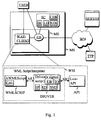
- the system as shown in Fig. 1 comprises a terminal device MS, a telecommunication network WN and a server SERVER.
- the terminal device MS and the server SERVER are in communication with the telecommunication network WN.
- the terminal device MS is preferably a mobile station and the telecommunication network WN is preferably a mobile communication network.
- Connected to the telecommunication network WN in this example is, in addition, the trusted third party TTP.
- the trusted third party TTP is an entity which makes sure, e.g. of the integrity of the signed object.
- the system as shown in Fig. 1 comprises, in addition, a user USER under whose control and at whose disposal the mobile station MS is.
- the mobile station MS consists of the mobile station device ME itself and a smart card SC.
- the mobile station MS may, in addition, comprise many other parts, components and features which are not necessary to present in this connection and which are obvious to a person skilled in the art.
- the mobile station device ME comprises an operating system OS and a WAP client program WAPCLIENT.
- the operating system OS is in communication with the user USER, the WAP client program WAPCLIENT and the smart card SC. Also the user USER may have a direct contact with the operating system OS.
- the smart card SC is preferably a subscriber identity module SIM. If the smart card SC is a subscriber identity module, it may also comprise a WIM. In such a situation, the SIM functionality and the WIM functionality connected with the mobile communication network WN may use different logical channels.
- the WIM is used to mean a protected device, instrument or part which is used to perform different measures and saves of WAP connected with the security.
- the WIM may be used, e.g. to perform security measures connected with the WTLS and application level. Specifically, the WIM may be used to save and process information which is needed in identification and authentication.
- the smart card SC may, in addition, be used to mean merely a WIM card.
- the WAP client program WAPCLIENT comprises among other things a first application WMLSCRIPT which is written, e.g. in the WML description language or in the WMLSCRIPT command language, a second application DRIVER which is written, e.g. in the WMLSCRIPT command language, and a low-level application programming interface API.
- the first application WMLSCRIPT and the second application DRIVER are part of the WMLScript interpreter WSI.
- the WMLScript command language is normally written in a text form. This text form has to be translated into a binary form before it can be interpreted by a WMLScript bit code interpreter.
- the WMLScript interpreter takes the WMLScript bit code to serve as an input and performs coded functions as they are being called.
- the first application WMLSCRIPT comprises means CAL for calling the second application DRIVER, when it is wished to use SIM Application Toolkit applications.
- the means CAL for calling is used to mean, e.g. a function call appearing in the program code.
- the first application WMLSCRIPT is used to call the second application DRIVER via the standard application programming interface of the second application DRIVER.
- the arrow AR1 describes the fact that the function calls to be performed are abstract.
- the second application DRIVER comprises a first means of communication IP, means SND for sending, means ED for editing, a second means of communication FW and a third means of communication IO.
- the first means of communication IP is used to control the SIM Application Toolkit applications and to manage the interchange of information between the user USER of the terminal device MS and SIM Application Toolkit applications.
- the means SND for sending is used to send an interrogation message to the user USER of the terminal device MS.
- the means ED for editing is used to edit, when required, the input defined by the user.
- the second means of communication FW is used to send the edited or unedited information defined by the user USER to the SIM Application Toolkit application.
- the third means of communication is used to retrieve additional information for the use of SIM Application Toolkit applications.
- the first means of communication IP, means SND for sending, means ED for editing, the second means of communication FW and the third means of communication are used to mean, e.g. a program, program block or a function call.
- the second application DRIVER is used to call the low-level application programming interface API.
- the low-level application programming interface API comprises a standard interface via which it may be called. From the low-level application programming interface API there is a connection, e.g. via the operating system OS of the mobile station MS to the smart card SC and further to the SIM Application Toolkit STK.
- the arrow AR2 is used to describe the fact that the function calls to be made are calls that implement SIM Application Toolkit commands.
- the smart card SC comprises a SIM Application Toolkit STK.
- the SIM Application Toolkit is used to mean all those functions and mechanisms that enable the interaction of applications stored on the subscriber identity module with the mobile station.
- the smart card SC comprises, in addition, a first information retrieval entity LD, a second information retrieval entity IR and means CHK for checking.
- the first information retrieval entity LD is used to load the second application DRIVER into the terminal device MS or the smart card SC, e.g. from the telecommunication network WN.
- the means CHK for checking is used to check the origin of the sender of the second application DRIVER.
- the program code connected with the second application DRIVER may have been signed by the digitally dependable trusted third party TTP.
- the smart card SC comprises a second information retrieval entity IR which is used to load the public key of the sender of the second application DRIVER into the mobile station MS or the smart card SC.
- the loaded public key enables one to verify the signature connected with the second application DRIVER.
- the second application DRIVER has got the following commands at its disposal for the subscriber identity module:
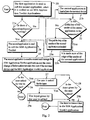
- Fig. 2 is a flow chart illustrating the function of the present invention.
- the first application is used to call the second application, when it is wished to use SIM application Toolkit applications.
- the first application WML is used to mean, e.g. a WML site visible to the user which enables one to activate different commands.
- the second application is used to mean, e.g. a program in the WMLScript language which enables an interactive operation between the WAP client program and the SIM Application Toolkit applications.
- the first application is used to call the second application, when it is wished to use SIM Application Toolkit applications.
- the terminal device or smart card at the disposal of the user does not, however, necessarily comprise the second application mentioned above.
- the second application it is checked if the second application exists. If there is no second application existing, it may be downloaded into the terminal device as shown by block 21b.
- the second application is loaded into the terminal device or smart card, e.g. via a suitable telecommunication network.
- the terminal device is preferably a mobile station and the telecommunication network preferably a mobile communication network.
- the reliability of the application to be loaded and the source address may be verified by means of the public key architecture.
- the program code connected with the second application is digitally signed, e.g. by a trusted third party.
- the public key enables one to make sure of the fact that the sender of the second application is the entity it claims to be.
- the second application is used to call the SIM Application Toolkit, when it is wished to use SIM Application Toolkit applications, block 24. As shown in block 25, the second application is used to control and manage SIM Application toolkit applications and the interchange of information between the user of the terminal device and the SIM Application Toolkit applications.
- the service to be activated may require an interaction and interchange of information between the user and the SIM Application Toolkit application. As shown in block 26, it is found out whether it is necessary to take an input from the user. If the service does not require an interaction with the user, then the functions required by the service may be carried out without the interaction of the user. If the service requires the information input by the user, then block 28 is entered via block 27. In block 28, it is examined whether the activated service requires that the input defined by the user has to be edited before sending it to the SIM Application Toolkit application. If it is necessary to edit the input defined by the user, block 29b is entered via block 29a. As shown in block 29b, the input given by the user is edited using the second application.
- block 29 is entered directly from block 28.
- the edited or unedited input is transmitted to the SIM Application Toolkit application. The user may be asked for the inputs at several different points and also several times in a row.
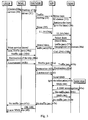
- Fig. 3 is one advantageous signaling diagram illustrating the function of the present invention.
- the example as shown in Fig. 3 comprises a user USER, a first application WML, a second application DRIVER, a mobile station device ME, a subscriber identity module SIM and a server SERVER.
- the mobile station device ME may also refer to the operating system of the mobile station.
- the first application WML is used to mean, e.g. the WML site visible to the user which enables one to activate different functions.
- the second application DRIVER is used to mean, e.g. a program in the WMLScript command language which enables the interactive operation between the WAP client program and the SIM Application Toolkit applications.
- the user USER chooses a service as shown by arrow 30.
- the WAP client program comprises a first application WML which starts the second application DRIVER connected with the service, arrow 31.
- the second application DRIVER sends a startup message of the traffic to the mobile station device ME, arrow 32.
- the mobile station device ME sends to the subscriber identity module SIM a notification of the service chosen by the user USER.
- the subscriber identity module SIM sends an interrogation message to the mobile station device ME, arrow 34.
- the interrogation message is transmitted further to the second application DRIVER.
- the piece of information of the time is transmitted to the subscriber identity module SIM.
- the subscriber identity module SIM sends to the mobile station device ME an interrogation message asking to choose the desired service, arrow 37a.
- the mobile station device ME transmits the interrogation message to the second application DRIVER.
- the service is used to mean the determining of a travel time or a notification informing of a traffic jam. Both of the aforementioned services require the existence of geographical information.
- the subscriber identity module SIM sends to the mobile station device ME an interrogation message inquiring the location of the user USER and this way also the location of the mobile station device ME.
- the mobile station device ME returns the piece of geographical information to the subscriber identity module SIM, arrow 38b.
- the second application DRIVER transmits the interrogation message connected with the service further to the user USER, arrow 39a.
- the user is asked to choose the desired service. The choosing happens, e.g. by accepting the service by pushing a certain key.
- the notification of the chosen service is transmitted to the second application DRIVER.
- the chosen service is that the user USER wishes to find out whether there are any traffic jams along a certain route. So that the service would function, the destination of the journey is still needed that is found out by message interrogations 40a and 40b. In this example, the destination of the user is Lauttasaari.
- the second application DRIVER transmits the notification of the service chosen by the user USER to the mobile station device ME, which in turn transmits the notification further to the subscriber identity module SIM, arrow 41b.
- the subscriber identity module SIM sends to the mobile station device ME a message interrogation concerning the piece of destination information connected with the service, arrow 42a.
- the message interrogation is transmitted further to the second application DRIVER, arrow 42b. Since the user USER has already earlier determined the piece of destination information, it may be transmitted back to the mobile station device ME, arrow 42c.
- the user USER has now determined all the background information required by the service.
- the mobile station device ME sends to the subscriber identity module SIM a message interrogation asking to give the necessary information needed in the transmission of the short message, arrow 43.
- the subscriber identity module SIM creates a message based on the information and parameters connected with the service and transmits it to the mobile station device ME, arrow 44.
- the mobile station device ME sends a SMS interrogation to the server SERVER.
- the server SERVER has got information of the fact of whether there is a traffic jam between the location of the user USER and Lauttasaari. In this example, there is no traffic jam, and the server SERVER sends a notification thereof back to the mobile station device ME, arrow 45b.
- the mobile station device ME sends the received short message further to the subscriber identity module SIM, arrow 46.
- the SIM Application Toolkit application on the subscriber identity module SIM interpreters the content of the short message and based on the content, transmits the notification further to the mobile station device ME, arrow 47a.
- the mobile station device ME transmits the answer in accordance with the invention to the second application DRIVER, which in turn transmits the answer to the USER, arrows 47b and 47c.
- the second application DRIVER sends to the first application WML a notification informing of the termination of the service, arrow 48.
- the first application WML substitutes the WML site visible to the USER with a new one indicating that the service is no longer available, arrow 49.
Landscapes
- Engineering & Computer Science (AREA)
- Computer Security & Cryptography (AREA)
- Computer Networks & Wireless Communication (AREA)
- Signal Processing (AREA)
- General Engineering & Computer Science (AREA)
- Computing Systems (AREA)
- Computer Hardware Design (AREA)
- Mobile Radio Communication Systems (AREA)
- Telephone Function (AREA)
- Alarm Systems (AREA)
- Stored Programmes (AREA)
- Workshop Equipment, Work Benches, Supports, Or Storage Means (AREA)
- Numerical Control (AREA)
- Percussion Or Vibration Massage (AREA)
- Management, Administration, Business Operations System, And Electronic Commerce (AREA)
Applications Claiming Priority (3)
| Application Number | Priority Date | Filing Date | Title |
|---|---|---|---|
| FI992661 | 1999-12-10 | ||
| FI992661A FI111318B (fi) | 1999-12-10 | 1999-12-10 | Sovellusten käyttö tietoliikennejärjestelmässä |
| PCT/FI2000/001080 WO2001043472A1 (en) | 1999-12-10 | 2000-12-08 | Safe information interchange between a user of a terminal and a sim application toolkit via wap |
Publications (2)
| Publication Number | Publication Date |
|---|---|
| EP1236367A1 EP1236367A1 (en) | 2002-09-04 |
| EP1236367B1 true EP1236367B1 (en) | 2006-02-22 |
Family
ID=8555735
Family Applications (1)
| Application Number | Title | Priority Date | Filing Date |
|---|---|---|---|
| EP00987500A Expired - Lifetime EP1236367B1 (en) | 1999-12-10 | 2000-12-08 | Safe information interchange between a user of a terminal and a sim application toolkit via wap |
Country Status (7)
| Country | Link |
|---|---|
| EP (1) | EP1236367B1 (da) |
| AT (1) | ATE318489T1 (da) |
| AU (1) | AU2375101A (da) |
| DE (1) | DE60026174D1 (da) |
| DK (1) | DK1236367T3 (da) |
| FI (1) | FI111318B (da) |
| WO (1) | WO2001043472A1 (da) |
Families Citing this family (9)
| Publication number | Priority date | Publication date | Assignee | Title |
|---|---|---|---|---|
| CN1582593A (zh) * | 2001-09-07 | 2005-02-16 | 艾利森电话股份有限公司 | 动态安全模型 |
| EP1292160A1 (en) * | 2001-09-07 | 2003-03-12 | Telefonaktiebolaget Lm Ericsson | Method for adapting mobile terminals to different protocols and mobile terminal |
| EP1397014A1 (en) * | 2002-09-04 | 2004-03-10 | SCHLUMBERGER Systèmes | WIM (WAP Identification module) Primitives for handling the secure socket layer protocol (SSL) |
| EP1604485B1 (en) * | 2003-03-19 | 2011-10-05 | VeriFone, Inc. | System and method for mobile transactions using the bearer independent protocol |
| WO2004086676A1 (en) | 2003-03-19 | 2004-10-07 | Way Systems, Inc. | System and method for mobile transactions using the bearer independent protocol |
| EP1528827A3 (en) * | 2003-11-03 | 2005-07-13 | Star Home GmbH | Over-the-air activation of a SIM card applet at a mobile phone |
| CN100454932C (zh) * | 2004-06-08 | 2009-01-21 | 雅斯拓(北京)智能卡科技有限公司 | 扩大在sim卡上实现短信存储的方法 |
| WO2006010371A2 (en) * | 2004-07-27 | 2006-02-02 | Telecom Italia S.P.A. | Method and system for providing communication between communication equipment and a sim-type module, related equipment and computer program product therefor |
| TWI382741B (zh) * | 2007-05-09 | 2013-01-11 | Mitac Int Corp | Information Protection Method and System of Smart Card |
Family Cites Families (3)
| Publication number | Priority date | Publication date | Assignee | Title |
|---|---|---|---|---|
| DE19713965A1 (de) * | 1997-04-04 | 1998-10-08 | Deutsche Telekom Ag | Netzsteuerbares GSM-Mobilfunkgerät |
| SE520934C2 (sv) * | 1998-06-05 | 2003-09-16 | Telia Ab | Anordning och metod för att hantera tele- och datatjänster i en mobil terminal som utnyttjar SIM Application Toolkit (SIMAT) baserade informationsmeddelanden |
| CN100452700C (zh) * | 1998-07-03 | 2009-01-14 | 诺基亚公司 | 用于建立保密连接的存储卡和无线通信设备 |
-
1999
- 1999-12-10 FI FI992661A patent/FI111318B/fi not_active IP Right Cessation
-
2000
- 2000-12-08 DK DK00987500T patent/DK1236367T3/da active
- 2000-12-08 AT AT00987500T patent/ATE318489T1/de not_active IP Right Cessation
- 2000-12-08 EP EP00987500A patent/EP1236367B1/en not_active Expired - Lifetime
- 2000-12-08 AU AU23751/01A patent/AU2375101A/en not_active Abandoned
- 2000-12-08 DE DE60026174T patent/DE60026174D1/de not_active Expired - Lifetime
- 2000-12-08 WO PCT/FI2000/001080 patent/WO2001043472A1/en not_active Ceased
Also Published As
| Publication number | Publication date |
|---|---|
| ATE318489T1 (de) | 2006-03-15 |
| DK1236367T3 (da) | 2006-06-19 |
| EP1236367A1 (en) | 2002-09-04 |
| FI111318B (fi) | 2003-06-30 |
| AU2375101A (en) | 2001-06-18 |
| FI19992661A7 (fi) | 2001-06-11 |
| DE60026174D1 (de) | 2006-04-27 |
| WO2001043472A1 (en) | 2001-06-14 |
Similar Documents
| Publication | Publication Date | Title |
|---|---|---|
| EP1247413B1 (en) | Representation of applications in a telecommunication system | |
| FI109756B (fi) | Menetelmä tiedonsiirtojärjestelmässä paikallisten resurssien hyödyntämiseksi, tiedonsiirtojärjestelmä ja langaton viestin | |
| EP1825702B1 (en) | Backup system and method in a mobile telecommunication network | |
| US6925568B1 (en) | Method and system for the processing of messages in a telecommunication system | |
| EP1216538B1 (en) | Method and apparatus for executing secure data transfer in a wireless network | |
| JP3917596B2 (ja) | 端末、および、データを転送する方法 | |
| US20040043788A1 (en) | Management of parameters in a removable user identity module | |
| CN100397918C (zh) | 用于将消息发送到两个或者多个相关无线通信设备的方法和设备 | |
| EP1048181B1 (en) | Procedure and system for the processing of messages in a telecommunication system | |
| JP2000138975A (ja) | 無線通信システムの移動局における端末アプリケ―ション実行方法、並びに、それに対応する加入者識別モジュ―ル及び端末 | |
| WO2009133472A2 (en) | Method and system for executing applications in wireless telecommunication networks | |
| EP2116033B1 (en) | Method and apparatus for event-based synchronization of information between communication devices | |
| WO2008095097A1 (en) | System and method for sharing event-triggered, location-related information between communication devices | |
| JP2003502759A (ja) | Ussdを用いた移動体端末のsatバックチャンネルセキュリティー方式 | |
| EP1236367B1 (en) | Safe information interchange between a user of a terminal and a sim application toolkit via wap | |
| EP1510048B1 (en) | Managing a communication device via a gprs and a gsm connection | |
| US7664487B2 (en) | Mobile terminal and method of managing data reception using the mobile terminal | |
| KR101011082B1 (ko) | 캠페인 중에 무선 통신 네트워크에 있는 휴대형 통신객체에서의 데이터의 다운로드 | |
| WO2003077140A1 (en) | A method and system for publishing and accessing rich content via a wireless device | |
| EP1444856B1 (en) | Roaming in mms environment | |
| JP2003516653A (ja) | ネットワークと移動電話との間のsimツールの使用 | |
| FI108695B (fi) | Langattoman järjestelmän yhdyskäytävä | |
| KR100865334B1 (ko) | 클라이언트 세션 식별자를 이용한 세션 관리 방법 및시스템 | |
| KR20050095058A (ko) | 이동통신 단말기의 멀티미디어 컨텐츠 다운로드 방법 | |
| JP2001157257A (ja) | 発信先限定方法及びその方法を使用する移動通信制御システム |
Legal Events
| Date | Code | Title | Description |
|---|---|---|---|
| PUAI | Public reference made under article 153(3) epc to a published international application that has entered the european phase |
Free format text: ORIGINAL CODE: 0009012 |
|
| 17P | Request for examination filed |
Effective date: 20020629 |
|
| AK | Designated contracting states |
Kind code of ref document: A1 Designated state(s): AT BE CH CY DE DK ES FI FR GB GR IE IT LI LU MC NL PT SE TR |
|
| AX | Request for extension of the european patent |
Free format text: AL;LT;LV;MK;RO;SI |
|
| RAP1 | Party data changed (applicant data changed or rights of an application transferred) |
Owner name: TELIASONERA FINLAND OYJ |
|
| GRAP | Despatch of communication of intention to grant a patent |
Free format text: ORIGINAL CODE: EPIDOSNIGR1 |
|
| GRAS | Grant fee paid |
Free format text: ORIGINAL CODE: EPIDOSNIGR3 |
|
| GRAA | (expected) grant |
Free format text: ORIGINAL CODE: 0009210 |
|
| AK | Designated contracting states |
Kind code of ref document: B1 Designated state(s): AT BE CH CY DE DK ES FI FR GB GR IE IT LI LU MC NL PT SE TR |
|
| PG25 | Lapsed in a contracting state [announced via postgrant information from national office to epo] |
Ref country code: IT Free format text: LAPSE BECAUSE OF FAILURE TO SUBMIT A TRANSLATION OF THE DESCRIPTION OR TO PAY THE FEE WITHIN THE PRESCRIBED TIME-LIMIT;WARNING: LAPSES OF ITALIAN PATENTS WITH EFFECTIVE DATE BEFORE 2007 MAY HAVE OCCURRED AT ANY TIME BEFORE 2007. THE CORRECT EFFECTIVE DATE MAY BE DIFFERENT FROM THE ONE RECORDED. Effective date: 20060222 Ref country code: BE Free format text: LAPSE BECAUSE OF FAILURE TO SUBMIT A TRANSLATION OF THE DESCRIPTION OR TO PAY THE FEE WITHIN THE PRESCRIBED TIME-LIMIT Effective date: 20060222 Ref country code: CH Free format text: LAPSE BECAUSE OF FAILURE TO SUBMIT A TRANSLATION OF THE DESCRIPTION OR TO PAY THE FEE WITHIN THE PRESCRIBED TIME-LIMIT Effective date: 20060222 Ref country code: FI Free format text: LAPSE BECAUSE OF FAILURE TO SUBMIT A TRANSLATION OF THE DESCRIPTION OR TO PAY THE FEE WITHIN THE PRESCRIBED TIME-LIMIT Effective date: 20060222 Ref country code: AT Free format text: LAPSE BECAUSE OF FAILURE TO SUBMIT A TRANSLATION OF THE DESCRIPTION OR TO PAY THE FEE WITHIN THE PRESCRIBED TIME-LIMIT Effective date: 20060222 Ref country code: LI Free format text: LAPSE BECAUSE OF FAILURE TO SUBMIT A TRANSLATION OF THE DESCRIPTION OR TO PAY THE FEE WITHIN THE PRESCRIBED TIME-LIMIT Effective date: 20060222 Ref country code: NL Free format text: LAPSE BECAUSE OF FAILURE TO SUBMIT A TRANSLATION OF THE DESCRIPTION OR TO PAY THE FEE WITHIN THE PRESCRIBED TIME-LIMIT Effective date: 20060222 |
|
| REG | Reference to a national code |
Ref country code: GB Ref legal event code: FG4D |
|
| REG | Reference to a national code |
Ref country code: CH Ref legal event code: EP |
|
| REG | Reference to a national code |
Ref country code: IE Ref legal event code: FG4D |
|
| REF | Corresponds to: |
Ref document number: 60026174 Country of ref document: DE Date of ref document: 20060427 Kind code of ref document: P |
|
| REG | Reference to a national code |
Ref country code: SE Ref legal event code: TRGR |
|
| PG25 | Lapsed in a contracting state [announced via postgrant information from national office to epo] |
Ref country code: DE Free format text: LAPSE BECAUSE OF FAILURE TO SUBMIT A TRANSLATION OF THE DESCRIPTION OR TO PAY THE FEE WITHIN THE PRESCRIBED TIME-LIMIT Effective date: 20060523 |
|
| PG25 | Lapsed in a contracting state [announced via postgrant information from national office to epo] |
Ref country code: ES Free format text: LAPSE BECAUSE OF FAILURE TO SUBMIT A TRANSLATION OF THE DESCRIPTION OR TO PAY THE FEE WITHIN THE PRESCRIBED TIME-LIMIT Effective date: 20060602 |
|
| REG | Reference to a national code |
Ref country code: DK Ref legal event code: T3 |
|
| PG25 | Lapsed in a contracting state [announced via postgrant information from national office to epo] |
Ref country code: PT Free format text: LAPSE BECAUSE OF FAILURE TO SUBMIT A TRANSLATION OF THE DESCRIPTION OR TO PAY THE FEE WITHIN THE PRESCRIBED TIME-LIMIT Effective date: 20060724 |
|
| NLV1 | Nl: lapsed or annulled due to failure to fulfill the requirements of art. 29p and 29m of the patents act | ||
| REG | Reference to a national code |
Ref country code: CH Ref legal event code: PL |
|
| PG25 | Lapsed in a contracting state [announced via postgrant information from national office to epo] |
Ref country code: IE Free format text: LAPSE BECAUSE OF NON-PAYMENT OF DUE FEES Effective date: 20061208 |
|
| PLBE | No opposition filed within time limit |
Free format text: ORIGINAL CODE: 0009261 |
|
| STAA | Information on the status of an ep patent application or granted ep patent |
Free format text: STATUS: NO OPPOSITION FILED WITHIN TIME LIMIT |
|
| PG25 | Lapsed in a contracting state [announced via postgrant information from national office to epo] |
Ref country code: MC Free format text: LAPSE BECAUSE OF NON-PAYMENT OF DUE FEES Effective date: 20061231 |
|
| 26N | No opposition filed |
Effective date: 20061123 |
|
| EN | Fr: translation not filed | ||
| GBPC | Gb: european patent ceased through non-payment of renewal fee |
Effective date: 20061208 |
|
| PG25 | Lapsed in a contracting state [announced via postgrant information from national office to epo] |
Ref country code: GB Free format text: LAPSE BECAUSE OF NON-PAYMENT OF DUE FEES Effective date: 20061208 |
|
| PG25 | Lapsed in a contracting state [announced via postgrant information from national office to epo] |
Ref country code: FR Free format text: LAPSE BECAUSE OF FAILURE TO SUBMIT A TRANSLATION OF THE DESCRIPTION OR TO PAY THE FEE WITHIN THE PRESCRIBED TIME-LIMIT Effective date: 20070309 Ref country code: GR Free format text: LAPSE BECAUSE OF FAILURE TO SUBMIT A TRANSLATION OF THE DESCRIPTION OR TO PAY THE FEE WITHIN THE PRESCRIBED TIME-LIMIT Effective date: 20060523 |
|
| PG25 | Lapsed in a contracting state [announced via postgrant information from national office to epo] |
Ref country code: LU Free format text: LAPSE BECAUSE OF NON-PAYMENT OF DUE FEES Effective date: 20061208 Ref country code: TR Free format text: LAPSE BECAUSE OF FAILURE TO SUBMIT A TRANSLATION OF THE DESCRIPTION OR TO PAY THE FEE WITHIN THE PRESCRIBED TIME-LIMIT Effective date: 20060222 |
|
| PG25 | Lapsed in a contracting state [announced via postgrant information from national office to epo] |
Ref country code: CY Free format text: LAPSE BECAUSE OF FAILURE TO SUBMIT A TRANSLATION OF THE DESCRIPTION OR TO PAY THE FEE WITHIN THE PRESCRIBED TIME-LIMIT Effective date: 20060222 Ref country code: FR Free format text: LAPSE BECAUSE OF FAILURE TO SUBMIT A TRANSLATION OF THE DESCRIPTION OR TO PAY THE FEE WITHIN THE PRESCRIBED TIME-LIMIT Effective date: 20060222 |
|
| PGFP | Annual fee paid to national office [announced via postgrant information from national office to epo] |
Ref country code: DK Payment date: 20161221 Year of fee payment: 17 |
|
| PGFP | Annual fee paid to national office [announced via postgrant information from national office to epo] |
Ref country code: SE Payment date: 20161221 Year of fee payment: 17 |
|
| REG | Reference to a national code |
Ref country code: DK Ref legal event code: EBP Effective date: 20171231 |
|
| PG25 | Lapsed in a contracting state [announced via postgrant information from national office to epo] |
Ref country code: SE Free format text: LAPSE BECAUSE OF NON-PAYMENT OF DUE FEES Effective date: 20171209 |
|
| PG25 | Lapsed in a contracting state [announced via postgrant information from national office to epo] |
Ref country code: DK Free format text: LAPSE BECAUSE OF NON-PAYMENT OF DUE FEES Effective date: 20171231 |