EP1237341B1 - Method and system for initializing VDSL (Very high bit rate Subscriber Line) communications using tone space adjustment - Google Patents
Method and system for initializing VDSL (Very high bit rate Subscriber Line) communications using tone space adjustment Download PDFInfo
- Publication number
- EP1237341B1 EP1237341B1 EP02250972A EP02250972A EP1237341B1 EP 1237341 B1 EP1237341 B1 EP 1237341B1 EP 02250972 A EP02250972 A EP 02250972A EP 02250972 A EP02250972 A EP 02250972A EP 1237341 B1 EP1237341 B1 EP 1237341B1
- Authority
- EP
- European Patent Office
- Prior art keywords
- tone space
- stations
- space mode
- tone
- initializing
- Prior art date
- Legal status (The legal status is an assumption and is not a legal conclusion. Google has not performed a legal analysis and makes no representation as to the accuracy of the status listed.)
- Expired - Lifetime
Links
Images



Classifications
-
- H—ELECTRICITY
- H04—ELECTRIC COMMUNICATION TECHNIQUE
- H04L—TRANSMISSION OF DIGITAL INFORMATION, e.g. TELEGRAPHIC COMMUNICATION
- H04L12/00—Data switching networks
- H04L12/02—Details
- H04L12/12—Arrangements for remote connection or disconnection of substations or of equipment thereof
-
- H—ELECTRICITY
- H04—ELECTRIC COMMUNICATION TECHNIQUE
- H04L—TRANSMISSION OF DIGITAL INFORMATION, e.g. TELEGRAPHIC COMMUNICATION
- H04L5/00—Arrangements affording multiple use of the transmission path
- H04L5/003—Arrangements for allocating sub-channels of the transmission path
- H04L5/0044—Allocation of payload; Allocation of data channels, e.g. PDSCH or PUSCH
-
- H—ELECTRICITY
- H04—ELECTRIC COMMUNICATION TECHNIQUE
- H04L—TRANSMISSION OF DIGITAL INFORMATION, e.g. TELEGRAPHIC COMMUNICATION
- H04L5/00—Arrangements affording multiple use of the transmission path
- H04L5/14—Two-way operation using the same type of signal, i.e. duplex
- H04L5/1438—Negotiation of transmission parameters prior to communication
-
- H—ELECTRICITY
- H04—ELECTRIC COMMUNICATION TECHNIQUE
- H04L—TRANSMISSION OF DIGITAL INFORMATION, e.g. TELEGRAPHIC COMMUNICATION
- H04L5/00—Arrangements affording multiple use of the transmission path
- H04L5/0001—Arrangements for dividing the transmission path
- H04L5/0003—Two-dimensional division
- H04L5/0005—Time-frequency
- H04L5/0007—Time-frequency the frequencies being orthogonal, e.g. OFDM(A) or DMT
-
- H—ELECTRICITY
- H04—ELECTRIC COMMUNICATION TECHNIQUE
- H04L—TRANSMISSION OF DIGITAL INFORMATION, e.g. TELEGRAPHIC COMMUNICATION
- H04L5/00—Arrangements affording multiple use of the transmission path
- H04L5/0091—Signalling for the administration of the divided path, e.g. signalling of configuration information
Definitions
- the present invention relates to initialization of a digital subscriber line, and more particularly, to an initializing method for Multi-Carrier Modulation (MCM) Very high bit rate Digital Subscriber Line (VDSL), and a system supporting the method.
- MCM Multi-Carrier Modulation
- VDSL Very high bit rate Digital Subscriber Line
- FIG. 1 is a diagram for explaining an initialization process when an ordinary 4.3125kHz tone space is used.
- a sequence on the left specifies a Special Operation Channel (SOC) which is exchanged between a VDSL Transceiver Unit at the Optical network unit (VTU-O) and a VDSL Transceiver Unit at the Remote site (VTU-R).
- SOC Special Operation Channel
- VTU-O VDSL Transceiver Unit at the Optical network unit
- VTU-R VDSL Transceiver Unit at the Remote site
- a sequence on the right specifies a symbol type which is exchanged between VTU-O and VTU-R.
- An initialization process in a VDSL can be divided into a handshake process and an actual initialization process.
- MCM Multi-Carrier Modulation
- FIG. 1 immediately after a G.994.1 handshake process is finished, an actual initialization process having a 4.3125kHz tone space starts. In FIG. 1, just the front part of the actual initialization process is shown.
- a space between tones (briefly, a tone space) is described as 4.3125kHz.
- a 8.625kHz tone space, twice the tone space of the present VDSL, may be used as an option.
- the 8.625kHz tone space it has an advantage of using two times wider frequency band with the same Fast Fourier Transform (FFT) size.
- the frequency band which is currently used in the VDSL standard is 138kHz-12MHz.
- the band equal to or less than 138kHz may be used as an option, and the band equal to or greater than 12MHz is described as the object of future study.
- the frequency band which can be used for VDSL data communications is limited to 8.832 MHz (4.3125 kHz * 2048).
- a 8192 point FFT size is used, it is clear that a 17.664MHz band can be used.
- doubling a tone space is described as an option in the VDSL standard.
- an 8.625kHz tone space is used, a frequency band that is twice as wide can be used with the same FFT size, and therefore enhances data rate when the length of a loop is short, that is, when data can be transmitted even in a high frequency band.
- EP-A-1005203 discloses a DSL transmission system which allows a single modem to exploit many DSL standards. This is achieved by using a different number of tones according to a required transmission rate.
- an initializing method for a Very high bit rate Digital Subscriber Line between two stations comprising: a. handshaking in a first tone space mode, including determining whether or not each of the two stations supports a second tone space mode; b. if it is determined that each of the two stations supports the second tone space mode, detecting a short loop in each of the two stations, and switching from the first tone space mode to the second tone space mode if a short loop in each of the two stations is detected; and c. completing the initializing method by exchanging remaining information needed to establish data communications between the two stations in the second tone space mode.
- the present invention thus provides an initializing method for a VDSL, including tone space adjustment, in which a data communications link is established by a single initialization process, by enabling to switch from a first tone space mode to a second tone space mode between a handshaking process and an actual initialization process.
- a system supporting an initializing method for a Very high bit rate Digital Subscriber Line having two stations, each station comprising: handshaking means for handshaking in a first tone space mode, including determining whether or not each of the two stations supports a second tone space mode; detecting and switching means for detecting, if it is determined that each of the two stations supports the second tone space mode, a short loop in the station, and for switching from the first tone space mode to the second tone space mode if a short loop in the station is detected; and initializing means for completing the initializing method by exchanging remaining information needed to establish data communications between the two stations in the second tone space mode.
- the present invention thus provides a system for supporting an initializing method for a VDSL, including tone space adjustment, with two stations that enable to switch from a first tone space mode to a second tone space mode between a handshaking process and an actual initialization process.
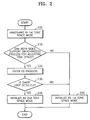
- FIG. 2 is a flowchart for explaining an initializing method for a VDSL according to the present invention
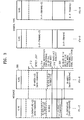
- FIG. 3 is a diagram for explaining an initialization process between two stations for VDSL according to a preferred embodiment of the present invention.
- the two modems begin an initialization process in a first tone space mode, preferably, based on a 4.3125kHz tone space at present.
- a handshaking process in the first tone mode is performed in step 200.
- the handshaking process it is determined whether or not a switching (Escape to Switch tone spacing, ES) process for adjusting a tone space can be supported in step 210.
- the handshaking process it is checked through message exchange whether or not there is 8.625kHz capability between the VTU-O and the VTU-R. Then, if both sides of the VTU-O and the VTU-R are capable of supporting the 8.625kHz space, the ES process according to the present invention begins in step 220.
- an intermediate process that is, the ES process 312 through 316, is applied to between the handshaking process 300 and the actual initialization process 320.
- information which is basically needed between two modems (for example, operation modes, an FFT size, a cyclic extension length, frequency band information, etc.) is exchanged in the handshaking process.
- This handshaking process is described in the ITU-T G.994.1 (G.HS) standard.
- the two modems obtain all system parameters which are used in Showtime (a stage in which data is actually communicated) through training, channel estimation, data rate negotiation, etc., and apply the parameters to each of the two modems.
- this intermediate process performs a short loop detection in step 312, using a plurality of identical signals used in the actual initialization process, and determines whether to perform the following actual initialization process 320 based on 8.625kHz or based on original 4.3125kHz in step 314, and then switches in a switching-available interval in step 316.
- the ES process begins by the VTU-O transmitting O-P-TRAINING-ES, which is a symbol, to the VTU-R.
- symbol O-P-TRAINING-ES is substantially the same symbol as O-P-TRAINING in the actual initialization.
- O-SIGNATURE-ES which is an SOC message, is transmitted from the VTU-O to the VTU-R. More accurately, an O-SIGNATURE-ES message is encoded and embedded in the transmitted symbol O-P-TRAINING-ES.
- the O-SIGNATURE-ES message except a message code (ID), is substantially the same message as O-SIGNATURE in the actual initialization.
- the VTU-R After synchronized with the VTU-O, the VTU-R decodes O-SIGNATURE-ES, obtains needed information, and then transmits symbol R-P-TRAINING-ES to the VTU-O.
- symbol R-P-TRAINING-ES is substantially the same symbol as R-P-TRAINING in the actual initialization.
- an SOC message, R-MSG1-ES is transmitted from the VTU-R to the VTU-O. More accurately, the R-MSG1-ES message is encoded and embedded in the transmitted R-P-TRAINING-ES symbol.
- R-MSG1_ES except a message code (ID), is substantially the same message as R-MSG1 in the actual initialization.
- the above-described examples of the symbol and message transmitted and received between the VTU-O and the VTU-R correspond to basic information needed in data communications between the modems. For example, information on which band is used in an upstream channel, or on which band is used in a downstream channel may be transmitted to each other.
- the VTU-O and the VTU-R receives R-MSG1-ES and O-SIGNATURE-ES, respectively, and at the same time perform a short loop detection.
- the VTU-O and the VTU-R perform a short loop detection at the same time.
- whether or not the actual initialization process based on the 8.625kHz tone space will be performed after the ES process can be indicated by the level of Power Spectral Density (PSD) of a signal which is received in a high frequency band (for example, around 8MHz).
- PSD Power Spectral Density
- each of the two modems informs the other side of the power of the signal which is transmitted by itself, and then, the other side can detect a short loop by the attenuation degree of the received signal.
- the actual initialization process is performed in a second tone space mode, preferably, based on 8.625kHz at present, in step 240. Otherwise, as in the handshaking process, the actual initialization process is performed in the first tone space mode in step 250.
- final negotiation for entering the first tone space mode or the second tone space mode may be performed.
- O-ACK-ES is transmitted as a positive answer message from the VTU-O to the VTU-R
- R-ACK-ES is transmitted as a positive answer message from the VTU-R to the VTU-O.
- each of the two modems can switch its own modem structure from the first tone space mode to the second tone space mode.
- the switching is possible in a QUIET (QUITE) cycle (or an IDLE cycle) which precedes immediately before the actual initialization process.
- QUITE QUIET
- IDLE cycle an IDLE cycle
- FIG. 5 illustrates an example of a message and a message code used in a switching process for adjusting a tone space.
- FIGS. 4a through 4c are diagrams for explaining a method for permission of 8.625kHz tone space between two sides in a handshake process.
- the capability information of a modem for supporting the 8.625kHz tone space is communicated using the G.994.1 Handshaking (G.HS) protocol.
- G.HS Handshaking
- This capability information is transmitted through a non-standard information field.
- a "non-standard information field" parameter will be set as a one binary bit in the identification field of a transmission message.
- the non-standard information field may be formed with one or more non-standard information blocks, and referring to FIG. 4b, a non-standard information block describes the 8.625kHz tone space in two octets of a vendor-specific information field.
- the 8.625kHz mode ID is mapped to bit 1 through bit 8 in the first octet and bit 3 through bit 8 in the second octet. Bit 1 in the second octet is used to represent the capability of 8.625kHz tone space.
- the two octets defined in FIG. 4c are the entire payload of the vendor-specific information field of the non-standard information block in the non-standard information field. If one or more non-standard information blocks are used, the 8.625kHz mode is specified in the last two octets of the last non-standard information block.
- the 8.625kHz second tone space in the present invention is just a preferred embodiment of the present invention at present, and can be changed according to embodiments which need tone space adjustment.
- the VTU-O and the VTU-R are explained as the two stations, other stations in a master-slave relation may be used.
- the names and types of symbols and messages which are transmitted and received between the two stations in order to detect a short loop are just examples.
- a data communications link can be established with only one initialization process through the ES process according to the method and accordingly time for initialization is greatly reduced.
- some identical signals used in the prior art actual initialization process are also used in the ES process, which is an intermediate process, additional hardware is not needed and in software aspect, it is easy to implement the system.
- code may be provided in the modems for causing them to carry out the method as set out above.
- the code may be recorded on a data carrier, e.g. a disc, data transmission line or the like.
Landscapes
- Engineering & Computer Science (AREA)
- Signal Processing (AREA)
- Computer Networks & Wireless Communication (AREA)
- Quality & Reliability (AREA)
- Telephonic Communication Services (AREA)
- Communication Control (AREA)
Description
- The present invention relates to initialization of a digital subscriber line, and more particularly, to an initializing method for Multi-Carrier Modulation (MCM) Very high bit rate Digital Subscriber Line (VDSL), and a system supporting the method.
- FIG. 1 is a diagram for explaining an initialization process when an ordinary 4.3125kHz tone space is used. A sequence on the left specifies a Special Operation Channel (SOC) which is exchanged between a VDSL Transceiver Unit at the Optical network unit (VTU-O) and a VDSL Transceiver Unit at the Remote site (VTU-R). A sequence on the right specifies a symbol type which is exchanged between VTU-O and VTU-R.
- An initialization process in a VDSL, especially in a Multi-Carrier Modulation (MCM) VDSL, can be divided into a handshake process and an actual initialization process. As shown in FIG. 1, immediately after a G.994.1 handshake process is finished, an actual initialization process having a 4.3125kHz tone space starts. In FIG. 1, just the front part of the actual initialization process is shown.
- In the present VDSL standard, a space between tones (briefly, a tone space) is described as 4.3125kHz. A 8.625kHz tone space, twice the tone space of the present VDSL, may be used as an option. When the 8.625kHz tone space is used, it has an advantage of using two times wider frequency band with the same Fast Fourier Transform (FFT) size. The frequency band which is currently used in the VDSL standard is 138kHz-12MHz. The band equal to or less than 138kHz may be used as an option, and the band equal to or greater than 12MHz is described as the object of future study. When a default FFT size which is 4096 points (always twice the number of tones being used) is used, the frequency band which can be used for VDSL data communications is limited to 8.832 MHz (4.3125 kHz * 2048). When a 8192 point FFT size is used, it is clear that a 17.664MHz band can be used. However, due to difficulties in realizing an FFT core (for example, complexity, speed, etc.), doubling a tone space is described as an option in the VDSL standard. When an 8.625kHz tone space is used, a frequency band that is twice as wide can be used with the same FFT size, and therefore enhances data rate when the length of a loop is short, that is, when data can be transmitted even in a high frequency band.
- In the 8.625kHz tone space option described in the VDSL standard, in order to use the 8.625kHz tone space, prior art handshaking and actual initialization process is performed once. Then, if it is determined according to the measured length of the loop that the 8.625kHz tone space can improve the data speed, the same handshaking and actual initialization process is performed again based on the 8.625kHz tone space. In this case, since the same initialization process is performed twice, the time for initializing a modem is doubled.
- Cioffi J M et al: "Very-High-Speed Digital Subscriber Lines", IEEE Communications Magazine, IEEE Service Center, Piscataway, NJ, US, vol. 37, no. 4, April 1999, pages 72-79 discloses a transmission method for a VDSL in which bit rates are varied according to changing loop and noise conditions by tailoring the distribution of information to the channel attenuation and noise characteristics.
- EP-A-1005203 discloses a DSL transmission system which allows a single modem to exploit many DSL standards. This is achieved by using a different number of tones according to a required transmission rate.
- The following documents provide background information relating to VDSL initialization: Cioffi J et al: "Digital Subscriber Lines", Computer Networks, Elsevier Science Publishers BV, Amsterdam, NL, vol. 31, no. 4, 25 February 1999, pages 283-311; EP-A-0966135; and Alcatel, Bell: "G.VDSL: Initialisation for VDSL systems", 14 April 2000, ITU - Telecommunication Standardization Sector, Geneva.
- In a first aspect there is provided an initializing method for a Very high bit rate Digital Subscriber Line between two stations, the method comprising: a. handshaking in a first tone space mode, including determining whether or not each of the two stations supports a second tone space mode; b. if it is determined that each of the two stations supports the second tone space mode, detecting a short loop in each of the two stations, and switching from the first tone space mode to the second tone space mode if a short loop in each of the two stations is detected; and c. completing the initializing method by exchanging remaining information needed to establish data communications between the two stations in the second tone space mode.
- The present invention thus provides an initializing method for a VDSL, including tone space adjustment, in which a data communications link is established by a single initialization process, by enabling to switch from a first tone space mode to a second tone space mode between a handshaking process and an actual initialization process.
In another aspect there is provided a system supporting an initializing method for a Very high bit rate Digital Subscriber Line, the system having two stations, each station comprising: handshaking means for handshaking in a first tone space mode, including determining whether or not each of the two stations supports a second tone space mode; detecting and switching means for detecting, if it is determined that each of the two stations supports the second tone space mode, a short loop in the station, and for switching from the first tone space mode to the second tone space mode if a short loop in the station is detected; and initializing means for completing the initializing method by exchanging remaining information needed to establish data communications between the two stations in the second tone space mode. - The present invention thus provides a system for supporting an initializing method for a VDSL, including tone space adjustment, with two stations that enable to switch from a first tone space mode to a second tone space mode between a handshaking process and an actual initialization process.
- The above objects and advantages of the present invention will become more apparent by describing in detail preferred embodiments thereof with reference to the attached drawings in which:
- FIG. 1 is a diagram for explaining an initialization process when an ordinary 4.3125kHz tone space is used;
- FIG. 2 is a flowchart for explaining an initializing method for a VDSL according to the present invention;
- FIG. 3 is a diagram for explaining an initialization process between two stations for VDSL according to a preferred embodiment of the present invention;
- FIGS. 4a through 4c are diagrams for explaining a method for permission of 8.625kHz between two sides in a handshake process; and
- FIG. 5 illustrates an example of a message and a message code used in a switching process for adjusting a tone space.
- FIG. 2 is a flowchart for explaining an initializing method for a VDSL according to the present invention, and FIG. 3 is a diagram for explaining an initialization process between two stations for VDSL according to a preferred embodiment of the present invention.
- First, if a connection process begins between a VDSL Transceiver Unit at the Optical network unit (VTU-O) and a VDSL Transceiver Unit at the Remote site (VTU-R) as the two stations, the two modems begin an initialization process in a first tone space mode, preferably, based on a 4.3125kHz tone space at present. Start of the initialization process, that is, a handshaking process in the first tone mode is performed in
step 200. In the handshaking process, it is determined whether or not a switching (Escape to Switch tone spacing, ES) process for adjusting a tone space can be supported instep 210. - Preferably, in the handshaking process, it is checked through message exchange whether or not there is 8.625kHz capability between the VTU-O and the VTU-R. Then, if both sides of the VTU-O and the VTU-R are capable of supporting the 8.625kHz space, the ES process according to the present invention begins in
step 220. - Referring to FIG. 3, in the present invention, in order to reduce time which is taken in initialization when the 8.625kHz tone space is used, an intermediate process, that is, the
ES process 312 through 316, is applied to between thehandshaking process 300 and theactual initialization process 320. Generally, information which is basically needed between two modems (for example, operation modes, an FFT size, a cyclic extension length, frequency band information, etc.) is exchanged in the handshaking process. This handshaking process is described in the ITU-T G.994.1 (G.HS) standard. In the actual initialization process, the two modems obtain all system parameters which are used in Showtime (a stage in which data is actually communicated) through training, channel estimation, data rate negotiation, etc., and apply the parameters to each of the two modems. - In the present invention, this intermediate process performs a short loop detection in
step 312, using a plurality of identical signals used in the actual initialization process, and determines whether to perform the followingactual initialization process 320 based on 8.625kHz or based on original 4.3125kHz instep 314, and then switches in a switching-available interval instep 316. - More specifically, the ES process begins by the VTU-O transmitting O-P-TRAINING-ES, which is a symbol, to the VTU-R. Here, symbol O-P-TRAINING-ES is substantially the same symbol as O-P-TRAINING in the actual initialization. At the same time, O-SIGNATURE-ES, which is an SOC message, is transmitted from the VTU-O to the VTU-R. More accurately, an O-SIGNATURE-ES message is encoded and embedded in the transmitted symbol O-P-TRAINING-ES. Here, the O-SIGNATURE-ES message, except a message code (ID), is substantially the same message as O-SIGNATURE in the actual initialization.
- After synchronized with the VTU-O, the VTU-R decodes O-SIGNATURE-ES, obtains needed information, and then transmits symbol R-P-TRAINING-ES to the VTU-O. Here, symbol R-P-TRAINING-ES is substantially the same symbol as R-P-TRAINING in the actual initialization. At the same time, an SOC message, R-MSG1-ES, is transmitted from the VTU-R to the VTU-O. More accurately, the R-MSG1-ES message is encoded and embedded in the transmitted R-P-TRAINING-ES symbol. Here, likewise, R-MSG1_ES, except a message code (ID), is substantially the same message as R-MSG1 in the actual initialization.
- The above-described examples of the symbol and message transmitted and received between the VTU-O and the VTU-R correspond to basic information needed in data communications between the modems. For example, information on which band is used in an upstream channel, or on which band is used in a downstream channel may be transmitted to each other. The VTU-O and the VTU-R receives R-MSG1-ES and O-SIGNATURE-ES, respectively, and at the same time perform a short loop detection.
- In order to measure the length of a loop, the VTU-O and the VTU-R perform a short loop detection at the same time. At this time, whether or not the actual initialization process based on the 8.625kHz tone space will be performed after the ES process can be indicated by the level of Power Spectral Density (PSD) of a signal which is received in a high frequency band (for example, around 8MHz). For example, each of the two modems informs the other side of the power of the signal which is transmitted by itself, and then, the other side can detect a short loop by the attenuation degree of the received signal.
- Referring FIG. 2 again, if a short loop is detected in the ES process, that is, if it is determined that data speed can be improved using the 8.625kHz tone space because the length of the loop is short in
step 230, the actual initialization process is performed in a second tone space mode, preferably, based on 8.625kHz at present, instep 240. Otherwise, as in the handshaking process, the actual initialization process is performed in the first tone space mode instep 250. - More specifically, after detecting the short loop, final negotiation for entering the first tone space mode or the second tone space mode may be performed. In the final negotiation, O-ACK-ES is transmitted as a positive answer message from the VTU-O to the VTU-R, and in response to this, R-ACK-ES is transmitted as a positive answer message from the VTU-R to the VTU-O. By doing so, intention that both sides will perform the initialization process based on the 8.625kHz tone space is clearly transmitted to each other. Here, O-ACK-ES and R-ACK-ES will be confirmed by corresponding IDs that are predetermined between the two modems.
- According to the result of the final negotiation, each of the two modems can switch its own modem structure from the first tone space mode to the second tone space mode. The switching is possible in a QUIET (QUITE) cycle (or an IDLE cycle) which precedes immediately before the actual initialization process. For example, when a tone index is calculated, the actual initialization process based on 8.625kHz, except the fact that it is based on 8.625kHz, is substantially the same as the actual initialization process based on the prior art 4.3125kHz.
- FIG. 5 illustrates an example of a message and a message code used in a switching process for adjusting a tone space.
- FIGS. 4a through 4c are diagrams for explaining a method for permission of 8.625kHz tone space between two sides in a handshake process.
- Preferably, the capability information of a modem for supporting the 8.625kHz tone space is communicated using the G.994.1 Handshaking (G.HS) protocol. This capability information is transmitted through a non-standard information field. As defined in G.994.1, a "non-standard information field" parameter will be set as a one binary bit in the identification field of a transmission message.
- Referring to FIG. 4a, the non-standard information field may be formed with one or more non-standard information blocks, and referring to FIG. 4b, a non-standard information block describes the 8.625kHz tone space in two octets of a vendor-specific information field. A long fixed 14-bit binary sequence of 'MSB 10000110 110001 LSB (=8625dec)' is used as an 8.625kHz mode ID. As shown in FIG. 4c, the 8.625kHz mode ID is mapped to
bit 1 throughbit 8 in the first octet andbit 3 throughbit 8 in the second octet.Bit 1 in the second octet is used to represent the capability of 8.625kHz tone space. - If the 8.625kHz mode is the only information that is to be transmitted by the non-standard information field, the two octets defined in FIG. 4c are the entire payload of the vendor-specific information field of the non-standard information block in the non-standard information field. If one or more non-standard information blocks are used, the 8.625kHz mode is specified in the last two octets of the last non-standard information block.
- So far, the present invention is explained with preferred embodiments. The 8.625kHz second tone space in the present invention is just a preferred embodiment of the present invention at present, and can be changed according to embodiments which need tone space adjustment. Also, though the VTU-O and the VTU-R are explained as the two stations, other stations in a master-slave relation may be used. In addition, the names and types of symbols and messages which are transmitted and received between the two stations in order to detect a short loop are just examples.
- As described above, according to the present invention, when a 8.625kHz tone space is used, a data communications link can be established with only one initialization process through the ES process according to the method and accordingly time for initialization is greatly reduced. In addition, since some identical signals used in the prior art actual initialization process are also used in the ES process, which is an intermediate process, additional hardware is not needed and in software aspect, it is easy to implement the system.
- Thus, code may be provided in the modems for causing them to carry out the method as set out above. The code may be recorded on a data carrier, e.g. a disc, data transmission line or the like.
Claims (11)
- An initializing method for a Very high bit rate Digital Subscriber Line between two stations (VTU-O, VTU-R), the method comprising:a. handshaking (200) in a first tone space mode, including determining whether or not each of the two stations supports a second tone space mode (210);b. if it is determined that each of the two stations supports the second tone space mode, detecting a short loop in each of the two stations (230), and switching from the first tone space mode to the second tone space mode if a short loop in each of the two stations is detected; andc. completing the initializing method by exchanging remaining information needed to establish data communications between the two stations in the second tone space mode (240).
- The method of claim 1, wherein step b comprises each station performing final negotiation for determining whether or not step c is to be performed in the second tone space mode, according to the result of the short loop detection (314).
- The method of claim 2, wherein in step b, each station obtains the result of the short loop detection based on the level of Power Spectral Density of a signal which is received in a high frequency band transmitted from the other station.
- The method of claim 2, wherein the step b further comprises each station switching from the first tone space mode to the second tone space mode in an idle cycle when it is determined in step b that step c is to be performed in the second tone space mode (316).
- The method of claim 1, wherein in step a, that the two stations are capable of supporting the second tone space is determined by exchanging messages in which capability information is transmitted through a non-standard information field.
- The method of claim 1, wherein the two stations are a modem at an optical network unit and a modem at a remote terminal, respectively.
- A system supporting an initializing method for a Very high bit rate Digital Subscriber Line, the system having two stations (VTU-O, VTU-R), each station comprising:handshaking means for handshaking (200) in a first tone space mode, including determining whether or not each of the two stations supports a second tone space mode (210);detecting and switching means for detecting, if it is determined that each of the two stations supports the second tone space mode, a short loop in the station (230), and for switching from the first tone space mode to the second tone space mode if a short loop in the station is detected; andinitializing means for completing the initializing method by exchanging remaining information needed to establish data communications between the two stations in the second tone space mode (240).
- The system of claim 7, wherein the detecting and switching means comprises means for performing final negotiation for determining whether or not the initializing means is to complete the initializing method in the second tone space mode, according to the result of the short loop detection (314).
- The system of claim 8, wherein the detection and switching means is adapted to obtain the result of the short loop detection based on the level of Power Spectral Density of a signal which is received in a high frequency band transmitted from the other station.
- The system of claim 7, wherein the handshaking means is adapted to determine that the two stations are capable of supporting the second tone space by exchanging messages in which capability information is transmitted through a non-standard information field.
- The system of claim 7, wherein the two stations are a modem at an optical network unit and a modem at a remote terminal, respectively.
Applications Claiming Priority (2)
| Application Number | Priority Date | Filing Date | Title |
|---|---|---|---|
| KR1020010008011A KR100697002B1 (en) | 2001-02-17 | 2001-02-17 | Initialization Method for High Speed Digital Subscriber Line with Tone Spacing Control and Supporting System |
| KR2001008011 | 2001-02-17 |
Publications (2)
| Publication Number | Publication Date |
|---|---|
| EP1237341A1 EP1237341A1 (en) | 2002-09-04 |
| EP1237341B1 true EP1237341B1 (en) | 2006-05-17 |
Family
ID=36571439
Family Applications (1)
| Application Number | Title | Priority Date | Filing Date |
|---|---|---|---|
| EP02250972A Expired - Lifetime EP1237341B1 (en) | 2001-02-17 | 2002-02-13 | Method and system for initializing VDSL (Very high bit rate Subscriber Line) communications using tone space adjustment |
Country Status (5)
| Country | Link |
|---|---|
| US (1) | US7151779B2 (en) |
| EP (1) | EP1237341B1 (en) |
| KR (1) | KR100697002B1 (en) |
| CN (1) | CN1204702C (en) |
| DE (1) | DE60211405T2 (en) |
Families Citing this family (8)
| Publication number | Priority date | Publication date | Assignee | Title |
|---|---|---|---|---|
| WO2001047184A2 (en) * | 1999-12-23 | 2001-06-28 | Broadcom Corporation | System and method for providing compatibility between different transceivers in a multi-pair communication system |
| JP2005057449A (en) * | 2003-08-01 | 2005-03-03 | Matsushita Electric Ind Co Ltd | ADSL modem apparatus and communication method therefor |
| US11381285B1 (en) | 2004-08-02 | 2022-07-05 | Genghiscomm Holdings, LLC | Transmit pre-coding |
| JP4432787B2 (en) * | 2005-01-31 | 2010-03-17 | ソニー株式会社 | COMMUNICATION DEVICE, COMMUNICATION METHOD, AND PROGRAM |
| US7881403B2 (en) * | 2006-10-10 | 2011-02-01 | Futurewei Technologies, Inc. | System for realizing emergency rate adjustment |
| EP2571237A1 (en) * | 2011-09-13 | 2013-03-20 | Technicolor Delivery Technologies Belgium | Method for initiating a safeguard mode for an XDSL transmission system and residential gateway using the method |
| CN103765789B (en) * | 2013-09-18 | 2015-06-10 | 华为技术有限公司 | A circuit initialization method, device and system |
| JP2018503294A (en) * | 2014-12-03 | 2018-02-01 | インテル アイピー コーポレイション | Wireless apparatus, method and computer-readable medium for orthogonal frequency division multiple access (OFDMA) assignment based on basic tone resource units or subchannels |
Family Cites Families (14)
| Publication number | Priority date | Publication date | Assignee | Title |
|---|---|---|---|---|
| US5987061A (en) * | 1996-05-09 | 1999-11-16 | Texas Instruments Incorporated | Modem initialization process for line code and rate selection in DSL data communication |
| WO1998010545A1 (en) * | 1996-09-02 | 1998-03-12 | Telia Ab | Improvements in, or relating to, multi-carrier transmission systems |
| US5982768A (en) * | 1997-05-13 | 1999-11-09 | 3Com Corporation | Dual band modem for high bandwidth communications |
| US6628722B1 (en) * | 1998-06-19 | 2003-09-30 | Lucent Technologies Inc. | Decoding technique in discrete multi-tone (DMT) based communications systems |
| EP1005203A1 (en) * | 1998-11-24 | 2000-05-31 | STMicroelectronics SA | Multistandard DMT DSL transmission system |
| US6590893B1 (en) * | 1999-04-07 | 2003-07-08 | Legerity, Inc. | Adaptive transmission system in a network |
| DE69938906D1 (en) * | 1999-05-21 | 2008-07-24 | Fujitsu Ltd | Digital subscriber line method, apparatus and system using synchronous processing |
| JP2001036499A (en) * | 1999-07-23 | 2001-02-09 | Fujitsu Ltd | Communication band setting method and communication device |
| KR100683289B1 (en) * | 2000-01-07 | 2007-02-15 | 어웨어, 인크. | Systems, methods and information storage media for determining loop length and bridged tap length of transmission lines |
| US20010026538A1 (en) * | 2000-01-10 | 2001-10-04 | Jorg Bruss | Method and system for exchange of multicall capabilities between terminal and network |
| US6788705B1 (en) * | 2000-01-18 | 2004-09-07 | Lucent Technologies Inc. | Transmitting DSL startup parameters over a voice channel |
| US6909781B1 (en) * | 2000-03-31 | 2005-06-21 | Globespanvirata, Inc. | DSL line tester |
| US6922444B1 (en) * | 2000-10-11 | 2005-07-26 | Globespanvirata, Inc. | System and method for providing adaptive rate selection |
| US20020085514A1 (en) * | 2000-12-28 | 2002-07-04 | Illidge William E. | Method for switching between high-speed packet data service option and non-high-speed circuit switched or packet data service options without disrupting user data flow |
-
2001
- 2001-02-17 KR KR1020010008011A patent/KR100697002B1/en not_active Expired - Fee Related
-
2002
- 2002-02-11 CN CNB021056226A patent/CN1204702C/en not_active Expired - Fee Related
- 2002-02-13 DE DE60211405T patent/DE60211405T2/en not_active Expired - Lifetime
- 2002-02-13 EP EP02250972A patent/EP1237341B1/en not_active Expired - Lifetime
- 2002-02-19 US US10/076,451 patent/US7151779B2/en not_active Expired - Lifetime
Also Published As
| Publication number | Publication date |
|---|---|
| CN1204702C (en) | 2005-06-01 |
| DE60211405T2 (en) | 2007-04-26 |
| CN1378349A (en) | 2002-11-06 |
| US7151779B2 (en) | 2006-12-19 |
| EP1237341A1 (en) | 2002-09-04 |
| KR100697002B1 (en) | 2007-03-20 |
| KR20020067728A (en) | 2002-08-24 |
| US20020114347A1 (en) | 2002-08-22 |
| DE60211405D1 (en) | 2006-06-22 |
Similar Documents
| Publication | Publication Date | Title |
|---|---|---|
| JP2533286B2 (en) | How to start full-duplex communication | |
| KR100422755B1 (en) | ACTIVATION OF MULTIPLE xDSL MODEMS WITH IMPLICIT CHANNEL PROBE | |
| CA2336631C (en) | Activation of multiple xdsl modems with power control measurement | |
| US6751254B1 (en) | Activation of multiple xDSL modems with power control measurement | |
| EP1234441A1 (en) | Method and apparatus for transmission power level adjustment | |
| WO1999067891A1 (en) | Digital modem fast retrain escape mechanism | |
| US7151779B2 (en) | Initialization method for VDSL including tone space adjustment | |
| WO2001043415A2 (en) | Method for reducing noise from an asymmetric digital subscriber line modem | |
| US6535550B1 (en) | Transceiver with variable width cyclic prefix | |
| JP2001156685A (en) | Power line communication system | |
| US6442173B1 (en) | Timing recovery scheme for a discrete multitone transmission system | |
| US6434188B1 (en) | Differential encoding arrangement for a discrete multi-tone transmission system | |
| EP1086554B1 (en) | Collision handling scheme for discrete multi-tone data communications network | |
| CN101924964B (en) | Data processing method, system and equipment for DSL (Digital Subscriber Line) | |
| US6856683B1 (en) | Method for reducing noise from a non-linear device that shares a customer loop with an asymmetric digital subscriber line modem | |
| US7411998B1 (en) | Method and apparatus for using low power training | |
| KR20050018574A (en) | Dsl modem apparatus and communication control method | |
| KR20020035956A (en) | Method for initialization protocol of discrete multi-tone system for time division duplexing/time division multiple access type using power line communication | |
| WO2001039426A1 (en) | Method and apparatus for using low power training in adsl system | |
| KR20010074385A (en) | Method of and apparatus for processing bit swap in the ADSL system | |
| WO2006092861A1 (en) | Line terminating apparatus and transmission control method |
Legal Events
| Date | Code | Title | Description |
|---|---|---|---|
| PUAI | Public reference made under article 153(3) epc to a published international application that has entered the european phase |
Free format text: ORIGINAL CODE: 0009012 |
|
| AK | Designated contracting states |
Kind code of ref document: A1 Designated state(s): AT BE CH CY DE DK ES FI FR GB GR IE IT LI LU MC NL PT SE TR |
|
| AX | Request for extension of the european patent |
Free format text: AL;LT;LV;MK;RO;SI |
|
| 17P | Request for examination filed |
Effective date: 20030212 |
|
| AKX | Designation fees paid |
Designated state(s): DE FI FR GB SE |
|
| 17Q | First examination report despatched |
Effective date: 20040414 |
|
| GRAP | Despatch of communication of intention to grant a patent |
Free format text: ORIGINAL CODE: EPIDOSNIGR1 |
|
| GRAS | Grant fee paid |
Free format text: ORIGINAL CODE: EPIDOSNIGR3 |
|
| GRAA | (expected) grant |
Free format text: ORIGINAL CODE: 0009210 |
|
| AK | Designated contracting states |
Kind code of ref document: B1 Designated state(s): DE FI FR GB SE |
|
| REG | Reference to a national code |
Ref country code: GB Ref legal event code: FG4D |
|
| REF | Corresponds to: |
Ref document number: 60211405 Country of ref document: DE Date of ref document: 20060622 Kind code of ref document: P |
|
| REG | Reference to a national code |
Ref country code: SE Ref legal event code: TRGR |
|
| ET | Fr: translation filed | ||
| PLBE | No opposition filed within time limit |
Free format text: ORIGINAL CODE: 0009261 |
|
| STAA | Information on the status of an ep patent application or granted ep patent |
Free format text: STATUS: NO OPPOSITION FILED WITHIN TIME LIMIT |
|
| 26N | No opposition filed |
Effective date: 20070220 |
|
| REG | Reference to a national code |
Ref country code: FR Ref legal event code: PLFP Year of fee payment: 15 |
|
| REG | Reference to a national code |
Ref country code: FR Ref legal event code: PLFP Year of fee payment: 16 |
|
| PGFP | Annual fee paid to national office [announced via postgrant information from national office to epo] |
Ref country code: SE Payment date: 20170123 Year of fee payment: 16 Ref country code: DE Payment date: 20170120 Year of fee payment: 16 Ref country code: FR Payment date: 20170126 Year of fee payment: 16 Ref country code: FI Payment date: 20170120 Year of fee payment: 16 |
|
| PGFP | Annual fee paid to national office [announced via postgrant information from national office to epo] |
Ref country code: GB Payment date: 20170123 Year of fee payment: 16 |
|
| REG | Reference to a national code |
Ref country code: DE Ref legal event code: R119 Ref document number: 60211405 Country of ref document: DE |
|
| REG | Reference to a national code |
Ref country code: SE Ref legal event code: EUG |
|
| GBPC | Gb: european patent ceased through non-payment of renewal fee |
Effective date: 20180213 |
|
| PG25 | Lapsed in a contracting state [announced via postgrant information from national office to epo] |
Ref country code: SE Free format text: LAPSE BECAUSE OF NON-PAYMENT OF DUE FEES Effective date: 20180214 Ref country code: FI Free format text: LAPSE BECAUSE OF NON-PAYMENT OF DUE FEES Effective date: 20180213 |
|
| REG | Reference to a national code |
Ref country code: FR Ref legal event code: ST Effective date: 20181031 |
|
| PG25 | Lapsed in a contracting state [announced via postgrant information from national office to epo] |
Ref country code: DE Free format text: LAPSE BECAUSE OF NON-PAYMENT OF DUE FEES Effective date: 20180901 |
|
| PG25 | Lapsed in a contracting state [announced via postgrant information from national office to epo] |
Ref country code: FR Free format text: LAPSE BECAUSE OF NON-PAYMENT OF DUE FEES Effective date: 20180228 Ref country code: GB Free format text: LAPSE BECAUSE OF NON-PAYMENT OF DUE FEES Effective date: 20180213 |