EP1239404A2 - System, Gerät, oder Verfahren zur Fingerabdruckprüfung, und biometrisches Identifizierungsgerät - Google Patents
System, Gerät, oder Verfahren zur Fingerabdruckprüfung, und biometrisches Identifizierungsgerät Download PDFInfo
- Publication number
- EP1239404A2 EP1239404A2 EP02251564A EP02251564A EP1239404A2 EP 1239404 A2 EP1239404 A2 EP 1239404A2 EP 02251564 A EP02251564 A EP 02251564A EP 02251564 A EP02251564 A EP 02251564A EP 1239404 A2 EP1239404 A2 EP 1239404A2
- Authority
- EP
- European Patent Office
- Prior art keywords
- image data
- fingerprint
- image
- identification
- identification apparatus
- Prior art date
- Legal status (The legal status is an assumption and is not a legal conclusion. Google has not performed a legal analysis and makes no representation as to the accuracy of the status listed.)
- Granted
Links
Images





Classifications
-
- G—PHYSICS
- G07—CHECKING-DEVICES
- G07C—TIME OR ATTENDANCE REGISTERS; REGISTERING OR INDICATING THE WORKING OF MACHINES; GENERATING RANDOM NUMBERS; VOTING OR LOTTERY APPARATUS; ARRANGEMENTS, SYSTEMS OR APPARATUS FOR CHECKING NOT PROVIDED FOR ELSEWHERE
- G07C9/00—Individual registration on entry or exit
- G07C9/20—Individual registration on entry or exit involving the use of a pass
- G07C9/22—Individual registration on entry or exit involving the use of a pass in combination with an identity check of the pass holder
- G07C9/25—Individual registration on entry or exit involving the use of a pass in combination with an identity check of the pass holder using biometric data, e.g. fingerprints, iris scans or voice recognition
- G07C9/257—Individual registration on entry or exit involving the use of a pass in combination with an identity check of the pass holder using biometric data, e.g. fingerprints, iris scans or voice recognition electronically
-
- G—PHYSICS
- G06—COMPUTING OR CALCULATING; COUNTING
- G06V—IMAGE OR VIDEO RECOGNITION OR UNDERSTANDING
- G06V40/00—Recognition of biometric, human-related or animal-related patterns in image or video data
- G06V40/10—Human or animal bodies, e.g. vehicle occupants or pedestrians; Body parts, e.g. hands
- G06V40/12—Fingerprints or palmprints
- G06V40/1365—Matching; Classification
Definitions
- the present invention relates to a fingerprint identification system, apparatus, and method for reading a fingerprint from a human finger and comparing the fingerprint against a fingerprint which has been registered in advance, for example, for the purpose of authentication.
- the present invention also relates to a biometric identification apparatus for reading biometric information relating to a feature of human body and comparing the biometric information against biometric information which has been registered in advance, for example, for the purpose of authentication.
- Fig. 15 is an external view of a conventional fingerprint identification apparatus which is used for such authentication.
- a fingerprint sensor 104 is provided on a surface of a case of a fingerprint identification apparatus 102.
- a person who is to input his/her fingerprint places his/her finger on a reading unit 108 of the fingerprint sensor 104.
- the fingerprint sensor 104 reads the fingerprint, outputting an image signal representing the fingerprint.
- the fingerprint identification apparatus 102 generates image data of the fingerprint based on the image signal, and analyzes the image data to determine whether the fingerprint which has been read is a particular fingerprint, i.e., whether the person who has input his/her fingerprint is a particular person who has already been registered.
- a computer (not shown) is notified of the identification result via a cable 110,
- a semiconductor sensor has come to be used as the fingerprint sensor 104, in particular, of the type which detects variation in capacitance due to ridges and valleys of the fingerprint of a finger placed on the fingerprint reading unit 108 (e.g., Japanese Unexamined Patent Application Publication No. 2001-056204).
- minutiae method which uses data relating to feature points such as bifurcations and ridge endings of a fingerprint
- pattern matching method which compares binarized image data
- a method which performs identification based on the cycle of ridges and valleys of a fingerprint
- pattern matching method uses a relatively simple algorithm, and is therefore suitable to implement a fingerprint identification circuit by an LSI (large scale integration circuit), which is advantageous in reducing cost of the apparatus and improving processing speed.
- LSI large scale integration circuit
- grayscale image data of the fingerprint is first binarized. and then compared against template image data which has been stored in advance.
- template image data has usually been created and stored by extracting image data representing only the central portion of the fingerprint.
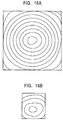
- an image representing a larger region of a fingerprint which has been read by a fingerprint sensor at the time of identification is compared against the template image representing a smaller region of a fingerprint, shown in Fig. 16B.
- the fingerprint sensor of the type which detects capacitance is relatively expensive. Furthermore, the fingerprint sensor has a large number of cells (elements) for detecting capacitance, and thus is more expensive as the size increases. Accordingly, it is effective to reduce cost of the fingerprint sensor, particularly to use a fingerprint sensor of a smaller size with a smaller number of elements, in order to reduce cost of the fingerprint identification apparatus.
- the region of a fingerprint which is read at the time of identification does not necessarily coincide with the region of a fingerprint which has been stored as a template, inhibiting fingerprint identification, and thus causing the inconvenience that a person who is to input his/her fingerprint is required to let his/her finger be read many times.
- Illustrative embodiments of the present invention seek to provide a fingerprint identification system, a fingerprint identification apparatus, and a fingerprint identification method in which a fingerprint sensor of a small size is used so as to achieve reduction in cost while maintaining performance of fingerprint identification.
- illustrative embodiment of the present invention seek to provide a biometric identification apparatus in which a biometric sensor of a small size is used so as to achieve reduction in cost while maintaining performance of biometric identification.
- the present invention in one aspect thereof, provides a fingerprint identification system including a registration apparatus and an identification apparatus.
- the registration apparatus includes a first fingerprint sensor for reading a fingerprint in a first region of a human finger to output an image signal representing an image of the fingerprint; a first image data generating unit for generating image data of the fingerprint based on the image signal output from the first fingerprint sensor; and a data output unit for outputting the image data generated by the first image data generating unit.
- the identification apparatus includes a data input unit for receiving the image data output from the data output unit; a storage unit for storing the image data received by the data input unit; a second fingerprint sensor for reading a fingerprint in a second region of a human finger, which is smaller than the first region, to output an image signal representing an image of the fingerprint; a second image data generating unit for generating image data of the fingerprint based on the image signal output from the second fingerprint sensor; and an image identification unit for comparing the image data generated by the second image data generating unit against the image data stored in the storage unit to determine whether the fingerprints represented by the respective image data coincide with each other.
- the fingerprint identification system when registering a fingerprint, a person who is to register his/her fingerprint places his/her finger on a fingerprint reading unit of the first fingerprint sensor of the registration apparatus.
- the first fingerprint sensor reads the fingerprint in the first region of the finger to output an image signal representing the fingerprint.
- the first image data generating unit generates image data of the fingerprint based on the image signal output from the first fingerprint sensor, and the data output unit outputs the image data generated by the first image data generating unit.
- the data input unit receives the image data output from the data output unit, and the image data is stored in the storage unit.
- a person who is to input his/her fingerprint places his/her finger on a fingerprint reading unit of the second fingerprint sensor of the identification apparatus.
- the second fingerprint sensor reads the fingerprint in the second region of the finger to output an image signal representing the fingerprint.
- the second image data generating unit generates image data of the fingerprint based on the image signal output from the second fingerprint sensor.
- the image identification unit compares the image data generated by the second image data generating unit against the image data stored in the storage unit to determine whether the fingerprints represented by the respective image data coincide with each other.
- the fingerprint identification system when registering a fingerprint, the fingerprint is read in a larger region (the first region) by the first fingerprint sensor of the registration apparatus to generate image data; whereas when identifying a fingerprint, the fingerprint is read in a smaller region (the second region) by the second fingerprint sensor of the identification apparatus to generate image data.
- the image identification unit compares the respective image data to determine whether the fingerprints coincide with each other.
- the reading region for the second fingerprint sensor is smaller and the image data associated with the second fingerprint sensor only represents the fingerprint in the smaller region, the image data associated with the first fingerprint sensor represents the fingerprint in the larger region, so that accurate fingerprint identification is constantly achieved.
- the second fingerprint sensor has a smaller reading region and thus can be implemented at a lower cost with a smaller number of elements, serving to achieve reduction in cost of an identification apparatus.
- the cost reduction is extremely advantageous because an identification apparatus is usually owned by each user.
- the second fingerprint sensor has a smaller reading region with a smaller number of elements, the fingerprint identification apparatus can be readily incorporated in various portable items, allowing fingerprint identification anytime when required.
- the present invention in another aspect thereof, provides a fingerprint identification apparatus including a storage unit for storing image data representing an image of a fingerprint in a first region of a human finger; a fingerprint sensor for reading a fingerprint in a second region of a human finger, which is smaller than the first region, to output an image signal representing an image of the fingerprint; an image data generating unit for generating image data of the fingerprint based on the image signal output from the fingerprint sensor; and an image identification unit for comparing the image data generated by the image data generating unit against the image data stored in the storage unit to determine whether the fingerprints represented by the respective image data coincide with each other. Furthermore, an input unit for inputting fingerprint data in the first region to the fingerprint identification apparatus may be provided.
- the fingerprint identification apparatus when identifying a fingerprint, a person who is to input his/her fingerprint places his/her finger on a fingerprint reading unit of the fingerprint sensor of the identification apparatus.
- the fingerprint sensor reads the fingerprint in the second region of the finger to output an image signal representing the fingerprint.
- the image data generating unit generates image data of the fingerprint based on the image signal output from the fingerprint sensor.
- the image identification unit compares the image data generated by the image data generating unit against the image data stored in the storage unit to determine whether the fingerprints represented by the respective image data coincide with each other.
- the fingerprint identification apparatus when registering a fingerprint, the fingerprint is read in a larger region (the first region) by a fingerprint sensor of a registration apparatus to generate image data; whereas when identifying a fingerprint, the fingerprint is read in a smaller region (the second region) by the fingerprint sensor of the identification apparatus to generate image data.
- the image identification unit compares the respective image data to determine whether the fingerprints coincide with each other.
- the reading region for the fingerprint sensor of the identification apparatus is smaller and the image data associated with the fingerprint sensor of the identification apparatus only represents the fingerprint in the smaller region
- the image data associated with the fingerprint sensor of the registration apparatus represents the fingerprint in the larger region, so that accurate fingerprint identification is constantly achieved.
- the fingerprint sensor of the identification apparatus has a smaller reading region and thus can be implemented at a lower cost with a smaller number of elements, serving to achieve reduction in cost of an identification apparatus.
- the coat reduction is extremely advantageous because an identification apparatus is usually owned by each user.
- the fingerprint sensor of the identification apparatus has a smaller reading region with a smaller number of elements, the fingerprint identification apparatus can be readily incorporated in various portable items, allowing fingerprint identification anytime when required.
- the present invention in yet another aspect thereof, provides a fingerprint identification method including a registration apparatus controlling step and an identification apparatus controlling step.
- the registration apparatus controlling step includes a first image signal output step for reading a fingerprint in a first region of a human finger by a first fingerprint sensor to output an image signal representing an image of the fingerprint; a first image data generating step for generating image data of the fingerprint based on the image signal output in the first image signal output step; and a data output step for outputting the image data generated in the first image data generating step.
- the identification apparatus controlling step includes a data input step for receiving the image data output in the data output step; a storing step for storing the image data received in the data input step in a storage unit; a second image signal output step for reading a fingerprint in a second region of a human finger, which is smaller than the first region, by a second fingerprint sensor to output an image signal representing an image of the fingerprint; a second image data generating step for generating image data of the fingerprint based on the image signal output in the second image signal output step; and an image identification step for comparing the image data generated in the second image data generating step against the image data stored in the storage unit to determine whether the fingerprints represented by the respective image data coincide with each other.
- the fingerprint identification method when registering a fingerprint, a person who is to register his/her fingerprint places his/her finger on a fingerprint reading unit of the first fingerprint sensor of the registration apparatus.
- the fingerprint in the first region of the finger is read to output an image signal representing the fingerprint.
- image data of the fingerprint is generated based on the image signal output in the first image signal output step, and in the data output step, the image data generated in the first image data generating step is output.
- the image data output in the data output step is received in the data input step, and in the storing step, the image data is stored in the storage unit.
- a person who is to input his/her fingerprint places his/her finger on a fingerprint reading unit of the second fingerprint sensor of the identification apparatus.
- the fingerprint in the second region of the finger is read to output an image signal representing the fingerprint.
- image data of the fingerprint is generated based on the image signal output in the second image signal output step.
- the image identification step the image data generated in the second image data generating step is compared against the image data stored in the storage unit to determine whether the fingerprints represented by the respective image data coincide with each other.
- the fingerprint identification method when registering a fingerprint, the fingerprint is read in a larger region (the first region) by the first fingerprint sensor of the registration apparatus to generate image data; whereas when identifying a fingerprint, the fingerprint is read in a smaller region (the second region) by the second fingerprint sensor of the identification apparatus to generate image data.
- the image identification unit compares the respective image data to determine whether the fingerprints coincide with each other.
- the reading region for the second fingerprint sensor is smaller and the image data associated with the second fingerprint sensor only represents the fingerprint in the smaller region, the image data associated with the first fingerprint sensor represents the fingerprint in the larger region, so that accurate fingerprint identification is constantly achieved.
- the second fingerprint sensor has a smaller reading region and thus can be implemented at a lower cost with a smaller number of elements, serving to achieve reduction in cost of an identification apparatus.
- the cost reduction is extremely advantageous because an identification apparatus is usually owned by each user.
- the second fingerprint sensor has a smaller reading region with a smaller number of elements, the fingerprint identification apparatus can be readily incorporated in various portable items, allowing fingerprint identification anytime when required.
- the present invention in another aspect thereof, provides a fingerprint identification method including a storing step for storing in a storage unit image data representing an image of a fingerprint in a first region of a human finger: an image signal output step for reading a fingerprint in a second region of a human finger, which is smaller than the first region, by a fingerprint sensor to output an image signal representing an image of the fingerprint; an image data generating step for generating image data of the fingerprint based on the image signal output in the image signal output step; and an image identification step for comparing the image data generated in the image data generating step against the image data stored in the storage unit to determine whether the fingerprints represented by the respective image data coincide with each other.
- the present invention in still another aspect thereof, provides a biometric identification apparatus including a storage unit for storing image data representing an image of biometric information in a first region of a human body; a biometric sensor for reading biometric information in a second region of a human body, which is smaller than the first region, to output an image signal representing an image of the biometric information; an image data generating unit for generating image data of the biometric information based on the image signal output from the biometric sensor; and an image identification unit for comparing the image data generated by the image data generating unit against the image data stored in the storage unit to determine whether the biometric information represented by the respective image data coincide with each other. Furthermore, an input unit for inputting biometric information data in the first region to the biometric identification apparatus may be provided.
- the biometric identification apparatus when identifying biometric information, a person who is to input his/her biometric information lets a biometric information reading unit of the biometric sensor of the identification apparatus read the biometric information.
- the second biometric sensor reads the biometric information in the second region of the person to output an image signal representing the biometric information.
- the image data generating unit generates image data of the biometric information based on the image signal output from the biometric sensor.
- the image identification unit compares the image data generated by the image data generating unit against the image data stored in the storage unit to determine whether the biometric information represented by the respective image data coincide with each other.
- the biometric identification apparatus when registering biometric information, the biometric information is read in a larger region (the first region) by a biometric sensor of a registration apparatus to generate image data; whereas when identifying biometric information, the biometric information is read in a smaller region (the second region) by the biometric sensor of the identification apparatus to generate image data.
- the image identification unit compares the image data associated with the biometric information which has been read in the smaller region (the second region) against the image data associated with the biometric information which has been read in the larger region (the first region), thereby determining whether the biometric information coincide with each other.
- the reading region for the biometric sensor of the identification apparatus is smaller and the image data associated with the biometric sensor of the identification apparatus only represents the biometric information in the smaller region
- the image data associated with the biometric sensor of the registration apparatus represents the biometric information in the larger region, so that accurate biometric identification is constantly achieved.
- the biometric sensor of the identification apparatus has a smaller reading region and thus can be implemented at a lower cost with a smaller number of elements, serving to achieve reduction in cost of an identification apparatus.
- the cost reduction is extremely advantageous because an identification apparatus is usually owned by each user.
- the biometric sensor of the identification apparatus has a smaller reading region with a smaller number of elements, the biometric identification apparatus can be readily incorporated in various portable items, allowing biometric identification anytime when required.
- Figs. 1A and 1B are block diagrams of a registration apparatus and an identification apparatus constituting a fingerprint identification system according to a first embodiment of the present invention, respectively.
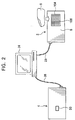
- Fig. 2 is a diagram showing the system configuration for fingerprint registration
- Fig. 3 is a diagram showing the system configuration for fingerprint identification.
- the fingerprint identification system includes a registration apparatus 2 and an identification apparatus 4 shown in Figs. 1A and 1B.
- the registration apparatus 2 has a fingerprint sensor 104 disposed on a surface of a case 6, as shown in Fig. 2.
- the fingerprint sensor 104 is implemented by a semiconductor sensor which detects variation in capacitance due to ridges and valleys of a fingerprint when a finger 8 is placed on a fingerprint reading unit 108 and which outputs an electric image signal representing the fingerprint.
- the fingerprint sensor 104 reads a fingerprint in a region (a first region) which is large enough to cover substantially the entire fingerprint of a finger at once, as in the case with the related art.
- the registration apparatus 2 further includes an A/D converter 12, a fingerprint registration circuit 14, an image memory 16, a CPU (central processing unit) 18, and a program memory 20.
- the A/D converter 12 digitizes the image signal of the fingerprint output by the fingerprint sensor 104, and outputs image data representing a grayscale image of the fingerprint.
- the fingerprint registration circuit 14 is implemented, for example, by an LSI.
- the fingerprint registration circuit 14 generates, based on the image data from the A/D converter 12, binary image data which serves as registration image data representing a binary image of the fingerprint, and stores the registration image data in the image memory 16 which is implemented, for example, by a rewritable, nonvolatile memory, via a bus line 22.
- the A/D converter 12 and the fingerprint registration circuit 14 constitute first image data generating means according to the present invention.
- the program memory 20 includes a RAM (random access memory) and a ROM (read-only memory).
- the CPU 18 fetches a program stored in the ROM via the bus line 22, and operates according to the program using the RAM as required, thereby exercising overall control on the registration apparatus 2.
- a USB (Universal Serial Bus) controller 26 is connected to the bus line 22, and it functions as an interface for connecting the registration apparatus 2 to a computer 24 (shown in Fig. 2) via a USB cable 28.
- the computer 24 may be, for example, a personal computer.
- the CPU 18, together with the USB controller 26, constitutes data output means according to the present invention, and it outputs the registration image data stored in the image memory 16 to the computer 24 via the bus line 22, the USB controller 26, and the USB cable 28.
- the identification apparatus 4 is constructed similarly to the registration apparatus 2, but the fingerprint sensor 104 and the fingerprint registration circuit 14 are replaced with a fingerprint sensor 30 and a fingerprint identification circuit 32.
- Fig. 1B parts that are identical to those in Fig. 1A are designated by the same numbers, and descriptions thereof will be omitted.
- the fingerprint sensor 30 is implemented by a semiconductor sensor which detects variation in capacitance due to ridges and valleys of a fingerprint and which outputs an electric image signal representing the fingerprint, similarly to the fingerprint sensor 104; however, the fingerprint sensor 30 reads a fingerprint in a region (a second region) which is smaller than the reading region for the fingerprint sensor 104, for example, on the order of a quarter. Thus, the fingerprint sensor 30 usually reads only a portion of a fingerprint.
- the fingerprint identification circuit 32 which is provided in place of the fingerprint registration circuit 14, is implemented, for example, by an LSI.
- the fingerprint identification circuit 32 together with the A/D converter 12, constitutes second image data generating means according to the present invention, and it also constitutes image identification means. More specifically, the fingerprint identification circuit 32 generates, based on the image data from the A/D converter 12, binary image data which serves as input image data representing a binary image of the fingerprint. Furthermore, the fingerprint identification circuit 32 compares, by pattern matching, the input image data against the registration image data of a fingerprint which is received from the registration apparatus 2 and stored in the image memory 16 in advance, thereby determining whether the fingerprints represented by the respective binary image data coincide with each other.
- the CPU 18 constitutes data input means together with the USB controller 26, and it receives the registration image data of a fingerprint from the registration apparatus 2 via the USB cable 28, and stores the registration image data in the image memory 16 (storage means according to the present invention).
- a fingerprint is used as biometric information representing a biometric feature of an individual user.
- the fingerprint sensor 104 constitutes a first biometric sensor according to the present invention and the fingerprint sensor 30 constitutes a second biometric sensor according to the present invention.
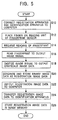
- the registration apparatus 2 and the identification apparatus 4 are connected to the computer 24 via the USB cable 28 (step S10), as shown in Fig. 2.
- a person who is to register his/her fingerprint places his/her finger on the reading unit 108 of the fingerprint sensor 104 in the registration apparatus 2 (step S12).
- An operator of the computer 24 performs a predetermined operation on the computer 24, requesting the registration apparatus 2 to read the fingerprint (step S14).
- the fingerprint sensor 104 reads the fingerprint of substantially the entire finger placed on the reading unit 108, and outputs an image signal the fingerprint (step S16).
- the A/D converter 12 (shown in Fig. 1A) dagttizes the image signal to output a grayscale image data (step S18).
- the fingerprint registration circuit 14 binarizes the grayscale image data received from the A/D converter 12, thus generating binary image data which serves as registration image data of the fingerprint, and it stores the registration image data in the image memory 16 (step S20).
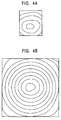
- the image represented by the registration image data stored in the image memory 16 is, for example, as shown in Fig. 4B.
- the CPU 18 reads the registration image data of the fingerprint from the image memory 16, and outputs the registration image data to the computer 24 via the USB controller 26 and the USB cable 28 (step S22).
- the computer 24 transfers the registration image data to the identification apparatus 4 via the USB cable 28 (step S24).
- the CPU 18 of the identification apparatus 4 receives the registration image data via the USB cable 28 and the USB controller 26, and stores the registration image data in the image memory 16 (step S26).
- the identification apparatus 4 When identifying a fingerprint, the identification apparatus 4 is connected to the computer 24 via the USB cable 28 (step S30), as shown in Fig. 3.
- a person who is to input his/her fingerprint places his/her finger on a reading unit 301 of the fingerprint sensor 30 (step S32).
- An operator of the computer 24 performs a predetermined operation on the computer 24, requesting the identification apparatus 4 to read the fingerprint via the computer 24 (step 34).
- the fingerprint sensor 30 reads the fingerprint of a part of the finger placed on the reading unit 301, outputting an image signal representing the fingerprint (step S36).
- the A/D converter digitizes the image signal to output grayscale image data (step S38).
- the fingerprint identification circuit 32 binarizes the grayscale image data received from the A/D converter 21, thus generating binary image data which serves as input image data of the fingerprint (step S40).
- the image represented by the input image data generated by the fingerprint identification circuit 32 based on the data form the A/D converter 12 shows only a part of the fingerprint, as shown in Fig. 4A.
- the fingerprint identification circuit 32 reads the registration image data stored in advance in the image memory 16 as described earlier (step S42), and compares, by pattern matching, the input image data which has been newly generated based on the data from the A/D converter 12 against the registration image data which has been read. thereby determining whether the fingerprints represented by the respective image data coincide with each other on the basis of a particular criterion (step S44).
- the input image data represents only a part of the fingerprint as described earlier (shown in Fig. 4A), whereas the registration image data stored in the image memory 16 represents substantially the entire fingerprint (shown in Fig. 4B); accordingly, the fingerprint identification circuit 32 performs pattern matching while moving the position of the image represented by the input image data over the entire image represented by the registration image data.
- the CPU 18 of the identification apparatus 4 is notified of the identification result via the bus line 22, and the CPU 18 notifies the computer 24 of the identification result via the USB controller 26 and the USB cable 28 (step S46).
- the fingerprint sensor 30 of the identification apparatus 4 covers a smaller region and thus input image data to be identified is acquired only from the smaller region; whereas the fingerprint sensor 104 of the registration apparatus 2 covers a larger region so that registration image data is acquired from the larger region.
- the fingerprint identification circuit 32 constantly compares the respective image data with accuracy, successfully determining whether the fingerprints represented by the respective image data coincide with each other.
- the fingerprint sensor 30 reads a fingerprint in the smaller region, the fingerprint sensor 30 can be implemented at a lower cost with a smaller number of elements, serving to reduce cost of the identification apparatus 4. Since the identification apparatus 4 is owned by each user, reduction in cost thereof is extremely advantageous.
- cost of the registration apparatus 2 remains the same as in the related art since a fingerprint sensor with a larger reading region is used, and cost of the system as a whole increases because the registration apparatus 2 and the identification apparatus 4 are separately provided.
- each user is not required to own the registration apparatus 2 individually and is required only to own the identification apparatus 4, reduction in cost of the identification apparatus 4 is extremely advantageous.
- the small fingerprint sensor 30 can be suitably incorporated in portable electronic apparatuses such as cellular phones.
- portable electronic apparatuses such as cellular phones.
- a cellular phone with a fingerprint identification function, which serves as the identification apparatus 4 can be readily implemented.
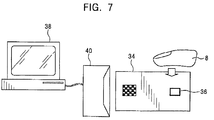
- Fig. 7 is a diagram showing the configuration of an example of a smart card (IC card) system in which a smart card (IC card) incorporating such a fingerprint sensor is used.
- a smart card (IC card) 34 incorporates a fingerprint sensor 36 which is equivalent to the fingerprint sensor 30.
- the fingerprint sensor 36 reads a fingerprint in order to authenticate the user of a card. Only if the user is found to be a legitimate user, a computer 38 is allowed to exchange data with the smart card 34 via a card reader 40.
- the fingerprint identification system according to this embodiment serves to implement a highly secure smart card (IC card) system.
- the present invention is advantageous in that a fingerprint sensor of a smaller size is used.
- the registration apparatus 2 is typically prepared by the issuer of the smart card 34, and provided, for example, at a registration center together with a card reader which is also capable of writing, so that when the smart card 34 is issued, the fingerprint of the user of the smart card 34 is read by the registration apparatus 2 and registered via the card reader in the smart card 34 which serves as the registration apparatus 4.
- an identification apparatus can be readily implemented in a small size, a key to home or office, a key of a car, etc. may be implemented as an identification apparatus according to the present invention.
- the key can be implemented with a wireless interface, and only a legitimate user of the key is allowed to use the key based on fingerprint identification.
- the binary image data generated by the registration apparatus 2 is directly output to the identification apparatus 4 via the computer 24 in this embodiment, advantageously, the binary image data may be encrypted before being output to the computer 24, which serves to avoid security concerns associated with the computer 24 on route.
- the encryption may be performed based on, for example, a public key encryption method.
- the binary image data from the registration apparatus 2 is stored in the image memory 16 in the identification apparatus 4, advantageously, the binary image data may be encrypted before being stored in the image memory 16, which further enhances security.
- the binary image data generated by the registration apparatus 2 need not necessarily be stored in the image memory 16 of the identification apparatus 4 in advance.
- the binary image data generated by the registration apparatus 2 may be stored in a server connected to a communication network or in a computer, and transferred to the registration apparatus 2 via the network or from the computer and stored in the image memory 16 at the time of fingerprint identification.
- the registration apparatus 2 and the identification apparatus 4 may be connected without a computer, a network, etc. in the middle so that the binary image data will be transferred directly.
- fingerprint information is not passed to any system other than the registration apparatus 2 and the identification apparatus 4.
- the fingerprint information is prevented from being stolen or interpolated, which serves to achieve improved security.
- the registration apparatus 2 is used only for registration of a fingerprint in this embodiment, advantageously, the registration apparatus 2 may also have a fingerprint identification function so that a fingerprint can also be identified based on data acquired by the fingerprint sensor 104.
- the registration apparatus 2 and the identification apparatus 4 are connected by USB, for example, to a computer, the registration apparatus 2 and the identification apparatus 4 may also be connected to a computer, etc. based on, for example, RS232C standard.
- the second embodiment differs from the first embodiment in that when identifying a fingerprint, the fingerprint sensor 104 reads a fingerprint a plurality of times to acquire a plurality of input image data, so that the plurality of input image data are compared against registration image data.
- the image memory 16 of the identification apparatus 4 is constructed so that a plurality of input image data can be stored in addition to registration image data.
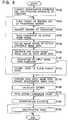
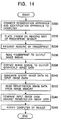
- Fig. 8 is a flowchart of an operation for identifying a fingerprint according to the second embodiment.
- the identification apparatus 4 When identifying a fingerprint, the identification apparatus 4 is connected to the computer 24 via the USB cable 28 (step S130), as shown in Fig. 3.
- step S132 a person who is to input his/her fingerprint places his/her finger on the reading unit 301 of the fingerprint sensor 30.
- An operator of the computer 24 performs a predetermined operation on the computer 24, requesting the identification apparatus 4 to read the fingerprint (step S134).
- the fingerprint sensor 30 reads the fingerprint of a part of the finger placed on the reading unit 301, outputting an image signal representing the fingerprint (step S136).
- the A/D converter 12 digitizes the image signal to output gray-scale image data (step S138).
- the fingerprint identification circuit 32 binarizes the grayscale image data received from the A/D converter 12, thus generating binary image data which serves as input image data representing the fingerprint, and stores the input image data in the image memory 16 (step S140).
- the image represented by the input image data shows only a portion of the fingerprint, as shown in Fig. 4A, similarly to the first embodiment.
- the CPU 18 determines whether the number of input image data stored in the image memory 16 has reached a predetermined number (e.g., three times in this embodiment), i.e., whether the predetermined number of input image data has been acquired (step S142).
- a predetermined number e.g., three times in this embodiment
- step S142 evaluates to "N"
- the CPU 18 transmits to the computer 24 information for prompting the user to place his/her finger again on the fingerprint sensor 30, whereby the computer 24 prompts the user to place his/her finger again, for example, by displaying a message (step S144). Then, the process returns to step S132. the same steps are repeated.
- step S142 evaluates to "Y"
- the fingerprint identification circuit 32 reads the registration image data which has been stored in advance in the image memory 16 and the plurality of input image data, and performs identification by pattern matching (step S146).
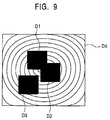
- Fig. 9 is an illustration showing images represented by the registration image data and the plurality of input image data stored in the image memory 16.
- the images represented respectively by the plurality (three in this embodiment) of input image data D1, D2, and D3 are located at different positions. This is because the position of the finger with respect to the fingerprint sensor 30 varies each time the finger is placed for the fingerprint to be read.
- step S148 scores of coincidence indicating the results of pattern matching between the registration image data and each of the input image data are calculated (step S148), and it is determined whether the total score exceeds a predetermined threshold value (step S150).
- the threshold value is set to a value such that it is accurately determined that input image data matches registration image data when the total score exceeds the threshold value.
- step S150 evaluates to "Y", identification ends in success. If step S150 evaluates to "N”, identification ends in failure.
- the second embodiment achieves the same operation and advantages as the first embodiment, and in addition, is advantageous in improving accuracy of fingerprint identification because a plurality of input image data is compared against registration image data.
- scores indicating coincidence between the registration image data and each of the input image data are calculated, and it is determined whether the input image data coincides with the registration image data based on whether the total score exceeds a predetermined threshold value.
- whether the input image data coincides with the registration image data may be determined by comparing each of the scores with a predetermined threshold value and based on whether the individual scores exceed the threshold value more often than a predetermined number of times.
- an identification apparatus is implemented in the form of a wristwatch.
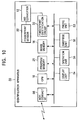
- Fig. 10 is a block diagram showing the construction of an identification apparatus according to the third embodiment.
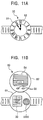
- Fig. 11A is an external view of the identification apparatus, and
- Fig. 11B is an external view thereof in which a fingerprint sensor is exposed.
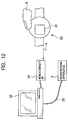
- Fig. 12 is a diagram showing the configuration of a fingerprint identification system according to the third embodiment. Parts that are identical to those in the first embodiment are designated by the same numbers.
- an identification apparatus 50 is implemented in the form of a wristwatch (an example of portable item in Claims).
- the identification apparatus 50 includes a main unit 51, and a timepiece unit 52 which can be opened and closed by a hinge with respect to the top surface of the main unit 51.
- the top surface of the main unit 51 is covered by the bottom surface of the timepiece unit 52 and the timepiece unit 52 faces outward; whereas when the timepiece unit 52 is opened with respect to the main unit 51, the top surface of the main unit 51 faces outward.
- a fingerprint sensor 30 and a microphone/speaker 5302 are provided on the top surface of the main unit 51 .
- a display unit 54 implemented by an LCD and an operation unit 55 having operation buttons are provided on the bottom surface of the timepiece unit 52 .
- the identification apparatus 50 includes an A/D converter 12, an image memory 16, a CPU 18, a program memory 20, the fingerprint sensor 30, and a fingerprint identification circuit 32, which are similar to the first embodiment and whose descriptions will be omitted.
- the identification apparatus 50 in addition to the above construction, includes the timepiece unit 52, the display unit 54, the operation unit 55, and furthermore, a phone unit 53 and a non-contact interface 56.
- the timepiece unit 52 shows time.
- the display unit 54 is controlled by the CPU 18 so as to display characters, symbols, etc.
- the phone unit 53 includes the microphone/speaker 5302. and has functionality equivalent to that of a cellular phone.
- the operation unit 55 is used to perform operations required in operation of the identification apparatus S0.
- the non-contact interface 56 serves to exchange information using, for example, infrared signals or radio signals, bilaterally with a non-contact interface 62 provided in a computer 60 which is equivalent to the computer 24 in the first embodiment.
- the CPU 18 operates based on programs stored in the program memory 20 so that the display unit 54, the operation unit 55, a memory which is not shown, etc. cooperate to function, for example, as an electronic notebook or a PDA.
- the registration apparatus 2 When registering a fingerprint, the registration apparatus 2 is connected to the computer 60 via the USB cable 28, and the identification apparatus 50 is allowed to communicate with the computer 60 via the non-contact interface 56 and the non-contact interface 62 (step S210), as shown in Fig. 12.
- a person who is to register his/her fingerprint places his/her finger on the reading unit 108 of the fingerprint sensor 104 (step S212).
- An operator of the computer 60 performs a predetermined operation on the computer 60, requesting the registration apparatus 2 to read the fingerprint (step S214).
- the fingerprint sensor 104 reads the fingerprint of substantially the entire finger placed on the reading unit 108, and outputs an image signal representing the fingerprint (step S216).
- the A/D converter 12 (shown in Fig. 1A) digitizes the image signal to output grayscale image data (step S218).
- the fingerprint registration circuit 14 binarizes the grayscale image data received from the A/D converter 12, thus generating binary image data which serves as registration image data of the fingerprint, and stores the registration image data in the image memory 16 (step S220).
- the image represented by the registration image data stored in the image memory 16 is, for example, as shown in Fig. 4B.
- the CPU 18 reads the registration image data of the fingerprint from the image memory 16 and outputs the registration image data to the computer 60 via the USB controller 26 and the USB cable 28 (step S222).
- the computer 60 transfers the registration image data to the identification apparatus 50 via the non-contact interface 62 and the non-contact interface 56 (step S224).
- the CPU 18 of the identification apparatus 50 receives the registration image data via the non-contact interface 62 and the non-contact interface 56 and stores the registration image data in the image memory 16 (step S226).
- the identification apparatus 50 When identifying a fingerprint, the identification apparatus 50 is allowed to communicate with the computer 60 via the non-contact interface 56 and the non-contact interface 62 (step S230), as shown in Fig. 3.
- a person who is to input his/her fingerprint places his/her finger on the reading unit 301 of the fingerprint sensor 30 (step S232).
- An operator of the computer 60 performs a predetermined operation on the computer 60, requesting the identification apparatus 4 to read the fingerprint (step S234).
- the fingerprint sensor 30 reads the fingerprint of a portion of the finger placed on the reading unit 301, outputting an image signal representing the fingerprint (step S236).
- the A/D converter 12 digitizes the image signal to output grayscale image data (step S238).
- the fingerprint identification circuit 32 binarizes the grayscale image data received from the A/D converter 12, thus generating binary image data which serves as input image data of the fingerprint (step S240).
- the image represented by the input image data generated by the fingerprint identification circuit 32 based on the data from the A/D converter 12 showe only a portion of the fingerprint, as shown in Fig. 4A.
- the fingerprint identification circuit 32 reads the registration image data which has been stored in the image memory 16 as described earlier (step S242). The fingerprint identification circuit 32 then compares, by pattern matching, the input image data which has been newly generated based on the data from the A/D converter 12 against the registration image data which has been read, thereby determining whether the fingerprints represented by the respective image data coincide with each other on the basis of a predetermined criterion (step S244).
- the input image data represents only a portion of the fingerprint as described earlier (shown in Fig. 4A), whereas the registration image data stored in the image memory 16 represents substantially the entire fingerprint (shown in Fig. 4B); thus, the fingerprint identification circuit 32 performs pattern matching while moving the position of the image represented by the input image data over the entire image represented by the registration image data.
- the CPU 18 is notified of the identification result via the bus line 22, and the CPU 18 notifies the computer 60 of the identification result via the non-contact interface 56 and the non-contact interface 60 (step S246).
- the identification apparatus is implemented in the form of a wristwatch, which can be constantly carried; thus, the identification apparatus is small in size and portable, readily allowing fingerprint identification anytime and anywhere. This serves to improve convenience of personal authentication. Furthermore, the reduced size of the identification apparatus advantageously serves to reduce cost.
- comparison of the input image data against the registration image data may be performed in a manner similar to the second embodiment.
- the registration image data generated by the registration apparatus 2 may be encrypted before being output to the computer 60, and in the identification apparatus 50, the registration image data may be encrypted before being stored in the image memory 16, which serves to enhance security.
- the computer 60 is used as an apparatus for forwarding the result of identification by the identification apparatus 50 in the third embodiment
- the present invention may be applied to various cases where fingerprint identification is required, including the following examples:
- an identification apparatus may be incorporated in a telephone card, a credit card, a cash card, a card to be used in ATM of a bank, a ticket or commutation ticket for various public transportation services, a passport, a driving license, an insurance card, etc. as well as in a smart card (IC card) and a wristwatch as described earlier.
- the registration apparatus and the identification apparatus are connected to a computer via USB cables; however, alternatively, the connection may be formed using other types of wires or by wireless, with any type of suitable interfaces.
- image data is transferred from the registration apparatus to the identification apparatus via a computer
- the registration apparatus and the identification apparatus may be directly connected without a computer in the middle so that image data will be directly transferred.
- the fingerprint sensor is not limited to the type which detects capacitance, and may be, for example, an optical type using CCD.
- an identification apparatus can be readily incorporated in various portable items mentioned earlier by reducing the size of the optical system so that fingerprint identification is allowed whenever required, similarly to the embodiments described above in which the size of the fingerprint sensor in the identification apparatus is reduced. Furthermore, cost can be reduced by using a CMOS sensor with a smaller number of elements as the fingerprint sensor of the identification apparatus.
- fingerprint is used as information relating to biometric features of an individual user, i.e., biometric information which can be read from the body of the user; however, as an alternative to fingerprint, for example, retina or iris may be used as biometric information.
- Iris When retina is used, a pattern of blood vessels which appear on retina at the back of an eye is read. Iris is thin-film tissue for coordinating contraction and expansion of pupil of an eye, whose pattern is unique to each individual. The pattern becomes stable in two years after birth, and then remains unchanged over one's lifetime. Furthermore, iris is so complex that it differs among people who share the same relevant genes.
- a biometric sensor for reading biometric information can be implemented by a known type.
- a biometric sensor for reading retina the type which irradiates retina with light from outside, such as a fundus photography apparatus, can be used.
- biometric identification apparatus When biometric information is used as described above, a biometric identification apparatus can be implemented similarly to the embodiments described above, achieving the same operation and advantages.
Landscapes
- Engineering & Computer Science (AREA)
- Human Computer Interaction (AREA)
- Physics & Mathematics (AREA)
- General Physics & Mathematics (AREA)
- Multimedia (AREA)
- Theoretical Computer Science (AREA)
- Collating Specific Patterns (AREA)
- Image Input (AREA)
- Measurement Of The Respiration, Hearing Ability, Form, And Blood Characteristics Of Living Organisms (AREA)
Applications Claiming Priority (4)
| Application Number | Priority Date | Filing Date | Title |
|---|---|---|---|
| JP2001062859 | 2001-03-07 | ||
| JP2001062859 | 2001-03-07 | ||
| JP2001345719 | 2001-11-12 | ||
| JP2001345719A JP4164732B2 (ja) | 2001-03-07 | 2001-11-12 | 指紋照合システム、指紋照合装置、指紋照合方法、およびバイオメトリクス照合装置 |
Publications (3)
| Publication Number | Publication Date |
|---|---|
| EP1239404A2 true EP1239404A2 (de) | 2002-09-11 |
| EP1239404A3 EP1239404A3 (de) | 2005-08-17 |
| EP1239404B1 EP1239404B1 (de) | 2007-10-31 |
Family
ID=26610740
Family Applications (1)
| Application Number | Title | Priority Date | Filing Date |
|---|---|---|---|
| EP02251564A Expired - Lifetime EP1239404B1 (de) | 2001-03-07 | 2002-03-06 | System, Gerät, oder Verfahren zur Fingerabdruckprüfung, und biometrisches Identifizierungsgerät |
Country Status (4)
| Country | Link |
|---|---|
| US (1) | US6980673B2 (de) |
| EP (1) | EP1239404B1 (de) |
| JP (1) | JP4164732B2 (de) |
| DE (1) | DE60223189T2 (de) |
Cited By (12)
| Publication number | Priority date | Publication date | Assignee | Title |
|---|---|---|---|---|
| EP1353291A3 (de) * | 2002-04-10 | 2005-05-04 | NEC Corporation | Fingerabdruckauthentizierungssystem mit einem kleinen Fingerabdrucksensor |
| US6980673B2 (en) * | 2001-03-07 | 2005-12-27 | Sony Corporation | Fingerprint identification system, fingerprint identification apparatus, fingerprint identification method, and biometric identification apparatus |
| EP1619622A4 (de) * | 2003-04-25 | 2007-04-18 | Fujitsu Ltd | Fingerabdruckvergleichseinrichtung, fingerabdruckvergleichsverfahren und fingerabdruckvergleichsprogramm |
| EP1754178A4 (de) * | 2004-01-07 | 2009-07-29 | Identification International I | Fingerabdruck-erfassungssysteme mit niedrigem stromverbrauch, vorrichtung und verfahren |
| US20100085153A1 (en) * | 2008-09-05 | 2010-04-08 | Smith Gaylan S | Biometric Control System and Method For Machinery |
| EP2105865A3 (de) * | 2008-03-25 | 2010-05-26 | Fujitsu Limited | Vorrichtung zur biometrischen Authentifizierung und Vorrichtung zur Registrierung biometrischer Daten |
| US7812936B2 (en) | 2007-04-09 | 2010-10-12 | Identification International, Inc. | Fingerprint imaging system |
| JP2012248047A (ja) * | 2011-05-30 | 2012-12-13 | Seiko Epson Corp | 生体識別装置、及び、生体識別方法 |
| JP2012256272A (ja) * | 2011-06-10 | 2012-12-27 | Seiko Epson Corp | 生体識別装置、及び、生体識別方法 |
| US20130169410A1 (en) * | 2011-09-21 | 2013-07-04 | Allianz Telematics S.P.A. | Telematics On-Board Unit For Vehicles |
| CN106682640A (zh) * | 2017-01-04 | 2017-05-17 | 京东方科技集团股份有限公司 | 指纹识别电路及其驱动方法、显示装置 |
| CN109326020A (zh) * | 2018-08-21 | 2019-02-12 | 广东工业大学 | 一种基于虹膜识别的地铁购票及检票方法 |
Families Citing this family (24)
| Publication number | Priority date | Publication date | Assignee | Title |
|---|---|---|---|---|
| US7543156B2 (en) * | 2002-06-25 | 2009-06-02 | Resilent, Llc | Transaction authentication card |
| US20070234052A1 (en) * | 2002-06-25 | 2007-10-04 | Campisi Steven E | Electromechanical lock system |
| JP2004173827A (ja) * | 2002-11-26 | 2004-06-24 | Seiko Epson Corp | 本人照合装置、カード型情報記録媒体及びそれを用いた情報処理システム |
| US7424740B2 (en) * | 2003-05-05 | 2008-09-09 | Microsoft Corporation | Method and system for activating a computer system |
| JP2005055327A (ja) * | 2003-08-05 | 2005-03-03 | Sony Corp | 指紋照合装置 |
| WO2005064547A1 (en) * | 2003-12-24 | 2005-07-14 | Telecom Italia S.P.A. | User authentication method based on the utilization of biometric identification techniques and related architecture |
| CN1305002C (zh) * | 2004-07-15 | 2007-03-14 | 清华大学 | 多注册指纹融合方法 |
| US7725511B2 (en) * | 2005-03-31 | 2010-05-25 | Intel Corporation | Bio-metric input mechanism |
| US8700910B2 (en) * | 2005-05-31 | 2014-04-15 | Semiconductor Energy Laboratory Co., Ltd. | Communication system and authentication card |
| GB2441695B (en) * | 2005-06-14 | 2010-10-20 | Ultra Scan Corp | Large-area biometric specimen comparison with small-area biometric sample |
| US8358816B2 (en) * | 2005-10-18 | 2013-01-22 | Authentec, Inc. | Thinned finger sensor and associated methods |
| TWI318369B (en) * | 2006-10-02 | 2009-12-11 | Egis Technology Inc | Multi-functional storage apparatus and control method thereof |
| US7631811B1 (en) * | 2007-10-04 | 2009-12-15 | Plantronics, Inc. | Optical headset user interface |
| US9461759B2 (en) | 2011-08-30 | 2016-10-04 | Iheartmedia Management Services, Inc. | Identification of changed broadcast media items |
| DE102012108838A1 (de) * | 2012-09-19 | 2014-05-28 | Cross Match Technologies Gmbh | Verfahren und Vorrichtung zur Aufnahme von Fingerabdrücken auf Basis von Fingerabdruckscannern in zuverlässig hoher Qualität |
| JP6167667B2 (ja) * | 2013-05-23 | 2017-07-26 | 富士通株式会社 | 認証システム、認証方法、認証プログラムおよび認証装置 |
| CN104658073A (zh) * | 2013-11-20 | 2015-05-27 | 鸿富锦精密工业(武汉)有限公司 | 虹膜钥匙及利用该虹膜钥匙对电子装置解锁的方法 |
| TWI617937B (zh) * | 2015-02-24 | 2018-03-11 | 指紋編碼方法與指紋認證方法及其系統 | |
| USD776664S1 (en) * | 2015-05-20 | 2017-01-17 | Chaya Coleena Hendrick | Smart card |
| US9684813B2 (en) | 2015-07-01 | 2017-06-20 | Idex Asa | System and method of biometric enrollment and verification |
| US9894062B2 (en) * | 2016-03-16 | 2018-02-13 | Dell Products, L.P. | Object management for external off-host authentication processing systems |
| JP7011152B2 (ja) * | 2017-08-30 | 2022-01-26 | 富士通株式会社 | 生体画像処理装置、生体画像処理方法、及び生体画像処理プログラム |
| CN111709400B (zh) * | 2019-11-29 | 2025-03-18 | 神盾股份有限公司 | 指纹识别装置、电子装置以及指纹识别方法 |
| JP7402699B2 (ja) * | 2020-01-24 | 2023-12-21 | 株式会社東海理化電機製作所 | 生体認証システム、制御装置、およびコンピュータプログラム |
Family Cites Families (9)
| Publication number | Priority date | Publication date | Assignee | Title |
|---|---|---|---|---|
| JPS58176781A (ja) | 1982-04-09 | 1983-10-17 | Hitachi Ltd | 縞状パタ−ン照合方式 |
| US4641350A (en) * | 1984-05-17 | 1987-02-03 | Bunn Robert F | Fingerprint identification system |
| US5067162A (en) * | 1986-06-30 | 1991-11-19 | Identix Incorporated | Method and apparatus for verifying identity using image correlation |
| US5982913A (en) * | 1997-03-25 | 1999-11-09 | The United States Of America As Represented By The National Security Agency | Method of verification using a subset of claimant's fingerprint |
| EP0940652B1 (de) * | 1998-03-05 | 2004-12-22 | Nippon Telegraph and Telephone Corporation | Oberflächenform-Erkennungssensor und dessen Herstellungsverfahren |
| AU2955100A (en) * | 1999-02-12 | 2000-09-14 | Precise Biometrics Ab | System and method for checking fingerprints |
| EP1054340B1 (de) * | 1999-05-17 | 2008-05-28 | Nippon Telegraph and Telephone Corporation | Gerät und Verfahren zur Oberflächenmustererkennung |
| JP2001056204A (ja) | 1999-08-19 | 2001-02-27 | Sony Corp | 静電容量式指紋センサ |
| JP4164732B2 (ja) * | 2001-03-07 | 2008-10-15 | ソニー株式会社 | 指紋照合システム、指紋照合装置、指紋照合方法、およびバイオメトリクス照合装置 |
-
2001
- 2001-11-12 JP JP2001345719A patent/JP4164732B2/ja not_active Expired - Fee Related
-
2002
- 2002-03-06 US US10/091,294 patent/US6980673B2/en not_active Expired - Fee Related
- 2002-03-06 DE DE60223189T patent/DE60223189T2/de not_active Expired - Lifetime
- 2002-03-06 EP EP02251564A patent/EP1239404B1/de not_active Expired - Lifetime
Cited By (25)
| Publication number | Priority date | Publication date | Assignee | Title |
|---|---|---|---|---|
| US6980673B2 (en) * | 2001-03-07 | 2005-12-27 | Sony Corporation | Fingerprint identification system, fingerprint identification apparatus, fingerprint identification method, and biometric identification apparatus |
| EP1353291A3 (de) * | 2002-04-10 | 2005-05-04 | NEC Corporation | Fingerabdruckauthentizierungssystem mit einem kleinen Fingerabdrucksensor |
| US7190816B2 (en) | 2002-04-10 | 2007-03-13 | Nec Corporation | Fingerprint authenticating system for carrying out a fingerprint authentication by using a small fingerprint sensor |
| EP1619622A4 (de) * | 2003-04-25 | 2007-04-18 | Fujitsu Ltd | Fingerabdruckvergleichseinrichtung, fingerabdruckvergleichsverfahren und fingerabdruckvergleichsprogramm |
| US7359534B2 (en) | 2003-04-25 | 2008-04-15 | Fujitsu Limited | Device and method for fingerprint identification, and computer product |
| US8542890B2 (en) | 2004-01-07 | 2013-09-24 | Identification International, Inc. | Low power fingerprint capture system, apparatus, and method |
| US8077934B2 (en) | 2004-01-07 | 2011-12-13 | Identification International, Inc. | Low power fingerprint capture system, apparatus, and method |
| US9064139B2 (en) | 2004-01-07 | 2015-06-23 | Identification International, Inc. | Low power fingerprint capture system, apparatus, and method |
| EP1754178A4 (de) * | 2004-01-07 | 2009-07-29 | Identification International I | Fingerabdruck-erfassungssysteme mit niedrigem stromverbrauch, vorrichtung und verfahren |
| US7822236B2 (en) | 2004-01-07 | 2010-10-26 | Identification International, Inc. | Low power fingerprint capture system, apparatus, and method |
| US8520911B2 (en) | 2004-01-07 | 2013-08-27 | Identification International, Inc. | Low power fingerprint capture system, apparatus, and method |
| US7903242B2 (en) | 2007-04-09 | 2011-03-08 | Identification International, Inc. | Fingerprint imaging system |
| US7986400B2 (en) | 2007-04-09 | 2011-07-26 | Identification International, Inc. | Fingerprint imaging system |
| US7812936B2 (en) | 2007-04-09 | 2010-10-12 | Identification International, Inc. | Fingerprint imaging system |
| US8264325B2 (en) | 2008-03-25 | 2012-09-11 | Fujitsu Limited | Biometric authentication apparatus and biometric data registration apparatus |
| EP2105865A3 (de) * | 2008-03-25 | 2010-05-26 | Fujitsu Limited | Vorrichtung zur biometrischen Authentifizierung und Vorrichtung zur Registrierung biometrischer Daten |
| US8902044B2 (en) * | 2008-09-05 | 2014-12-02 | Gaylon Smith | Biometric control system and method for machinery |
| US20100085153A1 (en) * | 2008-09-05 | 2010-04-08 | Smith Gaylan S | Biometric Control System and Method For Machinery |
| JP2012248047A (ja) * | 2011-05-30 | 2012-12-13 | Seiko Epson Corp | 生体識別装置、及び、生体識別方法 |
| JP2012256272A (ja) * | 2011-06-10 | 2012-12-27 | Seiko Epson Corp | 生体識別装置、及び、生体識別方法 |
| US20130169410A1 (en) * | 2011-09-21 | 2013-07-04 | Allianz Telematics S.P.A. | Telematics On-Board Unit For Vehicles |
| US9933758B2 (en) * | 2011-09-21 | 2018-04-03 | Allianz Telematics S.P.A. | Telematics on-board unit for vehicles |
| CN106682640A (zh) * | 2017-01-04 | 2017-05-17 | 京东方科技集团股份有限公司 | 指纹识别电路及其驱动方法、显示装置 |
| CN106682640B (zh) * | 2017-01-04 | 2019-04-05 | 京东方科技集团股份有限公司 | 指纹识别电路及其驱动方法、显示装置 |
| CN109326020A (zh) * | 2018-08-21 | 2019-02-12 | 广东工业大学 | 一种基于虹膜识别的地铁购票及检票方法 |
Also Published As
| Publication number | Publication date |
|---|---|
| EP1239404B1 (de) | 2007-10-31 |
| EP1239404A3 (de) | 2005-08-17 |
| US20020126882A1 (en) | 2002-09-12 |
| JP2002334324A (ja) | 2002-11-22 |
| DE60223189D1 (de) | 2007-12-13 |
| DE60223189T2 (de) | 2008-08-14 |
| JP4164732B2 (ja) | 2008-10-15 |
| US6980673B2 (en) | 2005-12-27 |
Similar Documents
| Publication | Publication Date | Title |
|---|---|---|
| EP1239404B1 (de) | System, Gerät, oder Verfahren zur Fingerabdruckprüfung, und biometrisches Identifizierungsgerät | |
| US12050674B2 (en) | Biometric identification device and methods of use | |
| US10437976B2 (en) | Biometric personal data key (PDK) authentication | |
| US6325285B1 (en) | Smart card with integrated fingerprint reader | |
| US7950577B1 (en) | Apparatus, system and method for verifying authorized using an immigration customs visa card | |
| KR100456619B1 (ko) | 에스.브이.엠(svm)을 이용한 얼굴 등록/인증 시스템 및방법 | |
| US20040052405A1 (en) | Biometric identity check | |
| EP1423821A1 (de) | Verfahren und vorrichtung zur prüfung der identität einer person, wobei ein für den fingerabdruck konstantes koordinatensystem der bezug ist | |
| RU2391705C2 (ru) | Портативный носитель данных, внешнее устройство, система и способы для беспроводной передачи данных | |
| WO2001011577A1 (en) | Checking of right to access | |
| JP2010079633A (ja) | 生体情報認証システム、生体情報認証方法 | |
| JP2007066330A (ja) | 認証装置およびその方法 | |
| Cucinotta et al. | Hybrid fingerprint matching on programmable smart cards | |
| JP2007272920A (ja) | 携帯電子装置及び生体情報を用いた個人認証方法 | |
| JP2021002095A (ja) | 認証システム | |
| BISWAS et al. | ENHANCED SECURE ATM AUTHENTICATION USING NFC TECHNOLOGY AND IRIS VERIFICATION | |
| JP2007148724A (ja) | 個人認証システム、および個人認証プログラム | |
| JP2007293876A (ja) | 携帯電子装置及び生体情報を用いた個人認証方法 | |
| Fajuyigbe et al. | A framework for the integration of biometric into nigerian banking atm system | |
| KR20210111105A (ko) | 생체정보를 이용한 대중교통 부정승차 방지시스템 및 방법 | |
| JP2006004429A (ja) | 携帯電子装置及びicカード | |
| Das et al. | Review of Recent Recognition Systems | |
| JP2005165799A (ja) | Icカード、認証方法 |
Legal Events
| Date | Code | Title | Description |
|---|---|---|---|
| PUAI | Public reference made under article 153(3) epc to a published international application that has entered the european phase |
Free format text: ORIGINAL CODE: 0009012 |
|
| AK | Designated contracting states |
Kind code of ref document: A2 Designated state(s): AT BE CH CY DE DK ES FI FR GB GR IE IT LI LU MC NL PT SE TR |
|
| AX | Request for extension of the european patent |
Free format text: AL;LT;LV;MK;RO;SI |
|
| PUAL | Search report despatched |
Free format text: ORIGINAL CODE: 0009013 |
|
| AK | Designated contracting states |
Kind code of ref document: A3 Designated state(s): AT BE CH CY DE DK ES FI FR GB GR IE IT LI LU MC NL PT SE TR |
|
| AX | Request for extension of the european patent |
Extension state: AL LT LV MK RO SI |
|
| RIC1 | Information provided on ipc code assigned before grant |
Ipc: 7G 06K 9/00 A |
|
| 17P | Request for examination filed |
Effective date: 20060201 |
|
| AKX | Designation fees paid |
Designated state(s): DE FR GB |
|
| 17Q | First examination report despatched |
Effective date: 20060512 |
|
| 17Q | First examination report despatched |
Effective date: 20060512 |
|
| GRAP | Despatch of communication of intention to grant a patent |
Free format text: ORIGINAL CODE: EPIDOSNIGR1 |
|
| GRAS | Grant fee paid |
Free format text: ORIGINAL CODE: EPIDOSNIGR3 |
|
| GRAA | (expected) grant |
Free format text: ORIGINAL CODE: 0009210 |
|
| AK | Designated contracting states |
Kind code of ref document: B1 Designated state(s): DE FR GB |
|
| REG | Reference to a national code |
Ref country code: GB Ref legal event code: FG4D |
|
| REF | Corresponds to: |
Ref document number: 60223189 Country of ref document: DE Date of ref document: 20071213 Kind code of ref document: P |
|
| ET | Fr: translation filed | ||
| PLBE | No opposition filed within time limit |
Free format text: ORIGINAL CODE: 0009261 |
|
| STAA | Information on the status of an ep patent application or granted ep patent |
Free format text: STATUS: NO OPPOSITION FILED WITHIN TIME LIMIT |
|
| 26N | No opposition filed |
Effective date: 20080801 |
|
| PGFP | Annual fee paid to national office [announced via postgrant information from national office to epo] |
Ref country code: FR Payment date: 20120403 Year of fee payment: 11 |
|
| PGFP | Annual fee paid to national office [announced via postgrant information from national office to epo] |
Ref country code: DE Payment date: 20120323 Year of fee payment: 11 |
|
| PGFP | Annual fee paid to national office [announced via postgrant information from national office to epo] |
Ref country code: GB Payment date: 20120322 Year of fee payment: 11 |
|
| REG | Reference to a national code |
Ref country code: GB Ref legal event code: 746 Effective date: 20120702 |
|
| REG | Reference to a national code |
Ref country code: DE Ref legal event code: R084 Ref document number: 60223189 Country of ref document: DE Effective date: 20120614 |
|
| GBPC | Gb: european patent ceased through non-payment of renewal fee |
Effective date: 20130306 |
|
| REG | Reference to a national code |
Ref country code: FR Ref legal event code: ST Effective date: 20131129 |
|
| REG | Reference to a national code |
Ref country code: DE Ref legal event code: R119 Ref document number: 60223189 Country of ref document: DE Effective date: 20131001 |
|
| PG25 | Lapsed in a contracting state [announced via postgrant information from national office to epo] |
Ref country code: DE Free format text: LAPSE BECAUSE OF NON-PAYMENT OF DUE FEES Effective date: 20131001 Ref country code: GB Free format text: LAPSE BECAUSE OF NON-PAYMENT OF DUE FEES Effective date: 20130306 Ref country code: FR Free format text: LAPSE BECAUSE OF NON-PAYMENT OF DUE FEES Effective date: 20130402 |