EP1241329A2 - Catalyseur de réduction des oxydes d'azote et systéme de réduction des oxydes d'azote - Google Patents
Catalyseur de réduction des oxydes d'azote et systéme de réduction des oxydes d'azote Download PDFInfo
- Publication number
- EP1241329A2 EP1241329A2 EP02005131A EP02005131A EP1241329A2 EP 1241329 A2 EP1241329 A2 EP 1241329A2 EP 02005131 A EP02005131 A EP 02005131A EP 02005131 A EP02005131 A EP 02005131A EP 1241329 A2 EP1241329 A2 EP 1241329A2
- Authority
- EP
- European Patent Office
- Prior art keywords
- nox reduction
- reduction catalyst
- catalytic
- exhaust gas
- noble metal
- Prior art date
- Legal status (The legal status is an assumption and is not a legal conclusion. Google has not performed a legal analysis and makes no representation as to the accuracy of the status listed.)
- Withdrawn
Links
- 239000003054 catalyst Substances 0.000 title claims abstract description 369
- 230000003197 catalytic effect Effects 0.000 claims abstract description 267
- 239000007789 gas Substances 0.000 claims abstract description 106
- 239000000463 material Substances 0.000 claims abstract description 94
- 239000001301 oxygen Substances 0.000 claims abstract description 88
- 229910052760 oxygen Inorganic materials 0.000 claims abstract description 88
- QVGXLLKOCUKJST-UHFFFAOYSA-N atomic oxygen Chemical compound [O] QVGXLLKOCUKJST-UHFFFAOYSA-N 0.000 claims abstract description 86
- 229910000510 noble metal Inorganic materials 0.000 claims abstract description 79
- 238000002485 combustion reaction Methods 0.000 claims abstract description 41
- QAOWNCQODCNURD-UHFFFAOYSA-L Sulfate Chemical compound [O-]S([O-])(=O)=O QAOWNCQODCNURD-UHFFFAOYSA-L 0.000 claims abstract description 29
- LSNNMFCWUKXFEE-UHFFFAOYSA-N Sulfurous acid Chemical compound OS(O)=O LSNNMFCWUKXFEE-UHFFFAOYSA-N 0.000 claims abstract description 27
- BASFCYQUMIYNBI-UHFFFAOYSA-N platinum Chemical compound [Pt] BASFCYQUMIYNBI-UHFFFAOYSA-N 0.000 claims description 165
- 239000000758 substrate Substances 0.000 claims description 164
- 239000011777 magnesium Substances 0.000 claims description 89
- 229910052749 magnesium Inorganic materials 0.000 claims description 82
- 229910052788 barium Inorganic materials 0.000 claims description 81
- 239000010948 rhodium Substances 0.000 claims description 71
- 229910052697 platinum Inorganic materials 0.000 claims description 47
- FYYHWMGAXLPEAU-UHFFFAOYSA-N Magnesium Chemical compound [Mg] FYYHWMGAXLPEAU-UHFFFAOYSA-N 0.000 claims description 43
- DSAJWYNOEDNPEQ-UHFFFAOYSA-N barium atom Chemical compound [Ba] DSAJWYNOEDNPEQ-UHFFFAOYSA-N 0.000 claims description 43
- 239000000446 fuel Substances 0.000 claims description 41
- 229910052703 rhodium Inorganic materials 0.000 claims description 41
- 238000000034 method Methods 0.000 claims description 36
- 239000000203 mixture Substances 0.000 claims description 33
- 229910052792 caesium Inorganic materials 0.000 claims description 30
- 239000011734 sodium Substances 0.000 claims description 30
- 229910052700 potassium Inorganic materials 0.000 claims description 28
- 229910052708 sodium Inorganic materials 0.000 claims description 27
- CETPSERCERDGAM-UHFFFAOYSA-N ceric oxide Chemical compound O=[Ce]=O CETPSERCERDGAM-UHFFFAOYSA-N 0.000 claims description 25
- TVFDJXOCXUVLDH-UHFFFAOYSA-N caesium atom Chemical compound [Cs] TVFDJXOCXUVLDH-UHFFFAOYSA-N 0.000 claims description 16
- ZLMJMSJWJFRBEC-UHFFFAOYSA-N Potassium Chemical compound [K] ZLMJMSJWJFRBEC-UHFFFAOYSA-N 0.000 claims description 15
- 239000011591 potassium Substances 0.000 claims description 15
- DGAQECJNVWCQMB-PUAWFVPOSA-M Ilexoside XXIX Chemical compound C[C@@H]1CC[C@@]2(CC[C@@]3(C(=CC[C@H]4[C@]3(CC[C@@H]5[C@@]4(CC[C@@H](C5(C)C)OS(=O)(=O)[O-])C)C)[C@@H]2[C@]1(C)O)C)C(=O)O[C@H]6[C@@H]([C@H]([C@@H]([C@H](O6)CO)O)O)O.[Na+] DGAQECJNVWCQMB-PUAWFVPOSA-M 0.000 claims description 13
- BVKZGUZCCUSVTD-UHFFFAOYSA-L Carbonate Chemical compound [O-]C([O-])=O BVKZGUZCCUSVTD-UHFFFAOYSA-L 0.000 claims description 9
- 229910000422 cerium(IV) oxide Inorganic materials 0.000 claims description 9
- 229910052751 metal Inorganic materials 0.000 claims description 9
- 239000002184 metal Substances 0.000 claims description 9
- 238000011144 upstream manufacturing Methods 0.000 claims description 9
- MHOVAHRLVXNVSD-UHFFFAOYSA-N rhodium atom Chemical compound [Rh] MHOVAHRLVXNVSD-UHFFFAOYSA-N 0.000 claims description 6
- 229910052783 alkali metal Inorganic materials 0.000 claims description 5
- 150000001340 alkali metals Chemical class 0.000 claims description 5
- 229910052784 alkaline earth metal Inorganic materials 0.000 claims description 4
- IJGRMHOSHXDMSA-UHFFFAOYSA-N Atomic nitrogen Chemical compound N#N IJGRMHOSHXDMSA-UHFFFAOYSA-N 0.000 claims description 3
- 229910052761 rare earth metal Inorganic materials 0.000 claims description 3
- 150000002910 rare earth metals Chemical class 0.000 claims description 3
- KOPBYBDAPCDYFK-UHFFFAOYSA-N caesium oxide Chemical compound [O-2].[Cs+].[Cs+] KOPBYBDAPCDYFK-UHFFFAOYSA-N 0.000 claims description 2
- QVQLCTNNEUAWMS-UHFFFAOYSA-N barium oxide Chemical compound [Ba]=O QVQLCTNNEUAWMS-UHFFFAOYSA-N 0.000 claims 2
- QCWXUUIWCKQGHC-UHFFFAOYSA-N Zirconium Chemical compound [Zr] QCWXUUIWCKQGHC-UHFFFAOYSA-N 0.000 claims 1
- 229910001942 caesium oxide Inorganic materials 0.000 claims 1
- CPLXHLVBOLITMK-UHFFFAOYSA-N magnesium oxide Inorganic materials [Mg]=O CPLXHLVBOLITMK-UHFFFAOYSA-N 0.000 claims 1
- 239000000395 magnesium oxide Substances 0.000 claims 1
- AXZKOIWUVFPNLO-UHFFFAOYSA-N magnesium;oxygen(2-) Chemical compound [O-2].[Mg+2] AXZKOIWUVFPNLO-UHFFFAOYSA-N 0.000 claims 1
- 229910052757 nitrogen Inorganic materials 0.000 claims 1
- CHWRSCGUEQEHOH-UHFFFAOYSA-N potassium oxide Chemical compound [O-2].[K+].[K+] CHWRSCGUEQEHOH-UHFFFAOYSA-N 0.000 claims 1
- 229910001950 potassium oxide Inorganic materials 0.000 claims 1
- KKCBUQHMOMHUOY-UHFFFAOYSA-N sodium oxide Chemical compound [O-2].[Na+].[Na+] KKCBUQHMOMHUOY-UHFFFAOYSA-N 0.000 claims 1
- 229910001948 sodium oxide Inorganic materials 0.000 claims 1
- 229910052726 zirconium Inorganic materials 0.000 claims 1
- MWUXSHHQAYIFBG-UHFFFAOYSA-N nitrogen oxide Inorganic materials O=[N] MWUXSHHQAYIFBG-UHFFFAOYSA-N 0.000 description 652
- 239000002002 slurry Substances 0.000 description 61
- PNEYBMLMFCGWSK-UHFFFAOYSA-N aluminium oxide Inorganic materials [O-2].[O-2].[O-2].[Al+3].[Al+3] PNEYBMLMFCGWSK-UHFFFAOYSA-N 0.000 description 53
- 230000000052 comparative effect Effects 0.000 description 38
- 208000005374 Poisoning Diseases 0.000 description 33
- 238000012360 testing method Methods 0.000 description 29
- 239000000843 powder Substances 0.000 description 26
- XLYOFNOQVPJJNP-UHFFFAOYSA-N water Substances O XLYOFNOQVPJJNP-UHFFFAOYSA-N 0.000 description 23
- 238000001035 drying Methods 0.000 description 20
- 238000000227 grinding Methods 0.000 description 20
- 238000002156 mixing Methods 0.000 description 20
- 229910052573 porcelain Inorganic materials 0.000 description 20
- 239000000243 solution Substances 0.000 description 20
- 238000006243 chemical reaction Methods 0.000 description 19
- MCMNRKCIXSYSNV-UHFFFAOYSA-N Zirconium dioxide Chemical compound O=[Zr]=O MCMNRKCIXSYSNV-UHFFFAOYSA-N 0.000 description 18
- 239000007864 aqueous solution Substances 0.000 description 18
- ITHZDDVSAWDQPZ-UHFFFAOYSA-L barium acetate Chemical compound [Ba+2].CC([O-])=O.CC([O-])=O ITHZDDVSAWDQPZ-UHFFFAOYSA-L 0.000 description 18
- UEGPKNKPLBYCNK-UHFFFAOYSA-L magnesium acetate Chemical compound [Mg+2].CC([O-])=O.CC([O-])=O UEGPKNKPLBYCNK-UHFFFAOYSA-L 0.000 description 18
- 239000011654 magnesium acetate Substances 0.000 description 18
- 229940069446 magnesium acetate Drugs 0.000 description 18
- 235000011285 magnesium acetate Nutrition 0.000 description 18
- 229910052815 sulfur oxide Inorganic materials 0.000 description 18
- IXSUHTFXKKBBJP-UHFFFAOYSA-L azanide;platinum(2+);dinitrite Chemical compound [NH2-].[NH2-].[Pt+2].[O-]N=O.[O-]N=O IXSUHTFXKKBBJP-UHFFFAOYSA-L 0.000 description 15
- 229910052717 sulfur Inorganic materials 0.000 description 14
- 239000011593 sulfur Substances 0.000 description 14
- KDLHZDBZIXYQEI-UHFFFAOYSA-N Palladium Chemical compound [Pd] KDLHZDBZIXYQEI-UHFFFAOYSA-N 0.000 description 12
- NINIDFKCEFEMDL-UHFFFAOYSA-N Sulfur Chemical compound [S] NINIDFKCEFEMDL-UHFFFAOYSA-N 0.000 description 12
- 229910052878 cordierite Inorganic materials 0.000 description 12
- JSKIRARMQDRGJZ-UHFFFAOYSA-N dimagnesium dioxido-bis[(1-oxido-3-oxo-2,4,6,8,9-pentaoxa-1,3-disila-5,7-dialuminabicyclo[3.3.1]nonan-7-yl)oxy]silane Chemical compound [Mg++].[Mg++].[O-][Si]([O-])(O[Al]1O[Al]2O[Si](=O)O[Si]([O-])(O1)O2)O[Al]1O[Al]2O[Si](=O)O[Si]([O-])(O1)O2 JSKIRARMQDRGJZ-UHFFFAOYSA-N 0.000 description 12
- 239000000919 ceramic Substances 0.000 description 11
- UGFAIRIUMAVXCW-UHFFFAOYSA-N Carbon monoxide Chemical compound [O+]#[C-] UGFAIRIUMAVXCW-UHFFFAOYSA-N 0.000 description 9
- 229910004625 Ce—Zr Inorganic materials 0.000 description 9
- 229910002091 carbon monoxide Inorganic materials 0.000 description 9
- 238000011084 recovery Methods 0.000 description 9
- 229930195733 hydrocarbon Natural products 0.000 description 8
- 150000002430 hydrocarbons Chemical class 0.000 description 8
- SCVFZCLFOSHCOH-UHFFFAOYSA-M potassium acetate Chemical compound [K+].CC([O-])=O SCVFZCLFOSHCOH-UHFFFAOYSA-M 0.000 description 8
- 238000011156 evaluation Methods 0.000 description 7
- 239000003638 chemical reducing agent Substances 0.000 description 6
- VMHLLURERBWHNL-UHFFFAOYSA-M Sodium acetate Chemical compound [Na+].CC([O-])=O VMHLLURERBWHNL-UHFFFAOYSA-M 0.000 description 5
- AYJRCSIUFZENHW-UHFFFAOYSA-L barium carbonate Chemical class [Ba+2].[O-]C([O-])=O AYJRCSIUFZENHW-UHFFFAOYSA-L 0.000 description 5
- 230000000694 effects Effects 0.000 description 5
- 229910000517 norsethite Inorganic materials 0.000 description 5
- 239000001632 sodium acetate Substances 0.000 description 5
- 235000017281 sodium acetate Nutrition 0.000 description 5
- UCKMPCXJQFINFW-UHFFFAOYSA-N Sulphide Chemical compound [S-2] UCKMPCXJQFINFW-UHFFFAOYSA-N 0.000 description 4
- ZOAIGCHJWKDIPJ-UHFFFAOYSA-M caesium acetate Chemical compound [Cs+].CC([O-])=O ZOAIGCHJWKDIPJ-UHFFFAOYSA-M 0.000 description 4
- 235000011056 potassium acetate Nutrition 0.000 description 4
- 238000002441 X-ray diffraction Methods 0.000 description 3
- 150000001342 alkaline earth metals Chemical class 0.000 description 3
- 150000001875 compounds Chemical class 0.000 description 3
- 238000006073 displacement reaction Methods 0.000 description 3
- 239000003502 gasoline Substances 0.000 description 3
- 230000001590 oxidative effect Effects 0.000 description 3
- 229910052763 palladium Inorganic materials 0.000 description 3
- GPNDARIEYHPYAY-UHFFFAOYSA-N palladium(ii) nitrate Chemical compound [Pd+2].[O-][N+]([O-])=O.[O-][N+]([O-])=O GPNDARIEYHPYAY-UHFFFAOYSA-N 0.000 description 3
- UFHFLCQGNIYNRP-UHFFFAOYSA-N Hydrogen Chemical compound [H][H] UFHFLCQGNIYNRP-UHFFFAOYSA-N 0.000 description 2
- 229910002651 NO3 Inorganic materials 0.000 description 2
- NHNBFGGVMKEFGY-UHFFFAOYSA-N Nitrate Chemical compound [O-][N+]([O-])=O NHNBFGGVMKEFGY-UHFFFAOYSA-N 0.000 description 2
- 238000002474 experimental method Methods 0.000 description 2
- 239000001257 hydrogen Substances 0.000 description 2
- 229910052739 hydrogen Inorganic materials 0.000 description 2
- 150000002926 oxygen Chemical class 0.000 description 2
- 229920006395 saturated elastomer Polymers 0.000 description 2
- 238000005245 sintering Methods 0.000 description 2
- 150000003463 sulfur Chemical class 0.000 description 2
- XTQHKBHJIVJGKJ-UHFFFAOYSA-N sulfur monoxide Chemical class S=O XTQHKBHJIVJGKJ-UHFFFAOYSA-N 0.000 description 2
- OYPRJOBELJOOCE-UHFFFAOYSA-N Calcium Chemical compound [Ca] OYPRJOBELJOOCE-UHFFFAOYSA-N 0.000 description 1
- 241001377894 Trias Species 0.000 description 1
- 239000011358 absorbing material Substances 0.000 description 1
- 238000000862 absorption spectrum Methods 0.000 description 1
- 230000001133 acceleration Effects 0.000 description 1
- 150000007514 bases Chemical class 0.000 description 1
- 229910052791 calcium Inorganic materials 0.000 description 1
- 239000011575 calcium Substances 0.000 description 1
- 239000013078 crystal Substances 0.000 description 1
- 230000000593 degrading effect Effects 0.000 description 1
- 238000011161 development Methods 0.000 description 1
- AKUNKIJLSDQFLS-UHFFFAOYSA-M dicesium;hydroxide Chemical compound [OH-].[Cs+].[Cs+] AKUNKIJLSDQFLS-UHFFFAOYSA-M 0.000 description 1
- 239000000295 fuel oil Substances 0.000 description 1
- XLYOFNOQVPJJNP-UHFFFAOYSA-M hydroxide Chemical compound [OH-] XLYOFNOQVPJJNP-UHFFFAOYSA-M 0.000 description 1
- 229910010272 inorganic material Inorganic materials 0.000 description 1
- 239000011147 inorganic material Substances 0.000 description 1
- 229910052746 lanthanum Inorganic materials 0.000 description 1
- FZLIPJUXYLNCLC-UHFFFAOYSA-N lanthanum atom Chemical compound [La] FZLIPJUXYLNCLC-UHFFFAOYSA-N 0.000 description 1
- 239000010687 lubricating oil Substances 0.000 description 1
- 238000004519 manufacturing process Methods 0.000 description 1
- 238000005259 measurement Methods 0.000 description 1
- 150000002739 metals Chemical class 0.000 description 1
- 238000012986 modification Methods 0.000 description 1
- 230000004048 modification Effects 0.000 description 1
- 239000003208 petroleum Substances 0.000 description 1
- 239000002574 poison Substances 0.000 description 1
- 231100000614 poison Toxicity 0.000 description 1
- 238000011160 research Methods 0.000 description 1
- VSZWPYCFIRKVQL-UHFFFAOYSA-N selanylidenegallium;selenium Chemical compound [Se].[Se]=[Ga].[Se]=[Ga] VSZWPYCFIRKVQL-UHFFFAOYSA-N 0.000 description 1
- 238000001179 sorption measurement Methods 0.000 description 1
- 229910001220 stainless steel Inorganic materials 0.000 description 1
- 239000010935 stainless steel Substances 0.000 description 1
Images

Classifications
-
- B—PERFORMING OPERATIONS; TRANSPORTING
- B01—PHYSICAL OR CHEMICAL PROCESSES OR APPARATUS IN GENERAL
- B01D—SEPARATION
- B01D53/00—Separation of gases or vapours; Recovering vapours of volatile solvents from gases; Chemical or biological purification of waste gases, e.g. engine exhaust gases, smoke, fumes, flue gases, aerosols
- B01D53/34—Chemical or biological purification of waste gases
- B01D53/92—Chemical or biological purification of waste gases of engine exhaust gases
- B01D53/94—Chemical or biological purification of waste gases of engine exhaust gases by catalytic processes
- B01D53/9404—Removing only nitrogen compounds
- B01D53/9409—Nitrogen oxides
- B01D53/9413—Processes characterised by a specific catalyst
- B01D53/9422—Processes characterised by a specific catalyst for removing nitrogen oxides by NOx storage or reduction by cyclic switching between lean and rich exhaust gases (LNT, NSC, NSR)
-
- B—PERFORMING OPERATIONS; TRANSPORTING
- B01—PHYSICAL OR CHEMICAL PROCESSES OR APPARATUS IN GENERAL
- B01J—CHEMICAL OR PHYSICAL PROCESSES, e.g. CATALYSIS OR COLLOID CHEMISTRY; THEIR RELEVANT APPARATUS
- B01J23/00—Catalysts comprising metals or metal oxides or hydroxides, not provided for in group B01J21/00
- B01J23/38—Catalysts comprising metals or metal oxides or hydroxides, not provided for in group B01J21/00 of noble metals
- B01J23/54—Catalysts comprising metals or metal oxides or hydroxides, not provided for in group B01J21/00 of noble metals combined with metals, oxides or hydroxides provided for in groups B01J23/02 - B01J23/36
- B01J23/56—Platinum group metals
- B01J23/63—Platinum group metals with rare earths or actinides
-
- B—PERFORMING OPERATIONS; TRANSPORTING
- B01—PHYSICAL OR CHEMICAL PROCESSES OR APPARATUS IN GENERAL
- B01J—CHEMICAL OR PHYSICAL PROCESSES, e.g. CATALYSIS OR COLLOID CHEMISTRY; THEIR RELEVANT APPARATUS
- B01J37/00—Processes, in general, for preparing catalysts; Processes, in general, for activation of catalysts
- B01J37/02—Impregnation, coating or precipitation
- B01J37/024—Multiple impregnation or coating
- B01J37/0244—Coatings comprising several layers
-
- B—PERFORMING OPERATIONS; TRANSPORTING
- B01—PHYSICAL OR CHEMICAL PROCESSES OR APPARATUS IN GENERAL
- B01D—SEPARATION
- B01D2255/00—Catalysts
- B01D2255/10—Noble metals or compounds thereof
- B01D2255/102—Platinum group metals
- B01D2255/1021—Platinum
-
- B—PERFORMING OPERATIONS; TRANSPORTING
- B01—PHYSICAL OR CHEMICAL PROCESSES OR APPARATUS IN GENERAL
- B01D—SEPARATION
- B01D2255/00—Catalysts
- B01D2255/10—Noble metals or compounds thereof
- B01D2255/102—Platinum group metals
- B01D2255/1025—Rhodium
-
- B—PERFORMING OPERATIONS; TRANSPORTING
- B01—PHYSICAL OR CHEMICAL PROCESSES OR APPARATUS IN GENERAL
- B01D—SEPARATION
- B01D2255/00—Catalysts
- B01D2255/20—Metals or compounds thereof
- B01D2255/204—Alkaline earth metals
- B01D2255/2042—Barium
-
- B—PERFORMING OPERATIONS; TRANSPORTING
- B01—PHYSICAL OR CHEMICAL PROCESSES OR APPARATUS IN GENERAL
- B01D—SEPARATION
- B01D2255/00—Catalysts
- B01D2255/20—Metals or compounds thereof
- B01D2255/204—Alkaline earth metals
- B01D2255/2047—Magnesium
-
- B—PERFORMING OPERATIONS; TRANSPORTING
- B01—PHYSICAL OR CHEMICAL PROCESSES OR APPARATUS IN GENERAL
- B01D—SEPARATION
- B01D2255/00—Catalysts
- B01D2255/90—Physical characteristics of catalysts
- B01D2255/908—O2-storage component incorporated in the catalyst
-
- B—PERFORMING OPERATIONS; TRANSPORTING
- B01—PHYSICAL OR CHEMICAL PROCESSES OR APPARATUS IN GENERAL
- B01D—SEPARATION
- B01D2257/00—Components to be removed
- B01D2257/40—Nitrogen compounds
- B01D2257/404—Nitrogen oxides other than dinitrogen oxide
-
- B—PERFORMING OPERATIONS; TRANSPORTING
- B01—PHYSICAL OR CHEMICAL PROCESSES OR APPARATUS IN GENERAL
- B01J—CHEMICAL OR PHYSICAL PROCESSES, e.g. CATALYSIS OR COLLOID CHEMISTRY; THEIR RELEVANT APPARATUS
- B01J23/00—Catalysts comprising metals or metal oxides or hydroxides, not provided for in group B01J21/00
- B01J23/38—Catalysts comprising metals or metal oxides or hydroxides, not provided for in group B01J21/00 of noble metals
- B01J23/54—Catalysts comprising metals or metal oxides or hydroxides, not provided for in group B01J21/00 of noble metals combined with metals, oxides or hydroxides provided for in groups B01J23/02 - B01J23/36
- B01J23/56—Platinum group metals
- B01J23/58—Platinum group metals with alkali- or alkaline earth metals
Definitions
- This invention relates to improvements in NOx reduction catalyst and NOx reduction system for reducing NOx in exhaust gas discharged from a combustion device such as an internal combustion engine, a combustor, a boiler or the like, and more particularly the NOx reduction catalyst and NOx reduction system for reducing NOx as well as hydrocarbons (HC), carbon monoxide (CO) and nitrogen oxides (NOx) contained in exhaust gas discharged from an automotive internal combustion engine in such a manner that NOx can be particularly effectively reduced in a lean region of exhaust gas and that SOx can be adsorbed to the NOx reduction catalyst in a range including a stoichiometric region and a rich region.
- HC hydrocarbons
- CO carbon monoxide
- NOx nitrogen oxides
- the present inventors have found and obtain a knowledge that it is effective to release the sulfur-poisoning of a catalytic noble metal (serving as an active site) of a catalyst as compared with to improve the NOx adsorbing material. This means that a reaction for releasing sulfur from the NOx adsorbing material cannot sufficiently occur if the sulfur-poisoning of the catalytic noble metal as the active site is not released.
- the present invention has been made in view of the above subject and the knowledge and is intended to provide a NOx reduction catalyst and a NOx reduction system which are arranged that the sulfur-poisoning can be readily released.
- the sulfur-poisoning can be effectively released by preventing SO 2 and/or the like from its sulfidization under the action of oxygen released from an oxygen absorbable and releasable material when oxygen is insufficient. This leads to completion of the present invention.
- an object of the present invention to provide improved NOx reduction catalyst and NOx reduction system which can effectively overcome drawbacks encountered in conventional NOx reduction catalysts and NOx reduction systems.
- Another object of the present invention is to provide an improved NOx reduction catalyst and NOx reduction system in which a sulfur-poisoning of the NOx reduction catalyst and NOx reduction system can be readily released.
- a further object of the present invention is to provide an improved NOx reduction catalyst and NOx reduction system in which an oxygen adsorbable and releasable material releases oxygen when oxygen is insufficient, which oxygen prevents SO 2 and/or the like from their sulfidization.
- a still further object of the present invention is to provide an improved NOx reduction catalyst and NOx reduction system in which SO 2 and/or the like are adsorbed in the form of sulfate and/or sulfide to a catalytic noble metal under the action of oxygen released from an oxygen adsorbable and releasable material.
- An aspect of the present invention resides in a NOx reduction catalyst for exhaust gas discharged from a combustion device operable in a lean region and in a range including a stoichiometric region and a rich region.
- the NOx reduction catalyst comprises a catalytic noble metal.
- an oxygen adsorbable and releasable material is provided carrying at least a part of the catalytic noble metal.
- the catalytic noble metal carried on the oxygen adsorbable and releasable material adsorbs SOx in the exhaust gas, in a form of at least one of sulfate and sulfite.
- the NOx reduction catalyst comprises a first catalytic coat layer including a catalytic noble metal, and an oxygen adsorbable and releasable material which carries at least a part of the catalytic noble metal, wherein the catalytic noble metal carried on the oxygen adsorbable and releasable material adsorbs SOx in the exhaust gas, in a form of at least one of sulfate and sulfite.
- a second catalytic coat layer is formed on the first catalytic coat layer, exhaust gas flowing though a position nearer to the second catalytic coat layer than to the first catalytic coat layer.
- the second catalytic coat layer includes a catalytic noble metal, and an oxygen adsorbable and releasable material which carries at least a part of the catalytic noble metal, wherein the catalytic noble metal carried on the oxygen adsorbable and releasable material adsorbs SOx in the exhaust gas, in a form of at least one of sulfate and sulfite.
- the oxygen adsorbable and releasable material included in the first catalytic coat layer is larger in amount than the oxygen adsorbable and releasable material included in the second catalytic coat layer.
- a further aspect of the present invention resides in a NOx reduction catalyst for exhaust gas discharged from a combustion device operable in a lean region and in a range including a stoichiometric region and a rich region.
- the NOx reduction catalyst comprises a refractory inorganic substrate. At least one catalytic noble metal selected from the group consisting of platinum and rhodium is supported on the refractory inorganic substrate.
- a NOx adsorbing material which is at least one metal selected from the group consisting of barium and magnesium is supported on the refractory inorganic substrate.
- an oxygen adsorbable and releasable material including ceria is supported on the refractory inorganic substrate, the oxygen adsorbable and releasable material carrying at least a part of the catalytic noble metal.
- the catalytic noble metal carried on the oxygen adsorbable and releasable material adsorbs SOx in the exhaust gas, in the form of at least one of sulfate and sulfite.
- a still further aspect of the present invention resides in a NOx reduction catalyst for exhaust gas discharged from a combustion device operable in a lean region and in a range including a stoichiometric region and a rich region.
- the NOx reduction catalyst comprises a catalytic noble metal including platinum.
- an oxygen adsorbable and releasable material is provided carrying at least a part of the catalytic noble metal.
- the oxygen adsorbable and releasable material includes ceria which carries platinum in an amount ranging from 5 to 50 % by weight of a whole amount of platinum contained in the NOx reduction catalyst.
- the platinum carried on the ceria adsorbs SOx in the exhaust gas, in a form of at least one of sulfate and sulfite.
- a still further aspect of the present invention resides in a NOx reduction system for exhaust gas discharged from a combustion device operable in a lean region and in a range including a stoichiometric region and a rich region.
- the NOx reduction system comprises a NOx reduction catalyst including a catalytic noble metal, and an oxygen adsorbable and releasable material which carries at least a part of the catalytic noble metal, wherein the catalytic noble metal carried on the oxygen adsorbable and releasable material adsorbs SOx in the exhaust gas, in a form of at least one of sulfate and sulfite.
- a device is provided for controlling an air-fuel (air/fuel) ratio of an air-fuel mixture to be supplied to the combustion device, within a range of not smaller than 15 in the lean region.
- a still further aspect of the present invention resides in a NOx reduction system for exhaust gas discharged from a combustion device operable in a lean region and in a range including a stoichiometric region and a rich region.
- the NOx reduction system comprises an exhaust gas passageway through which exhaust gas from the combustion device flows.
- a NOx reduction catalyst is disposed in the exhaust gas passageway and includes a catalytic noble metal, and an oxygen adsorbable and releasable material which carries at least a part of the catalytic noble metal, wherein the catalytic noble metal carried on the oxygen adsorbable and releasable material adsorbs SOx in the exhaust gas, in a form of at least one of sulfate and sulfite.
- a device is provided for causing secondary air to flow into the exhaust gas passageway upstream of the NOx reduction catalyst in the range including the stoichiometric region and the rich region.
- a still further aspect of the present invention resides in a method of reducing NOx in exhaust gas discharged from a combustion device which is operable in a lean region and in a range including a stoichiometric region and a rich region.
- the method comprises (a) providing the combustion device with a NOx reduction catalyst including a catalytic noble metal, and an oxygen adsorbable and releasable material which carries at least a part of the catalytic noble metal; and (b) causing exhaust gas to flow through the NOx reduction catalyst to allow the catalytic noble metal carried on the oxygen adsorbable and releasable material to adsorb SOx in the exhaust gas, in a form of at least one of sulfate and sulfite.
- a NOx reduction catalyst is for exhaust gas discharged from a combustion device operable in a lean region and in a range including a stoichiometric region and a rich region.
- the NOx reduction catalyst comprises a catalytic noble metal (catalyst component).
- an oxygen adsorbable and releasable material (catalyst component) is provided carrying at least a part of the catalytic noble metal.
- the catalytic noble metal carried on the oxygen adsorbable and releasable material adsorbs SOx in the exhaust gas, in the form of at least one of sulfate and sulfite.
- the combustion device is preferably an automotive internal combustion engine.
- exhaust gas discharged from the engine has an air-fuel ratio leaner (in fuel) than a stoichiometric value, in which the engine is supplied with air-fuel mixture having an air-fuel ratio leaner than the stoichiometric value.
- exhaust gas has a generally stoichiometric air-fuel ratio, in which the engine is supplied with air-fuel mixture having a generally stoichiometric air-fuel ratio.
- exhaust gas has an air-fuel ratio richer (in fuel) than the stoichiometric valve, in which the engine is supplied with air-fuel mixture having an air-fuel ratio richer than the stoichiometric value.
- the NOx reduction catalyst is disposed in an exhaust gas passageway of the engine, in which exhaust gas of the engine flows through the exhaust gas passageway to be discharged into the atmospheric air. It will be understood that, in the lean region, the concentration of oxidizing gas such as NOx is high relative to that of reducing gas such as HC and CO.
- the combustion device may be a gas turbine engine, a combustor, a furnace, a burner, a boiler or the like.
- SO 2 and the like react with excessive oxygen to be adsorbed in the form of sulfate and/or sulfite onto the catalytic noble metal in the lean region.
- SO 2 in exhaust gas makes its dissociative adsorption onto the catalytic noble metal (mainly Pt) to form sulfide in the range including the stoichiometric region and the rich region.
- At least a part of the catalytic noble metal is supported on the oxygen adsorbable and releasable material (typically CeO 2 ). Consequently, SO 2 can be adsorbed in the form of sulfate and/or sulfite onto the catalytic noble metal in the lean region similarly to the above.
- the oxygen adsorbable and releasable material typically CeO 2 . Consequently, SO 2 can be adsorbed in the form of sulfate and/or sulfite onto the catalytic noble metal in the lean region similarly to the above.
- oxygen is released from the oxygen adsorbable and releasable material, and therefore this oxygen reacts with SO 2 and the like and adsorbed in the form of sulfate and/or sulfite onto the catalytic noble metal carried on the oxygen adsorbable and releasable material, thereby preventing the catalytic noble metal from its sulfidization, as seen from Fig. 1.
- the amount of reducing gas such as hydrocarbons (HC), carbon monoxide(CO), hydrogen (H and the like in exhaust gas is small as compared with that of oxidizing gas such as nitrogen oxides (NOx), sulfur oxides (SOx) and the like.
- the amount of the reducing gas such as HC, CO, H 2 and the like in exhaust gas is large as compared with the oxidizing gas such as NOx, SOx and the like.
- catalytic noble metal is platinum (Pt). It will be understood that sulfur is readily releasable from Pt sulfate and Pt sulfite as compared from Pt sulfide. When sulfur is kept in the form of sulfate and/or sulfite in the rich region, releasing sulfur-poisoning can be accomplished at a low temperature and for a short time so that Pt can immediately act as active site, as compared with being kept in the form of Pt sulfide. It is to be noted that the above advantageous effects can be obtained only in case that the catalytic noble metal (Pt and/or the like) is carried on the oxygen adsorbable and releasable material. Another example of the catalytic noble metal is palladium (Pt) or the like; however, Pd may unavoidably tend to make its sintering upon making its sulfur-poisoning, and therefore Pt is suitable for the catalytic noble metal.
- Pt palladium
- the NOx reduction catalyst may include alkali metal, alkaline earth metal and/or rare earth metal, and/or any combination of alkali metal, alkaline earth metal and rare earth metal.
- the NOx reduction catalyst can adsorb NOx in the lean region and reduce the adsorbed NOx into nitrogen (N 2 ) in the range including the stoichiometric region and the rich region.
- a strongly basic compound such as a compound of alkali metal or the like is usually subjected to strong sulfur-poisoning.
- first sulfur is released from Pt carried on the oxygen adsorbable and releasable material so as to restore Pt, and the adsorbing ability of a NOx adsorbing or trapping material can be restored under the action of the restored Pt, thereby making it possible very easily to release the sulfur-poisoning.
- Examples of the NOx adsorbing material or metal which has an ability of adsorbing or trapping NOx are barium (Ba), magnesium (Mg), sodium (Na), cesium (Cs), potassium (K) and/or the like. These metals are selected to be used in the NOx reduction catalyst according to a temperature range in which the NOx reduction catalyst is used.
- the combination of barium and magnesium is appropriately used in a temperature range of from 200 to 400 °C.
- the combination of barium, magnesium and sodium is appropriately used in a temperature range of from 250 to 450 °C.
- the combination of barium, magnesium and cesium is appropriately used in a temperature range of from 250 to 500 °C.
- the combination of barium, magnesium and calcium is used in a temperature range of from 300 to 550 °C.
- a further example of the catalytic noble metal is rhodium (Rh).
- the rhodium is used as the catalytic noble metal in the NOx reduction catalyst, the NOx reduction efficiency can be improved when NOx adsorbed in the lean region is reduced in the range including the stoichiometric region and the rich region.
- the oxygen adsorbable and releasable material is very effective for releasing the sulfur-poisoning as discussed above; however, if the amount of the oxygen adsorbable and releasable material is too much, a reducing agent which is inherently to be used for reducing NOx unavoidably reacts with oxygen released from the oxygen adsorbable and releasable material when NOx is reduced in the range including the stoichiometric region and the rich region, thereby providing a fear of lowering the NOx reduction efficiency.
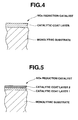
- the NOx reduction catalyst is formed to have outer and inner catalytic (coat) layers which are located one upon another, the outer catalytic layer being located outside relative to the inner catalytic layer with respect to flow of exhaust gas.
- the outer catalytic layer is smaller in amount of the oxygen adsorbable and releasable material than the inner layer. This can suppress the amount of consumption of the reducing agent.
- oxygen necessary for causing SO 2 in exhaust gas to be adsorbed in the form of sulfate and/or sulfite in the rich region is supplied from the inner catalytic layer, while reduction of NOx is carried out by the outer catalytic layer.
- Rh for reduction of NOx is contained in the outer catalytic layer, since a sufficient effect of Rh cannot be exhibited even in case that Rh is contained in the inner catalytic layer thereby wasting Rh.
- the oxygen adsorbable and releasable material contained in the outer catalytic layer and that in the inner catalytic layer are within a weight ratio range of from 0.01 : 0.99 to 1 : 1. If the amount of the oxygen adsorbable and releasable material contained in the inner layer is reduced less than that in the weight ratio range, a durability or NOx reduction efficiency (or NOx conversion rate) of the NOx reduction catalyst is lowered, as shown in Fig. 2.
- the NOx adsorbing material or metal (having the ability of adsorbing or trapping NOx) such as Ba unavoidably absorbs SOx as well as NOx. Accordingly, it is preferable that the NOx absorbing material and the catalytic noble metal such as Pt and/or Rh coexist with each other in the NOx reduction catalyst, in which, for example, at least a part of Pt is carried on ceria (CeO 2 ) to form a Pt/CeO 2 catalyst component.
- the amount of Pt carried on CeO 2 is within a range of from 5 to 50 % by weight relative to the whole amount of Pt contained in the NOx reduction catalyst, in which such Pt carried on CeO 2 adsorbs SOx in exhaust gas in the form of sulfate and sulfite and therefore is effective for releasing the sulfur-poisoning. If the amount of Pt carried on CeO 2 is smaller than 5 % by weight, the amount of Pt serving for releasing the sulfur-poisoning is too small to give rise to the water gas shift reaction thereby making it difficult to release the sulfur-poisoning throughout the whole NOx reduction catalyst.
- the amount Pt carried on CeO 2 exceeds 50 % by weight, the amount of Pt serving for releasing the sulfur-poisoning become larger; however, the reducing agent (such as CO and HC) for reducing the adsorbed NOx unavoidably reacts with oxygen released from CeO 2 before reduction of NOx, and therefore a reaction of conversion of from NOx to N 2 cannot proceed.
- the reducing agent such as CO and HC
- the NOx adsorbing material is selected according to a temperature condition in which the NOx adsorbing material is used.
- Mg is effective as the NOx adsorbing material in case that the temperature at a position immediately upstream (with respect to flow of exhaust gas) of the NOx reduction catalyst is within a range of from 200 to 300 °C
- Ba is effective in case that the temperature at the same position is within a range of from 250 to 400 °C
- Na is effective in case that the temperature at the same position is within a range of from 300 to 450 °C
- Cs is effective in case that the temperature of the same position is within a range of from 300 to 500 °C.
- NOx adsorbing materials such as Mg, Ba, Na, Cs and the like may be carried on a single refractory inorganic material such as CeO 2 , which makes it possible to maintain a good NOx adsorbing function throughout a wide temperature range.
- the above-mentioned CeO 2 is contained in the NOx reduction catalyst, preferably in an amount ranging from 3 to 100 g per one liter of the substrate. If the amount of CeO 2 is smaller than 3 g per one liter of the substrate (for example, a monolithic substrate) or per one liter of the NOx reduction catalyst per se, releasing the sulfur-poisoning cannot be sufficiently accomplished. If the amount of CeO 2 exceeds 100 g per one liter of the substrate, the reducing agent (such as CO and HC) for reducing the adsorbed NOx unavoidably reacts with oxygen released from CeO 2 before reduction of NOx, and therefore the reaction of conversion of from NOx to N 2 may not proceed.
- the reducing agent such as CO and HC
- the above-mentioned Pt and/or Rh are contained in the NOx reduction catalyst, preferably in an amount ranging from 1.4 to 4.3 g per one liter of the substrate. If the amount of Pt and/or Rh is smaller than 1.4 g per one liter of the substrate or per one liter of the NOx reduction catalyst per se, the performance of the NOx reduction catalyst cannot be sufficient. Even if the amount of Pt and/or Rh is larger than 4.3 g per one liter of the substrate, the performance of the NOx reduction catalyst is saturated so that a production cost for each NOx reduction catalyst may rise.
- the above-mentioned CeO 2 is combined with zirconium (Zr) to form a double (compound) oxide.
- an exhaust gas temperature higher than a certain level is employed. More specifically, the exhaust gas temperature is preferably higher than 550 °C.
- high exhaust gas temperature can be always employed.
- a double (compound) carbonate containing Ba and Mg may be used as the NOx adsorbing material.
- the sulfur-poisoning can be further easily released. It is unnecessary that whole Ba and Mg form the double carbonate, so that the effect of releasing the sulfur-poisoning is assumed to be exhibited if at least a part of Ba and/or Mg form the double carbonate.
- the double carbonate containing Ba and Mg can effectively contribute to reduction of NOx in a temperature range where the double carbonate is active, while improving the performance of releasing the sulfur-poisoning.
- the above-mentioned Ba as the NOx adsorbing material is included in the NOx reduction catalyst, preferably in an amount ranging from 5 to 30 g (in the form of BaO or calculated as oxide) per one liter of the substrate or per one liter of the NOx reduction catalyst per se.
- the above-mentioned Mg as the NOx adsorbing material is included in the NOx reduction catalyst, preferably in an amount ranging from 1 to 10 g (in the form of MgO or calculated as oxide) per one liter of the substrate or per one liter of the NOx reduction catalyst per se.
- the above-mentioned Na as the NOx adsorbing material is included in the NOx reduction catalyst, preferably in an amount ranging from 0.5 to 20.0 g per one liter of the substrate or per one liter of the NOx reduction catalyst per se.
- the above-mentioned Cs as the NOx adsorbing material is included in the NOx reduction catalyst, preferably in an amount ranging from 5 to 30 g (in the form of Cs 2 O or calculated as oxide) per one liter of the substrate or per one liter of the NOx catalyst per se.
- the above-mentioned K is contained in the NOx reduction catalyst, preferably in an amount ranging from 0.5 to 30 g (in the form of K 2 O or calculated as oxide) per one liter of the substrate or per one liter of the NOx reduction catalyst per se. If the contents of the above NOx adsorbing materials are smaller than the above-mentioned ranges, the ability of adsorbing NOx tends to become insufficient. Even if the contents of the above NOx adsorbing materials exceed the above ranges, the NOx adsorbing ability is saturated while excessive alkali metal and alkaline earth metal may not only promote the sulfur-poisoning but also degrade the durability (under heat) of the noble metal (such as Pt and Rh).
- the noble metal such as Pt and Rh
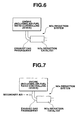
- a NOx reduction system is arranged for exhaust gas discharged from the combustion device (i.e., internal combustion engine or combustor) operable in the lean region and in the range including the stoichiometric region and the rich region.
- the NOx reduction system comprises the NOx reduction catalyst including the catalytic noble metal, and the oxygen adsorbable and releasable material which carries at least a part of the catalytic noble metal, wherein the catalytic noble metal carried on the oxygen adsorbable and releasable material adsorbs SOx in the exhaust gas, in the form of at least one of sulfate and sulfite.
- a device for controlling an air-fuel (air/fuel) ratio of an air-fuel mixture to be supplied to the combustion device, within a range of not smaller than 15 in the lean region.
- the device may be a fuel injector provided to the engine to inject metered fuel into a combustion chamber of the engine.
- an air-fuel (air/fuel) ratio of an air-fuel mixture to be supplied to the engine or the combustor is not smaller than 15.0, in which oxygen can be readily adsorbed to the oxygen adsorbable and releasable material (mainly CeO 2 ).
- another NOx reduction system is arranged for exhaust gas discharged from the combustion device (i.e., the engine or the like) operable in the lean region and in the range including the stoichiometric region and the rich region.
- the NOx reduction system comprises an exhaust gas passageway through which exhaust gas from the combustion device flows.
- the NOx reduction catalyst is disposed in the exhaust gas passageway and includes the catalytic noble metal, and the oxygen adsorbable and releasable material which carries at least a part of the catalytic noble metal, wherein the catalytic noble metal carried on the oxygen adsorbable and releasable material adsorbs SOx in the exhaust gas, in the form of at least one of sulfate and sulfite.
- a device is provided for causing secondary air to flow into the exhaust gas passageway upstream of the NOx reduction catalyst in the range including the stoichiometric region and the rich region.
- Ba, Mg, Na, Cs and K usable as the NOx adsorbing material are not limited to carbonate and therefore may be used in the form of oxide, hydroxide and/or the like.
- the NOx reduction catalyst of the present invention is used in a variety of shapes.
- the catalyst components of the NOx reduction catalyst are carried on a honeycomb-type monolithic substrate or the like formed of cordierite, stainless steel or the like, in which powder (pulverized material) of the catalyst components in the catalytic layer is coated in the form of slurry on the surface of each wall defining a cell serving as a gas passage through which exhaust gas flows.
- the catalyst components may be carried on the wall of the monolithic substrate, in a manner to form a plurality of catalytic coat layers on the wall of the monolithic substrate.
- activated alumina having a specific surface area of 180 m 2 was impregnated with a solution of dinitrodiammine platinum (Pt) and then calcined in air at 400 °C for 1 hour after drying thereby obtaining Powder A which had a Pt concentration of 1.5 % by weight.
- Pt dinitrodiammine platinum
- a porcelain ball mill was charged with 463.7 g of Powder A, 100.8 g of Powder B, 127.4 g of activated alumina, 28.8 g of alumina sol, and 1080 g of water, upon which mixing and grinding were made in the ball mill, thereby obtaining a slurry.
- This slurry was coated on a honeycomb-type cordierite ceramic monolithic substrate having a volume of 1.7 liters and 400 cells per square inch. The cells were formed extending throughout the length of the monolithic substrate.
- the coated monolithic substrate was blown with air to remove excessive slurry in the cells under the action of air stream.
- the coated monolithic substrate was dried at 130 °C and then calcined at 400 °C for 1 hour thereby producing a catalyst formed with a catalytic coat layer having a weight of 200 g per one liter of the monolithic substrate.
- this NOx reduction catalyst contained Pt, Ba and Mg respectively in amounts of 2.35 g, 20 g (calculated as oxide) and 5 g (calculated as oxide) per one liter of the monolithic substrate. Additionally, this NOx reduction catalyst contained CeO 2 in an amount of 28 g per one liter of the monolithic substrate, in which Pt carried on CeO 2 was 18 % by weight of the whole Pt contained in the NOx reduction catalyst.
- activated alumina having a specific surface area of 180 m 2 was impregnated with a solution of Rh nitrate and then calcined in air at 400 °C for 1 hour after drying thereby obtaining Powder C which had a Rh concentration of 1 % by weight.
- a porcelain ball mill was charged with 370.7 g of Powder A, 80.6 g of Powder B, 135.9 g of Powder C, 109.7 g of activated alumina, 23 g of alumina sol, and 1080 g of water, upon which mixing and grinding were made in the ball mill, thereby obtaining a slurry.
- This slurry was coated on a honeycomb-type cordierite ceramic monolithic substrate having a volume of 1.7 liters and 400 cells per square inch. The cells were formed extending throughout the length of the monolithic substrate.
- the coated monolithic substrate was blown with air to remove excessive slurry in the cells under the action of air stream.
- the coated monolithic substrate was dried at 130 °C and then calcined at 400 °C for 1 hour thereby producing a catalyst formed with a catalytic coat layer having a weight of 250 g per one liter of the monolithic substrate.
- this NOx reduction catalyst contained Pt, Rh, Ba and Mg respectively in amounts of 2.35 g, 0.47 g, 20 g (calculated as oxide) and 5 g (calculated as oxide) per one liter of the monolithic substrate. Additionally, Pt and Rh contained in this NOx reduction catalyst had a weight ratio (Pt/Rh) of 5/1, in which the total weight of them was 2.82 g per one liter of the monolithic substrate.
- the NOx reduction catalyst contained CeO 2 in an amount of 28 g per one liter of the monolithic substrate, in which Pt carried on CeO 2 was 18 % by weight of the whole Pt contained in the NOx reduction catalyst.
- activated alumina having a specific surface area of 180 m 2 was impregnated with a solution of dinitrodiammine platinum (Pt) and then calcined in air at 400 °C for 1 hour after drying thereby obtaining Powder D which had a Pt concentration of 0.6 % by weight.
- Pt dinitrodiammine platinum
- a porcelain ball mill was charged with 579.6 g of Powder D, 51.1 g of Powder B, 57.6 g of activated alumina, 32.4 g of alumina sol and 1080 g of water, upon which mixing and grinding were made in the ball mill, thereby obtaining a slurry.
- This slurry was coated on a honeycomb-type cordierite ceramic monolithic substrate having a volume of 1.7 liters and 400 cells per square inch. The cells were formed extending throughout the length of the monolithic substrate.
- the coated monolithic substrate was blown with air to remove excessive slurry in the cells under the action of air stream.
- the coated monolithic substrate was dried at 130 °C and then calcined at 400 °C for 1 hour thereby producing a catalyst formed with a catalytic coat layer 1 having a weight of 200 g per one liter of the monolithic substrate.
- a porcelain ball mill was charged with 308.9 g of Powder A, 67.7 g of Powder B, 226.8 g of Powder C, 92.9 g of activated alumina, 23.8 g of alumina sol and 1080 g of water, upon which mixing and grinding were made in the ball mill, thereby obtaining a slurry.
- This slurry was applied on the catalyst in such a manner as to be coated on the catalytic coat layer 1.
- the thus coated catalyst was blown with air to remove excessive slurry in the cells under the action of air stream.
- the coated catalyst was dried at 130 °C and then calcined at 400 °C for 1 hour thereby forming a catalytic coat layer 2 on the catalytic coat layer 1.
- the catalytic coat layer 2 had a weight of 150 g per one liter of the monolithic substrate.
- this NOx reduction catalyst contained Pt, Rh, Ba and Mg respectively in amounts of 2.35 g, 0.47 g, 20 g (calculated as oxide) and 5 g (calculated as oxide) per one liter of the monolithic substrate.
- Pt and Rh contained in this NOx reduction catalyst had a weight ratio (Pt/Rh) of 5/1, in which the total weight of them was 2.82 g per one liter of the monolithic substrate.
- the NOx reduction catalyst contained CeO 2 in an amount of 28.2 g per one liter of the monolithic substrate, in which Pt carried on CeO 2 was 18 % by weight of the whole Pt contained in the NOx reduction catalyst, and CeO 2 contained in the catalytic coat layer 1 and CeO 2 contained in the catalytic coat layer 2 were in a weight ratio of 1 : 1.
- a porcelain ball mill was charged with 579.6 g of Powder D, 97.9 g of Powder B, 10.1 g of activated alumina, 32.4 g of alumina sol and 1080 g of water, upon which mixing and grinding were made in the ball mill, thereby obtaining a slurry.
- This slurry was coated on a honeycomb-type cordierite ceramic monolithic substrate having a volume of 1.7 liters and 400 cells per square inch. The cells were formed extending throughout the length of the monolithic substrate.
- the coated monolithic substrate was blown with air to remove excessive slurry in the cells under the action of air stream.
- the coated monolithic substrate was dried at 130 °C and then calcined at 400 °C for 1 hour thereby producing a catalyst formed with a catalytic coat layer 1 having a weight of 200 g per one liter of the monolithic substrate.
- a porcelain ball mill was charged with 308.9 g of Powder A, 7.2 g of Powder B, 226.8 g of Powder C, 153.3 g of activated alumina, 23.8 g of alumina sol and 1080 g of water, upon which mixing and grinding were made in the ball mill, thereby obtaining a slurry.
- This slurry was applied on the catalyst in such a manner as to be coated on the catalytic coat layer 1.
- the thus coated catalyst was blown with air to remove excessive slurry in the cells under the action of air stream. Thereafter, the coated catalyst was dried at 130 °C and then calcined at 400 °C for 1 hour thereby forming a catalytic coat layer 2 on the catalytic coat layer 1.
- the catalytic coat layer 2 had a weight of 150 g per one liter of the monolithic substrate.
- this NOx reduction catalyst contained Pt, Rh, Ba and Mg respectively in amounts of 2.35 g, 0.47 g, 20 g (calculated as oxide) and 5 g (calculated as oxide) per one liter of the monolithic substrate.
- Pt and Rh contained in this NOx reduction catalyst had a weight ratio (Pt/Rh) of 5/1, in which the total weight of them was 2.82 g per one liter of the monolithic substrate.
- the NOx reduction catalyst contained CeO 2 in an amount of 28.2 g per one liter of the monolithic substrate, in which Pt carried on CeO 2 was 18 % by weight of the whole Pt contained in the NOx reduction catalyst, and CeO 2 contained in the catalytic coat layer 1 and CeO 2 contained in the catalytic coat layer 2 were in a weight ratio of 0.97 : 0.03.
- Example 3 A procedure of Example 3 was repeated with the following exceptions: After the catalytic coat layer 2 had been formed on the catalytic coat layer 1 to produce the catalyst formed with two (inner and outer) catalytic coat layers, the produced catalyst formed with two (inner and outer) catalytic coat layers was dipped in an aqueous solution containing barium acetate, magnesium acetate and sodium acetate, thereby impregnating the catalytic coat layers with barium, magnesium and sodium. As a result, a NOx reduction catalyst of this Example was produced.
- this NOx reduction catalyst contained Pt, Rh, Ba, Mg and Na respectively in amounts of 2.35 g, 0.47 g, 20 g (calculated as oxide), 5 g (calculated as oxide) and 10 g (calculated as oxide) per one liter of the monolithic substrate. Additionally, Pt and Rh contained in this NOx reduction catalyst had a weight ratio (Pt/Rh) of 5/1, in which the total weight of them was 2.82 g per one liter of the monolithic substrate.
- the NOx reduction catalyst contained CeO 2 in an amount of 28.2 g per one liter of the monolithic substrate, in which Pt carried on CeO 2 was 18 % by weight of the whole Pt contained in the NOx reduction catalyst, and CeO 2 contained in the catalytic coat layer 1 and CeO 2 contained in the catalytic coat layer 2 were in a weight ratio of 1 : 1.
- Example 3 A procedure of Example 3 was repeated with the following exceptions: After the catalytic coat layer 2 had been formed on the catalytic coat layer 1 to produce the catalyst formed with two (inner and outer) catalytic coat layers, the produced catalyst formed with two (inner and outer) catalytic coat layers was dipped in an aqueous solution containing barium acetate, magnesium acetate and cesium acetate, thereby impregnating the catalytic coat layers with barium, magnesium and cesium. As a result, a NOx reduction catalyst of this Example was produced.
- this NOx reduction catalyst contained Pt, Rh, Ba, Mg and Cs respectively in amounts of 2.35 g, 0.47 g, 10 g (calculated as oxide), 5 g (calculated as oxide) and 20 g (calculated as oxide) per one liter of the monolithic substrate. Additionally, Pt and Rh contained in this NOx reduction catalyst had a weight ratio (Pt/Rh) of 5/1, in which the total weight of them was 2.82 g per one liter of the monolithic substrate.
- the NOx reduction catalyst contained CeO 2 in an amount of 28.2 g per one liter of the monolithic substrate, in which Pt carried on CeO 2 was 18 % by weight of the whole Pt contained in the NOx reduction catalyst, and CeO 2 contained in the catalytic coat layer 1 and CeO 2 contained in the catalytic coat layer 2 were in a weight ratio of 1 : 1.
- Example 3 A procedure of Example 3 was repeated with the following exception: After the catalytic coat layer 2 had been formed on the catalytic coat layer 1 to produce the catalyst formed with two (inner and outer) catalytic coat layers, the produced catalyst formed with the two (inner and outer) catalytic coat layers was dipped in an aqueous solution containing barium acetate, magnesium acetate, sodium acetate and potassium acetate, thereby impregnating the catalytic coat layers with barium, magnesium, sodium and potassium. As a result, a NOx reduction catalyst of this Example was produced.
- this NOx reduction catalyst contained Pt, Rh, Ba, Mg and K respectively in amounts of 2.35 g, 0.47 g, 20 g (calculated as oxide), 5 g (calculated as oxide) and 20 g (calculated as oxide) per one liter of the monolithic substrate. Additionally, Pt and Rh contained in this NOx reduction catalyst had a weight ratio (Pt/Rh) of 5/1, in which the total weight of them was 2.82 g per one liter of the monolithic substrate.
- the NOx reduction catalyst contained CeO 2 in an amount of 28.2 g per one liter of the monolithic substrate, in which Pt carried on CeO 2 was 18 % by weight of the whole Pt contained in the NOx reduction catalyst, and CeO 2 contained in the catalytic coat layer 1 and CeO 2 contained in the catalytic coat layer 2 were in a weight ratio of 1 : 1.
- Example 3 A procedure of Example 3 was repeated with the following exceptions: After the catalytic coat layer 2 had been formed on the catalytic coat layer 1 to produce the catalyst formed with two (inner and outer) catalytic coat layers, the produced catalyst formed with the two (inner and outer) catalytic coat layers was dipped in an aqueous solution containing barium acetate, magnesium acetate, sodium acetate and cesium acetate, thereby impregnating the catalytic coat layers with barium, magnesium, sodium and cesium. As a result, a NOx reduction catalyst of this Example was produced.
- this NOx reduction catalyst contained Pt, Rh, Ba, Mg, Na and Cs respectively in amounts of 2.35 g, 0.47 g, 10 g (calculated as oxide), 5 g (calculated as oxide), 5 g (calculated as oxide) and 20 g (calculated as oxide) per one liter of the monolithic substrate. Additionally, Pt and Rh contained in this NOx reduction catalyst had a weight ratio (Pt/Rh) of 5/1, in which the total weight of them was 2.82 g per one liter of the monolithic substrate.
- the NOx reduction catalyst contained CeO 2 in an amount of 28.2 g per one liter of the monolithic substrate, in which Pt carried on CeO 2 was 18 % by weight of the whole Pt contained in the NOx reduction catalyst, and CeO 2 contained in the catalytic coat layer 1 and CeO 2 contained in the catalytic coat layer 2 were in a weight ratio of 1 : 1.
- Example 3 A procedure of Example 3 was repeated with the following exceptions: After the catalytic coat layer 2 had been formed on the catalytic coat layer 1 to produce the catalyst formed with two (inner and outer) catalytic coat layers, the produced catalyst formed with the two (inner and outer) catalytic coat layers was dipped in an aqueous solution containing barium acetate, magnesium acetate, sodium acetate and potassium acetate, thereby impregnating the catalytic coat layers with barium, magnesium, sodium and potassium. As a result, a NOx reduction catalyst of this Example was produced.
- this NOx reduction catalyst contained Pt, Rh, Ba, Mg, Na and K respectively in amounts of 2.35 g, 0.47 g, 20 g (calculated as oxide), 5 g (calculated as oxide), 5 g (calculated as oxide) and 20 g (calculated as oxide) per one liter of the monolithic substrate. Additionally, Pt and Rh contained in this NOx reduction catalyst had a weight ratio (Pt/Rh) of 5/1, in which the total weight of them was 2.82 g per one liter of the monolithic substrate.
- the NOx reduction catalyst contained CeO 2 in an amount of 28.2 g per one liter of the monolithic substrate, in which Pt carried on CeO 2 was 18 % by weight of the whole Pt contained in the NOx reduction catalyst, and CeO 2 contained in the catalytic coat layer 1 and CeO 2 contained in the catalytic coat layer 2 were in a weight ratio of 1 : 1.
- Example 3 A procedure of Example 3 was repeated with the following exceptions: After the catalytic coat layer 2 had been formed on the catalytic coat layer 1 to produce the catalyst formed with two (inner and outer) catalytic coat layers, the produced catalyst formed with the two (inner and outer) catalytic coat layers was dipped in an aqueous solution containing barium acetate, magnesium acetate, cesium acetate and potassium acetate, thereby impregnating the catalytic coat layers with barium, magnesium, cesium and potassium. As a result, a NOx reduction catalyst of this Example was produced.
- this NOx reduction catalyst contained Pt, Rh, Ba, Mg, Cs and K respectively in amounts of 2.35 g, 0.47 g, 10 g (calculated as oxide), 5 g (calculated as oxide), 10 g (calculated as oxide) and 10 g (calculated as oxide) per one liter of the monolithic substrate. Additionally, Pt and Rh contained in this NOx reduction catalyst had a weight ratio (Pt/Rh) of 5/1, in which the total weight of them was 2.82 g per one liter of the monolithic substrate.
- the NOx reduction catalyst contained CeO 2 in an amount of 28.2 g per one liter of the monolithic substrate, in which Pt carried on CeO 2 was 18 % by weight of the whole Pt contained in the NOx reduction catalyst, and CeO 2 contained in the catalytic coat layer 1 and CeO 2 contained in the catalytic coat layer 2 were in a weight ratio of 1 : 1.
- Example 3 A procedure of Example 3 was repeated with the following exceptions: After the catalytic coat layer 2 had been formed on the catalytic coat layer 1 to produce the catalyst formed with two (inner and outer) catalytic coat layers, the produced catalyst formed with the two (inner and outer) catalytic coat layers was dipped in an aqueous solution containing barium acetate, magnesium acetate, sodium acetate, cesium acetate and potassium acetate, thereby impregnating the catalytic coat layers with barium, magnesium, cesium and potassium. As a result, a NOx reduction catalyst of this Example was produced.
- this NOx reduction catalyst contained Pt, Rh, Ba, Mg, Na, Cs and K respectively in amounts of 2.35 g, 0.47 g, 10 g (calculated as oxide), 5 g (calculated as oxide), 5g (calculated as oxide), 10 g (calculated as oxide) and 10 g (calculated as oxide) per one liter of the monolithic substrate. Additionally, Pt and Rh contained in this NOx reduction catalyst had a weight ratio (Pt/Rh) of 5/1, in which the total weight of them was 2.82 g per one liter of the monolithic substrate.
- the NOx reduction catalyst contained CeO 2 in an amount of 28.2 g per one liter of the monolithic substrate, in which Pt carried on CeO 2 was 18 % by weight of the whole Pt contained in the NOx reduction catalyst, and CeO 2 contained in the catalytic coat layer 1 and CeO 2 contained in the catalytic coat layer 2 were in a weight ratio of 1 : 1.
- Example 3 A procedure of Example 3 was repeated with the exception that activated ceria for Powder B of Example 3 was replaced with a Ce-Zr double oxide which was prepared by combining 25% by weight of ZrO 2 , thereby producing a NOx reduction catalyst of this Example.
- a composition of this NOx reduction catalyst is shown in Table 1.
- Example 4 A procedure of Example 4 was repeated with the exception that activated ceria for Powder B of Example 4 was replaced with a Ce-Zr double oxide which was prepared by combining 25% by weight of ZrO 2 , thereby producing a NOx reduction catalyst of this Example.
- a composition of this NOx reduction catalyst is shown in Table 1.
- Example 5 A procedure of Example 5 was repeated with the exception that activated ceria for Powder B of Example 5 was replaced with a Ce-Zr double oxide which was prepared by combining 25% by weight of ZrO 2 , thereby producing a NOx reduction catalyst of this Example.
- a composition of this NOx reduction catalyst is shown in Table 1.
- Example 6 A procedure of Example 6 was repeated with the exception that activated ceria for Powder B of Example 6 was replaced with a Ce-Zr double oxide which was prepared by combining 25% by weight of ZrO 2 , thereby producing a NOx reduction catalyst of this Example.
- a composition of this NOx reduction catalyst is shown in Table 1.
- Example 7 A procedure of Example 7 was repeated with the exception that activated ceria for Powder B of Example 7 was replaced with a Ce-Zr double oxide which was prepared by combining 25% by weight of ZrO 2 , thereby producing a NOx reduction catalyst of this Example.
- a composition of this NOx reduction catalyst is shown in Table 1.
- Example 8 A procedure of Example 8 was repeated with the exception that activated ceria for Powder B of Example 8 was replaced with a Ce-Zr double oxide which was prepared by combining 25% by weight of ZrO 2 , thereby producing a NOx reduction catalyst of this Example.
- a composition of this NOx reduction catalyst is shown in Fig. 1.
- Example 9 A procedure of Example 9 was repeated with the exception that activated ceria for Powder B of Example 9 was replaced with a Ce-Zr double oxide which was prepared by combining 25% by weight of ZrO 2 , thereby producing a NOx reduction catalyst of this Example.
- a composition of this NOx reduction catalyst is shown in Table 1.
- Example 10 A procedure of Example 10 was repeated with the exception that activated ceria for Powder B of Example 10 was replaced with a Ce-Zr double oxide which was prepared by combining 25% by weight of ZrO 2 , thereby producing a NOx reduction catalyst of this Example.
- a composition of this NOx reduction catalyst is shown in Table 1.
- Example 11 A procedure of Example 11 was repeated with the exception that activated ceria for Powder B of Example 11 was replaced with a Ce-Zr double oxide which was prepared by combining 25% by weight of ZrO 2 , thereby producing a NOx reduction catalyst of this Example.
- a composition of this NOx reduction catalyst is shown in Table 1.
- activated alumina having a specific surface area of 180 m 2 was impregnated with a solution of palladium nitrate and then calcined in air at 400 °C for 1 hour after drying thereby obtaining Powder E which had a Pd concentration of 1.5 % by weight.
- Activated alumina having a specific surface area of 180 m 2 was impregnated with a solution of palladium nitrate and then calcined in air at 400 °C for 1 hour after drying thereby obtaining Powder E which had a Pd concentration of 0.6 % by weight.
- Activated ceria having a specific surface area of 60 m 2 was impregnated with a solution of palladium nitrate and then calcined in air at 400 °C for 1 hour after drying thereby obtaining Powder G which had a Pd concentration of 1.5 % by weight.
- a porcelain ball mill was charged with 579.6 g of Powder F, 51.1 g of Powder G, 57.6 g of activated alumina, 32.4 g of alumina sol and 1080 g of water, upon which mixing and grinding were made in the ball mill, thereby obtaining a slurry.
- This slurry was coated on a honeycomb-type cordierite ceramic monolithic substrate having a volume of 1.7 liters and 400 cells per square inch. The cells were formed extending throughout the length of the monolithic substrate.
- the coated monolithic substrate was blown with air to remove excessive slurry in the cells under the action of air stream.
- the coated monolithic substrate was dried at 130 °C and then calcined at 400 °C for 1 hour thereby producing a catalyst formed with a catalytic coat layer 1 having a weight of 200 g per one liter of the monolithic substrate.
- a porcelain ball mill was charged with 308.9 g of Powder E, 67.7 g of Powder G, 226.8 g of Powder C, 92.9 g of activated alumina, 23.8 g of alumina sol and 1080 g of water, upon which mixing and grinding were made in the ball mill, thereby obtaining a slurry.
- This slurry was applied on the catalyst in such a manner as to be coated on the catalytic coat layer 1.
- the thus coated catalyst was blown with air to remove excessive slurry in the cells under the action of air stream.
- the coated catalyst was dried at 130 °C and then calcined at 400 °C for 1 hour thereby forming a catalytic coat layer 2 on the catalytic coat layer 1.
- the catalytic coat layer 2 had a weight of 150 g per one liter of the monolithic substrate.
- this NOx reduction catalyst contained Pd, Rh, Ba and Mg respectively in amounts of 2.35 g, 0.47 g, 20 g (calculated as oxide) and 5 g (calculated as oxide) per one liter of the monolithic substrate.
- Pd and Rh contained in this NOx reduction catalyst had a weight ratio (Pt/Rh) of 5/1, in which the total weight of them was 2.82 g per one liter of the monolithic substrate.
- the NOx reduction catalyst contained CeO 2 in an amount of 28.2 g per one liter of the monolithic substrate, in which Pd carried on CeO 2 was 18 % by weight of the whole Pd contained in the NOx reduction catalyst, and CeO 2 contained in the catalytic coat layer 1 and CeO 2 contained in the catalytic coat layer 2 were in a weight ratio of 1 : 1.
- activated alumina having a specific surface area of 180 m 2 was impregnated with a solution of dinitrodiammine platinum and then calcined in air at 400 °C for 1 hour after drying thereby obtaining Powder H which had a Pt concentration of 1.75 % by weight.
- Activated alumina having a specific surface area of 180 m 2 was impregnated with a solution of dinitrodiammine platinum and then calcined in air at 400 °C for 1 hour after drying thereby obtaining Powder I which had a Pt concentration of 0.7 % by weight.
- Activated ceria having a specific surface area of 60 m 2 was impregnated with a solution of dinitrodiammine platinum and then calcined in air at 400 °C for 1 hour after drying thereby obtaining Powder J which had a Pt concentration of 0.33 % by weight.
- a porcelain ball mill was charged with 579.6 g of Powder I, 51.1 g of Powder J, 57.6 g of activated alumina, 32.4 g of alumina sol and 1080 g of water, upon which mixing and grinding were made in the ball mill, thereby obtaining a slurry.
- This slurry was coated on a honeycomb-type cordierite ceramic monolithic substrate having a volume of 1.7 liters and 400 cells per square inch. The cells were formed extending throughout the length of the monolithic substrate.
- the coated monolithic substrate was blown with air to remove excessive slurry in the cells under the action of air stream.
- the coated monolithic substrate was dried at 130 °C and then calcined at 400 °C for 1 hour thereby producing a catalyst formed with a catalytic coat layer 1 having a weight of 200 g per one liter of the monolithic substrate.
- a porcelain ball mill was charged with 308.9 g of Powder H, 67.7 g of Powder J, 226.8 g of Powder C, 92.9 g of activated alumina, 23.8 g of alumina sol and 1080 g of water, upon which mixing and grinding were made in the ball mill, thereby obtaining a slurry.
- This slurry was applied on the catalyst in such a manner as to be coated on the catalytic coat layer 1.
- the thus coated catalyst was blown with air to remove excessive slurry in the cells under the action of air stream.
- the coated catalyst was dried at 130 °C and then calcined at 400 °C for 1 hour thereby forming a catalytic coat layer 2 on the catalytic coat layer 1.
- the catalytic coat layer 2 had a weight of 150 g per one liter of the monolithic substrate.
- this NOx reduction catalyst contained Pt, Rh, Ba and Mg respectively in amounts of 2.35 g, 0.47 g, 20 g (calculated as oxide) and 5 g (calculated as oxide) per one liter of the monolithic substrate.
- Pt and Rh contained in this NOx reduction catalyst had a weight ratio (Pt/Rh) of 5/1, in which the total weight of them was 2.82 g per one liter of the monolithic substrate.
- the NOx reduction catalyst contained CeO 2 in an amount of 28.2 g per one liter of the monolithic substrate, in which Pt carried on CeO 2 was 4 % by weight of the whole Pt contained in the NOx reduction catalyst, and CeO 2 contained in the catalytic coat layer 1 and CeO 2 contained in the catalytic coat layer 2 were in a weight ratio of 1 : 1.
- activated alumina having a specific surface area of 180 m 2 was impregnated with a solution of dinitrodiammine platinum and then calcined in air at 400 °C for 1 hour after drying thereby obtaining Powder K which had a Pt concentration of 0.89 % by weight.
- Activated alumina having a specific surface area of 180 m 2 was impregnated with a solution of dinitrodiammine platinum and then calcined in air at 400 °C for 1 hour after drying thereby obtaining Powder L which had a Pt concentration of 0.36 % by weight.
- Activated ceria having a specific surface area of 60 m 2 was impregnated with a solution of dinitrodiammine platinum and then calcined in air at 400 °C for 1 hour after drying thereby obtaining Powder M which had a Pt concentration of 4.3 % by weight.
- a porcelain ball mill was charged with 579.6 g of Powder L, 51.1 g of Powder M, 57.6 g of activated alumina, 32.4 g of alumina sol and 1080 g of water, upon which mixing and grinding were made in the ball mill, thereby obtaining a slurry.
- This slurry was coated on a honeycomb-type cordierite ceramic monolithic substrate having a volume of 1.7 liters and 400 cells per square inch. The cells were formed extending throughout the length of the monolithic substrate.
- the coated monolithic substrate was blown with air to remove excessive slurry in the cells under the action of air stream.
- the coated monolithic substrate was dried at 130 °C and then calcined at 400 °C for 1 hour thereby producing a catalyst formed with a catalytic coat layer 1 having a weight of 200 g per one liter of the monolithic substrate.
- a porcelain ball mill was charged with 308.9 g of Powder K, 67.7 g of Powder M, 226.8 g of Powder C, 92.9 g of activated alumina, 23.8 g of alumina sol and 1080 g of water, upon which mixing and grinding were made in the ball mill, thereby obtaining a slurry.
- This slurry was applied on the catalyst in such a manner as to be coated on the catalytic coat layer 1.
- the thus coated catalyst was blown with air to remove excessive slurry in the cells under the action of air stream.
- the coated catalyst was dried at 130 °C and then calcined at 400 °C for 1 hour thereby forming a catalytic coat layer 2 on the catalytic coat layer 1.
- the catalytic coat layer 2 had a weight of 150 g per one liter of the monolithic substrate.
- this NOx reduction catalyst contained Pt, Rh, Ba and Mg respectively in amounts of 2.35 g, 0.47 g, 20 g (calculated as oxide) and 5 g (calculated as oxide) per one liter of the monolithic substrate.
- Pt and Rh contained in this NOx reduction catalyst had a weight ratio (Pt/Rh) of 5/1, in which the total weight of them was 2.82 g per one liter of the monolithic substrate.
- the NOx reduction catalyst contained CeO 2 in an amount of 28.2 g per one liter of the monolithic substrate, in which Pt carried on CeO 2 was 51 % by weight of the whole Pt contained in the NOx reduction catalyst, and CeO 2 contained in the catalytic coat layer 1 and CeO 2 contained in the catalytic coat layer 2 were in a weight ratio of 1 : 1.
- activated ceria having a specific surface area of 60 m 2 was impregnated with a solution of dinitrodiammine platinum and then calcined in air at 400 °C for 1 hour after drying thereby obtaining Powder N which had a Pt concentration of 11.8 % by weight.
- a porcelain ball mill was charged with 634.7 g of Powder D, 3.6 g of Powder N, 49.7 g of activated alumina, 32.4 g of alumina sol and 1080 g of water, upon which mixing and grinding were made in the ball mill, thereby obtaining a slurry.
- This slurry was coated on a honeycomb-type cordierite ceramic monolithic substrate having a volume of 1.7 liters and 400 cells per square inch. The cells were formed extending throughout the length of the monolithic substrate.
- the coated monolithic substrate was blown with air to remove excessive slurry in the cells under the action of air stream.
- the coated monolithic substrate was dried at 130 °C and then calcined at 400 °C for 1 hour thereby producing a catalyst formed with a catalytic coat layer 1 having a weight of 200 g per one liter of the monolithic substrate.
- a porcelain ball mill was charged with 338.4 g of Powder A, 4.8 g of Powder N, 226.8 g of Powder C, 150.2 g of activated alumina, 23.8 g of alumina sol and 1080 g of water, upon which mixing and grinding were made in the ball mill, thereby obtaining a slurry.
- This slurry was applied on the catalyst in such a manner as to be coated on the catalytic coat layer 1.
- the thus coated catalyst was blown with air to remove excessive slurry in the cells under the action of air stream.
- the coated catalyst was dried at 130 °C and then calcined at 400 °C for 1 hour thereby forming a catalytic coat layer 2 on the catalytic coat layer 1.
- the catalytic coat layer 2 had a weight of 150 g per one liter of the monolithic substrate.
- this NOx reduction catalyst contained Pt, Rh, Ba and Mg respectively in amounts of 2.35 g, 0.47 g, 20 g (calculated as oxide) and 5 g (calculated as oxide) per one liter of the monolithic substrate.
- Pt and Rh contained in this NOx reduction catalyst had a weight ratio (Pt/Rh) of 5/1, in which the total weight of them was 2.82 g per one liter of the monolithic substrate.
- the NOx reduction catalyst contained CeO 2 in an amount of 2 g per one liter of the monolithic substrate, in which Pt carried on CeO 2 was 10 % by weight of the whole Pt contained in the NOx reduction catalyst, and CeO 2 contained in the catalytic coat layer 1 and CeO 2 contained in the catalytic coat layer 2 were in a weight ratio of 1 : 1.
- activated alumina having a specific surface area of 180 m 2 was impregnated with a solution of dinitrodiammine platinum and then calcined in air at 400 °C for 1 hour after drying thereby obtaining Powder O which had a Pt concentration of 2.0 % by weight.
- Activated ceria having a specific surface area of 60 m 2 was impregnated with a solution of dinitrodiammine platinum and then calcined in air at 400 °C for 1 hour after drying thereby obtaining Powder P which had a Pt concentration of 0.47 % by weight.
- a porcelain ball mill was charged with 483.5 g of Powder I, 181.8 g of Powder P, 22.7 g of activated alumina, 32.4 g of alumina sol and 1080 g of water, upon which mixing and grinding were made in the ball mill, thereby obtaining a slurry.
- This slurry was coated on a honeycomb-type cordierite ceramic monolithic substrate having a volume of 1.7 liters and 400 cells per square inch. The cells were formed extending throughout the length of the monolithic substrate.
- the coated monolithic substrate was blown with air to remove excessive slurry in the cells under the action of air stream.
- the coated monolithic substrate was dried at 130 °C and then calcined at 400 °C for 1 hour thereby producing a catalyst formed with a catalytic coat layer 1 having a weight of 200 g per one liter of the monolithic substrate.
- a porcelain ball mill was charged with 225.6 g of Powder O, 242.4 g of Powder P, 226.8 g of Powder C, 1.4 g of activated alumina, 23.8 g of alumina sol and 1080 g of water, upon which mixing and grinding were made in the ball mill, thereby obtaining a slurry.
- This slurry was applied on the catalyst in such a manner as to be coated on the catalytic coat layer 1.
- the thus coated catalyst was blown with air to remove excessive slurry in the cells under the action of air stream.
- the coated catalyst was dried at 130 °C and then calcined at 400 °C for 1 hour thereby forming a catalytic coat layer 2 on the catalytic coat layer 1.
- the catalytic coat layer 2 had a weight of 150 g per one liter of the monolithic substrate.
- this NOx reduction catalyst contained Pt, Rh, Ba and Mg respectively in amounts of 2.35 g, 0.47 g, 20 g (calculated as oxide) and 5 g (calculated as oxide) per one liter of the monolithic substrate.
- Pt and Rh contained in this NOx reduction catalyst had a weight ratio (Pt/Rh) of 5/1, in which the total weight of them was 2.82 g per one liter of the monolithic substrate.
- the NOx reduction catalyst contained CeO 2 in an amount of 101 g per one liter of the monolithic substrate, in which Pt carried on CeO 2 was 20 % by weight of the whole Pt contained in the NOx reduction catalyst, and CeO 2 contained in the catalytic coat layer 1 and CeO 2 contained in the catalytic coat layer 2 were in a weight ratio of 1 : 1.
- activated alumina having a specific surface area of 180 m 2 was impregnated with a solution of dinitrodiammine platinum and then calcined in air at 400 °C for 1 hour after drying thereby obtaining Powder Q which had a Pt concentration of 0.69 % by weight.
- Activated alumina having a specific surface area of 180 m 2 was impregnated with a solution of dinitrodiammine platinum and then calcined in air at 400 °C for 1 hour after drying thereby obtaining Powder R which had a Pt concentration of 0.27 % by weight.
- Activated ceria having a specific surface area of 60 m 2 was impregnated with a solution of dinitrodiammine platinum and then calcined in air at 400 °C for 1 hour after drying thereby obtaining Powder S which had a Pt concentration of 0.69 % by weight.
- Activated alumina having a specific surface area of 180 m 2 was impregnated with a solution of Rh nitrate and then calcined in air at 400 °C for 1 hour after drying thereby obtaining Powder T which had a Rh concentration of 0.47 % by weight.
- a porcelain ball mill was charged with 579.6 g of Powder R, 51.1 g of Powder S, 57.6 g of activated alumina, 32.4 g of alumina sol and 1080 g of water, upon which mixing and grinding were made in the ball mill, thereby obtaining a slurry.
- This slurry was coated on a honeycomb-type cordierite ceramic monolithic substrate having a volume of 1.7 liters and 400 cells per square inch. The cells were formed extending throughout the length of the monolithic substrate.
- the coated monolithic substrate was blown with air to remove excessive slurry in the cells under the action of air stream.
- the coated monolithic substrate was dried at 130 °C and then calcined at 400 °C for 1 hour thereby producing a catalyst formed with a catalytic coat layer 1 having a weight of 200 g per one liter of the monolithic substrate.
- a porcelain ball mill was charged with 308.9 g of Powder Q, 67.7 g of Powder S, 226.8 g of Powder T, 92.9 g of activated alumina, 23.8 g of alumina sol and 1080 g of water, upon which mixing and grinding were made in the ball mill, thereby obtaining a slurry.
- This slurry was applied on the catalyst in such a manner as to be coated on the catalytic coat layer 1.
- the thus coated catalyst was blown with air to remove excessive slurry in the cells under the action of air stream.
- the coated catalyst was dried at 130 °C and then calcined at 400 °C for 1 hour thereby forming a catalytic coat layer 2 on the catalytic coat layer 1.
- the catalytic coat layer 2 had a weight of 150 g per one liter of the monolithic substrate.
- this NOx reduction catalyst contained Pt, Rh, Ba and Mg respectively in amounts of 1.08 g, 0.22 g, 20 g (calculated as oxide) and 5 g (calculated as oxide) per one liter of the monolithic substrate.
- Pt and Rh contained in this NOx reduction catalyst had a weight ratio (Pt/Rh) of 5/1, in which the total weight of them was 1.3 g per one liter of the monolithic substrate.
- the NOx reduction catalyst contained CeO 2 in an amount of 28.2 g per one liter of the monolithic substrate, in which Pt carried on CeO 2 was 18 % by weight of the whole Pt contained in the NOx reduction catalyst, and CeO 2 contained in the catalytic coat layer 1 and CeO 2 contained in the catalytic coat layer 2 were in a weight ratio of 1 : 1.
- a porcelain ball mill was charged with 579.6 g of Powder D, 43.9 g of Powder B, 64.1 g of activated alumina, 32.4 g of alumina sol and 1080 g of water, upon which mixing and grinding were made in the ball mill, thereby obtaining a slurry.
- This slurry was coated on a honeycomb-type cordierite ceramic monolithic substrate having a volume of 1.7 liters and 400 cells per square inch. The cells were formed extending throughout the length of the monolithic substrate.
- the coated monolithic substrate was blown with air to remove excessive slurry in the cells under the action of air stream.
- the coated monolithic substrate was dried at 130 °C and then calcined at 400 °C for 1 hour thereby producing a catalyst formed with a catalytic coat layer 1 having a weight of 200 g per one liter of the monolithic substrate.
- a porcelain ball mill was charged with 308.9 g of Powder A, 76.8 g of Powder B, 83.7 g of Powder C, 153.3 g of activated alumina, 23.8 g of alumina sol and 1080 g of water, upon which mixing and grinding were made in the ball mill, thereby obtaining a slurry.
- This slurry was applied on the catalyst in such a manner as to be coated on the catalytic coat layer 1.
- the thus coated catalyst was blown with air to remove excessive slurry in the cells under the action of air stream. Thereafter, the coated catalyst was dried at 130 °C and then calcined at 400 °C for 1 hour thereby forming a catalytic coat layer 2 on the catalytic coat layer 1.
- the catalytic coat layer 2 had a weight of 150 g per one liter of the monolithic substrate.
- this NOx reduction catalyst contained Pt, Rh, Ba and Mg respectively in amounts of 2.35 g, 0.47 g, 20 g (calculated as oxide) and 5 g (calculated as oxide) per one liter of the monolithic substrate.
- Pt and Rh contained in this NOx reduction catalyst had a weight ratio (Pt/Rh) of 5/1, in which the total weight of them was 2.82 g per one liter of the monolithic substrate.
- the NOx reduction catalyst contained CeO 2 in an amount of 28.2 g per one liter of the monolithic substrate, in which Pt carried on CeO 2 was 18 % by weight of the whole Pt contained in the NOx reduction catalyst, and CeO 2 contained in the catalytic coat layer 1 and CeO 2 contained in the catalytic coat layer 2 were in a weight ratio of 1 : 1.3.
- Example 3 A procedure of Example 3 was repeated with the exception that the two catalytic coat layers of the produced catalyst were impregnated with barium and magnesium so as to contain Ba and Mg which were respectively in amounts of 4 g (calculated as oxide) and 0.9 g (calculated as oxide) per one liter of the monolithic substrate, thereby producing a NOx reduction catalyst of this Example.
- a composition of this NOx reduction catalyst is shown in Table 2.
- Example 3 A procedure of Example 3 was repeated with the exception that the two catalytic coat layers of the produced catalyst were impregnated with barium and magnesium so as to contain Ba and Mg which were respectively in amounts of 31 g (calculated as oxide) and 11 g (calculated as oxide) per one liter of the monolithic substrate, thereby producing a NOx reduction catalyst of this Example.
- a composition of this NOx reduction catalyst is shown in Table 2.
- Example 5 A procedure of Example 5 was repeated with the exception that the two catalytic coat layers of the produced catalyst were impregnated with barium, magnesium and sodium so as to contain Ba, Mg and Na which were respectively in amounts of 4 g (calculated as oxide), 0.9 g (calculated as oxide) and 0.4 g (calculated as oxide) per one liter of the monolithic substrate, thereby producing a NOx reduction catalyst of this Example.
- a composition of this NOx reduction catalyst is shown in Table 2.
- Example 5 A procedure of Example 5 was repeated with the exception that the two catalytic coat layers of the produced catalyst were impregnated with barium, magnesium and sodium so as to contain Ba, Mg and Na which were respectively in amounts of 31 g (calculated as oxide), 11 g (calculated as oxide) and 21 g (calculated as oxide) per one liter of the monolithic substrate, thereby producing a NOx reduction catalyst of this Example.
- a composition of this NOx reduction catalyst is shown in Table 2.
- Example 6 A procedure of Example 6 was repeated with the exception that the two catalytic coat layers of the produced catalyst were impregnated with barium, magnesium and cesium so as to contain Ba, Mg and Cs which were respectively in amounts of 4 g (calculated as oxide), 0.9 g (calculated as oxide) and 4 g (calculated as oxide) per one liter of the monolithic substrate, thereby producing a NOx reduction catalyst of this Example.
- a composition of this NOx reduction catalyst is shown in Table 2.
- Example 6 A procedure of Example 6 was repeated with the exception that the two catalytic coat layers of the produced catalyst were impregnated with barium, magnesium and cesium so as to contain Ba, Mg and Cs which were respectively in amounts of 31 g (calculated as oxide), 11 g (calculated as oxide) and 31 g (calculated as oxide) per one liter of the monolithic substrate, thereby producing a NOx reduction catalyst of this Example.
- a composition of this NOx reduction catalyst is shown in Table 2.
- Example 7 A procedure of Example 7 was repeated with the exception that the two catalytic coat layers of the produced catalyst were impregnated with barium, magnesium and potassium so as to contain Ba, Mg and K which were respectively in amounts of 4 g (calculated as oxide), 0.9 g (calculated as oxide) and 0.4 g (calculated as oxide) per one liter of the monolithic substrate, thereby producing a NOx reduction catalyst of this Example.
- a composition of this NOx reduction catalyst is shown in Table 2.
- Example 7 A procedure of Example 7 was repeated with the exception that the two catalytic coat layers of the produced catalyst were impregnated with barium, magnesium and potassium so as to contain Ba, Mg and K which were respectively in amounts of 31 g (calculated as oxide), 11 g (calculated as oxide) and 31 g (calculated as oxide) per one liter of the monolithic substrate, thereby producing a NOx reduction catalyst of this Example.
- a composition of this NOx reduction catalyst is shown in Table 2.
- Example 8 A procedure of Example 8 was repeated with the exception that the two catalytic coat layers of the produced catalyst were impregnated with barium, magnesium, sodium and cesium so as to contain Ba, Mg, Na and Cs which were respectively in amounts of 4 g (calculated as oxide), 0.9 g (calculated as oxide), 0.4 g (calculated as oxide) and 4 g (calculated as oxide) per one liter of the monolithic substrate, thereby producing a NOx reduction catalyst of this Example.
- a composition of this NOx reduction catalyst is shown in Table 2.
- Example 8 A procedure of Example 8 was repeated with the exception that the two catalytic coat layers of the produced catalyst were impregnated with barium, magnesium and cesium so as to contain Ba, Mg, Na and Cs which were respectively in amounts of 31 g (calculated as oxide), 11 g (calculated as oxide), 21 g (calculated as oxide) and 31 g (calculated as oxide) per one liter of the monolithic substrate, thereby producing a NOx reduction catalyst of this Example.
- a composition of this NOx reduction catalyst is shown in Table 2.
- Example 9 A procedure of Example 9 was repeated with the exception that the two catalytic coat layers of the produced catalyst were impregnated with barium, magnesium, sodium and potassium so as to contain Ba, Mg, Na and K which were respectively in amounts of 4 g (calculated as oxide), 0.9 g (calculated as oxide), 0.4 g (calculated as oxide) and 0.4 g (calculated as oxide) per one liter of the monolithic substrate, thereby producing a NOx reduction catalyst of this Example.
- a composition of this NOx reduction catalyst is shown in Table 2.
- Example 9 A procedure of Example 9 was repeated with the exception that the two catalytic coat layers of the produced catalyst were impregnated with barium, magnesium, sodium and potassium so as to contain Ba, Mg, Na and K which were respectively in amounts of 31 g (calculated as oxide), 11 g (calculated as oxide), 21 g (calculated as oxide) and 31 g (calculated as oxide) per one liter of the monolithic substrate, thereby producing a NOx reduction catalyst of this Example.
- a composition of this NOx reduction catalyst is shown in Table 2.
- Example 10 A procedure of Example 10 was repeated with the exception that the two catalytic coat layers of the produced catalyst were impregnated with barium, magnesium, cesium and potassium so as to contain Ba, Mg, Cs and K which were respectively in amounts of 4 g (calculated as oxide), 0.9 g (calculated as oxide), 4 g (calculated as oxide) and 0.4 g (calculated as oxide) per one liter of the monolithic substrate, thereby producing a NOx reduction catalyst of this Example.
- a composition of this NOx reduction catalyst is shown in Table 2.
- Example 10 A procedure of Example 10 was repeated with the exception that the two catalytic coat layers of the produced catalyst were impregnated with barium, magnesium, cesium and potassium so as to contain Ba, Mg, Cs and K which were respectively in amounts of 31 g (calculated as oxide), 11 g (calculated as oxide), 31 g (calculated as oxide) and 31 g (calculated as oxide) per one liter of the monolithic substrate, thereby producing a NOx reduction catalyst of this Example.
- a composition of this NOx reduction catalyst is shown in Table 2.
- Example 11 A procedure of Example 11 was repeated with the exception that the two catalytic coat layers of the produced catalyst were impregnated with barium, magnesium, cesium and potassium so as to contain Ba, Mg, Na, Cs and K which were respectively in amounts of 4 g (calculated as oxide), 0.9 g (calculated as oxide), 0.4 g (calculated as oxide), 4g (calculated as oxide) and 0.4 g (calculated as oxide) per one liter of the monolithic substrate, thereby producing a NOx reduction catalyst of this Example.
- a composition of this NOx reduction catalyst is shown in Table 2.
- Example 11 A procedure of Example 11 was repeated with the exception that the two catalytic coat layers of the produced catalyst were impregnated with barium, magnesium, cesium and potassium so as to contain Ba, Mg, Na, Cs and K which were respectively in amounts of 31 g (calculated as oxide), 11 g (calculated as oxide), 21 g (calculated as oxide), 31 g (calculated as oxide) and 31 g (calculated as oxide) per one liter of the monolithic substrate, thereby producing a NOx reduction catalyst of this Example.
- a composition of this NOx reduction catalyst is shown in Table 2.
- Evaluation test for emission performance was conducted on the NOx reduction catalysts of Examples and Comparative Examples, using a gasoline-fueled internal combustion engine having a displacement of 2000 cc, provided with an exhaust system including an exhaust pipe.
- each NOx reduction catalyst was disposed inside a casing to constitute a catalytic converter.
- the catalytic converter was disposed in the exhaust pipe of the exhaust system of the engine.
- each of the catalysts of Examples and Comparative Examples underwent a durability test in which each catalyst was disposed as the catalytic converter in an exhaust pipe of an exhaust system of a gasoline-fueled internal combustion having a displacement of 4400 cc.
- the durability test was conducted as follows: The engine was operated for 50 hours using a regular gasoline (in Japan) as fuel while keeping a temperature at a converter inlet position immediately upstream of the catalyst at 700 °C.
- each of the catalysts of Examples and Comparative Examples was disposed as the catalytic converter in an exhaust pipe of an exhaust system of a gasoline-fueled internal combustion engine having a displacement of 2000 cc.
- the engine was operated for 10 hours using a gasoline (having a S concentration of 300 ppm) as fuel while keeping the temperature at the converter inlet position at 350 °C, thereby applying a so-called sulfur-poisoning treatment on the catalyst. Subsequently, the engine was operated at an air-fuel ratio (air/fuel) of 14.2 for 5 minutes using the regular gasoline while keeping the temperature at the converter inlet position at 650 °C, thereby applying a so-called sulfur-releasing treatment on the catalyst.
- a gasoline having a S concentration of 300 ppm
- the evaluation test was conducted as follows: At time points of completions of the respective durability test, the application of the sulfur-poisoning treatment and the application of sulfur-releasing treatment.
- each of the NOx reduction catalysts of Examples and Comparative Examples was subjected to a so-called 10-15 mode test in "Traffic safety and nuisance Research Institute's automobile type Approval test Standard (TRIAS)" set by the Japanese Ministry of Transport.
- TRIAS Traffic safety and nuisance Research Institute's automobile type Approval test Standard
- air/fuel 25
- a deceleration vehicle running in which fuel supply to the engine was cut
- the temperature at the converter inlet position immediately upstream of the catalyst was kept at 300 °C.
- the concentration (volume or ppm) of NOx was measured respectively at positions of the exhaust pipe upstream and downstream of the NOx reduction catalyst.
- Such measurement was made on the catalyst in a first state obtained after completion of the durability test, a second state obtained after application of the sulfur-poisoning treatment and a third state obtained after application of the sulfur-releasing treatment.
- the conversion rate (%) was calculated by [(1 - the concentration of NOx in the exhaust pipe downstream of the catalyst / the concentration of NOx in the exhaust pipe upstream of the catalyst) x 100].
- the convention rate (%) was determined for the catalyst in the first, second and second states.
- a recovery rate (%) is calculated by [(the NOx conversion rate after the sulfur-releasing treatment / the NOx conversion rate after the durability test) x 100]. This recovery rate represents the rate of recovery in NOx conversion rate, obtained after the sulfur-releasing treatment, relative to the NOx conversion rate after the durability test.
- Example 3 and Comparative Example 1 depict that it is advantageous to contain Pt as a catalytic noble metal in the NOx reduction catalyst. Pd makes its sintering, so that it is difficult to release the sulfur-poisoning from it, thereby extremely degrading the recovery rate.
- Example 3 The test results of Example 3, Comparative Example 2 and Comparative Example 3 depict that the recovery rate is degraded in case that the rate of Pt carried on CeO 2 relative to the whole Pt contained in the NOx reduction catalyst is too small; whereas the recovery rate is good but the performance (NOx conversion rate) of the NOx reduction catalyst after the durability test is degraded in case that the same rate is too large.
- the recovery rate is degraded in case that the amount of CeO 2 contained in the NOx reduction catalyst is too small, whereas the recovery rate is good while the performance (NOx conversion rate) of the NOx reduction catalyst after the durability test is degraded in case that the amount of CeO 2 is too large.
- Example 3 Example 4 and Comparative Example 7 depict that the NOx conversion rate is improved in case that the amount of CeO 2 contained in the inner catalytic coat layer is larger while the amount of CeO 2 contained in the outer catalytic coat layer is smaller.
- Example 3 and Comparative Example 6 depict that all the performances of the NOx reduction catalyst are degraded in case that the amount of Pt and/or Pd carried in the NOx reduction catalyst is smaller.
- Example 3 and Comparative Examples 8 to 23 depict that the performance (NOx conversion rate) of the NOx reduction catalyst after the durability test is good in case that the amount of the NOx adsorbing material contained in the NOx reduction catalyst is too large, whereas the NOx reduction catalyst is improved in recovery rate but deteriorated in performance after the durability test in case that the amount of NOx adsorbing material is too small.
- the oxygen adsorbable and releasable material in the NOx reduction catalyst can release oxygen when oxygen is insufficient in exhaust gas.
- This oxygen prevents SO 2 and/or the like from their sulfidization, thereby facilitating releasing of the sulfur-poisoning from the catalyst.
Landscapes
- Chemical & Material Sciences (AREA)
- Engineering & Computer Science (AREA)
- Chemical Kinetics & Catalysis (AREA)
- Organic Chemistry (AREA)
- Materials Engineering (AREA)
- Health & Medical Sciences (AREA)
- Analytical Chemistry (AREA)
- General Chemical & Material Sciences (AREA)
- Oil, Petroleum & Natural Gas (AREA)
- Environmental & Geological Engineering (AREA)
- Biomedical Technology (AREA)
- Combustion & Propulsion (AREA)
- Catalysts (AREA)
- Exhaust Gas Treatment By Means Of Catalyst (AREA)
Applications Claiming Priority (2)
| Application Number | Priority Date | Filing Date | Title |
|---|---|---|---|
| JP2001069384 | 2001-03-12 | ||
| JP2001069384 | 2001-03-12 |
Publications (2)
| Publication Number | Publication Date |
|---|---|
| EP1241329A2 true EP1241329A2 (fr) | 2002-09-18 |
| EP1241329A3 EP1241329A3 (fr) | 2004-03-17 |
Family
ID=18927424
Family Applications (1)
| Application Number | Title | Priority Date | Filing Date |
|---|---|---|---|
| EP02005131A Withdrawn EP1241329A3 (fr) | 2001-03-12 | 2002-03-07 | Catalyseur de réduction des oxydes d'azote et systéme de réduction des oxydes d'azote |
Country Status (2)
| Country | Link |
|---|---|
| US (1) | US6866834B2 (fr) |
| EP (1) | EP1241329A3 (fr) |
Cited By (12)
| Publication number | Priority date | Publication date | Assignee | Title |
|---|---|---|---|---|
| US7137249B2 (en) | 2004-08-12 | 2006-11-21 | Ford Global Technologies, Llc | Thermally stable lean nox trap |
| US7347929B2 (en) | 2003-12-05 | 2008-03-25 | Intercat, Inc. | Gasoline sulfur reduction using hydrotalcite like compounds |
| US7361264B2 (en) | 2004-06-02 | 2008-04-22 | Intercat, Inc. | Mixed metal oxide additives |
| US7361319B2 (en) | 2003-12-05 | 2008-04-22 | Intercat, Inc. | Mixed metal oxide sorbents |
| EP1944082A1 (fr) | 2007-01-10 | 2008-07-16 | Nissan Motor Co., Ltd. | Catalyseur de purification de gaz d'échappement et son procédé de fabrication |
| EP1952876A1 (fr) * | 2007-01-25 | 2008-08-06 | Nissan Motor Co., Ltd. | Catalyseur de purification de gaz d'échappement et son procédé de fabrication |
| US7622095B2 (en) | 2004-08-12 | 2009-11-24 | Ford Global Technologies, Llc | Catalyst composition for use in a lean NOx trap and method of using |
| US7749474B2 (en) | 2004-08-12 | 2010-07-06 | Ford Global Technologies, Llc | Catalyst composition for use in a lean NOx trap and method of using |
| US7811961B2 (en) | 2004-08-12 | 2010-10-12 | Ford Global Technologies, Llc | Methods and formulations for enhancing NH3 adsorption capacity of selective catalytic reduction catalysts |
| EP2011570A4 (fr) * | 2006-04-21 | 2012-07-25 | Cataler Corp | Catalyseur d'épuration de gaz d'échappement, procédé de récupération d'un catalyseur d'épuration de gaz d'échappement, et système de catalyseur pour l'épuration de gaz d'échappement |
| EP2347822A4 (fr) * | 2008-11-06 | 2012-09-05 | Cataler Corp | Catalyseur d'épuration de gaz d'échappement pour diesel et système d'épuration de gaz d'échappement pour diesel |
| CN101460243B (zh) * | 2006-07-05 | 2012-11-21 | 卡塔勒公司 | 排气净化用催化剂及其制造方法 |
Families Citing this family (7)
| Publication number | Priority date | Publication date | Assignee | Title |
|---|---|---|---|---|
| JP3965676B2 (ja) * | 2001-12-27 | 2007-08-29 | 日産自動車株式会社 | 排ガス浄化用触媒及び排ガス浄化システム |
| ES2192985B1 (es) * | 2002-02-15 | 2005-02-16 | Consejo Sup. Investig. Cientificas | Nuevo catalizador para la reduccion de no a n2 con hidrogeno en condiciones de nox oxidantes. |
| JP3852466B2 (ja) * | 2004-11-30 | 2006-11-29 | いすゞ自動車株式会社 | NOx浄化システム |
| JP4793316B2 (ja) * | 2007-04-20 | 2011-10-12 | トヨタ自動車株式会社 | 硫黄吸蔵触媒 |
| EP2177256A1 (fr) * | 2008-10-15 | 2010-04-21 | Linde AG | Catalyseur contenant de la platine et palladium pour la réduction sélective de NOx avec de l'hydrogène (H2-SCR) |
| US9308496B2 (en) | 2010-04-23 | 2016-04-12 | General Electric Company | System and method for controlling and reducing NOx emissions |
| KR101354905B1 (ko) * | 2012-03-21 | 2014-01-24 | 한국에너지기술연구원 | 산소 흡착제를 이용한 연속 산소 생산 방법 및 연속 산소 흡탈착 장치 |
Citations (6)
| Publication number | Priority date | Publication date | Assignee | Title |
|---|---|---|---|---|
| JPH05168860A (ja) | 1991-12-26 | 1993-07-02 | Toyota Motor Corp | 排気ガス浄化方法 |
| JPH0751544A (ja) | 1993-08-20 | 1995-02-28 | Toyota Motor Corp | 排気ガス浄化方法 |
| JPH09173839A (ja) | 1995-12-26 | 1997-07-08 | Toyota Motor Corp | 排ガス浄化用触媒の製造方法 |
| JP2001003731A (ja) * | 1999-04-20 | 2001-01-09 | Mazda Motor Corp | 排気ガス浄化装置、排気ガス浄化方法及び排気ガス浄化用触媒 |
| EP1127603A1 (fr) * | 2000-02-22 | 2001-08-29 | Mazda Motor Corporation | Catalyseur et procédé pour la purification des gaz d'échappement |
| EP1201302A1 (fr) * | 2000-02-22 | 2002-05-02 | Mazda Motor Corporation | Dispositif et procede d'epuration des gaz d'echappement, catalyseur d'epuration des gaz d'echappement et procede de production d'un catalyseur d'epuration des gaz d'echappement |
Family Cites Families (15)
| Publication number | Priority date | Publication date | Assignee | Title |
|---|---|---|---|---|
| US4714694A (en) * | 1986-06-30 | 1987-12-22 | Engelhard Corporation | Aluminum-stabilized ceria catalyst compositions, and methods of making the same |
| US5254519A (en) * | 1990-02-22 | 1993-10-19 | Engelhard Corporation | Catalyst composition containing platinum and rhodium components |
| JPH0760117A (ja) * | 1993-08-30 | 1995-03-07 | Honda Motor Co Ltd | 排気ガス浄化用触媒 |
| IT1271312B (it) | 1994-12-21 | 1997-05-27 | Enirisorse Spa | Procedimento sol-gel per ottenere sfere,microsfere o rivestimenti di monoliti a forma cellulare,costituiti da ossido di zirconio puro o misto ad altri ossidi,utili come catalizzatori o supporti per catalizzatori |
| JP3374569B2 (ja) * | 1995-01-10 | 2003-02-04 | 株式会社日立製作所 | 排ガス浄化触媒および浄化方法 |
| JP3861303B2 (ja) * | 1995-10-31 | 2006-12-20 | トヨタ自動車株式会社 | 排ガス浄化用触媒 |
| GB9615123D0 (en) * | 1996-07-18 | 1996-09-04 | Johnson Matthey Plc | Three-way conversion catalysts and methods for the preparation therof |
| US5888464A (en) | 1997-04-08 | 1999-03-30 | Engelhard Corporation | Catalyst composition containing an intimately combined cerium-zirconium oxide |
| US6348430B1 (en) * | 1997-06-20 | 2002-02-19 | Degussa Ag | Exhaust gas treatment catalyst for internal combustion engines with two catalytically active layers on a carrier structure |
| DE19726322A1 (de) * | 1997-06-20 | 1998-12-24 | Degussa | Abgasreinigungskatalysator für Verbrennungsmotoren mit zwei katalytisch aktiven Schichten auf einem Tragkörper |
| JP4012320B2 (ja) * | 1998-10-15 | 2007-11-21 | 株式会社アイシーティー | 希薄燃焼エンジン用排気ガス浄化用触媒 |
| US6294140B1 (en) * | 1999-04-23 | 2001-09-25 | Degussa Ag | Layered noble metal-containing exhaust gas catalyst and its preparation |
| DE50106490T2 (de) * | 2000-03-28 | 2006-03-30 | Umicore Ag & Co. Kg | Einschichtiger Hochleistungskatalysator |
| US6468484B1 (en) * | 2000-06-29 | 2002-10-22 | Delphi Technologies, Inc. | NO2 abatement composition with enhanced sulfur resistance |
| JP3758601B2 (ja) * | 2002-05-15 | 2006-03-22 | トヨタ自動車株式会社 | 吸蔵還元型NOx浄化用触媒 |
-
2002
- 2002-02-20 US US10/077,791 patent/US6866834B2/en not_active Expired - Fee Related
- 2002-03-07 EP EP02005131A patent/EP1241329A3/fr not_active Withdrawn
Patent Citations (6)
| Publication number | Priority date | Publication date | Assignee | Title |
|---|---|---|---|---|
| JPH05168860A (ja) | 1991-12-26 | 1993-07-02 | Toyota Motor Corp | 排気ガス浄化方法 |
| JPH0751544A (ja) | 1993-08-20 | 1995-02-28 | Toyota Motor Corp | 排気ガス浄化方法 |
| JPH09173839A (ja) | 1995-12-26 | 1997-07-08 | Toyota Motor Corp | 排ガス浄化用触媒の製造方法 |
| JP2001003731A (ja) * | 1999-04-20 | 2001-01-09 | Mazda Motor Corp | 排気ガス浄化装置、排気ガス浄化方法及び排気ガス浄化用触媒 |
| EP1127603A1 (fr) * | 2000-02-22 | 2001-08-29 | Mazda Motor Corporation | Catalyseur et procédé pour la purification des gaz d'échappement |
| EP1201302A1 (fr) * | 2000-02-22 | 2002-05-02 | Mazda Motor Corporation | Dispositif et procede d'epuration des gaz d'echappement, catalyseur d'epuration des gaz d'echappement et procede de production d'un catalyseur d'epuration des gaz d'echappement |
Cited By (20)
| Publication number | Priority date | Publication date | Assignee | Title |
|---|---|---|---|---|
| US7361319B2 (en) | 2003-12-05 | 2008-04-22 | Intercat, Inc. | Mixed metal oxide sorbents |
| US7347929B2 (en) | 2003-12-05 | 2008-03-25 | Intercat, Inc. | Gasoline sulfur reduction using hydrotalcite like compounds |
| US7361264B2 (en) | 2004-06-02 | 2008-04-22 | Intercat, Inc. | Mixed metal oxide additives |
| US7811961B2 (en) | 2004-08-12 | 2010-10-12 | Ford Global Technologies, Llc | Methods and formulations for enhancing NH3 adsorption capacity of selective catalytic reduction catalysts |
| US7137249B2 (en) | 2004-08-12 | 2006-11-21 | Ford Global Technologies, Llc | Thermally stable lean nox trap |
| US7622095B2 (en) | 2004-08-12 | 2009-11-24 | Ford Global Technologies, Llc | Catalyst composition for use in a lean NOx trap and method of using |
| US7749474B2 (en) | 2004-08-12 | 2010-07-06 | Ford Global Technologies, Llc | Catalyst composition for use in a lean NOx trap and method of using |
| US8138114B2 (en) | 2004-08-12 | 2012-03-20 | Ford Motor Company | Methods and formulations for enhancing NH3 adsorption capacity of selective catalytic reduction catalysts |
| EP2011570A4 (fr) * | 2006-04-21 | 2012-07-25 | Cataler Corp | Catalyseur d'épuration de gaz d'échappement, procédé de récupération d'un catalyseur d'épuration de gaz d'échappement, et système de catalyseur pour l'épuration de gaz d'échappement |
| US9073048B2 (en) | 2006-07-05 | 2015-07-07 | Cataler Corporation | Exhaust gas-purifying catalyst and method of manufacturing the same |
| CN101460243B (zh) * | 2006-07-05 | 2012-11-21 | 卡塔勒公司 | 排气净化用催化剂及其制造方法 |
| EP1944082A1 (fr) | 2007-01-10 | 2008-07-16 | Nissan Motor Co., Ltd. | Catalyseur de purification de gaz d'échappement et son procédé de fabrication |
| US8877675B2 (en) | 2007-01-10 | 2014-11-04 | Nissan Motor Co., Ltd. | Exhaust gas purifying catalyst and producing method thereof |
| CN101219380B (zh) * | 2007-01-10 | 2012-02-15 | 日产自动车株式会社 | 废气净化催化剂及其制造方法 |
| EP1952876A1 (fr) * | 2007-01-25 | 2008-08-06 | Nissan Motor Co., Ltd. | Catalyseur de purification de gaz d'échappement et son procédé de fabrication |
| US7851405B2 (en) | 2007-01-25 | 2010-12-14 | Nissan Motor Co., Ltd. | Exhaust gas purifying catalyst and manufacturing method thereof |
| EP2055367A3 (fr) * | 2007-01-25 | 2009-05-27 | Nissan Motor Co., Ltd. | Catalyseur de purification de gaz d'échappement et son procédé de fabrication |
| EP2347822A4 (fr) * | 2008-11-06 | 2012-09-05 | Cataler Corp | Catalyseur d'épuration de gaz d'échappement pour diesel et système d'épuration de gaz d'échappement pour diesel |
| US8721976B2 (en) | 2008-11-06 | 2014-05-13 | Cataler Corporation | Diesel exhaust gas purification catalyst and diesel exhaust gas purification system |
| US9144789B2 (en) | 2008-11-06 | 2015-09-29 | Cataler Corporation | Diesel exhaust gas purification catalyst and diesel exhaust gas purification system |
Also Published As
| Publication number | Publication date |
|---|---|
| US20020192128A1 (en) | 2002-12-19 |
| EP1241329A3 (fr) | 2004-03-17 |
| US6866834B2 (en) | 2005-03-15 |
Similar Documents
| Publication | Publication Date | Title |
|---|---|---|
| US6866834B2 (en) | NOx reduction catalyst and NOx reduction system | |
| JP3758601B2 (ja) | 吸蔵還元型NOx浄化用触媒 | |
| US6514905B1 (en) | Exhaust gas purifying catalyst and method of producing same | |
| US6729125B2 (en) | Exhaust gas purifying system | |
| US6276132B1 (en) | Exhaust gas purifying system | |
| US6557342B2 (en) | Exhaust gas purifying system | |
| US10376839B2 (en) | Exhaust gas purification catalyst for lean burn engine | |
| JP2008516768A (ja) | SOx許容性をもつNOx捕捉用層状触媒およびその製造法 | |
| KR20010101671A (ko) | 배기가스 정화 촉매 | |
| US10704441B2 (en) | Exhaust gas-purifying catalyst | |
| JP2002079106A (ja) | 排気ガス浄化用触媒、及び排気ガス浄化装置 | |
| US7169734B2 (en) | Exhaust gas purifying catalyst and method of producing same | |
| JP2001079402A (ja) | 排ガス浄化触媒及びその製造方法 | |
| JP3789231B2 (ja) | 排ガス浄化用触媒 | |
| EP1149623B2 (fr) | Catalyseur et procédé pour la purification de gaz d'échappement | |
| EP2188050A2 (fr) | Catalyseur de purification de gaz d'échappement | |
| JP2008284487A (ja) | S吸蔵触媒及び排ガス浄化装置 | |
| JP2003245523A (ja) | 排気ガス浄化システム | |
| JP3622893B2 (ja) | NOx吸収材及びこれを用いた排ガス浄化用触媒 | |
| JP4019351B2 (ja) | NOx浄化触媒及びNOx浄化システム | |
| JP2002168117A (ja) | 排気ガス浄化システム | |
| JP2004209324A (ja) | 排気ガス浄化触媒 | |
| JP2005090426A (ja) | 排気ガス浄化システム | |
| JP2003200061A (ja) | 排ガス浄化触媒及び排ガス浄化装置 | |
| JP3871992B2 (ja) | 燃料直噴式ガソリンエンジン排気ガスの浄化触媒、燃料直噴式ガソリンエンジン排気ガスの浄化方法 |
Legal Events
| Date | Code | Title | Description |
|---|---|---|---|
| PUAI | Public reference made under article 153(3) epc to a published international application that has entered the european phase |
Free format text: ORIGINAL CODE: 0009012 |
|
| 17P | Request for examination filed |
Effective date: 20020307 |
|
| AK | Designated contracting states |
Kind code of ref document: A2 Designated state(s): AT BE CH CY DE DK ES FI FR GB GR IE IT LI LU MC NL PT SE TR |
|
| AX | Request for extension of the european patent |
Free format text: AL;LT;LV;MK;RO;SI |
|
| RIC1 | Information provided on ipc code assigned before grant |
Ipc: 7F 01N 3/08 B Ipc: 7B 01D 53/94 B Ipc: 7B 01J 23/42 A |
|
| PUAL | Search report despatched |
Free format text: ORIGINAL CODE: 0009013 |
|
| AK | Designated contracting states |
Kind code of ref document: A3 Designated state(s): AT BE CH CY DE DK ES FI FR GB GR IE IT LI LU MC NL PT SE TR |
|
| AX | Request for extension of the european patent |
Extension state: AL LT LV MK RO SI |
|
| 17Q | First examination report despatched |
Effective date: 20040913 |
|
| AKX | Designation fees paid |
Designated state(s): DE FR GB |
|
| STAA | Information on the status of an ep patent application or granted ep patent |
Free format text: STATUS: THE APPLICATION IS DEEMED TO BE WITHDRAWN |
|
| 18D | Application deemed to be withdrawn |
Effective date: 20161001 |