EP1244319A2 - Zellularsystem mit Cyberzellen - Google Patents
Zellularsystem mit Cyberzellen Download PDFInfo
- Publication number
- EP1244319A2 EP1244319A2 EP02004393A EP02004393A EP1244319A2 EP 1244319 A2 EP1244319 A2 EP 1244319A2 EP 02004393 A EP02004393 A EP 02004393A EP 02004393 A EP02004393 A EP 02004393A EP 1244319 A2 EP1244319 A2 EP 1244319A2
- Authority
- EP
- European Patent Office
- Prior art keywords
- base station
- local site
- mobile terminal
- internet
- cyber
- Prior art date
- Legal status (The legal status is an assumption and is not a legal conclusion. Google has not performed a legal analysis and makes no representation as to the accuracy of the status listed.)
- Withdrawn
Links
Images





Classifications
-
- H—ELECTRICITY
- H04—ELECTRIC COMMUNICATION TECHNIQUE
- H04W—WIRELESS COMMUNICATION NETWORKS
- H04W16/00—Network planning, e.g. coverage or traffic planning tools; Network deployment, e.g. resource partitioning or cells structures
- H04W16/14—Spectrum sharing arrangements between different networks
- H04W16/16—Spectrum sharing arrangements between different networks for PBS [Private Base Station] arrangements
-
- H—ELECTRICITY
- H04—ELECTRIC COMMUNICATION TECHNIQUE
- H04W—WIRELESS COMMUNICATION NETWORKS
- H04W76/00—Connection management
- H04W76/10—Connection setup
- H04W76/12—Setup of transport tunnels
-
- H—ELECTRICITY
- H04—ELECTRIC COMMUNICATION TECHNIQUE
- H04W—WIRELESS COMMUNICATION NETWORKS
- H04W36/00—Hand-off or reselection arrangements
- H04W36/14—Reselecting a network or an air interface
- H04W36/144—Reselecting a network or an air interface over a different radio air interface technology
- H04W36/1446—Reselecting a network or an air interface over a different radio air interface technology wherein at least one of the networks is unlicensed
-
- H—ELECTRICITY
- H04—ELECTRIC COMMUNICATION TECHNIQUE
- H04W—WIRELESS COMMUNICATION NETWORKS
- H04W84/00—Network topologies
- H04W84/02—Hierarchically pre-organised networks, e.g. paging networks, cellular networks, WLAN [Wireless Local Area Network] or WLL [Wireless Local Loop]
- H04W84/04—Large scale networks; Deep hierarchical networks
- H04W84/042—Public Land Mobile systems, e.g. cellular systems
- H04W84/045—Public Land Mobile systems, e.g. cellular systems using private Base Stations, e.g. femto Base Stations, home Node B
-
- H—ELECTRICITY
- H04—ELECTRIC COMMUNICATION TECHNIQUE
- H04W—WIRELESS COMMUNICATION NETWORKS
- H04W88/00—Devices specially adapted for wireless communication networks, e.g. terminals, base stations or access point devices
- H04W88/08—Access point devices
- H04W88/10—Access point devices adapted for operation in multiple networks, e.g. multi-mode access points
-
- H—ELECTRICITY
- H04—ELECTRIC COMMUNICATION TECHNIQUE
- H04W—WIRELESS COMMUNICATION NETWORKS
- H04W88/00—Devices specially adapted for wireless communication networks, e.g. terminals, base stations or access point devices
- H04W88/16—Gateway arrangements
-
- H—ELECTRICITY
- H04—ELECTRIC COMMUNICATION TECHNIQUE
- H04W—WIRELESS COMMUNICATION NETWORKS
- H04W92/00—Interfaces specially adapted for wireless communication networks
- H04W92/02—Inter-networking arrangements
-
- Y—GENERAL TAGGING OF NEW TECHNOLOGICAL DEVELOPMENTS; GENERAL TAGGING OF CROSS-SECTIONAL TECHNOLOGIES SPANNING OVER SEVERAL SECTIONS OF THE IPC; TECHNICAL SUBJECTS COVERED BY FORMER USPC CROSS-REFERENCE ART COLLECTIONS [XRACs] AND DIGESTS
- Y02—TECHNOLOGIES OR APPLICATIONS FOR MITIGATION OR ADAPTATION AGAINST CLIMATE CHANGE
- Y02D—CLIMATE CHANGE MITIGATION TECHNOLOGIES IN INFORMATION AND COMMUNICATION TECHNOLOGIES [ICT], I.E. INFORMATION AND COMMUNICATION TECHNOLOGIES AIMING AT THE REDUCTION OF THEIR OWN ENERGY USE
- Y02D30/00—Reducing energy consumption in communication networks
- Y02D30/70—Reducing energy consumption in communication networks in wireless communication networks
Definitions
- the present invention is directed toward wireless communication systems, and particularly toward improved use of the limited supply of channels in such systems.
- Wireless communication systems are, of course, widely used throughout the world today.
- cellular telephone phone systems are used to permit communication to mobile terminals which may move in and between different cells covered by different radio base stations.
- Current cellular systems such as GSM, IS-95 (CDMA) and IS-136 (D-AMPS) provide coverage in homes in the same way they provide coverage when the mobile terminal is on the road ( i.e ., all calls in a cell, including cellular telephone calls while at home, use cellular traffic channels).
- GSM Global System for Mobile Communications
- CDMA Code Division Multiple Access
- D-AMPS IS-136
- there is a limited supply of available channels which supply is burdened more and more as the number of cellular subscribers continues to grow.
- Cellular operators typically add capacity to meet the growing number of subscribers by adding more traffic channels, if available, or more cells if not.
- the present invention is directed toward overcoming one or more of the problems set forth above.
- a local site communication system for wireless communication with a mobile terminal in a local site and cooperating with a public communication including a cellular communication network, including a broadband connection between the local site and an internet, a wireless local site network in the local site and communicating data between the broadband connection and the mobile terminal when the mobile terminal is located in the local site, and a cyber base station connected to the internet and communicating data between the broadband connection and a mobile switching center whereby the mobile terminal when located at the local site connects to the public communication system via the wireless local site network, the broadband connection, the internet and the cyber base station.
- a cellular communication network including a broadband connection between the local site and an internet, a wireless local site network in the local site and communicating data between the broadband connection and the mobile terminal when the mobile terminal is located in the local site, and a cyber base station connected to the internet and communicating data between the broadband connection and a mobile switching center whereby the mobile terminal when located at the local site connects to the public communication system via the wireless local site network, the broadband connection, the internet and the cyber base station.
- a voice client converts data between wireless signals on the wireless local site network and internet protocol signals on the broadband connection.
- the control channel information for the cyber base station includes internet protocol addresses.
- the cyber base station mimics a radio base station to the mobile switching center. Still other forms are described herein.
- a wireless communication system including a plurality of cells each served by a radio base station via wireless signals, a plurality of low power wireless local site networks located in the cells, the wireless local site networks served by a cyber base station via an internet and including a low power transceiver for communicating with mobile terminals, and a mobile switching center controlling the cyber base station and the radio base stations.
- a wireless communication system including a plurality of cells each served by a radio base station via wireless signals, a plurality of low power wireless local site networks located in the cells, the wireless local site networks served by a cyber base station via an internet and including a low power transceiver for communicating with mobile terminals, and a mobile switching center controlling the cyber base station and the radio base stations.
- Still other aspects of the invention which are described herein include a method of handing off a mobile terminal between a cell which communicates via a high power wireless base station and a cell which communicates via a low power wireless local site network and the Internet, a method of placing a call via a mobile switching center to a mobile terminal registered in a location area having a plurality of cells and a cybercell, and a method of placing a call to a phone via a mobile switching center from a mobile terminal served by a cybercell.
- Other forms of these aspects of the invention are also described herein.
- a typical cellular system 20 with which the present invention may be used is shown in Fig. 1.
- the cellular system 20 provides wireless communication for mobile terminals or mobile stations (MS) 22 such as cellular telephones.
- MS mobile terminals or mobile stations
- Such cellular systems 20 include multiple cells 26 each having a radio base station (RBS) 28 (see Fig. 1a) typically including a tower 30 and an antenna 32, where the radio base station 28 transmits/sends and receives communications with the mobile terminals 22 and has a basic intelligence to support low level protocol functions.
- RBS radio base station
- T1's or E1's 36 are typically used to connect the celis 26 with a mobile switching center (MSC) 40 which provides voice path switching between two cells 26 or a cell and the Public Switched Telephone Network (PSTN) 42.
- the mobile switching center 40 provides the central intelligence to control all the radio base stations 28 and process the high level protocol messages from mobile terminals 22 which are relayed by the radio base stations 28.
- the mobile switching center 40 handles call setup, paging, handoff and call connection (i.e., switching). While the mobile switching center 40 may involve multiple subsystems, for convenience herein all the related subsystems are referred to generically as the mobile switching center.
- a home location register (HLR) 44 keeps track of the current status (i.e., on, off or busy) for each mobile terminal 22 and the location area (LA) of the mobile terminal 22 (the location area is a group of cells 26; a mobile terminal only registers its location when entering a new location area rather than every time is changes cells, which reduces control channel [CCH] traffic but also requires a paging process discussed hereafter).
- the home location register 44 also contains a database of mobile terminal restrictions and allowed features. For convenience, the home location register 44 will be assumed to be a part of the mobile switching center 40 herein unless otherwise noted.
- a typical call from one mobile terminal 22a to another mobile terminal 22b in the above described cellular system 20 is illustrated in Fig. 2.
- the call begins with the one (originating) mobile terminal 22a issuing an origination message 50 which is received by the radio base station 28a, which checks the message for errors and, if all is correct, forwards the message or its equivalent 52 to the mobile switching center 40.
- the mobile switching center 40 authenticates 54 the originating mobile terminal 22a and analyzes the called number. If the originating mobile terminal 22a and the called mobile terminal 22b are valid, the mobile switching center 40 instructs 56 the serving radio base station 28a to assign a traffic channel (TCH) to the originating mobile terminal 22a, and traffic channel communication is established at 58 as is a voice path 59.
- TCH traffic channel
- the mobile switching center 40 checks the home location register 44 to determine 60 the current location area of the called mobile terminal 22b (if the called mobile terminal 22b is active). The mobile switching center 40 then issues a page message 62 to all radio base stations 28 in the location area of the called mobile terminal 22b, and the radio base stations 28 issue the page message 64 at an appropriate time (since the mobile terminal 22b only looks for pages at certain times, which times for each mobile terminal 22b are known to the radio base station 28, which permits the mobile terminal 22b to "sleep" the rest of the time and conserve battery power).
- This page message is issued to determine the radio base station 28b which currently services the mobile terminal 22b being called so that the mobile switching center 40 can set up a voice path to the appropriate radio base station 28b.
- the page message also wakes up the mobile terminal 22b from its battery saving mode.
- the called mobile terminal 22b When the called mobile terminal 22b recognizes the paging message, it issues a page response message 66, which the radio base station 28b serving the called mobile terminal 22b forwards 68 to the mobile switching center 40. The mobile switching center 40 then instructs 70 the radio base station 28b serving the called mobile terminal 22b to assign a traffic channel to the called mobile terminal 22b, and traffic channel communication is established at 72 as is a voice path 73. Finally, the mobile switching center 40 connects 74 the voice paths 59, 73 so that the call may proceed.
- a wireless home network 100 such as a Bluetooth
- a wireless home network 100 is located in a coverage area of a cell 26 (such as in the home of a mobile terminal user) as shown in Fig. 3.
- a wireless home network this is not intended to be limited to a wireless network which is in a "home”, that is, an individual's personal dwelling. Rather, “home” is used for convenience to refer to a local site with which a mobile terminal 22 is associated. Therefore, the wireless home network 100 is also interchangeably referred to herein as a wireless local site network.
- the wireless home network 100 provides wireless communication between a mobile terminal 22 located at the home (i.e ., the coverage area of the wireless home network 100) and a voice client (VC) 102 embedded in a broadband connection 106 (such as cable, Asynchronous Digital Subscriber Line [ADSL] and Local Multipoint Distribution Service [LMDS] modems, which provide high speed, always-on connections to an internet) to a broadband Internet protocol network 110.
- a broadband connection 106 such as cable, Asynchronous Digital Subscriber Line [ADSL] and Local Multipoint Distribution Service [LMDS] modems, which provide high speed, always-on connections to an internet
- LMDS Local Multipoint Distribution Service
- the broadband internet protocol network 110 is the access network, such as cable or ADSL, and all the backbone networks which connect the cyber base station 128 to the voice client 102, where Cellular Messages are transported between the voice client 102 and the cyber base station 128 over the broadband internet protocol network 110.
- Cellular Messages refer to the higher layer protocol messages that normally pass between an mobile terminal 22 and radio base station 28 but which are passed over the wireless home network 100 and broadband internet protocol network 110 with the present invention.
- These Cellular Messages include control channel messages, call setup and tear-down messages, voice information and data.
- the messages may only include layer three or above or layer two or above [where layer two may be needed to provide addressing, error control and Slow Associated Control Channel (SACCH) information]).
- layer two may be needed to provide addressing, error control and Slow Associated Control Channel (SACCH) information.
- SACCH Slow Associated Control Channel
- the mobile terminals 22 used with the present invention may be standard cellular telephones which also have an interface (such as Bluetooth) which may be used with the wireless home network 100.
- Such interfaces are, in fact, fast becoming standard already.
- the voice client 102 functions to ensure that data is properly exchanged between the mobile terminal 22 and the cyber base station 128 and may be independent of cellular protocol (i.e ., can be used on any cellular standard).
- the voice client 102 encapsulates messages between the mobile terminal 22 and cyber base station 128 in internet protocol packets and forwards those packets to the proper destination.
- the voice client 102 also sets up the appropriate QoS on the broadband internet protocol network 110.
- a cyber base station (CBS) 128 is connected to the voice client 102 via the broadband internet protocol network 110, and is further connected to the mobile switching center 40 using a radio base station interface.
- the cyber base station 128 may mimic the operation of the radio base stations 28 so that the mobile switching center 40 does not know the difference between them (and therefore does not require significant changes to work with the cyber base station 128).
- the cyber base station 128 provides internet control channels (ICCH) and internet traffic channels (ITCH) via the broadband internet protocol network 110.
- An address server (AS) 130 is also provided to provide the voice client 102 with the internet protocol address of the cyber base station 128 with which the wireless home network 100 of the voice client 102 is associated.
- the address server 130 may map the wireless home networks 100 (the Cybercells as described below) to real cells 26 to prevent the mobile switching center 40 from being confused.
- the voice client 102 is provisioned with the address of the address server 130 so that the voice client 102 may direct information transmitted over the broadband internet protocol network 110 to the address server 130.
- the voice client 102 manages the wireless home network 100 and passes messages between the mobile terminal 22 and the cyber base station 128.
- Such messages may be the higher level protocol messages such as sent between mobile terminals 22 and radio base stations 28 outside the wireless home network 100, and are transmitted over the low power wireless home network 100 and the wired broadband internet protocol network 110 rather than using control channels and/or traffic channels which might interfere and/or tie up the use of such channels in the standard cell 26 surrounding the home.
- the broadband internet protocol network 110 may be provisioned to provide the necessary QoS when requested.
- the wireless home network 100 may support a pairing function where only selected mobile terminals 22 may be used with a particular wireless home network 100. Further, authorized mobile terminals 22 may establish an association with a voice client 102 of the wireless home network 100 with which they are authorized. Such association notifies the authorized mobile terminal 22 that the voice client 102 exists on the wireless home network 100 so that the mobile terminal 22 will communicate with the voice client 102 each time it enters the wireless home network 100.
- Fig. 3 shows the connection of one wireless home network 100 to the cyber base station 128, in accordance with the present invention the cyber base station 128 is connected via the broadband internet protocol network 110 to a plurality of wireless home networks 100 such as illustrated in Fig. 4.
- the mobile switching center 40 will connect to a cyber base station 128 which appears much the same as radio base stations 28, the cyber base station 128 being only one (or relatively few) additional base station handling a large number of traffic channels.
- the cyber base station 128 may be easily incorporated into current cellular systems 20 without creating massive numbers of new and/or different connections which mobile switching centers 40 are not designed to handle.
- the cyber base station 128 may be treated as a pico radio base station, which is a very low power radio base station used to create a small cell (radio base stations are available in different power levels to provide different size cells, with pico radio base stations typically used to create a small cell in a high density area, where such pico cells may be completely overlapped by a standard cell but the power and/or frequencies of the pico cell are selected to minimize interference with the standard cell).
- a pico radio base station is a very low power radio base station used to create a small cell (radio base stations are available in different power levels to provide different size cells, with pico radio base stations typically used to create a small cell in a high density area, where such pico cells may be completely overlapped by a standard cell but the power and/or frequencies of the pico cell are selected to minimize interference with the standard cell).
- the mobile switching center 40 may treat the cyber base station 128 as a regular radio base station 28, and therefore may assign the frequencies for the cyber base station 128 to use.
- the cyber base station 128 does not really need frequencies since it uses the broadband internet protocol network 110 rather than the cellular spectrum, but allowing such assignments allows the cyber base station 128 to be used with only minimal changes to the mobile switching center 40 and treating the cyber base station 128 as a pico radio base station creates a minimum impact on the mobile switching center's overall frequency plan.
- the cyber base station 128 and large number of wireless home networks 100 connected thereto appears to the mobile switching center 40 to be a single pico radio base station potentially serving multiple mobile terminals in its coverage area.
- the "cell" covered by the cyber base station 128 i.e. , the combined coverage areas of the homes having a wireless home network 100 and connected to the cyber base station 128) is a Cybercell.
- a Cybercell may be included in the location area of the neighbor standard cells 26, to allow for a smooth transition (hand-off) between the Cybercell and the standard cells 26 and to eliminate the need for the mobile terminal 22 to register when entering or leaving the Cybercell ( i.e., when leaving home).
- the cyber base station 128 may be added to the neighbor list of surrounding cells 26 without changing the mobile switching center code or configuration files. Also, the mobile terminal 22 and the cyber base station 128 may ignore most of the Physical Layout information in the Cellular Messages when the mobile terminal is home ( i.e ., is communicating through its wireless home network 100). Again, such operation (allowing normal data to be handled normally even though it is not used) makes retrofitting of the invention into existing cellular systems 20 easy, fast and relatively inexpensive. Mobile switching centers are very complex and require a long development cycle to create and test new features, and therefore allowing the introduction of new wireless home networks 100 without requiring modifications or disruptions to the core network is extremely advantageous.
- a cyber base station 28 mimics a radio base station 28. Therefore, while a radio base station 28 transmits the forward control channel so that all mobile terminals in that cell 26 can listen for broadcast system information and individual commands, the cyber base station 128 may mimic the radio base station 28 by transmitting the internet control channel on an internet protocol multicast address (which is therefore relayed to the multiple wireless home networks 100 connected to the cyber base station 128). It should be understood, however, that while reference is had herein to multicast addresses, individual internet protocol addresses rather than multicast addresses could also be used within the scope of the present invention.
- Mobile terminals which roam into a Cybercell will monitor the multicast internet protocol control channel with help from the voice client 102. Further, mobile terminals 22 transmit messages to the radio base station 28 on the reverse control channel which is more of a point-to-point link (since the mobile terminal messages are heard only by the radio base station 28), and the cyber base station 128 mimics the radio base station 28 by using individual internet protocol addresses (i.e ., addresses which the cyber base station 128 recognizes to be from a particular voice client 102 and which are "heard" only by the cyber base station 128) for the reverse internet control channel.
- individual internet protocol addresses i.e ., addresses which the cyber base station 128 recognizes to be from a particular voice client 102 and which are "heard" only by the cyber base station 128) for the reverse internet control channel.
- the invention may operate for different call scenarios, including (1) the mobile terminal 22 roaming in and out of the wireless home network 100, (2) the mobile terminal 22 originating a call on the wireless home network 100, (3) the mobile terminal 22 receiving a call on the wireless home network 100, (4) handoff of a mobile terminal 22 from cellular (served by a radio base station 28) to a wireless home network 100, and (5) handoff of a mobile terminal 22 from a wireless home network 100 to cellular (served by a radio base station 28). Manners of operation for these scenarios are shown in Figs. 5-9 and discussed below. It should be noted that the message flows described below are intended to be high level, and messages which are not significant to the invention may not be described below. Further, the sequence of messages indicated below is not intended to be exact, but are set forth simply to illustrate and explain the basic concepts of the present invention, and it should be understood that variations thereto would fall within the scope of the invention described herein.
- a mobile terminal 22 when camped on a cellular control channel in a location area, it periodically samples for the presence of a wireless home network 100 which it is authorized to use. Such sampling may be done periodically only to preserve battery life.
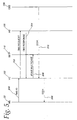
- the mobile terminal 22 When the mobile terminal 22 moves into the range of a wireless home network 100 and detects the presence of that wireless home network 100, it joins the wireless home network 100 by contacting the voice client 102 (e.g., using Bluetooth) and provides information 200 to the voice client 102 which uniquely identifies the current radio base station 28 in an RBS ID command as shown in Fig. 5. This information can vary depending upon the cellular standard being used.
- the voice client 102 then provides the address server 130 with the base station identification information in a cyber base station request command (at 202), and the address server 130 responds at 204 with the cyber base station response which contains the multicast internet protocol address of the forward internet control channel and the individual internet protocol address of the reverse internet control channel. With this information, the voice client 102 joins (at 206) the internet control channel multicast group on the broadband internet protocol network 110 and forwards (at 208) the broadcast and individual internet control channel information received from the cyber base station 128 (at 210) to the mobile terminal 22.
- the voice client 102 may filter out any messages not intended for the mobile terminal 22based on addressing and, since the mobile terminal 22 should adhere to the timing of the power conservation mode of the wireless home network 100 (which is different from the cellular air interface), the cyber base station 128 may mask timing discrepancies by buffering messages.
- a sleep or park mode may be provided in the wireless home network 100, where data is received from the voice client 102 only periodically, to conserve battery life.
- the voice client 102 may buffer internet control channel data until the mobile terminal 22 "wakes up" from that mode, with the mobile terminal 22 acknowledging receipt of the data as part of the wireless home network 100 protocol (or a higher level acknowledgment may also be used), with the acknowledgment informing the voice client 102 that the mobile terminal 22 is still in the area and part of the wireless home network 100.
- the mobile terminal 22 uses this list to scan the neighbor control channels so that it can quickly roam to the strongest cellular control channel if the mobile terminal 22 leaves the wireless home network 100.
- the mobile terminal 22 detects that the wireless home network 100 signal has degraded below the acceptable limit, it may simply camp on the strongest cellular control channel it had previously identified from its background scanning and then stop responding to the wireless home network 100.
- the voice client 102 detects that the mobile terminal 22 is no longer a part of the wireless home network 100 as part of the wireless home network technology ( e.g., it fails to receive expected acknowledgments from the mobile terminal 22), the voice client 102 leaves the multicast cyber base station 128 group until the mobile terminal 22 returns.
- an authorized mobile terminal 22a When an authorized mobile terminal 22a is in a wireless home network 100 such as described above and wishes to originate a call (place a call) from the wireless home network 100, the mobile terminal 22a initially sends an Origination message (at 300) which includes the number to call.
- the voice client 102 encapsulates (at 302) the Origination message in an internet protocol packet and forwards (at 304) the message to the individual internet protocol address (at the cyber base station 128) of the reverse internet control channel (established as described in connection with Fig. 5).
- the cyber base station 128 then processes the message and sends (at 306) the appropriate request to the mobile switching center 40.
- the mobile switching center 40 accepts the call request and tells the cyber base station 128 to allocate a traffic channel with the traffic channel allocation command (at 308).
- the cyber base station 128 then instructs (at 310) the voice client 102 to set up a connection for the traffic channel.
- This instruction may include connection information such as the internet protocol address and the port number the cyber base station 128 would like to use for the connection. It may also include information about the media stream that will be sent on the connection so that the voice client 102 can establish the proper Q0S on the broadband internet protocol network 110.
- This setup can use any suitable protocol, including standard protocols such as Session Description Protocol and Session Initiation Protocol.
- the voice client 102 creates the connection with the broadband internet protocol network 110 with the appropriate QoS and then sends (at 312) an acknowledgment which informs the cyber base station 128 that the connection has been created. This acknowledgment may contain information about the voice client's side of the connection as well.
- the cyber base station 128 then sends (at 314) the traffic channel assignment on the internet channel assignment which the voice client 102 forwards (at 316) to the mobile terminal 22a.
- the mobile terminal 22a does not move to the cellular traffic channel in this assignment, but instead stops listening to the internet control channel and begins listening to the internet traffic channel.
- the voice client 102 then forwards (at 318) both the internet control channel and the internet traffic channel to the mobile terminal 22a which the mobile terminal 22a may then use when needed. This approach simplifies the mobile terminal 22a transitions between the internet control channel and the internet traffic channel.
- a wireless voice channel between the mobile terminal 22a and the voice client 102
- a voice channel at 332 using the internet traffic channel between the voice client 102 and the cyber base station 128, and a voice channel (at 334) using the T1 or E1 connections between the cyber base station 128 and the mobile switching center 40.
- the cyber base station 128 stops sending packets on the internet traffic channel and issues (at 340) a delete connection command to the voice client 102.
- the voice client 102 releases the QoS resources on the broadband internet protocol network 110 and acknowledges (at 342) the command to delete the connection. If the mobile terminal 22a remains in the home, the voice client 102 will continue to forward (at 208) the broadcast and individual internet control channel information received from the cyber base station 128 to the mobile terminal 22a, and the mobile terminal 22a will remain active on that wireless home network 100.
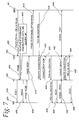
- the mobile switching center 40 When an authorized mobile terminal 22b is in a wireless home network 100 such as described above and a call is placed to the number of the mobile terminal 22b, the mobile switching center 40 will first receive the incoming call. As shown in Fig. 7, since the mobile switching center 40 only - tracks calls to a location area (i.e ., a plurality of cells as noted above), the mobile switching center 40 will instruct (at 400) all base stations in the location area (radio base stations 28 and cyber base station 128, though only cyber base station 128 is shown in Fig. 7) to issue a page for the mobile terminal 22b. The cyber base station 128 (and other radio base station 28 in the location area) then issue (at 402) the page message.
- a location area i.e ., a plurality of cells as noted above
- the voice client 102 removes internet protocol overhead and buffers the page message at 404 until the mobile terminal 22b wakes up from its low power state, at which point the page message is forwarded (at 406) by the voice client 102 to the mobile terminal 22b. Buffering of the page message is not a problem and does not give rise to new procedures inasmuch as radio base stations 28 will also buffer page messages until the proper paging time on the cellular air interface.
- the mobile terminal 22b then forwards (at 408) a Page Response to the voice client 102 to acknowledge that it received the page message.
- the voice client 102 forwards (at 410) the Page Response on the reverse internet control channel to the cyber base station 128, and the cyber base station 128 forwards (at 412) the Page Response to the mobile switching center 40.
- the mobile switching center 40 knows which cyber base station 128/radio base station 28 covers the called mobile terminal 22b, and therefore the mobile switching center 40 thereafter only communicates with the covering cyber base station 128 for the remainder of this call. Specifically, the mobile switching center 40 sends (at 418) a traffic channel allocation to the cyber base station 128.
- the cyber base station 128 and voice client 102 Upon receiving the traffic channel allocation, the cyber base station 128 and voice client 102 then proceed to create a connection with the mobile terminal 22b in much the same manner as described above in connection with Fig. 6 when creating a connection with a calling mobile terminal 22a. Specifically, the cyber base station 128 instructs (at 420) the voice client 102 to set up a connection for the traffic channel, and the voice client 102 creates the connection with the broadband internet protocol network 110 with the appropriate QoS and then sends (at 422) an acknowledgment which informs the cyber base station 128 that the connection has been created. The cyber base station 128 then sends (at 424) the traffic channel assignment on the internet channel assignment which the voice client 102 forwards (at 426) to the mobile terminal 22b.
- the mobile terminal 22b does not move to the cellular traffic channel in this assignment, but instead stops listening to the internet control channel and begins listening to the internet traffic channel.
- the voice client 102 then forwards (at 430) both the internet control channel and the internet traffic channel to the mobile terminal 22b which the mobile terminal 22b may then use when needed (as previously noted, this approach simplifies the mobile terminal 22 transitions between the internet control channel and the internet traffic channel).
- Appropriate voice channels are then established, for example, a wireless voice channel (at 440) between the mobile terminal 22b and the voice client 102, a voice channel (at 442) using the internet traffic channel between the voice client 102 and the cyber base station 128, and a voice channel (at 444) using the T1 or E1 connections between the cyber base station 128 and the mobile switching center 40.
- the voice connection between the mobile switching center 40 and the calling telephone is not shown but may be accomplished as is known, including as shown in Fig. 6 if the calling telephone is a mobile terminal 22a in a wireless home network 100).
- the cyber base station 128 stops sending packets on the internet traffic channel and issues (at 450) a delete connection command to the voice client 102.
- the voice client 102 releases the QoS resources on the broadband internet protocol network 110 and acknowledges (at 452) the command to delete the connection. If the mobile terminal 22b remains in the home, the voice client 102 will continue to forward (at 208) the broadcast and individual internet control channel information received from the cyber base station 128 to the mobile terminal 22b, and the mobile terminal 22b will remain active on that wireless home network 100.
- a mobile terminal 22 may be in the middle of a call when it leaves one system and enters another. In that case, the mobile terminal 22 should be handed-off from the previous system to the new one without losing the ongoing call.
- the mobile terminal 22 monitors the power level and/or Bit Error Rate (BER) of the current traffic channel and control channel of neighbor cells.
- the mobile switching center 40 provides a list of control channels to measure via the radio base station 28, and the active (current) radio base station 28 also measures the power level and Bit Error Rates of mobile terminal transmissions on the traffic channel. All of these power measurements are fed back to the mobile switching center 40 which decides when a handoff is necessary.
- the mobile switching center 40 may initiate a handoff because the current radio base station signal is too weak, because a preferred radio base station's signal is acceptable, or to balance traffic loads between calls.
- the mobile switching center 40 may include the cyber base station control channel in the neighbor list of the surrounding cells but the cyber base station 128 does not transmit on cellular frequencies, mobile terminals 22 will not find a signal on that frequency. Therefore, the mobile terminal 22 should know to look for the wireless home network 100 on the frequencies of the wireless home network 100 and report scaled values of the wireless home network 100 in place of the cyber base station control channel measurements. Scaled values are used because the power measurements of the low power wireless home network 100 may be very different from those measured on the cellular system.
- the strongest wireless home network 100 reading is reported as the strongest cellular reading (even though it may not be as strong as the strongest reading from a radio base station 28) and the weakest wireless home network 100 reading reported as the weakest cellular reading, with intermediate values interpolated accordingly.
- the cyber base station 128 may report measurements of the mobile terminal transmissions, like a radio base station 28. However, unlike a radio base station 28, the cyber base station 128 does not receive direct transmissions from a mobile terminal 22. Therefore, the cyber base station 128 may either report the same values the mobile terminal 22 reports for reception of the wireless home network signal since wireless home network links are generally balanced or the broadband modem may provide wireless home network measurement data to the cyber base station 128 via the voice client 102.
- a voice channel is established. Specifically, when operating in a cell 26 served by a radio base station 28, a voice channel (at 500) is between the mobile terminal 22 and the radio base station 28, and a voice channel (at 502) (using the T1 or E1 connections) is between the radio base station 28 and the mobile switching center 40.
- the mobile terminal 22 roams into the wireless home network 100 (at 506), the mobile terminal 22 determines whether the wireless home network 100 meets the criteria for a handoff (e.g., an acceptable signal level and Bit Error Rate, using a hysteresis such as is known).
- the mobile terminal 22 reports (at 510) the measurement values to the radio base station 28, which relays those values (at 512) to the mobile switching center 40.
- the mobile switching center 40 may initiate the handoff because the cyber base station 128 is a preferred cell; if it does not, the mobile terminal 22 may report a strong signal and Bit Error Rate from the wireless home network 100 and a weak signal and Bit Error Rate from the current cellular traffic channel regardless of the actual measured values to force the mobile switching center 40 to execute a handoff.
- the mobile switching center 40 receives a measurement report which supports a handoff from the cellular radio base station 28 to the wireless home network 100 and cyber base station 128 and therefore decides (at 514) to execute a handoff, it sends (at 516) a traffic channel allocation command instructing the cyber base station 128 to set up a traffic channel.
- the cyber base station 128 and voice client 102 establish an internet traffic channel such as previously described. That is, the mobile switching center 40 sends (at 516) a traffic channel allocation to the cyber base station 128. Upon receiving the traffic channel allocation, the cyber base station 128 instructs (at 518) the voice client 102 to set up a connection for the traffic channel, and the voice client 102 creates the connection with the broadband internet protocol network 110 with the appropriate QoS and then sends (at 520) an acknowledgment which informs the cyber base station 128 that the connection has been created. The cyber base station 128 then sends (at 522) the traffic channel assignment on the internet channel assignment which the voice client 102 forwards (at 524) to the mobile terminal 22.
- the cyber base station 128 sends (at 526) a traffic channel allocation acknowledgment to the mobile switching center 40 (telling the mobile switching center 40 that the mobile terminal 22 is now ready to operate on the wireless home network 100), and the mobile switching center 40 instructs (at 530) the radio base station 28 to handoff the current call on the traffic channel with the radio base station 28.
- the radio base station 28 accordingly instructs (at 532) the mobile terminal 22 to handoff.
- the mobile terminal 22 moves (at 534) from the traffic channel with the radio base station 28 to an internet traffic channel on the wireless home network 100 and continues the current call on the voice channels (i.e., the voice channel at 540 on the wireless home network 100 between the mobile terminal 22 and the voice client 102, the voice channel at 542 on the internet traffic channel between the voice client 102 and the cyber base station 128, and the voice channel at 544 on the T1 or E1 connection between the cyber base station 128 and the mobile switching center 40).
- the voice channels i.e., the voice channel at 540 on the wireless home network 100 between the mobile terminal 22 and the voice client 102, the voice channel at 542 on the internet traffic channel between the voice client 102 and the cyber base station 128, and the voice channel at 544 on the T1 or E1 connection between the cyber base station 128 and the mobile switching center 40.
- the mobile terminal 22 may synchronize with the new internet traffic channel of the cyber base station 128 before leaving the traffic channel with the radio base station 28.
- the mobile switching center 40 receives voice packets from the cyber base station 128 (indicating that the voice path to the mobile terminal 22 via the cyber base station 128 is operating), the mobile switching center 40 notifies (at 546) the radio base station 28 to drop the traffic channel which it had been using with the mobile terminal 22 and the handoff is completed. However, the radio base station 28 could also drop the traffic channel if the mobile terminal 22 acknowledges the handoff command.
- a mobile terminal 22 will similarly at times when making a call move from a wireless home network 100 so that the wireless home network signal degrades, in which case the call should be continued using the normal cellular service. In such a case, a handoff from the wireless home network 100 to a radio base station 28 of the cellular system should be done.
- the mobile terminal 22 While making such a call, the mobile terminal 22 monitors the power level and Bit Error Rates of the current internet traffic channel and of the control channel of neighbor cells. This is similar to the situation in which a mobile terminal is in a cell on a traffic channel except that the mobile terminal 22 in this case should generate its own timing reference for measurements. For example, in TDMA based cellular systems, many mobile terminal functions are driven by the timing of frames on the traffic channel or control channel. This exact structure would not necessarily be replicated by the wireless home network 100, in which case the mobile terminal 22 could use internal timers to determine when to make measurements.
- a voice channel is established via the cyber base station 128.
- a wireless voice channel (at 600) is between the mobile terminal 22 and the voice client 102
- a voice channel (at 602) using the internet traffic channel is between the voice client 102 and the cyber base station 128, and a voice channel (at 604) using the T1 or E1 connections is between the cyber base station 128 and the mobile switching center 40.
- the mobile terminal 22 When the mobile terminal 22 roams away from the wireless home network 100 so that the signal becomes weak (at 610), the mobile terminal 22 reports (at 612) measurements of the signal (e.g ., signal strength and Bit Error Rate). The mobile terminal 22 reports (at 612 and 614) the measurement values to the mobile switching center 40, which uses those values to determine whether to execute a handoff. If the mobile switching center 40 does not initiate the handoff, the mobile terminal 22 may report a weak signal and Bit Error Rate from the wireless home network 100 and a strong signal and Bit Error Rate from the current cellular traffic channel regardless of the actual measured values to force the mobile switching center 40 to execute a handoff.
- measurements of the signal e.g ., signal strength and Bit Error Rate
- the mobile terminal 22 reports (at 612 and 614) the measurement values to the mobile switching center 40, which uses those values to determine whether to execute a handoff. If the mobile switching center 40 does not initiate the handoff, the mobile terminal 22 may report a weak signal and Bit
- the mobile switching center 40 receives a measurement report which supports a handoff from the wireless home network 100 to a cellular radio base station 28 in that location area and therefore decides (at 616) to execute a handoff, it sends (at 620) a traffic channel allocation command instructing that radio base station 28 to set up a traffic channel, and the radio base station 28 sends (at 622) an acknowledgment informing the mobile switching center 40 that the instruction has been received.
- the mobile switching center 40 instructs (at 630) the cyber base station 128 to handoff the current call on the internet traffic channel, and this instructions is relayed (at 632) by the cyber base station 128 to the voice client 102, which itself relays (at 634) the instruction to the mobile terminal 22.
- the mobile terminal 22 moves (at 640) from the internet traffic channel with the cyber base station 128 to the assigned traffic channel with the radio base station 28 and continues the current call on the voice channels (i.e., the voice channel at 650 between the mobile terminal 22 and the radio base station 28, and the voice channel at 652 between the radio base station 28 and the mobile switching center 40). Since the mobile terminal 22 has a transmitter and receiver for both the normal cellular interface and the wireless home network 100 as previously described, the mobile terminal 22 may synchronize with the new traffic channel of the radio base station 28 before leaving the internet traffic channel with the cyber base station 128.
- the mobile switching center 40 receives voice packets from the radio base station 28 (indicating that the voice path to the mobile terminal 22 via the radio base station 28 is operating), the mobile switching center 40 notifies (at 656) the cyber base station 128 to drop the internet traffic channel which it had been using with voice client 102, and the cyber base station 128 sends (at 660) an instruction to the voice client 102 that the connection should be deleted. Receipt of that instruction is acknowledged (at 662) by the voice client 102 to the cyber base station 128, which in turn acknowledges (at 664) to the mobile switching center 40 that the internet traffic channel has been dropped, at which point the handoff is completed. However, the cyber base station 128 could also drop the internet traffic channel if the mobile terminal 22 acknowledges the handoff command.
- the present invention provides a method of expanding the capacity of cellular systems. Additional capacity for the cellular operator may be provided, which translates into additional revenue. Further, the present invention allows cellular operators to offload residential traffic from precious cellular traffic channels to the internet while leveraging the existing cellular infrastructure, including primary switching equipment and billing programs. Since such infrastructure is complicated and expensive, minimizing changes to the existing equipment and limiting the need for additional new equipment is a significant advantage not only in reducing the cost of equipment but also in allowing addition of the invention to current systems without undesirably impacting the current systems during change-over when adding the invention.
- the invention further leverages technologies that are becoming common place, including in homes, and can use equipment which the end user has or is planning to have in their location for other applications (thereby allowing the use of technologies which often are supplied for another purpose, and with a cost often borne by others than cellular operators). Still further, the end user can use the same cellular telephone in the home as well as on the road, which may allow some users to use their cellular telephone as their primary telephone (further increasing the revenue of cellular operators). Still further, since the mobile terminal 22 may radiate less energy when operating on a wireless home network 100 as opposed to normal cellular operation where communication is with a significantly more distant radio base station 28, the battery life of such mobile terminals 22 may be significantly improved. It should further be understood that the present invention- may be used not only with voice communication, but with virtually any wireless communication technology including, inter alia, two-way text messaging, data transfers, and 3G (Third Generation) applications.
Landscapes
- Engineering & Computer Science (AREA)
- Computer Networks & Wireless Communication (AREA)
- Signal Processing (AREA)
- Mobile Radio Communication Systems (AREA)
Applications Claiming Priority (2)
| Application Number | Priority Date | Filing Date | Title |
|---|---|---|---|
| US09/812,210 US6947405B2 (en) | 2001-03-19 | 2001-03-19 | Cellular system with cybercells |
| US812210 | 2001-03-19 |
Publications (2)
| Publication Number | Publication Date |
|---|---|
| EP1244319A2 true EP1244319A2 (de) | 2002-09-25 |
| EP1244319A3 EP1244319A3 (de) | 2003-08-27 |
Family
ID=25208869
Family Applications (1)
| Application Number | Title | Priority Date | Filing Date |
|---|---|---|---|
| EP02004393A Withdrawn EP1244319A3 (de) | 2001-03-19 | 2002-03-06 | Zellularsystem mit Cyberzellen |
Country Status (2)
| Country | Link |
|---|---|
| US (1) | US6947405B2 (de) |
| EP (1) | EP1244319A3 (de) |
Cited By (6)
| Publication number | Priority date | Publication date | Assignee | Title |
|---|---|---|---|---|
| WO2008102099A1 (en) * | 2007-02-23 | 2008-08-28 | Ubiquisys Limited | Basestation for cellular communications system |
| WO2009020549A1 (en) * | 2007-08-08 | 2009-02-12 | Tellabs Vienna, Inc. | Method and apparatus to manage femtocell traffic |
| EP1658706A4 (de) * | 2003-08-06 | 2012-03-14 | Intel Corp | Internet-basisstation mit einem telefonanschluss |
| EP2334136A3 (de) * | 2002-10-18 | 2012-07-18 | Kineto Wireless, Inc. | Verfahren und Vorrichtungen fuer eine Kanalaktivierung fuer ein Telekommunikations-Geraet |
| US8594693B2 (en) | 2008-01-16 | 2013-11-26 | Nec Corporation | Method for controlling access to a mobile communications network |
| US12058539B2 (en) | 2022-01-14 | 2024-08-06 | T-Mobile Usa, Inc. | Dynamic telecommunications network outage recovery based on predictive models |
Families Citing this family (77)
| Publication number | Priority date | Publication date | Assignee | Title |
|---|---|---|---|---|
| US20020019880A1 (en) * | 2000-07-03 | 2002-02-14 | Takashi Sakakura | IP communication system for wireless terminal and communication method for wireless terminal |
| US7996009B2 (en) | 2001-02-26 | 2011-08-09 | Kineto Wireless, Inc. | Method for authenticating access to an unlicensed wireless communications system using a licensed wireless communications system authentication process |
| US7308263B2 (en) * | 2001-02-26 | 2007-12-11 | Kineto Wireless, Inc. | Apparatus for supporting the handover of a telecommunication session between a licensed wireless system and an unlicensed wireless system |
| US20020183054A1 (en) * | 2001-04-09 | 2002-12-05 | Yoram Rimoni | Mobile system testing architecture |
| US7010002B2 (en) * | 2001-06-14 | 2006-03-07 | At&T Corp. | Broadband network with enterprise wireless communication method for residential and business environment |
| US7567803B2 (en) * | 2001-09-28 | 2009-07-28 | Siemens Aktiengesellschaft | System and method for inhibiting features for wireless terminals |
| US7117015B2 (en) * | 2002-10-25 | 2006-10-03 | Intel Corporation, Inc | Internet base station |
| US7457633B2 (en) * | 2001-10-03 | 2008-11-25 | Intel Corporation | Communication network with redirection of wireless communication |
| US7343487B2 (en) * | 2001-10-10 | 2008-03-11 | Nokia Corporation | Datacast distribution system |
| AU2002352922A1 (en) * | 2001-11-28 | 2003-06-10 | Millennial Net | Etwork protocol for an ad hoc wireless network |
| US20040009774A1 (en) * | 2002-07-09 | 2004-01-15 | Motorola, Inc. | Method and apparatus for extending cellular service to an isolated cell |
| EP1389853B1 (de) * | 2002-08-14 | 2006-03-29 | Sony Deutschland GmbH | Bandbreitenorientierte Neukonfigurierung von drahtlosen Ad-Hoc-Netzen |
| US7565145B2 (en) | 2002-10-18 | 2009-07-21 | Kineto Wireless, Inc. | Handover messaging in an unlicensed mobile access telecommunications system |
| US7606190B2 (en) | 2002-10-18 | 2009-10-20 | Kineto Wireless, Inc. | Apparatus and messages for interworking between unlicensed access network and GPRS network for data services |
| US7471655B2 (en) | 2003-10-17 | 2008-12-30 | Kineto Wireless, Inc. | Channel activation messaging in an unlicensed mobile access telecommunications system |
| US7885644B2 (en) * | 2002-10-18 | 2011-02-08 | Kineto Wireless, Inc. | Method and system of providing landline equivalent location information over an integrated communication system |
| US7953423B2 (en) | 2002-10-18 | 2011-05-31 | Kineto Wireless, Inc. | Messaging in an unlicensed mobile access telecommunications system |
| US7835751B2 (en) * | 2002-10-18 | 2010-11-16 | Ibe Oliver C | Method of seamless roaming between wireless local area networks and cellular carrier networks |
| US7349698B2 (en) | 2002-10-18 | 2008-03-25 | Kineto Wireless, Inc. | Registration messaging in an unlicensed mobile access telecommunications system |
| US7634269B2 (en) * | 2002-10-18 | 2009-12-15 | Kineto Wireless, Inc. | Apparatus and method for extending the coverage area of a licensed wireless communication system using an unlicensed wireless communication system |
| US7477920B2 (en) * | 2002-10-25 | 2009-01-13 | Intel Corporation | System and method for automatically configuring and integrating a radio base station into an existing wireless cellular communication network with full bi-directional roaming and handover capability |
| US20040109433A1 (en) * | 2002-12-06 | 2004-06-10 | Khan Farooq Ullah | Reverse link packet acknowledgement method |
| US7231404B2 (en) | 2003-01-31 | 2007-06-12 | Nokia Corporation | Datacast file transmission with meta-data retention |
| US7096024B2 (en) | 2003-01-31 | 2006-08-22 | Qualcomm, Incorporated | Method and apparatus to initiate point-to-point call during shared-channel delivery of broadcast content in a wireless telephone network |
| US7277394B2 (en) * | 2003-05-12 | 2007-10-02 | Motorola, Inc. | Non interfering group based wireless network protocols |
| US7283822B2 (en) * | 2003-10-17 | 2007-10-16 | Kineto Wireless, Inc. | Service access control interface for an unlicensed wireless communication system |
| US7272397B2 (en) * | 2003-10-17 | 2007-09-18 | Kineto Wireless, Inc. | Service access control interface for an unlicensed wireless communication system |
| US7957348B1 (en) | 2004-04-21 | 2011-06-07 | Kineto Wireless, Inc. | Method and system for signaling traffic and media types within a communications network switching system |
| US8041385B2 (en) * | 2004-05-14 | 2011-10-18 | Kineto Wireless, Inc. | Power management mechanism for unlicensed wireless communication systems |
| US20050259610A1 (en) * | 2004-05-21 | 2005-11-24 | Nextel Communications, Inc. | Wireless communications system including a target base station capable of notifying of channel resource reservation status |
| US7990917B2 (en) * | 2004-06-14 | 2011-08-02 | Nextel Communications Inc. | Wireless communications system including an originator base station capable of notifying of channel resource reservation status |
| EP1758414A4 (de) * | 2004-06-18 | 2009-08-12 | Mitsubishi Electric Corp | Autonom-zellenbildungsverfahren |
| WO2006010957A2 (en) * | 2004-07-30 | 2006-02-02 | Andrew Richardson | Signal transmission method from a local network node |
| EP3179775B1 (de) * | 2004-07-30 | 2019-01-30 | Commscope Technologies LLC | Verfahren und system zur einstellung der senderleistungspegel |
| US7843882B2 (en) | 2004-08-23 | 2010-11-30 | Alcatel-Lucent Usa Inc. | Soft vertical handovers in wireless networks |
| US7940746B2 (en) | 2004-08-24 | 2011-05-10 | Comcast Cable Holdings, Llc | Method and system for locating a voice over internet protocol (VoIP) device connected to a network |
| US8843995B2 (en) | 2004-11-02 | 2014-09-23 | Blackberry Limited | Generic access network (GAN) controller selection in PLMN environment |
| BRPI0516633A (pt) * | 2004-11-29 | 2008-09-16 | Research In Motion Ltd | sistema e método para suportar capacidade de solicitação de serviço gan em um dispositivo de equipamento de usuário (ue) sem fio |
| US8073470B1 (en) * | 2005-01-31 | 2011-12-06 | Jasper Wireless, Inc | Paging windows for power conservation in wireless networks |
| US8073469B2 (en) * | 2005-01-31 | 2011-12-06 | Jasper Wireless, Inc. | Paging for non-real-time communications wireless networks |
| US7664495B1 (en) * | 2005-04-21 | 2010-02-16 | At&T Mobility Ii Llc | Voice call redirection for enterprise hosted dual mode service |
| US8009680B2 (en) * | 2005-07-29 | 2011-08-30 | Nextel Communications Inc. | System and method for a private wireless network interface |
| DE202005021930U1 (de) * | 2005-08-01 | 2011-08-08 | Corning Cable Systems Llc | Faseroptische Auskoppelkabel und vorverbundene Baugruppen mit Toning-Teilen |
| US7843900B2 (en) | 2005-08-10 | 2010-11-30 | Kineto Wireless, Inc. | Mechanisms to extend UMA or GAN to inter-work with UMTS core network |
| JP5080481B2 (ja) * | 2005-10-04 | 2012-11-21 | テレフオンアクチーボラゲット エル エム エリクソン(パブル) | Ip接続の無線基地局に対する無線ネットワーク制御局の選択 |
| US8537761B1 (en) | 2005-12-28 | 2013-09-17 | At&T Intellectual Property Ii, L.P. | Incorporation of mesh base stations in a wireless system |
| US7944885B2 (en) * | 2006-02-11 | 2011-05-17 | Broadcom Corporation | General access network controller bypass to facilitate use of standard cellular handsets with a general access network |
| EP1841255A1 (de) * | 2006-03-28 | 2007-10-03 | Carlos Alberto Pérez Lafuente | Verfahren und System zur Überwachung der Anwesenheit einer Mobilfunkstation in einem besonderen Aufenthaltsort |
| US8165086B2 (en) | 2006-04-18 | 2012-04-24 | Kineto Wireless, Inc. | Method of providing improved integrated communication system data service |
| US7929940B1 (en) | 2006-04-18 | 2011-04-19 | Nextel Communications Inc. | System and method for transmitting wireless digital service signals via power transmission lines |
| US7613444B2 (en) * | 2006-04-28 | 2009-11-03 | Telefonaktiebolaget Lm Ericsson (Publ) | Dynamic building of monitored set |
| US20080039086A1 (en) | 2006-07-14 | 2008-02-14 | Gallagher Michael D | Generic Access to the Iu Interface |
| US7852817B2 (en) | 2006-07-14 | 2010-12-14 | Kineto Wireless, Inc. | Generic access to the Iu interface |
| US20080076425A1 (en) | 2006-09-22 | 2008-03-27 | Amit Khetawat | Method and apparatus for resource management |
| US7912004B2 (en) | 2006-07-14 | 2011-03-22 | Kineto Wireless, Inc. | Generic access to the Iu interface |
| US8204502B2 (en) | 2006-09-22 | 2012-06-19 | Kineto Wireless, Inc. | Method and apparatus for user equipment registration |
| US8073428B2 (en) | 2006-09-22 | 2011-12-06 | Kineto Wireless, Inc. | Method and apparatus for securing communication between an access point and a network controller |
| US8036664B2 (en) | 2006-09-22 | 2011-10-11 | Kineto Wireless, Inc. | Method and apparatus for determining rove-out |
| US7995994B2 (en) | 2006-09-22 | 2011-08-09 | Kineto Wireless, Inc. | Method and apparatus for preventing theft of service in a communication system |
| GB2446738C (en) * | 2007-02-02 | 2014-10-01 | Ubiquisys Ltd | Basestation measurement modes |
| US8019331B2 (en) | 2007-02-26 | 2011-09-13 | Kineto Wireless, Inc. | Femtocell integration into the macro network |
| US20080220795A1 (en) * | 2007-03-08 | 2008-09-11 | Vanu Bose | Home Base Station Position Determination |
| US8355378B2 (en) * | 2007-03-09 | 2013-01-15 | Intel Corporation | Hierarchical cell deployment |
| US7853238B1 (en) | 2007-03-22 | 2010-12-14 | Nextel Communications Inc. | Powerline base station |
| GB0706781D0 (en) * | 2007-04-05 | 2007-05-16 | Vodafone Plc | Telecommunications networks and devices |
| FI20075488A0 (fi) * | 2007-06-26 | 2007-06-26 | Nokia Siemens Networks Oy | Yksityisen tukiaseman kuuluvuusalue |
| US8548526B2 (en) * | 2008-02-08 | 2013-10-01 | Adc Telecommunications, Inc. | Multiple-TRX PICO base station for providing improved wireless capacity and coverage in a building |
| US20090262684A1 (en) | 2008-04-18 | 2009-10-22 | Amit Khetawat | Method and Apparatus for Home Node B Registration using HNBAP |
| US8520580B2 (en) * | 2009-04-24 | 2013-08-27 | Aruba Networks, Inc. | Synchronization of mobile client multicast membership |
| US8275400B2 (en) * | 2009-06-15 | 2012-09-25 | Argela-Usa | Method and system for SMS based ticket number service over femtocell access point |
| US8559958B2 (en) * | 2009-11-30 | 2013-10-15 | Samsung Electronics Co., Ltd | Methods and apparatus for handover between macro base station and home base station |
| US9265073B2 (en) | 2010-05-21 | 2016-02-16 | Kineto Wireless, Llc | System and method for dual mode communication |
| US9144022B2 (en) * | 2011-09-28 | 2015-09-22 | Tata Consultancy Services Limited | System and method for call routing for efficient use of telecommunication spectrum |
| US20130148540A1 (en) * | 2011-12-12 | 2013-06-13 | Samsung Electronics Co., Ltd. | Method and apparatus for call set-up based on network available to receiver |
| US12089069B1 (en) | 2021-09-08 | 2024-09-10 | T-Mobile Usa, Inc. | Coverage improvement for 5G new radio wireless communication network to automatically adjust cell properties to improve coverage and capacity |
| US11606732B1 (en) | 2021-09-08 | 2023-03-14 | T-Mobile Usa, Inc. | Coverage improvement for 5G new radio wireless communication network, such as for over-shooting cells |
| US11800382B1 (en) | 2021-09-08 | 2023-10-24 | T-Mobile Usa, Inc. | Coverage improvement for 5G new radio wireless communication network |
Family Cites Families (22)
| Publication number | Priority date | Publication date | Assignee | Title |
|---|---|---|---|---|
| FI98692C (fi) | 1994-06-13 | 1997-07-25 | Nokia Telecommunications Oy | Menetelmä liikenteen ohjaamiseksi hierarkisessa matkaviestinjärjestelmässä |
| FI98598C (fi) | 1994-06-28 | 1997-07-10 | Nokia Telecommunications Oy | Matkaviestinjärjestelmä ja menetelmä tilaajakutsujen ohjaamiseksi matkaviestinjärjestelmässä |
| JPH09128827A (ja) * | 1995-08-29 | 1997-05-16 | Sony Corp | 光磁気記録媒体、記録方法及び光磁気記録装置 |
| FI105740B (fi) | 1995-09-29 | 2000-09-29 | Nokia Mobile Phones Ltd | Toimistoviestintäjärjestelmä |
| GB2349780B (en) | 1996-07-11 | 2000-12-27 | Ericsson Telefon Ab L M | Mobility management method and apparatus for wireless communication system |
| US6721306B1 (en) * | 1997-03-11 | 2004-04-13 | Verizon Services Corp. | Public wireless/cordless internet gateway |
| US6400722B1 (en) * | 1997-10-14 | 2002-06-04 | Lucent Technologies Inc. | Optimum routing system |
| US6222829B1 (en) | 1997-12-23 | 2001-04-24 | Telefonaktieblaget L M Ericsson | Internet protocol telephony for a mobile station on a packet data channel |
| DE69823792T2 (de) | 1998-01-16 | 2005-04-28 | Nokia Corp. | Verfahren und System zur Leitweglenkung einer Funkrufnachricht von einem öffentlichen mobilen Netz nach einer Mobilstation in einem lokalen Kommunikatonssystem |
| US6519456B2 (en) * | 1998-10-14 | 2003-02-11 | Qualcomm Incorporated | Softer handoff in a base station employing virtual channel elements |
| US6600734B1 (en) * | 1998-12-17 | 2003-07-29 | Symbol Technologies, Inc. | Apparatus for interfacing a wireless local network and a wired voice telecommunications system |
| SE514264C2 (sv) | 1999-05-07 | 2001-01-29 | Ericsson Telefon Ab L M | Ett kommunikationssystem |
| EP1181805A1 (de) | 1999-05-12 | 2002-02-27 | Starvox, Inc. | Verfahren und vorrichtung für integriertes sprach-gateway mit einer schnittstelle zum mobiltelefon, ip-telefon und un-pbx-systemen |
| WO2001013659A1 (en) | 1999-08-12 | 2001-02-22 | Elad Barkan | Add-on base station for cellular network expansion |
| US6671510B1 (en) * | 1999-12-27 | 2003-12-30 | Nortel Networks Limited | Wireless telephone system and operation method therefor |
| US7382786B2 (en) * | 2000-01-31 | 2008-06-03 | 3E Technologies International, Inc. | Integrated phone-based home gateway system with a broadband communication device |
| US6757263B1 (en) * | 2000-04-13 | 2004-06-29 | Motorola, Inc. | Wireless repeating subscriber units |
| KR100365790B1 (ko) * | 2000-05-24 | 2002-12-26 | 삼성전자 주식회사 | 공중용 및 사설용 이동통신서비스를 위한 시스템 및 방법 |
| US6907023B2 (en) * | 2000-08-14 | 2005-06-14 | Vesuvius, Inc. | Communique system with dynamic bandwidth allocation in cellular communication networks |
| US6711417B1 (en) * | 2000-08-16 | 2004-03-23 | Sprint Spectrum, L.P. | Interface using an ISH and a service manager |
| US6738641B1 (en) * | 2000-11-22 | 2004-05-18 | Toshiba America Information Systems, Inc. | Distributed transceiver for wireless communication system |
| US8019335B2 (en) * | 2001-01-29 | 2011-09-13 | Nokia Corporation | Identifying neighboring cells in telecommunication network |
-
2001
- 2001-03-19 US US09/812,210 patent/US6947405B2/en not_active Expired - Fee Related
-
2002
- 2002-03-06 EP EP02004393A patent/EP1244319A3/de not_active Withdrawn
Cited By (10)
| Publication number | Priority date | Publication date | Assignee | Title |
|---|---|---|---|---|
| EP2334136A3 (de) * | 2002-10-18 | 2012-07-18 | Kineto Wireless, Inc. | Verfahren und Vorrichtungen fuer eine Kanalaktivierung fuer ein Telekommunikations-Geraet |
| EP1658706A4 (de) * | 2003-08-06 | 2012-03-14 | Intel Corp | Internet-basisstation mit einem telefonanschluss |
| WO2008102099A1 (en) * | 2007-02-23 | 2008-08-28 | Ubiquisys Limited | Basestation for cellular communications system |
| CN101690274A (zh) * | 2007-02-23 | 2010-03-31 | Ubiquisys有限公司 | 用于蜂窝通信系统中的基站 |
| US8483760B2 (en) | 2007-02-23 | 2013-07-09 | Ubiquisys Limited | Basestation for cellular communications system |
| US8849279B2 (en) | 2007-02-23 | 2014-09-30 | Ubiquisys Limited | Basestation for cellular communications system |
| EP2482610A3 (de) * | 2007-02-23 | 2017-11-08 | Ubiquisys Limited | Basisstation für ein zellulares Kommunikationssystem |
| WO2009020549A1 (en) * | 2007-08-08 | 2009-02-12 | Tellabs Vienna, Inc. | Method and apparatus to manage femtocell traffic |
| US8594693B2 (en) | 2008-01-16 | 2013-11-26 | Nec Corporation | Method for controlling access to a mobile communications network |
| US12058539B2 (en) | 2022-01-14 | 2024-08-06 | T-Mobile Usa, Inc. | Dynamic telecommunications network outage recovery based on predictive models |
Also Published As
| Publication number | Publication date |
|---|---|
| US6947405B2 (en) | 2005-09-20 |
| US20020131387A1 (en) | 2002-09-19 |
| EP1244319A3 (de) | 2003-08-27 |
Similar Documents
| Publication | Publication Date | Title |
|---|---|---|
| US6947405B2 (en) | Cellular system with cybercells | |
| US8027312B2 (en) | Wireless communication methods and components that implement handoff in wireless local area networks | |
| EP1579643B1 (de) | Verfahren und vorrichtung zur herstellung einer direkten kommunikation für mobile einrichtungen in einem funkkommunikationssystem | |
| JP5492507B2 (ja) | 基地局ゲートウェイ、基地局ゲートウェイによる基地局切り替え方法及びデータ処理方法 | |
| US20020187746A1 (en) | Method for relay transmission in a mobile communication system | |
| JPH06502980A (ja) | 共通の無線バックボーンを利用するセルラ無線システム | |
| CA2313843A1 (en) | Method and apparatus for distributing base addresses in a wireless network | |
| KR20100096534A (ko) | 펨토 셀을 포함하는 무선 통신 네트워크에서의 lbo 서비스 지원 방법 및 장치 | |
| US20090280813A1 (en) | Handover Procedure Between Radio Access Networks | |
| EP0808549B1 (de) | Einrichtung zum weiterreichen in einem mobilen telekommunikationsnetzwerk | |
| US8089932B2 (en) | Handover method in a wireless access network | |
| CN101009931A (zh) | 支持高速上行链路分组接入的方法、基站和通信网络 | |
| KR101418994B1 (ko) | 트래픽 제어 방법 및 장치 | |
| AU2013203317A1 (en) | Wireless communication methods and components that implement handoff in wireless local area networks | |
| HK1125527B (en) | Wireless communication methods and components that implement handoff in wireless local area networks | |
| HK1184952A (en) | Wtru, method for use in the wtru, ap and method for use in the ap | |
| KR20120074833A (ko) | 옥내용 기지국에 연결된 단말들 간의 직접 통신을 위한 방법 및 그러한 옥내용 기지국 |
Legal Events
| Date | Code | Title | Description |
|---|---|---|---|
| PUAI | Public reference made under article 153(3) epc to a published international application that has entered the european phase |
Free format text: ORIGINAL CODE: 0009012 |
|
| AK | Designated contracting states |
Kind code of ref document: A2 Designated state(s): AT BE CH CY DE DK ES FI FR GB GR IE IT LI LU MC NL PT SE TR |
|
| AX | Request for extension of the european patent |
Free format text: AL;LT;LV;MK;RO;SI |
|
| PUAL | Search report despatched |
Free format text: ORIGINAL CODE: 0009013 |
|
| AK | Designated contracting states |
Designated state(s): AT BE CH CY DE DK ES FI FR GB GR IE IT LI LU MC NL PT SE TR |
|
| AX | Request for extension of the european patent |
Extension state: AL LT LV MK RO SI |
|
| RAP1 | Party data changed (applicant data changed or rights of an application transferred) |
Owner name: ERICSSON INC. |
|
| 17P | Request for examination filed |
Effective date: 20031216 |
|
| 17Q | First examination report despatched |
Effective date: 20040206 |
|
| AKX | Designation fees paid |
Designated state(s): AT BE CH CY DE DK ES FI FR GB GR IE IT LI LU MC NL PT SE TR |
|
| STAA | Information on the status of an ep patent application or granted ep patent |
Free format text: STATUS: THE APPLICATION IS DEEMED TO BE WITHDRAWN |
|
| 18D | Application deemed to be withdrawn |
Effective date: 20040617 |