EP1246104A1 - Kopiergeschütze optische Platte für Kredit oder Debit - Google Patents
Kopiergeschütze optische Platte für Kredit oder Debit Download PDFInfo
- Publication number
- EP1246104A1 EP1246104A1 EP02076046A EP02076046A EP1246104A1 EP 1246104 A1 EP1246104 A1 EP 1246104A1 EP 02076046 A EP02076046 A EP 02076046A EP 02076046 A EP02076046 A EP 02076046A EP 1246104 A1 EP1246104 A1 EP 1246104A1
- Authority
- EP
- European Patent Office
- Prior art keywords
- optical disc
- user
- copy
- credit
- debit
- Prior art date
- Legal status (The legal status is an assumption and is not a legal conclusion. Google has not performed a legal analysis and makes no representation as to the accuracy of the status listed.)
- Withdrawn
Links
Images








Classifications
-
- G—PHYSICS
- G07—CHECKING-DEVICES
- G07F—COIN-FREED OR LIKE APPARATUS
- G07F7/00—Mechanisms actuated by objects other than coins to free or to actuate vending, hiring, coin or paper currency dispensing or refunding apparatus
- G07F7/08—Mechanisms actuated by objects other than coins to free or to actuate vending, hiring, coin or paper currency dispensing or refunding apparatus by coded identity card or credit card or other personal identification means
- G07F7/10—Mechanisms actuated by objects other than coins to free or to actuate vending, hiring, coin or paper currency dispensing or refunding apparatus by coded identity card or credit card or other personal identification means together with a coded signal, e.g. in the form of personal identification information, like personal identification number [PIN] or biometric data
- G07F7/1008—Active credit-cards provided with means to personalise their use, e.g. with PIN-introduction/comparison system
-
- G—PHYSICS
- G06—COMPUTING OR CALCULATING; COUNTING
- G06Q—INFORMATION AND COMMUNICATION TECHNOLOGY [ICT] SPECIALLY ADAPTED FOR ADMINISTRATIVE, COMMERCIAL, FINANCIAL, MANAGERIAL OR SUPERVISORY PURPOSES; SYSTEMS OR METHODS SPECIALLY ADAPTED FOR ADMINISTRATIVE, COMMERCIAL, FINANCIAL, MANAGERIAL OR SUPERVISORY PURPOSES, NOT OTHERWISE PROVIDED FOR
- G06Q20/00—Payment architectures, schemes or protocols
-
- G—PHYSICS
- G06—COMPUTING OR CALCULATING; COUNTING
- G06Q—INFORMATION AND COMMUNICATION TECHNOLOGY [ICT] SPECIALLY ADAPTED FOR ADMINISTRATIVE, COMMERCIAL, FINANCIAL, MANAGERIAL OR SUPERVISORY PURPOSES; SYSTEMS OR METHODS SPECIALLY ADAPTED FOR ADMINISTRATIVE, COMMERCIAL, FINANCIAL, MANAGERIAL OR SUPERVISORY PURPOSES, NOT OTHERWISE PROVIDED FOR
- G06Q20/00—Payment architectures, schemes or protocols
- G06Q20/30—Payment architectures, schemes or protocols characterised by the use of specific devices or networks
- G06Q20/34—Payment architectures, schemes or protocols characterised by the use of specific devices or networks using cards, e.g. integrated circuit [IC] cards or magnetic cards
- G06Q20/341—Active cards, i.e. cards including their own processing means, e.g. including an IC or chip
-
- G—PHYSICS
- G06—COMPUTING OR CALCULATING; COUNTING
- G06Q—INFORMATION AND COMMUNICATION TECHNOLOGY [ICT] SPECIALLY ADAPTED FOR ADMINISTRATIVE, COMMERCIAL, FINANCIAL, MANAGERIAL OR SUPERVISORY PURPOSES; SYSTEMS OR METHODS SPECIALLY ADAPTED FOR ADMINISTRATIVE, COMMERCIAL, FINANCIAL, MANAGERIAL OR SUPERVISORY PURPOSES, NOT OTHERWISE PROVIDED FOR
- G06Q20/00—Payment architectures, schemes or protocols
- G06Q20/38—Payment protocols; Details thereof
- G06Q20/382—Payment protocols; Details thereof insuring higher security of transaction
- G06Q20/3825—Use of electronic signatures
-
- G—PHYSICS
- G06—COMPUTING OR CALCULATING; COUNTING
- G06Q—INFORMATION AND COMMUNICATION TECHNOLOGY [ICT] SPECIALLY ADAPTED FOR ADMINISTRATIVE, COMMERCIAL, FINANCIAL, MANAGERIAL OR SUPERVISORY PURPOSES; SYSTEMS OR METHODS SPECIALLY ADAPTED FOR ADMINISTRATIVE, COMMERCIAL, FINANCIAL, MANAGERIAL OR SUPERVISORY PURPOSES, NOT OTHERWISE PROVIDED FOR
- G06Q20/00—Payment architectures, schemes or protocols
- G06Q20/38—Payment protocols; Details thereof
- G06Q20/40—Authorisation, e.g. identification of payer or payee, verification of customer or shop credentials; Review and approval of payers, e.g. check credit lines or negative lists
- G06Q20/401—Transaction verification
- G06Q20/4014—Identity check for transactions
-
- G—PHYSICS
- G06—COMPUTING OR CALCULATING; COUNTING
- G06Q—INFORMATION AND COMMUNICATION TECHNOLOGY [ICT] SPECIALLY ADAPTED FOR ADMINISTRATIVE, COMMERCIAL, FINANCIAL, MANAGERIAL OR SUPERVISORY PURPOSES; SYSTEMS OR METHODS SPECIALLY ADAPTED FOR ADMINISTRATIVE, COMMERCIAL, FINANCIAL, MANAGERIAL OR SUPERVISORY PURPOSES, NOT OTHERWISE PROVIDED FOR
- G06Q20/00—Payment architectures, schemes or protocols
- G06Q20/38—Payment protocols; Details thereof
- G06Q20/40—Authorisation, e.g. identification of payer or payee, verification of customer or shop credentials; Review and approval of payers, e.g. check credit lines or negative lists
- G06Q20/409—Device specific authentication in transaction processing
- G06Q20/4097—Device specific authentication in transaction processing using mutual authentication between devices and transaction partners
- G06Q20/40975—Device specific authentication in transaction processing using mutual authentication between devices and transaction partners using encryption therefor
-
- G—PHYSICS
- G11—INFORMATION STORAGE
- G11B—INFORMATION STORAGE BASED ON RELATIVE MOVEMENT BETWEEN RECORD CARRIER AND TRANSDUCER
- G11B20/00—Signal processing not specific to the method of recording or reproducing; Circuits therefor
- G11B20/00086—Circuits for prevention of unauthorised reproduction or copying, e.g. piracy
-
- G—PHYSICS
- G11—INFORMATION STORAGE
- G11B—INFORMATION STORAGE BASED ON RELATIVE MOVEMENT BETWEEN RECORD CARRIER AND TRANSDUCER
- G11B20/00—Signal processing not specific to the method of recording or reproducing; Circuits therefor
- G11B20/00086—Circuits for prevention of unauthorised reproduction or copying, e.g. piracy
- G11B20/00094—Circuits for prevention of unauthorised reproduction or copying, e.g. piracy involving measures which result in a restriction to authorised record carriers
- G11B20/00123—Circuits for prevention of unauthorised reproduction or copying, e.g. piracy involving measures which result in a restriction to authorised record carriers the record carrier being identified by recognising some of its unique characteristics, e.g. a unique defect pattern serving as a physical signature of the record carrier
-
- G—PHYSICS
- G11—INFORMATION STORAGE
- G11B—INFORMATION STORAGE BASED ON RELATIVE MOVEMENT BETWEEN RECORD CARRIER AND TRANSDUCER
- G11B20/00—Signal processing not specific to the method of recording or reproducing; Circuits therefor
- G11B20/00086—Circuits for prevention of unauthorised reproduction or copying, e.g. piracy
- G11B20/0021—Circuits for prevention of unauthorised reproduction or copying, e.g. piracy involving encryption or decryption of contents recorded on or reproduced from a record carrier
-
- G—PHYSICS
- G11—INFORMATION STORAGE
- G11B—INFORMATION STORAGE BASED ON RELATIVE MOVEMENT BETWEEN RECORD CARRIER AND TRANSDUCER
- G11B20/00—Signal processing not specific to the method of recording or reproducing; Circuits therefor
- G11B20/00086—Circuits for prevention of unauthorised reproduction or copying, e.g. piracy
- G11B20/00659—Circuits for prevention of unauthorised reproduction or copying, e.g. piracy involving a control step which is implemented as an executable file stored on the record carrier
Definitions
- the present invention relates to a secure optical copy-protected disc.
- Cards and related materials find widespread use in modem society. They can be a convenient replacement to carrying large amounts of cash. They can also enable long-distance commerce, such as electronic commerce, in which the use of cash would be almost impossible.
- Cards today do include coded information recorded on a magnetic stripe on the back of the card. While this is convenient for personal shopping, as most merchants have readers for the stripe, such equipment is generally not available to the consumer who is shopping from home.
- a credit or debit copy-protected optical disc for use with a CD-ROM drive to provide for payment over a network to a seller of supplies or services comprising:
- This invention permits a user to pay electronically, after verifying the authenticity of the user. It is a feature of the present invention that a pirate will have great difficulty in having an illicit payment charged to a user, since a user's charge number and expiration date is insufficient information to authorize payment.
- the hybrid optical disc itself must be used to authorize payment.
- An additional advantage of using the card itself as verification is that the card number can be a much longer number stored on the card itself.
- the hybrid optical credit card is highly copy-protected, and that the signature is highly protected, since the signature in the ROM portion is difficult to duplicate, and the user-specific information in the RAM portion is encrypted. Because of these two features, it is very difficult for a pirate to duplicate a disc or create a disc that would otherwise permit theft of product or services.
- the credit or debit copy-protected optical disc 10 can be in various sizes or shapes, for example a disc, a square card, or a card the size and shape of a credit card, so long as it is of a size and symmetry to be usable in a conventional optical disc drive (for example CD-ROM, CD-R, DVD, and so forth).
- ROM portion 14 is a mastered session; that is, a master disc was created including supplied software or data in the first session, and was subsequently used, either directly or through intermediate "Father" and "Mother" discs-to stamp multiple uncustomized copies of the disc.
- RAM portion 16 can be a written session, or can be a writeable area within ROM portion 14 utilizing the techniques for creating and writing such areas.
- the credit or debit copy-protected optical disc 10 can also include further writeable area 20, which can be written on using a standard optical disc writer (for example CD-R, CD-RW).
- the credit or debit copy-protected optical disc 10 further includes a preformed identification number or preformed identification signature 22, which is a digital signal recorded during the mastering process and subsequently pressed into each credit or debit copy-protected optical disc 10.
- Preformed identification signature 22 is recorded in such a way (for example in the ATIP signal) as to make it difficult for a pirate to copy.
- the credit or debit copy-protected optical disc 10 further includes a unique identification number or unique ID, also known as user-specific encrypted information 24, that is written in one or more known absolute sector addresses in an encrypted manner.
- User-specific encrypted information 24 serves to make each credit or debit copy-protected optical disc 10 unique or personalized by virtue of the fact that each user-specific encrypted information 24 written to the credit or debit copy-protected optical disc 10 is a unique combination of numbers and/or letters and other characters. While user-specific encrypted information 24 in RAM portion 16 is shown in the second session, it will be understood that it can be written into another session.
- the credit or debit copy-protected optical disc 10 can further include an encrypted client application package 26 and other user-specific personalized information 15 (for example name, address, and so forth.) which can optionally be encrypted.
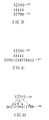
- FIG. 1b shows a substitution scheme in which the symbols of unique identification 65 are replaced, on an individual basis or in blocks, with other symbols or groups of symbols.
- FIG. 1c shows a simple hiding scheme in which unique identification 65 is hidden among a longer series of symbols. Its position and length must be known to effect decryption.
- FIG. 1d shows a more complex hiding scheme in which the symbols of unique identification 65 are scrambled, either individually or in groups, and hidden among a larger series of symbols.
- This invention can use one or more of these or other schemes to write user-specific encrypted information 24 in an encrypted manner to RAM portion 16 of credit or debit copy-protected optical disc 10.
- Preformed identification signature 22 and user-specific encrypted information 24 are concatenated to provide user-personalized secure signature 8.
- the user-personalized signature 8 permits a user to communicate over the network to make payment for ordered products or services with a high degree of assurance that the information on the optical disc is secure from piracy.
- FIG. 2b we see a schematic view of one way that the authentication is done in a secure manner.
- This can be effected by using two routines which can communicate with each other from physically-separated but connected computers, that is over a network 19 (for example the Internet) in a secure manner.
- the first routine is commerce site application or remote site application 21, which exists on the commerce site or a support site, and can verify the authenticity of credit or debit copy-protected optical disc 10.
- the second routine is client application 25, which is originally encrypted on credit or debit copy-protected optical disc 10 as encrypted client application package 26.
- Client application 25 is designed to read (step 29) preformed identification signature 22 and user-specific encrypted information 24 from credit or debit copy-protected optical disc 10, create user-personalized secure signature 8, and send it in a secure message to remote site application 21.
- Remote site application 21 first sends key request 23, for a decryption key, to client application 25. This transmission takes place over network 19 via any of a number of well-known protocols (for example TCP/IP, secure TCP/IP). Included in key request 23 is a message to use one of a number of private keys to sign the message when answering the request.
- Client application 25 returns the card number (for example user-specific encrypted information 24 or user - personalized secure signature 8) to remote site application 21 in signed message 27, which is signed with a private key.
- Remote site application 21 possesses the corresponding public key, and can verify the authenticity of the signed message 27, and therefore of credit or debit copy-protected optical disc 10.
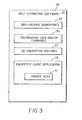
- Encrypted client application package 26 is written to credit or debit copy-protected optical disc 10. It includes client application 25, which has been encrypted as encrypted client application 39. Encrypted client application package 26 appears as a single executable program and includes self-extracting software 31, which runs first. The encrypted client application package 26 also includes anti-hacking routines 33 to check for the presence of hacking software (for example kernel debuggers, SCSI debuggers, and device emulators) in memory when the program is run. There can also be a section of polymorphic data and/or commands 35.
- hacking software for example kernel debuggers, SCSI debuggers, and device emulators
- Polymorphic code generally provides multiple paths which achieve the same results, but are constructed in such a way that a program follows a different path each time it executes. Polymorphic code is used to make the program more difficult to reverse-engineer.
- De-encrypting routines 37 are designed to use data on credit or debit copy-protected optical disc 10 (preformed identification signature 22 and user-specific encrypted information 24) to de-encrypt the encrypted client application 39.
- Encrypted client application package 26 also includes a private keys area 41, which includes private encryption keys that are used to verify the authenticity and integrity of credit or debit copy-protected optical disc 10 in a secure manner by utilizing public key encryption.
- a credit or debit copy-protected optical disc 10 is mastered (step 30) using any of several well known mastering techniques for mastering hybrid optical discs.
- the hybrid optical disc master includes a first (mastered) session 14, although it can also include other mastered sessions as well. Included in the master disc is preformed identification signature 22.
- the master disc is then used in step 32 for the manufacture of credit or debit copy-protected optical discs 10 by standard stamping methods. At this point, a large number of identical credit or debit copy-protected optical discs 10 exist.
- step 34 the encrypting program 50, which can be mastered onto credit or debit copy-protected optical disc 10 or located on a local hard drive or on a distributed network, is read into the memory of a computer.
- step 36 client application 25 is read into memory.
- the card issuer here defined as a person or entity using credit or debit copy-protected optical disc 10 to make credit or cash cards, puts credit or debit copy-protected optical disc 10 into the optical disc writer in step 38.
- the card issuer designates the files to be encrypted (step 40).
- the value of preformed identification signature 22 is read from credit or debit copy-protected optical disc 10 (step 44) and user-specific encrypted information 24 is created (step 46).
- the security software has obtained preformed identification signature 22 and user-specific encrypted information 24, it concatenates them in step 48 to create user-personalized secure signature 8, which also serves as the encryption key.
- Encrypting program 50 uses user-personalized secure signature 8 with client application 25 in step 52 to create the encrypted client application 39.
- the files that were encrypted in step 52 are then added as data files to self-extracting software 31 in step 58.
- Self-extracting software 31 includes the subroutines required to read preformed identification signature 22 and user-specific encrypted information 24 from credit or debit copy-protected optical disc 10, anti-hacking routines 33 to detect the presence of reverse engineering tools (for example kernel debuggers, SCSI debuggers, device emulators) in the memory of the computer. When the program is running the anti-hacking routines stop execution if reverse-engineering tools are detected. Self-extracting software 31 also includes de-encrypting routines 37 that decrypt and launch the execution of the software application. In step 62, writing program 60 writes encrypted client application package 26 to credit or debit copy-protected optical disc 10 in RAM portion 16.
- reverse engineering tools for example kernel debuggers, SCSI debuggers, device emulators
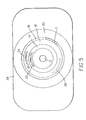
- the credit or debit copy-protected optical disc 28 includes both a mastered pre-recorded area, also known as a ROM portion 14, a recordable area, also known as writeable area 20, and an area of written data, also known as RAM portion 16 that serves as an individual security area. It has a hole 12 for a central spindle to spin the credit or debit copy-protected optical disc 28.
- ROM portion 14 is a mastered session; that is, a master disc was created including supplied software or data in the first session, and was subsequently used, either directly or through intermediate "Father" and “Mother" discs-to stamp multiple uncustomized copies of credit or debit copy-protected optical disc 28.
- Credit or debit copy-protected optical disc 28 also includes at least one written (value) area 18 that serves to record the cash or equivalent value 17 remaining.
- the credit or debit copy-protected optical disc 28 further includes a preformed identification number or preformed identification signature 22, which is a digital signal recorded during the mastering process and subsequently pressed into each credit or debit copy-protected optical disc 28.
- the credit or debit copy-protected optical disc 28 further includes a unique identification number or unique ID, also known as user-specific encrypted information 24 that is written in one or more known absolute sector addresses.
- the credit or debit copy-protected optical disc 28 further includes encrypted client application package 26.
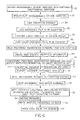
- a hybrid optical disc is mastered (step 30) using any of several well known mastering techniques for mastering compact discs.
- the hybrid optical disc master includes a ROM portion 14, although it can also include other mastered sessions as well. Included in the master disc is a preformed identification signature 22.
- the master disc is then used in step 32 for the manufacture of credit or debit copy-protected optical discs 28 by standard stamping methods. At this point, a large number of identical credit or debit copy-protected optical discs 28 exist.
- step 34 encrypting program 50, which can be mastered onto credit or debit copy-protected optical disc 28 or located on a local hard drive or on a distributed network, is read into the memory of a computer.
- step 36 client application 25 is read into memory.
- the card issuer here defined as a person or entity using credit or debit copy-protected optical disc 28 to make cash cards, puts credit or debit copy-protected optical disc 28 into the CD-ROM writer in step 38.
- the card issuer designates the files to be encrypted (step 40).
- the value of preformed identification signature 22 is read from credit or debit copy-protected optical disc 28 (step 44) and user-specific encrypted information 24 is created (step 46).
- the security software has obtained preformed identification signature 22 and user-specific encrypted information 24, it concatenates them in step 48 to create user-personalized secure signature 8, which also serves as the encryption key.
- Encrypting program 50 uses user-personalized secure signature 8 with client application 25 in step 52 to create encrypted client application 39.
- the files that were encrypted in step 52 are then added as data files to self-extracting software 31 in step 58.
- Self-extracting software 31 includes the subroutines required to read preformed identification signature 22 and user-specific encrypted information 24 from credit or debit copy-protected optical disc 28.
- the self-extracting software 31 also includes anti-hacking routines 33 to detect the presence of reverse engineering tools (for example kernel debuggers, SCSI debuggers, and device emulators) in the memory of the computer. When the program is running the anti-hacking routines stop execution if reverse-engineering tools are detected.
- Self-extracting software 31 also includes de-encrypting routines 37 that decrypt and launch the execution of the software application.
- writing program 60 writes encrypted client application package 26 to credit or debit copy-protected optical disc 28 in RAM portion 16.
- step 64 which can be performed at a later time, the cash or equivalent value 17 is written to credit or debit copy-protected optical disc 28 in written (value) area 18.
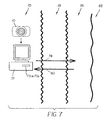
- FIG. 7 we see a schematic diagram of the use of this invention over Internet or other network 19.
- Personal computer 72 which includes a CD-ROM drive that can be embodied either in a CD reader 73 or CD reader/writer 73a.
- the CD-ROM drive can be at the end-user's home site 70, and is connected via the Internet or other network 19 to a network (commerce) site 76.
- Network (commerce) site 76 can also be intimately connected to support site 82 (for example a banking site or a credit card site).
- an end-user places his/her credit or debit copy-protected optical disc 10 into CD reader 73 or CD reader/writer 73a in personal computer 72.
- Information is transferred between credit or debit copy-protected optical disc 10 and network (commerce) site 76 via a secure connection. This information transfer can be either initiated by client application 25 on credit or debit copy-protected optical disc 10 (CD-Push operation 78) or by network (commerce) site 76 (Web-Pull operation 80). Information is also transferred between network (commerce) site 76 and support site 82. This allows the transaction to be transacted properly at the financial institution or credit clearance center.
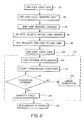
- FIG. 8 we see a block diagram showing the basic process by which the end-user would use a hybrid optical disc according to this invention over the Internet or other network 19.
- this follows standard steps for network shopping up to the point of selecting a payment method.
- an end-user visits network (commerce) site 76 and proceeds to select items to purchase (step 92) and then indicate purchase completion (step 94).
- the end-user can select in step 96 to make payment for ordered products or services by optical card.
- the site requests that the end-user load credit or debit copy-protected optical disc 10 in CD reader 73 or CD reader/writer 73a (step 98), which the end-user does (step 100).
- Inclusive step 135 refers to a series of steps that will vary slightly depending upon the type of card. This will be described in further detail in this description. The general steps are that client application 25 on credit or debit copy-protected optical disc 10 autolaunches or is launched by the end-user or by network (commerce) site 76 (step 105). Client application 25 establishes a secure transmission link with network (commerce) site 76 in step 110. In step 115, network (commerce) site 76 and support site 82 can determine if the transaction will be valid financially. If it is not, the transaction is canceled (step 120). If the transaction is valid, funds are transferred (that is the user's account is debited) in step 125 and network (commerce) site 76 can ship the merchandise (step 130).
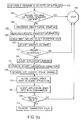
- FIG. 9a we see a block diagram showing more details of the steps in the purchasing process and especially of providing a high degree of assurance that the information on credit or debit copy-protected optical disc 10 is secure from piracy. This was shown in less detail as block 135 in FIG. 8.
- encrypted client application package 26 is launched automatically or is selected to run.
- Encrypted client application package 26 includes anti-hacking routines 33 that first look (step 132) for hacking software (for example kernel debuggers, SCSI debuggers, device emulators), which would enable a pirate to follow the workings of the programs on credit or debit copy-protected optical disc 10. If this hacking software is found, the execution of the program stops (step 134). If no such software is found, the self-extracting software 31 proceeds to read preformed identification signature 22 (step 136) and user-specific encrypted information 24 (step 138).
- hacking software for example kernel debuggers, SCSI debuggers, device emulators
- step 140 The two ID's are concatenated in step 140 to get user-personalized secure signature 8, which also serves as the decryption key that is used to decrypt the encrypted client application 39 in step 142.
- step 144 if the decryption is improper, the program stops (step 134).
- client application 25 is launched in step 146.
- Client application 25 then establishes a secure connection with network (commerce) site 76 in step 110. Once the connection is established, a secure channel is selected from a multiplicity of such channels, each of which is a public key/private key combination.
- Remote site application 21 randomly chooses a secure channel from those available to it (step 148) and sends client application 25 a key request 23 for user-personalized secure signature 8 sent in a signed message 27 (step 150).
- Client application 25 then creates a message which includes user-personalized secure signature 8, signs the message with the private key requested by remote site application 21, and sends signed message 27 to remote site 76 (step 152).
- Remote site application 21 receives signed message 27 and, in step 154, uses the selected public key to verify the identity of credit or debit copy-protected optical disc 10. If the check fails, the process stops (step 134) and no further financial transactions are performed. Presumably this is because credit or debit copy-protected optical disc 10 is counterfeit or damaged in some way. If the public-key confirms that signed message 27 is valid, and therefore credit or debit copy-protected optical disc 10 is valid, remote site application 21 and client application 25 continue with the financial transaction steps (step 156), which will be discussed in more detail below.
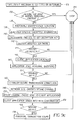
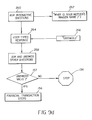
- FIG. 9b we see a block diagram showing more details of the steps in the purchasing process in which interactive questions are asked by the remote site. These questions are used to verify the authenticity of the user. This was shown in less detail as block 135 in FIG. 8.
- encrypted client application package 26 is launched automatically or is selected to run.
- Encrypted client application package 26 includes anti-hacking routines 33 that first look (step 132) for hacking software (for example kernel debuggers, SCSI debuggers, device emulators), which would enable a pirate to follow the workings of the programs on credit or debit copy-protected optical disc 10. If this hacking software is found, the execution of the program stops (step 134). If no such software is found, the self-extracting software 31 proceeds to read preformed identification signature 22 (step 136) and user-specific encrypted information 24 (step 138).
- hacking software for example kernel debuggers, SCSI debuggers, device emulators
- step 140 The two ID's are concatenated in step 140 to get user-personalized secure signature 8, which also serves as the decryption key used to decrypt encrypted client application 39 in step 142.
- step 144 if the decryption is improper, the program stops (step 134).
- client application 25 is launched in step 146.
- Client application 25 then establishes a secure connection with network (commerce) site 76 in step 110. Once the connection is established, a secure channel is selected from a multiplicity of such channels, each of which is a public key/private key combination.
- Remote site application 21 randomly chooses a secure channel from those available to it (step 148) and sends client application 25 a key request 23 for user-personalized secure signature 8 sent in a signed message 27 (step 150).
- Client application 25 then creates a message which includes user-personalized secure signature 8, signs the message with the private key requested by remote site application 21, and sends signed message 27 to remote site 76 (step 152).
- Remote site application 21 receives signed message 27 and, in step 154, uses the selected public key to verify the identity of credit or debit copy-protected optical disc 10. If the check fails, the process stops (step 134) and no further financial transactions are performed. Presumably this is because credit or debit copy-protected optical disc 10 is counterfeit or damaged in some way. If the public-key confirms that signed message 27 is valid, and therefore credit or debit copy-protected optical disc 10 is valid, remote site application 21 asks the user one or more interactive questions, which the user must answer properly to authenticate that the user is the assigned owner of the disc (step 155). If the user's answers are not valid (step 157), the process stops (step 134). If the user's answers are valid, remote site application 21 and client application 25 continue with the financial transaction steps (step 156), which will be discussed in more detail below.
- FIG. 9c we see a block diagram showing more details of the steps in the purchasing process in which interactive questions are asked locally and not over the network.
- encrypted client application package 26 is launched automatically or is selected to run.
- Encrypted client application package 26 includes anti-hacking routines 33 that first look (step 132) for hacking software (for example kernel debuggers, SCSI debuggers, device emulators), which would enable a pirate to follow the workings of the programs on credit or debit copy-protected optical disc 10. If this hacking software is found, the execution of the program stops (step 134). If no such software is found, the self-extracting software 31 proceeds to read preformed identification signature 22 (step 136) and user-specific encrypted information 24 (step 138).
- hacking software for example kernel debuggers, SCSI debuggers, device emulators
- step 140 The two ID's are concatenated in step 140 to get user-personalized secure signature 8, which also serves as the decryption key used to decrypt encrypted client application 39 in step 142.
- step 144 if the decryption is improper, the program stops (step 134).
- client application 25 is launched in step 146.
- Client application 25 asks the user one or more interactive questions, which the user must answer properly to authenticate that the user is the assigned owner of the disc (step 147). The answers can be stored as part of user-specific encrypted information 24 or user-specific personalized information 15. If the user's answers are not valid (step 157), the process stops (step 134). If the user's answers are valid, client application 25 then establishes a secure connection with network (commerce) site 76 in step 110. Once the connection is established, a secure channel is selected from a multiplicity of such channels, each of which is a public key/private key combination.
- Remote site application 21 randomly chooses a secure channel from those available to it (step 148) and sends client application 25 a key request 23 for user-personalized secure signature 8 to be sent in a signed message 27 (step 150).
- Client application 25 then creates a message which includes user-personalized secure signature 8, signs the message with the private key requested by remote site application 21, and sends signed message 27 to remote site 76 (step 152).
- Remote site application 21 receives signed message 27 and, in step 154, uses the selected public key to verify the identity of credit or debit copy-protected optical disc 10. If the check fails, the process stops (step 134) and no further financial transactions are performed. Presumably this is because credit or debit copy-protected optical disc 10 is counterfeit or damaged in some way. If the public-key confirms that signed message 27 is valid, and therefore credit or debit copy-protected optical disc 10 is valid, remote site application 21 and client application 25 continue with the financial transaction steps (step 156), which will be discussed in more detail below.
- step 260 the system (remote site application 21 or client application 25) asks the user interactive question 262.
- step 264 the user enters answer 266.
- the system can optionally ask further interactive questions 262 in step 268. If answers 266 are not valid (step 157), the process stops (step 134) and the transaction is not allowed. If answers 266 are determined to be valid, the further steps of the process are allowed (step 156).
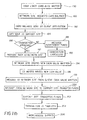
- step 160 network (commerce) site 76 sends information to support site 82. This includes the card number and transaction amount, as well as any other information that support site 82 requires. Support site 82 decides if the transaction can be approved (step 162). If it cannot be approved, a message is sent back (step 164) that there is a problem, for example insufficient credit (for a credit card) or funds (for a debit card). The transaction is then cancelled (step 166).
- step 162 If the transaction is approved in step 162, the credit card account is charged (for a credit account) or the associated account is debited (for a debit card) and credited to the merchant's network (commerce) site 76 in step 168. A message is sent back to network (commerce) site 76 that the financial part of the transaction has been completed (step 170).
- step 172 the transaction is finalized, that is the merchandise is released for shipment to the end-user, and it is then shipped (step 174).
- FIG. 11a we see the financial transaction steps if credit or debit copy-protected optical disc 10 is being used as a cash card with the cash or equivalent value stored on a central server. This is similar to the use of a credit card or debit card, but there are several possible differences. One is that the user can be anonymous; only credit or debit copy-protected optical disc 10 itself needs to be verified as authentic. Another is that the value can be other than cash (for example minutes for a service, such as telephone service).
- network (commerce) site 76 sends information to support site 82. This includes the card number or user-personalized secure signature 8 and transaction amount, as well as any other information that support site 82 requires.
- User-personalized secure signature 8 for this type of credit or debit copy-protected optical disc 10 can include pre-payment information 161.
- the user-personalized secure signature 8 includes the pre-payment information 161 that permits pre-payment in whole or in part for services or products to be ordered.
- Pre-payment information 161 is defined as the amount of pre-payment, that is, the initial value of credit or debit copy-protected optical disc 10. This pre-payment value can be a fixed amount for a given group of discs, or can depend on the amount pre-paid by the user.
- Support site 82 decides if the transaction can be approved (step 162).
- Support site 82 can choose to accept credit or debit copy-protected optical disc 10 as full payment or as partial payment for services or products to be offered. If the transaction cannot be approved, a message is sent back (step 176) that there is a problem, for example insufficient funds remain for the card. The transaction is then cancelled (step 166).
- step 162 If the transaction is approved in step 162, the cash or equivalent value is debited and credited to the merchant's network (commerce) site 76 in step 178. A message is returned to network (commerce) site 76 that the financial part of the transaction has been completed (step 170). In step 172, the transaction is finalized, that is the merchandise is released for shipment to the end-user, and it is then shipped (step 174).
- FIG. 11b we see a method for achieving this.
- the cash or equivalent value 17 already exists on credit or debit copy-protected optical disc 28 in written (value) area 18 (FIG. 5).
- the user must have a CD reader/writer 73a in which credit or debit copy-protected optical disc 28 is loaded in step 100a.
- network (commerce) site 76 requests cash or equivalent value 17.
- Client application 25 reads cash or equivalent value 17 from credit or debit copy-protected optical disc 28 and sends it to network (commerce) site 76 (step 182).
- Network (commerce) site 76 forwards this information to support site 82 (step 184).
- support site 82 decides if the transaction is approved. If it is not approved, a message is sent back, for example insufficient funds are available for the purchase or the cash funds are not available to be transferred (step 188) and the transaction is cancelled (step 190).
- step 194 the network (commerce) site 76 orders the client application 25 to write the new cash or equivalent value, deducting the purchase funds.
- client application 25 writes the new cash or equivalent value on credit or debit copy-protected optical disc 28 via CD reader/writer 73a (step 196).
- client application 25 signals network (commerce) site 76 that the value has been written (step 198).
- network (commerce) site 76 notifies support site 82 in step 200 that the requisite funds can be transferred.
- step 202 support site 82 transfers the funds to the commerce site's account. The merchandise is released (step 204) and shipped (step 206).
- Client application 25 has been provided with private key series 230, which is stored in private keys area 41. These private keys are capable of decrypting messages that have been encrypted with the corresponding public key, and they are also capable of signing messages in a secure way.
- Remote site application 21 also includes public key series 232, corresponding to private key series 230.
- Public key series 232 can include the entire set of keys included in private key series 230, or it can be a subset of private key series 230. The latter allows certain keys to be maintained exclusively for one application or one vendor without modifying client application 25. If the security of any key is compromised, that key can be simply removed from the remote site application 21, and the security breach is closed.
- Remote site application 21 randomly selects a public key "X" from public key series 232, which gives selected public key 256.
- Remote site application 21 sends key request 23 to client application 25 and indicates in key request 23 which key has been selected to be selected public key 256.
- Client application 25 selects the corresponding private key from private key series 230 to give selected private key 254.
- the selected public key 256/selected private key 254 pair form public/private key channel 258.
- Client application 25 uses selected private key 254 to sign signed message 27 that is sent to remote site application 21.
- step 210 network (commerce) site 76 randomly selects selected public key 256 from public key series 232.
- step 212 network (commerce) site 76 sends key request 23 to client application 25 to use public/private key channel 258 (that is the random key it has selected).
- Client application 25 formats the card ID into a message (step 214) which it then signs with selected private key 254 (step 216).
- Client application 25 then sends signed message 27 to network (commerce) site 76 (step 218).
- Remote site application 21 receives signed message 27 and uses selected public key 256 to verify signed message 27 (step 220). If the signature is not valid (step 222), the process stops (step 224). If the signature is valid, the process then continues (step 226) as described earlier.
Landscapes
- Engineering & Computer Science (AREA)
- Business, Economics & Management (AREA)
- Computer Security & Cryptography (AREA)
- Accounting & Taxation (AREA)
- Physics & Mathematics (AREA)
- General Physics & Mathematics (AREA)
- General Business, Economics & Management (AREA)
- Strategic Management (AREA)
- Theoretical Computer Science (AREA)
- Signal Processing (AREA)
- Finance (AREA)
- Microelectronics & Electronic Packaging (AREA)
- Computer Networks & Wireless Communication (AREA)
- Storage Device Security (AREA)
- Signal Processing For Digital Recording And Reproducing (AREA)
- Optical Record Carriers And Manufacture Thereof (AREA)
- Optical Recording Or Reproduction (AREA)
Applications Claiming Priority (2)
| Application Number | Priority Date | Filing Date | Title |
|---|---|---|---|
| US09/819,231 US20020191788A1 (en) | 2001-03-28 | 2001-03-28 | Credit or debit copy-protected optical disc |
| US819231 | 2001-03-28 |
Publications (1)
| Publication Number | Publication Date |
|---|---|
| EP1246104A1 true EP1246104A1 (de) | 2002-10-02 |
Family
ID=25227551
Family Applications (1)
| Application Number | Title | Priority Date | Filing Date |
|---|---|---|---|
| EP02076046A Withdrawn EP1246104A1 (de) | 2001-03-28 | 2002-03-18 | Kopiergeschütze optische Platte für Kredit oder Debit |
Country Status (3)
| Country | Link |
|---|---|
| US (1) | US20020191788A1 (de) |
| EP (1) | EP1246104A1 (de) |
| JP (1) | JP2003006982A (de) |
Families Citing this family (21)
| Publication number | Priority date | Publication date | Assignee | Title |
|---|---|---|---|---|
| US7822595B2 (en) | 2005-10-12 | 2010-10-26 | Storage Appliance Corporation | Systems and methods for selectively copying embedded data files |
| US7818160B2 (en) * | 2005-10-12 | 2010-10-19 | Storage Appliance Corporation | Data backup devices and methods for backing up data |
| US8195444B2 (en) | 2005-10-12 | 2012-06-05 | Storage Appliance Corporation | Systems and methods for automated diagnosis and repair of storage devices |
| US7844445B2 (en) | 2005-10-12 | 2010-11-30 | Storage Appliance Corporation | Automatic connection to an online service provider from a backup system |
| US7813913B2 (en) | 2005-10-12 | 2010-10-12 | Storage Appliance Corporation | Emulation component for data backup applications |
| US7899662B2 (en) | 2005-10-12 | 2011-03-01 | Storage Appliance Corporation | Data backup system including a data protection component |
| US7702830B2 (en) * | 2005-10-12 | 2010-04-20 | Storage Appliance Corporation | Methods for selectively copying data files to networked storage and devices for initiating the same |
| US7719419B2 (en) * | 2005-11-02 | 2010-05-18 | Honeywell International Inc. | Intrusion detection using pseudo-random binary sequences |
| US7436316B2 (en) * | 2006-01-05 | 2008-10-14 | Honeywell International Inc. | Method and system to detect tampering using light detector |
| US7388486B2 (en) * | 2006-01-05 | 2008-06-17 | Honeywell International Inc. | Method and system to detect tampering using light detector |
| US20070221117A1 (en) * | 2006-03-23 | 2007-09-27 | Honeywell International Inc. | Active protection for closed systems |
| US7671324B2 (en) * | 2006-09-27 | 2010-03-02 | Honeywell International Inc. | Anti-tamper enclosure system comprising a photosensitive sensor and optical medium |
| US8279075B2 (en) * | 2006-11-30 | 2012-10-02 | Honeywell International Inc. | Card slot anti-tamper protection system |
| US20080129501A1 (en) * | 2006-11-30 | 2008-06-05 | Honeywell International Inc. | Secure chassis with integrated tamper detection sensor |
| US7796036B2 (en) * | 2006-11-30 | 2010-09-14 | Honeywell International Inc. | Secure connector with integrated tamper sensors |
| US8284387B2 (en) * | 2007-02-08 | 2012-10-09 | Honeywell International Inc. | Methods and systems for recognizing tamper events |
| US8675466B2 (en) * | 2008-02-19 | 2014-03-18 | Thomson Licensing | Optical disc with pre-recorded and recordable regions and methods of forming the disc |
| US9019807B2 (en) | 2008-02-19 | 2015-04-28 | Thomson Licensing | Optical disc with pre-recorded and recordable regions and method of forming the disc |
| US8413137B2 (en) | 2010-02-04 | 2013-04-02 | Storage Appliance Corporation | Automated network backup peripheral device and method |
| US10223688B2 (en) | 2012-09-24 | 2019-03-05 | Samsung Electronics Co., Ltd. | Competing mobile payment offers |
| US20140279566A1 (en) * | 2013-03-15 | 2014-09-18 | Samsung Electronics Co., Ltd. | Secure mobile payment using media binding |
Citations (4)
| Publication number | Priority date | Publication date | Assignee | Title |
|---|---|---|---|---|
| US5812519A (en) * | 1993-12-03 | 1998-09-22 | Deutsche Thomson-Brandt Gmbh | ROM-RAM Disk |
| EP0919929A1 (de) * | 1997-06-18 | 1999-06-02 | Kabushiki Kaisha Optrom | Speichermedium mit elektronischem schaltkreis und verfahren zur verwaltung des speichermediums |
| WO2000026867A1 (de) * | 1998-10-30 | 2000-05-11 | Maz Mikroelektronik Anwendungszentrum Hamburg Gmbh | Verfahren zum elektronischen bezahlen im internet |
| WO2000072649A2 (en) * | 1999-05-26 | 2000-12-07 | Cd Cash Co., Ltd. | Compact disc authentication system and method |
Family Cites Families (5)
| Publication number | Priority date | Publication date | Assignee | Title |
|---|---|---|---|---|
| US5065429A (en) * | 1989-04-03 | 1991-11-12 | Lang Gerald S | Method and apparatus for protecting material on storage media |
| WO1992020021A1 (en) * | 1991-05-08 | 1992-11-12 | Digital Equipment Corporation | License management system |
| IL107044A0 (en) * | 1992-09-21 | 1993-12-28 | Uniloc Singapore Private Ltd | System for software registration |
| US5982889A (en) * | 1997-04-30 | 1999-11-09 | Demont; Jason Paul | Method and apparatus for distributing information products |
| JP2001110171A (ja) * | 1999-10-13 | 2001-04-20 | Sony Corp | 記録再生装置および方法、端末装置、送受信方法、ならびに、記憶媒体 |
-
2001
- 2001-03-28 US US09/819,231 patent/US20020191788A1/en not_active Abandoned
-
2002
- 2002-03-18 EP EP02076046A patent/EP1246104A1/de not_active Withdrawn
- 2002-03-27 JP JP2002089705A patent/JP2003006982A/ja not_active Withdrawn
Patent Citations (4)
| Publication number | Priority date | Publication date | Assignee | Title |
|---|---|---|---|---|
| US5812519A (en) * | 1993-12-03 | 1998-09-22 | Deutsche Thomson-Brandt Gmbh | ROM-RAM Disk |
| EP0919929A1 (de) * | 1997-06-18 | 1999-06-02 | Kabushiki Kaisha Optrom | Speichermedium mit elektronischem schaltkreis und verfahren zur verwaltung des speichermediums |
| WO2000026867A1 (de) * | 1998-10-30 | 2000-05-11 | Maz Mikroelektronik Anwendungszentrum Hamburg Gmbh | Verfahren zum elektronischen bezahlen im internet |
| WO2000072649A2 (en) * | 1999-05-26 | 2000-12-07 | Cd Cash Co., Ltd. | Compact disc authentication system and method |
Also Published As
| Publication number | Publication date |
|---|---|
| JP2003006982A (ja) | 2003-01-10 |
| US20020191788A1 (en) | 2002-12-19 |
Similar Documents
| Publication | Publication Date | Title |
|---|---|---|
| EP1246104A1 (de) | Kopiergeschütze optische Platte für Kredit oder Debit | |
| US7003501B2 (en) | Method for preventing fraudulent use of credit cards and credit card information, and for preventing unauthorized access to restricted physical and virtual sites | |
| TWI391863B (zh) | 電腦可讀通用授權卡系統及其使用方法 | |
| US20030130955A1 (en) | Secure transaction systems | |
| US4357529A (en) | Multilevel security apparatus and method | |
| US6128391A (en) | Method and apparatus for asymetric key management in a cryptographic system | |
| US8244636B2 (en) | Payment system | |
| US6000832A (en) | Electronic online commerce card with customer generated transaction proxy number for online transactions | |
| US7003500B1 (en) | Retail point of sale (RPOS) apparatus for internet merchandising | |
| US20060190412A1 (en) | Method and system for preventing fraudulent use of credit cards and credit card information, and for preventing unauthorized access to restricted physical and virtual sites | |
| US20020152180A1 (en) | System and method for performing secure remote real-time financial transactions over a public communications infrastructure with strong authentication | |
| TW200409038A (en) | Computer readable universal authorization card system and method for using same | |
| CA2403283A1 (en) | Method and system for secure payments over a computer network | |
| MXPA02002609A (es) | Metodo y aparato de distribucion de contenido. | |
| JP2003100013A (ja) | 認証にハイブリッド光ディスクを使用してネットワーク上で電子コンテンツにアクセスする方法 | |
| JP2004500671A (ja) | コンピューターネットワークを介して安全な支払いを実行する改良方法及びシステム | |
| US20030200162A1 (en) | Secure peer-to-peer money transfer | |
| EP0927974B1 (de) | Verfahren zur Kompression von digitalen Zertifikaten zur Verwendung in einer Chipkarte | |
| WO2002050743A1 (en) | Method and system for using optical data cards as portable secure unified platforms for performing a variety of secure on-line transactions | |
| JPH10503037A (ja) | 真偽性確認技術 | |
| US20030144960A1 (en) | Method for online commercial distribution of digital goods through a comminication network and eletronic device for purchasing electronic goods distributed by said method | |
| JP2003110552A (ja) | カード認証システム、情報記録カードおよびカード認証方法 | |
| US20020035694A1 (en) | Method and apparatus for anonymous remote transactions | |
| AU723525B2 (en) | A method for certifying a running total in a reader | |
| JP2004535619A (ja) | 安全な決済取引を行うシステムと方法 |
Legal Events
| Date | Code | Title | Description |
|---|---|---|---|
| PUAI | Public reference made under article 153(3) epc to a published international application that has entered the european phase |
Free format text: ORIGINAL CODE: 0009012 |
|
| AK | Designated contracting states |
Kind code of ref document: A1 Designated state(s): AT BE CH CY DE DK ES FI FR GB GR IE IT LI LU MC NL PT SE TR |
|
| AX | Request for extension of the european patent |
Free format text: AL;LT;LV;MK;RO;SI |
|
| 17P | Request for examination filed |
Effective date: 20030311 |
|
| AKX | Designation fees paid |
Designated state(s): DE FR GB |
|
| STAA | Information on the status of an ep patent application or granted ep patent |
Free format text: STATUS: THE APPLICATION HAS BEEN WITHDRAWN |
|
| 18W | Application withdrawn |
Effective date: 20050805 |