EP1246151A1 - Système informatisé de préparation d'un test utilisant des diagnostics individualisés et adaptation - Google Patents
Système informatisé de préparation d'un test utilisant des diagnostics individualisés et adaptation Download PDFInfo
- Publication number
- EP1246151A1 EP1246151A1 EP02251644A EP02251644A EP1246151A1 EP 1246151 A1 EP1246151 A1 EP 1246151A1 EP 02251644 A EP02251644 A EP 02251644A EP 02251644 A EP02251644 A EP 02251644A EP 1246151 A1 EP1246151 A1 EP 1246151A1
- Authority
- EP
- European Patent Office
- Prior art keywords
- user
- test
- remediation
- distractor
- questions
- Prior art date
- Legal status (The legal status is an assumption and is not a legal conclusion. Google has not performed a legal analysis and makes no representation as to the accuracy of the status listed.)
- Withdrawn
Links
- 238000012360 testing method Methods 0.000 title claims abstract description 219
- 238000005067 remediation Methods 0.000 title claims abstract description 76
- 238000002360 preparation method Methods 0.000 title claims abstract description 20
- 230000004044 response Effects 0.000 claims abstract description 97
- 238000000034 method Methods 0.000 claims abstract description 39
- 238000003745 diagnosis Methods 0.000 claims abstract description 32
- 230000000694 effects Effects 0.000 claims abstract description 29
- 238000004458 analytical method Methods 0.000 claims description 35
- 238000002405 diagnostic procedure Methods 0.000 claims description 33
- 230000007812 deficiency Effects 0.000 claims description 22
- 230000003993 interaction Effects 0.000 claims description 13
- 230000006399 behavior Effects 0.000 claims description 3
- 238000004590 computer program Methods 0.000 claims 21
- 230000005055 memory storage Effects 0.000 claims 7
- 238000012790 confirmation Methods 0.000 claims 2
- 238000004891 communication Methods 0.000 claims 1
- 230000006735 deficit Effects 0.000 abstract 1
- 230000001149 cognitive effect Effects 0.000 description 16
- 238000010586 diagram Methods 0.000 description 14
- 239000000463 material Substances 0.000 description 14
- 238000011161 development Methods 0.000 description 12
- 230000018109 developmental process Effects 0.000 description 12
- 230000000246 remedial effect Effects 0.000 description 8
- 238000012552 review Methods 0.000 description 8
- 230000008901 benefit Effects 0.000 description 6
- 230000008859 change Effects 0.000 description 6
- 230000006872 improvement Effects 0.000 description 6
- 230000008569 process Effects 0.000 description 6
- 238000013077 scoring method Methods 0.000 description 4
- 238000012549 training Methods 0.000 description 4
- 241000124008 Mammalia Species 0.000 description 3
- 241000277331 Salmonidae Species 0.000 description 3
- 238000013459 approach Methods 0.000 description 3
- 230000002708 enhancing effect Effects 0.000 description 3
- 239000011159 matrix material Substances 0.000 description 3
- 238000012797 qualification Methods 0.000 description 3
- SVDVJBWDBYSQLO-UHFFFAOYSA-N 5-(4-hydroxy-3-methoxyphenyl)-5-phenylimidazolidine-2,4-dione Chemical compound C1=C(O)C(OC)=CC(C2(C(NC(=O)N2)=O)C=2C=CC=CC=2)=C1 SVDVJBWDBYSQLO-UHFFFAOYSA-N 0.000 description 2
- 241000283153 Cetacea Species 0.000 description 2
- 241000238631 Hexapoda Species 0.000 description 2
- 101000937642 Homo sapiens Malonyl-CoA-acyl carrier protein transacylase, mitochondrial Proteins 0.000 description 2
- 102100027329 Malonyl-CoA-acyl carrier protein transacylase, mitochondrial Human genes 0.000 description 2
- 238000004364 calculation method Methods 0.000 description 2
- 230000000875 corresponding effect Effects 0.000 description 2
- 238000011156 evaluation Methods 0.000 description 2
- 230000006870 function Effects 0.000 description 2
- 230000002085 persistent effect Effects 0.000 description 2
- 102000030592 phosphoserine aminotransferase Human genes 0.000 description 2
- 108010088694 phosphoserine aminotransferase Proteins 0.000 description 2
- 230000035755 proliferation Effects 0.000 description 2
- 230000011514 reflex Effects 0.000 description 2
- 230000035945 sensitivity Effects 0.000 description 2
- 230000001755 vocal effect Effects 0.000 description 2
- ZMOQBTRTDSZZRU-UHFFFAOYSA-N 2-(1,2-dichloroethyl)pyridine;hydrochloride Chemical compound Cl.ClCC(Cl)C1=CC=CC=N1 ZMOQBTRTDSZZRU-UHFFFAOYSA-N 0.000 description 1
- 241000251468 Actinopterygii Species 0.000 description 1
- 102100026827 Protein associated with UVRAG as autophagy enhancer Human genes 0.000 description 1
- 101710102978 Protein associated with UVRAG as autophagy enhancer Proteins 0.000 description 1
- 230000003044 adaptive effect Effects 0.000 description 1
- 230000015572 biosynthetic process Effects 0.000 description 1
- 238000005352 clarification Methods 0.000 description 1
- 239000003086 colorant Substances 0.000 description 1
- 238000010276 construction Methods 0.000 description 1
- 230000002596 correlated effect Effects 0.000 description 1
- 230000001419 dependent effect Effects 0.000 description 1
- 230000008030 elimination Effects 0.000 description 1
- 238000003379 elimination reaction Methods 0.000 description 1
- 238000005516 engineering process Methods 0.000 description 1
- 238000002474 experimental method Methods 0.000 description 1
- 239000011888 foil Substances 0.000 description 1
- XDDAORKBJWWYJS-UHFFFAOYSA-N glyphosate Chemical compound OC(=O)CNCP(O)(O)=O XDDAORKBJWWYJS-UHFFFAOYSA-N 0.000 description 1
- 230000007246 mechanism Effects 0.000 description 1
- 230000003014 reinforcing effect Effects 0.000 description 1
- 238000011160 research Methods 0.000 description 1
- 238000005070 sampling Methods 0.000 description 1
- 238000012163 sequencing technique Methods 0.000 description 1
- 230000007103 stamina Effects 0.000 description 1
- 230000000007 visual effect Effects 0.000 description 1
Images


Classifications
-
- G—PHYSICS
- G09—EDUCATION; CRYPTOGRAPHY; DISPLAY; ADVERTISING; SEALS
- G09B—EDUCATIONAL OR DEMONSTRATION APPLIANCES; APPLIANCES FOR TEACHING, OR COMMUNICATING WITH, THE BLIND, DEAF OR MUTE; MODELS; PLANETARIA; GLOBES; MAPS; DIAGRAMS
- G09B7/00—Electrically-operated teaching apparatus or devices working with questions and answers
- G09B7/06—Electrically-operated teaching apparatus or devices working with questions and answers of the multiple-choice answer-type, i.e. where a given question is provided with a series of answers and a choice has to be made from the answers
Definitions
- the present invention relates to a computerized, or other machine based test preparation system, and more particularly, to a method and apparatus for enhancing learning and improving examinee scores on standardized exams through the use of individually tailored diagnostics and remediation.
- High-stakes examinations are very common today. Typically they are time-based exams testing a set of predetermined subject areas. A number of these examinations, such as the Scholastic Aptitude Test ("SAT") series of examinations and others like it (e.g., MCAT, LSAT, ACT, GRE, GED, CLEP, BAR exam, DMV exams), have been labeled as "high-stakes” testing. In such "high-stakes" tests, the primary objective is the placement of an examinee on a latent trait or ability dimension, for a variety of purposes such as selection and placement (i.e., SAT, MCAT or LSAT), or certification (i.e., GED and DMV exams).
- SAT Scholastic Aptitude Test
- test items include items from a variety of scholastic domains (e.g., SAT: verbal, mathematics; LSAT: logical reasoning, reading comprehension, verbal) that are arranged in a formal structure.
- SAT verbal
- LSAT logical reasoning, reading comprehension, verbal
- the test items are chosen and developed by the test makers so as to "reliably" place examinees on the latent dimension of interest to the examiner and consumers of the standardized scores from such exams.
- test preparation offerings have been traditionally represented by such organizations as Kaplan Learning and The Princeton Review study centers, or self-study methods based on printed test preparation texts such as 10 Real SATS, and Gruber's Complete Preparation for the New SAT: Eighth Edition. Through the use of such methods, examinee score increases have been modest, generally resulting in score increases on the order of 1/5th of a standard deviation..
- sample exams which can be taken by the user.
- Information is generally fed back to the user of such offerings in the form of raw and scaled scores.
- the feedback may also include a re-presentation of the exam items, the indication of the user's response and the correct choice, and an explanation of why the correct answer is correct and why each of the alternatives are wrong.
- responses to the "sample exams” in some cases provide the basis for "diagnostic" feedback, the diagnosis in this context is defined from a conventional testing perspective and is determined merely by the number of incorrect answers rather than the types of incorrect answers.
- a study plan, or diagnosis, if provided is usually based upon the user's distribution of scores across the various sections of the examination and results in a simplistic recommendation of remediation, such as the need to review geometric principles or increase vocabulary.
- CDA cognitively diagnostic assessment
- dynamic testing has been developed which may provide a basis for individualized instruction for each examinee in a domain of interest.
- Such tests are based upon cognitive theories of learning, and as such, are not concerned with the representative sampling of items from a content domain (such as algebraic equations), but rather, with the examinee's knowledge and application of cognitive attributes which are thought to be required or not required to adequately solve a given problem.
- CDA testing provides information regarding the strategies that examinees use to attack problems, relationships they perceive among concepts, and principles they understand in a domain. The goal of these testing methods is to determine, on the basis of a simple test, what the strengths and weaknesses of an examinee are, relative to a specified list of cognitive attributes of interest to the teacher and the tester.
- CDA-type tests are typically built around an attribute by item matrix (i.e., a Q-matrix).
- item matrix i.e., a Q-matrix
- an examinee to solve a given problem it is assumed that they have knowledge of, and the ability to apply, one or more cognitive attributes related to the item or problem. The failure of an examinee to solve a problem is then attributed to the absence of a requisite cognitive attribute or to a lack of skill in its application.
- MC tests are composed of items having two sub-parts - a stem representing the question and a series of response alternatives, one of which is the correct response. It is the presence of the response alternatives which differentiates MC test items from constructed response items which contain no response alternatives and require an examinee to self-generate a response. MC tests are typically scored by comparing the examinee's response to an item against a key that contains the correct answers. This is dichotomous scoring, 0 or 1, the answer being either correct or incorrect. Polychotomous scoring methods assign weights to each of the response options, with the correct response being given the largest weight. In practice, the two scoring methods yield highly correlated sets of test scores. Polychotomous scoring methods utilize more of the information available in a set of incorrect answers or distractors, although solely in service of the conventional testing purpose of rank ordering examinees, rather than for instruction or remediation.
- the set of response alternatives (the incorrect alternatives being known as distractors or foils) assumes considerable importance. If the distractors don't work, the test item becomes unreliable, and the interpretation of the scores becomes meaningless.
- Traditional methods of test construction have focused on the selection of distractors that are thought to yield some information about the latent trait being evaluated and on the elimination of non-working distractors.
- information derived from incorrect responses to an exam question is solely used by test developers to indicate that the question needs improvement, either in the wording of the stem or in the specification of the response alternatives. Nonetheless, additional useful information about the examinee can be captured from these incorrect answers.
- researchers have observed that classification of response option choice according to type of error could be utilized for diagnostic purposes. Nevertheless, significant attention has not been directed toward developing MC tests in which the response alternatives are scored diagnostically for the benefit of the examinee and examiner.
- Constructed response items such as short answer or essay questions, typically require a person knowledgeable in the domain being tested to score such response items.
- Constrained constructed response items such as the grid-in items on SAT-type examinations, may now be computer scored as the software programs are capable of accepting a range of responses as being correct.
- the scoring routines employed for a majority of high stakes examinations are still designed to yield scores based on a binary correct/incorrect coding of responses. Programs for the scoring of responses to extended essay questions are still in the investigatory stage.
- test preparation systems also do not provide for the cognitive diagnosis of test-taking and/or content-related problems. Recommendations for remediation are based on the overall frequency of wrong answers in specific domains of a test, rather than on the frequency of specific types of wrong answers.
- the invention provides an apparatus and method for enhancing learning and improving examinee test scores on standardized tests using cognitive diagnostic principles of diagnosis and remediation. More specifically, the invention provides a comprehensive, self-contained system for assessing and preliminarily diagnosing patterns of examinee errors through the use of data from the incorrect response alternatives (distractors) presented in each multiple-choice exam question or presented in response to constrained open-ended exam questions, confirming the preliminary diagnosis, if necessary, through the use of subsequent examination, offering remediation based upon the diagnosed error patterns, and reinforcing this remediation through skill development exercises, in order to increase an examinee's learning and level of performance on standardized tests.
- the invention utilizes information inherent in the distractors in standardized multiple-choice tests.
- the invention utilizes information provided as responses to constrained open-ended exam questions, in which the stem of such questions mirrors those employed in standardized multiple-choice tests.
- a system incorporating either of these embodiments does not require the creation of new test questions or responses.
- specific distractors are included in evaluation examinations that provide additional insight and information in identifying problem solving deficiencies.
- coded categories of responses that correspond to user generated response items are employed to provide information analogous to that provided by the distractors in standardized multiple-choice tests.
- a system designed according to one embodiment of the invention incorporates several different program components.
- Those components may include a user interface, a test generator, a diagnostic scoring component, and a remediation component.
- the user interface manages a user's interaction with the system, requests and stores various personal information with respect to the user, and allows the system to be specifically tailored to the individual user.
- the test generation component compiles and formats various types of examinations for provision to the user, such as diagnostic sample tests, non-diagnostic test-taking strategy tests, and basic skill tests, and presents the examinations to the user for completion, storing a variety of information with regard to the user's responses to the exam.
- the diagnostic component assesses and diagnoses (both preliminarily and through a more informed manner) a user's error patterns in connection with the tests generated from the test generation component.
- the remediation component employs diagnoses from the diagnostic component to recommend remedial activities for improving examinee test performance and scores.
- the remediation component additionally contains a number of features that, in connection with the user interface component, allow the system to be specifically tailored to an individual user. Such features include the designation of materials for specific types of presentation, scrolling and bookmarking of materials, the presentation of difficulty meter levels, and the use of various multi-media features for presentation of remediation materials.
- the systems and methods according to one aspect of the invention identify patterns of errors in a user's choice of distractors contained within current standardized tests, and provide individually tailored remedial activities selected and based on such patterns.
- test questions are developed which have stems and correct answers that are parallel to current standardized tests, but which have distractors that are designed to identify specific problem solving errors.
- questions are developed independent of current standardized tests, and which have distractors designed to identify specific cognitive errors. Analysis of the selection of incorrect and correct answers is used to develop an individualized program of remediation.
- the content and format of a particular test determines the overall number of distractor codes that are assigned. Since many standardized tests have been developed using a variety of item analysis techniques, the items and associated distractors which comprise the final versions of these tests are considered to be effective at assessing the examinee's knowledge of the content domain. Thus, a system according to the present invention needs only to determine the information value of the incorrect responses and to assign category codes that reflect the probable error type made by an examinee that chose the incorrect alternative for tests of this type. According to another embodiment wherein exam items are generated which are specifically tailored to assess a user's response to specified distractor codes, a more detailed range of codes can be assigned.
- test preparation systems do not provide for the diagnosis of error patterns that exist in an user's choice of incorrect response alternatives, and thus do not have the capability of recommending a course of remediation and/or skill development on the basis of a user's having responded to a sample standardized test in which the response options were not only scored as correct or incorrect, but also in terms of the types of errors they represent.
- test preparation systems and methods it is an object of the invention to provide a more efficient, convenient, and effective manner of enhancing learning and improving test scores for a variety of "high stakes" examinations. It is another object of the present invention to provide a test preparation system and method wherein an examinee's error patterns with respect to incorrect responses to exam questions are assessed and the examinee's cognitive deficiencies diagnosed, and, using this information, recommendations are made for remedial activities targeted to the individual examinee.
- Another object of the present invention is to provide a system and method for teaching "testwiseness” skills, or skills which incorporate the use of cues provided by the test itself, or which are obtained by knowledge of the propensities of the test maker, to arrive at correct answer to exam questions without possessing an underlying knowledge of how and why a particular answer is correct.
- the present invention may be used to provide for remedial training and/or skill development informed by the assessment of an individual examinee's error patterns, provided at a customer's site.
- the present invention may also provide for a flexible presentation of test contents and materials, in both visual and audio form, tailored to the unique needs of a particular examinee as chosen by the examinee himself .
- further objects and advantages afforded by the present invention will be apparent from the detailed description hereinbelow.
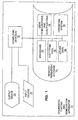
- Fig. 1 is a block diagram of an embodiment of a diagnostic testing and remediation system according to the present invention.
- An apparatus implementing the present invention may take multiple forms depending on the configuration of the components.
- the system includes a Computing Device 72 which may be local (e.g., desktop) or remote (e.g., networked, internet, intranet), an Output Device 73, which may be a CRT, flat panel, and/or other similar display device or projector, an Input Device 74, which may take the form of a keyboard, pressure sensitive switch panel, voice recognition system, biometric sensor and/or other similar device, and a Memory/Persistent Storage System 75 which may be local, as in a diskette, DVD/CD-ROM, or hard drive, or remote.
- a Computing Device 72 which may be local (e.g., desktop) or remote (e.g., networked, internet, intranet)
- an Output Device 73 which may be a CRT, flat panel, and/or other similar display device or projector
- the Memory/Persistent Storage System 75 stores various additional components which can be utilized in implementing the system, such as the Operating System 76, Programming 77, User Demographics and Qualifications 78, Test Item Pool 79, and Other Data 80.
- the Operating System 76 may include Windows/DOS, MAC-OS, Linux, and other like computer operating systems.
- the User Demographics and Qualifications Component 78 may include information about one or more examinees such as gender, age, grade level, prior test and test preparation experiences and the like. The system according to the invention may use the information in the User Demographics and Qualifications Component 78 to make appropriate recommendations and personalize test item materials.
- the Test Item Pool 79 contains test items that are utilized to create a variety of multiple-choice tests. Each test item has descriptor codes associated with it that indicate, among other things, the item's domain, format, difficulty level or error category.
- the Other Data Component 80 may include an examinee's responses to diagnostic tests previously administered by the system.
- the Programs Component 77 may include multiple components as illustrated in Figs. 2-5 which, according to one embodiment of the invention, substantially establish and implement the test preparation system.
- the User Interface Component 1 manages the user interaction with the system and may perform such functions as credentialing and the display of various system options.
- the Test Generation Component 10, shown in detail in Fig. 3, compiles and formats one or more tests by assembling test items from the Test Item Pool 79.
- Various types of tests may be created by the Test Generation Component 10, including Diagnostic Sample Tests, which are formatted and timed as an analog of standardized paper and pencil tests, Test-taking Strategy Tests, which assess knowledge of test taking strategies and skill in their application (including testwiseness of the user), and Basic Skills Tests, which assess knowledge of basic facts in the domains being tested.
- Test items comprise a test question and an answer set including at least one correct and one incorrect answer.
- the tests generated by the Test Generation Component 10 include test items that comprise a question designed to elicit a constrained open-ended response from the test taker. Such items may consist of the stem portions of analogous MC items. Accordingly, in such circumstances, the answer set for these constrained open-ended items will contain at least one correct answer and multiple incorrect answers.
- the Testing Component 5 shown in Fig. 3 utilizes user choices on exam questions, information about the test items used to assemble the exam and user demographic data to develop one or more diagnoses to be used as a basis for making recommendations for remediation activities.
- the tests generated by the Test Generation Component 10 include test items that comprise questions designed to elicit a constrained opened-ended response from the test taker, information about the test items and user demographic data may still be employed to develop one or more diagnoses to be used as a basis for making recommendations for remediation activities.
- the constrained open-ended items consist of the stem portions of analogous MC items
- the identical item information that is available for the MC items is available for the constrained open-ended items.
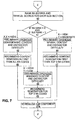
- the Remediation Component 47(a) shown in Fig. 7 employs diagnoses from the Diagnostic Component 5 and the Scoring Diagnostic Component 29, in conjunction with the Test Generation Component 10, to recommend and provide remedial activities, including recommended reading, suggested study materials, practice tests and the like.
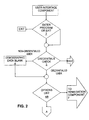
- Figs. 2 and 3 are block diagrams of the User Interface Component according to the invention and illustrate the interaction between the User Interface Component 1, the Remediation Component 47a and the Test Generation Component 10.
- the User Interface Component 1 manages the user's interaction with the system and may perform such functions as credentialing and the display of various options offered by the system.
- the User Interface Component 1 begins by displaying an option 2 to the user to enter or exit the program. If the user chooses to enter the program, a Credentials Check 3 is completed to determine if the user is a former or new user and whether the Demographic Data Blank 4 still requires completion.
- This information is required so as to provide an appropriate or optimal listing of options 4a available to the user; to provide data to the Test Generation Component 10 so that appropriate tests may be constructed; and to provide data to the Remediation Component 47a so that appropriate weights may be applied to test generation and to the creation of feedback screens.
- the Demographic Data Blank 4 requests information regarding age, gender, objectives, interests and the like so that certain test items may be personalized; and information regarding prior test-taking experience so that diagnostic recommendations 48 may be appropriately weighted.
- the user is presented with an Options List 4a.
- the user is allowed to select either Sample Diagnostic Tests 11 or go directly to the Remediation Component 47a for skills development. If the Sample Diagnostic Tests 11 are chosen, the Test Generation Component 10 provides the user with a selection of Sample Diagnostic Tests 11 that are either computer based analogs of the standard paper and pencil versions, or tests which have been specifically developed by the system to determine a user's errors in reasoning. The user is informed that once the Sample Diagnostic Tests 11 are completed, appropriate remediation activities will be recommended.
- a second Credential Check 6 permits the display of the appropriate set of options available to the user and the requirements for the various levels of diagnostic feedback. For those users who have not completed the requisite number of items on the Demographic Data Blank 4 to permit the full implementation of the diagnostic recommendation 48 and feedback 61 processes, a Non-Credentialed User Options List 7 is available. For those users who have completed a requisite number of items on the Demographic Data Blank 4 so that a full implementation of the diagnostic recommendation 48 and feedback 61 processes are possible, a separate Credentialed User Option List 8 is presented.
- the Sample Diagnostic Tests 11 are designed to diagnose of areas of content and test taking proficiency which require improvement.
- the Sample Diagnostic Tests 11 provide the basis for a preliminary diagnosis of types of user errors and for remedial recommendations.
- the Sample Diagnostic Tests 11 are taken under conditions simulating the "real-life" exams.
- the Sample Diagnostic Tests 11 are generated using specifically designed questions and response alternatives to implement the concept of adaptive remedation.
- the response alternatives are varied to diagnose sensitivity to varied distractors, and thus, diagnose specified errors of reasoning.
- Sample Diagnostic Tests 11, according to this embodiment do not rely on the limited set of distractors contained in the standard exams. Analysis of the selection of response alternatives allows a system according to this embodiment of the invention to accurately determine the user's level of knowledge for a particular content domain efficiently (i.e., using the least number of questions).
- the test item pool is stratified by item difficulty level and the program algorithm selects subsequent items from the pool in accordance with the prior responses.
- the difficulty level information that is available for the analogous MC items will also be available for the selection of constrained open-ended items for use in the Sample Diagnostic Tests 11
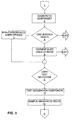
- Figs. 4 and 5 are block diagrams of the Test Generation Component 10 according to the invention and the interaction between the Test Generation Component 10 and the Diagnostic Component 5, 29 according to an embodiment of the invention.
- a test section timer 12 is started and any applicable section instructions and sample problems are displayed 13.
- the first test item is displayed along with its response alternatives 14.
- the test item status is assessed as each test item is displayed, as either new or old (previously displayed in a given session) 15 so as to appropriately set the item elapsed timer 16, 17. For new items, the item elapsed timer 16 is started at zero.
- the item elapsed timer 17 continues from the time elapsed during the previous display. Once again, the user may choose from among the response alternatives 18, including the choice to bookmark a particular item for later consideration if time permits. Once the user has made a choice 18, the elapsed item timer stops 19, and the user's response and elapsed time are recorded 20.
- the program assesses 21 whether the number of items completed "i" equals the number of items in a given sub-section "s", and if not, the program inquires if the time limit for a sub-section has been met 22. If the time limit 22 has not been exceeded, another item 14 is presented. If the number of items completed "i" equals the total number of items in the section or sub-section "s", or the section time limit 22 has been met, the section timer is stopped 23. Once the section timer is stopped 23, the program assesses whether it is appropriate to permit an authorized break from the test 24. If an authorized break is permitted, the break timer 25 times the duration of the authorized break from the test and notifies the user when to resume the test.
- the program assesses 26 whether the number of sections in the exam completed "c" equals the total number of sections in the exam "t". In another embodiment, the program also assesses 27 whether the sum of the times for the completed sessions exceeds the total time allowed for the test. If the number of completed sections "c” equals the number of total sections "t" in the exam, or the total times for the completed sessions equals or exceeds the total allowable time, the program continues onto the Diagnostic Component 5, 29. If the sum of the times for the completed sections does not exceed the total time allowed for the test 27, and if the number of completed sections "c" does not equal the total number of sections in the exam "t", the next section of the exam is presented 28.
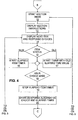
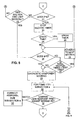
- Figs. 5, 6 and 7 are block diagram of the Scoring Diagnostic Component 29 and the interaction between the Scoring Diagnostic Component 29 and the Remediation Component 47a according to an embodiment of the invention.
- the Scoring Diagnostic Component 29 utilizes user responses to test items and test item information to formulate a preliminary diagnosis of content areas and test taking behavior needing remediation. This component also includes the scoring routines for the Sample Diagnostic Tests 11.
- the program gathers the user responses and item information on an item-by-item basis for each sub-section "s" of a test 30.
- the user response to an item is compared to a scoring key 31 and if the two match, the total number of correct items for a sub-section "s" is incremented 32. This continues until all user responses are compared with all items in a particular sub-section "s" and the number of correct responses is totaled 32.
- the response alternative codes and item difficulty level codes are retrieved 33.
- User responses to each item are summed as to the values corresponding to the response alternative codes 38 and difficulty level 37. The program continues this assessment and scores additional items until the sub-section "s" is complete 34, 35.
- the program continues the scoring assessment for each sub-section "s" until the test is complete and no sub-sections "s" remain 34, 35. Once the test scoring is complete, the sub-section "s" scores are summed to determine the total test score "T" 36. Additionally, the averaged elapsed time is calculated for each sub-section of the sample test 39 and this time is used, along with variability in item elapsed times, to assess the user's time management skills.
- the program calculates the Difficulty Level ("DL") scores for each sub-section of the test 37.
- DL scores are calculated by using the difficulty level code for each item for which the user made an incorrect response choice. For example, on the SAT examination, there are three item difficulty levels - easy, moderate and difficult - each containing approximately one-third of the items in a given sub-section.
- One implementation of differential weighting is to assign the values of 5, 3, and 1 to these levels respectively. Hence, an incorrect response to three easy items yields a DL score of 15, while an incorrect response to three difficult items yields a DL score of 3.
- This differential weighting of incorrect items assumes that users who miss easy items are in greater need of remediation and/or skill development than are those users that correctly answer the easy items and primarily miss the more difficult ones.
- the difficulty levels shown in this embodiment of the invention are given by way of illustration. Greater or fewer numbers of difficulty levels may be assigned and the method of weighting such levels may vary. Further, the calculation of overall DL scores may be made using a different algorithm than that shown here yet still remain within the scope of the invention.
- the item difficulty level information that is available for the MC items is also available for the constrained open-ended items, although the calculation of the overall DL scores for the constrained open-ended items is made using a different algorithm.
- the overall DL scores for the MC items and the constrained open-ended items can also differ as a consequence of differential weightings and or combinatorial algorithms being employed.
- the program calculates and sums the Response Alternative ("RA") scores across all of the items in each sub-section of the test 38.
- RA's are codes that are assigned to each response alternative and are indicative of a particular distractor type.
- RA scores permit the determination of user sensitivity to different distractors which, by definition, constitute wrong choices. Correct alternatives may also receive a code since they also may be a distractor or incorrect choice when used in a different exam question.
- RA scores are implemented as the frequency with which a particular code is chosen across all items within a test sub-section.
- a weighting scheme or another alternate scoring method known to those of ordinary skill in the field of the invention may be used to assess the RA scores.
- the item information that is available for the MC items is also available for the constrained open-ended items.
- the RA codes that are applicable to the MC items are also applicable to the constrained open-ended items.
- the set of analogous MC RA codes is expandable in its range to encompass the greater variability of responses to constrained open-ended items.
- the MC items may have one correct response RA code and four incorrect alternative RA codes
- the constrained open-ended items will have at least one correct response RA code and multiple incorrect alternative RA codes, which codes are applicable to a range of response values.
- subtraction problems can be considered: (1) 21-10, (2) 21-11, and (3) 21-12. Students learning two place subtraction may encounter difficulty when the problem requires manipulation of the tens and units values (i.e., "borrowing", as when the problem becomes 21 take away 12).
- a student who displays a pattern of correct responses to test items that do not require borrowing e.g., 21 take away 11
- incorrect responses to those test items that do is preliminarily diagnosed as having an incorrect or non-existent model of borrowing.
- a more accurate diagnosis of the two-place subtraction error is made upon subsequent testing focused specifically on that problem. The reliability of this diagnosis is partially dependent upon the number of items in the assessment.
- the two-place subtraction problem error is diagnosed by presenting the user with test items designed to reveal this error, and once this error is diagnosed, the examinee is instructed in the concept of borrowing, and the examinee is presented with practice items that exercise this particular skill.
- Sentence Completion (a.k.a., Fill in the Blank)
- a constrained open-ended item consisting of the stem portion of an analogous MC item
- the item would read the same and the examinee would be requested to enter an appropriate word(s) in the blank. Since the stem for the constrained open-ended item is the same as that for the MC format item, the same set of response alternatives is applicable.
- An expanded range of response alternatives can be employed for the open-ended items so as to permit the use of synonyms.
- the RA analysis of the user-generated responses would parallel that of the MC items. Incorrect distractors for the MC items, if given in response to the constrained open-ended items, would be assigned the same codes. Incorrect distractor synonyms would also be assigned the same codes as the initial distractor.
- a user understanding this question would search for an answer in which the first item represents a class and the second item represents a member of the specified class.
- the program calculates the DL scores 37, RA scores 38, and averaged elapsed response time 39 for sub-sections "s" to "t" completed by the user.
- the RA scores and DL scores are separately rank-ordered 40 for each sub-section "s" of the sample diagnostic test.
- the program determines the relative rankings of the RA and DL scores 41. If both are high on the given scale, indicating that the user incorrectly responded to many "easy" items using several incorrect response alternatives, then a preliminary diagnosis 42, 45 is made to remediate both content and awareness of distractor types.
- a preliminary diagnosis 43, 46 of moderate levels of remediation of both content and awareness of distractor types is made. Finally, if RA scores are moderate to high, and DL scores are low on the given scale, then a preliminary diagnosis 44, 47 is made of minimal content and distractor difficulty; a diagnosis which is expected from users obtaining high test scores.
- the preliminary diagnostic recommendations 45-47 are based on data that may be displayed in a two-dimensional frequency chart - item by response alternative types with the items being grouped by difficulty level.
- An example of such a chart is shown in Table 1 below: Item Difficulty RA Codes Wt. Item # 1 2 3 4 5 6 ; DLS 1 1 --- 5 (Easy) 2 1 15 3 1 --- 4 --- 3 (Mid) 5 1 6 6 1 --- 7 1 --- 1 (Hard) 8 1 1 3 9 --- Sum RA 11 0 6 4 0 3
- the chart above indicates that the user chose response alternative coded 1 for item number 1, response alternative coded 1 for item number 2, response alternative coded 3 for item number 3, and so on. For each of the three items, the choices made were incorrect. Note that the correct alternative code for each of the items is not indicated in the chart and according to this embodiment, scoring is based only on incorrect responses selected. Alternatively, the correct answers could also be ranked on the chart shown in Table 1. Furthermore, while only one method of ranking is presented above, many others methods of ranking can be used, as would be understood by one skilled in the field of the invention.
- the difficulty levels of the stem-equivalent items will be equivalent to those assigned to the MC items and the constrained open-ended items will share an overlapping set of RAs.
- the constrained open-ended items will be assigned a larger number of RAs so as to encompass a larger range of user-generated responses.
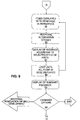
- Figs. 8 and 9 are block diagrams of the remediation component and the test generation component, and illustrate the interaction between the two components according to another embodiment of the invention.
- a preliminary diagnosis is confirmed by presenting the user with a subsequent quiz following a diagnostic test. For example, where a user has responded in a particular way to a set of analogies on the diagnostic test using only one or two distractor type codes (analogy type codes) then a quiz of analogy type codes is offered to develop a firm and reliable diagnosis. Following the quiz, an appropriate remedial training exercise presents the user with a set of analogies in which the various types of analogies are made explicit. Such exercises increase the user's knowledge of various types of analogical relationships.
- the preliminary diagnostic recommendations are combined with data from the demographic questionnaire 4, the stored response alternative codes 50, the stored information with regard to content to the applicable exam 51, and test-taking behavior (e.g., elapsed times per sub-section) to determine RA codes and/or areas of content that require further assessment 48. If data from a sample diagnostic test is not available, as in the case of a user who wants to access only the skill development portion of the program, then no diagnostic recommendations are available to structure the formation of remediation quizzes and/or exercises 49. In this case, content quizzes and exercises are structured using a pre-set format until such user data becomes available.
- a request is passed to the Test Generation component 10, 52 for a quiz 53 to assess the user's knowledge of types of relationships commonly employed in standardized tests.
- a quiz 53 is selected from one of a number of predetermined quizzes, each of which is designed to test a commonly encountered deficiency in responding to analogy problems.
- a quiz 53 is generated by the Test Generation component 10 in response to the results from the sample diagnostic test and the demographic questionnaire 4. If the user obtains a less than satisfactory score 55, then the Test Generation Component 52 generates exercises appropriate to the user's score level 57.
- an analogous process is employed to provide remediation with regard to the necessary content.
- the preliminary diagnostic recommendation and applied weighting factors 48 indicate, for example, that a user is manifesting considerable difficulty with content (e.g., high DL scores across numerous sub-sections of a test), and appears to be susceptible to particular RA codes (e.g., codes in the specific content area of algebra) then a request is passed to the Test Generation Component 52 for a quiz to assess the user's level of knowledge in that specific content area. If a lower than satisfactory score is obtained on the quiz 56, then the Test Generation Component 52 generates exercises in the applicable content area appropriate to that score level 58. This dynamic process of recommendation and remediation permits the sequencing of content presentation according to the difficulty level most likely to increase the user's skill level.
- testwiseness i.e., skills which promote higher test scores which are independent of knowledge of the content areas being tested
- test taking strategy e.g., knowledge of how to approach a test, how long to take on each question, how to deconstruct items from varied content domains and respond to different item formats
- Diagnosis of errors in test-taking strategy or testwiseness are based upon logical grounds and the frequency of occurrence. By way of illustration, if easy items are skipped and difficult items are attempted, a recommendation regarding a more appropriate sequence is made. Similarly, if the user's target score does not require responses to difficult items, but such items are attempted, a recommendation is made regarding the order in which items should be attempted.
- quiz items are displayed in multiple choice format with various response alternatives 59 and the user may select from among the choices 60. If the questions are being presented in a quiz mode, no feedback is displayed until the entire quiz has been completed 61. If the questions are being presented in a training or skill development exercise mode, feedback may be displayed in a variety of user-selected modes, varying by level, timing, and provision of solution and/or answer.
- the variety of hint levels ranges from minimal, in which a general statement regarding problem types is provided, to moderate, in which words, phrases, and/or numbers may be highlighted, to maximum, in which the entire solution is provided.
- problems solution is provided on demand or automatically after an incorrect option choice. Additionally, answers may be provided after each item, after each sub-section or after the entire test is completed. Solutions may also be provided after each item, after incorrect responses only, after a correct response if a better option was available, or at the end of test sub-section.
- an analogy exercise might read as follows:
- a minimal hint may be the statement: "Consider the relationship between the capitalized words and each of the words in the response alternatives.”
- a moderate level hint may read: "Make a sentence such as "trout is a kind of fish” and substitute response alternative words into the sentence, remembering to reverse the order. If the result is nonsense, then eliminate that alternative.”
- a maximum hint may be: "B. MAMMAL:WHALE”.
- the program loops until all questions in a quiz or exercise are presented 62, at which point the program displays a variety of summary feedback (e.g., score, areas of excellence and improvement) 63. Once all the items are presented, the user is presented with an option menu 64 that provides such choices as additional remediation or skill development 47a, additional sample diagnostic tests 11, or the ability to exit the program.
- summary feedback e.g., score, areas of excellence and improvement
- the User Interface Component 1 also manages a number of other options for personalizing the program for particular users.
- instructional materials are presented in multi-media style so as to optimize instruction for different user learning styles.
- the materials can also be presented in different font sizes, with different cursor styles, in different colors, in different locations on the screen, and with different types of music or audio accompaniment.
- the User Interface Component may also provide difficulty meter levels for illustrating the difficulty levels of given problems, arrow buttons for scrolling between problems, bookmarking such that a user can bookmark and return to particular items later in an exam, and an elapsed time display and pacer clock.
Landscapes
- Engineering & Computer Science (AREA)
- Theoretical Computer Science (AREA)
- Business, Economics & Management (AREA)
- Physics & Mathematics (AREA)
- Educational Administration (AREA)
- Educational Technology (AREA)
- General Physics & Mathematics (AREA)
- Electrically Operated Instructional Devices (AREA)
- Management, Administration, Business Operations System, And Electronic Commerce (AREA)
Applications Claiming Priority (2)
| Application Number | Priority Date | Filing Date | Title |
|---|---|---|---|
| US802312 | 2001-03-08 | ||
| US09/802,312 US6688889B2 (en) | 2001-03-08 | 2001-03-08 | Computerized test preparation system employing individually tailored diagnostics and remediation |
Publications (1)
| Publication Number | Publication Date |
|---|---|
| EP1246151A1 true EP1246151A1 (fr) | 2002-10-02 |
Family
ID=25183354
Family Applications (1)
| Application Number | Title | Priority Date | Filing Date |
|---|---|---|---|
| EP02251644A Withdrawn EP1246151A1 (fr) | 2001-03-08 | 2002-03-08 | Système informatisé de préparation d'un test utilisant des diagnostics individualisés et adaptation |
Country Status (3)
| Country | Link |
|---|---|
| US (1) | US6688889B2 (fr) |
| EP (1) | EP1246151A1 (fr) |
| JP (1) | JP2002358000A (fr) |
Cited By (1)
| Publication number | Priority date | Publication date | Assignee | Title |
|---|---|---|---|---|
| CN106600489A (zh) * | 2016-11-30 | 2017-04-26 | 广东小天才科技有限公司 | 一种标记失误试题的方法及装置 |
Families Citing this family (147)
| Publication number | Priority date | Publication date | Assignee | Title |
|---|---|---|---|---|
| US6755657B1 (en) | 1999-11-09 | 2004-06-29 | Cognitive Concepts, Inc. | Reading and spelling skill diagnosis and training system and method |
| KR100582279B1 (ko) * | 2000-03-24 | 2006-05-23 | 박남교 | 컴퓨터를 이용한 학습 자료 제공 방법 |
| US20020059088A1 (en) * | 2000-08-16 | 2002-05-16 | David Whalen | Method and system for providing six sigma consulting services over a computer network |
| US7153140B2 (en) * | 2001-01-09 | 2006-12-26 | Prep4 Ltd | Training system and method for improving user knowledge and skills |
| US6743024B1 (en) * | 2001-01-29 | 2004-06-01 | John Mandel Ivler | Question-response processing based on misapplication of primitives |
| US6789047B1 (en) | 2001-04-17 | 2004-09-07 | Unext.Com Llc | Method and system for evaluating the performance of an instructor of an electronic course |
| US7062220B2 (en) * | 2001-04-18 | 2006-06-13 | Intelligent Automation, Inc. | Automated, computer-based reading tutoring systems and methods |
| US6730041B2 (en) * | 2001-04-18 | 2004-05-04 | Diane Dietrich | Learning disabilities diagnostic system |
| US7286793B1 (en) * | 2001-05-07 | 2007-10-23 | Miele Frank R | Method and apparatus for evaluating educational performance |
| US7210938B2 (en) * | 2001-05-09 | 2007-05-01 | K12.Com | System and method of virtual schooling |
| US6953344B2 (en) * | 2001-05-30 | 2005-10-11 | Uri Shafrir | Meaning equivalence instructional methodology (MEIM) |
| US6790045B1 (en) * | 2001-06-18 | 2004-09-14 | Unext.Com Llc | Method and system for analyzing student performance in an electronic course |
| JP3964159B2 (ja) * | 2001-06-25 | 2007-08-22 | 株式会社ノヴァ | 通信回線を使用した教育サービスシステムおよび教育サービス提供方法 |
| US6905340B2 (en) * | 2001-07-18 | 2005-06-14 | Mentormate Llc | Educational device and method |
| US6749436B1 (en) * | 2001-07-24 | 2004-06-15 | Ross Alan Dannenberg | Computer aided test preparation |
| US7922494B2 (en) * | 2001-08-28 | 2011-04-12 | International Business Machines Corporation | Method for improved administering of tests using customized user alerts |
| US7182600B2 (en) * | 2001-12-13 | 2007-02-27 | M.I.N.D. Institute | Method and system for teaching vocabulary |
| US9852649B2 (en) | 2001-12-13 | 2017-12-26 | Mind Research Institute | Method and system for teaching vocabulary |
| US7052277B2 (en) * | 2001-12-14 | 2006-05-30 | Kellman A.C.T. Services, Inc. | System and method for adaptive learning |
| US20040018479A1 (en) * | 2001-12-21 | 2004-01-29 | Pritchard David E. | Computer implemented tutoring system |
| US20040005536A1 (en) * | 2002-01-31 | 2004-01-08 | Feng-Qi Lai | Universal electronic placement system and method |
| US8128406B2 (en) * | 2002-03-15 | 2012-03-06 | Wake Forest University | Predictive assessment of reading |
| US8128414B1 (en) | 2002-08-20 | 2012-03-06 | Ctb/Mcgraw-Hill | System and method for the development of instructional and testing materials |
| AU2002951608A0 (en) * | 2002-09-23 | 2002-10-10 | Lewis Cadman Consulting Pty Ltd | A method of delivering a test to a candidate |
| US8491311B2 (en) * | 2002-09-30 | 2013-07-23 | Mind Research Institute | System and method for analysis and feedback of student performance |
| US20040076941A1 (en) * | 2002-10-16 | 2004-04-22 | Kaplan, Inc. | Online curriculum handling system including content assembly from structured storage of reusable components |
| CN101827124B (zh) * | 2002-11-13 | 2011-12-28 | 教育考试服务中心 | 用于分布式网络上的考试的系统和方法 |
| US20040267607A1 (en) * | 2002-12-13 | 2004-12-30 | American Payroll Association | Performance assessment system and associated method of interactively presenting assessment driven solution |
| US10063523B2 (en) | 2005-09-14 | 2018-08-28 | Oracle International Corporation | Crafted identities |
| US10275723B2 (en) | 2005-09-14 | 2019-04-30 | Oracle International Corporation | Policy enforcement via attestations |
| US9781154B1 (en) | 2003-04-01 | 2017-10-03 | Oracle International Corporation | Systems and methods for supporting information security and sub-system operational protocol conformance |
| CA2466070A1 (fr) * | 2003-05-01 | 2004-11-01 | Measured Progress, Inc. | Systeme d'evaluation adaptable avec elements echafaudes |
| US20040224297A1 (en) * | 2003-05-09 | 2004-11-11 | Marc Schwarzschild | System and method for providing partial credit in an automatically graded test system |
| US8182270B2 (en) | 2003-07-31 | 2012-05-22 | Intellectual Reserve, Inc. | Systems and methods for providing a dynamic continual improvement educational environment |
| US20050191609A1 (en) * | 2004-02-14 | 2005-09-01 | Adaptigroup Llc | Method and system for improving performance on standardized examinations |
| WO2005086117A1 (fr) * | 2004-03-04 | 2005-09-15 | Coach 21 Co., Ltd. | Systeme d'apprentissage, serveur d'apprentissage et programme |
| WO2005098788A2 (fr) * | 2004-04-02 | 2005-10-20 | Sri International | Systeme et procede de creation d'evaluations |
| US7418458B2 (en) * | 2004-04-06 | 2008-08-26 | Educational Testing Service | Method for estimating examinee attribute parameters in a cognitive diagnosis model |
| US7980855B1 (en) | 2004-05-21 | 2011-07-19 | Ctb/Mcgraw-Hill | Student reporting systems and methods |
| US8798518B2 (en) * | 2004-06-30 | 2014-08-05 | Educational Testing Service | Method and system for calibrating evidence models |
| US20060014130A1 (en) * | 2004-07-17 | 2006-01-19 | Weinstein Pini A | System and method for diagnosing deficiencies and assessing knowledge in test responses |
| WO2007014186A2 (fr) * | 2005-07-22 | 2007-02-01 | The Thomson Corporation | Systemes, procedes, et logiciel pour des cours en ligne |
| US20060073460A1 (en) * | 2004-09-07 | 2006-04-06 | Holubec Holly A | Method and system for achievement test preparation |
| US7137821B2 (en) * | 2004-10-07 | 2006-11-21 | Harcourt Assessment, Inc. | Test item development system and method |
| US20060084049A1 (en) * | 2004-10-18 | 2006-04-20 | Lucas Gabriel J | Method and apparatus for online assignment and/or tests |
| US20060115801A1 (en) * | 2004-12-01 | 2006-06-01 | Christine Ganley | Instruction follow up method |
| US20060147888A1 (en) * | 2005-01-06 | 2006-07-06 | Christopher Burghardt | Handheld tutorial device |
| US20060183099A1 (en) * | 2005-02-14 | 2006-08-17 | Feely Richard A | Education and test preparation system, method and computer program product |
| US20060188862A1 (en) * | 2005-02-18 | 2006-08-24 | Harcourt Assessment, Inc. | Electronic assessment summary and remedial action plan creation system and associated methods |
| US20080155538A1 (en) * | 2005-03-14 | 2008-06-26 | Pappas Matthew S | Computer usage management system and method |
| US8834173B2 (en) * | 2005-04-08 | 2014-09-16 | Act, Inc. | Method and system for scripted testing |
| US20060246411A1 (en) * | 2005-04-27 | 2006-11-02 | Yang Steven P | Learning apparatus and method |
| US8764455B1 (en) | 2005-05-09 | 2014-07-01 | Altis Avante Corp. | Comprehension instruction system and method |
| US8568144B2 (en) * | 2005-05-09 | 2013-10-29 | Altis Avante Corp. | Comprehension instruction system and method |
| US8170466B2 (en) * | 2005-05-27 | 2012-05-01 | Ctb/Mcgraw-Hill | System and method for automated assessment of constrained constructed responses |
| US20070009871A1 (en) * | 2005-05-28 | 2007-01-11 | Ctb/Mcgraw-Hill | System and method for improved cumulative assessment |
| US20060286520A1 (en) * | 2005-06-01 | 2006-12-21 | Leon Rosenberg | Psychological test administration method and system |
| US20070031801A1 (en) * | 2005-06-16 | 2007-02-08 | Ctb Mcgraw Hill | Patterned response system and method |
| US20070046678A1 (en) | 2005-09-01 | 2007-03-01 | Peterson Matthew R | System and method for training with a virtual apparatus |
| US20070065797A1 (en) * | 2005-09-20 | 2007-03-22 | Ross Elgart | System and method of preparing for essay examinations |
| KR100751911B1 (ko) * | 2005-12-28 | 2007-08-23 | (주)인사이드알에프 | 유비쿼터스 교육환경에 적합한 양방향 강의 지원 시스템 및방법 |
| US20070154876A1 (en) * | 2006-01-03 | 2007-07-05 | Harrison Shelton E Jr | Learning system, method and device |
| US20070168220A1 (en) * | 2006-01-17 | 2007-07-19 | Sagar James D | Method and system for delivering educational content |
| US20070178433A1 (en) * | 2006-01-17 | 2007-08-02 | Ignite! Learning, Inc. | Multimedia standardized curriculum educational system & method of operation |
| WO2007087565A2 (fr) * | 2006-01-24 | 2007-08-02 | Anshu Gupta | Metadonnees et apprentissage fondé sur des métriques |
| US20070299694A1 (en) * | 2006-06-26 | 2007-12-27 | Merck David E | Patient education management database system |
| US8172577B2 (en) * | 2006-07-27 | 2012-05-08 | Northeastern University | System and method for knowledge transfer with a game |
| US7962890B2 (en) * | 2006-08-16 | 2011-06-14 | International Business Machines Corporation | Method to assess the skill level of software development |
| WO2008027528A2 (fr) * | 2006-09-01 | 2008-03-06 | K12.Inc. | Système multimédia et procédé pour l'enseignement des bases des mathématiques et des sciences |
| US20080059484A1 (en) * | 2006-09-06 | 2008-03-06 | K12 Inc. | Multimedia system and method for teaching in a hybrid learning environment |
| US9142136B2 (en) | 2006-09-11 | 2015-09-22 | Houghton Mifflin Harcourt Publishing Company | Systems and methods for a logging and printing function of an online proctoring interface |
| US9111455B2 (en) * | 2006-09-11 | 2015-08-18 | Houghton Mifflin Harcourt Publishing Company | Dynamic online test content generation |
| US20080102432A1 (en) * | 2006-09-11 | 2008-05-01 | Rogers Timothy A | Dynamic content and polling for online test taker accomodations |
| US9892650B2 (en) | 2006-09-11 | 2018-02-13 | Houghton Mifflin Harcourt Publishing Company | Recovery of polled data after an online test platform failure |
| US9111456B2 (en) * | 2006-09-11 | 2015-08-18 | Houghton Mifflin Harcourt Publishing Company | Dynamically presenting practice screens to determine student preparedness for online testing |
| US9230445B2 (en) * | 2006-09-11 | 2016-01-05 | Houghton Mifflin Harcourt Publishing Company | Systems and methods of a test taker virtual waiting room |
| US10861343B2 (en) * | 2006-09-11 | 2020-12-08 | Houghton Mifflin Harcourt Publishing Company | Polling for tracking online test taker status |
| US9390629B2 (en) | 2006-09-11 | 2016-07-12 | Houghton Mifflin Harcourt Publishing Company | Systems and methods of data visualization in an online proctoring interface |
| US7886029B2 (en) * | 2006-09-11 | 2011-02-08 | Houghton Mifflin Harcourt Publishing Company | Remote test station configuration |
| US20080102430A1 (en) * | 2006-09-11 | 2008-05-01 | Rogers Timothy A | Remote student assessment using dynamic animation |
| US10037707B2 (en) * | 2006-10-11 | 2018-07-31 | Cynthia Elnora ASHBY | Interactive method for diagnosing test-taking errors |
| US11741848B2 (en) * | 2006-10-11 | 2023-08-29 | Cynthia Elnora ASHBY | Interactive system and method for diagnosing test-taking errors based on blooms taxonomy |
| US20080124696A1 (en) * | 2006-10-26 | 2008-05-29 | Houser Ronald L | Empirical development of learning content using educational measurement scales |
| US20080293033A1 (en) * | 2007-03-28 | 2008-11-27 | Scicchitano Anthony R | Identity management system, including multi-stage, multi-phase, multi-period and/or multi-episode procedure for identifying and/or authenticating test examination candidates and/or individuals |
| US20080286727A1 (en) * | 2007-04-16 | 2008-11-20 | Lou Nemeth | Method and system for training |
| US10198958B2 (en) * | 2007-05-04 | 2019-02-05 | Freer Logic | Method and apparatus for training a team by employing brainwave monitoring and synchronized attention levels of team trainees |
| US8161083B1 (en) * | 2007-09-28 | 2012-04-17 | Emc Corporation | Creating user communities with active element manager |
| US20090104592A1 (en) * | 2007-10-18 | 2009-04-23 | Lewis Charles Miltenberger | Lights Out Learning |
| US20090202969A1 (en) * | 2008-01-09 | 2009-08-13 | Beauchamp Scott E | Customized learning and assessment of student based on psychometric models |
| US9177485B2 (en) * | 2008-01-11 | 2015-11-03 | Infosys Limited | Method and system for automatically generating questions for a programming language |
| US8376755B2 (en) * | 2008-05-09 | 2013-02-19 | Location Inc. Group Corporation | System for the normalization of school performance statistics |
| US20090325140A1 (en) * | 2008-06-30 | 2009-12-31 | Lou Gray | Method and system to adapt computer-based instruction based on heuristics |
| US20100047759A1 (en) * | 2008-08-21 | 2010-02-25 | Steven Ma | Individualized recursive exam-preparation-course design |
| US20100092935A1 (en) * | 2008-10-15 | 2010-04-15 | Tom Root | Web-based physical fitness monitoring system |
| US20100190144A1 (en) * | 2009-01-26 | 2010-07-29 | Miller Mary K | Method, System and Computer Program Product for Studying for a Multiple-Choice Exam |
| US20100255453A1 (en) * | 2009-04-02 | 2010-10-07 | Chincarini Ludwig B | Method and computer system of creating, storing, producing, and distributing examinations |
| US20110039246A1 (en) * | 2009-08-14 | 2011-02-17 | Ronald Jay Packard | Systems and methods for producing, delivering and managing educational material |
| US8838015B2 (en) * | 2009-08-14 | 2014-09-16 | K12 Inc. | Systems and methods for producing, delivering and managing educational material |
| US8768240B2 (en) * | 2009-08-14 | 2014-07-01 | K12 Inc. | Systems and methods for producing, delivering and managing educational material |
| US20110039249A1 (en) * | 2009-08-14 | 2011-02-17 | Ronald Jay Packard | Systems and methods for producing, delivering and managing educational material |
| US9443443B2 (en) * | 2009-12-07 | 2016-09-13 | Foundation Of Soongsil University-Industry Cooperation | Personalized studying path generating method in serious game |
| KR100978091B1 (ko) * | 2010-01-07 | 2010-08-25 | 주식회사 유비온 | 온라인 테스트 평가 관리 시스템 및 방법 |
| US20130052631A1 (en) * | 2010-05-04 | 2013-02-28 | Moodeye Media And Technologies Pvt Ltd | Customizable electronic system for education |
| US20110320276A1 (en) * | 2010-06-28 | 2011-12-29 | International Business Machines Corporation | System and method for online media recommendations based on usage analysis |
| KR101172369B1 (ko) * | 2010-06-29 | 2012-08-08 | 정영주 | 가상 카드를 이용한 학습 시스템 및 가상 카드를 이용한 학습 방법 |
| KR101781415B1 (ko) | 2011-02-08 | 2017-09-25 | 에스케이텔레콤 주식회사 | 학습능력관리 장치 및 방법, 클라우드 컴퓨팅 서비스 장치 및 클라우드 컴퓨팅을 이용한 학습능력관리 방법 |
| US9064017B2 (en) * | 2011-06-01 | 2015-06-23 | D2L Corporation | Systems and methods for providing information incorporating reinforcement-based learning and feedback |
| US20130157245A1 (en) * | 2011-12-15 | 2013-06-20 | Microsoft Corporation | Adaptively presenting content based on user knowledge |
| US20140026128A1 (en) * | 2012-01-09 | 2014-01-23 | Openpeak Inc. | Educational Management System and Method of Operation for Same |
| GB201206728D0 (en) * | 2012-04-16 | 2012-05-30 | Shl Group Ltd | testing system |
| WO2013163534A1 (fr) * | 2012-04-27 | 2013-10-31 | President And Fellows Of Harvard College | Gestion de temps hors tâche dans un environnement participatif |
| US10403163B2 (en) * | 2012-05-22 | 2019-09-03 | Sri International | Method and system for providing collaborative learning |
| US9361807B2 (en) | 2012-05-22 | 2016-06-07 | Sri International | Method and apparatus for providing collaborative learning |
| US8984650B2 (en) | 2012-10-19 | 2015-03-17 | Pearson Education, Inc. | Privacy server for protecting personally identifiable information |
| US9412281B2 (en) | 2013-11-25 | 2016-08-09 | Pearson Education, Inc. | Learning system self-optimization |
| US9446314B2 (en) | 2013-10-25 | 2016-09-20 | Pearson Education, Inc. | Vector-based gaming content management |
| US9436911B2 (en) | 2012-10-19 | 2016-09-06 | Pearson Education, Inc. | Neural networking system and methods |
| US20160042198A1 (en) * | 2012-10-19 | 2016-02-11 | Pearson Education, Inc. | Deidentified access of content |
| US9288056B1 (en) | 2015-05-28 | 2016-03-15 | Pearson Education, Inc. | Data access and anonymity management |
| US20140308645A1 (en) * | 2013-03-13 | 2014-10-16 | Ergopedia, Inc. | Customized tests that allow a teacher to choose a level of difficulty |
| US10049593B2 (en) * | 2013-07-15 | 2018-08-14 | International Business Machines Corporation | Automated educational system |
| US10353720B1 (en) * | 2013-10-18 | 2019-07-16 | ApplicantLab Inc. | Computer system, method, and media for preparing qualitative elements of an academic application |
| US10706734B2 (en) | 2013-12-06 | 2020-07-07 | Act, Inc. | Methods for improving test efficiency and accuracy in a computer adaptive test (CAT) |
| JP6340830B2 (ja) * | 2014-02-28 | 2018-06-13 | 大日本印刷株式会社 | 解析装置及びプログラム |
| US9358450B2 (en) | 2014-04-08 | 2016-06-07 | Kenneth Mark NOVA | Interactive education systems and methods |
| US9875348B2 (en) | 2014-07-21 | 2018-01-23 | Green Grade Solutions Ltd. | E-learning utilizing remote proctoring and analytical metrics captured during training and testing |
| KR101773065B1 (ko) * | 2015-05-08 | 2017-08-30 | (주)뤼이드 | 개인 맞춤형 교육 컨텐츠를 제공하는 방법, 장치 및 컴퓨터 프로그램 |
| WO2016186230A1 (fr) * | 2015-05-21 | 2016-11-24 | 안명훈 | Procédé d'éducation intelligent personnalisé individuellement pour apprentissage à évolution autonome |
| US20170004723A1 (en) * | 2015-06-30 | 2017-01-05 | Act, Inc. | Identifying evidence of justification and explanation skills in computer automated scoring |
| US10679512B1 (en) * | 2015-06-30 | 2020-06-09 | Terry Yang | Online test taking and study guide system and method |
| CN108140329B (zh) * | 2015-10-13 | 2021-03-09 | 索尼公司 | 信息处理设备、信息处理方法及程序 |
| US9754504B2 (en) | 2015-12-14 | 2017-09-05 | International Business Machines Corporation | Generating multiple choice questions and answers based on document text |
| US20170193449A1 (en) * | 2015-12-30 | 2017-07-06 | Luxembourg Institute Of Science And Technology | Method and Device for Automatic and Adaptive Auto-Evaluation of Test Takers |
| KR101816665B1 (ko) * | 2016-02-25 | 2018-01-09 | (주)뤼이드 | 객관식 문항 학습 데이터를 분석하는 방법 |
| KR102179957B1 (ko) * | 2017-02-24 | 2020-11-17 | 비트루브 주식회사 | 학습자의 학습 상태를 분석하고 그에 대한 보완 문제를 선정하는 방법 및 시스템 |
| KR101853091B1 (ko) * | 2017-05-19 | 2018-04-27 | (주)뤼이드 | 기계학습이 적용된 사용자 답변 예측 프레임워크를 통한 개인 맞춤형 교육 컨텐츠 제공 방법, 장치 및 컴퓨터 프로그램 |
| US10467551B2 (en) | 2017-06-12 | 2019-11-05 | Ford Motor Company | Portable privacy management |
| TWI719308B (zh) * | 2018-05-14 | 2021-02-21 | 崑山科技大學 | 分級式題庫管理系統 |
| US10783594B2 (en) | 2018-06-19 | 2020-09-22 | International Business Machines Corporation | Agriculture management based on farmer expertise and interests |
| US11361568B2 (en) | 2018-12-05 | 2022-06-14 | Clover Health | Generating document content by data analysis |
| KR20200088077A (ko) * | 2019-01-14 | 2020-07-22 | 스케이프플로우 | 디지털 오답 노트 정보 기반의 학습 서비스 제공 장치 및 그 방법 |
| US20210065574A1 (en) * | 2019-08-06 | 2021-03-04 | Wisdom Cafe Inc. | Method and system for promptly connecting a knowledge seeker to a subject matter expert |
| US11356734B1 (en) * | 2021-05-11 | 2022-06-07 | Safe Kids LLC | Methods and systems for counseling a user with respect to supervised content |
| CN113033711A (zh) * | 2021-05-21 | 2021-06-25 | 北京世纪好未来教育科技有限公司 | 题目批改方法、装置、电子设备及计算机存储介质 |
| KR102620317B1 (ko) | 2023-06-29 | 2024-01-03 | 주식회사 두브레인 | 사용자의 인지 훈련 장치 및 방법 |
| WO2025120816A1 (fr) * | 2023-12-07 | 2025-06-12 | 日本電信電話株式会社 | Dispositif, procédé et programme d'évaluation de tendance de la pensée |
| WO2025238694A1 (fr) * | 2024-05-13 | 2025-11-20 | Ntt株式会社 | Dispositif d'évaluation de test et procédé d'évaluation de test |
Family Cites Families (32)
| Publication number | Priority date | Publication date | Assignee | Title |
|---|---|---|---|---|
| US3715811A (en) | 1970-10-13 | 1973-02-13 | Westinghouse Electric Corp | Remedial branching teaching system |
| US4203452A (en) | 1977-08-10 | 1980-05-20 | Cohen David B | Efficiency of human learning employing the electroencephalograph and a long-term learning diagnostic-remedial process |
| US4609358A (en) | 1981-06-26 | 1986-09-02 | Sangster Bruce F | Video training system for simulataneously training a plurality of students |
| US4895518A (en) * | 1987-11-02 | 1990-01-23 | The University Of Michigan | Computerized diagnostic reasoning evaluation system |
| US5212765A (en) | 1990-08-03 | 1993-05-18 | E. I. Du Pont De Nemours & Co., Inc. | On-line training neural network system for process control |
| US5135399A (en) | 1990-09-21 | 1992-08-04 | Ryan Michael P | Diagnostic and prescriptive method for developing motivational skills |
| JPH04241381A (ja) | 1991-01-16 | 1992-08-28 | Brother Ind Ltd | 電子学習機 |
| US5259766A (en) | 1991-12-13 | 1993-11-09 | Educational Testing Service | Method and system for interactive computer science testing, anaylsis and feedback |
| US5267865A (en) | 1992-02-11 | 1993-12-07 | John R. Lee | Interactive computer aided natural learning method and apparatus |
| US5692906A (en) | 1992-04-01 | 1997-12-02 | Corder; Paul R. | Method of diagnosing and remediating a deficiency in communications skills |
| US5437554A (en) | 1993-02-05 | 1995-08-01 | National Computer Systems, Inc. | System for providing performance feedback to test resolvers |
| US6386883B2 (en) | 1994-03-24 | 2002-05-14 | Ncr Corporation | Computer-assisted education |
| US5618182A (en) | 1994-09-30 | 1997-04-08 | Thomas; C. Douglass | Method and apparatus for improving performance on multiple-choice exams |
| US6315572B1 (en) | 1995-03-22 | 2001-11-13 | William M. Bancroft | Method and system for computerized authoring, learning, and evaluation |
| US5823788A (en) | 1995-11-13 | 1998-10-20 | Lemelson; Jerome H. | Interactive educational system and method |
| US5727951A (en) | 1996-05-28 | 1998-03-17 | Ho; Chi Fai | Relationship-based computer-aided-educational system |
| US6427063B1 (en) | 1997-05-22 | 2002-07-30 | Finali Corporation | Agent based instruction system and method |
| US5823781A (en) | 1996-07-29 | 1998-10-20 | Electronic Data Systems Coporation | Electronic mentor training system and method |
| US5855011A (en) | 1996-09-13 | 1998-12-29 | Tatsuoka; Curtis M. | Method for classifying test subjects in knowledge and functionality states |
| US5909589A (en) | 1996-11-12 | 1999-06-01 | Lance T. Parker | Internet based training |
| JP3285780B2 (ja) | 1996-11-22 | 2002-05-27 | 株式会社インフォメディア研究所 | 対話型オンラインシステムにおける管理システム |
| US5836771A (en) | 1996-12-02 | 1998-11-17 | Ho; Chi Fai | Learning method and system based on questioning |
| US5991595A (en) | 1997-03-21 | 1999-11-23 | Educational Testing Service | Computerized system for scoring constructed responses and methods for training, monitoring, and evaluating human rater's scoring of constructed responses |
| JPH10333538A (ja) | 1997-05-29 | 1998-12-18 | Fujitsu Ltd | ネットワーク型教育システム、ネットワーク型教育システムの講師側プログラムが記録された記録媒体、および受講者側プログラムが記録された記録媒体 |
| US6018617A (en) * | 1997-07-31 | 2000-01-25 | Advantage Learning Systems, Inc. | Test generating and formatting system |
| US6015297A (en) | 1998-03-26 | 2000-01-18 | Liberman; Michael | Method of teaching an examinee to take a multiple-choice examination |
| US6032141A (en) | 1998-12-22 | 2000-02-29 | Ac Properties B.V. | System, method and article of manufacture for a goal based educational system with support for dynamic tailored feedback |
| US5987443A (en) | 1998-12-22 | 1999-11-16 | Ac Properties B. V. | System, method and article of manufacture for a goal based educational system |
| US6807535B2 (en) | 2000-03-08 | 2004-10-19 | Lnk Corporation | Intelligent tutoring system |
| US6544042B2 (en) | 2000-04-14 | 2003-04-08 | Learning Express, Llc | Computerized practice test and cross-sell system |
| US6461166B1 (en) | 2000-10-17 | 2002-10-08 | Dennis Ray Berman | Learning system with learner-constructed response based testing methodology |
| US20020052860A1 (en) | 2000-10-31 | 2002-05-02 | Geshwind David Michael | Internet-mediated collaborative technique for the motivation of student test preparation |
-
2001
- 2001-03-08 US US09/802,312 patent/US6688889B2/en not_active Expired - Fee Related
-
2002
- 2002-03-07 JP JP2002062755A patent/JP2002358000A/ja active Pending
- 2002-03-08 EP EP02251644A patent/EP1246151A1/fr not_active Withdrawn
Non-Patent Citations (1)
| Title |
|---|
| No Search * |
Cited By (2)
| Publication number | Priority date | Publication date | Assignee | Title |
|---|---|---|---|---|
| CN106600489A (zh) * | 2016-11-30 | 2017-04-26 | 广东小天才科技有限公司 | 一种标记失误试题的方法及装置 |
| CN106600489B (zh) * | 2016-11-30 | 2020-09-01 | 广东小天才科技有限公司 | 一种标记失误试题的方法及装置 |
Also Published As
| Publication number | Publication date |
|---|---|
| US6688889B2 (en) | 2004-02-10 |
| US20020160347A1 (en) | 2002-10-31 |
| JP2002358000A (ja) | 2002-12-13 |
Similar Documents
| Publication | Publication Date | Title |
|---|---|---|
| US6688889B2 (en) | Computerized test preparation system employing individually tailored diagnostics and remediation | |
| US7286793B1 (en) | Method and apparatus for evaluating educational performance | |
| Colwell | Assessment’s potential in music education | |
| Sireci et al. | Innovative item formats in computer-based testing: In pursuit of improved construct representation | |
| Linn | Measurement and assessment in teaching | |
| Brophy | Research on teacher effects: Uses and abuses | |
| Salendab et al. | Effectiveness of performance-based assessment tools (PBATs) and the students’ academic performance | |
| US20040219502A1 (en) | Adaptive assessment system with scaffolded items | |
| US20070172810A1 (en) | Systems and methods for generating reading diagnostic assessments | |
| Ciptaningrum | The development of the survey of technology use, teaching, and technology-related learning experiences among pre-service English language teachers in Indonesia | |
| Marso et al. | 6. Teachers' testing knowledge, skills, and practices | |
| Salendab et al. | Accuracy of Use of Alternative Language Assessment (ALA) Tools and the Students’ Performance | |
| Brewer | The effects of online homework on achievement and self-efficacy of college algebra students | |
| Stecher et al. | Using alternative assessments in vocational education | |
| Icha et al. | Students' Perception Towards English Teacher Performance in Teaching English at the Eighth Grade of SMPN 6 Lubuk Basung | |
| Kinsey | The relationship between prosocial behaviors and academic achievement in the primary multiage classroom | |
| Sumarsono et al. | Evaluating the Quality of a Teacher’ s Made Test against Five Principles of Language Assessment | |
| Blanton | Reading Tests for the Secondary Grades: A Review and Evaluation. Reading Aid Series. | |
| Stecher | Using Alternative Assessments in Vocational Education. | |
| Hashway | The Expanded Individualized Prescriptive Instruction (EIPI) System | |
| Noushad | Aligning Learning Outcomes and Evaluation | |
| Zanele | Compiled by Measurement, Assessment, and Evaluation in Education | |
| علي حسن إبراهيم | The influence of the science teaching methods course and the practicum course on self-efficacy of pre-service science teachers of middle and high schools in the State of Kuwait | |
| Gréta | Investigating assessment practices in the English classroom in Transcarpathian Hungarian schools | |
| Alfiantho | MORAL AND GENDER IDENTITY IN THE STORY OF THE BUTTERFLY IN THE MOSQUE |
Legal Events
| Date | Code | Title | Description |
|---|---|---|---|
| PUAI | Public reference made under article 153(3) epc to a published international application that has entered the european phase |
Free format text: ORIGINAL CODE: 0009012 |
|
| AK | Designated contracting states |
Kind code of ref document: A1 Designated state(s): AT BE CH CY DE DK ES FI FR GB GR IE IT LI LU MC NL PT SE TR |
|
| AX | Request for extension of the european patent |
Free format text: AL;LT;LV;MK;RO;SI |
|
| STAA | Information on the status of an ep patent application or granted ep patent |
Free format text: STATUS: THE APPLICATION HAS BEEN WITHDRAWN |
|
| 17P | Request for examination filed |
Effective date: 20030314 |
|
| RIN1 | Information on inventor provided before grant (corrected) |
Inventor name: WALLACE, DOUGLAS HENRY Inventor name: DETWILER, SUSAN ESTHER Inventor name: HUSS, TODD CHRISTOPHER Inventor name: ROY, DAVID RUTHERFORD Inventor name: FLAHERTY, MICHAEL PATRICK Inventor name: FLAHERTY, JOHN PATRICK |
|
| 18W | Application withdrawn |
Effective date: 20030402 |