EP1249799A2 - Verfahren, Anordnung und Vorrichtung zum Wählen - Google Patents
Verfahren, Anordnung und Vorrichtung zum Wählen Download PDFInfo
- Publication number
- EP1249799A2 EP1249799A2 EP02396048A EP02396048A EP1249799A2 EP 1249799 A2 EP1249799 A2 EP 1249799A2 EP 02396048 A EP02396048 A EP 02396048A EP 02396048 A EP02396048 A EP 02396048A EP 1249799 A2 EP1249799 A2 EP 1249799A2
- Authority
- EP
- European Patent Office
- Prior art keywords
- polling
- voter
- code
- candidate
- encrypted
- Prior art date
- Legal status (The legal status is an assumption and is not a legal conclusion. Google has not performed a legal analysis and makes no representation as to the accuracy of the status listed.)
- Withdrawn
Links
- 238000000034 method Methods 0.000 title claims abstract description 53
- 238000010295 mobile communication Methods 0.000 claims description 5
- 238000007639 printing Methods 0.000 claims description 2
- 239000000123 paper Substances 0.000 description 19
- 238000012795 verification Methods 0.000 description 4
- 239000000463 material Substances 0.000 description 3
- 230000005540 biological transmission Effects 0.000 description 1
- 239000011111 cardboard Substances 0.000 description 1
- 238000005266 casting Methods 0.000 description 1
- 238000004891 communication Methods 0.000 description 1
- 230000001010 compromised effect Effects 0.000 description 1
- 230000001186 cumulative effect Effects 0.000 description 1
- 230000001419 dependent effect Effects 0.000 description 1
- 238000005516 engineering process Methods 0.000 description 1
- 239000011087 paperboard Substances 0.000 description 1
Images
Classifications
-
- G—PHYSICS
- G07—CHECKING-DEVICES
- G07C—TIME OR ATTENDANCE REGISTERS; REGISTERING OR INDICATING THE WORKING OF MACHINES; GENERATING RANDOM NUMBERS; VOTING OR LOTTERY APPARATUS; ARRANGEMENTS, SYSTEMS OR APPARATUS FOR CHECKING NOT PROVIDED FOR ELSEWHERE
- G07C13/00—Voting apparatus
Definitions
- the invention relates to a method and arrangement for voting.
- the invention relates to voting by means of a terminal.
- Voting is one of the fundamental rights in a democratic society and thereby it has been ensured that each member of a community can take part in the decision-making.
- central principles related to voting and electoral system are for example the secrecy of the ballot and universal suffrage. In elections it is important to ensure that the voters' rights are not violated and the votes are accurately tallied and each vote is processed correctly.
- the current voting method is based on a system in which voters may vote either in advance at certain early polling sites or on the election day proper at their respective polling stations. Voting takes place in a supervised location where the voters are identified, their right to vote is verified, they enter a polling booth and select a candidate's number. The voter writes, in plain hand-writing, the candidate's number on the ballot paper and then takes the ballot to an election official who stamps the ballot, after which the voter drops the ballot in the ballot box. When the voting comes to an end, all ballots are counted at the polling stations and the numbers written on the ballot papers are tabulated to the respective candidates. The ballots and candidates' votes are typically counted by hand.
- An object of the invention is to provide a voting system in which voting can be done easily, flexibly, securely and quickly at reasonable cost and adhering to the secrecy of the ballot and election freedom independent of the polling place, its size, and election officials. Another object of the invention is that the number or some other piece of information of the candidate selected by the voter can be interpreted and the votes given to the individual candidates can be counted unambiguously, reliably and, if necessary, in real time.
- the objects of the invention are achieved by an arrangement in which the voter at a polling station enters the candidate information of his selected candidate at a terminal which generates an encrypted polling code which can be unequivocally associated with the candidate in question and which is transmitted to the election data system.
- a voting method according to the invention is characterized in that the method comprises steps in which
- a voting arrangement in which the voter selects a candidate based on candidate information associated with the candidate, is characterized in that the arrangement comprises a register of eligible voters and an election data system as well as
- a method according to the invention enables a quick, easy, reliable and location-independent way of voting either in advance or, legislation permitting, also on the election day proper.
- voting the voter does not necessarily need to write the number or name of the selected candidate on paper, but an encrypted polling code, which corresponds to the selected candidate, can be printed out on paper by means of a printer which is placed in the polling booth and is connected to a terminal. All the voter needs to do is select a candidate e.g. from a list attached to the wall of the booth, or direct from a display screen.
- a method according to the invention guarantees the secrecy of the ballot as well as election freedom also in small communities or even in institutions such as hospitals and prisons.
- a method according to the invention eliminates the possibility of uncertainties on the ballot paper, so the polling code can be recorded quickly and unambiguously to the selected candidate.
- the cumulative number of votes cast for a candidate can even be observed in real time, if necessary.
- a method according to the invention enables a polling station to be set up very quickly and virtually at any place so that the setting-up costs of a polling station can be kept very low.
- the polling station may be e.g. a mobile means such as a traveling library, postal bus or some other similar vehicle. This is especially advantageous in, say, sparsely populated areas, so that at election time a so-called voting vehicle could roam such areas, carrying with it the necessary equipment for voting in compliance with a voting method according to the invention.
- the invention can be used in voting for candidates in local and national elections.
- the invention can also be used in voting in an opinion poll in which the voters express their preference for or against an issue such as e.g. nuclear power or some other issue where the voters choose from different alternatives.
- a polling station is at first set up, including at least the equipment needed in voting and the election officials.
- the polling station may be opened e.g. in such a manner that an election official reports to the election system that he is present. This reporting can be done according to the invention e.g. through the use of a mobile communication device by sending to the election system the necessary data such as the number of the polling station and a password or other such code required to authenticate the official.
- the voter As the voter arrives at the polling station, his identity shall be verified, as decreed by law, based on an ID card or other such identification document having a photograph attached to it. After that the voter can enter the polling booth and select a candidate or option e.g. from a list on the wall or from the polling device using a mouse, touch-screen display, keyboard or other such medium.
- the polling device in the polling booth generates, based on the candidate's or option number or other such candidate information, an encrypted polling code which may be printed out on the voter's ballot paper or, alternatively, the voter may write the code himself.
- the voter takes the ballot paper, which contains the polling code, to an election official who uses his terminal to send the voter's personal identification information to the register of eligible voters in order to verify the voter's right to vote.
- the official enters the polling code shown on the voter's ballot paper at his terminal and transmits it to the election data system where the polling code is decrypted and the vote corresponding to the polling code is recorded to the respective candidate.
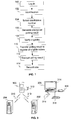
- Fig. 1 shows a method according to the invention for voting, where in step 100 an election official first logs in to the election data system.
- the official may log in to the election data system through his terminal such as a mobile communication device, for example.
- the official shall enter at his terminal the necessary data such as the number of the polling station and the password or other such code required to identify the official.
- the official may also sign these data at the terminal, using his digital signature.
- the election data system identifies and authenticates the election official and establishes a right for the official to send voting data to the election data system.
- the election official may also be requested by the election data system or by the register of eligible voters a log-in or digital signature in conjunction with each vote cast or with the verification of the voting right so that misuse of the official's terminal at the hands of unauthorized persons, for example, can be prevented.
- the official may be requested to report at certain intervals and if the official does not respond or responds using a wrong code, his right to access the election data system or the register of eligible voters can be canceled. That right can be re-established when the official reports in the correct manner.
- the voter Upon arriving at the polling station the voter has to identify himself to the election official, step 102, using e.g. an ID card or other such identification document which has a photograph attached to it.
- the election official may give the ballot paper to the voter for writing the polling code on it, after which the voter enters a special polling booth according to the law.
- the voter can select the number of a candidate or option from a list attached to the wall of the polling booth, or he may have already decided upon a candidate on the basis of advertisements, for example. Having selected a candidate's number the voter can enter the number at the voting device in the polling booth.
- the voter may select the number or other identifier of a candidate from the display of the voting device by means of a mouse, touch-screen display, keyboard or other such medium.
- the candidate information may also comprise the candidate's name or some other similar identifier.
- step 106 the candidate's number or other such piece of information is turned into an encrypted code by the polling device using e.g. known encryption methods such as the public key method.
- the code thus generated may comprise letters, numbers or special characters and it might be X567, for example.
- the polling device adds a random number or sequence of characters to the candidate information prior to the encryption of the candidate information.
- the code may be displayed on the display screen of the polling device so that the voter can write it on his ballot paper.
- the code may be printed out by a printer connected to the polling device in the polling booth when the voter inserts his ballot paper in the printer, for instance.
- the code generated may also be a bar code.
- the polling device may display the name, number or other piece of information of the candidate to the voter so that the voter can make sure he voted the candidate he selected.
- the polling device may display the name, number or other piece of information of the candidate also at the stage where the voter selected a candidate by means of, say, a touch-screen display, and verify whether the voter really wants to vote for the candidate selected or whether he accidentally selected a wrong candidate. If the selection is as intended, the voter can e.g. press a "Continue" button, whereby the polling device takes the candidate information in question and generates the encrypted polling code. Alternatively, the voter may cancel the polling procedure.
- the voter Having received the polling code for the candidate selected, the voter takes the ballot paper, which now contains the code, to the election official and produces proof of his identity.
- the eligibility of the voter is checked by the election official entering the ID code of the voter at his terminal and sending it to the register of eligible voters where the eligibility is verified and where it is recorded that the voter in question has now voted. Eligibility information may also be sent to the election official's terminal after the verification of eligibility whereby in a positive case the election official can in step 110 transfer the voter's polling code to the election data system through his terminal.
- This method ensures that the polling code cannot be tied to the identity of the voter as the events can take place independently e.g. such that the eligibility of the voter can be verified at a different place than where the polling code is sent.
- a separate connection may be set up for the verification of eligibility and for transferring the polling code even if the register of eligible voters and election data system were located at the same physical location.
- step 112 the encrypted polling code is decrypted in the election data system, and in step 114 the vote corresponding to the polling code is recorded to the candidate in question. Additionally in step 114 a message may be sent to the election official's terminal indicating that the vote was recorded successfully.
- the encrypted polling code generated from the candidate selected by the voter and printed out on paper or similar material can be sent to the election data system via mail, e-mail, the Internet or as a facsimile.
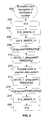
- Fig. 2 shows a method 200 according to the invention for encrypting and decrypting the ballot.
- the polling device may in step 204 in accordance with the invention add to the candidate's or option number a random sequence, say 385679, and a check symbol corresponding to the random sequence, say the letter H.
- the check symbol may be generated using a simple remainder method, like that used for generating ID codes.
- the random sequence and candidate's number may be separated by a predetermined character such as an underscore or the like.
- the polling code may be e.g. 313_385679_H.
- the polling device encrypts the polling code which comprises at least the candidate's or option number or other information with a random sequence and the corresponding check symbol attached thereto.
- the encryption may be done e.g. in accordance with the public key method, in which case at least the election system has got a public key (J) and a secret key (S) of its own.
- the polling device in the polling booth at the polling station may have public and secret keys of its own. Encryption is advantageously done by the polling device in the polling booth, using the public key J of the election system.
- a polling code will have been generated from the candidate's number and the random sequence and the check symbol, such that from the polling code it is impossible to deduce the original candidate's number or option selected, without decrypting the code.
- the polling code may comprise e.g. letters, numbers or special characters and it may be e.g. ghsguaw973683y234gf or, alternatively, the polling code may comprise a bar code.
- the polling device in the polling booth may add to the polling result, if necessary, a plain-language identification for the polling device and/or polling station (say, 00100_1) after which the encrypted polling code and the identification can be printed out on the voter's ballot paper.
- the election official or his terminal may add the identification for the terminal and/or polling station to the polling result in conjunction with the transmission of the polling code.
- step 212 the voter takes his ballot paper to the election official at the polling station who can check the identification of the terminal or polling station e.g. from the beginning of the polling code.
- the election official can use a bar code reader to read the bar code and thereby check the identification of the polling station or terminal.
- the polling code is transferred from the ballot paper to the election official's terminal advantageously by means of a bar code reader or by typing in the code. From the election official's terminal the polling code can be transmitted to the election data system e.g. as an SMS message.
- step 214 the polling code is received in the election data system.
- the polling station, election official's terminal or the polling device can be identified from the identification of the polling station, election official's terminal or polling device (say, 00100_1).
- the identification is removed from the polling result and in step 216 the polling code encrypted with the public key J of the election data system is decrypted using the secret key S of the election data system.
- the polling code can be displayed in plain language, step 218. At that point the polling result still contains the candidate's number (313) and the random sequence (385679) and check symbol (H) added to the polling result by the polling device.
- step 220 the check symbol and random sequence as well as the separators between the random sequence/check symbol and the candidate's number are removed from the polling result.
- the candidate's number or some other piece of information about the candidate can be displayed in plain language and the vote can be recorded.
- Fig. 3 shows an arrangement according to the invention for voting.
- the arrangement comprises an election official's terminal 300, election data system 302, register of eligible voters 304, and a polling device 306 in the polling booth with a printer 308 connected thereto.
- the election official's terminal 300 may be e.g. a portable terminal such as a mobile communication device or a computer or digital TV.
- the terminal 300 may be a mobile phone such as e.g. a GSM mobile phone.
- the terminal is typically connected to the election data system 302 and register of eligible voters 304 via a communications connection 310 the type of which depends on the terminal 300.
- the terminal 300 comprises a means for transmitting the voter's ID code to the register of eligible voters 304 and means for transmitting the encrypted polling code to the election data system 302.
- the terminal may comprise a means 312 for reading a bar code on the ballot paper and means for reporting the presence of the election official to the election data system as well as a means for digitally signing a message to be transmitted.
- the voter can select a candidate or option from a list posted on a wall of the polling booth, or from the polling device 306 in the polling booth.
- the polling device 306 comprises a means for selecting a candidate.
- the medium used for the selection may be e.g. a mouse 318, keyboard 316, touch-screen display 314 or another similar apparatus that can be attached to the polling device 306 to select a candidate.
- the polling device further comprises a means for adding a random sequence and check symbol to the polling result and a means for encrypting the polling code comprised of the candidate's number or option and a random sequence/check symbol, using the public key method, for instance.
- the polling device 306 typically comprises a means 314 for displaying the encrypted polling code to the voter or printing out the encrypted polling code on the voter's ballot paper by means of printer 308.
- the polling device typically also comprises a means 314 for displaying the candidate voted to the voter and a means for canceling the voting procedure. The voting procedure may be canceled by means of a keyboard 316 or mouse 318 or a prompt on the touch-screen display 314 of the polling device 306 or using some other such medium.
- the register of eligible voters 304 comprises a means for receiving a voter's ID code sent from an election official's terminal 300 and for verifying the eligibility of the voter corresponding to the ID code.
- the register of eligible voters 304 also comprises a means for sending a message concerning the eligibility of a given voter to an election official's terminal 300.
- the register of eligible voters 304 may comprise a means for identifying an election official's terminal 300 and a means for encrypting messages to be transmitted and decrypting messages received, using known encryption methods such as the public key method, for example.
- the register of eligible voters 304 may be integrated in the election data system 302.
- the election data system 302 comprises a means for receiving and decrypting an encrypted polling code sent from an election official's terminal 300 and for recording the vote to the appropriate candidate.
- the election data system 302 may also comprise a means for identifying the terminal 300 of the election official who sent the polling code, and a means for identifying an election official logging in to the election data system.
- the election data system may comprise a means for sending to the election official's terminal 300 a message indicating a successful recording of the vote.
- the election data system may comprise a means for identifying and registering the polling station on the basis of a polling station code included in a polling result received.
- the terminals may be any terminals that facilitate the use of the voting method according to the invention.
- the polling code encryption method may be any known encryption method.
- the object of voting may be a person, option or an opinion put up as a candidate in an election or poll.
Landscapes
- Physics & Mathematics (AREA)
- General Physics & Mathematics (AREA)
- Management, Administration, Business Operations System, And Electronic Commerce (AREA)
- Time Recorders, Dirve Recorders, Access Control (AREA)
- Medicinal Preparation (AREA)
- Pharmaceuticals Containing Other Organic And Inorganic Compounds (AREA)
- Medicines That Contain Protein Lipid Enzymes And Other Medicines (AREA)
Applications Claiming Priority (2)
| Application Number | Priority Date | Filing Date | Title |
|---|---|---|---|
| FI20010761A FI20010761A7 (fi) | 2001-04-11 | 2001-04-11 | Menetelmä, järjestelmä ja laite äänestyksen suorittamiseksi |
| FI20010761 | 2001-04-11 |
Publications (2)
| Publication Number | Publication Date |
|---|---|
| EP1249799A2 true EP1249799A2 (de) | 2002-10-16 |
| EP1249799A3 EP1249799A3 (de) | 2005-05-18 |
Family
ID=8560972
Family Applications (1)
| Application Number | Title | Priority Date | Filing Date |
|---|---|---|---|
| EP02396048A Withdrawn EP1249799A3 (de) | 2001-04-11 | 2002-04-10 | Verfahren, Anordnung und Vorrichtung zum Wählen |
Country Status (4)
| Country | Link |
|---|---|
| US (1) | US20020152379A1 (de) |
| EP (1) | EP1249799A3 (de) |
| FI (1) | FI20010761A7 (de) |
| SK (1) | SK12732003A3 (de) |
Cited By (2)
| Publication number | Priority date | Publication date | Assignee | Title |
|---|---|---|---|---|
| FR2905786A1 (fr) * | 2006-09-13 | 2008-03-14 | Eads Defence And Security Syst | Systeme et procede de creation, validation et chiffrement de bulletins de vote electronique a distance. |
| AU2003222410B2 (en) * | 2003-05-09 | 2009-11-05 | Scytl Election Technologies S.L. | Secure electronic polling method and cryptographic processes therefor |
Families Citing this family (79)
| Publication number | Priority date | Publication date | Assignee | Title |
|---|---|---|---|---|
| WO2003058483A1 (en) | 2002-01-08 | 2003-07-17 | Seven Networks, Inc. | Connection architecture for a mobile network |
| US7853563B2 (en) | 2005-08-01 | 2010-12-14 | Seven Networks, Inc. | Universal data aggregation |
| US8468126B2 (en) | 2005-08-01 | 2013-06-18 | Seven Networks, Inc. | Publishing data in an information community |
| US7917468B2 (en) | 2005-08-01 | 2011-03-29 | Seven Networks, Inc. | Linking of personal information management data |
| US20050061881A1 (en) * | 2003-06-05 | 2005-03-24 | Clancey Francis C. | Computerized system and method of conducting an election |
| US20040249702A1 (en) * | 2003-06-05 | 2004-12-09 | Clancey Francis C. | Method of awarding electoral votes |
| DE602004013846D1 (de) * | 2004-07-27 | 2008-06-26 | Scytl Secure Electronic Voting | Verfahren zum verwalten und schützen von wählprozessen, die mit einem elektronischen wähl-endgerät assoziiert sind, und verwendetes operatives modul |
| US8010082B2 (en) | 2004-10-20 | 2011-08-30 | Seven Networks, Inc. | Flexible billing architecture |
| US7441271B2 (en) | 2004-10-20 | 2008-10-21 | Seven Networks | Method and apparatus for intercepting events in a communication system |
| US7706781B2 (en) | 2004-11-22 | 2010-04-27 | Seven Networks International Oy | Data security in a mobile e-mail service |
| FI117152B (fi) | 2004-12-03 | 2006-06-30 | Seven Networks Internat Oy | Sähköpostiasetusten käyttöönotto matkaviestimelle |
| US7877703B1 (en) | 2005-03-14 | 2011-01-25 | Seven Networks, Inc. | Intelligent rendering of information in a limited display environment |
| US8438633B1 (en) | 2005-04-21 | 2013-05-07 | Seven Networks, Inc. | Flexible real-time inbox access |
| US7796742B1 (en) | 2005-04-21 | 2010-09-14 | Seven Networks, Inc. | Systems and methods for simplified provisioning |
| WO2006136660A1 (en) | 2005-06-21 | 2006-12-28 | Seven Networks International Oy | Maintaining an ip connection in a mobile network |
| US8069166B2 (en) | 2005-08-01 | 2011-11-29 | Seven Networks, Inc. | Managing user-to-user contact with inferred presence information |
| US20070100647A1 (en) * | 2005-11-03 | 2007-05-03 | International Business Machines Corporation | Eligibility list management in a distributed group membership system |
| US20070106552A1 (en) * | 2005-11-09 | 2007-05-10 | Matos Jeffrey A | Government systems in which individuals vote directly and in which representatives are partially or completely replaced |
| US7769395B2 (en) | 2006-06-20 | 2010-08-03 | Seven Networks, Inc. | Location-based operations and messaging |
| US8239253B2 (en) * | 2006-07-26 | 2012-08-07 | Wu Louis L | Election-based electronic compilations |
| GB0708029D0 (en) * | 2007-04-25 | 2007-06-06 | Everynone Counts Inc | Supervised voting system and method |
| US8805425B2 (en) | 2007-06-01 | 2014-08-12 | Seven Networks, Inc. | Integrated messaging |
| US8693494B2 (en) | 2007-06-01 | 2014-04-08 | Seven Networks, Inc. | Polling |
| WO2009068697A1 (es) * | 2007-11-26 | 2009-06-04 | Scytl Secure Electronic Voting, Sa | Método y sistema para la consolidación segura y auditable de resultados de procesos electorales |
| US8364181B2 (en) | 2007-12-10 | 2013-01-29 | Seven Networks, Inc. | Electronic-mail filtering for mobile devices |
| US9002828B2 (en) | 2007-12-13 | 2015-04-07 | Seven Networks, Inc. | Predictive content delivery |
| US8793305B2 (en) | 2007-12-13 | 2014-07-29 | Seven Networks, Inc. | Content delivery to a mobile device from a content service |
| US8107921B2 (en) | 2008-01-11 | 2012-01-31 | Seven Networks, Inc. | Mobile virtual network operator |
| US8862657B2 (en) | 2008-01-25 | 2014-10-14 | Seven Networks, Inc. | Policy based content service |
| US20090193338A1 (en) | 2008-01-28 | 2009-07-30 | Trevor Fiatal | Reducing network and battery consumption during content delivery and playback |
| US8787947B2 (en) | 2008-06-18 | 2014-07-22 | Seven Networks, Inc. | Application discovery on mobile devices |
| US8078158B2 (en) | 2008-06-26 | 2011-12-13 | Seven Networks, Inc. | Provisioning applications for a mobile device |
| US8909759B2 (en) | 2008-10-10 | 2014-12-09 | Seven Networks, Inc. | Bandwidth measurement |
| US9043731B2 (en) | 2010-03-30 | 2015-05-26 | Seven Networks, Inc. | 3D mobile user interface with configurable workspace management |
| EP2599003B1 (de) | 2010-07-26 | 2018-07-11 | Seven Networks, LLC | Koordinierung eines mobilnetzwerkverkehrs zwischen mehreren anwendungen |
| US9077630B2 (en) | 2010-07-26 | 2015-07-07 | Seven Networks, Inc. | Distributed implementation of dynamic wireless traffic policy |
| US8838783B2 (en) | 2010-07-26 | 2014-09-16 | Seven Networks, Inc. | Distributed caching for resource and mobile network traffic management |
| GB2495066B (en) | 2010-07-26 | 2013-12-18 | Seven Networks Inc | Mobile application traffic optimization |
| US8484314B2 (en) | 2010-11-01 | 2013-07-09 | Seven Networks, Inc. | Distributed caching in a wireless network of content delivered for a mobile application over a long-held request |
| US9330196B2 (en) | 2010-11-01 | 2016-05-03 | Seven Networks, Llc | Wireless traffic management system cache optimization using http headers |
| US8190701B2 (en) | 2010-11-01 | 2012-05-29 | Seven Networks, Inc. | Cache defeat detection and caching of content addressed by identifiers intended to defeat cache |
| US9021048B2 (en) | 2010-11-01 | 2015-04-28 | Seven Networks, Inc. | Caching adapted for mobile application behavior and network conditions |
| US8843153B2 (en) | 2010-11-01 | 2014-09-23 | Seven Networks, Inc. | Mobile traffic categorization and policy for network use optimization while preserving user experience |
| US8166164B1 (en) | 2010-11-01 | 2012-04-24 | Seven Networks, Inc. | Application and network-based long poll request detection and cacheability assessment therefor |
| WO2012060995A2 (en) | 2010-11-01 | 2012-05-10 | Michael Luna | Distributed caching in a wireless network of content delivered for a mobile application over a long-held request |
| WO2012061430A2 (en) | 2010-11-01 | 2012-05-10 | Michael Luna | Distributed management of keep-alive message signaling for mobile network resource conservation and optimization |
| US9060032B2 (en) | 2010-11-01 | 2015-06-16 | Seven Networks, Inc. | Selective data compression by a distributed traffic management system to reduce mobile data traffic and signaling traffic |
| GB2495463B (en) | 2010-11-22 | 2013-10-09 | Seven Networks Inc | Aligning data transfer to optimize connections established for transmission over a wireless network |
| EP2636268B1 (de) | 2010-11-22 | 2019-02-27 | Seven Networks, LLC | Optimierung von ressourcenabfrageintervallen zur zufriedenstellenden beantwortung von anfragen auf mobilen vorrichtungen |
| WO2012094675A2 (en) | 2011-01-07 | 2012-07-12 | Seven Networks, Inc. | System and method for reduction of mobile network traffic used for domain name system (dns) queries |
| US8899480B2 (en) | 2011-03-28 | 2014-12-02 | Everyone Counts Inc. | Systems and methods for remaking ballots |
| GB2504411A (en) | 2011-04-19 | 2014-01-29 | Seven Networks Inc | Shared resource and virtual resource management in a networked environment |
| WO2012149221A2 (en) | 2011-04-27 | 2012-11-01 | Seven Networks, Inc. | System and method for making requests on behalf of a mobile device based on atomic processes for mobile network traffic relief |
| GB2505585B (en) | 2011-04-27 | 2015-08-12 | Seven Networks Inc | Detecting and preserving state for satisfying application requests in a distributed proxy and cache system |
| CA2840515C (en) | 2011-06-24 | 2016-02-16 | Everyone Counts, Inc. | Mobilized polling station |
| US8984581B2 (en) | 2011-07-27 | 2015-03-17 | Seven Networks, Inc. | Monitoring mobile application activities for malicious traffic on a mobile device |
| US8918503B2 (en) | 2011-12-06 | 2014-12-23 | Seven Networks, Inc. | Optimization of mobile traffic directed to private networks and operator configurability thereof |
| EP2789137A4 (de) | 2011-12-06 | 2015-12-02 | Seven Networks Inc | System aus redundant gruppierten maschinen zur bereitstellung von ausfallsicherungsmechanismen für mobile verkehrsverwaltung und netzwerkressourcenbewahrung |
| WO2013086447A1 (en) | 2011-12-07 | 2013-06-13 | Seven Networks, Inc. | Radio-awareness of mobile device for sending server-side control signals using a wireless network optimized transport protocol |
| WO2013086455A1 (en) | 2011-12-07 | 2013-06-13 | Seven Networks, Inc. | Flexible and dynamic integration schemas of a traffic management system with various network operators for network traffic alleviation |
| US9021021B2 (en) | 2011-12-14 | 2015-04-28 | Seven Networks, Inc. | Mobile network reporting and usage analytics system and method aggregated using a distributed traffic optimization system |
| WO2013090821A1 (en) | 2011-12-14 | 2013-06-20 | Seven Networks, Inc. | Hierarchies and categories for management and deployment of policies for distributed wireless traffic optimization |
| WO2013090834A1 (en) | 2011-12-14 | 2013-06-20 | Seven Networks, Inc. | Operation modes for mobile traffic optimization and concurrent management of optimized and non-optimized traffic |
| US8909202B2 (en) | 2012-01-05 | 2014-12-09 | Seven Networks, Inc. | Detection and management of user interactions with foreground applications on a mobile device in distributed caching |
| US9203864B2 (en) | 2012-02-02 | 2015-12-01 | Seven Networks, Llc | Dynamic categorization of applications for network access in a mobile network |
| WO2013116852A1 (en) | 2012-02-03 | 2013-08-08 | Seven Networks, Inc. | User as an end point for profiling and optimizing the delivery of content and data in a wireless network |
| US8812695B2 (en) | 2012-04-09 | 2014-08-19 | Seven Networks, Inc. | Method and system for management of a virtual network connection without heartbeat messages |
| US10263899B2 (en) | 2012-04-10 | 2019-04-16 | Seven Networks, Llc | Enhanced customer service for mobile carriers using real-time and historical mobile application and traffic or optimization data associated with mobile devices in a mobile network |
| US20130342707A1 (en) * | 2012-06-20 | 2013-12-26 | Paychief Llc | Methods and systems for providing an online poll via a symbology |
| US8775631B2 (en) | 2012-07-13 | 2014-07-08 | Seven Networks, Inc. | Dynamic bandwidth adjustment for browsing or streaming activity in a wireless network based on prediction of user behavior when interacting with mobile applications |
| US9161258B2 (en) | 2012-10-24 | 2015-10-13 | Seven Networks, Llc | Optimized and selective management of policy deployment to mobile clients in a congested network to prevent further aggravation of network congestion |
| US20140177497A1 (en) | 2012-12-20 | 2014-06-26 | Seven Networks, Inc. | Management of mobile device radio state promotion and demotion |
| US9241314B2 (en) | 2013-01-23 | 2016-01-19 | Seven Networks, Llc | Mobile device with application or context aware fast dormancy |
| US8874761B2 (en) | 2013-01-25 | 2014-10-28 | Seven Networks, Inc. | Signaling optimization in a wireless network for traffic utilizing proprietary and non-proprietary protocols |
| US9326185B2 (en) | 2013-03-11 | 2016-04-26 | Seven Networks, Llc | Mobile network congestion recognition for optimization of mobile traffic |
| US8944326B2 (en) | 2013-03-15 | 2015-02-03 | Electron Systems & Software, LLC | System and method for monitoring precinct-based ballot tabulation devices |
| US9105139B2 (en) * | 2013-03-15 | 2015-08-11 | Election Systems & Software, Llc | System and method for reporting election results |
| US9065765B2 (en) | 2013-07-22 | 2015-06-23 | Seven Networks, Inc. | Proxy server associated with a mobile carrier for enhancing mobile traffic management in a mobile network |
| US11847865B2 (en) | 2021-01-21 | 2023-12-19 | Kyocera Document Solutions Inc. | App assisted voting |
Family Cites Families (8)
| Publication number | Priority date | Publication date | Assignee | Title |
|---|---|---|---|---|
| IT1182031B (it) * | 1985-04-22 | 1987-09-30 | Ind Elettroniche Registratori | Apparecchiatura elettronica per la gestione automatizzata di un seggio elettorale |
| FI86486C (fi) * | 1990-08-27 | 1992-08-25 | Tecnomen Oy | Foerfarande foer att arrangera teleroestningen pao ett saekert saett. |
| US5189288A (en) * | 1991-01-14 | 1993-02-23 | Texas Instruments Incorporated | Method and system for automated voting |
| FR2738934B1 (fr) * | 1995-09-15 | 1997-11-28 | Thomson Multimedia Sa | Systeme de comptabilisation anonyme d'informations a des fins statistiques, notamment pour des operations de vote electronique ou de releves periodiques de consommation |
| US6250548B1 (en) * | 1997-10-16 | 2001-06-26 | Mcclure Neil | Electronic voting system |
| US6081793A (en) * | 1997-12-30 | 2000-06-27 | International Business Machines Corporation | Method and system for secure computer moderated voting |
| US6317833B1 (en) * | 1998-11-23 | 2001-11-13 | Lucent Technologies, Inc. | Practical mix-based election scheme |
| AU3770200A (en) * | 1999-03-25 | 2001-04-17 | Votehere. Net | Multiway election method and apparatus |
-
2001
- 2001-04-11 FI FI20010761A patent/FI20010761A7/fi not_active Application Discontinuation
-
2002
- 2002-04-10 US US10/119,020 patent/US20020152379A1/en not_active Abandoned
- 2002-04-10 EP EP02396048A patent/EP1249799A3/de not_active Withdrawn
- 2002-04-11 SK SK1273-2003A patent/SK12732003A3/sk unknown
Cited By (2)
| Publication number | Priority date | Publication date | Assignee | Title |
|---|---|---|---|---|
| AU2003222410B2 (en) * | 2003-05-09 | 2009-11-05 | Scytl Election Technologies S.L. | Secure electronic polling method and cryptographic processes therefor |
| FR2905786A1 (fr) * | 2006-09-13 | 2008-03-14 | Eads Defence And Security Syst | Systeme et procede de creation, validation et chiffrement de bulletins de vote electronique a distance. |
Also Published As
| Publication number | Publication date |
|---|---|
| US20020152379A1 (en) | 2002-10-17 |
| FI20010761L (fi) | 2002-10-12 |
| FI20010761A7 (fi) | 2002-10-12 |
| SK12732003A3 (sk) | 2004-04-06 |
| FI20010761A0 (fi) | 2001-04-11 |
| EP1249799A3 (de) | 2005-05-18 |
Similar Documents
| Publication | Publication Date | Title |
|---|---|---|
| EP1249799A2 (de) | Verfahren, Anordnung und Vorrichtung zum Wählen | |
| Ali et al. | An overview of end-to-end verifiable voting systems | |
| Chaum | Secret-ballot receipts: True voter-verifiable elections | |
| US7054829B2 (en) | Method and system for validating votes | |
| AboSamra et al. | A practical, secure, and auditable e-voting system | |
| CA2840515C (en) | Mobilized polling station | |
| US20180211467A1 (en) | Means to create a physical audit trail verifiable by remote voters in electronic elections | |
| US11087578B2 (en) | Voting booth, system, and methods of making and using same | |
| Sedky et al. | A secure e-Government's e-voting system | |
| Essex et al. | Punchscan in practice: An E2E election case study | |
| US20030042305A1 (en) | Electronic voting system | |
| Rønne et al. | Electryo, in-person voting with transparent voter verifiability and eligibility verifiability | |
| US20030051141A1 (en) | Method and a system for generating and handling documents | |
| US12354413B2 (en) | Method and device for absentee voting | |
| Chandio et al. | E-Vote System Design and Implementations | |
| Adeyinka et al. | Voters’ Perception of the Adequacy and Suitability of e-Voting in the Nigeria Polity | |
| Abeels et al. | Postal voting | |
| Popoveniuc et al. | A simple technique for safely using punchscan and pret a voter in mail-in elections | |
| Lundin | Simple and secure electronic voting with pret a voter | |
| JP2003228643A (ja) | 電子投票モデル | |
| JP2001243395A (ja) | 投票所方式による電子投票システム | |
| Essex | Punchscan: designing an independent verification mechanism for elections. | |
| EA027759B1 (ru) | Способ проведения тайного голосования | |
| GB2478753A (en) | Authenticated challenge/response scheme with encrypted time-stamped ID/role messages exchanged and validated by certifying authority | |
| Al-helali et al. | A secure electronic voting |
Legal Events
| Date | Code | Title | Description |
|---|---|---|---|
| PUAI | Public reference made under article 153(3) epc to a published international application that has entered the european phase |
Free format text: ORIGINAL CODE: 0009012 |
|
| AK | Designated contracting states |
Kind code of ref document: A2 Designated state(s): AT BE CH CY DE DK ES FI FR GB GR IE IT LI LU MC NL PT SE TR |
|
| AX | Request for extension of the european patent |
Free format text: AL;LT;LV;MK;RO;SI |
|
| PUAL | Search report despatched |
Free format text: ORIGINAL CODE: 0009013 |
|
| AK | Designated contracting states |
Kind code of ref document: A3 Designated state(s): AT BE CH CY DE DK ES FI FR GB GR IE IT LI LU MC NL PT SE TR |
|
| AX | Request for extension of the european patent |
Extension state: AL LT LV MK RO SI |
|
| 17P | Request for examination filed |
Effective date: 20051116 |
|
| AKX | Designation fees paid |
Designated state(s): AT BE CH CY DE DK ES FI FR GB GR IE IT LI LU MC NL PT SE TR |
|
| 17Q | First examination report despatched |
Effective date: 19900501 |
|
| R17C | First examination report despatched (corrected) |
Effective date: 20060901 |
|
| STAA | Information on the status of an ep patent application or granted ep patent |
Free format text: STATUS: THE APPLICATION IS DEEMED TO BE WITHDRAWN |
|
| 18D | Application deemed to be withdrawn |
Effective date: 20070112 |