EP1251422A2 - Urheberrechtsschutzsystem und Verfahren hierfür - Google Patents
Urheberrechtsschutzsystem und Verfahren hierfür Download PDFInfo
- Publication number
- EP1251422A2 EP1251422A2 EP02008212A EP02008212A EP1251422A2 EP 1251422 A2 EP1251422 A2 EP 1251422A2 EP 02008212 A EP02008212 A EP 02008212A EP 02008212 A EP02008212 A EP 02008212A EP 1251422 A2 EP1251422 A2 EP 1251422A2
- Authority
- EP
- European Patent Office
- Prior art keywords
- key
- authentication
- processing
- program
- encrypting
- Prior art date
- Legal status (The legal status is an assumption and is not a legal conclusion. Google has not performed a legal analysis and makes no representation as to the accuracy of the status listed.)
- Ceased
Links
Images

Classifications
-
- G—PHYSICS
- G11—INFORMATION STORAGE
- G11B—INFORMATION STORAGE BASED ON RELATIVE MOVEMENT BETWEEN RECORD CARRIER AND TRANSDUCER
- G11B20/00—Signal processing not specific to the method of recording or reproducing; Circuits therefor
- G11B20/10—Digital recording or reproducing
-
- G—PHYSICS
- G06—COMPUTING OR CALCULATING; COUNTING
- G06F—ELECTRIC DIGITAL DATA PROCESSING
- G06F21/00—Security arrangements for protecting computers, components thereof, programs or data against unauthorised activity
- G06F21/10—Protecting distributed programs or content, e.g. vending or licensing of copyrighted material ; Digital rights management [DRM]
-
- G—PHYSICS
- G06—COMPUTING OR CALCULATING; COUNTING
- G06F—ELECTRIC DIGITAL DATA PROCESSING
- G06F2221/00—Indexing scheme relating to security arrangements for protecting computers, components thereof, programs or data against unauthorised activity
- G06F2221/21—Indexing scheme relating to G06F21/00 and subgroups addressing additional information or applications relating to security arrangements for protecting computers, components thereof, programs or data against unauthorised activity
- G06F2221/2103—Challenge-response
-
- G—PHYSICS
- G06—COMPUTING OR CALCULATING; COUNTING
- G06F—ELECTRIC DIGITAL DATA PROCESSING
- G06F2221/00—Indexing scheme relating to security arrangements for protecting computers, components thereof, programs or data against unauthorised activity
- G06F2221/21—Indexing scheme relating to G06F21/00 and subgroups addressing additional information or applications relating to security arrangements for protecting computers, components thereof, programs or data against unauthorised activity
- G06F2221/2107—File encryption
Definitions
- the present invention relates to a copyright protection system and a method thereof for protecting a copyright of a work provided by a broadcast or the like by means of encrypting.
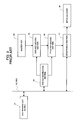
- Fig. 3 is a block diagram showing an arrangement example of a conventional copyright protection system.
- the copyright protection system shown in Fig. 3 is for protecting a copyright of a work recorded in a DVD (Digital Versatile Disc).
- DVD Digital Versatile Disc
- a data of the work such as a video and audio is encrypted
- a disc key and a title key necessary for the decryption of the recorded data are encrypted and recorded in the DVD.
- the conventional copyright protection system in Fig. 3 comprises a DVD reading out device 21, a bus 22, a bus authentication section 23, a master key 24, a disc key decode section 25, a title key decode section 26, a descramble section 27, and an MPEG decoder 28.
- the DVD reading out device 21, the bus authentication section 23 and the descramble section 27 are connected to the bus 22, respectively, and data transmission can be conducted via this bus 22.
- the bus authentication section 23 and the descramble section 27 acquire a data read out from a DVD by the DVD reading out device 21 via the bus 22.
- the bus authentication section 23 conducts mutual authentication with the DVD reading out device 21 via the bus 22, and shares a time-variant key for transmitting a key via the bus 22.
- the bus authentication section 23 reads out and acquires encrypted disc key and title key from the DVD by means of the DVD reading out device 21, and provides the disc key to the disc key decode section 25, and provides the title key to the title key decode section 26.
- the disc key decode section 25 decrypts the cryptology of the disc key by means of the master key 24, and decodes the disc key.
- the title key decode section 26 acquires the decoded disc key from the disc key decode section 25, and decrypts the cryptology of the title key by means of this disc key and decodes the title key, and provides this title key to the descramble section 27.
- the descramble section 27 decrypts the cryptology of an encrypted data of a work from the DVD by means of the DVD reading out device 21, and outputs it to the MPEG decoder 28.
- the MPEG decoder 28 regenerates a video or audio by using the data in which the cryptology is decrypted.
- the disc key recorded in the DVD and the master key necessary for the decryption of the title key are provided, and it is constructed so that, without this master key, the disc key and the title key cannot be decoded and the cryptology of the data of a work recorded in the DVD cannot be decrypted. Also, since the data transmitted on the bus 22 is encrypted, even though the data is acquired from the bus 22, from the data it is difficult to acquire a data of the work, which can be regenerated.
- the conventional copyright protection system prevents a work from being unjustly used by a third party who bears ill will.
- the above-described copyright protection system in Fig. 3 can provide a processing apparatus capable of executing a program, and this processing apparatus can execute a program for realizing respective functions of the sections 23 and 25 to 28, respectively, to establish the respective sections 23 and 25 to 28.
- this processing apparatus can execute a program for realizing respective functions of the sections 23 and 25 to 28, respectively, to establish the respective sections 23 and 25 to 28.
- the present invention was made by considering such circumstances, and the objective thereof is to provide a copyright protection system and a method thereof, which can invalidate a key in relation to the cryptology in the system itself. Also, it aims to provide a copyright protection program for realizing the copyright protection system by utilizing a computer.
- the present invention aims to provide a copyright protection system and a method thereof, which can simply change keys or programs in relation to the cryptology in a plurality of copyright protection systems. Also, it aims to provide a copyright protection program for realizing the copyright protection system by utilizing a computer.
- the present invention aims to provide a copyright protection system and a method thereof, which can execute the copyright protection in relation to record and regeneration. Also, it aims to provide a copyright protection program for realizing the copyright protection system by utilizing a computer.
- the first invention is a copyright protection system for encrypting an input data in relation to a work, and thereby, protecting a copyright of said work, and is characterized in that the system comprises authentication means having invalid information of a key in relation to cryptology, and for disapproving authentication in case that information of an authentication key is included in said invalid information, which is used for authentication when a first cryptographic key in relation to said encrypting is shared between first encrypting means and first decryption means, and invalid information updating means for updating contents of said invalid information when receiving information of a key of an object to be invalidated, which is provided together with said input data.
- the second invention is characterized in that the system comprises authentication key updating means for, when receiving an authentication key for updating, which is provided together with said input data, updating said authentication key.
- the third invention is characterized in that the system comprises a processing apparatus for executing a processing program for realizing a function in relation to decryption of said encrypting, and said processing apparatus updates said processing program when receiving a program for updating, which is provided together with said input data.
- the fourth invention is characterized in that the system comprises second encrypting means for encrypting said input data using a second cryptographic key, and recording said second cryptographic data in a record medium.
- the fifth invention is characterized in that the system comprises second decryption means for decrypting cryptology of said second cryptographic data by means of said second cryptographic key, and said second cryptographic key is held in the system itself.
- the sixth invention is a copyright protection method in a copyright protection system for encrypting an input data in relation to a work, and thereby, protecting a copyright of said work, characterized in that the method includes steps of conducting authentication when a first cryptographic key in relation to said encrypting is shared between first encrypting means and first decryption means, disapproving said authentication in case that information of an authentication key used for this authentication is included in invalid information in a key in relation to cryptology, and updating contents of said invalid information when information of a key of an object to be invalidated, which is provided together with said input data, is received.
- the seventh invention is characterized in that the method further includes a step of, when receiving an authentication key for updating, which is provided together with said input data, updating said authentication key.
- the eighth invention is characterized in that the method further includes steps of receiving a program for updating, which is provided together with said input data, and updating a processing program for realizing a function in relation to decryption of said encrypting by means of this program for updating.
- the ninth invention is characterized in that the method further includes steps of encrypting said input data using a second cryptographic key, and recording said second cryptographic data in a record medium.
- the tenth invention is characterized in that the method further includes steps of holding said second cryptographic key in the system itself, and decrypting cryptology of said second cryptographic data by means of the second cryptographic key held in the system itself.
- the 11th invention is a copyright protection program for executing copyright protection processing in a copyright protection system for encrypting an input data in relation to a work, and thereby, protecting a copyright of said work, characterized in that the program makes a computer execute processing for conducting authentication when a first cryptographic key in relation to said encrypting is shared between first encrypting means and first decryption means, processing for disapproving said authentication in case that information of an authentication key used for this authentication is included in invalid information in a key in relation to cryptology, and processing for updating contents of said invalid information when information of a key of an object to be invalidated, which is provided together with said input data, is received.
- the 12th is characterized in that the program further makes the computer execute processing for encrypting said input data using a second cryptographic key, and processing for recording said second cryptographic data in a record medium.
- the 13th invention is characterized in that the program further makes the computer execute processing for holding said second cryptographic key in the system itself, and processing for decrypting cryptology of said second cryptographic data by means of the second cryptographic key held in the system itself.
- the 14th invention is a copyright protection program for executing copyright protection processing in a copyright protection system for encrypting an input data in relation to a work, and thereby, protecting a copyright of said work, characterized in that the program makes a computer execute processing for receiving an authentication key for updating, which is provided together with said input data, and updating the authentication key.
- the 15th invention is characterized in that the program further makes the computer execute processing for receiving a program for updating, which is provided together with said input data, and processing for updating a processing program for realizing a function in relation to decryption of said encrypting by means of this program for updating.
- the 16th invention is a record medium stored a copyright protection program for executing copyright protection processing in a copyright protection system for encrypting an input data in relation to a work, and thereby, protecting a copyright of said work, characterized in that the program makes a computer execute: processing for conducting authentication when a first cryptographic key in relation to said encrypting is shared between first encrypting means and first decryption means; processing for disapproving said authentication in case that information of an authentication key used for this authentication is included in invalid information in a key in relation to cryptology; and processing for updating contents of said invalid information when information of a key of an object to be invalidated, which is provided together with said input data, is received.
- the 17th invention is characterized in that the program further makes the computer execute: processing for encrypting said input data using a second cryptographic key; and processing for recording said second cryptographic data in a record medium.
- the 18th invention is characterized in that the program further makes the computer execute: processing for holding said second cryptographic key in the system itself; and processing for decrypting cryptology of said second cryptographic data by means of the second cryptographic key held in the system itself.
- the 19th invention is a copyright protection program for executing copyright protection processing in a copyright protection system for encrypting an input data in relation to a work, and thereby, protecting a copyright of said work, characterized in that the program makes a computer execute: processing for receiving an authentication key for updating, which is provided together with said input data, and updating the authentication key.
- the 20th invention is characterized in that the program further makes the computer execute: processing for receiving a program for updating, which is provided together with said input data; and processing for updating a processing program for realizing a function in relation to decryption of said encrypting by means of this program for updating.
- the above-mentioned copyright protection system can be realized by using a computer.
- Fig. 1 is a block diagram showing an arrangement of a copyright protection system in accordance with one embodiment of the present invention.
- a code 1 is a broadcast reception device for receiving a broadcast signal.
- This broadcast signal includes a video data or an audio data which is compressed and encoded, and further encrypted (referred to as a compressed encrypted data, hereinafter).
- This encrypting is conducted so that only a person who has an audience right can view and listen to.
- the above-described broadcast signal can be one transmitted by a radio broadcasting such as television and radio, and a wired broadcasting such as cable television, or can be one transmitted via a communication network such as a wired telephone network, a radio telephone network and internet.
- a code 2 is a broadcast decryption device for decrypting the cryptology of the compressed encrypted data received by the broadcast reception device 1, and outputting a video data or an audio data which is compressed and encoded (referred to as a compressed data, hereinafter).
- a code 3 is a first encrypting device for applying encrypting to the compressed data output from the broadcast decryption device 2 by using a first cryptographic key, and outputting a first cryptographic data A1.
- a code 4 is an authentication device for generating the first cryptographic key and providing it to the first encrypting device 3, and encrypting the first cryptographic key by using an authentication key, and outputting the said encrypted first cryptographic key on condition that mutual authentication based on the authentication key is completed.
- This authentication device 4 has an certificate revocation list D1 in which information of an invalid authentication key is described, and disapproves the said authentication in case that the information of the authentication key used for the mutual authentication is included in this certificate revocation list D1.
- a code 5 is a certificate revocation list updating device for, when receiving from the broadcast reception device 1 the information of the authentication key of an object to be invalidated, which is included in the broadcast signal, updating the certificate revocation list D1 of the authentication device 4 based on the information.
- a code 6 is a processing device constructed of a memory and a CPU (a central processing unit) or the like, and for realizing its function by loading a program in the memory and executing it.
- This processing device 6 executes a program for realizing the respective functions of a first decryption section 11, an audio/video decode section 12, an authentication section 13 and an authentication key updating section 14.
- the first decryption section 11 receives the first cryptographic data A1, and decrypts the cryptology by using the first cryptographic key used for the said encrypting.
- the audio/video decode section 12 receives the compressed data in which the cryptology is decrypted by the first decryption section 11, and applies extension processing to this data. By means of this extension processing, the compressed data becomes a video data and an audio data which can be regenerated.
- the audio/video decode section 12 can also conduct regeneration processing of the decoded video data and audio data.
- the authentication section 13 transmits and receives a data A2 to and from the authentication device 4, and conducts mutual authentication, and based on the completion of the authentication, acquires from the authentication device 4 the first cryptographic key to be used in the first decryption section 11.
- This authentication section 13 has an authentication key to be used for the mutual authentication with the authentication device 4.
- the authentication key updating section 14 updates the authentication key of the authentication section 13 when receiving from the broadcast reception device 1 an authentication key for updating, which is included in the broadcast signal.
- the authentication key updating section 14 updates respective programs (a first decryption processing program, an audio/video decode processing program, an authentication processing program and an authentication key updating processing program) of the first decryption section 11, the audio/video decode section 12, the authentication section 13 and the section 14.
- a code 7 is a second encrypting device for applying encrypting to the compressed data output from the broadcast decryption device 2 by using a second cryptographic key, and outputting a second cryptographic data B1.
- This second encrypting device 7 holds the second cryptographic key used for the encrypting in the device.
- a code 8 is a second decryption device for receiving the second cryptographic key used for the encrypting from the second encrypting device 7, and decrypting the cryptology.
- a code 9 is a record device for, when receiving the second cryptographic data B1 from the second encrypting device 7, recording it in a record medium.
- a hard disc device, an optical magnetic disc device or a read and write device or the like of a record medium such as a DVD (Digital Versatile Disc) is available.
- an input device a display device and a speaker or the like (neither of them are shown) are to be connected to the above-described processing device 6 as peripheral devices.
- the input device means an input device such as a keyboard and a mouse.
- the display device means a CRT (Cathode Ray Tube), a liquid crystal display device or the like.
- an information processing device such as a personal computer and a mobile information terminal is available.
- the devices 1 to 5, 7 and 8 can be constructed as one device.
- an electronic circuit for realizing the respective functions of the devices 1 to 5, 7 and 8 is mounted on one substrate, and is to be connected to the processing device 6 and the record device 9. In this manner, by mounting the substrate on an information processing device such as a personal computer, it becomes possible to establish the copyright protection system of Fig. 1.
- the above-described devices 3 to 5, 7 and 8 shown in Fig. 1 can be established by means of an exclusive hardware.
- these devices 3 to 5, 7 and 8 can be constructed of a memory and a CPU (a central processing unit), and by loading a program for realizing each function of the devices 3 to 5, 7 and 8 in the memory and executing it, the respective functions can be realized.
- the computer consisting of the CPU or the like in this manner, if the program is stored in an exclusive memory (ROM) for reading, it is possible to prevent the program from being falsified.
- LSI a system LSI
- the broadcast reception device 1 when receiving the broadcast signal, the broadcast reception device 1 outputs the compressed encrypted data, and the broadcast decryption device 2 decrypts its cryptology and outputs the compressed data.
- the first encrypting device 3 when receiving the compressed data from the broadcast decryption device 2, the first encrypting device 3 conducts encrypting by using the first cryptographic key provided by the authentication device 4, and outputs the first cryptographic data A1.
- the first cryptographic key to be used here is a key to be shared with the processing device 6. In addition, an operation for sharing this first cryptographic key will be explained later.
- the first decryption section 11 of the processing device 6 decrypts the cryptology by using the first cryptographic key shared with the first encrypting device 3.
- the audio/video decode section 12 conducts the extension processing, and regenerates a video or audio.
- the data (the first cryptographic data A1) output to the processing device 6 from the first encrypting device 3 is encrypted, even though a data is acquired from a transmission medium (a bus or the like capable of transmitting a data) which connects the first encrypting device 3 to the processing device 6, it is difficult to acquire a data of a work, which can be regenerated from the data.
- a transmission medium a bus or the like capable of transmitting a data
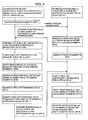
- FIG. 2 is a flowchart showing a flow of the share processing the first cryptographic key, and shows an example of a case where the first cryptographic key is shared by the mutual authentication by means of a public key cryptographic method.
- the authentication device 4 has a public key p1, a public key certificate c1 a secret key s1, the certificate revocation list D1 and a public key pc.
- the authentication section 13 has a public key p2, a public key certificate c2, a secret key s2 and a public key pc.
- the above-described public key certificate c1 is issued by a third party organization (authentication authorities), in which a signature is added to the public key p1 in advance by means of a secret key sc that this third party organization (authentication authorities) has, and this signature is verified by the public key pc.
- the public key certificate c2 is issued by the third party organization, in which a signature is added to the public key p2 in advance by means of the secret key sc, and this signature is verified by the public key pc.
- the public key p1 and the secret key s1 are a pair of authentication keys.
- the public key p2 and the secret key s2 are also a pair of authentication keys.
- the above-described public key p2 and secret key s2 are one of the authentication keys used for the mutual authentication between the authentication device 4 and the authentication section 13, and become keys in relation to the encrypting of the first cryptographic key, which is conducted by the authentication device 4.
- certificate revocation list D1 information showing an invalid public key certificate c2 is described. Also for this certificate revocation list D1, in order to prevent forgery, a signature is added by the secret key sc that the third party organization has and is issued.
- the authentication device 4 generates a random number R1, and transmits it to the authentication section 13 (Steps SP1 and SP2 in Fig. 2).
- the authentication section 13 generates a signature Sig (s2, R1 ⁇ ID2) by means of the secret key s2 to the received random number R1.
- a serial number of the public key certificate c2 can be used for the number ID2.
- the authentication section 13 generates a random number R2.
- the authentication section 13 transmits the generated signature Sig (s2, R1 ⁇ ID2), the public key certificate c2 and the random number R2 to the authentication device 4 (Steps SP3 - SP5 in Fig. 2).
- a thermal noise can be used for the above-described random numbers R1 and R2, or a pseudo random number can be used.
- a pseudo random number can be used in case of using the pseudo random number, although pseudo random number generators are provided in the authentication device 4 and the authentication section 13, respectively, it is required that these pseudo random generators do not coincide with each other.
- the authentication device 4 confirms that the received public key certificate c2 is not described in the certificate revocation list D1.
- the authentication device 4 determines that the said public key p2 is invalid, and disapproves the authentication with the authentication section 13, and ends the processing with the authentication uncompleted.
- the authentication device 4 continues the mutual authentication, and conducts processing below (Step SP6 in Fig. 2).
- the authentication device 4 verifies the public key certificate c2 by means of the public key pc. Also, it verifies the signature Sig (s2, R1 ⁇ ID2) by means of the public key p2 and the random number R1.
- the authentication device 4 disapproves the authentication with the authentication section 13, and ends the processing with the authentication uncompleted (Steps SP7 and SP8 in Fig. 2).
- the authentication device 4 in case that all of the results of the verification are normal, the authentication device 4 generates a signature Sig (s1, R2 ⁇ ID1) by means of the secret key s1 to the random number R2.
- a serial number of the public key certificate c1 can be used for the number ID1 (Step SP9 in Fig. 2).
- the authentication device 4 generates a first cryptographic key K1, and encrypts this first cryptographic key K1 by means of the public key p2 to generate a cryptology Enc (p2, K1). Also, the authentication device 4 provides the generated first cryptographic key K1 to the first encrypting device 3. Next, the authentication device 4 transmits the signature Sig (s1, R2 ⁇ ID1), the public key certificate c1 and the cryptology Enc (p2, K1) to the authentication section 13 (Steps SP10 - SP12 in Fig. 2).
- the authentication section 13 verifies the received public key certificate c1 by means of the public key pc. Also, it verifies the signature Sig (s1, R2 ⁇ ID1) by means of the public key p1 and the random number R2.
- the authentication section 13 disapproves the authentication with the authentication device 4, and ends the processing with the authentication uncompleted (Steps SP13 and SP14 in Fig. 2).
- the authentication section 13 decodes the cryptology Enc (p2, K1) by means of the secret key s2 and acquires the first cryptographic key K1, and provides this first cryptographic key K1 to the first decryption section 11 (Step SP15 in Fig. 2). Thereby, the first cryptographic key K1 generated by the authentication device 4 is shared between the first encrypting device 3 and the first decryption section 11.
- the authentication in the share processing of the first cryptographic key is conducted by the mutual authentication by means of the public key cryptographic method
- the authentication method is not limited to the public key cryptographic method.
- This authentication key of an object to be invalidated is one of the authentication keys used for the mutual authentication between the authentication device 4 and the authentication section 13, and becomes a key in relation to the encrypting of the first cryptographic key, which is conducted by the authentication device 4.
- the public key p2 and the secret key s2 In the above-described example of the mutual authentication by means of the public key cryptographic method, which was shown in Fig. 2, it is indicated by the public key p2 and the secret key s2.
- the broadcast reception device 1 In case that the information of the authentication key of an object to be invalidated is included in the received broadcast signal, the broadcast reception device 1 outputs the information to the certificate revocation list updating device 5.
- the certificate revocation list updating device 5 updates the certificate revocation list D1 of the authentication device 4. Thereby, the authentication key that the authentication section 13 has is invalidated.
- the broadcast reception device 1 outputs the authentication key for updating to the authentication key updating section 14 of the processing device 6.
- the authentication key updating section 14 updates the authentication key of the authentication section 13. Thereby, the authentication key that the authentication section 13 has becomes a valid authentication key.
- the authentication device 4 disapproves the mutual authentication with the authentication section 13 in the above-described step SP6 in Fig. 2, and does not provide the first cryptographic key to the authentication section 13.
- the first decryption section 11 does not acquire the first cryptographic key used for the encrypting by the first encrypting device 3, and it becomes impossible to decrypt the cryptology of the first cryptographic data A1.
- the authentication method and the encrypting method are deciphered and a work is unjustly used by a third party who bears ill will, the authentication key (the key in relation to the cryptology) is invalidated, and an advantage that further unjust use of a work more than this can be prevented is obtained.
- the copyright protection system in accordance with this embodiment by means of the information of the authentication key of an object to be invalidated and the authentication key for updating, which are included and provided in the broadcast signal, the invalidating of the authentication key and the change thereof are conducted. Accordingly, in order to prevent unjust use of a work, if a broadcast business proprietor only broadcasts so as to include the information of the authentication key of an object to be invalidated and the authentication key for updating in the broadcast signal, the invalidating of the authentication key and the change thereof can be established simply.
- the broadcast business proprietor can broadcast so as to include a program for updating in the broadcast signal, which can update the respective processing programs (the first decryption processing program, the audio/video decode processing program, the authentication processing program and the authentication key updating processing program) of the first decryption section 11, the audio/video decode section 12, the authentication section 13 and the authentication key updating section 14 of the processing device 6.
- the broadcast reception device 1 outputs the received program for updating to the authentication key updating section 14, and the authentication key updating section 14 updates the respective processing programs by means of the program for updating. If the processing programs in the processing device 6 are updated in this manner, even in case that the said processing programs are unjustly falsified and used, it becomes possible to prevent further unjust use of the falsified processing programs.
- the copyright protection system shown in Fig. 1 receives the broadcast signal and records the contents of the broadcast, and also, regenerates the recorded broadcast contents.
- the broadcast reception device 1 when receiving the broadcast signal, the broadcast reception device 1 outputs the compressed encrypted data, and the broadcast decryption device 2 decrypts the cryptology and outputs the compressed data.
- the second encrypting device 7 when receiving the compressed data from the broadcast decryption device 2, the second encrypting device 7 conducts encrypting by using the second cryptographic key, and outputs the second cryptographic data B1.
- the second encrypting device 7 generates the second cryptographic key by utilizing a random number or the like every time the encrypting is conducted, and holds it in the device 7.
- the record device 9 When receiving the second cryptographic data B1 from the second encrypting device 7, the record device 9 records it in a record medium.
- the record device 9 reads out the second cryptographic data B2 from the record medium and outputs it.
- the second decryption device 8 acquires the second cryptographic key used for the encrypting from the second encrypting device 7, and decrypts the cryptology of the second cryptographic data B2 and outputs it to the first encrypting device 3.
- the broadcast contents recorded by the record device 9 are regenerated by means of the audio/video decode section 12.
- the second encrypting device 7 generates the second cryptographic key by utilizing a random number or the like every time the encrypting is conducted, and holds this second cryptographic key in the device 7, the second cryptographic key can be recorded by the record device 9.
- the recorded second cryptographic key can be used in the system only. For example, different IDs (identification numbers) peculiar to every second encrypting device 7 and a result of a predetermined calculation with the second cryptographic key are added to the second cryptographic data B1 and recorded.
- the second decryption device 8 acquires from the second encrypting device 7 its ID, and restores and acquires the second cryptographic key by means of the calculation result added to the second cryptographic data B1 and the acquired ID.
- the second cryptographic key is provided to the second decryption device 8 by means of any of the above-described methods of providing the second cryptographic key, even though the record device 9 is removed from the copyright protection system shown in Fig. 1 and is attached to other copyright protection system having the same arrangement, it is difficult to obtain the correct second cryptographic key, and it becomes possible to make the regeneration impossible in a system other than the copyright protection system in which it is recorded. As a result, an advantage that unjust copying of a work itself is suppressed can be obtained.
- the devices 7 to 9 in relation to the record and the devices 3 to 6 in relation to the regeneration are provided independently of each other, processing that is called a time shift can be conducted, in which the record processing and the regeneration processing are simultaneously conducted.
- the different methods are used for the encrypting method (the method by means of the second cryptographic key) in the record and the encrypting method (the method by means of the first cryptographic key) in the regeneration, respectively, even though the first cryptology in the regeneration is deciphered and the record or regeneration of a work is unjustly conducted, it is possible to prevent the second cryptology in the record from being deciphered directly. Accordingly, by changing the key in relation to the first cryptology (the authentication key) in the regeneration, it is possible to prevent a work from being unjustly recorded or regenerated more than this. Also, with regard to the data recorded by the second cryptology, it is possible to regenerate it in a manner same as before.
- the method of acquiring the input data in relation to the work is not limited to the case where it is distributed by a broadcasting form.
- a user of the copyright protection system can acquire the input data in relation to a work by himself or herself via a communication network such as an internet.
- a communication network connection device a modem and a dial-up router or the like
- a decryption device in relation to its communication data are provided.
- the input data in relation to a work can be acquired via a record medium.
- a data of a work, which is recorded in a DVD can be the input data in relation to a work.
- a reading out device for the DVD and a decryption device in relation to its read data are provided instead of the devices 1 and 2 in Fig. 1, a reading out device for the DVD and a decryption device in relation to its read data.
- the first encrypting device 3 of Fig. 1 is corresponding to the first encrypting means
- the first decryption section 11 is corresponding to the first decryption means.
- the authentication device 4 is corresponding to the authentication means
- the contents described in the certificate revocation list D1 of the authentication device 4 are corresponding to the invalid information of the key in relation to the cryptology.
- the certificate revocation list updating device 5 is corresponding to the invalid information updating means.
- the authentication key updating section 14 of the processing device 6 is corresponding to the authentication key updating means.
- the processing device 6 is corresponding to the processing device that executes the processing programs for realizing the functions in relation to the decryption of the encrypting.
- the respective processing programs (the first decryption processing program, the audio/video decode processing program, the authentication processing program and the authentication key updating processing program) of the first decryption section 11, the audio/video decode section 12, the authentication section 13 and the authentication key updating section 14 are corresponding to the processing programs for realizing the functions in relation to the decryption of the encrypting.
- the second encrypting device 7 is corresponding to the second encrypting means
- the second decryption device 8 is corresponding to the second decryption means.
- the copyright protection processing can be conducted by recording the programs for realizing each processing that the devices 3 to 8 shown in Fig. 1 conduct in a computer-readable record medium, and making a computer system read and execute the programs recorded in this record medium.
- the "computer system” mentioned here can be one including hardware such an OS and a peripheral equipment.
- the "computer system” should include a homepage offering environment (or a display environment).
- the "computer-readable record medium” means a transportable medium such as aflexible disc, an optical magnetic disc, a ROM, a CD-ROM and a memory card, and a storage device such as a hard disc which is build in a computer.
- the "computer-readable record medium” includes one which holds a program for a fixed time period, such as a volatile memory (RAM) inside a computer system that becomes a server or a client in case that the program is transmitted via a network such as an internet or a communication circuit such as a telephone circuit.
- a program for a fixed time period such as a volatile memory (RAM) inside a computer system that becomes a server or a client in case that the program is transmitted via a network such as an internet or a communication circuit such as a telephone circuit.
- the above-described program can be transmitted to other computer system from the computer system in which this program is stored in a storage device or the like via a transmission medium or by means of a transmission wave in the transmission medium.
- the "transmission medium” that transmits the program means a medium having a function for transmitting information, like a network (a communication network) such as an internet or a communication circuit (a communication line) such as a telephone circuit.
- the above-described program can be one for realizing a part of the above-mentioned functions. Further, it can be so called a differential file (a differential program), in which the above-mentioned functions can be realized by the combination with a program already recorded in the computer system.
- the invalid information of the key in relation to cryptology is provided, and in case that the information of the authentication key is included in the invalid information, which is used for the authentication when the first cryptographic key in relation to the encrypting is shared between the first encrypting means and the first decryption means, the said authentication is disapproved. Also, when the information of the key of an object to be invalidated, which is provided together with the input data in relation to a work, the contents of the invalid information is updated. Thereby, it is possible to invalidate the key in relation to the cryptology within the system itself.
- the authentication key is updated by means of the authentication key for updating, which is provided together with the input data in relation to a work, it is possible to simply change the key (the authentication key) in relation to the cryptology in a plurality of the copyright protection systems.
- the input data in relation to a work is encrypted by using the second cryptographic key, and the said second cryptographic data is recorded in a record medium
- the encrypting method the method by means of the second cryptographic key
- the encrypting method the method by means of the first cryptographic key
Landscapes
- Engineering & Computer Science (AREA)
- Software Systems (AREA)
- Theoretical Computer Science (AREA)
- Multimedia (AREA)
- Technology Law (AREA)
- Computer Hardware Design (AREA)
- Computer Security & Cryptography (AREA)
- Physics & Mathematics (AREA)
- General Engineering & Computer Science (AREA)
- General Physics & Mathematics (AREA)
- Signal Processing (AREA)
- Storage Device Security (AREA)
Applications Claiming Priority (2)
| Application Number | Priority Date | Filing Date | Title |
|---|---|---|---|
| JP2001121061 | 2001-04-19 | ||
| JP2001121061A JP4174191B2 (ja) | 2001-04-19 | 2001-04-19 | 著作権保護システム及びその方法 |
Publications (2)
| Publication Number | Publication Date |
|---|---|
| EP1251422A2 true EP1251422A2 (de) | 2002-10-23 |
| EP1251422A3 EP1251422A3 (de) | 2005-04-20 |
Family
ID=18971001
Family Applications (1)
| Application Number | Title | Priority Date | Filing Date |
|---|---|---|---|
| EP02008212A Ceased EP1251422A3 (de) | 2001-04-19 | 2002-04-17 | Urheberrechtsschutzsystem und Verfahren hierfür |
Country Status (6)
| Country | Link |
|---|---|
| US (1) | US20020154772A1 (de) |
| EP (1) | EP1251422A3 (de) |
| JP (1) | JP4174191B2 (de) |
| KR (1) | KR100582859B1 (de) |
| CN (1) | CN1381966A (de) |
| TW (1) | TW583614B (de) |
Cited By (3)
| Publication number | Priority date | Publication date | Assignee | Title |
|---|---|---|---|---|
| US6950933B1 (en) * | 2000-05-19 | 2005-09-27 | Networks Associates Technology, Inc. | Method and system for management and notification of electronic certificate changes |
| CN100361221C (zh) * | 2003-06-17 | 2008-01-09 | 富士通株式会社 | 播送内容权利保护装置及播送内容权利保护方法 |
| JP2014121076A (ja) * | 2012-12-19 | 2014-06-30 | Toshiba Corp | 鍵管理装置、通信装置、通信システムおよびプログラム |
Families Citing this family (20)
| Publication number | Priority date | Publication date | Assignee | Title |
|---|---|---|---|---|
| JP3835655B2 (ja) * | 1998-06-09 | 2006-10-18 | ソニー株式会社 | 情報信号再生装置、情報信号処理装置、情報信号再生方法および情報信号出力方法 |
| US8812850B2 (en) * | 2000-03-02 | 2014-08-19 | Tivo Inc. | Secure multimedia transfer system |
| KR20040039443A (ko) * | 2001-09-27 | 2004-05-10 | 마쯔시다덴기산교 가부시키가이샤 | 암호화 장치, 복호화 장치, 비밀 키 생성 장치, 저작권보호 시스템, 및 암호 통신 장치 |
| US7966497B2 (en) * | 2002-02-15 | 2011-06-21 | Qualcomm Incorporated | System and method for acoustic two factor authentication |
| US7401224B2 (en) * | 2002-05-15 | 2008-07-15 | Qualcomm Incorporated | System and method for managing sonic token verifiers |
| JP2003333030A (ja) * | 2002-05-16 | 2003-11-21 | Nec Corp | タイムシフト出力方法及びタイムシフト出力装置 |
| US7349481B2 (en) * | 2002-07-01 | 2008-03-25 | Qualcomm Incorporated | Communication using audible tones |
| US7305711B2 (en) * | 2002-12-10 | 2007-12-04 | Intel Corporation | Public key media key block |
| US7543140B2 (en) | 2003-02-26 | 2009-06-02 | Microsoft Corporation | Revocation of a certificate and exclusion of other principals in a digital rights management (DRM) system based on a revocation list from a delegated revocation authority |
| JP2005027220A (ja) * | 2003-07-02 | 2005-01-27 | Sony Corp | 通信方法、その装置、並びにデータ処理方法およびその装置 |
| KR100643278B1 (ko) | 2003-10-22 | 2006-11-10 | 삼성전자주식회사 | 휴대용 저장 장치의 디지털 저작권을 관리하는 방법 및 장치 |
| US7499550B2 (en) * | 2004-02-09 | 2009-03-03 | International Business Machines Corporation | System and method for protecting a title key in a secure distribution system for recordable media content |
| CN100527148C (zh) * | 2004-12-13 | 2009-08-12 | 松下电器产业株式会社 | 不正当设备检测装置及不正当设备检测系统 |
| TWI554053B (zh) | 2006-05-11 | 2016-10-11 | Cfph股份有限公司 | 使用及管理電子檔案的方法和設備 |
| JP4740371B2 (ja) * | 2007-04-26 | 2011-08-03 | パナソニック株式会社 | 権利情報暗号化モジュール、不揮発性記憶装置、権利情報記録システム、権利情報復号化モジュール、権利情報読出システム及び権利情報記録読出システム |
| EP2053531B1 (de) * | 2007-10-25 | 2014-07-30 | BlackBerry Limited | Verwaltung von Authentifizierungszertifikaten für den Zugang zu einer drahtlosen Kommunikationsvorrichtung |
| CN102164319A (zh) | 2011-04-08 | 2011-08-24 | 北京数字太和科技有限责任公司 | 传输码流ts的安全传输方法和装置 |
| KR101888382B1 (ko) * | 2011-12-16 | 2018-09-21 | 삼성전자 주식회사 | 복수 키 활용 지원 저장 장치 |
| JP6362483B2 (ja) * | 2014-09-02 | 2018-07-25 | キヤノン株式会社 | 情報処理装置、情報処理方法及びプログラム |
| JP2020036270A (ja) * | 2018-08-31 | 2020-03-05 | 株式会社アメニディ | 通信システム |
Family Cites Families (17)
| Publication number | Priority date | Publication date | Assignee | Title |
|---|---|---|---|---|
| KR960010501B1 (ko) * | 1993-09-16 | 1996-08-01 | 대우전자 주식회사 | 방송 신호의 스크램블링 장치 |
| KR0166940B1 (ko) * | 1995-01-16 | 1999-03-20 | 구자홍 | 정보기록매체의 재생가능횟수제한장치 및 방법 |
| JPH08305662A (ja) * | 1995-05-02 | 1996-11-22 | Fujitsu Ltd | クライアント認証システムおよび方法 |
| US6487658B1 (en) * | 1995-10-02 | 2002-11-26 | Corestreet Security, Ltd. | Efficient certificate revocation |
| US5903882A (en) * | 1996-12-13 | 1999-05-11 | Certco, Llc | Reliance server for electronic transaction system |
| US5949877A (en) * | 1997-01-30 | 1999-09-07 | Intel Corporation | Content protection for transmission systems |
| JP3465813B2 (ja) * | 1997-10-29 | 2003-11-10 | 日本ビクター株式会社 | ディジタル放送受信装置及びディジタル情報記録再生装置 |
| JP2000059323A (ja) * | 1998-02-13 | 2000-02-25 | Matsushita Electric Ind Co Ltd | デジタルavデータ送信ユニット、デジタルavデータ受信ユニット及び、デジタルavデータ送受信システム、媒体 |
| US6715073B1 (en) * | 1998-06-04 | 2004-03-30 | International Business Machines Corporation | Secure server using public key registration and methods of operation |
| US6510515B1 (en) * | 1998-06-15 | 2003-01-21 | Telefonaktlebolaget Lm Ericsson | Broadcast service access control |
| JP3565715B2 (ja) * | 1998-07-02 | 2004-09-15 | 松下電器産業株式会社 | 放送システムと放送送受信装置 |
| US6226618B1 (en) * | 1998-08-13 | 2001-05-01 | International Business Machines Corporation | Electronic content delivery system |
| KR100484209B1 (ko) * | 1998-09-24 | 2005-09-30 | 삼성전자주식회사 | 디지털컨텐트암호화/해독화장치및그방법 |
| WO2000021239A1 (en) * | 1998-10-07 | 2000-04-13 | Nuvomedia, Inc. | Certificate handling for digital rights management system |
| US7024393B1 (en) * | 1999-03-27 | 2006-04-04 | Microsoft Corporation | Structural of digital rights management (DRM) system |
| JP4362888B2 (ja) * | 1999-05-18 | 2009-11-11 | ソニー株式会社 | 情報処理装置および方法、並びに記録媒体 |
| US20020174422A1 (en) * | 2000-09-28 | 2002-11-21 | The Regents Of The University Of California | Software distribution system |
-
2001
- 2001-04-19 JP JP2001121061A patent/JP4174191B2/ja not_active Expired - Fee Related
-
2002
- 2002-04-15 TW TW091107644A patent/TW583614B/zh not_active IP Right Cessation
- 2002-04-17 US US10/123,424 patent/US20020154772A1/en not_active Abandoned
- 2002-04-17 EP EP02008212A patent/EP1251422A3/de not_active Ceased
- 2002-04-19 KR KR1020020021496A patent/KR100582859B1/ko not_active Expired - Fee Related
- 2002-04-19 CN CN02116158A patent/CN1381966A/zh active Pending
Cited By (3)
| Publication number | Priority date | Publication date | Assignee | Title |
|---|---|---|---|---|
| US6950933B1 (en) * | 2000-05-19 | 2005-09-27 | Networks Associates Technology, Inc. | Method and system for management and notification of electronic certificate changes |
| CN100361221C (zh) * | 2003-06-17 | 2008-01-09 | 富士通株式会社 | 播送内容权利保护装置及播送内容权利保护方法 |
| JP2014121076A (ja) * | 2012-12-19 | 2014-06-30 | Toshiba Corp | 鍵管理装置、通信装置、通信システムおよびプログラム |
Also Published As
| Publication number | Publication date |
|---|---|
| EP1251422A3 (de) | 2005-04-20 |
| US20020154772A1 (en) | 2002-10-24 |
| KR20020082422A (ko) | 2002-10-31 |
| JP4174191B2 (ja) | 2008-10-29 |
| CN1381966A (zh) | 2002-11-27 |
| TW583614B (en) | 2004-04-11 |
| KR100582859B1 (ko) | 2006-05-24 |
| JP2002319934A (ja) | 2002-10-31 |
Similar Documents
| Publication | Publication Date | Title |
|---|---|---|
| US20020154772A1 (en) | Copyright protection system and method thereof | |
| RU2352985C2 (ru) | Способ и устройство для санкционирования операций с контентом | |
| US6950941B1 (en) | Copy protection system for portable storage media | |
| KR100466474B1 (ko) | 암호화장치및방법,복호장치및방법,정보처리장치및방법 | |
| US20100275036A1 (en) | Recording/reproducing system, recording medium device, and recording/reproducing device | |
| EP1271875A1 (de) | Vorrichtung zum Datenaustausch, und Verfahren zur Herstellung | |
| US20110026710A1 (en) | System and Method for Cryptographically Authenticating Data Items | |
| JP2004193843A (ja) | コンテンツ配信装置、コンテンツ配信方法、コンテンツ配信プログラムおよびコンテンツ再生装置、コンテンツ再生方法、コンテンツ再生プログラム | |
| WO2009031082A1 (en) | Apparatus and methods for transferring digital content | |
| JP2003198527A (ja) | 情報再生装置およびセキュアモジュール | |
| WO2001052474A1 (en) | Authentication communication device and authentication communication system | |
| CN103237010B (zh) | 以加密方式提供数字内容的服务器端 | |
| JP2003158514A (ja) | デジタル著作物保護システム、記録媒体装置、送信装置及び再生装置 | |
| CN105721903A (zh) | 在线播放视频的方法和系统 | |
| JP3998178B2 (ja) | コンテンツ著作権保護装置及びそのプログラム | |
| CN103237011B (zh) | 数字内容加密传送方法以及服务器端 | |
| JP4164265B2 (ja) | 著作権保護システム、デジタル情報処理装置および著作権保護方法 | |
| JP4713745B2 (ja) | 認証通信装置及び認証通信システム | |
| JP4447908B2 (ja) | 新しい装置を導入するローカルデジタルネットワーク及び方法と、そのネットワークにおけるデータ放送及び受信方法 | |
| KR20040090951A (ko) | 엔티티 잠금 보안 레지스트리를 사용하여 자료에액세스하는 장치 및 방법 | |
| JP5110942B2 (ja) | 情報保護システム | |
| WO2010119549A1 (ja) | コンテンツデータ再生システム、及び記録装置 | |
| JP2001274785A (ja) | コンテンツ情報復号化方法、コンテンツ情報復号化装置 | |
| JP4671653B2 (ja) | 暗号化装置、復号化装置、それらの方法、プログラムおよび記録媒体 | |
| JP2000322308A (ja) | コンテンツディレクトリシステム |
Legal Events
| Date | Code | Title | Description |
|---|---|---|---|
| PUAI | Public reference made under article 153(3) epc to a published international application that has entered the european phase |
Free format text: ORIGINAL CODE: 0009012 |
|
| AK | Designated contracting states |
Kind code of ref document: A2 Designated state(s): AT BE CH CY DE DK ES FI FR GB GR IE IT LI LU MC NL PT SE TR |
|
| AX | Request for extension of the european patent |
Free format text: AL;LT;LV;MK;RO;SI |
|
| PUAL | Search report despatched |
Free format text: ORIGINAL CODE: 0009013 |
|
| AK | Designated contracting states |
Kind code of ref document: A3 Designated state(s): AT BE CH CY DE DK ES FI FR GB GR IE IT LI LU MC NL PT SE TR |
|
| AX | Request for extension of the european patent |
Extension state: AL LT LV MK RO SI |
|
| 17P | Request for examination filed |
Effective date: 20050310 |
|
| AKX | Designation fees paid |
Designated state(s): DE FR GB |
|
| APBK | Appeal reference recorded |
Free format text: ORIGINAL CODE: EPIDOSNREFNE |
|
| APBN | Date of receipt of notice of appeal recorded |
Free format text: ORIGINAL CODE: EPIDOSNNOA2E |
|
| APBR | Date of receipt of statement of grounds of appeal recorded |
Free format text: ORIGINAL CODE: EPIDOSNNOA3E |
|
| APAF | Appeal reference modified |
Free format text: ORIGINAL CODE: EPIDOSCREFNE |
|
| APAF | Appeal reference modified |
Free format text: ORIGINAL CODE: EPIDOSCREFNE |
|
| RAP1 | Party data changed (applicant data changed or rights of an application transferred) |
Owner name: NEC PERSONAL COMPUTERS, LTD. |
|
| APBT | Appeal procedure closed |
Free format text: ORIGINAL CODE: EPIDOSNNOA9E |
|
| STAA | Information on the status of an ep patent application or granted ep patent |
Free format text: STATUS: THE APPLICATION HAS BEEN REFUSED |
|
| 18R | Application refused |
Effective date: 20121128 |