EP1253152B1 - Verfahren zur verwandlung einer funktionellen gruppe durch halogen-metal-austausch - Google Patents
Verfahren zur verwandlung einer funktionellen gruppe durch halogen-metal-austausch Download PDFInfo
- Publication number
- EP1253152B1 EP1253152B1 EP01948984A EP01948984A EP1253152B1 EP 1253152 B1 EP1253152 B1 EP 1253152B1 EP 01948984 A EP01948984 A EP 01948984A EP 01948984 A EP01948984 A EP 01948984A EP 1253152 B1 EP1253152 B1 EP 1253152B1
- Authority
- EP
- European Patent Office
- Prior art keywords
- compound
- formula
- group
- optionally substituted
- compound represented
- Prior art date
- Legal status (The legal status is an assumption and is not a legal conclusion. Google has not performed a legal analysis and makes no representation as to the accuracy of the status listed.)
- Revoked
Links
- 0 Cc1c[n](*)cc1 Chemical compound Cc1c[n](*)cc1 0.000 description 2
- QMHIMXFNBOYPND-UHFFFAOYSA-N Cc1c[s]cn1 Chemical compound Cc1c[s]cn1 QMHIMXFNBOYPND-UHFFFAOYSA-N 0.000 description 1
- QWFHFNGMCPMOCD-UHFFFAOYSA-N O=Cc1cccc(Br)n1 Chemical compound O=Cc1cccc(Br)n1 QWFHFNGMCPMOCD-UHFFFAOYSA-N 0.000 description 1
- VSUXBTYXFBIJPO-UHFFFAOYSA-N OC(c1ccccc1)c1cncc(CBr)c1 Chemical compound OC(c1ccccc1)c1cncc(CBr)c1 VSUXBTYXFBIJPO-UHFFFAOYSA-N 0.000 description 1
Classifications
-
- C—CHEMISTRY; METALLURGY
- C07—ORGANIC CHEMISTRY
- C07D—HETEROCYCLIC COMPOUNDS
- C07D213/00—Heterocyclic compounds containing six-membered rings, not condensed with other rings, with one nitrogen atom as the only ring hetero atom and three or more double bonds between ring members or between ring members and non-ring members
- C07D213/02—Heterocyclic compounds containing six-membered rings, not condensed with other rings, with one nitrogen atom as the only ring hetero atom and three or more double bonds between ring members or between ring members and non-ring members having three double bonds between ring members or between ring members and non-ring members
- C07D213/04—Heterocyclic compounds containing six-membered rings, not condensed with other rings, with one nitrogen atom as the only ring hetero atom and three or more double bonds between ring members or between ring members and non-ring members having three double bonds between ring members or between ring members and non-ring members having no bond between the ring nitrogen atom and a non-ring member or having only hydrogen or carbon atoms directly attached to the ring nitrogen atom
- C07D213/60—Heterocyclic compounds containing six-membered rings, not condensed with other rings, with one nitrogen atom as the only ring hetero atom and three or more double bonds between ring members or between ring members and non-ring members having three double bonds between ring members or between ring members and non-ring members having no bond between the ring nitrogen atom and a non-ring member or having only hydrogen or carbon atoms directly attached to the ring nitrogen atom with hetero atoms or with carbon atoms having three bonds to hetero atoms with at the most one bond to halogen, e.g. ester or nitrile radicals, directly attached to ring carbon atoms
- C07D213/78—Carbon atoms having three bonds to hetero atoms, with at the most one bond to halogen, e.g. ester or nitrile radicals
- C07D213/84—Nitriles
-
- C—CHEMISTRY; METALLURGY
- C07—ORGANIC CHEMISTRY
- C07C—ACYCLIC OR CARBOCYCLIC COMPOUNDS
- C07C45/00—Preparation of compounds having >C = O groups bound only to carbon or hydrogen atoms; Preparation of chelates of such compounds
- C07C45/004—Preparation of compounds having >C = O groups bound only to carbon or hydrogen atoms; Preparation of chelates of such compounds by reaction with organometalhalides
-
- C—CHEMISTRY; METALLURGY
- C07—ORGANIC CHEMISTRY
- C07C—ACYCLIC OR CARBOCYCLIC COMPOUNDS
- C07C45/00—Preparation of compounds having >C = O groups bound only to carbon or hydrogen atoms; Preparation of chelates of such compounds
- C07C45/45—Preparation of compounds having >C = O groups bound only to carbon or hydrogen atoms; Preparation of chelates of such compounds by condensation
-
- C—CHEMISTRY; METALLURGY
- C07—ORGANIC CHEMISTRY
- C07D—HETEROCYCLIC COMPOUNDS
- C07D213/00—Heterocyclic compounds containing six-membered rings, not condensed with other rings, with one nitrogen atom as the only ring hetero atom and three or more double bonds between ring members or between ring members and non-ring members
- C07D213/02—Heterocyclic compounds containing six-membered rings, not condensed with other rings, with one nitrogen atom as the only ring hetero atom and three or more double bonds between ring members or between ring members and non-ring members having three double bonds between ring members or between ring members and non-ring members
- C07D213/04—Heterocyclic compounds containing six-membered rings, not condensed with other rings, with one nitrogen atom as the only ring hetero atom and three or more double bonds between ring members or between ring members and non-ring members having three double bonds between ring members or between ring members and non-ring members having no bond between the ring nitrogen atom and a non-ring member or having only hydrogen or carbon atoms directly attached to the ring nitrogen atom
- C07D213/60—Heterocyclic compounds containing six-membered rings, not condensed with other rings, with one nitrogen atom as the only ring hetero atom and three or more double bonds between ring members or between ring members and non-ring members having three double bonds between ring members or between ring members and non-ring members having no bond between the ring nitrogen atom and a non-ring member or having only hydrogen or carbon atoms directly attached to the ring nitrogen atom with hetero atoms or with carbon atoms having three bonds to hetero atoms with at the most one bond to halogen, e.g. ester or nitrile radicals, directly attached to ring carbon atoms
- C07D213/61—Halogen atoms or nitro radicals
-
- C—CHEMISTRY; METALLURGY
- C07—ORGANIC CHEMISTRY
- C07D—HETEROCYCLIC COMPOUNDS
- C07D333/00—Heterocyclic compounds containing five-membered rings having one sulfur atom as the only ring hetero atom
- C07D333/02—Heterocyclic compounds containing five-membered rings having one sulfur atom as the only ring hetero atom not condensed with other rings
- C07D333/04—Heterocyclic compounds containing five-membered rings having one sulfur atom as the only ring hetero atom not condensed with other rings not substituted on the ring sulphur atom
- C07D333/26—Heterocyclic compounds containing five-membered rings having one sulfur atom as the only ring hetero atom not condensed with other rings not substituted on the ring sulphur atom with hetero atoms or with carbon atoms having three bonds to hetero atoms with at the most one bond to halogen, e.g. ester or nitrile radicals, directly attached to ring carbon atoms
- C07D333/28—Halogen atoms
-
- C—CHEMISTRY; METALLURGY
- C07—ORGANIC CHEMISTRY
- C07F—ACYCLIC, CARBOCYCLIC OR HETEROCYCLIC COMPOUNDS CONTAINING ELEMENTS OTHER THAN CARBON, HYDROGEN, HALOGEN, OXYGEN, NITROGEN, SULFUR, SELENIUM OR TELLURIUM
- C07F3/00—Compounds containing elements of Groups 2 or 12 of the Periodic Table
- C07F3/02—Magnesium compounds
-
- C—CHEMISTRY; METALLURGY
- C07—ORGANIC CHEMISTRY
- C07F—ACYCLIC, CARBOCYCLIC OR HETEROCYCLIC COMPOUNDS CONTAINING ELEMENTS OTHER THAN CARBON, HYDROGEN, HALOGEN, OXYGEN, NITROGEN, SULFUR, SELENIUM OR TELLURIUM
- C07F7/00—Compounds containing elements of Groups 4 or 14 of the Periodic Table
- C07F7/02—Silicon compounds
- C07F7/08—Compounds having one or more C—Si linkages
- C07F7/0803—Compounds with Si-C or Si-Si linkages
- C07F7/0825—Preparations of compounds not comprising Si-Si or Si-cyano linkages
- C07F7/0827—Syntheses with formation of a Si-C bond
Definitions
- This invention is useful in the field of chemical industry. More particularly, the present invention relates to a process for exchanging functional groups and to a reagent for halogen-metal exchange reaction, with industrial advantage, for a variety of useful compounds in the fields of chemical industry products, agrochemicals, and pharmaceuticals.
- Halogen-metal exchange reaction is widely used as a technique for substituting a halogen atom present in a halogenated organic compound into other substituent.
- a reagent employed in the halogen-metal exchange reaction are exemplified Grignard reagents and organolithium reagents.
- Grignard reagents have low reactivity in general, it is necessary to often use such reagents in an excess when reacted with an aryl chloride or an aryl bromide. Also, such reagents require a long reaction time. Therefore, reaction with the Grignard reagents is of no practical use from standpoint of industrial production (see Tetrahedron Letters, Vol. 40, pages. 4339-4342 (1999) by F. Trecourt , et al.) On the other hand, the Grignard reagents have a high reactivity for practical use to an aryl iodide, but it is troublesome to introduce an iodine atom in the way of synthetic route.
- Organolithium reagents are widely used in halogen-metal exchange reaction, and can be also applied to a wide range of reaction substrates.
- thermostability of such organolithium compound itself or that of an intermediate lithio compound by-produced is generally not high. It is, therefore, essential to often carry out the reaction under the conditions of extreme low temperature which is unsuitable for industrial production (see. Journal of Medicinal Chemistry, Vol. 42, pages 1088-1099, (1999) by Tatsuzo Ukita , et al., Tetrahedron Letters, Vol. 37, No. 15, pages 2537-2540 (1996) by Dongwei Cai , et al., and Journal of Organic Chemistry, Vol. 58, pages 4382-4388 (1993) by Jun'ichi Uenishi et al.).
- a halogen atom can be substituted with an electrophilic group in high yield at a low temperature of about 0°C.
- the substitution is carried out by reacting a halogen atom attached to a carbon atom of a double bond or attached to a carbon atom adjacent to the carbon atom of the double bond in an organic compound having at least one carbon-carbon double or triple bond, with a reaction product between a magnesium compound and an alkali metal compound, and reacting the resultant product with a compound having an electrophilic group, followed by optional treatment with an acid.
- said exchange of the halogen atom and said exchange reagent can be very widely used in the field of industry.
- the present invention has been completed on the basis of these findings.
- the present invention relates to an industrially useful reagent for exchanging halogen atoms for functional groups by halogen-metal exchange reaction, wherein the reagent contains a mixture of a magnesium compound and an organolithium compound, or contains a reaction product thereof.
- the present invention is also directed to a process for substituting a halogen atom in a halogenated compound with an electrophilic group by use of said reagent. More particularly, the present invention relates to
- the present reagent used for exchange reaction contains a mixture of a magnesium compound (I) represented by the formula: R 1 -Mg-X 1 (I) (wherein R 1 is a halogen atom or an optionally substituted hydrocarbon residue, and X 1 is a halogen atom) and an organolithium compound (II) represented by the formula: R 2 -Li (II) (wherein R 2 is an optionally substituted hydrocarbon residue), or contains a reaction product obtained from (I) and (II).
- a magnesium compound (I) represented by the formula: R 1 -Mg-X 1 (I) (wherein R 1 is a halogen atom or an optionally substituted hydrocarbon residue, and X 1 is a halogen atom
- organolithium compound (II) represented by the formula: R 2 -Li (II) (wherein R 2 is an optionally substituted hydrocarbon residue
- halogen atoms represented by R 1 and X 1 in the above formulae include, for example, chlorine, bromine, fluorine or iodine, among which chlorine, bromine or iodine is preferable, and chlorine or bromine is more preferable.
- the hydrocarbon residues represented by R 1 and R 2 for optionally substituted hydrocarbon groups include, for example, linear or branched aliphatic hydrocarbon groups and cyclic hydrocarbon groups, having carbon atoms of 1 to 20. More specifically, examples of said groups are alkyl, alkenyl, alkynyl, cycloalkyl, aryl, aralkyl or the like.
- the alkyl groups include, for example, straight or branched C 1-12 alkyl groups such as methyl, ethyl, propyl, isopropyl, butyl, isobutyl, pentyl, hexyl, heptyl, octyl, nonyl, decyl, undecyl, dodecyl or the like, among which C 1-6 alkyl such as methyl, ethyl, propyl, isopropyl, butyl, isobutyl, sec-butyl, tert-butyl, or pentyl are preferable.
- the alkenyl groups include, for example, C 2-6 alkenyl such as vinyl, allyl, isopropenyl, butenyl, isobutenyl, sec-butenyl or the like, among which C 2-4 alkenyl such as vinyl, allyl, and isopropenyl are preferable.
- the alkynyl groups include, for example, C 2-6 alkynyl such as propargyl, ethynyl, butynyl, 1-hexynyl or the like, among which propargyl, ethynyl or butynyl is preferable.
- the cycloalkyl groups include, for example, C 3-6 cycloalkyl such as cyclopropyl, cyclobutyl, cyclopentyl, cyclohexyl or the like, which may be fused or condensed with a benzene ring optionally substituted with 1 to 3 lower alkoxy groups (e.g. C 1-6 alkoxy such as methoxy and the like)
- the aryl groups include, for example, C 6-14 aryl such as phenyl, biphenylyl, naphthyl (e.g. 1-naphthyl or 2-naphthyl), indenyl (e.g. 1-indenyl or 2-indenyl), anthlyl (e.g.1-anthlyl, 2-anthlyl or 3-anthlyl), phenanthlyl (e.g. 1-phenanthlyl, 2-phenanthlyl, 3-phenanthyl, 4-phenanthlyl or 9-phenanthlyl), among which C 6-10 aryl such as phenyl, 1-naphthyl or 2-naphthyl is more preferable.
- C 6-14 aryl such as phenyl, biphenylyl, naphthyl (e.g. 1-naphthyl or 2-naphthyl), indenyl (e.g. 1-indenyl or
- the aralkyl groups include, for example, C 7 - 15 aralkyl such as benzyl, phenethyl, diphenylmethyl, 1-naphthylmethyl, 2-naphthylmethyl, 2-phenylethyl, 2,2-diphenylethyl, 1-phenylpropyl, 2-phenylpropyl, 3-phenylpropyl, 4-phenylbutyl, 5-phenylpentyl or the like, among which C 7-13 aralkyl (e.g. benzyl) is preferable.
- C 7-13 aralkyl e.g. benzyl
- C 1-6 alkyl is preferable, and n-butyl or tert-butyl is particularly preferable.
- substituents of these hydrocarbon groups include, but are not limited to, for example, (i) halogen (e.g. fluorine, chlorine, bromine or iodine), (ii) C 1-3 alkylenedioxy (e.g. methylenedioxy or ethylenedioxy), (iii)nitro, (iv)cyano, (v) optionally halogenated C 1-6 alkyl (e.g. methyl, ethyl, n-propyl or trifluromethyl),(vi) optionally halogenated C 1-6 alkenyl (e.g. vinyl, allyl or isopropenyl), (vii) optionally halogenated C 1-6 alkynyl (e.g.
- methylsulfonyl or ethylsulfonyl (xvii) C 6-10 aryl (e.g. phenyl or naphthyl) optionally substituted by halogen, C 1-3 alkylenedioxy, nitro, cyano or optionally halogenated C 1-6 alkyl, (xviii) C 7-15 aralkyl (e.g.
- benzyloxy optionally substituted by halogen, C 1-3 alkylenedioxy, nitro, cyano or optionally halogenated C 1-6 alkyl, (xxi) oxo, (xxii) di-C 1-6 alkylthiocarbamoyl (e.g. dimethylthiocarbamoyl or diethylthiocarbamoyl), (xxiii) C 6-10 aryl-carbonyloxy (e.g. phenylcarbonyloxy), (xxiv)C 6-14 arylsulfonamide (e.g. phenylsulfonamide), and (xxv) C 1-6 alkylsulfonamide (e.g. methylsulfonamide or ethylsulfonamide).
- oxo e.g. dimethylthiocarbamoyl or diethylthiocarbamoyl
- C 6-10 aryl-carbonyloxy e
- the magnesium compound (I) can be preferably a compound represented by the formula: R 1' -Mg-X 1 (I') (wherein R 1' is a halogen atom, C 1-12 alkyl, C 2-4 alkenyl, C 6-10 aryl or C 7-13 aralkyl, and X 1 is a halogen atom)
- Examples of C 1-12 alkyl, C 2-4 alkenyl, C 6-10 aryl or C 7-13 aralkyl represented by R 1' are the same as those defined above for the hydrocarbon groups represented by R 1 .
- halogen atoms represented by R 1' and X 1 are the same as those defined above for R 1 and X.
- the magnesium compounds (I) include, for example, magnesium bromide, magnesium iodide, magnesium chloride, magnesium fluoride, dimethylmagnesium iodide, methylmagnesium chloride, methylmagnesium iodide, methylmagnesium chloride, methylmagnesium iodide, diethylmagnesium, ethylmagnesium chloride, ethylmagnesium bromide, ethylmagnesium iodide, dipropylmagnesium, propylmagnesium chloride, propylmagnesium bromide, propylmagnesium iodide, diisopropylmagnesium, isopropylmagnesium chloride, isopropylmagnesium bromide, isopropylmagnesium iodide, di-n-butylmagnesium, n-butylmagnesium chloride, n-butylmagnesium bromide, n-butyl
- the organolithium compound (II) can be preferably a compound represented by the formula: R 2 -Li (II') (wherein R 2' is C 1-12 alkyl, C 2-4 alkenyl, C 6-10 aryl or C 7-13 aralkyl).
- the C 1-12 alkyl, C 2-4 alkenyl, C 6-10 aryl and C 7-13 aralkyl groups represented by R 2' are the same as those except for the halogen atom in the definition of R 1' described above.
- the organolithium compounds (II) include, for example, ethyllithium, propyllithium, n-butyllithium, sec-butyllithium, isobutyllithium, tert-butyllithium, methyllithium, 2-furyllithium, vinyllithium, allyllithium, benzyllithium, 2-thienyllithium or phenyllithium, among which n-butyllithium is particularly preferred.
- the mixture of magnesium compound (I) and organolithium compound (II) can be prepared by mixing the two compounds together in an arbitrary proportion. It is preferred to add about one to four moles of the organolithium compound (II) per mole of the magnesium compound (I).
- reaction products from the magnesium compound (I) and the organilithium compound (II) are a compound represented by the formula: (R a R b R c Mg) - ⁇ Li + (III) (wherein R a , R b , and R c are the same or different and are each a hydrocarbon residue which may be substituted) and a compound represented by the formula: (R d R e R f R g Mg) 2- ⁇ 2Li + (IV) (wherein R d , R e , R f , and R g are the same or different and are each a hydrocarbon residue which may be substituted).
- examples of the optionally substituted hydrocarbon residues represented by R a , R b , R c , R d , R e , R f , and R g are the same as those defined above for R 1 and R 2 , among which C 1-6 alkyl, particularly n-butyl, is preferred.
- the compound (IV) is preferably used tetra-n-butylmagnesium dilithium or the like.
- the magnesium compounds (I), the organolithium compounds (II), and a mixture of (I) and (II) can be prepared according to per se known methods.
- the mixture of the magnesium compounds (I) and the organolithium compounds (II) are novel.
- the reaction product from the magnesium compound (I) and the organolithium compound (II) can be, for example, prepared by allowing both compounds to react in an inert solvent.
- the inert solvent used in the present reaction can be any solvents used in halogen-metal exchange reaction with Grignard reagents and organolithium compounds. Typically, toluene, xylene, tetrahydrofuran, diethyl ether, dimethoxyethane or a mixture thereof is preferably used.
- the magnesium compound (I) is usually used in approximately 0.25 to 1.0 molar equivalent to the organolithium compound (II).
- the reaction temperature is usually about -10°C to room temperature, preferably about -10 °C to 0 °C.
- the reaction time is usually about 5 minutes to 2 hours, preferably about 15 minutes to one hour.
- the mixture of the compound (I) and the organolithium compound (II) or their reaction product, thus obtained in the present invention, is isolated and purified, or may be served without isolation as an exchange reagent for the functional groups in the halogen-metal exchange reaction as hereinafter described.
- the halogen-metal exchange reaction can be effected under milder conditions, i.e., at about -10 °C to room temperature (about 10 °C to 40 °C), different from extreme low temperature.
- the substitution process of the present invention relates to a process for substituting a halogen atom present in halogenated compounds with an electrophilic group, which comprises reacting (i) a halogenated compound having in the molecule at least one halogen atom or a halogenated compound having in the molecule at least one double or triple bond to which is attached a halogen-substituted carbon atom, with (ii) an exchange reagent as hereinbefore described, reacting the resultant product with (iii) a compound having an electrophilic group, and optionally hydrolyzing the resultant product.
- a halogenated compound having in the molecule at least one halogen atom or a halogenated compound having in the molecule at least one double or triple bond means starting materials employed in the halogen-metal exchange reaction, such as Grignard reagents and/or organolithium compounds.
- halogen atoms represented by X 2 , X 3 , X 4 , X 5 , R 3 and R 4 are the same as those defined above for X 1 , among which bromine is preferable.
- R 3 and R 4 are the same as those defined above for R 1 which is an optionally substituted hydrocarbon group.
- the optionally substituted hydrocarbon-oxy groups can be a group represented by the formula:-OR 5 (R 5 is an optionally substituted hydrocarbon group).
- R 5 is an optionally substituted hydrocarbon group.
- the optionally substituted hydrocarbon groups represented by R 5 are the same as those defined above for R 1 .
- R 3 and R 4 are the same as those described above for (xii) as a substituent of R 1 which is an optionally substituted hydrocarbon group.
- the divalent organic groups represented by Y 1 can be an organic residue which is capable of attaching to the adjacent carbon atom via a double bond, and include, for example,
- the optionally substituted hydrocarbon groups represented by Y 3 are the same as those described above for R 1 which is an optionally substituted hydrocarbon group, among which optionally halogenated C 1-6 alkyl (e.g. methyl, ethyl) or optionally halogenated C 2-6 alkenyl (e.g. ethenyl, propenyl) are preferred, and particularly C 1-6 alkyl is preferable.
- optionally halogenated C 1-6 alkyl e.g. methyl, ethyl
- optionally halogenated C 2-6 alkenyl e.g. ethenyl, propenyl
- the optionally substituted heterocycles represented by Y 3 can be, for example, 5- to 8-membered monocyclic non-aromatic heterocycles, monocyclic aromatic heterocycles, or benzene-fused or naphthalene-fused aromatic heterocycles, containing one or more hetero atoms (e.g. one to four hetero atoms, preferably one to three hetero atoms) selected from nitrogen, sulfur and oxygen other than carbon.
- hetero atoms e.g. one to four hetero atoms, preferably one to three hetero atoms
- heterocycles include, for example, pyrrolidine, piperidine, piperazine, morpholine, thiophene, benzo(b)thiophene, benzo(b)furan, benzimidazole, benzoxazole, benzothiazole, benzisothiazole, naphth(2,3-b)thiophene, thianthrene, furan, isoindolizine, xanthlene, phenoxathiin, pyrrole, imidazole, triazole, thiazole, oxazole, pyrazole, pyridine, pyrazine, pyrimidine, pyridazine, indole, isoindole,1H-indazole, purine, 4H-quinolizine, isoquinoline, quinoline, phthalazine, naphthyridine, quinoxaline, quinazoline, cinnoline, carbazole, ⁇ -carcino
- the NH group if present, in the heterocyclic ring of pyrrolidine, piperidine, piperazine, morpholine, benzimidazole, isoindolizine, imidazole, triazole, pyrazole, indole, isoindole, 1H-indazole, purine, carbazole, ⁇ -carboline, phenothiazine or phenoxazine is protected by known amino-protecting groups (e.g. benzyl).
- R f is preferably a hydrogen atom.
- the 3- to 8-membered carbocyclic groups represented by Y 4 are exemplified by 3- to 8-membered saturated carbocycles or 3- to 8-membered unsaturated carbocycles, and include, for example, 3- to 8-membered cycloalkanes (e.g. cyclopropane, cyclobutane, cyclopentane, cyclohexane, cycloheptane, cyclooctane), cycloalkenes (e.g. cyclobutene, cyclopentene, cyclohexene, cycloheptene, cyclooctene), cycloalkane-dienes (e.g.
- 3- to 8-membered cycloalkanes e.g. cyclopropane, cyclobutane, cyclopentane, cyclohexane, cycloheptane, cyclooctane
- cycloheptane-diene cyclohexane-diene, cycloheptane-diene, cyclooctane-diene
- 5- to 7-membered cycloalkanes e.g. cyclopentane, cyclohexane, cycloheptane
- 5- to 7-membered cycloalkanes e.g. cyclopentane, cyclohexane, cycloheptane
- a group represented by the formula includes preferably, for example,
- substituents on the 3- to 7-membered carbocycles are halogen (e.g. fluorine, chlorine or bromine), hydroxyl, carboxy, or C 1-6 alkoxy-carbonyl (e.g. acetoxy or ethoxycarbonyl).
- the monovalent organic residue represented by Y 2 is a group formed by removing one arbitrary hydrogen atom from an organic group.
- examples of such groups are an optionally substituted hydrocarbon group, an optionally substituted heterocyclic group, a group represented by the formula: -NY 5 Y 6 (wherein Y 5 and Y 6 are independently an optionally substituted hydrocarbon group, an optionally substituted heterocyclic group and an acyl group), a group represented by the formula: -O-Y 7 (wherein Y 7 is a hydrogen atom, an optionally substituted hydrocarbon group or an optionally substituted heterocyclic group) or a group represented by the formula: -S-Y 8 (wherein Y 8 is a hydrogen atom, an optionally substituted hydrocarbon group or an optionally substituted heterocyclic group).
- the optionally substituted hydrocarbon groups represented by Y 2 , Y 5 , Y 6 , Y 7 and Y 8 are the same as those defined above for R 1 which is an optionally substituted hydrocarbon group, among which C 1-6 alkyl groups (e.g. methyl or ethyl) which may be halogenated are preferred.
- the optionally substituted heterocyclic groups represented by Y 2 , Y 5 , Y 6 , Y 7 and Y 8 are the same as those defined above for Y 3 which is an optionally substituted heterocyclic group.
- the acyl groups represented by Y 5 and Y 6 can be a group represented by the formula: -CO-Y 9 wherein Y 9 is an optionally substituted hydrocarbon group.
- the optionally substituted hydrocarbon groups represented by Y 9 are the same as those defined above for R 1 which is an optionally substituted hydrocarbon group, among which C 1-6 alkyl groups (e.g. methyl, ethyl) which may be halogenated are preferred.
- R g is a known amino-protecting group such as benzyl or the like.
- aromatic rings in the optionally substituted aromatic rings are aromatic hydrocarbon groups or aromatic heterocyclic groups.
- the aromatic hydrocarbon groups include monocyclic, fused polycyclic, or polycondensed aromatic hydrocarbons, having 6 to 14 carbon atoms.
- Typical examples of such aromatic hydrocarbons are C 6-14 aryl, including phenyl, biphenylyl, naphthyl (e.g. 1-naphthyl or 2-naphthyl), indenyl (e.g. 2-indenyl), anthlyl (e.g.1-anthlyl, 2-anthlyl or 3-anthlyl) or phenanthlyl (e.g.
- the aromatic heterocyclic groups can be, for example, 5-to 8-membered monocyclic aromatic heterocycles, or benzene-fused or naphthalene-fused aromatic heterocycles, containing one or more hetero atoms (e.g. one to four hetero atoms, preferably one to three hetero atoms) selected from nitrogen, sulfur and oxygen other than carbon.
- hetero atoms e.g. one to four hetero atoms, preferably one to three hetero atoms
- heterocycles include, for example, thiophene, benzo(b)thiophene, benzo(b)furan, benzimidazole, benzoxazole, benzothiazole, benzisothiazole, benzisothiazole, naphth(2,3-b)thiophene, thianthrene, furan, isoindolizine, xanthlene, phenoxathiin, pyrrole, imidazole, triazole, thiazole, oxazole, pyrazole, pyridine, pyrazine, pyrimidine, pyridazine, indole, isoindole, 1H-indazole, purine, 4H-quinolizine, isoquinoline, quinoline, phthalazine, naphthyridine, quinoxaline, quinazoline, cinnoline, carbazole, ⁇ -carboline, phenanthridine,
- the NH group, if any, on the heterocyclic ring such as benzimidazole, isoindolizine, pyrrole, imidazole, triazole, pyrazole, indole, isoindole, 1H-indazole, purine, carbazole, ⁇ -carboline, phenothiazine or phenoxazine is protected by known amino-protecting groups (e.g. benzyl).
- the symbol "A” can be preferably 5- to 8-membered monocyclic aromatic heterocycles containing one to three hetero atoms selected from nitrogen, sulfur and oxygen other than carbon.
- pyridyl, pyrimidinyl, pyrazinyl or furyl is preferred.
- the compound (VI) is preferred a compound when A is phenyl, pyrazyl or furyl, all these being optionally substituted by halogen, halogenated C 1-6 alkyl or optionally halogenated C 1-6 alkoxy, n 2 is 0 or 1, and X 3 is chlorine or bromine.
- the compound (VII) is preferred a compound when R 3 is amino protected by, for example, pivaloyl, benzyl, phthaloyl or t-butoxycarbonyl, halogen (e.g. chlorine or bromine), C 1-6 alkyl or C 1-6 alkoxy, and X 4 is chlorine or bromine.
- halogen e.g. chlorine or bromine
- X 4 is chlorine or bromine.
- R 4 is amino protected by, for example, pivaloyl, benzyl, phthaloyl or t-butoxycarbonyl, halogen (e.g. chlorine or bromine), C 1-6 alkyl or C 1-6 alkoxy, and X 4 is chlorine or bromine.
- halogenated compounds as described above is preferred a compound represented by the formula (VIII).
- 2,6-dibromopyridine or a compound represented by the formula: (wherein R h is an amino group protected by pivaloyl, benzyl, phthaloyl or t-butoxycarbonyl) are preferred.
- the aforementioned reagents for exchange reaction of the present invention can be employed as an exchange reagent.
- the magnesium compounds include preferably n-butylmagnesium bromide and n-butylmagnesium chloride, and the organolithium compounds include preferably n-butyllithium.
- the compound (III) is preferred tri-n-butylmagnesium lithium, and as the compound (IV) is preferable, for example, tetra-n-butylmagnesium dilithium.
- the compounds having an electrophilic group can be any kind of molecules capable of accepting an electron, preferably compounds with high electron density capable of reacting with lone electron pair. Since the exchange reaction of the present invention is an improved halogen-metal exchange reaction with Grignard reagents and/or organolithium reagents, the aforementioned electrophilic compounds mean any electrophilic reagents employed for the halogen-metal exchange reaction, such as Grignard reagents and/or organolithium compounds.
- the compounds having an electrophilic group include, for example, halogen (e.g. chlorine, bromine or iodine), carbon dioxide, solid sulfur, sulfur dioxide, oxygen or compounds represented by the formulae (1) to (21) given below.
- halogen e.g. chlorine, bromine or iodine
- carbon dioxide solid sulfur
- sulfur dioxide oxygen
- compounds represented by the formulae (1) to (21) given below e.g. chlorine, bromine or iodine
- C 5-12 aryl means, for example, cyclopentadienyl, phenyl, indenyl, biphenylyl or naphthyl, among which phenyl is preferred.
- C 1-12 alkyl means, for example, a linear or branched alkyl group such as methyl, ethyl, propyl, isopropyl, butyl, isobutyl, t-butyl, pentyl, hexyl, heptyl, octyl, nonyl, decyl, undecyl, dodecyl or the like, among which methyl, ethyl, propyl, isopropyl, butyl, butyl, pentyl, decyl, dodecyl or the like are preferable, and methyl, ethyl, propyl, butyl, hexyl or dodecyl is particularly preferred.
- C 1-4 alkyl means, for example, a linear or branched alkyl group such as methyl, ethyl, propyl, isopropyl, butyl, isobutyl or t-butyl, among which methyl, ethyl, propyl, isopropyl or butyl is preferable, and methyl, ethyl, propyl, or butyl is particularly preferable.
- C 2-4 alkenyl means, for example, a linear alkenyl group such as vinyl, allyl, 1-butenyl or 2-butenyl, among which vinyl or allyl is preferable.
- C 6-10 aryl means, for example, an aryl group such as phenyl, o-tolyl, m-tolyl, p-tolyl, o-anisyl, m-anisyl, p-anisyl, 1-naphthyl or 2-naphthyl, among which phenyl, p-tolyl, p-anisyl or 2-naphthyl is preferable.
- C 6-10 arylthio means, for example, an arylthio group such as phenylthio, o-tolylthio, m-tolylthio, p-tolylthio, o-anisylthio, m-anisylthio, p-anisylthio, 1-naphthylthio or 2-naphthylthio, among which phenylthio, p-tolylthio, p-anisylthio or 2-naphthylthio is preferable.
- C 7-13 aralkyl means, for example, an aralkyl group such as benzyl, o-tolylmethyl, m-tolylmethyl, p-tolylmethyl, o-anisylmethyl, m-anisylmethyl, p-anisylmethyl, benzhydryl, 1-naphthylmethyl or 2-naphthylmethyl, among which benzyl, p-tolylmethyl, p-anisylmethyl or 2-naphthylmethyl is preferable.
- C 4-8 heteroaryl means, for example, a heteroaryl group such as 2-thienyl, 3-thienyl, 2-furyl, 3-furyl, benzofuranyl or benzothienyl, among which 2-thienyl, 3-thienyl, 2-furyl or 3-furyl is preferable.
- C 1-4 alkoxy means, for example, a linear or branched alkoxy group such as methoxy, ethoxy, propoxy, isopropoxy, butoxy, isobutoxy or tert-butoxy, among which methoxy, ethoxy, propoxy or butoxy is preferable, and in particular methoxy, ethoxy or butoxy is preferred.
- C 2-5 alkoxycarbonylamino means, for example, a linear or branched alkoxy group such as methoxcycarbonylamino, ethoxycarbonylamino, propoxycarbonylamino, isopropoxycarbonylamino, butoxycarbonylamino, isobutoxycarbonylamino or t-butoxycarbonylamino, among which methoxcycarbonylamino, ethoxycarbonylamino, propoxycarbonylamino, or butoxycarbonylamino is preferable, and methoxcycarbonylamino, ethoxycarbonylamino, or butoxycarbonylamino is particularly preferred.
- C 1-4 alkylthio means, for example, a linear or branched alkylthio group such as methylthio, ethylthio, propylthio, isobutylthio, butylthio, isobutylthio or t-butylthio, among which methylthio, ethylthio, propylthio, and butylthio are preferable, and methylthio, ethylthio or butylthio is particularly preferred.
- C 1-4 alkylamino means, for example, a linear or branched alkylamino group such as methylamino, ethylamino, propylamino, isopropylaminoi, butylamino, isobutylamino or t-butylamino, among which methylamino, ethylamino, propylamino, butylamino, isobutylamino or t-butylamino is preferable, and methylamino, ethylamino or butylamino is particularly preferred.
- N,N-di-C 1-4 alkylamino means, for example, a di-linear or branched alkylamino group such as dimethylamino, diethylamino, dipropylamino, diisopropylamino, dibutylamino, diisobutylamino or di-t-butylamino, among which dimethylamino, diethylamino, dipropylamino, dibutylamino, diisobutylamino or di-t-butylamino is preferable, and dimethylamino, diethylamino, or dibutylamino is particularly preferable.
- C 5-12 aryl means, for example, cyclopentadienyl, phenyl, indenyl, biphenylyl and naphthyl, among which phenyl is preferable.
- C 7-13 aralkyl means, for example, an aralkyl group such as benzyl, phenethyl, indenylmethyl, biphenylylmethyl or naphthylmethyl, among which benzyl and naphthylmethyl is preferable.
- C 1-4 alkylsulfonyl means, for example, a linear or branched alkylsulfonyl group such as methylsulfonyl, ethylsulfonyl, propylsulfonyl, isopropylsulfonyl, butylsulfonyl, isobutylsulfonyl and t-butylsulfonyl, among which methylsulfonyl, ethylsulfonyl, propylsulfonyl, butylsulfonyl or t-butylsulfonyl is preferable, and methylsulfonyl, ethylsulfonyl or butylsulfonyl is particularly preferred.
- C 1-5 alkanoyl means, for example, a linear or branched alkanoyl such as acetyl, propionyl, butyryl, isobutyryl, valeryl or pivaloyl, among which acetyl, butyryl, isobutyryl or pivaloyl is preferable, and acetyl, butyryl, or pivaloyl is particularly preferred.
- C 1-5 alkoxycarbonyl means, for example, a linear or branched alkoxycarbonyl group such as methoxycarbonyl, ethoxycarbonyl, propoxycarbonyl, isopropoxycarbonyl, butoxycarbonyl, isobutoxycarbonyl or t-butoxycarbonyl, among which ethoxycarbonyl, propoxycarbonyl, butoxycarbonyl or t-butoxycarbonyl is preferable, and ethoxycarbonyl, butoxycarbonyl or t-butoxycarbonyl is particularly preferred.
- C 3-12 alkylene means, for example, a linear alkylene group such as trimethylene, tetramethylene, pentamethylene, hexamethylene, heptamethylene, octamethylene, nonamethylene, decamethylene, undecamethylene or dodecamethylene, among which trimethylene, tetramethylene, pentamethylene, nonamethylene, decamethylene, undecamethylene or dodecamethylene is preferable, and trimethylene, tetramethylene, decamethylene, undecamethylene or dodecamethylene is particularly preferred.
- C 4-7 alkylene means, for example, a linear alkylene group such as tetramethylene, pentamethylene, hexamethylene or heptamethylene, among which tetramethylene, pentamethylene or hexamethylene is preferable, and tetramethylene or pentamethylene is particularly preferred.
- Typical examples of compounds (1) used are N,N-dimethylformamide, ethyl formate, N,N-dimethylaminocarbonyl chloride, N,N-dimethylacetamide, acetyl chloride, ethyl benzoate, diethyl carbonate, ethyl chlorocarbonate, benzophenone, benzaldehyde, ethyl chlorothiocarbonate, and the like.
- Typical examples of compound (2) used are acetic anhydride, succinic anhydride, propionic anhydride, benzoic anhydride and maleic anhydride.
- Typical examples of compound (3) used are aziridines, and ethylene oxide derivatives such as ethylene oxide, 2-methyl-1,2-epoxypropane, 7-thiabicyclo(4,1,0)heptane, 6-thiabicyclo(3,1,0)hexane, 7-oxabicyclo(4,1,0)heptane, 6-oxabicyclo(3,1,0)hexane, 7-azabicyclo(4,1,0)heptane, 6-azabicyclo(3,1,0)hexane, 7-ethoxycarbonyl-7-azabicyclo(4,1,0)heptane and 6-ethoxycarbonyl-6-azabicyclo(3,1,0)hexane.
- Typical examples of compound (4) used are ⁇ , ⁇ -unsaturated ketone derivatives such as 3-oxo-1,3-diphenyl-1-propene and 2-methyl-3-oxo-3-diphenyl-1-propene.
- Typical examples of compound (5) used are halogenated ethanes such as hexachloroethane, hexafluoroethane, 1,1,2,2-tetrabromoethane, 1,2-dibromoethane, 1,2-diiodoethane, pentafluoroiodoethane, 1,2-dibromo-1,1,2,2-tetrafluoroethane, 1,2-dichloro-1,1,2,2-tetrafluroethane, 1,1,1-trichloro-2,2,2-trifluoroethane and 2,2-trifluoroethane-2,2,1-trichloroethane.
- (6) A compound represented by the formula: (wherein X 12 is halogen).
- Typical examples of compounds (6) used are succinimides such as N-iodosuccinimide, N-bromosuccinimide and N-chlorosuccinimide.
- succinimides such as N-iodosuccinimide, N-bromosuccinimide and N-chlorosuccinimide.
- (7) A compound represented by the formula: (wherein X 13 is halogen).
- Typical examples of compounds (7) used are phthalimides such as N-bromophthalimide and N-chlorophthalimide.
- Typical examples of compounds (8) used are disulfide derivatives such as dimethyl disulfide, diethyl disulfide, dipropyl disulfide, dibutyl disulfide and diphenyl disulfide.
- (9) A compound represented by the formula: (wherein X 14 is halogen, and R 23 and R 24 are independently C 1-4 alkyl or phenyl).
- Typical examples of compounds (9) used are phosphine derivatives such as chlorodiphenylphosphine, chlorodimethylphosphine, bromodiphenylphosphine and bromodimethylphosphine.
- (10) A compound represented by the formula: (wherein X 15 is halogen or phenyl, R 25 is C 1-4 alkyl, phenyl, C 1-4 alkoxy, di-C 1-4 alkylamino or C 2-5 alkoxycarbonylamino, n 7 is 0, 1 or 2, and n 8 is 1, 2 or 3).
- Typical examples of compounds (10) used are dimethyl chlorophosphonate, triphenylphosphine oxide and diphenyl chlorophosphonate.
- (11) A compound represented by the formula: R 26 —C ⁇ N (11) (wherein R 26 is C 1-4 alkyl or phenyl).
- Typical examples of compounds (11) used are acetonitrile, propionitrile, butyronitrile and benzonitrile.
- (12) A compound represented by the formula: (wherein R 27 is C 1-4 alkyl, di-C 1-4 alkylamino, hydroxyl, or C 1-4 alkoxy, and R 28 and R 29 are independently C 1-4 alkyl or phenyl).
- Typical examples of compounds (12) used are benzophenoneimine and acetone-oxime.
- (13) A compound represented by the formula: (wherein R 30 and R 31 are independently C 1-4 alkyl or phenyl, or R 30 and R 31 , taken together, may form ethylene or propylene,and X 16 is halogen).
- Typical examples of compounds (13) used are compounds represented by the following formulae: (14) A compound represented by the formula: X 17 -M 1 (wherein X 17 is halogen or C 1-4 alkoxy and M 1 is copper atom, silver atom or thallium atom).
- Typical examples of compounds (14) used are monovalent metal compounds such as cuprous iodide, silver iodide, thallium chloride, thallium bromide, cuprous chloride, silver chloride, cuprous bromide and silver bromide.
- Typical examples of compounds (15) used are divalent metal compounds such as ferrous chloride, zinc chloride, mercuric chloride, cupric chloride, nickel chloride, palladium chloride, manganese chloride, manganese bromide, manganese iodide and manganese fluoride.
- Typical examples of compound (16) used are trivalent metal compounds such as zirconium chloride, ferric chloride, ruthenium chloride, ruthenium bromide, ruthenium iodide, cobaltic chloride, scandium chloride, yttlium chloride, lanthanum chloride, ytterbium chloride, titanium chloride, aluminum chloride, vanadium chloride, vanadium fluoride, vanadium bromide and gallium chloride.
- trivalent metal compounds such as zirconium chloride, ferric chloride, ruthenium chloride, ruthenium bromide, ruthenium iodide, cobaltic chloride, scandium chloride, yttlium chloride, lanthanum chloride, ytterbium chloride, titanium chloride, aluminum chloride, vanadium chloride, vanadium fluoride, vanadium bromide and gallium chloride.
- Typical examples of compounds (17) used are tetravalent metal compounds such as germanium chloride, germanium bromide, germanium fluoride, germanium iodide, germanium methoxide, germanium ethoxide, germanium isopropoxide, titanium chloride, titanium bromide, titanium iodide, titanium fluoride, titanium methoxide, titanium ethoxide, titanium isopropoxide, titanium butoxide, zirconium chloride, zirconium bromide, zirconium fluoride, zirconium iodide, zirconium methoxide, zirconium ethoxide, zirconium isopropoxide, zirconium butoxide, zirconium t-butoxide, vanadium chloride, vanadium bromide, vanadium iodide, tin chloride, tin bromide, tin fluoride and tin iodide.
- Typical examples of compounds (18) used are aluminum (III) compounds such as diethylaluminum chloride, diethylaluminum bromide, diethylaluminum ethoxide, diethylaluminum iodide, diethylaluminum iodide, diisoproylaluminum chloride, dimethylaluminum iodide, dimethylaluminum chloride, dimethylaluminum bromide and dimethylaluminum iodide.
- Typical examples of compounds (19) used are tin (IV) compounds such as dibutyltin dichloride, dibutyltin dibromide, dibutyltin dimethoxide, dimethyltin dibromide, diphenyltin dibromide, dimethyltin dichloride and diphenyltin dichloride.
- tin (IV) compounds such as dibutyltin dichloride, dibutyltin dibromide, dibutyltin dimethoxide, dimethyltin dibromide, diphenyltin dibromide, dimethyltin dichloride and diphenyltin dichloride.
- (20) A compound of the formula: (wherein X 23 is halogen or C 1-4 alkoxy and M 7 is vanadium atom).
- Typical examples of compounds (20) used are vanadium (V) compounds such as vanadium oxytrichloride, vanadium oxytrifluoride, vanadium oxytribromide, vanadium oxytriethoxide, vanadium oxytriisopropoxide, vanadium oxytributoxide and vanadium oxytri-t-butoxide.
- V vanadium
- (21) A compound of the formula: (wherein X 24 is trifluoromethanesulfonyloxy or halogen, R 36 is C 1-4 alkyl or phenyl, and M 8 is silicon atom)
- Typical examples of compounds (21) used are silane derivatives such as chlorotrimethylsilane, chlorotriethylsilane, chlorotributylsilane, chlorotriisoproylsilane, chlorotriphenylsilane, bromotrimethylsilane, bromotriethylsilane, bromotributylsilane, bromotriisopropylsilane, bromotriphenylsilane, trifluoromethanesulfonyloxytrimethylsilane, trifluoromethanesulfonyloxytriethylsilane, trifluorosulfonyloxytributylsilane, trifluoromethanesulfonyloxytriisopropylsilane, and iodotrimethylsilane.
- silane derivatives such as chlorotrimethylsilane, chlorotriethylsilane, chlorotributylsilane, chlorotriiso
- benzaldehyde, N,N-dimethylformamide or chlorotrimethylsilane is preferable as a compound having an electrophilic group.
- the substitution of the present invention is carried out first by reacting an exchange reagent of the present invention with a halogenated compound dissolved in an inert solvent. More specifically, the halogenated compound dissolved in an inert solvent is added below -5°C over a period of about 15 minutes to one hour, preferably about 15 minutes to 30 minutes, and then the reaction is usually carried out at -10°C for about one to two hours.
- the inert solvent for dissolution of the halogenated compound can be any solvents used in halogen-metal exchange reaction with Grignard reagents and organolithium reagents.
- solvents include, for example, toluene, xylene, tetrahydrofuran, diethyl ether and dimethoxyethane, and a mixture thereof.
- the halogenated compound dissolved in an inert solvent can be used usually in approximately 3 to 4 equivalents to the present reagent for exchange reaction.
- the compound having an electrophilic group is used usually in approximately 1 to 3 equivalents, preferably to 1.2 to 2 equivalents, to the halogenated compound.
- the reaction product is treated with an acid.
- an acid is added usually below 0°C and the reaction is carried out at the same temperature for 10 minutes to 2 hours.
- the above acid treatment is carried out, for example, at about 0°C for 10 minutes to 2 hours using 1 to 10 equivalents of ammonium chloride, formic acid, trifluoroacetic acid, aqueous citric acid, aqueous acetic acid, hydrochloric acid or dilute sulfuric acid.
- the thus obtained compounds by the exchange reaction as described above can be purified and isolated, if required, solely or in combination with the methods known per se in the art, such as chromatography on silica gel or adsorptive resin, liquid chromatography, thin layer chromatography, solvent extraction, and recrystallization/reprecipitation.
- the present exchange reaction is concerned with an improved exchange of functional groups by means of halogen-metal exchange reaction with known Grignard reagents and/or organolithium compounds. Therefore, reaction conditions employed in the halogen-metal exchange reaction of Grinard reagents and/or organolithium reagents with electrophilic reagents, including purification of the reaction product except for reaction temperature, can be adopted as the reaction conditions for each step of the present invention.
- the process of the present invention relates to a process for producing a compound wherein a halogen atom present in a halogenated compound is substituted with an electrophilic group, which comprises reacting (i) a halogenated compound having in the molecule at least one halogen atom or a halogenated compound having in the molecule at least one double or triple bond to which is attached a halogen-substituted carbon atom, with (ii) an exchange reagent of the present invention, reacting the resultant product with (iii) a compound having an electrophilic group, and optionally hydrolyzing the resultant product.
- the present process can be carried out according to the aforementioned substitution method of this invention.
- reaction products include, for example,
- the most preferred process of the present invention relates to a process for preparing 6-bromo-2-formylpyridine or a compound represented by the formula: (wherein R h is amino protected by pivaloyl, benzyl, phthaloyl or t-butoxycarbonyl), which comprises reacting 2,6-dibromopyridine or a compound represented by the formula: (wherein R h is amino protected by pivaloyl, benzyl, phthaloyl or t-butoxycarbonyl) with a mixture of n-butyl magnesium bromide and n-buityl lithium, or a reaction product from them, reacting the resultant product with N,N-dimethylformamide and hydrolyzing the resultant product with an acid.
- the exchange reaction for functional groups according to the present halogen-metal exchange reaction can be carried out at about -10°C to room temperature, different from extreme low temperature conditions usually employed, in equimolar amount of reactants to a halogenated compound, so that cooling equipments for extreme low temperature are not required and the amount of the reactants can be reduced, which results in enhancement of efficiency for industrial production.
- the compounds obtained by the present substitution reaction or the production method can be used as a synthetic intermediate for pharmaceuticals or agrochemicals.
- 6-bromo-2-formylpyridine prepared by the working examples hereinafter described is useful as an intermediates for (i) fluorine-containing 1,4-disubstituted-piperidine derivatives which possess highly selective muscarine M3 receptor antagonist activity remarkably useful for treatment or prophylaxis of various diseases in respiratory tract, urinary tract or digestive organ, as disclosed in WO98/05641 , (ii) 1-pyridyl naphthalene derivatives which are phosphodiesterase-4 inhibitors useful for treatment of asthma, as disclosed in Journal of Medicinal Chemistry, Vol.
- 5-Bromo-3-formylpyridine is a useful synthetic intermediate for azabicycloaminobenzoic acid derivatives which show integrin antagonistic activity and are useful for treatment of tumour metastasis, solid tumour, humoral hypercalcemia as disclosed in WO97/08145 .
- 4-Bromo-2-fluorobenzaldehyde can be an intermediate for the synthesis of benzopyran derivatives possessing LTB4 antagonistic activity useful for treatment of chronic rheumatoid arthritis, osteoarthritis, eczema, cerebral apoplexy, autoimmune disease or inflammatory diseases including asthma.
- n-Butyllithium (337 mmol) in 1.52M hexane solution (222 mL) was dissolved in toluene (500 mL) cooled at -10 °C, and n-butylmagnesium chloride (169 mmol) in 2.00M tetrahydrofuran solution (84.5 ml) was added dropwise below -10°C over a period of 25 minutes.
- 2,6-dibromopyridine 100 g, 422 mmol
- toluene 1000 mL was added dropwise to the mixture at an inside temperature of -10 °C to -6°C over one hour.
- n-Butylmagnesium chloride (3.49 mmol) in 2.05M tetrahydrofuran solution (1.70 mL) was added to ice-cooled n-butyllithium (7.03 mmol) in 1.45M hexane solution (4.85 mL) ("Hexanes", Product of Wako Pure and Chemical Industries, Ltd. The solvent was used in the same way in the working examples hereinafter described). The mixture was stirred at 0 °C for 15 minutes, and then cooled to -10 °C to give a suspension.
- n-Butylmagnesium chloride (3.49 mmol) in 2.05M tetrahydrofuran solution (1.70 mL) was added to ice-cooled n-butyllithium (7.03 mmol) in 1.45M hexane (4.85 mL). The mixture was stirred at 0 °C for 15 minutes, and cooled to -10°C to give a suspension.
- 2,6-Dibromopyridine (2.37 g, 10 mmol) in toluene (25 mL) was added to the suspension below -5 °C over a period of 10 minutes or more.
- n-Butylmagnesium chloride (4.00 mmol) in 2.00M tetrahydrofuran solution (2.00 mL) was added to ice-cooled n-butyllithium(8.06 mmol) in 1.55M hexane (5.20 mL). The mixture was stirred at 0°C for 15 minutes, and 2,6-dibromopyridine (2.37 g, 10.0 mmol) in toluene (25 mL) was added thereto below 10°C over a period of 10 minutes or more. The resultant suspension was stirred at 0°C for one hour, and chlorotrimethylsilane (13 mmol, 1.65 mL)) was added thereto.
- n-Butylmagnesium chloride (4.00 mmol) in 2.00M tetrahydrofuran solution (2.00 mL) was added to ice-cooled n-butyllithium (8.06 mmol) in 1.55M hexane (20 mL). The mixture was stirred at 0°C for 15 minutes to give a suspension. The suspension was added to a mixture of toluene (15 mL) and tetrahydrofuran (10 mL) containing 2,5-dibromopyridine (2.37 g, 10.0 mmol) over a period of 10 minutes or more while keeping the temperature below -5°C to give a dark orange solution.
- the solution was stirred at 0°C for 1.25 hours and then at 20°C for one hour.
- the solution was cooled to 0°C, and N,N-dimethylformamide (1.0 mL, 13 mmol) was added thereto.
- 1M aqueous acetic acid solution (20 mL) was added.
- the organic phase was separated, and the aqueous phase was extracted twice with ethyl acetate (10 mL).
- the organic phases were combined, washed with saturated aqueous sodium chloride (15 mL), dried over magnesium sulfate and concentrated under reduced pressure to remove the solvent.
- n-Butylmagnesium chloride (4.00 mmol) in 2.00M tetrahydrofuran solution (2.00 mL) was added to ice-cooled n-butyllithium (8.06 mmol) in 1.55M hexane (5.20 mL). The mixture was stirred at 0°C for 15 minutes to give a suspension. The suspension was added to a mixture of toluene (15 mL) and tetrahydrofuran (10 mL) containing 2,5-dibromo-pyridine (2.37 g, 10.0 mmol) over a period of 10 minutes or more while keeping the temperature below 5°C to give an orange solution.
- n-Butylmagnesium chloride (3.49 mmol) in 2.05M tetrahydrofuran solution (1.70 mL) was added to ice-cooled n-butyllithium (6.99 mmol) in 1.52M hexane (4.60 mL).
- the mixture was stirred at 0°C for 15 minutes to give a suspension.
- the suspension was added to a tetrahydrofuran solution (25 mL) containing 3,5-dibromopyridine (2.37 g, 10.0 mmol) over a period of 10 minutes or more, while keeping the temperature below -5°C, to give an orange suspension.
- n-Butylmagnesium chloride (4.00 mmol) in 2.00M tetrahydrofuran solution (2.00 mL) was added to ice-cooled n-butyllithium (8.06 mmol) in 1.55M hexane (5.20 mL). The mixture was stirred at 0°C for 15 minutes to give a suspension. To the suspension was added dropwise a toluene solution (25 mL) containing 1,4-dibromobenzene (2.36 g, 10 mmol) over a period of 15 minutes, while keeping the temperature below 5°C, to give a white suspension.
- N,N-dimethylformamide (1.0 mL, 13 mmol) was added thereto.
- the resultant mixture was stirred at 0°C for 30 minutes, and 10% acetic acid solution (20 mL) was added.
- the organic phase was separated and the aqueous phase was extracted with toluene (20 mL).
- the organic layers were combined, washed with water (20 mL), and dried over magnesium sulfate. Toluene was added to the solution to a volume of 100 mL.
- n-Butylmagnesium chloride (4.00 mmol) in 2.00M tetrahydrofuran solution (2.00 mL) was added to ice-cooled n-butyllithium (8.06 mmol) in 1.55M hexane (5.20 mL). The mixture was stirred at 0°C for 15 minutes to give a suspension. To the suspension was added dropwise a toluene solution (25 mL) containing 1,3-dibromobenzene (2.36 g, 10.0 mmol), while keeping the temperature below 5°C, over a period of 15 minutes, thereby to give a suspension.
- the suspension was stirred at 0°C for 5 hours, and then N,N-dimethylformamide (1.0 mL, 13 mmol) was added thereto.
- the resultant mixture was stirred at 0°C for 30 minutes, and 10% aqueous acetic acid (20 mL) was added.
- the reaction mixture was extracted twice with toluene (20 mL). The organic extracts were combined, washed with water (20 mL), and dried over magnesium sulfate. Toluene was added to the solution to a volume of 85 mL.
- n-Butylmagnesium chloride (3.49 mmol) in 2.05M tetrahydrofuran solution (1.70 mL) was added to ice-cooled n-butyllithium (8.06 mmol) in 1.45M hexane (4.85 mL). The mixture was stirred at 0°C for 15 minutes to give a suspension. To the suspension was added dropwise a toluene solution (25 mL) containing ice-cooled 1,4-dibromo-2-fluorobenzene (2.54 g, 10.0 mmol) over a period of 10 minutes, while keeping the temperature below 5°C.
- the resultant yellowish suspension was stirred at 0°C for one hour, and N,N-dimethylformamide (1.0 mL, 13 mmol) was added thereto.
- the mixture was stirred at 0 °C for 30 minutes, and 1M aqueous acetic acid solution (15 mL) was added.
- the reaction mixture was extracted twice with ethyl acetate (15 mL). The organic extracts were combined, and 20% aqueous sodium hydrogen sulfite solution (5 mL) was added at room temperature. The mixture was stirred vigorously at room temperature for one hour.
- the aqueous phase was separated, washed with ethyl acetate (15 mL), adjusted to pH 10 with 6N sodium hydroxide solution, and extracted twice with ethyl acetate (25 ml).
- the organic extracts were combined, washed successively with aqueous ammonium chloride saturated solution (10 mL) and saturated aqueous sodium chloride (10 mL), dried over magnesium sulfate, and concentrated to dryness under reduced pressure to give the title compound (1.666 g, 82% yield) as an almost colorless crystalline solid.
- n-Butylmagnesium chloride (3.50 mmol) in 2.01M tetrahydrofuran solution (1.74 mL) was added to ice-cooled n-butyllithium (7.00 mmol) in 1.61M hexane (4.35 mL). The mixture was stirred at 0°C for 15 minutes to give a suspension. To the suspension was added dropwise a toluene solution (25 mL) containing 2, 5-dibromothiophene (2.55 g, content 95 w/w %, 10.0 mmol) over a period of 10 minutes, while keeping the temperature below -5°C.
- the resultant pale yellowish suspension was stirred at -10°C for 3 hours, and N,N-dimethylformamide (1.0 mL, 13 mmol) was added.
- the mixture was stirred at 0°C for 30 minutes, and 1N aqueous acetic acid solution (15 mL) was added.
- the reaction mixture was extracted twice with ethyl acetate (15 mL). The organic extracts thus obtained were combined, washed with water (10 mL), dried over magnesium sulfate, and concentrated under reduced pressure to remove the solvent.
- halogen atom in halogenated compounds can be efficiently substituted with an electrophilic group, and synthetic intermediates commonly used in the field of chemical industries, agrochemicals and pharmaceuticals can be prepared more efficiently.
Landscapes
- Chemical & Material Sciences (AREA)
- Organic Chemistry (AREA)
- Chemical Kinetics & Catalysis (AREA)
- Organic Low-Molecular-Weight Compounds And Preparation Thereof (AREA)
- Solid-Sorbent Or Filter-Aiding Compositions (AREA)
- Pyridine Compounds (AREA)
- Inorganic Compounds Of Heavy Metals (AREA)
Claims (14)
- Austauschreagens für eine funktionelle Gruppe durch eine Halogen-Metallaustausch-Reaktion, das ein Gemisch aus (A) (1) einer Magnesiumverbindung, dargestellt durch die Formel:
R1-Mg-X1 (I),
(worin R1 ein Halogenatom oder ein gegebenenfalls substituierter Kohlenwasserstoffrest ist und X1 ein Halogenatom ist) oder (2) einer Verbindung, ausgewählt aus der Gruppe, bestehend aus Diethylmagnesium, Dipropylmagnesium, Diisopropylmagnesium, Di-n-butylmagnesium, Di-sec-butylmagnesium, Di-tert-butylmagnesium, Diphenylmagnesium, Divinylmagnesium, Diallylmagnesium, Di(2-furyl)magnesium, Di(3-furyl)magnesium, Di(2-thienyl)-magnesium, Di(3-thienyl)magnesium und Dibenzylmagnesium, und (B) einer Organolithiumverbindung, dargestellt durch die Formel:
R2-Li (II),
(worin R2 ein gegebenenfalls substituierter Kohlenwasserstoffrest ist)
oder ein Reaktionsprodukt von (A) und (B) umfasst. - Austauschreagens nach Anspruch 1, wobei das Reaktionsprodukt(1) eine Verbindung, dargestellt durch die Formel:
(RaRbRcMg)-· Li+ (III),
(worin Ra, Rb und Rc gleich oder verschieden und jeweils ein gegebenenfalls substituierter Kohlenwasserstoffrest sind) oder(2) eine Verbindung, dargestellt durch die Formel:
(RdReRfRgMg)2- · 2Li+ (IV),
(worin Rd, Re, Rf und Rg gleich oder verschieden und jeweils ein gegebenenfalls substituierter Kohlenwasserstoffrest sind)
ist. - Austauschreagens nach Anspruch 2, wobei Ra, Rb und Rc jeweils eine n-Butylgruppe sind.
- Austauschreagens nach Anspruch 2, wobei Rd, Re, Rf und Rg jeweils eine n-Butylgruppe sind.
- Verfahren zum Austausch eines Halogenatoms, das in einer halogenierten Verbindung vorliegt, gegen eine elektrophile Gruppe, welches das Umsetzen (i) einer halogenierten Verbindung mit mindestens einem Halogenatom in dem Molekül oder einer halogenierten Verbindung mit mindestens einer Doppel- oder Dreifachbindung in dem Molekül, an die ein Halogen-substituiertes Kohlenstoffatom gebunden ist, mit (ii) einem Austauschreagens nach Anspruch 1 oder 2, das Umsetzen des resultierenden Produktes mit (iii) einer Verbindung mit einer elektrophilen Gruppe und gegebenenfalls das Behandeln des resultierenden Produktes mit einer Säure umfasst.
- Verfahren nach Anspruch 5, wobei die halogenierte Verbindung(1) eine Verbindung, dargestellt durch die Formel:
 (2) eine Verbindung, dargestellt durch die Formel:
A-(CH2)n2-X3 (VI),
(worin A ein gegebenenfalls substituierter aromatischer Ring ist, n2 0 oder 1 ist und X3 ein Halogenatom ist)
ist. - Verfahren nach Anspruch 5, wobei die halogenierte Verbindung eine Verbindung, dargestellt durch die Formel:
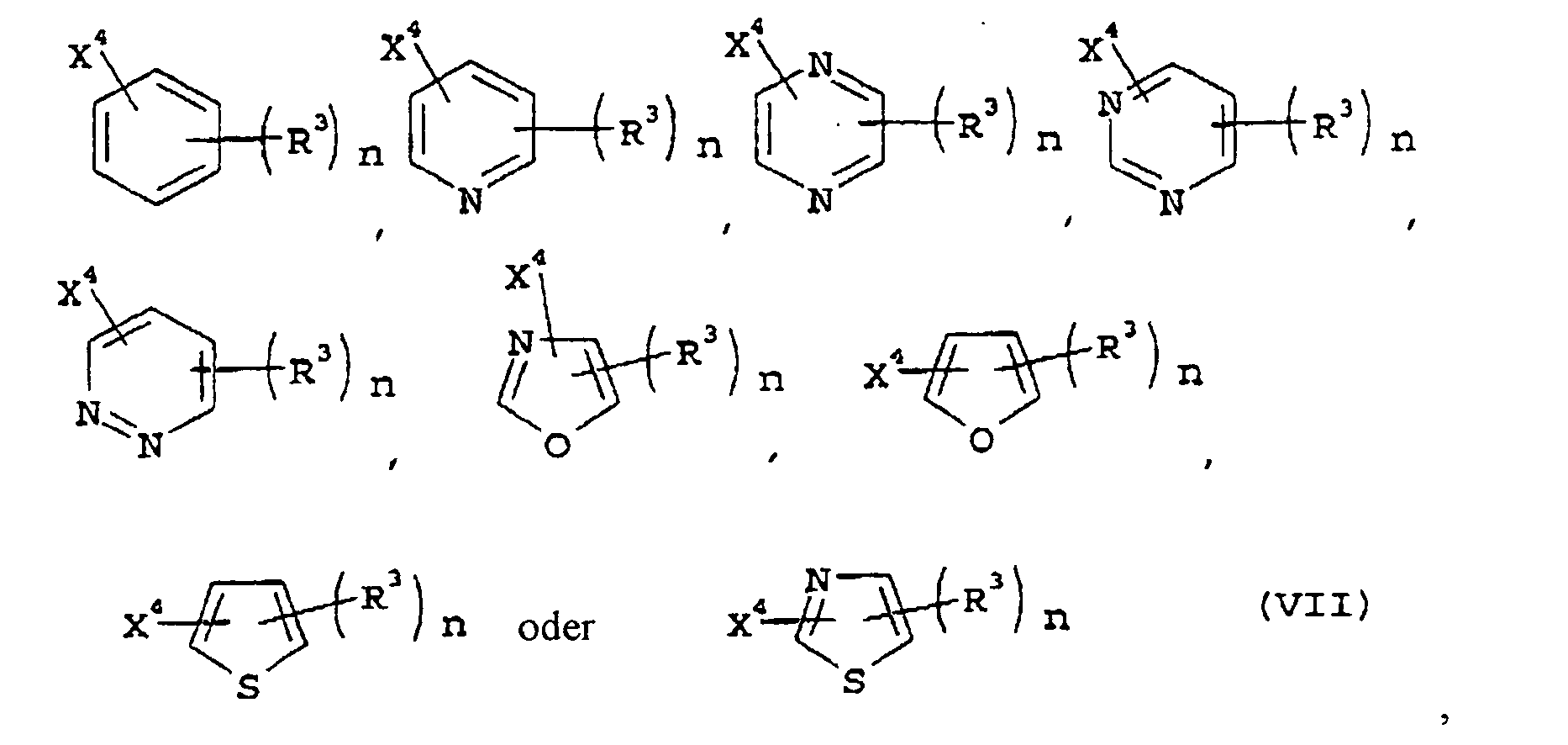
ist. - Verfahren nach Anspruch 5, wobei die halogenierte Verbindung eine Verbindung, dargestellt durch die Formel:

ist. - Verfahren nach Anspruch 5, wobei die Verbindung mit einer elektrophilen Gruppe Benzaldehyd, Chlortrimethylsilan oder N,N-Dimethylformamid ist.
- Verfahren nach Anspruch 5, wobei das Austauschreagens ein Austauschreagens nach Anspruch 1 ist, die Magnesiumverbindung, dargestellt durch die Formel (I) wie in Anspruch 1 beschrieben, n-Butylmagnesiumbromid oder n-Butylmagnesiumchorid ist und die Organolithiumverbindung, dargestellt durch die Formel (II), n-Butyllithium ist.
- Verfahren nach Anspruch 5, wobei das Austauschreagens ein Austauschreagens nach Anspruch 2 ist, die Verbindung, dargestellt durch die Formel (III) wie in Anspruch 2 beschrieben, Tri-n-butylmagnesiumlithium ist und die Verbindung, dargestellt durch die Formel (IV), Tetra-n-butylmagnesiumdilithium ist.
- Gemisch aus (A) (1) einer Magnesiumverbindung, dargestellt durch die Formel:
R1-Mg-X1 (I),
(worin R1 ein gegebenenfalls substituierter Kohlenwasserstoffrest ist und X1 ein Halogenatom ist) oder (2) einer Verbindung, ausgewählt aus der Gruppe, bestehend aus Diethylmagnesium, Dipropylmagnesium, Diisopropylmagnesium, Di-n-butylmagnesium, Di-sec-butylmagnesium, Di-tert-butylmagnesium, Diphenylmagnesium, Divinylmagnesium, Diallylmagnesium, Di(2-furyl)magnesium, Di(3-furyl)magnesium, Di(2-thienyl)magnesium, Di(3-thienyl)magnesium und Dibenzylmagnesium, und (B) einer Organolithiumverbindung, dargestellt durch die Formel:
R2-Li (II),
(worin R2 ein gegebenenfalls substituierter Kohlenwasserstoffrest ist). - Verfahren zur Herstellung einer Verbindung, in der ein Halogenatom, das in einer halogenierten Verbindung vorliegt, gegen eine elektrophile Gruppe ausgetauscht ist, welches das Umsetzen (i) einer halogenierten Verbindung mit mindestens einem Halogenatom in dem Molekül oder einer halogenierten Verbindung mit mindestens einer Doppel- oder Dreifachbindung in dem Molekül, an die ein Halogen-substituiertes Kohlenstoffatom gebunden ist, mit (ii) einem Austauschreagens nach Anspruch 1 oder 2, das Umsetzen des resultierenden Produktes mit (iii) einer Verbindung mit einer elektrophilen Gruppe und gegebenenfalls das Behandeln des resultierenden Produktes mit einer Säure umfasst.
- Verfahren zur Herstellung von 6-Brom-2-formylpyridin oder einer Verbindung, dargestellt durch die Formel:


Applications Claiming Priority (3)
| Application Number | Priority Date | Filing Date | Title |
|---|---|---|---|
| JP2000024613 | 2000-02-02 | ||
| JP2000024613 | 2000-02-02 | ||
| PCT/JP2001/000463 WO2001057046A1 (en) | 2000-02-02 | 2001-01-24 | Method of converting functional group through halogen-metal exchange reaction |
Publications (3)
| Publication Number | Publication Date |
|---|---|
| EP1253152A1 EP1253152A1 (de) | 2002-10-30 |
| EP1253152A4 EP1253152A4 (de) | 2008-08-20 |
| EP1253152B1 true EP1253152B1 (de) | 2009-11-04 |
Family
ID=18550569
Family Applications (1)
| Application Number | Title | Priority Date | Filing Date |
|---|---|---|---|
| EP01948984A Revoked EP1253152B1 (de) | 2000-02-02 | 2001-01-24 | Verfahren zur verwandlung einer funktionellen gruppe durch halogen-metal-austausch |
Country Status (8)
| Country | Link |
|---|---|
| US (2) | US6946559B2 (de) |
| EP (1) | EP1253152B1 (de) |
| CN (1) | CN1308331C (de) |
| AT (1) | ATE447578T1 (de) |
| AU (1) | AU2001228805A1 (de) |
| CA (1) | CA2399089C (de) |
| DE (1) | DE60140348D1 (de) |
| WO (1) | WO2001057046A1 (de) |
Families Citing this family (11)
| Publication number | Priority date | Publication date | Assignee | Title |
|---|---|---|---|---|
| EP1510510A1 (de) * | 2002-05-31 | 2005-03-02 | Banyu Pharmaceutical Co., Ltd. | Verfahren zur einführung eines substituenten durch eine halogen-metall-austauschreaktion |
| EP1582523A1 (de) * | 2004-04-02 | 2005-10-05 | Ludwig-Maximilians-Universität München | Verfahren zur Herstellung von Organomagnesiumverbindungen |
| PE20060115A1 (es) | 2004-07-23 | 2006-03-23 | Basf Ag | 2-(piridin-2-il)-pirimidinas como agentes fungicidas |
| TW201011043A (en) | 2008-06-20 | 2010-03-16 | Chugai Pharmaceutical Co Ltd | Crystal of spiroketal derivatives and process for preparation of spiroketal derivatives |
| US8692026B2 (en) | 2010-07-15 | 2014-04-08 | Albemarle Corporation | Processes for producing 4-bromo-2-methoxybenzaldehyde |
| CN102993086A (zh) * | 2012-10-11 | 2013-03-27 | 南通市华峰化工有限责任公司 | 一种2,6-二溴吡啶的合成方法 |
| CN108059590A (zh) * | 2017-12-14 | 2018-05-22 | 珠海奥博凯生物医药技术有限公司 | 一种3-三氟甲氧基-4-氯苯甲醛的制备方法 |
| CN108212044B (zh) * | 2018-01-30 | 2024-04-26 | 凯莱英医药化学(阜新)技术有限公司 | 金属-溴代芳烃的连续置换反应设备、连续置换方法及二者的应用 |
| MX2020013827A (es) * | 2018-06-22 | 2021-03-25 | Bayer Ag | Proceso de preparacion de compuestos triciclicos. |
| WO2020132716A1 (en) * | 2018-12-24 | 2020-07-02 | Eustralis Pharmaceuticals Limited (Trading As Pressura Neuro) | Chemical compound manufacture, new salt form, and therapeutic uses thereof |
| WO2023152081A1 (en) | 2022-02-09 | 2023-08-17 | Inke, S.A. | Process for preparing pyridinoylpiperidines 5-ht1f agonists and salts thereof |
Family Cites Families (6)
| Publication number | Priority date | Publication date | Assignee | Title |
|---|---|---|---|---|
| GB1505652A (en) * | 1974-06-06 | 1978-03-30 | Ici Ltd | Oligomerising ethylene |
| US3972953A (en) * | 1975-01-22 | 1976-08-03 | Sun Ventures, Inc. | Group VIII metal complex catalyzed halogen exchange reaction |
| JPS56112916A (en) * | 1980-02-13 | 1981-09-05 | Asahi Chem Ind Co Ltd | Production of conjugated diene polymer |
| DE19643648A1 (de) * | 1996-10-22 | 1998-04-23 | Basf Ag | Verfahren zur Umsetzung von Grignardverbindungen mit Carbonylverbindungen und anschließender Hydrolyse |
| CN1114593C (zh) * | 1998-05-08 | 2003-07-16 | 陶氏益农有限责任公司 | 2位被取代的吡啶的制备 |
| DE19937537A1 (de) * | 1999-08-09 | 2001-03-08 | Gruenenthal Gmbh | Substituierte 2-Dialkylaminoalkylbiphenyl-Derivate |
-
2001
- 2001-01-24 AU AU2001228805A patent/AU2001228805A1/en not_active Abandoned
- 2001-01-24 DE DE60140348T patent/DE60140348D1/de not_active Expired - Lifetime
- 2001-01-24 CA CA2399089A patent/CA2399089C/en not_active Expired - Fee Related
- 2001-01-24 AT AT01948984T patent/ATE447578T1/de not_active IP Right Cessation
- 2001-01-24 CN CNB018041361A patent/CN1308331C/zh not_active Expired - Fee Related
- 2001-01-24 US US10/182,622 patent/US6946559B2/en not_active Expired - Fee Related
- 2001-01-24 EP EP01948984A patent/EP1253152B1/de not_active Revoked
- 2001-01-24 WO PCT/JP2001/000463 patent/WO2001057046A1/ja not_active Ceased
-
2005
- 2005-03-11 US US11/077,292 patent/US7439535B2/en not_active Expired - Fee Related
Also Published As
| Publication number | Publication date |
|---|---|
| US20050156336A1 (en) | 2005-07-21 |
| EP1253152A1 (de) | 2002-10-30 |
| WO2001057046A1 (en) | 2001-08-09 |
| CA2399089C (en) | 2010-05-11 |
| CA2399089A1 (en) | 2001-08-09 |
| US20030130511A1 (en) | 2003-07-10 |
| US6946559B2 (en) | 2005-09-20 |
| ATE447578T1 (de) | 2009-11-15 |
| AU2001228805A1 (en) | 2001-08-14 |
| US7439535B2 (en) | 2008-10-21 |
| EP1253152A4 (de) | 2008-08-20 |
| CN1308331C (zh) | 2007-04-04 |
| DE60140348D1 (de) | 2009-12-17 |
| CN1608071A (zh) | 2005-04-20 |
Similar Documents
| Publication | Publication Date | Title |
|---|---|---|
| Negishi et al. | Strictly regiocontrolled α-monosubstitution of cyclic carbonyl compounds with alkynyl and alkyl groups via Pd-catalyzed coupling of cyclic α-iodoenones with organozincs | |
| US6946559B2 (en) | Method of converting functional group through halogen-metal exchange reaction | |
| KR101025528B1 (ko) | 5-(2'-피리딜)-2-피리돈 유도체의 제조 방법 | |
| US4433160A (en) | Process for producing α-arylalkanoic acid ester | |
| CA2273942C (en) | Process for the preparation of an organozinc reagent | |
| CN1083427C (zh) | 生产双(4-烷硫基苯基)二硫化物的方法 | |
| CN117946028B (zh) | 一种1,4-苯并硫氮杂䓬类化合物的合成方法 | |
| US20050104233A1 (en) | Method of substituent introduction through halogen-metal exchange reaction | |
| JP5536458B2 (ja) | 6−ハロゲノ−3−アリールピリジン誘導体の製造方法 | |
| Caddick et al. | Potassium ferrate on wet alumina: preparation and reactivity | |
| Niu et al. | Synthesis of 2‐Mercaptobenzaldehyde, 2‐Mercaptocyclohex‐1‐enecarboxaldehydes and 3‐Mercaptoacrylaldehydes | |
| AU617168B2 (en) | Production of 3,5,6-trichloropyridin-2-ol and novel intermediates thereof | |
| JPWO2001057046A1 (ja) | ハロゲン−金属交換反応による官能基変換法 | |
| JP4649733B2 (ja) | トリフルオロメチル基含有アセトフェノン化合物の製造方法 | |
| JPH0583525B2 (de) | ||
| JP4635251B2 (ja) | 有機ビスマス化合物およびその製法 | |
| JP3650156B2 (ja) | トリアルキルシリルトリアルキルシロキシメチレン化合物の製造方法 | |
| Cadoni et al. | Ortho-spirocarbonates and ortho-spirothiocarbonates: synthesis, functionalization and coupling | |
| CN110015946B (zh) | 一种1,5-二芳基-4-戊烯-1-醇化合物的制备方法 | |
| KR20010052877A (ko) | 2종의 상이한 그리냐르 시약을 사용하는 카복시산아미드의 촉매에 의한 비대칭 이치환 방법 | |
| Kondratyev | Organocatalytic asymmetric alkenylation of carbonyl compounds | |
| JP4008306B2 (ja) | 末端アルキンの製造法 | |
| CN117529325A (zh) | 制备7-(吗啉基)-2-(N-哌嗪基)甲基噻吩并[2,3-c]吡啶衍生物的改进方法 | |
| JP4051967B2 (ja) | ホスホノジヒドロピラン誘導体の製造法 | |
| HUT61274A (en) | Process for regioselective production of 3-substituted 3-aryloxy propaneamine compounds |
Legal Events
| Date | Code | Title | Description |
|---|---|---|---|
| PUAI | Public reference made under article 153(3) epc to a published international application that has entered the european phase |
Free format text: ORIGINAL CODE: 0009012 |
|
| 17P | Request for examination filed |
Effective date: 20020725 |
|
| AK | Designated contracting states |
Kind code of ref document: A1 Designated state(s): AT BE CH CY DE DK ES FI FR GB GR IE IT LI LU MC NL PT SE TR |
|
| AX | Request for extension of the european patent |
Free format text: AL PAYMENT 20020725;LT PAYMENT 20020725;LV PAYMENT 20020725;MK PAYMENT 20020725;RO PAYMENT 20020725;SI PAYMENT 20020725 |
|
| A4 | Supplementary search report drawn up and despatched |
Effective date: 20080721 |
|
| 17Q | First examination report despatched |
Effective date: 20081020 |
|
| GRAP | Despatch of communication of intention to grant a patent |
Free format text: ORIGINAL CODE: EPIDOSNIGR1 |
|
| GRAS | Grant fee paid |
Free format text: ORIGINAL CODE: EPIDOSNIGR3 |
|
| GRAA | (expected) grant |
Free format text: ORIGINAL CODE: 0009210 |
|
| RAP1 | Party data changed (applicant data changed or rights of an application transferred) |
Owner name: BANYU PHARMACEUTICAL CO., LTD. |
|
| AK | Designated contracting states |
Kind code of ref document: B1 Designated state(s): AT BE CH CY DE DK ES FI FR GB GR IE IT LI LU MC NL PT SE TR |
|
| AX | Request for extension of the european patent |
Extension state: AL LT LV MK RO SI |
|
| REG | Reference to a national code |
Ref country code: GB Ref legal event code: FG4D |
|
| REG | Reference to a national code |
Ref country code: CH Ref legal event code: EP |
|
| REG | Reference to a national code |
Ref country code: IE Ref legal event code: FG4D |
|
| REG | Reference to a national code |
Ref country code: CH Ref legal event code: NV Representative=s name: SERVOPATENT GMBH |
|
| REF | Corresponds to: |
Ref document number: 60140348 Country of ref document: DE Date of ref document: 20091217 Kind code of ref document: P |
|
| NLV1 | Nl: lapsed or annulled due to failure to fulfill the requirements of art. 29p and 29m of the patents act | ||
| LTIE | Lt: invalidation of european patent or patent extension |
Effective date: 20091104 |
|
| PG25 | Lapsed in a contracting state [announced via postgrant information from national office to epo] |
Ref country code: FI Free format text: LAPSE BECAUSE OF FAILURE TO SUBMIT A TRANSLATION OF THE DESCRIPTION OR TO PAY THE FEE WITHIN THE PRESCRIBED TIME-LIMIT Effective date: 20091104 Ref country code: SE Free format text: LAPSE BECAUSE OF FAILURE TO SUBMIT A TRANSLATION OF THE DESCRIPTION OR TO PAY THE FEE WITHIN THE PRESCRIBED TIME-LIMIT Effective date: 20091104 Ref country code: PT Free format text: LAPSE BECAUSE OF FAILURE TO SUBMIT A TRANSLATION OF THE DESCRIPTION OR TO PAY THE FEE WITHIN THE PRESCRIBED TIME-LIMIT Effective date: 20100304 Ref country code: ES Free format text: LAPSE BECAUSE OF FAILURE TO SUBMIT A TRANSLATION OF THE DESCRIPTION OR TO PAY THE FEE WITHIN THE PRESCRIBED TIME-LIMIT Effective date: 20100215 |
|
| PG25 | Lapsed in a contracting state [announced via postgrant information from national office to epo] |
Ref country code: CY Free format text: LAPSE BECAUSE OF FAILURE TO SUBMIT A TRANSLATION OF THE DESCRIPTION OR TO PAY THE FEE WITHIN THE PRESCRIBED TIME-LIMIT Effective date: 20091104 |
|
| PG25 | Lapsed in a contracting state [announced via postgrant information from national office to epo] |
Ref country code: BE Free format text: LAPSE BECAUSE OF FAILURE TO SUBMIT A TRANSLATION OF THE DESCRIPTION OR TO PAY THE FEE WITHIN THE PRESCRIBED TIME-LIMIT Effective date: 20091104 Ref country code: AT Free format text: LAPSE BECAUSE OF FAILURE TO SUBMIT A TRANSLATION OF THE DESCRIPTION OR TO PAY THE FEE WITHIN THE PRESCRIBED TIME-LIMIT Effective date: 20091104 |
|
| PG25 | Lapsed in a contracting state [announced via postgrant information from national office to epo] |
Ref country code: DK Free format text: LAPSE BECAUSE OF FAILURE TO SUBMIT A TRANSLATION OF THE DESCRIPTION OR TO PAY THE FEE WITHIN THE PRESCRIBED TIME-LIMIT Effective date: 20091104 |
|
| PLBI | Opposition filed |
Free format text: ORIGINAL CODE: 0009260 |
|
| PG25 | Lapsed in a contracting state [announced via postgrant information from national office to epo] |
Ref country code: MC Free format text: LAPSE BECAUSE OF NON-PAYMENT OF DUE FEES Effective date: 20100131 |
|
| PLAX | Notice of opposition and request to file observation + time limit sent |
Free format text: ORIGINAL CODE: EPIDOSNOBS2 |
|
| 26 | Opposition filed |
Opponent name: ROOS, PETER Effective date: 20100803 |
|
| PG25 | Lapsed in a contracting state [announced via postgrant information from national office to epo] |
Ref country code: GR Free format text: LAPSE BECAUSE OF FAILURE TO SUBMIT A TRANSLATION OF THE DESCRIPTION OR TO PAY THE FEE WITHIN THE PRESCRIBED TIME-LIMIT Effective date: 20100205 |
|
| PG25 | Lapsed in a contracting state [announced via postgrant information from national office to epo] |
Ref country code: IE Free format text: LAPSE BECAUSE OF NON-PAYMENT OF DUE FEES Effective date: 20100124 |
|
| PGFP | Annual fee paid to national office [announced via postgrant information from national office to epo] |
Ref country code: FR Payment date: 20101221 Year of fee payment: 11 |
|
| RAP2 | Party data changed (patent owner data changed or rights of a patent transferred) |
Owner name: MSD K.K. |
|
| PG25 | Lapsed in a contracting state [announced via postgrant information from national office to epo] |
Ref country code: IT Free format text: LAPSE BECAUSE OF FAILURE TO SUBMIT A TRANSLATION OF THE DESCRIPTION OR TO PAY THE FEE WITHIN THE PRESCRIBED TIME-LIMIT Effective date: 20091104 |
|
| PGFP | Annual fee paid to national office [announced via postgrant information from national office to epo] |
Ref country code: GB Payment date: 20101110 Year of fee payment: 11 |
|
| REG | Reference to a national code |
Ref country code: CH Ref legal event code: PUE Owner name: MSD K.K. Free format text: BANYU PHARMACEUTICAL CO., LTD.#KITANOMARU SQUARE 1-13-12, KUDANKITA CHIYODA-KU#TOKYO 102-8667 (JP) -TRANSFER TO- MSD K.K.#KITANOMARU SQUARE 1-3-12 KUDANKITA CHIYODA KU,#TOKYO 102-8667 (JP) |
|
| PGFP | Annual fee paid to national office [announced via postgrant information from national office to epo] |
Ref country code: CH Payment date: 20110103 Year of fee payment: 11 Ref country code: DE Payment date: 20110131 Year of fee payment: 11 |
|
| REG | Reference to a national code |
Ref country code: GB Ref legal event code: 732E Free format text: REGISTERED BETWEEN 20110609 AND 20110615 |
|
| REG | Reference to a national code |
Ref country code: FR Ref legal event code: TP |
|
| REG | Reference to a national code |
Ref country code: DE Ref legal event code: R082 Ref document number: 60140348 Country of ref document: DE Representative=s name: ABITZ & PARTNER, DE Effective date: 20110913 Ref country code: DE Ref legal event code: R081 Ref document number: 60140348 Country of ref document: DE Owner name: MSD K.K., JP Free format text: FORMER OWNER: BANYU PHARMACEUTICAL CO., LTD., TOKIO/TOKYO, JP Effective date: 20110913 Ref country code: DE Ref legal event code: R082 Ref document number: 60140348 Country of ref document: DE Representative=s name: ABITZ & PARTNER PATENTANWAELTE MBB, DE Effective date: 20110913 |
|
| RDAF | Communication despatched that patent is revoked |
Free format text: ORIGINAL CODE: EPIDOSNREV1 |
|
| REG | Reference to a national code |
Ref country code: DE Ref legal event code: R103 Ref document number: 60140348 Country of ref document: DE Ref country code: DE Ref legal event code: R064 Ref document number: 60140348 Country of ref document: DE |
|
| RDAG | Patent revoked |
Free format text: ORIGINAL CODE: 0009271 |
|
| STAA | Information on the status of an ep patent application or granted ep patent |
Free format text: STATUS: PATENT REVOKED |
|
| REG | Reference to a national code |
Ref country code: CH Ref legal event code: PL |
|
| 27W | Patent revoked |
Effective date: 20120205 |
|
| GBPR | Gb: patent revoked under art. 102 of the ep convention designating the uk as contracting state |
Effective date: 20120205 |
|
| PG25 | Lapsed in a contracting state [announced via postgrant information from national office to epo] |
Ref country code: LI Free format text: LAPSE BECAUSE OF THE APPLICANT RENOUNCES Effective date: 20091104 Ref country code: CH Free format text: LAPSE BECAUSE OF THE APPLICANT RENOUNCES Effective date: 20091104 |
|
| REG | Reference to a national code |
Ref country code: DE Ref legal event code: R107 Ref document number: 60140348 Country of ref document: DE Effective date: 20120802 |
|
| PG25 | Lapsed in a contracting state [announced via postgrant information from national office to epo] |
Ref country code: LU Free format text: LAPSE BECAUSE OF REVOCATION BY EPO Effective date: 20100124 |
|
| PG25 | Lapsed in a contracting state [announced via postgrant information from national office to epo] |
Ref country code: NL Free format text: LAPSE BECAUSE OF NON-PAYMENT OF DUE FEES Effective date: 20091104 |