EP1255873B9 - Acier a ressorts de type acier vieilli thermiquement - Google Patents
Acier a ressorts de type acier vieilli thermiquement Download PDFInfo
- Publication number
- EP1255873B9 EP1255873B9 EP01901158A EP01901158A EP1255873B9 EP 1255873 B9 EP1255873 B9 EP 1255873B9 EP 01901158 A EP01901158 A EP 01901158A EP 01901158 A EP01901158 A EP 01901158A EP 1255873 B9 EP1255873 B9 EP 1255873B9
- Authority
- EP
- European Patent Office
- Prior art keywords
- spring steel
- weight
- strip
- replaced
- cerium
- Prior art date
- Legal status (The legal status is an assumption and is not a legal conclusion. Google has not performed a legal analysis and makes no representation as to the accuracy of the status listed.)
- Expired - Lifetime
Links
Images


Classifications
-
- C—CHEMISTRY; METALLURGY
- C21—METALLURGY OF IRON
- C21D—MODIFYING THE PHYSICAL STRUCTURE OF FERROUS METALS; GENERAL DEVICES FOR HEAT TREATMENT OF FERROUS OR NON-FERROUS METALS OR ALLOYS; MAKING METAL MALLEABLE, e.g. BY DECARBURISATION OR TEMPERING
- C21D6/00—Heat treatment of ferrous alloys
- C21D6/004—Heat treatment of ferrous alloys containing Cr and Ni
-
- C—CHEMISTRY; METALLURGY
- C21—METALLURGY OF IRON
- C21D—MODIFYING THE PHYSICAL STRUCTURE OF FERROUS METALS; GENERAL DEVICES FOR HEAT TREATMENT OF FERROUS OR NON-FERROUS METALS OR ALLOYS; MAKING METAL MALLEABLE, e.g. BY DECARBURISATION OR TEMPERING
- C21D8/00—Modifying the physical properties of ferrous metals or ferrous alloys by deformation combined with, or followed by, heat treatment
- C21D8/02—Modifying the physical properties of ferrous metals or ferrous alloys by deformation combined with, or followed by, heat treatment during manufacturing of plates or strips
-
- C—CHEMISTRY; METALLURGY
- C22—METALLURGY; FERROUS OR NON-FERROUS ALLOYS; TREATMENT OF ALLOYS OR NON-FERROUS METALS
- C22C—ALLOYS
- C22C38/00—Ferrous alloys, e.g. steel alloys
- C22C38/002—Ferrous alloys, e.g. steel alloys containing In, Mg, or other elements not provided for in one single group C22C38/001 - C22C38/60
-
- C—CHEMISTRY; METALLURGY
- C22—METALLURGY; FERROUS OR NON-FERROUS ALLOYS; TREATMENT OF ALLOYS OR NON-FERROUS METALS
- C22C—ALLOYS
- C22C38/00—Ferrous alloys, e.g. steel alloys
- C22C38/18—Ferrous alloys, e.g. steel alloys containing chromium
- C22C38/40—Ferrous alloys, e.g. steel alloys containing chromium with nickel
- C22C38/44—Ferrous alloys, e.g. steel alloys containing chromium with nickel with molybdenum or tungsten
-
- C—CHEMISTRY; METALLURGY
- C22—METALLURGY; FERROUS OR NON-FERROUS ALLOYS; TREATMENT OF ALLOYS OR NON-FERROUS METALS
- C22C—ALLOYS
- C22C38/00—Ferrous alloys, e.g. steel alloys
- C22C38/18—Ferrous alloys, e.g. steel alloys containing chromium
- C22C38/40—Ferrous alloys, e.g. steel alloys containing chromium with nickel
- C22C38/50—Ferrous alloys, e.g. steel alloys containing chromium with nickel with titanium or zirconium
-
- C—CHEMISTRY; METALLURGY
- C22—METALLURGY; FERROUS OR NON-FERROUS ALLOYS; TREATMENT OF ALLOYS OR NON-FERROUS METALS
- C22C—ALLOYS
- C22C38/00—Ferrous alloys, e.g. steel alloys
- C22C38/18—Ferrous alloys, e.g. steel alloys containing chromium
- C22C38/40—Ferrous alloys, e.g. steel alloys containing chromium with nickel
- C22C38/52—Ferrous alloys, e.g. steel alloys containing chromium with nickel with cobalt
-
- C—CHEMISTRY; METALLURGY
- C21—METALLURGY OF IRON
- C21D—MODIFYING THE PHYSICAL STRUCTURE OF FERROUS METALS; GENERAL DEVICES FOR HEAT TREATMENT OF FERROUS OR NON-FERROUS METALS OR ALLOYS; MAKING METAL MALLEABLE, e.g. BY DECARBURISATION OR TEMPERING
- C21D2211/00—Microstructure comprising significant phases
- C21D2211/008—Martensite
-
- C—CHEMISTRY; METALLURGY
- C21—METALLURGY OF IRON
- C21D—MODIFYING THE PHYSICAL STRUCTURE OF FERROUS METALS; GENERAL DEVICES FOR HEAT TREATMENT OF FERROUS OR NON-FERROUS METALS OR ALLOYS; MAKING METAL MALLEABLE, e.g. BY DECARBURISATION OR TEMPERING
- C21D9/00—Heat treatment, e.g. annealing, hardening, quenching or tempering, adapted for particular articles; Furnaces therefor
- C21D9/02—Heat treatment, e.g. annealing, hardening, quenching or tempering, adapted for particular articles; Furnaces therefor for springs
-
- Y—GENERAL TAGGING OF NEW TECHNOLOGICAL DEVELOPMENTS; GENERAL TAGGING OF CROSS-SECTIONAL TECHNOLOGIES SPANNING OVER SEVERAL SECTIONS OF THE IPC; TECHNICAL SUBJECTS COVERED BY FORMER USPC CROSS-REFERENCE ART COLLECTIONS [XRACs] AND DIGESTS
- Y10—TECHNICAL SUBJECTS COVERED BY FORMER USPC
- Y10S—TECHNICAL SUBJECTS COVERED BY FORMER USPC CROSS-REFERENCE ART COLLECTIONS [XRACs] AND DIGESTS
- Y10S148/00—Metal treatment
- Y10S148/902—Metal treatment having portions of differing metallurgical properties or characteristics
- Y10S148/909—Tube
Definitions
- the invention relates to a high-strength, hardenable, corrosion-resistant spring steel of the maraging type.
- maraging-type spring steels differ in principle from metastable austenitic or semi-austenitic steels due to their martensite temperature.
- the martensite temperature is approximately at or below room temperature.
- Such metastable austenitic or semi-austenitic steels are for example from EP 0 210 035 A1 known.
- the steels mentioned above require increased cold working to form deformation martensite. They have the decisive disadvantage that in the production of wires and tapes, the ductility is greatly reduced by the increased cold deformation before the actual curing. Particularly in the production of tapes, a so-called deformation texture is formed, which prevents isotropic formability. Under an isotropic formability is understood here and below that a comparable formability is given both parallel and perpendicular to the rolling direction.
- JP-A-49 119 814 is a high strength, corrosion resistant spring steel known, the nickel and chromium in the range (2.5, 14), (10.2, 14), (7.3, 18) and (2.5, 18) on the (nickel; -Chrom.) - weight .-% - diagram contains with residual iron.
- the recommends JP-A-49 119 815 at least one of the elements molybdenum, titanium, copper, tungsten and zirconium in a total proportion of less than 0.5 wt .-%. To harden beryllium contents greater than 0.3 wt .-% are recommended. It has been found that when using beryllium contents greater than 0.3 wt.% Even with the use of the learned titanium additions, the alloy could not be processed warm.
- EP 773 307 A1 is a high strength, corrosion resistant spring steel known, the 6 to 9 wt .-% nickel, 11 to 15 wt .-% chromium, 0 to 6 wt .-% copper and cobalt and a combination of molybdenum + 1/2 tungsten in the range of 0.5 to 6 wt .-% and beryllium in the range of 0.1 to 0.5 wt .-%.
- this material is not safe to manufacture, because he is occasionally two-phase, that is, that in addition to martensite also contains high levels of ferrite. However, this ferrite content leads to undesirable mechanical properties.
- a high ferrite content in the above-mentioned compositions can increase up to values of 60% and thereby lead to reduced lattice strain and thus to loss of hardness before or after curing.
- the ferrite in the case of heat treatments in the unfavorable temperature range between curing and solution heat treatment, the ferrite can decompose into a brittle theta phase and into austenite, which then converts to martensite on cooling. This decay leads to major losses in ductility.
- the martensite temperature is at the o.g. Compositions too low, e.g. Even at compositions with martensite temperatures, which were under normal conditions at approx. 100 ° C, a complete conversion of the austenite into martensite could not take place occasionally. It has been found that annealing temperature and duration and quench rate were critical processing parameters. This leads to very severe hardness drops in the cured state and significant quality fluctuations in production.
- spring alloys which can contain up to 25% by weight of chromium and up to 20% by weight of nickel.
- the alloys described therein can be made of austenitic, ferritic and martensitic and also in the combinations of austenite, ferrite and martensite. As a rule, no mechanical properties, in particular good, reproducible isotropic formability, can be ensured with the wide alloy windows described therein.
- cobalt nickel-based austenitic superalloy is known.
- the cobalt-nickel base alloy described therein is provided with hardening additives of beryllium and / or titanium and / or carbon in amounts of up to 5 wt .-%.
- the alloys there are austenitic, so that their hardening relatively high beryllium concentrations are required because the solubility of beryllium in austenitic microstructure is relatively high.
- the object is achieved by a high-strength, hardenable, corrosion-resistant spring steel of the maraging type, which is characterized - That the spring steel essentially from 6.0 to 9.0 wt% Ni 0.1 to 0.3% by weight of Ti 11.0 to 15.0% by weight Cr 0.2 to 0.3 wt.% Be Rest Fe consists, - That the spring steel has a martensite temperature M S > 130 ° C and - That the ferrite content of the spring steel c ferrite ⁇ 3%.
- FIG. 6 shows a so-called "Schaeffler" diagram.
- nickel content can be replaced by cobalt and up to 35% of the chromium content by molybdenum and / or tungsten.
- the spring steel may contain up to 4% by weight of copper to provide i.b. to increase against pitting even further.
- the spring steel may contain at least one of manganese, silicon, aluminum or niobium in individual proportions of less than 0.5% by weight.
- the spring steel according to the invention has at least one of the elements carbon, nitrogen, sulfur, phosphorus, boron, hydrogen or oxygen in individual proportions of less than 0.1% by weight. If these proportions are exceeded, undesired carbide, boride or nitride precipitates occur, which adversely affect the physical properties of the material.
- the spring steel contains up to 0.1% by weight of cerium or cerium metal as deoxidizing additive.
- c ferrite [ 11 . 8th Si + 7 . 92 Cr + Not a word + 1 / 2 W + 15 . 84 Ti - 2 . 91 Mn - 5 . 83 ( Ni + 0 . 3 ⁇ Co ) - 174 . 9 ( C + N ) - 77 . 08 ] ,
- the ferrite content must not exceed 3%, otherwise it can lead to brittle theta phases or large hardness losses.
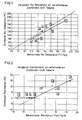
- FIGS. 1 and 2 A comparison of the calculated to the determined values for the martensite temperature and the ferrite content is shown in FIGS. 1 and 2.
- the alloys shown in Figures 1 and 2 are listed in their compositions in the following table. No. elements Ms-T (° C) Ferrite content (%) HV n. Aush.
- the present alloys are typically made by casting a melt in a crucible or oven under vacuum or under an inert gas atmosphere. The melting temperatures are around 1500 ° C. Thereafter, a casting takes place in a mold. The cast ingots of the present alloys are then pre-blocked at a temperature of about 1000 ° C to 1200 ° C and then thermoformed into a ribbon at 900 ° C ⁇ T 1 ⁇ 1150 ° C. The low hot rolling temperatures are chosen to minimize the free-depleted edge zones. Thereafter, a first solution annealing (homogenization) of the strip, depending on the choice of annealing time at 850 ° C ⁇ T 2 ⁇ 1100 ° C instead.
- a first solution annealing homogenization
- the strip After cooling the strip to a temperature of T 3 ⁇ 300 ° C, the strip is cold worked and ground at a temperature approximately equal to room temperature with the aim of completely removing the free edge depleted zone. Thereafter, a second solution annealing at 850 ° C ⁇ T 5 ⁇ 1100 ° C takes place with the aim to obtain a fine-grained austenite microstructure.
- the strip is subjected to a heat treatment at 400 ° C ⁇ T 6 ⁇ 550 ° C.
- the heat treatment is carried out for 0.25 h to 10 h.
- Solution heat treatment can be for one minute to six hours, and it can be quenched slowly; ie the quenching rate has a relatively small influence.
- a second cold working takes place at a temperature approximately equal to room temperature.
- the isotropic formability is not very affected by this because of the low solidification and texture formation of these maraging alloys treated here. Only the heat treatment at 400 ° C ⁇ T 6 ⁇ 550 ° C then follows the second cold forming.
- spring elements were produced which had Vickers hardnesses HV> 590, very high strengths (strengths greater than 1900 N / mm 2 ).
- the corrosion resistance was examined in the cured state by moisture and salt fog tests. At relative humidities of 90%, no corrosion attack was observed after 28 days at 50 ° C. Likewise, no corrosion attack was detected after a day of salt fog on the spring elements.
- the cast was pre-blocked at a temperature of about 1200 ° C and then rolled into a ribbon at a temperature of about 1100 ° C.
- the martensite temperature M S was about 156 ° C for the molten alloy.
- the ferrite content c ferrite was 0.
- the material was then cold rolled at room temperature and subjected to a second solution heat treatment again at 1000 ° C and then cold worked again at room temperature.
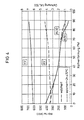
- Figures 3 and 4 show the mechanical properties as a function of the cold working of the thus treated alloy before and after curing, which is carried out by a heat treatment. Elongation is a poor measure of ductility in these low-strength alloys. More meaningful are the bending radii before curing.
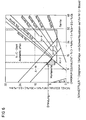
- the values found are for the "heavy" direction, ie for the bending axis parallel to the rolling direction, reproduced in the figure 5 and linked to the strengths after curing and further compared with two alloys of the prior art.
- the alloy according to the invention is here designated by the reference numeral 1, whereas the two prior art alloys are provided with the reference numerals 2 and 3.
- the prior art Alloy 2 is a stainless spring steel 1.4310 (X12 Cr Ni 17 7) of the metastable austenite type.
- Alloy 3 is the austenitic spring material Ni2Be, which is sold under the trade name Beryvac 520 by Vacuumschmelze GmbH.
- the bending radii in the "easy" direction i. ie bending axis perpendicular to the rolling direction, have at least equivalent or even better values.
- the subsequent curing takes place by means of a heat treatment for a period of two hours at a temperature of 470 ° C.
Landscapes
- Chemical & Material Sciences (AREA)
- Engineering & Computer Science (AREA)
- Materials Engineering (AREA)
- Mechanical Engineering (AREA)
- Metallurgy (AREA)
- Organic Chemistry (AREA)
- Thermal Sciences (AREA)
- Crystallography & Structural Chemistry (AREA)
- Physics & Mathematics (AREA)
- Heat Treatment Of Steel (AREA)
- Heat Treatment Of Sheet Steel (AREA)
- Heat Treatment Of Articles (AREA)
- Springs (AREA)
Claims (9)
- Acier à ressorts à résistance élevée, durcissable, résistant à la corrosion, du type maraging, avec déformabilité isotrope, dans lequel l'acier à ressorts est constitué de
6,0 à 9,0 % en poids de Ni, jusqu'à 50 % de la teneur en nickel pouvant être remplacés le cas échéant par Co,
11,0 à 15,0 % en poids de Cr, jusqu'à 35 % de la teneur en chrome pouvant être remplacés le cas échéant par Mo et/ou W,
0,1 à 0,3 % en poids de Ti
0,2 à 0,3 % en poids de Be
le cas échéant
jusqu'à 0,1 % en poids de Cer ou de mischmétal à base de cérium
jusqu'à 4 % en poids de cuivre
au moins un des éléments manganèse, silicium, aluminium ou niobium en proportions individuelles de moins de 0,5 % en poids, au moins un des éléments C, N, S, P, B, H ou O en proportions individuelles de moins de 0,1 % en poids
le reste étant du Fe et des impuretés inévitables,

- Acier à ressorts selon la revendication 1,
caractérisé en ce que
jusqu'à 50 % de la teneur en nickel sont remplacés par du cobalt. - Acier à ressorts selon la revendication 1 ou 2,
caractérisé en ce que
jusqu'à 35 % de la teneur en chrome sont remplacés par du molybdène et/ou du tungstène. - Acier à ressorts selon l'une des revendications 1 à 3,
caractérisé en ce que
l'acier à ressorts contient jusqu'à 0,1 % en poids de cérium ou de mischmétal à base de cérium en tant qu'additif de désoxydation. - Acier à ressorts selon l'une des revendications 1 à 4,
caractérisé en ce que
l'acier à ressorts contient jusqu'à 4 % en poids de cuivre. - Acier à ressorts selon l'une des revendications 1 à 5,
caractérisé en ce que
l'acier à ressorts contient au moins un des éléments manganèse ou silicium en proportions individuelles de moins de 0,5 % en poids. - Procédé de fabrication d'un feuillard en acier à ressorts flexible de façon isotrope ayant une composition selon l'une des revendications 1 à 6,
caractérisé par
les étapes suivantes du procédé :a) Fusion de l'alliage sous vide ou gaz inerte, puis moulage en un lingot ;b) Façonnage à chaud du lingot en un feuillard à 900°C ≤ T1 ≤ 1150°C ;c) Premier recuit de mise en solution du feuillard à 850°C ≤ T2 ≤ 1100°C ;d) Refroidissement du feuillard à une température de T3 ≤ 300°C ;e) Façonnage à froid et rectification du feuillard pour éliminer la zone marginale appauvrie en béryllium ;fi) Second recuit de mise en solution à 850°C ≤ T5 ≤ 1100°C. - Procédé selon la revendication 7,
caractérisé par
l'autre étape suivante du procédé :g) Traitement thermique du feuillard à 400°C ≤ T6 ≤ 550°C. - Procédé selon la revendication 8,
caractérisé par
les autres étapes suivantes du procédé :f2) Second façonnage à froid ;g) Traitement thermique à 400°C ≤ T6 ≤ 550°C.
Applications Claiming Priority (3)
| Application Number | Priority Date | Filing Date | Title |
|---|---|---|---|
| DE10001650A DE10001650A1 (de) | 2000-01-17 | 2000-01-17 | Federstahl vom Maraging-Typ |
| DE10001650 | 2000-01-17 | ||
| PCT/EP2001/000498 WO2001053556A1 (fr) | 2000-01-17 | 2001-01-17 | Acier a ressorts de type acier vieilli thermiquement |
Publications (3)
| Publication Number | Publication Date |
|---|---|
| EP1255873A1 EP1255873A1 (fr) | 2002-11-13 |
| EP1255873B1 EP1255873B1 (fr) | 2006-06-21 |
| EP1255873B9 true EP1255873B9 (fr) | 2007-10-10 |
Family
ID=7627717
Family Applications (1)
| Application Number | Title | Priority Date | Filing Date |
|---|---|---|---|
| EP01901158A Expired - Lifetime EP1255873B9 (fr) | 2000-01-17 | 2001-01-17 | Acier a ressorts de type acier vieilli thermiquement |
Country Status (4)
| Country | Link |
|---|---|
| US (1) | US6793745B2 (fr) |
| EP (1) | EP1255873B9 (fr) |
| DE (2) | DE10001650A1 (fr) |
| WO (1) | WO2001053556A1 (fr) |
Families Citing this family (10)
| Publication number | Priority date | Publication date | Assignee | Title |
|---|---|---|---|---|
| DE10242322A1 (de) * | 2002-09-12 | 2004-04-01 | Vacuumschmelze Gmbh & Co. Kg | Golfschlägerkopf aus Maraging Stahl |
| DE102004047508B3 (de) * | 2004-09-28 | 2006-04-20 | Hottinger Baldwin Messtechnik Gmbh | Messgrößenaufnehmer |
| DE102004063750A1 (de) * | 2004-12-29 | 2006-07-13 | Robert Bosch Gmbh | Glühstiftkerze mit integriertem Brennraumdrucksensor |
| DE102007026979A1 (de) * | 2006-10-06 | 2008-04-10 | Friedrich Siller | Inhalationsvorrichtung |
| US8888838B2 (en) | 2009-12-31 | 2014-11-18 | W. L. Gore & Associates, Inc. | Endoprosthesis containing multi-phase ferrous steel |
| CN103667983B (zh) * | 2013-11-08 | 2016-03-30 | 铜陵安东铸钢有限责任公司 | 一种高强度弹簧钢及其制备方法 |
| GB2546808B (en) * | 2016-02-01 | 2018-09-12 | Rolls Royce Plc | Low cobalt hard facing alloy |
| GB2546809B (en) * | 2016-02-01 | 2018-05-09 | Rolls Royce Plc | Low cobalt hard facing alloy |
| SE543422C2 (en) * | 2019-06-07 | 2021-01-12 | Voestalpine Prec Strip Ab | Steel strip for flapper valves |
| CN116716470B (zh) * | 2023-07-28 | 2026-02-27 | 中国航发动力股份有限公司 | 一种gh2696高温合金端面弹簧的热处理方法 |
Family Cites Families (8)
| Publication number | Priority date | Publication date | Assignee | Title |
|---|---|---|---|---|
| CH265255A (de) * | 1947-04-23 | 1949-11-30 | Reinhard Dr Straumann | Insbesondere für Uhrenfedern geeignete Eisen-Nickel-Kobalt-Legierung. |
| CH320815A (de) * | 1952-10-27 | 1957-04-15 | Reinhard Dr Straumann | Bestandteil für Zeitmessinstrumente |
| DE1186889B (de) * | 1954-10-18 | 1965-02-11 | Straumann Inst Ag | Verfahren zur Herstellung von Federn fuer Uhren und aehnliche Geraete |
| US2954267A (en) * | 1958-06-05 | 1960-09-27 | Olivetti Corp Of America | Modified return-to-zero digital recording system |
| JPS49119814A (fr) * | 1973-03-19 | 1974-11-15 | ||
| JPS6220857A (ja) * | 1985-07-19 | 1987-01-29 | Daido Steel Co Ltd | 高強度ステンレス鋼 |
| JP3381011B2 (ja) * | 1994-09-02 | 2003-02-24 | 株式会社日本製鋼所 | 析出硬化型ステンレス鋼 |
| DE29517799U1 (de) * | 1995-11-09 | 1996-02-08 | Vacuumschmelze Gmbh, 63450 Hanau | Hochfeste korrosionsbeständige Maraging-Legierung |
-
2000
- 2000-01-17 DE DE10001650A patent/DE10001650A1/de not_active Ceased
-
2001
- 2001-01-17 WO PCT/EP2001/000498 patent/WO2001053556A1/fr not_active Ceased
- 2001-01-17 EP EP01901158A patent/EP1255873B9/fr not_active Expired - Lifetime
- 2001-01-17 US US10/168,228 patent/US6793745B2/en not_active Expired - Fee Related
- 2001-01-17 DE DE50110248T patent/DE50110248D1/de not_active Expired - Lifetime
Also Published As
| Publication number | Publication date |
|---|---|
| US6793745B2 (en) | 2004-09-21 |
| US20030091458A1 (en) | 2003-05-15 |
| EP1255873B1 (fr) | 2006-06-21 |
| WO2001053556A1 (fr) | 2001-07-26 |
| EP1255873A1 (fr) | 2002-11-13 |
| DE50110248D1 (de) | 2006-08-03 |
| DE10001650A1 (de) | 2001-07-26 |
Similar Documents
| Publication | Publication Date | Title |
|---|---|---|
| DE60202598T2 (de) | Ultra-hochfester ausscheidungshärtbarer rostfreier stahl und daraus hergestellter länglicher band | |
| EP2446064B1 (fr) | Procédé de fabrication d'une pièce trempée à chaud sous presse et utilisation d'un produit en acier pour la fabrication d'une pièce trempée à chaud sous presse | |
| DE3628862C2 (fr) | ||
| DE19941411B4 (de) | Turbinen- oder Kesselbauteil | |
| EP3899064B1 (fr) | Matériau superausténitique | |
| DE69702428T2 (de) | Hochfester und hochzäher wärmebeständiger Gussstahl | |
| DE60115232T2 (de) | Stahllegierung, werkzeug zum plastiggiessen und zähgehärteter rohling für plastikgiesswerkzeuge | |
| DE1558668C3 (de) | Verwendung von kriechfesten, nichtrostenden austenitischen Stählen zur Herstellung von Blechen | |
| DE1301586B (de) | Austenitische ausscheidungshaertbare Stahllegierung und Verfahren zu ihrer Waermebehandlung | |
| DE3628395C1 (de) | Verwendung eines Stahls fuer Kunststofformen | |
| DE69601340T2 (de) | Hochfester, hochzaher warmebestandiger stahl und verfahren zu seiner herstellung | |
| EP1255873B9 (fr) | Acier a ressorts de type acier vieilli thermiquement | |
| DE2253148C3 (de) | Verfahren zur Herstellung eines ferritischen, korrosionsbeständigen Stahls und dessen Verwendung | |
| DE3934037C1 (fr) | ||
| WO2020064127A1 (fr) | Alliage à mémoire de forme, produit plat en acier préparé à partir de celui-ci doté de caractéristiques pseudoélastiques et procédé pour la préparation d'un tel produit plat en acier | |
| DE102013104935B4 (de) | CoNiCrMo-Legierung und Verfahren zum Herstellen einer CoNiCrMo-Legierung | |
| DE1233148B (de) | Verwendung einer martensitaushaertbaren Stahllegierung fuer druck- und schlagfeste Gegenstaende | |
| DE3223875C2 (de) | Verfahren zum Wärmebehandeln einer Ni-Legierung | |
| DE3309365C1 (de) | Verwendung einer aushaertbaren Kupfer-Nickel-Mangan-Legierung als Werkstoff zur Herstellung von Brillenteilen | |
| DE202009017752U1 (de) | Einsatzstahl | |
| DE2209085A1 (de) | Alterungsgehärteter martensitischer Nickelstahl | |
| DE2614354C3 (de) | Verwendung einer Legierung mit einem Gehalt an Eisen und Cobalt zur Herstellung von Gegenständen mit hoher Dämpfungskapazität | |
| DE1558508B2 (de) | Verwendung eines martensitaushaertbaren chrom nickel stahls | |
| EP1647606A1 (fr) | Alliage de nickel résistant à l'usure et a dureté élevée, et son utilisation comme un outil à haute température | |
| DE102018108173A1 (de) | Austenitische Legierung und Verfahren zum Herstellen einer stickstoffhaltigen austenitischen Legierung |
Legal Events
| Date | Code | Title | Description |
|---|---|---|---|
| PUAI | Public reference made under article 153(3) epc to a published international application that has entered the european phase |
Free format text: ORIGINAL CODE: 0009012 |
|
| 17P | Request for examination filed |
Effective date: 20020524 |
|
| AK | Designated contracting states |
Kind code of ref document: A1 Designated state(s): AT BE CH CY DE DK ES FI FR GB GR IE IT LI LU MC NL PT SE TR |
|
| 17Q | First examination report despatched |
Effective date: 20021108 |
|
| RBV | Designated contracting states (corrected) |
Designated state(s): AT BE CH DE FR GB LI |
|
| GRAP | Despatch of communication of intention to grant a patent |
Free format text: ORIGINAL CODE: EPIDOSNIGR1 |
|
| RBV | Designated contracting states (corrected) |
Designated state(s): DE FR GB |
|
| GRAS | Grant fee paid |
Free format text: ORIGINAL CODE: EPIDOSNIGR3 |
|
| GRAA | (expected) grant |
Free format text: ORIGINAL CODE: 0009210 |
|
| AK | Designated contracting states |
Kind code of ref document: B1 Designated state(s): DE FR GB |
|
| REG | Reference to a national code |
Ref country code: GB Ref legal event code: FG4D Free format text: NOT ENGLISH |
|
| GBT | Gb: translation of ep patent filed (gb section 77(6)(a)/1977) |
Effective date: 20060621 |
|
| REF | Corresponds to: |
Ref document number: 50110248 Country of ref document: DE Date of ref document: 20060803 Kind code of ref document: P |
|
| ET | Fr: translation filed | ||
| PLBE | No opposition filed within time limit |
Free format text: ORIGINAL CODE: 0009261 |
|
| STAA | Information on the status of an ep patent application or granted ep patent |
Free format text: STATUS: NO OPPOSITION FILED WITHIN TIME LIMIT |
|
| 26N | No opposition filed |
Effective date: 20070322 |
|
| PGFP | Annual fee paid to national office [announced via postgrant information from national office to epo] |
Ref country code: GB Payment date: 20130122 Year of fee payment: 13 |
|
| GBPC | Gb: european patent ceased through non-payment of renewal fee |
Effective date: 20140117 |
|
| PG25 | Lapsed in a contracting state [announced via postgrant information from national office to epo] |
Ref country code: GB Free format text: LAPSE BECAUSE OF NON-PAYMENT OF DUE FEES Effective date: 20140117 |
|
| REG | Reference to a national code |
Ref country code: FR Ref legal event code: PLFP Year of fee payment: 16 |
|
| PGFP | Annual fee paid to national office [announced via postgrant information from national office to epo] |
Ref country code: FR Payment date: 20160121 Year of fee payment: 16 |
|
| REG | Reference to a national code |
Ref country code: FR Ref legal event code: ST Effective date: 20170929 |
|
| PG25 | Lapsed in a contracting state [announced via postgrant information from national office to epo] |
Ref country code: FR Free format text: LAPSE BECAUSE OF NON-PAYMENT OF DUE FEES Effective date: 20170131 |
|
| PGFP | Annual fee paid to national office [announced via postgrant information from national office to epo] |
Ref country code: DE Payment date: 20190401 Year of fee payment: 19 |
|
| REG | Reference to a national code |
Ref country code: DE Ref legal event code: R119 Ref document number: 50110248 Country of ref document: DE |
|
| PG25 | Lapsed in a contracting state [announced via postgrant information from national office to epo] |
Ref country code: DE Free format text: LAPSE BECAUSE OF NON-PAYMENT OF DUE FEES Effective date: 20200801 |