EP1257099A2 - Automatische Lastausgleich in Vermittlungsknoten - Google Patents
Automatische Lastausgleich in Vermittlungsknoten Download PDFInfo
- Publication number
- EP1257099A2 EP1257099A2 EP02090163A EP02090163A EP1257099A2 EP 1257099 A2 EP1257099 A2 EP 1257099A2 EP 02090163 A EP02090163 A EP 02090163A EP 02090163 A EP02090163 A EP 02090163A EP 1257099 A2 EP1257099 A2 EP 1257099A2
- Authority
- EP
- European Patent Office
- Prior art keywords
- data
- load balancing
- high priority
- queue
- crossbar devices
- Prior art date
- Legal status (The legal status is an assumption and is not a legal conclusion. Google has not performed a legal analysis and makes no representation as to the accuracy of the status listed.)
- Granted
Links
Images



Classifications
-
- H—ELECTRICITY
- H04—ELECTRIC COMMUNICATION TECHNIQUE
- H04L—TRANSMISSION OF DIGITAL INFORMATION, e.g. TELEGRAPHIC COMMUNICATION
- H04L49/00—Packet switching elements
- H04L49/15—Interconnection of switching modules
- H04L49/1553—Interconnection of ATM switching modules, e.g. ATM switching fabrics
- H04L49/1576—Crossbar or matrix
-
- H—ELECTRICITY
- H04—ELECTRIC COMMUNICATION TECHNIQUE
- H04L—TRANSMISSION OF DIGITAL INFORMATION, e.g. TELEGRAPHIC COMMUNICATION
- H04L49/00—Packet switching elements
- H04L49/50—Overload detection or protection within a single switching element
-
- H—ELECTRICITY
- H04—ELECTRIC COMMUNICATION TECHNIQUE
- H04L—TRANSMISSION OF DIGITAL INFORMATION, e.g. TELEGRAPHIC COMMUNICATION
- H04L12/00—Data switching networks
- H04L12/54—Store-and-forward switching systems
- H04L12/56—Packet switching systems
- H04L12/5601—Transfer mode dependent, e.g. ATM
- H04L2012/5678—Traffic aspects, e.g. arbitration, load balancing, smoothing, buffer management
- H04L2012/568—Load balancing, smoothing or shaping
-
- H—ELECTRICITY
- H04—ELECTRIC COMMUNICATION TECHNIQUE
- H04L—TRANSMISSION OF DIGITAL INFORMATION, e.g. TELEGRAPHIC COMMUNICATION
- H04L49/00—Packet switching elements
- H04L49/30—Peripheral units, e.g. input or output ports
Definitions
- the present invention relates generally to switching devices, and more particularly to load balancing a switch system with multiple switching elements, including those in which switching elements are dynamically added or removed.
- network communication systems include multiple communication or network nodes interconnected together to provide high speed communication throughout the systems. These communication systems have become widely pervasive and are rapidly growing. However, with this growth, the demand to provide information faster without any undue delay is also growing. Likewise, the demand to provide larger amounts of information is increasing. As such, communication nodes or devices are expected to operate quicker in order to provide information faster and/or accommodate large amounts of information, i.e., support an increased bandwidth. However, at times, providing information faster and support a large bandwidth are competing demands.
- the present invention provides a load balancing method and system for a switch system with multiple switching elements or network nodes.
- the load balancing system includes a plurality of crossbar devices and a plurality of queues.
- the plurality of queues are configured to receive data.
- the system also includes a load balancer coupled to the plurality of queues and configured to determine an amount of data in each of the plurality of queues and to send the data to specific ones of the plurality of crossbar devices based on the amount of data in each queue.
- the plurality of queues includes a high priority queue and a plurality of non-high priority queues.
- the load balancer sends the data to specific crossbar devices of the plurality of crossbar devices based on the amount of data in the high priority queue relative to the amount of data in each of the plurality of non-high priority queues. Furthermore, in a further aspect of the invention, the load balancer is configured to detect inoperable crossbar devices and to detect additional crossbar devices added to the plurality of crossbar devices.
- a load balancing method in which a plurality of data is received and stored in a plurality of queues. Each data of the plurality of data is placed in a specific queue of the plurality of queues based on a priority associated with each data. The occupancy levels in each of the plurality of queues is determined and the data is transmitted to a plurality of crossbar devices based on the determined occupancy levels in each queue.
- a load balancing system in a further embodiment, includes a switching element means.
- the load balancing system also includes a first holding means for receiving and storing high priority data and a second holding means for receiving and storing non-high priority data.
- the load balancing system further includes a balancing means for determining an occupancy level of the first and second storing means and sending data to specific switching element means based on the determined occupancy level of the first storing means in relation to the determined occupancy level of the second storing means.
- Crossbar devices are specialized communication devices that provide communication paths from multiple inputs to multiple outputs. Each communication path has a predefined capacity that represents the maximum amount of information or data that can be accommodated or supported by the communication path. Crossbar devices are often found in network devices or nodes, such as switches or routers, that receive information and reconfigure a communication path in order to send the received information to a recipient designated by the received information.
- the present invention generally, allows for maximum utilization of the crossbar devices and the addition of crossbar devices without user intervention and down-time.
- FIG. 1 shows one embodiment of a switch configuration of the present invention.
- Multiple data streams are routed through a node.
- the node includes network and/or packet processors 11 and, in some embodiments, various other specialized processors or circuitry for performing various processes associated with transmission, reception, and routing of, for example, ATM or SONET traffic.
- the processors process data incoming to and outgoing from the node. In one embodiment, the processors perform network traffic management functions.
- the processors provide data to and receive data from transceivers, with the data being provided to the transceivers 13, for example, over a common switch interface (CSIX)-L1 compliant link.
- CSIX common switch interface
- the transceivers are coupled to multiple crossbar devices 15 in parallel.
- each of the transceivers include a plurality, such as four, i/o ports available for coupling to the crossbars.
- the crossbars route data from one transceiver to another. The use of multiple crossbar devices allows for increased data throughput, as well as for redundancy in the event of failure of a crossbar device.
- the switch in one embodiment is under centralized control of a processor.
- the processor receives routing requests and priority requests from transceivers, allocates crossbars, and provides configuration commands to the crossbars.
- the transceivers perform distributed control of the switch.
- the crossbars and the transceivers may have different clock domains.
- various alignment methods may be used, for example such as those described in U.S. Patent Application HIGH SPEED CROSS POINT SWITCH ROUTING CIRCUIT WITH WORD-SYNCHRONOUS SERIAL BACK PLANE, Application No. 09/129,662; Filed August 5, 1998, the disclosure of which is incorporated in its entirety herein.
- the switch includes an automatic load balancing function.
- a load balancer 17 performs the load balancing function.
- This load balancer can be used with 1 to N crossbar switch fabric devices.
- the load balancer determines which crossbar devices are active and evenly distributes the data traffic across these devices. This allows easy fabric bandwidth upgrades by simply adding more crossbar devices.
- redundant crossbar devices that are normally left unused, can add extra fabric bandwidth during normal operation.
- the load balancer is also configured to automatically stop sending data to a failed crossbar device.
- the transceivers determine whether a crossbar device is operational by monitoring responses to an initialization command sent to the crossbar via one of the i/o ports. If the crossbar responds to the initialization command and is able to perform alignment functions, if necessary, the crossbar is available for use. If the crossbar is available for use, the crossbar is allocated for data transmission by the load balancer. If the crossbar is not available for use, the crossbar is not allocated for data transmission by the load balancer.
- the transceiver is able to determine when a crossbar is no longer available through a variety of mechanisms, such as periodic status messages provided by the crossbar.
- the crossbars receive as part of the data transmissions periodic word or frame alignment information.
- the crossbars perform, for example, frame alignment using the alignment information, and generate an out of frame signal (OOF) (or more often a not OOF signal).
- OEF out of frame signal
- the transceivers receive an indication that a crossbar is not in alignment, the crossbar is treated as unavailable by the load balancer.
- framing for example, is performed by receiving transcievers, and the receiving transceivers provide indications of lack of alignment, as well as an indication of which crossbar is providing the out of alignment data.
- crossbar devices For upgrade the fabric bandwidth by adding more crossbar devices, the system need not be reconfigured through software control. Multiple crossbar devices are also used for redundancy. Moreover, redundant crossbars may be used during normal system operation as load balancing results in the use of the remaining active crossbars.
- the load balancing function works as follows.
- Ingress queues shown in FIG. 2A can have from 0 to N frames ready for transmission to multiple crossbar devices, in this case four, coupled to links A, B, C or D.
- the ingress queues receives frames from a de-multiplexer 27 which receives a data stream.
- the ingress queues include a high priority (HP) queue 25 and four non-HP queues 23a-d.
- the frames from the non-high priority queues are provided to the path/device manager via a multiplexer 29.
- a low (L), medium (M) or high (H) threshold mark or capacity indicator is established for each queue.
- the occupancy level or the amount of information, e.g., the number of frames, in each queue determines the order in which data is to be transmitted across the four crossbar devices as shown, for example, in Table 1.
- Queues in various embodiments, have different priorities and different threshold marks allowing the user to tailor the bandwidth from each queue as shown in the table above.
- the load balancer can detect this out of frame condition through the links labeled A, B, C and D. If one of these devices coupled to these links is out of frame, the load balancer will no longer send connection requests or data to this crossbar device. This mechanism is automatic and requires no user or software intervention.
- the switch fabric can be easily upgraded by adding more crossbar devices in parallel, avoiding system downtime.
- the switch fabric does not need to identify or dedicate crossbar devices for redundancy. All crossbar devices in the fabric can be actively used.
- FIG. 2B illustrates one embodiment of a queue of the present invention.
- the queue is divided into portions, in this case, a first portion 31a, a second portion 31b and a third portion 31c.
- data is first received it is placed in the first portion of the queue.
- the received data is placed in the second portion of the queue.
- the second portion of the queue is completely filled with data, the received data is placed in the third portion of the queue.
- corresponding portion indicators 33a, b, c are associated with the first portion, the second portion, and the third portion, respectively. The portion indicators indicate that data is in one of the three portions.
- the portion indicators are bits in a portion register.
- the second portion indicator 33b is high or set to a logic level one, this indicates that data is in the second portion of the queue.
- the portion register in one embodiment, includes numerous portion indicators that corresponds to numerous portions for each of the queues. By using the portion indicators for determining the occupancy level or the amount of data or information in each queue, the order in which data is transmitted to the cross-bar devices is determined. Similar to the determination shown in Table 1, the information may be transmitted from a queue to a particular device via a link by using the first portion indicator for the low capacity indicator, the second portion indicator for the medium capacity indicator and the high capacity indicator for the third portion indicator.
- the queue is also divided into more than three portions or less than three portions and/or has corresponding portion indicators associated with each portion of the queue.
- the size of each portion e.g., the amount of frames capable of being in each portion, may vary and may be modified and/or configured by a user or the load balancer.
- the boundaries of the portions are set, determined and/or modified by a user or the load balancer, for example, by adjusting the association of the portion indicators to the corresponding portion.
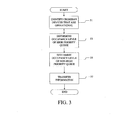
- the process determines which crossbar devices are operational.
- the process determines the occupancy level of the high priority queue.
- the process determines the occupancy level of the non-high priority queue.
- the process arranges for the transfer of information from the high priority queues and the non-high priority queues to the operational crossbar devices based on the occupancy levels of the queues and then the process ends.
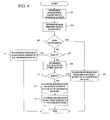
- the process determines the operational conditions of the crossbar devices.
- the number of crossbar devices that are operational is recorded. For example, the total number of crossbar devices may be five and the number of operational crossbar devices may be three, e.g., crossbar devices 1, 2 and 3.
- the process determines the occupancy level of the high priority queue. In one embodiment, the process reads an indicator register of the high priority queue to determine the occupancy level of the queue, e.g., high, medium, low or empty.
- the process determines if the occupancy level of the high priority queue is high. If the process determines that the occupancy level of the high priority queue is high, the process in block 117 assigns or arranges that the information in the high priority queue is transferred to all the operational crossbar devices determined in block 101.
- the process in block 107 determines if the occupancy level of the high priority queue is empty. In one embodiment, the process determines that the occupancy level is not high, medium or low to determine that the queue is empty. If the process determines that the high priority queue is empty, the process arranges that the information in the non-high priority queues are transferred to all the operational crossbar devices in block 119 and the process ends.
- the process in block 109 determines the occupancy level of the other non-high priority queues. In one embodiment, the process accesses/reads an indicator register of the high priority queue to determine the occupancy level of the queue, e.g., high, medium, low or empty. In block 111, the process determines if the other queues are empty. If the process determines that the other queues are empty, the process arranges to transfer information from the high priority queue to all the operational crossbar devices, in block 117, and the process ends. In one embodiment, the process does not end, but continues, repeating over again at block 101 until commanded externally to end, such as by a shutdown command provided by a user or a control hardware/software.
- the process in block 113 arranges to transfer information from the high priority queue to some of the operational crossbar devices, e.g., crossbar devices A and B.
- the process in block 115 arranges to transfer information from the other non-high priority queues to the other remaining operational crossbar devices, e.g., crossbar device C, and then the process ends.
- the process in blocks 113 and 115 determines the arrangement of the transfer of information from the high priority and non-high priority queues to the operational crossbar devices based on the following:
- the process allocates one less crossbar devices. For example, if the occupancy level is high for the non-high priority queues, the process allocates four crossbar devices, for a medium occupancy level, three crossbar devices, and for a low occupancy level, two crossbar devices.
- the occupancy level of the high priority queue determines the starting point or total number of crossbar devices that the process allocates to the non-high priority queues. Using the above example, if the occupancy level of the high priority queue is low, the total number of crossbar devices is four and for a medium occupancy level, the total number of crossbar devices is three. If the total number of operational crossbar devices is four, -then in the above example, the information in the-high priority queue is not transferred to a crossbar device until the occupancy level of the non-high priority queues reduces from high to medium.
- redundancy is employed by utilizing an additional spare or a complete set of spare links or crossbar devices (e.g., for each available link or crossbar device another link or crossbar device acting as a backup is provided) dedicated to handle the transfer of information if a link or crossbar device fails.
- an additional spare or a complete set of spare links or crossbar devices e.g., for each available link or crossbar device another link or crossbar device acting as a backup is provided
- redundancy is employed utilizing all the available links or crossbar devices that are operational.
- scaleability is employed by again utilizing all the available links or crossbar devices that are operational. If a link or crossbar device is added, information transfer continues using the number of available links or crossbar devices, however, the number of available links or crossbar devices is now increased by one or more, i.e., adding the new links or devices. Hence, transfer of information is maintained and thus causing minimal or no down-time to the switch.
- FIG. 5 illustrates an embodiment of the process of determining the operating conditions of the available crossbar devices or links.
- the process transmits predetermined data, frames or packets, to each crossbar device or link.
- the predetermined data comprise a status command, framing packets and/or information to be transmitted on the device or link.
- the load balancer sends the data to the devices or links.
- the process detects any operational responses from the crossbar devices or links in response to the predetermined data.
- the process waits for a predetermined response such as an out of frame error, a status response or an error message, to indicate that a particular device or link or a set of devices or links are not operating or available to receive information.
- the process waits for a specific period of time and if no response is received the process determines that an operational response has occurred.
- the process updates an operational list of crossbar devices in block 205.
- the operational list comprises a list of available crossbar devices or available links and the process updates the operational list by removing the crossbar device or link from the list when an operational response, e.g., an out of frame condition, is detected in block 203.
- the operational list in one embodiment, is utilized by the load balancer or process both previously described to determine the operational conditions of the devices or links for the transmission of information.
- the process updates the list by disabling a device or link when a non-operational link or device is detected by, for example, marking or otherwise indicating in the list that the device is not operational. Also, in one embodiment, the mark or indication is recognized by the load balancer or the process to determine the operational conditions of the devices or links. If the process does not detect an operational response, the process continues to block 207.
- the process determines if additional devices or links are available. In one embodiment, the process determines if additional devices or links are available by transmitting predetermined data to a location where an additional device or link might be. In various embodiments, the location where an additional device or link is expected to be is a predefined offset from the last operational crossbar device or link detected, a specific address location or shared memory space where all the devices and links are provided a specific address/memory space or location, or an additional entry in the operational list. If, in block 207, the process does not detect an operational response in response to the transmitted data, the process updates the operational list in block 209. The process then ends. In one embodiment, the process adds the additional link or device located to the operational list. If, in block 207, the process does detect an operational condition indicating that a new or additional device or link is not operating, e.g., provides an out of frame error, then the process ends.
- operations performed by the process in blocks 207-209 are combined with blocks 201-205.
- the process in block 201 transmits predetermined data to each device or link and additionally to a location where an additional device or link might be.
- the process detects an operational response, e.g., an out of frame condition, in response to the transmitted data from each of the devices or links and any possible additional new devices or links.
- the process updates the operational list, e.g., removing or disabling devices or links from the list that are not operational, e.g., having an out of frame condition, and/or adding devices or links to the list that are new and operational.
- the process continually repeats at predetermined intervals, such as once a day or once a week, or at specific predetermined times, such as at initialization or a scheduled maintenance. In another embodiment, the process does not send or transmit predetermined packets, but waits to be interrupted or polls for a response from the devices or links as to the operational condition of each device or link.
- the operational response indicates that a particular device or link or a set of devices or links are operational or available to receive information.
- the process in one embodiment, updates the operational list by adding the device or link that provided the response or the device or link indicated as being operational by the response. Likewise, if the process does not detect an operational condition, the process removes or disables the device or link in the operational list.
- the process in block 205 may be configured to detect an operational condition that indicates that a particular device or link or set of devices or links are operational or available to receive information and in block 209, the process may be configured to detect an operational condition that indicates that a particular device or link or set of devices or links are not operational or not available to receive information or vice versa.
- the present invention provides an automatic load balancer.
- the invention has been described in certain specific embodiments, it should be recognized that those of skill in the art would recognize other insubstantially different ways to implement the present invention.
- the present embodiments should be considered exemplary only, with the invention defined by the claims and their equivalents supported by this disclosure.
Landscapes
- Engineering & Computer Science (AREA)
- Computer Networks & Wireless Communication (AREA)
- Signal Processing (AREA)
- Physics & Mathematics (AREA)
- Mathematical Physics (AREA)
- Data Exchanges In Wide-Area Networks (AREA)
- Computer And Data Communications (AREA)
- Multi Processors (AREA)
- Control Of Multiple Motors (AREA)
- Control Of Motors That Do Not Use Commutators (AREA)
Applications Claiming Priority (4)
| Application Number | Priority Date | Filing Date | Title |
|---|---|---|---|
| US28955701P | 2001-05-07 | 2001-05-07 | |
| US289557P | 2001-05-07 | ||
| US10/020,491 US7161901B2 (en) | 2001-05-07 | 2001-12-11 | Automatic load balancing in switch fabrics |
| US20491 | 2001-12-11 |
Publications (3)
| Publication Number | Publication Date |
|---|---|
| EP1257099A2 true EP1257099A2 (de) | 2002-11-13 |
| EP1257099A3 EP1257099A3 (de) | 2004-01-28 |
| EP1257099B1 EP1257099B1 (de) | 2006-11-15 |
Family
ID=26693507
Family Applications (1)
| Application Number | Title | Priority Date | Filing Date |
|---|---|---|---|
| EP02090163A Expired - Lifetime EP1257099B1 (de) | 2001-05-07 | 2002-05-03 | Automatischer Lastausgleich in Vermittlungsknoten |
Country Status (4)
| Country | Link |
|---|---|
| US (1) | US7161901B2 (de) |
| EP (1) | EP1257099B1 (de) |
| AT (1) | ATE345633T1 (de) |
| DE (1) | DE60216001T2 (de) |
Cited By (1)
| Publication number | Priority date | Publication date | Assignee | Title |
|---|---|---|---|---|
| CN103026349A (zh) * | 2010-07-16 | 2013-04-03 | 拉迈亚高级研究院 | 数据接口电路 |
Families Citing this family (50)
| Publication number | Priority date | Publication date | Assignee | Title |
|---|---|---|---|---|
| DE10059026A1 (de) * | 2000-11-28 | 2002-06-13 | Infineon Technologies Ag | Einheit zur Verteilung und Verarbeitung von Datenpaketen |
| US7027443B2 (en) * | 2001-08-23 | 2006-04-11 | Pmc-Sierra Ltd. | Reassembly engines for multilink applications |
| US7299277B1 (en) * | 2002-01-10 | 2007-11-20 | Network General Technology | Media module apparatus and method for use in a network monitoring environment |
| US6801940B1 (en) * | 2002-01-10 | 2004-10-05 | Networks Associates Technology, Inc. | Application performance monitoring expert |
| US20030135291A1 (en) * | 2002-01-11 | 2003-07-17 | Delano Eric R. | Customized ports in a crossbar and method for transmitting data between customized ports and system agents |
| US7463585B2 (en) * | 2002-05-16 | 2008-12-09 | Broadcom Corporation | System, method, and apparatus for load-balancing to a plurality of ports |
| US7372813B1 (en) * | 2002-11-26 | 2008-05-13 | Extreme Networks | Virtual load balancing across a network link |
| US7243351B2 (en) * | 2002-12-17 | 2007-07-10 | International Business Machines Corporation | System and method for task scheduling based upon the classification value and probability |
| US7391766B2 (en) * | 2002-12-19 | 2008-06-24 | International Business Machines Corporation | Packet unstopper system for a parallel packet switch |
| US8782654B2 (en) | 2004-03-13 | 2014-07-15 | Adaptive Computing Enterprises, Inc. | Co-allocating a reservation spanning different compute resources types |
| WO2005089239A2 (en) | 2004-03-13 | 2005-09-29 | Cluster Resources, Inc. | System and method of providing a self-optimizing reservation in space of compute resources |
| US20070266388A1 (en) | 2004-06-18 | 2007-11-15 | Cluster Resources, Inc. | System and method for providing advanced reservations in a compute environment |
| US8176490B1 (en) | 2004-08-20 | 2012-05-08 | Adaptive Computing Enterprises, Inc. | System and method of interfacing a workload manager and scheduler with an identity manager |
| US7593329B2 (en) * | 2004-10-29 | 2009-09-22 | Broadcom Corporation | Service aware flow control |
| US7948880B2 (en) * | 2004-10-29 | 2011-05-24 | Broadcom Corporation | Adaptive dynamic thresholding mechanism for link level flow control scheme |
| US8271980B2 (en) | 2004-11-08 | 2012-09-18 | Adaptive Computing Enterprises, Inc. | System and method of providing system jobs within a compute environment |
| US8863143B2 (en) | 2006-03-16 | 2014-10-14 | Adaptive Computing Enterprises, Inc. | System and method for managing a hybrid compute environment |
| US9075657B2 (en) | 2005-04-07 | 2015-07-07 | Adaptive Computing Enterprises, Inc. | On-demand access to compute resources |
| EP1866767B1 (de) | 2005-03-16 | 2018-04-18 | III Holdings 12, LLC | Automatische übergabe von arbeitspensum an ein bedarfsdeckungszentrum |
| US9231886B2 (en) | 2005-03-16 | 2016-01-05 | Adaptive Computing Enterprises, Inc. | Simple integration of an on-demand compute environment |
| US7715378B1 (en) * | 2006-01-05 | 2010-05-11 | Emc Corporation | Error notification and forced retry in a data storage system |
| US8462691B2 (en) * | 2007-03-30 | 2013-06-11 | British Telecommunications Plc | Ad hoc communication system |
| US8041773B2 (en) | 2007-09-24 | 2011-10-18 | The Research Foundation Of State University Of New York | Automatic clustering for self-organizing grids |
| US8285900B2 (en) | 2009-02-17 | 2012-10-09 | The Board Of Regents Of The University Of Texas System | Method and apparatus for congestion-aware routing in a computer interconnection network |
| US9465771B2 (en) | 2009-09-24 | 2016-10-11 | Iii Holdings 2, Llc | Server on a chip and node cards comprising one or more of same |
| US20110103391A1 (en) | 2009-10-30 | 2011-05-05 | Smooth-Stone, Inc. C/O Barry Evans | System and method for high-performance, low-power data center interconnect fabric |
| US20130107444A1 (en) | 2011-10-28 | 2013-05-02 | Calxeda, Inc. | System and method for flexible storage and networking provisioning in large scalable processor installations |
| US8599863B2 (en) | 2009-10-30 | 2013-12-03 | Calxeda, Inc. | System and method for using a multi-protocol fabric module across a distributed server interconnect fabric |
| US9876735B2 (en) * | 2009-10-30 | 2018-01-23 | Iii Holdings 2, Llc | Performance and power optimized computer system architectures and methods leveraging power optimized tree fabric interconnect |
| US9054990B2 (en) | 2009-10-30 | 2015-06-09 | Iii Holdings 2, Llc | System and method for data center security enhancements leveraging server SOCs or server fabrics |
| US9077654B2 (en) | 2009-10-30 | 2015-07-07 | Iii Holdings 2, Llc | System and method for data center security enhancements leveraging managed server SOCs |
| US9680770B2 (en) | 2009-10-30 | 2017-06-13 | Iii Holdings 2, Llc | System and method for using a multi-protocol fabric module across a distributed server interconnect fabric |
| US9648102B1 (en) | 2012-12-27 | 2017-05-09 | Iii Holdings 2, Llc | Memcached server functionality in a cluster of data processing nodes |
| US10877695B2 (en) | 2009-10-30 | 2020-12-29 | Iii Holdings 2, Llc | Memcached server functionality in a cluster of data processing nodes |
| US11720290B2 (en) | 2009-10-30 | 2023-08-08 | Iii Holdings 2, Llc | Memcached server functionality in a cluster of data processing nodes |
| US9311269B2 (en) | 2009-10-30 | 2016-04-12 | Iii Holdings 2, Llc | Network proxy for high-performance, low-power data center interconnect fabric |
| GB2497493B (en) | 2010-09-16 | 2017-12-27 | Iii Holdings 2 Llc | Performance and power optimized computer system architectures and methods leveraging power optimized tree fabric interconnect |
| CN101950279B (zh) * | 2010-09-30 | 2012-09-19 | 华为技术有限公司 | 均衡数据信息流量的方法、总线系统和译码器 |
| KR20120037785A (ko) * | 2010-10-12 | 2012-04-20 | 삼성전자주식회사 | 부하 균형을 유지하는 시스템 온 칩 및 그것의 부하 균형 유지 방법 |
| KR101841173B1 (ko) * | 2010-12-17 | 2018-03-23 | 삼성전자주식회사 | 리오더 버퍼를 이용한 메모리 인터리빙 장치 및 그 메모리 인터리빙 방법 |
| US9092594B2 (en) | 2011-10-31 | 2015-07-28 | Iii Holdings 2, Llc | Node card management in a modular and large scalable server system |
| US9112787B2 (en) * | 2012-06-21 | 2015-08-18 | Cisco Technology, Inc. | First hop load balancing |
| US9495296B2 (en) | 2013-06-12 | 2016-11-15 | Oracle International Corporation | Handling memory pressure in an in-database sharded queue |
| US9792349B2 (en) | 2013-06-12 | 2017-10-17 | Oracle International Corporation | In-database sharded queue |
| US9767138B2 (en) * | 2013-06-12 | 2017-09-19 | Oracle International Corporation | In-database sharded queue for a shared-disk database |
| US9954771B1 (en) * | 2015-01-30 | 2018-04-24 | Marvell Israel (M.I.S.L) Ltd. | Packet distribution with prefetch in a parallel processing network device |
| US9996404B2 (en) | 2016-09-01 | 2018-06-12 | Oracle International Corporation | Message cache management for message queues |
| US10540217B2 (en) | 2016-09-16 | 2020-01-21 | Oracle International Corporation | Message cache sizing |
| US10678614B2 (en) | 2017-11-30 | 2020-06-09 | Oracle International Corporation | Messages with delayed delivery in an in-database sharded queue |
| US11893523B2 (en) * | 2021-01-20 | 2024-02-06 | Ge Aviation Systems Llc | Methods and systems for generating holistic airline schedule recovery solutions accounting for operations, crew, and passengers |
Family Cites Families (5)
| Publication number | Priority date | Publication date | Assignee | Title |
|---|---|---|---|---|
| US5355372A (en) * | 1992-08-19 | 1994-10-11 | Nec Usa, Inc. | Threshold-based load balancing in ATM switches with parallel switch planes related applications |
| US5367520A (en) * | 1992-11-25 | 1994-11-22 | Bell Communcations Research, Inc. | Method and system for routing cells in an ATM switch |
| US5787019A (en) * | 1996-05-10 | 1998-07-28 | Apple Computer, Inc. | System and method for handling dynamic changes in device states |
| US20020141427A1 (en) * | 2001-03-29 | 2002-10-03 | Mcalpine Gary L. | Method and apparatus for a traffic optimizing multi-stage switch fabric network |
| US6871347B2 (en) * | 2001-04-13 | 2005-03-22 | Interland, Inc. | Method and apparatus for facilitating load balancing across name servers |
-
2001
- 2001-12-11 US US10/020,491 patent/US7161901B2/en not_active Expired - Fee Related
-
2002
- 2002-05-03 EP EP02090163A patent/EP1257099B1/de not_active Expired - Lifetime
- 2002-05-03 DE DE60216001T patent/DE60216001T2/de not_active Expired - Lifetime
- 2002-05-03 AT AT02090163T patent/ATE345633T1/de not_active IP Right Cessation
Cited By (2)
| Publication number | Priority date | Publication date | Assignee | Title |
|---|---|---|---|---|
| CN103026349A (zh) * | 2010-07-16 | 2013-04-03 | 拉迈亚高级研究院 | 数据接口电路 |
| CN103026349B (zh) * | 2010-07-16 | 2016-04-06 | 拉迈亚高级研究院 | 数据接口电路 |
Also Published As
| Publication number | Publication date |
|---|---|
| EP1257099A3 (de) | 2004-01-28 |
| DE60216001T2 (de) | 2007-07-05 |
| US20020186656A1 (en) | 2002-12-12 |
| EP1257099B1 (de) | 2006-11-15 |
| DE60216001D1 (de) | 2006-12-28 |
| US7161901B2 (en) | 2007-01-09 |
| ATE345633T1 (de) | 2006-12-15 |
Similar Documents
| Publication | Publication Date | Title |
|---|---|---|
| US7161901B2 (en) | Automatic load balancing in switch fabrics | |
| EP1501246B1 (de) | Leitwegumlenkung von Netzwerkdaten | |
| US7233568B2 (en) | System and method for selection of redundant control path links in a multi-shelf network element | |
| US7088710B1 (en) | Method of transmitting information through data switching apparatus and apparatus therefor | |
| EP1489796B1 (de) | Integrierter Schaltkreis für eine Zugangsknotenstruktur zur Begrenzung der Zellsortierungspuffertiefe | |
| US6792002B2 (en) | Packet transfer system | |
| JPH08256180A (ja) | データ通信ネットワーク装置 | |
| US6868067B2 (en) | Hybrid agent-oriented object model to provide software fault tolerance between distributed processor nodes | |
| US6466576B2 (en) | ATM switching unit | |
| JP3811007B2 (ja) | 仮想接続の保護切替 | |
| EP1471697B1 (de) | Datenschaltung mit Softwarekonfiguration | |
| EP1592173B1 (de) | Schutzumschaltungsmethoden und Systeme für elektronische Geräte | |
| EP1670190B1 (de) | Umschalten zwischen 2. Schicht Netzwerkschaltern | |
| US7349420B1 (en) | Method and system for preserving channel bank provisioning information when unit location changes within multi-shelf equipment rack | |
| WO2000079739A1 (en) | Apparatus and method for queuing data | |
| CN100574469C (zh) | 电信网络及其更新方法 | |
| KR100317120B1 (ko) | 에이티엠교환시스템에서 망연동장치의 메시지 제어 방법 | |
| KR100279532B1 (ko) | 무선통신시스템의 v5.2프로토콜이 탑재된 억세스 네트워크내의데이터 패스층과 물리계층의 분리구조와 그 두요소가 각각 탑재된 보드간의 통신방법 | |
| JP4084287B2 (ja) | 無瞬断リコンフィグレーション方法及び装置 | |
| JP2008236043A (ja) | 冗長構成装置間のip通信経路管理システム | |
| EP1331759A1 (de) | System und Verfahren zur Bereitstellung eines Managements der Verbindungen von Komponenten in einem Netzelement | |
| JPWO2004079573A1 (ja) | マルチプロセッサシステム | |
| JP3776267B2 (ja) | 多重化装置 | |
| JP3026532B2 (ja) | パケット交換システム | |
| JPH11252184A (ja) | ノード間接続装置 |
Legal Events
| Date | Code | Title | Description |
|---|---|---|---|
| PUAI | Public reference made under article 153(3) epc to a published international application that has entered the european phase |
Free format text: ORIGINAL CODE: 0009012 |
|
| AK | Designated contracting states |
Kind code of ref document: A2 Designated state(s): AT BE CH CY DE DK ES FI FR GB GR IE IT LI LU MC NL PT SE TR |
|
| AX | Request for extension of the european patent |
Free format text: AL;LT;LV;MK;RO;SI |
|
| PUAL | Search report despatched |
Free format text: ORIGINAL CODE: 0009013 |
|
| AK | Designated contracting states |
Kind code of ref document: A3 Designated state(s): AT BE CH CY DE DK ES FI FR GB GR IE IT LI LU MC NL PT SE TR |
|
| AX | Request for extension of the european patent |
Extension state: AL LT LV MK RO SI |
|
| RIC1 | Information provided on ipc code assigned before grant |
Ipc: 7H 04Q 11/04 B Ipc: 7H 04L 12/56 A |
|
| 17P | Request for examination filed |
Effective date: 20040604 |
|
| 17Q | First examination report despatched |
Effective date: 20040708 |
|
| AKX | Designation fees paid |
Designated state(s): AT BE CH CY DE DK ES FI FR GB GR IE IT LI LU MC NL PT SE TR |
|
| GRAP | Despatch of communication of intention to grant a patent |
Free format text: ORIGINAL CODE: EPIDOSNIGR1 |
|
| RIC1 | Information provided on ipc code assigned before grant |
Ipc: H04Q 11/04 20060101ALI20060508BHEP Ipc: H04L 12/56 20060101ALI20060508BHEP Ipc: H04L 29/06 20060101AFI20060508BHEP |
|
| GRAS | Grant fee paid |
Free format text: ORIGINAL CODE: EPIDOSNIGR3 |
|
| GRAA | (expected) grant |
Free format text: ORIGINAL CODE: 0009210 |
|
| AK | Designated contracting states |
Kind code of ref document: B1 Designated state(s): AT BE CH CY DE DK ES FI FR GB GR IE IT LI LU MC NL PT SE TR |
|
| PG25 | Lapsed in a contracting state [announced via postgrant information from national office to epo] |
Ref country code: IT Free format text: LAPSE BECAUSE OF FAILURE TO SUBMIT A TRANSLATION OF THE DESCRIPTION OR TO PAY THE FEE WITHIN THE PRESCRIBED TIME-LIMIT;WARNING: LAPSES OF ITALIAN PATENTS WITH EFFECTIVE DATE BEFORE 2007 MAY HAVE OCCURRED AT ANY TIME BEFORE 2007. THE CORRECT EFFECTIVE DATE MAY BE DIFFERENT FROM THE ONE RECORDED. Effective date: 20061115 Ref country code: LI Free format text: LAPSE BECAUSE OF FAILURE TO SUBMIT A TRANSLATION OF THE DESCRIPTION OR TO PAY THE FEE WITHIN THE PRESCRIBED TIME-LIMIT Effective date: 20061115 Ref country code: FI Free format text: LAPSE BECAUSE OF FAILURE TO SUBMIT A TRANSLATION OF THE DESCRIPTION OR TO PAY THE FEE WITHIN THE PRESCRIBED TIME-LIMIT Effective date: 20061115 Ref country code: CH Free format text: LAPSE BECAUSE OF FAILURE TO SUBMIT A TRANSLATION OF THE DESCRIPTION OR TO PAY THE FEE WITHIN THE PRESCRIBED TIME-LIMIT Effective date: 20061115 Ref country code: AT Free format text: LAPSE BECAUSE OF FAILURE TO SUBMIT A TRANSLATION OF THE DESCRIPTION OR TO PAY THE FEE WITHIN THE PRESCRIBED TIME-LIMIT Effective date: 20061115 Ref country code: BE Free format text: LAPSE BECAUSE OF FAILURE TO SUBMIT A TRANSLATION OF THE DESCRIPTION OR TO PAY THE FEE WITHIN THE PRESCRIBED TIME-LIMIT Effective date: 20061115 Ref country code: NL Free format text: LAPSE BECAUSE OF FAILURE TO SUBMIT A TRANSLATION OF THE DESCRIPTION OR TO PAY THE FEE WITHIN THE PRESCRIBED TIME-LIMIT Effective date: 20061115 |
|
| REG | Reference to a national code |
Ref country code: GB Ref legal event code: FG4D |
|
| REG | Reference to a national code |
Ref country code: CH Ref legal event code: EP |
|
| REF | Corresponds to: |
Ref document number: 60216001 Country of ref document: DE Date of ref document: 20061228 Kind code of ref document: P |
|
| REG | Reference to a national code |
Ref country code: IE Ref legal event code: FG4D |
|
| PG25 | Lapsed in a contracting state [announced via postgrant information from national office to epo] |
Ref country code: SE Free format text: LAPSE BECAUSE OF FAILURE TO SUBMIT A TRANSLATION OF THE DESCRIPTION OR TO PAY THE FEE WITHIN THE PRESCRIBED TIME-LIMIT Effective date: 20070215 Ref country code: DK Free format text: LAPSE BECAUSE OF FAILURE TO SUBMIT A TRANSLATION OF THE DESCRIPTION OR TO PAY THE FEE WITHIN THE PRESCRIBED TIME-LIMIT Effective date: 20070215 |
|
| PG25 | Lapsed in a contracting state [announced via postgrant information from national office to epo] |
Ref country code: ES Free format text: LAPSE BECAUSE OF FAILURE TO SUBMIT A TRANSLATION OF THE DESCRIPTION OR TO PAY THE FEE WITHIN THE PRESCRIBED TIME-LIMIT Effective date: 20070226 |
|
| PG25 | Lapsed in a contracting state [announced via postgrant information from national office to epo] |
Ref country code: PT Free format text: LAPSE BECAUSE OF FAILURE TO SUBMIT A TRANSLATION OF THE DESCRIPTION OR TO PAY THE FEE WITHIN THE PRESCRIBED TIME-LIMIT Effective date: 20070416 |
|
| NLV1 | Nl: lapsed or annulled due to failure to fulfill the requirements of art. 29p and 29m of the patents act | ||
| REG | Reference to a national code |
Ref country code: CH Ref legal event code: PL |
|
| EN | Fr: translation not filed | ||
| EN | Fr: translation not filed | ||
| PLBE | No opposition filed within time limit |
Free format text: ORIGINAL CODE: 0009261 |
|
| STAA | Information on the status of an ep patent application or granted ep patent |
Free format text: STATUS: NO OPPOSITION FILED WITHIN TIME LIMIT |
|
| 26N | No opposition filed |
Effective date: 20070817 |
|
| PG25 | Lapsed in a contracting state [announced via postgrant information from national office to epo] |
Ref country code: MC Free format text: LAPSE BECAUSE OF NON-PAYMENT OF DUE FEES Effective date: 20070531 |
|
| PG25 | Lapsed in a contracting state [announced via postgrant information from national office to epo] |
Ref country code: FR Free format text: LAPSE BECAUSE OF FAILURE TO SUBMIT A TRANSLATION OF THE DESCRIPTION OR TO PAY THE FEE WITHIN THE PRESCRIBED TIME-LIMIT Effective date: 20070629 Ref country code: GR Free format text: LAPSE BECAUSE OF FAILURE TO SUBMIT A TRANSLATION OF THE DESCRIPTION OR TO PAY THE FEE WITHIN THE PRESCRIBED TIME-LIMIT Effective date: 20070216 |
|
| PG25 | Lapsed in a contracting state [announced via postgrant information from national office to epo] |
Ref country code: IE Free format text: LAPSE BECAUSE OF NON-PAYMENT OF DUE FEES Effective date: 20070503 |
|
| PG25 | Lapsed in a contracting state [announced via postgrant information from national office to epo] |
Ref country code: FR Free format text: LAPSE BECAUSE OF FAILURE TO SUBMIT A TRANSLATION OF THE DESCRIPTION OR TO PAY THE FEE WITHIN THE PRESCRIBED TIME-LIMIT Effective date: 20061115 |
|
| PG25 | Lapsed in a contracting state [announced via postgrant information from national office to epo] |
Ref country code: CY Free format text: LAPSE BECAUSE OF FAILURE TO SUBMIT A TRANSLATION OF THE DESCRIPTION OR TO PAY THE FEE WITHIN THE PRESCRIBED TIME-LIMIT Effective date: 20061115 Ref country code: LU Free format text: LAPSE BECAUSE OF NON-PAYMENT OF DUE FEES Effective date: 20070503 |
|
| PG25 | Lapsed in a contracting state [announced via postgrant information from national office to epo] |
Ref country code: TR Free format text: LAPSE BECAUSE OF FAILURE TO SUBMIT A TRANSLATION OF THE DESCRIPTION OR TO PAY THE FEE WITHIN THE PRESCRIBED TIME-LIMIT Effective date: 20061115 |
|
| PGFP | Annual fee paid to national office [announced via postgrant information from national office to epo] |
Ref country code: DE Payment date: 20150428 Year of fee payment: 14 Ref country code: GB Payment date: 20150429 Year of fee payment: 14 |
|
| REG | Reference to a national code |
Ref country code: DE Ref legal event code: R119 Ref document number: 60216001 Country of ref document: DE |
|
| GBPC | Gb: european patent ceased through non-payment of renewal fee |
Effective date: 20160503 |
|
| PG25 | Lapsed in a contracting state [announced via postgrant information from national office to epo] |
Ref country code: DE Free format text: LAPSE BECAUSE OF NON-PAYMENT OF DUE FEES Effective date: 20161201 |
|
| PG25 | Lapsed in a contracting state [announced via postgrant information from national office to epo] |
Ref country code: GB Free format text: LAPSE BECAUSE OF NON-PAYMENT OF DUE FEES Effective date: 20160503 |