EP1257143B1 - Einweg-Roaming von ANS-41 zu GSM Systemen - Google Patents
Einweg-Roaming von ANS-41 zu GSM Systemen Download PDFInfo
- Publication number
- EP1257143B1 EP1257143B1 EP02252544A EP02252544A EP1257143B1 EP 1257143 B1 EP1257143 B1 EP 1257143B1 EP 02252544 A EP02252544 A EP 02252544A EP 02252544 A EP02252544 A EP 02252544A EP 1257143 B1 EP1257143 B1 EP 1257143B1
- Authority
- EP
- European Patent Office
- Prior art keywords
- subscriber
- message
- identifier
- ans
- gsm
- Prior art date
- Legal status (The legal status is an assumption and is not a legal conclusion. Google has not performed a legal analysis and makes no representation as to the accuracy of the status listed.)
- Expired - Lifetime
Links
- 230000004044 response Effects 0.000 claims description 23
- 238000004891 communication Methods 0.000 claims description 20
- 238000000034 method Methods 0.000 claims description 16
- 238000005516 engineering process Methods 0.000 description 6
- 238000004846 x-ray emission Methods 0.000 description 6
- 230000003993 interaction Effects 0.000 description 5
- 230000006870 function Effects 0.000 description 4
- 230000008569 process Effects 0.000 description 4
- 230000011664 signaling Effects 0.000 description 2
- GNFTZDOKVXKIBK-UHFFFAOYSA-N 3-(2-methoxyethoxy)benzohydrazide Chemical compound COCCOC1=CC=CC(C(=O)NN)=C1 GNFTZDOKVXKIBK-UHFFFAOYSA-N 0.000 description 1
- FGUUSXIOTUKUDN-IBGZPJMESA-N C1(=CC=CC=C1)N1C2=C(NC([C@H](C1)NC=1OC(=NN=1)C1=CC=CC=C1)=O)C=CC=C2 Chemical compound C1(=CC=CC=C1)N1C2=C(NC([C@H](C1)NC=1OC(=NN=1)C1=CC=CC=C1)=O)C=CC=C2 FGUUSXIOTUKUDN-IBGZPJMESA-N 0.000 description 1
- YTAHJIFKAKIKAV-XNMGPUDCSA-N [(1R)-3-morpholin-4-yl-1-phenylpropyl] N-[(3S)-2-oxo-5-phenyl-1,3-dihydro-1,4-benzodiazepin-3-yl]carbamate Chemical compound O=C1[C@H](N=C(C2=C(N1)C=CC=C2)C1=CC=CC=C1)NC(O[C@H](CCN1CCOCC1)C1=CC=CC=C1)=O YTAHJIFKAKIKAV-XNMGPUDCSA-N 0.000 description 1
- 230000008859 change Effects 0.000 description 1
- 230000001419 dependent effect Effects 0.000 description 1
- 230000003068 static effect Effects 0.000 description 1
- 239000013598 vector Substances 0.000 description 1
Images



Classifications
-
- H—ELECTRICITY
- H04—ELECTRIC COMMUNICATION TECHNIQUE
- H04W—WIRELESS COMMUNICATION NETWORKS
- H04W12/00—Security arrangements; Authentication; Protecting privacy or anonymity
- H04W12/06—Authentication
-
- H—ELECTRICITY
- H04—ELECTRIC COMMUNICATION TECHNIQUE
- H04W—WIRELESS COMMUNICATION NETWORKS
- H04W12/00—Security arrangements; Authentication; Protecting privacy or anonymity
- H04W12/60—Context-dependent security
- H04W12/69—Identity-dependent
- H04W12/71—Hardware identity
-
- H—ELECTRICITY
- H04—ELECTRIC COMMUNICATION TECHNIQUE
- H04W—WIRELESS COMMUNICATION NETWORKS
- H04W92/00—Interfaces specially adapted for wireless communication networks
- H04W92/02—Inter-networking arrangements
Definitions
- the present invention relates generally to wireless communication systems and, in particular, to roaming among wireless communication systems.
- Subscribers to wireless communication systems employing the well-known ANS-41 signaling protocol standard may, at times, roam outside their home system and into wireless communication systems employing the well known GSM standard. Assuming that the subscribers have user equipment or mobile-stations operable to function in either wireless communication system, some form of authentication needs to be performed before the GSM based wireless communications system can provide any type of service to the subscribers of the ANS-41 based wireless communication systems. However, the manner in which authentication is performed in GSM and ANS-41 based wireless communication systems are different. Accordingly, there exists a need for providing authentication for a subscriber to a ANS-41 based wireless communication system roaming into a GSM based wireless communication system, and vice-versa.
- US-A-5 862 481 discloses an interworking proxy which is coupled to first and second mobile switching systems and translates between first and second management protocols used by the first and second systems, respectively.
- the first system requests service for a mobile user using the first management protocol.
- the proxy receives the service request and translates it from the first management protocol to the second management protocol, and then transmits the translated service request to the second system.
- the second system provides a response to the service request using the second management protocol.
- the interworking proxy receives the response and translates it from the second management protocol to the first management protocol, and then transmits the translated response to the first system.
- the proxy requires certain static and permanent customer data, set up during initial customer subscription and present whether or not the customer is actually roaming into the serving network. For example, for an IS-41 terminal roaming in a GSM network the proxy needs to be able to translate from the IMSI to the MIN, ESN pair.
- EP-A-0 955 785 discloses an authentication interoperability function (AIF) that translates between the authentication schemes of networks that use authentication triplets (such as GSM) and those that use shared secret data (such as IS-41 compatible networks).
- AIF authentication interoperability function
- the present invention is a method and apparatus for providing authentication for a subscriber of a wireless communication system employing one type of authentication technology roaming into a wireless communication system employing a second type of authentication technology.
- the present invention involves transmitting (or receiving) a first message to a first system comprising a mobile identifier for a subscriber of the first system and a second system indicator indicating that the subscriber is attempting to gain access to a second system that uses an authentication process different than an authentication process used by the first system; determining shared secret data for the subscriber using the mobile identifier; receiving (or transmitting) a second message from the first system having shared secret data associated with the subscriber; generating an expected response to a unique challenge using the shared secret data and an encryption algorithm, and transmitting the expected response to the second system.
- the present invention uses an Interoperability/Interworking Funcition (IIF) as a logical network entity between the edges of two wireless communication systems based on different technologies to map or convert operations, messages and/or procedures from one signaling protocol to another (e.g., ANS-41 to GSM).
- IIF Interoperability/Interworking Funcition
- ANS-41 ANS-41 based wireless communication system
- GSM system GSM based wireless communication
- the present invention can also be applied for a subscriber of a GSM based wireless communication system roaming or visiting in an ANS-41 based wireless communication system.
- FIG. 1 depicts an example of an IIF 10 of the present invention positioned between the edges of a GSM system 12 and an ANS-41 system 14, wherein ANS-41 system 14 includes enhanced authentication and mobility management capabilities to support roaming of its subscribers to GSM system 12, as will be described herein.
- a subscriber of ANS-41 system 14 is equipped with user equipment 16.
- User equipment 16 is either an ANS-41 based user equipment capable of roaming into GSM system 12 or a GSM based user equipment having a User Identity Module (UIM) of the subscriber.
- UAM User Identity Module
- MIN Mobile-station Identification Number
- IMSI International Mobile-station Subscriber Identification
- User equipment 16 (or the UIM inserted therein) is capable of generating Shared Secret Data (SSD) for the subscriber, and to use the SSD and the well-known CAVE algorithm (or some other encryption algorithm) to generate a response (RES) to random challenges (RAND) issued by GSM system 12 and to generate a cipher key K c .
- SSD Shared Secret Data
- CAVE CAVE algorithm
- RAND random challenges
- IIF 10 requires no or little changes to standard network protocol in its interactions with either systems 12 or 14.
- IIF 10 functions as a Visitor Location Register (VLR) in its interactions with ANS-41 system 14 to support roaming of the subscriber in GSM system 12.
- IIF 10 functions as a GSM Home Location Register (HLR) and Authentication Center (AC) in its interactions with GSM system 12.
- IIF 10 supports the enhanced operations required for authentication of user equipment 16 in GSM system 12.
- IIF 10 provides GSM triplets needed for authentication and privacy in GSM system 12 using the CAVE algorithm and the SSD provided by an HLR of the wireless communication system to which user equipment 16 belongs, wherein the GSM triplets include the RAND, K c and an expected response (XRES).
- IIF 10 is operable to convert an IMSI into a MIN to be used by ANS-41 system 14, and a MIN into an IMSI to be used by GSM system 12.
- ANS-41 system 14 shares SSD with IIF 10 for roaming subscribers of ANS-41 system 14 into GSM system 12. Note that the AC should not be able to update SSD or a COUNT value for the subscriber when the subscriber is being served by GSM system 12. The subscriber's SSD is updated when the user returns to ANS-41 system 12 or leaves GSM system 14. IIF 10 is capable of providing a secure method of storing SSD received from ANS-41 system 14. IIF 10 does not transmit or otherwise disclose the SSD to any other network entity.
- GSM system 12 For illustration purposes, the following example of a subscriber of ANS-41 system 14 roaming or visiting GSM system 12 is provided.
- User equipment 16 presents itself to GSM system 12 for service.
- GSM system 12 records the presence of user equipment 16 in its VLR and will attempt to authenticate user equipment 16 via the HLR of ANS-41 system 14. Since the VLR of GSM system 12 and the HLR of ANS-41 system are of different technologies, IIF 10 is needed to assist in the authentication process, including translating messages between the two systems 12 and 14.
- IIF 10 In IIF 10's interactions with GSM system 12, IIF 10 appears to GSM system 12 as a HLR of the same technology as GSM system 12. By contrast, in IIF 10's interactions with ANS-41 system 14, IIF 10 appears to ANS-41 system 14 as a VLR of the same technology as ANS-41 system 14.
- IIF 10 receives a message from GSM system 12 for authentication of user equipment 16, IIF converts the message to a format based on ANS-41. The converted message is then transmitted to ANS-41 system 14.
- IIF does not need to be provisioned with any subscriber specific data, such as Mobile-Station Identification (MSID) in the form of a MIN or IMSI.
- Subscriber specific data can also include an Electronic Serial Number (ESN) of the subscriber associated with the MIN.
- ESN Electronic Serial Number
- GSM system 12 and ANS-41 system 14 for user equipment 16.
- the IMSI is used in both systems 12 and 14 to identify user equipment 16.
- IIF 10 needs to convert identifiers used in one system to identifiers used in the other system
- either a database for converting identifiers would be required or a change to the receiving system may be required.
- the ESN is required to authenticate a subscriber of ANS-41 system 14 but not in GSM system 12.
- GSM system 12 does not require the ESN of user equipment 16.
- GSM system 12 does not present to IIF 10 the ESN since it thinks its interacting with a GSM based VLR.
- IIF 10 When IIF 10 attempts to use the information provided to it by GSM system 12 to authenticate user equipment 16 with ANS-41 system 14, IIF 10 does not have an ESN to provide the HLR of ANS-41 system 14 as required in an ANS-41 authentication request operation (AUTHREQ). To compensate for this lack of ESN and appear to ANS-41 system 14 as a ANS-41 based VLR, the present invention requires IIF 10 to present a default or null value in place of an ESN in the AUTHREQ. In response to the AUTHREQ, the HLR of ANS-41 system 14 responds with the subscriber's real ESN. IIF 10 stores the subscriber's real ESN in its temporary memory to present to ANS-41 system 14 in future operations where it is required. The subscriber's real ESN is preferably not saved by IIF 10 after the subscriber leaves GSM system 12.
- the above described exchange of ESN (between IIF 10 and ANS-41 system 14) is not normally acceptable to the HLR of ANS-41 system 14.
- an exception for exchanging the ESN is allowed at the HLR of ANS-41 system 14. That is, for subscribers of ANS-41 system 14 roaming into GSM system 12, the HLR of ANS-41 system 14 will permit an exchange of ESN with IIF 10.
- IIF 10 will provide an indication to ANS-41 system 14 that the subscriber is roaming in GSM system 12. For example, the indication is a unique value in a system capability (SYSCAP) parameter.
- SYSCAP system capability
- a GSM system access type may also be indicated through a unique value in a System Access Type (SYSACCTYPE) parameter.
- SSD is typically provided by ANS-41 system 14 to the system currently serving its subscriber (i.e., GSM system 12) to authenticate the subscriber.
- the SSD provided by the home ANS-41 system is used to produce authentication vectors usable by the VLR of GSM system 12 to authenticate the subscriber.
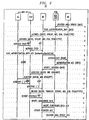
- FIG. 2 depicts an example 20 of a successful authentication of a subscriber of ANS-41 system 14 in GSM system 12 in an initial access attempt, wherein user equipment 16 associated with the subscriber uses a MIN-based IMSI as its identifier in GSM system 12.
- the mobile-station (MS) or user equipment determines that a new serving system, i.e., GSM system 12 has been entered.
- MS registers at GSM system 12 and requests for system access by providing its MIN-based IMSI to GSM system 12 in a location area update message.
- step b GSM system 12 sends a SEND_AUTHENTICATION_INFO to IIF 10, wherein the SEND_AUTHENTICATION_INFO is an authentication information message having the IMSI.
- step c IIF 10 sends an AUTHREQ to the HLR of the subscriber's home system, i.e., ANS-41 system 14.
- the AUTHREQ includes a MSCID, SYSCAP, MIN, ESN, and SYSACCTYPE, wherein MSCID identifies IIF 10, SYSCAP indicates that the subscriber is roaming in GSM system 12, ESN is a default value and SYSACCTYPE indicates GSM system access.
- the MIN is set to a value derived from the MIN-based IMSI.
- step d the HLR forwards the AUTHREQ to an authentication center (AC), which may be a part of ANS-41 system 14 or a separate entity.
- AC authentication center
- step e the AC determines that the subscriber is roaming in GSM system 12 based on the SYSCAP and responds with an authreq to the HLR, wherein the authreq includes the SSD associated with the subscriber.
- the ESN, SYSCAP or SYSACCTYPE in the AUTHREQ may alone, or in combination, indicate to the HLR or AC that the associated subscriber (as indicated by the MIN) is attempting to gain access in a system that uses a different authentication process than the AC of the present system.
- step f the HLR forwards the authreq to IIF 10.
- the SYSACCTYPE would indicate to the AC that the ESN generated by IIF 10 (i.e., default value) is not the real ESN of the subscriber, whereas the SYSCAP indicates that a serving MSC is using GSM authentication and privacy procedures. When the AC sees these indications, AC knows its okay to provide the SSD of the subscriber.
- IIF 10 determines one or more groups of GSM triplets using the subscriber's SSD and the CAVE algorithm. IIF 10 sends a SEND_AUTHENTICATION_INFO acknowledgement (or ack) to GSM system 12, wherein the SEND_AUTHENTICATION_INFO ack includes an AuthenticationSetList having the one or more groups of GSM triplets.
- step h GSM system 12 issues a RAND or Unique Challenge to the MS.
- step i the MS responds to the RAND with its response or RES.
- step j GSM system 12 compares the RES received from the MS with the expected response or XRES in one of the GSM triplets. In this example, the RES is identical to the XRES. Accordingly, GSM system 12 sends an UPDATE_LOCATION to IIF 10, wherein the UPDATE_LOCATION includes the IMSI.
- TR-45 AHAG is used to determine a manner of computing the XRES in response to the RAND in GSM system 12 by IIF 10 and the MS.
- the TR-45 AHAG may also be used to determine how the cipher key K c is computed.
- step k IIF sends an authentication status report (ASREPORT) to the HLR of ANS-41 system 14, wherein the ASREPORT includes the MSCID, MIN and a UCHALRPT for indicating that the RAND (or Unique Challenge) was successful.
- ASREPORT authentication status report
- step l the HLR forwards the ASREPORT to the AC.
- step m the AC responds with an asreport to the HLR.
- step n the HLR forwards the asreport to IIF 10.
- step o IIF 10 sends a registration notice (REGNOT) to the HLR, wherein the REGNOT includes the MSCID, SYSCAP, MIN, ESN, SYSACCTYPE and a TRANSCAP.
- REGNOT registration notice
- the SYSCAP indicates that the subscriber is roaming in GSM system 12 and the SYSACCTYPE indicates GSM system access.
- step p the HLR sends a regnot to IIF 10, which includes a profile of the subscriber.
- IIF 10 sends an INSERT_SUBSCRIBER_DATA to GSM system 12.
- step r GSM system 12 responds with an INSERT_SUBSCRIBER_DATA ack to IIF 10.
- IIF 10 sends an UPDATE_LOCATION ack to GSM system 12.
- step t GSM system 12 sends a location area update ack to the MS.
- FIG. 3 depicts an example 30 of an unsuccessful authentication of a subscriber of ANS-41 system 14 in GSM system 12 in an initial access attempt, wherein user equipment 16 associated with the subscriber uses a MIN-based IMSI as its identity in GSM system 12.
- Steps a 1 -i 1 of FIG. 3 corresponding to steps a-i of FIG. 2.
- step j 1 GSM system 12 compares the RES received from the MS with the XRES in one of the GSM triplets. In this example, the RES is not identical to the XRES. Thus, authentication fails and GSM system 12 sends an Authentication_Failure to IIF 10, wherein the Authentication_Failure indicates the IMSI.
- step k 1 IIF 10 sends an ASREPORT to the HLR of ANS-41 system 14.
- the MIN being derived from the IMSI and the UCHALRPT indicating the RAND (or Unique Challenge) was a failure.
- step l 1 the HLR forwards the ASREPORT to the AC.
- step m 1 the AC sends an asreport to the HLR, wherein the asreport includes DENACC and NOSSD parameters.
- step n 1 the HLR forwards the asreport to IIF 10.
- step o 1 IIF removes the SSD received for the MS from the AC and any other information for the MS from its memory.
- IIF 10 sends an Authentication_Failure ack to GSM system 12.
- step p 1 GSM system 12 rejects the MS' request for system access.
- FIG. 4 depicts an example 40 of a successful authentication of a subscriber of ANS-41 system 14 in GSM system 12 in an initial access attempt, wherein user equipment 16 associated with the subscriber uses a MIN-based IMSI as its identity in GSM system 12.
- IIF 10 would not send an ASREPORT to indicate a successful Unique Challenge. Rather, IIF 10 sends a Registration Notification INVOKE with a SYSACCTYPE parameter value indicating GSM access with successful authentication.
- Steps a 2 -j 2 of FIG. 4 being identical to steps a-j of FIG. 2.
- IIF 10 sends a REGNOT to the HLR.
- SYSACCTYPE is set to indicate GSM access with successful authentication
- SYSCAP is set to indicate GSM system 12.
- the HLR determines the subscriber is authorized for service in GSM system 12.
- the HLR sends an ASREPORT to the AC, wherein the ASREPORT includes an UCHALRPT indicating that the RAND or unique challenge was successful and a MSCID set to indicate IIF 10.
- step m 2 the AC sends an asreport to the HLR.
- step n 2 the HLR sends a regnot to IIF 10.
- IIF 10 sends an INSERT_SUBSCRIBER_DATA to GSM system 12.
- step p 2 GSM system 12 sends an INSERT_SUBSCRIBER_DATA ack to IIF 10.
- step q 2 IIF 10 sends an UPDATE_LOCATION ack to GSM system 12.
- step r 2 GSM system 12 sends a location area update ack to the MS.
Landscapes
- Engineering & Computer Science (AREA)
- Computer Security & Cryptography (AREA)
- Computer Networks & Wireless Communication (AREA)
- Signal Processing (AREA)
- Mobile Radio Communication Systems (AREA)
Claims (10)
- Verfahren zur Bereitstellung von Authentifizierung in einem drahtlosen Kommunikationssystem, mit folgenden Schritten:dadurch gekennzeichnet, daß die erste Nachricht eine erste elektronische Seriennummer (ESN) enthält, die entweder ein Vorgabewert oder ein Wert Null ist.Übertragen (c) einer ersten Nachricht an ein erstes System (14), die eine Teilnehmerkennung (MIN) zum Kennzeichnen eines Teilnehmers und einen zweiten Systemanzeiger (SYSACCTYPE) enthält, der anzeigt, daß der Teilnehmer in einem zweiten System (12) roamt, wobei die Teilnehmerkennung auf einer von sowohl dem ersten als auch dem zweiten System benutzten gemeinsamen Kennung (IMSI) zur Kennzeichnung des Teilnehmers beruht;Empfangen (f) einer zweiten Nachricht vom ersten System mit dem Teilnehmer zugeordneten gemeinsam genutzten geheimen Daten (SSD - Shared Secret Data);Erzeugen (g) einer erwarteten Antwort auf eine einmalige Abfrage unter Verwendung der gemeinsam genutzten geheimen Daten und eines Verschlüsselungsalgorithmus; undÜbertragen (g) der erwarteten Antwort an das zweite System;
- Verfahren nach Anspruch 1, wobei die zweite Nachricht eine zweite elektronische Seriennummer enthält, die auf der Teilnehmerkennung beruht.
- Verfahren nach Anspruch 1 oder 2, wobei die gemeinsame Kennung eine internationale Mobilstationteilnehmerkennung und die Teilnehmeridentität eine Mobilkennungsnummer ist.
- Verfahren nach Anspruch 1, wobei die erste Nachricht einen Vorgabeanzeiger (SYSACCTYPE) enthält, um dem ersten System anzuzeigen, daß die erste elektronische Seriennummer ein Vorgabewert oder ein Wert Null ist, und die zweite Nachricht eine zweite, auf der Teilnehmerkennung basierende elektronische Seriennummer enthält.
- Verfahren nach einem der vorhergehenden Ansprüche, mit den folgenden Schritten:Empfangen (c) der ersten Nachricht am erstn System;Bestimmen (e) der dem Teilnehmer zugeordneten gemeinsam genutzten geheimen Daten unter Verwendung der ersten Nachricht als Reaktion auf den Empfang der ersten Nachricht; undÜbertragen (f) der zweiten Nachricht.
- Verfahren zur Bereitstellung von Authentifizierung in einem drahtlosen Kommunikationssystem, mit folgenden Schritten:dadurch gekennzeichnet, daß die erste Nachricht eine erste elektronische Seriennummer (ESN) enthält, die entweder ein Vorgabewert oder ein Wert Null ist.Empfangen (c) einer ersten Nachricht an einem ersten System (14), die eine Teilnehmerkennung (MIN) zum Kennzeichnen eines Teilnehmers und einen zweiten Systemanzeiger (SYSACCTYPE) enthält, der anzeigt, daß der Teilnehmer in einem zweiten System (12) roamt, wobei die Teilnehmerkennung auf einer von sowohl dem ersten als auch dem zweiten System benutzten gemeinsamen Kennung (IMSI) zur Kennzeichnung des Teilnehmers beruht;Bestimmen (e) von dem Teilnehmer zugeordneten gemeinsam genutzten geheimen Daten (SSD) unter Verwendung der Teilnehmerkennung; undÜbertragen (f) einer zweiten Nachricht vom ersten System mit den gemeinsam genutzten geheimen Daten;
- Verfahren nach Anspruch 6, wobei die erste Nachricht einen Vorgabeanzeiger (SYSACCTYPE) enthält, um dem ersten System anzuzeigen, daß die erste elektronische Seriennummer ein Vorgabewert oder ein Wert Null ist, und die zweite Nachricht eine auf der Teilnehmerkennung basierende zweite elektronische Seriennummer enthält.
- Logische Netzinstanz (10, IIF) zur Verwendung bei Authentifizierung, mit folgendem:Mitteln zum Übertragen (c) einer ersten Nachricht an ein erstes System (14), die eine Teilnehmerkennung (MIN) zum Kennzeichnen eines Teilnehmers und einen zweiten Systemanzeiger (SYSACCTYPE) enthält, der anzeigt, daß der Teilnehmer in einem zweiten System (12) roamt, wobei die Teilnehmerkennung auf einer von sowohl dem ersten als auch dem zweiten System benutzten gemeinsamen Kennung (IMSI) zur Kennzeichnung des Teilnehmers beruht;Mitteln zum Empfangen (f) einer zweiten Nachricht vom ersten System mit dem Teilnehmer zugeordneten gemeinsam genutzten geheimen Daten (SSD);Mitteln zum Erzeugen (g) einer erwarteten Antwort auf eine einmalige Abfrage unter Verwendung der gemeinsam genutzten geheimen Daten und eines Verschlüsselungsalgorithmus; undMitteln zum Übertragen (g) der erwarteten Antwort an das zweite System; dadurch gekennzeichnet, daß die erste Nachricht eine erste elektronische Seriennummer (ESN) enthält, die entweder ein Vorgabewert oder ein Wert Null ist.
- Logische Netzinstanz nach Anspruch 8, weiterhin mit folgendem:Mitteln (HLR) zum Empfangen (c) der ersten Nachricht am ersten System;Mitteln (AC) zum Bestimmen (e) der dem Teilnehmer zugeordneten gemeinsam genutzten geheimen Daten unter Verwendung der ersten Nachricht als Reaktion auf den Empfang der ersten Nachricht; undMitteln (HLR) zum Übertragen (f) der zweiten Nachricht.
- Logische Netzinstanz zur Verwendung bei der Authentifizierung, mit folgendem:Mitteln (HLR) zum Empfangen (c) einer ersten Nachricht an einem ersten System (14), die eine Teilnehmerkennung (MIN) zum Kennzeichnen eines Teilnehmers und einen zweiten Systemanzeiger (SYSACCTYPE) umfaßt, der anzeigt, daß der Teilnehmer in einem zweiten System (12) roamt, wobei die Teilnehmerkennung auf einer von sowohl dem ersten als auch dem zweiten System benutzten gemeinsamen Kennung (IMSI) zur Kennzeichnung des Teilnehmers beruht;Mitteln (AC) zum Bestimmen (e) von dem Teilnehmer zugeordneten gemeinsam genutzten geheimen Daten (SSD) unter Verwendung der Teilnehmerkennung; undMitteln (HLR) zum Übertragen (f) einer zweiten Nachricht vom ersten System mit den gemeinsam genutzten geheimen Daten; dadurch gekennzeichnet, daß die erste Nachricht eine erste elektronische Seriennummer (ESN) enthält, die entweder ein Vorgabewert oder ein Wert Null ist.
Applications Claiming Priority (2)
| Application Number | Priority Date | Filing Date | Title |
|---|---|---|---|
| US851101 | 2001-05-08 | ||
| US09/851,101 US6882839B2 (en) | 2001-05-08 | 2001-05-08 | One-way roaming from ANS-41 to GSM systems |
Publications (2)
| Publication Number | Publication Date |
|---|---|
| EP1257143A1 EP1257143A1 (de) | 2002-11-13 |
| EP1257143B1 true EP1257143B1 (de) | 2003-12-17 |
Family
ID=25309985
Family Applications (1)
| Application Number | Title | Priority Date | Filing Date |
|---|---|---|---|
| EP02252544A Expired - Lifetime EP1257143B1 (de) | 2001-05-08 | 2002-04-10 | Einweg-Roaming von ANS-41 zu GSM Systemen |
Country Status (6)
| Country | Link |
|---|---|
| US (1) | US6882839B2 (de) |
| EP (1) | EP1257143B1 (de) |
| JP (1) | JP2003078969A (de) |
| CA (1) | CA2380123C (de) |
| DE (1) | DE60200136T2 (de) |
| ES (1) | ES2213733T3 (de) |
Families Citing this family (22)
| Publication number | Priority date | Publication date | Assignee | Title |
|---|---|---|---|---|
| US7230936B2 (en) * | 2001-12-14 | 2007-06-12 | Qualcomm Incorporated | System and method for data packet transport in hybrid wireless communication system |
| CN1199482C (zh) * | 2002-01-06 | 2005-04-27 | 华为技术有限公司 | 实现移动号码携带的方法 |
| HK1079933A1 (zh) * | 2002-04-22 | 2006-04-13 | 高通股份有限公司 | 用於接入网络认证的方法和装置 |
| US7359704B1 (en) * | 2002-07-23 | 2008-04-15 | At&T Mobility Ii Llc | Registration of communications devices |
| GB0227777D0 (en) | 2002-11-28 | 2003-01-08 | Nokia Corp | Performing authentication |
| CA2519534A1 (en) | 2003-03-18 | 2004-09-30 | Nikhil Jain | Internetworking between a first network and a second network |
| US7113802B2 (en) * | 2003-05-28 | 2006-09-26 | Lucent Technologies Inc. | System and method of messaging using MIN escape codes |
| US7310518B2 (en) * | 2003-05-30 | 2007-12-18 | Lucent Technologies Inc. | Serving roaming mobiles with incorrectly programmed identifiers |
| US20040242232A1 (en) * | 2003-05-30 | 2004-12-02 | Mccormick Mark A. | Successful termination to a visiting wireless mobile terminal using MIN escape code in IS41 |
| GB0319918D0 (en) * | 2003-08-23 | 2003-09-24 | Ibm | Method system and device for mobile subscription content access |
| CN1601958B (zh) * | 2003-09-26 | 2010-05-12 | 北京三星通信技术研究有限公司 | 基于cave算法的hrpd网络接入认证方法 |
| US8249550B2 (en) * | 2003-09-26 | 2012-08-21 | Nokia Corporation | Method and apparatus for achieving good usability for networked applications in multi mode mobile terminals |
| US7310511B2 (en) * | 2004-02-13 | 2007-12-18 | Starhome Gmbh | Monitoring and management of roaming users |
| GB0428084D0 (en) * | 2004-12-22 | 2005-01-26 | Nokia Corp | Method for producing authentication information |
| WO2006112561A1 (en) | 2005-04-19 | 2006-10-26 | Sk Telecom Co., Ltd. | Mixed mobile communication system of asynchronous communication network and synchronous communic ation network having handover function of mobile communication terminal, and handover method in the same |
| US8229398B2 (en) | 2006-01-30 | 2012-07-24 | Qualcomm Incorporated | GSM authentication in a CDMA network |
| KR100880979B1 (ko) * | 2006-02-27 | 2009-02-03 | 삼성전자주식회사 | 휴대 방송 시스템에서의 인증 방법 및 장치 |
| CN100562167C (zh) * | 2006-04-24 | 2009-11-18 | 中兴通讯股份有限公司 | 一种对cdma用户漫游到gsm网络进行鉴权的方法 |
| GB2450096B (en) * | 2007-06-12 | 2009-12-16 | Ericsson Telefon Ab L M | Network Authentication and reauthentication |
| US20090297902A1 (en) * | 2008-05-28 | 2009-12-03 | Kabushiki Kaisha Toshiba | Cell Stack and Fuel Cell Device Provided with the Same |
| US8855604B2 (en) * | 2012-01-06 | 2014-10-07 | National Cheng Kung University | Roaming authentication method for a GSM system |
| JP5670933B2 (ja) * | 2012-02-15 | 2015-02-18 | 日本電信電話株式会社 | 認証情報変換装置及び認証情報変換方法 |
Family Cites Families (7)
| Publication number | Priority date | Publication date | Assignee | Title |
|---|---|---|---|---|
| US5537474A (en) * | 1994-07-29 | 1996-07-16 | Motorola, Inc. | Method and apparatus for authentication in a communication system |
| US5878036A (en) * | 1995-12-20 | 1999-03-02 | Spartz; Michael K. | Wireless telecommunications system utilizing CDMA radio frequency signal modulation in conjunction with the GSM A-interface telecommunications network protocol |
| US5862481A (en) | 1996-04-08 | 1999-01-19 | Northern Telecom Limited | Inter-technology roaming proxy |
| US6038440A (en) * | 1997-06-23 | 2000-03-14 | Ericsson Inc. | Processing of emergency calls in wireless communications system with fraud protection |
| US6584310B1 (en) | 1998-05-07 | 2003-06-24 | Lucent Technologies Inc. | Method and apparatus for performing authentication in communication systems |
| WO2000079827A1 (en) | 1999-06-24 | 2000-12-28 | Compaq Computer Corporation | Method and system for providing telecommunication services across networks that use different protocols |
| US6526033B1 (en) * | 1999-09-17 | 2003-02-25 | Lucent Technologies Inc. | Delivering calls to GSM subscribers roaming to CDMA networks via IP tunnels |
-
2001
- 2001-05-08 US US09/851,101 patent/US6882839B2/en not_active Expired - Lifetime
-
2002
- 2002-04-04 CA CA002380123A patent/CA2380123C/en not_active Expired - Fee Related
- 2002-04-10 ES ES02252544T patent/ES2213733T3/es not_active Expired - Lifetime
- 2002-04-10 EP EP02252544A patent/EP1257143B1/de not_active Expired - Lifetime
- 2002-04-10 DE DE60200136T patent/DE60200136T2/de not_active Expired - Lifetime
- 2002-05-08 JP JP2002132206A patent/JP2003078969A/ja active Pending
Also Published As
| Publication number | Publication date |
|---|---|
| EP1257143A1 (de) | 2002-11-13 |
| ES2213733T3 (es) | 2004-09-01 |
| CA2380123A1 (en) | 2002-11-08 |
| DE60200136D1 (de) | 2004-01-29 |
| US6882839B2 (en) | 2005-04-19 |
| JP2003078969A (ja) | 2003-03-14 |
| DE60200136T2 (de) | 2004-09-16 |
| CA2380123C (en) | 2005-10-25 |
| US20020168960A1 (en) | 2002-11-14 |
Similar Documents
| Publication | Publication Date | Title |
|---|---|---|
| US6882839B2 (en) | One-way roaming from ANS-41 to GSM systems | |
| US10972970B2 (en) | Method for capability negotiation and slice information mapping between network and terminal in 5G system | |
| US6681111B2 (en) | Roaming service system for GSM service subscriber in CDMA service area, and method for registering locations and transmitting and receiving signals and short messages using the system | |
| US5933784A (en) | Signaling gateway system and method | |
| US7065340B1 (en) | Arranging authentication and ciphering in mobile communication system | |
| EP2731382B1 (de) | Verfahren zur einstellung eines endgerätes in einem mobilen kommunikationssystem | |
| US9060270B2 (en) | Method and device for establishing a security mechanism for an air interface link | |
| JP4729664B2 (ja) | 周辺装置によるユーザ機器識別モジュールからの識別データの再利用方法 | |
| US6778828B1 (en) | Personal mobility registration system for registration of a user's identity in a telecommunications terminal | |
| JP2023052573A (ja) | マルチsim装置及びサブスクリプション情報を検証する方法及びプロセス | |
| CA2333014C (en) | Integrated radio telecommunications network and method of interworking an ansi-41 network and the general packet radio service (gprs) | |
| WO1998037709A2 (en) | Telecommunications arrangements and methods | |
| JP2015532808A (ja) | ローカルでの鍵生成によるスマートカードのパーソナライゼーション | |
| WO2004015968A1 (en) | Mobile terminal identity protection through home location register modification | |
| US7136646B1 (en) | Method and apparatus for electing an identification confirmation information | |
| US11381968B2 (en) | System and method for managing authentication for the direct communication between mobile communication terminals of a mobile radio communication system | |
| KR100983653B1 (ko) | 이동 통신 단말기 인증 장치 및 방법 | |
| EP1045598A1 (de) | Individuelles Mobilitätsregistrierungssystem für die Registrierung von Benutzeridentitäten in einem Telekommunikationsendgerät | |
| CN117998353A (zh) | 通信方法和通信装置 | |
| US7107041B1 (en) | Method for monitoring authentication performance in wireless communication networks | |
| EP1448000B1 (de) | Verfahren und System zur Authentisierung eines Teilnehmers | |
| KR20040106980A (ko) | Cdma망에서의 gsm 가입자의 위치 등록 방법 | |
| WO2026012948A1 (en) | Method and apparatus for operating a wireless device |
Legal Events
| Date | Code | Title | Description |
|---|---|---|---|
| PUAI | Public reference made under article 153(3) epc to a published international application that has entered the european phase |
Free format text: ORIGINAL CODE: 0009012 |
|
| 17P | Request for examination filed |
Effective date: 20020429 |
|
| AK | Designated contracting states |
Kind code of ref document: A1 Designated state(s): AT BE CH CY DE DK ES FI FR GB GR IE IT LI LU MC NL PT SE TR |
|
| AX | Request for extension of the european patent |
Free format text: AL;LT;LV;MK;RO;SI |
|
| 17Q | First examination report despatched |
Effective date: 20030113 |
|
| GRAP | Despatch of communication of intention to grant a patent |
Free format text: ORIGINAL CODE: EPIDOSNIGR1 |
|
| AKX | Designation fees paid |
Designated state(s): DE ES FR GB IT SE |
|
| GRAS | Grant fee paid |
Free format text: ORIGINAL CODE: EPIDOSNIGR3 |
|
| GRAA | (expected) grant |
Free format text: ORIGINAL CODE: 0009210 |
|
| RIN1 | Information on inventor provided before grant (corrected) |
Inventor name: JACOBSON, TERRY Inventor name: MARCOVICI, MICHAEL Inventor name: ROLLENDER, DOUGLAS HAROLD |
|
| AK | Designated contracting states |
Kind code of ref document: B1 Designated state(s): DE ES FR GB IT SE |
|
| REG | Reference to a national code |
Ref country code: GB Ref legal event code: FG4D |
|
| REG | Reference to a national code |
Ref country code: IE Ref legal event code: FG4D |
|
| REF | Corresponds to: |
Ref document number: 60200136 Country of ref document: DE Date of ref document: 20040129 Kind code of ref document: P |
|
| REG | Reference to a national code |
Ref country code: SE Ref legal event code: TRGR |
|
| REG | Reference to a national code |
Ref country code: ES Ref legal event code: FG2A Ref document number: 2213733 Country of ref document: ES Kind code of ref document: T3 |
|
| ET | Fr: translation filed | ||
| PLBE | No opposition filed within time limit |
Free format text: ORIGINAL CODE: 0009261 |
|
| STAA | Information on the status of an ep patent application or granted ep patent |
Free format text: STATUS: NO OPPOSITION FILED WITHIN TIME LIMIT |
|
| 26N | No opposition filed |
Effective date: 20040920 |
|
| REG | Reference to a national code |
Ref country code: IE Ref legal event code: MM4A |
|
| REG | Reference to a national code |
Ref country code: GB Ref legal event code: 732E Free format text: REGISTERED BETWEEN 20131031 AND 20131106 |
|
| REG | Reference to a national code |
Ref country code: FR Ref legal event code: CD Owner name: ALCATEL-LUCENT USA INC. Effective date: 20131122 |
|
| REG | Reference to a national code |
Ref country code: FR Ref legal event code: GC Effective date: 20140410 |
|
| REG | Reference to a national code |
Ref country code: FR Ref legal event code: RG Effective date: 20141015 |
|
| REG | Reference to a national code |
Ref country code: FR Ref legal event code: PLFP Year of fee payment: 14 |
|
| REG | Reference to a national code |
Ref country code: FR Ref legal event code: PLFP Year of fee payment: 15 |
|
| REG | Reference to a national code |
Ref country code: FR Ref legal event code: PLFP Year of fee payment: 16 |
|
| REG | Reference to a national code |
Ref country code: FR Ref legal event code: PLFP Year of fee payment: 17 |
|
| PGFP | Annual fee paid to national office [announced via postgrant information from national office to epo] |
Ref country code: FR Payment date: 20190313 Year of fee payment: 18 |
|
| PGFP | Annual fee paid to national office [announced via postgrant information from national office to epo] |
Ref country code: ES Payment date: 20190503 Year of fee payment: 18 Ref country code: DE Payment date: 20190326 Year of fee payment: 18 Ref country code: IT Payment date: 20190419 Year of fee payment: 18 |
|
| PGFP | Annual fee paid to national office [announced via postgrant information from national office to epo] |
Ref country code: SE Payment date: 20190410 Year of fee payment: 18 |
|
| PGFP | Annual fee paid to national office [announced via postgrant information from national office to epo] |
Ref country code: GB Payment date: 20190410 Year of fee payment: 18 |
|
| REG | Reference to a national code |
Ref country code: DE Ref legal event code: R119 Ref document number: 60200136 Country of ref document: DE |
|
| PG25 | Lapsed in a contracting state [announced via postgrant information from national office to epo] |
Ref country code: FR Free format text: LAPSE BECAUSE OF NON-PAYMENT OF DUE FEES Effective date: 20200430 Ref country code: DE Free format text: LAPSE BECAUSE OF NON-PAYMENT OF DUE FEES Effective date: 20201103 Ref country code: SE Free format text: LAPSE BECAUSE OF NON-PAYMENT OF DUE FEES Effective date: 20200411 |
|
| GBPC | Gb: european patent ceased through non-payment of renewal fee |
Effective date: 20200410 |
|
| PG25 | Lapsed in a contracting state [announced via postgrant information from national office to epo] |
Ref country code: GB Free format text: LAPSE BECAUSE OF NON-PAYMENT OF DUE FEES Effective date: 20200410 |
|
| REG | Reference to a national code |
Ref country code: ES Ref legal event code: FD2A Effective date: 20210831 |
|
| PG25 | Lapsed in a contracting state [announced via postgrant information from national office to epo] |
Ref country code: IT Free format text: LAPSE BECAUSE OF NON-PAYMENT OF DUE FEES Effective date: 20200410 |
|
| PG25 | Lapsed in a contracting state [announced via postgrant information from national office to epo] |
Ref country code: ES Free format text: LAPSE BECAUSE OF NON-PAYMENT OF DUE FEES Effective date: 20200411 |