EP1258812B1 - Base de données virtuelle de structures de données hétérogènes - Google Patents
Base de données virtuelle de structures de données hétérogènes Download PDFInfo
- Publication number
- EP1258812B1 EP1258812B1 EP01112149A EP01112149A EP1258812B1 EP 1258812 B1 EP1258812 B1 EP 1258812B1 EP 01112149 A EP01112149 A EP 01112149A EP 01112149 A EP01112149 A EP 01112149A EP 1258812 B1 EP1258812 B1 EP 1258812B1
- Authority
- EP
- European Patent Office
- Prior art keywords
- information
- database
- data
- information element
- level
- Prior art date
- Legal status (The legal status is an assumption and is not a legal conclusion. Google has not performed a legal analysis and makes no representation as to the accuracy of the status listed.)
- Expired - Lifetime
Links
Images




Classifications
-
- G—PHYSICS
- G06—COMPUTING OR CALCULATING; COUNTING
- G06F—ELECTRIC DIGITAL DATA PROCESSING
- G06F16/00—Information retrieval; Database structures therefor; File system structures therefor
- G06F16/20—Information retrieval; Database structures therefor; File system structures therefor of structured data, e.g. relational data
- G06F16/28—Databases characterised by their database models, e.g. relational or object models
- G06F16/282—Hierarchical databases, e.g. IMS, LDAP data stores or Lotus Notes
-
- G—PHYSICS
- G06—COMPUTING OR CALCULATING; COUNTING
- G06F—ELECTRIC DIGITAL DATA PROCESSING
- G06F16/00—Information retrieval; Database structures therefor; File system structures therefor
- G06F16/20—Information retrieval; Database structures therefor; File system structures therefor of structured data, e.g. relational data
- G06F16/28—Databases characterised by their database models, e.g. relational or object models
- G06F16/284—Relational databases
-
- Y—GENERAL TAGGING OF NEW TECHNOLOGICAL DEVELOPMENTS; GENERAL TAGGING OF CROSS-SECTIONAL TECHNOLOGIES SPANNING OVER SEVERAL SECTIONS OF THE IPC; TECHNICAL SUBJECTS COVERED BY FORMER USPC CROSS-REFERENCE ART COLLECTIONS [XRACs] AND DIGESTS
- Y10—TECHNICAL SUBJECTS COVERED BY FORMER USPC
- Y10S—TECHNICAL SUBJECTS COVERED BY FORMER USPC CROSS-REFERENCE ART COLLECTIONS [XRACs] AND DIGESTS
- Y10S707/00—Data processing: database and file management or data structures
- Y10S707/99941—Database schema or data structure
- Y10S707/99942—Manipulating data structure, e.g. compression, compaction, compilation
-
- Y—GENERAL TAGGING OF NEW TECHNOLOGICAL DEVELOPMENTS; GENERAL TAGGING OF CROSS-SECTIONAL TECHNOLOGIES SPANNING OVER SEVERAL SECTIONS OF THE IPC; TECHNICAL SUBJECTS COVERED BY FORMER USPC CROSS-REFERENCE ART COLLECTIONS [XRACs] AND DIGESTS
- Y10—TECHNICAL SUBJECTS COVERED BY FORMER USPC
- Y10S—TECHNICAL SUBJECTS COVERED BY FORMER USPC CROSS-REFERENCE ART COLLECTIONS [XRACs] AND DIGESTS
- Y10S707/00—Data processing: database and file management or data structures
- Y10S707/99941—Database schema or data structure
- Y10S707/99943—Generating database or data structure, e.g. via user interface
-
- Y—GENERAL TAGGING OF NEW TECHNOLOGICAL DEVELOPMENTS; GENERAL TAGGING OF CROSS-SECTIONAL TECHNOLOGIES SPANNING OVER SEVERAL SECTIONS OF THE IPC; TECHNICAL SUBJECTS COVERED BY FORMER USPC CROSS-REFERENCE ART COLLECTIONS [XRACs] AND DIGESTS
- Y10—TECHNICAL SUBJECTS COVERED BY FORMER USPC
- Y10S—TECHNICAL SUBJECTS COVERED BY FORMER USPC CROSS-REFERENCE ART COLLECTIONS [XRACs] AND DIGESTS
- Y10S707/00—Data processing: database and file management or data structures
- Y10S707/99941—Database schema or data structure
- Y10S707/99944—Object-oriented database structure
- Y10S707/99945—Object-oriented database structure processing
Definitions
- the present invention relates to a database for creation and management heterogeneous data structures.
- the invention further relates to a method Computer program and a device for building and managing it Database, as well as for the exchange of data between incompatible systems.
- Tables are easily changeable and open, so they can also be used by a layperson can be easily changed. These advantages are offset by the disadvantage that Tables have fixed field structures. That makes them inflexible, and new ones there Structures cannot be integrated, tables are also not expandable. However, many applications require different data structures. For Every different kind of request has to be built a new table. Since the Data structures in tables cannot be read and changed by applications, this means an enormous effort which is associated with high costs.
- SQL databases are more expandable with several possible ones Data structures in a system. Database management also guarantees high security of the implemented data structures. In contrast to SQL databases are not open to tables, i.e. they are only from specialists variable. A change or a new entry of structures is with a big one Associated effort. An inflexibility of the SQL databases is that their Data structures cannot be read or changed by applications.
- Meta databases do not require fixed structures, so they are different Fields possible.
- the limitation to field values is a disadvantage.
- Meta-databases are difficult to control. As a rule, they form the basis for others Database types. Even with meta databases, the data structures are not through Applications readable and changeable.
- a semantic data model representing the architectures of one or more relational databases in the form of data types and relationships between the Data types recorded.
- the semantic data model is part of a database management system and is filled dynamically via database queries. It is used for Generate one that dynamically adapts to changing database structures User interface.
- the semantic data model forms the elements according to the Tables of the queried databases in a hierarchical structure. This hierarchical structure is divided into a 'meta-meta-model layer' top middle one called 'Meta-Model Layer' and one middle one called 'Model Layer' designated lowest level.
- the data of a higher level form one Abstraction of the data of the next lower level.
- the semantic data model offers a management of due to differently organized databases differently structured data records.
- Data Directory for the administration of, stored in relational database management systems Information serves.
- the directory has several levels of abstraction, the Data of a respective abstraction level the structure of the data in the one below define the current level. This is how the structure definition of data can be found on the Conceptual schema level in the data at the dictionary schema level, whose structure in turn is based on data at the dictionary meta-schema level fixed wind.
- the directory scheme manages the information about the structure of the Data in a database separate from this.
- WO 96/30845 a table structure is presented, which is used to build a hierarchical data storage certain columns for the entry of references reserved for an element of a higher or lower hierarchy level.
- the hierarchy is used to determine the relationships between individual data records.
- GB 2 329 044 describes an index structure for the hierarchical structuring of data records in presented in a table of a database.
- the index structure itself is in the form of a Table built, with an index record so-called 'position key' entries has, which are linked together to give a label. From the comparison of the Labels of the various index records can be assigned Records of the database table are placed in a hierarchical relationship.
- the structure of the data held in the database is homogeneous.
- the Hierarchy information is kept separate from the data table.
- the object of the present invention is achieved by a method for Setting up and managing a database according to claim 16.
- the object is further achieved by an information management program according to claim 29.
- the object of the present invention is achieved by a device to record and manage information in the form of any structure Records according to claim 30.
- the proposed system of data storage in several hierarchy levels allows for various ways of storing differently structured data records in one Database and hereby fulfills the requirements for IT and Communication technology based on the greatest possible flexibility in data storage No restrictions regarding the field and structure characteristics of the stored information.
- the requirements for lighter The structure can be changed and the system is as open as possible fulfilled, since it is very easy, especially for laypeople, to create new structures define.
- the expandability of the database is supported by the easy Integrability of new data structures and a clear and secure Database management.
- the definitions for the structure of Information elements of the first hierarchy level of the database made. In order to a user gets the possibility of the basic structure of the database To be designed according to requirements. Furthermore, a definition of a Order level advantageous to group elements of the first hierarchy level and / or elements of the second hierarchy level. Appropriately contains a fifth internal data field a fourth attribute for the unique assignment of a Information element for an information element or a set of Information elements of the order level.
- the structure of the link structure can in particular be achieved by combining the Values of the first, second and third attributes, if a fourth exists Hierarchy level must also be executed using the values of the fourth attribute.
- Each information element in a sixth internal data field is advantageous Link structure assigned a fifth attribute for unique identification. This makes it easy to find structures to find one Define information element associated field definitions and it is unique Identification of a data record given.
- everyone Information element a time value for determining its temporal referencing assigned.
- the temporal referencing consists of an initial one Value and a final value together, whereby the initial value and the final value of the temporal referencing in internal data fields of the Link structure can be included. This allows historization of data so that same information with different temporal references have different validity. So there is overlap of data excluded and in addition, a user has the option of read out correct information over time reference.
- An information element is preferably changed at least via a Creation of a new information element as a copy of the one to be changed Information element followed by changing the new information element, and assigning a new temporal reference to the new information element, so that the greatest possible consistency of data storage is guaranteed.
- the assignment of an information element to a hierarchy level can in particular from the existence and / or the values of the attributes in the first, second and third internal data fields of the link structure, and if there is one a fourth hierarchy level from the existence and / or the value of the Attribute in the fourth internal data field of the link structure.
- Checking the Belonging a data record to a hierarchy level is reduced to that Detection of certain values or the absence of values in the internal data fields the link structure.
- the in an information element or a set of information elements of the Definitions defined in the first hierarchical level advantageously form the specification for the Formation of an information element of the second hierarchy level with an identical one Value of the attribute in the first internal data field of the link structure
- the in an information element or a set of information elements of the second Hierarchy level defined definitions the specification for the expression of a Information element of the third hierarchy level with an identical value of the attribute in the second internal data field of the link structure.
- each set of information elements is an anchor information element (39) on which characterized in that the attribute value in which its assignment to a Hierarchy level designating internal data field of the link structure identical is with the attribute value in the fifth internal data field assigned to it Link structure.
- This is the unique identification of the anchor information element, as indicated by the attribute value in the fifth internal data field is carried out to uniquely identify a set of Information elements.
- the anchor information element thus delivers within the Link structure the base address for finding a sentence related information elements.
- each set of information elements may not be the third Hierarchy level belongs to at least one information element with one, this set of Have information elements describing content. This advantageously allows the Use descriptions to characterize a set of Information elements. On the one hand, this becomes a structure of the information structure the database is reached according to understandable criteria; these descriptive criteria are cheap search options for a desired one Information element set
- Such an information element with descriptive content is preferably the anchor information element.
- the anchor information element is therefore not itself Definition size, but forms the basis for the inheritance of the definitions in the associated information element set are defined.
- a logical combination of several independent databases into one database advantageously opens up the possibility of a platform-independent virtual database as a pool of information and structural information and vice versa physical division of the database itself.
- Data records are preferably interpreted externally from a delivery system to the database based on data structure information about the delivery system, which in Form of one or more information elements is stored in the database, and furthermore a structuring of data records for the output to a Target system external to the database based on data structure information about the Target system in the form of one or more information elements in the Database is stored.
- a transmission of is preferred Data records from a first structure into a second structure according to assignment rules made in the form of one or more information elements in the Database are stored.
- the structuring of data records from external databases and also the database according to the invention can thus be easily identified using the data structure information stored according to the invention become.
- Application programs preferably communicate with the Database in the form of orders to the database, one order continues can at least provide information about the type of order. This makes possible User programs data from other systems without knowledge of their structures and Use field attributes. The interpretation and, if necessary, the implementation of the data are carried out by the method according to the invention.
- the Control of orders from application programs to the database using a central control facility which is further advantageous to check the integrity of Makes data from an order using rules that take the form of a or several information elements are stored in the database of the database.
- An order to the database preferably has a processing date and the The central control device carries out the execution of the order on Processing date.
- the central system thus takes over as the central system Control device the exchange of information between delivery and target systems and ensures the timely provision of data to the target system.
- the central control device preferably carries out partial orders of at least two Application programs, the sub-orders together a common order form the database independently of each other according to the requirements of each partial order. This decouples the supply and delivery Target system information and thus ensures that the runtime of both systems can be independent of each other.
- An advantageous feedback on the processing status of an order placed is achieved by the central control device an application program over the Status of the execution of an order informed.
- the central system creates information data between different systems Control device based on information from the database additional data.
- a advantageous documentation of the processes is achieved by at least one sub-process execution of an order recorded by the central control device becomes.
- the database managed by the information management program is in one preferred embodiment of the present invention on another Data processing facility held as the information management program itself, so that any hardware structure can be used.
- At least one data processing system advantageously exchanges the device for Recording and management of information in the form of any structure Records data over a network connection.
- Preferably at least one Data processing system of the device accessible via a public network. This enables networked systems and, for example, the Internet for one use wide access to the database according to the invention.
- the database according to the invention and the one according to the invention Information management program enable innovative connections between different application systems, with flexibility in data storage Dynamic information management is further enhanced by the possibility Not only read data structures of user programs but also change them to let.
- the database system according to the invention can thus act as a general interface used between communicating user programs or user systems so that these systems do not have their own interface definitions for the Data exchange with various other user programs or systems must have. Only an interface for reading in and reading out data is required to be available.
- the memory of the interface does not have to have any definitions of the Know data structures, but the information management program can do it For example, just create areas, the structures and substructures may include that are delivered from the outside. An interpretation of this Information is then e.g.
- the data storage according to the invention is based on the structure of the database in Hierarchy levels, each hierarchy level having an information part, the Elements that form information elements, a data record.
- the data record is in In this connection, a sentence treated as a unit from a logical point of view understood by data elements of the same or different types.
- the information elements of a higher hierarchical level have intensional Character, in other words, they lay out the data scheme of their assigned Information elements in the next lower hierarchy level.
- the information elements of a subordinate hierarchy level act according to this Relationship as extensional data objects, the structure of which as metadata understand assigned information elements of the next higher hierarchy level is defined.
- a set 119 of related information elements via 111, 112 to 113 of a higher hierarchical level 110 is specified, wherein each of the information elements via 111, 112 to 113 contains its own format instruction.
- Such a format instruction typically encloses multiple format characteristics such as a descriptive element, field length information, a field data type, etc ..
- Each set 119 of associated information elements 111, 112 to 113 thus defines a fixed database schema.
- the data associated with the information element set 119 among information elements 130, 140 to 150 of the directly subordinate hierarchy level 120 form a database of expression defined about the information element set 119 database schema.
- Each of the information elements under 130, 140 to 150 is a set of data elements, wherein each of the data elements 131, 132 to 156 represents a variant of a format instruction as defined in one of the information elements via 111, 112 to 113.
- An information element among 130, 140 or 150 can therefore also be viewed as a tuple of a database defined by a set 119 of information elements via 111, 112 to 113.
- the order of the data elements in an information element below can differ from the order of the information elements via 111, 112 to 113 in sentence 119.
- the order of the data items using special format characteristics within the information elements 111 is identical, but not all data elements need to be occupied, or in other words, there must not be an expression for each of the information elements via 111, 112 to 113 in each of the information elements less than 130, 140 to 150.
- a field separator can be distinguished, in the example in FIG. 1 "
- the form of the Field separator can be selected, as explained below. It marks inside of an information element the end of a preceding data element and if exists, the field separator is followed by the beginning of the next data element.
- the organization of the information elements illustrated in FIG. 2 provides an overview of the hierarchy levels 21, 22, and 23 and the dependencies between the information elements of these hierarchy levels.
- the database according to the invention is created in three hierarchical levels 21, 22 and 23.
- the database schemas for the second hierarchical level 22, hereinafter referred to as the BETA level are defined.
- Each information element of the ALPHA level is part of a set 119 of information elements 111, 112 to 113, the ALPHA level generally containing several of these sets 119, designated ⁇ 11 to ⁇ sk in the figure.
- any set of information elements at the ALPHA level is generally referred to as ⁇ xy .
- each set ⁇ xy there are usually several information elements under 130, 140 to 150 in the BETA level, which in turn are combined into sets 119 of information elements about 111, 112 to 113, in the figure 2 referred to as ⁇ 111 to ⁇ srl can.
- any set of information elements of the BETA level is generally referred to below as ⁇ xyz . designated.
- Each set of information elements of the BETA level ⁇ xyz defines a database schema for a class of information elements of the third hierarchy level (23), referred to as the GAMMA level, ⁇ xyzu .
- the information element sets ⁇ xy for the GAMMA level do not contain any format instructions, but the actual information in a structure as defined in the corresponding information element sets at the BETA level and above in the ALPHA level , A grouping of individual information elements of the GAMMA level ⁇ ' xyzu into information element sets ⁇ xyzu is not necessary, but can be used as a further structural element in the present database.
- an order level (25) can optionally be defined for information packet formation.
- this hierarchy level hereinafter referred to as the DELTA level
- the elements ⁇ x of the DELTA level serve to combine information element sets of the ALPA or BETA level into logical units. This enables the grouping of information within a common order level.
- An information element ⁇ x of the DELTA level therefore has no purely defining and / or characterizing and / or descriptive character.
- Each set of information elements of the ALPHA level ⁇ xy and the BETA level ⁇ xyz advantageously has one or two information elements with a purely descriptive character.
- Such an element of the set ⁇ xy or ⁇ xyz is not a direct component of the defined database schema, but takes on the role of the name and / or the description of the database schema. Therefore, for this type of information element in a set ⁇ xyz there is no equivalent in a definition set ⁇ xy of the ALPHA level. However, they make a contribution that should not be underestimated for the clarity of the data storage and as higher-level search criteria.
- the basis of the database is the definition of the format instructions for the information elements ⁇ xy of the ALPHA level or, in short, the basic fields.
- the definition of the basic fields is protected and cannot be changed during the operation of the database. This ensures that the database always processes the same logic.
- the basic fields are part of a basic module which at least contains information about the name, the data type and the length of a format instruction at the ALPHA level. These three pieces of information, namely the name of a field, the data type of a field and the length of a field, also run through all data structures of all hierarchy levels. All data fields at least meet this basic scheme. Additional fields can be defined in the basic module. These are also structured according to the basic scheme. This gives you a structure of the basic module with a first section for basic elements and a second section for expanding elements.
- the characteristics of the basic fields can be carried out and changed by a user or automatically by means of an application
- this information is standard or Presets with an exemplary character that is carried out differently at any time or, in accordance with the above-mentioned special embodiment in the course of primary structuring of the database according to the invention can be changed.
- this information must be considered for the definition and management of an already created database are no longer changeable, since they are in a protected Area of the database. Changes can be made to a already created database only in the process of a general reorganization for Rebuild the database. Extensions of the default settings are however, it is also possible with a database that has already been created.
- An information element at the ALPHA level is a first form of the definitions as it is done in the basic fields of the basic module. But it doesn't have to have a data element for each basic field of the basic module.
- Basic fields that in the column "required field” have a "no” are optional; if necessary, they can used, but their use is not mandatory.
- Basic fields with one "Yes” in the "Required field” column is mandatory.
- a special position take up the anchor information elements at the ALPHA level. You just pose an expression of the basic elements name, data type and length.
- This basic field "FieldName” defines an alphanumeric field with a length of 50 digits.
- a data element associated with the definition of this basic field in one Information element of the ALPHA level contains the name of this Information element, is a maximum of 50 characters long and uses characters from alphanumeric data type.
- "Field length” also defines a numerical data type a maximum of two digits for a data element.
- This data element in one Information element of the ALPHA level serves to indicate the maximum length of a assigned data element in the information elements of the BETA level. Since "99" is the largest representable number with two digits, no data element of the BETA level exceed 99 characters.
- the basic field definition "field expression” defines an alphanumeric data field of one character in length Information elements at the ALPHA level. A selection of approved values is available at the basic elements of the basic building block not defined in the example, but is possible.
- the three basic field definitions discussed so far can be used as the basic element of the Basic building blocks are referred to, since they provide the minimum necessary information for the Define the structure of a database schema. They are the prerequisite for the system a structure in the ALPHA level and are firmly defined above it. The However, information elements at the ALPHA level are only a first version of the Basic fields.
- the first expanding basic field definition "FeldStatus” opens up the possibility indicate whether a data element classified with it is the key part or the Data part of an information element belongs.
- the order of data elements with the same status definition can be specified in the expanding basic field "Status order" can be set.
- the field definition for this is shown in the example of Above table is a numeric field of one character in length. That in the Field definition of the expanding basic field "status separator” specified characters serves to separate the key part from the data part in the information elements. Usually, but not necessarily, the information elements contain the Key part precedes the data part.
- the one specified in the table Status separator "-" can be changed as specified in the column "Selection can be changed” can be replaced by another at any time.
- a field separator optional.
- the use of a field separator is unnecessary e.g. in the Use of fixed field lengths. Dynamic fields or fields without fixed However, length makes the use of such a character mandatory.
- the system can use a fixed default Use field separators, so the need for an appropriate definition in the basic building block.
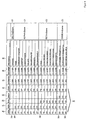
- FIG. 3 shows a simplified, exemplary diagram of a Information storage represented in a database according to the invention.
- the information is stored in one Metastructure 24 with 37 and 38, which is shown in Figure 3 as a table.
- the Metastructure is at the same time an expression of a link structure 24 Connection of information at the different hierarchy levels.
- the Figure 3 underlying embodiment with four hierarchy levels are therefore four hierarchy fields defined, the field “Delta” 34 for the DELTA level, the field “Alpha” 31 for the ALPHA level, the "Beta” field 32 for the BETA level and that "Gamma” field 33 for the GAMMA level.
- the order given in Figure 3 the hierarchy field makes sense for the performance of the database, but can modified according to other requirements.
- the meta structure contains a further internal data field, designated "information" in the example in FIG. 3, to hold the information elements.
- the size and characteristics of the hierarchy fields will be according to the requirements defined when creating the database.
- the size and characteristics are different expected number of sequences in the database.
- Under Sequence is a Entry of data in the form of an information element with the associated attributes understood the meta structure in the database.
- 9,999,999,999 Sequences in the database can use the internal fields with a Length of ten digits can be defined with numerical values. With very large ones A binary data type is suitable for data sets.
- To define internal Changing data fields in an existing database becomes their Sequences completely exported and then with a modified definition of the internal data fields reimported.
- the storage logic is via entries in the hierarchy fields, subsequently as Designated attributes, implemented.
- the assignment of a sequence to a specific one Hierarchy level is determined by the presence of attributes in the hierarchy fields controlled. If one arranges a hierarchy between the hierarchy fields so that the highest rank from the field "Delta”, followed by the field “Alpha” and below the field “Beta” is occupied, and the "Gamma” field has the lowest rank, the Assignment of a sequence to its hierarchical level can be determined by the identity of the lowest-ranking hierarchy field that still has an attribute.
- Linking the information elements of lower hierarchical levels with Information element records of higher hierarchy levels are based on the value of the attributes controlled in the hierarchy fields. Sequences with identical attributes in the same Hierarchy fields are assigned to each other.
- Any two information elements of the GAMMA level are members of the same group ⁇ xyzu within this hierarchy level if their sequences have identical attribute values in the hierarchy fields.
- the information element with an identical value in the "LFDNR" field and in the "Gamma” hierarchy field is the anchor information element 39 of this group.
- the other members of this group are derived from this anchor information element.
- the data scheme for an information element ⁇ ' xy for the GAMMA level is determined by an information element set ⁇ xyz , the sequences of which have exactly the same attribute value in the hierarchy fields "Beta” and "Alpha".
- the data scheme for an information element of the BETA level can be found in an information element set ⁇ xy whose sequences have identical values in the hierarchy field "Alpha”. If there is a DELTA level, the attribute values in the "Delta" hierarchy field must match in both situations. All sequences that have the same attribute value in the "Delta” hierarchy field belong to the same logical unit.
- exactly one information element set ⁇ 001010 is defined with an attribute value "010" in the "Alpha” hierarchy field.
- the associated sequences include the consecutive numbers “010” to "017" in the internal data field "LFDNR" of the meta structure.
- the attributes in the internal data field “LFDNR” 35 serve to uniquely identify a sequence or an information element in the database according to the invention. Size and data type correspond to the same criteria as apply to hierarchy fields. "LFDNR" is only an example of a field name and, like the names of the hierarchy fields, can be freely selected for each database.
- Each information element in the information element set ⁇ 001010 is a data set consisting of data elements, the definitions of which were made in the basic fields of the basic module.
- the information element with the assigned attribute value "010" in the "LFDNR" field occupies a special position, which is only an expression of the basic field "field name” and contains a brief description for the description of the information element set ⁇ 001010 . It is the anchor information element of this information element set with the attribute value "010" in the hierarchy field "Alpha".
- anchor forms the basis of the inheritance of the definitions of ⁇ 001010 on information elements of the BETA level which also have the attribute value "010" in the hierarchy field "Alpha”, since it does not represent a definition variable itself, however, it is not passed on to them.
- anchor information element reserved for the short description, another can be provided for the inclusion of a long description. This also does not represent a definition variable and is therefore not passed on to information elements at the BETA level. Unlike the anchor information element, it does not form the basis of inheritance.
- the information elements not used for descriptions, hereinafter referred to as standard information elements are an expression of the data schema defined in the basic module. However, only the core elements of the basic building block are mandatory. The use of further basic fields is optional according to the attachment in the table above.
- the data record with the serial number 011 contains this in the first data element Base field "field name” with the expression “field short name”, separated by the Field separator "
- the code character "D” in the fourth data element indicates that the associated definition in a data set of the BETA level is dynamic. All in all this data record defines exactly one field or exactly one data element in one assigned information element of the BETA level.
- An expression of this Data element contains a short description of the one containing it Information elements with a maximum length of 25 characters from alphanumeric data type. An automatic change of the data element format through an interpretation program is permitted or, in other words, the Data element format is dynamic.
- the data record with the serial number 012 defines a field for the Specification of a field length, with a maximum of 8 characters of the alphanumeric data type for the specification of a field length (the field length refers to a data element of the GAMMA level) are permitted. In this case too there is a dynamization of This field definition is intended at BETA level.
- the other data records of the information element set ⁇ 001010 which define fields as data elements of the information elements of the BETA level, define a dynamic data element for the definition of a field character of one character length of the alphanumeric type, as well as non-dynamic dynamic data elements for the definition of a field status (1 character long, data type : Selection of system-defined criteria), a traffic jam order (2 characters long, data type: numeric), a reference (1 character long, data type: list box) and a status separator (1 character long, data type: alphanumeric).
- Reference means that information is referenced, for example from other fields or files. In the example given, the referenced information is offered in a list box for selecting partial information.
- the sequences with a serial number from "020" up to and including "024" define the information element set ⁇ 001010020 .
- the information element with the serial number "020” is the anchor information element of ⁇ 001010020 and contains a brief description with the content "folder”. Analogous to the information element sets at the ALPHA level, an information element for a long description can also be provided in the information element sets at the BETA level.
- a data set of ⁇ 001010020 consists of data elements which are expressions of the fields "field short description”, “length”, “field character”, “status”, “status sequence”, “reference” and “status separator”. However, data elements that have no value for a field in a record are omitted.
- Each data record or information element of ⁇ 001010020 in turn represents a field definition for a data element in an associated information element at the GAMMA level.
- the information element set ⁇ 001010020 is divided into two subsets.
- the first subset consisting of the sequences with the serial numbers "021" to "023" defines the data scheme of the key part of an assigned information element at the GAMMA level;
- the second subset with the serial numbers "024" and "025" defines the data scheme of the data part of an assigned information element at the GAMMA level.
- the data record with the serial number "021” contains the values of the field definitions from the information elements with the serial number "011", “012", “014" and "015". It defines a field with the designation "folder number” of five characters in length alphanumeric field with key status. The field is ranked 1 in the status order, ie it comes first in the key part of an assigned information element at the GAMMA level.
- the data record with the serial number "022" contains a further version of these field definitions. It defines a field called "Folder Sub-No.” four characters long, numeric data type with key status. The status order is 2, ie it is in second place in the key part of an assigned information element at the GAMMA level.
- the data record with the serial number "023” is an expression of the field definitions from the information elements with the serial number "011” to "016" in the specified field order.
- the alphanumeric key field with status order 3 and length 10 uses a referencing connection called "Title” to select a magazine from a list box.
- the first subset of ⁇ 001010020 thus contains three sequences for defining key elements of information elements assigned to the GAMMA level, the characteristics of the first two key elements being able to be entered freely, the characteristics of the third data element being selected from a predetermined reference list.
- the example in FIG. 3 shows three sequences with the current ones Numbers "032", “044" and "033".
- the first two sequences have with “032" an identical attribute value in the "Gamma” field, are therefore within the GAMMA level grouped.
- they are also Information elements of these sequences constructed according to the same scheme.
- the first Data element that corresponds to the "Folder No.” field contains the value "21”, analogously the second data element contains "folder sub-no.” the value "0102”.
- the third data element corresponds to the field "journals” and relates its value the reference compound "title", which is in the sequence with the serial number "023" was set.
- the following tilde, the status separator, indicates that with the third data element the key part of the information elements ends.
- the structure of the The key part takes on the function of a logical structure of the Information structure which, when using a field for the binary storage with the Value "O”, together with the structure of the hierarchy levels in an actual, of storage structure supported by the usual operating systems.
- the field "Keyword-1" is assigned the value "Shares” in both information elements. This Value was selected via the "Article” reference connection.
- the second Data element of the data part corresponds to the "Documents" field and contains the first Information element of the group the value "Aktien.doc", in the second the value "Aktien2.doc".
- the information element with serial number 032 is the anchor information element this group.
- the second member of the group with the current Number 044 was derived from this. This is also due to the timing Referencing the two sequences in the internal data fields "DATE FROM" 37 and "DATE UP TO” 38 showing that the Validity period of the information element with the higher sequential number directly after the validity period of the anchor information element.
- the third information element of the GAMMA level with the assigned current one Number "033" differs from the first two in the key part only by another value of the selected magazine ("DM").
- the data part contains only one value ("real estate") from the reference link "article”.
- the value for the "Documents" field was kept open in the example.
- the Information element thus only denotes a logical storage location, not yet Document.
- the characteristics of the information elements of the BETA level can be changed automatically by an interpretation program, if the field definitions in the associated information element set can be made dynamic have been identified. For example, Field lengths, characteristics or others Information to be changed. This is done through an analysis of the Information elements at the GAMMA level, for example when importing data or generally if the interpretation program is based on the data of the GAMMA level accesses.
- the data structure of the database according to the invention is constructed and managed by means of an information management program, the procedural steps of which following are described in more detail.
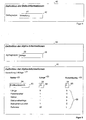
- FIG. 4 shows the input mask 40 for the optional creation of a DELTA level.
- the creation of a DELTA level is limited to the definition of a first element ⁇ x in this level.
- ⁇ x is created by entering a name 41 in an input field 42.
- "Administration" was used as the designation in FIG.
- a description of the element can additionally be entered.
- the assignment of an attribute to the "Delta” field, in the example of FIG. 3 the value "001" is usually done automatically.
- FIG. 5 shows the input masks for creating an ALPHA level mediated by creating a set of sequences for defining an information element set ⁇ xy .
- the designation 52 of the information element set is entered in a first input mask 50, in the example the designation "filing".
- the individual information elements of ⁇ xy are successively defined in a second input mask 51.
- the basic fields 53 of the core definitions of the basic module are shown in FIG.
- the data elements 54 of an information element are entered in input fields 55 below the field designation 53.
- Information elements 56 that have already been defined are displayed below it.
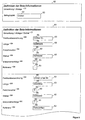
- the input mask for the BETA level again consists of two partial masks, as shown in FIG. 6.
- a designation 62 of the information element set ⁇ xyz and possibly a description are entered in a first submask 60.
- the second submask 61 contains designations 64 of the information elements of the information element set ⁇ xy previously selected as a template, and in relation thereto input fields 63 for the input of the current version 65 of these fields for an information element of the BETA level.
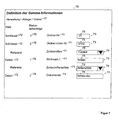
- the input mask 70 of the GAMMA level presents the designations 71 of the information elements of the information element set ⁇ xyz previously selected as a template, with an indication and arranged according to the status 72 of the corresponding field.
- the input fields 73 for the input of the current version 75 of these fields in a current information element of the GAMMA level are set in optical relation to their names.
- a list box 74 takes over the task of the input field.
- the input masks advantageously present further information, e.g. ordering (Status order 76) or assignable (status 72) information, but also the Designations 77 and / or descriptions of those selected for submission Information elements of higher hierarchical levels.
- the attribute values are automatically assigned to the hierarchy fields at prevent double assignments and therefore unclear assignments.
- the Attribute value assignment can be implemented, for example, via a counter that is used for each entry of a set of information items has a unique value as an attribute for assigns the internal data field "LFDNR". This is every sequence of the database clearly. For anchor information elements, the attribute value in the "LFDNR" field transferred to the corresponding hierarchy field.
- An anchor information element of the ALPHA level has the same Values in the "Alpha” and "LFDNR" fields, an anchor information element of the BETA level same values in the fields "Beta” and “LFDNR” and an anchor information element the GAMMA level has the same values in the "Gamma” and "LFDNR” on.
- step S810 there is a query as to whether an element is within a predefined, i.e. already existing group should be created.
- 'group' refers to a logical unit like it by a ⁇ element consisting of one or two information elements of the DELTA level given is. If the answer is negative, the creation of a group is carried out in step S820 proposed and asked if the proposal was accepted in step S830 whether a or a new ⁇ element should be created.
- Step 832 the fields for the ⁇ element (name, possibly description) for Fill out and in the following step S833 finally the ⁇ element taken over, in the event that it is the first ⁇ element of the database acts, the DELTA level is created at the same time.
- the query S830 is answered in the negative, the input mode is terminated in step S831.
- a negation of the Query S820 leads directly to step S811, since the use of a group for Creation of information records is not absolutely necessary.
- the processing logic begins again in step S810, after which in Step S811 fields for entering a name and / or description of a Information element set of the ALPHA level are displayed.
- step S812 become the values of the basic field definitions for this information element set entered in the form of one or more information elements.
- the takeover the alpha definitions of information elements of the BETA level that have been made takes place in step 813.
- step S841 Alpha level information item set can be selected.
- step S842 Fields for entering a name and / or description of a Information element set of the BETA level is displayed.
- step S843 the selected alpha definitions and the characteristics of the ⁇ information elements performed. Then the new one is taken over BETA level information item set in step S844.
- step S845 The entry of information items in the GAMMA level begins in step S845 with the selection of a desired beta definition, i.e. the field definitions as in a specific set of ⁇ information elements. Entering Designations and / or descriptions such as those in the ALPHA or BETA level are omitted, but analogous to the further data entry in these hierarchy levels are now in Step 846 based on the selected beta definitions, the occurrences of a or entered several ⁇ information elements. This data is taken over in Step 847 and in the last step finally all data generated stored.
- a desired beta definition i.e. the field definitions as in a specific set of ⁇ information elements. Entering Designations and / or descriptions such as those in the ALPHA or BETA level are omitted, but analogous to the further data entry in these hierarchy levels are now in Step 846 based on the selected beta definitions, the occurrences of a or entered several ⁇ information elements. This data is taken over in Step 847 and in the last step finally all data generated stored
- the information management program allows access to all of them Information elements at the BETA, GAMMA and DELTA levels. By specifying a significant and / or descriptive elements of the DELTA level, one Information element set of the ALPHA level, information element set of the BETA level or an information element or a part of an information element all relevant stored information can be found and output.
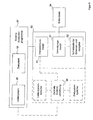
- the block diagram of FIG. 9 shows the basic components of the invention Information management program 90.
- the task of the management module 91 is Control of data storage in a database 94 in accordance with the requirements of Database and the provision of access to this database. Providing of masks for entering data and for creating queries is about the Interface 92 for input / output of data implemented.
- the interface to This is formed by user programs that access the data in the database Interpretation module 93. It enables database users, e.g. User programs on the data without knowledge of structures and field attributes or to access the systematics of the database.
- the requested data are from the interpretation module 93 either together with the field definitions to the User program or according to the requirements of the user program formatted sent to this. Conversely, the interpretation module can be above it assigned data structure templates, i.e. Define field definitions and thus yourself Make field content assignments and field content transfers without having to deal with the to have to deal with individual applications.
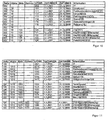
- the time reference of the information elements is shown in the example in FIG used to restrict the validity of a document type.
- the Information element set "1032” ends the “reminder” with the 4.1.2001 and will be replaced by the "memory” at the beginning of 5.1.2001.
- References in an information element at the GAMMA level are used to define subsequent rules.
- An order contains at least information about its type, the ones to be implemented Source data, the system from which this source data comes, in other words a Name of the delivery system as well as a name of the target system and a Issuing point for the destination information.
- the database can itself host the delivery and / or target system, however External databases can also be considered as delivery and target systems.
- the interpretation module takes over the latter case e.g. the implementation, conversion and transformation of data and data structures of different data origins and other information so that a user program data between different Data processing devices can exchange without knowing their structures.
- the flow chart of the interpretation module is in the flow chart of FIG. 12 shown.
- the order data contains a key that defines the type of order, e.g. indicates a transformation service. Based on this key, this looks for Interpretation module the data for interpreting the order data in the database in step S1202. In the following step S1203, these are assigned to the key Information element records in the BETA level and ALPHA level read out and thus finally in step S1204 the data part of the order, which contains the details of the order Order contains, interpreted.
- the interpretation module in determines from this information Step S1205 the structure name of the delivery system and possibly the type of File opening.
- Step S1206 the database in step S1206.
- the length of the item numbers is read from a length field, i.e. from a Data element that is an expression of a field for the length specification.
- Step S1208 the data of the delivery system is internal according to the structure of the Database stored, whereby suitable, i.e. the structure of the delivery system reproducing information element sets at the ALPHA level as at the BETA level being constructed.
- step 1211 includes the plant more appropriately Information element sets at the ALPHA level as well as at the BETA level.
- step S1212 the job tasks are read.
- the assignment rules (see e.g. Figure 11) corresponding to these tasks are then in step S 1213 read from the database and consisting of an internal structure in step S1214 from information element sets at ALPHA, BETA and GAMMA level.
- step S1215 the rules for the transformation are interpreted, Calculation or implementation based on the field types and finally the transfer of the Field contents from the input structure to the output structure in step S1216. Tasks, that an order does not contain remain unfulfilled.
- An example of an order to the interpretation module is a transformation service.
- the transformation service releases those who communicate with each other Database systems from the need for each partner system its own Interface. Instead, the required data is transferred via the Transformation service of the interpretation module requested and in the native Preserve structure.
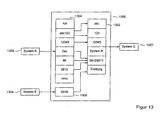
- the interpretation module takes over the exchange of information and at the same time the translation of delivery contents into target contents. This is shown schematically in shown in FIG. One target system, System C 1301, requests data from two Delivery systems, system A 1303 and system B 1305 via the interpretation module.
- the structures of the delivery systems 1304 and 1306 and the target system 1302 are internally reproduced according to the system of the database. According to the Assignment rules are now the field contents of the delivery systems in the structure of the Target system transferred.
- the order of the fields can be changed, but also the data type of a field can be changed. Also not everyone has to Field contents are transmitted, and further the content of a field can be a Delivery system split and each part of it into a separate field of the target system be transferred. Conversely, the content of several fields of the delivery systems be merged into one field of the target system.
- the assignment rules can also include instructions for interpreting field content, where the result of the interpretation is then written into a field of the target system.
- the Central control device 98 can run independently, but not functionally implemented independently of the information management program 90 according to the invention his.
- the communication of the central control device 98 with the Management module 91 of the information management program 90 takes place via the Interpretation module 93.
- the information management program 90 with the database according to the invention regardless of the central Control device 98 work in the sense of a peer-to-peer communication.
- the central control device 98 is responsible for the control of orders Delivery systems 95 or target systems 96 to the information management program 90, processing an order in the manner described above by the interpretation module 93 is made.
- the central control device 98 uses the interpretation module 93 and the data stored in the database Rules and structure information to control the orders from various Systems. Different systems 95 can be controlled via the central control device 98 and 96 with different requirements and those with different Data formats operate communicate with one another or exchange data, as these Device 98 decouples the communication by the Coordination of orders from the various systems takes over.
- the Central control device 98 via the interpretation module 93 to check the data of a delivery system for correctness or integrity. Fields for that Target systems can, if necessary, directly from the Central control device 98 filled based on information from the delivery system become.
- the central control facility can also have fields for the Fill the target system without using the field contents of the delivery systems. Examples this includes the insertion of information relevant to transformation, e.g. a sequential number, or the insertion of values on the target system 'Division by Zero' help avoid mistakes.
- the central one takes over Control device monitoring this appointment and ensures the timely Execution of the order. Orders without an explicit processing date will become executed as soon as possible. This can lead to an acquisition of delivery data different times from different or even from the same delivery system be made, as well as the transfer of the converted data to the Target system can be done at a later time. Communication between the systems can thus be organized independently of the runtime of both systems Upon request, the systems can receive feedback on the processing status of the sent orders, e.g. can be used to Access processing information of the target systems.
- the described method allows a large number of different data structures easily on all systems and platforms without a conventional database to create.
- the data storage contains the definition of the fields and Data structures. Therefore, in user programs that are based on the data of the Database access these structural definitions are largely dispensed with. However, if a user program needs the structure itself, this can also be done by the Database can be requested.
- the interpretation module offers with the in the Database stored structure information and assignment rules User programs the possibility of data from other database systems to request without knowing the structure of these systems.
- the central one Control device also ensures communication between diverse delivery and recipient media.
- the database of the database can be found in The simplest case is a flat file database with the meta structure as a table the data can also be stored in multiple files.
Landscapes
- Engineering & Computer Science (AREA)
- Databases & Information Systems (AREA)
- Theoretical Computer Science (AREA)
- Data Mining & Analysis (AREA)
- Physics & Mathematics (AREA)
- General Engineering & Computer Science (AREA)
- General Physics & Mathematics (AREA)
- Information Retrieval, Db Structures And Fs Structures Therefor (AREA)
- Transition And Organic Metals Composition Catalysts For Addition Polymerization (AREA)
- Peptides Or Proteins (AREA)
Claims (33)
- Banque de données (100) destinée à l'enregistrement d'informations sous forme de blocs de données d'une structure quelconque dans au moins un dispositif de mémoire d'un ou de plusieurs ordinateurs disposant de niveaux de hiérarchie (119,129),caractérisée par le faitun niveau de hiérarchie supérieur (119) contenant des éléments d'information (111,112,113) pour la définition d'un ensemble d'éléments d'information (130,140, 150) d'un niveau de hiérarchie inférieur (129) etun niveau de hiérarchie inférieur (129) contenant des éléments d'information (130,140, 150) sous une forme (131-136, 141-146, 151-156) selon une structure définie au moins par un élément d'information (111,112,113) du niveau de hiérarchie supérieur,un premier niveau de hiérarchie (21) contenant des éléments d'information destinés à la définition de la structure d'éléments d'information d'un deuxième niveau de hiérarchie (22),un deuxième niveau de hiérarchie (22) contenant des éléments d'information destinés à la définition de la structure d'éléments d'information d'un troisième niveau de hiérarchie (22), etun troisième niveau de hiérarchie (23) contenant des éléments d'information destinés à l'enregistrement d'informations,que la banque de données contient une structure de liaison (24) avec des champs de données attribués aux éléments d'information et reliant les éléments d'information aux différents niveaux de hiérarchie,qu'un premier, deuxième, troisième et quatrième champ de données interne (31, 32, 33, 36) est attribué à chaque élément d'information dans la structure de liaison,que la structure de liaison (24) contenant dans un premier champ de données (31) un premier attribut pour l'attribution univoque d'un élément d'information à un élément d'information ou à un bloc d'éléments d'information du premier niveau de hiérarchie (21), dans un deuxième champ de données interne (32) un deuxième attribut pour l'attribution univoque d'un élément d'information à un élément d'information ou à un bloc d'éléments d'information du deuxième niveau de hiérarchie (22), dans un troisième champ de données interne (33) un troisième attribut pour l'attribution univoque d'un élément d'information à un bloc d'éléments d'information du troisième niveau de hiérarchie (23),qu'un quatrième champ de données interne (36) de la structure de liaison est prévu pour l'enregistrement d'un élément d'information, etque la structure de liaison (24) dans les champs de données attribués dans un élément d'information à un niveau de hiérarchie inférieur contient une indication univoque d'un élément d'information ou d'un bloc d'éléments d'information d'un niveau de hiérarchie supérieur définissant la structure de l'élément d'information mentionné du niveau de hiérarchie inférieur.
- Banque de données selon la revendication 1,
caractérisée par le fait qu'il est possible de définir dans un module de base la structure d'éléments d'information du premier niveau de hiérarchie (21). - Banque de données selon la revendication 1 ou 2,
caractérisée par
un niveau d'ordre (25) pour le groupement d'éléments du premier niveau de hiérarchie (21) et/ou d'éléments du deuxième niveau de hiérarchie (22). - Banque de données selon la revendication 3,
caractérisée par le fait qu'un cinquième champ de données interne (34) contient un quatrième attribut pour l'attribution univoque d'un élément d'information à un élément d'information ou à un bloc d'éléments d'information du niveau d'ordre (25). - Banque de données selon une des revendications 1 à 4,
caractérisée par le fait que la structure de liaison (24) est définie par la combinaison des valeurs des premiers, deuxièmes et troisièmes attributs, en présence d'un niveau d'ordre, également par les valeurs du quatrième attribut. - Banque de données selon une des revendications 1 à 5,
caractérisée par le fait qu'un cinquième attribut est attribué à chaque élément d'information dans un sixième champ de données interne (35) de la structure de liaison pour l'identification univoque. - Banque de données selon une des revendications 1 à 6,
caractérisée par le fait qu'une valeur temporelle est attribuée à chaque élément d'information pour déterminer son référencement temporel. - Banque de données selon la revendication 7,
caractérisée par le fait que le référencement temporel se compose d'une valeur initiale et d'une valeur finale. - Banque de données selon la revendication 8,
caractérisée par le fait que la valeur initiale et la valeur finale du référencement temporel sont enregistrées dans des champs de données internes (37, 38) de la structure de liaison. - Banque de données selon une des revendications 7 à 9,
caractérisée par le fait que la modification d'un élément d'information s'effectue de la manière suivante :création d'un nouvel élément d'information comme copie de l'élément d'information à modifier,modification du nouvel élément d'information, etattribution d'une nouvelle référence temporelle au nouvel élément d'information. - Banque de données selon une des revendications 1 à 10,
caractérisée par le fait que l'attribution d'un élément à un niveau de hiérarchie est définie par la présence et/ou les valeurs des attributs dans les premières, deuxièmes et troisièmes champs de données internes de la structure de liaison, et en présence d'un niveau d'ordre par la présence et/ou la valeur de l'attribut dans le cinquième champ de données interne (34) de la structure de liaison (24). - Banque de données selon une des revendications 1 à 11,
caractérisée par le fait que les définitions fixées dans un élément d'information ou dans un bloc d'éléments d'information du premier niveau de hiérarchie (21) détermine la forme d'un élément d'information du deuxième niveau de hiérarchie (22) contenant la valeur identique de l'attribut dans le premier champ de données interne (31) de la structure de liaison, et les définitions fixées dans un élément d'information ou dans un bloc d'éléments d'information du deuxième niveau de hiérarchie (22) déterminent la forme d'un élément d'information du troisième niveau de hiérarchie (23) contenant la valeur identique de l'attribut dans le deuxième champ de données interne (32) de la structure de liaison. - Banque de données selon une des revendications 1 à 12,
caractérisée par le fait que chaque bloc d'éléments d'information présente un élément d'information fixe (39), pour lequel la valeur de l'attribut dans le champ de données interne (31, 32 ou 33) de la structure de liaison désignant son attribution à un niveau de hiérarchie est identique à la valeur de l'attribut dans le sixième champ de données interne (35) de la structure de liaison qui lui est attribué. - Banque de données selon une des revendications 1 à 13,
caractérisée par le fait que chaque bloc d'éléments d'information n'appartenant pas au troisième niveau de hiérarchie (23) présente au moins un élément d'information avec un contenu décrivant ce bloc d'éléments d'information. - Banque de données selon la revendication 14,
caractérisée par le fait que l'un de ces éléments d'information avec le contenu descriptif est l'élément d'information fixe (39). - Méthode pour la création et la gestion d'une base de données conforme à une base de données selon une des revendications 1 à 15 avec des étapes pour la création des niveaux de hiérarchie, pour la création d'éléments d'information à l'intérieur des niveaux de hiérarchie et des étapes pour la création de liaisons entre les éléments d'information à différents niveaux de hiérarchie.
- Méthode selon la revendication 16,
caractérisée par le fait que plusieurs bases de données indépendantes sont réunies de manière logique dans une base de données. - Méthode selon la revendication 16 ou 17,
caractérisée par le fait qu'une interprétation de blocs de données d'un système de livraison s'effectue à l'extérieur de la base de données au moyen d'une information de structure de données sur le système de livraison qui est stockée sous forme d'un ou de plusieurs éléments d'information dans la base de données. - Méthode selon une des revendications 16, 17 ou 18
caractérisée par le fait qu'une structuration de blocs de données s'effectue pour la transmission à un système cible à l'extérieur de la base de données sur la base d'une information de structure de données sur le système cible stockée sous forme d'un ou de plusieurs éléments d'information dans la base de données. - Méthode selon une des revendications 16 à 19,
caractérisée par le fait qu'une transmission de blocs de données d'une première structure vers une deuxième structure s'effectue d'après des règles d'affectation stockées sous forme d'un ou de plusieurs éléments d'information dans la base de données. - Méthode selon une des revendications 16 à 20,
caractérisée par le fait qu'une communication de programmes d'application avec la base de données s'effectue sous forme de commandes transmise à la banque de données. - Méthode selon la revendication 21,
caractérisée par le fait qu'une commande transmise à la banque de données présente au moins des indications sur la nature de la commande. - Méthode selon la revendication 21 ou 22
caractérisée par le fait qu'un pilotage des commandes de programmes d'application s'effectue vers la base de données au moyen d'une installation centrale de contrôle (98). - Méthode selon la revendication 23,
caractérisée par le fait que l'installation centrale de contrôle (98) procède à un examen de l'intégrité des données d'une commande au moyen de règles stockées sous forme d'un ou de plusieurs éléments d'information dans la base de données de la banque de données. - Méthode selon la revendication 23 ou 24
caractérisée par le fait qu'une commande transmise à la banque de données présente une date de traitement et que l'installation centrale de contrôle (98) provoque l'exécution de la commande à la date de traitement. - Méthode selon la revendication 23, 24 ou 25
caractérisée par le fait que l'installation centrale de contrôle (98) exécute des commandes partielles d'au moins deux programmes d'application, les commandes partielles formant ensemble une commande commune vers la banque de données, indépendamment l'une de l'autre selon les besoins de chaque commande partielle. - Méthode selon une des revendications 23 à 26,
caractérisée par le fait que l'installation centrale de contrôle (98) informe un programme d'application de l'état d'exécution d'une commande. - Méthode selon une des revendications 23 à 27,
caractérisée par le fait que l'installation centrale de contrôle (98) crée des données supplémentaires sur la base d'informations de la banque de données. - Programme de gestion d'informations pour l'exécution sur un ou plusieurs ordinateurs disposant d'installations pour l'exécution d'une méthode selon une des revendications 16 à 28.
- Dispositif destiné à l'enregistrement et à la gestion d'informations sous forme de blocs de données d'une structure quelconque avecau moins un ordinateur équipé d'un programme de gestion d'informations (90) selon la revendication 29, etau moins un dispositif de mémoire pour l'enregistrement de la base de données gérée par le programme de gestion d'informations (90).
- Dispositif selon la revendication 30,
caractérisé par le fait que le programme de gestion d'informations (90) et la base de données gérée par le programme de gestion d'informations sont installés sur différents ordinateurs. - Dispositif selon la revendication 30 ou 31,
caractérisé par le fait qu'au moins un ordinateur du dispositif échange des données par l'intermédiaire d'un réseau. - Dispositif selon la revendication 30, 31 ou 32,
caractérisé par le fait qu'au moins un ordinateur du dispositif est accessible par un réseau public.
Priority Applications (4)
| Application Number | Priority Date | Filing Date | Title |
|---|---|---|---|
| EP01112149A EP1258812B1 (fr) | 2001-05-17 | 2001-05-17 | Base de données virtuelle de structures de données hétérogènes |
| AT01112149T ATE260487T1 (de) | 2001-05-17 | 2001-05-17 | Virtuelle datenbank heterogener datenstrukturen |
| DE50101548T DE50101548D1 (de) | 2001-05-17 | 2001-05-17 | Virtuelle Datenbank heterogener Datenstrukturen |
| US10/146,850 US6920457B2 (en) | 2001-05-17 | 2002-05-16 | Virtual database of heterogeneous data structures |
Applications Claiming Priority (1)
| Application Number | Priority Date | Filing Date | Title |
|---|---|---|---|
| EP01112149A EP1258812B1 (fr) | 2001-05-17 | 2001-05-17 | Base de données virtuelle de structures de données hétérogènes |
Publications (2)
| Publication Number | Publication Date |
|---|---|
| EP1258812A1 EP1258812A1 (fr) | 2002-11-20 |
| EP1258812B1 true EP1258812B1 (fr) | 2004-02-25 |
Family
ID=8177465
Family Applications (1)
| Application Number | Title | Priority Date | Filing Date |
|---|---|---|---|
| EP01112149A Expired - Lifetime EP1258812B1 (fr) | 2001-05-17 | 2001-05-17 | Base de données virtuelle de structures de données hétérogènes |
Country Status (4)
| Country | Link |
|---|---|
| US (1) | US6920457B2 (fr) |
| EP (1) | EP1258812B1 (fr) |
| AT (1) | ATE260487T1 (fr) |
| DE (1) | DE50101548D1 (fr) |
Cited By (1)
| Publication number | Priority date | Publication date | Assignee | Title |
|---|---|---|---|---|
| DE102019002389B3 (de) | 2019-03-28 | 2020-06-25 | Peter Pressmar | Digitales Prozess-Management (DPM) |
Families Citing this family (99)
| Publication number | Priority date | Publication date | Assignee | Title |
|---|---|---|---|---|
| US7228300B2 (en) | 1998-10-05 | 2007-06-05 | Oracle International Corporation | Caching the results of security policy functions |
| US6158010A (en) * | 1998-10-28 | 2000-12-05 | Crosslogix, Inc. | System and method for maintaining security in a distributed computer network |
| US7673323B1 (en) | 1998-10-28 | 2010-03-02 | Bea Systems, Inc. | System and method for maintaining security in a distributed computer network |
| US7366708B2 (en) | 1999-02-18 | 2008-04-29 | Oracle Corporation | Mechanism to efficiently index structured data that provides hierarchical access in a relational database system |
| US7051069B2 (en) | 2000-09-28 | 2006-05-23 | Bea Systems, Inc. | System for managing logical process flow in an online environment |
| US7499948B2 (en) | 2001-04-16 | 2009-03-03 | Bea Systems, Inc. | System and method for web-based personalization and ecommerce management |
| DE50101548D1 (de) * | 2001-05-17 | 2004-04-01 | Presmar Peter | Virtuelle Datenbank heterogener Datenstrukturen |
| US7392546B2 (en) | 2001-06-11 | 2008-06-24 | Bea Systems, Inc. | System and method for server security and entitlement processing |
| US7051039B1 (en) * | 2001-09-28 | 2006-05-23 | Oracle International Corporation | Mechanism for uniform access control in a database system |
| US7047250B1 (en) | 2001-09-28 | 2006-05-16 | Oracle International Corporation | Indexing to efficiently manage versioned data in a database system |
| US7451477B2 (en) | 2001-10-24 | 2008-11-11 | Bea Systems, Inc. | System and method for rule-based entitlements |
| US7350226B2 (en) | 2001-12-13 | 2008-03-25 | Bea Systems, Inc. | System and method for analyzing security policies in a distributed computer network |
| WO2003093964A1 (fr) | 2002-05-01 | 2003-11-13 | Bea Systems, Inc. | Plate-forme d'applications d'entreprise |
| US7454529B2 (en) * | 2002-08-02 | 2008-11-18 | Netapp, Inc. | Protectable data storage system and a method of protecting and/or managing a data storage system |
| US7257834B1 (en) * | 2002-10-31 | 2007-08-14 | Sprint Communications Company L.P. | Security framework data scheme |
| US7591000B2 (en) | 2003-02-14 | 2009-09-15 | Oracle International Corporation | System and method for hierarchical role-based entitlements |
| US7653930B2 (en) * | 2003-02-14 | 2010-01-26 | Bea Systems, Inc. | Method for role and resource policy management optimization |
| US8831966B2 (en) | 2003-02-14 | 2014-09-09 | Oracle International Corporation | Method for delegated administration |
| US7840614B2 (en) | 2003-02-20 | 2010-11-23 | Bea Systems, Inc. | Virtual content repository application program interface |
| US7562298B2 (en) | 2003-02-20 | 2009-07-14 | Bea Systems, Inc. | Virtual content repository browser |
| US7415478B2 (en) | 2003-02-20 | 2008-08-19 | Bea Systems, Inc. | Virtual repository complex content model |
| US7293286B2 (en) | 2003-02-20 | 2007-11-06 | Bea Systems, Inc. | Federated management of content repositories |
| US7483904B2 (en) | 2003-02-20 | 2009-01-27 | Bea Systems, Inc. | Virtual repository content model |
| US20040167880A1 (en) * | 2003-02-20 | 2004-08-26 | Bea Systems, Inc. | System and method for searching a virtual repository content |
| US7873660B1 (en) | 2003-02-27 | 2011-01-18 | Oracle International Corporation | Enforcing data privacy aggregations |
| US7810036B2 (en) | 2003-02-28 | 2010-10-05 | Bea Systems, Inc. | Systems and methods for personalizing a portal |
| EP1471447A3 (fr) * | 2003-03-31 | 2006-07-26 | Sap Ag | Gestion de mémoire de données |
| US7827204B2 (en) | 2003-03-31 | 2010-11-02 | Sap Ag | Order document data management |
| US8874561B2 (en) | 2003-03-31 | 2014-10-28 | Sap Se | Time series data management |
| US7856383B2 (en) * | 2003-04-29 | 2010-12-21 | Oracle International Corporatioin | Transaction allocation |
| US7958026B2 (en) * | 2003-04-29 | 2011-06-07 | Oracle International Corporation | Hierarchical transaction filtering |
| US8229932B2 (en) | 2003-09-04 | 2012-07-24 | Oracle International Corporation | Storing XML documents efficiently in an RDBMS |
| US8694510B2 (en) | 2003-09-04 | 2014-04-08 | Oracle International Corporation | Indexing XML documents efficiently |
| US7236982B2 (en) * | 2003-09-15 | 2007-06-26 | Pic Web Services, Inc. | Computer systems and methods for platform independent presentation design |
| US7644432B2 (en) | 2003-10-10 | 2010-01-05 | Bea Systems, Inc. | Policy inheritance through nested groups |
| US20050081055A1 (en) | 2003-10-10 | 2005-04-14 | Bea Systems, Inc. | Dynamically configurable distributed security system |
| US7310647B2 (en) * | 2003-12-24 | 2007-12-18 | Oracle International Corporation | Column masking of tables |
| US8825702B2 (en) * | 2004-02-24 | 2014-09-02 | Oracle International Corporation | Sending control information with database statement |
| US20050188295A1 (en) * | 2004-02-25 | 2005-08-25 | Loren Konkus | Systems and methods for an extensible administration tool |
| US7774601B2 (en) | 2004-04-06 | 2010-08-10 | Bea Systems, Inc. | Method for delegated administration |
| US7499915B2 (en) | 2004-04-09 | 2009-03-03 | Oracle International Corporation | Index for accessing XML data |
| US7440954B2 (en) * | 2004-04-09 | 2008-10-21 | Oracle International Corporation | Index maintenance for operations involving indexed XML data |
| US7246138B2 (en) | 2004-04-13 | 2007-07-17 | Bea Systems, Inc. | System and method for content lifecycles in a virtual content repository that integrates a plurality of content repositories |
| US7236975B2 (en) * | 2004-04-13 | 2007-06-26 | Bea Systems, Inc. | System and method for controlling access to anode in a virtual content repository that integrates a plurality of content repositories |
| US7475091B2 (en) | 2004-04-13 | 2009-01-06 | Bea Systems, Inc. | System and method for viewing a virtual content repository |
| US7580953B2 (en) | 2004-04-13 | 2009-08-25 | Bea Systems, Inc. | System and method for schema lifecycles in a virtual content repository that integrates a plurality of content repositories |
| US7236990B2 (en) | 2004-04-13 | 2007-06-26 | Bea Systems, Inc. | System and method for information lifecycle workflow integration |
| US7236989B2 (en) | 2004-04-13 | 2007-06-26 | Bea Systems, Inc. | System and method for providing lifecycles for custom content in a virtual content repository |
| US7240076B2 (en) | 2004-04-13 | 2007-07-03 | Bea Systems, Inc. | System and method for providing a lifecycle for information in a virtual content repository |
| US7930277B2 (en) | 2004-04-21 | 2011-04-19 | Oracle International Corporation | Cost-based optimizer for an XML data repository within a database |
| US8566300B2 (en) | 2004-07-02 | 2013-10-22 | Oracle International Corporation | Mechanism for efficient maintenance of XML index structures in a database system |
| US7885980B2 (en) * | 2004-07-02 | 2011-02-08 | Oracle International Corporation | Mechanism for improving performance on XML over XML data using path subsetting |
| EP1672532A1 (fr) * | 2004-12-16 | 2006-06-21 | BP Chemicals Limited | Systême de gestion des informations avec couches multiples |
| US20070016605A1 (en) * | 2005-07-18 | 2007-01-18 | Ravi Murthy | Mechanism for computing structural summaries of XML document collections in a database system |
| US7483893B2 (en) | 2005-09-26 | 2009-01-27 | Bae Systems, Inc. | System and method for lightweight loading for managing content |
| US7818344B2 (en) | 2005-09-26 | 2010-10-19 | Bea Systems, Inc. | System and method for providing nested types for content management |
| US7752205B2 (en) | 2005-09-26 | 2010-07-06 | Bea Systems, Inc. | Method and system for interacting with a virtual content repository |
| US7917537B2 (en) | 2005-09-26 | 2011-03-29 | Oracle International Corporation | System and method for providing link property types for content management |
| US7953734B2 (en) | 2005-09-26 | 2011-05-31 | Oracle International Corporation | System and method for providing SPI extensions for content management system |
| US8073841B2 (en) | 2005-10-07 | 2011-12-06 | Oracle International Corporation | Optimizing correlated XML extracts |
| US8949455B2 (en) | 2005-11-21 | 2015-02-03 | Oracle International Corporation | Path-caching mechanism to improve performance of path-related operations in a repository |
| US7933928B2 (en) | 2005-12-22 | 2011-04-26 | Oracle International Corporation | Method and mechanism for loading XML documents into memory |
| US7730032B2 (en) | 2006-01-12 | 2010-06-01 | Oracle International Corporation | Efficient queriability of version histories in a repository |
| US9229967B2 (en) * | 2006-02-22 | 2016-01-05 | Oracle International Corporation | Efficient processing of path related operations on data organized hierarchically in an RDBMS |
| US8706759B2 (en) * | 2006-04-18 | 2014-04-22 | Ca, Inc. | Method and system for displaying messages in context |
| US20070250527A1 (en) * | 2006-04-19 | 2007-10-25 | Ravi Murthy | Mechanism for abridged indexes over XML document collections |
| US8510292B2 (en) * | 2006-05-25 | 2013-08-13 | Oracle International Coporation | Isolation for applications working on shared XML data |
| US7457814B2 (en) * | 2006-05-30 | 2008-11-25 | Microsoft Corporation | Multi-dimensional data classification for user interface customizations |
| US7849114B2 (en) * | 2006-06-19 | 2010-12-07 | International Business Machines Corporation | Method, system, and program product for generating a virtual database |
| US7523124B2 (en) | 2006-06-26 | 2009-04-21 | Nielsen Media Research, Inc. | Methods and apparatus for improving data warehouse performance |
| US8463852B2 (en) | 2006-10-06 | 2013-06-11 | Oracle International Corporation | Groupware portlets for integrating a portal with groupware systems |
| US20080092037A1 (en) * | 2006-10-16 | 2008-04-17 | Oracle International Corporation | Validation of XML content in a streaming fashion |
| US7797310B2 (en) | 2006-10-16 | 2010-09-14 | Oracle International Corporation | Technique to estimate the cost of streaming evaluation of XPaths |
| US7933935B2 (en) * | 2006-10-16 | 2011-04-26 | Oracle International Corporation | Efficient partitioning technique while managing large XML documents |
| CA2567428A1 (fr) * | 2006-11-09 | 2008-05-09 | Ibm Canada Limited - Ibm Canada Limitee | Systemes et methodes pour mesurer la valeur d'elements dans un referentiel d'information |
| US7836098B2 (en) * | 2007-07-13 | 2010-11-16 | Oracle International Corporation | Accelerating value-based lookup of XML document in XQuery |
| US20090024570A1 (en) * | 2007-07-20 | 2009-01-22 | Oracle Internatonal Corporation | User defined query rewrite mechanism |
| US7840609B2 (en) * | 2007-07-31 | 2010-11-23 | Oracle International Corporation | Using sibling-count in XML indexes to optimize single-path queries |
| US8078595B2 (en) * | 2007-10-09 | 2011-12-13 | Oracle International Corporation | Secure normal forms |
| US7991768B2 (en) | 2007-11-08 | 2011-08-02 | Oracle International Corporation | Global query normalization to improve XML index based rewrites for path subsetted index |
| US8543898B2 (en) * | 2007-11-09 | 2013-09-24 | Oracle International Corporation | Techniques for more efficient generation of XML events from XML data sources |
| US8250062B2 (en) | 2007-11-09 | 2012-08-21 | Oracle International Corporation | Optimized streaming evaluation of XML queries |
| US9842090B2 (en) * | 2007-12-05 | 2017-12-12 | Oracle International Corporation | Efficient streaming evaluation of XPaths on binary-encoded XML schema-based documents |
| US8429196B2 (en) * | 2008-06-06 | 2013-04-23 | Oracle International Corporation | Fast extraction of scalar values from binary encoded XML |
| US7958112B2 (en) | 2008-08-08 | 2011-06-07 | Oracle International Corporation | Interleaving query transformations for XML indexes |
| US8219563B2 (en) * | 2008-12-30 | 2012-07-10 | Oracle International Corporation | Indexing mechanism for efficient node-aware full-text search over XML |
| US8126932B2 (en) * | 2008-12-30 | 2012-02-28 | Oracle International Corporation | Indexing strategy with improved DML performance and space usage for node-aware full-text search over XML |
| US8239396B2 (en) * | 2009-03-20 | 2012-08-07 | Oracle International Corporation | View mechanism for data security, privacy and utilization |
| US8150808B2 (en) | 2009-10-21 | 2012-04-03 | Delphix Corp. | Virtual database system |
| US8161077B2 (en) | 2009-10-21 | 2012-04-17 | Delphix Corp. | Datacenter workflow automation scenarios using virtual databases |
| US9106591B2 (en) | 2009-12-24 | 2015-08-11 | Delphix Corporation | Adaptive resource management using survival minimum resources for low priority consumers |
| US8548944B2 (en) | 2010-07-15 | 2013-10-01 | Delphix Corp. | De-duplication based backup of file systems |
| US8468174B1 (en) | 2010-11-30 | 2013-06-18 | Jedidiah Yueh | Interfacing with a virtual database system |
| US8788461B2 (en) | 2012-10-04 | 2014-07-22 | Delphix Corp. | Creating validated database snapshots for provisioning virtual databases |
| AU2019228387B2 (en) * | 2018-02-27 | 2024-07-25 | Zetane Systems Inc. | Scalable transform processing unit for heterogeneous data |
| CN111078905A (zh) * | 2018-10-22 | 2020-04-28 | 北京国双科技有限公司 | 一种数据处理方法、装置、介质以及设备 |
| US11822555B2 (en) * | 2020-02-03 | 2023-11-21 | Tencent America LLC | Signaling and resolution model for multi-level session-based description descriptors |
| US11775592B2 (en) * | 2020-08-07 | 2023-10-03 | SECURITI, Inc. | System and method for association of data elements within a document |
| CN119739776B (zh) * | 2025-03-05 | 2025-04-29 | 国网安徽省电力有限公司信息通信分公司 | 一种多源异构数据实时接入方法及系统 |
Family Cites Families (8)
| Publication number | Priority date | Publication date | Assignee | Title |
|---|---|---|---|---|
| JP2720904B2 (ja) * | 1990-08-31 | 1998-03-04 | 富士通株式会社 | 自己記述によるデータベース管理システムの構成方法および開発/変更方法 |
| US5550971A (en) * | 1993-06-30 | 1996-08-27 | U S West Technologies, Inc. | Method and system for generating a user interface adaptable to various database management systems |
| US5729730A (en) * | 1995-03-28 | 1998-03-17 | Dex Information Systems, Inc. | Method and apparatus for improved information storage and retrieval system |
| US5970490A (en) * | 1996-11-05 | 1999-10-19 | Xerox Corporation | Integration platform for heterogeneous databases |
| GB2329044B (en) * | 1997-09-05 | 2002-10-09 | Ibm | Data retrieval system |
| US6151608A (en) * | 1998-04-07 | 2000-11-21 | Crystallize, Inc. | Method and system for migrating data |
| US6671689B2 (en) * | 2001-01-19 | 2003-12-30 | Ncr Corporation | Data warehouse portal |
| DE50101548D1 (de) * | 2001-05-17 | 2004-04-01 | Presmar Peter | Virtuelle Datenbank heterogener Datenstrukturen |
-
2001
- 2001-05-17 DE DE50101548T patent/DE50101548D1/de not_active Expired - Lifetime
- 2001-05-17 EP EP01112149A patent/EP1258812B1/fr not_active Expired - Lifetime
- 2001-05-17 AT AT01112149T patent/ATE260487T1/de not_active IP Right Cessation
-
2002
- 2002-05-16 US US10/146,850 patent/US6920457B2/en not_active Expired - Fee Related
Cited By (1)
| Publication number | Priority date | Publication date | Assignee | Title |
|---|---|---|---|---|
| DE102019002389B3 (de) | 2019-03-28 | 2020-06-25 | Peter Pressmar | Digitales Prozess-Management (DPM) |
Also Published As
| Publication number | Publication date |
|---|---|
| US20030004960A1 (en) | 2003-01-02 |
| ATE260487T1 (de) | 2004-03-15 |
| DE50101548D1 (de) | 2004-04-01 |
| US6920457B2 (en) | 2005-07-19 |
| EP1258812A1 (fr) | 2002-11-20 |
Similar Documents
| Publication | Publication Date | Title |
|---|---|---|
| EP1258812B1 (fr) | Base de données virtuelle de structures de données hétérogènes | |
| EP1237098B1 (fr) | Système intégré de bases de données fédérées | |
| DE3751228T2 (de) | Verfahren und Vorrichtung zur Wiederauffindung von gespeicherten Grafikdaten. | |
| DE69523939T2 (de) | Verfahren zur erzeugung von objektstrukturen für den zugriff auf konventionelle, nicht objekt-orientierte geschäftsanwendungen | |
| EP1194865B1 (fr) | Procede de tenue de fichiers dans un reseau de systemes de banques de donnees en partie repliques | |
| EP1088280B1 (fr) | Procede et systeme pour effectuer un traitement rapide, residant en memoire, de donnees de transaction | |
| EP1311989A2 (fr) | Procede de recherche automatique | |
| DE69127399T2 (de) | Verfahren zur automatischen Löschung vorübergehender Dokumentverbindungen in einem Datenverarbeitungssystem | |
| EP3158462A1 (fr) | Appareil avec une interface de communication et procédé de commande d'un accès à des banques de données | |
| DE69031164T2 (de) | Zeitlich begrenztes zentrumsystem für dezentralisiertes datenbanksystem | |
| DE69817646T2 (de) | Informationsverarbeitungsgerät, -verfahren und computerlesbares Programm zum Speichern von Prozessverlaufdaten und computerlesbares Speichermedium zum Speichern des Programms. | |
| EP1166228B1 (fr) | Utilisation de reseaux semantiques fractals pour tous types d'applications de base de donnees | |
| DE19813883B4 (de) | Verfahren, Computerprogrammprodukt und Dokumentenmanagementsystem zum Zugriff auf Internet-Informationen für geschlossene Benutzergruppen | |
| DE69522855T2 (de) | Informationssystem zur Abfrage von aus betrieblichen Applikationen stammenden zentralisierten Informationen | |
| DE10103845B4 (de) | Rechnersystem | |
| EP1285315B1 (fr) | Systeme de traitement d'informations et son procede d'exploitation | |
| DE10100275A1 (de) | Automatisches Mannstunden-Festlegesystem und automatisches Mannstunden-Festlegeverfahren, verteiltes Client-/Server-System und Computerprogrammspeichermedium | |
| EP1099172B1 (fr) | Procede, dispositif et jeu de dispositifs pour l'elimination d'au moins une inconsistance dans un ensemble de banques de donnees comportant une banque de donnees et au moins une banque de donnees de copie de ladite banque de donnees | |
| EP1314070A2 (fr) | Dispositif et procede pour la surveillance, la commande et la regulation integrees de deroulements de procedes techniques complexes | |
| EP1254412B1 (fr) | Procede pour la gestion de donnees | |
| EP1239377A1 (fr) | Système de gestion de données et procédé de gestion de la synchronisation de structures de données | |
| DE10137329A1 (de) | Verfahren zum Zugriff auf Datenbasen und Komponentenmodell | |
| DE10113485A1 (de) | Dynamische Daten Technologie (DDT) mit weltweit eindeutiger Informations- und Systemidentifikation (Global Unique Identification-GUID) zur Realisierung vernetzter und nicht vernetzter lokalisierter, personalisierter und beliebigsprachiger Wissens- und Informationssystem | |
| EP1251426A1 (fr) | Intégrateur d'applications pour des systèmes de traitement d'information | |
| DE10016337A1 (de) | Verfahren und Vorrichtung zur Erzeugung und Verarbeitung von Daten durch einen aktiven Strukturbaum |
Legal Events
| Date | Code | Title | Description |
|---|---|---|---|
| PUAI | Public reference made under article 153(3) epc to a published international application that has entered the european phase |
Free format text: ORIGINAL CODE: 0009012 |
|
| 17P | Request for examination filed |
Effective date: 20020604 |
|
| AK | Designated contracting states |
Kind code of ref document: A1 Designated state(s): AT BE CH CY DE DK ES FI FR GB GR IE IT LI LU MC NL PT SE TR |
|
| AX | Request for extension of the european patent |
Free format text: AL;LT;LV;MK;RO;SI |
|
| 17Q | First examination report despatched |
Effective date: 20021120 |
|
| GRAH | Despatch of communication of intention to grant a patent |
Free format text: ORIGINAL CODE: EPIDOS IGRA |
|
| GRAH | Despatch of communication of intention to grant a patent |
Free format text: ORIGINAL CODE: EPIDOS IGRA |
|
| AKX | Designation fees paid |
Designated state(s): DE FR GB |
|
| RBV | Designated contracting states (corrected) |
Designated state(s): AT BE CH CY DE DK ES FI FR GB GR IE IT LI LU MC NL PT SE TR |
|
| GRAP | Despatch of communication of intention to grant a patent |
Free format text: ORIGINAL CODE: EPIDOSNIGR1 |
|
| GRAS | Grant fee paid |
Free format text: ORIGINAL CODE: EPIDOSNIGR3 |
|
| GRAA | (expected) grant |
Free format text: ORIGINAL CODE: 0009210 |
|
| AK | Designated contracting states |
Kind code of ref document: B1 Designated state(s): AT BE CH CY DE DK ES FI FR GB GR IE IT LI LU MC NL PT SE TR |
|
| PG25 | Lapsed in a contracting state [announced via postgrant information from national office to epo] |
Ref country code: IT Free format text: LAPSE BECAUSE OF FAILURE TO SUBMIT A TRANSLATION OF THE DESCRIPTION OR TO PAY THE FEE WITHIN THE PRESCRIBED TIME-LIMIT;WARNING: LAPSES OF ITALIAN PATENTS WITH EFFECTIVE DATE BEFORE 2007 MAY HAVE OCCURRED AT ANY TIME BEFORE 2007. THE CORRECT EFFECTIVE DATE MAY BE DIFFERENT FROM THE ONE RECORDED. Effective date: 20040225 Ref country code: CY Free format text: LAPSE BECAUSE OF FAILURE TO SUBMIT A TRANSLATION OF THE DESCRIPTION OR TO PAY THE FEE WITHIN THE PRESCRIBED TIME-LIMIT Effective date: 20040225 Ref country code: IE Free format text: LAPSE BECAUSE OF FAILURE TO SUBMIT A TRANSLATION OF THE DESCRIPTION OR TO PAY THE FEE WITHIN THE PRESCRIBED TIME-LIMIT Effective date: 20040225 Ref country code: TR Free format text: LAPSE BECAUSE OF FAILURE TO SUBMIT A TRANSLATION OF THE DESCRIPTION OR TO PAY THE FEE WITHIN THE PRESCRIBED TIME-LIMIT Effective date: 20040225 Ref country code: NL Free format text: LAPSE BECAUSE OF FAILURE TO SUBMIT A TRANSLATION OF THE DESCRIPTION OR TO PAY THE FEE WITHIN THE PRESCRIBED TIME-LIMIT Effective date: 20040225 Ref country code: FI Free format text: LAPSE BECAUSE OF FAILURE TO SUBMIT A TRANSLATION OF THE DESCRIPTION OR TO PAY THE FEE WITHIN THE PRESCRIBED TIME-LIMIT Effective date: 20040225 Ref country code: ES Free format text: LAPSE BECAUSE OF FAILURE TO SUBMIT A TRANSLATION OF THE DESCRIPTION OR TO PAY THE FEE WITHIN THE PRESCRIBED TIME-LIMIT Effective date: 20040225 |
|
| REG | Reference to a national code |
Ref country code: GB Ref legal event code: FG4D Free format text: NOT ENGLISH |
|
| REG | Reference to a national code |
Ref country code: CH Ref legal event code: EP |
|
| REG | Reference to a national code |
Ref country code: IE Ref legal event code: FG4D Free format text: GERMAN |
|
| REF | Corresponds to: |
Ref document number: 50101548 Country of ref document: DE Date of ref document: 20040401 Kind code of ref document: P |
|
| PG25 | Lapsed in a contracting state [announced via postgrant information from national office to epo] |
Ref country code: LU Free format text: LAPSE BECAUSE OF NON-PAYMENT OF DUE FEES Effective date: 20040517 Ref country code: AT Free format text: LAPSE BECAUSE OF NON-PAYMENT OF DUE FEES Effective date: 20040517 |
|
| PG25 | Lapsed in a contracting state [announced via postgrant information from national office to epo] |
Ref country code: DK Free format text: LAPSE BECAUSE OF FAILURE TO SUBMIT A TRANSLATION OF THE DESCRIPTION OR TO PAY THE FEE WITHIN THE PRESCRIBED TIME-LIMIT Effective date: 20040525 Ref country code: GR Free format text: LAPSE BECAUSE OF FAILURE TO SUBMIT A TRANSLATION OF THE DESCRIPTION OR TO PAY THE FEE WITHIN THE PRESCRIBED TIME-LIMIT Effective date: 20040525 Ref country code: SE Free format text: LAPSE BECAUSE OF FAILURE TO SUBMIT A TRANSLATION OF THE DESCRIPTION OR TO PAY THE FEE WITHIN THE PRESCRIBED TIME-LIMIT Effective date: 20040525 |
|
| PG25 | Lapsed in a contracting state [announced via postgrant information from national office to epo] |
Ref country code: BE Free format text: LAPSE BECAUSE OF NON-PAYMENT OF DUE FEES Effective date: 20040531 Ref country code: MC Free format text: LAPSE BECAUSE OF NON-PAYMENT OF DUE FEES Effective date: 20040531 |
|
| GBT | Gb: translation of ep patent filed (gb section 77(6)(a)/1977) |
Effective date: 20040520 |
|
| NLV1 | Nl: lapsed or annulled due to failure to fulfill the requirements of art. 29p and 29m of the patents act | ||
| REG | Reference to a national code |
Ref country code: IE Ref legal event code: FD4D |
|
| BERE | Be: lapsed |
Owner name: PRESSMAR, PETER Effective date: 20040531 |
|
| ET | Fr: translation filed | ||
| PLBE | No opposition filed within time limit |
Free format text: ORIGINAL CODE: 0009261 |
|
| STAA | Information on the status of an ep patent application or granted ep patent |
Free format text: STATUS: NO OPPOSITION FILED WITHIN TIME LIMIT |
|
| 26N | No opposition filed |
Effective date: 20041126 |
|
| PG25 | Lapsed in a contracting state [announced via postgrant information from national office to epo] |
Ref country code: LI Free format text: LAPSE BECAUSE OF NON-PAYMENT OF DUE FEES Effective date: 20050531 Ref country code: CH Free format text: LAPSE BECAUSE OF NON-PAYMENT OF DUE FEES Effective date: 20050531 |
|
| REG | Reference to a national code |
Ref country code: CH Ref legal event code: PL |
|
| REG | Reference to a national code |
Ref country code: GB Ref legal event code: 746 Effective date: 20071031 |
|
| PG25 | Lapsed in a contracting state [announced via postgrant information from national office to epo] |
Ref country code: PT Free format text: LAPSE BECAUSE OF NON-PAYMENT OF DUE FEES Effective date: 20040725 |
|
| PGFP | Annual fee paid to national office [announced via postgrant information from national office to epo] |
Ref country code: FR Payment date: 20120608 Year of fee payment: 12 |
|
| REG | Reference to a national code |
Ref country code: FR Ref legal event code: ST Effective date: 20140131 |
|
| PG25 | Lapsed in a contracting state [announced via postgrant information from national office to epo] |
Ref country code: FR Free format text: LAPSE BECAUSE OF NON-PAYMENT OF DUE FEES Effective date: 20130531 |
|
| PGFP | Annual fee paid to national office [announced via postgrant information from national office to epo] |
Ref country code: GB Payment date: 20140520 Year of fee payment: 14 |
|
| GBPC | Gb: european patent ceased through non-payment of renewal fee |
Effective date: 20150517 |
|
| PG25 | Lapsed in a contracting state [announced via postgrant information from national office to epo] |
Ref country code: GB Free format text: LAPSE BECAUSE OF NON-PAYMENT OF DUE FEES Effective date: 20150517 |
|
| PGFP | Annual fee paid to national office [announced via postgrant information from national office to epo] |
Ref country code: DE Payment date: 20180524 Year of fee payment: 18 |
|
| REG | Reference to a national code |
Ref country code: DE Ref legal event code: R079 Ref document number: 50101548 Country of ref document: DE Free format text: PREVIOUS MAIN CLASS: G06F0017300000 Ipc: G06F0016000000 |
|
| REG | Reference to a national code |
Ref country code: DE Ref legal event code: R119 Ref document number: 50101548 Country of ref document: DE |
|
| PG25 | Lapsed in a contracting state [announced via postgrant information from national office to epo] |
Ref country code: DE Free format text: LAPSE BECAUSE OF NON-PAYMENT OF DUE FEES Effective date: 20191203 |