EP1260237A1 - Chemische Modifikation von biomedizinischen Materialien mit Genipine - Google Patents
Chemische Modifikation von biomedizinischen Materialien mit Genipine Download PDFInfo
- Publication number
- EP1260237A1 EP1260237A1 EP02019186A EP02019186A EP1260237A1 EP 1260237 A1 EP1260237 A1 EP 1260237A1 EP 02019186 A EP02019186 A EP 02019186A EP 02019186 A EP02019186 A EP 02019186A EP 1260237 A1 EP1260237 A1 EP 1260237A1
- Authority
- EP
- European Patent Office
- Prior art keywords
- genipin
- hemoglobin
- fixed
- tissue
- glutaraldehyde
- Prior art date
- Legal status (The legal status is an assumption and is not a legal conclusion. Google has not performed a legal analysis and makes no representation as to the accuracy of the status listed.)
- Withdrawn
Links
- AZKVWQKMDGGDSV-BCMRRPTOSA-N Genipin Chemical compound COC(=O)C1=CO[C@@H](O)[C@@H]2C(CO)=CC[C@H]12 AZKVWQKMDGGDSV-BCMRRPTOSA-N 0.000 title claims abstract description 51
- AZKVWQKMDGGDSV-UHFFFAOYSA-N genipin Natural products COC(=O)C1=COC(O)C2C(CO)=CCC12 AZKVWQKMDGGDSV-UHFFFAOYSA-N 0.000 title claims abstract description 51
- 239000000463 material Substances 0.000 title abstract description 13
- 238000007385 chemical modification Methods 0.000 title description 3
- 108010054147 Hemoglobins Proteins 0.000 claims abstract description 69
- 102000001554 Hemoglobins Human genes 0.000 claims abstract description 69
- 239000003633 blood substitute Substances 0.000 claims abstract description 7
- 238000006116 polymerization reaction Methods 0.000 claims description 12
- 238000000034 method Methods 0.000 claims description 7
- 239000000203 mixture Substances 0.000 claims description 6
- 230000007935 neutral effect Effects 0.000 claims description 2
- 239000012736 aqueous medium Substances 0.000 claims 1
- 108010036302 hemoglobin AS Proteins 0.000 claims 1
- 102000008186 Collagen Human genes 0.000 abstract description 17
- 108010035532 Collagen Proteins 0.000 abstract description 17
- 229920001436 collagen Polymers 0.000 abstract description 17
- 238000004132 cross linking Methods 0.000 abstract description 17
- 239000007943 implant Substances 0.000 abstract description 14
- 239000003431 cross linking reagent Substances 0.000 abstract description 13
- 229920001661 Chitosan Polymers 0.000 abstract description 7
- 239000003153 chemical reaction reagent Substances 0.000 abstract description 7
- 239000000126 substance Substances 0.000 abstract description 6
- 231100000419 toxicity Toxicity 0.000 abstract description 3
- 230000001988 toxicity Effects 0.000 abstract description 3
- 239000011243 crosslinked material Substances 0.000 abstract description 2
- 210000001519 tissue Anatomy 0.000 description 78
- 238000002513 implantation Methods 0.000 description 28
- SXRSQZLOMIGNAQ-UHFFFAOYSA-N Glutaraldehyde Chemical compound O=CCCCC=O SXRSQZLOMIGNAQ-UHFFFAOYSA-N 0.000 description 26
- 108010061951 Methemoglobin Proteins 0.000 description 25
- 230000015556 catabolic process Effects 0.000 description 21
- 238000006731 degradation reaction Methods 0.000 description 21
- 239000000243 solution Substances 0.000 description 19
- 238000012360 testing method Methods 0.000 description 17
- 239000004593 Epoxy Substances 0.000 description 15
- OYPRJOBELJOOCE-UHFFFAOYSA-N Calcium Chemical compound [Ca] OYPRJOBELJOOCE-UHFFFAOYSA-N 0.000 description 14
- 239000011575 calcium Substances 0.000 description 14
- 229910052791 calcium Inorganic materials 0.000 description 14
- 238000006243 chemical reaction Methods 0.000 description 14
- 102000029816 Collagenase Human genes 0.000 description 13
- 108060005980 Collagenase Proteins 0.000 description 13
- 229960002424 collagenase Drugs 0.000 description 13
- 238000004925 denaturation Methods 0.000 description 12
- 230000036425 denaturation Effects 0.000 description 12
- 238000009826 distribution Methods 0.000 description 12
- 230000015572 biosynthetic process Effects 0.000 description 10
- 210000004027 cell Anatomy 0.000 description 10
- 150000001875 compounds Chemical class 0.000 description 10
- 239000002609 medium Substances 0.000 description 10
- 102000004169 proteins and genes Human genes 0.000 description 10
- 108090000623 proteins and genes Proteins 0.000 description 10
- KDXKERNSBIXSRK-UHFFFAOYSA-N Lysine Natural products NCCCCC(N)C(O)=O KDXKERNSBIXSRK-UHFFFAOYSA-N 0.000 description 7
- 239000004472 Lysine Substances 0.000 description 7
- 206010052428 Wound Diseases 0.000 description 7
- 208000027418 Wounds and injury Diseases 0.000 description 7
- 230000035484 reaction time Effects 0.000 description 7
- 238000007920 subcutaneous administration Methods 0.000 description 7
- LFQSCWFLJHTTHZ-UHFFFAOYSA-N Ethanol Chemical class CCO LFQSCWFLJHTTHZ-UHFFFAOYSA-N 0.000 description 6
- WZUVPPKBWHMQCE-UHFFFAOYSA-N Haematoxylin Chemical compound C12=CC(O)=C(O)C=C2CC2(O)C1C1=CC=C(O)C(O)=C1OC2 WZUVPPKBWHMQCE-UHFFFAOYSA-N 0.000 description 6
- 108010059712 Pronase Proteins 0.000 description 6
- 210000002808 connective tissue Anatomy 0.000 description 6
- 108010010803 Gelatin Proteins 0.000 description 5
- 229920000159 gelatin Polymers 0.000 description 5
- 239000008273 gelatin Substances 0.000 description 5
- 235000019322 gelatine Nutrition 0.000 description 5
- 235000011852 gelatine desserts Nutrition 0.000 description 5
- 238000004519 manufacturing process Methods 0.000 description 5
- 238000005259 measurement Methods 0.000 description 5
- 239000006144 Dulbecco’s modified Eagle's medium Substances 0.000 description 4
- 102000004190 Enzymes Human genes 0.000 description 4
- 108090000790 Enzymes Proteins 0.000 description 4
- WSFSSNUMVMOOMR-UHFFFAOYSA-N Formaldehyde Chemical compound O=C WSFSSNUMVMOOMR-UHFFFAOYSA-N 0.000 description 4
- CDBYLPFSWZWCQE-UHFFFAOYSA-L Sodium Carbonate Chemical compound [Na+].[Na+].[O-]C([O-])=O CDBYLPFSWZWCQE-UHFFFAOYSA-L 0.000 description 4
- UIIMBOGNXHQVGW-UHFFFAOYSA-M Sodium bicarbonate Chemical compound [Na+].OC([O-])=O UIIMBOGNXHQVGW-UHFFFAOYSA-M 0.000 description 4
- LOKCTEFSRHRXRJ-UHFFFAOYSA-I dipotassium trisodium dihydrogen phosphate hydrogen phosphate dichloride Chemical compound P(=O)(O)(O)[O-].[K+].P(=O)(O)([O-])[O-].[Na+].[Na+].[Cl-].[K+].[Cl-].[Na+] LOKCTEFSRHRXRJ-UHFFFAOYSA-I 0.000 description 4
- 229940088598 enzyme Drugs 0.000 description 4
- 230000007062 hydrolysis Effects 0.000 description 4
- 238000006460 hydrolysis reaction Methods 0.000 description 4
- 239000002953 phosphate buffered saline Substances 0.000 description 4
- 239000000047 product Substances 0.000 description 4
- CURLTUGMZLYLDI-UHFFFAOYSA-N Carbon dioxide Chemical compound O=C=O CURLTUGMZLYLDI-UHFFFAOYSA-N 0.000 description 3
- FAPWRFPIFSIZLT-UHFFFAOYSA-M Sodium chloride Chemical compound [Na+].[Cl-] FAPWRFPIFSIZLT-UHFFFAOYSA-M 0.000 description 3
- 150000001412 amines Chemical class 0.000 description 3
- 239000012620 biological material Substances 0.000 description 3
- 230000008021 deposition Effects 0.000 description 3
- YQGOJNYOYNNSMM-UHFFFAOYSA-N eosin Chemical compound [Na+].OC(=O)C1=CC=CC=C1C1=C2C=C(Br)C(=O)C(Br)=C2OC2=C(Br)C(O)=C(Br)C=C21 YQGOJNYOYNNSMM-UHFFFAOYSA-N 0.000 description 3
- 210000002950 fibroblast Anatomy 0.000 description 3
- 238000000386 microscopy Methods 0.000 description 3
- 238000010791 quenching Methods 0.000 description 3
- 230000000171 quenching effect Effects 0.000 description 3
- 238000011552 rat model Methods 0.000 description 3
- 230000009467 reduction Effects 0.000 description 3
- 230000002792 vascular Effects 0.000 description 3
- UWFRVQVNYNPBEF-UHFFFAOYSA-N 1-(2,4-dimethylphenyl)propan-1-one Chemical compound CCC(=O)C1=CC=C(C)C=C1C UWFRVQVNYNPBEF-UHFFFAOYSA-N 0.000 description 2
- IBFYXTRXDNAPMM-BVTMAQQCSA-N Geniposide Chemical compound O([C@@H]1OC=C([C@@H]2[C@H]1C(=CC2)CO)C(=O)OC)[C@@H]1O[C@H](CO)[C@@H](O)[C@H](O)[C@H]1O IBFYXTRXDNAPMM-BVTMAQQCSA-N 0.000 description 2
- IBFYXTRXDNAPMM-FZEIBHLUSA-N Geniposide Natural products COC(=O)C1=CO[C@@H](O[C@H]2O[C@@H](CO)[C@H](O)[C@@H](O)[C@@H]2O)[C@H]2[C@@H]1CC=C2CO IBFYXTRXDNAPMM-FZEIBHLUSA-N 0.000 description 2
- 206010061218 Inflammation Diseases 0.000 description 2
- 241001465754 Metazoa Species 0.000 description 2
- 241000700157 Rattus norvegicus Species 0.000 description 2
- 238000010521 absorption reaction Methods 0.000 description 2
- 239000000853 adhesive Substances 0.000 description 2
- 230000001070 adhesive effect Effects 0.000 description 2
- VGLLGNISLBPZNL-RBUKDIBWSA-N arborescoside Natural products O=C(OC)C=1[C@@H]2C([C@H](O[C@H]3[C@H](O)[C@@H](O)[C@H](O)[C@@H](CO)O3)OC=1)=C(CO)CC2 VGLLGNISLBPZNL-RBUKDIBWSA-N 0.000 description 2
- 238000001479 atomic absorption spectroscopy Methods 0.000 description 2
- QVGXLLKOCUKJST-UHFFFAOYSA-N atomic oxygen Chemical compound [O] QVGXLLKOCUKJST-UHFFFAOYSA-N 0.000 description 2
- 239000008280 blood Substances 0.000 description 2
- 210000004369 blood Anatomy 0.000 description 2
- 239000000872 buffer Substances 0.000 description 2
- 229910002092 carbon dioxide Inorganic materials 0.000 description 2
- 230000004087 circulation Effects 0.000 description 2
- 230000003013 cytotoxicity Effects 0.000 description 2
- 231100000135 cytotoxicity Toxicity 0.000 description 2
- 230000007423 decrease Effects 0.000 description 2
- 230000003413 degradative effect Effects 0.000 description 2
- 239000000539 dimer Substances 0.000 description 2
- 238000012377 drug delivery Methods 0.000 description 2
- 230000000694 effects Effects 0.000 description 2
- 210000003953 foreskin Anatomy 0.000 description 2
- 238000004128 high performance liquid chromatography Methods 0.000 description 2
- 238000010562 histological examination Methods 0.000 description 2
- 238000000338 in vitro Methods 0.000 description 2
- 230000004054 inflammatory process Effects 0.000 description 2
- 231100000053 low toxicity Toxicity 0.000 description 2
- 230000014759 maintenance of location Effects 0.000 description 2
- 239000001301 oxygen Substances 0.000 description 2
- 229910052760 oxygen Inorganic materials 0.000 description 2
- 239000002994 raw material Substances 0.000 description 2
- 238000001878 scanning electron micrograph Methods 0.000 description 2
- 238000004626 scanning electron microscopy Methods 0.000 description 2
- 229910000030 sodium bicarbonate Inorganic materials 0.000 description 2
- 235000017557 sodium bicarbonate Nutrition 0.000 description 2
- 229910000029 sodium carbonate Inorganic materials 0.000 description 2
- 239000011780 sodium chloride Substances 0.000 description 2
- XLYOFNOQVPJJNP-UHFFFAOYSA-N water Chemical compound O XLYOFNOQVPJJNP-UHFFFAOYSA-N 0.000 description 2
- TWCMVXMQHSVIOJ-UHFFFAOYSA-N Aglycone of yadanzioside D Natural products COC(=O)C12OCC34C(CC5C(=CC(O)C(O)C5(C)C3C(O)C1O)C)OC(=O)C(OC(=O)C)C24 TWCMVXMQHSVIOJ-UHFFFAOYSA-N 0.000 description 1
- PLMKQQMDOMTZGG-UHFFFAOYSA-N Astrantiagenin E-methylester Natural products CC12CCC(O)C(C)(CO)C1CCC1(C)C2CC=C2C3CC(C)(C)CCC3(C(=O)OC)CCC21C PLMKQQMDOMTZGG-UHFFFAOYSA-N 0.000 description 1
- 241000894006 Bacteria Species 0.000 description 1
- 108091003079 Bovine Serum Albumin Proteins 0.000 description 1
- WSNMPAVSZJSIMT-UHFFFAOYSA-N COc1c(C)c2COC(=O)c2c(O)c1CC(O)C1(C)CCC(=O)O1 Chemical compound COc1c(C)c2COC(=O)c2c(O)c1CC(O)C1(C)CCC(=O)O1 WSNMPAVSZJSIMT-UHFFFAOYSA-N 0.000 description 1
- UGFAIRIUMAVXCW-UHFFFAOYSA-N Carbon monoxide Chemical compound [O+]#[C-] UGFAIRIUMAVXCW-UHFFFAOYSA-N 0.000 description 1
- 241001200329 Chanda Species 0.000 description 1
- 229920002101 Chitin Polymers 0.000 description 1
- XZMCDFZZKTWFGF-UHFFFAOYSA-N Cyanamide Chemical compound NC#N XZMCDFZZKTWFGF-UHFFFAOYSA-N 0.000 description 1
- 229920002085 Dialdehyde starch Polymers 0.000 description 1
- 102000016942 Elastin Human genes 0.000 description 1
- 108010014258 Elastin Proteins 0.000 description 1
- 240000001972 Gardenia jasminoides Species 0.000 description 1
- WGCNASOHLSPBMP-UHFFFAOYSA-N Glycolaldehyde Chemical compound OCC=O WGCNASOHLSPBMP-UHFFFAOYSA-N 0.000 description 1
- ZUKLFFYDSALIQW-MSUKCBDUSA-N Iridoid glycoside Chemical compound [H][C@]12CC[C@H](C(O)=O)[C@@]1([H])[C@H](OC1O[C@H](CO)[C@@H](O)[C@H](O)[C@H]1O)OC=C2 ZUKLFFYDSALIQW-MSUKCBDUSA-N 0.000 description 1
- 241000699670 Mus sp. Species 0.000 description 1
- 208000036364 Normal newborn Diseases 0.000 description 1
- 206010030012 Occupational dermatitis Diseases 0.000 description 1
- 229910019142 PO4 Inorganic materials 0.000 description 1
- 230000007059 acute toxicity Effects 0.000 description 1
- 231100000403 acute toxicity Toxicity 0.000 description 1
- 230000002009 allergenic effect Effects 0.000 description 1
- 125000003277 amino group Chemical group 0.000 description 1
- 238000004458 analytical method Methods 0.000 description 1
- 238000010171 animal model Methods 0.000 description 1
- 239000007864 aqueous solution Substances 0.000 description 1
- 230000009286 beneficial effect Effects 0.000 description 1
- 230000000903 blocking effect Effects 0.000 description 1
- 230000017531 blood circulation Effects 0.000 description 1
- 230000023555 blood coagulation Effects 0.000 description 1
- 229910021538 borax Inorganic materials 0.000 description 1
- 230000002308 calcification Effects 0.000 description 1
- 239000001569 carbon dioxide Substances 0.000 description 1
- 229910002091 carbon monoxide Inorganic materials 0.000 description 1
- 238000004113 cell culture Methods 0.000 description 1
- 230000008859 change Effects 0.000 description 1
- 239000003795 chemical substances by application Substances 0.000 description 1
- -1 chitosan Chemical class 0.000 description 1
- 238000004587 chromatography analysis Methods 0.000 description 1
- 238000003776 cleavage reaction Methods 0.000 description 1
- 230000003366 colagenolytic effect Effects 0.000 description 1
- 231100000433 cytotoxic Toxicity 0.000 description 1
- 230000001472 cytotoxic effect Effects 0.000 description 1
- 239000008367 deionised water Substances 0.000 description 1
- 229910021641 deionized water Inorganic materials 0.000 description 1
- 125000005442 diisocyanate group Chemical group 0.000 description 1
- ZPWVASYFFYYZEW-UHFFFAOYSA-L dipotassium hydrogen phosphate Chemical compound [K+].[K+].OP([O-])([O-])=O ZPWVASYFFYYZEW-UHFFFAOYSA-L 0.000 description 1
- 229910000396 dipotassium phosphate Inorganic materials 0.000 description 1
- 235000019797 dipotassium phosphate Nutrition 0.000 description 1
- 235000013399 edible fruits Nutrition 0.000 description 1
- 229920002549 elastin Polymers 0.000 description 1
- 238000005516 engineering process Methods 0.000 description 1
- 230000007071 enzymatic hydrolysis Effects 0.000 description 1
- 238000006047 enzymatic hydrolysis reaction Methods 0.000 description 1
- 150000002118 epoxides Chemical class 0.000 description 1
- 238000002474 experimental method Methods 0.000 description 1
- 238000013265 extended release Methods 0.000 description 1
- 230000002349 favourable effect Effects 0.000 description 1
- 239000012894 fetal calf serum Substances 0.000 description 1
- 239000000835 fiber Substances 0.000 description 1
- 239000012467 final product Substances 0.000 description 1
- 239000007789 gas Substances 0.000 description 1
- 238000002523 gelfiltration Methods 0.000 description 1
- PCHJSUWPFVWCPO-UHFFFAOYSA-N gold Chemical compound [Au] PCHJSUWPFVWCPO-UHFFFAOYSA-N 0.000 description 1
- 229910052737 gold Inorganic materials 0.000 description 1
- 239000010931 gold Substances 0.000 description 1
- 230000013632 homeostatic process Effects 0.000 description 1
- PFOARMALXZGCHY-UHFFFAOYSA-N homoegonol Natural products C1=C(OC)C(OC)=CC=C1C1=CC2=CC(CCCO)=CC(OC)=C2O1 PFOARMALXZGCHY-UHFFFAOYSA-N 0.000 description 1
- 230000003301 hydrolyzing effect Effects 0.000 description 1
- 230000005847 immunogenicity Effects 0.000 description 1
- 238000001727 in vivo Methods 0.000 description 1
- 230000008595 infiltration Effects 0.000 description 1
- 238000001764 infiltration Methods 0.000 description 1
- 229930182489 iridoid glycoside Natural products 0.000 description 1
- ICAKDTKJOYSXGC-UHFFFAOYSA-K lanthanum(iii) chloride Chemical compound Cl[La](Cl)Cl ICAKDTKJOYSXGC-UHFFFAOYSA-K 0.000 description 1
- 231100001231 less toxic Toxicity 0.000 description 1
- 230000007774 longterm Effects 0.000 description 1
- WSFSSNUMVMOOMR-NJFSPNSNSA-N methanone Chemical compound O=[14CH2] WSFSSNUMVMOOMR-NJFSPNSNSA-N 0.000 description 1
- 229910000489 osmium tetroxide Inorganic materials 0.000 description 1
- 239000012285 osmium tetroxide Substances 0.000 description 1
- 230000003647 oxidation Effects 0.000 description 1
- 238000007254 oxidation reaction Methods 0.000 description 1
- 239000012188 paraffin wax Substances 0.000 description 1
- 210000003516 pericardium Anatomy 0.000 description 1
- 230000035699 permeability Effects 0.000 description 1
- NBIIXXVUZAFLBC-UHFFFAOYSA-K phosphate Chemical compound [O-]P([O-])([O-])=O NBIIXXVUZAFLBC-UHFFFAOYSA-K 0.000 description 1
- 239000010452 phosphate Substances 0.000 description 1
- 239000008363 phosphate buffer Substances 0.000 description 1
- 108010050918 polyhemoglobin Proteins 0.000 description 1
- 238000002360 preparation method Methods 0.000 description 1
- 230000035755 proliferation Effects 0.000 description 1
- 230000007017 scission Effects 0.000 description 1
- IHQKEDIOMGYHEB-UHFFFAOYSA-M sodium dimethylarsinate Chemical compound [Na+].C[As](C)([O-])=O IHQKEDIOMGYHEB-UHFFFAOYSA-M 0.000 description 1
- 239000001488 sodium phosphate Substances 0.000 description 1
- 229910000162 sodium phosphate Inorganic materials 0.000 description 1
- 235000010339 sodium tetraborate Nutrition 0.000 description 1
- 239000002904 solvent Substances 0.000 description 1
- 238000003860 storage Methods 0.000 description 1
- 231100000331 toxic Toxicity 0.000 description 1
- 230000002588 toxic effect Effects 0.000 description 1
- BSVBQGMMJUBVOD-UHFFFAOYSA-N trisodium borate Chemical compound [Na+].[Na+].[Na+].[O-]B([O-])[O-] BSVBQGMMJUBVOD-UHFFFAOYSA-N 0.000 description 1
- RYFMWSXOAZQYPI-UHFFFAOYSA-K trisodium phosphate Chemical compound [Na+].[Na+].[Na+].[O-]P([O-])([O-])=O RYFMWSXOAZQYPI-UHFFFAOYSA-K 0.000 description 1
- 230000029663 wound healing Effects 0.000 description 1
Images




Classifications
-
- A—HUMAN NECESSITIES
- A61—MEDICAL OR VETERINARY SCIENCE; HYGIENE
- A61L—METHODS OR APPARATUS FOR STERILISING MATERIALS OR OBJECTS IN GENERAL; DISINFECTION, STERILISATION OR DEODORISATION OF AIR; CHEMICAL ASPECTS OF BANDAGES, DRESSINGS, ABSORBENT PADS OR SURGICAL ARTICLES; MATERIALS FOR BANDAGES, DRESSINGS, ABSORBENT PADS OR SURGICAL ARTICLES
- A61L27/00—Materials for grafts or prostheses or for coating grafts or prostheses
- A61L27/14—Macromolecular materials
- A61L27/22—Polypeptides or derivatives thereof, e.g. degradation products
-
- A—HUMAN NECESSITIES
- A61—MEDICAL OR VETERINARY SCIENCE; HYGIENE
- A61L—METHODS OR APPARATUS FOR STERILISING MATERIALS OR OBJECTS IN GENERAL; DISINFECTION, STERILISATION OR DEODORISATION OF AIR; CHEMICAL ASPECTS OF BANDAGES, DRESSINGS, ABSORBENT PADS OR SURGICAL ARTICLES; MATERIALS FOR BANDAGES, DRESSINGS, ABSORBENT PADS OR SURGICAL ARTICLES
- A61L15/00—Chemical aspects of, or use of materials for, bandages, dressings or absorbent pads
- A61L15/16—Bandages, dressings or absorbent pads for physiological fluids such as urine or blood, e.g. sanitary towels, tampons
- A61L15/22—Bandages, dressings or absorbent pads for physiological fluids such as urine or blood, e.g. sanitary towels, tampons containing macromolecular materials
- A61L15/32—Proteins, polypeptides; Degradation products or derivatives thereof, e.g. albumin, collagen, fibrin, gelatin
-
- A—HUMAN NECESSITIES
- A61—MEDICAL OR VETERINARY SCIENCE; HYGIENE
- A61L—METHODS OR APPARATUS FOR STERILISING MATERIALS OR OBJECTS IN GENERAL; DISINFECTION, STERILISATION OR DEODORISATION OF AIR; CHEMICAL ASPECTS OF BANDAGES, DRESSINGS, ABSORBENT PADS OR SURGICAL ARTICLES; MATERIALS FOR BANDAGES, DRESSINGS, ABSORBENT PADS OR SURGICAL ARTICLES
- A61L24/00—Surgical adhesives or cements; Adhesives for colostomy devices
- A61L24/04—Surgical adhesives or cements; Adhesives for colostomy devices containing macromolecular materials
- A61L24/10—Polypeptides; Proteins
-
- A—HUMAN NECESSITIES
- A61—MEDICAL OR VETERINARY SCIENCE; HYGIENE
- A61L—METHODS OR APPARATUS FOR STERILISING MATERIALS OR OBJECTS IN GENERAL; DISINFECTION, STERILISATION OR DEODORISATION OF AIR; CHEMICAL ASPECTS OF BANDAGES, DRESSINGS, ABSORBENT PADS OR SURGICAL ARTICLES; MATERIALS FOR BANDAGES, DRESSINGS, ABSORBENT PADS OR SURGICAL ARTICLES
- A61L26/00—Chemical aspects of, or use of materials for, wound dressings or bandages in liquid, gel or powder form
- A61L26/0009—Chemical aspects of, or use of materials for, wound dressings or bandages in liquid, gel or powder form containing macromolecular materials
- A61L26/0028—Polypeptides; Proteins; Degradation products thereof
-
- A—HUMAN NECESSITIES
- A61—MEDICAL OR VETERINARY SCIENCE; HYGIENE
- A61L—METHODS OR APPARATUS FOR STERILISING MATERIALS OR OBJECTS IN GENERAL; DISINFECTION, STERILISATION OR DEODORISATION OF AIR; CHEMICAL ASPECTS OF BANDAGES, DRESSINGS, ABSORBENT PADS OR SURGICAL ARTICLES; MATERIALS FOR BANDAGES, DRESSINGS, ABSORBENT PADS OR SURGICAL ARTICLES
- A61L27/00—Materials for grafts or prostheses or for coating grafts or prostheses
- A61L27/50—Materials characterised by their function or physical properties, e.g. injectable or lubricating compositions, shape-memory materials, surface modified materials
- A61L27/507—Materials characterised by their function or physical properties, e.g. injectable or lubricating compositions, shape-memory materials, surface modified materials for artificial blood vessels
-
- A—HUMAN NECESSITIES
- A61—MEDICAL OR VETERINARY SCIENCE; HYGIENE
- A61L—METHODS OR APPARATUS FOR STERILISING MATERIALS OR OBJECTS IN GENERAL; DISINFECTION, STERILISATION OR DEODORISATION OF AIR; CHEMICAL ASPECTS OF BANDAGES, DRESSINGS, ABSORBENT PADS OR SURGICAL ARTICLES; MATERIALS FOR BANDAGES, DRESSINGS, ABSORBENT PADS OR SURGICAL ARTICLES
- A61L2430/00—Materials or treatment for tissue regeneration
- A61L2430/40—Preparation and treatment of biological tissue for implantation, e.g. decellularisation, cross-linking
Definitions
- Crosslinking of biological molecules is often desired for optimum effectiveness in biomedical applications.
- collagen which constitutes the structural framework of biological tissues, has been extensively used for manufacturing bioprostheses and other implanted structures, such as vascular grafts, wherein it provides a good medium for cell infiltration and proliferation.
- Collagen sheets are also used as wound dressings, providing the advantages of high permeability to water vapor and rapid wound healing.
- Disadvantages of uncrosslinked collagen include low tensile strength and ready degradation by collagenase.
- the fixation, or crosslinking, of collagenous tissues increases mechanical strength, reduces cleavage by collagenase, and reduces antigenicity and immunogenicity.
- Chitosan a deacetylated derivative of chitin, contains free amino groups which may also be crosslinked, e.g. by glutaraldehyde (Jameela), and has been used or proposed for use in implanted drug-delivery devices, skin substitutes, wound dressings, and other biomaterials. It has shown the beneficial property of reducing calcification when coated on other implanted materials (Chanda).
- crosslinking reagents have been used in the chemical modification of amine-containing biomedical materials.
- the most common are synthetic chemicals such as formaldehyde, glutaraldehyde, dialdehyde starch, glycoaldehyde, cyanamide, diimides, and diisocyanates.
- glutaraldehyde which reacts rapidly with proteins, is the most commonly used.
- Glutaraldehyde is known to have allergenic properties, causing occupational dermatitis, and is cytotoxic at concentrations greater than 10-25 ppm and as low as 3 ppm in tissue culture.
- crosslinking reagent suitable for use in biomedical applications which is of low toxicity, forms stable, biocompatible crosslinked products, and retains its stability upon implantation.
- the invention provides a biocompatible implant or wound dressing.
- the implant or dressing is of a material which comprises a biocompatible crosslinked amine-containing biomolecule, selected from chitosan or a connective-tissue protein, where the biomolecule is crosslinked with genipin.
- the biomolecule is a connective-tissue protein
- the protein is preferably collagen.
- a biocompatible adhesive which comprises a biocompatible crosslinked gelatin, derived from a collagenous source, where the gelatin is crosslinked with genipin.
- the invention provides a method of manufacturing a biocompatible implant or wound dressing.
- the method includes the steps of fabricating a material which comprises an amine-coniaining biomolecule, selected from chitosan or a connective-tissue protein, into a structure suitable for the implant or dressing, and crosslinking the material with genipin.
- the material comprises a connective-tissue protein
- the protein is preferably collagen.
- the invention provides a composition suitable for use in a blood substitute, which comprises hemoglobin crosslinked with genipin, and a method of preparing the composition, by treating hemoglobin with an amount of genipin effective to crosslink the hemoglobin.
- the crosslinked hemoglobin has a mean degree of polymerization greater than 1 and less than about 9.
- a “collagenous material” or “collagenous source” refers to a material which largely comprises collagen, such as a sample of mammalian connective tissue, and is suitable for fabrication of a biological prosthesis, implant, graft, or wound dressing.
- a “biological implant” refers to a biomedical device which is inserted into, or grafted onto, bodily tissue to remain for a period of time, such as an extended-release drug delivery device, vascular or skin graft, or prosthesis.
- Crosslinked hemoglobin refers to hemoglobin which contains intramolecularly crosslinked hemoglobin, where crosslinks exist between individual chains in the tetrameric molecule, and/or intermolecularly crosslinked hemoglobin, or polyhemoglobin, where tetrameric molecules are linked together.
- Degree of polymerization refers to the number of hemoglobin molecules linked together in a crosslinked hemoglobin.
- Hb 2 indicates two hemoglobin units joined by an intermolecular crosslink; they may be intramolecularly crosslinked as well.
- Genipin shown below as Structure I , is an iridoid glycoside present in fruits (Gardenia jasmindides Ellis). It may be obtained from the parent compound geniposide, structure II , which may be isolated from natural sources as described in, for example, Oka, Okada, or Kometani. Genipin, the aglycone of geniposide, may be prepared from the latter by oxidation followed by reduction and hydrolysis (Tanaka) or by enzymatic hydrolysis (Fujikawa). Alternatively, racemic genipin may be prepared synthetically, e.g. according to the method of Büchi.
- Structure I shows the natural configuration of genipin
- any stereoisomer or mixture of stereoisomers of genipin may be used as a crosslinking reagent, in accordance with the present invention.
- Genipin has a low acute toxicity, with LD 50 i.v. 382 mg/k in mice. It is therefore much less toxic than glutaraldehyde and many other commonly used synthetic crosslinking reagents.
- genipin is shown to be an effective crosslinking agent for treatment of biological materials intended for in vivo biomedical applications, such as prostheses and other implants, wound dressings, and blood substitutes.
- the biological compounds which are crosslinked preferably include connective-tissue proteins such as collagen or elastin, or materials derived from such proteins, e.g. gelatin, which is produced by hydrolysis of collagen or collagenous tissues.
- connective-tissue proteins such as collagen or elastin
- materials derived from such proteins e.g. gelatin, which is produced by hydrolysis of collagen or collagenous tissues.
- Other amine-containing structural compounds, such as chitosan may also be treated with genipin to produce biocompatible crosslinked materials.
- Genipin-crosslinked collagenous tissues may also be used in homeostasis, by providing a biocompatible surface for blocking blood flow and supporting blood clotting.
- a biocompatible adhesive may be prepared by crosslinking a gelatin, derived from hydrolysis of collagen or hydrolytic treatment of a collagen-containing tissue, with an amount of genipin effective to give the desired adhesiveness and consistency.
- an effective amount of genipin was found to be about 200 ml of a 5% solution for a 6x6 cm sheet of tissue, as described in Example 1. More or less reagent could be used depending on the desired crosslinking density. Similarly, for crosslinking of gelatin or chitosan, routine experimentation may be used to determine the amount of reagent appropriate for the desired characteristics in the final product.
- genipin-fixed collagenous tissues are highly resistant to degradation by collagenase or pronase, and their biocompatibility is demonstrated in subcutaneous implant experiments.
- the following sections describe the properties, including enzyme resistance, retention of mechanical properties, and low toxicity, of collagen tissue samples crosslinked with genipin, compared to samples crosslinked with other commonly used reagents.
- tissue samples were treated with the reagents, subjected to degradation with collagenase or pronase, and examined, as described in Example 1 below.
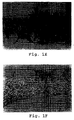
- Figures 1A-H present computer-generated images derived from photomicrographs of the fresh (1A-B), glutaraldehyde-fixed (1C-D), epoxy-fixed (1E-F), and genipin-fixed (1G-H) tissue samples before and after collagenase degradation, respectively. After degradation, the fresh tissue had disintegrated into pieces ( Figure 1B). In contrast, the collagen fibril structures of the glutaraldehyde-fixed and genipin-fixed tissues remained intact after collagenase degradation ( Figures 1D and 1H), while slight disintegration of the collagen fibrils of the epoxy-fixed tissue was observed (Figure 1F).
- the denaturation temperature of each test sample was measured by a Perkin Elmer differential scanning calorimeter (Model DSC 7, Norwalk, Connecticut, USA).
- Figures 2 and 3 give the denaturation temperatures of the above-designated test samples before and after collagenase or pronase degradation, respectively. No denaturation temperatures of the fresh (uncrosslinked) tissues could be determined after collagenase or pronase degradation, due to the extensive disintegration of these samples.
- the decline in denaturation temperature for the genipin-fixed tissue ( ⁇ 2%) was less than that for the glutaraldehyde- and epoxy-fixed tissues (3-10%).
- the genipin-fixed tissues also showed superior retention of tensile strength. Tissue strips were cut from each test sample before and after in vitro degradation for tensile strength measurements. Stress-strain curves of the tissue strips were determined by uniaxial measurements using an Instron Universal Testing Machine (Model 4302) at a constant speed of 50 mm/min.
- Figure 4 shows the results of the tensile stress measurements of the fresh, glutaraldehyde-fixed, epoxy-fixed, or genipin-fixed tissues before and after collagenase degradation. The tensile stress of the fresh tissue was recorded as zero after degradation, again due to the extensive disintegration of this sample. As shown in the figure, the reduction in tensile stress for the genipin-fixed tissue was minimal ( ⁇ 1%), and was significantly less than for the glutaraldehyde-fixed and epoxy-fixed tissues (31% and 25%, respectively).
- a subcutaneous implantation study was conducted, using a growing rat model, to evaluate the stability (change in denaturation temperature and tensile strength) and level of calcium deposition in implanted pericardial tissues crosslinked with genipin. Fresh (uncrosslinked), glutaraldehyde-fixed, and epoxy-fixed tissues were also tested.
- tissue samples were prepared as described in Example 2.
- a subcutaneous implant study was conducted on 6-week-old male Wistar rats, and implants were retrieved at 1 week and 4 weeks post-implantation.
- the denaturation temperatures and tensile strengths of the samples were determined, as described above, before and after implantation. As shown in Figure 5, the denaturation temperatures of the genipin-fixed and glutaraldehyde-fixed samples were similar and were significantly higher than that of the epoxy-fixed samples. This suggests a higher crosslinking density in the genipin-fixed and glutaraldehyde-fixed tissues. In all cases, little degradation in denaturation temperature was observed up to four weeks post-implantation.
- the tensile strength of the genipin-fixed sample was superior at all stages to that of the epoxy-fixed sample.
- Pre-implantation and at 1 week post-implantation the tensile strengths of the genipin- and glutaraldehyde-fixed samples were similar.
- the genipin-fixed sample had substantially greater tensile strength than the glutaraldehyde-fixed sample.
- Figure 7 shows the amount of calcium deposited during implantation, as determined by atomic absorption spectroscopy as described in Example 3. As the figure shows, calcium deposition was fairly similar for the genipin- and epoxy-fixed samples, and was less, at 1 week, than that shown for the uncrosslinked sample. The glutaraldehyde-fixed sample showed substantially greater calcium deposition at 1 week, and a level similar to the other two fixed samples at 4 weeks.
- each retrieved sample was examined and photographed. It was noted that the retrieved fresh tissue was significantly thinner than the glutaraldehyde-, epoxy-, and genipin-fixed counterparts. At 4 weeks postoperatively, six out of the eight implanted fresh tissue samples were found to be completely degraded, while the other two fresh samples were being absorbed by the host tissue. In contrast, the glutaraldehyde-, epoxy-, and genipin-fixed tissues remained intact throughout the entire course of the study.
- SEM Scanning electron microscopy
- Figures 9A and 9E show computer-generated images derived from the SEM micrographs of the fresh tissue before implantation and retrieved at 1 week postoperatively.
- the fresh tissue retrieved at 1 week postoperatively was already degraded extensively.
- the glutaraldehyde- and genipin-fixed tissues retrieved at 12 weeks postoperatively were slightly degraded as compared to their counterparts before implantation ( Figures 9B and 9D, respectively).
- the degree of degradation for the epoxy-fixed tissue ( Figure 9G vs. 9C) was more extensive than for its glutaraldehyde- and genipin-fixed counterparts.
- the samples used for light microscopy were fixed in 10% phosphate buffered formalin for at least 3 days and prepared for histopathological examination.
- the fixed samples were embedded in paraffin, sectioned into a thickness of 5 ⁇ m, and stained with hematoxylin and eosin (H&E).
- the stained sections of each test sample were examined by light microscopy (Nikon Microphoto-FXA) for tissue inflammatory reaction and photographed with 100 ASA Kodachrome film.
- the cells used in this study were human foreskin fibroblasts derived from the foreskin of a normal newborn infant.
- the cells were cultured in 3.5-cm diameter petri dishes (10 5 cells per dish) in Dulbecco's modified eagle medium (DMEM, Gibco 430-2800EG, Grand Island, NY, USA) supplemented with 10% fetal calf serum (Hyclone Laboratories, Logan. Ut., USA).
- DMEM Dulbecco's modified eagle medium
- the cell culture was maintained in a humidified incubator at 37°C with 10% CO 2 in air for 24h.
- the medium was then replaced with genipin (Challenge Bioproducts Co., Taichung, Taiwan) in DMEM, at a concentration of 0 (blank), 10, 100, or 1,000 ppm ( ⁇ g/ml).
- Glutaraldehyde and an epoxy compound ethylene glycol diglycidyl ether, Denacol® EX-810, Nagase Chemicals, Ltd., Osaka, Japan were also tested, at a concentration of 1, 5, or 10 ppm.
- the cells were washed twice with phosphate buffered saline, and the medium was replaced with a fresh DMEM medium without any test crosslinking reagent. Finally, the cells were incubated for another two weeks. During this period, the medium was changed once.
- Figure 8A shows a computer-generated image derived from a photomicrograph of a control culture of human fibroblasts, cultured as described above, but without any test crosslinking reagent. As shown in the figure, the cells observed in the petri dish were confluent.
- Figures 8B-8D show computer-generated images derived from photomicrographs of the human fibroblasts cultured in media supplemented with different crosslinking reagents at the following concentrations: 1 ppm glutaraldehyde (8B), 5 ppm epoxy (8C), and 1000 ppm genipin (8A).
- the cell density was lowest in the medium supplemented with glutaraldehyde ( Figure 8B) and slightly higher in the epoxy-treated culture. Both were much less than that found in the control medium.
- the cell density seen in the medium supplemented with genipin ( Figure 8D) was significantly greater than those supplemented with glutaraldehyde or epoxy compound, in spite of a much higher concentration of genipin used. This result suggests that the cytotoxicity of genipin is significantly lower than that of glutaraldehyde and the epoxy compound.
- Hemoglobin polymerized with genipin has a stable tetramer structure, and the molecular weight distribution remains unchanged over an extended storage period, as shown by the results described in this Section.
- Genipin concentration, pH, and reaction temperature were the same as used for Section A, above.
- a hemoglobin concentration in the range of 10-14 g/dl was found to be appropriate for the polymerization reaction.
- concentration is less than 10 g/dl, the desired crosslinked hemoglobin ( ⁇ 500 KDa) increases with increasing concentration of hemoglobin. but the reaction rate is slow.
- concentrations higher than 14 g/dl both overpolymerized hemoglobin and methemoglobin are increased, as shown in Table 3.
- Lysine is commonly used as a terminator for protein crosslinking reactions. Two polymerizations were carried out simultaneously, and to one was added lysine at 14.5 hr. Concentration of hemoglobin and genipin was 14 g/dl and 15 mM, as above, reaction time was 15 hr, and reaction temperature was maintained at 4°C. As shown in Table 7, lysine was effective in quenching polymerization and reducing the level of overpolymerized hemoglobin.
- the denaturation temperature of each test sample was measured by a Perkin Elmer differential scanning calorimeter (Model DSC 7, Norwalk, Connecticut, USA). Results are described above and shown in Figures 2 and 3. Tissue strips were cut from each test sample before and after in vitro degradation for tensile strength measurements. Stress-strain curves of the tissue strips were determined by uniaxial measurements using an Instron Universal Testing Machine (Model 4302) at a constant speed of 50 mm/min. Results are described above and shown in Figure 4.
- Fresh porcine pericardia as described above, were used as raw materials. Samples were rinsed and trimmed to remove blood and fat before fixing with genipin (5 % solution), epoxide (4% solution of Denacol® EX-810, Nagase Chemicals, Ltd., Osaka, Japan) or glutaraldehyde (0.625% solution) for 3 days at 37°C. The amount of solution used in each case was about 200 ml for a 6x6 cm porcine pericardium.
- the epoxy solution was buffered with 0.21M sodium carbonate/0.02M sodium bicarbonate (pH 10.5), while the glutaraldehyde and genipin solutions were buffered with 0.01 M phosphate buffered saline (pH 7.4, Sigma Chemical Co., St. Louis, MO).
- the fixed pericardia were sterilized with a series of ethanol solutions having increasing concentration (20% - 75%) for approximately 5 hours, and finally rinsed several times in sterilized phosphate buffered saline.
- the retrieved tissues samples were lyophilized for 24 h and weighed.
- the lyophilized sample was then immersed in a 6 N HCl solution (approx. 3 mg lyophilized tissue/3 mL 6N HCI) and subsequently hydrolyzed in a microwave hydrolysis system (MDS-2000, CEM Co., Matthews, NC, USA) for 45 min.
- MDS-2000 microwave hydrolysis system
- the hydrolyzed sample was diluted with a solution of 5 % lanthanum chloride in 3N HCl solution.
- the calcium content of each test sample was determined by an atomic absorption spectrophotometer (Model AA-100, Perkin Elmer Inc., Norwalk, Conn., USA).
Landscapes
- Health & Medical Sciences (AREA)
- Veterinary Medicine (AREA)
- Epidemiology (AREA)
- Life Sciences & Earth Sciences (AREA)
- Animal Behavior & Ethology (AREA)
- General Health & Medical Sciences (AREA)
- Public Health (AREA)
- Chemical & Material Sciences (AREA)
- Dermatology (AREA)
- Medicinal Chemistry (AREA)
- Oral & Maxillofacial Surgery (AREA)
- Transplantation (AREA)
- Engineering & Computer Science (AREA)
- Materials Engineering (AREA)
- Surgery (AREA)
- Hematology (AREA)
- Vascular Medicine (AREA)
- Materials For Medical Uses (AREA)
Applications Claiming Priority (3)
| Application Number | Priority Date | Filing Date | Title |
|---|---|---|---|
| US3070196P | 1996-11-05 | 1996-11-05 | |
| US30701P | 1996-11-05 | ||
| EP97947356A EP0941130B1 (de) | 1996-11-05 | 1997-11-04 | Chemische modifikation von biomedizinischen materialien mit genipin |
Related Parent Applications (1)
| Application Number | Title | Priority Date | Filing Date |
|---|---|---|---|
| EP97947356A Division EP0941130B1 (de) | 1996-11-05 | 1997-11-04 | Chemische modifikation von biomedizinischen materialien mit genipin |
Publications (1)
| Publication Number | Publication Date |
|---|---|
| EP1260237A1 true EP1260237A1 (de) | 2002-11-27 |
Family
ID=26148884
Family Applications (1)
| Application Number | Title | Priority Date | Filing Date |
|---|---|---|---|
| EP02019186A Withdrawn EP1260237A1 (de) | 1996-11-05 | 1997-11-04 | Chemische Modifikation von biomedizinischen Materialien mit Genipine |
Country Status (1)
| Country | Link |
|---|---|
| EP (1) | EP1260237A1 (de) |
Cited By (3)
| Publication number | Priority date | Publication date | Assignee | Title |
|---|---|---|---|---|
| EP1489135A1 (de) * | 2003-06-17 | 2004-12-22 | NIZO food research | Verwendung von Secoiridoiden, bevorzugt Oleuropein, zur Vernetzung von Biopolymeren |
| WO2010002281A1 (en) | 2008-07-02 | 2010-01-07 | Uniwersytet Jagiellonski | Use of crosslinked chitosan polymer for heparin removal |
| US9655999B2 (en) | 2013-03-12 | 2017-05-23 | Carnegie Mellon University | Coated vaso-occlusive device for treatment of aneurysms |
Citations (5)
| Publication number | Priority date | Publication date | Assignee | Title |
|---|---|---|---|---|
| EP0366998A1 (de) * | 1988-10-15 | 1990-05-09 | Suntory Limited | Gelierbare Emulsion und Verfahren zu ihrer Herstellung |
| US4983524A (en) * | 1986-12-19 | 1991-01-08 | Suntory Limited | Method of immobilizing enzymes on a support with iridoid aglycone cross-linking agents |
| US5037664A (en) * | 1988-10-15 | 1991-08-06 | Suntory Limited | Process for producing novel gel-like food articles |
| US5270446A (en) * | 1989-04-04 | 1993-12-14 | Suntory Limited | Decolorized crosslinked products and method for decolorization of crosslinked products |
| US5322935A (en) * | 1993-04-27 | 1994-06-21 | Alliedsignal Inc. | Rigid materials having high surface area and low density |
-
1997
- 1997-11-04 EP EP02019186A patent/EP1260237A1/de not_active Withdrawn
Patent Citations (5)
| Publication number | Priority date | Publication date | Assignee | Title |
|---|---|---|---|---|
| US4983524A (en) * | 1986-12-19 | 1991-01-08 | Suntory Limited | Method of immobilizing enzymes on a support with iridoid aglycone cross-linking agents |
| EP0366998A1 (de) * | 1988-10-15 | 1990-05-09 | Suntory Limited | Gelierbare Emulsion und Verfahren zu ihrer Herstellung |
| US5037664A (en) * | 1988-10-15 | 1991-08-06 | Suntory Limited | Process for producing novel gel-like food articles |
| US5270446A (en) * | 1989-04-04 | 1993-12-14 | Suntory Limited | Decolorized crosslinked products and method for decolorization of crosslinked products |
| US5322935A (en) * | 1993-04-27 | 1994-06-21 | Alliedsignal Inc. | Rigid materials having high surface area and low density |
Non-Patent Citations (1)
| Title |
|---|
| FUJIKAWA, SHIGEAKI ET AL.: "GENIPIN, A NEW TYPE OF PROTEIN CROSSLINKING REAGENT FROM GARDENIA FRUITS", AGRIC. BIOL. CHEM., vol. 52, no. 3, 1988, pages 869 - 870, XP002059258 * |
Cited By (5)
| Publication number | Priority date | Publication date | Assignee | Title |
|---|---|---|---|---|
| EP1489135A1 (de) * | 2003-06-17 | 2004-12-22 | NIZO food research | Verwendung von Secoiridoiden, bevorzugt Oleuropein, zur Vernetzung von Biopolymeren |
| WO2004113431A1 (en) * | 2003-06-17 | 2004-12-29 | Nizo Food Research B.V. | Use of secoiridoids, preferably oleuropein, for cross-linking biopolymers |
| WO2010002281A1 (en) | 2008-07-02 | 2010-01-07 | Uniwersytet Jagiellonski | Use of crosslinked chitosan polymer for heparin removal |
| US9655999B2 (en) | 2013-03-12 | 2017-05-23 | Carnegie Mellon University | Coated vaso-occlusive device for treatment of aneurysms |
| US10034966B2 (en) | 2013-03-12 | 2018-07-31 | Carnegie Mellon University | Coated vaso-occlusive device and methods for treatment of aneurysms |
Similar Documents
| Publication | Publication Date | Title |
|---|---|---|
| US6608040B1 (en) | Chemical modification of biomedical materials with genipin | |
| EP1139911B1 (de) | Verfahren zur gewebefixierung mittels epoxiden | |
| Powell et al. | EDC cross-linking improves skin substitute strength and stability | |
| US4755593A (en) | Novel biomaterial of cross-linked peritoneal tissue | |
| Sung et al. | Feasibility study of a natural crosslinking reagent for biological tissue fixation | |
| US6545042B2 (en) | Acellular biological material chemically treated with genipin | |
| Huang et al. | Biocompatibility study of a biological tissue fixed with a naturally occurring crosslinking reagent | |
| US5263983A (en) | Medical material and prosthetic skin in which cells can invade | |
| Suzuki et al. | Experimental study of a newly developed bilayer artificial skin | |
| JP5362937B2 (ja) | 再吸収性の移植材料 | |
| US9474791B2 (en) | Sterile autologous, allogenic or xenogenic implant and the method of its production | |
| US6699287B2 (en) | Dermal scaffold using alkaline pre-treated chitosan matrix or alkaline pre-treated chitosan and alkaline pre-treated collagen mixed matrix | |
| Hafemann et al. | Cross-linking by 1-ethyl-3-(3-dimethylaminopropyl)-carbodiimide (EDC) of a collagen/elastin membrane meant to be used as a dermal substitute: effects on physical, biochemical and biological features in vitro | |
| Hanthamrongwit et al. | Chondroitin-6-sulphate incorporated into collagen gels for the growth of human keratinocytes: the effect of cross-linking agents and diamines | |
| JPH0552751B2 (de) | ||
| EP1115432B2 (de) | Dermales gerüst auf der grundlage eines neutralisierten chitosan-schwammes oder eines neutralsierten gemischten chitosan-kollagen-schwammes | |
| US20020111532A1 (en) | Tris(hydroxymethyl)phosphino compounds as tissue crosslinking agents | |
| CN115671365A (zh) | 交联重组胶原蛋白海绵及其制备方法和应用 | |
| EP1260237A1 (de) | Chemische Modifikation von biomedizinischen Materialien mit Genipine | |
| Chen et al. | Enzymatic functionalization of decellularized tilapia skin scaffolds with enhanced skin regeneration | |
| Noishiki et al. | A new cardiac wall substitute with high affinity for fibroblasts that can induce an endothelial cell lining | |
| Wissink et al. | An EDC/NHS-crosslinked collagen substrate for endothelial cell seeding: Preparation, characterization and the effect of γ-sterilization | |
| Xeongraft | Wright, CB, ed. Vascular Grafting, John Wright Pub., Littleton, Mass, Section II Large Vessel Grafts | |
| Chandy et al. | Journal of Biomaterials | |
| Sung et al. | A Naturally Occurring Crosslinking Reagent |
Legal Events
| Date | Code | Title | Description |
|---|---|---|---|
| PUAI | Public reference made under article 153(3) epc to a published international application that has entered the european phase |
Free format text: ORIGINAL CODE: 0009012 |
|
| AC | Divisional application: reference to earlier application |
Ref document number: 941130 Country of ref document: EP |
|
| AK | Designated contracting states |
Kind code of ref document: A1 Designated state(s): DE FR GB IT |
|
| RIN1 | Information on inventor provided before grant (corrected) |
Inventor name: SUNG, HSING-WEN Inventor name: LIN, CHING-KUAN Inventor name: LEE, THOMAS, CHAU-JEN |
|
| AKX | Designation fees paid |
Designated state(s): DE FR GB IT |
|
| STAA | Information on the status of an ep patent application or granted ep patent |
Free format text: STATUS: THE APPLICATION IS DEEMED TO BE WITHDRAWN |
|
| 18D | Application deemed to be withdrawn |
Effective date: 20030528 |