EP1262880A2 - Skalierbares maschinelles Übersetzungssystem - Google Patents
Skalierbares maschinelles Übersetzungssystem Download PDFInfo
- Publication number
- EP1262880A2 EP1262880A2 EP02011980A EP02011980A EP1262880A2 EP 1262880 A2 EP1262880 A2 EP 1262880A2 EP 02011980 A EP02011980 A EP 02011980A EP 02011980 A EP02011980 A EP 02011980A EP 1262880 A2 EP1262880 A2 EP 1262880A2
- Authority
- EP
- European Patent Office
- Prior art keywords
- transfer
- mappings
- input
- training
- logical
- Prior art date
- Legal status (The legal status is an assumption and is not a legal conclusion. Google has not performed a legal analysis and makes no representation as to the accuracy of the status listed.)
- Withdrawn
Links
Images



Classifications
-
- G—PHYSICS
- G06—COMPUTING OR CALCULATING; COUNTING
- G06F—ELECTRIC DIGITAL DATA PROCESSING
- G06F40/00—Handling natural language data
- G06F40/40—Processing or translation of natural language
- G06F40/55—Rule-based translation
-
- G—PHYSICS
- G06—COMPUTING OR CALCULATING; COUNTING
- G06F—ELECTRIC DIGITAL DATA PROCESSING
- G06F40/00—Handling natural language data
- G06F40/40—Processing or translation of natural language
- G06F40/42—Data-driven translation
- G06F40/45—Example-based machine translation; Alignment
Definitions
- the present invention relates to automated language translation systems. More specifically, the present invention relates to a scaleable machine translation system and architecture.
- Machine translation systems are systems which receive a textual input in one language, translate it to a second language, and provide a textual output in the second language.
- Current commercially available machine translation systems rely on hand-coded transfer components that are both difficult and expensive to customize for a particular domain, and are also very difficult to scale to a desirable size. These disadvantages have limited their cost effectiveness and overall utility.
- Such prior systems have also not been easily scalable. For example, in order to increase the number of sentences over and above, for example, 200 sentences or so, has been very difficult. This is because the prior systems have difficulty handling noisy input data. Instead, the input data has been required to be in a precise form, or it has been cleaned up, and placed in the proper form, by hand. Of course, this makes it very difficult to dramatically increase the number of sentences because of the intensive labor required to clean up the data.
- a computer implemented method translates a textual input in a first language to a textual output in a second language.
- An input logical form is generated based on the textual input.
- a plurality of transfer mappings in a transfer mapping database match the input logical form (or at least a portion thereof) one or more of those plurality of matching transfer mappings is selected based on a predetermined metric.
- These transfer mappings are stitched together to form a transfer Logical Form.
- the textual output is generated based on the transfer logical form.
- a transfer mapping is illustratively composed of a pair of logical form fragments, including a source and target logical form (LF), learned from the training data.
- LF source and target logical form
- the source side of these mappings is matched against the input.
- a set is chosen.
- the target sides of these mappings is then stitched together to produce a single target LF.
- the output string is then generated from the target LF.
- the predetermined metric can take one of a variety of forms, including the number of input nodes covered by the set of mappings collectively, size of the different transfer mappings that match the input logical form, the frequency with which the plurality of matching transfer mappings were generated during a training phase used in training the transfer mapping database, frequencies with which the plurality of matching transfer mappings are generated from completely aligned logical forms during training, frequencies with which the plurality of matching transfer mappings were generated from non-fitted parses of the training data, and a score associated with each of the plurality of matching transfer mappings that is indicative of a confidence in the transfer mapping with which it is associated.
- the present invention can also be embodied as a machine translation system including a matching component configured to implement the method discussed above.
- the present invention can also be implemented as a machine translation system that includes an input generator generating an input dependency structure based on the textual input.
- the system also includes a transfer mapping database that holds a plurality of transfer mapping dependency structures formed based on at least 10,000 parallel, aligned, training sentences.
- the transfer mapping database can also be formed based on 50,000, 100,000, 180,000, or even in excess of 200,000 training sentences.
- the present invention can be embodied as a computer implemented method of training a transfer mapping database which includes generating shared input logical forms for bilingual input sentences, the input logical forms being shared across both languages.
- the present invention trains the transfer mapping database by filtering transfer mappings obtained from aligned logical forms, aligned during training.
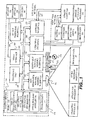
- FIG. 1 The following is a brief description of a general purpose computer 120 illustrated in FIG. 1.
- the computer 120 is only one example of a suitable computing environment and is not intended to suggest any limitation as to the scope of use or functionality of the invention. Neither should the computer 120 be interpreted as having any dependency or requirement relating to any one or combination of modules illustrated therein.
- the invention may be described in the general context of computer-executable instructions, such as program modules, being executed by a computer.
- program modules include routines, programs, objects, modules, data structures, etc. that perform particular tasks or implement particular abstract data types.
- the invention may also be practiced in distributed computing environments where tasks are performed by remote processing devices that are linked through a communications network.
- program modules may be located in both local and remote computer storage media including memory storage devices. Tasks performed by the programs and modules are described below and with the aid of figures.
- processor executable instructions which can be written on any form of a computer readable media.
- modules of computer 120 may include, but are not limited to, a processing unit 140, a system memory 150, and a system bus 141 that couples various system modules or components including the system memory to the processing unit 140.
- the system bus 141 may be any of several types of bus structures including a memory bus or memory controller, a peripheral bus, and a local bus using any of a variety of bus architectures.
- bus architectures include Industry Standard Architecture (ISA) bus, Universal Serial Bus (USB), Micro Channel Architecture (MCA) bus, Enhanced ISA (EISA) bus, Video Electronics Standards Association (VESA) local bus, and Peripheral Module Interconnect (PCI) bus also known as Mezzanine bus.
- Computer 120 typically includes a variety of computer readable mediums.
- Computer readable mediums can be any available media that can be accessed by computer 120 and includes both volatile and nonvolatile media, removable and non-removable media.
- Computer readable mediums may comprise computer storage media and communication media.
- Computer storage media includes both volatile and nonvolatile, removable and non-removable media implemented in any method or technology for storage of information such as computer readable instructions, data structures, program modules/components or other data.
- Computer storage media includes, but is not limited to, RAM, ROM, EEPROM, flash memory or other memory technology, CD-ROM, digital versatile disks (DVD) or other optical disk storage, magnetic cassettes, magnetic tape, magnetic disk storage or other magnetic storage devices, or any other medium which can be used to store the desired information and which can be accessed by computer 120.
- Communication media typically embodies computer readable instructions, data structures, program modules or other data in a modulated data signal such as a carrier wave or other transport mechanism and includes any information delivery media.
- modulated data signal means a signal that has one or more of its characteristics set or changed in such a manner as to encode information in the signal.
- communication media includes wired media such as a wired network or direct-wired connection, and wireless media such as acoustic, FR, infrared and other wireless media. Combinations of any of the above should also be included within the scope of computer readable media.
- the system memory 150 includes computer storage media in the form of volatile and/or nonvolatile memory such as read only memory (ROM) 151 and random access memory (RAM) 152.
- ROM read only memory
- RAM random access memory
- BIOS basic input/output system
- RAM 152 typically contains data and/or program modules that are immediately accessible to and/or presently being operated on by processing unit 140.
- FIG. 1 illustrates operating system 154, application programs 155, other program modules 156, and program data 157.
- the computer 120 may also include other removable/non-removable volatile/nonvolatile computer storage media.
- FIG. 1 illustrates a hard disk drive 161 that reads from or writes to non-removable, nonvolatile magnetic media, a magnetic disk drive 171 that reads from or writes to a removable, nonvolatile magnetic disk 172, and an optical disk drive 175 that reads from or writes to a removable, nonvolatile optical disk 176 such as a CD ROM or other optical media.
- removable/non-removable, volatile/nonvolatile computer storage media that can be used in the exemplary operating environment include, but are not limited to, magnetic tape cassettes, flash memory cards, digital versatile disks, digital video tape, solid state RAM, solid state ROM, and the like.
- the hard disk drive 161 is typically connected to the system bus 141 through a non-removable memory interface such as interface 160, and magnetic disk drive 171 and optical disk drive 175 are typically connected to the system bus 141 by a removable memory interface, such as interface 170.
- hard disk drive 161 is illustrated as storing operating system 164, application programs 165, other program modules 166, and program data 167. Note that these modules can either be the same as or different from operating system 154, application programs 155, other program modules 156, and program data 157. Operating system 164, application programs 165, other program modules 166, and program data 167 are given different numbers here to illustrate that, at a minimum, they are different copies.
- a user may enter commands and information into the computer 120 through input devices such as a keyboard 182, a microphone 183, and a pointing device 181, such as a mouse, trackball or touch pad.
- Other input devices may include a joystick, game pad, satellite dish, scanner, or the like.
- a monitor 184 or other type of display device is also connected to the system bus 141 via an interface, such as a video interface 185.
- computers may also include other peripheral output devices such as speakers 187 and printer 186, which may be connected through an output peripheral interface 188.
- the computer 120 may operate in a networked environment using logical connections to one or more remote computers, such as a remote computer 194.
- the remote computer 194 may be a personal computer, a hand-held device, a server, a router, a network PC, a peer device or other common network node, and typically includes many or all of the elements described above relative to the computer 120.
- the logical connections depicted in FIG. 1 include a local area network (LAN) 191 and a wide area network (WAN) 193, but may also include other networks.
- LAN local area network
- WAN wide area network
- Such networking environments are commonplace in offices, enterprise-wide computer networks, intranets and the Internet.
- the computer 120 When used in a LAN networking environment, the computer 120 is connected to the LAN 191 through a network interface or adapter 190. When used in a WAN networking environment, the computer 120 typically includes a modem 192 or other means for establishing communications over the WAN 193, such as the Internet.
- the modem 192 which may be internal or external, may be connected to the system bus 141 via the user input interface 180, or other appropriate mechanism.
- program modules depicted relative to the computer 120, or portions thereof may be stored in the remote memory storage device.
- FIG. 1 illustrates remote application programs 195 as residing on remote computer 194. It will be appreciated that the network connections shown are exemplary and other means of establishing a communications link between the computers may be used.
- the invention is also operational with numerous other general purpose or special purpose computing systems, environments or configurations.
- Examples of well known computing systems, environments, and/or configurations that may be suitable for use with the invention include, but are not limited to, regular telephones (without any screen) personal computers, server computers, hand-held or laptop devices, multiprocessor systems, microprocessor-based systems, set top boxes, programmable consumer electronics, network PCs, minicomputers, mainframe computers, distributed computing environments that include any of the above systems or devices, and the like.
- Logical forms can normalize certain syntactical alternations, (e.g., active/passive) and resolve both intrasentential anaphora and long distance dependencies.
- a logical form 252 can be represented as a graph, which helps intuitively in understanding the elements of logical forms.
- the logical forms may not readily be understood as representing a graph.
- a logical relation consists of two words joined by a directional relation type, such as: LogicalSubject, LogicalObject, IndirectObject; LogicalNominative, LogicalComplement, LogicalAgent; CoAgent, Beneficiary; Modifier, Attribute, SentenceModifier; PrepositionalRelationship; Synonym, Equivalence, Apposition; Hypernym, Classifier, Subclass; Means, Purpose; Operator, Modal, Aspect, DegreeModifier, Intensifier; Focus, Topic; Duration, Time; Location, Property, Material, Manner, Measure, Color, Size; Characteristic, Part; Coordinate; User, Possessor; Source, Goal, Cause, Result; and Domain.
- a directional relation type such as: LogicalSubject, LogicalObject, IndirectObject; LogicalNominative, LogicalComplement, LogicalAgent; CoAgent, Beneficiary; Modifier, Attribute, SentenceModifier; PrepositionalRelationship; Synonym, Equivalence, Apposition; Hyper
- a logical form is a data structure of connected logical relations representing a single textual input, such as a sentence or part thereof.
- the logical form minimally consists of one logical relation and portrays structural relationships (i.e., syntactic and semantic relationships), particularly argument and/or adjunct relation(s) between important words in an input string.
- the particular code that builds logical forms from syntactic analyses is shared across the various source and target languages that the machine translation system operates on.
- the shared architecture greatly simplifies the task of aligning logical form segments from different languages since superficially distinct constructions in two languages frequently collapse onto similar or identical logical form representations. Examples of logical forms in different languages are described in greater detail below with respect to FIGS. 3A-3C.
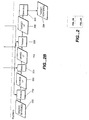
- FIG. 2 is a block diagram of an architecture of a machine translation system 200 in accordance with one embodiment of the present invention.
- System 200 includes parsing components 204 and 206, statistical word association learning component 208, logical form alignment component 210, lexical knowledge base building component 212, bilingual dictionary 214, dictionary merging component 216, transfer mapping database 218 and updated bilingual dictionary 220.
- the system 200 utilizes analysis component 222, matching component 224, transfer component 226 and/or generation component 228.
- a bilingual corpus is used to train the system.
- the bilingual corpus includes aligned translated sentences (e.g., sentences in a source or target language, such as English, in 1-to-1 correspondence with their human-created translations in the other of the source or target language, such as Spanish).
- sentences are provided from the aligned bilingual corpus into system 200 as source sentences 230 (the sentences to be translated), and as target sentences 232 (the translation of the source sentences).
- Parsing components 204 and 206 parse the sentences from the aligned bilingual corpus to produce source logical forms 234 and target logical forms 236.
- the words in the sentences are converted to normalized word forms (lemmas) and can be provided to statistical word association learning component 208. Both single word and multi-word associations are iteratively hypothesized and scored by learning component 208 until a reliable set of each is obtained.
- Statistical word association learning component 208 outputs learned single word translation pairs 238 as well as multi-word pairs 240.
- the multi-word pairs 240 are provided to a dictionary merge component 216, which is used to add additional entries into bilingual dictionary 214 to form updated bilingual dictionary 220.
- the new entries are representative of the multi-word pairs 240.
- the single and multi-word pairs 238, along with source logical forms 234 and target logical forms 236 are provided to logical form alignment component 210.
- component 210 first establishes tentative correspondences between nodes in the source and target logical forms 230 and 236, respectively. This is done using translation pairs from a bilingual lexicon (e.g. bilingual dictionary) 214, which can be augmented with the single and multi-word translation pairs 238, 240 from statistical word association learning component 208. After establishing possible correspondences, alignment component 210 aligns logical form nodes according to both lexical and structural considerations and creates word and/or logical form transfer mappings 242. This aspect will be explained in greater detail below.
- a bilingual lexicon e.g. bilingual dictionary
- alignment component 210 draws links between logical forms using the bilingual dictionary information 214 and single and multi-word pairs 238, 240.
- the transfer mappings are optionally filtered based on a frequency with which they are found in the source and target logical forms 234 and 236 and are provided to a lexical knowledge base building component 212.
- transfer mapping database 2128 While filtering is optional, in one example, if the transfer mapping is not seen at least twice in the training data, it is not used to build transfer mapping database 218, although any other desired frequency can be used as a filter as well. It should also be noted that other filtering techniques can be used as well, other than frequency of appearance. For example, transfer mappings can be filtered based upon whether they are formed from complete parses of the input sentences and based upon whether the logical forms used to create the transfer mappings are completely aligned.
- Component 212 builds transfer mapping database 218, which contains transfer mappings that basically link words and/or logical forms in one language, to words and/or logical forms in the second language. With transfer mapping database 218 thus created, system 200 is now configured for runtime translations.
- a source sentence 250 is provided to analysis component 222.
- Analysis component 222 receives source sentence 250 and creates a source logical form 252 based upon the source sentence input.
- source sentence 250 is a Spanish sentence "Haga click en el boton de opcion" which is translated into English as “Click the option button” or, literally, "Make click in the button of option”.
- FIG. 3A illustrates the source logical form 252 generated for source sentence 250 by analysis component 222.
- the source logical form 252 is provided to matching component 224.
- Matching component 224 attempts to match the source logical form 252 to logical forms in the transfer mapping database 218 in order to obtain a linked logical form 254. Multiple transfer mappings may match portions of source logical form 252.
- Matching component 224 searches for the best set of matching transfer mappings in database 218 that have matching lemmas, parts of speech, and other feature information. The set of best matches is found based on a predetermined metric. For example, transfer mappings having larger (more specific) logical forms may illustratively be preferred to transfer mappings having smaller (more general) logical forms.
- mappings having logical forms of equal size may illustratively prefer higher frequency mappings. Mappings may also match overlapping portions of the source logical form 252 provided that they do not conflict with each other in any way. A set of mappings collectively may be illustratively preferred if they cover more of the input sentence than alternative sets. Other metrics used in matching the input logical form to those found in database 218 are discussed in greater detail below with respect to Table 1.
- mapping component 224 creates links on nodes in the source logical form 252 to copies of the corresponding target words or logical form segments received by the transfer mappings, to generate linked logical form 254.
- FIG. 3B illustrates an example of linked logical form 254 for the present example.
- Links for multi-word mappings are represented by linking the root nodes (e.g., Hacer and Click) of the corresponding segments, then linking an asterisk to the other source nodes participating in the multi-word mapping (e.g., Usted and Clic). Sublinks between corresponding individual source and target nodes of such a mapping (not shown in FIG. 3B) may also illustratively be created for use during transfer.
- Transfer component 226 receives linked logical form 254 from matching component 224 and creates a target logical form 256 that will form the basis of the target translation. This is done by performing a top down traversal of the linked logical form 254 in which the target logical form segments pointed to by links on the source logical form 252 nodes are combined. When combining together logical form segments for possibly complex multi-word mappings, the sublinks set by matching component 224 between individual nodes are used to determine correct attachment points for modifiers, etc. Default attachment points are used if needed.
- FIG. 3C illustrates a target logical form 256 for the present example. It can be seen that the logical form segments from "click" to "button” and from “button” to “option” were stitched together from linked logical form 254 to obtain target logical form 256.
- Generation component 228 is illustratively a rule-based, application-independent generation component that maps from target logical form 256 to the target string (or output target sentence) 258.
- Generation component 228 may illustratively have no information regarding the source language of the input logical forms, and works exclusively with information passed to it by transfer component 226.
- Generation component 228 also illustratively uses this information in conjunction with a monolingual (e.g., for the target language) dictionary to produce target sentence 258.
- a monolingual e.g., for the target language
- the present system parses information from various languages into a shared, common, logical form so that logical forms can be matched among different languages.
- the system can also utilize simple filtering techniques in building the transfer mapping database to handle noisy data input. Therefore, the present system can be automatically trained using a very large number of sentence pairs.
- the number of sentence pairs is in excess of 10,000.
- the number of sentence pairs is greater than 50,000 to 100,000, and may be in excess of 180,000, 200,000, 350,000 or even in excess if 500,000 or 600,000 sentence pairs.
- the number of sentence pairs can vary for different languages, and need not be limited to these numbers.
- Fig. 4 illustrates a method 300 of associating logical forms of at least sentence fragments from two different languages, wherein the logical forms comprise nodes organized in a parent/child structure.
- Method 300 includes associating nodes of the logical forms to form tentative correspondences as indicated at block 302 and aligning nodes of the logical forms by eliminating at least one of the tentative correspondences and/or structural considerations as indicated at block 304.
- alignment component 210 accesses bilingual dictionary 214 in order to form tentative correspondences, typically lexical correspondences, between the logical forms.
- Bilingual dictionary 214 can be created by merging data from multiple sources, and can also use inverted target-to-source dictionary entries to improve coverage.
- bilingual dictionary 214 also represents any other type of resource that can provide correspondences between words.
- Bilingual dictionary 214 can also be augmented with translation correspondences acquired using statistical techniques.
- component 208 the statistical techniques are performed by component 208. Although the output from component 208 can be used by alignment component 210, it is not necessary for operation of alignment component 210. However, one embodiment of component 208 will be described here, briefly, for the sake of completeness.
- Component 208 receives a parallel, bilingual training corpus that is parsed into its content words.
- Word association scores for each pair of content words consisting of a word of language L1 that occurs in a sentence aligned in the bilingual corpus to a sentence of language L2 in which the other word occurs.
- a pair of words is considered "linked” in a pair of aligned sentences if one of the words is the most highly associated, of all the words in its sentence, with the other word.
- the occurrence of compounds is hypothesized in the training data by identifying maximal, connected sets of linked words in each pair of aligned sentences in the processed and scored training data.
- the subset of the words in that language is hypothesized as a compound.
- the original input text is rewritten, replacing the hypothesized compounds by single, fused tokens.
- the association scores are then recomputed for the compounds (which have been replaced by fused tokens) and any remaining individual words in the input text.
- the association scores are again recomputed, except that this time, co-occurrences are taken into account in computing the association scores only where there is no equally strong or stronger other association in a particular pair of aligned sentences in the training corpus.
- Translation pairs can be identified as those word pairs or token pairs that have association scores above a threshold, after the final computation of association scores.
- component 208 can also assist in identifying translations of "captoids", by which we mean titles, or other special phrases, all of whose words are capitalized. (Finding translations of captoids presents a special problem in languages like French or Spanish, in which convention dictates that only the first word of such an item is capitalized, so that the extent of the captoid translation is difficult to determine.)
- compounds are first identified in a source language (such as English). This can be done by finding strings of text where the first word begins with a capital letter, and later tokens in the contiguous string do not begin with a lowercase letter. Next, compounds are hypothesized in the target text by finding words that start with a capital letter and flagging this as the possible start of a corresponding compound.
- the target text is then scanned from left to right flagging subsequent words that are most strongly related to words in the identified compound in the source text, while allowing up to a predetermined number (e.g., 2) contiguous non-most highly related words, so long as they are followed by a most highly related word.
- a predetermined number e.g., 2
- the left to right scan can be continued until more than the predetermined number (e.g., more than 2) contiguous words are found that are not most highly related to words in the identified compound in the source text, or until no more most highly related words are present in the target text, or until punctuation is reached.
- the predetermined number e.g., more than 2 contiguous words are found that are not most highly related to words in the identified compound in the source text, or until no more most highly related words are present in the target text, or until punctuation is reached.
- component 208 is optional.
- step 302 is aggressively pursued with the purpose of attempting to maximize the number of tentative correspondences formed between the logical forms. Accuracy of the tentative correspondences is not the most important criteria in step 302 because step 304 will further analyze the tentative correspondences and remove those that are determined to be incorrect.
- Bilingual dictionary 214 represents direct translations used for forming tentative correspondences.
- derivational morphology can also be used.
- translations of morphological bases and derivations, and base and derived forms of translations can also be used to form tentative correspondences in step 302.
- tentative correspondences can also be formed between nodes of the logical forms wherein one of the nodes comprises more lexical elements or words than the other node.
- one of the nodes can comprise a single word in one of the languages, while the other node comprises at least two words in the other language.
- Closely related languages such as English, Spanish, etc. also have word similarity (cognates) that can be used with fuzzy logic to ascertain associations. These associations can then be used to form tentative correspondences.
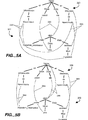
- logical form 320 was generated for the sentence "En Informa Terms del hipervinculo, haga tun en la direc Terms del hipervinculo", while logical form 322 was generated for the English translation as "Under Hyperlink Information, click the Hyperlink address.”
- Fig. 5A further illustrates each of the tentative correspondences 323 identified in step 302.
- each of the occurrences of "Hipervinculo” includes two different tentative correspondences with "Hyperlink_Information” and "hyperlink” in the English logical form 322.
- step 304 the logical forms are aligned, which can include eliminating one or more of the tentative correspondences formed in step 302, and/or which can be done as a function of structural considerations of the logical forms.
- step 304 includes aligning nodes of the logical forms as a function of a set of rules.
- each of the rules of the set of rules is applied to the logical forms in a selected order.
- the rules are ordered to create the most unambiguous alignments ("best alignments") first, and then, if necessary, to disambiguate subsequent node alignments.
- the order that the rules are applied in is not based upon the structure of the logical forms, i.e., top-down processing or bottom-up processing but rather, to begin with the most linguistically meaningful alignments, wherever they appear in the logical form.
- this set of rules can be considered to be applied to the nodes of each of the logical forms non-linearly as opposed to linearly based upon the structure of the logical forms.
- the rules are intended to be language-neutral in order that they can be universally applied to any language.
- Fig. 6 generally illustrates application of the set of rules to the logical forms as method 328.
- each of the nodes of the logical forms is considered to be "unaligned” as opposed to “aligned”.
- the set of rules is applied to the unaligned nodes irrespective of structure at step 332 to form aligned nodes. Therefore, it is desirable to distinguish between unaligned nodes and aligned nodes.
- One technique includes assigning all of the nodes initially to the set of unaligned nodes, and removing nodes when they are aligned.
- the use of sets whether actively formed in different locations of a computer readable medium or virtually formed through the use of Boolean tags associated with the nodes merely provides a convenient way in which to identify unaligned nodes and aligned nodes.
- step 332 the set of rules is applied to each of the unaligned nodes.
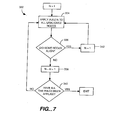
- FIG. 7 schematically illustrates aspects of step 332 that can be implemented to apply the set of rules.
- the rules are applied in a specified order.
- N is a counter that is used to indicate which of the rules is applied.
- step 334 applies the first rule to each of the unaligned nodes. If a rule fails to be applicable to any of the unaligned nodes, another rule from the set (and in one embodiment, the next successive rule indicative of a linguistically meaningful alignment) is then applied as indicated at steps 336 and 338.
- a rule can be applied to a set of nodes of the logical forms, the nodes are identified as being aligned and removed from the set of unaligned nodes, and application of the rules continues.
- each of the rules of the set of rules is applied again starting with, for example, the first rule as indicated at step 342.
- the following is an exemplary set of rules for aligning nodes of the logical forms.
- the set of nodes presented herein is ordered based on the strongest to weakest linguistically meaningful alignments of the nodes. As appreciated by those skilled in the art, reordering of at least some of the rules presented herein may not significantly alter the quality of alignments of the logical forms.
- rule 1 Some general classifications of the rules provided above include that one rule (rule 1) is primarily based upon the correspondences established in step 302, and in the embodiment illustrated, it is considered to be the strongest meaningful alignment since no ambiguity is present.
- Other rules such as rules 2, 3, 11, 12 and 14 are based on a combination of, or a lack of, tentative correspondences and the structure of the nodes under consideration and previously aligned nodes. The remaining rules rely solely on relationships between nodes under consideration and previously aligned nodes.
- Other general classifications that can be drawn include that the rules pertain to verbs, nouns and pronouns.
- rule 1 applies in three places, creating alignment mappings between "direc Terms” and “address”, “usted” and “you”, and “clic” and “click”. These are the initial “best” alignments that provide the anchors from which the method will work outwards to align the rest of the structure.
- Rule 2 does not apply to any nodes, but Rule 3 applies next to align the instance of "hipervinculo", that is the child of "direc Terms” to “hyperlink”, which is the child of "address”.
- the alignment method thus leveraged a previously created alignment ("direc Terms” to "address") and the structure of the logical form to resolve the ambiguity present at the lexical level.
- Rule 1 applies (where previously it did not) to create a many-to-one mapping between "Informa Terms” and “hipervinculo” to "Hyperlink_Information”. The uniqueness condition in this rule is now met because the ambiguous alternative was cleared away by the prior application of Rule 3.
- rule 4 does not apply, but rule 5 applies to rollup "hacer” with its object “clic”, since the latter is already aligned to a verb. This produces the many-to-one alignment of "hacer” and "clic” to "click"
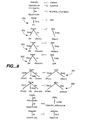
- Fig. 8 illustrates some of the transfer mappings obtainable from the example of aligned logical forms in Fig. 5B (other than transfer mapping 353 which is included as an example of a conflicting transfer mapping discussed in the next section).
- a transfer mapping or simply "mapping" is indicative of associating a word or logical form of a first language with a corresponding word or logical form of a second language.
- the mappings can be stored on any computer readable medium as explicit pointers linking the words or logical forms of the first language with the corresponding words or logical forms of the second language.
- the mappings can be stored with the words or logical forms rather than in a separate database.
- other techniques can be used to associate words or logical forms of the first language with words or logical forms of the second language, and it is this association, that constitutes the mappings regardless of the specific techniques used in order to record this information.
- Each mapping created during the alignment procedure can be a base structure upon which further mappings with additional context are also created.
- information can be stored on a computer readable medium to translate text from a first language to a second language, where the information comprises a plurality of mappings.
- Each mapping is indicative of associating a word or logical form of the first language with a word or logical form of the second language.
- at least some of the mappings corresponding to logical forms of the first language have varying context with some common elements.
- at least some of the logical forms of the second language corresponding to the logical forms of the first language may also have varying context with some common elements.
- at least some of the core mappings obtained from the alignment procedure are used to create other, competing mappings having varying types and amounts of local context.
- mappings 350, 352, and 354 illustrate how an element of a logical form can vary.
- Mapping 350 comprises the base or core mapping on which further mappings are created.
- Mapping 352 expands the core mapping 350 to include an additional linguistic element, herein the direct object of the word "click", while the mapping 354 is expanded from the core mapping 350 such that the additional element comprises an under-specified node ("*") indicating a part of speech but no specific lemma.
- mappings 350, 352 and 354 as well as mappings 356 and 358, it can be seen that the logical forms of the first language have common elements (parts of speech and/or lemmas), while the logical forms of the second language also have common elements.
- mappings indicative of logical forms with overlapping context By storing mappings indicative of logical forms with overlapping context, during translation run time, fluency and general applicability of the mappings for translating between the languages is maintained. In particular, by having mappings associating both words and smaller logical forms of the languages, translation from the first language to the second language is possible if the text to be translated was not seen in the training data. However, to the extent that the larger context was present in the training data, this is also reflected in the mappings such that when a mapping of larger context is applicable, a more fluent translation between the first language and the second language can be obtained.
- mappings for an adjective can be expanded to include the noun it modifies.
- a mapping for a verb can be expanded to include the object as context.
- mappings for noun collocations are provided individually as well as a whole.
- some of the mappings can include under-specified nodes ("*"), wherein the part of speech is indicated but no specific lemma is provided.
- mappings that can be created may have any number of wild-card or underspecified nodes, which may be underspecified in a number of different ways. For example, they may or may not specify a part-of-speech, and they may specify certain syntactic or semantic features. For example, a pattern may have a wild-card node with the feature "ProperName” or "Location” marked, indicating that the pattern only applies when that node is matched to an input node that has the same feature. These wild-cards allow the system to hypothesize generalized mappings from specific data.
- additional information can also be stored or used during run time translation.
- the additional information can be used to choose an appropriate set of mappings and resolve conflicts as to which mappings to use, i.e. (referring to FIG. 2) when a source logical form 252 (or part thereof) generated for a source sentence 250 matches more than one source side of the transfer mappings in the transfer mapping database 218.
- a subset of these matching transfer mappings is illustratively selected such that all transfer mappings in the subset are compatible with one another (i.e., they are not conflicting) and based on a metric that is a function of how much of the input sentence the transfer mappings in the subset collectively cover, as well as other measures related to individual transfer mappings.
- Some such measures are set out in Table 1. 1. Size of transfer mapping matched. 2. The frequency with which the transfer mapping was seen in the training data. 3. The frequency with which the transfer mapping was generated from fully aligned logical forms. 4. The frequency with which the transfer mapping was generated from partially aligned logical forms. 5. The frequency with which the transfer mapping was generated from logical forms that resulted from a fitted parse. 6. An alignment score assigned to the transfer mapping by the alignment component.
- the transfer mappings in the subset are combined into a transfer logical form from which the output text is generated.
- the subset of matching transfer mappings can contain overlapping transfer mappings, so long as they are compatible.
- the following logical form can be generated for the Spanish sentence "Haga project en el direccion de la oficina" which can be translated as "Click the office address”:
- transfer mapping 353 An example of conflicting, matching transfer mappings is shown as transfer mapping 353, which conflicts with transfer mapping 352. Therefore, for example, the logical form:
- mappings (note these examples are English mapped to Spanish whereas previous examples have been Spanish mapped to English): in the second case.
- translating "click” to "select” may be a legitimate variation. However it does present a problem in some cases. For example, notice that the source side of both transfers is identical, so at runtime, if the input logical form matches that source side, we are left with having to choose between the two different target sides, i.e. it must be decided whether to translate the input as "hacer project..” or as "elegir..”? In the absence of further context (which would likely have manifested itself by causing differing source sides of the transfers) we choose between them based on various frequency and scoring metrics.
- Table 1 shows examples of the information that can be used to further define the subset of matching transfer mappings (either to choose among conflicting matching transfer mappings or to narrow the subset of compatible, matching transfer mappings).
- Such information can include how much of the input sentence is covered by the subset of matching transfer mappings (collectively) and the size of the mappings, which can be ascertained from the logical form that is matched in the transfer mapping itself.
- the size of a logical form includes both the number of specified nodes as well as the number of linguistic relationships between the nodes.
- the size of the logical form from the source side of mapping 350 equals 2
- the size of the logical form on the target side equals 1.
- the logical form on the source side of mapping 354 equals 4
- the target side of mapping 354 equals 2.
- the information for choosing the subset of transfer mappings can also include other information related to individual transfer mappings, such as the frequency with which the logical forms in the transfer mapping are seen in the training data.
- the training data can include "trusted" training data, which can be considered more reliable than other training data.
- the frequency of the mapping as seen in the trusted training data can be retained in addition, or in the alternative, to storing the frequency of the mapping as seen in all of the training data.
- Other information that can be helpful in selecting the subset of matching transfer mappings when matching source logical forms to transfer mappings includes the extent of complete alignment of the logical forms in the training data from which the logical forms of a transfer mapping have been obtained.
- the alignment procedure can fully or completely align the nodes of the larger logical forms, or some nodes can remain unaligned. In the example of Fig. 5B, all the nodes were aligned; however, as indicated above, this may not always be the case.
- Those mappings associated with fully aligned logical forms may be considered more reliable.
- information for resolving conflicts or further defining the subset can also indicate the frequency with which the mapping was generated from both fully aligned logical forms as well as partially aligned logical forms.
- additional information can include the frequency with which the logical forms in the transfer mapping originated from a complete parse of the corresponding training data.
- the frequency with which the mapping originated from a complete or fitted parse, or in contrast, the frequency that the mapping originated from only a partial parse can be stored for later use in resolving conflicts while matching during translation.
- Another form of information can include a score or value assigned to the transfer mapping by the alignment procedure used to extract the mapping.
- the score can be a function of how "strong" (linguistically meaningful) the aligned nodes are (or how confident the alignment component is in the transfer mapping) .
- the score can therefore be a function of when (which iteration) and which rule formed the alignment.
- the particular function or metric used to calculate the alignment score is not crucial, and any such metric can be used to generate information related to an alignment score that can be used during run time translation.
Landscapes
- Engineering & Computer Science (AREA)
- Theoretical Computer Science (AREA)
- Audiology, Speech & Language Pathology (AREA)
- Health & Medical Sciences (AREA)
- Computational Linguistics (AREA)
- General Health & Medical Sciences (AREA)
- Physics & Mathematics (AREA)
- General Engineering & Computer Science (AREA)
- General Physics & Mathematics (AREA)
- Artificial Intelligence (AREA)
- Machine Translation (AREA)
- Design And Manufacture Of Integrated Circuits (AREA)
- Devices For Executing Special Programs (AREA)
Applications Claiming Priority (4)
| Application Number | Priority Date | Filing Date | Title |
|---|---|---|---|
| US29533801P | 2001-06-01 | 2001-06-01 | |
| US295338P | 2001-06-01 | ||
| US09/899,755 US7050964B2 (en) | 2001-06-01 | 2001-07-05 | Scaleable machine translation system |
| US899755 | 2001-07-05 |
Publications (2)
| Publication Number | Publication Date |
|---|---|
| EP1262880A2 true EP1262880A2 (de) | 2002-12-04 |
| EP1262880A3 EP1262880A3 (de) | 2004-01-14 |
Family
ID=26969062
Family Applications (1)
| Application Number | Title | Priority Date | Filing Date |
|---|---|---|---|
| EP02011980A Withdrawn EP1262880A3 (de) | 2001-06-01 | 2002-05-29 | Skalierbares maschinelles Übersetzungssystem |
Country Status (3)
| Country | Link |
|---|---|
| US (2) | US7050964B2 (de) |
| EP (1) | EP1262880A3 (de) |
| JP (1) | JP4714400B2 (de) |
Cited By (8)
| Publication number | Priority date | Publication date | Assignee | Title |
|---|---|---|---|---|
| US7013264B2 (en) | 1997-03-07 | 2006-03-14 | Microsoft Corporation | System and method for matching a textual input to a lexical knowledge based and for utilizing results of that match |
| US7050964B2 (en) | 2001-06-01 | 2006-05-23 | Microsoft Corporation | Scaleable machine translation system |
| US7734459B2 (en) | 2001-06-01 | 2010-06-08 | Microsoft Corporation | Automatic extraction of transfer mappings from bilingual corpora |
| CN102737014A (zh) * | 2011-04-04 | 2012-10-17 | 陈本东 | 一种多语言用户在线交流方法以及系统和用户界面 |
| US8706477B1 (en) | 2008-04-25 | 2014-04-22 | Softwin Srl Romania | Systems and methods for lexical correspondence linguistic knowledge base creation comprising dependency trees with procedural nodes denoting execute code |
| US8762130B1 (en) | 2009-06-17 | 2014-06-24 | Softwin Srl Romania | Systems and methods for natural language processing including morphological analysis, lemmatizing, spell checking and grammar checking |
| US8762131B1 (en) | 2009-06-17 | 2014-06-24 | Softwin Srl Romania | Systems and methods for managing a complex lexicon comprising multiword expressions and multiword inflection templates |
| CN102722480B (zh) * | 2011-12-30 | 2017-09-19 | 新奥特(北京)视频技术有限公司 | 一种比赛系统中的多语言转换方法 |
Families Citing this family (102)
| Publication number | Priority date | Publication date | Assignee | Title |
|---|---|---|---|---|
| US20060116865A1 (en) | 1999-09-17 | 2006-06-01 | Www.Uniscape.Com | E-services translation utilizing machine translation and translation memory |
| US7904595B2 (en) | 2001-01-18 | 2011-03-08 | Sdl International America Incorporated | Globalization management system and method therefor |
| US7191115B2 (en) * | 2001-06-20 | 2007-03-13 | Microsoft Corporation | Statistical method and apparatus for learning translation relationships among words |
| WO2003005166A2 (en) | 2001-07-03 | 2003-01-16 | University Of Southern California | A syntax-based statistical translation model |
| EP1306775A1 (de) * | 2001-10-29 | 2003-05-02 | BRITISH TELECOMMUNICATIONS public limited company | Maschinelle Übersetzung |
| AU2003269808A1 (en) | 2002-03-26 | 2004-01-06 | University Of Southern California | Constructing a translation lexicon from comparable, non-parallel corpora |
| EP1349079A1 (de) * | 2002-03-28 | 2003-10-01 | BRITISH TELECOMMUNICATIONS public limited company | Maschinenübersetzung |
| US7209875B2 (en) * | 2002-12-04 | 2007-04-24 | Microsoft Corporation | System and method for machine learning a confidence metric for machine translation |
| US7356457B2 (en) * | 2003-02-28 | 2008-04-08 | Microsoft Corporation | Machine translation using learned word associations without referring to a multi-lingual human authored dictionary of content words |
| US7318022B2 (en) * | 2003-06-12 | 2008-01-08 | Microsoft Corporation | Method and apparatus for training a translation disambiguation classifier |
| US8548794B2 (en) * | 2003-07-02 | 2013-10-01 | University Of Southern California | Statistical noun phrase translation |
| US7412385B2 (en) * | 2003-11-12 | 2008-08-12 | Microsoft Corporation | System for identifying paraphrases using machine translation |
| US7584092B2 (en) * | 2004-11-15 | 2009-09-01 | Microsoft Corporation | Unsupervised learning of paraphrase/translation alternations and selective application thereof |
| US7983896B2 (en) | 2004-03-05 | 2011-07-19 | SDL Language Technology | In-context exact (ICE) matching |
| US7593843B2 (en) * | 2004-03-30 | 2009-09-22 | Microsoft Corporation | Statistical language model for logical form using transfer mappings |
| US8666725B2 (en) | 2004-04-16 | 2014-03-04 | University Of Southern California | Selection and use of nonstatistical translation components in a statistical machine translation framework |
| CA2475001A1 (en) * | 2004-07-08 | 2006-01-08 | Bob B. Ha | Rolling hammer drill |
| DE112005002534T5 (de) | 2004-10-12 | 2007-11-08 | University Of Southern California, Los Angeles | Training für eine Text-Text-Anwendung, die eine Zeichenketten-Baum-Umwandlung zum Training und Decodieren verwendet |
| US7698124B2 (en) * | 2004-11-04 | 2010-04-13 | Microsoft Corporaiton | Machine translation system incorporating syntactic dependency treelets into a statistical framework |
| US7546235B2 (en) * | 2004-11-15 | 2009-06-09 | Microsoft Corporation | Unsupervised learning of paraphrase/translation alternations and selective application thereof |
| US7552046B2 (en) * | 2004-11-15 | 2009-06-23 | Microsoft Corporation | Unsupervised learning of paraphrase/translation alternations and selective application thereof |
| JP4404211B2 (ja) * | 2005-03-14 | 2010-01-27 | 富士ゼロックス株式会社 | マルチリンガル翻訳メモリ、翻訳方法および翻訳プログラム |
| US7548849B2 (en) * | 2005-04-29 | 2009-06-16 | Research In Motion Limited | Method for generating text that meets specified characteristics in a handheld electronic device and a handheld electronic device incorporating the same |
| US8676563B2 (en) | 2009-10-01 | 2014-03-18 | Language Weaver, Inc. | Providing human-generated and machine-generated trusted translations |
| US8886517B2 (en) | 2005-06-17 | 2014-11-11 | Language Weaver, Inc. | Trust scoring for language translation systems |
| US8775158B2 (en) * | 2005-08-04 | 2014-07-08 | Nec Corporation | Data processing device, data processing method, and data processing program |
| US7908132B2 (en) * | 2005-09-29 | 2011-03-15 | Microsoft Corporation | Writing assistance using machine translation techniques |
| US10319252B2 (en) | 2005-11-09 | 2019-06-11 | Sdl Inc. | Language capability assessment and training apparatus and techniques |
| US8099341B2 (en) * | 2006-01-31 | 2012-01-17 | OREM Financial Services Inc. | System and method for recreating tax documents |
| US20060271451A1 (en) * | 2006-03-30 | 2006-11-30 | George Varughese | System and method for providing data to tax preparation software |
| US8943080B2 (en) * | 2006-04-07 | 2015-01-27 | University Of Southern California | Systems and methods for identifying parallel documents and sentence fragments in multilingual document collections |
| US8209162B2 (en) * | 2006-05-01 | 2012-06-26 | Microsoft Corporation | Machine translation split between front end and back end processors |
| US7493293B2 (en) * | 2006-05-31 | 2009-02-17 | International Business Machines Corporation | System and method for extracting entities of interest from text using n-gram models |
| US8140267B2 (en) * | 2006-06-30 | 2012-03-20 | International Business Machines Corporation | System and method for identifying similar molecules |
| US8886518B1 (en) | 2006-08-07 | 2014-11-11 | Language Weaver, Inc. | System and method for capitalizing machine translated text |
| US9984071B2 (en) | 2006-10-10 | 2018-05-29 | Abbyy Production Llc | Language ambiguity detection of text |
| US9633005B2 (en) | 2006-10-10 | 2017-04-25 | Abbyy Infopoisk Llc | Exhaustive automatic processing of textual information |
| US9235573B2 (en) | 2006-10-10 | 2016-01-12 | Abbyy Infopoisk Llc | Universal difference measure |
| US8548795B2 (en) * | 2006-10-10 | 2013-10-01 | Abbyy Software Ltd. | Method for translating documents from one language into another using a database of translations, a terminology dictionary, a translation dictionary, and a machine translation system |
| US9645993B2 (en) | 2006-10-10 | 2017-05-09 | Abbyy Infopoisk Llc | Method and system for semantic searching |
| US20080086298A1 (en) * | 2006-10-10 | 2008-04-10 | Anisimovich Konstantin | Method and system for translating sentences between langauges |
| US9047275B2 (en) | 2006-10-10 | 2015-06-02 | Abbyy Infopoisk Llc | Methods and systems for alignment of parallel text corpora |
| US8214199B2 (en) * | 2006-10-10 | 2012-07-03 | Abbyy Software, Ltd. | Systems for translating sentences between languages using language-independent semantic structures and ratings of syntactic constructions |
| US8145473B2 (en) | 2006-10-10 | 2012-03-27 | Abbyy Software Ltd. | Deep model statistics method for machine translation |
| US8195447B2 (en) * | 2006-10-10 | 2012-06-05 | Abbyy Software Ltd. | Translating sentences between languages using language-independent semantic structures and ratings of syntactic constructions |
| US8433556B2 (en) | 2006-11-02 | 2013-04-30 | University Of Southern California | Semi-supervised training for statistical word alignment |
| US9122674B1 (en) | 2006-12-15 | 2015-09-01 | Language Weaver, Inc. | Use of annotations in statistical machine translation |
| US8468149B1 (en) | 2007-01-26 | 2013-06-18 | Language Weaver, Inc. | Multi-lingual online community |
| US8615389B1 (en) | 2007-03-16 | 2013-12-24 | Language Weaver, Inc. | Generation and exploitation of an approximate language model |
| US8959011B2 (en) | 2007-03-22 | 2015-02-17 | Abbyy Infopoisk Llc | Indicating and correcting errors in machine translation systems |
| US8831928B2 (en) | 2007-04-04 | 2014-09-09 | Language Weaver, Inc. | Customizable machine translation service |
| US8825466B1 (en) | 2007-06-08 | 2014-09-02 | Language Weaver, Inc. | Modification of annotated bilingual segment pairs in syntax-based machine translation |
| US8812296B2 (en) | 2007-06-27 | 2014-08-19 | Abbyy Infopoisk Llc | Method and system for natural language dictionary generation |
| JP5235344B2 (ja) * | 2007-07-03 | 2013-07-10 | 株式会社東芝 | 機械翻訳を行う装置、方法およびプログラム |
| US8046211B2 (en) | 2007-10-23 | 2011-10-25 | Microsoft Corporation | Technologies for statistical machine translation based on generated reordering knowledge |
| US8209164B2 (en) * | 2007-11-21 | 2012-06-26 | University Of Washington | Use of lexical translations for facilitating searches |
| AU2008333773B2 (en) * | 2007-12-05 | 2013-09-26 | Facebook, Inc. | Community translation on a social network |
| US8849665B2 (en) * | 2008-01-30 | 2014-09-30 | At&T Intellectual Property I, L.P. | System and method of providing machine translation from a source language to a target language |
| US9262409B2 (en) | 2008-08-06 | 2016-02-16 | Abbyy Infopoisk Llc | Translation of a selected text fragment of a screen |
| US8856726B2 (en) | 2009-09-14 | 2014-10-07 | The Mathworks, Inc. | Verification of computer-executable code generated from a slice of a model |
| US8713528B1 (en) | 2008-10-06 | 2014-04-29 | The Mathworks, Inc. | Verification of computer-executable code generated from a model |
| US8869103B2 (en) | 2008-10-06 | 2014-10-21 | The Mathworks, Inc. | Using intermediate representations to verify computer-executable code generated from a model |
| US8190601B2 (en) * | 2009-05-22 | 2012-05-29 | Microsoft Corporation | Identifying task groups for organizing search results |
| US8990064B2 (en) | 2009-07-28 | 2015-03-24 | Language Weaver, Inc. | Translating documents based on content |
| US8380486B2 (en) | 2009-10-01 | 2013-02-19 | Language Weaver, Inc. | Providing machine-generated translations and corresponding trust levels |
| US10417646B2 (en) | 2010-03-09 | 2019-09-17 | Sdl Inc. | Predicting the cost associated with translating textual content |
| WO2012037726A1 (en) * | 2010-09-21 | 2012-03-29 | Google Inc. | Generating search query suggestions |
| US9547626B2 (en) | 2011-01-29 | 2017-01-17 | Sdl Plc | Systems, methods, and media for managing ambient adaptability of web applications and web services |
| US10657540B2 (en) | 2011-01-29 | 2020-05-19 | Sdl Netherlands B.V. | Systems, methods, and media for web content management |
| US11182455B2 (en) | 2011-01-29 | 2021-11-23 | Sdl Netherlands B.V. | Taxonomy driven multi-system networking and content delivery |
| US10580015B2 (en) | 2011-02-25 | 2020-03-03 | Sdl Netherlands B.V. | Systems, methods, and media for executing and optimizing online marketing initiatives |
| US10140320B2 (en) | 2011-02-28 | 2018-11-27 | Sdl Inc. | Systems, methods, and media for generating analytical data |
| US11003838B2 (en) | 2011-04-18 | 2021-05-11 | Sdl Inc. | Systems and methods for monitoring post translation editing |
| US8694303B2 (en) | 2011-06-15 | 2014-04-08 | Language Weaver, Inc. | Systems and methods for tuning parameters in statistical machine translation |
| US9984054B2 (en) | 2011-08-24 | 2018-05-29 | Sdl Inc. | Web interface including the review and manipulation of a web document and utilizing permission based control |
| US8886515B2 (en) | 2011-10-19 | 2014-11-11 | Language Weaver, Inc. | Systems and methods for enhancing machine translation post edit review processes |
| US9164985B1 (en) * | 2011-11-29 | 2015-10-20 | Google Inc. | Techniques for detecting poor machine translations of key terms |
| US8942973B2 (en) | 2012-03-09 | 2015-01-27 | Language Weaver, Inc. | Content page URL translation |
| US8989485B2 (en) | 2012-04-27 | 2015-03-24 | Abbyy Development Llc | Detecting a junction in a text line of CJK characters |
| US8971630B2 (en) | 2012-04-27 | 2015-03-03 | Abbyy Development Llc | Fast CJK character recognition |
| US9773270B2 (en) | 2012-05-11 | 2017-09-26 | Fredhopper B.V. | Method and system for recommending products based on a ranking cocktail |
| US10261994B2 (en) | 2012-05-25 | 2019-04-16 | Sdl Inc. | Method and system for automatic management of reputation of translators |
| US9519639B2 (en) * | 2012-06-08 | 2016-12-13 | Facebook, Inc. | Community translation of user-generated content |
| CN103577394B (zh) * | 2012-07-31 | 2016-08-24 | 阿里巴巴集团控股有限公司 | 一种基于双数组搜索树的机器翻译方法和装置 |
| US11308528B2 (en) | 2012-09-14 | 2022-04-19 | Sdl Netherlands B.V. | Blueprinting of multimedia assets |
| US10452740B2 (en) | 2012-09-14 | 2019-10-22 | Sdl Netherlands B.V. | External content libraries |
| US11386186B2 (en) | 2012-09-14 | 2022-07-12 | Sdl Netherlands B.V. | External content library connector systems and methods |
| US9916306B2 (en) | 2012-10-19 | 2018-03-13 | Sdl Inc. | Statistical linguistic analysis of source content |
| US9152622B2 (en) | 2012-11-26 | 2015-10-06 | Language Weaver, Inc. | Personalized machine translation via online adaptation |
| US9213694B2 (en) | 2013-10-10 | 2015-12-15 | Language Weaver, Inc. | Efficient online domain adaptation |
| RU2592395C2 (ru) | 2013-12-19 | 2016-07-20 | Общество с ограниченной ответственностью "Аби ИнфоПоиск" | Разрешение семантической неоднозначности при помощи статистического анализа |
| RU2586577C2 (ru) | 2014-01-15 | 2016-06-10 | Общество с ограниченной ответственностью "Аби ИнфоПоиск" | Фильтрация дуг в синтаксическом графе |
| RU2596600C2 (ru) | 2014-09-02 | 2016-09-10 | Общество с ограниченной ответственностью "Аби Девелопмент" | Способы и системы обработки изображений математических выражений |
| US9626358B2 (en) | 2014-11-26 | 2017-04-18 | Abbyy Infopoisk Llc | Creating ontologies by analyzing natural language texts |
| US10614167B2 (en) | 2015-10-30 | 2020-04-07 | Sdl Plc | Translation review workflow systems and methods |
| US10417350B1 (en) | 2017-08-28 | 2019-09-17 | Amazon Technologies, Inc. | Artificial intelligence system for automated adaptation of text-based classification models for multiple languages |
| US10915707B2 (en) * | 2017-10-20 | 2021-02-09 | MachineVantage, Inc. | Word replaceability through word vectors |
| US10635863B2 (en) | 2017-10-30 | 2020-04-28 | Sdl Inc. | Fragment recall and adaptive automated translation |
| US10817676B2 (en) | 2017-12-27 | 2020-10-27 | Sdl Inc. | Intelligent routing services and systems |
| US10902217B1 (en) * | 2018-07-16 | 2021-01-26 | Michael Dudley Johnson | Methods and systems for scalable machine translation |
| US11256867B2 (en) | 2018-10-09 | 2022-02-22 | Sdl Inc. | Systems and methods of machine learning for digital assets and message creation |
| US11501067B1 (en) * | 2020-04-23 | 2022-11-15 | Wells Fargo Bank, N.A. | Systems and methods for screening data instances based on a target text of a target corpus |
Family Cites Families (24)
| Publication number | Priority date | Publication date | Assignee | Title |
|---|---|---|---|---|
| US4823306A (en) | 1987-08-14 | 1989-04-18 | International Business Machines Corporation | Text search system |
| US4839853A (en) | 1988-09-15 | 1989-06-13 | Bell Communications Research, Inc. | Computer information retrieval using latent semantic structure |
| NL8900587A (nl) | 1989-03-10 | 1990-10-01 | Bso Buro Voor Systeemontwikkel | Werkwijze voor het bepalen van de semantische verwantheid van lexicale componenten in een tekst. |
| JP3266246B2 (ja) | 1990-06-15 | 2002-03-18 | インターナシヨナル・ビジネス・マシーンズ・コーポレーシヨン | 自然言語解析装置及び方法並びに自然言語解析用知識ベース構築方法 |
| EP0473864A1 (de) * | 1990-09-04 | 1992-03-11 | International Business Machines Corporation | Verfahren und Gerät zum Paraphrasieren von in logischen Formeln enthaltener Information |
| US5325298A (en) | 1990-11-07 | 1994-06-28 | Hnc, Inc. | Methods for generating or revising context vectors for a plurality of word stems |
| US5278980A (en) | 1991-08-16 | 1994-01-11 | Xerox Corporation | Iterative technique for phrase query formation and an information retrieval system employing same |
| US5377103A (en) | 1992-05-15 | 1994-12-27 | International Business Machines Corporation | Constrained natural language interface for a computer that employs a browse function |
| US5592661A (en) | 1992-07-16 | 1997-01-07 | International Business Machines Corporation | Detection of independent changes via change identifiers in a versioned database management system |
| US5619709A (en) | 1993-09-20 | 1997-04-08 | Hnc, Inc. | System and method of context vector generation and retrieval |
| GB9320404D0 (en) | 1993-10-04 | 1993-11-24 | Dixon Robert | Method & apparatus for data storage & retrieval |
| US5873056A (en) | 1993-10-12 | 1999-02-16 | The Syracuse University | Natural language processing system for semantic vector representation which accounts for lexical ambiguity |
| US5724594A (en) | 1994-02-10 | 1998-03-03 | Microsoft Corporation | Method and system for automatically identifying morphological information from a machine-readable dictionary |
| US5675819A (en) | 1994-06-16 | 1997-10-07 | Xerox Corporation | Document information retrieval using global word co-occurrence patterns |
| US5794050A (en) | 1995-01-04 | 1998-08-11 | Intelligent Text Processing, Inc. | Natural language understanding system |
| JP2923552B2 (ja) | 1995-02-13 | 1999-07-26 | 富士通株式会社 | 組織活動データベースの構築方法,それに使用する分析シートの入力方法及び組織活動管理システム |
| AU6849196A (en) | 1995-08-16 | 1997-03-19 | Syracuse University | Multilingual document retrieval system and method using semantic vector matching |
| JP3083742B2 (ja) | 1995-10-03 | 2000-09-04 | インターナショナル・ビジネス・マシーンズ・コーポレ−ション | 表計算方法 |
| US5995922A (en) | 1996-05-02 | 1999-11-30 | Microsoft Corporation | Identifying information related to an input word in an electronic dictionary |
| US5884247A (en) * | 1996-10-31 | 1999-03-16 | Dialect Corporation | Method and apparatus for automated language translation |
| US6076051A (en) * | 1997-03-07 | 2000-06-13 | Microsoft Corporation | Information retrieval utilizing semantic representation of text |
| US6098033A (en) | 1997-07-31 | 2000-08-01 | Microsoft Corporation | Determining similarity between words |
| US7734459B2 (en) | 2001-06-01 | 2010-06-08 | Microsoft Corporation | Automatic extraction of transfer mappings from bilingual corpora |
| US7050964B2 (en) | 2001-06-01 | 2006-05-23 | Microsoft Corporation | Scaleable machine translation system |
-
2001
- 2001-07-05 US US09/899,755 patent/US7050964B2/en not_active Expired - Fee Related
-
2002
- 2002-05-29 EP EP02011980A patent/EP1262880A3/de not_active Withdrawn
- 2002-06-03 JP JP2002162076A patent/JP4714400B2/ja not_active Expired - Fee Related
-
2005
- 2005-12-01 US US11/291,741 patent/US7206735B2/en not_active Expired - Fee Related
Non-Patent Citations (4)
| Title |
|---|
| COLLINS ET AL.: "Adaption-Guided Retrieval in EBMT: A Case-Based Approach to Machine Translation", PROCEEDINGS, ADVANCES IN CASE-BASED REASONING. THIRD EUROPEAN WORKSHOP, EWCBR-96, LAUSANNE, SWITZERLAND, 14 November 1996 (1996-11-14), pages 91 - 104 |
| COLLINS: "Thesis", 18 September 1998, article "Example-based Machine Translation: An Adaptation-Guided Retrieval Approach" |
| H. SOMERS, REVIEW ARTICLE: EXAMPLE-BASED MACHINE TRANSLATION, vol. 14, 1999, pages 113,157 |
| OZ: "Ordering Translation Templates by Assigning Confidence Factors", AMTA'98, pages 51 - 61 |
Cited By (10)
| Publication number | Priority date | Publication date | Assignee | Title |
|---|---|---|---|---|
| US7013264B2 (en) | 1997-03-07 | 2006-03-14 | Microsoft Corporation | System and method for matching a textual input to a lexical knowledge based and for utilizing results of that match |
| US7050964B2 (en) | 2001-06-01 | 2006-05-23 | Microsoft Corporation | Scaleable machine translation system |
| US7206735B2 (en) | 2001-06-01 | 2007-04-17 | Microsoft Corporation | Scaleable machine translation |
| US7734459B2 (en) | 2001-06-01 | 2010-06-08 | Microsoft Corporation | Automatic extraction of transfer mappings from bilingual corpora |
| US8275605B2 (en) | 2001-06-01 | 2012-09-25 | Microsoft Corporation | Machine language translation with transfer mappings having varying context |
| US8706477B1 (en) | 2008-04-25 | 2014-04-22 | Softwin Srl Romania | Systems and methods for lexical correspondence linguistic knowledge base creation comprising dependency trees with procedural nodes denoting execute code |
| US8762130B1 (en) | 2009-06-17 | 2014-06-24 | Softwin Srl Romania | Systems and methods for natural language processing including morphological analysis, lemmatizing, spell checking and grammar checking |
| US8762131B1 (en) | 2009-06-17 | 2014-06-24 | Softwin Srl Romania | Systems and methods for managing a complex lexicon comprising multiword expressions and multiword inflection templates |
| CN102737014A (zh) * | 2011-04-04 | 2012-10-17 | 陈本东 | 一种多语言用户在线交流方法以及系统和用户界面 |
| CN102722480B (zh) * | 2011-12-30 | 2017-09-19 | 新奥特(北京)视频技术有限公司 | 一种比赛系统中的多语言转换方法 |
Also Published As
| Publication number | Publication date |
|---|---|
| JP4714400B2 (ja) | 2011-06-29 |
| US20030023422A1 (en) | 2003-01-30 |
| EP1262880A3 (de) | 2004-01-14 |
| US7050964B2 (en) | 2006-05-23 |
| US7206735B2 (en) | 2007-04-17 |
| JP2003050797A (ja) | 2003-02-21 |
| US20060085180A1 (en) | 2006-04-20 |
Similar Documents
| Publication | Publication Date | Title |
|---|---|---|
| US7206735B2 (en) | Scaleable machine translation | |
| US8275605B2 (en) | Machine language translation with transfer mappings having varying context | |
| US7356457B2 (en) | Machine translation using learned word associations without referring to a multi-lingual human authored dictionary of content words | |
| US7191115B2 (en) | Statistical method and apparatus for learning translation relationships among words | |
| EP1422634B1 (de) | Verfahren und Anordnung zum statistischen Lernen von Übersetzungszusammenhängen zwischen Phrasen | |
| US7319949B2 (en) | Unilingual translator | |
| JP4694111B2 (ja) | 用例ベースの機械翻訳システム | |
| US20070011132A1 (en) | Named entity translation | |
| EP1889180A2 (de) | Zuordnungsübertragung aus monolingualen und verfügbaren bilingualen elementen | |
| Dang | Investigations into the role of lexical semantics in word sense disambiguation | |
| Ambati et al. | Cross lingual syntax projection for resource-poor languages | |
| JPH04167059A (ja) | 機械翻訳装置 |
Legal Events
| Date | Code | Title | Description |
|---|---|---|---|
| PUAI | Public reference made under article 153(3) epc to a published international application that has entered the european phase |
Free format text: ORIGINAL CODE: 0009012 |
|
| AK | Designated contracting states |
Kind code of ref document: A2 Designated state(s): AT BE CH CY DE DK ES FI FR GB GR IE IT LI LU MC NL PT SE TR |
|
| AX | Request for extension of the european patent |
Free format text: AL;LT;LV;MK;RO;SI |
|
| PUAL | Search report despatched |
Free format text: ORIGINAL CODE: 0009013 |
|
| AK | Designated contracting states |
Kind code of ref document: A3 Designated state(s): AT BE CH CY DE DK ES FI FR GB GR IE IT LI LU MC NL PT SE TR |
|
| AX | Request for extension of the european patent |
Extension state: AL LT LV MK RO SI |
|
| 17P | Request for examination filed |
Effective date: 20040527 |
|
| AKX | Designation fees paid |
Designated state(s): AT BE CH CY DE DK ES FI FR GB GR IE IT LI LU MC NL PT SE TR |
|
| 17Q | First examination report despatched |
Effective date: 20070305 |
|
| RAP1 | Party data changed (applicant data changed or rights of an application transferred) |
Owner name: MICROSOFT TECHNOLOGY LICENSING, LLC |
|
| STAA | Information on the status of an ep patent application or granted ep patent |
Free format text: STATUS: THE APPLICATION IS DEEMED TO BE WITHDRAWN |
|
| 18D | Application deemed to be withdrawn |
Effective date: 20180303 |