EP1263202A2 - Gerät und Verfahren zur Integration von Anwendungslogik in einem Sprachantwortsystem - Google Patents
Gerät und Verfahren zur Integration von Anwendungslogik in einem Sprachantwortsystem Download PDFInfo
- Publication number
- EP1263202A2 EP1263202A2 EP02010455A EP02010455A EP1263202A2 EP 1263202 A2 EP1263202 A2 EP 1263202A2 EP 02010455 A EP02010455 A EP 02010455A EP 02010455 A EP02010455 A EP 02010455A EP 1263202 A2 EP1263202 A2 EP 1263202A2
- Authority
- EP
- European Patent Office
- Prior art keywords
- vxml
- call flow
- recited
- tag
- voice
- Prior art date
- Legal status (The legal status is an assumption and is not a legal conclusion. Google has not performed a legal analysis and makes no representation as to the accuracy of the status listed.)
- Withdrawn
Links
- 238000000034 method Methods 0.000 title claims abstract description 58
- 230000004044 response Effects 0.000 title claims abstract description 14
- 238000012545 processing Methods 0.000 claims description 23
- 230000003993 interaction Effects 0.000 claims description 3
- 230000006870 function Effects 0.000 abstract description 30
- 238000013459 approach Methods 0.000 abstract description 5
- 230000008569 process Effects 0.000 description 25
- 238000004891 communication Methods 0.000 description 9
- 238000010586 diagram Methods 0.000 description 6
- 238000011161 development Methods 0.000 description 5
- 230000014509 gene expression Effects 0.000 description 5
- 230000009471 action Effects 0.000 description 3
- 238000000275 quality assurance Methods 0.000 description 3
- 230000002452 interceptive effect Effects 0.000 description 2
- 230000004048 modification Effects 0.000 description 2
- 238000012986 modification Methods 0.000 description 2
- INJRKJPEYSAMPD-UHFFFAOYSA-N aluminum;silicic acid;hydrate Chemical compound O.[Al].[Al].O[Si](O)(O)O INJRKJPEYSAMPD-UHFFFAOYSA-N 0.000 description 1
- 230000008901 benefit Effects 0.000 description 1
- 230000001413 cellular effect Effects 0.000 description 1
- 230000009977 dual effect Effects 0.000 description 1
- 238000005516 engineering process Methods 0.000 description 1
- 229910000078 germane Inorganic materials 0.000 description 1
- 230000010354 integration Effects 0.000 description 1
- 230000004807 localization Effects 0.000 description 1
- 238000013507 mapping Methods 0.000 description 1
- 230000007246 mechanism Effects 0.000 description 1
- 230000002093 peripheral effect Effects 0.000 description 1
- 230000003068 static effect Effects 0.000 description 1
- 238000012546 transfer Methods 0.000 description 1
Images



Classifications
-
- H—ELECTRICITY
- H04—ELECTRIC COMMUNICATION TECHNIQUE
- H04M—TELEPHONIC COMMUNICATION
- H04M3/00—Automatic or semi-automatic exchanges
- H04M3/42—Systems providing special services or facilities to subscribers
- H04M3/487—Arrangements for providing information services, e.g. recorded voice services or time announcements
- H04M3/493—Interactive information services, e.g. directory enquiries ; Arrangements therefor, e.g. interactive voice response [IVR] systems or voice portals
- H04M3/4938—Interactive information services, e.g. directory enquiries ; Arrangements therefor, e.g. interactive voice response [IVR] systems or voice portals comprising a voice browser which renders and interprets, e.g. VoiceXML
-
- H—ELECTRICITY
- H04—ELECTRIC COMMUNICATION TECHNIQUE
- H04M—TELEPHONIC COMMUNICATION
- H04M2201/00—Electronic components, circuits, software, systems or apparatus used in telephone systems
- H04M2201/40—Electronic components, circuits, software, systems or apparatus used in telephone systems using speech recognition
Definitions
- the present invention pertains to voice responsive processing systems. More particularly, the present invention relates to a method and apparatus for incorporating application logic into a voice responsive processing system.
- Interactive Voice Response (IVR) systems may be defined to include automated processing systems capable of carrying out operations in response to the human voice or dual tone multi-frequency (DTMF) tones (a.k.a. "touchtones").
- DTMF dual tone multi-frequency
- a simple example of such a system is a voice-activated dialer, which responds to a user speaking the name of a person to be called, by automatically dialing the appropriate telephone number.
- rapid progress is being made in the development of a "voice web”.
- the voice web will be analogous to (and possibly integrated with) the well-known World Wide Web. However, the information maintained on the voice web will be primarily in audible form, and users will access the information using speech or DTMF tones.
- a user will access the voice web using a telephone or other standard audio equipment to operate a device known as a voice browser.
- the voice browser will respond to the user's spoken or keyed requests to access information stored on a remote processing system, and will provide the information to the user in audible form, such as in the form of recorded or synthesized speech.
- a call flow normally includes application logic which defines the various conditions, decisions, branches, and other higher-level operations (i.e., the "flow" of the call) as well as various presentation features (i.e., the input/output characteristics of the call).
- call flow customization requires programming by development engineers. This results in additional cost in terms of both time and money for development, quality assurance (QA), and release phases.
- QA quality assurance
- release phases For example, if an enterprise wishes to modify some aspect of the call flow (e.g., to add a menu item), engineering development effort is normally required.
- VXML voice extensible markup language
- VXML browser is a voice based analogue to an HTML browser, such as Microsoft Internet Explorer or Netscape Navigator.
- HTML hypertext markup language
- VXML browser is a voice based analogue to an HTML browser, such as Microsoft Internet Explorer or Netscape Navigator.
- HTML Hypertext markup language
- VXML is essentially a presentation language. That is, it does not provide the necessary constructs for building rich applications, such as unified communication or unified messaging applications. For example, when using such applications, a user might wish to retrieve and listen to his new voicemail messages. To do this, he typically has to first proceed through an authentication stage and then be presented with a list of new voicemails.
- VXML is able to provide the presentation aspects of this interaction (e.g., prompts and a menu of choices mapped to DTMF keys of voice commands), it is unable to represent the sometimes-complex application logic required for managing interactions with external systems, such as directories, message stores, and personal information management (PIM) servers.
- PIM personal information management
- the present invention includes a method and apparatus to create a VXML based call flow document, for use by a server in a voice responsive system, to define a call flow.
- a VXML extension element is incorporated into the call flow document to provide application logic for the call flow.
- the call flow document is stored in the voice responsive system.
- references to "one embodiment” or “an embodiment” mean that the feature being referred to is included in at least one embodiment of the present invention. Further, separate references to “one embodiment” in this description do not necessarily refer to the same embodiment; however, neither are such embodiments mutually exclusive, unless so stated and except as will be readily apparent to those skilled in the art. Thus, the present invention can include any variety of combinations and/or integrations of the embodiments described herein.
- the solution described herein includes a call flow language which extends VXML with a set of custom elements. These elements provide the necessary expressiveness for interacting with middle tier servers, as well as expressing the necessary application logic for a voice application.
- the set of elements is easily and canonically extensible; that is, new elements can easily be added to a running system on-the-fly.
- the solution also provides a set of objects and functions accessible from this call flow language, that provide aggregate useful capabilities (e.g. playing a folder summary of new emails, faxes, and voicemails) and that also export the ability to access key system functionality, such as account profile information, voice mail messages, personal information management data (e.g. calendar and address book).
- the set of functions and objects is also easily extensible, such that new functions and objects can be added on-the-fly.
- the solution includes a server framework for transparently managing such things as user sessions.
- the IVR system described herein includes a voice server to receive a request from a voice browser in response to user input.
- the voice server responds by accessing a VXML based call flow document to initiate a call flow.
- the call flow document may contain standard VXML tags as well as VXML extension elements.
- the VXML extension elements can be used to provide application logic for the call flow, either explicitly or by referencing separate objects or functions containing the logic.
- the voice server includes an engine to parse the call flow document, including identifying the VXML extension elements and other tags, and to invoke appropriate code to execute the call flow logic based on the VXML extension elements. This approach allows the inclusion of application logic provided by "backend" servers in a call flow.
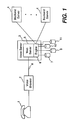
- the system includes a voice browser 2, and an audio input/output (I/O) interface 1 by which the user accesses a voice browser 2.
- the audio I/O interface 1 may be a conventional or cellular telephone, as shown, such that the user may access the voice browser 2 over a conventional or wireless telephone network by dialing a predetermined telephone number.
- the user can access the voice browser 2 through other types of communication channels, such as the Internet or a corporate intranet (using, for example, IP telephony and/or Voice-over-IP).
- the voice browser 2 operates in a manner that is analogous to a conventional HTML based web browser, except that it is responsive to voice input from the user and is used to access hyperlinked audio content (as opposed to text, graphics, or video).
- the voice browser 2 may be implemented in a conventional processing system, such as an AS5300 universal access server from Cisco Systems of San Jose, California
- the system also includes a voice server 3.
- the voice server 3 provides VXML based content to the voice browser 2 over a standard hypertext transport protocol (HTTP) interface 8, in response to requests from the voice browser 2 (which requests are transmitted in response to voice input from the user).
- the system also includes one or more VXML based call flow documents 7, which may be (but do not have to be) stored within the voice server 3 in one or more conventional mass storage devices.
- the call flow documents 7 define the call flow and are accessed by the voice server 3 in response to an initial request from the voice browser 2, to control the call.
- the call flow documents 7 are at least a part of the "content" which a user accesses through the voice browser 2 and the voice server 3.
- the call flow documents 7 include both standard VXML as well as various new elements (tags) defined herein, which are referred to as VXML extension elements or custom elements.
- the VXML extension elements are used to incorporate application logic into the call flow and are described further below.
- the voice server 3 includes a standard web server 5 (e.g., Apache) and a VXML extension engine (or simply "engine") 6.
- the engine 6 parses and interprets the extended VXML call flow documents. It has the ability to recognize standard VXML tags as well as the extension elements, and includes code for implementing the logic represented by those elements.
- the engine 6 includes a conventional, "off-the-shelf" PHP (Hypertext Preprocessor) scripting language interpreter.
- the engine 6 also includes additional code, which implements application logic represented by custom elements, as well as various functions and objects (mentioned above and described further below) which are invoked using custom elements.
- the additional code may be written in PHP scripting language, Perl, and/or C programming language, for example.
- additional elements, functions and objects are stored in external element files 9, function files 10, and object files 11, respectively, for implementing application logic for a call flow.
- the system also includes one or more backend servers 4.
- the backend servers 4 may contain application logic as well as other content accessible to the user via the voice browser 2 and voice server 3.
- the VXML extension elements may be used to invoke and/or interact with application logic residing on the backend servers 4.
- a VXML extension element in a call flow document 7 may be used to invoke a user login/authentication operation carried out by one of the backend servers 4.
- voice server 3 provides session management. As the user interacts with the system during a VXML session, certain application state must be captured and managed for the lifetime of the session. For example, if as part of a call flow the user "logs in" - for example to retrieve voice mail - the system must keep track of the user's authentication token and the fact that the user has logged in. This tracking and management is done by the voice server 3 and is hidden from the call flow developer.
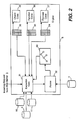
- Figure 2 shows the elements of the VXML extension engine 6, according to one embodiment.
- the engine 6 includes an execution core 31 and a parser 32.
- the parser 32 is responsible for parsing call flow documents 7.
- the result of parsing a call flow document is a parse tree 33, which indicates to the execution core 31 the sequence in which the elements of the call flow document should be processed.
- the execution core 31 executes a parsed call flow document by invoking the element code, functions and/or objects represented by the elements in the document.
- the element code, functions and objects may be internal to the engine 6, as is the case with internal element code 37, internal function code 38, and internal object code 39.
- Tables 34, 35 and 36 contain mappings used by the execution core 31 to determine the storage locations of the internal element code 37, internal function code 38 and internal object code 39, respectively, based on the referencing extension elements.
- Other element code, objects, and functions are stored in external element files 9, function files 10, and object files 11.
- FIGS 3A and 3B collectively show an overall process that may be executed by the system of Figure 1 during a call, in accordance with the present invention. This process will now be described, also with reference to Figures 1 and 2.
- a user initiates a call to the voice browser 2.
- the voice browser 2 answers the call at block 302 and, at block 303, sends an HTTP request to the voice server 3 specifying an initial uniform resource locator (URL).
- the VXML extension engine 6 identifies and loads the base (main) call flow document of the set of call flow documents 7, based on the URL specified by the browser 2. Note that a call flow can be implemented within a single call flow document or within multiple call flow documents.
- the engine 6 then parses the call flow document into a parse tree at block 305.
- the engine 6 uses the parse tree to identify the first element (tag) in the call flow document, and at block 307 the engine processes the element in an appropriate manner, as described below in greater detail.
- the engine 6 determines from the parse tree whether there are additional elements to be processed in the call flow document. If so, the engine 6 identifies the next element at block 311, and the process then continues from block 307 (discussed above). If all of the elements in the call flow document have been processed, then the process continues from block 309.
- the voice browser 2 if it has received another request from the user, it sends a request to the voice server 3 via HTTP with a specified URL at block 312. The engine 6 then retrieves the call flow document corresponding to the specified URL at block 313, and the process and continues from block 305. If no further request has been received and if the session is still active at block 310, then the process loops back to block 309. If no further request has been received from the voice browser 2 and the session has terminated, the process ends.
- the duration of the process is open-ended, in that essentially any number of requests can be received from the user and voice browser 2, depending on the type of call flow being accessed.
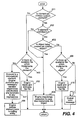
- Figure 4 shows the process of block 307 in greater detail, according to one embodiment.
- the engine 6 determines whether the element currently being processed is an intrinsic (internal) custom element by consulting its table 34 of internal elements. If the element is an intrinsic custom element, then at block 402 the engine 6 next determines whether the element is the ⁇ ivrObject> tag (discussed below), which is used to incorporate an object into the call flow. If the element is the ⁇ ivrObject> tag, then the engine 6 determines at block 403 whether the object being invoked in the tag is an intrinsic (internal) object, by consulting its table 36 of internal objects.
- the ⁇ ivrObject> tag discussed below
- the engine 6 dispatches execution to its internal code that implements the object at block 404, and the process then returns.
- the code which implements the object may be, for example, a script written in PHP, Perl, or C.
- Execution of the object may include, for example, one or more local computations, or it may cause the voice server to interact with one or more backend servers, if appropriate. The latter action can be accomplished by calling one or more application program interfaces (APIs).
- APIs application program interfaces
- Execution of the object may also include the generation of additional VXML code by the engine 6, which is passed to the voice browser.
- the engine 6 determines at block 409 if there is an external file available which implements the object.
- external files are assigned names that match the name of the corresponding element, function or object used in the tag, to allow the engine 6 to easily locate the correct file. If there is such a file at block 409, then the engine 6 loads and executes the file at block 410, and the process then returns.
- the file may include a PHP, Perl or C script, for example, and execution may involve actions such as described above regarding block 404. If there is no such file, the engine 6 outputs an appropriate error message to the calling entity at block 411, and the process then returns.
- the process branches from block 402 to block 404 (discussed above).
- the process branches to block 405, in which the engine 6 determines if there is an external file available which implements the element. If there is such a file, then the engine 6 loads and executes the file at block 406, and the process then returns.
- the file may include a PHP, Perl or C script, for example, and execution may involve actions such as described above regarding block 404.
- the element is determined not to be a custom element (i.e., it is a standard VXML element) at block 407. In that case, at block 407 the engine 6 performs any necessary variable expansions and invokes any functions that are represented in any expressions in the element, and then passes the element (or the result of block 407) back to the calling entity at block 408. The process then returns.
- the following alternative process may be employed for overall faster performance.
- This process eliminates the need to parse a call flow document each time it is requested.
- the engine 6 parses the call flow document and outputs into a file all of the code needed to execute the call flow document (e.g., PHP code representing elements, functions and/or objects).
- the code may be located in the manner described above in connection with Figure 4.
- the engine 6 simply executes the code from the file. If the document has been modified since the file was generated, the engine 6 will regenerate the file from the modified document, and execute the call flow document.
- Figure 5 is a block diagram showing an example of a processing system that can be used to implement any of the elements shown in Figure 1.
- Figure 5 is not intended to represent any one specific physical arrangement of components, as such details are not germane to the present invention and are well within the knowledge of those skilled in the art.
- the elements shown in Figure 1 may be distributed among two or more such processing systems, which may be connected to each other on a network or on an internetwork.
- the network or internetwork may be or may include, for example, a local area network (LAN), a wide area network (WAN), an corporate intranet, or the Internet, or a combination thereof.
- Each such physical machine may be, for example, a conventional personal computer (PC) or server-class computer.
- the audio I/O interface 1 may also be implemented in a computer, as opposed to a conventional telephone; in that case, the computer might be a personal digital assistant (PDA) or any other type of computing device.
- PDA personal digital assistant
- the processing system shown in Figure 5 includes a processor 41, read-only memory (ROM) 42, and random access memory (RAM) 43, each connected to a bus system 48.
- the processor 41 may be or may include a general-purpose programmable microprocessor, for example.
- the bus system 48 may include one or more buses connected to each other through various bridges, controllers and/or adapters, such as are well-known in the art.
- the bus system 48 may include a "system bus” that is connected through an adapter to one or more expansion buses, such as a peripheral component interconnect (PCI) bus or an extended industry standard architecture (EISA) bus.
- PCI peripheral component interconnect
- EISA extended industry standard architecture
- I/O devices 45-1 through 45-N are also coupled to the bus system 48.
- I/O devices 45 are also coupled to the bus system 48.
- I/O devices 45 might include are a keyboard, a pointing device (e.g., mouse, touchpad or trackball), a display device, and an audio speaker.
- Mass storage device 44 includes a storage medium suitable for storing large volumes of data in a non-volatile manner, such as a magnetic disk or tape, magneto-optical (MO) storage device, or any of various types of Digital Versatile Disk (DVD) or Compact Disk (CD) based storage.
- Data communication device 46 provides data communication between the illustrated processing system and one or more other (possibly remote) processing systems over a communications link 47.
- data communication device 46 may be, for example, a conventional telephone modem, an Integrated Services Digital Network (ISDN) adapter, a Digital Subscriber Line (DSL) modem, a cable modem, a satellite transceiver, an Ethernet adapter, or a combination thereof.
- ISDN Integrated Services Digital Network
- DSL Digital Subscriber Line
- a server such as the voice server or backend servers does not necessarily require I/O devices designed to interface directly with a user, such as a keyboard, a pointing device, and a display device.
- VXML extension elements tags
- each extension element will be briefly described, by category. A more complete description is given below (see section "VII").
- VI section "VII”
- additional extension elements may be defined, even after deployment of a system; in fact, the solution described herein facilitates the creation of new extension elements by those who maintain and operate IVR systems.
- extension elements relate to audio output:
- extension elements include the following: ⁇
- VXML file which may be used to specify the top level call flow. It contains some global variables which are used throughout the call flow. It also contains references to the pages which are a part of the call flow.
- the system uses the ⁇ ivrExternalPage> tag to only load pages when they are accessed - thus it is a declaration mechanism which is used to optimize the parsing of the call flow.
- the main page is the first page that is loaded by the engine. It determines the account which should be accessed based on various phone number information and dispatches accordingly. For the purposes of this example, it is assumed that a "regular" account is being accessed and the user is being taken to the message drop-off page (described below).
- the message drop-off page prompts the called to leave a message on the system. If the "*" key is pressed, the caller is prompted to login.
- the getPin page prompts the caller for his personal identification number (PIN). Upon entry of a PIN, transfer is passed to the PIN authentication page.
- PIN personal identification number
- the verifyPIN page attempts to verify the caller's PIN against a backend authentication server (by calling ivrLogin).
- the solution described herein provides a set of objects and functions accessible from the call flow language, that provide application logic for call flows (e.g., playing a folder summary of new emails, faxes, and voicemails) and that also export the ability to access key system functionality, such as account profile information, voice mail messages, personal information management data (e.g. calendar and address book).
- the set of functions and objects is easily extensible, such that new functions and objects can be added on-the-fly. The following description describes examples of these functions and objects.
Landscapes
- Engineering & Computer Science (AREA)
- Signal Processing (AREA)
- Telephonic Communication Services (AREA)
Applications Claiming Priority (2)
| Application Number | Priority Date | Filing Date | Title |
|---|---|---|---|
| US859107 | 1986-05-02 | ||
| US09/859,107 US20030083882A1 (en) | 2001-05-14 | 2001-05-14 | Method and apparatus for incorporating application logic into a voice responsive system |
Publications (1)
| Publication Number | Publication Date |
|---|---|
| EP1263202A2 true EP1263202A2 (de) | 2002-12-04 |
Family
ID=25330049
Family Applications (1)
| Application Number | Title | Priority Date | Filing Date |
|---|---|---|---|
| EP02010455A Withdrawn EP1263202A2 (de) | 2001-05-14 | 2002-05-08 | Gerät und Verfahren zur Integration von Anwendungslogik in einem Sprachantwortsystem |
Country Status (2)
| Country | Link |
|---|---|
| US (1) | US20030083882A1 (de) |
| EP (1) | EP1263202A2 (de) |
Cited By (1)
| Publication number | Priority date | Publication date | Assignee | Title |
|---|---|---|---|---|
| CN105227791A (zh) * | 2015-10-16 | 2016-01-06 | 江苏腾云创智信息技术有限公司 | 呼叫中心ivr语音路径的跳转方法 |
Families Citing this family (45)
| Publication number | Priority date | Publication date | Assignee | Title |
|---|---|---|---|---|
| US6128514A (en) | 1997-01-31 | 2000-10-03 | Bellsouth Corporation | Portable radiotelephone for automatically dialing a central voice-activated dialing system |
| US20020184002A1 (en) * | 2001-05-30 | 2002-12-05 | International Business Machines Corporation | Method and apparatus for tailoring voice prompts of an interactive voice response system |
| US20030051037A1 (en) * | 2001-06-12 | 2003-03-13 | Mukesh Sundaram | Open portal interface manager |
| US7054939B2 (en) * | 2001-06-28 | 2006-05-30 | Bellsouth Intellectual Property Corportion | Simultaneous visual and telephonic access to interactive information delivery |
| US7133830B1 (en) * | 2001-11-13 | 2006-11-07 | Sr2, Inc. | System and method for supporting platform independent speech applications |
| DE10202095A1 (de) * | 2002-01-21 | 2003-07-24 | Siemens Ag | Elektrisches Gerät |
| US20030202504A1 (en) * | 2002-04-30 | 2003-10-30 | Avaya Technology Corp. | Method of implementing a VXML application into an IP device and an IP device having VXML capability |
| US7287248B1 (en) * | 2002-10-31 | 2007-10-23 | Tellme Networks, Inc. | Method and system for the generation of a voice extensible markup language application for a voice interface process |
| US7103156B2 (en) * | 2002-12-04 | 2006-09-05 | International Business Machines Corporation | Telephony voice server |
| US7340043B2 (en) | 2003-01-16 | 2008-03-04 | At&T Knowledge Ventures, L.P. | Voice extensible markup language-based announcements for use with intelligent network services |
| US7336771B2 (en) | 2003-01-16 | 2008-02-26 | At&T Knowledge Ventures, L.P. | Voice extensible markup language enhancements of intelligent network services |
| US7269562B2 (en) * | 2003-04-29 | 2007-09-11 | Intervoice Limited Partnership | Web service call flow speech components |
| US7206391B2 (en) * | 2003-12-23 | 2007-04-17 | Apptera Inc. | Method for creating and deploying system changes in a voice application system |
| US7697673B2 (en) * | 2003-11-17 | 2010-04-13 | Apptera Inc. | System for advertisement selection, placement and delivery within a multiple-tenant voice interaction service system |
| US20050163136A1 (en) * | 2003-11-17 | 2005-07-28 | Leo Chiu | Multi-tenant self-service VXML portal |
| US20050119892A1 (en) | 2003-12-02 | 2005-06-02 | International Business Machines Corporation | Method and arrangement for managing grammar options in a graphical callflow builder |
| US7817784B2 (en) * | 2003-12-23 | 2010-10-19 | Apptera, Inc. | System for managing voice files of a voice prompt server |
| US20050246174A1 (en) * | 2004-04-28 | 2005-11-03 | Degolia Richard C | Method and system for presenting dynamic commercial content to clients interacting with a voice extensible markup language system |
| EP1592217B1 (de) * | 2004-04-29 | 2013-10-16 | Hewlett-Packard Development Company, L.P. | Verfahren und Gerät zur Bereitstellung von speziellen Ressourcenfunctionen in einem Telefonnetz |
| US7409344B2 (en) * | 2005-03-08 | 2008-08-05 | Sap Aktiengesellschaft | XML based architecture for controlling user interfaces with contextual voice commands |
| US20070201631A1 (en) * | 2006-02-24 | 2007-08-30 | Intervoice Limited Partnership | System and method for defining, synthesizing and retrieving variable field utterances from a file server |
| US20070203874A1 (en) * | 2006-02-24 | 2007-08-30 | Intervoice Limited Partnership | System and method for managing files on a file server using embedded metadata and a search engine |
| US20070203927A1 (en) * | 2006-02-24 | 2007-08-30 | Intervoice Limited Partnership | System and method for defining and inserting metadata attributes in files |
| US20070203875A1 (en) * | 2006-02-24 | 2007-08-30 | Intervoice Limited Partnership | System and method for retrieving files from a file server using file attributes |
| US7734470B2 (en) * | 2006-05-22 | 2010-06-08 | Accenture Global Services Gmbh | Interactive voice response system |
| US8576712B2 (en) * | 2006-05-31 | 2013-11-05 | At&T Intellectual Property Ii, L.P. | Method and apparatus for providing a reliable voice extensible markup language service |
| US8370127B2 (en) * | 2006-06-16 | 2013-02-05 | Nuance Communications, Inc. | Systems and methods for building asset based natural language call routing application with limited resources |
| US8671199B2 (en) * | 2006-10-26 | 2014-03-11 | International Business Machines Corporation | Converged call flow modeling and converged web service interface design |
| US9229726B2 (en) * | 2006-10-26 | 2016-01-05 | International Business Machines Corporation | Converged call flow and web service application integration using a processing engine |
| US8214514B2 (en) | 2006-10-26 | 2012-07-03 | International Business Machines Corporation | Auto-generation or auto-execution of web service description language call flow implementation |
| US7966625B2 (en) * | 2006-10-26 | 2011-06-21 | International Business Machines Corporation | Extending web service description language for SIP/call flow interactions |
| US8187227B2 (en) * | 2006-11-01 | 2012-05-29 | Medela Holding Ag | Self returning contamination barrier |
| US7814405B2 (en) * | 2006-11-28 | 2010-10-12 | International Business Machines Corporation | Method and system for automatic generation and updating of tags based on type of communication and content state in an activities oriented collaboration tool |
| US8423635B2 (en) * | 2007-06-11 | 2013-04-16 | Enghouse Interactive Inc. | System and method for automatic call flow detection |
| US8301757B2 (en) | 2007-06-11 | 2012-10-30 | Enghouse Interactive Inc. | System and method for obtaining in-use statistics for voice applications in interactive voice response systems |
| US9002974B1 (en) * | 2007-10-16 | 2015-04-07 | Sprint Communications Company L.P. | Script server for efficiently providing multimedia services in a multimedia system |
| US9003049B1 (en) * | 2008-01-28 | 2015-04-07 | Avaya Inc. | Interactive voice response object |
| US20090234655A1 (en) * | 2008-03-13 | 2009-09-17 | Jason Kwon | Mobile electronic device with active speech recognition |
| CA2719099C (en) * | 2008-03-14 | 2013-10-01 | Aastra Technologies Limited | Method & system for configuring a network communications device |
| US7899873B2 (en) | 2008-05-20 | 2011-03-01 | At&T Intellectual Property I, L.P. | System and method of controlling a messaging system |
| US8396203B2 (en) | 2009-10-20 | 2013-03-12 | At&T Intellectual Property I, L.P. | Automatic integrated escalation in a unified messaging system |
| US8521513B2 (en) * | 2010-03-12 | 2013-08-27 | Microsoft Corporation | Localization for interactive voice response systems |
| US9178771B2 (en) * | 2012-08-23 | 2015-11-03 | Hewlett-Packard Development Company, L.P. | Determining the type of a network tier |
| CN112527353B (zh) * | 2015-05-27 | 2024-09-13 | 谷歌有限责任公司 | 用于增强对话系统的插件的在线市场 |
| US12499890B2 (en) * | 2023-05-18 | 2025-12-16 | Verizon Patent And Licensing Inc. | Method and system for dynamic IVR prompt generation via prior contextual language analysis |
Family Cites Families (5)
| Publication number | Priority date | Publication date | Assignee | Title |
|---|---|---|---|---|
| US5915001A (en) * | 1996-11-14 | 1999-06-22 | Vois Corporation | System and method for providing and using universally accessible voice and speech data files |
| US6269336B1 (en) * | 1998-07-24 | 2001-07-31 | Motorola, Inc. | Voice browser for interactive services and methods thereof |
| US6385583B1 (en) * | 1998-10-02 | 2002-05-07 | Motorola, Inc. | Markup language for interactive services and methods thereof |
| US6490564B1 (en) * | 1999-09-03 | 2002-12-03 | Cisco Technology, Inc. | Arrangement for defining and processing voice enabled web applications using extensible markup language documents |
| US6766298B1 (en) * | 1999-09-03 | 2004-07-20 | Cisco Technology, Inc. | Application server configured for dynamically generating web pages for voice enabled web applications |
-
2001
- 2001-05-14 US US09/859,107 patent/US20030083882A1/en not_active Abandoned
-
2002
- 2002-05-08 EP EP02010455A patent/EP1263202A2/de not_active Withdrawn
Cited By (2)
| Publication number | Priority date | Publication date | Assignee | Title |
|---|---|---|---|---|
| CN105227791A (zh) * | 2015-10-16 | 2016-01-06 | 江苏腾云创智信息技术有限公司 | 呼叫中心ivr语音路径的跳转方法 |
| CN105227791B (zh) * | 2015-10-16 | 2018-02-16 | 江苏腾云创智信息技术有限公司 | 呼叫中心ivr语音路径的跳转方法 |
Also Published As
| Publication number | Publication date |
|---|---|
| US20030083882A1 (en) | 2003-05-01 |
Similar Documents
| Publication | Publication Date | Title |
|---|---|---|
| EP1263202A2 (de) | Gerät und Verfahren zur Integration von Anwendungslogik in einem Sprachantwortsystem | |
| US6490564B1 (en) | Arrangement for defining and processing voice enabled web applications using extensible markup language documents | |
| US8032577B2 (en) | Apparatus and methods for providing network-based information suitable for audio output | |
| US6901431B1 (en) | Application server providing personalized voice enabled web application services using extensible markup language documents | |
| US7555536B2 (en) | Apparatus and methods for providing an audibly controlled user interface for audio-based communication devices | |
| CN100472500C (zh) | 会话浏览器和会话系统 | |
| US6766298B1 (en) | Application server configured for dynamically generating web pages for voice enabled web applications | |
| US6857008B1 (en) | Arrangement for accessing an IP-based messaging server by telephone for management of stored messages | |
| US7418086B2 (en) | Multimodal information services | |
| US6920425B1 (en) | Visual interactive response system and method translated from interactive voice response for telephone utility | |
| US7908383B2 (en) | Method and apparatus for phone application state management mechanism | |
| US7233902B1 (en) | Browser-based arrangement for developing voice enabled web applications using extensible markup language documents | |
| US20050028085A1 (en) | Dynamic generation of voice application information from a web server | |
| US20050240620A1 (en) | Arrangement for controlling and logging voice enabled web applications using extensible markup language documents | |
| US20040037401A1 (en) | Interactive voice response system and a method for use in interactive voice response system | |
| US7502993B1 (en) | Calling service using voice enabled web based application server | |
| US7698642B1 (en) | Method and apparatus for generating prompts | |
| US6973617B1 (en) | Apparatus and method for contacting a customer support line on customer's behalf and having a customer support representative contact the customer | |
| US7822815B1 (en) | Unified messaging feature that plays greetings based on the received calling party number | |
| JP2005513662A (ja) | パケットオリエンテッドネットワークを介する音声を用いた情報の交換方法 | |
| Amyot et al. | Combining VoiceXML with CCXML: A Comparative Study | |
| US20070168192A1 (en) | Method and system of bookmarking and retrieving electronic documents | |
| Keiller | Using VoiceXML 2.0 in the VxOne Unified Messaging Application |
Legal Events
| Date | Code | Title | Description |
|---|---|---|---|
| PUAI | Public reference made under article 153(3) epc to a published international application that has entered the european phase |
Free format text: ORIGINAL CODE: 0009012 |
|
| AK | Designated contracting states |
Kind code of ref document: A2 Designated state(s): AT BE CH CY DE DK ES FI FR GB GR IE IT LI LU MC NL PT SE TR |
|
| AX | Request for extension of the european patent |
Free format text: AL;LT;LV;MK;RO;SI |
|
| STAA | Information on the status of an ep patent application or granted ep patent |
Free format text: STATUS: THE APPLICATION HAS BEEN WITHDRAWN |
|
| 18W | Application withdrawn |
Effective date: 20050527 |