EP1265073A2 - Verfahren zum Nachweis von der Plasmakonzentration von freien Arzneimitteln - Google Patents
Verfahren zum Nachweis von der Plasmakonzentration von freien Arzneimitteln Download PDFInfo
- Publication number
- EP1265073A2 EP1265073A2 EP02077275A EP02077275A EP1265073A2 EP 1265073 A2 EP1265073 A2 EP 1265073A2 EP 02077275 A EP02077275 A EP 02077275A EP 02077275 A EP02077275 A EP 02077275A EP 1265073 A2 EP1265073 A2 EP 1265073A2
- Authority
- EP
- European Patent Office
- Prior art keywords
- protease inhibitor
- plasma protein
- plasma
- concentration
- determining
- Prior art date
- Legal status (The legal status is an assumption and is not a legal conclusion. Google has not performed a legal analysis and makes no representation as to the accuracy of the status listed.)
- Withdrawn
Links
- 0 OCC[C@@]1*COC1 Chemical compound OCC[C@@]1*COC1 0.000 description 1
Images


Classifications
-
- G—PHYSICS
- G01—MEASURING; TESTING
- G01N—INVESTIGATING OR ANALYSING MATERIALS BY DETERMINING THEIR CHEMICAL OR PHYSICAL PROPERTIES
- G01N33/00—Investigating or analysing materials by specific methods not covered by groups G01N1/00 - G01N31/00
- G01N33/48—Biological material, e.g. blood, urine; Haemocytometers
- G01N33/50—Chemical analysis of biological material, e.g. blood, urine; Testing involving biospecific ligand binding methods; Immunological testing
- G01N33/53—Immunoassay; Biospecific binding assay; Materials therefor
- G01N33/566—Immunoassay; Biospecific binding assay; Materials therefor using specific carrier or receptor proteins as ligand binding reagents where possible specific carrier or receptor proteins are classified with their target compounds
-
- C—CHEMISTRY; METALLURGY
- C12—BIOCHEMISTRY; BEER; SPIRITS; WINE; VINEGAR; MICROBIOLOGY; ENZYMOLOGY; MUTATION OR GENETIC ENGINEERING
- C12Q—MEASURING OR TESTING PROCESSES INVOLVING ENZYMES, NUCLEIC ACIDS OR MICROORGANISMS; COMPOSITIONS OR TEST PAPERS THEREFOR; PROCESSES OF PREPARING SUCH COMPOSITIONS; CONDITION-RESPONSIVE CONTROL IN MICROBIOLOGICAL OR ENZYMOLOGICAL PROCESSES
- C12Q1/00—Measuring or testing processes involving enzymes, nucleic acids or microorganisms; Compositions therefor; Processes of preparing such compositions
- C12Q1/02—Measuring or testing processes involving enzymes, nucleic acids or microorganisms; Compositions therefor; Processes of preparing such compositions involving viable microorganisms
- C12Q1/18—Testing for antimicrobial activity of a material
-
- G—PHYSICS
- G01—MEASURING; TESTING
- G01N—INVESTIGATING OR ANALYSING MATERIALS BY DETERMINING THEIR CHEMICAL OR PHYSICAL PROPERTIES
- G01N33/00—Investigating or analysing materials by specific methods not covered by groups G01N1/00 - G01N31/00
- G01N33/48—Biological material, e.g. blood, urine; Haemocytometers
- G01N33/50—Chemical analysis of biological material, e.g. blood, urine; Testing involving biospecific ligand binding methods; Immunological testing
- G01N33/94—Chemical analysis of biological material, e.g. blood, urine; Testing involving biospecific ligand binding methods; Immunological testing involving narcotics or drugs or pharmaceuticals, neurotransmitters or associated receptors
-
- G—PHYSICS
- G01—MEASURING; TESTING
- G01N—INVESTIGATING OR ANALYSING MATERIALS BY DETERMINING THEIR CHEMICAL OR PHYSICAL PROPERTIES
- G01N2500/00—Screening for compounds of potential therapeutic value
- G01N2500/02—Screening involving studying the effect of compounds C on the interaction between interacting molecules A and B (e.g. A = enzyme and B = substrate for A, or A = receptor and B = ligand for the receptor)
Definitions
- the present invention relates to methods for isothermal titration calorimetry analysis of the binding affinity of protease inhibitors to plasma proteins.
- drugs are transported in biological fluids (e.g. in blood) partly in solution as free drug and partly bound to blood components (e.g., plasma proteins, blood cells).
- blood components e.g., plasma proteins, blood cells.
- the physiologically active substances are in equilibrium between a free form and a form bound to endogenous ligands present in the same fluids (see reviews by Kremer, et al. Pharmacol Rev. 1988, 40:1-47).
- blood components e.g., plasma proteins, blood cells.
- blood components e.g., plasma proteins, blood cells
- Human serum albumin HSA
- human ⁇ 1 -acid glycoprotein AAG
- Human AAG is an acute-phase protein whose expression increases during acute inflammatory episodes, infections, injuries, neoplastic disease, and AIDS (Kremer et al, Pharmacol Rev. 1988, 40: 1-47; Oie et al, 1993, J Acquir Immune Defic Syndr Hum Retrovirol.
- AAG concentrations have been suggested to vary by race or ethnicity (Johnson et al, 1997, J. Pharm. Sci. 86: 1328-1333).
- AAG exists as a mixture of two or three genetic variants (the A variant and the Fl and/or S variants) in the plasma of most individuals (Hervé et al, 1998, Mol. Pharmacol. 54:129-138), which present different drug binding specificities.
- the question whether AAG binding had an effect on in vivo antiviral activity of anti-HIV PIs has recently heightened the great interest in the investigations of effects of serum proteins on activity and pharmacokinetics of anti-HIV PIs in vitro (Billello et al. 1995, J. Infect. Dis. 171:546-551; Bilello et al. 1996, Antimicrobiol. Agents Chemother. 40:1491-1497; Lazdins et al.
- the present invention concerns a method for determining the binding affinity of protease inhibitors to plasma proteins that is direct, has high sensitivity and is easy to perform using routine laboratory procedures.
- the present invention provides a method that can quantitatively calculate free drug concentrations of protease inhibitors in human plasma, as well as a method to calculate therapeutic amounts and dosage regimens.
- the present invention provides a method that can calculate the effect of plasma proteins on the antiviral activity (EC50 values) of protease inhibitors from their binding affinities to plasma proteins.
- the present invention provides as well a method that can evaluate the in vivo anti-HIV efficacy of PIs in human plasma.
- the present invention provides as well a method for selecting compounds that competitively bind with plasma proteins, said selection being useful for co-administering agents to compete for plasma protein binding, so that an increase of the free plasma concentration of protease inhibitors is achieved.
- the amount of a protein-bound drug depends on the affinity constant and the protein concentration and the present invention concerns a method to calculate the concentration of free drug available to block viral replication from the protein-drug affinity constants under physiologic circumstances.
- High sensitivity isothermal titration calorimetry (ITC) has been used in the present method to directly measure the binding thermodynamics, such as binding affinities (K a ), enthalpies ( ⁇ H 0 ), entropies ( ⁇ S 0 ) and binding free energies ( ⁇ G 0 ), of various PIs to AAG.
- the present method allows to estimate the antiviral EC 50 values in the presence of AAG and the in vivo efficacy of PIs.
- the present invention provides a method for determining the binding affinity of at least one HIV protease inhibitor to at least one plasma protein comprising: i) providing at least one plasma protein; ii) providing at least one protease inhibitor; and iii) quantifying the binding affinity between the at least one plasma protein and the at least one protease inhibitor based on isothermal titration calorimetry measurement.
- binding refers to an interaction or association between a minimum of two entities, or molecular structures, such as a ligand and an antiligand.
- the interaction may occur when the two molecular structures are in direct or indirect physical contact or when the two structures are physically separated but electromagnetically coupled there between, e.g. by hydrogen bonds or Van der Waals interactions.
- binding events of interest in a medical context include, but are not limited to, ligand/receptor, antigen/antibody, enzyme/substrate, enzyme/inhibitor, protein/protein, DNA/DNA, DNA/RNA, RNA/RNA, nucleic acid mismatches, complementary nucleic acids, nucleic acid/proteins, plasma proteins/drugs.
- the binding affinity of two molecules would therefore be the degree of interaction between two molecules.
- the binding affinity of plasma protein and a protease inhibitor can be expressed using various parameters such as the heat capacity change evolved on association of a protease inhibitor with a plasma protein ( ⁇ C p ); the equilibrium association binding constant (K a ) or the equilibrium dissociation constant (K d ), the free energy ( ⁇ G), the entropy of binding ( ⁇ S), the enthalpy ( ⁇ H).
- ITC isothermal titration calorimetry
- the binding constant (K a ), enthalpy of binding ( ⁇ H 0 ), and stoichiometry (N) of the formation of complex are determined by fitting the binding isotherm against the binding equation using an independent binding model. Data analysis may be carried out with, for example, MicroCal ORIGN software, usually provided with the instrument.
- HIV protease inhibitors include those compounds whose mechanism of action comprises an inhibition of the viral protease enzyme.
- HIV protease inhibitors include ritonavir (RTV), indinavir (IDV), nelfinavir (NFV), amprenavir (APV), telinavir (SC-52151), tipranavir (TPV), saquinavir (SQV), lopinavir (LPV), atazanavir, palinavir, mozenavir, BMS 186316, DPC 681, DPC 684, AG1776, GS3333, KNI-413, KNI-272, L754394, L756425, LG-71350, PD161374, PD173606, PD177298, PD178390, PD178392, PNU 140135, maslinic acid, U-140690, their prodrugs, metabolites, N-oxides and salts.
- Plasma proteins include all proteins found endogenously in plasma.
- plasma proteins include without limitation Albumin (HSA), Alpha-1-acid Glycoprotein (AAG), Alpha-1-Antichymotrypsin, Alpha-1 Antitrypsin AT, alpha-fetoprotein, Alpha-1-microglobulin A1M, Alpha-2-Macroglobulin A2M, Angiostatin, Beta-2-Glyco-protein 1, Beta-2-microglobulin, Beta-2-Microglobulin B2M, Beta-N-Acetyl-glucosaminidase B-NAG, recombinant Centromere Protein B, Collagens (type 1-VI), Complement C1q, Complement C3, Complement C4, Ceruplasmin, Chorionic Gonadotrophin HCG, Chorionic Gonadotrophin Beta CORE BchCG, C-Reactive Protein CRP, CK-MB (Creatine Kinase-MB), CK-MM & CK-BB, Cystatin C, D-Dimer, d
- Plasma proteins may also encompass proteins of external origin, which are not necessarily forming part of the physiological population, but may be found in the body, i.e. proteins from diet origin or from drug compositions.
- protein variant refers to a polypeptide comprising one or more substitutions of the specified amino acid residues underlying the protein. The total number of such substitutions is typically not more than 10, e.g. one, two, three, four, five or six of said substitutions.
- protein variant may optionally include other modifications of the parent enzyme, typically not more than 10, e.g. not more than 5 such modifications.
- the variant generally has a homology with the parent enzyme of at least 80 %, e.g. at least 85 %, typically at least 90 % or at least 95 %.
- Variants may not only differ in primary structure (amino acid sequence), but also in secondary or tertiary structure and the amount and structure of covalently attached carbohydrates.
- a protein may be present in plasma in different variants, at similar or different concentrations. Variants of a protein may exhibit different binding properties. For instance human ⁇ -1 acid glycoprotein is present in two different variants, A and F1/S, which have different binding properties to various ligands and drugs.
- the methods of the present invention may additionally comprise as part of the test composition, any compound, including, but not limited to, dipeptides, tripeptides, polypeptides, proteins, small and large organic molecules, buffers, or test aid components, and derivatives thereof.
- the method preferably includes a competitive binding agent.
- a competitive binding agent refers to those molecules that competitively bind to plasma proteins in the presence of protease inhibitors.
- Said competitive binding agent could be one or two more drugs, preferably other drugs than antivirals which bind to plasma proteins, also preferably one or two more drugs effective to treat AIDS and related syndromes, more preferably one or two more antivirals, such as NNRTI, NRTI, PI, fusion inhibitors, entry inhibitors, integrase inhibitors, so concomitant administration of antiretrovirals, optionally with other types of drugs, and its influence on plasma protein binding properties may be studied. Therefore, the present invention also provides a method for selecting compounds that bind competitively to plasma proteins in the presence of protease inhibitors. Said compounds may be used as co-administered agents to increase the free plasma concentration of protease inhibitors.
- the different methods of the present invention may comprise physiological fluid, or have the same components thereof, preferably the physiological fluid is blood, more preferably plasma, also preferred is serum.
- a method for determining the concentration of at least one protease inhibitor present in free form within a test medium comprising the steps of: i) providing at least one plasma protein, ii) providing at least one protease inhibitor; iii) quantifying the concentration of protease inhibitor in free form based on isothermal titration calorimetry measurements.
- PL is the protein-bound concentration of PIs
- L 0 and P 0 are the total concentration of PIs and plasma protein
- K a and n are the binding constants and number of binding sites, respectively.
- the method for calculating the free concentration of protease inhibitors available to inhibit viral replication may be performed by obtaining the K a (or association constant) from isothermal titration calorimetry measurement under different plasma protein concentrations, preferably physiological concentrations.
- the concentration or amount of protease inhibitor present in free form is particularly useful to establish pharmacokinetic characteristics such as the distribution volume, half-life, bioavailability, and to further determine the therapeutic amount, dosage amounts and dosage intervals, necessary to accomplish an effective therapeutic treatment.
- concentration or amount of protease inhibitor present in free form allows the design of a dosage regimen for a given drug. Same information may be used for patient management, therapeutic drug monitoring, thus, to adjust and tailor the dosage regimen for individual patients and conditions.
- the present invention further provides a method of constructing a binding affinity and pharmacokinetic profile database of HIV protease inhibitors, with plasma proteins, and variants thereof, comprising: i) providing at least one plasma protein, and variants thereof; ii) providing at least one protease inhibitor; iii) quantifying the binding affinity between the at least one plasma protein and the at least one protease inhibitor based on isothermal titration calorimetry measurements; and/or quantifying the concentration of protease inhibitor in free form based on isothermal titration calorimetry measurements; iv) correlating in a data table the binding affinity or the concentration of protease inhibitor in free form, with the dosage regimens.
- Said method for constructing such database also encompasses reports that are generated comprising a listing, analysis, or other information regarding the binding affinities, pharmacokinetic parameters, and their correlation to drug dosage regimens identified by the methods of the invention.
- a method for determining the antiviral activity or EC50 value of at least one HIV protease inhibitor in the presence of at least one plasma protein comprising: providing at least one plasma protein; providing at least one protease inhibitor; quantifying the binding affinity between the at least one plasma protein and the at least one protease inhibitor based on isothermal titration calorimetry measurements.
- the present invention provides a method of constructing a binding affinity and antiviral activity and/or efficacy database of HIV protease inhibitors, with plasma proteins, and variants thereof, comprising: i) providing at least one plasma protein, and variants thereof; ii) providing at least one protease inhibitor; iii) quantifying the binding affinity between the at least one plasma protein and the at least one protease inhibitor based on isothermal titration calorimetry measurements; and/or quantifying the concentration of protease inhibitor in free form based on isothermal titration calorimetry measurements; iv) correlating in a data table the binding affinity and/or the concentration of protease inhibitor in free form, with the antiviral activity and/or efficacy.
- Said method for constructing such database also encompasses reports that are generated comprising a listing, analysis, or other information regarding the binding affinities, free drug concentrations, pharmacodyamics' parameters, and their correlation to antiviral activities and efficacies determined by the methods of the invention.
- kits comprising i) at least one plasma protein, and ii) at least one protease inhibitor.
- Said kit may be directed to determining the binding affinity of at least one HIV protease inhibitor to at least one plasma protein. Additionally, the kit may be used for determining the concentration of at least one protease inhibitor present in free form within a test medium, said test medium also containing a bound form of said protease inhibitor with at least one plasma protein in equilibrium with said free form.
- kits comprising at least one plasma protein, and at least one protease inhibitor; and directed to determining the EC50 value of at least one HIV protease inhibitor to at least one plasma protein.
- the same kit may be used for determining the in vivo efficacy of at least one HIV protease inhibitor in human plasma.
- kits may further comprise any reagents necessary to practice the methods of the invention and any equipment or apparatus needed to practice the methods of the invention, such as the equipment necessary to measure binding affinity.
- the methods provided in the present invention may optionally be used as or comprise part of a high-throughput screening assay where numerous test compositions are evaluated for their effect on binding affinity of the at least one plasma protein and the at least one protease inhibitor and for the pharmacokinetic derived properties of the protease inhibitors.
- ITC Isothermal Titration Calorimetry
- the instrument was electrically calibrated by means of a standard electric pulse as recommended by the manufacturer.
- solutions of PI 80 ⁇ 100 ⁇ M
- a 300 ⁇ L syringe was used for the titrant, mixing was effected by stirring this syringe at 300 rpm during equilibration and experiment.
- 25 injections of 10 ⁇ L each were performed with a 250s interval between injections in a single titration.
- the reference cell of the calorimeter filled with water acts as a thermal reference to the sample cell.
- the control experiments were also performed using similar conditions with buffer solution only. All solutions were degassed before titrations to reduce the noise.
- the buffer contained 20mM sodium phosphate, pH 7.4.
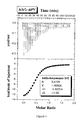
- FIG. 1 and 2 Two typical titration calorimetry measurements under same condition are shown in Figure 1 and 2.
- the upper panels in Figure 1 and 2 show the traces recorded for each 10 ⁇ L injection of 80 ⁇ M APV and IDV into 12 ⁇ M, 1.45mL of AAG, respectively.
- the titration profiles for APV and IDV clearly indicate that APV binds to AAG accompanied with an exothermic heat effect, whereas IDV does not bind to AAG under the conditions studied.
- the area of each peak was integrated and corrected for the PI heat of dilution, which was estimated by a separate experiment by injecting the PI into the buffer.
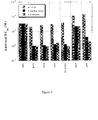
- thermodynamics of various PIs binding to AAG at 37°C in 20mM phosphate buffer, pH 7.4 are summarized in Table 1. The values provided are the average of duplicate experiments. For all the PIs studied binding to AAG, we obtained exothermic enthalpy.
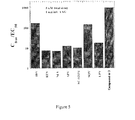
- the fold increase EC50 is the change in experimental EC50s obtained from cell-based assays in the absence of AAG and in the presence of 1mg/mL AAG, according to the method described by Pauwels et al., Rapid and automated tetrazolium-based colorimetric assay for the detection of anti-HIV compounds, J. Virol. Methods, 1988, 20(4), 309-21. PIs Fold Inc.
- Example 3 Comparative evaluation of the in vivo antiviral efficacy of PIs in the presence of AAG.
Landscapes
- Health & Medical Sciences (AREA)
- Life Sciences & Earth Sciences (AREA)
- Engineering & Computer Science (AREA)
- Chemical & Material Sciences (AREA)
- Molecular Biology (AREA)
- Immunology (AREA)
- Urology & Nephrology (AREA)
- Biomedical Technology (AREA)
- Hematology (AREA)
- Biotechnology (AREA)
- General Health & Medical Sciences (AREA)
- Microbiology (AREA)
- Physics & Mathematics (AREA)
- Organic Chemistry (AREA)
- Biochemistry (AREA)
- Analytical Chemistry (AREA)
- Cell Biology (AREA)
- Bioinformatics & Cheminformatics (AREA)
- Food Science & Technology (AREA)
- Zoology (AREA)
- General Physics & Mathematics (AREA)
- Pathology (AREA)
- Wood Science & Technology (AREA)
- Medicinal Chemistry (AREA)
- Proteomics, Peptides & Aminoacids (AREA)
- Biophysics (AREA)
- Toxicology (AREA)
- Pharmacology & Pharmacy (AREA)
- General Engineering & Computer Science (AREA)
- Genetics & Genomics (AREA)
- Medicines That Contain Protein Lipid Enzymes And Other Medicines (AREA)
- Investigating Or Analysing Biological Materials (AREA)
- Measuring Or Testing Involving Enzymes Or Micro-Organisms (AREA)
Applications Claiming Priority (2)
| Application Number | Priority Date | Filing Date | Title |
|---|---|---|---|
| US29555701P | 2001-06-05 | 2001-06-05 | |
| US295557P | 2001-06-05 |
Publications (2)
| Publication Number | Publication Date |
|---|---|
| EP1265073A2 true EP1265073A2 (de) | 2002-12-11 |
| EP1265073A3 EP1265073A3 (de) | 2003-11-26 |
Family
ID=23138206
Family Applications (1)
| Application Number | Title | Priority Date | Filing Date |
|---|---|---|---|
| EP02077275A Withdrawn EP1265073A3 (de) | 2001-06-05 | 2002-06-05 | Verfahren zum Nachweis von der Plasmakonzentration von freien Arzneimitteln |
Country Status (2)
| Country | Link |
|---|---|
| US (2) | US7087373B2 (de) |
| EP (1) | EP1265073A3 (de) |
Cited By (4)
| Publication number | Priority date | Publication date | Assignee | Title |
|---|---|---|---|---|
| EP1478766A2 (de) * | 2002-02-22 | 2004-11-24 | Tibotec BVBA | Verfahren zum bestimmen des einflusses von proteinbindung auf antiretrovirale aktivität |
| WO2005003765A1 (en) * | 2003-06-30 | 2005-01-13 | Astrazeneca Ab | Isothermal titration calorimetry assays |
| WO2006110964A3 (en) * | 2005-04-21 | 2006-12-28 | Vivactis N V | Calorimetric measuring device |
| US8067463B2 (en) | 2005-02-25 | 2011-11-29 | Tibotec Pharmaceuticals Ltd. | Protease inhibitor precursor synthesis |
Families Citing this family (6)
| Publication number | Priority date | Publication date | Assignee | Title |
|---|---|---|---|---|
| AU2003202914A1 (en) * | 2002-01-07 | 2003-07-24 | Sequoia Pharmaceuticals | Broad spectrum inhibitors |
| JP2007528423A (ja) * | 2004-03-11 | 2007-10-11 | セコイア、ファーマシューティカルズ、インコーポレイテッド | 耐性防止レトロウイルスプロテアーゼ阻害薬 |
| US9927435B2 (en) * | 2009-10-15 | 2018-03-27 | Robert Bosch Gmbh | Multisite biosensor and associated method |
| CN102375004B (zh) * | 2010-08-27 | 2013-08-14 | 中国人民解放军第三0二医院 | 一种评价注射剂临床配伍相容性的方法 |
| WO2012092168A1 (en) * | 2010-12-27 | 2012-07-05 | Purdue Research Foundation | Fused 6,5 bicyclic ring system p2 ligands, and methods for treating hiv |
| WO2012092188A1 (en) * | 2010-12-27 | 2012-07-05 | Ghosh Arun K | Hydrogen bond forming p1 ligands and methods for treating hiv |
Family Cites Families (5)
| Publication number | Priority date | Publication date | Assignee | Title |
|---|---|---|---|---|
| US575049A (en) * | 1897-01-12 | Apparatus for promoting combustion | ||
| US5750493A (en) * | 1995-08-30 | 1998-05-12 | Raymond F. Schinazi | Method to improve the biological and antiviral activity of protease inhibitors |
| US5783398A (en) * | 1995-09-15 | 1998-07-21 | Merck & Co., Inc. | High throughput assay using fusion proteins |
| US6242190B1 (en) * | 1999-12-01 | 2001-06-05 | John Hopkins University | Method for high throughput thermodynamic screening of ligands |
| US7691872B2 (en) * | 2001-03-20 | 2010-04-06 | University Of Kentucky Research Foundation | Methods and compositions for optimizing blood and tissue stability of camptothecin and other albumin-binding therapeutic compounds |
-
2002
- 2002-06-05 US US10/161,613 patent/US7087373B2/en not_active Expired - Fee Related
- 2002-06-05 EP EP02077275A patent/EP1265073A3/de not_active Withdrawn
-
2006
- 2006-05-05 US US11/429,481 patent/US20060205002A1/en not_active Abandoned
Cited By (5)
| Publication number | Priority date | Publication date | Assignee | Title |
|---|---|---|---|---|
| EP1478766A2 (de) * | 2002-02-22 | 2004-11-24 | Tibotec BVBA | Verfahren zum bestimmen des einflusses von proteinbindung auf antiretrovirale aktivität |
| WO2005003765A1 (en) * | 2003-06-30 | 2005-01-13 | Astrazeneca Ab | Isothermal titration calorimetry assays |
| US8067463B2 (en) | 2005-02-25 | 2011-11-29 | Tibotec Pharmaceuticals Ltd. | Protease inhibitor precursor synthesis |
| US8183394B2 (en) | 2005-02-25 | 2012-05-22 | Tibotec Pharmaceuticals Ltd. | Protease inhibitor precursor synthesis |
| WO2006110964A3 (en) * | 2005-04-21 | 2006-12-28 | Vivactis N V | Calorimetric measuring device |
Also Published As
| Publication number | Publication date |
|---|---|
| EP1265073A3 (de) | 2003-11-26 |
| US20030113748A1 (en) | 2003-06-19 |
| US20060205002A1 (en) | 2006-09-14 |
| US7087373B2 (en) | 2006-08-08 |
Similar Documents
| Publication | Publication Date | Title |
|---|---|---|
| Liang | Applications of isothermal titration calorimetry in protein science | |
| Sreekumar et al. | Profiling of cancer cells using protein microarrays: discovery of novel radiation-regulated proteins | |
| Roy et al. | Discovery of compounds that inhibit SARS-CoV-2 Mac1-ADP-ribose binding by high-throughput screening | |
| US8642256B2 (en) | Kinase and ubiquination assays | |
| Liang et al. | Dihydropteroate synthase based sensor for screening multi-sulfonamides residue and its comparison with broad-specific antibody based immunoassay by molecular modeling analysis | |
| Tasara et al. | HIV-1 reverse transcriptase and integrase enzymes physically interact and inhibit each other | |
| EP1265073A2 (de) | Verfahren zum Nachweis von der Plasmakonzentration von freien Arzneimitteln | |
| Liu et al. | A one-pot analysis approach to simplify measurements of protein stability and folding kinetics | |
| US20020009762A1 (en) | Assay for protein tyrosine phosphatases | |
| WO2016010961A1 (en) | Enzyme occupancy assay | |
| CHEETHAM et al. | Inhibition of hsc70-catalysed clathrin uncoating by HSJ1 proteins | |
| WO2010119138A1 (en) | Development of fluorescently p-loop labelled kinases for screening of inhibitors | |
| Labuda et al. | Mechanism of codon recognition by transfer RNA and codon-induced tRNA association | |
| Kitagawa et al. | Quick evaluation of kinase inhibitors by surface plasmon resonance using single-site specifically biotinylated kinases | |
| Moro et al. | Bicyclic peptide-based assay for uPA cancer biomarker | |
| JP2935578B2 (ja) | 改善された直線性を有する競合結合アッセイ | |
| CN117136307A (zh) | 用于检测靶分析物的方法、测定和系统 | |
| Lucius et al. | The Escherichia coli PriA helicase has two nucleotide-binding sites differing dramatically in their affinities for nucleotide cofactors. 1. Intrinsic affinities, cooperativities, and base specificity of nucleotide cofactor binding | |
| US7320878B2 (en) | Protease assay for therapeutic drug monitoring | |
| Azoulay et al. | An enzyme immunoassay for the quantification of plasma and intracellular lopinavir in HIV-infected patients | |
| Ramcharan et al. | Mode of inhibition of HIV-1 Integrase by a C-terminal domain-specific monoclonal antibody | |
| Nonga et al. | Discovery of strong inhibitory properties of a monoclonal antibody of PKA and use of the antibody and a competitive photoluminescent orthosteric probe for analysis of the protein kinase | |
| US20050158709A1 (en) | Methods for determinging the influence of protein binding on antiretroviral activity | |
| Farmer et al. | Fragment-based drug discovery | |
| Soleja et al. | Designing of nanosensor and its applications for spatiotemporal visualization and real time quantification of biotin in biological samples |
Legal Events
| Date | Code | Title | Description |
|---|---|---|---|
| PUAI | Public reference made under article 153(3) epc to a published international application that has entered the european phase |
Free format text: ORIGINAL CODE: 0009012 |
|
| AK | Designated contracting states |
Kind code of ref document: A2 Designated state(s): AT BE CH CY DE DK ES FI FR GB GR IE IT LI LU MC NL PT SE TR |
|
| AX | Request for extension of the european patent |
Free format text: AL;LT;LV;MK;RO;SI |
|
| PUAL | Search report despatched |
Free format text: ORIGINAL CODE: 0009013 |
|
| RIC1 | Information provided on ipc code assigned before grant |
Ipc: 7C 12Q 1/37 B Ipc: 7G 01N 33/68 B Ipc: 7G 01N 33/569 B Ipc: 7G 01N 33/94 A |
|
| AK | Designated contracting states |
Kind code of ref document: A3 Designated state(s): AT BE CH CY DE DK ES FI FR GB GR IE IT LI LU MC NL PT SE TR |
|
| AX | Request for extension of the european patent |
Extension state: AL LT LV MK RO SI |
|
| 17P | Request for examination filed |
Effective date: 20040526 |
|
| AKX | Designation fees paid |
Designated state(s): AT BE CH CY DE DK ES FI FR GB GR IE IT LI LU MC NL PT SE TR |
|
| RAP1 | Party data changed (applicant data changed or rights of an application transferred) |
Owner name: TIBOTEC PHARMACEUTICALS LTD. |
|
| 17Q | First examination report despatched |
Effective date: 20071102 |
|
| STAA | Information on the status of an ep patent application or granted ep patent |
Free format text: STATUS: THE APPLICATION IS DEEMED TO BE WITHDRAWN |
|
| 18D | Application deemed to be withdrawn |
Effective date: 20080313 |