EP1265143A1 - System und Verfahren zur Datenverarbeitung - Google Patents
System und Verfahren zur Datenverarbeitung Download PDFInfo
- Publication number
- EP1265143A1 EP1265143A1 EP01410068A EP01410068A EP1265143A1 EP 1265143 A1 EP1265143 A1 EP 1265143A1 EP 01410068 A EP01410068 A EP 01410068A EP 01410068 A EP01410068 A EP 01410068A EP 1265143 A1 EP1265143 A1 EP 1265143A1
- Authority
- EP
- European Patent Office
- Prior art keywords
- computer
- application
- data
- system resources
- data relating
- Prior art date
- Legal status (The legal status is an assumption and is not a legal conclusion. Google has not performed a legal analysis and makes no representation as to the accuracy of the status listed.)
- Withdrawn
Links
Images

Classifications
-
- G—PHYSICS
- G06—COMPUTING OR CALCULATING; COUNTING
- G06F—ELECTRIC DIGITAL DATA PROCESSING
- G06F11/00—Error detection; Error correction; Monitoring
- G06F11/22—Detection or location of defective computer hardware by testing during standby operation or during idle time, e.g. start-up testing
- G06F11/2294—Detection or location of defective computer hardware by testing during standby operation or during idle time, e.g. start-up testing by remote test
-
- G—PHYSICS
- G06—COMPUTING OR CALCULATING; COUNTING
- G06F—ELECTRIC DIGITAL DATA PROCESSING
- G06F11/00—Error detection; Error correction; Monitoring
- G06F11/07—Responding to the occurrence of a fault, e.g. fault tolerance
- G06F11/0703—Error or fault processing not based on redundancy, i.e. by taking additional measures to deal with the error or fault not making use of redundancy in operation, in hardware, or in data representation
- G06F11/0706—Error or fault processing not based on redundancy, i.e. by taking additional measures to deal with the error or fault not making use of redundancy in operation, in hardware, or in data representation the processing taking place on a specific hardware platform or in a specific software environment
- G06F11/0709—Error or fault processing not based on redundancy, i.e. by taking additional measures to deal with the error or fault not making use of redundancy in operation, in hardware, or in data representation the processing taking place on a specific hardware platform or in a specific software environment in a distributed system consisting of a plurality of standalone computer nodes, e.g. clusters, client-server systems
-
- G—PHYSICS
- G06—COMPUTING OR CALCULATING; COUNTING
- G06F—ELECTRIC DIGITAL DATA PROCESSING
- G06F11/00—Error detection; Error correction; Monitoring
- G06F11/07—Responding to the occurrence of a fault, e.g. fault tolerance
- G06F11/0703—Error or fault processing not based on redundancy, i.e. by taking additional measures to deal with the error or fault not making use of redundancy in operation, in hardware, or in data representation
- G06F11/0706—Error or fault processing not based on redundancy, i.e. by taking additional measures to deal with the error or fault not making use of redundancy in operation, in hardware, or in data representation the processing taking place on a specific hardware platform or in a specific software environment
- G06F11/0748—Error or fault processing not based on redundancy, i.e. by taking additional measures to deal with the error or fault not making use of redundancy in operation, in hardware, or in data representation the processing taking place on a specific hardware platform or in a specific software environment in a remote unit communicating with a single-box computer node experiencing an error/fault
-
- G—PHYSICS
- G06—COMPUTING OR CALCULATING; COUNTING
- G06F—ELECTRIC DIGITAL DATA PROCESSING
- G06F11/00—Error detection; Error correction; Monitoring
- G06F11/22—Detection or location of defective computer hardware by testing during standby operation or during idle time, e.g. start-up testing
- G06F11/2247—Verification or detection of system hardware configuration
Definitions
- the present invention relates to a data processing system and method and, more particularly, to such a system and method to provide support and maintenance services for computers.
- a first aspect of the present invention provides a method for processing data within a first computer comprising at least a first memory for storing data relating to the system resources of the first computer; the system resources comprising at least one of hardware and software of the first computer; the method comprising the steps of:
- the embodiments of the present invention facilitate identification and resolution of class issues in an automated manner without the need to involve the user.
- a second aspect of the present invention provides a data processing method for a second computer comprising storage for storing at least one of a first and second type of application for execution by a first computer and data relating to at least one technical issue; the first type of application being capable of accessing a greater range of system resources of the first computer than the second type of application; the method comprising the steps of:
- An embodiment provides a data processing method further comprising the steps of receiving, from the first computer, a request for information; and transmitting, to the first computer, in response to the request for information, the first type of application to collate data relating to the system resources of the first computer that are not accessible by the second type of application and to store the collated data within the system resources of the first computer that are accessible by the second type of application.
- the first type of application is a trusted application such as, for example, a trusted ActiveX application or a trusted Java applet.
- a trusted application such as, for example, a trusted ActiveX application or a trusted Java applet.
- user authorisation is required before the applet can collate the data relating to system resources.
- the second type of application is a non-trusted application, such as, for example, a non-trusted Java applet or a non-trusted ActiveX application.
- the second type of application that is, the non-trusted application, which can only operate within the sand-box, can gain access to the data relating to system resources without having to obtain user authorisation or notify the user of such access.
- the identification and/or resolution of class issues can be undertaken autonomously.
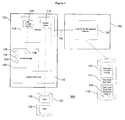
- a computer system 100 comprising a server 102 for providing, for example, maintenance and support services to a client computer 104 via a suitable communication network or link 106.
- the server 102 has client-server management software 108 which manages the interaction of the server 102 with incoming requests from the client machine 104, the retrieval of information/data from a file repository 110 and the dissemination of that information/data.
- the file repository 110 is used to store various web-pages and associated applets 112.
- the file repository also stores a file 114 that identifies or relates to technical problems such as, for example, class issues, which may adversely affect the performance of the client machine 104.
- the client machine 104 is used to access the web server 102 to obtain, for example, the latest version of, for example, the BIOS and/or drivers, for the client machine 104.
- the embodiments of the present invention have been arranged to facilitate, that is, automate, the identification of a need for support and, preferably, the provision of support and maintenance services.
- the client machine 104 comprises a browser 116 which has, either separately or concurrently, a trusted applet 118 and a non-trusted applet 120 embedded within a web-page (not shown) retrieved from the server 102.
- the trusted applet 118 can access a significantly greater range of system resources of the client machine 104 than the non-trusted applet 102, that is, within a Java context, the trusted application or applet can operate outside of a confined run-time environment while the non-trusted application or applet can operate only within the confined run-time environment.
- sandbox refers to a confined runtime environment. These are sometimes also called rubber-walled "jail" environments and are notional spaces within a computer in which certain programs can run in isolation from the host system. This can also refer to the safe mode of the Java Virtual Machine which turns on when a Java applet is run inside a web browser. Such an environment can be used to run untrusted Java applets that are downloaded from the web. Practically, a sandbox is a set of limitations or restrictions which are imposed on untrusted applets and are designed to prevent those applets from compromising the client system. This is done by disallowing access to certain APIs by means of security exceptions.
- the system resources 122 may include both system memory and off-line storage 124 which may store both applications 126 and data 128, any devices connected to or accessible by the client machine 104, as well as associated software.
- non-volatile storage 130 Associated with the browser 116 is a region of non-volatile storage 130 which is used to store data that is accessible by the non-trusted applet 120.
- the area of non-volatile storage is within the sand-box or confined run-time environment.
- the data takes the form of files that are known conventionally as cookies 132 to 138.
- the non-trusted applet 120 while being able to access the region of non-volatile storage 130, cannot access the same range of system resources which can be accessed by the trusted applet 118, that is, the non-trusted applet can access fewer of the system resources than the trusted applet 118.
- cookies 132 to 138 are associated with web-pages.
- the cookies 132 to 138 are stored within a predetermined region 130 of the memory of the client machine.
- one of the plurality of cookies such as for example, a cookie 138, has been created and deposited in response to the collation of data relating to the system resources 122 and 124 of the client machine 104.
- the trusted applet 118 is used to collate the data relating to the system resources 122 and 124 of the client machine 104.
- the collated data includes configuration data that identifies the current hardware and software configuration of the client machine 104.
- the system resources may comprise applications 126 and data 128 resident on a storage medium, such as a HDD 124, or resources that are accessible by the client machine 104.
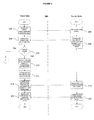
- FIG 2 there is shown a flow chart 200 of an embodiment which describes the processing undertaken by the client machine 104 and server 102 shown in figure 1.
- a user of the client machine via the browser 116 and an appropriate URL that is directed to, for example, a support and maintenance web-page accesses the server 102 to obtain support and maintenance assistance.
- the client-server management software 108 receives the request for support and maintenance URL from the client machine 104 at step 204.
- the client-server management software 108 retrieves from the file repository 110 a web-page (not shown) and transmits the web-page to the client machine 104 at step 206.
- the web-page transmitted at step 206 requests permission from the user of the client machine 104 to undertake system configuration and platform/device detection investigations. Therefore, in response to receiving, at step 208, the transmitted web-page 112, the browser 116 upon rendering the transmitted web-page outputs a request to the user for permission to undertake such investigations. It is determined at step 210 whether or not such permission was granted. If permission was not granted, the client machine 104 transmits, at step 212, notification of the refusal to the server 102.
- the grant of such permission is transmitted, at step 214, to the server 102.
- the server 102 receives the response to the request for permission to undertake system configuration and platform/device detection at step 216 and determines at step 218 whether permission has been granted.
- the server 102 retrieves from the file repository 110 a trusted applet 118 and transmits that trusted applet 118, which is digitally signed, to the client machine 104 at step 220.
- the digitally signed applet is received at step 222.
- the receipt of a digitally signed applet causes that applet to produce a pop-up dialogue window which, firstly, informs the user of the client machine 104 of the receipt of such an applet and, secondly, solicits from the user permission to allow the trusted applet to perform its intended function.
- the user is requested, at step 224, in response to receiving the digitally signed applet, at step 222, for permission to execute the trusted applet 118. It is determined at step 226 whether or not permission to execute the trusted applet 118 has been granted.
- the trusted applet is arranged to execute or to request, receive and execute native code for harvesting system configuration and hardware platform identification data at step 228.
- the trusted applet 118 transmits a request for the native code to the server 102. It is determined at step 229 whether a request for native code has been received. If it is determined that a request for native code has been received, the requested code is retrieved from the file repository 110 and transmitted to the trusted applet 118 running at the client machine 102 at step 229'.
- the trusted applet 118 outputs a dialogue box (not shown) at step 230 which provides the option to the user to enable pro-active maintenance and support. It is determined at step 232 whether or not pro-active support should be enabled. If the determination at step 232 is such that permission was granted to enable pro-active support and maintenance, the trusted applet, by executing the received native code, at step 234, collates the data relating to system resources and stores the collated data within the non-volatile storage region 130 that can be subsequently accessed by the non-trusted applet 120. Preferably, the collated data is stored within a cookie 138 in the non-volatile storage region 130 that is accessible to the non-trusted applet 120.
- step 236 a URL is sent from the client machine 104 to the client-server management software 108 of the server 102 for a list of all drivers that are available for the client machine 104.
- the URL sent to the client-server management software 108 contains system identification data, which is used by the client-server management software to retrieve from the file repository 110 the appropriate drivers.
- the client-server management software 108 retrieves, at step 237, a list of all software update options relevant to the client machine from the file repository 110 and transmits those software update options to the client machine 104.
- the list of appropriate updates is displayed to the user, preferably in the form of an auto-filled pick list.
- the user of the client machine 104 may then, at step 240, select software, such as, for example, a driver, that is required to update or maintain the client machine 104.
- the selection is transmitted to the server 102.
- the software selection is received by the server 102 at step 241 and a determination is made at step 242 whether or not software selection has taken place. If it is determined at step 242 that software selection has taken place, the selected software is retrieved by the client-server management software 108 from the file repository 110 and transmitted to the client machine at step 245.
- the client machine 104 at step 246, receives the selected software and installs it as appropriate. If it is determined at step 242 that a software selection was not received, processing terminates.
- FIG 3 there is shown a flow chart 300 illustrating the interaction between the client machine 104 and the server 102 upon, for example, a visit to the server 102 after the exchange illustrated in the flow chart 200 shown in figure 2, that is, after the enablement of proactive support.
- the client machine 104 transmits a URL for support and maintenance web-page request to the server 102.
- the server 102 receives that web-page request at step 304 and in response retrieves from the file repository 110 the requested web-page together with the non-trusted applet 120 and manifest data containing a current class issue list.
- the current class issue list contains data relating to or identifying at least one class issue.
- each class issue has an associated URL that is directed to the patch or fix for that class issue or to a suitable file, such as, for example a text file, which provides the user with instructions for addressing the class issue.
- the retrieved web-page, non-trusted applet and manifest data are transmitted to the client machine at step 306.
- the web-page, non-trusted applet 120 and manifest data are received by the client machine 104 at step 308.
- a determination is made by the non-trusted applet 120 at step 310 as to whether or not a cookie 138 containing system configuration data is present within the non-volatile storage area 130. If it is determined that such a cookie 138 is not present, processing can resume at step 236 of figure 2 or terminate.
- step 310 determines whether such a cookie.
- step 312 the non-trusted applet 120 extracts the previously harvested system resources data, that is, the system configuration and platform identification data and, at step 314, uses that extracted data to determine, in a comparison with the class issue manifest file, whether or not there are any class issues that are relevant to the client machine 104.
- step 316 for each match between the extracted data and the class issues identified in the class issue manifest file, a browser instance is instantiated using a corresponding URL extracted from the class issue manifest file associated with a corresponding class issue. The URL's identifies corresponding downloads for addressing the associated class issues.
- the server 102 receives the class issue URL's and, at step 320, retrieves from the file repository 110 appropriate class issue resolution information/software 140 and instigates a download of that information/software to the client machine 104 at step 320.
- the client machine 104 receives the downloaded class issue resolution information/software 140 and deals with it as appropriate.
- the client machine receives information for resolving the class issue, that information will be displayed to the user. However, if the client machine receives software, the client machine will install that software as appropriate.
- a segment of the content of a cookie such as cookie 138, which illustrates the nature of the harvested system configuration and platform identification data.
- the current operating system of the client machine 104 is Microsoft Windows 2000, version 5, build 2195.
- the heading Win32_ComputerSystem shows the client machine 104 to be a Hewlett-Packard HP Omni Book 6000 manufactured by Hewlett-Packard. It can be appreciated that the cookie contains a significant amount of other data relevant to the client machine 104.
- the appendix provides a more comprehensive example of the content of a cookie such as cookie 138.
- the non-trusted applet 120 retrieves that cookie, at step 312, and compares, in step 314, the data stored within the cookie with the data contained within the class issue manifest file. It will be appreciated that the comparison will identify that there is a class issue associated with the ATI range mobility-M AGP video driver. Hence, an instance of the browser would be opened using a URL associated with the Win32_VideoConfiguration class issue at step 316.
- the server 102 in response to receiving a get command containing such a URL, will retrieve, from the file repository 110, class issue resolution software that is particular to the Win32_VideoConfiguration class issue and instigate a download of that software to the client machine 104 at steps 318 and 320.
- the client machine 104 receives the class issue resolution software 140 to fix the Win32_VideoConfiguration class issue at step 322 and takes appropriate action to install that software.
- non-trusted applet 120 since a non-trusted applet 120 is used and that the data necessary for that non-trusted applet to perform its intended function is available within a region of storage 130 that can be accessed by the non-trusted applet, there is no need to use a trusted applet to gain access to information that would ordinarily be inaccessible to such a non-trusted applet. Avoiding the need to use such a trusted applet 118 has the advantage that the user of the client machine 104 does not have to be aware of the need for maintenance and support services. Furthermore, the embodiments of the present invention have the advantage that the user does not have to seek and take steps to maintain the computer and its associated software.
- such support and maintenance services are provided automatically whenever the user visits a server that provides the specific type of non-trusted applet as long as the system resources data has already been suitably stored within an appropriate area of memory. Therefore, such maintenance and support services are provided transparently to the user.
- step 302 may relate to a request for any type of web-page rather than to a specific maintenance and support URL request.
- Embodiments have been described with reference to an initialisation process as shown in the flowchart 200 of figure 2, the embodiments are not limited to use of such an initialisation process. Embodiments can equally well be realised in which the system resources data is collated and stored in an environment of the client machine that is accessible by the non-trusted applet before the client machine is shipped. It will be appreciated that the additional advantages carried by such embodiments are that, firstly, the user does not have to be prompted to give permission to capture information relating to the current configuration of the system and, secondly, support and maintenance services can be provided in an even more transparent manner.
- the present invention is not limited thereto.
- Embodiments can be realised in which the requested data, rather than relating to or being installable software, can equally well be instructions to be undertaken by a user of the computer to enable that user to fix the technical problem.
- the instructions may take the form of text rendered within a web-browser, a text file or some other type of human-readable document.
- the downloaded data may be instructions for the user to contact technical personnel by email or some other means to arrange to have the problem fixed.
- the above applications of the invention have been described in the context of providing maintenance and support services in the sense that a class issue is identified and preferably resolved. However, it will be appreciated by those skilled in the art that providing support to customers extends beyond addressing class issues.
- the support provided may extend to and encompass monitoring a customer's computing needs. For example, data reflecting the current configuration of a client machine may contain data identifying the expansion capabilities of a machine. For example, a client machine may have 128Mb of resident RAM but have the capability to have 256Mb of RAM. Therefore, the motherboard would have empty RAM sockets. Alternatively, the disk drive may be determined to be almost full.
- the message may contain a recommendation of a possible update to the machine to improve the performance of the machine.
- the data identifying the expansion capabilities of the client machine may also be contained within the manifest file.
- the recommended update may be to increase the RAM or to add another disk drive.
- the embodiments of the present invention therefore extend to pro-actively advising a user of a client machine of updates or changes that could be made to their machine to improve its performance.
- the non-trusted applet using the system resource data stored within the confined runtime environment together with the data relating to possible expansion capabilities contained within the manifest file can determine whether or not there are any opportunities for the user to expand or upgrade their machine.
Landscapes
- Engineering & Computer Science (AREA)
- General Engineering & Computer Science (AREA)
- Theoretical Computer Science (AREA)
- Computer Hardware Design (AREA)
- Quality & Reliability (AREA)
- Physics & Mathematics (AREA)
- General Physics & Mathematics (AREA)
- Information Transfer Between Computers (AREA)
- Stored Programmes (AREA)
Priority Applications (2)
| Application Number | Priority Date | Filing Date | Title |
|---|---|---|---|
| EP01410068A EP1265143A1 (de) | 2001-06-08 | 2001-06-08 | System und Verfahren zur Datenverarbeitung |
| US10/165,864 US7444412B2 (en) | 2001-06-08 | 2002-06-07 | Data processing system and method |
Applications Claiming Priority (1)
| Application Number | Priority Date | Filing Date | Title |
|---|---|---|---|
| EP01410068A EP1265143A1 (de) | 2001-06-08 | 2001-06-08 | System und Verfahren zur Datenverarbeitung |
Publications (1)
| Publication Number | Publication Date |
|---|---|
| EP1265143A1 true EP1265143A1 (de) | 2002-12-11 |
Family
ID=8183092
Family Applications (1)
| Application Number | Title | Priority Date | Filing Date |
|---|---|---|---|
| EP01410068A Withdrawn EP1265143A1 (de) | 2001-06-08 | 2001-06-08 | System und Verfahren zur Datenverarbeitung |
Country Status (2)
| Country | Link |
|---|---|
| US (1) | US7444412B2 (de) |
| EP (1) | EP1265143A1 (de) |
Cited By (1)
| Publication number | Priority date | Publication date | Assignee | Title |
|---|---|---|---|---|
| WO2006099634A3 (en) * | 2005-03-17 | 2007-03-22 | Husdawg Llc | Software and hardware analysis test |
Families Citing this family (14)
| Publication number | Priority date | Publication date | Assignee | Title |
|---|---|---|---|---|
| WO2005043360A1 (en) * | 2003-10-21 | 2005-05-12 | Green Border Technologies | Systems and methods for secure client applications |
| US7484247B2 (en) | 2004-08-07 | 2009-01-27 | Allen F Rozman | System and method for protecting a computer system from malicious software |
| US8051478B1 (en) * | 2005-11-07 | 2011-11-01 | Symantec Corporation | Secure browser |
| US7979891B2 (en) * | 2006-05-09 | 2011-07-12 | Oracle International Corporation | Method and system for securing execution of untrusted applications |
| US7814556B2 (en) * | 2006-05-09 | 2010-10-12 | Bea Systems, Inc. | System and method for protecting APIs from untrusted or less trusted applications |
| US10019570B2 (en) * | 2007-06-14 | 2018-07-10 | Microsoft Technology Licensing, Llc | Protection and communication abstractions for web browsers |
| US8635701B2 (en) * | 2008-03-02 | 2014-01-21 | Yahoo! Inc. | Secure browser-based applications |
| US8250653B2 (en) * | 2009-04-30 | 2012-08-21 | Microsoft Corporation | Secure multi-principal web browser |
| US8205257B1 (en) * | 2009-07-28 | 2012-06-19 | Symantec Corporation | Systems and methods for preventing threats originating from a non-process based component hosted by a trusted process |
| US8341268B2 (en) * | 2009-08-28 | 2012-12-25 | Microsoft Corporation | Resource sharing in multi-principal browser |
| US9003517B2 (en) | 2009-10-28 | 2015-04-07 | Microsoft Technology Licensing, Llc | Isolation and presentation of untrusted data |
| US8627309B2 (en) * | 2010-02-25 | 2014-01-07 | Microsoft Corporation | Automated deployment and servicing of distributed applications |
| US8892459B2 (en) * | 2011-07-25 | 2014-11-18 | BrandVerity Inc. | Affiliate investigation system and method |
| WO2018140830A1 (en) * | 2017-01-27 | 2018-08-02 | Walmart Apollo, Llc | Managing smart appliances using blockchain technology |
Citations (2)
| Publication number | Priority date | Publication date | Assignee | Title |
|---|---|---|---|---|
| EP0333620A2 (de) * | 1988-03-17 | 1989-09-20 | International Business Machines Corporation | On-line-Problemverwaltung für Datenverarbeitungssysteme |
| WO1998014890A1 (en) * | 1996-09-30 | 1998-04-09 | Mci Communications Corporation | System and method for remote operation of mainframe console |
Family Cites Families (7)
| Publication number | Priority date | Publication date | Assignee | Title |
|---|---|---|---|---|
| US6792452B1 (en) * | 1998-09-11 | 2004-09-14 | L.V. Partners, L.P. | Method for configuring a piece of equipment with the use of an associated machine resolvable code |
| US6473794B1 (en) * | 1999-05-27 | 2002-10-29 | Accenture Llp | System for establishing plan to test components of web based framework by displaying pictorial representation and conveying indicia coded components of existing network framework |
| US6697824B1 (en) * | 1999-08-31 | 2004-02-24 | Accenture Llp | Relationship management in an E-commerce application framework |
| US6571285B1 (en) * | 1999-12-23 | 2003-05-27 | Accenture Llp | Providing an integrated service assurance environment for a network |
| US6904449B1 (en) * | 2000-01-14 | 2005-06-07 | Accenture Llp | System and method for an application provider framework |
| US6502102B1 (en) * | 2000-03-27 | 2002-12-31 | Accenture Llp | System, method and article of manufacture for a table-driven automated scripting architecture |
| US20020046262A1 (en) * | 2000-08-18 | 2002-04-18 | Joerg Heilig | Data access system and method with proxy and remote processing |
-
2001
- 2001-06-08 EP EP01410068A patent/EP1265143A1/de not_active Withdrawn
-
2002
- 2002-06-07 US US10/165,864 patent/US7444412B2/en not_active Expired - Lifetime
Patent Citations (2)
| Publication number | Priority date | Publication date | Assignee | Title |
|---|---|---|---|---|
| EP0333620A2 (de) * | 1988-03-17 | 1989-09-20 | International Business Machines Corporation | On-line-Problemverwaltung für Datenverarbeitungssysteme |
| WO1998014890A1 (en) * | 1996-09-30 | 1998-04-09 | Mci Communications Corporation | System and method for remote operation of mainframe console |
Non-Patent Citations (4)
| Title |
|---|
| "Support FetchDog" * |
| "Today's News", INTERNET, 20 March 2001 (2001-03-20), XP002183113 * |
| NETSCAPE COMMUNICATIONS CORPORATION: "Establishing trust for downloaded software", INTERNET, 2 July 1997 (1997-07-02), XP002155043 * |
| Retrieved from the Internet <URL:web.archive.org/web/*/www.4developers.com/fd/> [retrieved on 20020326] * |
Cited By (1)
| Publication number | Priority date | Publication date | Assignee | Title |
|---|---|---|---|---|
| WO2006099634A3 (en) * | 2005-03-17 | 2007-03-22 | Husdawg Llc | Software and hardware analysis test |
Also Published As
| Publication number | Publication date |
|---|---|
| US7444412B2 (en) | 2008-10-28 |
| US20030028655A1 (en) | 2003-02-06 |
Similar Documents
| Publication | Publication Date | Title |
|---|---|---|
| US6301710B1 (en) | System and method for creating a substitute registry when automatically installing an update program | |
| US6718549B1 (en) | Methods for managing the distribution of client bits to client computers | |
| AU2011329096B2 (en) | Networked recovery system | |
| US6408434B1 (en) | System and method for using a substitute directory to automatically install an update program | |
| US6789215B1 (en) | System and method for remediating a computer | |
| US7631173B2 (en) | Method and system for performing pre-boot operations from an external memory including memory address and geometry | |
| US5752042A (en) | Server computer for selecting program updates for a client computer based on results of recognizer program(s) furnished to the client computer | |
| US8458658B2 (en) | Methods and systems for dynamically building a software appliance | |
| US8775577B1 (en) | System and method for configuration management service | |
| US7444412B2 (en) | Data processing system and method | |
| US8924920B2 (en) | Providing a software appliance based on a role | |
| EP1280058A2 (de) | Verfahren und System zum Erstellen und Verwenden eines Betriebssystems mit ausgewählter Funktionalität | |
| US20020095522A1 (en) | System and method for automatic provision of an application | |
| US20080040714A1 (en) | Method and system for automatic computer and user migration | |
| KR20060045811A (ko) | 효과적 패칭 | |
| US6516346B1 (en) | Microcode upgrade in data processing system | |
| US8046757B2 (en) | Method for installing ActiveX control | |
| US6988055B1 (en) | Method, system, and apparatus for providing a single diagnostics module on-demand | |
| US7231549B1 (en) | Method and apparatus for providing on-demand computer diagnostics | |
| US20240378068A1 (en) | Control method and electronic device | |
| US7330966B2 (en) | Providing security based on a device identifier prior to booting an operating system | |
| US7200775B1 (en) | Method and data structures for use in providing on-demand computer diagnostics | |
| US20050262500A1 (en) | System and method for updating information handling system applications at manufacture | |
| US12118090B2 (en) | Zero-day patching within an entity's secure network | |
| CN114816481A (zh) | 一种固件批量升级方法、装置、设备及存储介质 |
Legal Events
| Date | Code | Title | Description |
|---|---|---|---|
| PUAI | Public reference made under article 153(3) epc to a published international application that has entered the european phase |
Free format text: ORIGINAL CODE: 0009012 |
|
| AK | Designated contracting states |
Kind code of ref document: A1 Designated state(s): AT BE CH CY DE DK ES FI FR GB GR IE IT LI LU MC NL PT SE TR |
|
| AX | Request for extension of the european patent |
Free format text: AL;LT;LV;MK;RO;SI |
|
| AKX | Designation fees paid | ||
| REG | Reference to a national code |
Ref country code: DE Ref legal event code: 8566 |
|
| STAA | Information on the status of an ep patent application or granted ep patent |
Free format text: STATUS: THE APPLICATION IS DEEMED TO BE WITHDRAWN |
|
| 18D | Application deemed to be withdrawn |
Effective date: 20030612 |