EP1266526B1 - Procede servant a ordonnancer des communications en amont - Google Patents
Procede servant a ordonnancer des communications en amont Download PDFInfo
- Publication number
- EP1266526B1 EP1266526B1 EP01910716A EP01910716A EP1266526B1 EP 1266526 B1 EP1266526 B1 EP 1266526B1 EP 01910716 A EP01910716 A EP 01910716A EP 01910716 A EP01910716 A EP 01910716A EP 1266526 B1 EP1266526 B1 EP 1266526B1
- Authority
- EP
- European Patent Office
- Prior art keywords
- data packets
- bandwidth
- service
- request
- cable modem
- Prior art date
- Legal status (The legal status is an assumption and is not a legal conclusion. Google has not performed a legal analysis and makes no representation as to the accuracy of the status listed.)
- Expired - Lifetime
Links
- 238000000034 method Methods 0.000 title claims abstract description 17
- 230000006854 communication Effects 0.000 title claims description 43
- 238000004891 communication Methods 0.000 title claims description 43
- 238000011144 upstream manufacturing Methods 0.000 title claims description 19
- 238000013475 authorization Methods 0.000 claims 2
- 238000013507 mapping Methods 0.000 claims 1
- 230000005540 biological transmission Effects 0.000 abstract description 19
- 238000012545 processing Methods 0.000 abstract description 5
- 238000012546 transfer Methods 0.000 abstract description 3
- 238000012986 modification Methods 0.000 abstract 1
- 230000004048 modification Effects 0.000 abstract 1
- 238000004590 computer program Methods 0.000 description 10
- 238000009448 modified atmosphere packaging Methods 0.000 description 8
- 230000006870 function Effects 0.000 description 6
- 230000008901 benefit Effects 0.000 description 4
- 230000007175 bidirectional communication Effects 0.000 description 3
- 238000010586 diagram Methods 0.000 description 3
- 230000003287 optical effect Effects 0.000 description 3
- 230000008859 change Effects 0.000 description 2
- 239000000835 fiber Substances 0.000 description 2
- 230000007246 mechanism Effects 0.000 description 2
- 230000008569 process Effects 0.000 description 2
- RYGMFSIKBFXOCR-UHFFFAOYSA-N Copper Chemical compound [Cu] RYGMFSIKBFXOCR-UHFFFAOYSA-N 0.000 description 1
- 238000013459 approach Methods 0.000 description 1
- 230000001413 cellular effect Effects 0.000 description 1
- 229910052802 copper Inorganic materials 0.000 description 1
- 239000010949 copper Substances 0.000 description 1
- 230000001934 delay Effects 0.000 description 1
- 238000005516 engineering process Methods 0.000 description 1
- 239000012634 fragment Substances 0.000 description 1
- 230000006872 improvement Effects 0.000 description 1
- 230000002452 interceptive effect Effects 0.000 description 1
- 235000019837 monoammonium phosphate Nutrition 0.000 description 1
- 230000008520 organization Effects 0.000 description 1
- 230000001052 transient effect Effects 0.000 description 1
Images


Classifications
-
- H—ELECTRICITY
- H04—ELECTRIC COMMUNICATION TECHNIQUE
- H04N—PICTORIAL COMMUNICATION, e.g. TELEVISION
- H04N7/00—Television systems
- H04N7/16—Analogue secrecy systems; Analogue subscription systems
- H04N7/173—Analogue secrecy systems; Analogue subscription systems with two-way working, e.g. subscriber sending a programme selection signal
- H04N7/17309—Transmission or handling of upstream communications
-
- H—ELECTRICITY
- H04—ELECTRIC COMMUNICATION TECHNIQUE
- H04L—TRANSMISSION OF DIGITAL INFORMATION, e.g. TELEGRAPHIC COMMUNICATION
- H04L12/00—Data switching networks
- H04L12/28—Data switching networks characterised by path configuration, e.g. LAN [Local Area Networks] or WAN [Wide Area Networks]
- H04L12/2801—Broadband local area networks
-
- H—ELECTRICITY
- H04—ELECTRIC COMMUNICATION TECHNIQUE
- H04L—TRANSMISSION OF DIGITAL INFORMATION, e.g. TELEGRAPHIC COMMUNICATION
- H04L12/00—Data switching networks
- H04L12/28—Data switching networks characterised by path configuration, e.g. LAN [Local Area Networks] or WAN [Wide Area Networks]
- H04L12/2854—Wide area networks, e.g. public data networks
- H04L12/2856—Access arrangements, e.g. Internet access
-
- H—ELECTRICITY
- H04—ELECTRIC COMMUNICATION TECHNIQUE
- H04L—TRANSMISSION OF DIGITAL INFORMATION, e.g. TELEGRAPHIC COMMUNICATION
- H04L12/00—Data switching networks
- H04L12/28—Data switching networks characterised by path configuration, e.g. LAN [Local Area Networks] or WAN [Wide Area Networks]
- H04L12/2854—Wide area networks, e.g. public data networks
- H04L12/2856—Access arrangements, e.g. Internet access
- H04L12/2858—Access network architectures
- H04L12/2861—Point-to-multipoint connection from the data network to the subscribers
-
- H—ELECTRICITY
- H04—ELECTRIC COMMUNICATION TECHNIQUE
- H04L—TRANSMISSION OF DIGITAL INFORMATION, e.g. TELEGRAPHIC COMMUNICATION
- H04L12/00—Data switching networks
- H04L12/28—Data switching networks characterised by path configuration, e.g. LAN [Local Area Networks] or WAN [Wide Area Networks]
- H04L12/2854—Wide area networks, e.g. public data networks
- H04L12/2856—Access arrangements, e.g. Internet access
- H04L12/2869—Operational details of access network equipments
- H04L12/287—Remote access server, e.g. BRAS
- H04L12/2872—Termination of subscriber connections
-
- H—ELECTRICITY
- H04—ELECTRIC COMMUNICATION TECHNIQUE
- H04L—TRANSMISSION OF DIGITAL INFORMATION, e.g. TELEGRAPHIC COMMUNICATION
- H04L12/00—Data switching networks
- H04L12/64—Hybrid switching systems
- H04L12/6418—Hybrid transport
-
- H—ELECTRICITY
- H04—ELECTRIC COMMUNICATION TECHNIQUE
- H04L—TRANSMISSION OF DIGITAL INFORMATION, e.g. TELEGRAPHIC COMMUNICATION
- H04L41/00—Arrangements for maintenance, administration or management of data switching networks, e.g. of packet switching networks
- H04L41/50—Network service management, e.g. ensuring proper service fulfilment according to agreements
- H04L41/508—Network service management, e.g. ensuring proper service fulfilment according to agreements based on type of value added network service under agreement
- H04L41/5087—Network service management, e.g. ensuring proper service fulfilment according to agreements based on type of value added network service under agreement wherein the managed service relates to voice services
-
- H—ELECTRICITY
- H04—ELECTRIC COMMUNICATION TECHNIQUE
- H04L—TRANSMISSION OF DIGITAL INFORMATION, e.g. TELEGRAPHIC COMMUNICATION
- H04L47/00—Traffic control in data switching networks
- H04L47/10—Flow control; Congestion control
- H04L47/15—Flow control; Congestion control in relation to multipoint traffic
-
- H—ELECTRICITY
- H04—ELECTRIC COMMUNICATION TECHNIQUE
- H04L—TRANSMISSION OF DIGITAL INFORMATION, e.g. TELEGRAPHIC COMMUNICATION
- H04L47/00—Traffic control in data switching networks
- H04L47/10—Flow control; Congestion control
- H04L47/24—Traffic characterised by specific attributes, e.g. priority or QoS
- H04L47/2416—Real-time traffic
-
- H—ELECTRICITY
- H04—ELECTRIC COMMUNICATION TECHNIQUE
- H04L—TRANSMISSION OF DIGITAL INFORMATION, e.g. TELEGRAPHIC COMMUNICATION
- H04L47/00—Traffic control in data switching networks
- H04L47/10—Flow control; Congestion control
- H04L47/24—Traffic characterised by specific attributes, e.g. priority or QoS
- H04L47/2425—Traffic characterised by specific attributes, e.g. priority or QoS for supporting services specification, e.g. SLA
- H04L47/2433—Allocation of priorities to traffic types
-
- H—ELECTRICITY
- H04—ELECTRIC COMMUNICATION TECHNIQUE
- H04L—TRANSMISSION OF DIGITAL INFORMATION, e.g. TELEGRAPHIC COMMUNICATION
- H04L47/00—Traffic control in data switching networks
- H04L47/10—Flow control; Congestion control
- H04L47/35—Flow control; Congestion control by embedding flow control information in regular packets, e.g. piggybacking
-
- H—ELECTRICITY
- H04—ELECTRIC COMMUNICATION TECHNIQUE
- H04L—TRANSMISSION OF DIGITAL INFORMATION, e.g. TELEGRAPHIC COMMUNICATION
- H04L47/00—Traffic control in data switching networks
- H04L47/50—Queue scheduling
-
- H—ELECTRICITY
- H04—ELECTRIC COMMUNICATION TECHNIQUE
- H04L—TRANSMISSION OF DIGITAL INFORMATION, e.g. TELEGRAPHIC COMMUNICATION
- H04L47/00—Traffic control in data switching networks
- H04L47/50—Queue scheduling
- H04L47/62—Queue scheduling characterised by scheduling criteria
- H04L47/6215—Individual queue per QOS, rate or priority
-
- H—ELECTRICITY
- H04—ELECTRIC COMMUNICATION TECHNIQUE
- H04L—TRANSMISSION OF DIGITAL INFORMATION, e.g. TELEGRAPHIC COMMUNICATION
- H04L47/00—Traffic control in data switching networks
- H04L47/50—Queue scheduling
- H04L47/62—Queue scheduling characterised by scheduling criteria
- H04L47/622—Queue service order
- H04L47/623—Weighted service order
-
- H—ELECTRICITY
- H04—ELECTRIC COMMUNICATION TECHNIQUE
- H04L—TRANSMISSION OF DIGITAL INFORMATION, e.g. TELEGRAPHIC COMMUNICATION
- H04L47/00—Traffic control in data switching networks
- H04L47/70—Admission control; Resource allocation
-
- H—ELECTRICITY
- H04—ELECTRIC COMMUNICATION TECHNIQUE
- H04L—TRANSMISSION OF DIGITAL INFORMATION, e.g. TELEGRAPHIC COMMUNICATION
- H04L47/00—Traffic control in data switching networks
- H04L47/70—Admission control; Resource allocation
- H04L47/78—Architectures of resource allocation
- H04L47/788—Autonomous allocation of resources
-
- H—ELECTRICITY
- H04—ELECTRIC COMMUNICATION TECHNIQUE
- H04L—TRANSMISSION OF DIGITAL INFORMATION, e.g. TELEGRAPHIC COMMUNICATION
- H04L47/00—Traffic control in data switching networks
- H04L47/70—Admission control; Resource allocation
- H04L47/80—Actions related to the user profile or the type of traffic
- H04L47/801—Real time traffic
-
- H—ELECTRICITY
- H04—ELECTRIC COMMUNICATION TECHNIQUE
- H04L—TRANSMISSION OF DIGITAL INFORMATION, e.g. TELEGRAPHIC COMMUNICATION
- H04L47/00—Traffic control in data switching networks
- H04L47/70—Admission control; Resource allocation
- H04L47/80—Actions related to the user profile or the type of traffic
- H04L47/805—QOS or priority aware
-
- H—ELECTRICITY
- H04—ELECTRIC COMMUNICATION TECHNIQUE
- H04L—TRANSMISSION OF DIGITAL INFORMATION, e.g. TELEGRAPHIC COMMUNICATION
- H04L65/00—Network arrangements, protocols or services for supporting real-time applications in data packet communication
- H04L65/60—Network streaming of media packets
- H04L65/70—Media network packetisation
-
- H—ELECTRICITY
- H04—ELECTRIC COMMUNICATION TECHNIQUE
- H04L—TRANSMISSION OF DIGITAL INFORMATION, e.g. TELEGRAPHIC COMMUNICATION
- H04L65/00—Network arrangements, protocols or services for supporting real-time applications in data packet communication
- H04L65/80—Responding to QoS
-
- H—ELECTRICITY
- H04—ELECTRIC COMMUNICATION TECHNIQUE
- H04L—TRANSMISSION OF DIGITAL INFORMATION, e.g. TELEGRAPHIC COMMUNICATION
- H04L67/00—Network arrangements or protocols for supporting network services or applications
- H04L67/01—Protocols
- H04L67/10—Protocols in which an application is distributed across nodes in the network
- H04L67/104—Peer-to-peer [P2P] networks
-
- H—ELECTRICITY
- H04—ELECTRIC COMMUNICATION TECHNIQUE
- H04M—TELEPHONIC COMMUNICATION
- H04M7/00—Arrangements for interconnection between switching centres
- H04M7/006—Networks other than PSTN/ISDN providing telephone service, e.g. Voice over Internet Protocol (VoIP), including next generation networks with a packet-switched transport layer
-
- H—ELECTRICITY
- H04—ELECTRIC COMMUNICATION TECHNIQUE
- H04N—PICTORIAL COMMUNICATION, e.g. TELEVISION
- H04N21/00—Selective content distribution, e.g. interactive television or video on demand [VOD]
- H04N21/20—Servers specifically adapted for the distribution of content, e.g. VOD servers; Operations thereof
- H04N21/23—Processing of content or additional data; Elementary server operations; Server middleware
- H04N21/238—Interfacing the downstream path of the transmission network, e.g. adapting the transmission rate of a video stream to network bandwidth; Processing of multiplex streams
- H04N21/2385—Channel allocation; Bandwidth allocation
-
- H—ELECTRICITY
- H04—ELECTRIC COMMUNICATION TECHNIQUE
- H04N—PICTORIAL COMMUNICATION, e.g. TELEVISION
- H04N21/00—Selective content distribution, e.g. interactive television or video on demand [VOD]
- H04N21/40—Client devices specifically adapted for the reception of or interaction with content, e.g. set-top-box [STB]; Operations thereof
- H04N21/41—Structure of client; Structure of client peripherals
- H04N21/426—Internal components of the client ; Characteristics thereof
- H04N21/42676—Internal components of the client ; Characteristics thereof for modulating an analogue carrier signal to encode digital information or demodulating it to decode digital information, e.g. ADSL or cable modem
-
- H—ELECTRICITY
- H04—ELECTRIC COMMUNICATION TECHNIQUE
- H04N—PICTORIAL COMMUNICATION, e.g. TELEVISION
- H04N21/00—Selective content distribution, e.g. interactive television or video on demand [VOD]
- H04N21/40—Client devices specifically adapted for the reception of or interaction with content, e.g. set-top-box [STB]; Operations thereof
- H04N21/43—Processing of content or additional data, e.g. demultiplexing additional data from a digital video stream; Elementary client operations, e.g. monitoring of home network or synchronising decoder's clock; Client middleware
- H04N21/437—Interfacing the upstream path of the transmission network, e.g. for transmitting client requests to a VOD server
-
- H—ELECTRICITY
- H04—ELECTRIC COMMUNICATION TECHNIQUE
- H04N—PICTORIAL COMMUNICATION, e.g. TELEVISION
- H04N21/00—Selective content distribution, e.g. interactive television or video on demand [VOD]
- H04N21/40—Client devices specifically adapted for the reception of or interaction with content, e.g. set-top-box [STB]; Operations thereof
- H04N21/43—Processing of content or additional data, e.g. demultiplexing additional data from a digital video stream; Elementary client operations, e.g. monitoring of home network or synchronising decoder's clock; Client middleware
- H04N21/439—Processing of audio elementary streams
- H04N21/4396—Processing of audio elementary streams by muting the audio signal
-
- H—ELECTRICITY
- H04—ELECTRIC COMMUNICATION TECHNIQUE
- H04N—PICTORIAL COMMUNICATION, e.g. TELEVISION
- H04N21/00—Selective content distribution, e.g. interactive television or video on demand [VOD]
- H04N21/40—Client devices specifically adapted for the reception of or interaction with content, e.g. set-top-box [STB]; Operations thereof
- H04N21/43—Processing of content or additional data, e.g. demultiplexing additional data from a digital video stream; Elementary client operations, e.g. monitoring of home network or synchronising decoder's clock; Client middleware
- H04N21/442—Monitoring of processes or resources, e.g. detecting the failure of a recording device, monitoring the downstream bandwidth, the number of times a movie has been viewed, the storage space available from the internal hard disk
- H04N21/44209—Monitoring of downstream path of the transmission network originating from a server, e.g. bandwidth variations of a wireless network
-
- H—ELECTRICITY
- H04—ELECTRIC COMMUNICATION TECHNIQUE
- H04N—PICTORIAL COMMUNICATION, e.g. TELEVISION
- H04N21/00—Selective content distribution, e.g. interactive television or video on demand [VOD]
- H04N21/40—Client devices specifically adapted for the reception of or interaction with content, e.g. set-top-box [STB]; Operations thereof
- H04N21/47—End-user applications
- H04N21/478—Supplemental services, e.g. displaying phone caller identification, shopping application
- H04N21/4788—Supplemental services, e.g. displaying phone caller identification, shopping application communicating with other users, e.g. chatting
-
- H—ELECTRICITY
- H04—ELECTRIC COMMUNICATION TECHNIQUE
- H04N—PICTORIAL COMMUNICATION, e.g. TELEVISION
- H04N21/00—Selective content distribution, e.g. interactive television or video on demand [VOD]
- H04N21/60—Network structure or processes for video distribution between server and client or between remote clients; Control signalling between clients, server and network components; Transmission of management data between server and client, e.g. sending from server to client commands for recording incoming content stream; Communication details between server and client
- H04N21/61—Network physical structure; Signal processing
- H04N21/6106—Network physical structure; Signal processing specially adapted to the downstream path of the transmission network
- H04N21/6118—Network physical structure; Signal processing specially adapted to the downstream path of the transmission network involving cable transmission, e.g. using a cable modem
-
- H—ELECTRICITY
- H04—ELECTRIC COMMUNICATION TECHNIQUE
- H04N—PICTORIAL COMMUNICATION, e.g. TELEVISION
- H04N21/00—Selective content distribution, e.g. interactive television or video on demand [VOD]
- H04N21/60—Network structure or processes for video distribution between server and client or between remote clients; Control signalling between clients, server and network components; Transmission of management data between server and client, e.g. sending from server to client commands for recording incoming content stream; Communication details between server and client
- H04N21/61—Network physical structure; Signal processing
- H04N21/6156—Network physical structure; Signal processing specially adapted to the upstream path of the transmission network
- H04N21/6168—Network physical structure; Signal processing specially adapted to the upstream path of the transmission network involving cable transmission, e.g. using a cable modem
-
- H—ELECTRICITY
- H04—ELECTRIC COMMUNICATION TECHNIQUE
- H04N—PICTORIAL COMMUNICATION, e.g. TELEVISION
- H04N21/00—Selective content distribution, e.g. interactive television or video on demand [VOD]
- H04N21/60—Network structure or processes for video distribution between server and client or between remote clients; Control signalling between clients, server and network components; Transmission of management data between server and client, e.g. sending from server to client commands for recording incoming content stream; Communication details between server and client
- H04N21/63—Control signaling related to video distribution between client, server and network components; Network processes for video distribution between server and clients or between remote clients, e.g. transmitting basic layer and enhancement layers over different transmission paths, setting up a peer-to-peer communication via Internet between remote STB's; Communication protocols; Addressing
- H04N21/637—Control signals issued by the client directed to the server or network components
- H04N21/6377—Control signals issued by the client directed to the server or network components directed to server
-
- H—ELECTRICITY
- H04—ELECTRIC COMMUNICATION TECHNIQUE
- H04N—PICTORIAL COMMUNICATION, e.g. TELEVISION
- H04N21/00—Selective content distribution, e.g. interactive television or video on demand [VOD]
- H04N21/60—Network structure or processes for video distribution between server and client or between remote clients; Control signalling between clients, server and network components; Transmission of management data between server and client, e.g. sending from server to client commands for recording incoming content stream; Communication details between server and client
- H04N21/63—Control signaling related to video distribution between client, server and network components; Network processes for video distribution between server and clients or between remote clients, e.g. transmitting basic layer and enhancement layers over different transmission paths, setting up a peer-to-peer communication via Internet between remote STB's; Communication protocols; Addressing
- H04N21/647—Control signaling between network components and server or clients; Network processes for video distribution between server and clients, e.g. controlling the quality of the video stream, by dropping packets, protecting content from unauthorised alteration within the network, monitoring of network load, bridging between two different networks, e.g. between IP and wireless
- H04N21/64707—Control signaling between network components and server or clients; Network processes for video distribution between server and clients, e.g. controlling the quality of the video stream, by dropping packets, protecting content from unauthorised alteration within the network, monitoring of network load, bridging between two different networks, e.g. between IP and wireless for transferring content from a first network to a second network, e.g. between IP and wireless
-
- H—ELECTRICITY
- H04—ELECTRIC COMMUNICATION TECHNIQUE
- H04W—WIRELESS COMMUNICATION NETWORKS
- H04W28/00—Network traffic management; Network resource management
- H04W28/02—Traffic management, e.g. flow control or congestion control
-
- H—ELECTRICITY
- H04—ELECTRIC COMMUNICATION TECHNIQUE
- H04W—WIRELESS COMMUNICATION NETWORKS
- H04W8/00—Network data management
- H04W8/02—Processing of mobility data, e.g. registration information at HLR [Home Location Register] or VLR [Visitor Location Register]; Transfer of mobility data, e.g. between HLR, VLR or external networks
- H04W8/04—Registration at HLR or HSS [Home Subscriber Server]
-
- H—ELECTRICITY
- H04—ELECTRIC COMMUNICATION TECHNIQUE
- H04L—TRANSMISSION OF DIGITAL INFORMATION, e.g. TELEGRAPHIC COMMUNICATION
- H04L12/00—Data switching networks
- H04L12/64—Hybrid switching systems
- H04L12/6418—Hybrid transport
- H04L2012/6481—Speech, voice
-
- H—ELECTRICITY
- H04—ELECTRIC COMMUNICATION TECHNIQUE
- H04L—TRANSMISSION OF DIGITAL INFORMATION, e.g. TELEGRAPHIC COMMUNICATION
- H04L12/00—Data switching networks
- H04L12/64—Hybrid switching systems
- H04L12/6418—Hybrid transport
- H04L2012/6494—Silence suppression
-
- H—ELECTRICITY
- H04—ELECTRIC COMMUNICATION TECHNIQUE
- H04L—TRANSMISSION OF DIGITAL INFORMATION, e.g. TELEGRAPHIC COMMUNICATION
- H04L69/00—Network arrangements, protocols or services independent of the application payload and not provided for in the other groups of this subclass
- H04L69/08—Protocols for interworking; Protocol conversion
-
- H—ELECTRICITY
- H04—ELECTRIC COMMUNICATION TECHNIQUE
- H04L—TRANSMISSION OF DIGITAL INFORMATION, e.g. TELEGRAPHIC COMMUNICATION
- H04L69/00—Network arrangements, protocols or services independent of the application payload and not provided for in the other groups of this subclass
- H04L69/22—Parsing or analysis of headers
Definitions
- the present invention is directed to controlling network transmissions. More particularly, the present invention relates to scheduling transmissions from multiple clients in a network environment.
- a communications device such as a modem
- a headend would request bandwidth from a headend prior to transmitting data to its destination.
- the headend would allocate bandwidth to the cable modem based on availability and competing demands from other modems.
- the allocation of bandwidth is typically granted to the requesting modem in a MAP.
- the cable modem would be required to follow the instructions specified in the MAP, and use the grant for the service specified in the MAP.
- EP 0774848 A2 describes a method to allocate bandwidth in a shared-media packet switched network, which accommodates both elastic and inelastic applications, wherein bandwidth transmission slots are allocated between a terminal equipment 210 (or more generally a network access unit 315) and a head-end controller 105 (or more generally a bandwidth allocation unit 305) in a shared-media network (e.g., the network 300).
- the method manipulates requests for transmission bandwidth received by a bandwidth allocation unit from a network access unit, converting the arriving requests into virtual scheduling times for granting access to the shared media. Further, the method supports multiple quality of service classes via mechanisms which give highest priority to the service class with the most stringent QoS requirements.
- EP 0829986 (A1 ) deals with the need of bandwidth to be reserved on an upstream link for proper operation of the reverse connection and the need of bandwidth to be reserved for the transport of acknowledgments that are sent as a result of receiving data packets via the downstream link. Therefore, the reservation of bandwidth on the upstream must be managed to obtain good performance for both the forward and reverse connections.
- WO 9918718 refers to a set-top box system capable to support bi-directional communication and in-home control functions, to access and decode information from multiple broadcast sources, and to seamlessly combine the decoded information for presentation to a User.
- a decoder system is described with a separate tuner, demodulator and processing paths for concurrent and scaleable processing and decoding of broadcast image representative data encoded in different data formats and received on a common physical communication link.
- the decoder system incorporates a separate return communication path channel permitting secure return communication with a broadcast source on the common communication link.
- US 5 463 624 A (DSC COMMUNICATIONS CORP.) 31 October 1995 (1995-10-31) describes managing upstream communications from a local node in a communications network with local and remote nodes.
- the interface module maintains a subqueue for each class of service supported.
- a first-in/first-out queueing method is implemented independently in each of the classes of service subqueue. Within each subqueue, the ordering is strict first-in/first-out. However, higher priority packets in one subqueue may get ahead of lower priority packets in another subqueue waiting for access to the bus.
- Each interface module determines if a packet is present at the head of each of its corresponding subqueues and issues a request of the associated priority level for each class of service subqueue needing access to the bus. If multiple CoS subqueues share a single request priority level, the module itself must choose which packet from the head of all subqueues sharing a single request priority level gains access to the bus upon a grant received from the arbiter.
- the interface module scans its normal class of service ingress subqueues for packets and drives its associated requests on the request bus. If a grant message has been recognized for any of the pending requests then a packet is dequeued from the head of the appropriate subqueue associated with the request being granted. Next this packet is staged to be transmitted into the ingress bus media beginning with the next time slot.
- Piggyback requests can be very effective if a cable modem is operating in a contention mode, where the modem transmit packets without a specified grant. Transmitting a signal during a contention mode increases the likelihood of the packets colliding, getting loss or becoming corrupted.
- the conventional way of piggybacking requests is to use variable sized headers.
- the header can be extended to incorporate the piggyback request when there exist a need to send one. This is a common practice in a DOCSIS-compliant environment. This approach is more effective if the header is very small and/or the size of the request message is also small. Otherwise, piggybacking requests can add excessive packet overhead that require more bandwidth or may cause packet latency.
- the present invention provides a method for scheduling transmissions from a plurality of services operating over a widely distributed communications network a headend communications device (such as a cable modem termination system) functions as a arbitrator of bandwidth among a plurality of cable modem configurable for bi-directional communications.
- the headend grants a bandwidth region to a specified cable modem or assigns contention regions for a group of cable modems.
- Each cable modem contains a local scheduler that sends requests for bandwidth according to local policies or rules.
- the local scheduler selects packets to be transmitted to best serve the needs of the services associated with the cable modem. Accordingly, a service requesting bandwidth may not be the service utilizing the grant corresponding to bandwidth request. Nonetheless, the local scheduler manages bandwidth allocation among its local services such that all requesting services eventually receive bandwidth.
- the cable modem contains multiple priority queues for collected packets from different services.
- the local scheduler is programmable to transmit packets from the priority queues based on the actual priority of the associated service. For example, local rules may specify that voice telephony services have a higher priority than video conferencing.
- independent piggybacking is used to request additional bandwidth.
- the present invention allows single piggybacking, multiple piggybacking and cross-piggybacking.
- FIG. 1 illustrates a data traffic management system
- FIG. 2 illustrates an operational flow diagram for the steps involved in scheduling communications according to an embodiment of the present invention.
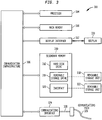
- FIG. 3 illustrates a block diagram of an example computer system useful for implementing the present invention.
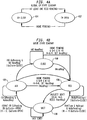
- FIGS. 4a and 4b illustrate an operational flow diagram for the operating states of a cable modem.
- FIG. 1 illustrates data traffic management system 100
- System 100 includes a headend or cable modem termination system (CMTS) 102 that exchanges data with one or more cable modems 104 over a communications interface 110, which includes wired or wireless local area networks (LAN) or wide area networks (WAN), such as an organization's intranet, local internets, the global-based Internet (including the World Wide Web (WWW), private enterprise networks, or the like, Communications interface 110 includes wired, wireless or both, transmission media, including satellite, terrestrial (fiber optic, copper, coaxial and the like), radio, microwave and any other form or method of transmission.
- CMTS 102 and cable modem 104 can be integrated to support protocols, such as, Internet Protocol (IP), Transmission Control Protocol (TCP), User Datagram Protocol (UDP), Real Time Transport Protocol (RTP), Resource Reservation Protocol (RSVP), or the like.
- IP Internet Protocol
- TCP Transmission Control Protocol
- UDP User Datagram Protocol
- RTP Real Time Transport Protocol
- RTP Resource Reservation Protocol
- One or more downstream channels carry information (such as, television signals, IP data packets, control messages in MPEG format) from CMTS 102 to the plurality cable modems 104.
- one or more upstream channels carry bursts of packets from the cable modems 104 to CMTS 102.
- the bursts can be assigned or allocated by mini-slots prior to upstream transmissions.
- the bursts are quantified and apportioned by bits, bytes, mini-ticks (such as 2.5 ⁇ m per click) or like metrics for apportioning bandwidth regions.
- the burst includes bandwidth requests from cable modems 104 and transmissions of data from the corresponding services, as discussed in greater detail below.
- CMTS 102 includes an upstream scheduler 106 that arbitrates bandwidth requirements among multiple cable modems 104.
- Map builder 108 also is included within CMTS 102 to transmit a MAP containing upstream slot specifications and grant specifications to cable modems 104 MAPs can be introduced into the MPEG transport stream of downstream communication as control messages.
- Bursts from cable modems 104 are received by burst demultiplexer 122, which forms the physical layer interface between CMTS 102 and the upstream channel from communications interface 110.
- Burst demultiplexer 122 sends bandwidth request to request queue 124 and other packets to upper layer 126, which forwards the packet to another device or application, such as a web browser, another cable modem 104, or other data receiver. Packets from these other data receivers are collected by output queue 128 for external use.
- a contention slot allocator (CSA) 130 specifies which areas in an upstream channel are to be used as assigned bandwidth regions for grants and contention transmissions. If no requests are resident in request queue 124, the bandwidth region can be allocated to contention transmissions. In an embodiment, a piggyback probability metric is sent from request queue 124 to CSA 130 to aid CSA 130 in determining the percentage of bandwidth to allocate for grants and contention transmissions.
- the state of request queue 124 is sent to call admission controller (CAC) 132 that decides whether to admit more traffic into system 100.
- CAC 132 is operable to process voice data and generate a call admission signal if a call is accepted.
- the call admission signal is sent downstream to the cable modem 104 that is requesting a call admission.
- CAC 132 is not limited for use with voice data.
- CAC 132 can support other forms of media and multimedia.
- CAC 132 also sends the parameters for establishing queues within upstream scheduler 106, and upstream scheduler 106 notifies CAC 132 after the queues have been established.
- Upstream scheduler 106 also received information from CSA 130 representative of the distribution of contention bandwidth regions or contention mini-slots (CMS). Based on information received from CAC 132, CSA 130 and a collision resolution algorithm device (CRA) 138, upstream scheduler 106 specifies the bandwidth regions for grants and contention requests.
- CMS contention bandwidth regions or contention mini-slots
- Collision detector 136 monitors contention regions in the upstream channels on a continuous basis to detect a collision immediately if a collision occurs. Collision detector 136 sends a collision/no collision (C/NC) signal to CRA 138, which uses the C/NC signal to adjust the CRA parameters. This allows the C/NC signal and an acknowledgment/no acknowledgment message to be sent downstream to enable cable modem 104 to resent the collided request.
- C/NC collision/no collision
- Each cable modem 104 hosts one or more services to a subscriber.
- the services include telephony, television broadcasts, internet communications (e.g., WWW), facsimile, file data transfer, electronic mailing services (email), video conferencing, live or time-delayed feeds (such as, speeches, debates, presentations, news reports, sporting events, concerts, etc.), and the like.
- the data exchanged between CMTS 102 and cable modems 104 includes text, video, audio, voice, graphics, other media or a combination thereof (i.e., multimedia).
- Cable modem 104 includes an output queue 112, CM scheduler 114 and burst multiplexer 114. Each service provided by cable modem 104 is mapped to one or more priority queues (not shown) within output queue 112. CM scheduler 114 is responsible for deciding the order in which packets are sent, and for controlling and balancing the request/grant loop process for all services. At the appropriate time, CM scheduler 114 directs packets to be sent to burst multiplexer 116, where the packets are multiplexed into a burst.
- MAP messages from CMTS 102 are recovered with other messages by a demultiplexer 142. Grants in the MAP messages containing the slot structure and grants for the requesting cable modem 104 are separated and sent to CM scheduler 114 to control the allocation of packets to the granted bandwidth regions.
- the C/NC signal transmitted downstream and the CRA parameter derived from a control message are sent downstream and used by the downstream CRA 144 to adopt the parameters.
- CRA 144 sends the count of contention regions to CM scheduler 114. These counts corresponds to the number of priority CMSs the cable model 104 must wait before it can transmit a request in a contention bandwidth region of the same priority.
- Input queue 150 stores data received from the upstream until it is ready to be processed by the services.
- Upper layer 148 receives packets from the services and forwards them to output queue 112.
- flowchart 200 represents the general operational flow of an embodiment of the present invention. More specifically, flowchart 200 shows an example of a control flow for scheduling data transmissions from cable modem 104 over communication infrastructure 110.
- control flow of flowchart 200 begins at step 201 and passes immediately to step 204.
- output queue 112 receives a data packet from a service (e.g., telephony, cable, and the like) and stores the packet within the appropriate priority queue (not shown).
- Output queue 112 notifies CM scheduler 114 of its queue state on a periodically scheduled basis.
- output queue 112 transmits its queue state each time it is modified.
- CM scheduler 114 decides whether to send a request message for bandwidth to CMTS 102, based on internal policies or rules.
- CMTS 102 prepares a grant specification to allocate bandwidth according to the size specified in the bandwidth request.
- the grant specification is transmitted to the requesting cable modem 104.
- CM scheduler 114 receives the grant specification from CMTS 102, and at step 216, CM scheduler 114 evaluates the needs of the scrvice(s) being provided by cable modem 104. In an embodiment, CM scheduler 114 evaluates the needs by considering the current queue state of the priority queues for each service. The current queue state can be evaluated by measuring the quantity of packets, bandwidth size, byte size, or the like. In an embodiment, CM scheduler 114 evaluates the needs of the service(s) by balancing throughput requirements versus latency. For example, it may become necessary to interrupt or fragment a transmission of text data to allow a voice transmission since voice communication require a lower tolerance for delay.
- CM scheduler 114 determines which packets to send, based on the needs assessment performed at step 212. Therefore, CM scheduler 114 is not required to use a grant in the same order that the corresponding requests were sent.
- CM scheduler 114 functions as a bandwidth manager that decides how to use the received grants according to the current needs of an active service. Since the needs of a service can change from the time of requesting a grant, CM scheduler 114 is programmable to assign a particular granted region (or portion thereof) to a different service than the one specified in the grant specification.
- CM scheduler 114 is priority based and will empty the priority queue for a higher-priority service before drawing data from the priority queue for a lower-priority service.
- a higher-priority service such as, telephony
- a lower-priority service such a, web browsing
- the flexible use of grants provided by cable modem 104 allows the higher-priority service (i.e., telephony) to borrow a first arriving lower-priority grant if the grant arrives earlier than its own grant.
- the lower-priority service i.e., web browsing
- each service is registered as being a borrower, lender, both or none.
- the service is permitted to transmit data in a slot granted to another service.
- the service is permitted to allow another service to transmit data over a slot granted to the lender. If registered as none, the service is not permitted to lend or borrow grants.
- the service operates as a lender and borrower.
- cable modem 104 is a flexible modem.
- CM scheduler 114 is configurable to overwrite a centralized CMTS scheduling decision in a seamless manner, such that the overwriting is virtually undetectable by CMTS 102 or the subscriber receiving the service.
- conventional systems e.g., a DOCSIS-compliant system
- CM scheduler 114 decides which priority queues to transmit at the time the data is sent, instead of maintaining the decisions made at the requesting phase.
- CM scheduler 114 is programmable to change decisions at any time ranging from when CM scheduler 114 first sends a request until it transmits the actual information.
- CM scheduler 104 must balance the request/grant loop for each individual service.
- each service must request bandwidth even if it has nothing to send in queue 112 but has used the grants apportioned to other services.
- the present invention guarantees that a grant for the other services will be available at some future point in time.
- an advantage of the present invention is that cable modem 104 can reduce the latency of higher-priority services, which manifests a substantial improvement in quality of service.
- cable modem 104 can operate with more services than the ones that CMTS 102 may have recognized at a given point in time. This is a transient advantage because, as discussed, cable modem 104 permits a borrowing service to used the grant of a lending service, only if a bandwidth request will be transmitted for the borrowing service.
- step 224 burst multiplexer 116 formats the data packets and transmits a burst to CMTS 102. After the burst has been transmitted, the control flow ends as indicated by step 295.
- CM scheduler 114 transmits bandwidth requests in either contention or piggyback mode. As discussed above, any request transmitted in contention mode bares the risk of being corrupted or loss due to collision.
- Piggyback mode can be used to reduce the load of requests in the contention channel.
- CM scheduler 114 prepares a piggyback request message that is formatted to have the highest priority for transmissions.
- Convention piggybacking requests are included as part of an extended header of another message.
- the piggyback request messages of the present invention are separate messages that are transmitted in a contention channel or a reservation channel without making a previous reservation.
- traditional piggybacking is referred to as being piggyback requests in extended headers and independent piggybacking is referred to as being piggyback requests that are sent as separate messages.
- independent piggybacking Since concatenating messages typically do not introduce any additional overhead, the efficiency of independent piggybacking is comparable to the efficiency gained by using traditional piggybacking for systems with smaller header sizes. For example, an implicit convention for voice packets is the specification of very small headers.
- An advantage of independent piggybacking is that the piggyback request message can be easily sent anywhere in a burst (i.e., between packets) without imposing any processing delays on CMTS 102, in particularly in cases where headers cannot be easily extended.
- CM scheduler 114 has the flexibility to use grant slots to optimize throughput and reduce latency.
- a piggyback request message can be transmitted at anytime upon receipt of a grant specification or in contention mini-slots.
- the piggyback request message can be inserted in a burst of voice packets or other data packets (i.e., text, graphics).
- CM scheduler 114 uses cross-piggybacking to combine a piggyback request message for one service (i.e., primary piggyback) with a piggyback request messages from one or more other services (i.e., secondary piggyback(s)).
- secondary piggybacks are generally requests from other services
- secondary piggybacks can also be from the same service.
- a service may request more bandwidth than the maximum request size imposed by system 100.
- CM scheduler 114 may decide to send another request before it receives a grant for a previously transmitted request. Therefore, a cable modem 104 can have more than one piggyback request outstanding in CMTS 102, at any given time.
- FIGs. 4a-4b illustrate an operational flow for requesting and granting bandwidth according to an embodiment of the present invention.
- the operational states of cable 104 are shown as being in either an open state 402 or closed state 404.
- Open state 402 indicates that cable modem 104 has one or more requests outstanding.
- Closed state 404 indicates that cable modem 104 has no outstanding requests.
- FIG. 4b shows the operational flow of the various queue states for cable modem 104, according to an embodiment of the present invention. More specifically, when cable modem 104 is operating in open state 402, cable modem 104 can operate in one or more of four queues states, namely requesting state 406, waiting state 408, acknowledge state 409 and close state 410.
- Requesting state 406 indicates that CM scheduler 114 is requesting bandwidth from CMTS 102.
- cable modem 104 enters waiting state 408 until feedback is received from CMTS 102.
- Acknowledge state 409 indicates that CMTS 102 has received the request or cable modem 104 has received a corresponding grant.
- cable modem 104 If cable modem 104 remains in acknowledge state 409 or waiting state 408 beyond a predetermined time, cable modem 104 generate another request (i.e., re-enter request state 406). In other words, if cable modem 104 does not receive an acknowledgment message or grant message within a predetermined time frame, cable modem 104 will generate another request.
- Close state 410 indicates that either output queue 112 has not recently signaled CM scheduler 114 for additional bandwidth or all requests have been granted or are no longer required.
- FIG. 1 is a conceptual illustration of system 100 that allows an easy explanation of the present invention. That is, one or more of the blocks can be performed by the same piece of hardware or module of software. It should also be understood that the present invention can be implemented in hardware, software, or a combination thereof the various components and steps would be implemented in hardware and/or software to perform the functions of the present invention.
- the present invention can be implemented in one or more computer systems or other processing systems.
- the invention can be implemented by one or more computer systems capable of carrying out the functionality described herein.
- the computer system 300 includes one or more processors, such as processor 304.
- the processor 304 is connected to a communication infrastructure 306 (e.g., a communications bus, crossover bar, or network).
- a communication infrastructure 306 e.g., a communications bus, crossover bar, or network.
- Computer system 300 can include a display interface 302 that forwards graphics, text, and other data from the communication infrastructure 306 (or from a frame buffer not shown) for display on the display unit 330.
- Computer system 300 also includes a main memory 308, preferably random access memory (RAM), and can also include a secondary memory 310.
- the secondary memory 310 can include, for example, a hard disk drive 312 and/or a removable storage drive 314, representing a floppy disk drive, a magnetic tape drive, an optical disk drive, etc.
- the removable storage drive 314 reads from and/or writes to a removable storage unit 318 in a well-known manner.
- Removable storage unit 318 represents a floppy disk, magnetic tape, optical disk, etc. which is read by and written to removable storage drive 314.
- the removable storage unit 318 includes a computer usable storage medium having stored therein computer software and/or data.
- secondary memory 310 can include other similar means for allowing computer programs or other instructions to be loaded into computer system 300.
- Such means can include, for example, a removable storage unit 322 and an interface 320. Examples of such can include a program cartridge and cartridge interface (such as that found in video game devices), a removable memory chip (such as an EPROM, or PROM) and associated socket, and other removable storage units 322 and interfaces 320 which allow software and data to be transferred from the removable storage unit 322 to computer system 300.
- Computer system 300 can also include a communications interface 324.
- Communications interface 324 allows software and data to be transferred between computer system 300 and external devices. Examples of communications interface 324 can include a modem, a network interface (such as an Ethernet card), a communications port, a PCMCIA slot and card, etc.
- Software and data transferred via communications interface 324 are in the form of signals 328 which can be electronic, electromagnetic, optical or other signals capable of being received by communications interface 324. These signals 328 are provided to communications interface 324 via a communications path (i.e., channel) 326.
- This channel 326 carries signals 328 and can be implemented using wire or cable, fiber optics, a phone line, a cellular phone link, an RF link and other communications channels.
- computer program medium and “computer usable medium” are used to generally refer to media such as removable storage drive 314, a hard disk installed in hard disk drive 312, and signals 328.
- These computer program products are means for providing software to computer system 300.
- the invention can be implemented by such computer program products.
- Computer programs are stored in main memory 308 and/or secondary memory 310. Computer programs can also be received via communications interface 324. Such computer programs, when executed, enable the computer system 300 to perform the features of the present invention as discussed herein. In particular, the computer programs, when executed, enable the processor 304 to perform the features of the present invention. Accordingly, such computer programs represent controllers of the computer system 300.
- the software can be stored in a computer program product and loaded into computer system 300 using removable storage drive 314, hard drive 312 or communications interface 324.
- the control logic when executed by the processor 304, causes the processor 304 to perform the functions of the invention as described herein.
- the invention may be implemented primarily in hardware using, for example, hardware components such as application specific integrated circuits (ASICs).
- ASICs application specific integrated circuits
- the invention may be implemented using a combination of both hardware and software.
- the present invention should not be limited to transmissions between cable modems and headends.
- the present invention can be implemented in any multi-nodal communications environment governed by a centralized node.
- the nodes can include communication gateways, switches, routers, Internet access facilities, servers, personal computers, enhanced telephones, personal digital assistants (PDA), televisions, set-top boxes or the like.
- PDA personal digital assistants
Landscapes
- Engineering & Computer Science (AREA)
- Signal Processing (AREA)
- Computer Networks & Wireless Communication (AREA)
- Multimedia (AREA)
- Databases & Information Systems (AREA)
- Computer Security & Cryptography (AREA)
- General Business, Economics & Management (AREA)
- General Engineering & Computer Science (AREA)
- Business, Economics & Management (AREA)
- Data Exchanges In Wide-Area Networks (AREA)
- Communication Control (AREA)
- Time-Division Multiplex Systems (AREA)
- Mobile Radio Communication Systems (AREA)
- Transmitters (AREA)
- Machine Translation (AREA)
- Devices For Executing Special Programs (AREA)
Claims (5)
- Procédé de gestion de communications en voie montante à partir d'un noeud local (114) dans un réseau de communications ayant au moins un noeud distant (102) et un ou plusieurs noeuds locaux (104), chaque noeud local (104) fournissant un ou plusieurs services, chaque noeud local comprenant un programmateur local (114) qui envoie des demandes de largeur de bande et gère une attribution de largeur de bande, une file d'attente de sortie (112), et un multiplexeur de rafales (116), comprenant les étapes de :(a) mappage (204) de chaque service fourni par ledit noeud local (104) sur une ou plusieurs files d'attente avec priorité au sein de ladite file d'attente de sortie (112) ;(b) réception de paquets de données d'un service et stockage desdits paquets de données dans la file d'attente avec priorité mappée appropriée ;(c) envoi au noeud distant (208) d'une demande pour transmettre les paquets de données stockés ;(d) réception (212) d'une spécification d'attribution dudit noeud distant (102), ladite spécification d'attribution fournissant l'autorisation de transmettre des paquets de données se rapportant à la demande de transmission ;(e) évaluation (216) des besoins de service dudit un service ou desdits plusieurs services ;(f) programmation de paquets de données en déterminant lesquels desdits paquets de données stockés il convient d'envoyer sur la base de ladite étape d'évaluation et de ladite spécification d'attribution reçue ;(g) envoi desdits paquets de données programmés audit multiplexeur de rafales (116), où lesdits paquets de données programmés sont multiplexés en une rafale ; et(h) transmission (224) de ladite rafale au noeud distant à l'intérieur d'intervalles de temps spécifiés dans la spécification d'attribution reçue, dans lequel
ladite étape de programmation comprend un service de priorité supérieure empruntant de la largeur de bande attribuée à un service de priorité inférieure et ensuite ledit service de priorité supérieure envoyant une demande pour transmettre des paquets de données et, à réception de la spécification d'attribution, fournissant l'autorisation de transmettre des paquets de données du service de priorité supérieure, le service de priorité inférieure étant autorisé à utiliser la largeur de bande attribuée au service de priorité supérieure. - Procédé selon la revendication 1, dans lequel ladite étape d'évaluation (e) comprend l'évaluation de l'état actuel de files d'attente (112) pour chacun desdits services.
- Procédé selon la revendication 1, dans lequel ladite étape d'évaluation (e) comprend l'évaluation de besoins de débit et de latence desdits services.
- Procédé selon la revendication 1, dans lequel la demande de transmission de données de l'étape (c) est envoyée comme une demande de largeur de bande de portage dans un message dans la rafale, ledit message étant séparé des paquets de données.
- Procédé selon la revendication 4, dans lequel des demandes de largeur de bande de portage multiples sont envoyées.
Applications Claiming Priority (11)
| Application Number | Priority Date | Filing Date | Title |
|---|---|---|---|
| US18247000P | 2000-02-15 | 2000-02-15 | |
| US182470P | 2000-02-15 | ||
| US24718800P | 2000-11-09 | 2000-11-09 | |
| US247188P | 2000-11-09 | ||
| US25441500P | 2000-12-08 | 2000-12-08 | |
| US254415P | 2000-12-08 | ||
| US26220101P | 2001-01-17 | 2001-01-17 | |
| US26220301P | 2001-01-17 | 2001-01-17 | |
| US262201P | 2001-01-17 | ||
| US262203P | 2001-01-17 | ||
| PCT/US2001/004819 WO2001062008A2 (fr) | 2000-02-15 | 2001-02-15 | Procede, systeme et produit de programme informatique servant a ordonnancer des communications amont |
Publications (2)
| Publication Number | Publication Date |
|---|---|
| EP1266526A2 EP1266526A2 (fr) | 2002-12-18 |
| EP1266526B1 true EP1266526B1 (fr) | 2012-04-25 |
Family
ID=27539074
Family Applications (5)
| Application Number | Title | Priority Date | Filing Date |
|---|---|---|---|
| EP01920113A Expired - Lifetime EP1256229B1 (fr) | 2000-02-15 | 2001-02-15 | Architecture vocale pour emission via un support partage en mode contention |
| EP01910717A Expired - Lifetime EP1257514B1 (fr) | 2000-02-15 | 2001-02-15 | Systeme et procede servant a combiner des demandes de largeur de bande de donnees formulees par un fournisseur de donnees pour transmettre ces donnees par l'intermediaire d'un support de communication asynchrone |
| EP01918168A Expired - Lifetime EP1258102B1 (fr) | 2000-02-15 | 2001-02-15 | Procede servant a supprimer le silence dans un trafic vocal par l'intermediaire d'un support de communication asynchrone |
| EP01910716A Expired - Lifetime EP1266526B1 (fr) | 2000-02-15 | 2001-02-15 | Procede servant a ordonnancer des communications en amont |
| EP01910715A Expired - Lifetime EP1258101B1 (fr) | 2000-02-15 | 2001-02-15 | Procede et systeme bases sur un modem cable et servant a transferer des donnees specialisees |
Family Applications Before (3)
| Application Number | Title | Priority Date | Filing Date |
|---|---|---|---|
| EP01920113A Expired - Lifetime EP1256229B1 (fr) | 2000-02-15 | 2001-02-15 | Architecture vocale pour emission via un support partage en mode contention |
| EP01910717A Expired - Lifetime EP1257514B1 (fr) | 2000-02-15 | 2001-02-15 | Systeme et procede servant a combiner des demandes de largeur de bande de donnees formulees par un fournisseur de donnees pour transmettre ces donnees par l'intermediaire d'un support de communication asynchrone |
| EP01918168A Expired - Lifetime EP1258102B1 (fr) | 2000-02-15 | 2001-02-15 | Procede servant a supprimer le silence dans un trafic vocal par l'intermediaire d'un support de communication asynchrone |
Family Applications After (1)
| Application Number | Title | Priority Date | Filing Date |
|---|---|---|---|
| EP01910715A Expired - Lifetime EP1258101B1 (fr) | 2000-02-15 | 2001-02-15 | Procede et systeme bases sur un modem cable et servant a transferer des donnees specialisees |
Country Status (6)
| Country | Link |
|---|---|
| US (1) | US7388884B2 (fr) |
| EP (5) | EP1256229B1 (fr) |
| AT (5) | ATE382240T1 (fr) |
| AU (5) | AU2001238296A1 (fr) |
| DE (3) | DE60137115D1 (fr) |
| WO (5) | WO2001061924A2 (fr) |
Cited By (1)
| Publication number | Priority date | Publication date | Assignee | Title |
|---|---|---|---|---|
| US12047965B1 (en) * | 2021-07-20 | 2024-07-23 | Apple Inc. | Communication scheduler |
Families Citing this family (25)
| Publication number | Priority date | Publication date | Assignee | Title |
|---|---|---|---|---|
| US6804251B1 (en) | 1998-11-12 | 2004-10-12 | Broadcom Corporation | System and method for multiplexing data from multiple sources |
| US7333495B2 (en) * | 1999-10-27 | 2008-02-19 | Broadcom Corporation | Method for scheduling upstream communications |
| US6993007B2 (en) * | 1999-10-27 | 2006-01-31 | Broadcom Corporation | System and method for suppressing silence in voice traffic over an asynchronous communication medium |
| US6999414B2 (en) * | 1999-10-27 | 2006-02-14 | Broadcom Corporation | System and method for combining requests for data bandwidth by a data provider for transmission of data over an asynchronous communication medium |
| US7769047B2 (en) * | 2001-02-15 | 2010-08-03 | Broadcom Corporation | Methods for specialized data transfer in a wireless communication system |
| US20020199200A1 (en) * | 2001-05-25 | 2002-12-26 | N2 Broadband, Inc. | System and method for scheduling the distribution of assets from multiple asset providers to multiple receivers |
| US7177324B1 (en) * | 2001-07-12 | 2007-02-13 | At&T Corp. | Network having bandwidth sharing |
| US8024766B2 (en) | 2001-08-01 | 2011-09-20 | Ericsson Television, Inc. | System and method for distributing network-based personal video |
| US20030041162A1 (en) * | 2001-08-27 | 2003-02-27 | Hochmuth Roland M. | System and method for communicating graphics images over a computer network |
| US7379472B2 (en) * | 2001-09-27 | 2008-05-27 | Broadcom Corporation | Hardware filtering of unsolicited grant service extended headers |
| US7319666B2 (en) * | 2002-02-06 | 2008-01-15 | Thomson Licensing | Method and apparatus for concatenating and piggybacking data packets |
| CN100380879C (zh) * | 2002-02-06 | 2008-04-09 | 汤姆森许可公司 | 用于级联和捎带数据分组的方法和设备 |
| US7796583B1 (en) | 2002-07-17 | 2010-09-14 | Nortel Networks Limited | Packet handler for high-speed data networks |
| US7739359B1 (en) * | 2002-09-12 | 2010-06-15 | Cisco Technology, Inc. | Methods and apparatus for secure cable modem provisioning |
| US7568209B1 (en) | 2003-11-14 | 2009-07-28 | Tanderberg Television, Inc. | Method and system for the management of targeted material insertion using a campaign manager |
| CN101129005A (zh) * | 2004-08-25 | 2008-02-20 | 汤姆逊许可公司 | 有线数据业务的压缩方法 |
| WO2007062108A2 (fr) | 2005-11-23 | 2007-05-31 | Pak Siripunkaw | Procede d'amelioration d'une plateforme dans un dispositif passerelle d'abonne |
| US8628522B2 (en) | 2007-05-21 | 2014-01-14 | Estech, Inc. (Endoscopic Technologies, Inc.) | Cardiac ablation systems and methods |
| US8108911B2 (en) | 2007-11-01 | 2012-01-31 | Comcast Cable Holdings, Llc | Method and system for directing user between captive and open domains |
| US20130236170A1 (en) * | 2010-11-24 | 2013-09-12 | Mitsubishi Electric Corporation | Communication apparatus |
| JP2011125039A (ja) * | 2011-01-06 | 2011-06-23 | Thomson Licensing | ケーブル・データ・サービスにおける圧縮 |
| US9729431B1 (en) * | 2011-08-16 | 2017-08-08 | Marvell International Ltd. | Using standard fields to carry meta-information |
| US9942290B2 (en) * | 2015-09-09 | 2018-04-10 | Ericsson Ab | Fast channel change in a multicast adaptive bitrate (MABR) streaming network using HTTP download segment recovery in a shared progressive ABR download pipe |
| US9788053B2 (en) | 2015-09-09 | 2017-10-10 | Ericsson Ab | Fast channel change in a multicast adaptive bitrate (MABR) streaming network using HTTP download segment recovery in a dedicated bandwidth pipe |
| WO2018213647A1 (fr) * | 2017-05-17 | 2018-11-22 | Cisco Technology, Inc. | Autorisation de cascade |
Citations (1)
| Publication number | Priority date | Publication date | Assignee | Title |
|---|---|---|---|---|
| US5463624A (en) * | 1994-04-15 | 1995-10-31 | Dsc Communications Corporation | Bus arbitration method for telecommunications switching |
Family Cites Families (43)
| Publication number | Priority date | Publication date | Assignee | Title |
|---|---|---|---|---|
| US4534024A (en) | 1982-12-02 | 1985-08-06 | At&T Bell Laboratories | System and method for controlling a multiple access data communications system including both data packets and voice packets being communicated over a cable television system |
| US4712210A (en) | 1984-09-07 | 1987-12-08 | Lee Data Corporation | Signal conversion circuit for interconnecting coaxial cable and a twisted pair |
| US5341374A (en) | 1991-03-01 | 1994-08-23 | Trilan Systems Corporation | Communication network integrating voice data and video with distributed call processing |
| US5421030A (en) | 1991-09-17 | 1995-05-30 | Com21, Inc. | Communications system and method for bi-directional communications between an upstream control facility and downstream user terminals |
| US5425027A (en) | 1993-01-04 | 1995-06-13 | Com21, Inc. | Wide area fiber and TV cable fast packet cell network |
| US5539449A (en) | 1993-05-03 | 1996-07-23 | At&T Corp. | Integrated television services system |
| RO111887B1 (ro) | 1993-05-28 | 1997-02-28 | Us West Technologies Inc | Metoda si retea pentru separarea serviciilor telefonice de serviciile speciale |
| US5515379A (en) | 1993-10-18 | 1996-05-07 | Motorola, Inc. | Time slot allocation method |
| US5570355A (en) | 1994-11-17 | 1996-10-29 | Lucent Technologies Inc. | Method and apparatus enabling synchronous transfer mode and packet mode access for multiple services on a broadband communication network |
| US5631908A (en) * | 1995-03-28 | 1997-05-20 | Digital Equipment Corporation | Method and apparatus for generating and implementing smooth schedules for forwarding data flows across cell-based switches |
| US5850400A (en) | 1995-04-27 | 1998-12-15 | Next Level Communications | System, method, and apparatus for bidirectional transport of digital data between a digital network and a plurality of devices |
| US5742592A (en) | 1995-09-01 | 1998-04-21 | Motorola, Inc. | Method for communicating data in a wireless communication system |
| US5606561A (en) | 1995-07-28 | 1997-02-25 | Motorola, Inc. | Method, device/microprocessor, and computer software for providing packet fragmentation for fair, efficient downlink transmission with low packet delay |
| US5756280A (en) | 1995-10-03 | 1998-05-26 | International Business Machines Corporation | Multimedia distribution network including video switch |
| US5917822A (en) * | 1995-11-15 | 1999-06-29 | Xerox Corporation | Method for providing integrated packet services over a shared-media network |
| SE515901C2 (sv) | 1995-12-28 | 2001-10-22 | Dynarc Ab | Resursadministrering, plan och arrangemang |
| US6055268A (en) | 1996-05-09 | 2000-04-25 | Texas Instruments Incorporated | Multimode digital modem |
| US6078564A (en) | 1996-08-30 | 2000-06-20 | Lucent Technologies, Inc. | System for improving data throughput of a TCP/IP network connection with slow return channel |
| US5946323A (en) * | 1996-11-20 | 1999-08-31 | At&T Corp | Asynchronous transfer mode integrated access service |
| US5926478A (en) * | 1996-12-19 | 1999-07-20 | Ericsson, Inc. | Data transmission over a point-to-multipoint optical network |
| US6370571B1 (en) * | 1997-03-05 | 2002-04-09 | At Home Corporation | System and method for delivering high-performance online multimedia services |
| US5963557A (en) | 1997-04-11 | 1999-10-05 | Eng; John W. | High capacity reservation multiple access network with multiple shared unidirectional paths |
| US6249526B1 (en) | 1997-06-30 | 2001-06-19 | Intel Corporation | Versatile time division multiple access slot assignment unit |
| US6032197A (en) * | 1997-09-25 | 2000-02-29 | Microsoft Corporation | Data packet header compression for unidirectional transmission |
| JP2001519625A (ja) | 1997-10-02 | 2001-10-23 | トムソン ライセンシング ソシエテ アノニム | マルチメディアデコーダと双方向ブロードキャストシステム |
| US6567416B1 (en) * | 1997-10-14 | 2003-05-20 | Lucent Technologies Inc. | Method for access control in a multiple access system for communications networks |
| US6137793A (en) * | 1997-12-05 | 2000-10-24 | Com21, Inc. | Reverse path multiplexer for use in high speed data transmissions |
| US6185224B1 (en) | 1998-01-12 | 2001-02-06 | Georgia Tech Research Corporation | System and method for communicating data in a cable network |
| US6233687B1 (en) * | 1998-01-21 | 2001-05-15 | Nortel Networks Limited | Method and apparatus for providing configuration information in a network |
| US6115394A (en) | 1998-03-04 | 2000-09-05 | Ericsson Inc. | Methods, apparatus and computer program products for packet transport over wireless communication links |
| US6510162B1 (en) * | 1998-05-27 | 2003-01-21 | 3Com Corporation | System and method for managing channel usage in a data over cable system |
| US6272131B1 (en) | 1998-06-11 | 2001-08-07 | Synchrodyne Networks, Inc. | Integrated data packet network using a common time reference |
| US6230326B1 (en) * | 1998-07-30 | 2001-05-08 | Nortel Networks Limited | Method and apparatus for initialization of a cable modem |
| US6438123B1 (en) * | 1998-11-10 | 2002-08-20 | Cisco Technology, Inc. | Method and apparatus for supporting header suppression and multiple microflows in a network |
| US6804251B1 (en) | 1998-11-12 | 2004-10-12 | Broadcom Corporation | System and method for multiplexing data from multiple sources |
| US6618386B1 (en) * | 1999-03-04 | 2003-09-09 | Webtv Networks, Inc. | Hosting a cable modem in a computer using a virtual bridge |
| US6643780B1 (en) * | 1999-05-07 | 2003-11-04 | Ericsson Inc. | Modems that block data transfers during safe mode of operation and related methods |
| US6715075B1 (en) * | 1999-07-08 | 2004-03-30 | Intel Corporation | Providing a configuration file to a communication device |
| US6788707B1 (en) * | 1999-08-31 | 2004-09-07 | Broadcom Corporation | Method for the suppression and expansion of packet header information in cable modem and cable modem termination system devices |
| US7203164B2 (en) * | 1999-10-27 | 2007-04-10 | Broadcom Corporation | Voice architecture for transmission over a shared, contention based medium |
| DE60023551T2 (de) * | 1999-12-23 | 2006-07-20 | Broadcom Corp., Irvine | Verfahren zum öffnen in einem nicht-docsis modem eines proprietären mac-protokolls kompatibel zu docsis modem |
| US6466986B1 (en) * | 1999-12-30 | 2002-10-15 | Nortel Networks Limited | Method and apparatus for providing dynamic host configuration protocol (DHCP) tagging |
| DE60120466T2 (de) * | 2000-10-11 | 2007-01-18 | Broadcom Corp., Irvine | Effiziente Übertragung von RTP Paketen in einem Netzwerk |
-
2001
- 2001-02-15 DE DE60137115T patent/DE60137115D1/de not_active Expired - Lifetime
- 2001-02-15 EP EP01920113A patent/EP1256229B1/fr not_active Expired - Lifetime
- 2001-02-15 DE DE60108612T patent/DE60108612T2/de not_active Expired - Lifetime
- 2001-02-15 AT AT01910715T patent/ATE382240T1/de not_active IP Right Cessation
- 2001-02-15 WO PCT/US2001/004818 patent/WO2001061924A2/fr not_active Ceased
- 2001-02-15 AU AU2001238296A patent/AU2001238296A1/en not_active Abandoned
- 2001-02-15 AT AT01910716T patent/ATE555604T1/de active
- 2001-02-15 AU AU2001247200A patent/AU2001247200A1/en not_active Abandoned
- 2001-02-15 AU AU2001245274A patent/AU2001245274A1/en not_active Abandoned
- 2001-02-15 WO PCT/US2001/004819 patent/WO2001062008A2/fr not_active Ceased
- 2001-02-15 WO PCT/US2001/004841 patent/WO2001061925A2/fr not_active Ceased
- 2001-02-15 DE DE60132071T patent/DE60132071T2/de not_active Expired - Lifetime
- 2001-02-15 EP EP01910717A patent/EP1257514B1/fr not_active Expired - Lifetime
- 2001-02-15 EP EP01918168A patent/EP1258102B1/fr not_active Expired - Lifetime
- 2001-02-15 EP EP01910716A patent/EP1266526B1/fr not_active Expired - Lifetime
- 2001-02-15 AT AT01910717T patent/ATE418528T1/de not_active IP Right Cessation
- 2001-02-15 AT AT01920113T patent/ATE288168T1/de not_active IP Right Cessation
- 2001-02-15 AU AU2001238298A patent/AU2001238298A1/en not_active Abandoned
- 2001-02-15 WO PCT/US2001/004904 patent/WO2001061983A2/fr not_active Ceased
- 2001-02-15 AU AU2001238297A patent/AU2001238297A1/en not_active Abandoned
- 2001-02-15 US US09/783,403 patent/US7388884B2/en not_active Expired - Fee Related
- 2001-02-15 AT AT01918168T patent/ATE529969T1/de not_active IP Right Cessation
- 2001-02-15 EP EP01910715A patent/EP1258101B1/fr not_active Expired - Lifetime
- 2001-02-15 WO PCT/US2001/004820 patent/WO2001060767A2/fr not_active Ceased
Patent Citations (1)
| Publication number | Priority date | Publication date | Assignee | Title |
|---|---|---|---|---|
| US5463624A (en) * | 1994-04-15 | 1995-10-31 | Dsc Communications Corporation | Bus arbitration method for telecommunications switching |
Non-Patent Citations (1)
| Title |
|---|
| HOGAN ET AL.: "An architectural framework for the support of integrated services by broadband customer premises equipment", XP004059230, COMPUTER NETWORKS AND ISDN SYSTEMS, 1 April 1997 (1997-04-01), pages 595 - 609, XP004059230 * |
Cited By (1)
| Publication number | Priority date | Publication date | Assignee | Title |
|---|---|---|---|---|
| US12047965B1 (en) * | 2021-07-20 | 2024-07-23 | Apple Inc. | Communication scheduler |
Also Published As
Similar Documents
| Publication | Publication Date | Title |
|---|---|---|
| US7333495B2 (en) | Method for scheduling upstream communications | |
| EP1266526B1 (fr) | Procede servant a ordonnancer des communications en amont | |
| US7990952B2 (en) | Method for upstream priority lookup at physical interface within a wireless device | |
| EP2472737B1 (fr) | Qualité de service pour la distribution de contenu dans des dispositifs de réseau | |
| US8018963B2 (en) | Systems for flexible wireless channel association | |
| EP1566026B1 (fr) | Dispositif et procede de mise en correspondance dynamique de canaux et d'ordonnancement optimise de paquets de donnees | |
| US8934503B2 (en) | Highly integrated media access control | |
| US7573816B2 (en) | System and method for combining requests for data bandwidth by a data source for transmission of data over a wireless communication medium | |
| US7693182B2 (en) | Method for synchronizing voice traffic with minimum latency in a wireless communications network | |
| AU783202B2 (en) | Adaptive bandwidth system and method for broadcast data | |
| US20050122904A1 (en) | Preventative congestion control for application support | |
| Nahrstedt | QUALITY OF SERVICE IN NETWORKED |
Legal Events
| Date | Code | Title | Description |
|---|---|---|---|
| PUAI | Public reference made under article 153(3) epc to a published international application that has entered the european phase |
Free format text: ORIGINAL CODE: 0009012 |
|
| 17P | Request for examination filed |
Effective date: 20020913 |
|
| AK | Designated contracting states |
Kind code of ref document: A2 Designated state(s): AT BE CH CY DE DK ES FI FR GB GR IE IT LI LU MC NL PT SE TR |
|
| AX | Request for extension of the european patent |
Free format text: AL;LT;LV;MK;RO;SI |
|
| RAP1 | Party data changed (applicant data changed or rights of an application transferred) |
Owner name: BROADCOM CORPORATION |
|
| 17Q | First examination report despatched |
Effective date: 20090325 |
|
| RIC1 | Information provided on ipc code assigned before grant |
Ipc: H04N 7/24 20110101AFI20110809BHEP Ipc: H04N 7/173 20110101ALI20110809BHEP Ipc: H04L 12/56 20060101ALI20110809BHEP |
|
| GRAP | Despatch of communication of intention to grant a patent |
Free format text: ORIGINAL CODE: EPIDOSNIGR1 |
|
| RTI1 | Title (correction) |
Free format text: METHOD FOR SCHEDULING UPSTREAM COMMUNICATIONS |
|
| GRAS | Grant fee paid |
Free format text: ORIGINAL CODE: EPIDOSNIGR3 |
|
| GRAA | (expected) grant |
Free format text: ORIGINAL CODE: 0009210 |
|
| AK | Designated contracting states |
Kind code of ref document: B1 Designated state(s): AT BE CH CY DE DK ES FI FR GB GR IE IT LI LU MC NL PT SE TR |
|
| REG | Reference to a national code |
Ref country code: GB Ref legal event code: FG4D |
|
| REG | Reference to a national code |
Ref country code: CH Ref legal event code: EP |
|
| REG | Reference to a national code |
Ref country code: AT Ref legal event code: REF Ref document number: 555604 Country of ref document: AT Kind code of ref document: T Effective date: 20120515 |
|
| REG | Reference to a national code |
Ref country code: IE Ref legal event code: FG4D |
|
| REG | Reference to a national code |
Ref country code: DE Ref legal event code: R096 Ref document number: 60146457 Country of ref document: DE Effective date: 20120621 |
|
| REG | Reference to a national code |
Ref country code: NL Ref legal event code: T3 |
|
| REG | Reference to a national code |
Ref country code: AT Ref legal event code: MK05 Ref document number: 555604 Country of ref document: AT Kind code of ref document: T Effective date: 20120425 |
|
| PG25 | Lapsed in a contracting state [announced via postgrant information from national office to epo] |
Ref country code: FI Free format text: LAPSE BECAUSE OF FAILURE TO SUBMIT A TRANSLATION OF THE DESCRIPTION OR TO PAY THE FEE WITHIN THE PRESCRIBED TIME-LIMIT Effective date: 20120425 Ref country code: CY Free format text: LAPSE BECAUSE OF FAILURE TO SUBMIT A TRANSLATION OF THE DESCRIPTION OR TO PAY THE FEE WITHIN THE PRESCRIBED TIME-LIMIT Effective date: 20120425 Ref country code: SE Free format text: LAPSE BECAUSE OF FAILURE TO SUBMIT A TRANSLATION OF THE DESCRIPTION OR TO PAY THE FEE WITHIN THE PRESCRIBED TIME-LIMIT Effective date: 20120425 |
|
| PG25 | Lapsed in a contracting state [announced via postgrant information from national office to epo] |
Ref country code: GR Free format text: LAPSE BECAUSE OF FAILURE TO SUBMIT A TRANSLATION OF THE DESCRIPTION OR TO PAY THE FEE WITHIN THE PRESCRIBED TIME-LIMIT Effective date: 20120726 Ref country code: PT Free format text: LAPSE BECAUSE OF FAILURE TO SUBMIT A TRANSLATION OF THE DESCRIPTION OR TO PAY THE FEE WITHIN THE PRESCRIBED TIME-LIMIT Effective date: 20120827 |
|
| PG25 | Lapsed in a contracting state [announced via postgrant information from national office to epo] |
Ref country code: BE Free format text: LAPSE BECAUSE OF FAILURE TO SUBMIT A TRANSLATION OF THE DESCRIPTION OR TO PAY THE FEE WITHIN THE PRESCRIBED TIME-LIMIT Effective date: 20120425 |
|
| PG25 | Lapsed in a contracting state [announced via postgrant information from national office to epo] |
Ref country code: AT Free format text: LAPSE BECAUSE OF FAILURE TO SUBMIT A TRANSLATION OF THE DESCRIPTION OR TO PAY THE FEE WITHIN THE PRESCRIBED TIME-LIMIT Effective date: 20120425 Ref country code: DK Free format text: LAPSE BECAUSE OF FAILURE TO SUBMIT A TRANSLATION OF THE DESCRIPTION OR TO PAY THE FEE WITHIN THE PRESCRIBED TIME-LIMIT Effective date: 20120425 |
|
| PG25 | Lapsed in a contracting state [announced via postgrant information from national office to epo] |
Ref country code: IT Free format text: LAPSE BECAUSE OF FAILURE TO SUBMIT A TRANSLATION OF THE DESCRIPTION OR TO PAY THE FEE WITHIN THE PRESCRIBED TIME-LIMIT Effective date: 20120425 |
|
| PLBE | No opposition filed within time limit |
Free format text: ORIGINAL CODE: 0009261 |
|
| STAA | Information on the status of an ep patent application or granted ep patent |
Free format text: STATUS: NO OPPOSITION FILED WITHIN TIME LIMIT |
|
| 26N | No opposition filed |
Effective date: 20130128 |
|
| PG25 | Lapsed in a contracting state [announced via postgrant information from national office to epo] |
Ref country code: ES Free format text: LAPSE BECAUSE OF FAILURE TO SUBMIT A TRANSLATION OF THE DESCRIPTION OR TO PAY THE FEE WITHIN THE PRESCRIBED TIME-LIMIT Effective date: 20120805 |
|
| PGFP | Annual fee paid to national office [announced via postgrant information from national office to epo] |
Ref country code: DE Payment date: 20130228 Year of fee payment: 13 |
|
| REG | Reference to a national code |
Ref country code: DE Ref legal event code: R097 Ref document number: 60146457 Country of ref document: DE Effective date: 20130128 |
|
| PG25 | Lapsed in a contracting state [announced via postgrant information from national office to epo] |
Ref country code: MC Free format text: LAPSE BECAUSE OF NON-PAYMENT OF DUE FEES Effective date: 20130228 |
|
| REG | Reference to a national code |
Ref country code: CH Ref legal event code: PL |
|
| PG25 | Lapsed in a contracting state [announced via postgrant information from national office to epo] |
Ref country code: CH Free format text: LAPSE BECAUSE OF NON-PAYMENT OF DUE FEES Effective date: 20130228 Ref country code: LI Free format text: LAPSE BECAUSE OF NON-PAYMENT OF DUE FEES Effective date: 20130228 |
|
| REG | Reference to a national code |
Ref country code: FR Ref legal event code: ST Effective date: 20131031 |
|
| REG | Reference to a national code |
Ref country code: IE Ref legal event code: MM4A |
|
| PG25 | Lapsed in a contracting state [announced via postgrant information from national office to epo] |
Ref country code: FR Free format text: LAPSE BECAUSE OF NON-PAYMENT OF DUE FEES Effective date: 20130228 Ref country code: IE Free format text: LAPSE BECAUSE OF NON-PAYMENT OF DUE FEES Effective date: 20130215 |
|
| PGFP | Annual fee paid to national office [announced via postgrant information from national office to epo] |
Ref country code: NL Payment date: 20140220 Year of fee payment: 14 |
|
| PGFP | Annual fee paid to national office [announced via postgrant information from national office to epo] |
Ref country code: GB Payment date: 20140220 Year of fee payment: 14 |
|
| REG | Reference to a national code |
Ref country code: DE Ref legal event code: R119 Ref document number: 60146457 Country of ref document: DE |
|
| REG | Reference to a national code |
Ref country code: DE Ref legal event code: R119 Ref document number: 60146457 Country of ref document: DE Effective date: 20140902 |
|
| PG25 | Lapsed in a contracting state [announced via postgrant information from national office to epo] |
Ref country code: DE Free format text: LAPSE BECAUSE OF NON-PAYMENT OF DUE FEES Effective date: 20140902 |
|
| PG25 | Lapsed in a contracting state [announced via postgrant information from national office to epo] |
Ref country code: TR Free format text: LAPSE BECAUSE OF FAILURE TO SUBMIT A TRANSLATION OF THE DESCRIPTION OR TO PAY THE FEE WITHIN THE PRESCRIBED TIME-LIMIT Effective date: 20120425 |
|
| PG25 | Lapsed in a contracting state [announced via postgrant information from national office to epo] |
Ref country code: LU Free format text: LAPSE BECAUSE OF NON-PAYMENT OF DUE FEES Effective date: 20130215 |
|
| REG | Reference to a national code |
Ref country code: NL Ref legal event code: V1 Effective date: 20150901 |
|
| PG25 | Lapsed in a contracting state [announced via postgrant information from national office to epo] |
Ref country code: NL Free format text: LAPSE BECAUSE OF NON-PAYMENT OF DUE FEES Effective date: 20150901 |
|
| GBPC | Gb: european patent ceased through non-payment of renewal fee |
Effective date: 20150215 |
|
| PG25 | Lapsed in a contracting state [announced via postgrant information from national office to epo] |
Ref country code: GB Free format text: LAPSE BECAUSE OF NON-PAYMENT OF DUE FEES Effective date: 20150215 |