EP1266904B1 - Procédure améliorée pour la préparation des composés aromatiques fluorés - Google Patents
Procédure améliorée pour la préparation des composés aromatiques fluorés Download PDFInfo
- Publication number
- EP1266904B1 EP1266904B1 EP02011682A EP02011682A EP1266904B1 EP 1266904 B1 EP1266904 B1 EP 1266904B1 EP 02011682 A EP02011682 A EP 02011682A EP 02011682 A EP02011682 A EP 02011682A EP 1266904 B1 EP1266904 B1 EP 1266904B1
- Authority
- EP
- European Patent Office
- Prior art keywords
- formula
- radical
- compound
- nitrogen
- process according
- Prior art date
- Legal status (The legal status is an assumption and is not a legal conclusion. Google has not performed a legal analysis and makes no representation as to the accuracy of the status listed.)
- Expired - Lifetime
Links
- 150000001491 aromatic compounds Chemical class 0.000 title claims description 9
- 238000004519 manufacturing process Methods 0.000 title claims description 8
- 150000001875 compounds Chemical class 0.000 claims description 50
- 229910052757 nitrogen Inorganic materials 0.000 claims description 37
- 238000000034 method Methods 0.000 claims description 36
- IJGRMHOSHXDMSA-UHFFFAOYSA-N nitrogen Substances N#N IJGRMHOSHXDMSA-UHFFFAOYSA-N 0.000 claims description 29
- 150000003254 radicals Chemical class 0.000 claims description 19
- 239000002904 solvent Substances 0.000 claims description 19
- 125000004432 carbon atom Chemical group C* 0.000 claims description 18
- 239000000460 chlorine Substances 0.000 claims description 16
- 238000006243 chemical reaction Methods 0.000 claims description 15
- 125000004433 nitrogen atom Chemical group N* 0.000 claims description 15
- 229920006395 saturated elastomer Polymers 0.000 claims description 14
- -1 tetrafluoroborate Chemical compound 0.000 claims description 14
- 229910052794 bromium Inorganic materials 0.000 claims description 12
- 229910052731 fluorine Inorganic materials 0.000 claims description 12
- 229910052801 chlorine Inorganic materials 0.000 claims description 11
- 229910052736 halogen Inorganic materials 0.000 claims description 11
- 150000002367 halogens Chemical class 0.000 claims description 11
- 150000001450 anions Chemical class 0.000 claims description 9
- 125000002496 methyl group Chemical group [H]C([H])([H])* 0.000 claims description 9
- GETTZEONDQJALK-UHFFFAOYSA-N (trifluoromethyl)benzene Chemical class FC(F)(F)C1=CC=CC=C1 GETTZEONDQJALK-UHFFFAOYSA-N 0.000 claims description 8
- CPELXLSAUQHCOX-UHFFFAOYSA-M Bromide Chemical compound [Br-] CPELXLSAUQHCOX-UHFFFAOYSA-M 0.000 claims description 8
- 125000001495 ethyl group Chemical group [H]C([H])([H])C([H])([H])* 0.000 claims description 8
- 125000000008 (C1-C10) alkyl group Chemical group 0.000 claims description 7
- WKBOTKDWSSQWDR-UHFFFAOYSA-N Bromine atom Chemical compound [Br] WKBOTKDWSSQWDR-UHFFFAOYSA-N 0.000 claims description 7
- 239000007983 Tris buffer Substances 0.000 claims description 7
- PXGOKWXKJXAPGV-UHFFFAOYSA-N Fluorine Chemical compound FF PXGOKWXKJXAPGV-UHFFFAOYSA-N 0.000 claims description 6
- OAICVXFJPJFONN-UHFFFAOYSA-N Phosphorus Chemical group [P] OAICVXFJPJFONN-UHFFFAOYSA-N 0.000 claims description 6
- 239000000010 aprotic solvent Substances 0.000 claims description 6
- GDTBXPJZTBHREO-UHFFFAOYSA-N bromine Substances BrBr GDTBXPJZTBHREO-UHFFFAOYSA-N 0.000 claims description 6
- SYXVIVKMPDVCTK-UHFFFAOYSA-M diethylamino-bis[methyl-(n,n,n'-trimethylcarbamimidoyl)amino]sulfanium;bromide Chemical compound [Br-].CN=C(N(C)C)N(C)[S+](N(CC)CC)N(C)C(=NC)N(C)C SYXVIVKMPDVCTK-UHFFFAOYSA-M 0.000 claims description 6
- 239000011737 fluorine Substances 0.000 claims description 6
- BVKZGUZCCUSVTD-UHFFFAOYSA-L Carbonate Chemical compound [O-]C([O-])=O BVKZGUZCCUSVTD-UHFFFAOYSA-L 0.000 claims description 5
- VEXZGXHMUGYJMC-UHFFFAOYSA-M Chloride anion Chemical compound [Cl-] VEXZGXHMUGYJMC-UHFFFAOYSA-M 0.000 claims description 5
- ZAMOUSCENKQFHK-UHFFFAOYSA-N Chlorine atom Chemical compound [Cl] ZAMOUSCENKQFHK-UHFFFAOYSA-N 0.000 claims description 5
- QJGQUHMNIGDVPM-UHFFFAOYSA-N nitrogen group Chemical group [N] QJGQUHMNIGDVPM-UHFFFAOYSA-N 0.000 claims description 5
- 239000001257 hydrogen Substances 0.000 claims description 4
- 229910052739 hydrogen Inorganic materials 0.000 claims description 4
- JCXJVPUVTGWSNB-UHFFFAOYSA-N nitrogen dioxide Inorganic materials O=[N]=O JCXJVPUVTGWSNB-UHFFFAOYSA-N 0.000 claims description 4
- 239000001301 oxygen Chemical group 0.000 claims description 4
- 229910052760 oxygen Inorganic materials 0.000 claims description 4
- 229910052698 phosphorus Chemical group 0.000 claims description 4
- 239000011574 phosphorus Chemical group 0.000 claims description 4
- 125000006413 ring segment Chemical group 0.000 claims description 4
- 125000002023 trifluoromethyl group Chemical group FC(F)(F)* 0.000 claims description 4
- 229910004016 SiF2 Inorganic materials 0.000 claims description 3
- QAOWNCQODCNURD-UHFFFAOYSA-L Sulfate Chemical compound [O-]S([O-])(=O)=O QAOWNCQODCNURD-UHFFFAOYSA-L 0.000 claims description 3
- NINIDFKCEFEMDL-UHFFFAOYSA-N Sulfur Chemical group [S] NINIDFKCEFEMDL-UHFFFAOYSA-N 0.000 claims description 3
- QVGXLLKOCUKJST-UHFFFAOYSA-N atomic oxygen Chemical group [O] QVGXLLKOCUKJST-UHFFFAOYSA-N 0.000 claims description 3
- 125000000484 butyl group Chemical group [H]C([*])([H])C([H])([H])C([H])([H])C([H])([H])[H] 0.000 claims description 3
- 125000001301 ethoxy group Chemical group [H]C([H])([H])C([H])([H])O* 0.000 claims description 3
- 150000002222 fluorine compounds Chemical class 0.000 claims description 3
- 125000002485 formyl group Chemical group [H]C(*)=O 0.000 claims description 3
- 125000004435 hydrogen atom Chemical group [H]* 0.000 claims description 3
- 125000000956 methoxy group Chemical group [H]C([H])([H])O* 0.000 claims description 3
- 125000001436 propyl group Chemical group [H]C([*])([H])C([H])([H])C([H])([H])[H] 0.000 claims description 3
- 150000003512 tertiary amines Chemical class 0.000 claims description 3
- KRHYYFGTRYWZRS-UHFFFAOYSA-M Fluoride anion Chemical compound [F-] KRHYYFGTRYWZRS-UHFFFAOYSA-M 0.000 claims description 2
- 150000004703 alkoxides Chemical class 0.000 claims description 2
- 125000003118 aryl group Chemical group 0.000 claims description 2
- 125000004429 atom Chemical group 0.000 claims description 2
- 229910052799 carbon Inorganic materials 0.000 claims description 2
- 125000005842 heteroatom Chemical group 0.000 claims description 2
- 125000001997 phenyl group Chemical group [H]C1=C([H])C([H])=C(*)C([H])=C1[H] 0.000 claims description 2
- ZBZJXHCVGLJWFG-UHFFFAOYSA-N trichloromethyl(.) Chemical compound Cl[C](Cl)Cl ZBZJXHCVGLJWFG-UHFFFAOYSA-N 0.000 claims description 2
- 125000000876 trifluoromethoxy group Chemical group FC(F)(F)O* 0.000 claims description 2
- 125000002947 alkylene group Chemical group 0.000 claims 2
- 239000005864 Sulphur Chemical group 0.000 claims 1
- RWSOTUBLDIXVET-UHFFFAOYSA-O sulfonium Chemical compound [SH3+] RWSOTUBLDIXVET-UHFFFAOYSA-O 0.000 claims 1
- 229910021653 sulphate ion Inorganic materials 0.000 claims 1
- YMWUJEATGCHHMB-UHFFFAOYSA-N Dichloromethane Chemical compound ClCCl YMWUJEATGCHHMB-UHFFFAOYSA-N 0.000 description 30
- OKKJLVBELUTLKV-UHFFFAOYSA-N Methanol Chemical compound OC OKKJLVBELUTLKV-UHFFFAOYSA-N 0.000 description 24
- 238000002360 preparation method Methods 0.000 description 22
- 239000000203 mixture Substances 0.000 description 20
- NROKBHXJSPEDAR-UHFFFAOYSA-M potassium fluoride Chemical compound [F-].[K+] NROKBHXJSPEDAR-UHFFFAOYSA-M 0.000 description 16
- 239000011541 reaction mixture Substances 0.000 description 15
- IAZDPXIOMUYVGZ-UHFFFAOYSA-N Dimethylsulphoxide Chemical compound CS(C)=O IAZDPXIOMUYVGZ-UHFFFAOYSA-N 0.000 description 10
- YXFVVABEGXRONW-UHFFFAOYSA-N Toluene Chemical compound CC1=CC=CC=C1 YXFVVABEGXRONW-UHFFFAOYSA-N 0.000 description 9
- 238000003756 stirring Methods 0.000 description 9
- RTZKZFJDLAIYFH-UHFFFAOYSA-N Diethyl ether Chemical compound CCOCC RTZKZFJDLAIYFH-UHFFFAOYSA-N 0.000 description 8
- 239000002585 base Substances 0.000 description 8
- 239000003054 catalyst Substances 0.000 description 8
- 230000000052 comparative effect Effects 0.000 description 8
- 125000001664 diethylamino group Chemical group [H]C([H])([H])C([H])([H])N(*)C([H])([H])C([H])([H])[H] 0.000 description 8
- 239000011698 potassium fluoride Substances 0.000 description 8
- 235000003270 potassium fluoride Nutrition 0.000 description 8
- 238000010992 reflux Methods 0.000 description 7
- WFQDTOYDVUWQMS-UHFFFAOYSA-N 1-fluoro-4-nitrobenzene Chemical compound [O-][N+](=O)C1=CC=C(F)C=C1 WFQDTOYDVUWQMS-UHFFFAOYSA-N 0.000 description 6
- WEVYAHXRMPXWCK-UHFFFAOYSA-N Acetonitrile Chemical compound CC#N WEVYAHXRMPXWCK-UHFFFAOYSA-N 0.000 description 6
- QGZKDVFQNNGYKY-UHFFFAOYSA-N Ammonia Chemical compound N QGZKDVFQNNGYKY-UHFFFAOYSA-N 0.000 description 6
- ZMXDDKWLCZADIW-UHFFFAOYSA-N N,N-Dimethylformamide Chemical compound CN(C)C=O ZMXDDKWLCZADIW-UHFFFAOYSA-N 0.000 description 6
- HEMHJVSKTPXQMS-UHFFFAOYSA-M Sodium hydroxide Chemical compound [OH-].[Na+] HEMHJVSKTPXQMS-UHFFFAOYSA-M 0.000 description 6
- WQDUMFSSJAZKTM-UHFFFAOYSA-N Sodium methoxide Chemical compound [Na+].[O-]C WQDUMFSSJAZKTM-UHFFFAOYSA-N 0.000 description 6
- 230000015572 biosynthetic process Effects 0.000 description 6
- 239000007789 gas Substances 0.000 description 6
- XLYOFNOQVPJJNP-UHFFFAOYSA-N water Substances O XLYOFNOQVPJJNP-UHFFFAOYSA-N 0.000 description 6
- VAHXXQJJZKBZDX-UHFFFAOYSA-N 3-chloro-4-fluorobenzonitrile Chemical compound FC1=CC=C(C#N)C=C1Cl VAHXXQJJZKBZDX-UHFFFAOYSA-N 0.000 description 5
- 239000000706 filtrate Substances 0.000 description 5
- 239000000243 solution Substances 0.000 description 5
- HXJUTPCZVOIRIF-UHFFFAOYSA-N sulfolane Chemical compound O=S1(=O)CCCC1 HXJUTPCZVOIRIF-UHFFFAOYSA-N 0.000 description 5
- GMGZEOLIKDSQTL-UHFFFAOYSA-N 1,1,3,3-tetramethylguanidine;hydrochloride Chemical compound [Cl-].CN(C)C(N)=[N+](C)C GMGZEOLIKDSQTL-UHFFFAOYSA-N 0.000 description 4
- RTSJQGKALZWPTG-UHFFFAOYSA-N 2,4-difluorobenzoyl fluoride Chemical compound FC(=O)C1=CC=C(F)C=C1F RTSJQGKALZWPTG-UHFFFAOYSA-N 0.000 description 4
- AEKVBBNGWBBYLL-UHFFFAOYSA-N 4-fluorobenzonitrile Chemical compound FC1=CC=C(C#N)C=C1 AEKVBBNGWBBYLL-UHFFFAOYSA-N 0.000 description 4
- XKRFYHLGVUSROY-UHFFFAOYSA-N Argon Chemical compound [Ar] XKRFYHLGVUSROY-UHFFFAOYSA-N 0.000 description 4
- OFBQJSOFQDEBGM-UHFFFAOYSA-N Pentane Chemical compound CCCCC OFBQJSOFQDEBGM-UHFFFAOYSA-N 0.000 description 4
- 238000004458 analytical method Methods 0.000 description 4
- 238000004821 distillation Methods 0.000 description 4
- 239000011261 inert gas Substances 0.000 description 4
- 239000012074 organic phase Substances 0.000 description 4
- 230000035484 reaction time Effects 0.000 description 4
- BRKFQVAOMSWFDU-UHFFFAOYSA-M tetraphenylphosphanium;bromide Chemical compound [Br-].C1=CC=CC=C1[P+](C=1C=CC=CC=1)(C=1C=CC=CC=1)C1=CC=CC=C1 BRKFQVAOMSWFDU-UHFFFAOYSA-M 0.000 description 4
- 238000001644 13C nuclear magnetic resonance spectroscopy Methods 0.000 description 3
- GJNGXPDXRVXSEH-UHFFFAOYSA-N 4-chlorobenzonitrile Chemical compound ClC1=CC=C(C#N)C=C1 GJNGXPDXRVXSEH-UHFFFAOYSA-N 0.000 description 3
- UHOVQNZJYSORNB-UHFFFAOYSA-N Benzene Chemical compound C1=CC=CC=C1 UHOVQNZJYSORNB-UHFFFAOYSA-N 0.000 description 3
- ZMANZCXQSJIPKH-UHFFFAOYSA-N Triethylamine Chemical compound CCN(CC)CC ZMANZCXQSJIPKH-UHFFFAOYSA-N 0.000 description 3
- 229910021529 ammonia Inorganic materials 0.000 description 3
- JFDZBHWFFUWGJE-UHFFFAOYSA-N benzonitrile Chemical compound N#CC1=CC=CC=C1 JFDZBHWFFUWGJE-UHFFFAOYSA-N 0.000 description 3
- HPNMFZURTQLUMO-UHFFFAOYSA-N diethylamine Chemical compound CCNCC HPNMFZURTQLUMO-UHFFFAOYSA-N 0.000 description 3
- 238000002844 melting Methods 0.000 description 3
- 230000008018 melting Effects 0.000 description 3
- UHZYTMXLRWXGPK-UHFFFAOYSA-N phosphorus pentachloride Chemical compound ClP(Cl)(Cl)(Cl)Cl UHZYTMXLRWXGPK-UHFFFAOYSA-N 0.000 description 3
- 239000000047 product Substances 0.000 description 3
- 230000001681 protective effect Effects 0.000 description 3
- 150000003839 salts Chemical class 0.000 description 3
- 239000007787 solid Substances 0.000 description 3
- 239000000126 substance Substances 0.000 description 3
- KYVBNYUBXIEUFW-UHFFFAOYSA-N 1,1,3,3-tetramethylguanidine Chemical compound CN(C)C(=N)N(C)C KYVBNYUBXIEUFW-UHFFFAOYSA-N 0.000 description 2
- PVRJKVZQZVDIQH-UHFFFAOYSA-N 1,2,3,4-tetrachloro-5-(trifluoromethyl)benzene Chemical compound FC(F)(F)C1=CC(Cl)=C(Cl)C(Cl)=C1Cl PVRJKVZQZVDIQH-UHFFFAOYSA-N 0.000 description 2
- 238000005160 1H NMR spectroscopy Methods 0.000 description 2
- KUWBYWUSERRVQP-UHFFFAOYSA-N 3,4-dichlorobenzonitrile Chemical compound ClC1=CC=C(C#N)C=C1Cl KUWBYWUSERRVQP-UHFFFAOYSA-N 0.000 description 2
- CZGCEKJOLUNIFY-UHFFFAOYSA-N 4-Chloronitrobenzene Chemical compound [O-][N+](=O)C1=CC=C(Cl)C=C1 CZGCEKJOLUNIFY-UHFFFAOYSA-N 0.000 description 2
- CSCPPACGZOOCGX-UHFFFAOYSA-N Acetone Chemical compound CC(C)=O CSCPPACGZOOCGX-UHFFFAOYSA-N 0.000 description 2
- UFHFLCQGNIYNRP-UHFFFAOYSA-N Hydrogen Chemical compound [H][H] UFHFLCQGNIYNRP-UHFFFAOYSA-N 0.000 description 2
- 238000005481 NMR spectroscopy Methods 0.000 description 2
- 229910004013 NO 2 Inorganic materials 0.000 description 2
- FAPWRFPIFSIZLT-UHFFFAOYSA-M Sodium chloride Chemical compound [Na+].[Cl-] FAPWRFPIFSIZLT-UHFFFAOYSA-M 0.000 description 2
- WYURNTSHIVDZCO-UHFFFAOYSA-N Tetrahydrofuran Chemical compound C1CCOC1 WYURNTSHIVDZCO-UHFFFAOYSA-N 0.000 description 2
- TYCGSRXDZHOARB-UHFFFAOYSA-N [Cl-].C(C)N(CC)[PH3+].C(C)N(CC)[PH3+].C(C)N(CC)[PH3+].[Cl-].[Cl-] Chemical compound [Cl-].C(C)N(CC)[PH3+].C(C)N(CC)[PH3+].C(C)N(CC)[PH3+].[Cl-].[Cl-] TYCGSRXDZHOARB-UHFFFAOYSA-N 0.000 description 2
- 150000001338 aliphatic hydrocarbons Chemical class 0.000 description 2
- 229910052786 argon Inorganic materials 0.000 description 2
- 150000004945 aromatic hydrocarbons Chemical class 0.000 description 2
- XJHCXCQVJFPJIK-UHFFFAOYSA-M caesium fluoride Chemical compound [F-].[Cs+] XJHCXCQVJFPJIK-UHFFFAOYSA-M 0.000 description 2
- MVPPADPHJFYWMZ-UHFFFAOYSA-N chlorobenzene Chemical compound ClC1=CC=CC=C1 MVPPADPHJFYWMZ-UHFFFAOYSA-N 0.000 description 2
- 239000000470 constituent Substances 0.000 description 2
- 238000001816 cooling Methods 0.000 description 2
- 238000001035 drying Methods 0.000 description 2
- 238000001914 filtration Methods 0.000 description 2
- 238000004508 fractional distillation Methods 0.000 description 2
- 238000004817 gas chromatography Methods 0.000 description 2
- 230000026030 halogenation Effects 0.000 description 2
- 238000005658 halogenation reaction Methods 0.000 description 2
- QNIJHQFUVWJCDA-UHFFFAOYSA-N n-(diethylaminosulfanyl)-n-ethylethanamine Chemical compound CCN(CC)SN(CC)CC QNIJHQFUVWJCDA-UHFFFAOYSA-N 0.000 description 2
- 238000009419 refurbishment Methods 0.000 description 2
- 150000003335 secondary amines Chemical class 0.000 description 2
- QDRKDTQENPPHOJ-UHFFFAOYSA-N sodium ethoxide Chemical compound [Na+].CC[O-] QDRKDTQENPPHOJ-UHFFFAOYSA-N 0.000 description 2
- PUZPDOWCWNUUKD-UHFFFAOYSA-M sodium fluoride Chemical compound [F-].[Na+] PUZPDOWCWNUUKD-UHFFFAOYSA-M 0.000 description 2
- SSTZGACKDAVIGZ-UHFFFAOYSA-N sulfanium;bromide Chemical compound [SH3+].[Br-] SSTZGACKDAVIGZ-UHFFFAOYSA-N 0.000 description 2
- 238000003786 synthesis reaction Methods 0.000 description 2
- NYTYWTQXLWNFFQ-UHFFFAOYSA-M tetrakis[[tris(dimethylamino)-$l^{5}-phosphanylidene]amino]phosphanium;chloride Chemical compound [Cl-].CN(C)P(N(C)C)(N(C)C)=N[P+](N=P(N(C)C)(N(C)C)N(C)C)(N=P(N(C)C)(N(C)C)N(C)C)N=P(N(C)C)(N(C)C)N(C)C NYTYWTQXLWNFFQ-UHFFFAOYSA-M 0.000 description 2
- PJCHEACPFILAIU-UHFFFAOYSA-M tris[methyl-(n,n,n'-trimethylcarbamimidoyl)amino]sulfanium;chloride Chemical compound [Cl-].CN=C(N(C)C)N(C)[S+](N(C)C(=NC)N(C)C)N(C)C(=NC)N(C)C PJCHEACPFILAIU-UHFFFAOYSA-M 0.000 description 2
- 238000005406 washing Methods 0.000 description 2
- 238000010626 work up procedure Methods 0.000 description 2
- RELMFMZEBKVZJC-UHFFFAOYSA-N 1,2,3-trichlorobenzene Chemical compound ClC1=CC=CC(Cl)=C1Cl RELMFMZEBKVZJC-UHFFFAOYSA-N 0.000 description 1
- WSLDOOZREJYCGB-UHFFFAOYSA-N 1,2-Dichloroethane Chemical compound ClCCCl WSLDOOZREJYCGB-UHFFFAOYSA-N 0.000 description 1
- XILPLWOGHPSJBK-UHFFFAOYSA-N 1,2-dichloro-4-(trifluoromethyl)benzene Chemical compound FC(F)(F)C1=CC=C(Cl)C(Cl)=C1 XILPLWOGHPSJBK-UHFFFAOYSA-N 0.000 description 1
- CYSGHNMQYZDMIA-UHFFFAOYSA-N 1,3-Dimethyl-2-imidazolidinon Chemical compound CN1CCN(C)C1=O CYSGHNMQYZDMIA-UHFFFAOYSA-N 0.000 description 1
- RYHBNJHYFVUHQT-UHFFFAOYSA-N 1,4-Dioxane Chemical compound C1COCCO1 RYHBNJHYFVUHQT-UHFFFAOYSA-N 0.000 description 1
- YSFBEAASFUWWHU-UHFFFAOYSA-N 2,4-dichlorobenzaldehyde Chemical compound ClC1=CC=C(C=O)C(Cl)=C1 YSFBEAASFUWWHU-UHFFFAOYSA-N 0.000 description 1
- CEOCVKWBUWKBKA-UHFFFAOYSA-N 2,4-dichlorobenzoyl chloride Chemical compound ClC(=O)C1=CC=C(Cl)C=C1Cl CEOCVKWBUWKBKA-UHFFFAOYSA-N 0.000 description 1
- YOYAIZYFCNQIRF-UHFFFAOYSA-N 2,6-dichlorobenzonitrile Chemical compound ClC1=CC=CC(Cl)=C1C#N YOYAIZYFCNQIRF-UHFFFAOYSA-N 0.000 description 1
- JBLIDPPHFGWTKU-UHFFFAOYSA-N 2,6-dichlorobenzoyl chloride Chemical compound ClC(=O)C1=C(Cl)C=CC=C1Cl JBLIDPPHFGWTKU-UHFFFAOYSA-N 0.000 description 1
- BNGPVKSKKYIJCR-UHFFFAOYSA-N 2-chloro-1,3-dimethylimidazolidine;hydrochloride Chemical compound [Cl-].CN1CC[NH+](C)C1Cl BNGPVKSKKYIJCR-UHFFFAOYSA-N 0.000 description 1
- KKWRVUBDCJQHBZ-UHFFFAOYSA-N 3,4,5-trichloropyridine Chemical compound ClC1=CN=CC(Cl)=C1Cl KKWRVUBDCJQHBZ-UHFFFAOYSA-N 0.000 description 1
- AVPYQKSLYISFPO-UHFFFAOYSA-N 4-chlorobenzaldehyde Chemical compound ClC1=CC=C(C=O)C=C1 AVPYQKSLYISFPO-UHFFFAOYSA-N 0.000 description 1
- RKIDDEGICSMIJA-UHFFFAOYSA-N 4-chlorobenzoyl chloride Chemical compound ClC(=O)C1=CC=C(Cl)C=C1 RKIDDEGICSMIJA-UHFFFAOYSA-N 0.000 description 1
- DDFHBQSCUXNBSA-UHFFFAOYSA-N 5-(5-carboxythiophen-2-yl)thiophene-2-carboxylic acid Chemical compound S1C(C(=O)O)=CC=C1C1=CC=C(C(O)=O)S1 DDFHBQSCUXNBSA-UHFFFAOYSA-N 0.000 description 1
- 239000004215 Carbon black (E152) Substances 0.000 description 1
- KZBUYRJDOAKODT-UHFFFAOYSA-N Chlorine Chemical compound ClCl KZBUYRJDOAKODT-UHFFFAOYSA-N 0.000 description 1
- MYMOFIZGZYHOMD-UHFFFAOYSA-N Dioxygen Chemical compound O=O MYMOFIZGZYHOMD-UHFFFAOYSA-N 0.000 description 1
- WHXSMMKQMYFTQS-UHFFFAOYSA-N Lithium Chemical compound [Li] WHXSMMKQMYFTQS-UHFFFAOYSA-N 0.000 description 1
- FXHOOIRPVKKKFG-UHFFFAOYSA-N N,N-Dimethylacetamide Chemical compound CN(C)C(C)=O FXHOOIRPVKKKFG-UHFFFAOYSA-N 0.000 description 1
- SECXISVLQFMRJM-UHFFFAOYSA-N N-Methylpyrrolidone Chemical compound CN1CCCC1=O SECXISVLQFMRJM-UHFFFAOYSA-N 0.000 description 1
- ZLMJMSJWJFRBEC-UHFFFAOYSA-N Potassium Chemical compound [K] ZLMJMSJWJFRBEC-UHFFFAOYSA-N 0.000 description 1
- JUJWROOIHBZHMG-UHFFFAOYSA-N Pyridine Chemical class C1=CC=NC=C1 JUJWROOIHBZHMG-UHFFFAOYSA-N 0.000 description 1
- XSQUKJJJFZCRTK-UHFFFAOYSA-N Urea Chemical compound NC(N)=O XSQUKJJJFZCRTK-UHFFFAOYSA-N 0.000 description 1
- 239000013543 active substance Substances 0.000 description 1
- 239000003905 agrochemical Substances 0.000 description 1
- 150000001298 alcohols Chemical class 0.000 description 1
- 229910052783 alkali metal Inorganic materials 0.000 description 1
- 150000008044 alkali metal hydroxides Chemical class 0.000 description 1
- 150000001340 alkali metals Chemical class 0.000 description 1
- 229910052784 alkaline earth metal Inorganic materials 0.000 description 1
- 150000001342 alkaline earth metals Chemical class 0.000 description 1
- 150000003973 alkyl amines Chemical class 0.000 description 1
- 125000005210 alkyl ammonium group Chemical group 0.000 description 1
- 150000001348 alkyl chlorides Chemical class 0.000 description 1
- 150000001408 amides Chemical class 0.000 description 1
- LDDQLRUQCUTJBB-UHFFFAOYSA-N ammonium fluoride Chemical class [NH4+].[F-] LDDQLRUQCUTJBB-UHFFFAOYSA-N 0.000 description 1
- KCXMKQUNVWSEMD-UHFFFAOYSA-N benzyl chloride Chemical class ClCC1=CC=CC=C1 KCXMKQUNVWSEMD-UHFFFAOYSA-N 0.000 description 1
- SHPPSVKSZVINJG-UHFFFAOYSA-M bis(diethylamino)-[methyl-(n,n,n'-trimethylcarbamimidoyl)amino]sulfanium;bromide Chemical compound [Br-].CCN(CC)[S+](N(CC)CC)N(C)C(=NC)N(C)C SHPPSVKSZVINJG-UHFFFAOYSA-M 0.000 description 1
- 239000006227 byproduct Substances 0.000 description 1
- WUKWITHWXAAZEY-UHFFFAOYSA-L calcium difluoride Chemical compound [F-].[F-].[Ca+2] WUKWITHWXAAZEY-UHFFFAOYSA-L 0.000 description 1
- 229910001634 calcium fluoride Inorganic materials 0.000 description 1
- 239000004202 carbamide Substances 0.000 description 1
- 238000004587 chromatography analysis Methods 0.000 description 1
- 239000013256 coordination polymer Substances 0.000 description 1
- 150000003983 crown ethers Chemical class 0.000 description 1
- 150000004292 cyclic ethers Chemical class 0.000 description 1
- 238000000354 decomposition reaction Methods 0.000 description 1
- 150000004816 dichlorobenzenes Chemical class 0.000 description 1
- 125000002147 dimethylamino group Chemical group [H]C([H])([H])N(*)C([H])([H])[H] 0.000 description 1
- 238000005265 energy consumption Methods 0.000 description 1
- 150000002170 ethers Chemical class 0.000 description 1
- 238000000605 extraction Methods 0.000 description 1
- 229930195733 hydrocarbon Natural products 0.000 description 1
- 150000002430 hydrocarbons Chemical class 0.000 description 1
- 150000002431 hydrogen Chemical class 0.000 description 1
- 239000000543 intermediate Substances 0.000 description 1
- 150000002576 ketones Chemical class 0.000 description 1
- 231100001231 less toxic Toxicity 0.000 description 1
- 229910052744 lithium Inorganic materials 0.000 description 1
- 229910001512 metal fluoride Inorganic materials 0.000 description 1
- GKTNLYAAZKKMTQ-UHFFFAOYSA-N n-[bis(dimethylamino)phosphinimyl]-n-methylmethanamine Chemical compound CN(C)P(=N)(N(C)C)N(C)C GKTNLYAAZKKMTQ-UHFFFAOYSA-N 0.000 description 1
- 150000002825 nitriles Chemical class 0.000 description 1
- 239000012071 phase Substances 0.000 description 1
- 239000003880 polar aprotic solvent Substances 0.000 description 1
- 239000002798 polar solvent Substances 0.000 description 1
- 229910052700 potassium Inorganic materials 0.000 description 1
- 239000011591 potassium Substances 0.000 description 1
- BDAWXSQJJCIFIK-UHFFFAOYSA-N potassium methoxide Chemical compound [K+].[O-]C BDAWXSQJJCIFIK-UHFFFAOYSA-N 0.000 description 1
- 238000001953 recrystallisation Methods 0.000 description 1
- 229910052701 rubidium Inorganic materials 0.000 description 1
- IGLNJRXAVVLDKE-UHFFFAOYSA-N rubidium atom Chemical compound [Rb] IGLNJRXAVVLDKE-UHFFFAOYSA-N 0.000 description 1
- 229910052708 sodium Inorganic materials 0.000 description 1
- 239000011734 sodium Substances 0.000 description 1
- 239000011780 sodium chloride Substances 0.000 description 1
- 239000011775 sodium fluoride Substances 0.000 description 1
- 235000013024 sodium fluoride Nutrition 0.000 description 1
- 239000011877 solvent mixture Substances 0.000 description 1
- 150000003462 sulfoxides Chemical class 0.000 description 1
- 229910052717 sulfur Chemical group 0.000 description 1
- 239000011593 sulfur Chemical group 0.000 description 1
- FWMUJAIKEJWSSY-UHFFFAOYSA-N sulfur dichloride Chemical compound ClSCl FWMUJAIKEJWSSY-UHFFFAOYSA-N 0.000 description 1
- YLQBMQCUIZJEEH-UHFFFAOYSA-N tetrahydrofuran Natural products C=1C=COC=1 YLQBMQCUIZJEEH-UHFFFAOYSA-N 0.000 description 1
- GQSNYNMMDQPIDR-UHFFFAOYSA-M tetrakis(diethylamino)phosphanium;bromide Chemical compound [Br-].CCN(CC)[P+](N(CC)CC)(N(CC)CC)N(CC)CC GQSNYNMMDQPIDR-UHFFFAOYSA-M 0.000 description 1
- 231100000331 toxic Toxicity 0.000 description 1
- 230000002588 toxic effect Effects 0.000 description 1
- 238000001665 trituration Methods 0.000 description 1
- 239000003039 volatile agent Substances 0.000 description 1
Classifications
-
- B—PERFORMING OPERATIONS; TRANSPORTING
- B01—PHYSICAL OR CHEMICAL PROCESSES OR APPARATUS IN GENERAL
- B01J—CHEMICAL OR PHYSICAL PROCESSES, e.g. CATALYSIS OR COLLOID CHEMISTRY; THEIR RELEVANT APPARATUS
- B01J31/00—Catalysts comprising hydrides, coordination complexes or organic compounds
- B01J31/02—Catalysts comprising hydrides, coordination complexes or organic compounds containing organic compounds or metal hydrides
- B01J31/0234—Nitrogen-, phosphorus-, arsenic- or antimony-containing compounds
- B01J31/0271—Nitrogen-, phosphorus-, arsenic- or antimony-containing compounds also containing elements or functional groups covered by B01J31/0201 - B01J31/0231
-
- B—PERFORMING OPERATIONS; TRANSPORTING
- B01—PHYSICAL OR CHEMICAL PROCESSES OR APPARATUS IN GENERAL
- B01J—CHEMICAL OR PHYSICAL PROCESSES, e.g. CATALYSIS OR COLLOID CHEMISTRY; THEIR RELEVANT APPARATUS
- B01J31/00—Catalysts comprising hydrides, coordination complexes or organic compounds
- B01J31/02—Catalysts comprising hydrides, coordination complexes or organic compounds containing organic compounds or metal hydrides
- B01J31/0215—Sulfur-containing compounds
- B01J31/0218—Sulfides
-
- B—PERFORMING OPERATIONS; TRANSPORTING
- B01—PHYSICAL OR CHEMICAL PROCESSES OR APPARATUS IN GENERAL
- B01J—CHEMICAL OR PHYSICAL PROCESSES, e.g. CATALYSIS OR COLLOID CHEMISTRY; THEIR RELEVANT APPARATUS
- B01J31/00—Catalysts comprising hydrides, coordination complexes or organic compounds
- B01J31/02—Catalysts comprising hydrides, coordination complexes or organic compounds containing organic compounds or metal hydrides
- B01J31/0234—Nitrogen-, phosphorus-, arsenic- or antimony-containing compounds
- B01J31/0235—Nitrogen containing compounds
- B01J31/0237—Amines
-
- B—PERFORMING OPERATIONS; TRANSPORTING
- B01—PHYSICAL OR CHEMICAL PROCESSES OR APPARATUS IN GENERAL
- B01J—CHEMICAL OR PHYSICAL PROCESSES, e.g. CATALYSIS OR COLLOID CHEMISTRY; THEIR RELEVANT APPARATUS
- B01J31/00—Catalysts comprising hydrides, coordination complexes or organic compounds
- B01J31/02—Catalysts comprising hydrides, coordination complexes or organic compounds containing organic compounds or metal hydrides
- B01J31/0234—Nitrogen-, phosphorus-, arsenic- or antimony-containing compounds
- B01J31/0235—Nitrogen containing compounds
- B01J31/0239—Quaternary ammonium compounds
-
- B—PERFORMING OPERATIONS; TRANSPORTING
- B01—PHYSICAL OR CHEMICAL PROCESSES OR APPARATUS IN GENERAL
- B01J—CHEMICAL OR PHYSICAL PROCESSES, e.g. CATALYSIS OR COLLOID CHEMISTRY; THEIR RELEVANT APPARATUS
- B01J31/00—Catalysts comprising hydrides, coordination complexes or organic compounds
- B01J31/02—Catalysts comprising hydrides, coordination complexes or organic compounds containing organic compounds or metal hydrides
- B01J31/0234—Nitrogen-, phosphorus-, arsenic- or antimony-containing compounds
- B01J31/0235—Nitrogen containing compounds
- B01J31/0245—Nitrogen containing compounds being derivatives of carboxylic or carbonic acids
- B01J31/0251—Guanidides (R2N-C(=NR)-NR2)
-
- B—PERFORMING OPERATIONS; TRANSPORTING
- B01—PHYSICAL OR CHEMICAL PROCESSES OR APPARATUS IN GENERAL
- B01J—CHEMICAL OR PHYSICAL PROCESSES, e.g. CATALYSIS OR COLLOID CHEMISTRY; THEIR RELEVANT APPARATUS
- B01J31/00—Catalysts comprising hydrides, coordination complexes or organic compounds
- B01J31/02—Catalysts comprising hydrides, coordination complexes or organic compounds containing organic compounds or metal hydrides
- B01J31/0234—Nitrogen-, phosphorus-, arsenic- or antimony-containing compounds
- B01J31/0255—Phosphorus containing compounds
- B01J31/0267—Phosphines or phosphonium compounds, i.e. phosphorus bonded to at least one carbon atom, including e.g. sp2-hybridised phosphorus compounds such as phosphabenzene, the other atoms bonded to phosphorus being either carbon or hydrogen
- B01J31/0268—Phosphonium compounds, i.e. phosphine with an additional hydrogen or carbon atom bonded to phosphorous so as to result in a formal positive charge on phosphorous
-
- C—CHEMISTRY; METALLURGY
- C07—ORGANIC CHEMISTRY
- C07B—GENERAL METHODS OF ORGANIC CHEMISTRY; APPARATUS THEREFOR
- C07B39/00—Halogenation
-
- C—CHEMISTRY; METALLURGY
- C07—ORGANIC CHEMISTRY
- C07C—ACYCLIC OR CARBOCYCLIC COMPOUNDS
- C07C17/00—Preparation of halogenated hydrocarbons
- C07C17/093—Preparation of halogenated hydrocarbons by replacement by halogens
- C07C17/20—Preparation of halogenated hydrocarbons by replacement by halogens of halogen atoms by other halogen atoms
- C07C17/202—Preparation of halogenated hydrocarbons by replacement by halogens of halogen atoms by other halogen atoms two or more compounds being involved in the reaction
- C07C17/208—Preparation of halogenated hydrocarbons by replacement by halogens of halogen atoms by other halogen atoms two or more compounds being involved in the reaction the other compound being MX
-
- C—CHEMISTRY; METALLURGY
- C07—ORGANIC CHEMISTRY
- C07C—ACYCLIC OR CARBOCYCLIC COMPOUNDS
- C07C201/00—Preparation of esters of nitric or nitrous acid or of compounds containing nitro or nitroso groups bound to a carbon skeleton
- C07C201/06—Preparation of nitro compounds
- C07C201/12—Preparation of nitro compounds by reactions not involving the formation of nitro groups
-
- C—CHEMISTRY; METALLURGY
- C07—ORGANIC CHEMISTRY
- C07C—ACYCLIC OR CARBOCYCLIC COMPOUNDS
- C07C253/00—Preparation of carboxylic acid nitriles
- C07C253/30—Preparation of carboxylic acid nitriles by reactions not involving the formation of cyano groups
-
- C—CHEMISTRY; METALLURGY
- C07—ORGANIC CHEMISTRY
- C07C—ACYCLIC OR CARBOCYCLIC COMPOUNDS
- C07C381/00—Compounds containing carbon and sulfur and having functional groups not covered by groups C07C301/00 - C07C337/00
- C07C381/12—Sulfonium compounds
-
- C—CHEMISTRY; METALLURGY
- C07—ORGANIC CHEMISTRY
- C07C—ACYCLIC OR CARBOCYCLIC COMPOUNDS
- C07C51/00—Preparation of carboxylic acids or their salts, halides or anhydrides
- C07C51/58—Preparation of carboxylic acid halides
- C07C51/60—Preparation of carboxylic acid halides by conversion of carboxylic acids or their anhydrides or esters, lactones, salts into halides with the same carboxylic acid part
-
- C—CHEMISTRY; METALLURGY
- C07—ORGANIC CHEMISTRY
- C07C—ACYCLIC OR CARBOCYCLIC COMPOUNDS
- C07C51/00—Preparation of carboxylic acids or their salts, halides or anhydrides
- C07C51/58—Preparation of carboxylic acid halides
- C07C51/62—Preparation of carboxylic acid halides by reactions not involving the carboxylic acid halide group
-
- C—CHEMISTRY; METALLURGY
- C07—ORGANIC CHEMISTRY
- C07F—ACYCLIC, CARBOCYCLIC OR HETEROCYCLIC COMPOUNDS CONTAINING ELEMENTS OTHER THAN CARBON, HYDROGEN, HALOGEN, OXYGEN, NITROGEN, SULFUR, SELENIUM OR TELLURIUM
- C07F9/00—Compounds containing elements of Groups 5 or 15 of the Periodic Table
- C07F9/02—Phosphorus compounds
- C07F9/06—Phosphorus compounds without P—C bonds
- C07F9/062—Organo-phosphoranes without P-C bonds
- C07F9/065—Phosphoranes containing the structure P=N-
-
- B—PERFORMING OPERATIONS; TRANSPORTING
- B01—PHYSICAL OR CHEMICAL PROCESSES OR APPARATUS IN GENERAL
- B01J—CHEMICAL OR PHYSICAL PROCESSES, e.g. CATALYSIS OR COLLOID CHEMISTRY; THEIR RELEVANT APPARATUS
- B01J2231/00—Catalytic reactions performed with catalysts classified in B01J31/00
- B01J2231/40—Substitution reactions at carbon centres, e.g. C-C or C-X, i.e. carbon-hetero atom, cross-coupling, C-H activation or ring-opening reactions
Definitions
- the present invention relates to an improved process for the preparation of ring-fluorinated aromatics by a halogen exchange reaction (Halex reaction) in the presence of a catalyst.
- Nuclear fluorinated aromatics are important intermediates for the production of biologically active substances for pharmaceutical and agrochemical applications.
- the two R 1 radicals attached to the same nitrogen atom are the same.
- Very particularly preferred compounds of the formula (I) are those which correspond to the formulas (V) to (IX).
- halogen which is exchangeable with fluorine may be e.g. to act chlorine and / or bromine. Chlorine is preferred.
- Preferred aromatic compounds which are substituted by fluorine-exchangeable halogen are those which correspond to the formula (XI) R 2 x ArCl y R 3 z (XI), where the symbols used have the meaning given in formula (X).
- Exemplary compounds of the formula (XI) are: 2,3,4,5-tetrachlorobenzotrifluoride, 4-chloronitrobenzene, 3,4-dichlorobenzonitrile, 2,6-dichlorobenzonitrile, 2,4-dichlorobenzaldehyde, 3,4,5-trichloropyridine, 4-chlorobenzaldehyde, 3,4-dichlorobenzotrifluoride, 1,2,3-trichlorobenzene and 2,6-dichlorobenzoyl chloride.
- Suitable fluorides for exchanging halogen for fluorine are, for example, alkali metal, alkaline earth metal and ammonium fluorides. Preference is given to potassium fluoride, sodium fluoride, calcium fluoride and ammonium fluoride and mixtures thereof with one another and mixtures thereof with lithium, rubidium and / or cesium fluoride.
- halogen to be exchanged for fluorine which is bonded to the nucleus of an aromatic compound, for example, 0.001 to 0.5 moles, preferably 0.01 to 0.02 moles of one or more compounds of formula (I) and for example 0 , 8 to 2 equivalents, preferably 1.1 to 1.3 equivalents of one or more fluorides use.
- the inventive method is preferably carried out at temperatures in the range 70 to 220 ° C. Particularly preferred are 90 to 200 ° C.
- the process according to the invention can be carried out in the presence or in the absence of solvents.
- solvents for example, dipolar aprotic and nonpolar aprotic solvents come into question.
- dipolar aprotic solvents are, for example, dimethyl sulfoxide, sulfolane, dimethylformamide, dimethylacetamide, 1,3-dimethylimidazolin-2-one, N-methylpyrrolidone, acetonitrile and benzonitrile.
- Suitable non-polar aprotic solvents are, for example, benzene, toluene, chlorobenzene, dichlorobenzenes, chlorotoluenes and chloroalkanes such as dichloromethane.
- Nonpolar aprotic and dipolar aprotic solvents can be used in any amounts, for example in amounts of 0.1 to 500 wt .-%, preferably in amounts of 0.2 to 40 wt .-%, each based on the aromatic compound, the substituted with fluorine-exchangeable halogen.
- reaction time in the process according to the invention can be, for example, in the range from 2 to 36 hours.
- the process according to the invention can be carried out under reduced, normal or elevated pressure.
- one operates at normal pressure or slightly elevated pressure, e.g. at 1 to 6 bar.
- the compounds of formula (I) can be handled in the presence or absence of atmospheric oxygen. However, it is preferred to handle the compounds of the formula (I) under protective gas and to carry out the process according to the invention under protective gas. Suitable shielding gases are, for example, nitrogen and argon.
- the process according to the invention can be carried out batchwise or continuously.
- reaction mixture present after carrying out the process according to the invention it is possible, for example, to mix the reaction mixture with water after cooling, to separate off the organic phase which forms and to fractionate the separated organic phase at reduced pressure.
- the reaction mixture present after carrying out the process according to the invention can also be subjected directly to a distillation.
- Suitable bases are, for example, alkoxides, tertiary amines and excessively used compounds of the formula (XIII).
- To C 4 alkyl alcohols and tri-C 1 -C 10 alkylamines - sodium and potassium of straight-chain or branched C 1 are preferred. Particularly preferred are sodium methylate, sodium ethylate and triethylamine. If compounds of the formula (XIII) are reasonably inexpensive, for example tetraalkylguanidine, then excesses of compounds of the formula (XIII) as bases are also particularly preferred.
- Compounds of the formula (XII) can be prepared in a known manner or analogously thereto, for example by halogenation of the corresponding urea, for example with SOCl 2 , (COCl) 2 or COCl 2 or by reaction of phosphorus pentachloride with a secondary amine such as diethylamine or by halogenation of a compound of the type (R 2 N) 2 S with, for example, bromine.
- the compounds of formula (XIII) can also be used in the form of their hydrohalides, as they often occur initially in their preparation.
- reaction of the compounds of the formulas (XII) and (XIII) can be carried out, for example, at temperatures in the range from -80 to + 70 ° C., preferably in the range from -70 to + 20 ° C. Within these temperature ranges, it is advantageous to work for the formation of N-C bonds at relatively higher temperatures, for the formation of N-P bonds at moderate temperatures and for the formation of N-S bonds at relatively lower temperatures.
- suitable solvents are chlorinated aliphatic and aromatic hydrocarbons, ethers, in particular cyclic ethers, nitriles, amides, sulfoxides and aliphatic and aromatic hydrocarbons. Preference is given to methylene chloride, 1,2-dichloroethane, tetrahydrofuran, dioxane, toluene, acetonitrile, Dimethylformamide and dimethyl sulfoxide. Care should be taken when selecting the solvent. that it does not go into the solid state under reaction conditions.
- reaction of a compound of formula (XII) with a compound of formula (XIII) is generally complete after 0.5 to 24 hours, often after 4 to 12 hours.
- the base e.g. in an amount of 1 to 1.2 equivalents based on one mole of the compound (XII). If one uses an excess of the compound (XIII) as the base, then one can use e.g. a total of 2 to 2.2 moles of the compound of formula (XIII), based on the compound (XII) use.
- solvents for alcoholates and tertiary amines in particular alcohols are suitable. Excess compounds of the formula (XIII) require no additional solvent.
- the addition of the base can be carried out, for example, at -50 to + 40 ° C, preferably at -10 to + 10 ° C. It is advantageous to stir the reaction mixture for some time, for example 0.5 to 1 hour, in the specified temperature range after completion of the base addition.
- the compounds of the formula (I) prepared according to the invention are suitable for use as catalysts for Halex reactions.
- mixtures of two or more individual compounds corresponding to the formula (I) are obtained.
- Such mixtures are suitable as catalysts for Halexre syndrome.
- the process according to the invention for the preparation of compounds of the formula (I) provides a universally applicable process by means of which compounds of the formula (I) can be obtained in a simple and efficient manner.
- diethylamino-bis tetramethylguanidino
- diethylamino-bis tris (diethylamino) -phosphazenyl] sulfonium bromide
- the process according to the invention for the preparation of ring-fluorinated aromatics uses more effective catalysts, requires less energy, allows higher chemical and space-time yields and can optionally be carried out without addition of solvent. Often less toxic compounds are to be handled in this inventive method than in the methods of the prior art. Even if only one or two of these advantages should be realizable in a specific individual case, this is a significantly improved method compared to the prior art.
- Example 2 The procedure was as in Example 1 except that instead of (N, N-dimethylimidazolidino) tetramethylguanidinium chloride, the same molar amount of tetrakis (diethylamino) phosphonium bromide was used. 4-Nitrofluorobenzene was obtained after 6 hours reaction time in a yield of 93% of theory.
- Example 2 The procedure was as in Example 1 except that instead of (N, N-dimethylimidazolidino) tetramethylguanidinium chloride the same molar amount of tetraphenylphosphonium bromide was used. 4-Nitrofluorobenzene was obtained after 6 hours reaction time in a yield of 89% of theory.
Landscapes
- Chemical & Material Sciences (AREA)
- Organic Chemistry (AREA)
- Chemical Kinetics & Catalysis (AREA)
- Engineering & Computer Science (AREA)
- Materials Engineering (AREA)
- Oil, Petroleum & Natural Gas (AREA)
- Health & Medical Sciences (AREA)
- Life Sciences & Earth Sciences (AREA)
- Biochemistry (AREA)
- General Health & Medical Sciences (AREA)
- Molecular Biology (AREA)
- Organic Low-Molecular-Weight Compounds And Preparation Thereof (AREA)
- Low-Molecular Organic Synthesis Reactions Using Catalysts (AREA)
- Catalysts (AREA)
Claims (14)
- Procédé de préparation de composés aromatiques fluorés sur le noyau par réaction d'un composé aromatique, qui est substitué sur le noyau par un halogène échangeable contre un fluore, avec un fluorure, caractérisé en ce qu'il est réalisé entre 40 et 260°C et en présence d'au moins un composé de formule (I)
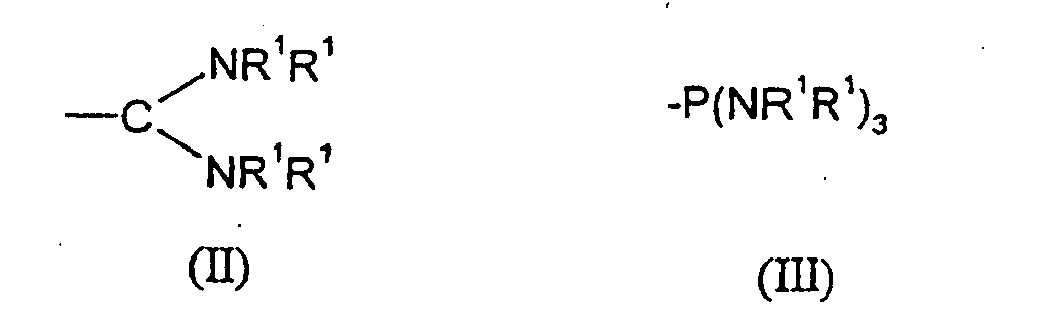
 A représente un radical de formules (II) ou (III)
 B, indépendamment de A, représente un radical de formules (II), (III), (IV) ou (IVa)
-S(NR1R1)2 (IVa)
dans lesquelles
les groupes R1 individuels sont identiques ou différents et représentent chacun un groupe alkyle en C1-C10 linéaire ou ramifié, un groupe alkylène en C2-C10 linéaire ou ramifié ou un groupe aryle en C6-C12,
où un ou plusieurs groupes NR1R1 peuvent également représenter un noyau saturé ou insaturé à 3-5 chaînons, qui est formé d'un atome d'azote et par ailleurs d'atomes de carbone,
où la formule (II) et le groupe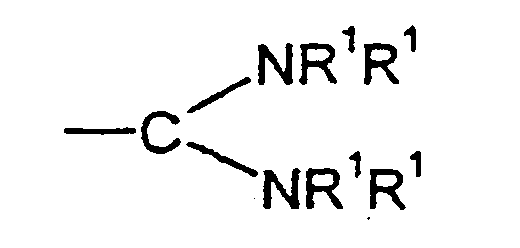 x représente un atome d'azote ou un atome de phosphore, etAn⊖ représente un équivalent d'un anion.
 - Procédé selon la revendication 1, caractérisé en ce que les radicaux R1 représentent un groupe méthyle, un groupe éthyle, un groupe propyle ou un groupe butyle, ou
un groupe NR1R1 représente un noyau saturé ou insaturé, à 5-7 chaînons, qui est formé d'un atome d'azote et par ailleurs d'atomes de carbone,
ou
la formule (II) ou le groupe x représente un atome d'azote, etAn⊖ représente un groupe chlorure, un groupe bromure, un groupe (CH3)3SiF2 ⊖, un groupe HF2 ⊖, un groupe H2F2 ⊖, un groupe tétrafluoroborate, un groupe hexafluorophosphate, un groupe carbonate ou un groupe sulphate.
 - Procédé selon les revendications 1 et 2, caractérisé en ce que l'on prépare des composés aromatiques fluorés sur le noyau de formule (X)
R2 xArFwCl(y-w)Rz 3 (X),
dans laquelleR2 représente indépendamment un groupe F, un groupe Cl, un groupe Br, un groupe NO2 un groupe CN, un groupe CF3, un groupe CCl3, un groupe CHO, un groupe OCF3, un groupe SCF3, un groupe COR4, un groupe COOR4 un groupe COY ou un groupe SO2Y où R4 représente un groupe alkyle en C1-C10 et Y représente un groupe F, un groupe Cl, un groupe Br ou un groupe CF3,R3 représente indépendamment un atome d'hydrogène ou un radical alkyle en C1-C10 ou alcoxy en C1-C10 linéaire ou ramifié,x représente un entier de 1 à 3,Ar représente un radical aromatique ou hétéroaromatique renfermant au total de 6 à 10 atomes du noyau, où les atomes du noyau peuvent être uniquement des atomes de carbone, mais également des atomes de carbone plus de 1 à 3 hétéroatomes parmi le groupe constitué d'un atome d'azote, d'un atome d'oxygène et d'un atome de soufre,w représente un entier de 1 à y,y représente un entier de 1 à 5, etz vaut zéro ou représente un entier de 1 à 5, où x+y+z = le nombre de toutes les valences substituables sur le radical Ar,et, à cette fin, en tant que composés aromatiques qui sont substitués par un halogène échangeable contre du fluore, on utilise ceux qui correspondent à la formule (XI)
R2 xArClyR3 z (XI),
dans laquelle les symboles utilisés présentent la signification indiquée pour la formule (X). - Procédé selon la revendication 3, caractérisé en ce que, dans les formules (X) et (XI),R2 représente indépendamment un groupe Cl, un groupe NO2, un groupe CN, un groupe CF3, un groupe COCl ou un groupe CHO,R3 représente indépendamment un atome d'hydrogène, un groupe méthyle, un groupe éthyle, un groupe méthoxy ou un groupe éthoxy,Ar représente un radical phényle ou un radical pyridyle,x vaut 1 ou 2,w vaut 1 ou 2,y représente un entier de 1 à 4, etz vaut zéro ou 1.
- Procédé selon les revendications 1 à 4, caractérisé en ce que, par rapport à 1 mol d'halogène à échanger contre du fluore, qui est lié au noyau d'un composé aromatique, on utilise de 0,001 à 0,5 mol d'un ou de plusieurs composés de formule (I) et de 0,8 à 2 équivalents d'un ou de plusieurs fluorures.
- Procédé selon les revendications 1 à 5, caractérisé en ce qu'il est réalisé en présence de solvants aprotiques dipolaires et/ou de solvants aprotiques non polaires.
- Procédé selon les revendications 1 à 5, caractérisé en ce que, lors de la réaction de benzotrifluorures polychlorés pour donner lieu à des benzotrifluorures fluorés et chlorés et/ou à des benzotrifluorures polyfluorés, on peut se passer d'un solvant.
- Procédé de préparation de composés de formule (I) (telle qu'indiquée dans la revendication 1), caractérisé en ce qu'un composé de formule
 A présente la signification indiquée pour la formule (I) ou correspond à la formule (IVa),An représente un atome de chlore ou un atome de brome, etAn⊖ représente un équivalent d'un anion,est mis à réagir avec un composé de formule (XIII)
 A' présente la signification indiquée pour A pour la formule (I) en ce qui concerne la disposition des atomes, mais est bivalent,et une base est ajoutée.
 - Procédé selon la revendication 8, caractérisé en ce que l'on utilise, en tant que bases, des alcoolates, des amines tertiaires ou un excès d'un composé de formule (XIII) en quantités de 1 à 1,2 équivalents, par rapport à 1 mol du composé de formule (XII).
- Procédé selon les revendications 8 et 9, caractérisé en ce qu'il est réalisé entre -80°C et +70°C et en utilisant de 0,8 à 3 mol d'un composé de formule (XIII), par rapport au composé de formule (XII), et la base est ajoutée entre -50 et ±40°C.
- Composés de formule (I)
 A représente un radical de formules (II) ou (III)
 B, indépendamment de A, représente un radical de formules (IV) ou (IVa)
-S(NR1R1)2 (IVa)
dans lesquelles
les groupes R1 individuels sont identiques ou différents et représentent chacun un groupe alkyle en C1-C10 linéaire ou ramifié, un groupe alkylène en C2-C10 linéaire ou ramifié ou un groupe aryle en C6-C12,
où un ou plusieurs groupes NR1R1 peuvent également représenter un noyau saturé ou insaturé à 3-5 chaînons, qui est formé d'un atome d'azote et par ailleurs d'atomes de carbone,
où la formule (II) et le groupe X représente un atome d'azote ou un atome de phosphore, etAn⊖ représente un équivalent d'un anion.
 - Bromure de diéthylamino-bis(tétraméthylguanidino)sulfonium.
- Bromure de diéthylamino-bis[tris(diéthylamino)phosphazényl]sulfonium.
- Composé de formule (VI)

Applications Claiming Priority (2)
| Application Number | Priority Date | Filing Date | Title |
|---|---|---|---|
| DE10129057A DE10129057A1 (de) | 2001-06-15 | 2001-06-15 | Verbessertes Verfahren zur Herstellung kernfluorierter Aromaten |
| DE10129057 | 2001-06-15 |
Publications (2)
| Publication Number | Publication Date |
|---|---|
| EP1266904A1 EP1266904A1 (fr) | 2002-12-18 |
| EP1266904B1 true EP1266904B1 (fr) | 2006-09-13 |
Family
ID=7688393
Family Applications (1)
| Application Number | Title | Priority Date | Filing Date |
|---|---|---|---|
| EP02011682A Expired - Lifetime EP1266904B1 (fr) | 2001-06-15 | 2002-06-03 | Procédure améliorée pour la préparation des composés aromatiques fluorés |
Country Status (4)
| Country | Link |
|---|---|
| US (2) | US7091362B2 (fr) |
| EP (1) | EP1266904B1 (fr) |
| JP (1) | JP4280030B2 (fr) |
| DE (2) | DE10129057A1 (fr) |
Families Citing this family (17)
| Publication number | Priority date | Publication date | Assignee | Title |
|---|---|---|---|---|
| WO2003101926A1 (fr) * | 2002-06-04 | 2003-12-11 | Clariant Gmbh | Procede de fabrication de composes contenant du fluor par echange fluor-halogene a l'aide de catalyseurs polyaminophosphases specifiques |
| DE10252272A1 (de) * | 2002-11-11 | 2004-05-27 | Bayer Ag | Verfahren zur Herstellung von Polyhalogenalkanen |
| DE10252275A1 (de) | 2002-11-11 | 2004-05-27 | Bayer Ag | Perfluoralkylaniline |
| DE10307558A1 (de) * | 2003-02-21 | 2004-09-02 | Clariant Gmbh | Phosphazeniumsalz-Mischungen enthaltend Hexakis(amino)diphosphazenium Tetrakis(amino)-phosphonium und Polyaminophosphazenium-Salze |
| DE10347932A1 (de) | 2003-10-15 | 2005-05-19 | Bayer Chemicals Ag | Verfahren zur Herstellung von fluorhaltigen Anilinen |
| DE102004033525A1 (de) * | 2004-07-08 | 2006-02-02 | Lanxess Deutschland Gmbh | Verbessertes Verfahren zur Herstellung kernfluorierter Aromaten |
| DE102005044451A1 (de) * | 2005-09-17 | 2007-03-22 | Bayer Cropscience Gmbh | Verfahren zum Herstellen von 5-Fluor-1,3-dialkyl-1H-pyrazol-4-carbonsäurefluoriden |
| US20100036173A1 (en) * | 2007-01-09 | 2010-02-11 | E.I. Du Pont De Nemours And Company | Production of butenes and derivatives therefrom from aqueous ethanol |
| DE102008051412A1 (de) | 2008-10-11 | 2010-04-15 | Saltigo Gmbh | Katalysatoren zur Herstellung von Fluoraromaten |
| US7833829B2 (en) * | 2008-10-28 | 2010-11-16 | Honeywell International Inc. | MEMS devices and methods of assembling micro electromechanical systems (MEMS) |
| DE102009006643A1 (de) | 2009-01-29 | 2010-08-05 | Saltigo Gmbh | Herstellung von halogenierten N-heteroaromatischen Polyhalogenderivaten |
| US20110015401A1 (en) * | 2009-07-13 | 2011-01-20 | Massachusetts Institute Of Technology | Metal-Catalyzed Carbon-Fluorine Bond Formation |
| DE102009049419B4 (de) | 2009-10-14 | 2012-03-08 | Saltigo Gmbh | Verbessertes Verfahren zur Herstellung von 3-Chlor-4,5-difluorbenzotrifluorid |
| CN103934020B (zh) * | 2013-01-22 | 2016-03-30 | 福建海西联合药业有限公司 | 八取代的双胍盐作为氟甲基六氟异丙基醚的合成催化剂的应用及催化合成方法 |
| CN104693080B (zh) * | 2013-12-04 | 2016-08-10 | 南京正荣医药化学有限公司 | 一种6-取代-2-三氟甲基苯磺酰氯的制备方法 |
| CN110563757A (zh) * | 2018-06-06 | 2019-12-13 | 中国石油化工股份有限公司 | 一种氨基-三(二甲氨基)氯化磷的制备方法 |
| CN115850085A (zh) * | 2022-12-29 | 2023-03-28 | 中国科学技术大学苏州高等研究院 | 一种由氯代硝基苯制备氟代硝基苯的方法 |
Family Cites Families (8)
| Publication number | Priority date | Publication date | Assignee | Title |
|---|---|---|---|---|
| DE2938939A1 (de) * | 1978-10-05 | 1980-04-17 | Boots Co Ltd | Verfahren zur herstellung von fluornitrobenzolen |
| DE3681033D1 (de) * | 1986-01-06 | 1991-09-26 | Mallinckrodt Inc | Katalytisches verfahren zur herstellung von fluoraomatischen verbindungen mittels n-sek-alkylpyridiniumsalze. |
| DE3915495A1 (de) * | 1989-05-12 | 1990-11-15 | Bayer Ag | Kernfluorierte trifluormethylbenzaldehyde |
| DE4424219A1 (de) * | 1994-07-09 | 1996-01-11 | Basf Ag | Verfahren zur Herstellung von 2,5-Dihydrofuran |
| DE19531688A1 (de) * | 1995-08-29 | 1997-03-06 | Agfa Gevaert Ag | Silberhalogenidaufzeichnungsmaterial |
| US5990352A (en) * | 1996-02-20 | 1999-11-23 | Mitsui Chemicals, Inc. | Phosphazenium salt and preparation process thereof, and process for producing poly(alkylene oxide) |
| DE19631854C1 (de) * | 1996-08-07 | 1998-04-30 | Hoechst Ag | Verfahren zur Herstellung von Fluor enthaltenden Verbindungen |
| DE19702282C2 (de) * | 1997-01-23 | 1998-11-19 | Hoechst Ag | Katalysator für Halex-Reaktionen |
-
2001
- 2001-06-15 DE DE10129057A patent/DE10129057A1/de not_active Withdrawn
-
2002
- 2002-06-03 DE DE50208108T patent/DE50208108D1/de not_active Expired - Lifetime
- 2002-06-03 EP EP02011682A patent/EP1266904B1/fr not_active Expired - Lifetime
- 2002-06-07 JP JP2002166738A patent/JP4280030B2/ja not_active Expired - Fee Related
- 2002-06-12 US US10/171,004 patent/US7091362B2/en not_active Expired - Fee Related
-
2005
- 2005-06-09 US US11/148,695 patent/US7247733B2/en not_active Expired - Fee Related
Also Published As
| Publication number | Publication date |
|---|---|
| US20030036667A1 (en) | 2003-02-20 |
| DE50208108D1 (de) | 2006-10-26 |
| JP2003064033A (ja) | 2003-03-05 |
| JP4280030B2 (ja) | 2009-06-17 |
| US7247733B2 (en) | 2007-07-24 |
| DE10129057A1 (de) | 2002-12-19 |
| US7091362B2 (en) | 2006-08-15 |
| US20050228201A1 (en) | 2005-10-13 |
| EP1266904A1 (fr) | 2002-12-18 |
Similar Documents
| Publication | Publication Date | Title |
|---|---|---|
| EP1266904B1 (fr) | Procédure améliorée pour la préparation des composés aromatiques fluorés | |
| EP1616863A1 (fr) | Procédé pour la préparation des composés aromatiques fluorés | |
| EP0200051A2 (fr) | Procédé de préparation d'imidates | |
| EP0124002B1 (fr) | Procédé pour la préparation de composés aromatiques qui contiennent des chaînes latérales perfluorées liées par un atome hétérogène | |
| DE10227223A1 (de) | Verfahren zur Herstellung substituierter organischer Verbindungen und Verwendung von Katalysatoren für Substitutionsreaktionen | |
| EP0132733A2 (fr) | Fluorures d'acide fluoropivalique et procédé de leur préparation | |
| EP0636606B1 (fr) | Procédé de préparation d'adduits liquides d'une amine avec une amide contenant des groupes fluorés | |
| DE19720341C1 (de) | Verfahren zur Herstellung von 3,5-Difluoranilin | |
| EP0735016A1 (fr) | Procédé pour la préparation d'alpha-chloroalkylarylcétones | |
| EP0157270B1 (fr) | Procédé de préparation de benzo-1,4-dioxènes tétrachlorés | |
| EP0693466B1 (fr) | Procédé pour la préparation de composés aromatiques fluorés et diamides | |
| CH631969A5 (de) | Verfahren zur herstellung von aminen. | |
| EP0722934B1 (fr) | Procédé pour la préparation de pyridines-2-chloro-5-substitués | |
| DE2512498C2 (de) | Verfahren zur herstellung von sulfonsaeurefluoriden | |
| EP0590459B1 (fr) | Procédé de préparation de difluoro- et de chlorofluorobenzodioxoles | |
| EP0137175B1 (fr) | Procédé de préparation de composés hétérocycliques tétrachlorés condensés avec du benzène | |
| DE10064423A1 (de) | Verfahren zur Herstellung substituierter organischer Verbindungen und Verwendung von Katalysatoren für Substitutionsreaktionen | |
| EP0302331B1 (fr) | Esters de carbinols arylbisperfluoralkyles, procédé pour leur fabrication et pour les carbinols arylbisperfluoralkyles en question | |
| EP1099686B1 (fr) | Procédé pour la préparation de trifluorméthylanilines | |
| DE19713506A1 (de) | Verfahren zur Herstellung von 2,6-Dichlor-5-fluornicotinonitril und die chemische Verbindung 3-Cyano-2-hydroxy-5-fluorpyrid-6-on-mononatriumsalz sowie dessen Tautomere | |
| CH638489A5 (en) | Process for preparing and isolating haloacylamides | |
| EP0048411B1 (fr) | Procédé de préparation d'acétals de 3-bromo-4-fluorobenzaldéhyde, intermédiaires utilisés dans ce procédé et leur préparation | |
| EP0173153B1 (fr) | Composés hétérocycliques benzocondensés et fluorés, procédé pour leur préparation et leur utilisation | |
| EP0908443A2 (fr) | Procédé pour la préparation de composés aromatiques fluorés | |
| EP0132734A2 (fr) | Isocyanates de néopentyle et leur préparation |
Legal Events
| Date | Code | Title | Description |
|---|---|---|---|
| PUAI | Public reference made under article 153(3) epc to a published international application that has entered the european phase |
Free format text: ORIGINAL CODE: 0009012 |
|
| AK | Designated contracting states |
Kind code of ref document: A1 Designated state(s): AT BE CH CY DE DK ES FI FR GB GR IE IT LI LU MC NL PT SE TR |
|
| AX | Request for extension of the european patent |
Free format text: AL;LT;LV;MK;RO;SI |
|
| 17P | Request for examination filed |
Effective date: 20030618 |
|
| AKX | Designation fees paid |
Designated state(s): CH DE FR GB IT LI |
|
| 17Q | First examination report despatched |
Effective date: 20030730 |
|
| RAP1 | Party data changed (applicant data changed or rights of an application transferred) |
Owner name: BAYER CHEMICALS AG |
|
| RAP1 | Party data changed (applicant data changed or rights of an application transferred) |
Owner name: LANXESS DEUTSCHLAND GMBH |
|
| GRAP | Despatch of communication of intention to grant a patent |
Free format text: ORIGINAL CODE: EPIDOSNIGR1 |
|
| GRAS | Grant fee paid |
Free format text: ORIGINAL CODE: EPIDOSNIGR3 |
|
| RAP1 | Party data changed (applicant data changed or rights of an application transferred) |
Owner name: SALTIGO GMBH |
|
| GRAA | (expected) grant |
Free format text: ORIGINAL CODE: 0009210 |
|
| AK | Designated contracting states |
Kind code of ref document: B1 Designated state(s): CH DE FR GB IT LI |
|
| PG25 | Lapsed in a contracting state [announced via postgrant information from national office to epo] |
Ref country code: IT Free format text: LAPSE BECAUSE OF FAILURE TO SUBMIT A TRANSLATION OF THE DESCRIPTION OR TO PAY THE FEE WITHIN THE PRESCRIBED TIME-LIMIT;WARNING: LAPSES OF ITALIAN PATENTS WITH EFFECTIVE DATE BEFORE 2007 MAY HAVE OCCURRED AT ANY TIME BEFORE 2007. THE CORRECT EFFECTIVE DATE MAY BE DIFFERENT FROM THE ONE RECORDED. Effective date: 20060913 |
|
| REG | Reference to a national code |
Ref country code: GB Ref legal event code: FG4D Free format text: NOT ENGLISH |
|
| REG | Reference to a national code |
Ref country code: CH Ref legal event code: EP Ref country code: CH Ref legal event code: NV Representative=s name: E. BLUM & CO. PATENTANWAELTE |
|
| REF | Corresponds to: |
Ref document number: 50208108 Country of ref document: DE Date of ref document: 20061026 Kind code of ref document: P |
|
| ET | Fr: translation filed | ||
| PLBE | No opposition filed within time limit |
Free format text: ORIGINAL CODE: 0009261 |
|
| STAA | Information on the status of an ep patent application or granted ep patent |
Free format text: STATUS: NO OPPOSITION FILED WITHIN TIME LIMIT |
|
| 26N | No opposition filed |
Effective date: 20070614 |
|
| REG | Reference to a national code |
Ref country code: CH Ref legal event code: PFA Owner name: SALTIGO GMBH Free format text: SALTIGO GMBH# #51369 LEVERKUSEN (DE) -TRANSFER TO- SALTIGO GMBH# #51369 LEVERKUSEN (DE) |
|
| PGFP | Annual fee paid to national office [announced via postgrant information from national office to epo] |
Ref country code: IT Payment date: 20110616 Year of fee payment: 10 |
|
| PG25 | Lapsed in a contracting state [announced via postgrant information from national office to epo] |
Ref country code: IT Free format text: LAPSE BECAUSE OF NON-PAYMENT OF DUE FEES Effective date: 20120603 |
|
| PGFP | Annual fee paid to national office [announced via postgrant information from national office to epo] |
Ref country code: DE Payment date: 20130529 Year of fee payment: 12 Ref country code: CH Payment date: 20130612 Year of fee payment: 12 Ref country code: GB Payment date: 20130529 Year of fee payment: 12 |
|
| PGFP | Annual fee paid to national office [announced via postgrant information from national office to epo] |
Ref country code: FR Payment date: 20130624 Year of fee payment: 12 |
|
| REG | Reference to a national code |
Ref country code: DE Ref legal event code: R119 Ref document number: 50208108 Country of ref document: DE |
|
| REG | Reference to a national code |
Ref country code: CH Ref legal event code: PL |
|
| GBPC | Gb: european patent ceased through non-payment of renewal fee |
Effective date: 20140603 |
|
| REG | Reference to a national code |
Ref country code: DE Ref legal event code: R119 Ref document number: 50208108 Country of ref document: DE Effective date: 20150101 |
|
| REG | Reference to a national code |
Ref country code: FR Ref legal event code: ST Effective date: 20150227 |
|
| PG25 | Lapsed in a contracting state [announced via postgrant information from national office to epo] |
Ref country code: LI Free format text: LAPSE BECAUSE OF NON-PAYMENT OF DUE FEES Effective date: 20140630 Ref country code: DE Free format text: LAPSE BECAUSE OF NON-PAYMENT OF DUE FEES Effective date: 20150101 Ref country code: CH Free format text: LAPSE BECAUSE OF NON-PAYMENT OF DUE FEES Effective date: 20140630 |
|
| PG25 | Lapsed in a contracting state [announced via postgrant information from national office to epo] |
Ref country code: GB Free format text: LAPSE BECAUSE OF NON-PAYMENT OF DUE FEES Effective date: 20140603 Ref country code: FR Free format text: LAPSE BECAUSE OF NON-PAYMENT OF DUE FEES Effective date: 20140630 |