EP1269769B1 - Computer telephony integration (cti) - Google Patents
Computer telephony integration (cti) Download PDFInfo
- Publication number
- EP1269769B1 EP1269769B1 EP01917220A EP01917220A EP1269769B1 EP 1269769 B1 EP1269769 B1 EP 1269769B1 EP 01917220 A EP01917220 A EP 01917220A EP 01917220 A EP01917220 A EP 01917220A EP 1269769 B1 EP1269769 B1 EP 1269769B1
- Authority
- EP
- European Patent Office
- Prior art keywords
- cti
- call
- controller
- switching means
- facility
- Prior art date
- Legal status (The legal status is an assumption and is not a legal conclusion. Google has not performed a legal analysis and makes no representation as to the accuracy of the status listed.)
- Expired - Lifetime
Links
Images

Classifications
-
- H—ELECTRICITY
- H04—ELECTRIC COMMUNICATION TECHNIQUE
- H04Q—SELECTING
- H04Q3/00—Selecting arrangements
- H04Q3/58—Arrangements providing connection between main exchange and sub-exchange or satellite
- H04Q3/62—Arrangements providing connection between main exchange and sub-exchange or satellite for connecting to private branch exchanges
Definitions
- This invention relates to the use of a computer for controlling the operation of a telephony system, such use is known in the art as computer telephony integration (CTI), and the systems employing such control are known as CTI systems.
- CTI computer telephony integration
- United States Patent Number US5805692 recites describes a telecommunications system including a network of coupled telecommunication exchanges in which at least one exchange is coupled to a processor via a computer telephoney interface (CTI).
- CTI computer telephoney interface
- the exchanges monitor state information for extension that are connected to the exchanges and a router routes the state information to the exchange coupled to the processor to transfer state information to the processor.
- a method of operating a computer telephony integration (CTI) system comprising a CTI-enabled switching means, and an associated CTI controller coupled to the CTI-enabled switching means via a CTI signalling link, the method comprising the steps of: responding to receipt of a call terminating at the CTI-enabled switching means by delivering that terminating call to a destination network termination, and sending to the CTI controller signalling data of that call comprising at least the directory number of that destination network termination; notifying the CTI controller of an answer condition with respect to that destination network termination; and, in response to that notification, sending from the CTI controller to the CTI-enabled switching means a command for invoking a call back when free facility in respect of that destination directory number.
- CTI computer telephony integration
- the step of notifying the CTI controller may comprise forwarding to the CTI controller the indication received at the CTI-enabled switching means.
- the CTI controller may further respond to that notification of an answer condition by recording the current status of that destination directory number as busy.
- a method of this first aspect may include the steps of:
- the further step of responding to that notification of the receipt of a said call by sending from the CTI controller to the CTI-enabled switching means a command for cancelling that call back when free facility in respect of that destination directory number.
- the step of responding to receipt of a call terminating at the CTI-enabled switching means may comprise:
- a computer telephony integration (CTI) system comprising a CTI-enabled switching means, and an associated CTI controller coupled to the CTI-enabled switching means via a CTI signalling link:
- the CTI-enabled switching means may be further arranged to notify the CTI controller of the receipt at the CTI-enabled switching means of an indication, generated in accordance with that facility as the result of that destination network termination being subsequently deemed free by that facility; and the CTI controller may be further arranged to respond to that notification of the receipt of an indication by changing the recorded current status of that destination network termination to free.
- the CTI-enabled switching means may be arranged to forward to the CTI controller the indication received at the CTI-enabled switching means.
- the CTI controller may be further arranged to respond to that notification of an answer condition by recording the current status of that destination directory number as busy.
- the CTI-enabled switching means may be arranged to notify the CTI controller of the receipt at the CTI-enabled switching means of a said call made in accordance with that facility; and the CTI controller may be arranged to respond to that notification of the receipt of a said call made in accordance with that facility by recording the current status of that destination network termination as free.
- the CTI controller is further arranged to respond to that notification of the receipt of a said call by sending to the CTI-enabled switching means a command for cancelling that call back when free facility in respect of that destination directory number.
- the CTI-enabled switching means may be arranged to respond to receipt of the terminating call by extending that terminating call to the CTI controller via a first channel of a transmission link; and the CTI controller may be arranged to determine said destination network termination, to make an originating call to that destination directory number from the CTI controller via a second channel of the transmission link, and to join the terminating call and the originating call at the CTI controller.
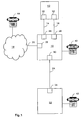
- FIG. 1 there is shown a first embodiment of a CTI system comprising a CTI-enabled PBX 10 connected to its associated CTI controller 12, also called a CTI server, via a CTI link 14 and a 2.048 Mbit/s 32-channel PCM transmission link 16.
- the CTI-enabled PBX 10 is also connected to a PSTN 18 via a 2.048 Mbit/s 32-channel PCM transmission link 20, and to a PBX 22 via a 2.048 Mbit/s 32-channel PCM transmission link 24.
- the transmission links 16, 20 and 24 are each terminated at the CTI-enabled PBX 10 by respective primary rate cards 26, 28 and 30; the transmission link 16 is terminated at the CTI controller 12 by a primary rate card 32; and the transmission link 24 is terminated at the PBX 22 by a primary rate card 34.
- the CTI-enabled PBX 10 and the PBX 22 are enabled to send and receive signalling messages via the transmission link 24 using a signalling system known in the art as Digital Private Network Signalling System No. 1 (DPNSS1) and described in the document BTNR 188 available from BT.
- DPNS1 Digital Private Network Signalling System No. 1
- the CTI link 14 is terminated at the CTI-enabled PBX 10 by a CTI interface card 36 and at the CTI controller 12 by a CTI interface card 38.
- the CTI interface cards 36 and 38 operate in accordance with a CTI protocol known as Computer Supported Telecommunications Applications (CSTA).
- CSTA Computer Supported Telecommunications Applications
- the CTI-enabled PBX 10 and the PBX 22 are both connected to a respective plurality of telephones, also referred to as extensions, corresponding to DNs within their respective numbering ranges, of which, for convenience, only one telephone 40 is shown connected to the CTI-enabled PBX 10, and only one telephone 42 is shown connected to the PBX 22.
- telephones are also referred to as network terminations.
- the CTI controller 12 is responsible for determining where the call is delivered. Therefore, on receipt of the call via the transmission link 20, the CTI-enabled PBX 10 will first send the signalling data, i.e. the CLI and the DNIS, of that call to the CTI controller 12 and await a delivery instruction. Assuming firstly that user B wants incoming calls delivered to his telephone 40 and has not invoked, for example, a Call Forward facility, the CTI controller 12 will respond with a delivery instruction for delivery to the telephone 40, and the CTI-enabled PBX 10 will respond by causing telephone 40 to ring.
- the signalling data i.e. the CLI and the DNIS
- the CTI-enabled PBX 10 is programmed to report to the CTI controller 12 the various stages of its call processing, i.e. the telephony states.
- a corresponding message is sent to the CTI controller 12 which records that the state of telephone 40 has gone from Free to Ringing.
- the CTI controller 12 responds to the next message, for that call, from the CTI-enabled PBX 10 by changing the recorded state from Ringing to Busy, and when user B goes on-hook at the end of that call, the CTI-enabled PBX 10 responds to the next message, for that call, from the CTI-enabled PBX 10 by changing the recorded state from Busy to Free.
- the present invention enables the CTI controller 12 to maintain its call log for situations where the CTI-enabled PBX 10 has delivered the call to a remote PBX, for example the PBX 22, which, in the most likely situation, is not CTI-enabled and programmed to monitor and report on the telephony states.
- the CTI-enabled PBX 10 is also referred to as the Originating PBX
- the PBX 22 is referred to as the Terminating PBX.
- the CTI controller 12 does not know when a call delivered off-switch, i.e. sent to a Terminating PBX, goes from Busy to Free. Assume, therefore, that user B wants his calls delivered to telephone 42 in the conventional CTI system.
- the CTI controller 12 will respond to the incoming call from A with a delivery instruction for delivery to the telephone 42, and the CTI-enabled PBX 10 will act as the Originating PBX and respond by sending an Initial Service Request Message (ISRM) to the Terminating PBX.
- ISRM Initial Service Request Message
- the Terminating PBX will communicate with the Originating PBX by conventional Call Set Up messages in accordance with DPNSS1, and up to the time that user B answers at telephone 42, the Originating PBX has control of the call (in case there is no answer and the Originating PBX has to take alternative action) and sends appropriate messages to the CTI controller 12.
- the CTI controller 12 records that user B is Busy at telephone 42.
- the Originating PBX responds to the message from the Terminating PBX indicating an answer at telephone 42 by connecting that incoming call to a transmission channel in the transmission link 24 and ceasing monitoring. In other words, the Originating PBX has no further interest in monitoring that call. Thus, when user B goes on hook and the Terminating PBX signals this to the Originating PBX, that connection will be taken down, but no message will be sent to the CTI controller 12, and the recorded state of telephone 42 (user B) will remain at Busy, although it is actually Free.
- the present invention is concerned with actions after the Originating PBX has forwarded the call to the Terminating PBX, and user B has answered the call at telephone 42.
- the CTI controller 12 receives the conventional messages from the Originating PBX, and progresses through recording the status of user B as Ringing, and subsequently as Busy.
- the last message of this stage is an answer message from the Terminating PBX, containing in Delivered Directory Number field the directory number to which the call has been delivered, in this case the directory number of telephone 42, i.e. its extension number, and the Originating PBX responds by sending a corresponding reporting message to the CTI controller 12.
- the CTI controller 12 additionally responds to receipt of this corresponding reporting message by instructing the Originating PBX to make a "Call Back When Free - Request" in respect of the directory number of that message, i.e. telephone 42.
- the Originating PBX responds to that instruction to initiate a CBWF request by selecting for use as an OLI an available one of a pool of "reserved" extension numbers, i.e. numbers for which there are no physical line cards and telephones; sending, by means of a Virtual Call, a corresponding message, "ISRM - CBWF: REQUEST", to the Terminating PBX; and storing that CBWF message.
- the Terminating PBX also stores that CBWF message, marked as waiting for telephone 42 to become free.
- This message has a message type field containing "ISRM(C)"; an SIC field containing “TELE”; an OLI field containing the selected number; a signalling type field containing "CLC - ORD”; a CBWF type field containing "CBWF - R”; and a destination address (DA) field containing the directory number of telephone 42.
- the CTI controller 12 performs the selection of the "reserved" number to be used as the OLI, and passes that to the Originating PBX with the instruction.
- the Terminating PBX will send a Clear Request Message (CRM) having a message type field containing "CRM”; a Clearing Clause (CC) type field containing "CC: Acknowledge”; a CLI field containing the number of telephone 42; and a State of Destination (SOD) field containing "SOD - B", and in response the Originating PBX will return a Clear Indication Message (CIM), which is identical to that CRM except that its message type field contains "CIM”.
- CCM Clear Request Message
- CCM Clearing Clause
- SOD State of Destination
- the Terminating PBX detects this and, if telephone 42 is still free after a timeout of three seconds in which user B may make a follow on call, generates a "CALL BACK WHEN FREE - FREE NOTIFICATION" message ", which it sends to the Originating PBX.
- This message is similar to the "ISRM - CBWF: REQUEST", but differs in that the CLC field contains "CLC - NET" to indicate that network signalling is being used, and in that the CBWF type field contains "CBWF - FN".
- the Terminating PBX also blocks telephone 42.
- the Originating PBX When the Originating PBX receives this "CBWF - FN" message, it returns an Acknowledgement CRM, to which the Terminating PBX replies with an Acknowledgement CIM. The Originating PBX then proceeds to generate the next message of the CBWF sequence, namely a "CALL BACK WHEN FREE - CALL SET-UP", and to send it to the Terminating PBX.
- This message is similar to the "ISRM - CBWF: REQUEST", but differs in that the CLC field contains "CLC - ORD" to indicate that ordinary signalling is to be used, and in that the CBWF type field contains "CBWF - CSU".
- the Terminating PBX is programmed to withhold ringing from the telephone 42 at this stage.
- the Terminating PBX On receipt of this CBWF - CSU message, the Terminating PBX responds with a Number Acknowledge Message (NAM).
- NAAM Number Acknowledge Message
- "reserved" extension numbers have no actual line cards and telephones, their SOD is permanently set to Free, so the Originating PBX will respond to receipt of that NAM by applying a calling signal to the "originating extension" for this CBWF situation, i.e. the selected extension number, and reporting to the CTI controller 12 that an incoming call had been received for the selected extension from telephone 42.
- the CTI controller 12 now changes the recorded state of telephone 42 from Busy to Free.
- the Originating PBX will wait for a timeout of sixteen seconds, cancel the stored CBWF request message, and send a CRM containing "CC - REJECT", causing the stored CBWF request message to be cancelled at the Terminating PBX.
- the CTI controller 12 further responds to receipt of that report by immediately instructing the Originating PBX to treat the timeout as having matured.
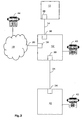
- the CTI-enabled PBX 10 is replaced by PBX 50, which is not enabled for CTI operation, together with a telephony card 52 mounted in a computer (not shown) and coupled to the PBX 50 via a 2.048 Mbit/s 32 channel PCM transmission link 56 having primary rate interface cards (not shown) at each end.
- the signalling link 14 from the CTI controller 12 is connected to the telephony card 52.
- the computer and the CTI controller 12 are disposed in different locations, but in variants the CTI controller 12 is constituted by a program running on that computer.
- the PBX 50 and the telephony card 52 together constitute a CTI-enabled switching system of the present invention.
- the PBX 50 Upon receipt of an incoming call, the PBX 50 effectively terminates that call on the telephony card 52 using a first of the channels of the transmission link 56 to send a DPNSS1 signalling message to the telephony card 52 reporting the arrival of that call.
- the telephony card 52 sends a corresponding CSTA message via the signalling link 14 to the CTI controller 12, which determines the actual destination for that call, i.e. whether the call is to be delivered to an extension of the PBX 50 or forwarded to an extension of a remote PBX, for example the PBX 22.
- the CTI controller 12 because the PBX 50 is not enabled for direct CTI control, the CTI controller 12 originates a call from the telephony card 52 to the actual destination, I think we should first mention the incoming call from 44, using a second channel of the transmission link 56, and, upon receiving notification of answer at the destination telephone, commands the telephony card 52 to connect the first and second channels, and records the state of that destination extension as Busy.
- the PBX 50 detects, in known manner, that the incoming call is now extended out to a remote PBX and performs route optimisation to connect the incoming call directly to that outgoing call, and to drop the "tromboned" section to and from the telephony card 52.
- the CTI controller 12 has thus lost its direct visibility of that call.
- the CTI controller 12 sends via the CSTA signalling link 14 an instruction to initiate a CBWF - REQUEST.
- the telephony card 52 responds by selecting a "reserved” extension number for use as the OLI and sending an "ISRM - CBWF: REQUEST" message to the PBX 50, which stores that message and sends it on to the remote PBX, as described above.
- the remote PBX When the destination extension becomes free, the remote PBX will send a "CALL BACK WHEN FREE - FREE NOTIFICATION" message to the PBX 50, which responds by sending a call setup message (CBWF - CSU) to the remote PBX.
- CBWF - CSU call setup message
- the remote PBX makes a call to that "reserved" extension number, which will be received at the telephony card 52, and its arrival reported to the CTI controller 12.
- the CTI controller 12 will change the recorded state of the original call from Busy to Free, and instruct the PBX 50 to cancel the CBWF - REQUEST.
- the PBX 50 cancels its stored request, and sends to the remote PBX a CRM containing "CC - REJECT", causing the corresponding stored CBWF request message to be cancelled at the remote PBX.
- FIG 3 there is shown a further embodiment of a CTI system similar to the embodiment of Figure 1 but differing in that the transmission link 16 is omitted and in that the CTI-enabled PBX 10' (Originating PBX) of this embodiment has a modified control program.
- Originating PBX and its associated CTI controller 12 will now be described with reference to a call made from the user A to the user B associated with the telephone 40.
- the Originating PBX will first send the signalling data, i.e. the CLI and the DNIS, of that call to the CTI controller 12, and await a delivery instruction.
- the signalling data i.e. the CLI and the DNIS
- the CTI controller 12 will provide the delivery instruction for delivery to the telephone 42, and, in response to being notified of the subsequent receipt of the answer message at the Originating PBX, will issue the instruction to initiate a CBWF request.
- the CTI controller 12 will have recorded, as before, the telephony status of the telephone 42, identified by its directory number, as now being Busy.
- the Originating PBX of this embodiment is arranged to respond to instructions from the CTI controller 12 to initiate CBWF requests by sending, by means of a Virtual Call, the corresponding message, "ISRM - CBWF: REQUEST", to the Terminating PBX; and storing that CBWF request message.
- the Terminating PBX also stores that CBWF request message, marked as waiting for telephone 42 to become free.
- the OLI field of this "ISRM - CBWF: REQUEST" contains all null characters since, as is described in detail below, the CBWF facility, as invoked by the CTI controller 12 for the purposes of the present invention, does not progress to the "CALL SET-UP" stage.
- the Terminating PBX does not examine the OLI field, and its operation is not affected by the null characters.
- the Terminating PBX will send a Clear Request Message (CRM) having a message type field containing "CRM”; a Clearing Clause (CC) type field containing "CC: Acknowledge”; a CLI field containing the number of telephone 42; and a State of Destination (SOD) field containing "SOD - B", and in response the Originating PBX will return a Clear Indication Message (CIM), which is identical to that CRM except that its message type field contains "CIM”.
- CCM Clear Request Message
- CCM Clearing Clause
- SOD State of Destination
- Terminating PBX detects this and, if telephone 42 is still free after a timeout of three seconds in which user B may make a follow on call, generates the "CALL BACK WHEN FREE - FREE NOTIFICATION" message ", which it sends to the Originating PBX.
- the Originating PBX When the Originating PBX receives this "CBWF - FN" message, it notifies the CTI controller 12 of that receipt by forwarding that message to the CTI controller 12, and the CTI controller 12 responds by changing the recorded telephony state of the telephone 42 from Busy to Free. In a variant, the Originating PBX sends instead a corresponding "FREE NOTIFICATION" message to the CTI controller 12 in respect of the directory number of the telephone 42, i.e. the contents of the DA field of the received message.
- the Originating PBX also cancels the stored CBWF request message for that directory number, and sends to the Terminating PBX a CRM containing "CC - REJECT", causing the corresponding stored CBWF request message to be cancelled at the Terminating PBX.
- the Originating PBX cancels the stored CBWF request message for that directory number in response to a command from the CTI controller 12.
- the switch can be a public network switch, such as a Nortel DMS100 switch which is used in known CTI arrangements in conjunction with a CompuCall CTI controller; and other forms of switching function include switches known as Automatic Call Distributor (ACD), Interactive Voice Response (IVR), and server PBX.
- ACD Automatic Call Distributor
- IVR Interactive Voice Response
- server PBX server PBX
- ACD Automatic Call Distributor
- IVR Interactive Voice Response
- the type of switching is not limited to any one form, and, in addition to switched circuit technology, includes Asynchronous Transfer Mode (ATM) switching, and Voice over Internet Protocol (VoIP) switching.
- ATM Asynchronous Transfer Mode
- VoIP Voice over Internet Protocol
- the switch can be a PBX having an Internet Card, or it can be a general purpose computer, e.g. one running Windows NT, having an Internet card, e.g. a Dialogic Internet card, and in this latter case the CTI controller function is provided by a program running in the computer, rather than in a separate controller.
- the telephones at the workstations can connect to their respective clients via Internet phone jacks, and in an alternative arrangement telephony can be provided for the user via a sound card in his client.
- the present invention can be implemented in any computer controlled switch, by means of a suitable controlling program.
- the called user is an individual person who normally works at a workstation. It will be appreciated that a DNIS need not correspond to an individual person, but may relate to a department or group, or a specific function within a company. Furthermore, more than one DNIS can correspond to such a function.
- the present invention includes caller identities other than the abovementioned CLI. These include a cell identity when the caller is using a mobile telephone, an alphanumeric string, an Internet Protocol address, and "null" information, e.g. where a caller has withheld his CLI.
- CTI although originating from the computer control of voice telephony, is not limited to voice communications and includes other types of communications, e.g. videotelephony, and multimedia.
- the description below seems to come a bit 'out of the blue'. Also I don't think the CTI Server is 18.
- the CTI server 18 sends a message to the computer for each of the store 48 members.
- the called user will get a screen pop including a "caller identity", i.e. details of the caller, immediately or after a defined time.
- the caller identity being typically the CLI (or a null identity if CLI is withheld) or equivalent, and any translation to a name for the caller (or Unknown if no translation is found).
- Each active computer other than the called user, receives the message, but does not display the caller identity until the workgroup member clicks on the called user's icon.
- only the called user is sent a message including the caller identity
- the other active computers receive a message containing only the called user identity.
- a workgroup member clicks on the called user's icon a request is sent from his computer to the CTI server 18 for a return message containing the caller identity.
Landscapes
- Physics & Mathematics (AREA)
- Astronomy & Astrophysics (AREA)
- General Physics & Mathematics (AREA)
- Engineering & Computer Science (AREA)
- Computer Networks & Wireless Communication (AREA)
- Telephonic Communication Services (AREA)
Claims (14)
- Verfahren zum Betreiben eines Computertelephonie-Integrationssystems (CTI-System), das ein CTI-fähiges Vermittlungsmittel (10) und eine zugeordnete CTI-Steuereinheit (12), die mit dem CTI-fähigen Vermittlungsmittel über eine CTI-Signalgebungsverbindung (14) gekoppelt ist, umfasst, wobei das Verfahren die folgenden Schritte umfasst:Antworten auf den Empfang eines Anrufs, der bei dem CTI-fähigen Vermittlungsmittel (10) endet, durchWeiterleiten dieses endenden Anrufs an ein Ziel-Netzendgerät, undSenden von Signalgebungsdaten dieses Anrufs, die wenigstens die Teilnehmernummer dieses Ziel-Netzendgeräts (40) enthalten, zu der CTI-Steuereinheit (12);Melden einer Antwortbedingung bezüglich jenes Ziel-Netzendgeräts (40) an die CTI-Steuereinheit (12); undin Reaktion auf diese Meldung Senden eines Befehls zum Aufrufen eines Rückruf-wenn-frei-Dienstmerkmals bezüglich dieser Ziel-Teilnehmernummer von der CTI-Steuereinheit (12) zu dem CTI-fähigen Vermittlungsmittel (10).
- Verfahren nach Anspruch 1, das die folgenden Schritte umfasst:ferner bei der CTI-Steuereinheit (12) Antworten auf das Melden einer Antwortbedingung durch Melden des Empfangs eines in Übereinstimmung mit jenem Dienstmerkmal erzeugten Hinweises bei dem CTI-fähigen Vermittlungsmittel (10) an die CTI-Steuereinheit (12) als Folge davon, dass das Ziel-Netzendgerät (40) anschließend durch dieses Dienstmerkmal als frei betrachtet wird; undin Reaktion auf diese Meldung des Empfangs eines Hinweises Ändern des aufgezeichneten momentanen Status jenes Ziel-Netzendgeräts (40) nach frei.
- Verfahren nach Anspruch 2, wobei der Schritt des Meldens an die CTI-Steuereinheit (12) das Weiterleiten des bei dem CTI-fähigen Vermittlungsmittel (10) empfangenen Hinweises an die CTI-Steuereinheit (12) umfasst.
- Verfahren nach einem der Ansprüche 1 bis 3, wobei die CTI-Steuereinheit (12) ferner auf jene Meldung einer Antwortbedingung durch Aufzeichnen des momentanen Status jener Ziel-Teilnehmernummer als belegt antwortet.
- Verfahren nach Anspruch 1, das die folgenden Schritte umfasst:Bereitstellen einer Nummer für jenes Dienstmerkmal zur Verwendung als eine Ziel-Teilnehmernummer eines in Übereinstimmung mit diesem Dienstmerkmal auszuführenden Anrufs als Folge davon, dass das Ziel-Netzendgerät (40) anschließend durch dieses Dienstmerkmal als frei betrachtet wird;Melden des Empfangs des in Übereinstimmung mit jenem Dienstmerkmal ausgeführten Anrufs bei dem CTI-fähigen Vermittlungsmittel (10) an die CTI-Steuereinheit (12);in Reaktion auf diese Meldung des Empfangs des in Übereinstimmung mit jenem Dienstmerkmal ausgeführten Anrufs Aufzeichnen des momentanen Status jenes Ziel-Netzendgeräts (40) als frei.
- Verfahren nach Anspruch 5, das den weiteren Schritt des Antwortens auf jene Meldung des Empfangs des Anrufs durch Senden eines Befehls zum Abbrechen dieses Rückruf-wenn-frei-Dienstmerkmals bezüglich dieser Ziel-Teilnehmernummer von der CTI-Steuereinheit (12) zu dem CTI-fähigen Vermittlungsmittel (10) umfasst.
- Verfahren nach Anspruch 5 oder Anspruch 4, wobei der Schritt des Antwortens auf den Empfang eines bei dem CTI-fähigen Vermittlungsmittel (10) endenden Anrufs umfasst:Weiterleiten jenes endenden Anrufs zu der CTI-Steuereinheit (12) über einen ersten Kanal einer Übertragungsverbindung (16);Bestimmen des Ziel-Netzendgeräts (40);Ausführen eines abgehenden Anrufs von der CTI-Steuereinheit (12) zu der Ziel-Teilnehmernummer über einen zweiten Kanal der Übertragungsverbindung (20); undZusammenführen des endenden Anrufs und des abgehenden Anrufs bei der CTI-Steuereinheit (12).
- Computertelephonie-Integrationssystem (CTI-System), das ein CTI-fähiges Vermittlungsmittel (10) und eine zugeordnete CTI-Steuereinheit (12), die mit dem CTI-fähigen Vermittlungsmittel (10) über eine CTI-Signalgebungsverbindung (14) gekoppelt ist, umfasst;
wobei das CTI-fähige Vermittlungsmittel (10) dazu ausgelegt ist,
auf den Empfang eines bei dem CTI-fähigen Vermittlungsmittel (10) endenden Anrufs zu antworten durchWeiterleiten jenes endenden Anrufs an ein Ziel-Netzendgerät (40), undSenden von Signalgebungsdaten jenes Anrufs, die wenigstens die Teilnehmernummer jenes Ziel-Netzendgeräts (40) enthalten, zu der CTI-Steuereinheit (12); undder CTI-Steuereinheit (12) eine Antwortbedingung bezüglich jenes Ziel-Netzendgeräts (40) zu melden; und
wobei die CTI-Steuereinheit (12) dazu ausgelegt ist, auf jene Meldung durch Senden eines Befehls zum Aufrufen eines Rückruf-wenn-frei-Dienstmerkmals bezüglich dieser Ziel-Teilnehmernummer zu dem CTI-fähigen Vermittlungsmittel (10) zu antworten. - System nach Anspruch 8, wobei das CTI-fähige Vermittlungsmittel (10) ferner dazu ausgelegt ist, der CTI-Steuereinheit (12) den Empfang eines in Übereinstimmung mit diesem Dienstmerkmal erzeugten Hinweises bei dem CTI-fähigen Vermittlungsmittel (10) als Folge davon, dass das Ziel-Netzendgerät (40) anschließend durch dieses Dienstmerkmal als frei betrachtet wird, zu melden; und
die CTI-Steuereinheit (12) ferner dazu ausgelegt ist, auf jene Meldung des Empfangs eines Hinweises durch Ändern des aufgezeichneten momentanen Status des Ziel-Netzendgeräts (40) nach frei zu antworten. - System nach Anspruch 9, wobei das CTI-fähige Vermittlungsmittel (10) dazu ausgelegt ist, den bei dem CTI-fähigen Vermittlungsmittel (10) empfangenen Hinweis an die CTI-Steuereinheit (12) weiterzuleiten.
- System nach einem der Ansprüche 8 bis 10, wobei die CTI-Steuereinheit (12) ferner dazu ausgelegt ist, auf jene Meldung eine Antwortbedingung durch Aufzeichnen des momentanen Status der Ziel-Teilnehmernummer als belegt zu antworten.
- System nach Anspruch 8, das Mittel umfasst, um für jenes Dienstmerkmal eine Nummer für die Verwendung als Ziel-Teilnehmernummer eines in Übereinstimmung mit jenem Dienstmerkmal ausgeführten Anrufs als Folge davon, dass das Ziel-Netzendgerät (40) anschließend durch dieses Dienstmerkmal als frei betrachtet wird, bereitzustellen; wobei das CTI-fähige Vermittlungsmittel (10) dazu ausgelegt ist, der CTI-Steuereinheit (12) den Empfang des in Übereinstimmung mit jenem Dienstmerkmal ausgeführten Anrufs bei dem CTI-fähigen Vermittlungsmittel (10) zu melden; und die CTI-Steuereinheit (12) dazu ausgelegt ist, auf jene Meldung des Empfangs des in Übereinstimmung mit jenem Dienstmerkmal ausgeführten Anrufs durch Aufzeichnen des momentanen Status des Ziel-Netzendgeräts (40) als frei zu antworten.
- System nach Anspruch 11, wobei die CTI-Steuereinheit (12) ferner dazu ausgelegt ist, auf jene Meldung des Empfangs des Anrufs durch Senden eines Befehls zum Abbrechen des Rückruf-wenn-frei-Dienstmerkmals bezüglich der Ziel-Teilnehmernummer zu dem CTI-fähigen Vermittlungsmittel (10) zu antworten.
- System nach Anspruch 11 oder Anspruch 12, wobei das CTI-fähige Vermittlungsmittel (10) dazu ausgelegt ist, auf den Empfang des endenden Anrufs durch Weiterleiten des endenden Anrufs an die CTI-Steuereinheit (12) über einen ersten Kanal einer Übertragungsverbindung (16) zu antworten; und die CTI-Steuereinheit (12) dazu ausgelegt ist, das Ziel-Netzendgerät (40) zu bestimmen, um einen abgehenden Anruf zu der Ziel-Teilnehmernummer von der CTI-Steuereinheit (12) über einen zweiten Kanal der Übertragungsverbindung (20) auszuführen und um den endenden Anruf und den abgehenden Anruf bei der CTI-Steuereinheit zusammenzuführen.
Priority Applications (1)
| Application Number | Priority Date | Filing Date | Title |
|---|---|---|---|
| EP01917220A EP1269769B1 (de) | 2000-03-30 | 2001-03-23 | Computer telephony integration (cti) |
Applications Claiming Priority (4)
| Application Number | Priority Date | Filing Date | Title |
|---|---|---|---|
| EP00302693 | 2000-03-30 | ||
| EP00302693 | 2000-03-30 | ||
| PCT/GB2001/001283 WO2001076268A1 (en) | 2000-03-30 | 2001-03-23 | Computer telephony integration |
| EP01917220A EP1269769B1 (de) | 2000-03-30 | 2001-03-23 | Computer telephony integration (cti) |
Publications (2)
| Publication Number | Publication Date |
|---|---|
| EP1269769A1 EP1269769A1 (de) | 2003-01-02 |
| EP1269769B1 true EP1269769B1 (de) | 2010-02-24 |
Family
ID=8172847
Family Applications (1)
| Application Number | Title | Priority Date | Filing Date |
|---|---|---|---|
| EP01917220A Expired - Lifetime EP1269769B1 (de) | 2000-03-30 | 2001-03-23 | Computer telephony integration (cti) |
Country Status (6)
| Country | Link |
|---|---|
| US (1) | US6882720B2 (de) |
| EP (1) | EP1269769B1 (de) |
| AU (1) | AU4430601A (de) |
| CA (1) | CA2404719C (de) |
| DE (1) | DE60141390D1 (de) |
| WO (1) | WO2001076268A1 (de) |
Families Citing this family (7)
| Publication number | Priority date | Publication date | Assignee | Title |
|---|---|---|---|---|
| US20020031115A1 (en) * | 2000-09-11 | 2002-03-14 | Petryna Brian J. | System and method for automatically establishing a telephone call over a computer network |
| CA2423834A1 (en) * | 2000-09-29 | 2003-03-27 | Siemens Aktiengesellschaft | System-wide provision of features when networking communications installations |
| US7203298B2 (en) * | 2003-03-10 | 2007-04-10 | Siemens Communications, Inc. | Call completion services for hybrid public/private communications networks |
| US20060159239A1 (en) * | 2005-01-14 | 2006-07-20 | Hughes Robert E Jr | Telephone call center distribution system and method |
| DE102006031080B4 (de) * | 2006-07-05 | 2008-04-30 | Siemens Ag | Verfahren und Kommunikationsendgerät zum Bereitstellen von VoIP |
| US20090110172A1 (en) * | 2007-10-26 | 2009-04-30 | Musa Raoul Unmehopa | Method of queuing and returning calls to an interactive voice response system |
| CN101442593A (zh) * | 2007-11-19 | 2009-05-27 | 华为技术有限公司 | 解决排队机话路迂回的方法、系统及设备 |
Family Cites Families (6)
| Publication number | Priority date | Publication date | Assignee | Title |
|---|---|---|---|---|
| JPS5330273B2 (de) | 1973-05-07 | 1978-08-25 | ||
| US4631762A (en) | 1985-05-10 | 1986-12-30 | Fugett Mary B | Hospital bed with toilet facility |
| US4677700A (en) | 1986-03-10 | 1987-07-07 | Su Cheng Chung | Lavatory hospital bed |
| DE69635434T2 (de) * | 1995-02-28 | 2006-07-27 | Koninklijke Philips Electronics N.V. | Telekommunikationssystem |
| US6411805B1 (en) * | 1997-06-05 | 2002-06-25 | Mci Communications Corporation | System and method for a network-based call continuation service |
| US6614896B1 (en) * | 1999-09-30 | 2003-09-02 | Nortel Networks Limited | Advertising system for callers to busy numbers |
-
2001
- 2001-03-23 DE DE60141390T patent/DE60141390D1/de not_active Expired - Lifetime
- 2001-03-23 US US10/221,212 patent/US6882720B2/en not_active Expired - Lifetime
- 2001-03-23 WO PCT/GB2001/001283 patent/WO2001076268A1/en not_active Ceased
- 2001-03-23 AU AU44306/01A patent/AU4430601A/en not_active Abandoned
- 2001-03-23 EP EP01917220A patent/EP1269769B1/de not_active Expired - Lifetime
- 2001-03-23 CA CA002404719A patent/CA2404719C/en not_active Expired - Fee Related
Also Published As
| Publication number | Publication date |
|---|---|
| DE60141390D1 (en) | 2010-04-08 |
| US6882720B2 (en) | 2005-04-19 |
| EP1269769A1 (de) | 2003-01-02 |
| WO2001076268A1 (en) | 2001-10-11 |
| CA2404719A1 (en) | 2001-10-11 |
| US20030043988A1 (en) | 2003-03-06 |
| CA2404719C (en) | 2008-11-04 |
| AU4430601A (en) | 2001-10-15 |
Similar Documents
| Publication | Publication Date | Title |
|---|---|---|
| EP0604041B1 (de) | Anrufumleitung mit automatischem Zurückverbinden | |
| US6041114A (en) | Telecommute server | |
| US5282243A (en) | Recording of automatic number identification to identify lost customers | |
| JP3516659B2 (ja) | ホームエージェントコールセンターのシステムおよび方法 | |
| US7221753B2 (en) | Method and system for providing network interactive voice response with intelligent call routing integration | |
| US6044145A (en) | Telecommutable platform | |
| US5850434A (en) | Telecommunications network | |
| US5023868A (en) | Automated call handling apparatus | |
| EP0976232B1 (de) | Netzwerk mit integrierter computertelefonie | |
| US4445211A (en) | Arrangement for multiple custom calling | |
| JPH0686343A (ja) | 呼ルーティング方法および呼リダイレクト方法 | |
| KR100513217B1 (ko) | 호출처리시스템및방법 | |
| US5315647A (en) | Private branch exchange adapted for telemarketing | |
| US6088439A (en) | System for connecting calls on physically distinct servers on an advanced intelligent network | |
| US7489769B2 (en) | Method and system for providing a continuous tone source using a network node | |
| EP1269769B1 (de) | Computer telephony integration (cti) | |
| US6754325B1 (en) | Caller control of call forwarding services | |
| GB2345610A (en) | PBX system for interworking a digital telephone with personal computer and controlling method thereof | |
| US8036369B2 (en) | Method and system for realizing direct dialing to an extension across PBXs | |
| US4446553A (en) | Arrangement for multiple custom calling | |
| US20040136346A1 (en) | Computer telephony integration | |
| US4446554A (en) | Arrangement for multiple custom calling | |
| EP1071266A1 (de) | Fernsprechaufnahmevorrichtungen | |
| US5608790A (en) | Trunk utilization in a telecommunications network | |
| EP0748133B1 (de) | Verfahren zum Telekommunikationsnetzbetrieb und Netzwerk dafür |
Legal Events
| Date | Code | Title | Description |
|---|---|---|---|
| PUAI | Public reference made under article 153(3) epc to a published international application that has entered the european phase |
Free format text: ORIGINAL CODE: 0009012 |
|
| 17P | Request for examination filed |
Effective date: 20021008 |
|
| AK | Designated contracting states |
Kind code of ref document: A1 Designated state(s): AT BE CH CY DE DK ES FI FR GB GR IE IT LI LU MC NL PT SE TR |
|
| AX | Request for extension of the european patent |
Free format text: AL;LT;LV;MK;RO;SI |
|
| RBV | Designated contracting states (corrected) |
Designated state(s): DE FR GB |
|
| 17Q | First examination report despatched |
Effective date: 20061222 |
|
| GRAP | Despatch of communication of intention to grant a patent |
Free format text: ORIGINAL CODE: EPIDOSNIGR1 |
|
| GRAS | Grant fee paid |
Free format text: ORIGINAL CODE: EPIDOSNIGR3 |
|
| GRAA | (expected) grant |
Free format text: ORIGINAL CODE: 0009210 |
|
| AK | Designated contracting states |
Kind code of ref document: B1 Designated state(s): DE FR GB |
|
| REG | Reference to a national code |
Ref country code: GB Ref legal event code: FG4D |
|
| REF | Corresponds to: |
Ref document number: 60141390 Country of ref document: DE Date of ref document: 20100408 Kind code of ref document: P |
|
| PLBE | No opposition filed within time limit |
Free format text: ORIGINAL CODE: 0009261 |
|
| STAA | Information on the status of an ep patent application or granted ep patent |
Free format text: STATUS: NO OPPOSITION FILED WITHIN TIME LIMIT |
|
| 26N | No opposition filed |
Effective date: 20101125 |
|
| REG | Reference to a national code |
Ref country code: FR Ref legal event code: PLFP Year of fee payment: 16 |
|
| REG | Reference to a national code |
Ref country code: FR Ref legal event code: PLFP Year of fee payment: 17 |
|
| REG | Reference to a national code |
Ref country code: FR Ref legal event code: PLFP Year of fee payment: 18 |
|
| PGFP | Annual fee paid to national office [announced via postgrant information from national office to epo] |
Ref country code: GB Payment date: 20200221 Year of fee payment: 20 Ref country code: DE Payment date: 20200218 Year of fee payment: 20 |
|
| PGFP | Annual fee paid to national office [announced via postgrant information from national office to epo] |
Ref country code: FR Payment date: 20200220 Year of fee payment: 20 |
|
| REG | Reference to a national code |
Ref country code: DE Ref legal event code: R071 Ref document number: 60141390 Country of ref document: DE |
|
| REG | Reference to a national code |
Ref country code: GB Ref legal event code: PE20 Expiry date: 20210322 |
|
| PG25 | Lapsed in a contracting state [announced via postgrant information from national office to epo] |
Ref country code: GB Free format text: LAPSE BECAUSE OF EXPIRATION OF PROTECTION Effective date: 20210322 |