EP1270201A2 - Harzbeschichtete nahtlose Dose - Google Patents
Harzbeschichtete nahtlose Dose Download PDFInfo
- Publication number
- EP1270201A2 EP1270201A2 EP02013930A EP02013930A EP1270201A2 EP 1270201 A2 EP1270201 A2 EP 1270201A2 EP 02013930 A EP02013930 A EP 02013930A EP 02013930 A EP02013930 A EP 02013930A EP 1270201 A2 EP1270201 A2 EP 1270201A2
- Authority
- EP
- European Patent Office
- Prior art keywords
- resin
- polyester resin
- coated
- seamless
- resin layer
- Prior art date
- Legal status (The legal status is an assumption and is not a legal conclusion. Google has not performed a legal analysis and makes no representation as to the accuracy of the status listed.)
- Granted
Links
Images
Classifications
-
- B—PERFORMING OPERATIONS; TRANSPORTING
- B32—LAYERED PRODUCTS
- B32B—LAYERED PRODUCTS, i.e. PRODUCTS BUILT-UP OF STRATA OF FLAT OR NON-FLAT, e.g. CELLULAR OR HONEYCOMB, FORM
- B32B15/00—Layered products comprising a layer of metal
- B32B15/04—Layered products comprising a layer of metal comprising metal as the main or only constituent of a layer, which is next to another layer of the same or of a different material
- B32B15/08—Layered products comprising a layer of metal comprising metal as the main or only constituent of a layer, which is next to another layer of the same or of a different material of synthetic resin
- B32B15/09—Layered products comprising a layer of metal comprising metal as the main or only constituent of a layer, which is next to another layer of the same or of a different material of synthetic resin comprising polyesters
-
- B—PERFORMING OPERATIONS; TRANSPORTING
- B65—CONVEYING; PACKING; STORING; HANDLING THIN OR FILAMENTARY MATERIAL
- B65D—CONTAINERS FOR STORAGE OR TRANSPORT OF ARTICLES OR MATERIALS, e.g. BAGS, BARRELS, BOTTLES, BOXES, CANS, CARTONS, CRATES, DRUMS, JARS, TANKS, HOPPERS, FORWARDING CONTAINERS; ACCESSORIES, CLOSURES, OR FITTINGS THEREFOR; PACKAGING ELEMENTS; PACKAGES
- B65D1/00—Rigid or semi-rigid containers having bodies formed in one piece, e.g. by casting metallic material, by moulding plastics, by blowing vitreous material, by throwing ceramic material, by moulding pulped fibrous material or by deep-drawing operations performed on sheet material
- B65D1/12—Cans, casks, barrels, or drums
-
- B—PERFORMING OPERATIONS; TRANSPORTING
- B32—LAYERED PRODUCTS
- B32B—LAYERED PRODUCTS, i.e. PRODUCTS BUILT-UP OF STRATA OF FLAT OR NON-FLAT, e.g. CELLULAR OR HONEYCOMB, FORM
- B32B15/00—Layered products comprising a layer of metal
- B32B15/04—Layered products comprising a layer of metal comprising metal as the main or only constituent of a layer, which is next to another layer of the same or of a different material
- B32B15/08—Layered products comprising a layer of metal comprising metal as the main or only constituent of a layer, which is next to another layer of the same or of a different material of synthetic resin
-
- B—PERFORMING OPERATIONS; TRANSPORTING
- B32—LAYERED PRODUCTS
- B32B—LAYERED PRODUCTS, i.e. PRODUCTS BUILT-UP OF STRATA OF FLAT OR NON-FLAT, e.g. CELLULAR OR HONEYCOMB, FORM
- B32B27/00—Layered products comprising a layer of synthetic resin
- B32B27/36—Layered products comprising a layer of synthetic resin comprising polyesters
-
- B—PERFORMING OPERATIONS; TRANSPORTING
- B65—CONVEYING; PACKING; STORING; HANDLING THIN OR FILAMENTARY MATERIAL
- B65D—CONTAINERS FOR STORAGE OR TRANSPORT OF ARTICLES OR MATERIALS, e.g. BAGS, BARRELS, BOTTLES, BOXES, CANS, CARTONS, CRATES, DRUMS, JARS, TANKS, HOPPERS, FORWARDING CONTAINERS; ACCESSORIES, CLOSURES, OR FITTINGS THEREFOR; PACKAGING ELEMENTS; PACKAGES
- B65D1/00—Rigid or semi-rigid containers having bodies formed in one piece, e.g. by casting metallic material, by moulding plastics, by blowing vitreous material, by throwing ceramic material, by moulding pulped fibrous material or by deep-drawing operations performed on sheet material
- B65D1/12—Cans, casks, barrels, or drums
- B65D1/14—Cans, casks, barrels, or drums characterised by shape
- B65D1/16—Cans, casks, barrels, or drums characterised by shape of curved cross-section, e.g. cylindrical
- B65D1/165—Cylindrical cans
-
- B—PERFORMING OPERATIONS; TRANSPORTING
- B65—CONVEYING; PACKING; STORING; HANDLING THIN OR FILAMENTARY MATERIAL
- B65D—CONTAINERS FOR STORAGE OR TRANSPORT OF ARTICLES OR MATERIALS, e.g. BAGS, BARRELS, BOTTLES, BOXES, CANS, CARTONS, CRATES, DRUMS, JARS, TANKS, HOPPERS, FORWARDING CONTAINERS; ACCESSORIES, CLOSURES, OR FITTINGS THEREFOR; PACKAGING ELEMENTS; PACKAGES
- B65D65/00—Wrappers or flexible covers; Packaging materials of special type or form
- B65D65/38—Packaging materials of special type or form
- B65D65/42—Applications of coated or impregnated materials
-
- B—PERFORMING OPERATIONS; TRANSPORTING
- B32—LAYERED PRODUCTS
- B32B—LAYERED PRODUCTS, i.e. PRODUCTS BUILT-UP OF STRATA OF FLAT OR NON-FLAT, e.g. CELLULAR OR HONEYCOMB, FORM
- B32B2367/00—Polyesters, e.g. PET, i.e. polyethylene terephthalate
-
- Y—GENERAL TAGGING OF NEW TECHNOLOGICAL DEVELOPMENTS; GENERAL TAGGING OF CROSS-SECTIONAL TECHNOLOGIES SPANNING OVER SEVERAL SECTIONS OF THE IPC; TECHNICAL SUBJECTS COVERED BY FORMER USPC CROSS-REFERENCE ART COLLECTIONS [XRACs] AND DIGESTS
- Y10—TECHNICAL SUBJECTS COVERED BY FORMER USPC
- Y10T—TECHNICAL SUBJECTS COVERED BY FORMER US CLASSIFICATION
- Y10T428/00—Stock material or miscellaneous articles
- Y10T428/13—Hollow or container type article [e.g., tube, vase, etc.]
-
- Y—GENERAL TAGGING OF NEW TECHNOLOGICAL DEVELOPMENTS; GENERAL TAGGING OF CROSS-SECTIONAL TECHNOLOGIES SPANNING OVER SEVERAL SECTIONS OF THE IPC; TECHNICAL SUBJECTS COVERED BY FORMER USPC CROSS-REFERENCE ART COLLECTIONS [XRACs] AND DIGESTS
- Y10—TECHNICAL SUBJECTS COVERED BY FORMER USPC
- Y10T—TECHNICAL SUBJECTS COVERED BY FORMER US CLASSIFICATION
- Y10T428/00—Stock material or miscellaneous articles
- Y10T428/13—Hollow or container type article [e.g., tube, vase, etc.]
- Y10T428/1303—Paper containing [e.g., paperboard, cardboard, fiberboard, etc.]
-
- Y—GENERAL TAGGING OF NEW TECHNOLOGICAL DEVELOPMENTS; GENERAL TAGGING OF CROSS-SECTIONAL TECHNOLOGIES SPANNING OVER SEVERAL SECTIONS OF THE IPC; TECHNICAL SUBJECTS COVERED BY FORMER USPC CROSS-REFERENCE ART COLLECTIONS [XRACs] AND DIGESTS
- Y10—TECHNICAL SUBJECTS COVERED BY FORMER USPC
- Y10T—TECHNICAL SUBJECTS COVERED BY FORMER US CLASSIFICATION
- Y10T428/00—Stock material or miscellaneous articles
- Y10T428/13—Hollow or container type article [e.g., tube, vase, etc.]
- Y10T428/1352—Polymer or resin containing [i.e., natural or synthetic]
-
- Y—GENERAL TAGGING OF NEW TECHNOLOGICAL DEVELOPMENTS; GENERAL TAGGING OF CROSS-SECTIONAL TECHNOLOGIES SPANNING OVER SEVERAL SECTIONS OF THE IPC; TECHNICAL SUBJECTS COVERED BY FORMER USPC CROSS-REFERENCE ART COLLECTIONS [XRACs] AND DIGESTS
- Y10—TECHNICAL SUBJECTS COVERED BY FORMER USPC
- Y10T—TECHNICAL SUBJECTS COVERED BY FORMER US CLASSIFICATION
- Y10T428/00—Stock material or miscellaneous articles
- Y10T428/13—Hollow or container type article [e.g., tube, vase, etc.]
- Y10T428/1352—Polymer or resin containing [i.e., natural or synthetic]
- Y10T428/1355—Elemental metal containing [e.g., substrate, foil, film, coating, etc.]
-
- Y—GENERAL TAGGING OF NEW TECHNOLOGICAL DEVELOPMENTS; GENERAL TAGGING OF CROSS-SECTIONAL TECHNOLOGIES SPANNING OVER SEVERAL SECTIONS OF THE IPC; TECHNICAL SUBJECTS COVERED BY FORMER USPC CROSS-REFERENCE ART COLLECTIONS [XRACs] AND DIGESTS
- Y10—TECHNICAL SUBJECTS COVERED BY FORMER USPC
- Y10T—TECHNICAL SUBJECTS COVERED BY FORMER US CLASSIFICATION
- Y10T428/00—Stock material or miscellaneous articles
- Y10T428/13—Hollow or container type article [e.g., tube, vase, etc.]
- Y10T428/1352—Polymer or resin containing [i.e., natural or synthetic]
- Y10T428/1355—Elemental metal containing [e.g., substrate, foil, film, coating, etc.]
- Y10T428/1359—Three or more layers [continuous layer]
-
- Y—GENERAL TAGGING OF NEW TECHNOLOGICAL DEVELOPMENTS; GENERAL TAGGING OF CROSS-SECTIONAL TECHNOLOGIES SPANNING OVER SEVERAL SECTIONS OF THE IPC; TECHNICAL SUBJECTS COVERED BY FORMER USPC CROSS-REFERENCE ART COLLECTIONS [XRACs] AND DIGESTS
- Y10—TECHNICAL SUBJECTS COVERED BY FORMER USPC
- Y10T—TECHNICAL SUBJECTS COVERED BY FORMER US CLASSIFICATION
- Y10T428/00—Stock material or miscellaneous articles
- Y10T428/13—Hollow or container type article [e.g., tube, vase, etc.]
- Y10T428/1352—Polymer or resin containing [i.e., natural or synthetic]
- Y10T428/139—Open-ended, self-supporting conduit, cylinder, or tube-type article
Definitions
- the present invention relates to a resin-coated seamless can, and more particularly to a resin-coated seamless can which exhibits excellent corrosion resistance and excellent shock resistance.
- a side seamless can there has been known a can which is produced by a following method. That is, a metal blank such as an aluminum plate, a tin plate or a tin-free steel plate is subjected to at least one drawing stage.
- the drawing stage is conducted between a drawing die and a punch to form a cylindrical cup comprising a barrel portion free of seams on a side surface thereof and a bottom portion integrally connected to the barrel portion which is also free of seams.
- the barrel portion may be subjected to ironing between an ironing punch and a die to reduce the thickness of the barrel portion (drawing/ironing working).
- thinning drawing forming and ironing working which reduces the thickness of the side wall portion by adding ironing working at the time of performing thinning drawing working (drawing/thinning drawing forming and ironing working).
- Methods for coating an organic resin film onto the side seamless can include a method of applying an organic coating onto a formed can which is a common and widely used technique and, in addition, a method of laminating a resin film onto a metal blank before a can is formed. Further, in the production of a can by thinning drawing forming, the use of a metal sheet coated with polyester, vinyl organosol, epoxy, phenolic or acryl has been known in the art.
- thermoplastic resin film typically made of thermoplastic polyester onto a metal substrate For example, there have been adopted a method which laminates a biaxially stretched film onto a metal substrate using heat-bonding directly or by way of a primer layer for adhesion (for example, JP-A-101930/1991,4229/1993 and 172556/1994) and a method which extrudes molten resin and coats the molten resin onto a metal substrate (JP-A-86308/1998).
- the resin-coated metal sheet for can use which is produced by extruding and coating molten resin on a metal substrate or by laminating a cast film to the metal substrate, since the resin is held in the non-oriented state, the tolerance for endurance against the above-mentioned harsh working is large. Due to such a reason, the resin-coated metal sheet for can use which is produced by extruding and coating molten resin on a metal substrate or by laminating a cast film to the metal substrate has been recently used.
- thermoplastic resin-coated metal sheet which is produced by extruding molten resin onto the metal substrate or by laminating the cast film to the metal substrate is formed into a cylindrical cup by drawing forming. Thereafter, a seamless can which has a large height and can reduce a thickness of a side wall thereof is formed by thinning drawing forming and/or ironing working. Such a seamless can largely differs between a can bottom portion and a can barrel portion with respect to the state of an adhesive interface formed between a coated resin layer and the metal substrate.
- the adhesive interface substantially remains unchanged in a form of the original resin-coated metal sheet before working, while with respect to the can barrel portion, since the degree of working is strict, an internal stress at the adhesive interface derived from the working of the coated resin layer is increased, whereby there has been a case that the occurrence of peeling-off or cracks at the adhesive interface is recognized. Accordingly, irrespective of the presence or the absence of a surface treatment layer on a surface of the metal substrate, the corrosion resistance and the shock resistance when the resin-coated metal sheet is formed into a seamless can are degraded.
- dent resistance As one of shock resistances, there exists dent resistance which is measured when the resin-coated metal sheet is formed into an actual canned product.
- This dent resistance is the property which the resin-coated metal sheet is required to have. That is, the dent resistance is the property which ensures the resin-coated metal sheet to completelymaintain the adhesiveness of the film and the protection even when an indentation called a dent is formed in the canned product due to a fall of the canned product or a collision of canned products.
- a resin-coated seamless can which is formed of a resin-coatedmetal sheet produced by coating thermoplastic resin on a surface of a metal substrate and exhibits excellent corrosion resistance and excellent shock resistance.
- the present invention is directed to a resin-coated seamless can formed of a resin-coated metal sheet which is produced by coating a polyester resin layer containing polyethylene terephthalate on a surface of a metal substrate, wherein the density of the polyester resin layer at the can inner-surface side is equal to or more than 1.36 at an upper portion of the can barrel portion or the can -barrel upper portion.
- the density of the polyester resin layer at the can inner surface side is equal to or less than 1.36 at the can bottom portion.
- the present invention is also directed to a resin-coated seamless can formed of a resin-coated metal sheet which is produced by coating a polyester resin layer containing polyethylene terephthalate on a surface of a metal substrate, wherein an infrared dichroic ratio (R1) of the polyester resin layer at the inner surface side of the can barrel portion which is expressed by following formula (1) is set to equal to or more than 1.1.
- R1 Iw ( ⁇ ) / Iw ( ⁇ )
- Iw ( ⁇ ) is an infrared absorption intensity of 973 cm -1 with respect to polarized infrared rays perpendicular to the can height direction at the can barrel portion and Iw ( ⁇ ) is an infrared absorption intensity of 973 cm -1 with respect to polarized infrared rays parallel to the can height direction at the can barrel portion.
- an infrared dichroic ratio (R2) of the polyester resin layer at the inner surface side of the can bottom portion expressed by following formula (2) is set to equal to or less than 1.1.
- R2 IB ( ⁇ ) / IB ( ⁇ ) wherein, IB ( ⁇ ) is an infrared absorption intensity of 973 cm -1 with respect to polarized infrared rays perpendicular to the metal substrate rolling direction at the can bottom portion and IB ( ⁇ ) is an infrared absorption intensity of 973 cm -1 with respect to polarized infrared rays parallel to the metal substrate rolling direction at the can bottom portion.
- the resin-coated metal sheet by forming a non-oriented polyester resin layer on the metal substrate.
- the resin-coated seamless can of the present invention is formed by drawing/thinning drawing forming and/or ironing working such that the thickness of the can barrel portion becomes 20 to 85 % of the thickness of the can bottom portion.
- the polyester rein layer is constituted of two layers, wherein a surface layer (A) is formed of polyethylene terephthalate/isophthalate containing equal to or less than 15 mol% of isophthalic acid and a lower layer (B) is formed of polyethylene terephthalate/isophthalate containing 8 to 25 mol% of isophthalic acid.
- the intrinsic viscosity of the polyester resin is set to equal to or more than 0.6 dl/g.
- the degree of crystallization due to a density method of the polyester resin layer at an upper portion of the can barrel portion falls in a range of 20 to 55 %.
- a resin-coated seamless can according to the present invention is formed by making a resin-coated metal sheet which is formed by coating a polyester resin layer containing polyethylene terephthalate onto a surface of a metal substrate subjected to drawing/thinning drawing forming and/or ironing working.
- the resin-coated seamless can according to the present invention is formed such that the above-mentioned polyester resin-coated metal sheet is drawn into a bottomed cup using a drawing die and a punch and, thereafter, the cup-shaped metal sheet is subjected to thinning drawing forming by bending and elongation and/or ironing working.
- a thickness of a side-wall portion of a cup is reduced and the resin-coated layer of a can barrel portion of the formed seamless can has molecules thereof oriented at least in the uniaxial direction.
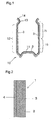
- Fig. 1 is a schematic view showing one embodiment of the resin-coated seamless can according to the present invention.
- a resin-coated seamless can 10 is formed by making the resin-coated metal sheet 1 subjected to the drawing/thinning drawing forming and/or ironing working and is constituted of a can bottom portion 11 and a can barrel portion 12.
- the can barrel portion 12 includes a straight portion consisting of two halves defined in the vertical direction, wherein an upper half of the straight portion constitutes a can-barrel upper portion 15 and a lower half constitutes a can-barrel lower portion 16.
- a neck portion 13 is formed on an upper end of the can barrel portion 12. Further, a flange portion 14 is formed on the upper end of the can barrel portion 12 by way of the neck portion 13.
- a polyester resin layer 3 of the can barrel portion 12 is held in the state that molecules thereof are oriented at least in the uniaxial direction, while the polyester resin layer 3 of the can bottom portion 11 is held in the state that molecules are oriented in no direction.
- the degree of working of the can barrel upper portion 15 at the time of forming the can is relatively high compared to that of the can-barrel lower portion 16 so that it is considered that defects of the coated resin is more liable to be generated in the can-barrel upper portion 15. Accordingly, it is considered that by controlling the characteristic of the resin-coated seamless can at least at the can-barrel upper portion 15, the stability of the quality of the whole can can be ensured.
- the resin-coated seamless can 10 according to the present invention may be produced by coating the polyester resin layers 3 on both surfaces of the metal substrate 2.
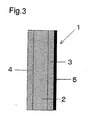
- the resin-coated metal sheet 1 having the cross-sectional structure shown in Fig. 2 in which the polyester resin layers 3, 4 are coated on both surfaces of the metal substrate 2 is formed by drawing/thinning drawing forming and/or ironing working.
- the resin-coated seamless can 10 according to the present invention may have the cross-sectional structure shown in Fig. 3, wherein an inner surface layer 5 is formed as an upper layer of the inner-surface polyester resin layer 3.
- Such an inner surface layer 5 is formed on an inner surface side of the resin-coated seamless can 10.
- the inner surface layer 5 is preferably formed of resin which exhibits a poor absorption property for fragrance components in the inside of a content, for example.
- the resin-coated seamless can 10 according to the present invention is characterized in that the density of the polyester resin layer 3 at the inner surface side in the can barrel portion 12 is set to equal to or more than 1.36 at the can-barrel upper portion.
- the density of the polyester resin layer at the inner-surface side of the can barrel portion indicates the degree of crystallization.
- the resin-coated seamless can according to the present invention is characterized in that the density of the polyester resin layer containing polyethylene terephthalate at the inner surface of the can barrel portion is maintained at a value equal to or more than 1.36 and the molecules are oriented at the can-barrel upper portion.
- the resin-coated seamless can 10 according to the present invention is characterized in that an infrared dichroic ratio (R1) of the inner surface side polyester resin layer 3 at the can barrel portion 12 is set to equal to or more than 1.1.
- the infrared dichroic ratio (R1) of the polyester resin layer at the inner surface side of the can barrel portion which is expressed by a following formula (1) indicates a ratio between an infrared absorption intensity Iw ( ⁇ ) of 973 cm -1 of the polyester resin layer at the inner surface side of the can barrel portion with respect to polarized infrared rays perpendicular to the can height direction and an infrared absorption intensity Iw ( ⁇ ) of 973 cm -1 of the polyester resin layer at the inner surface side of the can barrel portion with respect to polarized infrared rays parallel to the can height direction.
- R1 Iw ( ⁇ ) / Iw ( ⁇ )
- the resin-coated seamless can according to the present invention is characterized in that in the polyester resin layer containing polyethylene terephthalate formed on the inner surface of the can barrel portion, the ratio (R1) between the infrared absorption intensity Iw ( ⁇ ) of 973 cm -1 of the polyester resin layer at the inner surface side of the can barrel portion with respect to polarized infrared rays perpendicular to the can height direction and the infrared absorption intensity Iw ( ⁇ ) of 973 cm -1 of the polyester resin layer at the can barrel portion with respect to polarized infrared rays parallel to the can height direction is set to equal to or more than 1.1 and molecules thereof are subjected to orientation.
- adhessiveness on an adhesive interface formed between the coated resin layer and the surface of the metal substrate is enhanced, corrosion under film (UFC) of the seamless can is suppressed, and shock resistance (dent resistance) of the film is enhanced.
- the density of the polyester resin layer at the inner surface side of the can bottom portion or the inner surface side of the can bottomed portion and the inner surface side of the can-barrel lower portion is set to equal to or less than 1.36.
- the orientation state of the resin-coated layer at the can bottom portion shows the orientation state of the resin-coated layer before working. Accordingly, to enable the resin-coated layer at the can bottom portion to follow the severe working of the can barrel portion, it is necessary to maintain the orientation state of the coated resin layer at the can bottom portion substantially in the non-oriented state. Further, it is possible to maintain corrosion resistance and shock resistance in the satisfying state by sufficiently ensuring adhessiveness on the adhesive interface formed between the resin-coated layer and the surface of the metal substrate at the can bottom portion.
- the endowment of the above-mentioned characteristics on density of the resin-coated seamless can be conducted in view of e.g. the orientation state of the coated polyester resin before working, the forming condition of the seamless can and the heat treatment after forming the seamless can.
- the substantially non-oriented polyester resin-coated metal sheet which is produced by extruding and coating molten resin on a surface of a metal sheet or laminating a cast film on the surface of the metal sheet is used.
- the resin-coated metal sheet is formed into a seamless cap by thinning drawing forming and/or ironing working under an appropriate temperature condition. Thereafter, the seamless cap is subjected to the heat treatment so that a strain (a residual stress) of the coated resin layer of the can barrel portion which is caused by working is alleviated and the molecules are orientated and crystallized.
- the coated resin layer of the can bottom portion is in the non-oriented state. It is also preferable that with respect to the polyester resin layer on the inner surface of the can bottom portion which contains polyethylene terephthalate, a ratio (R2) between an infrared absorption intensity IB ( ⁇ ) of 973 cm -1 with respect to polarized infrared rays perpendicular to the metal substrate rolling direction at the can bottom portion and an infrared absorption intensity IB ( ⁇ ) of 973 cm -1 with respect to polarized infrared rays parallel to the metal substrate rolling direction at the can bottom portion is set to equal to or less than 1.1.
- the orientation state of the coated resin layer is maintained so that the orientation state of the can bottom portion indicates the orientation state of the coated resin layer before working.
- the above-mentioned dichroic ratio R2 is set to equal to or less than 1.1 which shows that the coated resin layer is substantially in the non-oriented state.
- the adhesive interface between the coated resin layer and the surface of the metal substrate is substantially maintained in a form of the resin-coated metal sheet before working and hence, the adhesiveness between them is sufficient and the can bottom portion is maintained in the state which satisfies the corrosion resistance and the shock resistance.
- the endowment of the above-mentioned characteristics on the infrared dichroic ratios (R1) and (R2) of the resin-coated seamless can be conducted in view of e.g.the orientation state of the coated polyester resin before working, the forming condition of the seamless can and the heat treatment after forming the seamless can.
- the substantially non-oriented polyester resin-coatedmetal sheet which is produced by extruding and coatingmolten resin on a surface of a metal sheet or laminating a cast film on the surface of the metal sheet is used.
- the resin-coatedmetal sheet is formed into a seamless cap by thinning drawing forming and/or ironing working under the appropriate temperature condition. Thereafter, the seamless cap is subjected to the heat treatment so that the strain (the residual stress) of the coated resin layer of the can barrel portion which is caused by working is alleviated and the molecular orientation is thermally fixed.
- the heat treatment it is preferable to perform the heat treatment in general at a temperature of Tg + 50 degree centigrade with respect to a glass transition point (Tg) of the resin-coated layer. It is particularly preferable to perform the heat treatment in a temperature range of Tg + 100 to a melting point (Tm) - 5 degree centigrade. This is because that when the temperature of the heat treatment is at a temperature side lower than the above-mentioned temperature range, there arises a problem that the alleviation of strain of the coated polyester resin layer becomes insufficient and there is a possibility that the post workability is degraded.
- the heat resistance of the coated polyester resin layer is enhanced and the adhesiveness of the coated polyester resin layer to the metal substrate is also enhanced. Further, workability which influences post workings such as neck-in working and flange working or flavor resistance can be enhanced.
- the density of the resin-coated seamless can at the inner surface side of the can bottom portion or the inner surface side of the can bottom portion and the inner surface side of the can-barrel lower portion can be maintained at a value equal to or below 1.36.
- the resin-coated layer is of a multiple layer consisting of two or more layers, it is preferable to perform the heat treatment such that the temperature of the lowermost resin-coated layer falls in the above-mentioned temperature range.
- the polyester resin layer of the resin-coated seamless can according to the present invention is characterized by mainly having the latter crystallization characteristics.
- the polyester resin layer of the can-barrel upper portion is highly subjected to the orientation crystallization at the time of forming the seamless can and, due to the heat treatment performed thereafter, it is possible to impart the excellent characteristics with respect to heat resistance, shock resistance and corrosion resistance without giving rise to coarse lamella-type crystals.
- the above-mentioned heat treatment manipulation is performed before or after performing trimming which cuts lug portions of can which are produced at the time of forming the seamless can.
- the necessary heat treatment time differs also depending on the degree of molecular orientation formed in the coated polyester resin layer of the can barrel portion at the time of forming the can, the heat treatment time is short in general and it is preferable to perform the heat treatment within 1 to 10 minutes.
- the seamless can after the heat treatment, may be gradually cooled or quenched.
- the can barrel portion 12 at the can-inner-surface side of the resin-coated seamless can according to the present invention is subjected to the molecular orientation by working, since the level of working is not severe with respect to the can bottom portion 11, the coated resin layer of the can bottom portion is held at the non-oriented state so that the adhesive interface thereof with the metal substrate 2 substantially remains unchanged.
- the thickness of the resin-coated seamless can 10 according to the present invention is preferably reduced by the drawing forming and subsequent thinning drawing forming and/or ironing working due to bending and elongation such that the thickness of the can barrel portion 12 becomes 20 to 85 % of, preferably 40 to 80 % of the thickness of the can bottom portion 11.
- polyester resin layer 3 of the can barrel portion 12 of the resin-coated seamless can 10 which is formed by drawing/thinning drawing forming and/or ironing working, two types of molecular orientations are provided.
- the first molecular orientation makes the molecules of polyester resin oriented in the can axis (can height) direction along with the plastic flow at the time of performing drawing/thinning drawing forming and/or ironing working. This molecular orientation is similar to the fiber orientation.
- the second molecular orientation is intrinsic to the ironing and, as described in Japanese Patent Publication 2970459, the benzene ring surfaces of the polyester molecules are oriented in the state substantially parallel to the film surface.
- the heat treatment it is preferable to perform the heat treatment to give rise to an advantageous effect that the internal stress which remains in the resin-coated seamless can due to the working can be suppressed.
- polyester resin used for producing the resin-coated seamless can according to the present invention should have a molecular weight sufficient to form a thin film layer on the metal substrate and it is preferable to use a polyester resin whose intrinsic viscosity (IV) is equal to or more than 0. 6 dl/g, and more particularly in a range of 0.65 to 1.4 dl/g.
- the polyester resin fails to have the heat resistance which can withstand various heat treatments, the formability to the seamless can and the workability to withstand the post working which will be performed after the forming operation. Further, the polyester resin whose intrinsic viscosity(IV) does not fall in the above-mentioned numerical value range cannot have the sufficient mechanical strength and exhibits insufficient barrier property to a corrosive component, and insufficient physical property to a canned content.
- the polyester resin whose intrinsic viscosity (IV) falls in the above-mentioned numerical value range has a large molecular weight
- the half-crystallization period ( ⁇ ) is long so that such polyester resin is also useful from a viewpoint of prevention of the thermal crystallization.
- the polyester resin layer at the can barrel portion it is preferable to use a resin whose molecules can be oriented as the polyester resin and to perform the working applied to the seamless can such that the orientation in at least one direction remains in the resin layer in the can barrel portion.
- polyester resin layer laminated to the can inner surface side of the metal substrate it is preferable to use polyethylene terephthalate or polybutylene terephthalate. It is also preferable to use homogenous polyester such as polyethylene terephthalate.
- the polyester resin layer it is preferable to lower the maximum degree of crystallization which the polyester resin layer can obtain from a viewpoint of the prevention of thermal crystallization and the enhancement of the shock resistance and the workability.
- copolymer ester units other than ethylene terephthalate in the raw material polyester.
- the prevention of thermal crystallization and the enhancement of shock resistance and workability of the polyester resin layer can be also achieved by polymer blending or multi-layered lamination.
- the copolymer polyester has a tendency to attenuate the uniaxial orientation which is generated at the time of forming the polyester resin layer onto the seamless can compared to homogeneous polyester.
- the polyester resin layer used in the present invention may be formed of a multi-layered resin layer, wherein it is preferable that a surface layer (A) is formed of polyethylene terephthalate/isophthalate containing equal to or less than 15 mol% of isophthalic acid and a lower layer (B) is formed of polyethylene terephthalate/isophthalate containing 8 to 25 mol% of isophthalic acid.
- the degree of crystallization of the polymer resin layer at the can barrel upper portion by the density method falls in a range of 20 to 55%.
- the degree of crystallization (Xc) by the density method can be generally expressed by a following formula (3).
- Xc [dc (d - da)] / [d (dc - da)] x 100
- d indicates the density of a test piece (g/cm 3 ).
- Resin blending agents which are known per se such as an antioxidant such as steric hindrance type phenol, an anti-block agent such as amorphous silica pigment such as titanium oxide (titanium white), various types of antistatic agents and a lubricant can be blended into the polyester resin layer in accordance with known prescriptions.
- an antioxidant such as steric hindrance type phenol
- an anti-block agent such as amorphous silica pigment such as titanium oxide (titanium white)
- various types of antistatic agents and a lubricant can be blended into the polyester resin layer in accordance with known prescriptions.
- the resin-coated metal sheet 1 served for producing the resin-coated seamless can 10 according to the present invention is produced by laminating the non-oriented polyester resin layer 3 to the metal substrate 2.
- the reason that the non-oriented polyester resin layer is used is that the resin-coated metal sheet can be produced with small number of steps and at a low cost by using a molten resin extrusion coating method or a stretched film (cast film) laminating method.
- the polyester resin layer 3 formed on the resin-coated metal sheet 1 is in the non-oriented state, the resin-coated metal sheet 1 exhibits excellent properties in the drawing/thinning drawing forming and/or ironing working so that the thickness of the can barrel portion 12 can be extremely reduced. Still another reason is that the height of the seamless can 10 can be easily increased.
- the reason that the resin-coated metal sheet 1 does not use a biaxially stretched film which has been conventionally used for manufacturing cans is that working of the biaxially stretched film is difficult and pushes up costs.
- the resin-coated metal sheet 1 which is served for the present invention is produced by thermally bonding the polyester resin layer 3 which can orient molecules thereof in the non-stretched state to the metal substrate 2.
- the resin-coated metal sheet 1 is comprised of the metal substrate 2 and the polyester resin layer 3 which is positioned at least at the can inner-surface side.
- the outer surface film 4 may be formed of material similar to that of the polyester resin layer 3 or may be formed of an ordinary paint for can use - or an ordinary resin film.
- Fig. 3 which shows another example of the cross-sectional structure of the resin-coated metal sheet, it is preferable to form the inner surface layer 5 on the polyester resin layer 3 which constitutes the can inner surface side.
- the inner surface layer is formed of polyester or copolyester induced from a terephthalic acid component or an isophthalic component which exhibits a little absorbing property for a flavor component in the content and a lower layer is formed of copolyester having a large copolymer quantity such as isophtalic acid which exhibits excellent adhesiveness to the metal substrate.
- the resin-coated metal sheet 1 served for the present invention can be produced by extruding and coating the polyester resin layer 3 in the molten state onto the metal substrate 2 and thereafter thermally adhering the polyester resin layer 3 to the metal substrate 2.
- the resin-coated metal sheet 1 served for the present invention can be produced by thermally adhering a non-stretched film (cast film) made of polyester resin which is preliminarily formed into a film to the metal substrate 2.
- a non-stretched film made of polyester resin which is preliminarily formed into a film to the metal substrate 2.
- the thickness of the polyester resin layer 3 which is served for the present invention preferably falls in a range of 2 to 60 ⁇ m, and more particularly in a range of 3 to 40 ⁇ m as a whole from a viewpoint of the protective effect of metal and workability.
- an adhesive agent or a primer for adhesion may be used when necessary.
- a metal substrate various kinds of surface treated steel sheet or a light metal sheet made of e.g. aluminum can be used.
- the surface treated steel sheet it is possible to use a sheet which is obtained by making a cold rolled steel sheet subjected to a secondary cold rolling after annealing and performing one, two or more kinds of surface treatments selected from e.g. zinc plating, tin plating, nickel plating, nickel-tin plating, electrolytic chromic-acid treatment and chromic acid treatment.
- an electrolytic chromic acid treated sheet is named. It is particularly preferable to use the electrolytic chromic acid treated sheet which includes a metal chromium layer of 10 to 200 mg/m 2 and a chromium oxide layer of 1 to 50 mg/m 2 (metal conversion). This electrolytic chromic acid treated sheet exhibits the excellent adhesive property with respect to e.g.the resin film and the coating and also exhibits excellent corrosion resistance.
- the surface treated steel sheet is a hard tin sheet having a tin plating amount of 0.5 to 11.2 g/m 2 . It is preferable that an upper layer of the tin sheet is subjected to the chromic acid treatment or the chromic acid/phosphating treatment such that the chromium amount becomes 1 to 30 mg/m 2 in metal chromium conversion.
- Still another preferred example of the surface treated steel sheet is an aluminum coated steel sheet to which aluminum plating or the aluminum pressure bonding is applied.
- an aluminum sheet or an aluminum alloy sheet can be used as the light metal sheet.
- the aluminum alloy sheet which exhibits excellent corrosion resistance and workability has composition consisting of 0.2 to 1.5 weight% of Mn, 0.8 to 5 weight% of Mg, 0.25 to 0.3 weight% of Zn, 0.15 to 0.25 weight% of Cu and Al as the balance.
- upper layers of these light metal sheets are also subjected to the chromic acid treatment or the chromic acid/phosphating treatment in which a chromium amount is 20 to 300 mg/m 2 in metal chromium conversion.
- the surface treatment applied to the light metal sheet can be performed by using water-soluble phenol resin together.
- the thickness of an element sheet of the metal substrate may differ depending on the kind of metal and the use or the size of a seamless can
- the element sheet having the thickness of 0.10 to 0.50 mm is preferably used.
- Table 1 shows the compositions of resin used in respective examples and Fig. 2 shows conditions and evaluations of respective examples.
- Polyester resin having the composition C shown in Table 1 was charged into a biaxial extruder, was extruded through T dies to form films having a thickness of 20 ⁇ m. The films were cooled by cooling rollers and the cooled film were wound to form cast films. Thereafter, the films formed in the above manner were thermally laminated to both surfaces of an aluminum alloy sheet (sheet thickness: 0.28 mm, A3004 material, chromic acid/phosphate surface treatment). The lamination was immediately followed by water cooling thus obtaining a polyester resin-coated metal sheet.
- the temperature of the metal sheet before the lamination was set to a temperature 15 degree centigrade higher than a melting point of polyester resin and the lamination was performed by setting a temperature of lamination rolls to 150 degree centigrade and at a sheet travelling speed of 40 m/min thus producing the resin-coated metal sheet.
- the polyester resin-coated metal sheet produced in this manner was coated with a wax-type lubricant and a disc having a diameter of 152 mm was blanked to obtain a shallow drawn cup. Then, bymaking the shallow drawn cup subjected to ironing working, a seamless cup was obtained.
- This seamless cup was subjected to doming forming in accordance with a normal method. After performing the heat treatment of polyester resin at a temperature of (Tm - 10) degree centigrade for three minutes, the seamless cup was cooled in atmosphere. Thereafter, post workings such as trimming working of an end peripheral portion of an opening, curved surface printing, baking, drying, neck-in working and flange working were performed thus producing a seamless can having a capacity of 350 cc.
- a seamless can was produced by a method similar to the method of example 1 except for that this embodiment used a polyester resin having the composition D shown in Fig. 1. (Example 3)
- a seamless can was produced by a method similar to the method of example 1 except for following conditions. That is, in this embodiment, a polyester resin having the composition B shown in Table 1 which constitutes a surface layer and a polyester resin having the composition D shown in Table 1 which constitutes a lower layer were charged into two biaxial extruder and were extruded through a two-layer T-die thus forming a two-layered cast film, wherein a thickness of the surface layer was 5 ⁇ m and a thickness of the lower layer was 15 ⁇ m. Thereafter, a laminated material was obtained by using the cast film.
- a seamless can was obtained by a method similar to the method of example 3 except for that a polyester resin having the composition A shown in Table 1 constitutes the surface layer and polyester resin having the composition C shown in Table 1 constitutes the lower layer.
- the polyester resin-coated metal sheet produced in this manner was coated with a wax-type lubricant and a disc having a diameter of 166 mm was blanked to obtain a shallow drawn cup. Then, by making the shallow drawn cup subjected to thinning drawing working based on elongation, a seamless cup was obtained.
- This seamless cup was formed into a seamless can using a method similar to that of example 1.
- Polyester resin having the composition F shown in Table 1 was simultaneously extruded from an extruder having a diameter of ⁇ 65 mm and coated onto both inner and outer surfaces of an aluminum alloy sheet (sheet thickness 0.28 mm, A3004 material, chroming/phosphating surface treatment) which was heated to 250 degree centigrade such that inner-side and outer-side films respectively have a thickness of 20 ⁇ m. Thereafter, the cooling was performed to produce a polyester resin-coated metal sheet.
- a seamless can was produced in a manner similar to that of example 6 except for that this example used a polyester resin having the composition G shown in Table 1.
- a seamless can was produced by a method similar to the method of example 6 except for following conditions. That is, in this example, a polyester resin having the composition A shown in Table 1 which constitutes a surface layer and a polyester resin having the composition F shown in Table 1 which constitutes a lower layer were simultaneously extruded and coated onto the aluminum alloy sheet through a biaxial extruder and a two-layer T-die thus forming a two-layered cast film, wherein a thickness of the surface layer was 5 ⁇ m and a thickness of the lower layer was 15 ⁇ m.
- a seamless can was obtained by a method similar to the method of example 8 except for that a polyester resin having the composition D shown in Table 1 constitutes the surface layer and polyester resin having the composition C shown in Table 1 constitutes the lower layer.
- a seamless can was obtained by a method similar to the method of example 1 except for that this comparison example 1 useda polyester resin having the composition A shown in Table 2 and the heat treatment shown in Table 1 was applied.
- a seamless can was obtained by a method similar to the method of example 1 except for that a polyester resin having the composition B shown in Table 1 constitutes the surface layer and polyester resin having the composition D shown in Table 1 constitutes the lower layer, and the heat treatment shown in Table 2 was applied.
- a resin-coated metal sheet was produced by a method similar to that of example 1 except for following conditions. That is, in this embodiment, a cast film using a polyester resin having the composition A shown in Table 1 was laminated to a TFS steel sheet (sheet thickness: 0.18 mm, metal chromium quantity 120 mg/m 2 > chromium hydration oxide quantity: 15 mg/m 2 ).
- the resin-coated metal sheet is formed into a seamless cup.
- a seamless can was obtained by a method similar to the method of comparison example 3 except for that this comparison example 4 used a polyester resin having the composition F shown in Table 1 and the heat treatment of the seamless cup was not performed.
- a seamless can was obtained by a method similar to the method of comparison example 3 except for that a polyester resin having the composition E shown in Table 1 constitutes the surface layer and polyester resin having the composition B shown in Table 1 constitutes the lower layer, and the heat treatment of the seamless cup was not performed.
- a seamless can was obtained by a method similar to the method of example 1 except for following conditions. That is, in this comparison example, after forming a cast film using polyester resin having the composition A shown in Table 1, the cast film was stretched three times respectively in the longitudinal direction as well as in the lateral direction at 100 degree centigrade. Thereafter, the cast film was subjected to the heat treatment for five seconds at 230 degree centigrade thus producing a biaxially stretched film and, then, the biaxially stretched film was subjected to the heat treatment shown in Table 2.
- a seamless can was obtained by a method similar to the method of example 6 except for that this comparison example used a polyester resin having the composition B shown in Table 1 and the heat treatment shown in Table 2 was applied.
- a seamless can was produced by a method similar to the method of example 6 except for following conditions. That is, in this comparison example, apolyester resin having the composition E shown in Table 1 which constitutes a surface layer and the polyester resin having the composition D shown in Table 1 which constitutes a lower layer were simultaneously extruded and coated through a biaxial extruder and a two-layer T-die to form a two-layered film and the two-layered film was subjected to the heat treatment shown in Table 2.
- a portion of the seamless can disposed at a can height of 70 to 90 mm is cut out as a sample having a square shape of 20 mm in the direction intersecting the rolling direction of the sheet material of the seamless can by 90°.
- Metal was dissolved by hydrochloric acid of 6N so as to isolate the inner film.
- the sample was dried under vacuum at least for 24 hours and then the density of the sample was measured at a temperature of 20 degree centigrade by a sink and float method using a density gradient tube. The measurement was performed after 1 hour elapsed from a point of time that the sample was charged into the density gradient tube.
- a cross cut was formed on an inner film on a can barrel upper portion of the seamless can, a cellophane tape (product of Nichiban Ltd, width: 24 mm) was laminated, and the cellophane tape was peeled off.
- the evaluation was performed by observing with naked eyes the peeled-off state of the polyester resin coating after peeling off the cellophane tape.
- a sample having a square shape of 3cm ⁇ 3cm was cut out from an inner surface of the can barrel upper portion of the seamless can. After forming a cross cut on the sample using a cutter, the sample was immersed into a 0.1% sodium chloride aqueous solution. After holding this condition at a temperature of 50 degree centigrade for a week, the corrosion state was observed.
- the evaluation was performed in accordance with the size of film peeling-off from the cross-cut portion and the size of corrosion under film.
- a weight of 1kg which has a spherical surface of a diameter of 65.5 mm was dropped from a position which is 40 mm high above a can-bottom-side terminal point of a neck-in worked portion of a can disposed on a can axis which is perpendicular to the rolling direction of a metal sheet such that the spherical surface hits and applies an impact to the can-bottom-side terminal point.
- the can was subjected to a storing test at a temperature of 37 degree centigrade so that the state of the inner surface of the can after the lapse of one year was evaluated.
- the weight is dropped in an erected form from a position 50 cm above the can-bottom-side terminal point. Thereafter, the can was subjected to a storing test at a temperature of 37 degree centigrade so that the state of the inner surface of the can after the lapse of one year was evaluated. Particularly, corrosion of the can neck portion and the can bottom portion was observed and the result of the evaluation is shown in Table 2.
- the can After filling distilled water of 95 degree centigrade into a can, the can was subjected to retort treatment at a temperature of 135 degree centigrade for 30 minutes. Then, after the temperature of the can was returned to room temperature, the distilled water is removed from the can and the corrosion state of the inner surface of the can was observed. The result of the observation was shown in Table 2.
- a sample was cut out from a portion of a can barrel portion of a seamless can positioned 70 mm above a can bottom portion of the seamless can and a free film of an inner surface resin layer was isolated by dissolving metal. Then, the sample was subjected to drying under vacuum for at least 24 hours. Thereafter, the infrared absorption spectrums which are polarized in the directions perpendicular to and parallel to the can height direction of the isolated film were measured.
- a portion of the can barrel upper portion of the seamless can was cut out and a free film was isolated by dissolving metal. Then, the free film was subjected to drying under vacuum at least for 24 hours. Thereafter, the density of the sample was measured and the degree of crystallization of a resin film was calculated by a density method and the calculated result was indicated.
- the resin-coated seamless can by performing the control such that the density of the polyester resin layer of the can inner surface side becomes equal to or more than 1.36 or by performing the control such that the infrared dichroic ratio (R1) of the polyester resin layer of the inner surface of the can barrel portion becomes equal to or more than 1.1, it is possible to produce a resin-coated seamless can having excellent corrosion resistance, excellent shock resistance and excellent flavor resistance.
Landscapes
- Engineering & Computer Science (AREA)
- Mechanical Engineering (AREA)
- Ceramic Engineering (AREA)
- Laminated Bodies (AREA)
- Rigid Containers With Two Or More Constituent Elements (AREA)
- Details Of Rigid Or Semi-Rigid Containers (AREA)
- Containers Having Bodies Formed In One Piece (AREA)
Applications Claiming Priority (4)
| Application Number | Priority Date | Filing Date | Title |
|---|---|---|---|
| JP2001192047A JP4411802B2 (ja) | 2001-06-25 | 2001-06-25 | 樹脂被覆シームレス缶 |
| JP2001192047 | 2001-06-25 | ||
| JP2001211430A JP2003026138A (ja) | 2001-07-11 | 2001-07-11 | 樹脂被覆シームレス缶 |
| JP2001211430 | 2001-07-11 |
Publications (3)
| Publication Number | Publication Date |
|---|---|
| EP1270201A2 true EP1270201A2 (de) | 2003-01-02 |
| EP1270201A3 EP1270201A3 (de) | 2003-02-05 |
| EP1270201B1 EP1270201B1 (de) | 2008-07-30 |
Family
ID=26617532
Family Applications (1)
| Application Number | Title | Priority Date | Filing Date |
|---|---|---|---|
| EP02013930A Expired - Lifetime EP1270201B1 (de) | 2001-06-25 | 2002-06-24 | Harzbeschichtete nahtlose Dose |
Country Status (6)
| Country | Link |
|---|---|
| US (2) | US20030039778A1 (de) |
| EP (1) | EP1270201B1 (de) |
| KR (1) | KR20030004047A (de) |
| AU (1) | AU785244B2 (de) |
| DE (1) | DE60227882D1 (de) |
| TW (1) | TWI235128B (de) |
Cited By (4)
| Publication number | Priority date | Publication date | Assignee | Title |
|---|---|---|---|---|
| WO2006081810A1 (de) * | 2005-02-05 | 2006-08-10 | Ball Packaging Europe Gmbh | Stapelfaehige flachbodendose |
| EP1640277A4 (de) * | 2003-06-23 | 2009-09-16 | Toyo Seikan Kaisha Ltd | Mit harz überzogener nahtloser aluminiumdosenkörper mit hervorragender körperberstbeständigkeit und flanschreissfestigkeit im umlauf |
| EP1795342A4 (de) * | 2004-09-30 | 2010-11-03 | Toyo Kohan Co Ltd | Mehrlagige harzfolie und verfahren zur herstellung einer mehrlagigen harzfolie |
| EP1908583A4 (de) * | 2005-07-28 | 2012-05-30 | Jfe Steel Corp | Harzbeschichtete metallplatte |
Families Citing this family (12)
| Publication number | Priority date | Publication date | Assignee | Title |
|---|---|---|---|---|
| US20070207283A1 (en) * | 2003-09-08 | 2007-09-06 | Toyo Seikan Kaisha, Ltd. | Resin-Coated Metal Plate And Drawn Cans Using These Plates |
| JP5082844B2 (ja) * | 2005-02-15 | 2012-11-28 | 東洋製罐株式会社 | 樹脂被覆金属板、金属缶及び蓋 |
| US20090206096A1 (en) * | 2005-05-17 | 2009-08-20 | Toyo Seikan Kaisha, Ltd. | Three-piece square can and method of manufacturing the same |
| KR20100014312A (ko) * | 2007-03-27 | 2010-02-10 | 도요 세이칸 가부시키가이샤 | 금속판 피복용 폴리에스테르 수지 및 그 제조 방법 |
| JP5509661B2 (ja) * | 2009-04-08 | 2014-06-04 | 東洋製罐株式会社 | 樹脂被覆金属板及びこれから成るシームレス缶 |
| JP2011227940A (ja) * | 2010-04-15 | 2011-11-10 | Hoya Corp | ピックアップ装置用のレンズ及び光ディスクドライブ用のピックアップ装置 |
| GB201205243D0 (en) | 2012-03-26 | 2012-05-09 | Kraft Foods R & D Inc | Packaging and method of opening |
| GB2511560B (en) | 2013-03-07 | 2018-11-14 | Mondelez Uk R&D Ltd | Improved Packaging and Method of Forming Packaging |
| GB2511559B (en) | 2013-03-07 | 2018-11-14 | Mondelez Uk R&D Ltd | Improved Packaging and Method of Forming Packaging |
| CN105579230B (zh) * | 2013-07-22 | 2019-02-19 | 东洋钢钣株式会社 | 有机树脂被覆金属板、其制造方法、加工该有机树脂被覆金属板而成的金属罐、及罐盖 |
| MY187478A (en) * | 2014-12-12 | 2021-09-23 | Jfe Steel Corp | Resin-coated metal sheet for can lids |
| DE102016205913A1 (de) * | 2016-04-08 | 2017-10-12 | Mitsubishi Polyester Film Gmbh | Biaxial orientierte Polyesterfolie für die Metalllaminierung |
Family Cites Families (17)
| Publication number | Priority date | Publication date | Assignee | Title |
|---|---|---|---|---|
| US2865765A (en) * | 1954-12-29 | 1958-12-23 | Du Pont | Process of preserving fresh produce in oriented film |
| US2861022A (en) * | 1956-01-19 | 1958-11-18 | Du Pont | Thermoplastic film-metal-laminated structure and process |
| JPH0790859B2 (ja) * | 1989-02-16 | 1995-10-04 | 東洋製罐株式会社 | 薄肉化深絞り缶の製造方法 |
| JP2500556B2 (ja) * | 1991-11-27 | 1996-05-29 | 東洋製罐株式会社 | 耐衝撃性に優れたラミネ―ト絞り容器及びその製造法 |
| EP0625539B1 (de) * | 1992-12-04 | 2002-03-20 | Toray Industries, Inc. | polyesterfilm für thermische laminierung |
| JP2611737B2 (ja) * | 1994-02-03 | 1997-05-21 | 東洋製罐株式会社 | シームレス缶及びその製造方法 |
| JPH09270489A (ja) | 1996-03-29 | 1997-10-14 | Toshiba Lighting & Technol Corp | 放熱体および温度補償装置 |
| JP3146973B2 (ja) * | 1996-05-01 | 2001-03-19 | 東洋製罐株式会社 | ラミネート板及びこれを用いた製缶方法 |
| US6099924A (en) * | 1996-07-22 | 2000-08-08 | Toyo Seikan Daisha, Ltd. | Laminate and container made of the same |
| KR19980018298A (ko) * | 1996-08-06 | 1998-06-05 | 하라다 야스오 | 폴리에스테르 적층 금속판 및 그로부터 성형된 캔 단부 및 캔 본체 |
| US5803301A (en) * | 1996-09-12 | 1998-09-08 | Toyo Seikan Kaisha, Ltd. | Seamless can and process for making the same |
| TW504455B (en) * | 1996-09-18 | 2002-10-01 | Teijin Ltd | Polyester film for metal lamination and the use thereof |
| JPH10196663A (ja) | 1997-01-10 | 1998-07-31 | Nippon Seiko Kk | ウォータポンプ用軸受シール装置 |
| JP2979503B2 (ja) | 1997-12-15 | 1999-11-15 | エヌティエヌ株式会社 | ころ軸受およびその組み付け方法 |
| JPH11216793A (ja) * | 1998-02-05 | 1999-08-10 | Mitsubishi Chemical Corp | 蒸着フィルム用の基材フィルム |
| JP3949283B2 (ja) * | 1998-07-08 | 2007-07-25 | 大和製罐株式会社 | シームレス缶用ポリエステル樹脂被覆アルミニウム板およびシームレス缶の製造方法 |
| JP4343383B2 (ja) * | 2000-03-02 | 2009-10-14 | 東洋製罐株式会社 | 樹脂被覆シームレス缶 |
-
2002
- 2002-06-10 TW TW091112740A patent/TWI235128B/zh not_active IP Right Cessation
- 2002-06-17 AU AU48818/02A patent/AU785244B2/en not_active Expired
- 2002-06-24 DE DE60227882T patent/DE60227882D1/de not_active Expired - Lifetime
- 2002-06-24 EP EP02013930A patent/EP1270201B1/de not_active Expired - Lifetime
- 2002-06-25 US US10/178,790 patent/US20030039778A1/en not_active Abandoned
- 2002-06-25 KR KR1020020035795A patent/KR20030004047A/ko not_active Ceased
-
2008
- 2008-06-06 US US12/135,005 patent/US8268422B2/en not_active Expired - Fee Related
Cited By (6)
| Publication number | Priority date | Publication date | Assignee | Title |
|---|---|---|---|---|
| EP1640277A4 (de) * | 2003-06-23 | 2009-09-16 | Toyo Seikan Kaisha Ltd | Mit harz überzogener nahtloser aluminiumdosenkörper mit hervorragender körperberstbeständigkeit und flanschreissfestigkeit im umlauf |
| EP2426057A1 (de) * | 2003-06-23 | 2012-03-07 | Toyo Seikan Kaisha, Ltd. | Mit Harz beschichteter, nahtloser Dosenkörper aus Aluminium |
| EP1795342A4 (de) * | 2004-09-30 | 2010-11-03 | Toyo Kohan Co Ltd | Mehrlagige harzfolie und verfahren zur herstellung einer mehrlagigen harzfolie |
| WO2006081810A1 (de) * | 2005-02-05 | 2006-08-10 | Ball Packaging Europe Gmbh | Stapelfaehige flachbodendose |
| EP1908583A4 (de) * | 2005-07-28 | 2012-05-30 | Jfe Steel Corp | Harzbeschichtete metallplatte |
| US8905256B2 (en) | 2005-07-28 | 2014-12-09 | Jfe Steel Corporation | Resin-coated metal sheet |
Also Published As
| Publication number | Publication date |
|---|---|
| EP1270201A3 (de) | 2003-02-05 |
| US20030039778A1 (en) | 2003-02-27 |
| EP1270201B1 (de) | 2008-07-30 |
| AU4881802A (en) | 2003-10-30 |
| AU785244B2 (en) | 2006-11-30 |
| US20080241448A1 (en) | 2008-10-02 |
| KR20030004047A (ko) | 2003-01-14 |
| US8268422B2 (en) | 2012-09-18 |
| DE60227882D1 (de) | 2008-09-11 |
| TWI235128B (en) | 2005-07-01 |
Similar Documents
| Publication | Publication Date | Title |
|---|---|---|
| US8268422B2 (en) | Resin coated seamless can | |
| US6565937B2 (en) | Resin-coated seamless can | |
| EP2457840B1 (de) | Aluminiumgezogene und geglättete dose sowie herstellungsverfahren dafür | |
| JPH0755552B2 (ja) | 深絞り缶の製造方法 | |
| JP2677172B2 (ja) | 保香性及び耐衝撃性に優れたラミネート絞り容器 | |
| JP6309741B2 (ja) | 樹脂被覆金属板及びシームレス缶 | |
| EP0608632B1 (de) | Beschichtete Metallplatte für Dosen und daraus hergestellte falznactlose Dozen | |
| EP1378344A1 (de) | Mit thermoplastischem harz beschichtete metallplatte und daraus hergestellte dose | |
| US20050100749A1 (en) | Metal sheet coated with thermoplastic resin and can obtained therefrom | |
| JP2001353812A (ja) | 樹脂被覆シームレス缶 | |
| JP4319358B2 (ja) | ポリエステル樹脂被覆金属板、およびそれを用いた缶 | |
| US20230382617A1 (en) | Resin-coated metal sheet for container, container formed of resin-coated metal sheet, and method for manufacturing resin-coated metal sheet | |
| JP4411802B2 (ja) | 樹脂被覆シームレス缶 | |
| JP4288870B2 (ja) | 樹脂被覆シームレス缶 | |
| JP4366730B2 (ja) | 製缶用積層体及びシームレス缶 | |
| JP4590886B2 (ja) | ラミネート用多層フィルム、ラミネート材、缶耐及び缶蓋 | |
| JP4775532B2 (ja) | 樹脂被覆シームレス缶 | |
| JP3897091B2 (ja) | 樹脂被覆シームレス缶 | |
| WO2010137550A1 (ja) | スチール製絞りしごき缶及びその製造方法 | |
| JP2003026138A (ja) | 樹脂被覆シームレス缶 | |
| KR20220082108A (ko) | 폴리에스테르 필름 및 그 제조 방법 | |
| TW202140610A (zh) | 聚酯膜及其製造方法 | |
| JP2002255169A (ja) | 樹脂被覆シームレス缶 | |
| JP4006569B2 (ja) | 樹脂被覆シームレス缶 | |
| JP2001353811A (ja) | 樹脂被覆シームレス缶 |
Legal Events
| Date | Code | Title | Description |
|---|---|---|---|
| PUAI | Public reference made under article 153(3) epc to a published international application that has entered the european phase |
Free format text: ORIGINAL CODE: 0009012 |
|
| PUAL | Search report despatched |
Free format text: ORIGINAL CODE: 0009013 |
|
| AK | Designated contracting states |
Kind code of ref document: A2 Designated state(s): AT BE CH CY DE DK ES FI FR GB GR IE IT LI LU MC NL PT SE TR |
|
| AX | Request for extension of the european patent |
Free format text: AL;LT;LV;MK;RO;SI |
|
| AK | Designated contracting states |
Designated state(s): AT BE CH CY DE DK ES FI FR GB GR IE IT LI LU MC NL PT SE TR |
|
| AX | Request for extension of the european patent |
Extension state: AL LT LV MK RO SI |
|
| 17P | Request for examination filed |
Effective date: 20030715 |
|
| AKX | Designation fees paid |
Designated state(s): DE FR GB |
|
| 17Q | First examination report despatched |
Effective date: 20040709 |
|
| GRAP | Despatch of communication of intention to grant a patent |
Free format text: ORIGINAL CODE: EPIDOSNIGR1 |
|
| GRAS | Grant fee paid |
Free format text: ORIGINAL CODE: EPIDOSNIGR3 |
|
| GRAA | (expected) grant |
Free format text: ORIGINAL CODE: 0009210 |
|
| AK | Designated contracting states |
Kind code of ref document: B1 Designated state(s): DE FR GB |
|
| REG | Reference to a national code |
Ref country code: GB Ref legal event code: FG4D |
|
| REF | Corresponds to: |
Ref document number: 60227882 Country of ref document: DE Date of ref document: 20080911 Kind code of ref document: P |
|
| PLBE | No opposition filed within time limit |
Free format text: ORIGINAL CODE: 0009261 |
|
| STAA | Information on the status of an ep patent application or granted ep patent |
Free format text: STATUS: NO OPPOSITION FILED WITHIN TIME LIMIT |
|
| 26N | No opposition filed |
Effective date: 20090506 |
|
| REG | Reference to a national code |
Ref country code: FR Ref legal event code: PLFP Year of fee payment: 15 |
|
| REG | Reference to a national code |
Ref country code: FR Ref legal event code: PLFP Year of fee payment: 16 |
|
| REG | Reference to a national code |
Ref country code: FR Ref legal event code: PLFP Year of fee payment: 17 |
|
| PGFP | Annual fee paid to national office [announced via postgrant information from national office to epo] |
Ref country code: DE Payment date: 20210618 Year of fee payment: 20 Ref country code: FR Payment date: 20210622 Year of fee payment: 20 |
|
| PGFP | Annual fee paid to national office [announced via postgrant information from national office to epo] |
Ref country code: GB Payment date: 20210625 Year of fee payment: 20 |
|
| REG | Reference to a national code |
Ref country code: DE Ref legal event code: R071 Ref document number: 60227882 Country of ref document: DE |
|
| REG | Reference to a national code |
Ref country code: GB Ref legal event code: PE20 Expiry date: 20220623 |
|
| PG25 | Lapsed in a contracting state [announced via postgrant information from national office to epo] |
Ref country code: GB Free format text: LAPSE BECAUSE OF EXPIRATION OF PROTECTION Effective date: 20220623 |