EP1271380A2 - Methode und Vorrichtung zur Ermöglichung einer flexiblen und direkten Navigation innerhalb einer visuellen Darstellung einer Organisation - Google Patents
Methode und Vorrichtung zur Ermöglichung einer flexiblen und direkten Navigation innerhalb einer visuellen Darstellung einer Organisation Download PDFInfo
- Publication number
- EP1271380A2 EP1271380A2 EP02253327A EP02253327A EP1271380A2 EP 1271380 A2 EP1271380 A2 EP 1271380A2 EP 02253327 A EP02253327 A EP 02253327A EP 02253327 A EP02253327 A EP 02253327A EP 1271380 A2 EP1271380 A2 EP 1271380A2
- Authority
- EP
- European Patent Office
- Prior art keywords
- capabilities
- capability
- organisation
- identify
- linkages
- Prior art date
- Legal status (The legal status is an assumption and is not a legal conclusion. Google has not performed a legal analysis and makes no representation as to the accuracy of the status listed.)
- Withdrawn
Links
Images



Classifications
-
- G—PHYSICS
- G06—COMPUTING OR CALCULATING; COUNTING
- G06Q—INFORMATION AND COMMUNICATION TECHNOLOGY [ICT] SPECIALLY ADAPTED FOR ADMINISTRATIVE, COMMERCIAL, FINANCIAL, MANAGERIAL OR SUPERVISORY PURPOSES; SYSTEMS OR METHODS SPECIALLY ADAPTED FOR ADMINISTRATIVE, COMMERCIAL, FINANCIAL, MANAGERIAL OR SUPERVISORY PURPOSES, NOT OTHERWISE PROVIDED FOR
- G06Q10/00—Administration; Management
- G06Q10/10—Office automation; Time management
Definitions
- This invention relates to a method and apparatus for navigating through graphical organisation representations, detailing several useful improvements in functionality, flexibility and ease of use over existing methods particularly, but not necessarily exclusively, with respect to computer and software based models.
- the method and apparatus of this invention give a simple, direct and powerful mechanism for designing and communicating the structure and collaboration of capabilities within an organisation.
- Such benefits include improvements in the areas of change and performance management, and quality implementation.
- the aim of the present invention is to provide a method and apparatus to deploy and utilise a graphical representation of an organisation which is expressed in terms of capabilities and their interactions, to support analysis, design, implementation and management. It has been developed in response to the following needs that are not addressed by current methods, such needs including a need to be able to understand the location of a capability within the broader organisation, in terms of its superior and subordinate components. Furthermore, there is a need to be able to identify those other capabilities with which there are defined inter-connections, either originating or terminating at a specified capability. There is also an unmet need to be able to see and identify the input and output resources of a capability and identify which other capabilities could potentially collaborate with that specified capability, on the basis of common inputs or outputs. The representation of these needs in a graphical environment against visual representations of capabilities, at any level within an organisation, in a direct manner cannot currently be achieved in that that the user can not immediately access any of the above needs with a single, simple, intuitive action.
- the present invention improves on this by enabling the exploration and design of an organisation prior to the delivery of operational document systems.
- a component approach to software construction is known to have provided improvements in development and management of systems. Innovations originating from that work are various; but include, for example, EP0883057 “Method and apparatus for software component analysis” and WO0122331 “Method for defining an executable business model”. Related to this approach is the notion of autonomous intelligent software agents, which has been reported in recent years. A number of patents in this field are known such as WO0102952 Improved Software Interface Agent. Such inventions assert a component approach to software construction whereby components are able to perform "intelligently” through deployment of sophisticated analysis techniques including "learning”.
- the current invention differs in several respects in that firstly, the current invention components represent general business and not necessarily software capabilities. Secondly, the capabilities of the current invention are not intended for execution as occurrences within a software system, but are intended primarily for analysis and communication purposes by organisation designers and quality managers, however this does not preclude the use of one or a number of the invention capabilities as a design for a software component. Thirdly, the structuring and navigation mechanisms offer analytical functions which are not disclosed in the known prior art; e.g. look inside, look outside.
- the present invention provides a graphical organisational model together with a flexible navigation mechanism which addresses a host of business needs relating to organisation architecture and design.
- a graphical organisational model is created, using capabilities that are structured so as to describe the construction of the organisation in terms of its component parts. Interactions between these components are created in terms of origin and target of interactions, and associated information flows. Each component offers the ability directly to navigate to its superior or subordinate components, or to any other capability that is linked or which may potentially be linked.
- the invention provides a method and apparatus for organisation design.
- a modelling method for generating a structural, hierarchic visual representation of an organisation said organisation represented by a series of organisation capabilities, said capabilities defined in terms of input and output resource definitions, said method including the steps of; generating a visual representation of the organisation in terms of a collection of graphical representations representing the capabilities within the organisation and interactions between the same required to achieve their purpose, representing the interactions using directed linkages and resource flows; and characterised in that said representation for a selected displayed capability is determined and generated in response to a user selection of one of a range of visual icons provided as part of a navigation display.
- the method allows, in response to the user selection, the ability for a selected capability, for any, or any combination of; to identify any superior and subordinate capabilities; to identify any linkages originated or received by that capability; to follow any linkage so as to identify the related capability; to identify all resources received or produced by that capability; to identify any other capability that can collaborate in terms of complementary resource usage or production.
- the representation of a capability allows the identification of any superior and/or subordinate capabilities directly. These are referred to as, respectively, looking outside and looking inside.
- the capability can directly and immediately identify all linkages originated or received by the capability within any model.
- the capability can directly and immediately identify any linkage whether originated or received so as to identify the related capability.
- the construction of the hierarchy structure includes setting each capability in context with respect to any identified superior and subordinate capabilities and specifying the organisational resources required to be used and/or which may be produced, as required, by each capability in the structure.
- the capabilities included within the visual model remain consistent with the defined capability hierarchy as all subordinate capabilities are included within the model for the superior capability.
- the method further includes the steps of deploying the visual representation as an organisation design and communication vehicle by utilising a navigation mechanism that enables exploration and communication of options, and the implication of their selection.
- a visual organisational model can be created with the defined capabilities provided and structured so as to describe the composition of the organisation in terms of its component parts.
- each capability is associated with a collection of resources that it needs, and another collection of resources that it produces.
- Interactions between capabilities are specified in terms of direction and meaning of interactions, and associated information flows.
- apparatus for the generation of a visual representation of an organisation in terms of capabilities within the organisation and linkages between the same and resources required by and provided by said capabilities, said apparatus including a graphical user interface to allow the visual representation of the organisation to be displayed to the user, input means to allow the user to select and view details for a particular capability and to define and manipulate the visual representation and characterised in that the apparatus further includes a navigation mechanism that supports controlled navigation by the user via the visual representation from a selected capability to its superior or subordinate capabilities, incoming and/or outgoing linkages to other capabilities, resources used or produced, and potential collaborations with other capabilities.
- the functionality of the navigation mechanism provides the user with the ability to explore the organisation visual representation at several levels of detail.
- the navigation mechanism together with the rest of the apparatus and the method for its usage give a simpler and more powerful approach to the design and communication of organisations than was previously possible.
- the apparatus preferably includes a means of recording organisational capabilities and their construction, together with a mechanism whereby any capability offers the ability to navigate directly to any or any combination of; its superior components, if any; its subordinate components, if any; any other capability that is linked , any other capability that may potentially be linked on the basis of compatible inputs or outputs.
- a modelling method for generating a structural hierarchic representation of an organisation in terms of capabilities with input/output resource definitions comprising the steps of generating a visual representation of the organisation in terms of a collection of graphical representations, or models, showing how capabilities interact in order to achieve the required purposes, using directed linkages and resource flows and said structure includes any or any combination of the ability for at least one capability, to identify any superior and subordinate capabilities; the ability, for at least one capability, to identify any linkages originated or received by the capabilities; the ability for at least one capability, to follow any linkage so as to identify the related capability; the ability, for at least one capability to identify all resources received or produced by the capability; the ability, for at least one capability, to identify any other capabilities that might collaborate in terms of complimentary resource usage or production.
- a method for graphically representing and linking a series of capabilities comprising the steps of constructing a hierarchy of capabilities to describe the component structure of an organisation, constructing a collection of graphical representations, or models, of the organisation using capability components creating a model describing an aspect of organisational behaviour by combining required capabilities and establishing directed linkages between capabilities to indicate required interactions.
- the invention is illustrated implemented as a collection of visual structuring and diagramming facilities, together with a navigation mechanism, which can be provided as part of a business development and transformation system using a visual user-interface, typically in the form of a display screen connected with input means in the form of a keyboard and/or computer mouse to allow selection by the user of available features and functions as will now be described.
- the visual representation can be used to define and communicate best practice within an organisation, with the potential benefit of enhanced business performance and the reduction in the risk of failure to adhere to best practise, whether that best practise is defined within the organisation or by a regulatory body.
- FIG. 1 there is illustrated a method in accordance with an embodiment of the invention as described herein.
- the method and accompanying apparatus allow the creation and deployment of the visual representation, as well as user navigation through the visual representation is shown.
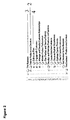
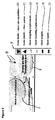
- the method for representing the organisation in the visual model involves the steps of firstly identifying the capabilities 2 which are available to be performed by the organisation in question. Each capability is then provided within a hierarchy of capabilities 4 as appropriate from analysis of the organisation and so a visual representation of the structure of the organisation, as shown in Figure 2 is created. Each capability 2 is set in the context of its superiors 3 and subordinates 4. In addition interaction between the capabilities is generated and indicated via linkages 8 which will be described in greater detail hereonin and as illustrated with respect to Figure 3.
- Models can then be created for describing user selectable aspects of organisational behaviour by combining required capabilities so as to establish directed linkages between capabilities to indicate required interactions.
- the capabilities included within any model remain consistent with the hierarchy in that all defined subordinate capabilities are included within the model for the superior capability.
- the visual representation is then deployed as an organisation design and communication means, with the navigation mechanism 7 as described, incorporating the icons 10-20 allowing the user, once they have selected a particular visually displayed capability, to then view selected details relating to the same.
- This enables the exploration and communication of design options, and implications as shown in Figure 5. With an analysis of the implications, the capability structures, interfaces, compositions and linkages can be reviewed.
- navigation is achieved by means of the integrated mechanism represented by the navigation bar icons 10-20 that enables all exploration, options and implications to be performed directly by the user.
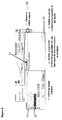
- This mechanism also allows for linked capabilities to be automatically inserted into a graphical model, as illustrated in Figure 6.
- the user having selected the capability "Develop and Maintain Products and Services” has this time selected the icon 18 to choose to view the outputs from that capability.
- These outputs 30 are displayed and the user has selected the output resource "Opportunity: Feasible" 32.
Landscapes
- Engineering & Computer Science (AREA)
- Business, Economics & Management (AREA)
- Strategic Management (AREA)
- Entrepreneurship & Innovation (AREA)
- Human Resources & Organizations (AREA)
- Operations Research (AREA)
- General Business, Economics & Management (AREA)
- Marketing (AREA)
- Data Mining & Analysis (AREA)
- Quality & Reliability (AREA)
- Tourism & Hospitality (AREA)
- Physics & Mathematics (AREA)
- Economics (AREA)
- General Physics & Mathematics (AREA)
- Theoretical Computer Science (AREA)
- Stored Programmes (AREA)
- User Interface Of Digital Computer (AREA)
- Digital Computer Display Output (AREA)
- Navigation (AREA)
Applications Claiming Priority (2)
| Application Number | Priority Date | Filing Date | Title |
|---|---|---|---|
| GBGB0112277.9A GB0112277D0 (en) | 2001-05-19 | 2001-05-19 | A method and apparatus to enable flexible and dorect navigation within a graphical representation of an organisation |
| GB0112277 | 2001-05-19 |
Publications (2)
| Publication Number | Publication Date |
|---|---|
| EP1271380A2 true EP1271380A2 (de) | 2003-01-02 |
| EP1271380A3 EP1271380A3 (de) | 2006-01-25 |
Family
ID=9914957
Family Applications (1)
| Application Number | Title | Priority Date | Filing Date |
|---|---|---|---|
| EP02253327A Withdrawn EP1271380A3 (de) | 2001-05-19 | 2002-05-17 | Methode und Vorrichtung zur Ermöglichung einer flexiblen und direkten Navigation innerhalb einer visuellen Darstellung einer Organisation |
Country Status (3)
| Country | Link |
|---|---|
| US (1) | US20020178433A1 (de) |
| EP (1) | EP1271380A3 (de) |
| GB (1) | GB0112277D0 (de) |
Cited By (4)
| Publication number | Priority date | Publication date | Assignee | Title |
|---|---|---|---|---|
| EP1508869A1 (de) * | 2003-08-22 | 2005-02-23 | Mood International Limited | Methode und Apparat zur Definition, Referenzierung und Navigation über mehrere Perspektiven einer Organisation |
| EP1617367A1 (de) * | 2004-06-28 | 2006-01-18 | Mood International Limited | Verfahren und Vorrichtung zur Verwaltung und Synchronisierung der variablen Geschäftsstrukturen |
| US8204920B2 (en) | 2001-04-10 | 2012-06-19 | Mood Enterprises Ltd | Method and system for accessing software-based systems |
| US8930853B2 (en) | 2003-05-14 | 2015-01-06 | Mood Enterprises Ltd | Organization representation framework and design method |
Families Citing this family (3)
| Publication number | Priority date | Publication date | Assignee | Title |
|---|---|---|---|---|
| US9307884B1 (en) * | 2003-01-27 | 2016-04-12 | The Pnc Financial Services Group, Inc. | Visual asset structuring tool |
| US7712042B2 (en) * | 2005-06-10 | 2010-05-04 | International Business Machines Corporation | Techniques for viewing mappings and nodes |
| US20090299783A1 (en) * | 2008-04-15 | 2009-12-03 | Bae Systems Plc | Method and system for defense capability in trading in a complex environment |
Family Cites Families (33)
| Publication number | Priority date | Publication date | Assignee | Title |
|---|---|---|---|---|
| US5838965A (en) * | 1994-11-10 | 1998-11-17 | Cadis, Inc. | Object oriented database management system |
| US5819245A (en) * | 1995-09-05 | 1998-10-06 | Motorola, Inc. | Method of organizing data into a graphically oriented format |
| US6219055B1 (en) * | 1995-12-20 | 2001-04-17 | Solidworks Corporation | Computer based forming tool |
| US20020059264A1 (en) * | 1996-03-04 | 2002-05-16 | Maureen Fleming | Method and system for the display of business data from multiple sources |
| US5892947A (en) * | 1996-07-01 | 1999-04-06 | Sun Microsystems, Inc. | Test support tool system and method |
| US6199193B1 (en) * | 1997-03-18 | 2001-03-06 | Fujitsu Limited | Method and system for software development and software design evaluation server |
| US6028602A (en) * | 1997-05-30 | 2000-02-22 | Telefonaktiebolaget Lm Ericsson | Method for managing contents of a hierarchical data model |
| US6173438B1 (en) * | 1997-08-18 | 2001-01-09 | National Instruments Corporation | Embedded graphical programming system |
| US6278991B1 (en) * | 1997-08-22 | 2001-08-21 | Sap Aktiengesellschaft | Browser for hierarchical structures |
| US6173297B1 (en) * | 1997-09-12 | 2001-01-09 | Ericsson Inc. | Dynamic object linking interface |
| US6097887A (en) * | 1997-10-27 | 2000-08-01 | Kla-Tencor Corporation | Software system and method for graphically building customized recipe flowcharts |
| US6011987A (en) * | 1997-12-08 | 2000-01-04 | The Cleveland Clinic Foundation | Fiducial positioning cup |
| US6874119B2 (en) * | 1998-09-11 | 2005-03-29 | Genesys Telecommunications Laboratories, Inc. | Stored-media interface engine providing an abstract record of stored multimedia files within a multimedia communication center |
| US6442557B1 (en) * | 1998-02-27 | 2002-08-27 | Prc Inc. | Evaluation of enterprise architecture model including relational database |
| US6192314B1 (en) * | 1998-03-25 | 2001-02-20 | Navigation Technologies Corp. | Method and system for route calculation in a navigation application |
| US6442620B1 (en) * | 1998-08-17 | 2002-08-27 | Microsoft Corporation | Environment extensibility and automatic services for component applications using contexts, policies and activators |
| US6385724B1 (en) * | 1998-11-30 | 2002-05-07 | Microsoft Corporation | Automatic object caller chain with declarative impersonation and transitive trust |
| GB9903830D0 (en) * | 1999-02-19 | 1999-04-14 | Salamander Limited | Process-systems integration method |
| US7219327B1 (en) * | 1999-07-01 | 2007-05-15 | Affinity Internet, Inc. | Extensible data model for use in an integrated platform for creating a distribution multiapplication online presence |
| US7162427B1 (en) * | 1999-08-20 | 2007-01-09 | Electronic Data Systems Corporation | Structure and method of modeling integrated business and information technology frameworks and architecture in support of a business |
| US7343351B1 (en) * | 1999-08-31 | 2008-03-11 | American Express Travel Related Services Company, Inc. | Methods and apparatus for conducting electronic transactions |
| US6571232B1 (en) * | 1999-11-01 | 2003-05-27 | Sun Microsystems, Inc. | System and method for browsing database schema information |
| US20020089550A1 (en) * | 2000-02-14 | 2002-07-11 | Julian Orbanes | Method and apparatus for organizing hierarchical screens in virtual space |
| US6745382B1 (en) * | 2000-04-13 | 2004-06-01 | Worldcom, Inc. | CORBA wrappers for rules automation technology |
| EP1410281A2 (de) * | 2000-07-10 | 2004-04-21 | BMC Software, Inc. | System und verfahren von betriebssysteme und geschäftseinwirkungsmanagement |
| GB0018839D0 (en) * | 2000-08-02 | 2000-09-20 | Salamander Organization The Li | Method for process-driven knowledge activation |
| US7219307B2 (en) * | 2000-09-22 | 2007-05-15 | Jpmorgan Chase Bank | Methods for graphically representing interactions among entities |
| US20020073141A1 (en) * | 2000-12-12 | 2002-06-13 | Dewhurst Sebastian John | Computational fluid dynamics software |
| US8407079B2 (en) * | 2001-06-22 | 2013-03-26 | International Business Machines Corporation | Method and system using an enterprise framework |
| WO2003001334A2 (en) * | 2001-06-22 | 2003-01-03 | Wonderware Corporation | Remotely monitoring / diagnosing distributed components of a supervisory process control and manufacturing information application from a central location |
| GB0118491D0 (en) * | 2001-07-28 | 2001-09-19 | Mood Internat Ltd | A method and apparatus for visual synchronisation between graphical hierarchical representations of an organisation |
| US20050021348A1 (en) * | 2002-07-19 | 2005-01-27 | Claribel Chan | Business solution management (BSM) |
| US7120643B2 (en) * | 2002-11-19 | 2006-10-10 | International Business Machines Corporation | Method, system, and storage medium for creating and maintaining an enterprise architecture |
-
2001
- 2001-05-19 GB GBGB0112277.9A patent/GB0112277D0/en not_active Ceased
-
2002
- 2002-05-17 EP EP02253327A patent/EP1271380A3/de not_active Withdrawn
- 2002-05-17 US US10/150,307 patent/US20020178433A1/en not_active Abandoned
Non-Patent Citations (1)
| Title |
|---|
| No Search * |
Cited By (5)
| Publication number | Priority date | Publication date | Assignee | Title |
|---|---|---|---|---|
| US8204920B2 (en) | 2001-04-10 | 2012-06-19 | Mood Enterprises Ltd | Method and system for accessing software-based systems |
| US8930853B2 (en) | 2003-05-14 | 2015-01-06 | Mood Enterprises Ltd | Organization representation framework and design method |
| EP1508869A1 (de) * | 2003-08-22 | 2005-02-23 | Mood International Limited | Methode und Apparat zur Definition, Referenzierung und Navigation über mehrere Perspektiven einer Organisation |
| US7668855B2 (en) * | 2003-08-22 | 2010-02-23 | Salamander Enterprises Limited | Method and apparatus for definition, referencing and navigation across multiple perspectives of an organization |
| EP1617367A1 (de) * | 2004-06-28 | 2006-01-18 | Mood International Limited | Verfahren und Vorrichtung zur Verwaltung und Synchronisierung der variablen Geschäftsstrukturen |
Also Published As
| Publication number | Publication date |
|---|---|
| US20020178433A1 (en) | 2002-11-28 |
| GB0112277D0 (en) | 2001-07-11 |
| EP1271380A3 (de) | 2006-01-25 |
Similar Documents
| Publication | Publication Date | Title |
|---|---|---|
| US7809597B2 (en) | Progressive refinement model for business processes | |
| US7831453B2 (en) | Modeling of business process data | |
| Won et al. | Component-based approaches to tailorable systems | |
| US6774911B2 (en) | Method and apparatus for visual synchronizations between graphical representations of an organization | |
| US20110145704A1 (en) | Providing multiple views of a business process definition to different views | |
| Grundy et al. | Developing adaptable user interfaces for component-based systems | |
| Martinie et al. | Multi-models-based engineering of collaborative systems: application to collision avoidance operations for spacecraft | |
| US7668855B2 (en) | Method and apparatus for definition, referencing and navigation across multiple perspectives of an organization | |
| WO2006032846A2 (en) | Computer games localisation | |
| EP1271380A2 (de) | Methode und Vorrichtung zur Ermöglichung einer flexiblen und direkten Navigation innerhalb einer visuellen Darstellung einer Organisation | |
| Henderson-Sellers et al. | A qualitative comparison of two processes for object-oriented software development | |
| Galster et al. | Transition from requirements to architecture: A review and future perspective | |
| Gomaa et al. | Feature driven dynamic customization of software product lines | |
| Beck et al. | Integrating object-oriented analysis and graphical user interface design | |
| Grundy et al. | Developing adaptable user interfaces for component-based systems | |
| Adam et al. | The role of service abstraction and service variability and its impact on requirements engineering for service-oriented systems | |
| Langner et al. | Modeling data flows in a complex stakeholder network-a case study on autonomous public transportation | |
| Grundy et al. | Low-level and high-level CSCW support in the Serendipity process modelling environment | |
| Kim et al. | A business component approach for supporting the variability of the business strategies and rules | |
| Godet-Bar et al. | Interactional Objects: HCI concerns in the analysis phase of the Symphony method | |
| Stary et al. | Model-based electronic performance support | |
| Mayer | Graphical user interfaces composed of plug-ins | |
| Buccella et al. | Software product line reengineering: A case study on the geographic domain | |
| Cavassi et al. | Designing a Graphical User Interface for Energy Prediction and Data Analysis for Volvo Group | |
| Karcher et al. | Global distributed engineering—integrating different process paradigms |
Legal Events
| Date | Code | Title | Description |
|---|---|---|---|
| PUAI | Public reference made under article 153(3) epc to a published international application that has entered the european phase |
Free format text: ORIGINAL CODE: 0009012 |
|
| AK | Designated contracting states |
Kind code of ref document: A2 Designated state(s): AT BE CH CY DE DK ES FI FR GB GR IE IT LI LU MC NL PT SE TR |
|
| AX | Request for extension of the european patent |
Free format text: AL;LT;LV;MK;RO;SI |
|
| PUAL | Search report despatched |
Free format text: ORIGINAL CODE: 0009013 |
|
| AK | Designated contracting states |
Kind code of ref document: A3 Designated state(s): AT BE CH CY DE DK ES FI FR GB GR IE IT LI LU MC NL PT SE TR |
|
| AX | Request for extension of the european patent |
Extension state: AL LT LV MK RO SI |
|
| 17P | Request for examination filed |
Effective date: 20060227 |
|
| AKX | Designation fees paid |
Designated state(s): AT BE CH CY DE DK ES FI FR GB GR IE IT LI LU MC NL PT SE TR |
|
| RAP1 | Party data changed (applicant data changed or rights of an application transferred) |
Owner name: THE SALAMANDER ORGANISATION LTD. |
|
| 17Q | First examination report despatched |
Effective date: 20080417 |
|
| RAP1 | Party data changed (applicant data changed or rights of an application transferred) |
Owner name: SALAMANDER ENTERPRISES LIMITED |
|
| STAA | Information on the status of an ep patent application or granted ep patent |
Free format text: STATUS: THE APPLICATION IS DEEMED TO BE WITHDRAWN |
|
| 18D | Application deemed to be withdrawn |
Effective date: 20081028 |