EP1271991A1 - Allocation de ressources radio basée sur la longueur de paquets à transmettre - Google Patents
Allocation de ressources radio basée sur la longueur de paquets à transmettre Download PDFInfo
- Publication number
- EP1271991A1 EP1271991A1 EP20020254164 EP02254164A EP1271991A1 EP 1271991 A1 EP1271991 A1 EP 1271991A1 EP 20020254164 EP20020254164 EP 20020254164 EP 02254164 A EP02254164 A EP 02254164A EP 1271991 A1 EP1271991 A1 EP 1271991A1
- Authority
- EP
- European Patent Office
- Prior art keywords
- packet
- base station
- transmission
- transmitted
- mobile station
- Prior art date
- Legal status (The legal status is an assumption and is not a legal conclusion. Google has not performed a legal analysis and makes no representation as to the accuracy of the status listed.)
- Granted
Links
Images






Classifications
-
- H—ELECTRICITY
- H04—ELECTRIC COMMUNICATION TECHNIQUE
- H04W—WIRELESS COMMUNICATION NETWORKS
- H04W72/00—Local resource management
- H04W72/04—Wireless resource allocation
-
- H—ELECTRICITY
- H04—ELECTRIC COMMUNICATION TECHNIQUE
- H04W—WIRELESS COMMUNICATION NETWORKS
- H04W72/00—Local resource management
- H04W72/50—Allocation or scheduling criteria for wireless resources
- H04W72/54—Allocation or scheduling criteria for wireless resources based on quality criteria
-
- H—ELECTRICITY
- H04—ELECTRIC COMMUNICATION TECHNIQUE
- H04W—WIRELESS COMMUNICATION NETWORKS
- H04W72/00—Local resource management
- H04W72/50—Allocation or scheduling criteria for wireless resources
- H04W72/54—Allocation or scheduling criteria for wireless resources based on quality criteria
- H04W72/543—Allocation or scheduling criteria for wireless resources based on quality criteria based on requested quality, e.g. QoS
-
- H—ELECTRICITY
- H04—ELECTRIC COMMUNICATION TECHNIQUE
- H04W—WIRELESS COMMUNICATION NETWORKS
- H04W28/00—Network traffic management; Network resource management
- H04W28/02—Traffic management, e.g. flow control or congestion control
- H04W28/06—Optimizing the usage of the radio link, e.g. header compression, information sizing, discarding information
-
- H—ELECTRICITY
- H04—ELECTRIC COMMUNICATION TECHNIQUE
- H04W—WIRELESS COMMUNICATION NETWORKS
- H04W28/00—Network traffic management; Network resource management
- H04W28/16—Central resource management; Negotiation of resources or communication parameters, e.g. negotiating bandwidth or QoS [Quality of Service]
- H04W28/18—Negotiating wireless communication parameters
- H04W28/22—Negotiating communication rate
Definitions
- the present invention relates to a packet transmission method in which packets are transmitted between a base station and a mobile station communicating with the base station when the packets are transmitted from a sender to a receiver, and to a base station and a mobile station to which the packet transmission method is applied.
- the size of each packet transmitted in the non-voice communication differs depending on an application used for processing the packet and the type of the packet (for example, types such as a control packet, an information packet, and the like). More specifically, the size of a packet varies widely from several bytes of the control packet to 1500 bytes prescribed by MTU.
- a transmission rate is determined for each of the networks according to a predetermined priority.
- transmission quality is not satisfied even when it is required to satisfy transmission quality from a sender to a receiver, that is, end-to-end transmission quality.
- a more specific object of the present invention is to provide a packet transmission method, a base station and a mobile station that can reduce variations of packet transmission time and can guarantee transmission quality from a sender to a receiver when transmitting packets having different sizes from the sender to the receiver.
- a packet transmission method in which a packet is transmitted between a base station and a mobile station communicating with the base station, including the steps of: recognizing the size of the packet to be transmitted; determining a transmission rate for the packet between the base station and the mobile station in accordance with the recognized size of the packet; allocating a radio resource to transmission of the packet between the base station and the mobile station based on the determined transmission rate; and transmitting the packet between the base station and the mobile station using the allocated radio resource.
- the packet transmission rate between the base station and the mobile station is determined in accordance with the size of the packet to be transmitted.
- the packet transmission rate between the base station and the mobile station is determined in accordance with the size of the packet to be transmitted.
- the transmission rate when the packets are transmitted from the mobile station as a sender to a receiver, the transmission rate may be determined based on the size of the packet to be transmitted and the transmission state of an upper network of the base station so as to satisfy a transmission condition between the mobile station and the receiver.
- the base station when packets are transmitted downward, the base station recognizes the transmission request in the wireless area from the upper network. When packets are transmitted upward, the base station calculates the transmission request in the wireless area based on a request from a user (mobile station) and a transmission state of the upper network.
- the optimum transmission rate is determined in accordance with the size of each packet and the transmission request in the wireless area from the upper network.
- the transmission request in the wireless area is calculated in accordance with the quality of service request of the user and the transmission state of the upper network. Accordingly, it is possible to improve the system capacity and to maximize end-to-end quality of service by setting an optimum transmission rate.
- the transmission rate is determined by giving consideration to the transmission state of the upper network of the base station as well as the size of the packet to be transmitted.
- the transmission rate is determined so as to satisfy the transmission condition from the mobile station that is the sender to the receiver. Accordingly, when high transmission quality between the sender to the receiver, that is, end-to-end transmission quality is required, it is possible to meet the requirement.
- a base station that transmits a packet between the base station and a mobile station communicating with the base station including: a packet size recognition part that recognizes the size of the packet to be transmitted; a transmission rate determination part that determines a transmission rate between the base station and the mobile station in accordance with the recognized size of the packet; a radio resource allocation part that allocates a radio resource to transmission of the packet between the base station and the mobile station based on the determined transmission rate; and a packet transmission part that transmits the packet between the base station and the mobile station using the allocated radio resource.
- the transmission rate between the base station and the mobile station is determined in accordance with the size of the packet to be transmitted.
- the transmission rate is determined such that the transmission rate becomes greater as the size of a packet becomes larger.
- a mobile station that transmits a packet between the mobile station and a base station including: a packet size recognition part that recognizes the size of the packet to be transmitted; a transmission rate determination part that determines a transmission rate of the packet between the mobile station and the base station in accordance with the recognized size of the packet; a transmission rate notification part that notifies the base station of the determined transmission rate; and a packet transmission part that transmits the packet between the mobile station and the base station using a radio resource allocated by the base station based on the notified transmission rate.
- the transmission rate between the base station and the mobile station is determined in accordance with the size of a packet to be transmitted.
- the transmission time is determined such that the transmission rate becomes greater as the size of a packet becomes larger.
- a mobile station that transmits a packet between the mobile station and a base station including: a packet size recognition part that recognizes the size of the packet to be transmitted; a packet size notification part that notifies the base station of the recognized size of the packet; and a packet transmission part that transmits the packet between the mobile station and the base station using a radio resource allocated by the base station based on a transmission rate determined in accordance with the size of the packet.
- the transmission rate between the base station and the mobile station is determined in accordance with the size of the packet to be transmitted. Therefore, it is possible to reduce the variation of packet transmission time from the sender to the receiver when the transmission rate is determined so as to be in proportion to the size of a packet.
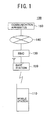
- FIG. 1 is a schematic diagram showing an example of the structure of a mobile communication system 100 to which the present invention is applied.
- the mobile communication system 100 includes a mobile terminal 110 as a mobile station, a base station 120, a radio control apparatus (RNC) 130, a communication network 140, and a communication apparatus 150.
- RNC radio control apparatus
- a transmission speed (transmission rate) between the mobile terminal 110 and the base station 120 is determined based on only the size of packet to be transmitted.
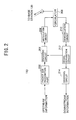
- FIG. 2 illustrates an example of the structure of the mobile terminal 110 in a reservation type access system according to the first embodiment of the present invention.
- the mobile terminal 110 in the reservation type access system includes a packet size recognition part 202, an encoding circuit 204, a modulation circuit 206, a circulator 208, a demodulation circuit 210, a signal separation circuit 212, and a decoding circuit 214.
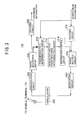
- FIG. 3 illustrates an example of the structure of the base station 120 in the reservation type access system according to the first embodiment of the present invention.
- the base station 120 in the reservation type access system includes a circulator 302, a demodulation circuit 304, a signal separation circuit 306, a decoding circuit 308, a transmission rate determination circuit 310, a modulation method/radio resource determination circuit 312 (referred to as "determination circuit 312", hereinafter), an information control circuit 314, an encoding circuit 316, a signal multiple circuit 318, and a modulation circuit 320.
- the mobile terminal 110 when transmitting packets from the mobile terminal 110 to the communication apparatus 150, the mobile terminal 110 transmits a transmission request and the size of each of the packets to be transmitted to the base station 120.
- the packet size recognition part 202 of the mobile terminal 110 shown in FIG. 2 recognizes the size of each of the packets to be transmitted.
- the size of the packet is transmitted to the base station 120 with the transmission request via the encoding circuit 204, the modulation circuit 206 and the circulator 208.
- the size of the packet and the transmission request transmitted from the mobile terminal 110 are input to the transmission rate determination circuit 310 via the circulator 302, the demodulation circuit 304 and the signal separation circuit 306 that are in the base station 120.
- the transmission rate determination circuit 310 determines a transmission rate for each packet between the mobile terminal 110 and the base station 120 based on the size of the packet that is input. To be specific, as shown in FIG. 4, the transmission rate determination circuit 310 determines a transmission rate such that the transmission rate is higher as the size of the packet becomes larger.
- the determination circuit 312 determines a modulation method and a radio resource in accordance with the transmission rate that is determined by the transmission rate determination circuit 310. More specifically, the determination circuit 312 determines the modulation method such as transmission power, and at the same time, a spread code that is a radio resource in accordance with the determined transmission rate when the CDMA system is employed in multiplexing. Additionally, the determination circuit 312 determines a time slot that is a radio resource in accordance with the determined transmission rate when the TDMA system is employed in multiplexing. Further, the determination circuit 312 determines a frequency band that is a radio resource in accordance with the determined transmission rate when the FDMA system is employed in multiplexing.
- Information about the determined radio resource and modulation method is transmitted to the mobile terminal 110 via the information control circuit 314, the signal multiple circuit 318, the modulation circuit 320, and the circulator 302.
- the information about the radio resource and modulation method that is determined by the base station 120 is input to the encoding circuit 204 via the circulator 208, the demodulation circuit 210, and the signal separation circuit 212. Thereafter, the modulation circuit 206 modulates the packets to be transmitted using the corresponding radio resources and modulation methods determined by the base station 120. The modulated packets are transmitted to the base station 120 via the circulator 208.
- the packets that are to be transmitted and are transmitted from the mobile terminal 110 are input to the decoding circuit 308 via the circulator 302, the demodulation circuit 304, and the signal separation circuit 306 as shown in FIG. 3.
- the decoding circuit 308 decodes the packets that are input to the decoding circuit 308.
- the decoded packets are transmitted as upstream information to the communication apparatus 150 that is a receiver via the RNC 130 and the communication network 140.
- FIG. 5 is a flow diagram showing the operations of the mobile terminal 110 and the base station 120 when packets are transmitted from the mobile terminal 110 to the communication apparatus 150 in the reservation type access system according to the first embodiment.
- step S101 the mobile terminal 110 recognizes the size of each of the packets to be transmitted.
- step S102 the mobile terminal 110 transmits the size of the packet and a transmission request to the base station 120.
- step S103 when the base station 120 receives the size of the packet and the transmission request from the mobile terminal 110, the base station 120 determines the transmission rate for the packet between the mobile terminal 110 and the base station 120 based on the size of the packet. Then, in step S104, the base station 120 determines a radio resource and a modulation method for each packet in accordance with the determined transmission rate. In step S105, information about the radio resource and the modulation method is transmitted to the mobile terminal 110.
- step S106 the mobile terminal 110 transmits the packet to be transmitted to the base station 120 in accordance with the radio resource and modulation method determined by the base station 120.
- step S107 the base station 120 transmits the packet from the mobile terminal 110 to the communication apparatus 150 via the RNC 130 and the communication network 140. Steps S101 through S107 are repeated until all of the packets to be transmitted are transmitted to the communication apparatus 150.
- FIG. 6 is a block diagram showing an example of the structure of the mobile terminal 110 in a non-reservation type access system according to the first embodiment of the present invention.
- the mobile terminal 110 in the non-reservation type access system includes an encoding circuit 402, a signal multiple circuit 404, a modulation circuit 406, a transmission rate determination circuit 408, a modulation method/radio resource determination circuit 410 (referred to as "determination circuit 410", hereinafter), an information control circuit 412, a circulator 414, a demodulation circuit 416, a signal separation circuit 418 and a decoding circuit 420.
- FIG. 7 is a block diagram showing an example of the structure of the base station 120 in the non-reservation type access system according to the first embodiment.
- the base station 120 in the non-reservation type access system includes a circulator 502, a demodulation circuit 504, a signal separation circuit 506, a decoding circuit 508, a transmission rate determination circuit 510, a modulation method/radio resource determination circuit 512 (referred to as "determination circuit 512", hereinafter), an information control circuit 514, an encoding circuit 516, a signal multiple circuit 518, and a modulation circuit 520.
- the transmission rate determination circuit 408 of the mobile terminal 110 recognizes the size of each of the packets to be transmitted.
- the determination circuit 410 determines radio resource and modulation method in accordance with the transmission rate determined by the transmission rate determination circuit 408. To be specific, the determination circuit 410 determines the modulation method such as transmission power, and at the same time, a spread code that is a radio resource in accordance with the determined transmission rate when the CDMA system is employed in multiplexing. In addition, the determination circuit 410 determines a time slot that is a radio resource in accordance with the determined transmission rate when the TDMA system is employed in multiplexing. The determination circuit 410 determines a frequency band that is a radio resource in accordance with the determined transmission rate when the FDMA system is employed in multiplexing.
- Information about the determined radio resource and modulation method is input to the signal multiple circuit 404 via the information control circuit 412.
- the signal multiple circuit 404 adds information about the radio resource and modulation method determined by the determination circuit 410 to each header of respective packets to be transmitted.
- the modulation circuit 406 modulates the packets to be transmitted and includes the headers in accordance with the respective radio resources and modulation methods determined by the determination circuit 410.
- the modulated packets are transmitted to the base station 120 via the circulator 414.
- the packets that are to be transmitted and transmitted from the mobile terminal 110 are input to the signal separation circuit 506 via the circulator 502 and the demodulation circuit 504.
- the signal separation circuit 506 separates information about the radio resource and the modulation method added to the headers of the input packets.
- the decoding circuit 508 decodes based on information about the radio resource and the modulation method that are separated by the signal separation circuit 506.
- the decoded signal is transmitted to as upstream information the communication apparatus 150 that is a receiver via the RNC 130 and the communication network 140.
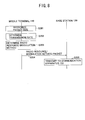
- FIG. 8 is a flow diagram showing the operations of the mobile terminal 110 and the base station 120 when packets are transmitted from the mobile terminal 110 to the communication apparatus 150 in the non-reservation type access system according to the first embodiment.
- step S201 the mobile terminal 110 recognizes the size of each of the packets to be transmitted.
- step S202 the transmission rate is determined for the packet in accordance with the recognized size of the packet.
- step S203 the mobile terminal 110 determines a radio resource and a modulation method for the packet in accordance with the determined transmission rate.
- step S204 after the radio resource and the modulation method are determined, the mobile terminal 110 adds information about the determined radio resource and modulation method to a header of the packet to be transmitted. Thereafter, the mobile terminal 110 transmits the packet to the base station 120.
- step S205 the base station 120 decodes the packet transmitted from the mobile terminal 110 based on the information about the radio resource and the modulation method that is added to the header of the packet. Thereafter, the base station 120 transmits the decoded packet to the communication apparatus 150 that is a receiver via the RNC 130 and the communication network 140. Steps S201 through S205 are repeated until all of the packets to be transmitted are transmitted to the communication apparatus 150.
- the mobile terminal 110 performs the same operation whether the terminal 110 has the structure as shown in FIG. 2 or FIG. 6.
- the base station 120 performs the same operation whether the base station 120 has the structure as shown in FIG. 3 or FIG. 7.
- a description will be given of a case where the mobile terminal 110 has the structure as shown in FIG. 2 and the base station 120 has the structure as shown in FIG. 3.
- the packets to be transmitted and transmitted from the communication apparatus 150 are input to the encoding circuit 316 included in the base station 120 via the communication network 140 and the RNC 130.
- the sizes of each of the packets to be transmitted are input to the transmission rate determination circuit 310 by the communication apparatus 150 via the communication network 140 and the RNC 130.
- the transmission rate determination circuit 310 recognizes the size of each of the packets to be transmitted, and determines the transmission rate for each packet in accordance with the size of the packet.
- the determination circuit 312 determines a radio resource and a modulation method for each packet in accordance with the transmission rate that is determined by the transmission rate determination circuit 310. Information about the determined radio resource and modulation method is transmitted to the mobile terminal 110 via the information control circuit 314, the signal multiple circuit 318, the modulation circuit 320 and the circulator 302.
- the packets to be transmitted are input to the modulation circuit 320 via the transmission rate determination circuit 310, the determination circuit 312, the information control circuit 314, and the signal multiple circuit 318.
- the modulation circuit 320 modulates the packets to be transmitted in accordance with the determined modulation method, and transmits the packets thereof to the mobile terminal 110 via the circulator 302.
- information about the radio resource and modulation method determined by the base station 120 is input to the decoding circuit 214 via the circulator 208, the modulation circuit 210, and the signal separation circuit 212. Subsequently, packets transmitted from the base station 120 are input to the decoding circuit 214 via the circulator 208, the modulation circuit 210, and the signal separation circuit 212.
- the decoding circuit 214 decodes the input packets in accordance with the information about the input radio resource and modulation method.
- FIG. 9 is a flow diagram showing the operations of the mobile terminal 110 and the base station 120 when packets are transmitted from the communication apparatus 150 to the mobile terminal 110 in the first embodiment.
- step S301 the base station 120 recognizes the size of each of the packets that are to be transmitted to the mobile terminal 110 and transmitted from the communication apparatus 150 via the communication network 140 and the RNC 130.
- step S302 the base station 120 determines the transmission rate for the packet in accordance with the recognized size of the packet.
- step S303 the base station 120 determines a radio resource and a modulation method for the packet in accordance with the determined transmission rate.
- step S304 the base station 120 transmits information about the determined radio resource and modulation method to the mobile terminal 110.
- the mobile terminal 110 receives the information.
- step S305 the base station 120 transmits the packet to be transmitted to the mobile terminal 110.
- the mobile terminal 110 receives and decodes the packet in accordance with the information about the radio resource and modulation method that are received in step S304. Steps S301 through S305 are repeated until all of the packets to be transmitted are transmitted to the mobile terminal 110.
- a transmission rate for a packet between the mobile terminal 110 and the base station 120 is determined based on the size of each packet to be transmitted and a transmission condition required by a sender so as to satisfy the transmission condition.
- the mobile terminal 110 has the structure as shown in FIG. 2.
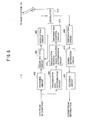
- the base station 120 has the structure as shown in FIG. 10.
- the base station 120 includes a circulator 602, a demodulation circuit 604, a signal separation circuit 606, a decoding circuit 608, a transmission rate determination circuit 610, a modulation method/radio resource determination circuit 612 (referred to as “determination circuit 612", hereinafter), an information control circuit 614, an encoding circuit 616, a signal multiple circuit 618, a modulation circuit 620, and a wireless area transmission request obtaining circuit 622 (referred to as “circuit 622", hereinafter).
- the mobile terminal 110 transmits the size of each of the packets to be transmitted and a transmission request to the base station 120.
- the packet size recognition part 202 in the mobile terminal 110 as shown in FIG. 2 recognizes the size of each of the packets to be transmitted.
- the size of the packet is transmitted to the base station 120 with the transmission request via the encoding circuit 204, the modulation circuit 206, and the circulator 208.
- the transmission request includes as a transmission condition transmission time of the packet from the mobile terminal 110 that is a sender to the communication apparatus 150 that is a receiver. The transmission time is determined depending on the type of information of a transmission target, for example.
- the size of the packet and transmission request transmitted from the mobile terminal 110 are input to the transmission rate determination circuit 610 via the circulator 602, the demodulation circuit 604, and the signal separation circuit 606 included in the base station 120 as shown in FIG. 10.
- the transmission rate determination circuit 610 outputs the transmission request that is input to the circuit 622.
- the circuit 622 recognizes a transmission state of the up direction (a direction from the base station 120 to the communication apparatus 150) of an upper network (here, the RNC 130 and the communication network 140). To be specific, the circuit 622 recognizes the transmission state of the upper network by inquiring of the RNC 130 or by estimating from a transmission state of the down direction (a direction from the communication apparatus 150 to the base station 120).
- the circuit 622 calculates transmission time of the packet from the mobile terminal 110 to the base station 120, that is, transmission time in a wireless area. The calculation is made based on transmission time of the packet from the mobile terminal 110 as a sender to the communication apparatus 150 as a receiver, the transmission time being included in the input transmission request, and the recognized transmission state of the up direction in the upper network. The calculated transmission time in the wireless area is input to the transmission rate determination circuit 610.
- the transmission rate determination circuit 610 determines a transmission rate for the packet between the mobile terminal 110 and the base station 120 based on the size of the packet that is input and the transmission time in the wireless area so as to satisfy the transmission time thereof. More specifically, the transmission rate determination circuit 610 determines a transmission rate for the packet such that the transmission rate is higher as the size of the packet becomes larger.
- the determination circuit 612 determines a modulation method and a radio resource for the packet in accordance with the transmission rate determined by the transmission rate determination circuit 610.
- Information about the determined radio resource and modulation method is transmitted to the mobile terminal 110 via the information control circuit 614, the signal multiple circuit 618, the modulation circuit 620, and the circulator 602.
- the information about the radio resource and modulation method determined by the base station 120 is input to the encoding circuit 204 via the circulator 208, the demodulation circuit 210, and the signal separation circuit 212. Subsequently, packets to be transmitted are modulated by the modulation circuit 206 in accordance with the respective radio resources and modulation methods determined by the base station 120, and transmitted to the base station 120 via the circulator 208.
- the packets that are to be transmitted and transmitted from the mobile terminal 110 are input to the decoding circuit 608 via the circulator 602, the demodulation circuit 604, and the signal separation circuit 606 in the base station 120.
- the decoding circuit 608 decodes the packets to be transmitted and input to the decoding circuit 608.
- the decoded packets to be transmitted are transmitted as upstream information to the communication apparatus 150 that is a receiver via the RNC 130 and the communication network 140.
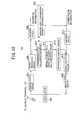
- FIG. 11 is a flow diagram showing the operations of the mobile terminal 110 and the base station 120 in a case where packets are transmitted from the mobile terminal 110 to the communication apparatus 150 in the second embodiment.
- step S401 the mobile terminal 110 recognizes the size of each of the packets to be transmitted.
- step S402 the mobile terminal 110 transmits to the base station 120 the size of the packet and a transmission request including transmission time of packet from the mobile terminal 110 that is a sender to the communication apparatus 150 that is a receiver as a transmission condition.
- the base station 120 When the base station 120 receives the size of the packet and the transmission request from the mobile terminal 110, the base station 120 recognizes a transmission state of the upper network in step S403. In step S404, the base station 120 calculates transmission time in the wireless area. The calculation is made based on transmission time of the packet from the mobile terminal 110 (sender) to the communication apparatus 150 (receiver), the transmission time being included in the input transmission request, and the recognized transmission state of the up direction in the upper network.
- step S405 the base station 120 determines a transmission rate for the packet between the mobile terminal 110 and the base station 120 based on the input size of the packet and the calculated transmission time in the wireless area so as to satisfy the transmission time.
- step S406 the base station 120 determines a radio resource and a modulation method for the packet in accordance with the determined transmission rate.
- step S407 the base station 120 transmits to the mobile terminal 110 information about the radio resource and the modulation method.
- step S408 the mobile terminal 110 transmits to the base station 120 the packet to be transmitted in accordance with the radio resource and modulation method determined by the base station 120.
- step S409 the base station 120 transmits to the communication apparatus 150 that is a receiver the packet transmitted from the mobile terminal 110 via the RNC 130 and the communication network 140. Steps S401 through S409 are repeated until all of the packets to be transmitted are transmitted to the communication apparatus 150.
- the packets that are to be transmitted and transmitted from the communication apparatus 150 are input to the encoding circuit 616 in the base station 120 as shown in FIG. 10 via the communication network 140 and the RNC 130.
- the transmission request and the size of the packet transmitted from the communication apparatus 150 are input to the circuit 622 via the communication network 140 and the RNC 130.
- the transmission request includes transmission time of the packet from the communication apparatus 150 to the mobile terminal 110 as a transmission condition.
- the transmission request also includes time when the communication apparatus 150 started transmitting the packet.
- the circuit 622 receives the size of the packet that is to be transmitted and transmitted from the communication apparatus 150 and a transmission request from the RNC 130.
- the transmission request includes, as a transmission condition, transmission time of the packet from the base station 120 to the mobile terminal 110, that is, transmission time in the wireless area.
- the transmission time in the wireless area is calculated by the RNC 130. The calculation is made by subtracting time required for transmitting the packet from the communication apparatus 150 to the base station 120 from the transmission time of the packet from the communication apparatus 150 to the mobile terminal 110, the transmission time being included in the transmission request transmitted from the communication apparatus 150.
- the circuit 622 calculates transmission time in the wireless area in a case where the circuit 622 receives a transmission request and the size of the packet to be transmitted from the communication apparatus 150 via the communication network 140 and the RNC 130. To be specific, the circuit 622 calculates the transmission time in the wireless area by subtracting a difference between the present time and the time when the communication apparatus 150 started transmitting the packet from the transmission time of the packet from the communication apparatus 150 to the mobile terminal 110, the transmission time being included in the transmission request.
- the calculated transmission time in the wireless area is input to the transmission rate determination circuit 610 with the size of the packet.
- the circuit 622 when the circuit 622 receives the transmission request from the RNC 130 and the size of the packet that is to be transmitted and transmitted from the communication apparatus 150, the circuit 622 directly outputs the transmission request and the size of the packet to the transmission rate determination circuit 610.
- the transmission rate determination circuit 610 determines a transmission rate for the packet between the mobile terminal 110 and the base station 120 based on the size of the packet and the transmission time in the wireless area that are input so as to satisfy the transmission time thereof. More specifically, the transmission rate determination circuit 610 determines the transmission rate for the packet such that the transmission rate becomes higher as the size of the packet becomes larger.
- the determination circuit 612 determines a radio resource and a modulation method for the packet in accordance with the transmission rate determined by the transmission rate determination circuit 610.
- Information about the determined radio resource and modulation method is transmitted to the mobile terminal 110 via the information control circuit 614, the signal multiple circuit 618, the modulation circuit 620, and the circulator 602.
- the packet to be transmitted is input to the modulation circuit 620 from the encoding circuit 616 via the signal multiple circuit 618.
- the modulation circuit 620 modulates the packet to be transmitted in accordance with the determined modulation method.
- the modulated packet is transmitted to the mobile terminal 110 from the modulation circuit 620 via the circulator 602.
- the information about the radio resource and modulation method determined by the base station 120 is input to the decoding circuit 214 via the circulator 208, the demodulation circuit 210, and the signal separation circuit 212. Subsequently, a packet that is to be transmitted and transmitted from the base station 120 is input to the decoding circuit 214 via the circulator 208, the demodulation circuit 210, and the signal separation circuit 212. The decoding circuit 214 decodes the input packet to be transmitted in accordance with the input information about the radio resource and modulation method.
- FIG. 12 is a flow diagram showing the operations of the mobile terminal 110 and the base station 120 in a case where packets are transmitted from the communication apparatus 150 to the mobile terminal 110 according to the second embodiment.
- step S501 the base station 120 recognizes the size of the packet to be transmitted when the packet, the size of the packet, and a transmission request are input from the communication apparatus 150. Then, in step S502, the base station 120 calculates transmission time in the wireless area. The calculation is made by subtracting a difference between the present time and the time when the communication apparatus 150 started transmitting the packet from the transmission time of the packet from the communication apparatus 150 to the mobile terminal 110. The transmission time is included in the transmission request. Alternatively, the base station 120 recognizes a request from the upper network for the transmission time in the wireless area.
- the base station 120 determines a transmission rate for the packet between the mobile terminal 110 and the base station 120 based on the size of the packet to be transmitted and the calculated or recognized transmission time in the wireless area so as to satisfy the transmission time thereof.
- the base station 120 determines a radio resource and a modulation method for the packet in accordance with the determined transmission rate.
- step S505 the base station 120 transmits information about the determined radio resource and modulation method to the mobile terminal 110.
- the mobile terminal 110 receives the information.
- step S506 the base station 120 transmits the packet to be transmitted to the mobile terminal 110.
- the mobile terminal 110 receives the packet, and decodes the received packet in accordance with the information about the radio resource and modulation method that is received in step S505. Steps S501 through S506 are repeated until all of the packets to be transmitted are transmitted to the mobile terminal 110.
- the transmission rate between the mobile terminal 110 and the base station 120 is determined in accordance with the size of the packet to be transmitted. Additionally, when a transmission condition between the mobile terminal 110 and the communication apparatus 150, or a transmission condition between the mobile terminal 110 and the base station 120 is specified, the transmission rate is determined so as to satisfy the transmission condition. Therefore, it is possible to decrease variation of packet transmission time from a sender to a receiver irrespective of the sizes of packets to be transmitted.
- the transmission rate is determined so as to satisfy the transmission condition between the mobile terminal 110 as a sender and the communication apparatus 150 as a receiver, when transmission quality from the sender to the receiver, that is, end-to-end transmission quality is required, it is possible to meet the requirement.
- end-to-end quality of service can be supported by determining a modulation method or a radio resource by calculating a transmission rate in the wireless area in accordance with the size of each packet and a transmission request therein.
- QoS quality of service
- the base station 120 recognizes the transmission request in the wireless area from the upper network.
- the base station 120 calculates the transmission request in the wireless area based on a request from a user (mobile station) and a transmission state of the upper network.
- the optimum transmission rate is determined in accordance with the size of each packet and the transmission request in the wireless area from the upper network.
- the transmission request in the wireless area is calculated in accordance with the quality of service request of the user and the transmission state of the upper network. Accordingly, it is possible to improve the system capacity and to maximize end-to-end quality of service by setting an optimum transmission rate.
- the packet size recognition part 202 and the transmission rate determination circuit 408 in the mobile terminal 110 correspond to a packet size recognition part.
- the transmission rate determination circuits 310, 510 and 610 in the base station 120 correspond to the packet size recognition part.
- Each of the transmission rate determination circuit 408 in the mobile terminal 110, the transmission rate determination circuits 310, 510 and 610 in the base station 120 corresponds to a transmission rate determination part.
- each of the determination circuit 410 in the mobile terminal 110, and the determination circuits 312, 512 and 612 in the base station 120 corresponds to a radio resource allocation part.
- Each of the whole mobile terminal 110 and the whole base station 120 corresponds to a packet transmission part.
- the transmission rate determination circuit 610 in the base station 120 corresponds to a first obtaining part that obtains a transmission condition.
- the circuit 622 corresponds to a second obtaining part and a third obtaining part each of which obtains a transmission condition.
- the transmission rate determination circuit 408 in the mobile terminal 110 corresponds to a transmission rate notification part.
- the packet size recognition part 202 in the mobile terminal 110 corresponds to a packet size notification part.
Landscapes
- Engineering & Computer Science (AREA)
- Quality & Reliability (AREA)
- Computer Networks & Wireless Communication (AREA)
- Signal Processing (AREA)
- Mobile Radio Communication Systems (AREA)
- Data Exchanges In Wide-Area Networks (AREA)
- Communication Control (AREA)
Applications Claiming Priority (2)
| Application Number | Priority Date | Filing Date | Title |
|---|---|---|---|
| JP2001183393A JP3892682B2 (ja) | 2001-06-18 | 2001-06-18 | パケット伝送方法、基地局及び移動局 |
| JP2001183393 | 2001-06-18 |
Publications (2)
| Publication Number | Publication Date |
|---|---|
| EP1271991A1 true EP1271991A1 (fr) | 2003-01-02 |
| EP1271991B1 EP1271991B1 (fr) | 2006-04-26 |
Family
ID=19023348
Family Applications (1)
| Application Number | Title | Priority Date | Filing Date |
|---|---|---|---|
| EP20020254164 Expired - Lifetime EP1271991B1 (fr) | 2001-06-18 | 2002-06-14 | Allocation de ressources radio basée sur la longueur de paquets à transmettre |
Country Status (7)
| Country | Link |
|---|---|
| US (1) | US7443816B2 (fr) |
| EP (1) | EP1271991B1 (fr) |
| JP (1) | JP3892682B2 (fr) |
| KR (1) | KR100614597B1 (fr) |
| CN (1) | CN1392682A (fr) |
| DE (1) | DE60210868T2 (fr) |
| SG (1) | SG112840A1 (fr) |
Cited By (4)
| Publication number | Priority date | Publication date | Assignee | Title |
|---|---|---|---|---|
| EP1478137A1 (fr) * | 2003-05-14 | 2004-11-17 | NTT DoCoMo, Inc. | Determination de la dimension de paquets dans un système de communication par paquets |
| EP1629619A4 (fr) * | 2003-05-30 | 2010-06-16 | Motorola Inc | Admission de flux de donnees dans un reseau a acces multiple |
| EP2442524A4 (fr) * | 2009-08-06 | 2012-11-14 | Zte Corp | Procédé et système de configuration de ressources pour planification semi-persistante appliquée à un service de voix sur ip |
| EP2654360A1 (fr) * | 2004-09-08 | 2013-10-23 | Mitsubishi Denki Kabushiki Kaisha | Station de base, station mobile, système de communication et procédé de communication |
Families Citing this family (61)
| Publication number | Priority date | Publication date | Assignee | Title |
|---|---|---|---|---|
| JP2004260658A (ja) * | 2003-02-27 | 2004-09-16 | Matsushita Electric Ind Co Ltd | 無線lan装置 |
| JP3902560B2 (ja) | 2003-03-25 | 2007-04-11 | 三洋電機株式会社 | チャネル割当方法ならびにそれを利用した基地局装置および通信システム |
| US7751844B2 (en) * | 2003-09-24 | 2010-07-06 | Nec Corporation | Mobile communication system, radio base station, transmission power control method used therein, and program thereof |
| ES2347648T3 (es) * | 2003-12-17 | 2010-11-03 | Telefonaktiebolaget Lm Ericsson (Publ) | Un metodo, un sistema, un terminal y un producto de progrma de ordenador para seleccionar un sistema de acceso de radio en un sistema de acceso multiple. |
| JP4669950B2 (ja) * | 2004-01-09 | 2011-04-13 | 株式会社トッパンシステムソリューションズ | 携帯情報端末、識別情報管理システム、識別情報管理方法及び識別情報管理プログラム |
| JP2006203337A (ja) * | 2005-01-18 | 2006-08-03 | Matsushita Electric Ind Co Ltd | リソース割当方法及び基地局装置 |
| JP4713925B2 (ja) * | 2005-04-18 | 2011-06-29 | 株式会社エヌ・ティ・ティ・ドコモ | 伝送速度制御方法、移動局及び無線基地局 |
| JP2006345453A (ja) * | 2005-06-10 | 2006-12-21 | Canon Inc | 無線通信装置及びその制御方法とそのプログラム |
| JP4567628B2 (ja) | 2005-06-14 | 2010-10-20 | 株式会社エヌ・ティ・ティ・ドコモ | 移動局、送信方法及び通信システム |
| JP4795456B2 (ja) * | 2005-06-14 | 2011-10-19 | 株式会社エヌ・ティ・ティ・ドコモ | 基地局及び受信方法 |
| US7587388B2 (en) * | 2005-07-28 | 2009-09-08 | Microsoft Corporation | Separating uploads into aggregate and raw data storage |
| KR100736088B1 (ko) * | 2005-11-22 | 2007-07-06 | 삼성전자주식회사 | 무선 네트워크 장치 및 이를 위한 자원 할당 방법 |
| KR101203841B1 (ko) | 2006-01-05 | 2012-11-21 | 엘지전자 주식회사 | 무선 통신 시스템에서의 페이징 메시지 전송 및 수신 방법 |
| WO2007078156A2 (fr) | 2006-01-05 | 2007-07-12 | Lg Electronics Inc. | Transmission de donnees dans un systeme de communication mobile |
| BRPI0706353B1 (pt) | 2006-01-05 | 2023-01-24 | Interdigital Patent Holdings, Inc | Método para alocar recursos de rádio em um sistema de comunicação móvel |
| KR101211807B1 (ko) | 2006-01-05 | 2012-12-12 | 엘지전자 주식회사 | 이동통신 시스템에서 무선단말의 동기상태 관리방법 |
| KR101265628B1 (ko) | 2006-01-05 | 2013-05-22 | 엘지전자 주식회사 | 이동 통신 시스템에서의 무선 자원 스케줄링 방법 |
| KR101319870B1 (ko) | 2006-01-05 | 2013-10-18 | 엘지전자 주식회사 | 이동 통신 시스템에서의 핸드오버 방법 |
| KR101268200B1 (ko) * | 2006-01-05 | 2013-05-27 | 엘지전자 주식회사 | 이동통신 시스템에서의 무선자원 할당방법 |
| KR100912784B1 (ko) | 2006-01-05 | 2009-08-18 | 엘지전자 주식회사 | 데이터 송신 방법 및 데이터 재전송 방법 |
| KR101333918B1 (ko) | 2006-01-05 | 2013-11-27 | 엘지전자 주식회사 | 이동 통신 시스템의 점-대-다 서비스 통신 |
| CN105515736A (zh) | 2006-01-05 | 2016-04-20 | Lg电子株式会社 | 在移动通信系统中发送数据 |
| WO2007078171A2 (fr) | 2006-01-05 | 2007-07-12 | Lg Electronics Inc. | Procede de transmission d'informations en retour dans un systeme de communication sans fil |
| KR101187076B1 (ko) | 2006-01-05 | 2012-09-27 | 엘지전자 주식회사 | 이동 통신 시스템에 있어서 신호 전송 방법 |
| KR101358469B1 (ko) | 2006-02-07 | 2014-02-06 | 엘지전자 주식회사 | 무선 네트워크(network) 안에서 상향(uplink)및 하향(downlink) 대역폭(bandwidth)의선택 및 신호 방법 |
| US8493854B2 (en) * | 2006-02-07 | 2013-07-23 | Lg Electronics Inc. | Method for avoiding collision using identifier in mobile network |
| KR101216751B1 (ko) * | 2006-02-07 | 2012-12-28 | 엘지전자 주식회사 | 이동 통신 시스템에서 식별자를 이용한 충돌 회피 방법 |
| CN101043709B (zh) * | 2006-03-22 | 2011-02-09 | 华为技术有限公司 | 一种上行无线信道资源分配的实现方法 |
| KR101387475B1 (ko) | 2006-03-22 | 2014-04-22 | 엘지전자 주식회사 | 복수의 네트워크 엔터티를 포함하는 이동 통신시스템에서의 데이터 처리 방법 |
| JP4846449B2 (ja) * | 2006-05-23 | 2011-12-28 | サンデン株式会社 | 通信機器用の接続装置 |
| KR101369135B1 (ko) | 2006-06-21 | 2014-03-05 | 엘지전자 주식회사 | 이동통신 시스템에서의 멀티미디어 및 방송서비스의 품질보장 방법 및 그 단말 |
| KR20070121513A (ko) | 2006-06-21 | 2007-12-27 | 엘지전자 주식회사 | 이동통신 시스템의 상향 접속 방법 |
| KR20070121505A (ko) | 2006-06-21 | 2007-12-27 | 엘지전자 주식회사 | 무선링크 재설정 방법 |
| WO2007148881A2 (fr) | 2006-06-21 | 2007-12-27 | Lg Electronics Inc. | Procédé de prise en charge de retransmission de données dans un système de communication mobile |
| US8570956B2 (en) | 2006-06-21 | 2013-10-29 | Lg Electronics Inc. | Method of communicating data in a wireless mobile communications system using message separation and mobile terminal for use with the same |
| WO2008001481A1 (fr) * | 2006-06-29 | 2008-01-03 | Mitsubishi Electric Corporation | Système de communication, système de base et station mobile |
| RU2426251C2 (ru) * | 2006-10-31 | 2011-08-10 | Квэлкомм Инкорпорейтед | Устройство и способ произвольного доступа для беспроводной связи |
| JP2008252503A (ja) * | 2007-03-30 | 2008-10-16 | Sanyo Electric Co Ltd | 再送方法およびそれを利用した送信装置 |
| CN101296061B (zh) * | 2007-04-29 | 2012-12-19 | 中兴通讯股份有限公司 | Lte tdd系统中的上行数据传输方法 |
| CN101309497B (zh) * | 2007-05-18 | 2012-11-21 | 电信科学技术研究院 | 移动通信系统中的信令发送方法及装置 |
| JP4846676B2 (ja) * | 2007-08-22 | 2011-12-28 | 日本電信電話株式会社 | 伝送レート制御方法、無線基地局装置、および無線パケット通信システム |
| JP5052404B2 (ja) * | 2008-05-01 | 2012-10-17 | 株式会社エヌ・ティ・ティ・ドコモ | 無線基地局及び移動通信方法 |
| KR101351577B1 (ko) * | 2012-06-21 | 2014-01-16 | 한국항공대학교산학협력단 | 다중 입력 다중 출력 통신 시스템의 심볼 검파 방법 |
| WO2014207930A1 (fr) * | 2013-06-28 | 2014-12-31 | 富士通株式会社 | Dispositif de station de base, dispositif de station mobile, dispositif de commande de qualité de service, et procédé de communication |
| US9813306B1 (en) * | 2014-12-16 | 2017-11-07 | Amazon Technologies, Inc. | Response rate limiting device |
| EP3389301B1 (fr) | 2015-12-08 | 2022-08-10 | Fujitsu Limited | Système de communication sans fil, station de base et terminal pour planification efficace |
| US10069748B2 (en) | 2015-12-14 | 2018-09-04 | Mellanox Technologies Tlv Ltd. | Congestion estimation for multi-priority traffic |
| US10069701B2 (en) | 2016-01-13 | 2018-09-04 | Mellanox Technologies Tlv Ltd. | Flexible allocation of packet buffers |
| US10250530B2 (en) | 2016-03-08 | 2019-04-02 | Mellanox Technologies Tlv Ltd. | Flexible buffer allocation in a network switch |
| US10084716B2 (en) | 2016-03-20 | 2018-09-25 | Mellanox Technologies Tlv Ltd. | Flexible application of congestion control measures |
| US10205683B2 (en) * | 2016-03-28 | 2019-02-12 | Mellanox Technologies Tlv Ltd. | Optimizing buffer allocation for network flow control |
| US10387074B2 (en) | 2016-05-23 | 2019-08-20 | Mellanox Technologies Tlv Ltd. | Efficient use of buffer space in a network switch |
| US9985910B2 (en) | 2016-06-28 | 2018-05-29 | Mellanox Technologies Tlv Ltd. | Adaptive flow prioritization |
| US10389646B2 (en) | 2017-02-15 | 2019-08-20 | Mellanox Technologies Tlv Ltd. | Evading congestion spreading for victim flows |
| US10645033B2 (en) | 2017-03-27 | 2020-05-05 | Mellanox Technologies Tlv Ltd. | Buffer optimization in modular switches |
| US11005770B2 (en) | 2019-06-16 | 2021-05-11 | Mellanox Technologies Tlv Ltd. | Listing congestion notification packet generation by switch |
| US10999221B2 (en) | 2019-07-02 | 2021-05-04 | Mellanox Technologies Tlv Ltd. | Transaction based scheduling |
| US11470010B2 (en) | 2020-02-06 | 2022-10-11 | Mellanox Technologies, Ltd. | Head-of-queue blocking for multiple lossless queues |
| US12474833B2 (en) | 2021-11-02 | 2025-11-18 | Mellanox Technologies, Ltd | Queue bandwidth estimation for management of shared buffers and allowing visibility of shared buffer status |
| US11973696B2 (en) | 2022-01-31 | 2024-04-30 | Mellanox Technologies, Ltd. | Allocation of shared reserve memory to queues in a network device |
| US12375404B2 (en) | 2022-08-25 | 2025-07-29 | Mellanox Technologies, Ltd | Flow-based congestion control |
Citations (2)
| Publication number | Priority date | Publication date | Assignee | Title |
|---|---|---|---|---|
| WO1999052307A1 (fr) * | 1998-04-03 | 1999-10-14 | Telefonaktiebolaget Lm Ericsson (Publ) | Acces et allocation de ressources radio flexibles dans un systeme universel de telecommunications mobiles (sutm) |
| WO2000076244A1 (fr) * | 1999-06-04 | 2000-12-14 | Nokia Corporation | Affectation de ressources de communication |
Family Cites Families (10)
| Publication number | Priority date | Publication date | Assignee | Title |
|---|---|---|---|---|
| FI107220B (fi) * | 1998-11-06 | 2001-06-15 | Nokia Networks Oy | Menetelmä kantajien ominaisuuksien hallitsemiseksi |
| EP1858188A2 (fr) * | 1998-11-20 | 2007-11-21 | NEC Corporation | Procédé de communication d'accès multiple à paquets de données et appareil de transmission et réception correspondants |
| JP3214498B2 (ja) | 1998-11-20 | 2001-10-02 | 日本電気株式会社 | データパケットマルチアクセス通信方法及びそのシステムとその送受信装置 |
| JP2001016276A (ja) | 1999-06-29 | 2001-01-19 | Canon Inc | 通信装置、通信方法、記憶媒体及び通信システム |
| GB9919850D0 (en) * | 1999-08-20 | 1999-10-27 | Lucent Technologies Inc | Combined location areas for gsm/umts |
| KR20010026923A (ko) | 1999-09-09 | 2001-04-06 | 서평원 | 패킷 데이터의 송/수신 방법 |
| US6643318B1 (en) * | 1999-10-26 | 2003-11-04 | Golden Bridge Technology Incorporated | Hybrid DSMA/CDMA (digital sense multiple access/code division multiple access) method with collision resolution for packet communications |
| US6925070B2 (en) * | 2000-07-31 | 2005-08-02 | Ipr Licensing, Inc. | Time-slotted data packets with a preamble |
| US7221648B2 (en) * | 2000-11-29 | 2007-05-22 | Lucent Technologies Inc. | Rate adaptation in a wireless communication system |
| JP4378967B2 (ja) * | 2003-02-10 | 2009-12-09 | 日本電気株式会社 | 移動通信システム、無線ネットワーク制御装置及びそれに用いるリソース割り当て制御方法 |
-
2001
- 2001-06-18 JP JP2001183393A patent/JP3892682B2/ja not_active Expired - Fee Related
-
2002
- 2002-06-12 KR KR20020033026A patent/KR100614597B1/ko not_active Expired - Fee Related
- 2002-06-13 SG SG200203571A patent/SG112840A1/en unknown
- 2002-06-14 EP EP20020254164 patent/EP1271991B1/fr not_active Expired - Lifetime
- 2002-06-14 DE DE2002610868 patent/DE60210868T2/de not_active Expired - Lifetime
- 2002-06-14 US US10/170,439 patent/US7443816B2/en not_active Expired - Fee Related
- 2002-06-18 CN CN02123330A patent/CN1392682A/zh active Pending
Patent Citations (2)
| Publication number | Priority date | Publication date | Assignee | Title |
|---|---|---|---|---|
| WO1999052307A1 (fr) * | 1998-04-03 | 1999-10-14 | Telefonaktiebolaget Lm Ericsson (Publ) | Acces et allocation de ressources radio flexibles dans un systeme universel de telecommunications mobiles (sutm) |
| WO2000076244A1 (fr) * | 1999-06-04 | 2000-12-14 | Nokia Corporation | Affectation de ressources de communication |
Cited By (6)
| Publication number | Priority date | Publication date | Assignee | Title |
|---|---|---|---|---|
| EP1478137A1 (fr) * | 2003-05-14 | 2004-11-17 | NTT DoCoMo, Inc. | Determination de la dimension de paquets dans un système de communication par paquets |
| US7477604B2 (en) | 2003-05-14 | 2009-01-13 | Ntt Docomo, Inc. | Packet communications system |
| EP1629619A4 (fr) * | 2003-05-30 | 2010-06-16 | Motorola Inc | Admission de flux de donnees dans un reseau a acces multiple |
| EP2654360A1 (fr) * | 2004-09-08 | 2013-10-23 | Mitsubishi Denki Kabushiki Kaisha | Station de base, station mobile, système de communication et procédé de communication |
| EP2442524A4 (fr) * | 2009-08-06 | 2012-11-14 | Zte Corp | Procédé et système de configuration de ressources pour planification semi-persistante appliquée à un service de voix sur ip |
| AU2010281213B2 (en) * | 2009-08-06 | 2013-10-03 | Zte Corporation | Resource configuration method and system for semi-persistent scheduling for voice over internet protocol service |
Also Published As
| Publication number | Publication date |
|---|---|
| EP1271991B1 (fr) | 2006-04-26 |
| DE60210868T2 (de) | 2006-11-30 |
| JP3892682B2 (ja) | 2007-03-14 |
| CN1392682A (zh) | 2003-01-22 |
| JP2002374321A (ja) | 2002-12-26 |
| US20020191559A1 (en) | 2002-12-19 |
| US7443816B2 (en) | 2008-10-28 |
| KR100614597B1 (ko) | 2006-08-25 |
| DE60210868D1 (de) | 2006-06-01 |
| KR20020096900A (ko) | 2002-12-31 |
| SG112840A1 (en) | 2005-07-28 |
Similar Documents
| Publication | Publication Date | Title |
|---|---|---|
| EP1271991A1 (fr) | Allocation de ressources radio basée sur la longueur de paquets à transmettre | |
| JP3788902B2 (ja) | 無線リソース割当方法及び通信装置 | |
| US6747994B2 (en) | Selecting optimal transmit formats for transmissions over allocated time durations | |
| RU2390961C2 (ru) | Способ обработки данных на уровне управления доступом к среде передачи (мас) | |
| EP1217852B1 (fr) | Procédé pour l'allocation de ressources radio et station de base utilisant ledit procédé | |
| EP1261222B1 (fr) | Procédé d'affectation de ressources de la direction ascéndante dans un réseau de communication sans fil et terminal correspondant | |
| US7308282B2 (en) | Communication control system, communication control method, base station and mobile station | |
| EP1422965A1 (fr) | Procédé et dispositif de commande d'admission d'appels dans un système de communication mobile | |
| US20050159162A1 (en) | Method for transmitting data in mobile communication network | |
| US20090201845A1 (en) | Point-to-multipoint mobile radio transmission | |
| US7155234B2 (en) | Connection acceptance control scheme by obtaining available quality value | |
| US12414085B2 (en) | Communications device, infrastructure equipment and methods | |
| US9001654B2 (en) | Enhanced multiplexing for single RLC entity | |
| KR20090042744A (ko) | 무선 제어 장치, 무선 기지국, 무선 통신 시스템, 호 접수 제어 방법, 및 기록 매체 | |
| CN116965044A (zh) | 一种媒体数据传输方法及通信装置 | |
| EP3163939A1 (fr) | Dispositif de communication sans fil, procédé de communication sans fil et programme | |
| US7346029B2 (en) | Method of processing traffic in a mobile communication system | |
| RU2391800C2 (ru) | Выделение ресурсов в системе связи | |
| KR101707416B1 (ko) | 무선 랜에서 데이터 방송 서비스를 위한 QoS 제어 방법 및 시스템, 이를 위한 액세스 포인트 | |
| JP6939904B2 (ja) | 無線通信システム、通信方法、制御装置、無線装置およびユーザデータ処理装置 | |
| RU2791870C1 (ru) | Способ и устройство для индикации и определения информации, устройство связи и носитель информации | |
| KR100352893B1 (ko) | 비동기식 차세대 이동 통신 시스템에서의 단일 이동단말기의 트래픽 조절 방법 | |
| KR100480801B1 (ko) | 패킷 데이터 전용 시스템에서의 음성 데이터 동시 서비스장치 및 방법 | |
| KR20010087048A (ko) | 이동 통신 단말기간 데이터 전송 방법 | |
| CN119854497A (zh) | 基于神经网络编码的视频传输方法及装置、通信设备 |
Legal Events
| Date | Code | Title | Description |
|---|---|---|---|
| PUAI | Public reference made under article 153(3) epc to a published international application that has entered the european phase |
Free format text: ORIGINAL CODE: 0009012 |
|
| 17P | Request for examination filed |
Effective date: 20020624 |
|
| AK | Designated contracting states |
Kind code of ref document: A1 Designated state(s): AT BE CH CY DE DK ES FI FR GB GR IE IT LI LU MC NL PT SE TR |
|
| AX | Request for extension of the european patent |
Free format text: AL;LT;LV;MK;RO;SI |
|
| 17Q | First examination report despatched |
Effective date: 20030206 |
|
| AKX | Designation fees paid |
Designated state(s): DE GB IT |
|
| GRAP | Despatch of communication of intention to grant a patent |
Free format text: ORIGINAL CODE: EPIDOSNIGR1 |
|
| GRAS | Grant fee paid |
Free format text: ORIGINAL CODE: EPIDOSNIGR3 |
|
| GRAA | (expected) grant |
Free format text: ORIGINAL CODE: 0009210 |
|
| AK | Designated contracting states |
Kind code of ref document: B1 Designated state(s): DE GB IT |
|
| REG | Reference to a national code |
Ref country code: GB Ref legal event code: FG4D |
|
| REF | Corresponds to: |
Ref document number: 60210868 Country of ref document: DE Date of ref document: 20060601 Kind code of ref document: P |
|
| PLBE | No opposition filed within time limit |
Free format text: ORIGINAL CODE: 0009261 |
|
| STAA | Information on the status of an ep patent application or granted ep patent |
Free format text: STATUS: NO OPPOSITION FILED WITHIN TIME LIMIT |
|
| 26N | No opposition filed |
Effective date: 20070129 |
|
| PGFP | Annual fee paid to national office [announced via postgrant information from national office to epo] |
Ref country code: GB Payment date: 20110608 Year of fee payment: 10 |
|
| PGFP | Annual fee paid to national office [announced via postgrant information from national office to epo] |
Ref country code: IT Payment date: 20110620 Year of fee payment: 10 Ref country code: DE Payment date: 20110608 Year of fee payment: 10 |
|
| GBPC | Gb: european patent ceased through non-payment of renewal fee |
Effective date: 20120614 |
|
| PG25 | Lapsed in a contracting state [announced via postgrant information from national office to epo] |
Ref country code: IT Free format text: LAPSE BECAUSE OF NON-PAYMENT OF DUE FEES Effective date: 20120614 |
|
| REG | Reference to a national code |
Ref country code: DE Ref legal event code: R119 Ref document number: 60210868 Country of ref document: DE Effective date: 20130101 |
|
| PG25 | Lapsed in a contracting state [announced via postgrant information from national office to epo] |
Ref country code: DE Free format text: LAPSE BECAUSE OF NON-PAYMENT OF DUE FEES Effective date: 20130101 Ref country code: GB Free format text: LAPSE BECAUSE OF NON-PAYMENT OF DUE FEES Effective date: 20120614 |