EP1273196B1 - Verfahren und anordnung zur reduzierung des mit handover zusammenhängenden signalisierungsverkehrs in einem telekommunikationssystem - Google Patents
Verfahren und anordnung zur reduzierung des mit handover zusammenhängenden signalisierungsverkehrs in einem telekommunikationssystem Download PDFInfo
- Publication number
- EP1273196B1 EP1273196B1 EP01918079A EP01918079A EP1273196B1 EP 1273196 B1 EP1273196 B1 EP 1273196B1 EP 01918079 A EP01918079 A EP 01918079A EP 01918079 A EP01918079 A EP 01918079A EP 1273196 B1 EP1273196 B1 EP 1273196B1
- Authority
- EP
- European Patent Office
- Prior art keywords
- user equipment
- cell
- cells
- active set
- network
- Prior art date
- Legal status (The legal status is an assumption and is not a legal conclusion. Google has not performed a legal analysis and makes no representation as to the accuracy of the status listed.)
- Expired - Lifetime
Links
Images



Classifications
-
- H—ELECTRICITY
- H04—ELECTRIC COMMUNICATION TECHNIQUE
- H04W—WIRELESS COMMUNICATION NETWORKS
- H04W36/00—Hand-off or reselection arrangements
- H04W36/16—Performing reselection for specific purposes
- H04W36/18—Performing reselection for specific purposes for allowing seamless reselection, e.g. soft reselection
Definitions
- the present invention relates to Code Division Multiple Access (CDMA)-based communication systems and in particular to an arrangement and a method to reduce the amount of handover-related signalling traffic that must be sent between user equipment and the network.
- CDMA Code Division Multiple Access
- CDMA Code Division Multiple Access
- a plurality of base stations cover each a certain geographic area and provide communication services to users within such areas.
- Characteristic for CDMA-systems is that the radio spectrum is shared between the different users by assigning specific and unique code sequences to the uplink and downlink channels between base station and user equipment. These code sequences are used by the transmitters to transform signals into wideband spread spectrum signals.
- said wideband signals from a specific transmitter are retransformed into the original bandwidth by using the same code sequence as that transmitter while signals marked with different codes remain wideband signals and, thus, are interpreted by the receiver as part of the background noise.
- An aspect specific to the multiple access technique used in CDMA relates to the fact that all users transmit wideband signals potentially at the same time and using the same frequency spectrum.
- one limiting factor in CDMA-based systems is a decreasing signal-to-noise ratio in the communication channels due to an increasing interference level caused by other transmitters. Said signal interference level per cell results from transmitters within said cell as well as from transmitters in the neighbouring cells.
- a cell in a CDMA-based communication system is not a strictly defined area but merely do cells partly overlap each other at cell borders and, thus, do not form sharp cell borders.
- the range of a cell essentially depends on parameters as, e.g., the downlink power level of the radio base station, the number of user equipments in the cell, and environmental effects causing, e.g., fading effects.
- a CDMA-based communication system also allows different layers of cells that cover the same geographic area.
- a user equipment in a CDMA-based communication system to have simultaneous connections to more than one radio base station.
- the user equipment must have established radio connections to the best cells, i.e. to the radio base stations that are best according to a certain decision criterion. Therefore, a user equipment must keep track on a number of cells in order to be able to perform the necessary handovers and to achieve optimised communication conditions. This is done by means of a set of measurement cells containing at least all cells from which the user equipment receives a signal. Those cells to which the user equipment has an established connection are contained in the active set, which forms a subset of said measurement set.
- the document EP 0 926 915 A2 relates to a method and apparatus for improving the management and control of pilot channel sets in a CDMA mobile station.
- a Priority Neighbour Search technique is provided wherein a list of Priority Neighbour pilot channels is maintained and searched with a higher priority than the Neighbour Set pilot channels.
- a Dropped Pilot Channel Search technique is provided wherein a set is made of the last pilot channel or pilot channels dropped from the Active Set, wherein the dropped pilot channels are searched for some period of time with a higher priority than the Neighbour Set pilot channels.
- the present invention relates to an arrangement and a method to render the handover-related signalling traffic in a CDMA-based communication system more effective.
- Said arrangement comprises, i.a., a delay unit that can be implemented solely in the user equipment or in both user equipment and an appropriate unit in the network, e.g., in the radio network controller or the radio base station.
- the delay unit indicates a delay period for cells that shall be removed from the measurement set of a user equipment.
- Said method comprises, i.a., the step of releasing a communication link to the radio base station of a cell, i.e. removing its cell identity from the active set to the measurement set of a user equipment, while keeping information about its neighbour cells, which have no other neighbour cell in the modified active set, for a time period that is indicated by said delay unit.
- Information about said neighbour cells can be kept, e.g., in the measurement set.
- the neighbour cells of a cell that shall be included in the active set are only retrieved if this cell shall be included for the first time in an oscillating phase or if the delay period has expired.
- a delay unit that is implemented in both user equipment and an appropriate unit in the network saves for the user equipment the additional step of retrieving neighbour cells for which a delay period has expired because the network is aware of this fact and will send said neighbour cells automatically.
- the present invention allows to reduce the amount of signalling traffic due to the fact that neighbour cells are only sent when a cell is included in the active set for the first time in an oscillating phase or if a delay period has expired.
- the user equipment will have established communication links to the best cells in accordance with decision criterions that are applied by the user equipment and an appropriate unit in the network.
- Figure 1 shows an example of a cell structure in a CDMA-based communication system.
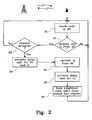
- Figure 2 shows a flowchart of the method according to the present invention for excluding a cell from the active set of a user equipment.
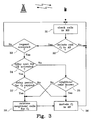
- Figure 3 shows a flowchart of the method according to the present invention for including a cell to the active set of a user equipment.
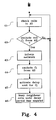
- Figure 4 shows a flowchart of an alternative method according to the present invention for excluding a cell from the active set of a user equipment.
- Figure 5 shows a flowchart of an alternative method according to the present invention for including a cell to the active set of a user equipment.
- Figure 6 shows an example how a delay period can be determined by applying a certain delay criterion, e.g., the received downlink power from a radio base station.
- a CDMA-based communication system supports a flexible cell structure with no strict borders between neighbour cells.
- cells can be varied in size and/or shape and can even be designed on different cell layers covering the same area by different cells: Smaller cells 11a, 11b might be advantageous, e.g., in order to cover certain areas with high traffic density.
- Cells 12 can be designed with respect to the velocity of user equipments such that they are elongated along with the direction of that velocity. Different cell types covering the same area could also be applied to distinguish between different types of service or even the user subscription type.
- a CDMA-based communication system must also support soft handovers, i.e. user equipments that move around and have more than one established communication link to a number of radio base stations covering several cells.
- soft handovers i.e. user equipments that move around and have more than one established communication link to a number of radio base stations covering several cells.
- a connection to the radio base station of a cell 16 from which the user equipment experiences e.g., an increasing downlink transmission power, which is close to a minimum threshold level
- These frequent changes at certain locations can depend on minor changes and result in oscillating handovers.
- a user equipment must keep track on essentially all cells from which it receives a signal by means of a measurement set, which contains the cell identities of these cells. Said measurement set can be subdivided into a set of active cells, i.e.
- the user equipment may also contain information about cells from which the user equipment does not receive a signal at its present location, e.g. at a street corner, but that have been indicated by the network for some reason, e.g. because the received downlink signal quality will increase rapidly when the user equipment moves around said corner.
- a first aspect of the method and arrangement according to the present invention intends to delegate a handover decision not to either the user equipment or the network but instead to make a common decision.
- the decision in the network can be made by an appropriate unit in the network, e.g. the radio network controller (RNC) or a radio base station (RBS).
- RNC radio network controller
- RBS radio base station
- cells are ranked mainly with respect to criterions referring to the received downlink signal quality from the various radio base stations that serve said cells.
- a user equipment thus always intends to have an established communication link to the radio base station of the cell that provides the most favourable communication channel. Therefore, possible decision criterions relate to, e.g., the received downlink power level, the experienced signal-to-interference level, or the pathloss. Said criterions may in addition also include a time aspect, i.e. signal levels that are experienced to be sufficiently constant and/or greater than a certain threshold value.
- the handover request of a user equipment is only one aspect in making a decision.
- the network can involve other parameters, too.
- the radio base station of a cell that already serves a large number of user equipments e.g. indicated by a high noise interference level in the cell or with regard to a limitation of the total downlink power level of the radio base station, may reject a handover request, i.e. not accept any new user equipment at the moment.
- the network may also observe the cell structure in the surrounding of a user equipment and instead suggest that a user equipment should try to establish a connection to another cell.
- Another possibility are cells that are adapted for users moving with a high velocity.
- the network has a more general knowledge and can make decisions that base on the one hand on the handover decision of the user equipment and on the other hand on general network parameters, e.g. the total network load and/or network capacity, and intends to optimise the transmission conditions for a majority of the user equipments.
- Other parameters that the network can take into account relate to traffic patterns, i.e. to which cell or cells the user equipment has been connected earlier.
- traffic patterns i.e. to which cell or cells the user equipment has been connected earlier.
- it is possible to delegate the main responsibility for handover decisions rather to the user equipment, i.e. to prefer individual decisions, or to the network, i.e. to prefer centrally controlled decisions.
- FIGS. 2 and 3 show flowcharts representing the various steps of the method for performing a handover, i.e. a change of cells in the active set, according to the present invention.
- said figures intend to demonstrate the way in which a handover decision is made by both the user equipment and said appropriate network unit.
- said figures demonstrate the way in which the signalling traffic can be considerably reduced for oscillating handovers. Both figures describe a handover that is initiated by the user equipment. However, corresponding method steps could also be applied for a handover that is initiated by an appropriate unit in the network.
- Figure 2 shows the various steps of the method according to the present invention that are performed in the user equipment and the appropriate network unit in order to exclude the cell identity of a cell from the active set.
- a user equipment always keeps track on received signals from those radio base stations that are represented in its measurement set (MS) by means of their cell identities, block 21.
- the communication links to cells in the active set (AS), i.e. to which radio base station the user equipment has an established communication link, are measured in particular.
- a user equipment always intends to have the best cells in its active set in order to achieve sufficiently good transmission conditions at any time and checks therefore the cells in the active set in accordance with certain decision criterions, block 21. Depending i.a. on said transmission conditions in general, this must be done continuously or within certain periods of time.
- a cell identity is kept in the active set as long as the corresponding cell appears to be sufficiently good with respect to one or more appropriate decision criterion, block 22 No.
- the user equipment makes a preliminary decision to exclude the corresponding cell identity from the active set, block 22 Yes, and sends an appropriate request to said network unit.
- these decisions are not made by either the user equipment or the network but merely by both parts, a decision is founded on several aspects from different points of view. This means that the network will check a request to exclude said cell C j according to other criterions. The network has the possibility to reject the request, block 23 No, or to accept the request, block 23 Yes.
- the cell identity of the cell C j is excluded from the active set, block 25.
- neighbour cells are either kept in the measurement set or, alternatively, information about these cells is stored in the user equipment without performing measurements on them.
- Said time period is controlled by means of a delay unit that is implemented in at least the user equipment or in both user equipment and an appropriate network unit, e.g., the radio network controller or the radio base station.
- a delay unit that is implemented in at least the user equipment or in both user equipment and an appropriate network unit, e.g., the radio network controller or the radio base station.
- said delay unit is activated for said cell Cj, block 26, and denotes how long the identities of those neighbour cells, which have no other neighbours than said excluded cell in the active set, shall be kept, e.g., in the measurement set. Accordingly, such a delay unit can furthermore be activated in the radio base station, block 24.
- Said delay unit can be implemented in such a way that a delay period ⁇ is specified, e.g., explicitly by means of a timeout value or by means of the width ⁇ of a tolerance area below or above a threshold level for an appropriate measurement value. Defining a delay by means of a timer value is considerably simple and will in normal cases result in a sufficient decrease of the number of oscillating handovers. However, defining a delay by means of a distance of a measurement value from a threshold level will allow more flexibility due to the possibility to select appropriate delay criterions.
- the received downlink power Pout from the radio base station of a cell that recently has been removed from the active set is applied as a delay criterion.
- the delay criterion is the same as the criterion that is applied to decide whether a cell shall be removed from the active set. If the measurement values for the received downlink power of a candidate cell decrease below a threshold level Pthr, said cell is excluded from the active set but the identities of the neighbour cells of said cell are not removed until the received downlink power level is below a tolerance area with width ⁇ below said threshold level Pthr. By this means the identities of said neighbour cells are kept for a delay period ⁇ .
- the delay period ⁇ starts when a cell no longer complies with the decision criterion, i.e. the cell is excluded from the active set, and ends when the cell no longer complies with the delay criterion.
- a critical parameter with regard to a minimisation of the handover-related signalling traffic is to choose a delay period within which the identities of neighbour cells of a candidate cell are kept, e.g., in the measurement set of a user equipment after said candidate cell has been excluded from the active set.
- said delay period is chosen too small, the identities of neighbour cells of a cell that has been excluded from the active set will have been removed before the cell identity of said excluded cell shall be re-added such that the identities of the neighbour cells must be retrieved nevertheless.
- said delay period is chosen too large, the identities of neighbour cells of an excluded cell might occupy the measurement set for a too long time. This is a disadvantage because the user equipment has only a limited measurement capacity.
- an appropriate delay period can be defined by a general default value.
- typical values are in a range between 0.5s and 3s.
- appropriate delay periods that are adapted to certain cell specific properties, e.g., the environmental conditions in a cell or the cell size.
- cell specific properties e.g., the environmental conditions in a cell or the cell size.
- the cell size it appears to be advantageous to define for small cells smaller delay periods than for larger cells.
- Figure 3 shows the various steps of the method according to the present invention that are performed in the user equipment and an appropriate unit in the network in order to include a cell identity of a candidate cell from the measurement set to the active set.
- a user equipment checks all cells in its measurement set (MS), i.e. essentially those cells from which it receives radio signals, block 31, and each cell in the measurement set will be judged according to certain decision criterions. If the radio signals from a radio base station of a candidate cell Cj, which presently is not in the active set, appear to fulfil one or more of said decision criterions, block 32 Yes, the user equipment will request to include the cell identity of this cell C j in the active set (AS). The network will check said request according to its own criterions as described above and either reject the request, block 33 No, or accept the request, block 33 Yes.
- the appropriate network unit it is not necessary for the appropriate network unit to have an implemented delay unit that indicates whether neighbour cells of a cell whose cell identity has been excluded from the active set of a user equipment are still kept in the measurement set.
- said network unit only transmits a confirmation of the request and it is up to the user equipment to retrieve the neighbour cells if necessary. If the delay period, which starts when the cell identity of a candidate cell has been excluded, has not yet expired the user equipment still knows the cell identities of the neighbour cells when such a candidate cell C j shall be re-added to the active set, block 35 Yes. In this case it is sufficient to include the cell identity of the candidate cell Cj in the active set, block 36, and no further measures must be taken.
- one advantage of the present invention results from the fact that it is not necessary to retrieve and send the cell identities of neighbour cells each time when a recently excluded cell identity shall be re-added within a time interval that is less than the delay period ⁇ that is denoted by the delay unit. If said delay period is appropriately chosen, it is only necessary to send this information if a cell identity is added for the first time in an oscillating phase.
- Said signalling traffic can be reduced even more if a delay unit is also implemented in the appropriate network unit, block 34 Yes.
- this network unit is aware of whether a cell identity has recently been excluded from the active set of a user equipment. Consequently, as long as the delay period for said cell has not expired the network knows whether or not the identities of the neighbour cells of said excluded cell are still kept in the measurement set of the user equipment, block 37.
- the network will automatically send this information, block 38, if such a delay period has expired, block 37 Yes. As this is done automatically, a reduction of signalling traffic is achieved because the user equipment need not to send an extra request for retrieval of these neighbour cell identities to the network.
- Figures 4 and 5 describe alternative methods for including and excluding of cell identities to and from the active set of a user equipment.
- the method as presented in these figures is modified inasmuch as the network is only informed about the changes in the active set of a user equipment; however, without the need to accept or reject said changes.
- the network acts only in accordance with requests from a user equipment, e.g., if necessary, retrieving of neighbour cell identities of a cell whose identity shall be included in the active set. By this means, the amount of signalling information that must be sent in case of an oscillating handover can be reduced.
- Figure 4 describes the alternative method for excluding a cell identity from the active set.
- the user equipment measures the cells in its active set (AS), block 41, and informs the network, block 43, if it decides to exclude one of the cell identities of a cell Cj from the active set, block 42 Yes.
- a delay unit is activated, block 45, and started when the cell identity of said cell Cj has been excluded from the active set, block 44.
- the identities of the neighbour cells of the excluded cell C j are kept in the measurement set at least until a delay period has expired, block 46.
- figure 5 describes the alternative method for including the cell identity of a candidate cell Cj in the active set.
- the user equipment checks the cells in its measurement set (MS), block 51. If a cell identity of a cell C j shall be included in the active set, block 52 Yes, the user equipment informs the network about the change in its active set, block 53, and checks whether the neighbour cell identities of this candidate cell Cj are known, block 54, i.e. whether said cell has recently been excluded from the active set and a delay period for keeping information about the neighbour cells in the user equipment has not yet expired. If said neighbour cell identities are known, block 54 Yes, the identity of the candidate cell C j can be included in the active set, block 56, and no further measures must be taken.
- MS measurement set
- the user equipment must at first retrieve these neighbour cell identities from the network, block 55, and can then include the cell identity of the candidate cell Cj in the active set, block 56.
Landscapes
- Engineering & Computer Science (AREA)
- Computer Networks & Wireless Communication (AREA)
- Signal Processing (AREA)
- Mobile Radio Communication Systems (AREA)
- Time-Division Multiplex Systems (AREA)
Claims (22)
- Verfahren bezüglich einer Verbindungsübergabeentscheidung eines Benutzergeräts (13a) in einem Telekommunikationssystem mit einer Vielzahl von Zellen (11a, 11b, 12, 14, 15, 16), die jeweils durch eine entsprechende Funkbasisstation versorgt werden, wobei das Benutzergerät (13a) einen Messungssatz umfaßt, der Zellenkennungen von Zellen enthält, von denen das Benutzergerät (13a) Kenntnis hat, wobei der Messungssatz unterteilt ist in einen aktiven Satz, der Zellenkennungen von Zellen (14, 15) enthält, mit deren Funkbasisstation das Benutzergerät eine Kommunikationsverbindung aufgebaut hat, und einen Kontrollsatz, der mindestens die Kennungen von Nachbarzellen (11a, 11b, 12, 16) der Zellen im aktiven Satz enthält,
wobei das Benutzergerät die folgenden Schritte durchführt:Abbrechen einer aufgebauten Kommunikationsverbindung mit einer Funkbasisstation einer Kandidatenzelle im aktiven Satz des Benutzergeräts, wenn die Zelle ein oder mehrere Entscheidungskriterien nicht erfüllt, und Ausschließen (25, 44) der Zellenkennung der Kandidatenzelle aus dem aktiven Satz; undgekennzeichnet durch
Aktivieren einer Verzögerungseinheit mit einem definierbarem Verzögerunsabschnitt (24, 26, 45), wenn die Zellenkennung der Kandidatenzelle aus dem aktiven Satz ausgeschlossen wird (25, 44); und
Ausschließen aus dem Messungssatz der Zellenkennungen von Zellen ohne mindestens eine Nachbarzelle im geänderten aktiven Satz erst dann, wenn der Verzögerunsabschnitt abgelaufen ist (27, 46). - Verfahren nach Anspruch 1,
gekennzeichnet durch
Speichern von Information über Zellen, die aus dem Messungssatz entfernt worden sind, in einer geeigneten Speichereinheit im Benutzergerät für einen definierbaren Zeitabschnitt. - Verfahren nach Anspruch 1,
gekennzeichnet durch
Aufbauen einer Kommunikationsverbindung mit einer Funkbasisstation einer Kandidatenzelle in dem Steuersatz des Benutzergeräts, wenn die Zelle ein oder mehrere Entscheidungskriterien erfüllt, wobei die Zellenkennung der Zelle vorher in den aktiven Satz eingeschlossen worden ist, und Wiederhinzufügen (36, 56) der Zellenkennung der Kandidatenzelle zum aktiven Satz;
Abrufen der Nachbarzellen der Kandidatenzelle, deren Zellenkennung wieder zum aktiven Satz des Benutzergeräts hinzugefügt werden soll, wenn der Verzögerunsabschnitt abgelaufen ist (35No, 54No). - Verfahren nach Anspruch 1 oder 3,
gekennzeichnet durch
Informieren (43, 53) des Netzwerks über eine beabsichtigte Veränderung im aktiven Satz. - Verfahren nach Anspruch 1 oder 3,
gekennzeichnet durch
Senden einer Anfrage an das Netzwerk (22Yes, 32Yes), ob eine beabsichtigte Veränderung im aktiven Satz akzeptiert oder abgelehnt wird, und
Befolgen der Entscheidung des Netzwerks. - Verfahren nach Anspruch 5,
dadurch gekennzeichnet, daß
eine geeignete Einheit im Netzwerk die folgenden Schritte durchführt:Akzeptieren einer Anforderung nach einer Veränderung im aktiven Satz eines Benutzergeräts (22Yes, 32Yes), wenn die Kandidatenzelle ein oder mehrere Entscheidungskriterien erfüllt; undAblehnen einer Anforderung nach einer Veränderung im aktiven Satz eines Benutzergeräts (23No, 33No), wenn die Kandidatenzelle ein oder mehrere Entscheidungskriterien nicht erfüllt. - Verfahren nach Anspruch 6,
gekennzeichnet durch
Aktivieren einer Verzögerungseinheit mit einem definierbaren Verzögerunsabschnitt (24), wenn eine Anforderung zum Ausschluß einer Zellenkennung einer Kandidatenzelle aus dem aktiven Satz eines Benutzergeräts akzeptiert worden ist,
Abrufen der Nachbarzellen der Kandidatenzelle, deren Zellenkennung zum aktiven Satz des Benutzergeräts wieder hinzugefügt werden soll (38), wenn der Verzögerunsabschnitt abgelaufen ist (37Yes). - Verfahren nach Anspruch 1 oder 7,
gekennzeichnet durch
Definieren eines gemeinsamen Verzögerunsabschnitts für alle Zellen in den Verzögerungseinheiten der Benutzergeräte und den geeigneten Netzwerkeinheiten. - Verfahren nach Anspruch 1 oder 7,
gekennzeichnet durch
Definieren eines zellenspezifischen Verzögerunsabschnitts in den Verzögerungseinheiten der Benutzergeräte und den geeigneten Netzwerkeinheiten. - Verfahren nach Anspruch 1 oder 7,
gekennzeichnet durch
Messen eines Verzögerunsabschnitts mittels eines Zeitgeberwerts, so daß der Verzögerunsabschnitt abläuft, wenn ein Zeitüberschreitungswert erreicht ist. - Verfahren nach Anspruch 1 oder 7,
gekennzeichnet durch
Messen eines Verzögerunsabschnitts mittels eines Toleranzbereichs um einen Schwellpegel eines geeigneten Meßwerts, so daß der Verzögerunsabschnitt abläuft, wenn der Meßwert jenseits des Toleranzbereichs liegt. - Verfahren nach Anspruch 1 oder 3,
gekennzeichnet durch
Anwenden des empfangenen Abwärtsstrecken-Leistungspegels von einer Funkbasisstation als Entscheidungskriterium im Benutzergerät. - Verfahren nach Anspruch 1 oder 3,
gekennzeichnet durch
Anwenden des Signalinterferenzpegels in einer Zelle als Entscheidungskriterium im Benutzergerät. - Verfahren nach Anspruch 1 oder 3,
gekennzeichnet durch
Anwenden eines Übertragungsverlustes als Entscheidungskriterium im Benutzergerät. - Verfahren nach Anspruch 1 oder 3,
gekennzeichnet durch
Anwenden einer Zellenlast als Entscheidungskriterium im Netzwerk. - Verfahren nach Anspruch 1 oder 3,
gekennzeichnet durch
Anwenden der Dienstart, die durch das Benutzergerät angefordert wird, als Entscheidungskriterium im Netzwerk. - Verfahren nach Anspruch 1 oder 3,
gekennzeichnet durch
Anwenden von Verkehrsmustern des Benutzergeräts als Entscheidungskriterium im Netzwerk. - Verfahren nach Anspruch 1 oder 3,
gekennzeichnet durch
Anwenden der Abonnementart des Benutzergeräts als Entscheidungskriterium im Netzwerk. - Anordnung in einem Telekommunikationssystem mit einer Vielzahl von Zellen (11a, 11b, 12, 14, 15, 16), die jeweils durch eine entsprechende Funkbasisstation versorgt werden, und mindestens ein Benutzergerät (13a), wobei das Benutzergerät (13a) einen Messungssatz umfaßt, die Zellenkennungen von Zellen enthält, von denen das Benutzergerät (13a) Kenntnis hat, wobei der Messungssatz unterteilt ist in einen aktiven Satz, der Zellenkennungen von Zellen (14, 15) enthält, mit deren Funkbasisstation das Benutzergerät eine Kommunikationsverbindung aufgebaut hat, und einen Steuersatz, der mindestens die Kennungen von Nachbarzellen (11a, 11b, 12, 16) der Zellen im aktiven Satz enthält,
gekennzeichnet durch:eine Verzögerungseinheit im Benutzergerät (13a) mit Mitteln, die aktiviert werden können, wenn eine Zellenkennung einer Kandidatenzelle (15) aus dem aktiven Satz des Benutzergeräts (13a) ausgeschlossen wird, und Mitteln zum Angeben, wenn Zellen ohne mindestens eine Nachbarzelle im geänderten aktiven Satz des Benutzergeräts (13a) ausgeschlossen werden sollen. - Anordnung nach Anspruch 19,
gekennzeichnet durch:eine Verzögerungseinheit in einer geeigneten Netzwerkeinheit mit Mitteln, die aktiviert werden können, wenn eine Kandidatenzelle (15) aus dem aktiven Satz des Benutzergeräts (13a) ausgeschlossen wird, und Mitteln zum Angeben, wenn Zellen ohne mindestens eine Nachbarzelle im geänderten aktiven Satz des Benutzergeräts (13a) ausgeschlossen werden sollen. - Anordnung nach Anspruch 19 oder 20,
dadurch gekennzeichnet, daß
die Verzögerungseinheit als ein Zeitgeber implementiert ist. - Anordnung nach Anspruch 19 oder 20,
dadurch gekennzeichnet, daß
die Verzögerungseinheit als eine Meßeinheit implementiert ist, die dafür eingerichtet ist, einen Meßwert mit einem Schwellwert zu vergleichen.
Applications Claiming Priority (3)
| Application Number | Priority Date | Filing Date | Title |
|---|---|---|---|
| SE0001336 | 2000-04-11 | ||
| SE0001336A SE516727C2 (sv) | 2000-04-11 | 2000-04-11 | Förfarande och anordning för att minska mängden handover- relaterad signaltrafik i ett telekommunikationssystem |
| PCT/SE2001/000666 WO2001078438A1 (en) | 2000-04-11 | 2001-03-27 | Method and arrangement for reducing the amount of handover-related signalling traffic in a telecommunication system |
Publications (2)
| Publication Number | Publication Date |
|---|---|
| EP1273196A1 EP1273196A1 (de) | 2003-01-08 |
| EP1273196B1 true EP1273196B1 (de) | 2006-08-16 |
Family
ID=20279272
Family Applications (1)
| Application Number | Title | Priority Date | Filing Date |
|---|---|---|---|
| EP01918079A Expired - Lifetime EP1273196B1 (de) | 2000-04-11 | 2001-03-27 | Verfahren und anordnung zur reduzierung des mit handover zusammenhängenden signalisierungsverkehrs in einem telekommunikationssystem |
Country Status (7)
| Country | Link |
|---|---|
| US (1) | US6553231B1 (de) |
| EP (1) | EP1273196B1 (de) |
| AT (1) | ATE336869T1 (de) |
| AU (1) | AU2001244949A1 (de) |
| DE (1) | DE60122307D1 (de) |
| SE (1) | SE516727C2 (de) |
| WO (1) | WO2001078438A1 (de) |
Families Citing this family (28)
| Publication number | Priority date | Publication date | Assignee | Title |
|---|---|---|---|---|
| US6845104B2 (en) * | 2000-06-14 | 2005-01-18 | Ipr Licensing, Inc. | Receiver for time division multiplex system without explicit time slot assignment |
| US20020071397A1 (en) * | 2000-12-07 | 2002-06-13 | Keshavachar Bhaktha R. | Portable communication device and method therefor |
| US7133372B2 (en) * | 2001-06-29 | 2006-11-07 | Intel Corporation | Reducing power consumption in packet based networks with Quality of Service (QoS) features |
| CN101137240B (zh) * | 2002-04-05 | 2011-01-26 | 美商内数位科技公司 | 促进高速下行链路共享信道小区改变的用户设备和方法 |
| US6717927B2 (en) * | 2002-04-05 | 2004-04-06 | Interdigital Technology Corporation | System for efficient recovery of node B buffered data following serving high speed downlink shared channel cell change |
| US7706405B2 (en) * | 2002-09-12 | 2010-04-27 | Interdigital Technology Corporation | System for efficient recovery of Node-B buffered data following MAC layer reset |
| JP2004153316A (ja) * | 2002-10-28 | 2004-05-27 | Ntt Docomo Inc | ハンドオーバ制御方法、移動通信システム及び制御装置 |
| WO2004077205A2 (en) * | 2003-02-26 | 2004-09-10 | Nokia Corporation | A method of reducing denial-of-service attacks and a system as well as an access router therefor |
| US7197692B2 (en) | 2004-06-18 | 2007-03-27 | Qualcomm Incorporated | Robust erasure detection and erasure-rate-based closed loop power control |
| US8452316B2 (en) * | 2004-06-18 | 2013-05-28 | Qualcomm Incorporated | Power control for a wireless communication system utilizing orthogonal multiplexing |
| SE528459C2 (sv) * | 2004-08-10 | 2006-11-14 | Teleasonera Ab | Användning av falska PLMN-identiteter för att begränsa antalet grannceller till en delmängd som är möjlig för cellåterval för en mobilstation |
| US7463887B2 (en) | 2004-08-18 | 2008-12-09 | M-Stack Limited | Apparatus and method for making measurements in mobile telecommunications system user equipment |
| US8848574B2 (en) | 2005-03-15 | 2014-09-30 | Qualcomm Incorporated | Interference control in a wireless communication system |
| US8942639B2 (en) * | 2005-03-15 | 2015-01-27 | Qualcomm Incorporated | Interference control in a wireless communication system |
| JP4539403B2 (ja) * | 2005-03-30 | 2010-09-08 | 日本電気株式会社 | 移動通信システム、基地局制御装置、及びアクティブセット制御方法 |
| JP5430938B2 (ja) * | 2005-10-27 | 2014-03-05 | クゥアルコム・インコーポレイテッド | 無線通信システムにおける逆方向リンク・ローディングを推定するための方法及び装置 |
| US20080117849A1 (en) * | 2006-09-08 | 2008-05-22 | Qualcomm Incorporated | Method and apparatus for interaction of fast other sector interference (osi) with slow osi |
| US8670777B2 (en) * | 2006-09-08 | 2014-03-11 | Qualcomm Incorporated | Method and apparatus for fast other sector interference (OSI) adjustment |
| US8442572B2 (en) * | 2006-09-08 | 2013-05-14 | Qualcomm Incorporated | Method and apparatus for adjustments for delta-based power control in wireless communication systems |
| EP2214427A4 (de) * | 2007-11-14 | 2017-04-19 | NEC Corporation | Funknetzsteuerung, mobilkommunikationssystem und ihr verfahren zur vermeidung einer verschlechterung des anrufverbindungsabschlusses |
| US8983388B2 (en) * | 2008-09-30 | 2015-03-17 | Google Technology Holdings LLC | Method and apparatus to facilitate preventing interference as between base stations sharing carrier resources |
| US8996018B2 (en) * | 2008-10-30 | 2015-03-31 | Google Technology Holdings LLC | Method and apparatus to facilitate avoiding control signaling conflicts when using shared wireless carrier resources |
| US8457074B2 (en) * | 2009-08-17 | 2013-06-04 | Motorola Mobility Llc | Method and apparatus for mobile communication device measurement reporting |
| US8774135B2 (en) * | 2009-08-17 | 2014-07-08 | Motorola Mobility Llc | Method and apparatus for radio link failure recovery |
| US9144100B2 (en) * | 2009-08-17 | 2015-09-22 | Google Technology Holdings LLC | Method and apparatus for radio link failure recovery |
| US20170339602A1 (en) * | 2015-09-02 | 2017-11-23 | Telefonaktiebolaget Lm Ericsson (Publ) | First and Second Radio Network Nodes and Methods Performed Therein |
| CN109729514B (zh) * | 2017-10-30 | 2020-07-17 | 中国科学院声学研究所 | 一种移动网络实体的动态位置信息的快速查询方法 |
| CN111158742B (zh) * | 2019-12-27 | 2020-11-03 | 星环信息科技(上海)有限公司 | 一种代码交接过程的识别方法、设备及介质 |
Family Cites Families (7)
| Publication number | Priority date | Publication date | Assignee | Title |
|---|---|---|---|---|
| US5673307A (en) * | 1994-02-17 | 1997-09-30 | Spectralink Corporation | Handoff method for indoor cellular phone system |
| US5915221A (en) * | 1995-08-08 | 1999-06-22 | Telefonaktiebolaget Lm Ericsson | Neighbor cell list creation and verification in a telecommunications system |
| US5946621A (en) * | 1996-10-28 | 1999-08-31 | Northern Telecom Limited | Method of optimizing neighbor set during soft handoff of a mobile unit in a CDMA cellular environment |
| US5974318A (en) * | 1997-07-09 | 1999-10-26 | Northern Telecom Limited | Method and system for increasing capacity and improving performance of a cellular network |
| US6154455A (en) * | 1997-12-24 | 2000-11-28 | Nokia Mobile Phones Limited | Prioritizing pilot set searching for a CDMA telecommunications system |
| US6201969B1 (en) * | 1998-06-02 | 2001-03-13 | Lucent Technologies Inc. | Control of handoff in CDMA cellular systems |
| US6337983B1 (en) * | 2000-06-21 | 2002-01-08 | Motorola, Inc. | Method for autonomous handoff in a wireless communication system |
-
2000
- 2000-04-11 SE SE0001336A patent/SE516727C2/sv not_active IP Right Cessation
- 2000-04-14 US US09/549,670 patent/US6553231B1/en not_active Expired - Lifetime
-
2001
- 2001-03-27 WO PCT/SE2001/000666 patent/WO2001078438A1/en not_active Ceased
- 2001-03-27 DE DE60122307T patent/DE60122307D1/de not_active Expired - Lifetime
- 2001-03-27 AU AU2001244949A patent/AU2001244949A1/en not_active Abandoned
- 2001-03-27 EP EP01918079A patent/EP1273196B1/de not_active Expired - Lifetime
- 2001-03-27 AT AT01918079T patent/ATE336869T1/de not_active IP Right Cessation
Also Published As
| Publication number | Publication date |
|---|---|
| EP1273196A1 (de) | 2003-01-08 |
| AU2001244949A1 (en) | 2001-10-23 |
| SE516727C2 (sv) | 2002-02-19 |
| SE0001336L (sv) | 2001-10-12 |
| US6553231B1 (en) | 2003-04-22 |
| SE0001336D0 (sv) | 2000-04-11 |
| WO2001078438A1 (en) | 2001-10-18 |
| DE60122307D1 (de) | 2006-09-28 |
| ATE336869T1 (de) | 2006-09-15 |
Similar Documents
| Publication | Publication Date | Title |
|---|---|---|
| US6553231B1 (en) | Method and arrangement in a telecommunication system | |
| US7054631B2 (en) | Enhancement of soft handoff in a mobile wireless network through the use of dynamic information feedback from mobile users | |
| EP1142156B1 (de) | Verfahren in einem telekommunikationssystem | |
| EP1163816B1 (de) | Teilnehmergerät und verfahren zur zellenauswahl in einem zellularen kommunikationssystem | |
| EP0960537B1 (de) | Verfahren und vorrichtung um in einem mobil-telefonsystem nachbar-steuersignallisten zusammenzufügen | |
| KR101586777B1 (ko) | 기지국으로부터의 전송을 위한 다운링크 파워를 설정하는 방법 | |
| US6112093A (en) | Radio communication system and method for analog and digital traffic channel allocation using a second higher threshold when allocating a digital channel | |
| EP1011208A2 (de) | Verfahren zur Bestimmung der Dienstsverfürbarkeit | |
| EP1234453B1 (de) | Verfahren in einem telekommunikationssystem | |
| JP2002532950A (ja) | 符号分割多重接続セルラ通信システムにおいて基地局資源を管理する方法およびシステム | |
| AU4967800A (en) | A method for cell load sharing in a cellular mobile radio communications system | |
| US6438116B1 (en) | Adaptive power margin for hard handoffs in code division multiple access based systems | |
| JP2005051767A (ja) | 携帯無線通信システムにおいてソフトハンドオーバを管理する方法 | |
| GB2284725A (en) | Method for determining handoff | |
| EP1116402A1 (de) | Zellenlastverteilung in einer mobilunterstützten zellauswahlumgebung | |
| KR20060044425A (ko) | 무선 이동통신 네트워크, 및 모바일 사용자 단말과 접속을위해 기지국 안테나들을 선택하는 방법 | |
| US20060160541A1 (en) | Method of GSM cell reselection | |
| EP1153523B1 (de) | Verfahren und system zur steuerung von "hard" und "soft" handoff in funkkommunikationssystemen | |
| WO2002037733A2 (en) | A method and a computer program related to cell allocation management in a mobile radio network | |
| JP2002500847A (ja) | ディジタルセルラ式移動無線ネットワークの2つのセル間で呼をハンドオーバする方法 | |
| JP3570398B2 (ja) | 移動局における欠落時区間の調整を行う方法、無線通信システムのハンドオフ速度を制御する方法および移動局 | |
| US20030211849A1 (en) | Handover of a call connection in a cellular telecommunications network | |
| NO325602B1 (no) | Fremgangsmate til styring av belastning i et kommunikasjonssystem | |
| KR100966053B1 (ko) | 기지국에서의 능동 주파수 선택 방법과 그를 이용한 전송파워 제어 방법 | |
| GB2358326A (en) | Selection of soft handoff method in cellular mobile communications networks |
Legal Events
| Date | Code | Title | Description |
|---|---|---|---|
| PUAI | Public reference made under article 153(3) epc to a published international application that has entered the european phase |
Free format text: ORIGINAL CODE: 0009012 |
|
| 17P | Request for examination filed |
Effective date: 20020925 |
|
| AK | Designated contracting states |
Kind code of ref document: A1 Designated state(s): AT BE CH CY DE DK ES FI FR GB GR IE IT LI LU MC NL PT SE TR |
|
| AX | Request for extension of the european patent |
Free format text: AL;LT;LV;MK;RO;SI |
|
| RAP1 | Party data changed (applicant data changed or rights of an application transferred) |
Owner name: TELEFONAKTIEBOLAGET LM ERICSSON (PUBL) |
|
| GRAP | Despatch of communication of intention to grant a patent |
Free format text: ORIGINAL CODE: EPIDOSNIGR1 |
|
| GRAS | Grant fee paid |
Free format text: ORIGINAL CODE: EPIDOSNIGR3 |
|
| GRAA | (expected) grant |
Free format text: ORIGINAL CODE: 0009210 |
|
| AK | Designated contracting states |
Kind code of ref document: B1 Designated state(s): AT BE CH CY DE DK ES FI FR GB GR IE IT LI LU MC NL PT SE TR |
|
| PG25 | Lapsed in a contracting state [announced via postgrant information from national office to epo] |
Ref country code: IT Free format text: LAPSE BECAUSE OF FAILURE TO SUBMIT A TRANSLATION OF THE DESCRIPTION OR TO PAY THE FEE WITHIN THE PRESCRIBED TIME-LIMIT;WARNING: LAPSES OF ITALIAN PATENTS WITH EFFECTIVE DATE BEFORE 2007 MAY HAVE OCCURRED AT ANY TIME BEFORE 2007. THE CORRECT EFFECTIVE DATE MAY BE DIFFERENT FROM THE ONE RECORDED. Effective date: 20060816 Ref country code: LI Free format text: LAPSE BECAUSE OF FAILURE TO SUBMIT A TRANSLATION OF THE DESCRIPTION OR TO PAY THE FEE WITHIN THE PRESCRIBED TIME-LIMIT Effective date: 20060816 Ref country code: NL Free format text: LAPSE BECAUSE OF FAILURE TO SUBMIT A TRANSLATION OF THE DESCRIPTION OR TO PAY THE FEE WITHIN THE PRESCRIBED TIME-LIMIT Effective date: 20060816 Ref country code: CH Free format text: LAPSE BECAUSE OF FAILURE TO SUBMIT A TRANSLATION OF THE DESCRIPTION OR TO PAY THE FEE WITHIN THE PRESCRIBED TIME-LIMIT Effective date: 20060816 Ref country code: BE Free format text: LAPSE BECAUSE OF FAILURE TO SUBMIT A TRANSLATION OF THE DESCRIPTION OR TO PAY THE FEE WITHIN THE PRESCRIBED TIME-LIMIT Effective date: 20060816 Ref country code: FI Free format text: LAPSE BECAUSE OF FAILURE TO SUBMIT A TRANSLATION OF THE DESCRIPTION OR TO PAY THE FEE WITHIN THE PRESCRIBED TIME-LIMIT Effective date: 20060816 Ref country code: AT Free format text: LAPSE BECAUSE OF FAILURE TO SUBMIT A TRANSLATION OF THE DESCRIPTION OR TO PAY THE FEE WITHIN THE PRESCRIBED TIME-LIMIT Effective date: 20060816 |
|
| REG | Reference to a national code |
Ref country code: GB Ref legal event code: FG4D |
|
| REG | Reference to a national code |
Ref country code: CH Ref legal event code: EP |
|
| REG | Reference to a national code |
Ref country code: IE Ref legal event code: FG4D |
|
| REF | Corresponds to: |
Ref document number: 60122307 Country of ref document: DE Date of ref document: 20060928 Kind code of ref document: P |
|
| PG25 | Lapsed in a contracting state [announced via postgrant information from national office to epo] |
Ref country code: SE Free format text: LAPSE BECAUSE OF FAILURE TO SUBMIT A TRANSLATION OF THE DESCRIPTION OR TO PAY THE FEE WITHIN THE PRESCRIBED TIME-LIMIT Effective date: 20061116 Ref country code: DK Free format text: LAPSE BECAUSE OF FAILURE TO SUBMIT A TRANSLATION OF THE DESCRIPTION OR TO PAY THE FEE WITHIN THE PRESCRIBED TIME-LIMIT Effective date: 20061116 |
|
| PG25 | Lapsed in a contracting state [announced via postgrant information from national office to epo] |
Ref country code: DE Free format text: LAPSE BECAUSE OF FAILURE TO SUBMIT A TRANSLATION OF THE DESCRIPTION OR TO PAY THE FEE WITHIN THE PRESCRIBED TIME-LIMIT Effective date: 20061117 |
|
| PG25 | Lapsed in a contracting state [announced via postgrant information from national office to epo] |
Ref country code: ES Free format text: LAPSE BECAUSE OF FAILURE TO SUBMIT A TRANSLATION OF THE DESCRIPTION OR TO PAY THE FEE WITHIN THE PRESCRIBED TIME-LIMIT Effective date: 20061127 |
|
| PG25 | Lapsed in a contracting state [announced via postgrant information from national office to epo] |
Ref country code: PT Free format text: LAPSE BECAUSE OF FAILURE TO SUBMIT A TRANSLATION OF THE DESCRIPTION OR TO PAY THE FEE WITHIN THE PRESCRIBED TIME-LIMIT Effective date: 20070116 |
|
| NLV1 | Nl: lapsed or annulled due to failure to fulfill the requirements of art. 29p and 29m of the patents act | ||
| REG | Reference to a national code |
Ref country code: CH Ref legal event code: PL |
|
| EN | Fr: translation not filed | ||
| PLBE | No opposition filed within time limit |
Free format text: ORIGINAL CODE: 0009261 |
|
| STAA | Information on the status of an ep patent application or granted ep patent |
Free format text: STATUS: NO OPPOSITION FILED WITHIN TIME LIMIT |
|
| 26N | No opposition filed |
Effective date: 20070518 |
|
| PG25 | Lapsed in a contracting state [announced via postgrant information from national office to epo] |
Ref country code: IE Free format text: LAPSE BECAUSE OF NON-PAYMENT OF DUE FEES Effective date: 20070327 Ref country code: MC Free format text: LAPSE BECAUSE OF NON-PAYMENT OF DUE FEES Effective date: 20070331 |
|
| PG25 | Lapsed in a contracting state [announced via postgrant information from national office to epo] |
Ref country code: GR Free format text: LAPSE BECAUSE OF FAILURE TO SUBMIT A TRANSLATION OF THE DESCRIPTION OR TO PAY THE FEE WITHIN THE PRESCRIBED TIME-LIMIT Effective date: 20061117 Ref country code: FR Free format text: LAPSE BECAUSE OF FAILURE TO SUBMIT A TRANSLATION OF THE DESCRIPTION OR TO PAY THE FEE WITHIN THE PRESCRIBED TIME-LIMIT Effective date: 20070511 |
|
| PG25 | Lapsed in a contracting state [announced via postgrant information from national office to epo] |
Ref country code: FR Free format text: LAPSE BECAUSE OF FAILURE TO SUBMIT A TRANSLATION OF THE DESCRIPTION OR TO PAY THE FEE WITHIN THE PRESCRIBED TIME-LIMIT Effective date: 20060816 |
|
| PG25 | Lapsed in a contracting state [announced via postgrant information from national office to epo] |
Ref country code: CY Free format text: LAPSE BECAUSE OF FAILURE TO SUBMIT A TRANSLATION OF THE DESCRIPTION OR TO PAY THE FEE WITHIN THE PRESCRIBED TIME-LIMIT Effective date: 20060816 Ref country code: LU Free format text: LAPSE BECAUSE OF NON-PAYMENT OF DUE FEES Effective date: 20070327 |
|
| PG25 | Lapsed in a contracting state [announced via postgrant information from national office to epo] |
Ref country code: TR Free format text: LAPSE BECAUSE OF FAILURE TO SUBMIT A TRANSLATION OF THE DESCRIPTION OR TO PAY THE FEE WITHIN THE PRESCRIBED TIME-LIMIT Effective date: 20060816 |
|
| PGFP | Annual fee paid to national office [announced via postgrant information from national office to epo] |
Ref country code: GB Payment date: 20150327 Year of fee payment: 15 |
|
| GBPC | Gb: european patent ceased through non-payment of renewal fee |
Effective date: 20160327 |
|
| PG25 | Lapsed in a contracting state [announced via postgrant information from national office to epo] |
Ref country code: GB Free format text: LAPSE BECAUSE OF NON-PAYMENT OF DUE FEES Effective date: 20160327 |