EP1274088A2 - Système d'enregistrement pour diffusion numérique - Google Patents
Système d'enregistrement pour diffusion numérique Download PDFInfo
- Publication number
- EP1274088A2 EP1274088A2 EP02090226A EP02090226A EP1274088A2 EP 1274088 A2 EP1274088 A2 EP 1274088A2 EP 02090226 A EP02090226 A EP 02090226A EP 02090226 A EP02090226 A EP 02090226A EP 1274088 A2 EP1274088 A2 EP 1274088A2
- Authority
- EP
- European Patent Office
- Prior art keywords
- packet
- log data
- bit
- unit
- data
- Prior art date
- Legal status (The legal status is an assumption and is not a legal conclusion. Google has not performed a legal analysis and makes no representation as to the accuracy of the status listed.)
- Withdrawn
Links
Images
Classifications
-
- H—ELECTRICITY
- H04—ELECTRIC COMMUNICATION TECHNIQUE
- H04N—PICTORIAL COMMUNICATION, e.g. TELEVISION
- H04N9/00—Details of colour television systems
- H04N9/79—Processing of colour television signals in connection with recording
- H04N9/80—Transformation of the television signal for recording, e.g. modulation, frequency changing; Inverse transformation for playback
- H04N9/804—Transformation of the television signal for recording, e.g. modulation, frequency changing; Inverse transformation for playback involving pulse code modulation of the colour picture signal components
- H04N9/8042—Transformation of the television signal for recording, e.g. modulation, frequency changing; Inverse transformation for playback involving pulse code modulation of the colour picture signal components involving data reduction
-
- G—PHYSICS
- G11—INFORMATION STORAGE
- G11B—INFORMATION STORAGE BASED ON RELATIVE MOVEMENT BETWEEN RECORD CARRIER AND TRANSDUCER
- G11B27/00—Editing; Indexing; Addressing; Timing or synchronising; Monitoring; Measuring tape travel
- G11B27/10—Indexing; Addressing; Timing or synchronising; Measuring tape travel
- G11B27/102—Programmed access in sequence to addressed parts of tracks of operating record carriers
- G11B27/105—Programmed access in sequence to addressed parts of tracks of operating record carriers of operating discs
-
- G—PHYSICS
- G11—INFORMATION STORAGE
- G11B—INFORMATION STORAGE BASED ON RELATIVE MOVEMENT BETWEEN RECORD CARRIER AND TRANSDUCER
- G11B27/00—Editing; Indexing; Addressing; Timing or synchronising; Monitoring; Measuring tape travel
- G11B27/10—Indexing; Addressing; Timing or synchronising; Measuring tape travel
- G11B27/19—Indexing; Addressing; Timing or synchronising; Measuring tape travel by using information detectable on the record carrier
- G11B27/28—Indexing; Addressing; Timing or synchronising; Measuring tape travel by using information detectable on the record carrier by using information signals recorded by the same method as the main recording
- G11B27/32—Indexing; Addressing; Timing or synchronising; Measuring tape travel by using information detectable on the record carrier by using information signals recorded by the same method as the main recording on separate auxiliary tracks of the same or an auxiliary record carrier
- G11B27/327—Table of contents
- G11B27/329—Table of contents on a disc [VTOC]
-
- H—ELECTRICITY
- H04—ELECTRIC COMMUNICATION TECHNIQUE
- H04N—PICTORIAL COMMUNICATION, e.g. TELEVISION
- H04N9/00—Details of colour television systems
- H04N9/79—Processing of colour television signals in connection with recording
- H04N9/80—Transformation of the television signal for recording, e.g. modulation, frequency changing; Inverse transformation for playback
- H04N9/804—Transformation of the television signal for recording, e.g. modulation, frequency changing; Inverse transformation for playback involving pulse code modulation of the colour picture signal components
- H04N9/8042—Transformation of the television signal for recording, e.g. modulation, frequency changing; Inverse transformation for playback involving pulse code modulation of the colour picture signal components involving data reduction
- H04N9/8045—Transformation of the television signal for recording, e.g. modulation, frequency changing; Inverse transformation for playback involving pulse code modulation of the colour picture signal components involving data reduction using predictive coding
-
- G—PHYSICS
- G11—INFORMATION STORAGE
- G11B—INFORMATION STORAGE BASED ON RELATIVE MOVEMENT BETWEEN RECORD CARRIER AND TRANSDUCER
- G11B2220/00—Record carriers by type
- G11B2220/20—Disc-shaped record carriers
-
- H—ELECTRICITY
- H04—ELECTRIC COMMUNICATION TECHNIQUE
- H04N—PICTORIAL COMMUNICATION, e.g. TELEVISION
- H04N5/00—Details of television systems
- H04N5/76—Television signal recording
- H04N5/78—Television signal recording using magnetic recording
- H04N5/781—Television signal recording using magnetic recording on disks or drums
Definitions
- the present invention relates to a recording system for digital broadcasting, which is employed to record data in conjunction with digital broadcasting such as satellite broadcasting, and more particularly to a recording system for digital broadcasting in which a recorded broadcast program can easily be searched.
- MPEG Motion Picture Coding Experts Group 2 standard
- TS Transport Stream
- PS Program Stream
- the transport stream is comprised of sequential packets each referred to as a TS packet.
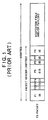
- FIG. 1 illustrates the content of the TS packet.
- One TS packet comprises a 4-byte packet header disposed in the head portion thereof and a 184-byte adaptation field and/or payload disposed in the next portion of the adaptation field. That is, the number of bytes occupied by the TS packet is 188.
- the packet header comprises a 8-bit synchronous byte P1, a one-bit transport error indicator P2, a one-bit payload unit start indicator P3, a one-bit transport priority P4, a 13-bit packet ID (PID) P5, a 2-bit transport scrambling control P6, a 2-bit adaptation field control P7 and a 4-bit continuity counter P8.
- PID packet ID
- the portion of the remaining 184-byte of the TS packet is comprised only of the payload and in a case where the adaptation field control is "10", the portion is comprised only of the adaptation field, and in a case where the adaptation field control is "11"', the portion is comprised of the adaptation field and the payload.
- the adaptation field includes a one-bit discontinuity indicator, a one-bit random access indicator, a one-bit elementary stream priority indicator, one-bit Program Clock Reference flag (PCR flag), a one-bit Original Program Clock Reference flag (OPCR flag), a one-bit splicing point flag, a one-bit transport private data flag and a one-bit adaptation field extension flag.
- PES Packetized Elementary Stream
- ES Elementary Stream
- the payload of a TS packet is to be reproduced together with the payload included in one of the other TS packets and in this case, information or the like indicating which TS packet out of the other TS packets should be selected is referred to as a Program Specific Information (PSI) and transmitted in a data structure referred to as a section.
- PSI Program Specific Information
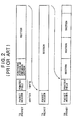
- FIG. 2 illustrates the content of a TS packet carrying a section.
- a section is disposed in a payload of a TS packet.
- one section is disposed over a plurality of TS packets in some cases and a plurality of sections are disposed in one TS packet in some other cases.
- a payload_unit_start_indicator P3 constituting a packet header of the TS packet is made to be "1" and a first one byte (8-bit) of the payload is assigned as a pointer field.
- MPEG 2 The detailed description of MPEG 2 is disclosed e.g. in "ISO/IEC 13818-1:1994 (E)", “ISO/IEC 13818-2:1995 (E)”, and “Essentials of video and audio compression techniques (published by CQ publisher)".
- HDD Hard Disk Drive
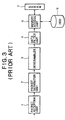
- Fig. 3 is a block diagram illustrating a conventional recording system for digital broadcasting in which data in a packet unit is recorded in an HDD.
- the conventional recording system for digital broadcasting includes, for example, a packet reception unit 1 for receiving a TS packet transmitted as radio wave and a packet separation unit 2 for extracting a necessary TS packet from TS packets outputted from the packet reception unit 1 in accordance with a PID included in each of the TS packets.
- the packet reception unit 1 is, for example, an interface for input.
- To the packet reception unit 1 are inputted, for example, 2-channel transport streams and in each of the transport streams is included, for example, data making up five broadcast programs.
- operation for extracting a TS packet is performed by a command from a Central Processing Unit (CPU: not shown), which command is, for example, based on selection of broadcast program by a user.
- CPU Central Processing Unit
- the packet separation unit 2 receives data in a packet unit, which data makes up ten broadcast programs, and the packet separation unit 2 extracts TS packets based on a PID from the data, which TS packets make up a first broadcast program.
- the data to be received is encrypted if needed. Accordingly, in the recording system for digital broadcasting is provided a descrambler 3 for cracking and reconstructing the code included in data outputted in a packet unit from the packet separation unit 2.
- the extracted TS packets necessary for the first broadcast program include, for example, the following TS packets: a TS packet containing video data in a payload; a TS packet containing audio data in a payload; a TS packet containing data for an Electronic Program Guide (EPG) in a payload; and a TS packet containing data for menu screen in a payload.
- EPG Electronic Program Guide
- the payload data includes many items other than the data that a user needs at that point.
- a data filter unit 4 for extracting the necessary TS packet based on the content of a payload included in each TS packet from the TS packets outputted from the descrambler 3 and then, outputting the extracted packet.
- a Synchronous Dynamic Random Access Memory (SDRAM) 7 and an HDD as storage unit and a recording medium, respectively, and further, a memory access unit 6 for converting the TS packet outputted from the data filter unit 4 to a protocol associated with the SDRAM 7.
- the memory access unit 6 is connected to the HDD 9 via, for example, an Integrated Device Electronics (IDE) interface and configured to write the data accumulated in the SDRAM 7 on the HDD 9.
- IDE Integrated Device Electronics
- the recording system for digital broadcasting constructed as described above allows the HDD 9 to record the broadcast program selected by a user.
- the recording system for digital broadcasting when the data included in a specific TS packet out of the data recorded in the HDD 9 is going to be accessed, the TS packets recorded in the HDD have to be searched in order starting from the TS packet located at the head position of the recorded TS packets. Accordingly, the time necessary for operation of the search becomes longer, In addition, since the CPU cannot perform other operations during the operation of the search, the recording system for digital broadcasting cannot operate with high efficiency.
- An object of the present invention is to provide a recording system for digital broadcasting in which the burden on a CPU included therein can be reduced when a packet is searched.
- a recording system for digital broadcasting comprises a recording medium for recording a digital signal transmitted in a packet unit by digital broadcasting and a log data generation unit for generating log data containing previously specified bits out of a plurality of bits that make up the digital signal in a packet unit.
- allocating specific bits included in log data to indicate the feature of packets necessary for specific reproduction such as reproduction in a fast-forward mode makes it possible to search the packets necessary for specific reproduction by only searching the log data and without searching a desired packet itself.
- a TS packet in a transport stream consists of 188-bytes
- the log data may be configured to only include such specific bits and therefore, small size log data can be available. Accordingly, the burden on a CPU during search operation can be reduced and as a result, the CPU can operate while performing other processing, thereby allowing the entire system to operate with higher efficiency.
- making the log data contain data indicative of a time when the log data has been generated allows for search of a time when the log data has been generated with respect to each packet.
- a desired broadcast program can be searched in an extremely easy manner.
- the reproduction rate can be made coinciding with the input rate. Accordingly, it is no more required to record packets other than the packets associated with a selected broadcast program in the recording medium, thereby improving the usability of capacity of the recording medium.
- the recording system for digital broadcasting constructed in accordance with the present invention further comprises a storage unit for storing the digital signal and the log data in a packet unit, and a control unit for making the recording medium record the digital signal stored in the storage unit.
- This construction of recording system makes it possible to temporarily accumulate the digital signal in the storage unit and then, record the digital signal in the recording medium.
- the storage unit is used as a buffer for forwarding the digital signal, operation for recording the signal in the recording medium can be performed adjusting the recording rate or the like.
- the recording system for digital broadcasting constructed in accordance with the present invention is further constructed such that the storage unit is at least partitioned into a first section for storing the digital signal and a second section for storing the log data. This construction of recording system makes it possible to further easily and quickly search the log data.
- the recording system for digital broadcasting constructed in accordance with the present invention is further constructed such that the log data generation unit outputs the log data to the outside only in the event the log data satisfies previously determined conditions, thereby preventing log data associated with packets unnecessary for specific reproduction or the like from being accumulated in the storage unit.
- the recording system for digital broadcasting constructed in accordance with the present invention is further constructed such that the control unit is able to add data indicative of the order of a packet corresponding to the log data to the log data, the order being counted since the control unit has begun recording packets.
- the recording system for digital broadcasting constructed in accordance with the present invention further may comprise:
- the recording system for digital broadcasting constructed in accordance with the present invention is further constructed such that bits supplied from the data search unit to the log data generation unit contain at least one kind of bit selected from a group of bits consisting of, for example, a bit indicative of inclusion of I-picture, a bit indicative of inclusion of P-picture and a bit indicative of B-picture.
- the recording system for digital broadcasting may be constructed such that the log data contains at least one kind of bit selected from a group of bits consisting of: a bit indicative of a value of PID included in a transport stream packet, the value being specified by MPEG-2 standard; a bit indicating the transport stream packet having been modified; and a bit indicative of a channel of a digital signal.
- the log data contains: a bit indicative of a state of "payload_unit_start_indicator” included in a packet header of a transport stream packet and specified by MPEG-2 standard; a bit indicating a state of change of a bit indicative of a state of "transport_scrambling_control” included in the packet header; and at least one kind of bit selected from a group of bits consisting of: a bit indicative of a state of "discontinuity_indicator”; a bit indicative of a state of "random_access_indicator”; a bit indicative of a state of "elementary_stream_priority_indicator”; a bit indicative of a state of "PCR_flag”; a bit indicative of a state of "OPCR_flag”; a bit indicative of a state of "splicing_point_flag”; a bit indicative of a state of "transport_private_data_flag”; and a bit indicative of
- the log data contains at least one kind of bit selected from a group of bits consisting of: a bit indicative of a state of "PSC”; a bit indicative of a state of "Sequence_header_code”; a bit indicative of a state of "Group_start_code", all of the bits described above being included in start code values specified by MPEG-2 standard; and a bit having another start code value.
- the log data may be constructed such that the log data contains a bit indicating that the log data is data generated at constant time intervals.
- the inventors of this application conceived the present invention as a result of repeated studies and experiments. That is, a log with respect to a TS packet satisfying the previously defined conditions is created and the log is stored in a specific area, thereby allowing search of a specified TS packet to be performed at high rate and further, preventing recording of the data of TS packets other than the data of TS packets associated with the selected broadcast program.
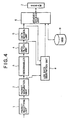
- FIG. 4 is a block diagram illustrating the recording system for digital broadcasting constructed in accordance with the embodiment of the present invention.
- a data search unit (data search unit) 5 for inspecting what kind of contents are contained in data that is included in a TS packet outputted from the data filter unit 4.
- a packet separation unit (first filter) 2 in the embodiment is constructed such that a TS packet is extracted by a command from a CPU and in addition, predetermined information about the extracted TS packet is read out and then, outputted.
- the predetermined information read out by the packet separation unit 2 will be shown as an example in the following tables 1 and 2.
- An algebraic sign "AV_PID" in table 1 indicates whether or not the PID belongs to a TS packet that includes video data or audio data.
- a PID of a TS packet that includes AV (Audio or Video) data is defined to have a specific value and when a PID is set at the specific value, in other words, includes audio or video data, the "AV_PID" becomes "1.”
- TTSD_PID An algebraic sign "TTSD_PID" in table 1 indicates whether or not the PID belongs to a TS packet that is to be filtered in the data filter unit 4 and in a case where the TS packet is filtered, the "TTSD_PID" becomes "1.”
- An algebraic sign "packet_Replace" in table 1 indicates whether or not the TS packet is a TS packet that has been replaced.
- the TS packet is replaced by a null packet (invalid packet) if needed.
- the "Packet_Replace” becomes "1.” Note that the TS packet received by the packet reception unit 1 appropriately includes a null packet provided for time adjustment and the like.
- An algebraic sign "Packet_Edit” in table 1 indicates whether or not the TS packet is a TS packet that has been edited out. For example, when information included in the TS packet is to be masked, in some cases, all of the bytes after a specific byte including the headmost byte within the TS packet are marked out with some patterns instead of replacement of the TS packet. When such operation for editing a TS packet has been performed, the "Packet_Edit” becomes “1.” That is, those algebraic signs, “Packet_Replace,” “Packet_Insert” and “Packet_Edit,” indicate that the TS packet including those algebraic signs has been modified.
- An algebraic sign "CH A/B" in table 1 indicates to which channel out of two channels received by the packet reception unit 1 the TS packet belongs.
- operation for replacing, inserting or editing a TS packet is performed based on a command from the CPU.
- discontinuity_indicator indicates discontinuity_indicator included in an adaptation field of the associated TS packet.
- radom_access_indicator indicates radom_access_indicator included in an adaptation field of the associated TS packet.
- An algebraic sign "elementary_stream_priority_indicator" in table 2 indicates elementary_stream_priority_indicator included in an adaptation field of the associated TS packet.
- PCR_flag An algebraic sign "PCR_flag" in table 2 indicates PCR_flag included in an adaptation field of the associated TS packet.
- An algebraic sign "OPCR_flag'' in table 2 indicates OPCR_flag included in an adaptation field of the associated TS packet.
- the data filter unit 4 in the embodiment is constructed such that the data filter unit is able to extract a TS packet based on the content of a payload, as well as read out predetermined information about the extracted TS packet to output the same.
- the predetermined information read out by the data filter unit 4 will be shown as an example in the following table 3. Algebraic sign Number of bits Section_match 1 Filter_Pass 1 Section_complete 1 Section_start 1 Section_end 1
- An algebraic sign "Section_match" in table 3 indicates whether or not a Section normally terminates within a TS packet that includes the end point of the Section in a case where the Section is provided over a plurality of TS packets, and when the Section normally terminates, the "Section_match” becomes “1.”
- Cyclic Redundancy Check (CRC) is performed in the data filter unit 4 and when the "Section_match” is "1," result of the CRC performed with respect to data included in the associated TS packet is decided normal,
- An algebraic sign ''Filter_Pass in table 3 indicates whether or not 16-bytes of data beginning at the head location within a TS packet have passed through the data filter unit 4 regardless of the result of CRC, and when the 16-bytes of data have passed therethrough, the "Filter_Pass" becomes "1.”
- the data search unit 5 is constructed such that the data search unit inspects a TS packet outputted from the data filter unit 4 as to what kind of content the data included in the TS packet contains therein and then, reads out predetermined information about the inspected TS packet to output the same.
- the predetermined information read out by the data search unit 5 will be shown as an example in the following table 4. Algebraic sign Number of bits PSC 1 CODE1 1 CODE2 1 CODE3 1 CODE4 1 CODE5 1 CODES 1 Sequence_header_code 1 I-picture 1 P-picture 1 B-picture 1 Group_start_code 1
- An algebraic sign "PSC” in table 4 indicates whether or not a TS packet is a first TS packet out of one or more TS packets including an I-picture therein within one Group Of Picture (GOP), and when the TS packet is positioned at the head location of the TS packets, the "PSC" becomes "1.”
- GOP Group Of Picture
- Any one of algebraic signs "CODE1" to "CODE6” in table 4 is determined based on conditions that can freely be determined by a user. For example, codes such as an extension start code and a sequential end code in a sequence layer, and a slice start code in a slice layer, all codes constituting a packet, are assigned as bits that constitute "CODE1" to "CODE6.”
- An algebraic sign "I-picture" in table 4 indicates whether or not I-picture is included in the TS packet, and when the I-picture is included therein, the "I-picture” becomes "1." Since the I-picture is a coded image within a frame, which is coded only in accordance with information within the frame, an amount of the data included in the I-picture is large. In addition, since the I-picture does not contain difference information between an associated frame and other frames, which difference information is contained in B-picture and P-picture, accident errors due to the difference information are never accumulated in the I-picture.
- An algebraic sign "P-picture” in table 4 indicates whether or not P-picture is included in the TS packet, and when the P-picture is included therein, the "P-picture” becomes "1." Since the P-picture is a coded image as a prediction image for motion compensation processing, which basically uses a past frame as a prediction signal for motion compensation processing, an amount of data included in the P-picture is smaller than that included in the I-picture.
- An algebraic sign "B-picture” in table 4 indicates whether or not B-picture is included in the TS packet, and when the B-picture is included therein, the "B-picture” becomes "1." Since the B-picture is a coded image as a bi-directional prediction image for motion compensation processing, which uses both a past frame and a future frame as a prediction signal for motion compensation processing, an amount of data included in the B-picture is smaller than at included respectively in the I-picture and the P-picture.
- a log data generation unit (log data generation unit) 8 for generating log data (hereinafter, referred to as a log) based on information about the TS packet outputted from the above-described packet separation unit 2, the data filter unit 4 and the data search unit 5.
- the log is made up of, for example, first to fourth 4-byte (32-bit) words.
- the log is generated with respect to each TS packet having passed through the packet separation unit 2 and temporarily stored in a register within the log data generation unit 8. Thereafter, when the content of the log satisfies previously defined conditions, the log data generation unit 8 outputs the log to a memory access unit (control unit) 6.
- the supply source "2" indicates that the corresponding bit is supplied by the packet separation unit 2 and the supply source "4" indicates that the corresponding bit is supplied by the data filter unit 4, and the supply source "5" indicates that the corresponding bit is supplied by the data search unit 5.
- the supply source "8" indicates that the corresponding bit is generated by the log data generation unit 8 itself and the supply source “6” indicates that the corresponding bit is not written into the log in the log data generation unit 8 but is written in the memory access unit 6.
- Bit Content of bit Supply source B0-b31 Data indicative of order of the TS packet counted starting from a TS packet located at the head position of TS packets (Packet Count).
- the position of the TS packet with respect to an amount of data corresponding to the time span of 36 hours can be specified.
- PID_EVENT is the content of the 16th bit (b15) counted starting from the least significant bit in increasing order of the corresponding number within the second 4-byte word and indicates whether or not the TS packet previously contains a PID indicating that a TS packet is subjected to log generation, and when the TS packet contains such FID, the "PID_EVENT" becomes "1.”
- Internal_Tick represents the content of the 23rd bit (b22) counted starting from the least significant bit in increasing order of the corresponding number within the second 4-byte word and is made "1" at predetermined intervals, for example, every 90 ms, in the log data generation unit 8.
- Such an operation of the recording system makes it possible to output a log to the memory access unit 6 at least at the above-described intervals even in a case where TS packets, which do not satisfy all other conditions necessary for outputting a log to the memory access unit 6, are sequentially disposed.
- First_Packet also represents the content of the same 23rd bit and in a case where the TS packet is a TS packet that is first recorded among the TS packets, the "First_Packet" is made "1" in the memory access unit 6.
- the fourth 4-byte word is provided to indicate a time when data has been recorded, in more detail, a time when an associated log has been generated in the log data generation unit 8.
- a time to be recorded can be expressed using high-order 23 bits of the word while ignoring those low-order bits. Even in this case, since the least significant bit among the high-order 23 bits of the word is. counted up at a frequency of 90 kHz, in other words, at intervals of about 10 ⁇ sec, the operation of reproduction is performed substantially without time distortion.
- the packet reception unit 1 receives all of the transmitted TS packets and then, outputs them to the packet separation unit 2.
- the packet separation unit 2 extracts predetermined packets from the transmitted TS packets and then, outputs the extracted TS packets to the descrambler 3 while supplying information about the extracted TS packet, which information is indicated in tables 1 and 2, to the log data generation unit 8.
- the descrambler 3 descrambles the TS packets outputted from the packet separation unit 2 based on a previously given descrambling key and then, restores data.
- the data filter unit 4 extracts necessary TS packets with respect to the restored data based on the content of payload and outputs the extracted TS packets to the data search unit 5 while supplying information about the extracted TS packets, which information is indicated in table 3, to the log data generation unit 8.
- the data search unit 5 inspects the contents of the TS packets outputted from the data filter unit 4 and then, outputs each of the TS packets to the memory access unit 6 while supplying information about the each of the TS packets, which information is indicated in table 4, to the log data generation unit 8.
- the log data generation unit 8 generates a log consisting of first to fourth 4-byte words, those words being indicated in tables 5 to 8, with respect to each of the TS packets and based on the information supplied by the packet separation unit 2, the data filter unit 4 and the data search unit 5, and then, stores the log in a register within the log data generation unit. Thereafter, when the log satisfies predetermined conditions, the log data generation unit 8 outputs the log to the memory access unit 6.
- the predetermined conditions in the embodiment mean that any one of bits indicated in the following tables 9 and 10 is being "1," the conditions to be satisfied in the present invention are not limited to the above-descried conditions, and therefore, the conditions that can be employed in the present invention may flexibly be determined based on, for example, memory size of the SDRAM 7, reproduction rate in a fast-forward mode and reproduction rate in a rewinding mode. Furthermore, those trigger bits (the bits shown in tables 9 and 10) as means for outputting associated data to the memory access unit may be made not to be the trigger bits by using a CPU. Note that the bits indicated in table 9 constitute the second 4-byte word and the bits indicated in table 10 constitute the third and fourth 4-byte words.
- the memory access unit 6 modifies the TS packet outputted from the data search unit 5 to generate a protocol for the SDRAM (storage unit) 7 while making the SDRAM 7 store the protocol and further, the log outputted from the log data generation unit 8.
- the SDRAM 7 is, for example, partitioned into one section for storing packet and another section for storing log, and digital data of a TS packet is stored in the section for storing packet and a log is stored in the section for storing log. Thereafter, when an amount of data accumulated in the SDRAM 7 reaches a certain value, the memory access unit 6 records the data accumulated in the SDRAM 7 in the HDD (recording medium) 9. Additionally, the memory access unit 6 makes the value of "First_Packet" equal to "1" in a case where the associated TS packet is a TS packet first recorded in the HDD.
- one packet consists of 188-bytes and a log employed in the present invention consists of 16-bytes, even in a case where logs are generated with respect to all of the TS packets recorded in the HDD 9, the burden on the CPU accompanied by search operation is extensively reduced to about 8.5%.
- a log is generated only when any one of the bits indicated in tables 9 and 10 becomes "1," the burden on the CPU accompanied by search operation is further reduced.
- reproductions in a fast-forward mode, a rewinding mode and a slow-forward mode under the MPEG-2 standard are performed selecting a necessary one of I-picture, P-picture and B-picture, all of which constitute a GOP.
- the reproduction may be performed by searching a log in which the 29th bit (b28) counted starting from the least significant bit in increasing order of the corresponding number in the second 4-byte word is being "1" and therefore, the search operation can easily and quickly be performed.
- a GOP consists of a unit of 20 to 30 pictures
- operation for searching data consisting of 20 to 30 pictures in a packet unit to search a GOP is required and therefore, the burden on a CPU becomes extremely large.
- I-picture, P-picture and B-picture are available as MPEG picture and the P-picture and B-picture out of those three pictures are comprised of differential data between an associated picture and other pictures, and therefore, accident errors due to the differential data probably are accumulated in those two pictures. Accordingly, in the MPEG picture, operation for searching the I-picture to refresh a screen has to be performed appropriately. In such a case, if a log generated in accordance with a procedure employed in the present invention exists, only operation for searching a log in which the 26th bit (b25) counted starting from the least significant bit in increasing order of the corresponding number in the second 4-byte word is being "1" may be made, and therefore, the burden on a CPU becomes extremely small.
- the data of TS packets other than the TS packets associated with the selected broadcast program also has to be recorded.
- the reason is as follows. Data transmission quantity per transport stream received from a satellite system, a ground station or the like is adjusted such that a buffer provided in a reception decoder to store video data neither overflows nor underflows. That is, in order to display normal images, it is required to perform reproduction keeping up with an input rate of a transport stream received from a satellite system, a ground station or the like.
- the SDRAM 7 is partitioned into sections for storing packet and for storing log, when going to search the content of log via the SDRAM 7, operation for searching only the data stored in the section for storing log is simply required to be performed and therefore, the log to be searched can be accessed more quickly than it could be accessed in a case where packet and log are stored in a mixed form in the SDRAM 7.
- the storage unit and the recording medium employed in the present invention are not limited to an SDRAM and an HDD, respectively.
- the log employed in the present invention is not limited to a log consisting of four 4-byte words.
- allocating bits included in log data to indicate the feature of packets necessary for specific reproduction or the like makes it possible to search the packets necessary for specific reproduction or the like by only searching the log data and without an operation for searching a packet itself recorded in the recording medium.
- a TS packet in a transport stream consists of 188-bytes
- the log data may be configured to only include such distinguishing bits and therefore, small size log data can be available. Accordingly, the burden on a CPU during search operation can be reduced and the entire operational usability of the system can be improved.
- log data is made to include data indicative of the time as to generation of the log data
- the time as to generation of the log data can be searched with respect to each packet and therefore, desired broadcast program can be searched in an extremely easy manner.
- performing reproduction referring to the time as to generation of the log data allows the reproduction rate to coincide with the input rate and therefore, it is no more required to record the packet provided only for keeping up with the reproduction rate in the recording medium, which recording operation is performed in the conventional recording system. As a result, the usability of capacity of the recording medium can be improved.
Landscapes
- Engineering & Computer Science (AREA)
- Multimedia (AREA)
- Signal Processing (AREA)
- Television Signal Processing For Recording (AREA)
- Signal Processing For Digital Recording And Reproducing (AREA)
- Management Or Editing Of Information On Record Carriers (AREA)
Applications Claiming Priority (2)
| Application Number | Priority Date | Filing Date | Title |
|---|---|---|---|
| JP2001199646 | 2001-06-29 | ||
| JP2001199646A JP2003018544A (ja) | 2001-06-29 | 2001-06-29 | ディジタル放送用記録装置 |
Publications (2)
| Publication Number | Publication Date |
|---|---|
| EP1274088A2 true EP1274088A2 (fr) | 2003-01-08 |
| EP1274088A3 EP1274088A3 (fr) | 2004-05-19 |
Family
ID=19036913
Family Applications (1)
| Application Number | Title | Priority Date | Filing Date |
|---|---|---|---|
| EP02090226A Withdrawn EP1274088A3 (fr) | 2001-06-29 | 2002-06-28 | Système d'enregistrement pour diffusion numérique |
Country Status (3)
| Country | Link |
|---|---|
| US (1) | US20030023986A1 (fr) |
| EP (1) | EP1274088A3 (fr) |
| JP (1) | JP2003018544A (fr) |
Families Citing this family (11)
| Publication number | Priority date | Publication date | Assignee | Title |
|---|---|---|---|---|
| US7908172B2 (en) | 2000-03-09 | 2011-03-15 | Impulse Radio Inc | System and method for generating multimedia accompaniments to broadcast data |
| KR100360476B1 (ko) * | 2000-06-27 | 2002-11-08 | 삼성전자 주식회사 | 탄소나노튜브를 이용한 나노 크기 수직 트랜지스터 및 그제조방법 |
| AU2002355120A1 (en) * | 2001-07-17 | 2003-03-03 | Impulse Radio, Inc. | System and method for transmitting digital multimedia data with analog broadcast data. |
| KR100614371B1 (ko) * | 2001-12-22 | 2006-08-18 | 주식회사 휴맥스 | 디지털 방송 스트림의 변속재생 제어정보 기록방법과,그에 따른 디지털 방송수신기에서의 변속재생 제어방법 |
| US7809021B2 (en) * | 2002-07-10 | 2010-10-05 | Solarflare Communications, Inc. | Communication system and encoding method having low overhead |
| JP4464101B2 (ja) * | 2003-10-10 | 2010-05-19 | キヤノン株式会社 | トランスポートストリーム編集方法及び装置 |
| US8499316B2 (en) * | 2007-05-11 | 2013-07-30 | Sony Corporation | Program identification using a portable communication device |
| KR100933366B1 (ko) * | 2007-09-13 | 2009-12-22 | 한국전자통신연구원 | 블랙박스 기능을 가지는 라우터 장치와 그 장치를 포함하는네트워크 시스템 |
| KR20090072510A (ko) * | 2007-12-28 | 2009-07-02 | 삼성전자주식회사 | 디스플레이장치 및 그 제어방법 |
| CN107196941B (zh) * | 2010-04-20 | 2021-09-03 | 三星电子株式会社 | 用于传送和接收媒体数据的接口装置和方法 |
| US9898611B2 (en) * | 2015-03-30 | 2018-02-20 | Rockwell Automation Technologies, Inc. | Method and apparatus for scrambling a high speed data transmission |
Citations (1)
| Publication number | Priority date | Publication date | Assignee | Title |
|---|---|---|---|---|
| JP2001086431A (ja) * | 1999-09-13 | 2001-03-30 | Toshiba Corp | 記録再生装置 |
Family Cites Families (12)
| Publication number | Priority date | Publication date | Assignee | Title |
|---|---|---|---|---|
| US6069902A (en) * | 1995-06-14 | 2000-05-30 | Matsushita Electric Industrial Co., Ltd. | Broadcast receiver, transmission control unit and recording/reproducing apparatus |
| JP3771954B2 (ja) * | 1995-08-04 | 2006-05-10 | ソニー株式会社 | 画像表示制御装置および方法 |
| WO1998040889A2 (fr) * | 1997-03-12 | 1998-09-17 | Koninklijke Philips Electronics N.V. | Enregistrement d'un signal d'information numerique sur un support d'enregistrement |
| EP0949614B1 (fr) * | 1997-07-17 | 2006-04-26 | Matsushita Electric Industrial Co., Ltd. | Dispositif de gestion de donnees |
| CN1897146A (zh) * | 1998-10-12 | 2007-01-17 | 松下电器产业株式会社 | 信息记录介质及用于记录或再现数据的装置和方法 |
| US6643449B1 (en) * | 1998-11-10 | 2003-11-04 | Kabushiki Kaisha Toshiba | Recording/reproducing apparatus, video data recording apparatus, recording method, reproducing method |
| KR100618961B1 (ko) * | 1998-12-16 | 2006-09-01 | 삼성전자주식회사 | 패킷 데이터의 고속 탐색을 위한 정보 생성 방법과 이 정보를 저장하는 기록 매체, 이를 이용하는 기록 및/또는 재생 장치 |
| US6405325B1 (en) * | 1999-01-30 | 2002-06-11 | Inventec Corp. | Method and tool for restoring crashed operation system of computer |
| JP4292654B2 (ja) * | 1999-03-19 | 2009-07-08 | ソニー株式会社 | 記録装置および方法、再生装置および方法、並びに記録媒体 |
| EP1039468A3 (fr) * | 1999-03-19 | 2000-10-04 | Deutsche Thomson-Brandt Gmbh | Procédé d'implémentation de modes de reproduction spéciale dans un appareil d'enregistrement de trains de données |
| KR100447366B1 (ko) * | 1999-07-29 | 2004-09-08 | 샤프 가부시키가이샤 | 기록 매체의 액세스 위치 특정 방법 및 기록 매체의 관리 장치 |
| WO2001063940A1 (fr) * | 2000-02-23 | 2001-08-30 | Koninklijke Philips Electronics N.V. | Procede, emetteur et systeme d'emission |
-
2001
- 2001-06-29 JP JP2001199646A patent/JP2003018544A/ja active Pending
-
2002
- 2002-06-28 EP EP02090226A patent/EP1274088A3/fr not_active Withdrawn
- 2002-06-28 US US10/183,668 patent/US20030023986A1/en not_active Abandoned
Patent Citations (1)
| Publication number | Priority date | Publication date | Assignee | Title |
|---|---|---|---|---|
| JP2001086431A (ja) * | 1999-09-13 | 2001-03-30 | Toshiba Corp | 記録再生装置 |
Non-Patent Citations (2)
| Title |
|---|
| "ITU-T RECOMMENDATION H.262, INTERNATIONAL STANDARD ISO/IEC 13818.2 MPEG-2 VIDEO. TRANSMISSION OF NON-TELEPHONE SIGNALS. INFORMATION TECHNOLOGY - GENERIC CODING OF MOVING PICTURES AND ASSOCIATED AUDIO INFORMATION: VIDEO", ITU-T TELECOMMUNICATION STANDARIZATION SECTOR OF ITU, GENEVA, CH, 1 July 1995 (1995-07-01), pages 1 - 211, XP000198491 * |
| DRAFT: "Generic Coding of Moving Pictures and Associated Audio Systems", ISO/IEC JTC1/SC29/WG11 N0801, XX, XX, 13 November 1994 (1994-11-13), pages 1 - 161, XP002200170 * |
Also Published As
| Publication number | Publication date |
|---|---|
| JP2003018544A (ja) | 2003-01-17 |
| EP1274088A3 (fr) | 2004-05-19 |
| US20030023986A1 (en) | 2003-01-30 |
Similar Documents
| Publication | Publication Date | Title |
|---|---|---|
| US6823131B2 (en) | Method and device for decoding a digital video stream in a digital video system using dummy header insertion | |
| EP1222822B1 (fr) | Procede et dispositif de production de mode exploration dans un systeme de video numerique | |
| EP0903036B1 (fr) | Traitement de donnees numeriques et d'informations guides sur les programmes | |
| JP4646148B2 (ja) | プログラムを表すパケット化されたデータストリームを復号化する方法 | |
| EP2007137B1 (fr) | Formats de données en paquets pour support de stockage de données numériques | |
| EP1742465A2 (fr) | Structuration d'informations spécifiques à un programme avec des elements de données privées | |
| US6278836B1 (en) | Information reproducing apparatus for reproducing video signals and program information which are recorded in information recording media | |
| US20030023986A1 (en) | Recording system for digital broadcasting | |
| JP5052763B2 (ja) | 映像データの記録された情報貯蔵媒体、その記録方法、記録装置、再生方法及び再生装置 | |
| US20070147429A1 (en) | Stream file format for digital video recording | |
| KR20090127052A (ko) | 영상 수록 재생 장치, 영상 수록 방법, 영상 재생 방법 및 영상 수록 재생 방법 | |
| EP1148728A1 (fr) | Création d'un signal pour modes de reproduction spéciaux pour un enregistreur de vidéo numérique | |
| EP1148729B1 (fr) | Méthode et appareil pour décoder un signal vidéo numérique dans un système de vidéo numérique avec insertion d'entêtes factices | |
| KR100518496B1 (ko) | 패킷화된데이터프로그램이기록된저장매체및프로그램특정정보를형성하는방법 | |
| US7869696B1 (en) | Method for recording recorded digital data stream and for providing presentation managing information for the recorded digital data stream | |
| JP3637760B2 (ja) | 情報符号化装置および情報復号化装置および情報符号化復号化記録再生装置 | |
| KR20050120640A (ko) | 실시간 디지털 정보신호 스트림을 저장하는 장치 및 방법 | |
| KR100515707B1 (ko) | 디지털데이터처리용프로그램특정정보형성방법 | |
| KR100425137B1 (ko) | 시스템 복호화기 | |
| JPWO2006075457A1 (ja) | 記録装置 | |
| KR100478383B1 (ko) | 프로그램특정정보를포함하는디지털데이터의디코딩방법 | |
| KR20030026794A (ko) | 영상 데이터가 기록된 정보저장매체, 그 기록방법,기록장치, 재생방법 및 재생장치 | |
| JP2005222605A (ja) | データ処理装置およびデータ処理方法 | |
| KR20070049102A (ko) | 정보 기록 매체 및 다중화 장치 및 복호화 장치 | |
| HK1022070B (en) | Decoding of digital data including program specific information |
Legal Events
| Date | Code | Title | Description |
|---|---|---|---|
| PUAI | Public reference made under article 153(3) epc to a published international application that has entered the european phase |
Free format text: ORIGINAL CODE: 0009012 |
|
| AK | Designated contracting states |
Kind code of ref document: A2 Designated state(s): AT BE CH CY DE DK ES FI FR GB GR IE IT LI LU MC NL PT SE TR |
|
| AX | Request for extension of the european patent |
Free format text: AL;LT;LV;MK;RO;SI |
|
| RAP1 | Party data changed (applicant data changed or rights of an application transferred) |
Owner name: NEC ELECTRONICS CORPORATION |
|
| PUAL | Search report despatched |
Free format text: ORIGINAL CODE: 0009013 |
|
| AK | Designated contracting states |
Kind code of ref document: A3 Designated state(s): AT BE CH CY DE DK ES FI FR GB GR IE IT LI LU MC NL PT SE TR |
|
| AX | Request for extension of the european patent |
Extension state: AL LT LV MK RO SI |
|
| RIC1 | Information provided on ipc code assigned before grant |
Ipc: 7G 11B 27/034 B Ipc: 7G 11B 27/32 A |
|
| 17P | Request for examination filed |
Effective date: 20040527 |
|
| AKX | Designation fees paid |
Designated state(s): DE GB |
|
| 17Q | First examination report despatched |
Effective date: 20050301 |
|
| RAP1 | Party data changed (applicant data changed or rights of an application transferred) |
Owner name: RENESAS ELECTRONICS CORPORATION |
|
| STAA | Information on the status of an ep patent application or granted ep patent |
Free format text: STATUS: THE APPLICATION HAS BEEN WITHDRAWN |
|
| 18W | Application withdrawn |
Effective date: 20140822 |